Next year will mark my twenty-fifth year to be an elementary teacher. Parents ask me a lot of questions about how to keep their child learning during the summer. The best thing is to of course enjoy summertime and get in all the family time that school schedules get in the way of. Here are some ideas that I recommend and used with my own children.
Check out recommendations from your local librarian.
Review math facts (addition, subtraction, and multiplication) with flashcards or play “war” with a deck of cards or dominos.
Visit museums, children’s theatres and check out ideas from DFW Child… My favorite in the DFW area are the Dallas Museum of Art, The Modern, and the Dallas Children’s Theatre
Review math and science workbooks that were sent home! If your child had an educational platform like Seesaw, review the assignments.
Have your child write letters to grandparents. They will write back! Letter writing is a lost art that children need to bring back.
Go to a baseball game and let your child keep a record of runs, outs, hits, steals, etc. Then make a bar graph at home to show the info.
Cook together! Cooking with your child is a valuable life skill that teaches children about nutrition and food safety while building math, science, and literacy skills.
Going on a road trip? Take these math wrap-ups with you and challenge your child to go faster
Take your kids to the grocery store and have them keep a running total of what’s going in the cart.
Keep a gratitude journal. It will keep your child writing and focused on the positive things in their lives. View the journals that were sent home (along with more workbooks, folders, and supplies). Children’s writing is so innocent and sweet, you will love reading what they wrote.
Visit your local library and encourage them to start a series. My first graders LOVED the “Humphrey” series.
Find inspiration from this list and make it work for you. Learning over the summer doesn’t have to be complicated or require long hours of planning. Have fun with it and give your child ownership in their learning. Wishing you a very happy summer full of learning.
My first-grade class helping me celebrate earning teacher of the year!
**Interested in writing a guest blog or submitting a sponsored post for my site? Would love to share your ideas! Submit your post here. Looking for a new book to read? Find these available at bit.ly/Pothbooks
About Rachelle
Looking for some PD for your school? I provide in-person and virtual training on the following topics. If you want to learn more about and explore AI and ChatGPT, contact me to schedule! Rdene915@gmail.com
Integrating STEM (Science, Technology, Engineering, and Mathematics) education in classrooms has become increasingly important to prepare students for the future. We know that these skills are highly in demand and there will be an increase in the number of STEM-related jobs available by 2025. STEM learning is essential, however, educators often face several challenges when implementing STEM initiatives. It helps to first identify the challenges and brainstorm possible solutions to overcome them. There are many resources available for classroom use, however, Ozobot offers a variety of options that are great for any classroom and that do not require educators to have a level of expertise!
Theme 1: Lack of Teacher Confidence and Training
In my own experience prior to teaching a STEAM course, I did not see how I could bring STEM activities into the language classroom. This feeling is common among educators today. Many educators share that they do not know enough about STEM or even lack confidence in teaching STEM concepts in their classroom. There are ways for schools to help with this such as:
Provide professional development programs that focus on enhancing STEM pedagogy and content knowledge.
Leverage teacher talent and have time for experienced STEM educators to guide and assist their colleagues.
Use online platforms such as Ozobot Classroom, which offers training materials, lesson plans, and interactive tutorials to build teacher confidence and expertise in STEM education.
Theme 2: There is not enough time or it does not fit in the curriculum (Time Challenges and Curriculum Constraints)
Time is always a factor for teachers when there are so many tasks that make up our day. Finding enough time to integrate STEM activities into their curriculum can be difficult. Class schedules do not provide enough time perhaps or there are specific guidelines and timelines to be met with the curriculum.
Possible Solutions:
Incorporate cross-curricular integration, where STEM concepts are integrated into existing subjects rather than taught as standalone lessons. For example, using robotics to explore math concepts or engineering challenges within science topics.
Explore the versatile resources offered by Ozobot. It is quick to get started using the activities and challenges that come with each robot, and these can be easily integrated into different subject areas and grade levels, which saves time and promotes interdisciplinary learning.
Theme 3: Access to the Right Resources and Materials
One of the biggest areas of concern is that resources are limited in schools or a lack of funding makes it tough to decide which resource is the best and most versatile option. Accessibility is a significant challenge for teachers who want to implement STEM-focused activities in their classrooms. Questions that I get are often around the time involved to find resources and funding for bringing them into schools.
Some ways to work through this are by seeking grants to obtain STEM resources. Ozobot offers a free Grants & Funding tool that provides guidance on these topics.
Explore the resources from Ozobot which are affordable and provide everything that educators need to implement STEM in their classroom. The robots and lesson plans are designed to help educators to engage students in learning about coding and robotics and hopefully spark interest in a future career in coding. My students have enjoyed learning about coding and creating with Ozobot.
I definitely recommend exploring all of Ozobot’s resources. A great option is the Ozobot Classroom Kit, which offers everything all in one with curriculum-aligned resources suitable for various STEM activities.
Theme 4: Engaging Diverse Student Populations
We want all students to have opportunities to explore STEM but the reality is that not all students have access to the resources to explore STEM-related learning. Engaging students from diverse backgrounds, including underrepresented groups in STEM, can be challenging due to varying interests, learning styles, and prior experiences.
Some ideas to explore are to incorporate culturally relevant STEM projects and examples that reflect the students’ backgrounds and experiences, promoting inclusivity and increasing engagement. Additionally, Ozobot offers MetaBot – a free AR experience hosted on the Evo App that allows students to virtually build and execute Blockly programs with Evo.
By bringing in project-based learning (PBL) and hands-on activities that provide opportunities for collaborative problem-solving, allowing students to contribute their unique perspectives and skills and also foster the development of SEL skills.
Theme 5: Integration of STEM Across Subjects
For some educators, the idea of STEM may not seem like something that can be brought into a class that does not fall under the “STEM” subjects. Finding ways to bring STEM concepts into classrooms can be challenging, especially for classes that are traditionally perceived as non-STEM related.
The best option to bring STEM into all classrooms is through cross-curricular collaboration. Not only is this beneficial for students, but it also encourages collaboration between teachers of different grade levels or content areas. They can work together to create interdisciplinary STEM projects that incorporate concepts from their courses and provide more meaningful, real-world learning experiences for students.
Project-based learning: Implement project-based learning approaches that encourage students to apply STEM knowledge and skills to real-world problems across different subjects.
Ozobot as a solution: Highlight Ozobot’s versatility in integrating robotics and coding across various subjects, fostering cross-curricular connections and enhancing student engagement.
Bringing STEM to every classroom can be a powerful and transformative learning experience for students which will equip them with the skills needed to be successful now and in the future. By asking educators what their concerns and challenges are, we can work together to find solutions. With the support of a comprehensive platform like Ozobot, educators can design dynamic and engaging learning environments that spark student curiosity for learning, build critical thinking skills, and foster interest in STEM fields.
About Rachelle
Rachelle Dené is a Spanish and STEAM: What’s Next in Emerging Technology Teacher at Riverview High School in Oakmont, PA. Rachelle is also an attorney with a Juris Doctor degree from Duquesne University School of Law and a Master’s in Instructional Technology. Rachelle is an ISTE Certified Educator and Community Leader and served as president of the ISTE Teacher Education Network. She was named as one of the 150 Women Thought Leaders to Follow for 2022 and one of 30 K-12 IT Influencers to follow in 2021.
When it comes to professional development for your school, Rachelle offers both in-person and virtual training on a variety of topics. Don’t miss the opportunity to schedule a session by contacting her at Rdene915@gmail.com.
**Interested in writing a guest blog or submitting a sponsored post for my site? Would love to share your ideas! Submit your post here. Looking for a new book to read? Check out my books at bit.ly/pothbooks
In today’s ever-changing job market, we need to help students develop a variety of skills that will enable them to be flexible with the changes we are seeing in the world of work. It is also important that students have opportunities to consider a variety of career paths. It’s not enough to just focus on the careers and options that exist today, as technology and the jobs in demand are constantly evolving. To help students take ownership of their career journey and be curious about opportunities available, educators can explore the resources provided by Defined Learning to help students learn about their options.
Defined Learning offers a variety of tools and resources to help K through 12 students explore career options and develop the skills needed to succeed in the future, whether in college or career. There are materials available for students in elementary, middle, and high school and each has a listing of possible career choices and
Here are some ideas to get students excited about creating their own career paths:
Encourage Career Exploration
One of the best ways to get students excited about creating their own career paths is to encourage them to explore their interests and passions. Ask students about their interests and provide opportunities for students to exchange ideas with classmates. Sparking interest in career exploration happens when students have a chance to dive into their own curiosity and tap into their personal interests. When students are passionate about something, they are more likely to be motivated and engaged in their work. Sharing resources will provide students with access to a wide range of real-world career scenarios that can help them identify their interests and passions. These resources may inspire students to think about the types of careers that would enable them to pursue their passions while also making a difference in the world. It includes job descriptions, education requirements, and salary information.
In addition to exploring different careers, students also need to develop the skills necessary to succeed in the workforce. Defined Learning Career offers resources to help students develop these skills through career courses. Each Career Course focuses on providing students with relevant career experiences and skills needed for a specific career. Each career course is a collection of projects that gives students hands-on learning opportunities. Teachers can supplement these materials by having students create materials they need for careers of interest such as resumes and cover letters, or preparing for an interview. Through the career clusters, students also create products of their learning that can be uploaded into their portfolio to track their growth. Students can explore to learn about the demand for specific careers and
Educators can incorporate these resources into their curriculum, either as standalone lessons or as part of larger projects. By helping students develop these skills, educators can empower them to take ownership of their career paths and feel confident in their ability to succeed.
One of the best ways to get students excited about their future careers is to give them real-world experiences. Defined Learning Career Courses offers a variety of units and career clusters that have projects and project descriptions to give students real-world learning experiences. To bring it to life even more, educators can help students to find opportunities to engage in virtual job shadowing or connect within the community to learn about industry-specific projects.
By incorporating these types of experiences into their curriculum, educators can help students see how their education is directly relevant to their future careers. This can be especially valuable for students who may not have a clear idea of what they want to do after graduation. Having a variety of options to explore within one platform is so helpful for educators looking to provide more choices for students and for students to have guided support as they learn about careers through the pathways. Exploring the work of commercial and industrial designers, a baker, a hazmat technician, and other careers will spark some curiosity.
In order to create their own career paths, students need to be able to think outside the box. Defined Learning Career resources can be used to help students think creatively about their future careers. Especially for students that may be unsure about future plans, exploring these real-world tasks can be so beneficial.
For example, students can explore non-traditional career paths, such as entrepreneurship or freelancing, game designers, and learn about the skills and resources they will need to succeed in these types of careers. By encouraging students to think outside the box, educators can help them see the possibilities for their future careers and feel excited about the opportunities that lie ahead. Educators can also offer their own guidance by providing one-on-one meetings with students to discuss their career goals and help them create a plan for achieving those goals. By offering this kind of support, educators can help students feel more confident in their ability to navigate the constantly changing job market.
Getting students excited about creating their own career paths is essential to best prepare them for the future. Defined Learning offers a variety of resources to help educators foster career exploration, develop career readiness skills, and incorporate real-world experiences, through a range of project-based learning experiences that help students develop the skills they will need to succeed. By utilizing these tools, educators can empower their students to take ownership of their future careers and feel confident in their ability to succeed.
Author
Rachelle Dené is a Spanish and STEAM: What’s Next in Emerging Technology Teacher at Riverview High School in Oakmont, PA. Rachelle is also an attorney with a Juris Doctor degree from Duquesne University School of Law and a Master’s in Instructional Technology. Rachelle is an ISTE Certified Educator and Community Leader and served as president of the ISTE Teacher Education Network. She was named one of 30 K-12 IT Influencers to follow in 2021.
Looking for PD for your school? I provide in-person and virtual training on the following topics. If you want to learn more about and explore AI and ChatGPT, contact me to schedule! Rdene915@gmail.com
**Interested in writing a guest blog or submitting a sponsored post for my site? Would love to share your ideas! Submit your post here. Looking for a new book to read? Find these available at bit.ly/Pothbooks
In today’s ever-changing job market, we need to help students develop a variety of skills that will enable them to be flexible with the changes we are seeing in the world of work. It is also important that students have opportunities to consider a variety of career paths. It’s not enough to just focus on the careers and options that exist today, as technology and the jobs in demand are constantly evolving.
To help students take ownership of their career journey and be curious about the opportunities available, educators can explore the resources provided by Defined Careers to help students learn about their options. Defined Careers is an online platform that offers a variety of tools and resources to help K through 12 students explore and experience career options and develop the skills needed to succeed in the future, whether in college or career. There are materials available for students in elementary, middle and high school and each has a listing of possible career choices.
Here are a few ideas for how educators can use Defined Careers to get their students excited about creating their own career paths:
1. Encourage Career Exploration
One of the best ways to get students excited about creating their own career paths is to encourage them to explore their interests and passions. Ask students about their interests and provide opportunities for students to exchange ideas with classmates. Sparking interest in career exploration happens when students have a chance to dive into their own curiosity and tap into their personal interests. When students are passionate about something, they are more likely to be motivated and engaged in their work. Sharing resources will provide students with access to a wide range of real-world career scenarios that can help them identify their interests and passions. These resources may inspire students to think about the types of careers that would enable them to pursue their passions while also making a difference in the world. Defined Careers offers a wealth of information for all grade levels and different areas of work. It includes job descriptions, education requirements, and salary information.
To make this learning experience more engaging and build communication skills and classroom collaboration, educators can also have students create brief presentations or share what they learned about different careers. This can help students get excited about the possibilities and start to envision their own career paths.
2. Foster Career Readiness Skills
In addition to exploring different careers, students also need to develop the skills necessary to succeed in the workforce. Defined Careers offers resources to help students develop these skills through career courses. Each Career Course focuses on providing students with relevant career experiences and skills needed for a specific career. Each career course is a collection of projects that gives students hands-on learning opportunities. Teachers can supplement these materials by having students create materials they need for careers of interest such as resumes and cover letters, or preparing for an interview. Through the career clusters, students also create products of their learning that can be uploaded into their portfolio to track their growth. Students can explore to learn about the demand for specific careers.
Educators can incorporate these resources into their curriculum, either as standalone lessons or as part of larger projects. By helping students develop these skills, educators can empower them to take ownership of their career paths and feel confident in their ability to succeed.
3. Incorporate Real-World Experiences
One of the best ways to get students excited about their future careers is to give them real-world experiences. Defined Careers’ Courses offers a variety of units and career clusters that have projects and project descriptions to give students real-world learning experiences. To bring it to life even more, educators can help students to find opportunities to engage in virtual job shadowing or connect within the community to learn about industry-specific projects.
By incorporating these types of experiences into their curriculum, educators can help students see how their education is directly relevant to their future careers. This can be especially valuable for students who may not have a clear idea of what they want to do after graduation. Having a variety of options to explore within one platform is so helpful for educators looking to provide more choices for students and for students to have guided support as they learn about careers through the pathways. Exploring the work of commercial and industrial designers, a baker, a hazmat technician and other careers will spark some curiosity.
4. Encourage Students to Think Outside the Box
In order to create their own career paths, students need to be able to think outside the box. Defined Careers resources can be used to help students think creatively about their future careers. Especially for students that may be unsure about future plans, exploring these real-world tasks can be so beneficial.
For example, students can explore non-traditional career paths, such as interior designer, an artist, or a game designer, and learn about the skills and resources they will need to succeed in these types of careers. By encouraging students to think outside the box, educators can help them see the possibilities for their future careers and feel excited about the opportunities that lie ahead. Educators can also offer their own guidance by providing one-on-one meetings with students to discuss their career goals and help them create a plan for achieving those goals. By offering this kind of support, educators can help students feel more confident in their ability to navigate the constantly changing job market.
Getting students excited about creating their own career paths is essential to best prepare them for the future. Defined Careers offers a variety of resources to help educators foster career exploration, develop career readiness skills, and incorporate real-world experiences through a range of project-based learning experiences that help students develop the skills they will need to succeed. By utilizing these tools, educators can empower their students to take ownership of their future careers and feel confident in their ability to succeed.
About the Author:
Rachelle Dené is a Spanish and STEAM: What’s Next in Emerging Technology Teacher at Riverview High School in Oakmont, PA. Rachelle is also an attorney with a Juris Doctor degree from Duquesne University School of Law and a Master’s in Instructional Technology. Rachelle is an ISTE Certified Educator and Community Leader and served as president of the ISTE Teacher Education Network. She was named one of 30 K-12 IT Influencers to follow in 2021.
Looking for PD for your school? I provide in-person and virtual training on the following topics. If you want to learn more about and explore AI and ChatGPT, contact me to schedule! Rdene915@gmail.com
**Interested in writing a guest blog or submitting a sponsored post for my site? Would love to share your ideas! Submit your post here. Looking for a new book to read? Find these available at bit.ly/Pothbooks
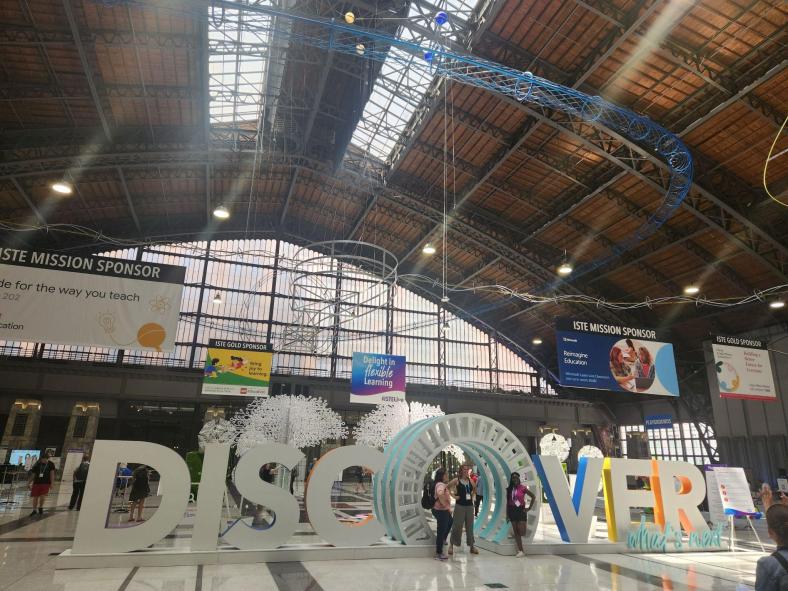
This was my ninth time attending the ISTE conference, the third time it was held in Philadelphia, Pennsylvania. There were a few years that the in-person event did not happen but ISTE held a virtual conference that enabled educators to connect and learn with other educators from around the world. It is the reason I look forward to the summer and a conference I look forward to because it brings in people from more than 80 countries from around the world. It offers so many different ways to learn through the poster sessions, the playgrounds, the concurrent sessions, panel discussions, workshops and other special events.
But beyond those specific learning spaces, there are lots of opportunities to connect with educators and build your PLN. It’s not just the learning that happens in those session rooms and spaces. It is about the learning that also happens on your walk to the sessions and while in the open spaces. A time when you can walk and talk or sit and have a conversation. And even once the conference day ends, the social events that happen later in the evening, are always great for connecting with friends and making new ones.
The conference was a little bit different for me this year because even though my schedule was busy it didn’t feel as overly busy as in prior years. I had the opportunity to join in some new adventures, present sessions on some of my favorite topics, and had the honor of being involved in the Closing Mainstage.
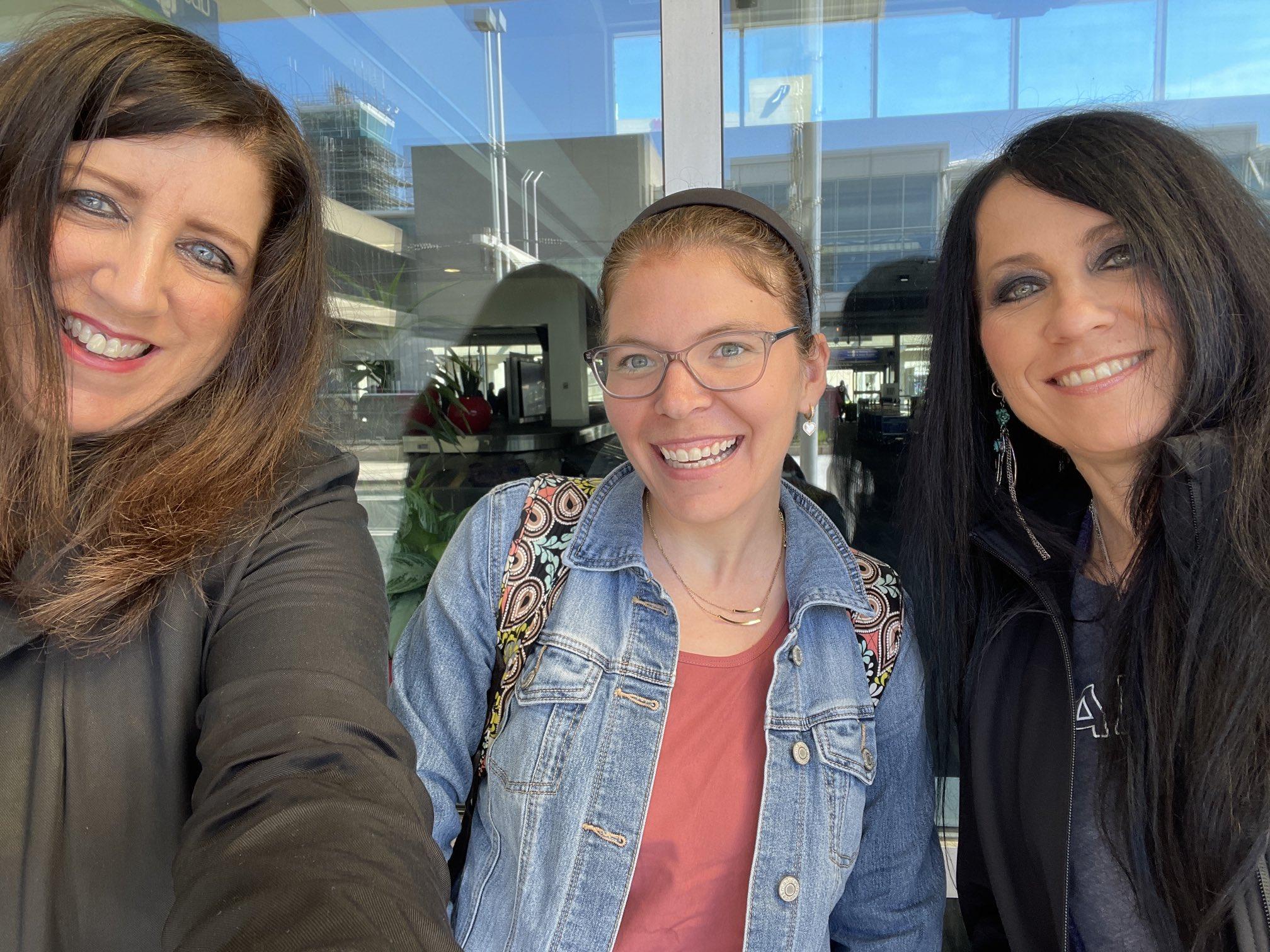
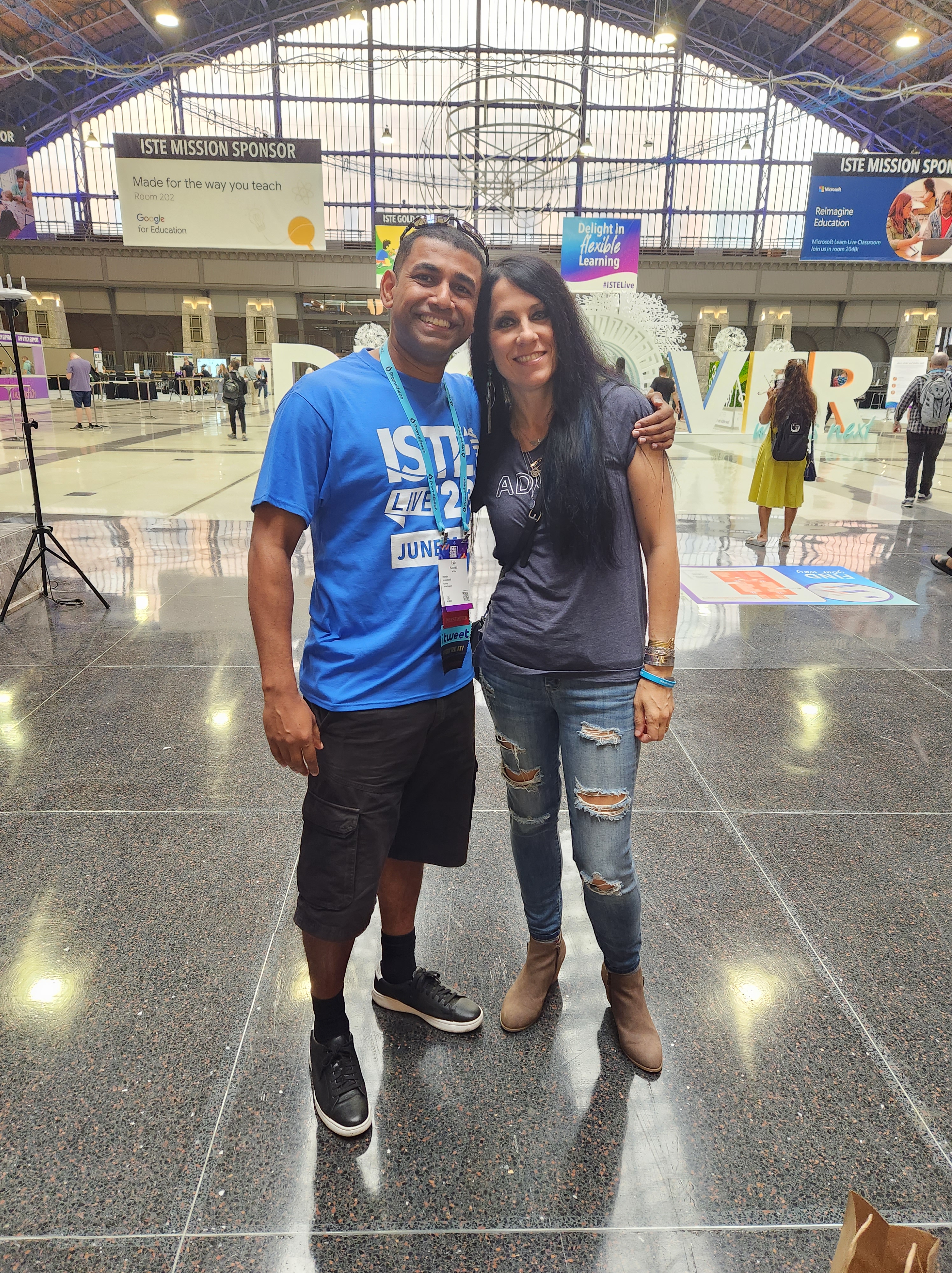
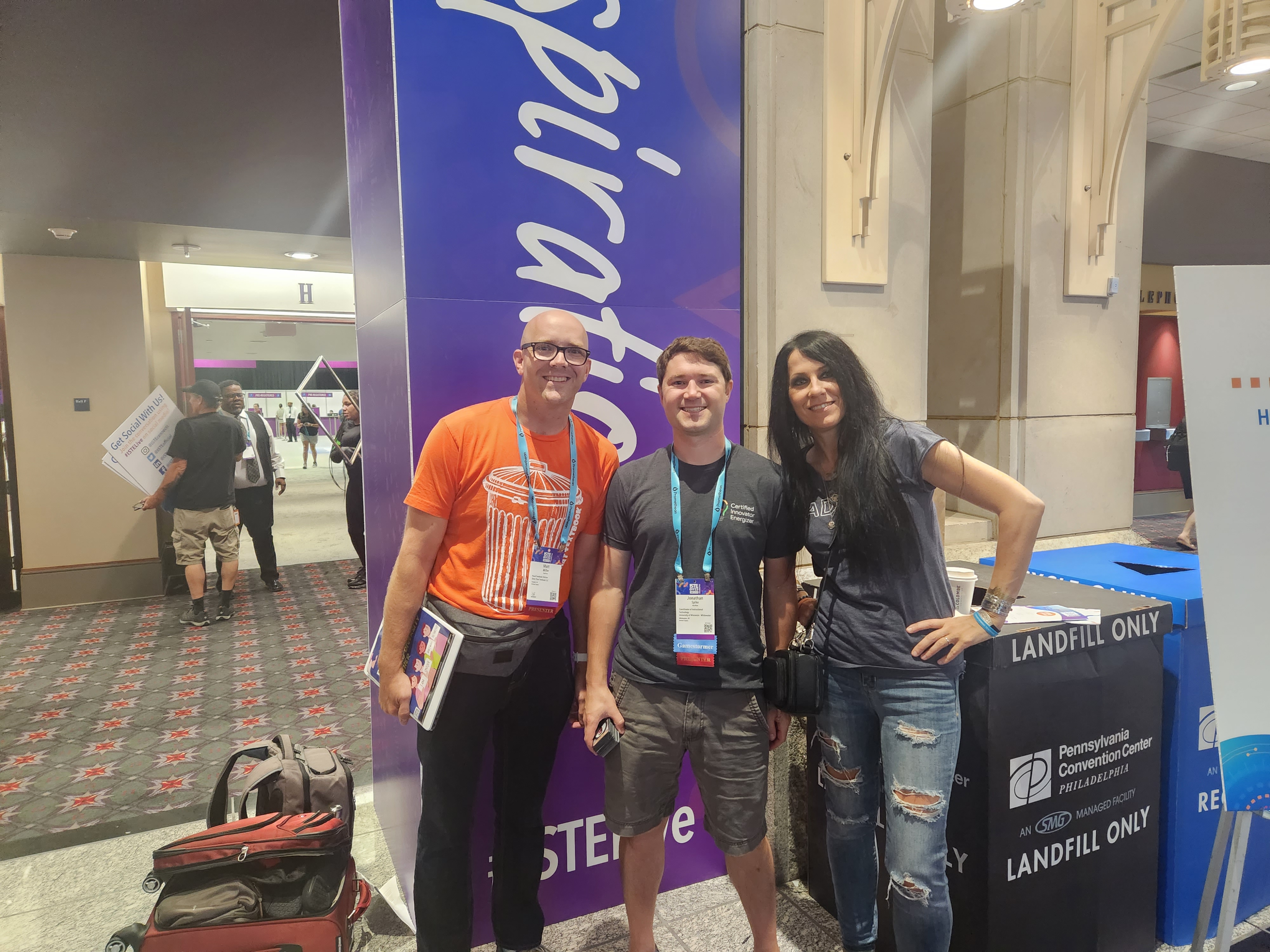
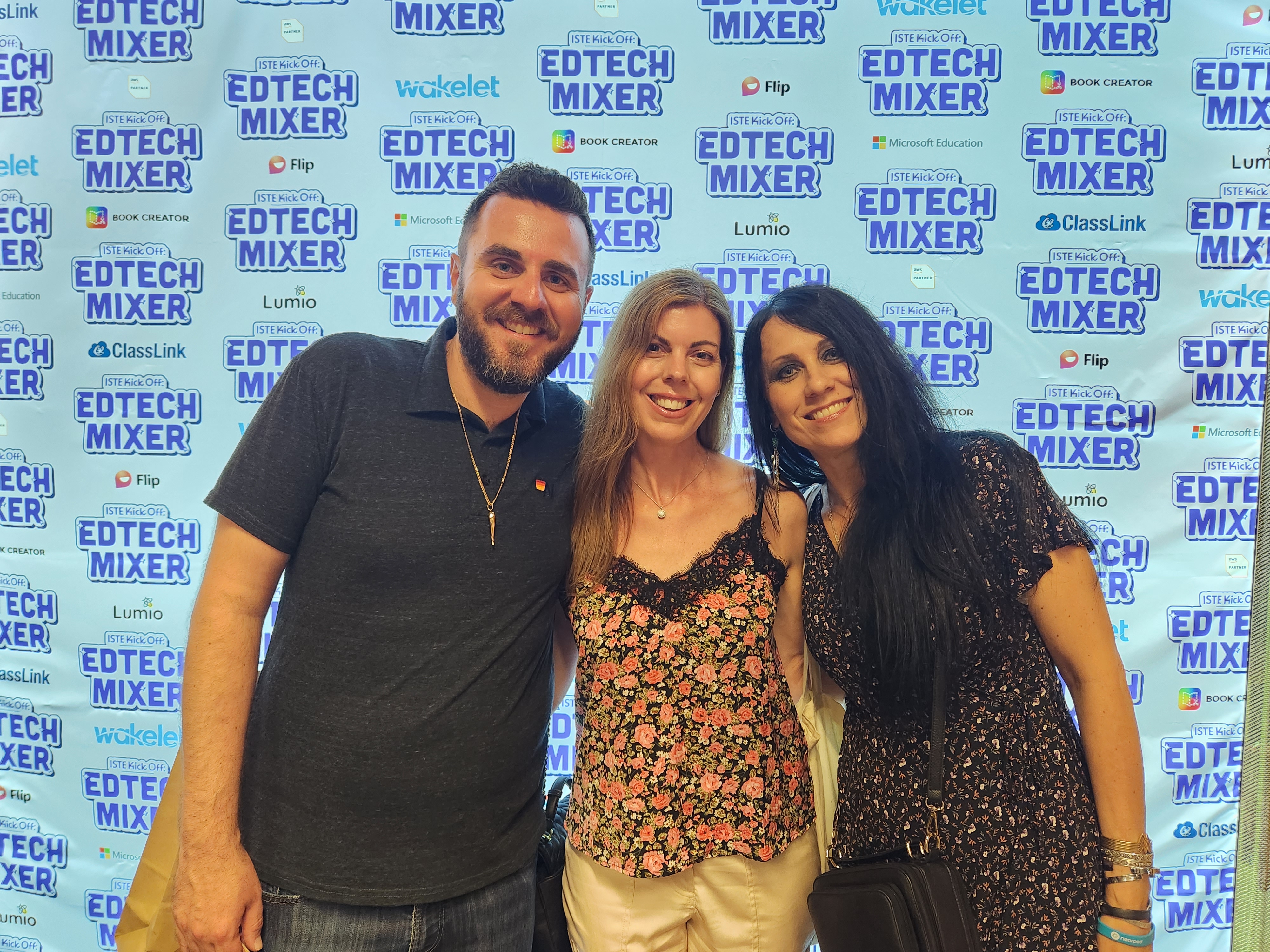
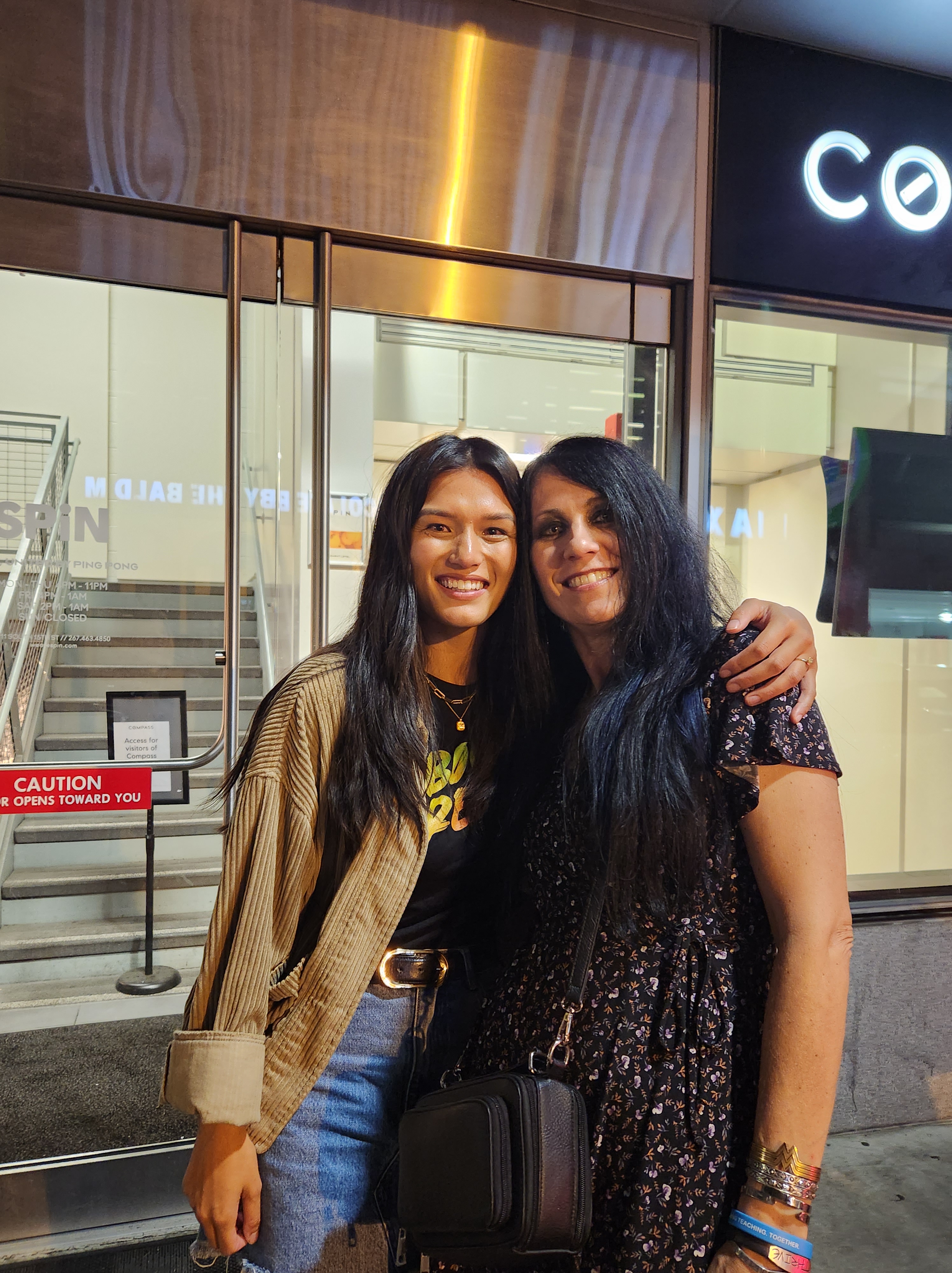
For me, as soon as I met friends at the airport, the excitement started. Then as soon as I arrived at the convention center to register on Sunday afternoon, it took a good 25 minutes to get there because I kept passing friends along the way, some of whom I had not seen in more than 5 years and a few that had never met in person. And when that happens, you have to stop and enjoy those moments.
Registration can definitely wait. Taking the time to stop, grab a quick picture, a hug, even a quick conversation makes all the difference. It brings those connections to life and reminds you to not miss out on opportunities, no matter how tired you are.
Presenting with friends
There wasn’t much time to waste as I had a workshop with my good friend Melody McAllister on Sunday. While we have done a live show for years, it was the first time presenting together officially. The focus was on podcasting and live streaming. We had a great crowd, our session was sold out and it was a high point in the conference for me. Being able to present with friends, share each other’s perspectives, and learn together, really makes a difference. For a long time, I did sessions by myself and that definitely helps me to build my own comfort level and confidence but I have definitely grown to prefer having friends present with me because we can bring in our different backgrounds and experiences and it’s just fun.
Another highlight was my Immerse Students in Learning session, all about AI, AR, and VR, topics which I have been presenting on for a little over 5 years. It has been amazing to see the increased interest in AI especially over the past 6 months with the entrance of ChatGPT, it has stirred up a lot of conversation and will continue to do so.
It’s a lot of fun to share with educators how I got started in teaching about AI in my classroom, knowing very little but also knowing that I needed to just dive right in. And that’s the advice that I often give. You don’t have to be an expert, you just need to have one idea, one method, one tool to start with and put it in the hands of the students. It’s important to also engage in conversations about these topics and these technologies so that we can be mindful of any concerns but also aware of the potential benefits not just in education but in preparing the students for their future and how these technologies might be used in the world of work.
Presenting with students
Another highlight was being able to co-present with Namya Joshi, (#EachOneTeachTen) a young student from India who we had hoped would be able to attend in person but thanks to technology and the power of using Zoom, I was able to bring her in to present with me during that session. Powerful to hear from students and I definitely recommend any time you can involve students in sharing the impact of these tools, and in this case the importance of STEM, then we need to do this. Hearing from her, (at actually 3:00 in the morning because of the time difference), did not diminish her spark for STEM and she was definitely an inspiration.
ISTEVerse
The three-day augmented and virtual reality ISTEVerse experience was a big hit and I tried to direct people to stop there as much as I could because a lot of people don’t realize the benefits of it until they experience it. And without access to the resources or know how to sort through all of the tools that are available, it can be hard to dive in and explore. That space had a variety of opportunities for people to learn about augmented and virtual reality, how to have students create rather than just consume, and that AR/VR is something that can be used in all content areas and grade levels.
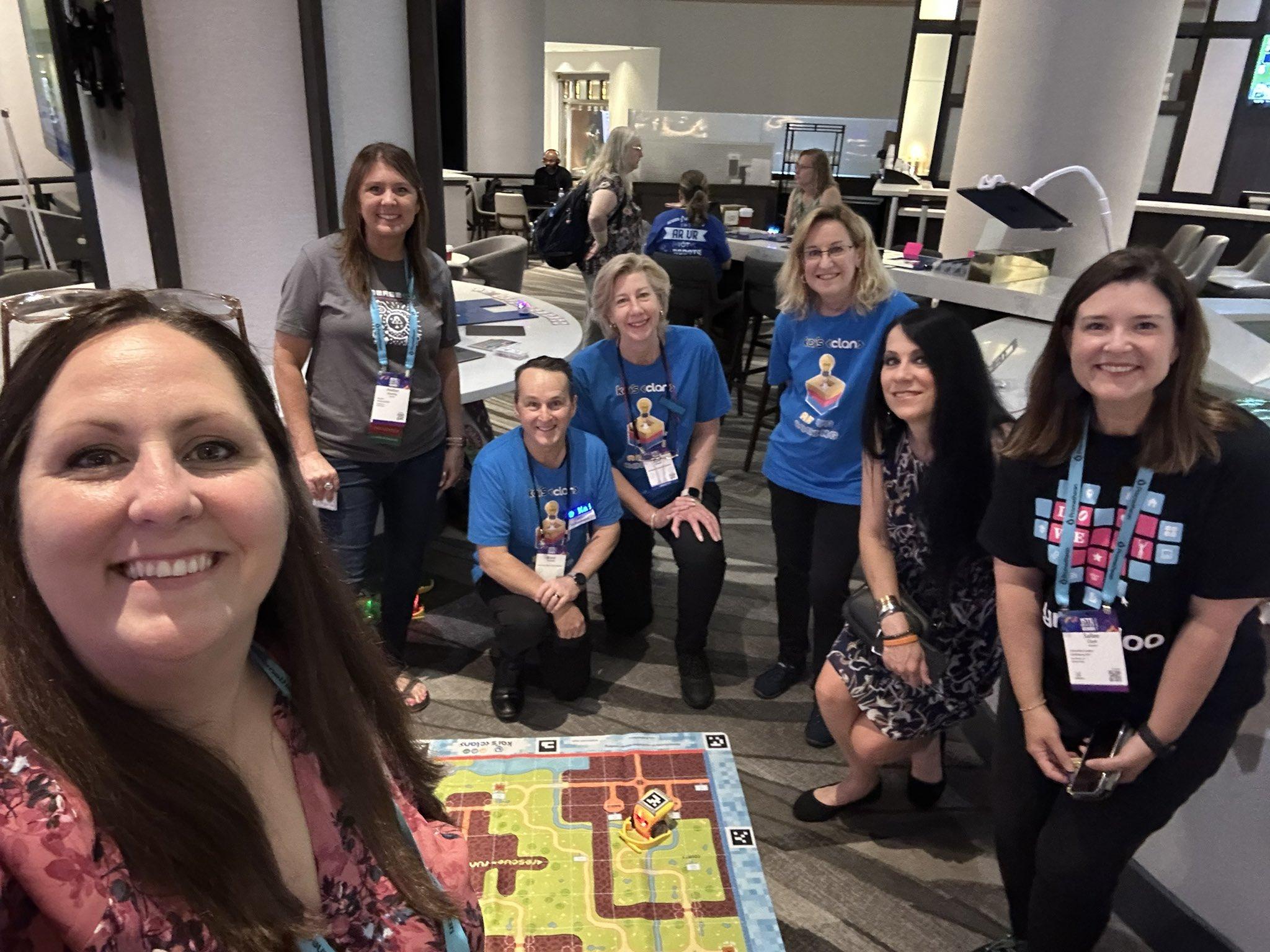
Coffee with Kai’s Clan
Social events
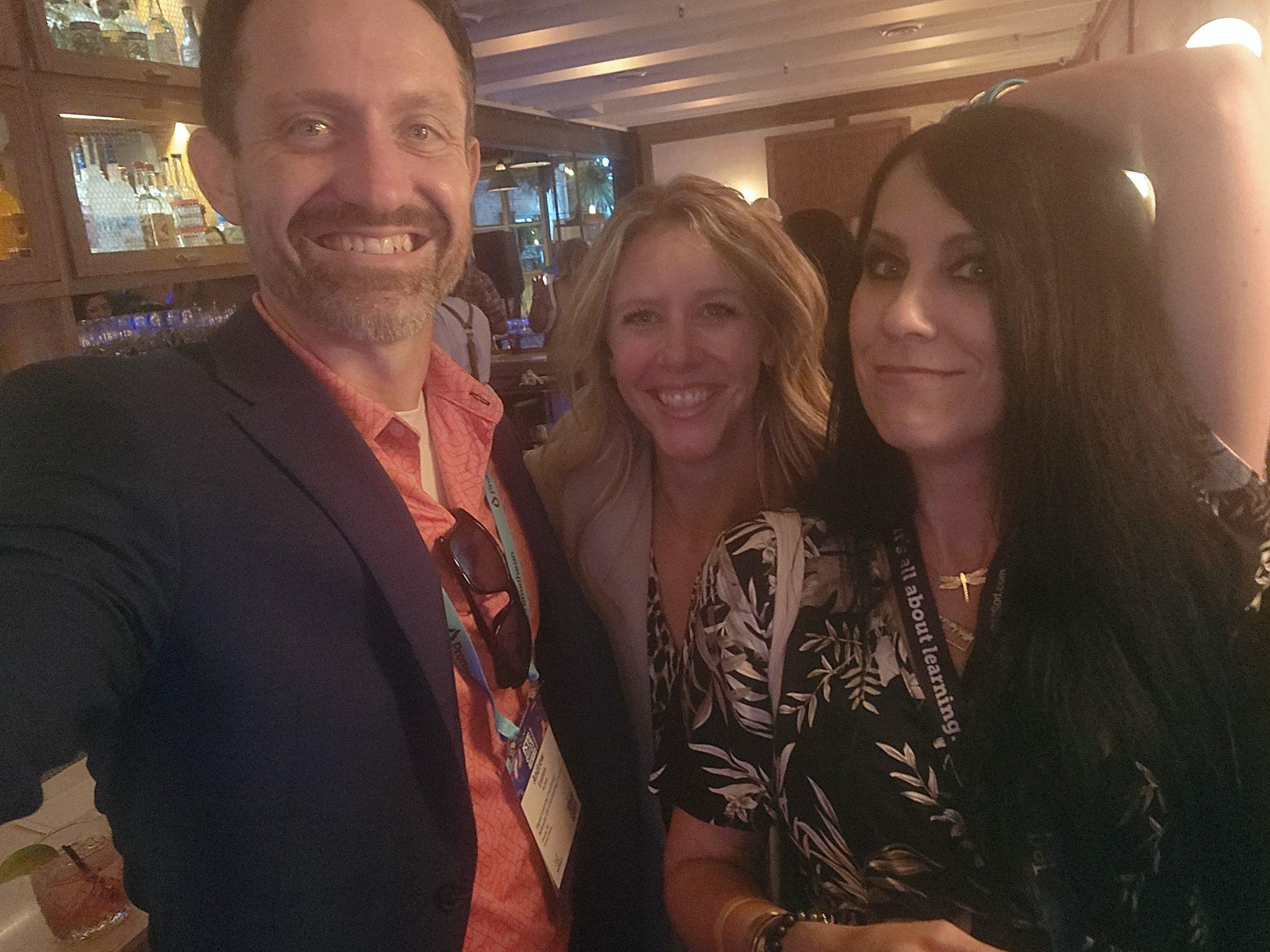
And everybody kept busy with social events, which are great spaces for networking. Whether the Edtech karaoke, casual gatherings for coffee or small sit-down dinners, there were opportunities everywhere. Learning still happens in these spaces. What I’ve discovered over the years is that PD does not only mean sitting down in a session and listening to a presentation. PD is so many different things and there are so many ways for people to choose the type of PD that is going to impact them the most.
Those early morning CoffeeEDUs with Alice Keeler, the social events and mixers held by some of the companies that we all know, and quaint gatherings by some other companies that enable you to really engage in conversation and get to know the people behind the products and their passion for what they’re doing. An amazing dinner with the BookWidgets team was a lovely opportunity to relax, enjoy the conversation and spend time with friends.
Dinner with BookWidgets
The Closing Mainstage: AI in Education
And one final highlight as I’m rolling these out in chronological order, was the Closing Mainstage on Wednesday. I was honored to be selected as the person to introduce and then interview the keynote speaker Kevin Roose. He is a New York Times columnist, a bestselling author of three books and he writes about technology, education, finance, and AI. We had the opportunity to sit down and talk for about 20 minutes. I had a lot of questions for him but tried to streamline them to those that are on the minds of many educators that I’ve spoken to, and some questions based on what I had read in his most recent book Futureproof.
Some of the biggest takeaways from that conversation are:
As educators, we need to be willing to embrace new ideas, trends, and technologies, even if we don’t fully understand them or we feel like we’re not the expert, we have to keep up with the changes that are coming.
We have to prepare our students and understand how these tools can be beneficial to us and to students, but we also have to be cautious as with all things, and question their purpose.
Consider any potential concerns or harm that can come from using them whether safety, security, or privacy. Ethics needs to be part of the conversations that we have and continue to have as these tools continue to evolve.
If we look at the positives, for teachers, as Kevin stated on his podcast dividing the AI between the “relational and the logistical.” We need teachers, humans, for the relational so that we can work with the students, we can have conversations, and support them as they learn. But we can benefit from the logistical or the clerical tasks that AI can do like helping us with some of the grading or having it be able to see trends in student responses and create a personalized learning path for them in real time. We can use traditional assessments and give students feedback one-on-one, but we can also find a way to balance the use of the technology so that we have more time to work with our students and provide for them with exactly what they need.
It was a great conference and it’s hard to believe that it has come and gone already but before you know it, it will be June 2024 and we will be in Denver for ISTE. The last time it was held there was in 2016 and that was the first time that I got on an airplane in many years and so I’m looking forward to returning to the conference next year. If you have not ever attended but have been giving it some thought, I definitely recommend that you try to go. And if attending in person is not an option, take advantage of the virtual learning that is available. Several of my sessions were recorded and live streamed and many of the other sessions were as well. So you can join in, interact in the chat, build your network, and learn from wherever you are and whenever you want to.
Jenn Womble and Adam Phyall
Wakelet and Capstone friends
The power of these global networks is that there is something for every educator and it’s important to keep pushing ourselves to learn and grow and adapt with the changes that we have seen and will continue to see in education.
See you in Denver next June!
About the author
Rachelle Dené is a Spanish and STEAM: What’s Next in Emerging Technology Teacher at Riverview High School in Oakmont, PA. Rachelle is also an attorney with a Juris Doctor degree from Duquesne University School of Law and a Master’s in Instructional Technology. Rachelle is an ISTE Certified Educator and serves as the past president of the ISTE Teacher Education Network. She was recently named one of 30 K-12 IT Influencers to follow in 2021.
Looking for PD for your school? I provide in-person and virtual training on the following topics. If you want to learn more about and explore AI and ChatGPT, contact me to schedule! Rdene915@gmail.com
**Interested in writing a guest blog or submitting a sponsored post for my site? Would love to share your ideas! Submit your post here. Looking for a new book to read? Find these available at bit.ly/Pothbooks











 Learning as I go: Reflections & lessons learned