From day one it is very important that your students know that you care about them. This was especially important for me as I worked in a very high crime area and many of my students came from broken homes. (East New York – Brooklyn https://cybraryman.com/eny.html )
At the beginning of the school year, I had each student complete an information sheet. I wanted to know what skills or abilities they possessed. This information came in handy when I had: to do bulletin boards as I used their artistic ability or plan auditorium programs like class plays where I was able to use their dancing, singing, and musical talents. I felt it was good to know their passions and help them achieve them especially when it came to choosing high schools to attend.
When I served as Attendance & Lateness Coordinator I would stand at the front door as students entered the building. I greeted each student with a smile and a kind word. It was rare for many of them to be acknowledged with a kind word. For my track team members when they came to school I would hand them a recap of the previous day’s meet making sure each runner was mentioned.
I made sure during passing between periods to greet all the students who came up to our floor. The Assistant Principal loved this and she also joined me with the welcomes. I also made sure to greet each student as they entered my classroom. I told my classes that I was not a mind reader. I wanted them to notify me either by speaking to me or giving me a note if they were having a problem or did not feel well before our class started.
It is wise to build community in the classroom and have your students help you design the expectations for your classroom. Classroom and Behavior Management
During my first year of teaching, I decided to give students who did their work, handed in their homework, and tried their best letters to take home to their parent/guardian before the December holidays. I wanted to acknowledge the work of the good students as usually, I would contact the parent/guardian of the students who were either acting out or not doing their work. The day after I had given out those letters a student came back to me and told me she told her mother she had a letter from her teacher and the mother hit her. She had never gotten a good letter about her child before. In future years I told the students to say they had a good letter from their teacher.
Students are very perceptive and know from the start if you really care about them. Make sure to let them know that they matter to you.
Have an awesome year of learning.
Jerry Blumengarten
@cybraryman1
Contact Rachelle to schedule sessions for your school about Artificial Intelligence, Coding, AR/VR, and more!
**Interested in writing a guest blog for my site? Would love to share your ideas! Submit your post here. Looking for a new book to read? Find these available at bit.ly/Pothbooks
************ Also check out my THRIVEinEDU PodcastHere!
Join my show on THRIVEinEDU on Facebook. Join the group here
Teachers need ways to connect with peers, exchange ideas, collaborate and share resources, and engage in meaningful discussions.
Finding time throughout the school year to engage in professional learning can be a challenge for educators. Being part of a learning community can help. Learning communities and professional learning networks (PLNs) can be a catalyst not only for professional growth, but for our personal growth as well.
Looking for PD for your school? Contact me for more information here.
I provide in-person and virtual training on the following topics. If you want to learn more about and explore AI and ChatGPT, contact me to schedule! Rdene915@gmail.com
**Interested in writing a guest blog or submitting a sponsored post for my site? Would love to share your ideas! Submit your post here. Looking for a new book to read? Find these available at bit.ly/Pothbooks
Guest post by: Torrey Trust and Robert W. Maloy, University of Massachusetts Amherst
“The Ethicist” – Kwane Anthony Appiah’s column in the New York Times Magazine – offers philosophical advice about how to respond to the dilemmas and complexities of everyday life. People submit questions they want answered, and the rights and wrongs or ethics of what to do are not immediately clear or self-evident. Questions posed include: “Is it ever acceptable to visit a Confederate historical site?” “My salary is too high. Is it wrong to stay in my job?” “Can I sell my Taylor Swift tickets for thousands of dollars?” and “Can I use ChatGPT for the tedious parts of my job?” In July 2023, the Ethicist responded to this last question about ChatGPT, which was written by the chair of the English department at a small college. The reply was “yes,” as long as “you exercise proper vigilance and can stand by what you submit” (para. 4).
Utilizing “The Ethicist” as the starting point for instructional ideas, we envision giving elementary, middle, and high school students ongoing opportunities to develop their own ethical responses to authentic questions and issues they are facing in their lives, schools, and communities – especially those related to the use of GenAI tools and large language models (LLMs) – as a means of helping them develop their civic engagement skills and knowledge. Ideally, students engage in discussions about how they and others should act in the different situations and settings of everyday life. By stating their views and restating and understanding the views of others, students will become more socially conscious and civically engaged as members of our diverse society.
Questions of ethics and ethical behavior are central to how individuals and groups conduct political campaigns. In the run-up to the 2024 election, political candidates, parties, and action and advocacy groups have been using GenAI tools to generate campaign speeches, policy proposals, and even fundraising emails. In one example, the Democratic Party used AI to write fundraising emails and found that AI-generated fundraising requests performed as well as or better than human-generated requests in generating financial responses from donors (Goldmacher, 2023). However, not all uses of GenAI in political campaigns have been done with honorable intentions. University of Georgia journalism professor David E. Clementson (2023) identified multiple ways that GenAI tools could make political campaigns more deceptive than ever, including using these tools to design customized bogus campaign promises, write outright lies presented as truthful statements, convince voters to reevaluate their choice of candidates, and craft manipulated photos of candidates.
Following the model of “The Ethicist,” students could be asked: “Is it ethical to use GenAI tools to craft political campaign materials and media?” To begin this activity, students could be encouraged to use the Teacher and Student Guide to Analyzing AI Writing Tools to critically investigate popular GenAI tools, including ChatGPT, Bard, Stable Diffusion, and DALL-E. This guide provides a series of prompts that motivate students to examine the design and production of AI tools (questioning things like “Who designed this tool and why? “How does this tool make money?” “What data was used to train this tool?” “What biases are represented in the data?” and “What privacy protections are in place for users’ data?”) and the output of AI tools (questioning things like “Who or what is included in the output and who or what is left out?” and “How does the AI-generated output compare to human-generated text or media?”). Through this type of critical investigation, students might uncover that GenAI tools are trained on data that has embedded biases and consider what that might mean if political campaign staff use these tools, for example, to write fundraising campaigns based on demographic data.
Next, students could work on designing their own political campaign to run for a local or statewide political office (see the “Online Campaigning for Political Office” activity). Students could start this activity without any assistance from GenAI tools and then mid-way through the activity have the opportunity to use AI to help with or improve their campaign materials. For example, students might ask ChatGPT to generate a series of social media posts related to their campaign promises, write a script for a podcast or video that will be embedded into their campaign website, improve the quality of the text for their campaign website, or devise a strategy for increasing voter engagement with their campaign. Or, they could use image generators, like Microsoft Bing Image Creator powered by DALL-E, to produce visuals for their campaign websites or social media posts.
After designing their own political campaigns with and without the assistance of GenAI tools, students could engage in a discussion or debate about whether they think it is ethical for politicians and their campaign staff to use GenAI tools to craft political campaign materials and media. Integrating an ethical question about the use of AI in political campaigns as students design their own run for political office gives students an opportunity to investigate what AI can and cannot do and what AI should and should not do as a tool. The cognitive scientist Fei-Fei Li said nearly a decade ago: “AI is a machine that can make a perfect chess move while the room is on fire” (quoted in Knight, 2017, para. 4). Her point is AI can generate content, but not critical thought or socially and morally ethical plans for action. Through this activity, students consider what role AI should play in politics, and then they should be able to form their own opinion to the prompt: “Is it ethical to use GenAI tools to craft political campaign materials and media?”
Author Bios
Torrey Trust, Ph.D. is a Professor of Learning Technology in the Department of Teacher Education and Curriculum Studies in the College of Education at the University of Massachusetts Amherst. Her scholarship and teaching focus on how technology shapes educator and student learning. Specifically, Dr. Trust studies how educators engage with digitally enhanced professional learning networks (PLNs), how emerging pedagogical tools (e.g., HyperDocs), practices (e.g., Making), and technologies (e.g., 3D printers, augmented reality) facilitate new learning experiences, and how to design and use open educational resources (OERs). Dr. Trust served as a professional learning network leader for the International Society for Technology in Education (ISTE) for five years, including a two-year term as the President of the Teacher Education Network from 2016 to 2018. In 2018, Dr. Trust was selected as a recipient of the ISTE Making IT Happen Award, which “honors outstanding educators and leaders who demonstrate extraordinary commitment, leadership, courage, and persistence in improving digital learning opportunities for students.” www.torreytrust.com
Robert W. Maloy is a senior lecturer in the College of Education at the University of Massachusetts Amherst where he coordinates the history teacher education program and co-directs the TEAMS Tutoring Project, a community engagement/service learning initiative through which university students provide academic tutoring to culturally and linguistically diverse students in public schools throughout the Connecticut River Valley region of western Massachusetts. His research focuses on technology and educational change, teacher education, democratic teaching, and student learning. He is co-author of Transforming Learning with New Technologies (4th edition); Kids Have All the Write Stuff: Revised and Updated for a Digital Age; Wiki Works: Teaching Web Research and Digital Literacy in History and Humanities Classrooms; We, the Students and Teachers: Teaching Democratically in the History and Social Studies Classroom; Ways of Writing with Young Kids: Teaching Creativity and Conventions Unconventionally; Kids Have All the Write Stuff: Inspiring Your Child to Put Pencil to Paper; The Essential Career Guide to Becoming a Middle and High School Teacher; Schools for an Information Age; and Partnerships for Improving Schools.
**Interested in writing a guest blog for my site? Would love to share your ideas! Submit your post here. Looking for a new book to read? Find these available at bit.ly/Pothbooks
************ Also check out my THRIVEinEDU PodcastHere!
Join my show on THRIVEinEDU on Facebook. Join the group here
In Collaboration with CoSpacesEdu, opinions expressed are my own
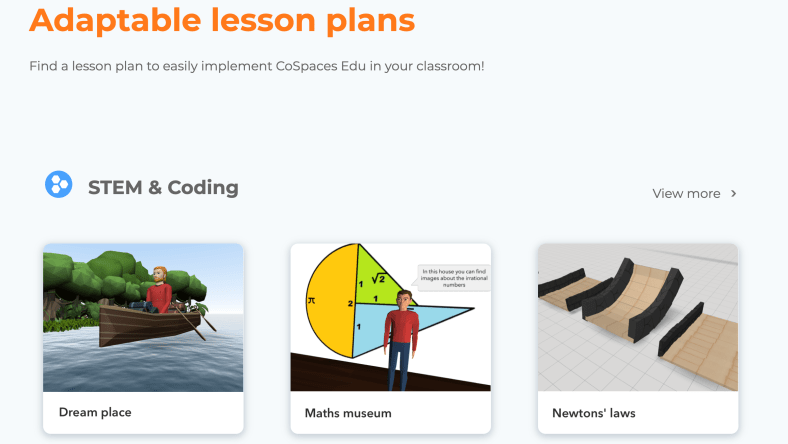
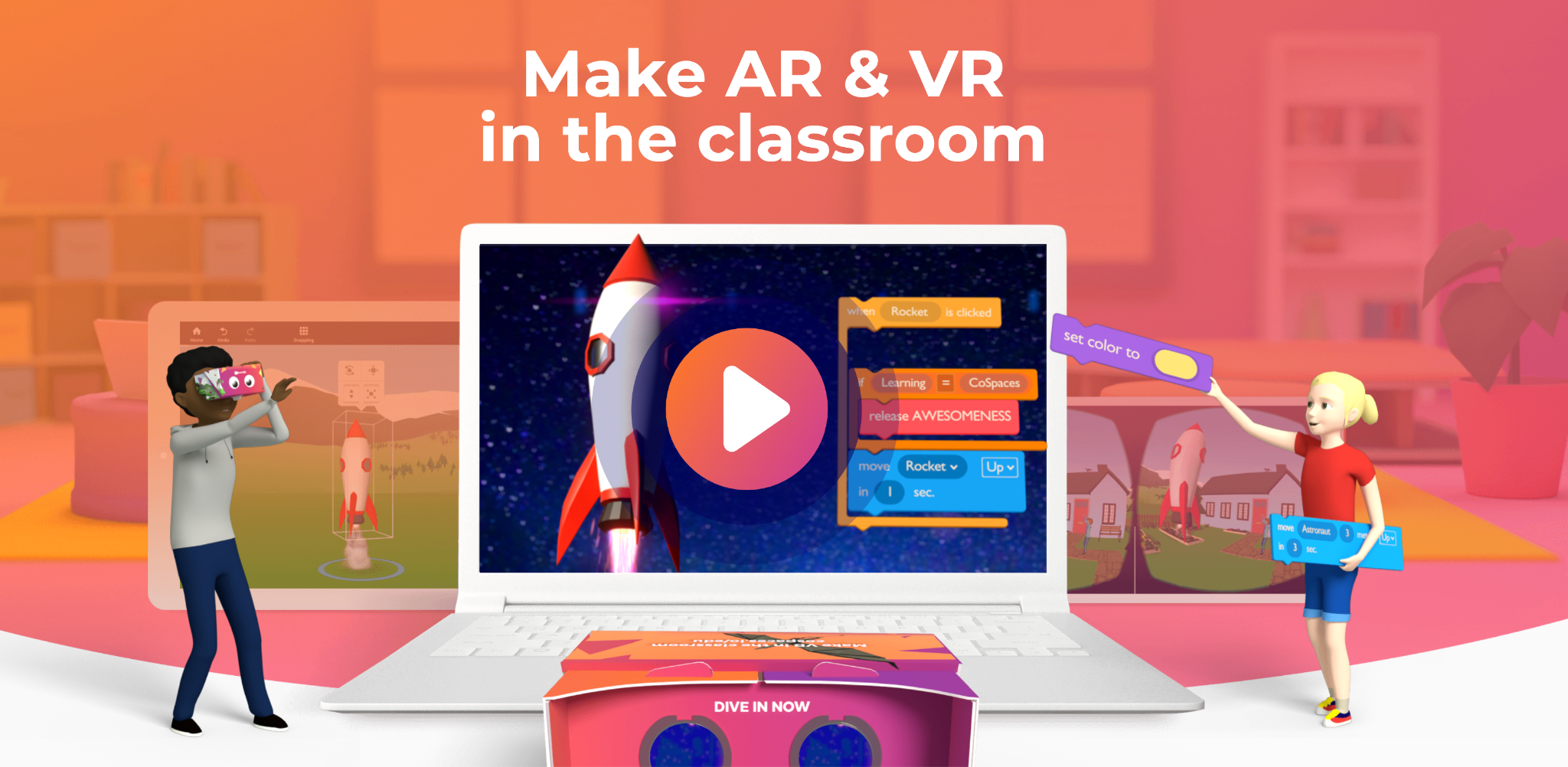
As we see the education landscape continue to evolve, especially with innovative technologies like Augmented Reality (AR) and Virtual Reality (VR) emerging as powerful tools to transform the way students learn and engage with academic content, we need to bring learning experiences to our students. In my classroom for the past six years, we have used CoSpaces Edu because it is such a versatile and accessible platform for educators. It is user-friendly, which makes it an excellent choice for teachers looking to integrate these technologies into their lessons without worrying about the learning curve or the time involved to get started. Another great benefit is that it can be used in any grade level or content area and there are lesson plans to explore!
Let’s take a look at some of the benefits of bringing AR and VR into our classrooms!
Immersive Learning: AR and VR are great ways to immerse students in more interactive, hands-on learning. With three-dimensional environments, CoSpaces can help students to enhance their understanding of complex concepts and it also encourages active and collaborative learning. Collaborative projects in CoSpaces foster teamwork and communication skills as students work together.
Personalized Learning: Because of all of the options available within CoSpaces, it can meet each student’s interests and needs. These AR and VR experiences can be tailored to individual preferences, which allows students to progress at their own pace and explore topics that better align with their interests. If students want to dive into coding, they can do that right within CoSpaces!
Project Ideas using CoSpaces Edu:
Virtual Museum Tour (Suitable for Social Studies, History, Art, and Language Arts): Have students create a virtual museum tour showcasing artifacts, and historical figures, and representing important events. Students can research and present what they have learned in a creative, interactive way. It also can be shared with classmates and the school community to highlight these emerging technologies and student innovation!
Storytelling in AR (Suitable for Language Arts and Creative Writing): Students can write and narrate their stories and then bring them to life in augmented reality. Using CoSpaces Edu, they can design interactive characters, scenes, and backgrounds to represent what they are learning. They can then turn their narratives into immersive experiences. A project like this fosters creativity and enhances storytelling skills.
Historical Time Travel (Suitable for Social Studies and History): Imagine a history project where students create a virtual time machine to travel to different historical periods. They can research various eras, dress up their avatars accordingly, and explore significant events and cultures firsthand through CoSpaces Edu. This project encourages historical empathy and a deeper appreciation for the past. It can be a great way to create exhibitions in AR and VR.
Literary Landscapes (Literature): Incorporate literature into AR and VR by having students create immersive environments inspired by novels or poems they have read in class. Students can use CoSpaces Edu to build scenes, depict characters, and even add audio elements to capture the essence of the literary work.
Integrating AR and VR into the educational journey has shown tremendous potential in transforming the way students engage with content and learn. With CoSpaces Edu, we can empower students to explore a wide range of subjects in an immersive and interactive manner. Just check out the gallery full of amazing examples and training for educators! The benefits of increased student engagement, more active learning, inclusivity, and creativity can positively and significantly impact students’ educational journeys.
As we head back to school, it is the perfect chance to explore and embrace these immersive technologies, making learning an adventure for all students in any grade level or content area. Diving in is easy with all of the support available in the Resources Hub from CoSpaces Edu!
About the Author
Rachelle Dené Poth is a Spanish and STEAM Educator at Riverview High School in Oakmont, PA. She is also an Attorney, Edtech Consultant, Speaker, and the Author of seven books about education and edtech. Rachelle is available to provide PD on Artificial Intelligence, Augmented and Virtual Reality, Coding, SEL and STEM.
Contact Rachelle to schedule sessions for your school about Artificial Intelligence, Coding, AR/VR, and more! Rachelle is also available for Keynotes.
**Interested in writing a guest blog for my site? Would love to share your ideas! Submit your post here. Looking for a new book to read? Find these available at bit.ly/Pothbooks
************ Also check out my THRIVEinEDU PodcastHere!
Join my show on THRIVEinEDU on Facebook. Join the group here
In collaboration with Matatalab, Opinions expressed are my own
As we head into a new school year, it’s the perfect time to explore innovative ways to ignite students’ passion for learning while providing them with opportunities to develop essential skills for the future. An area that is in demand and can be brought into every classroom is STEM-focused curriculum and activities. One great example is exploring coding! In my STEAM course, we spend a good amount of time during the year learning about coding and talking about the importance of developing skills in these areas, especially for the increasing demand for coding skills in the future.
Finding the right resources is key and it is so helpful when you can find one resource that provides options for multiple grade levels and content areas. Matatalab‘s coding resources are fantastic for learners of various age groups, starting as young as 3!
Tailored for Different Age Groups
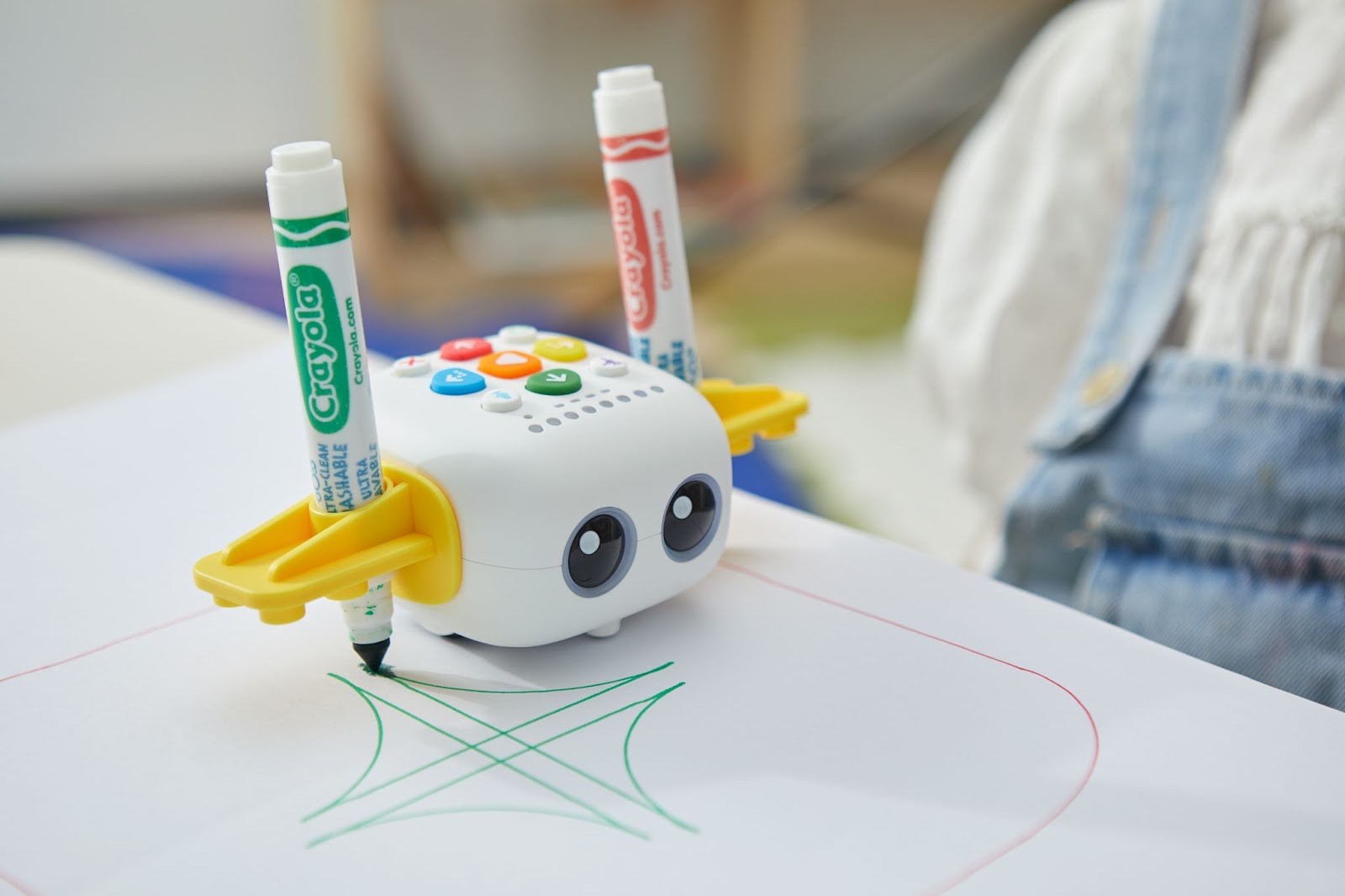
Matatalab recognizes that learning needs evolve as students grow. What I love about Matatalab is that they offer two coding robots that are easy to get started within the classroom. Students can dive right in and learn about coding and have fun exploring the possibilities with these great options! Read about our experience with the Tale-Bot Pro and the VinciBot.
The Tale-Bot Pro is designed for Pre-K and above, while the VinciBot is geared towards students from the 3rd grade and up. Being able to bring coding opportunities to even the youngest learners is a way to spark curiosity and boost engagement in learning about these essential STEM skills.
Here are four of the highlights for using Matatalab products:
1. An Ideal Autonomous Learning Assistant
Diving into coding and learning how to create opportunities for students can take time. However, Tale-Bot Pro and VinciBot come equipped with challenge booklets full of activities for students to explore. Matatalab also provides additional learning activities that can be downloaded from their website. With access to a variety of resources, it ensures that educators and students have enough materials to dive into the world of coding and also be able to infuse student choice in learning. What I think sets Tale-Bot Pro apart is that it provides instant voice feedback and guidance for students. As students code, they can observe the response of Tale-Bot Pro and understand if they completed the coding challenge correctly. This then empowers students to take charge of their learning and encourages self-guided exploration. As students take the lead more, it enables teachers to take on the role of facilitators in the classroom and be there to nurture student independence in learning.
2. Endless Creative Coding Practices
When it comes to using Tale-Bot Pro or Vincibot, there are so many ways that students can create something authentic, meaningful, and fun! We want to spark creativity and foster problem-solving abilities in our classrooms and with Matatalab’s coding robots, we are better able to facilitate this for our students. The beauty of Matatalab’s coding robots lies in their adaptability and versatility. By seamlessly integrating with Lego building bricks, students are not just limited to coding on screen; they can bring their creations to life in a tangible and interactive way. Imagine the excitement of coding a robot to navigate a custom-built obstacle course or perform a unique dance routine. This hands-on experience transforms abstract coding concepts into concrete, real-world applications, fostering a deeper understanding of the subject matter.
As students experiment with different configurations and functionalities, they not only enhance their coding skills but also develop a strong sense of ownership over their learning journey. This not only brings in an element of play but it also nurtures imagination.
As we think about the benefits, as students create and share their unique robot projects, they have opportunities to showcase achievements, which helps to boost their confidence and promotes more collaboration in the learning environment.
3. Enjoyable Learning Experience
When you first open the box and get started with these robots, the fun starts right away. Students and teachers are excited to see the possibilities and amazed at how easy it is to create something. Coding can be thought of as something difficult that requires an extended amount of time or a higher level of knowledge, however, that is not the case with Matatalab. Their coding robots instantly make coding a more enjoyable and engaging experience for all students. It leads to more interactive learning with real-time feedback and is engaging for students. Being able to quickly code and see the results, helps students to understand coding concepts right away. These robots bridge the gap between learning and fun!
4. Future-Proofing Your Career
With technology and the need for STEM skills increasing rapidly, understanding coding is no longer an option but has to be considered a necessity. When we introduce coding at an early age, it helps students to develop skills over time. Whether by starting early with Matatalab’s Tale-Bot Pro and then advancing to the VinciBot, educators are helping students gain skills that will benefit them in the future. Tale-Bot Pro and VinciBot not only nurture coding skills but also instill a growth mindset that is essential for adapting to the ever-evolving technological landscape. As students engage with these robots, they cultivate resilience, adaptability, and the ability to embrace challenges—all attributes that are highly sought after in any profession.
There are many “in demand” skills developed through coding such as collaboration, creativity, critical thinking, and problem-solving, which are transferable across various fields. As students master these skills, they not only enhance their academic skills but also set a strong foundation for future career success.
If you are looking to get started with coding and worried that you don’t have enough time, or that your learners are too young, then it is time to explore Matatalab’s coding resources, particularly the Tale-Bot Pro and VinciBot. These options provide students with a chance to dive into coding and learning and appreciate the process involved.
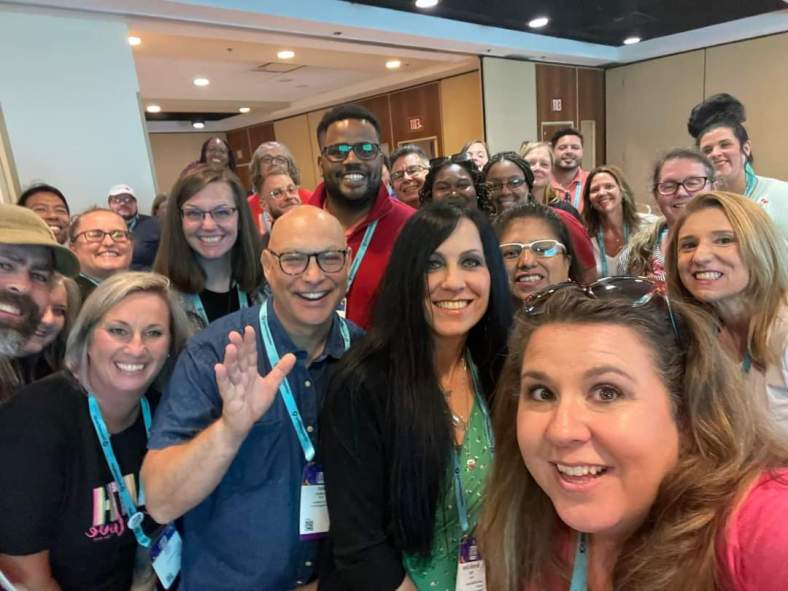
During ISTE 2023, I had a chance to talk with the team and share my experience with attendees!
About the Author
Rachelle Dené Poth is a Spanish and STEAM Educator at Riverview High School in Oakmont, PA. She is also an Attorney, Edtech Consultant, Speaker, and the Author of seven books about education and edtech. Rachelle is available to provide PD on Artificial Intelligence, Augmented and Virtual Reality, Coding, SEL and STEM.
Contact Rachelle to schedule sessions for your school about Artificial Intelligence, Coding, AR/VR, and more!
**Interested in writing a guest blog for my site? Would love to share your ideas! Submit your post here. Looking for a new book to read? Find these available at bit.ly/Pothbooks
************ Also check out my THRIVEinEDU PodcastHere!
Join my show on THRIVEinEDU on Facebook. Join the group here
As a classroom teacher with more than five years of experience integrating AI into my teaching practice and also providing PD and conference sessions for educators, I have enjoyed exploring the different tools and seeing the changes happen over this time. I try to find a variety of resources to help educators, especially ones that offer something for all grade levels and content areas. When we give students the chance to explore AI and develop a greater understanding of it, we also help to foster skills of critical thinking, problem-solving, and a deeper understanding of AI concepts. opportunities for engagement, personalized learning, and skill development
By introducing AI tools and exploring generative AI like ChatGPT, learners can develop essential 21st-century skills such as critical thinking, problem-solving, and digital literacy. These experiences allow them to explore and engage with cutting-edge technologies, preparing them for the future workforce. It is important for educators to create a balance between AI and traditional teaching methods, ensuring that AI integration is purposeful, age-appropriate, and aligns with educational goals. By harnessing the benefits of AI, educators can inspire young learners, nurture their curiosity, and empower them to become active contributors in an AI-driven world.
AI Impact on Learners
In our schools, when we purposefully leverage technology such as AI, it can have many benefits for student learning. Here are four ways that AI can have a positive impact on education.
Adaptive learning: One way that AI can benefit learners, especially young learners, is through adaptive learning platforms. These platforms utilize AI algorithms to analyze students’ strengths and weaknesses and can then tailor educational content to each student’s individual needs, reinforcing concepts they struggle with and challenging them in areas where they excel. While the AI is not a replacement for the teacher-to-student interaction and the feedback loop, it does help to provide what each student needs, when they need it. DreamBox is an example of an adaptive learning platform that can enhance students’ mathematical and literacy skills. Prodigy is an adaptive math platform that uses AI to create personalized math lessons and practice activities.
Content retention: For students to have multiple methods of reviewing the material, Quizlet has AI functionality that adapts to students’ progress and identifies areas that need further review. It provides personalized feedback and helps students strengthen their understanding and retention of key concepts. “Q-Chat is the “first fully adaptive, AI-powered tutor experience built on OpenAI’s ChatGPT API.”
Language Learning: Chatbots powered by natural language processing (NLP) algorithms can engage students in interactive conversations, providing instant feedback and opportunities to build skills at their own pace. For example, Duolingo’s chatbots enable students to practice world language skills by engaging in conversational exercises. AI-powered translation tools like Google Translate can also be used to enable students to explore and compare different languages. Another option is to read articles through Newsela which uses AI to adapt reading materials to students’ reading levels, making comprehension more accessible and enjoyable.
Social-emotional learning: Students can develop their social and interpersonal skills as they learn to interact through a conversational chatbot. For building confidence, engaging in a conversation with a chatbot that can provide feedback, helps students to develop their skills in many ways.
In addition to the benefits for learners, especially with creating more personalized, “just-in-time” supports, there are many tools and resources that benefit students in all grade levels. Here are six that are great to get started with:
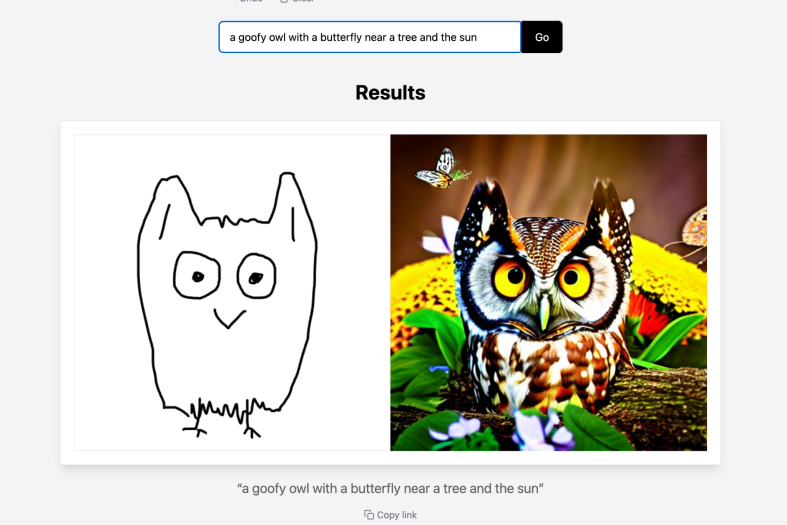
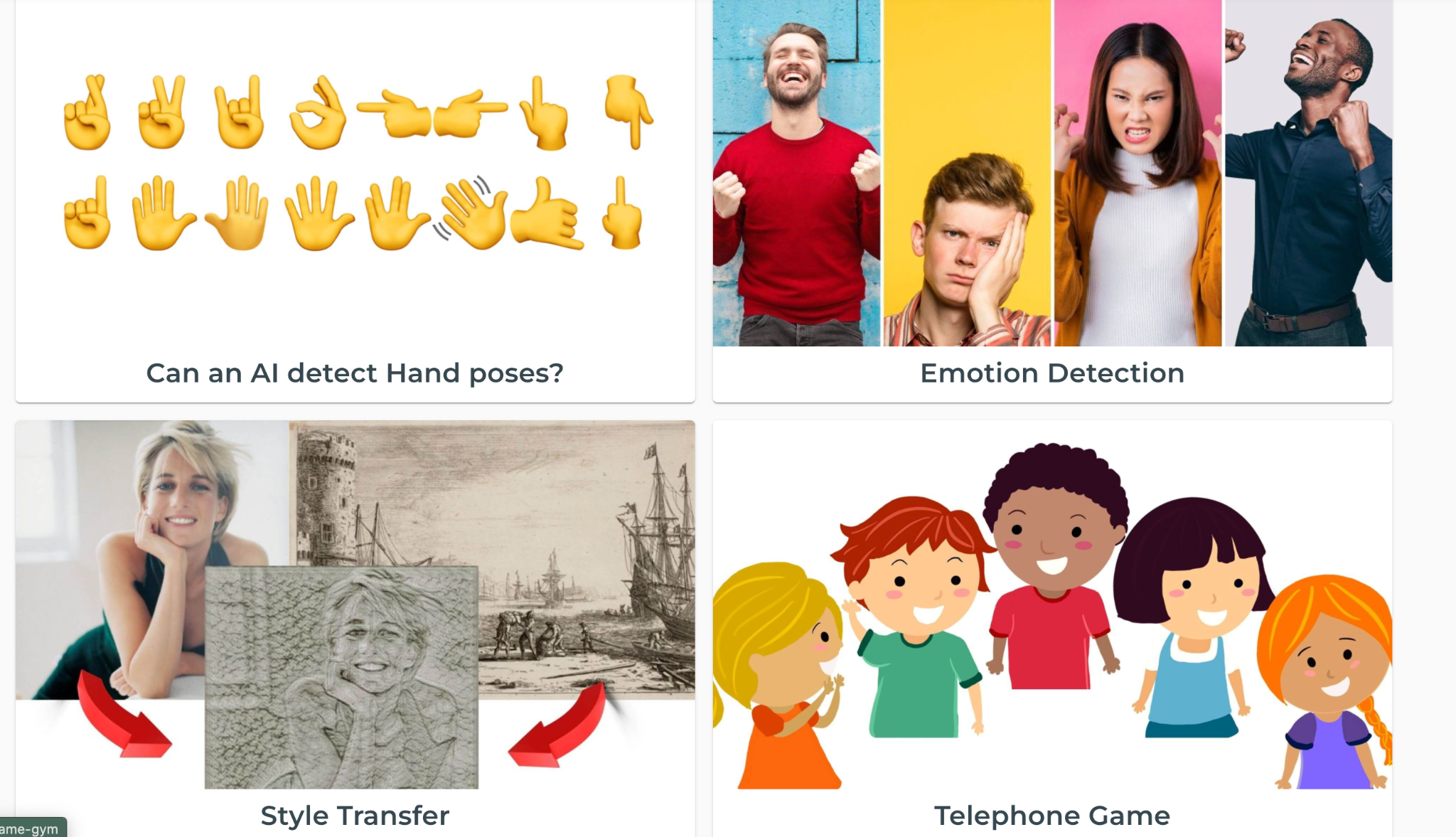
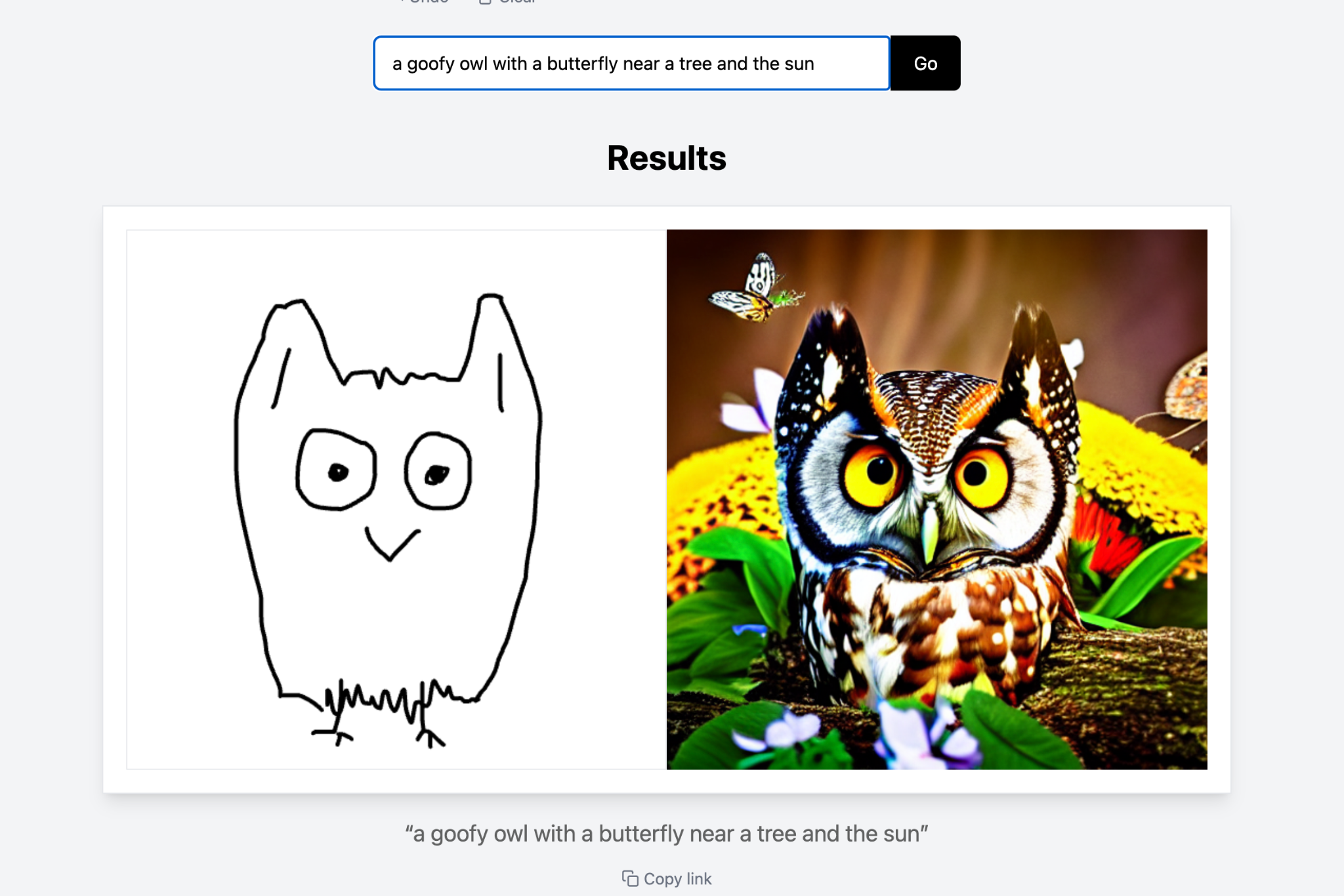
AIClub: An online platform that offers a K-12 curriculum covering AI, but it also has a range of AI-related resources and activities for students. There are interactive lessons, coding challenges, and AI project ideas. Middle school students and younger learners can explore the AI Club Gym and try some activities to develop an understanding of AI and how it works.
[via AI Club Gym resources]
[Examples of resources via AI World School]
For educators looking for ways to learn more about AI and also experience some of its benefits, there is a growing list of tools we are already using that are building in AI functionalities and some new ones that help us save valuable time. Here are three examples to test out:
Canva Magic Write Canva now offers an AI text generator called Magic Write, which can inspire creativity in writing. It provides ideas, helps with brainstorming, supports lesson planning, crafting emails, making it a useful tool for educators.
Curipod: Teachers can create interactive lessons in minutes using AI. Teachers simply type in a topic and a ready-to-run lesson is generated.
[example generated lesson via Curipod]
As with all new technologies, we need to make sure that we explore the benefits and concerns. Don’t be afraid to explore these tools because as educators, we need to be prepared to guide our students and help them to understand the technologies that may become a big part of their future by equipping them with knowledge and skills to navigate the world of AI effectively and ethically.
Coming up on October 7th is the EduMatch AI Summit! A free event and I am honored to be a Featured Speaker during the Summit and can’t wait to share AI resources and how to get started! Read the post from Dr. Sarah Thomas here to learn more and find out how to sign up to present and participate!
About Rachelle:
Rachelle Dené is a Spanish and STEAM: What’s Next in Emerging Technology Teacher at Riverview High School in Oakmont, PA. Rachelle is also an attorney with a Juris Doctor degree from Duquesne University School of Law and a Master’s in Instructional Technology. Rachelle is an ISTE Certified Educator and serves as the past president of the ISTE Teacher Education Network. She was named one of 30 K-12 IT Influencers to follow in 2021.
Rachelle is available for PD sessions in-person and virtual on a variety of topics. Key focus areas are AI, ChatGPT, Generative AI, AR and VR, SEL and STEM.
**Interested in writing a guest blog for my site? Would love to share your ideas! Submit your post here. Looking for a new book to read? Find these available at bit.ly/Pothbooks
It seems that summer passes by so quickly every year. We are so busy throughout the school year and sometimes miss out on trying new ideas or exploring new tools. However, we have the summer break to reflect and explore new experiences and it is an opportunity to take time to recharge. Before we know it, we are back in our classrooms and looking for some new ideas and ways to engage students in learning.
There are so many resources out there to explore for educators and sometimes it can be a bit overwhelming to find something that works well. Or, you want to create some new learning experiences for students and help them to develop a variety of skills beyond just the content area that we are teaching.
With the start of a new school year, I think it’s a great time to explore some new ideas. We need ideas that not only help students to build their skills in the content area but also help them to develop essential social-emotional learning (SEL) skills, learn about the world around them, and be prepared for whatever the future may bring.
As the summer draws to a close, it’s the perfect opportunity to set the tone for a successful academic year. Let’s explore a few ideas for back-to-school that will help us to kickstart the year.
Building relationships
It’s important that we get to know our students, their interests, and what their specific needs are. A fun way to do this would be to encourage students to select a topic of interest from the PebbleGo Library and then use PebbleGo Create to share what they know about the topic and also to include some information about themselves. This is a great way to get to know our students and for students to get to know each other. When we do this, it helps us to build a successful and thriving learning community. You can also check out the lesson plan for “Making a New Friend” and explore the different articles available!
We want students to be successful and at the start of the year, it’s a good opportunity to set up some structure to help students set learning goals. Work with students to establish a clear vision for the academic year by setting personal and academic goals. Encourage students to think about what they want to achieve and how they plan to get there. Guide them to create realistic and achievable goals, and work with them to review progress throughout the year. When students set goals, it can help to motivate them, promote greater focus, and build valuable skills like time management and self-discipline which are essential SEL skills.
It’s always a great opportunity to start a new school year to have some fun getting to know each other and build those relationships. In the new school year or new class, students are often curious about what they will be learning. What better way than to use the Curiosity Game to get students excited about learning and then share that learning with classmates!
We want students to develop a love of reading and what better way than to create a book club in your classroom. Students can explore the diverse range of resources available from PebbleGo on so many different topics. We can have book talks in our classes and students can use PebbleGo Create to share a little about their book. These opportunities will foster critical thinking, creativity, and communication skills. It will also get students excited about reading!
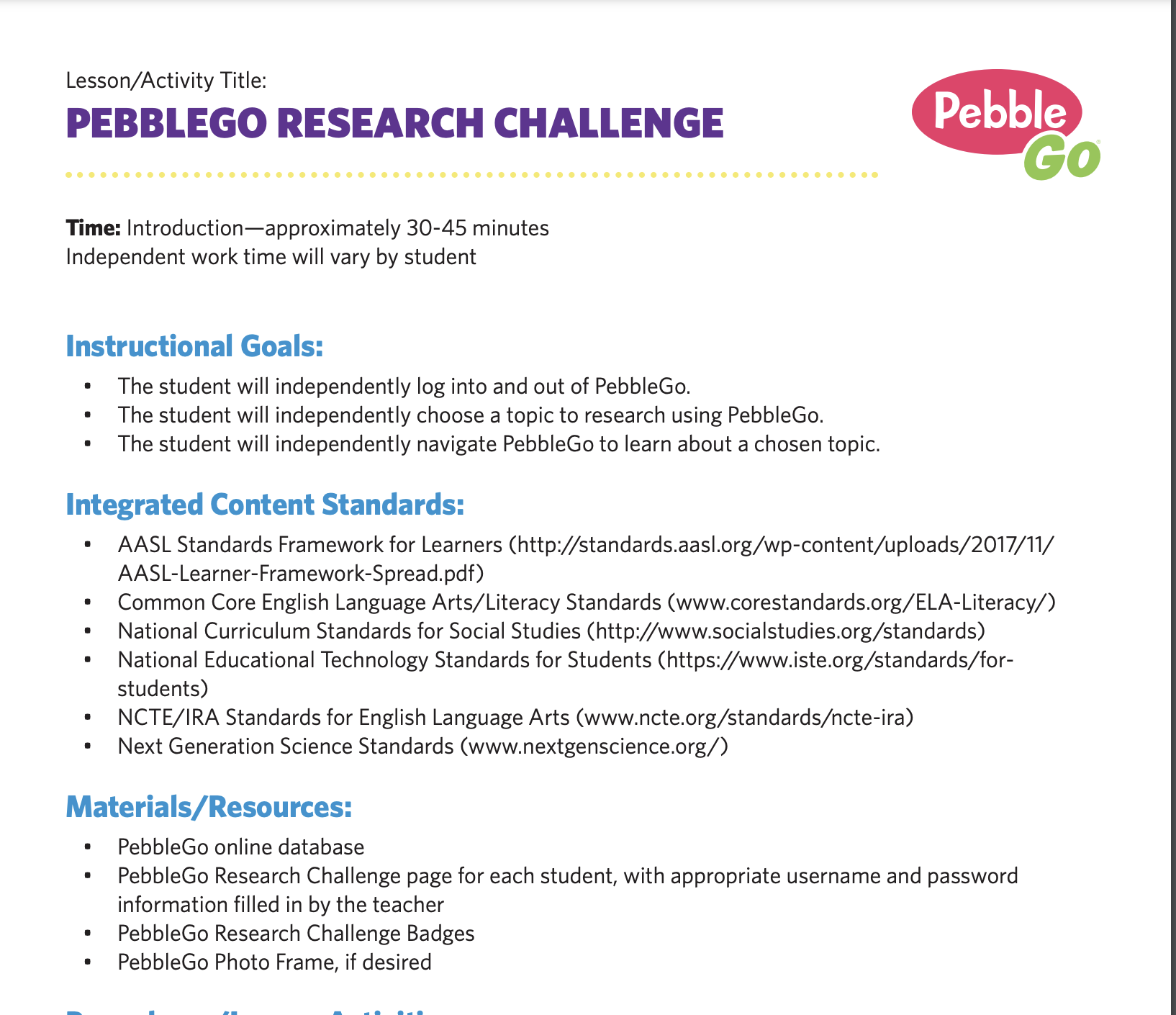
An activity that is a lot of fun because we get to learn about students and their interest is genius hour. With genius hour, students choose a topic or an area of interest and then research it and create something to share with everyone else. It gives them a chance to share their genius. A great way to do this is by using the lesson plan available through PebbleGo. Students choose their research topic, have time to explore and then they can create with PebbleGo Create to share that learning and their excitement with their classmates. An activity like this also helps students to become more independent in learning which is a valuable learning experience as we want to prepare them for the future and develop student agency.
Back-to-school can sometimes bring feelings of anxiety and stress. We can help students to learn about health and wellness and create using PebbleGo Create to share tips for others! It is so beneficial for students and ourselves when we introduce mindfulness and stress-relief activities into our daily routine. It will help students cope with the challenges that can arise with academics and provide them with ways to deal with stress, or improve focus, concentration, and their overall well-being. Understanding their emotions is important for academic success.
You can even have students create something simple to reflect what they have learned and share it in class. So many wonderful options available to explore! Just choose one to start and then add in the others throughout the year to mix things up a bit, boost student engagement and spark curiosity for learning.
With so many already in or heading back to school, these ideas can offer a bit of a different approach to start the academic year with excitement, enthusiasm, and purpose. By fostering a positive and engaging learning environment, helping students with setting goals, encouraging peer interactions, and incorporating interactive methods, students and educators can experience a rewarding educational journey.
Starting with these ideas can help students to build relationships, be mindful of their well-being, focus on their academic growth and enjoy learning! It can help with making this academic year one to remember. Happy back-to-school!
Looking for PD for your school? I provide in-person and virtual training on the following topics. If you want to learn more about and explore AI and ChatGPT, contact me to schedule! Rdene915@gmail.com
**Interested in writing a guest blog or submitting a sponsored post for my site? Would love to share your ideas! Submit your post here. Looking for a new book to read? Find these available at bit.ly/Pothbooks
About the Author
Rachelle Dené Poth is an edtech consultant, presenter, attorney, author, and teacher. Rachelle teaches Spanish and STEAM: What’s nExT in Emerging Technology at Riverview Junior Senior High School in Oakmont, PA. Rachelle has a Juris Doctor degree from Duquesne University School of Law and a Master’s in Instructional Technology. She is a Consultant and Speaker, owner of ThriveinEDU LLC Consulting. She is an ISTE Certified Educator and currently serves as the past -president of the ISTE Teacher Education Network and on the Leadership team of the Mobile Learning Network. At ISTE19, she received the Making IT Happen Award and a Presidential Gold Award for volunteer service to education. She is also a Buncee Ambassador, Nearpod PioNear, and Microsoft Innovative Educator Expert.
Rachelle is the author of seven books, “In Other Words: Quotes That Push Our Thinking,” “Unconventional Ways to Thrive in EDU” (EduMatch), and “The Future is Now: Looking Back to Move Ahead,” Rachelle Dene’s latest book is with ISTE “Chart A New Course: A Guide to Teaching Essential Skills for Tomorrow’s World.” True Story: Lessons That One Kid Taught Us, Your World Language Classroom: Strategies for In-Person and Digital Instruction and Things I Wish […] Knew.
Rachelle is a blogger for Edutopia, Getting Smart, Defined Learning, and NEO LMS.













 Learning as I go: Reflections & lessons learned