Tips for Back-to-School

As we head back into our classrooms for a new school year, educators are thinking about class schedules, grading, lesson plans, school meetings, observations, and so much more. Getting back into the daily teaching schedule can be a challenge, especially after having the summer “off.”

However, many educators don’t take the summer off. Instead, they take advantage of the extra time to engage in professional learning. Whether by attending conferences, joining book studies, participating in online learning events, or even heading to their classroom to prepare for the new school year, being prepared for school is always on teachers’ minds. Having the summer off, even if only for a few weeks, is nice because it provides time to relax and recharge and also time to be better prepared than the year before.

No matter how many years of experience an educator has, a new school year can be stressful. I think it is important to start the year with goals and use our prior experiences to set clear focus points for ourselves and our students.

For many years, I remember conversations with colleagues about how they couldn’t sleep the night before the first day of school. Attributing it to being excited and nervous about starting a new school year and doing it right. In my experience, I always slept well and never really worried about being prepared for the first day of school. For me, it was always the second day and every day after that. For me, the first day of school was simply the time to introduce myself to students, talk about what they could expect in my class, and provide any materials they needed to take home for their families. I started each year with rules and procedures. Unfortunately, I did not realize that the content could wait. I should have placed more importance on creating a supportive classroom community and focusing on building relationships first. Now that I know better before the year starts, there are some questions that I ask myself:

Did I reflect enough on my teaching practice, and have I identified areas I want and need to work on?

Am I prepared with new ideas, whether different methods or digital tools, to bring into my classroom to help engage students in learning?

What are some ways that we can build relationships and get to know one another?

How can I create a welcoming classroom space that fosters creativity and curiosity for learning?

Many more questions cross my mind and likely cross the minds of educators everywhere. It comes down to thinking about and reflecting on what we learned about our practice and methods used during the past school year. What activities and methods have made an impact not only on student learning but also on building essential social-emotional learning (SEL) skills? Which methods or tools helped students feel more connected with their classmates and the content? Cultivating a learning environment where students have choices, feel comfortable, and become more confident amplifies their learning potential. It leads to a supportive classroom community.

As we head into a new school year, it is always the perfect time to try a few new ideas and see how the students respond and the impact on learning and then decide where to go from there. Teaching the content material is important, but finding ways to boost student engagement and foster the development of essential SEL skills is also important. With so many things to consider, I am choosing five focus points for starting the new school year:

  • Build Relationships: Starting on day one, we need to get to know our students and let them get to know us, too. When we create opportunities for students to connect with each other and build a collaborative and supportive space, we will see how it positively impacts the learning that happens in our classroom. By starting with relationship building, we will create a space where students feel comfortable making mistakes and know they are supported by us and their peers. Creating a comfortable, supportive space is essential for learning. Have students create an “About Me” or use icebreakers to get to know each other and make sure that you participate too.
  • Set goals and reflect: At the start of the school year, have students set some goals for themselves in your class. Not just students it’s also important that we set goals for ourselves and share them with our students. When we do this together, we hold each other accountable and provide the support that we all need in our classroom space. We know the importance of SEL and by setting goals and reflecting on them throughout the year, we will be focusing on self-awareness and self-management in particular, which are essential for student learning and being prepared for the future. Provide some questions for reflection, such as: How do I think it went? What would I change? Are there areas that I can improve upon?
  • Create a community: Students need to know how to access resources for the class and to be able to connect with the teacher and classmates. It is important to set up a space or have a system for being able to communicate with students. Sending an email every Friday with a recap of the week, using a messaging app, or designing a class website are all good ways to create a learning community. Having a space where students can interact and access the resources they need to be successful is important, and we have definitely learned how essential it is after our experiences over the past couple of years. Another thing to consider is how to involve students more in the design of the learning experiences in the classroom and have them truly be a part of the learning community.
  • Promote collaboration: In preparing students for the future, we know that one of the essential skills they need is the ability to communicate and collaborate with others. Students need opportunities to do this in the classroom as well as in a virtual space. Using different methods, like station rotations, where students can work with peers, or through digital tools like Padlet, we can promote collaboration. Students can build content area skills while also building digital citizenship skills and SEL skills.
  • Foster creativity and curiosity for learning: When we create a learning environment where students feel welcomed and supported, they will feel more comfortable participating in class activities, interacting with their peers, and taking risks with learning. Provide students with different choices for creating and sharing what they have learned. Use methods like Genius Hour or PBL to spark curiosity and promote student-driven learning. Offer choices in digital tools that foster creativity, such as Book Creator, Canva, Genially, Storybird or Storyboard That.

Start the year with some focus areas and involve students in the discussion. Get their feedback, ask for ideas, and enjoy the learning process together. Don’t be afraid to take some risks with new ideas or tools. With new ideas, we can boost student engagement and creativity, spark curiosity for learning, and student needs and interests are better met.

About the Author:

Dr. Rachelle Dené Poth is a Spanish and STEAM: What’s Next in Emerging Technology Teacher at Riverview High School in Oakmont, PA. Rachelle is also an attorney with a Juris Doctor degree from Duquesne University School of Law and a Master’s in Instructional Technology. Rachelle received her Doctorate in Instructional Technology, and her research focus was on AI and Professional Development. In addition to teaching, she is a full-time consultant and works with companies and organizations to provide PD, speaking, and consulting services. Contact Rachelle for your event!

Rachelle is an ISTE-certified educator and community leader who served as president of the ISTE Teacher Education Network. By EdTech Digest, she was named the EdTech Trendsetter of 2024, one of 30 K-12 IT Influencers to follow in 2021, and one of 150 Women Global EdTech Thought Leaders in 2022.

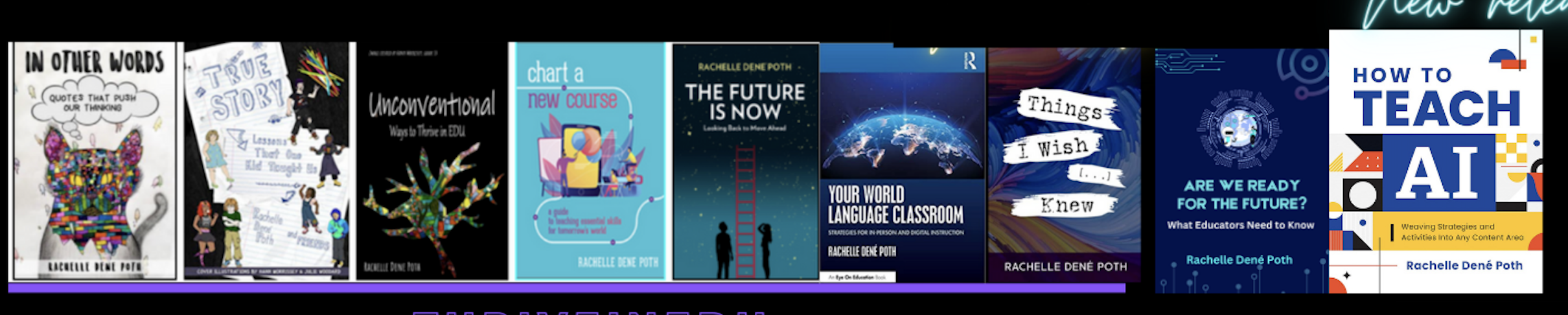
She is the author of nine books including ‘In Other Words: Quotes That Push Our Thinking,” “Unconventional Ways to Thrive in EDU,” “The Future is Now: Looking Back to Move Ahead,” “Chart A New Course: A Guide to Teaching Essential Skills for Tomorrow’s World, “True Story: Lessons That One Kid Taught Us,” “Things I Wish […] Knew” and her newest “How To Teach AI” is available from ISTE or on Amazon.

Contact Rachelle to schedule sessions about Artificial Intelligence, Coding, AR/VR, and more for your school or event! Submit the Contact Form.

Follow Rachelle on Twitter(X) and Instagram at @Rdene915

**Interested in writing a guest blog for my site? Would love to share your ideas! Submit your post here. Looking for a new book to read? Find these available at bit.ly/Pothbooks

************ Also check out my THRIVEinEDU Podcast Here!

Join my show on THRIVEinEDU on Facebook. Join the group here.

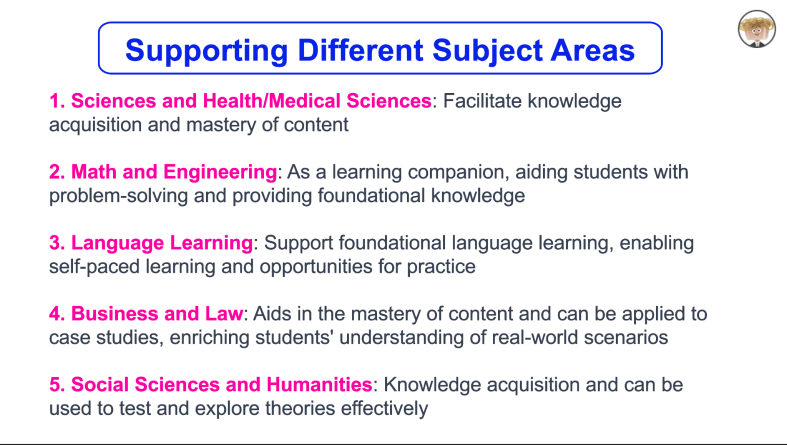
Collaborate with Walter, Your AI Teaching Assistant

In collaboration with Noodle Factory, all opinions are my own.

As an educator constantly seeking innovative methods to enhance learning and teaching, my exploration recently led me to an exciting platform: Noodle Factory. When I find a new tool, especially when it comes to AI, I love sharing my experiences so that other educators can get started.

It has been fun exploring its various options and, in particular, its standout features, such as Walter+, the AI teaching assistant designed for grades K through 12. Walter+ is designed to help educators enhance and transform the learning experiences they provide for students. Noodle Factory makes it easy to get started by providing guidance, being available for questions, and even doing a demo! For any educator wondering where to begin with AI in their classroom, I definitely recommend exploring Noodle Factory and seeing the impact on student learning. Giving students a chance to learn about and interact with AI is important.

Why AI in Education Matters

The integration of AI in education is reshaping how educators deliver the content and impacting how students engage with the material. With purposeful use and the right pedagogical practices, AI tools can assist educators in various ways. It can help to personalize learning, automate grading, and create engaging, interactive content while complementing traditional teaching methods. Noodle Factory provides tools that are not just innovative but also intuitive and effective for use in the classroom. Especially as educators seek more efficient ways to deliver instruction and provide feedback to students, knowing how to leverage the power of AI is key. Noodle Factory offers innovative tools that enhance both learning and teaching processes.

First Experiences with Noodle Factory

When I first started with Noodle Factory, I was quite surprised by how easy it was to generate personalized learning resources for students. By uploading some of my teaching materials onto the platform, I saw how Walter+ tailored these resources into personalized learning experiences. I was impressed with its AI-driven dialogue system, which engages students in meaningful conversations and helps enhance their overall comprehension and retention of the content.

Using AI-powered tools such as Walter+ to create personalized learning experiences has been a game changer. I uploaded my teaching materials and waited briefly while Walter transformed them into interactive, engaging learning modules specific to my students’ needs. Noodle Factory’s ability to generate context-aware conversation flows and also, its ability to provide multilingual support enables educators to effectively reach students coming from different language backgrounds.

My favorite Noodle Factory Features

There are great features in Noodle Factory that will significantly impact teaching and students’ learning:

AI-driven Personalized Learning: Walter+ adapts to each student’s learning pace, helping to promote a more inclusive and effective learning environment.

We know that in order to accommodate students’ diverse learning needs, we have to understand where they are in the learning process and provide authentic, meaningful, and timely feedback. When this is possible in real-time, teachers can adjust, and each student can receive tailored educational experiences, which we know is crucial for learning. It provides students with instant, constructive feedback, which is key to fostering their academic growth.

Automated Grading and Feedback: We know that grading can take a great deal of time, especially when providing specific feedback for students. With Noodle Factory, educators can save time and provide students with immediate, actionable feedback, helping them understand their strengths and areas for improvement. This, of course, means that teachers can spend more time working directly with students, too!

Engaging and Interactive Content Creation Tools: With the various options available, I am able to boost student engagement. Noodle Factory’s tools enable me to transform traditional lessons into more interactive sessions that spark students’ interest and foster deeper learning. Student engagement, which can be a challenge, is now an area that we can boost because of the tools available to us.

Results: Positive Impact on Teaching and Learning!

By using Noodle Factory, educators will see a boost in student engagement and learning performance. Noodle Factory helps with our productivity through its features, such as automated grading and real-time insights into students’ progress. Being able to grab a quick glimpse into where students are in the learning journey is so helpful for targeting our instruction as needed. Gathering feedback from students is also important as it helps us to know what works for them and how to enhance their learning experiences. It also assists with providing a personalized approach through an interactive learning environment.

The real-time performance tracking and flexible assessment modules help teachers tailor their teaching strategies in real time to best meet individual student needs. Give Noodle Factory a try today and see the impact it makes in your classroom, for students, and for your work as an educator!

Interested in experiencing this transformative tool? Great news! I’m offering an exclusive code for my readers to try the premium plan (Educator Plus) on Noodle Factory. Discover how Walter+ can enhance your teaching and provide your students with an unmatched educational experience. And be sure to let me know how it goes for you!

P.S. Check out my podcast episode, where I chat with the Co-Founders of Noodle Factory Yvonne and Jim! Listen here!

About the Author:

Dr. Rachelle Dené Poth is a Spanish and STEAM: What’s Next in Emerging Technology Teacher at Riverview High School in Oakmont, PA. Rachelle is also an attorney with a Juris Doctor degree from Duquesne University School of Law and a Master’s in Instructional Technology. Rachelle received her Doctorate in Instructional Technology, and her research focus was on AI and Professional Development. In addition to teaching, she is a full-time consultant and works with companies and organizations to provide PD, speaking, and consulting services. Contact Rachelle for your event!

Rachelle is an ISTE-certified educator and community leader who served as president of the ISTE Teacher Education Network. By EdTech Digest, she was named the EdTech Trendsetter of 2024, one of 30 K-12 IT Influencers to follow in 2021, and one of 150 Women Global EdTech Thought Leaders in 2022.

She is the author of nine books including ‘In Other Words: Quotes That Push Our Thinking,” “Unconventional Ways to Thrive in EDU,” “The Future is Now: Looking Back to Move Ahead,” “Chart A New Course: A Guide to Teaching Essential Skills for Tomorrow’s World, “True Story: Lessons That One Kid Taught Us,” “Things I Wish […] Knew” and her newest “How To Teach AI” is available from ISTE or on Amazon.

Contact Rachelle to schedule sessions about Artificial Intelligence, Coding, AR/VR, and more for your school or your event! Submit the Contact Form.

Follow Rachelle on Twitter(X) and Instagram at @Rdene915

**Interested in writing a guest blog for my site? Would love to share your ideas! Submit your post here. Looking for a new book to read? Find these available at bit.ly/Pothbooks

************ Also check out my THRIVEinEDU Podcast Here!

Join my show on THRIVEinEDU on Facebook. Join the group here.

Start the New School Year with Nous AI from MatataStudio!

In collaboration with MatataStudio EDU, Opinions are my own

The Nous AI Set is one of MatataStudio’s standout products. I have used all of their other great products in my classroom and have been amazed by what you can do with the Nous Set!

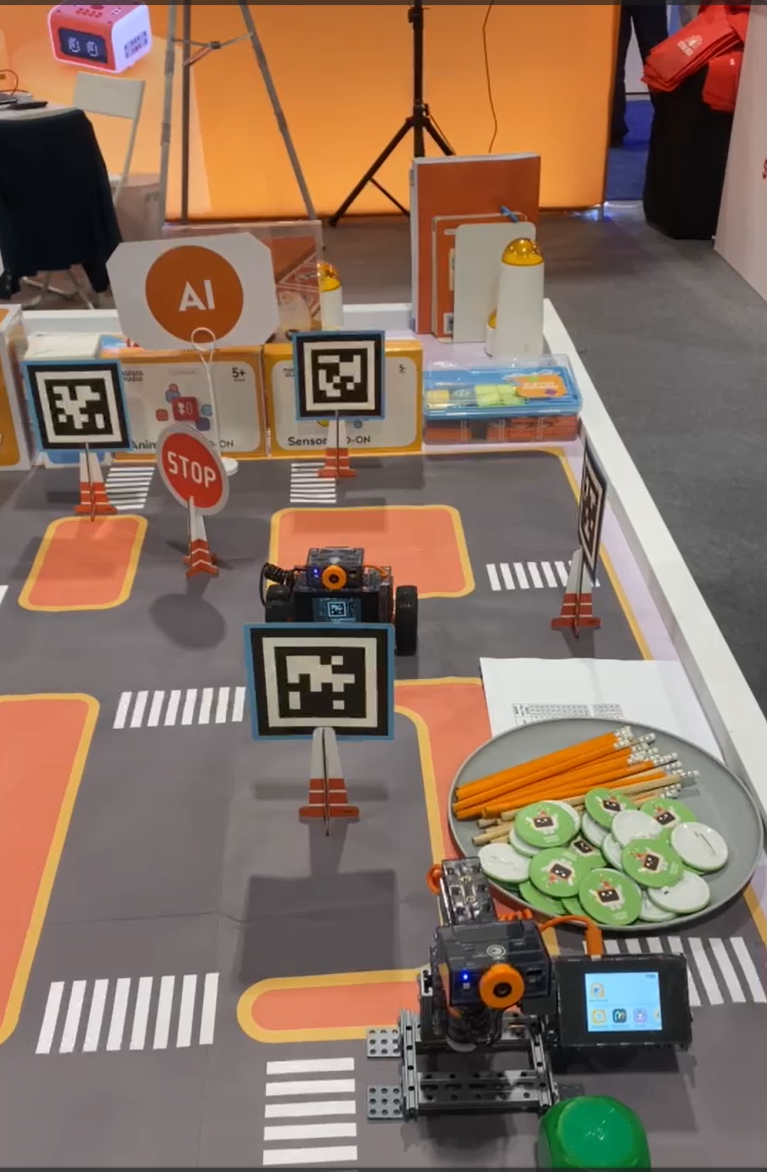
I had a chance to stop by their booth while attending and presenting at ISTE 2024 in Denver. It was awesome to see all of their fabulous products for students of all ages! It was also great to speak with their amazing team and learn about the options and new resources that are coming from MatataStudio for students! Thank you, Vivian!

[At the booth during ISTE, so many awesome learning resources to explore!]

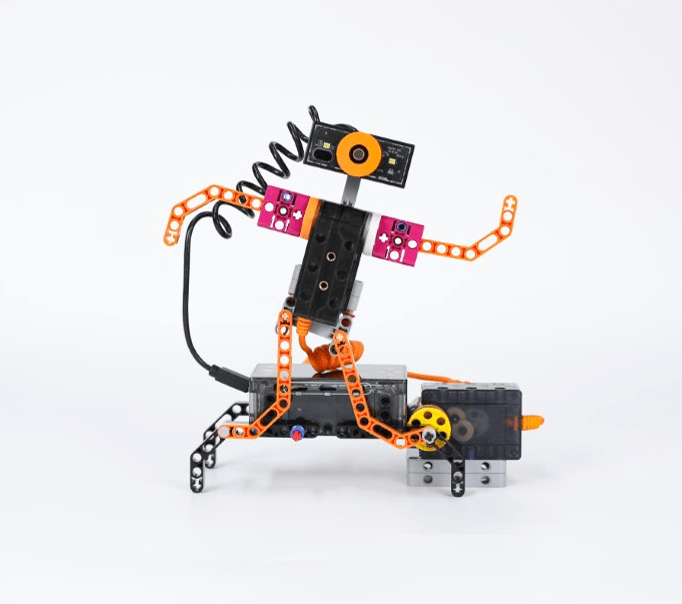
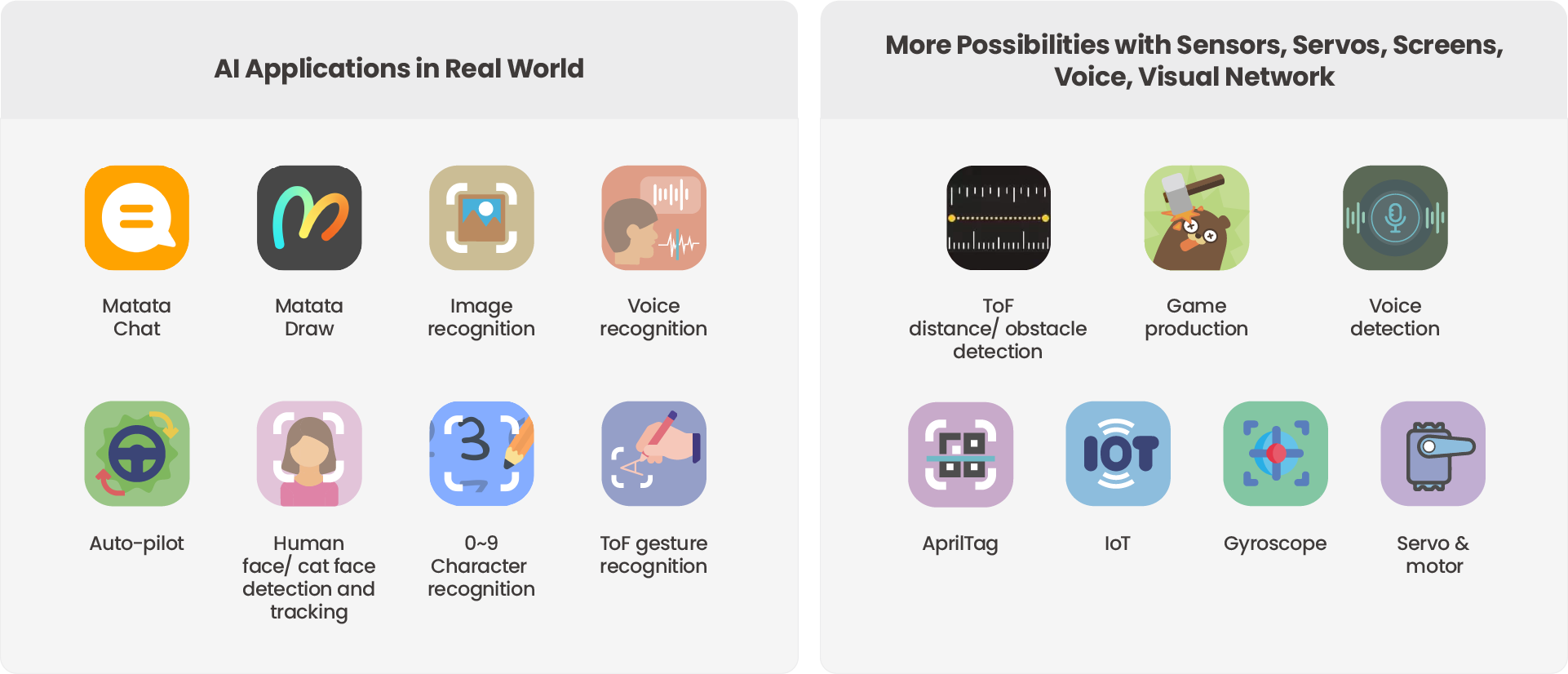
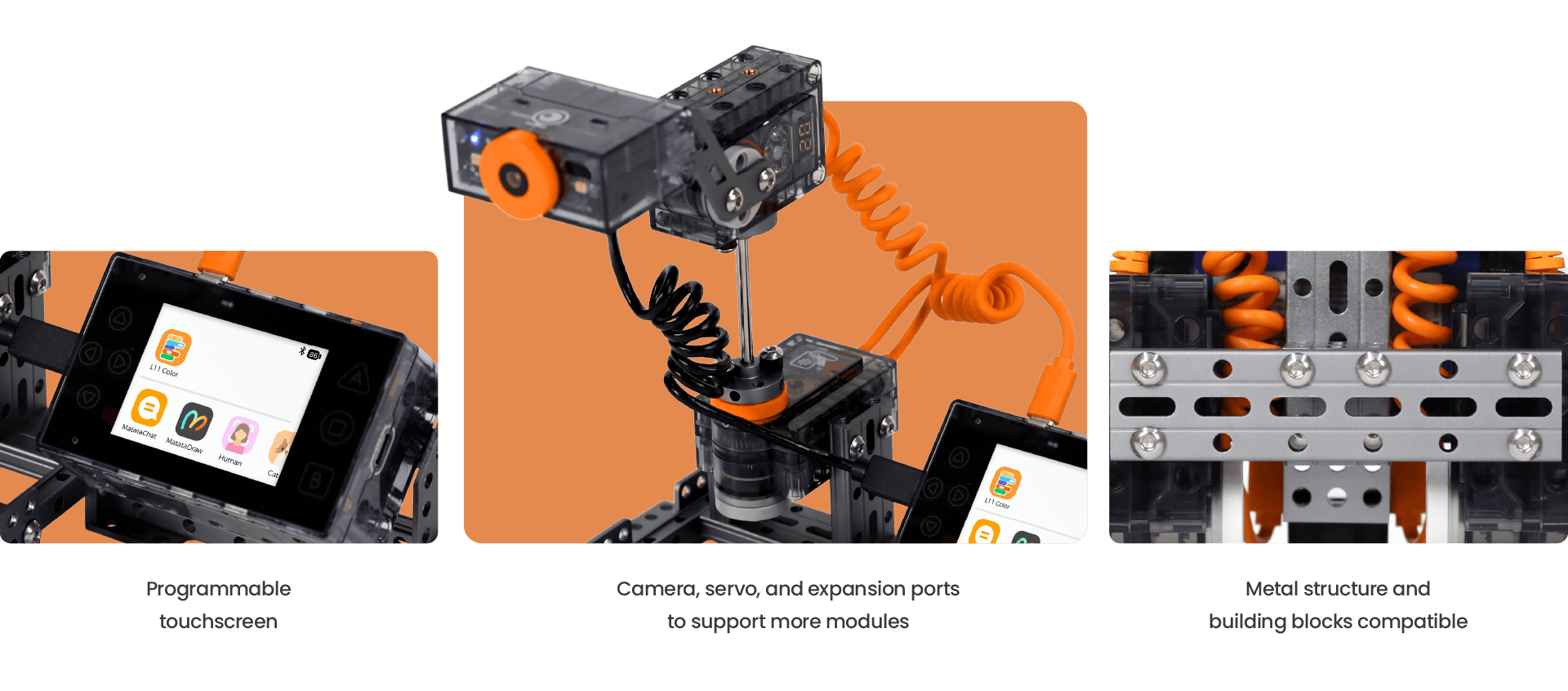
Nous AI is designed to provide students with an understanding of artificial intelligence (AI) and enable them to build their knowledge through the various activities they can choose from and complete independently! What makes Nous different is its modular design. Students can choose how to design it, which allows it to support a variety of AI technologies and functions. Students can learn about machine learning, neural networks, machine vision, speech recognition, and autonomous driving capabilities, and more. It also offers tools like MatataChat and a range of other AI applications that are available right on its touchscreen.

The robot comes with a metal structure, and it is also compatible with building block structures, so it is a versatile tool for boosting creativity and problem-solving in its assembly and through robotics projects. The expandable electronic module system allows students to customize and enhance their projects, fostering a sense of ownership and creativity and leading to more authentic learning. Whether it’s programming with graphical interfaces or diving into Python programming, the Nous AI Set provides students with a comprehensive platform to explore the world of AI and have fun while doing so.

Engaging in Design and Engineering Thinking

What I appreciate about the Nous AI Set is how it encourages students to engage in design and engineering thinking, which helps them develop a greater interest in the learning process. In my classroom, I’ve seen students become deeply involved in designing, building, and testing their projects. A hands-on approach to learning is essential for developing critical thinking and problem-solving skills, which are crucial for future careers in STEM fields and beneficial in so many areas.

The Nous AI Set allows students to iterate on their designs, test different solutions, and refine their projects as they go. This iterative process is key to helping students build essential skills such as resilience and problem-solving. When students learn to view challenges as opportunities for growth rather than as obstacles, it provides them with skills that will benefit them now and as they prepare for the future. By focusing on the learning process rather than just the final product, students develop a deeper understanding of the principles of engineering and design.

Why should you explore Nous AI?

The Nous AI Robot is a transformative tool for STEAM education and works well in any classroom. MatataStudio offers options for each grade band and provides educators with a comprehensive and engaging way to teach AI and coding to all students. Its modular design, dual programming capabilities, and extensive learning resources make it suitable for students of varying skill levels and interests.

There are many possibilities, and with the Nous AI Set, we can help better prepare students for the future. As an educator who has seen the great impact on student collaboration in building the robot and the ideas that students generated, I recommend the Nous AI Robot for any classroom looking to incorporate AI and robotics into their curriculum, especially as a fun, impactful way to start a new school year! And explore new ideas and challenges throughout the year.

Whether you have years of experience or are new to teaching AI and coding, the Nous AI Robot provides the tools and resources to create a dynamic and interactive learning environment. The focus on hands-on learning and building connections to real-world applications ensures that students not only learn but also experience the exciting world of AI and robotics. There are so many tutorials available to help educators and students get started!

Real-World Applications

The Nous AI Robot is not just a learning tool; it also provides students with insights into real-world AI applications. For example, students can dive in and learn about AI through its activities focused on image recognition, speech recognition, and autonomous driving. Students can see how AI technologies are used in everyday life. These opportunities help students see the relevance of what they are learning, and hopefully, it will inspire them to pursue careers in AI and technology. It is so easy to use with its programmable touchscreen, which sparks curiosity for learning!

Project-based learning (PBL) is a great way to engage students in authentic, meaningful, and real-world learning. It is an essential component of the Nous AI curriculum. Students engage in projects that require them to build and then apply their knowledge of AI, programming, and engineering. The projects help reinforce AI concepts through practical application, which makes learning more effective, memorable, and fun for all students!

The Right Resources for Educators

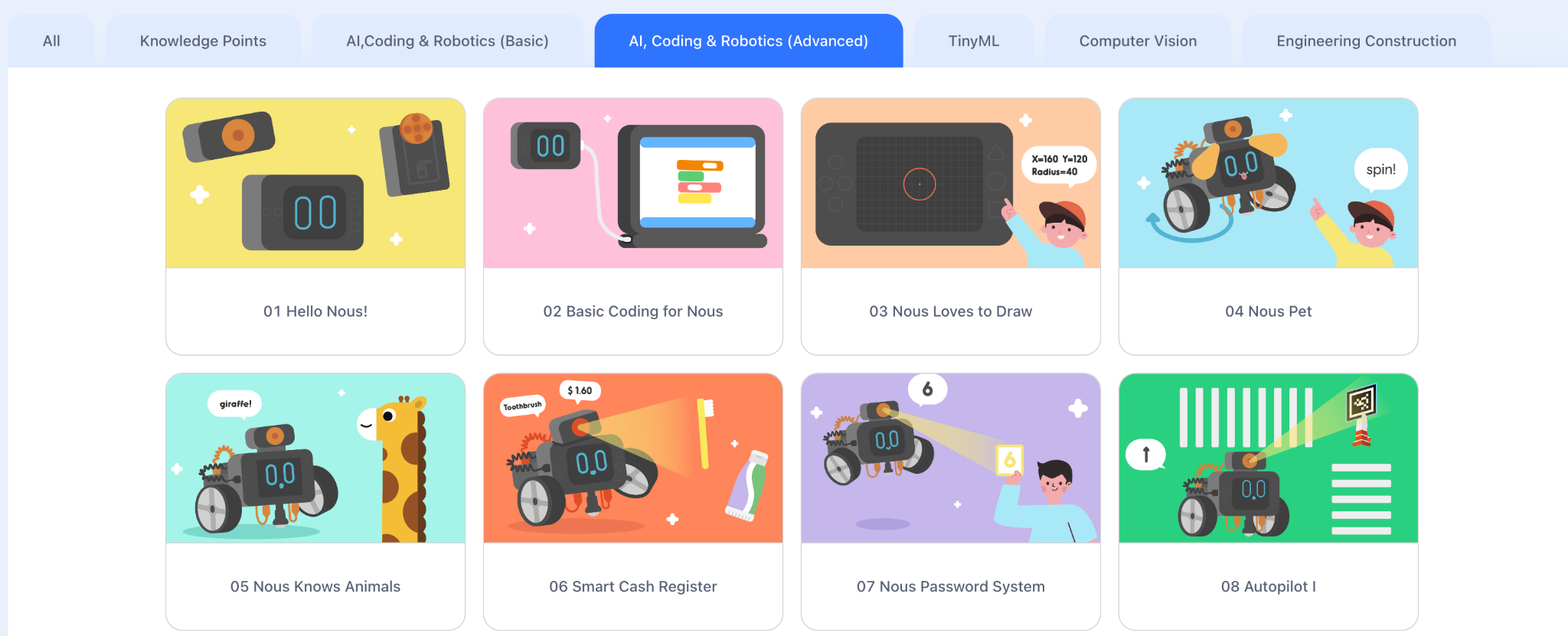
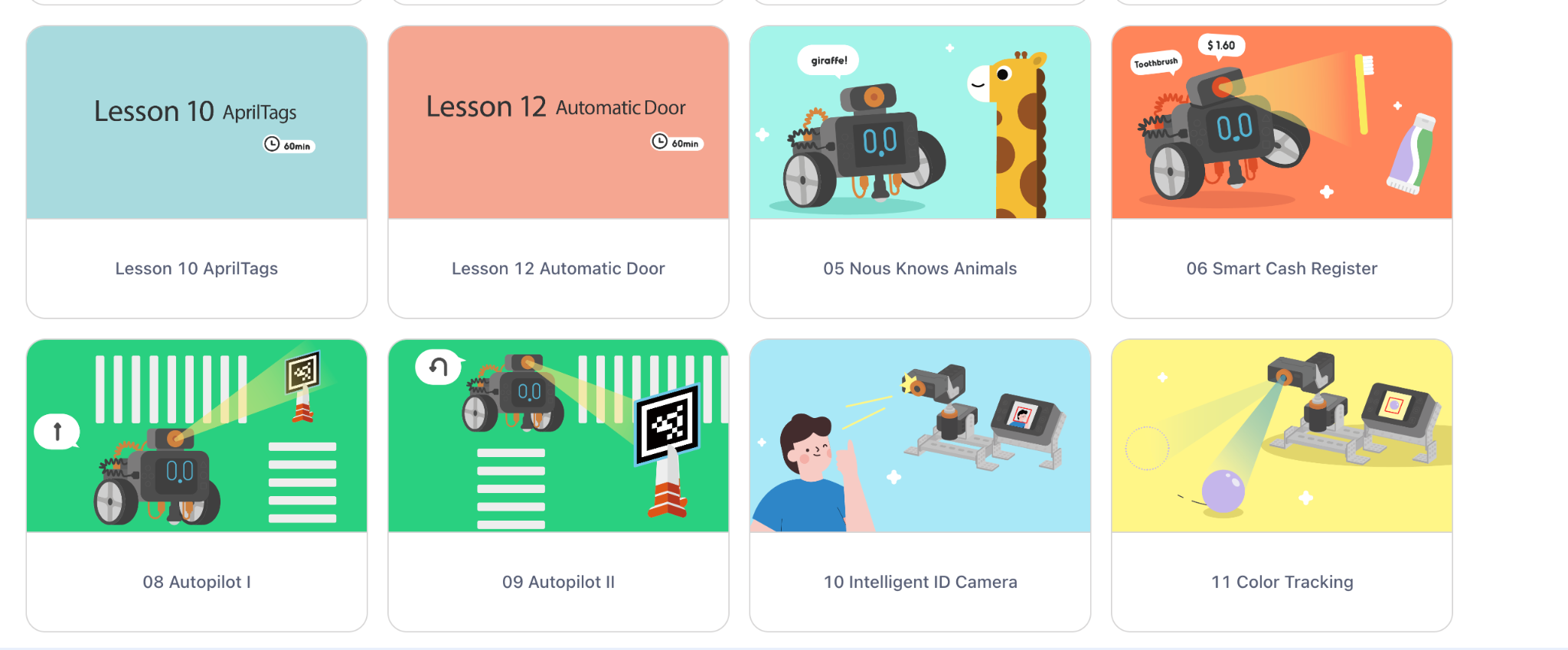
MatataStudio doesn’t just provide innovative tools—they also offer fantastic learning resources to support educators and students. Educators can access online tutorials and curriculum guides, and various professional development resources are available. MatataStudio ensures that educators have everything they need to effectively integrate the Nous AI Set into their classrooms. These resources are invaluable in helping educators guide their students through the various functionalities of the robot, ensuring a comprehensive understanding of AI and programming.

I had a chance to explore these guides, and everything educators need to get started is available!

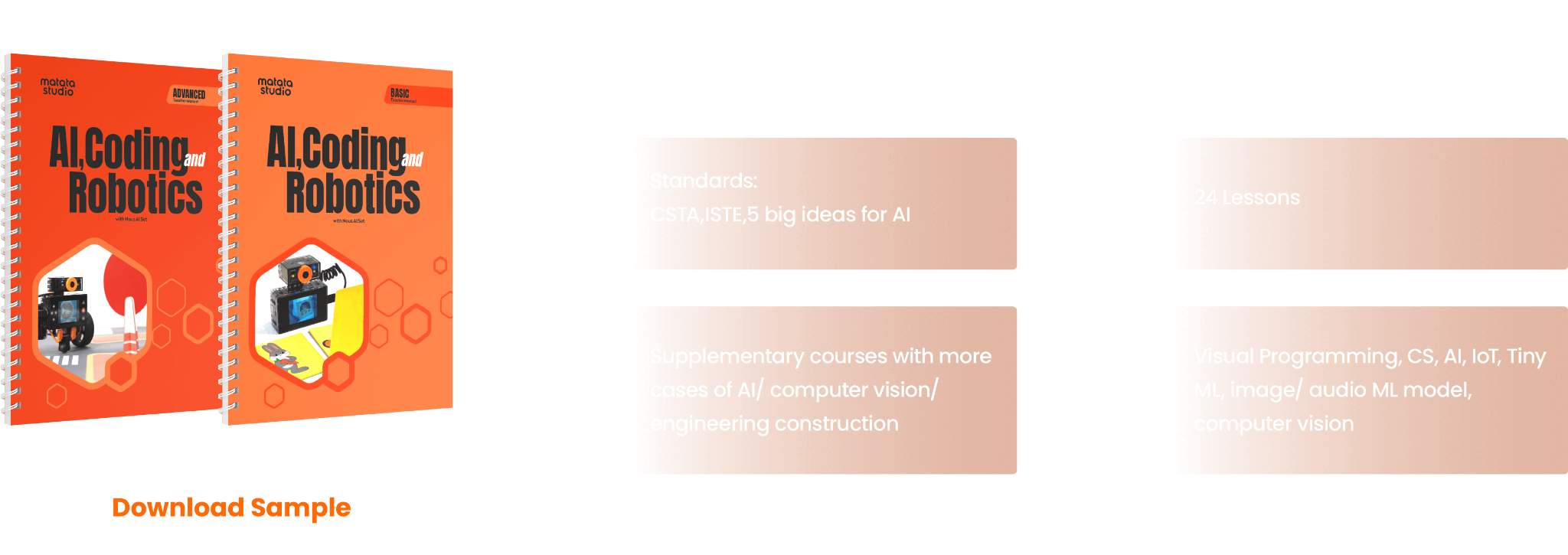
The curriculum guides provided by MatataStudio align with CSTA (Computer Science Teachers Association) and ISTE (International Society for Technology in Education) standards, as well as the 5 Big Ideas in AI, ensuring that the content is relevant and aligned with best practices in education.

As a STEAM educator who greatly values bringing STEM to all classrooms and learning about AI, I appreciate the resources provided because they are incredibly helpful for educators who want to plan and deliver lessons that are engaging and educational for all students.

With these options, educators don’t have to worry about spending a lot of time looking for the right resources and lessons to dive in. MatataStudio provides everything you need to get students started and let them take the lead! Create and innovate in our classrooms!

About the Author:

Dr. Rachelle Dené Poth is a Spanish and STEAM: What’s Next in Emerging Technology Teacher at Riverview High School in Oakmont, PA. Rachelle is also an attorney with a Juris Doctor degree from Duquesne University School of Law and a Master’s in Instructional Technology. Rachelle received her Doctorate in Instructional Technology, and her research focus was on AI and Professional Development. In addition to teaching, she is a full-time consultant and works with companies and organizations to provide PD, speaking, and consulting services. Contact Rachelle for your event!

Rachelle is an ISTE-certified educator and community leader and served as president of the ISTE Teacher Education Network. She was named the EdTech Trendsetter of 2024 by EdTech Digest, one of 30 K-12 IT Influencers to follow in 2021, and one of 150 Women Global EdTech Thought Leaders in 2022.

She is the author of nine books including ‘In Other Words: Quotes That Push Our Thinking,” “Unconventional Ways to Thrive in EDU,” “The Future is Now: Looking Back to Move Ahead,” “Chart A New Course: A Guide to Teaching Essential Skills for Tomorrow’s World, “True Story: Lessons That One Kid Taught Us,” “Things I Wish […] Knew” and her newest “How To Teach AI” is available from ISTE or on Amazon.

Contact Rachelle to schedule sessions about Artificial Intelligence, Coding, AR/VR, and more for your school or your event! Submit the Contact Form.

Follow Rachelle on Twitter(X) and Instagram at @Rdene915

**Interested in writing a guest blog for my site? Would love to share your ideas! Submit your post here. Looking for a new book to read? Find these available at bit.ly/Pothbooks
The Power of “that one.”

Guest post by Dr. Amy Mathews-Perez, a Director of Special Programs in a public school in Central Texas. Connect with Amy on X (formerly Twitter) at @drgrowtoknow, on Facebook at DrAmy MP or at her website dramyperez.com

“That one”…that one chance, that one restaurant, that one memory, that one job, that one student, that one teacher, that one……(you fill in the blank). I intentionally did not indicate if “the one” was positive or negative, I like to leave that up to the reader. Just out of curiosity, though, I’m wondering if you’ll reflect about what your “one”s were, if there was a pattern in your thoughts, and how you can use that to grow.

For this blog, I’m referencing “that one” source of feedback. In my situation, it was feedback from a conference session that I presented. I always seek feedback from the attendees before they leave my session, but then the conference itself seeks feedback as well. The conference feedback is what brought this learning opportunity to me, and I want to share it with you.

First, know that I value authenticity. I also enjoy positive response & engagement whether it is verbal, nonverbal, written, etc.. I don’t mean PRAISE, I mean positive responses like smiles, “ah-ha”, laughter, questions and collaboration. Second, in every session I lead I clearly and repeatedly reiterate that I don’t know it all; that I am a learner and that my best resources are my time and experiences in public education as well as audience response. In this session, there were at least 75 people; it was right after lunch, and folks were coming in to save seats before they left for lunch. This got me excited!!I love a full house for a session because it amps up the energy, creates more opportunities to meet new people, share new ideas and to get more folks actively involved in the learning. Overall, the session went as planned. The attendees accessed the information on their devices, asked great questions, provided original stories/examples, learned from each other, and interacted with the strategy I provided. There were prizes, music, examples, non-examples, laughter, and an acronym that made the strategy easy to remember. We all learned together.

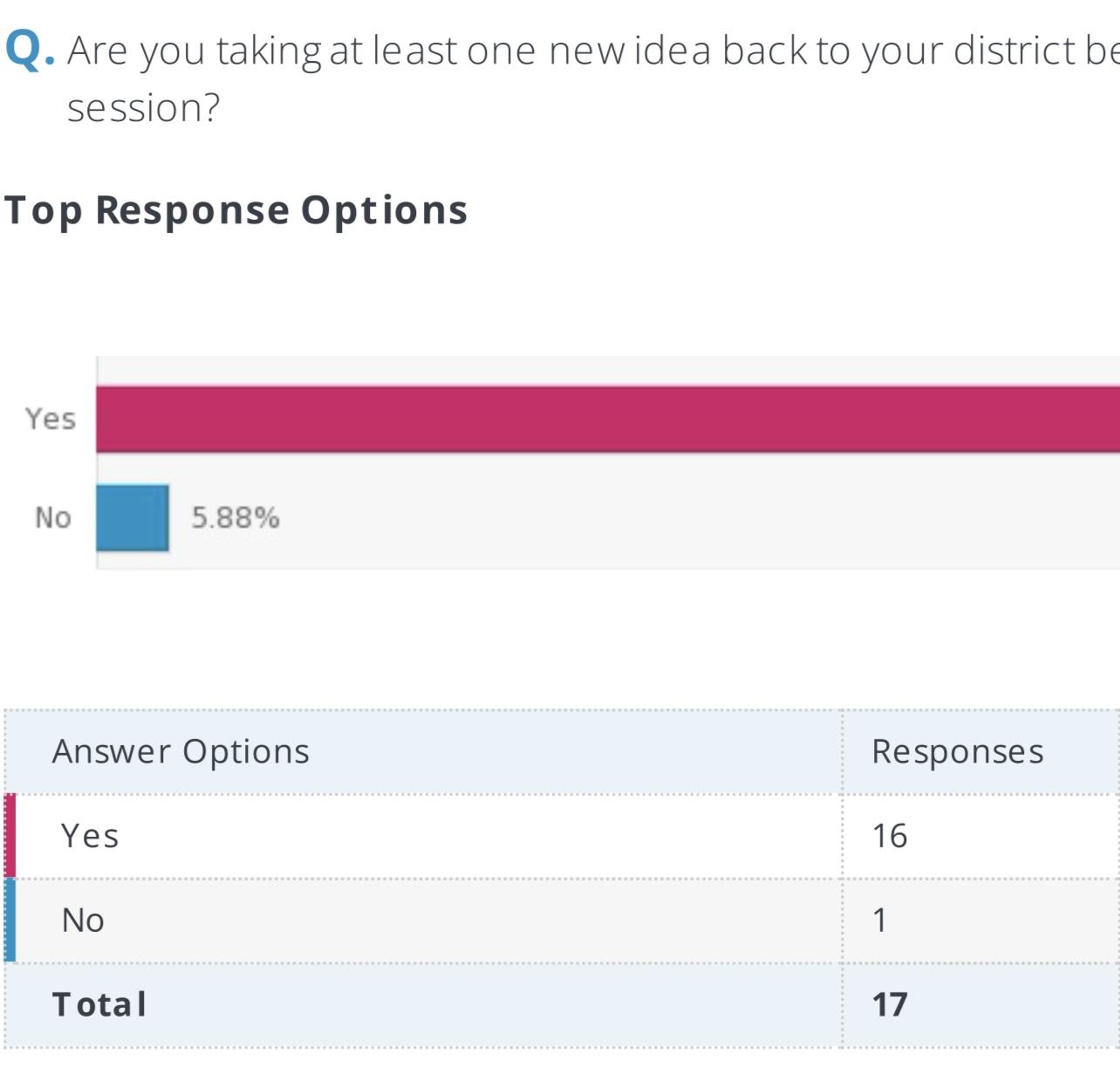
A few weeks after the conference, I was provided session feedback from the host entity. Here are screenshots of this feedback:

The first thing that got my attention was the “less-than-positive” feedback on each question. The second thing I noticed is the number of responses. You’ve probably already figured out that approximately 32% of the attendees provided feedback through the conference entity. Being sharply attuned to things I can and cannot control and strongly believing in this mentality, I immediately began to “analyze” the 32% data I had versus ruminate about the 68% I did not have.

  • Is “the one” person who provided the neutral or negative feedback the same person in multiple questions?
  • Did I directly interact with “the one” person? (Did I make that person feel “seen?”)
  • Was there one (or more) specific thing – fact, example, story – that yielded the responses of “the one?”
  • Did “‘the one” actually attend my session? (just being transparent about my processing)
  • What do I have within my power/skill set/actions to prevent this in the future? (NOTE TO SELF: the goal is not to be “liked” but to be effective in sharing & facilitating learning)
  • What can I learn from “the one?” (the lowest ratings)

At this point, my self-talk voice this: Be brave enough to seek feedback, perceptive enough to accept it, and smart enough to learn from it. The details about what I’ve learned from “the one” thus far (because I look at this feedback frequently) would be another blog, but I’ll share the top five concepts of my learning.

NUMBERS DON’T EQUATE VALUE. Don’t dismiss the “minority” – the smallest percentage of types or content of feedback as worth less than the larger percentages.

REPEAT & REFLECT. Repeat the session in private with a lens of reflection. Be intentional in reviewing information that was planned and be diligent in recalling what spontaneous learning points occurred during the session…could those have been reframed? Be more attentive to spontaneous opportunities.

REVIEW & REPLAN. Review all feedback with a variety of lenses (the conference feedback and the feedback I got from attendees at the end of my session). Replan how the session will be different next time.

THAT ONE MATTERS. All feedback matters. The power I give “that one” is directly related to my growth as a person, professional, presenter and collaborator.

MAINTAIN FOCUS & AUTHENTICITY. My presentation style & information/examples/stories may not resonate with everyone; my purpose will continue to be my primary focus and I can consider ways to adjust how I demonstrate authenticity.

I’m grateful for the opportunities to share my passion, whether it is through breakout sessions at conferences, in-district training, keynotes, conversations, consultation and/or collaboration. As a life-long learner, feedback perpetuates my self-acclaimed label as an “Experience Expert” because I learn from every experience. Granted, it may take me more than one (or three) experiences to learn a lesson, but I will learn it. I’m a teacher at heart, so if my experiences and/or my sharing of how I process information help others learn as well, that is awesome. As I finish this blog I am preparing for a breakout session at the same conference; different topic, but the same audience type and I am super excited about it! If you’d like to know about the feedback I get, let’s connect via my website (dramyperez.com) or X @drgrowtoknow. Growing together makes us better. 🙂

About Amy

Texas-born & raised, Amy is in her 32nd year of serving public education. General Ed. Teacher, SLP, Diagnostician, SPED Supervisor, Assistant Principal, Principal, and Director of Special Education are roles she’s held. She is the CEO of Making Education Special for All (M.E.S.A), an LLC dedicated to training, facilitation, consultation, and speaking engagements that revolve around information, motivation, and insights on why and how to make education special for all stakeholders as well as leadership. Her passions are communication, joy, authenticity, and empowerment. “Life is short but our influence is never-ending,” and Amy is committed to connecting with others through service and smiles.

Want to write a guest blog? Contact Rachelle

Dr. Rachelle Dené Poth is a Spanish and STEAM: What’s Next in Emerging Technology Teacher at Riverview High School in Oakmont, PA. Rachelle is also an attorney with a Juris Doctor degree from Duquesne University School of Law and a Master’s in Instructional Technology. Rachelle received her Doctorate in Instructional Technology, and her research focus was on AI and Professional Development. In addition to teaching, she is a full-time consultant and works with companies and organizations to provide PD, speaking, and consulting services. Contact Rachelle for your event!

Rachelle is an ISTE-certified educator and community leader who served as president of the ISTE Teacher Education Network. By EdTech Digest, she was named the EdTech Trendsetter of 2024, one of 30 K-12 IT Influencers to follow in 2021, and one of 150 Women Global EdTech Thought Leaders in 2022.

She is the author of nine books including ‘In Other Words: Quotes That Push Our Thinking,” “Unconventional Ways to Thrive in EDU,” “The Future is Now: Looking Back to Move Ahead,” “Chart A New Course: A Guide to Teaching Essential Skills for Tomorrow’s World, “True Story: Lessons That One Kid Taught Us,” “Things I Wish […] Knew” and her newest “How To Teach AI” is available from ISTE or on Amazon.

Contact Rachelle to schedule sessions about Artificial Intelligence, Coding, AR/VR, and more for your school or your event! Submit the Contact Form.

Follow Rachelle on Twitter(X) and Instagram at @Rdene915

**Interested in writing a guest blog for my site? Would love to share your ideas! Submit your post here. Looking for a new book to read? Find these available at bit.ly/Pothbooks

************ Also check out my THRIVEinEDU Podcast Here!

Join my show on THRIVEinEDU on Facebook. Join the group here.