7 Ways AI is Set to Make Teachers’ Jobs Easier

Collaborative blog post.

Since the early 2000s, education has had to evolve with the rapid integration of technology into the classroom. From the general use of computers and laptops for schoolwork to the rise of smartphones and tablets in the classroom, teachers have had to be agile to keep up with these changing trends. Unfortunately, despite these advancements, many teachers struggle in their jobs, leading to a mass exodus in recent years. In August this year alone, Statista reported that 51,000 teachers and other educational staff quit their jobs in the United States. As the education sector is struggling to find teachers to replace them, artificial intelligence (AI) could be the next advancement that not only changes how students learn but also improves the teaching profession by making the job easier. In a guest post by Matthew Rhoads, Ed.D., he wrote that AI can improve teachers’ workflow by providing opportunities for them to optimize their workflow and instruction in the classroom. Below are 7 ways that AI will make teachers’ jobs easier.

Grading

One of the biggest reasons for teacher stress and burnout is the extra work they must do in addition to teaching. Grading is one of the most time-consuming tasks and is often done outside of regular school hours, eating into a teacher’s work-life balance. As discussed in A Look Back at AI in Education, AI grading tools can automate this process. AI can appraise student work instantaneously with very little human input needed, thereby increasing the time teachers can spend on other aspects of their job as well as increasing their free time. These tools also provide much faster feedback to the students, which in turn will help with engagement.

Roleplaying

One factor of AI that will provide a new dimension to how students learn about different subjects is Generative AI (GenAI). MongoDB details how GenAI is based on foundation models that can perform tasks like classification, sentence completion, the generation of images or voice, and synthetic (artificially generated) data. This means that teachers can use AI to educate students through roleplaying. Gabriel Rshaid, co-founder and director at The Learnerspace & The Global School, writes on LinkedIn that GenAI systems that can impersonate a famous, historical, or even current person as well as replicate historical situations. He argues that not only will it foster critical thinking, but it will also elevate the level of interest and engagement for students. Lack of engagement in lessons is regularly touted as a common issue in modern classrooms, leading to added stress for teachers.

Foreign Language Teaching

Language learning in the classroom can be very difficult for teachers due to the lack of one-on-one time with students. With AI, students can speak to a Language Learning Model such as ChatGPT or an AI interlocutor to create a dialogue that is exactly pitched at their level. In a previous post on AI Literacy, we asked a student about the benefits of using AI for language learning. She replied: “The chatbot was very helpful. Immersing yourself with technology that helps you learn Spanish or any other language can help a lot. You have real-time conversations, and the chatbot expands the conversation so you can learn even more about the language. It also helps you become more comfortable speaking!” As students engage with the AI on their own terms, foreign language teachers will have more time to address individual needs.

Plan Lessons

Like grading, a good amount of time outside teaching is spent planning lessons due to the amount of research and reinvention needed. AI can streamline and optimize this process by not only creating new plans from scratch very quickly but also analyzing past lesson plans to cater to the teacher’s own preferences and style of teaching. Curriculum standards also change very frequently, and AI can be used to ensure that the lessons are updated with the latest requirements. This decreases the time teachers spend on planning lessons and increases their ability to work with students.

Personalized Learning For Students

One of the major issues that makes a teacher’s job difficult is not being able to adapt their teaching methods for individual students. It is not possible for teachers to create personalized learning plans for each student in their classroom, which can lead to some students getting left behind and resulting in a lack of engagement. AI-powered adaptive learning platforms can analyze students’ strengths and weaknesses and provide personalized lessons and study paths. 

Improve Classroom Management

While AI will revolutionize how teachers can adapt their lessons to students to improve their learning outcomes, another important aspect of AI that will make a teacher’s job easier is classroom management. A Medium post notes how “one of the most pressing challenges for teachers has always been classroom management,” with discipline being one of the most difficult aspects of the job. When it comes to class management, AI can create a more harmonious classroom environment by being able to “detect when a student is distracted, struggling with a concept, or even feeling unwell.” This will allow teachers to immediately intervene and address the issues before they escalate and result in classroom disruption.

Reduce Burnout

As the above benefits show, AI can have a positive impact on many different facets of teaching to make the job easier. By improving each of the above aspects, AI will reduce overall burnout in teachers, which is having a massive impact on the industry. HMH’s 9th Annual Educator Confidence Report found that burnout is a critical issue, with 82% of educators citing that what they need most is a more balanced workload. Education and students are changing fast, with one teacher noting that “today’s student is different from students even five years ago.” AI will not only allow teachers to keep up, but it will also reduce their workload and give them more time to focus on their students. This will make their job easier and improve their work-life balance, which will hopefully stem the number of teachers leaving the profession.


About Rachelle

Dr. Rachelle Dené Poth is a Spanish and STEAM: What’s Next in Emerging Technology Teacher at Riverview High School in Oakmont, PA. Rachelle is also an attorney with a Juris Doctor degree from Duquesne University School of Law and a Master’s in Instructional Technology. Rachelle received her Doctorate in Instructional Technology, and her research focus was on AI and Professional Development. In addition to teaching, she is a full-time consultant and works with companies and organizations to provide PD, speaking, and consulting services. Contact Rachelle for your event!

Rachelle is an ISTE-certified educator and community leader who served as president of the ISTE Teacher Education Network. By EdTech Digest, she was named the EdTech Trendsetter of 2024, one of 30 K-12 IT Influencers to follow in 2021, and one of 150 Women Global EdTech Thought Leaders in 2022.

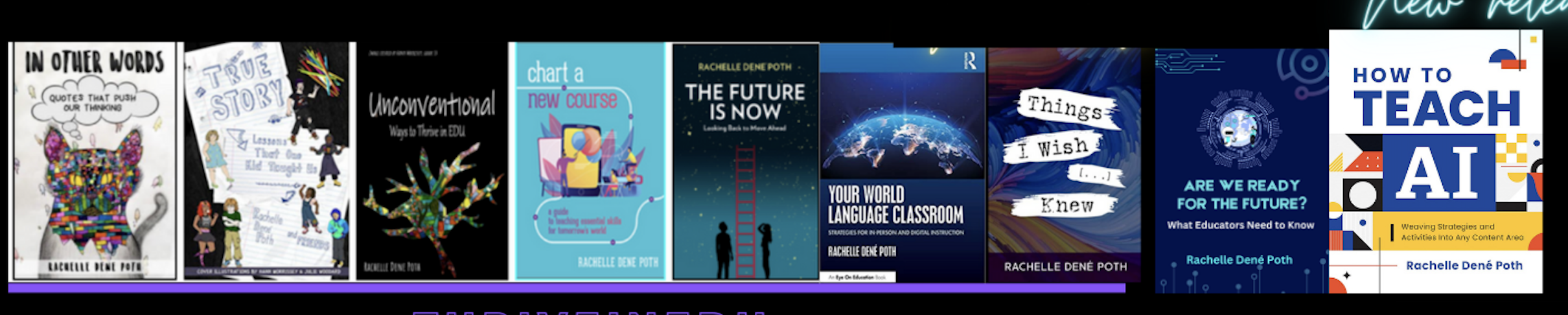
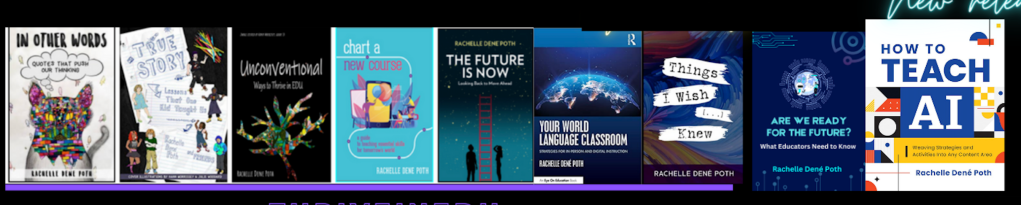
She is the author of nine books including ‘In Other Words: Quotes That Push Our Thinking,” “Unconventional Ways to Thrive in EDU,” “The Future is Now: Looking Back to Move Ahead,” “Chart A New Course: A Guide to Teaching Essential Skills for Tomorrow’s World, “True Story: Lessons That One Kid Taught Us,” “Things I Wish […] Knew” and her newest “How To Teach AI” is available from ISTE or on Amazon.

Contact Rachelle to schedule sessions about Artificial Intelligence, Coding, AR/VR, and more for your school or event! Submit the Contact Form.

Follow Rachelle on Twitter(X) and Instagram at @Rdene915

**Interested in writing a guest blog for my site? Would love to share your ideas! Submit your post here. Looking for a new book to read? Find these available at bit.ly/Pothbooks

************ Also check out my THRIVEinEDU Podcast Here!

Join my show on THRIVEinEDU on Facebook. Join the group here.

Guest Post: Jooble Recommends How to Start Your Career in Artificial Intelligence: Key Steps and Skills

This article was created in collaboration with Dr. Rachelle Dené Poth and Jooble. Opinions are those of the guest writer.

In particular, Artificial Intelligence (AI) is invigorating each line of business, opening up enormous potential for persons trained in AI and associated areas. If your goal is to become an AI developer, you are positioning yourself for terrific job growth, with an average salary of an AI engineer of $160,000 per year in the US, according to Jooble. To help you get started on your AI journey, we provide some tips on essential steps and skills that will help you make it through the course.

Where can Artificial Intelligence be applied?

Artificial Intelligence is a branch of study and application of computing systems that manifest attributes associated with human intelligence to perform tasks that would otherwise necessitate human input. Compared to other SCH software, AI systems can learn from data, and its performance can be refined without needing rewiring. AI is an emerging and growing sector that has penetrated almost all industries across the globe, including the service industry, medical, and financial. For example, 50% of companies plan to invest in machine learning engineers and data departments focused on AI adoption, emphasizing the importance of upskilling the workforce to meet future demands.

AI can simply be a chatbot, up to a complex intelligent model based on neural networks used to make predictions and sophisticated analyses. By far one of the core constructs of AI is the notion that algorithms learn from data input — a key component in the creation of programs that get smarter with time.

The Role of AI in Modern Industries

The United States and China lead in AI investments, making them prime hubs for AI development and job opportunities. AI integration is becoming crucial in various industries as businesses increasingly implement AI technologies to reduce costs and boost productivity. In sectors such as healthcare and automotive, AI solutions are driving a revolution through automated processes, big data analysis, and the development of smart systems, reshaping the way these industries operate. As Ulrich Spiesshofer said, “The countries with the highest robot density have among the lowest unemployment rates. Technology and humans combined in the right way will drive prosperity.”

AI also assists in creating individualized services and goods. For example, generative AI is already altering marketing and entertainment with its ability to design or write content/results based on data. AI processes can even predict consumer behavior, becoming valuable assets for businesses. The demand for AI experts who can learn and apply AI in real-life scenarios is rapidly increasing.

Most Important Things You Need to Learn for a Career in AI

To embark on your AI learning journey, it’s crucial to have a structured learning program and acquire a strong foundation in the following skills:

Computer Science: Learn Python, R, and Java as they are the most used programming languages in AI and data-related fields. Depending on the project or this level of work, knowledge of these languages will be required to deal with AI solutions.

Mathematics and Statistics: Khan says that knowledge of math is ESSENTIAL for AI, and examples of such skills are linear algebra, probability, and statistical methods.

Machine learning and Deep learning of Artificial Intelligence Concepts: Learning about another class of AI, known as machine learning, will enable you to understand how machines learn and optimize from data.

AI Tools and Libraries: Analyze artificial intelligence for business and learn some helpful tools and libraries, such as TensorFlow and PyTorch, for building models.

Main Technologies of the field of AI

AI technology encompasses various fields with new advancements in AI revolving around the existing structure. Key technologies that play a pivotal role include:

Natural Language Processing (NLP): Under the NLP study, machines are capable of learning how to handle human language which is much more useful in other advanced technologies like artificial intelligence digital assistants such as the use of chatbots.

Computer Vision: This field allows users to understand and interpret visual data and is crucial for fields such as healthcare, the automotive industry, and security.

Deep Learning: This superior artificial intelligence method is modeled on the action of the human brain and allows a machine to recognize patterns in the data.

Step-by-Step Guide to Becoming an AI Expert

1. Select Your Right Line of Study

There are multiple opportunities to learn with the help of AI in 2024, from online courses to a university degree. First of all, choose the program that will suit you best if you are eager to master AI as a beginner or if you are eager to obtain an AI degree. There are many universities as well as online centres offering classes from the fundamentals of artificial intelligence to advanced artificial intelligence classes containing concepts such as deep learning and neural networks.

Vacancies in AI presuppose a solid educational background, and thus, the reception of the education that inscribes AI as learning from data, machine learning, and AI engineering is essential.

2. Where to Get Experience in AI Projects

AI learning libraries and tools are essential for gaining practical experience and understanding artificial intelligence. To truly become an AI engineer, working on AI projects is mandatory. The best way to practice is by contributing to AI-related projects whenever possible, participating in hackathons, or providing suggestions for open-source projects. These activities help solidify your knowledge of AI concepts and demonstrate your expertise to potential employers. As Stephen Hawking warned, “Success in creating AI would be the biggest event in human history. Unfortunately, it might also be the last unless we learn how to avoid the risks.” To be a good AI engineer, it’s crucial to continuously gain new knowledge, study daily, and stay updated with the latest advancements to ensure responsible and safe development of AI technologies.

Minimum Qualifications Required for AI and Data Science Professionals

First of all, certifications in the world of AI are very important when it comes to the development of your profession, as many jobs in AI require some proof of your knowledge. Not only do they prove that you are worth your salt, but they also provide you with the necessary leverage to go for a job.

AI certifications that help where to take your AI career

Developments in AI or any related field certification will make you a better candidate for employment. AI certifications from globally technologically advanced companies such as Google, Microsoft, or IBM can let you highlight your strong points in specific areas of interest, such as machine learning, data science, or AI tools. These certifications will give you ways to get on your plan for learning AI and assist you in gaining mastery from the entry-level AI to the expert level.

A number of AI Learning Plans and Learning Systems we currently have are accredited by the respective industries they belong to.

Proprietary AI programs, like Coursera and edX, offer complete programs with necessary learning experiences. These courses are developed in collaboration with professionals in the field, and the topics include different aspects of AI and its applications. Such programs are helpful for beginners in AI and for people who already have some experience in the field but would want to learn more about the development of more complex topics in AI.

Whether you’re a complete newcomer or an advanced AI practitioner looking to elevate your career, these programs will guide you along your AI path. With over 95% of executives agreeing that generative AI will revolutionize AI applications, its use is extending into new domains such as product design and customer engagement, making this an exciting time to dive deeper into AI.

Conclusion

The journey to learn AI proficiency in this exciting field, its process, and its course can be thrilling yet sometimes frustrating, especially when grappling with machine learning concepts. However, with the right skills, relevant education, and practical experience, you can become an AI engineer, helping shape the future of AI and data science. As Fei-Fei Li aptly said, “Artificial intelligence is not a substitute for human intelligence; it is a tool to amplify human creativity and ingenuity.” Across industries, businesses are increasingly employing artificial intelligence, driving demand for AI specialists with highly rewarding salaries. This makes it the perfect time to begin your journey into this promising and rapidly growing field and continue to adopt AI technologies.

About Rachelle

Dr. Rachelle Dené Poth is a Spanish and STEAM: What’s Next in Emerging Technology Teacher at Riverview High School in Oakmont, PA. Rachelle is also an attorney with a Juris Doctor degree from Duquesne University School of Law and a Master’s in Instructional Technology. Rachelle received her Doctorate in Instructional Technology, and her research focus was on AI and Professional Development. In addition to teaching, she is a full-time consultant and works with companies and organizations to provide PD, speaking, and consulting services. Contact Rachelle for your event!

Rachelle is an ISTE-certified educator and community leader who served as president of the ISTE Teacher Education Network. By EdTech Digest, she was named the EdTech Trendsetter of 2024, one of 30 K-12 IT Influencers to follow in 2021, and one of 150 Women Global EdTech Thought Leaders in 2022.

She is the author of nine books including ‘In Other Words: Quotes That Push Our Thinking,” “Unconventional Ways to Thrive in EDU,” “The Future is Now: Looking Back to Move Ahead,” “Chart A New Course: A Guide to Teaching Essential Skills for Tomorrow’s World, “True Story: Lessons That One Kid Taught Us,” “Things I Wish […] Knew” and her newest “How To Teach AI” is available from ISTE or on Amazon.

Contact Rachelle to schedule sessions about Artificial Intelligence, Coding, AR/VR, and more for your school or event! Submit the Contact Form.

Follow Rachelle on Twitter(X) and Instagram at @Rdene915

**Interested in writing a guest blog for my site? Would love to share your ideas! Submit your post here. Looking for a new book to read? Find these available at bit.ly/Pothbooks

************ Also check out my THRIVEinEDU Podcast Here!

Join my show on THRIVEinEDU on Facebook. Join the group here.

Address the “WHY,” not the “HOW.”

Guest post written By: Maurie Beasley, M.Ed. Counseling (Edited by Jim Beasley)

A student deciding what path to take. To cheat or not to cheat.

Cheating in school — it’s the topic that’s always been there, lurking in the shadows of every classroom and exam hall. For decades, we’ve known it happens, but we often look for the quickest explanation: students are lazy, technology makes it easier, end of story. But here’s the thing: cheating is not just a modern phenomenon, nor is it just about slacking off or taking advantage of new tools like AI. The real reasons why students cheat run much deeper, and if we’re serious about addressing the issue, we need to understand those reasons first.

Let’s be clear: cheating isn’t just some bad habit students picked up recently. It’s been around long before ChatGPT was on the mind of any engineer. And despite the attention AI has brought to the issue, the reasons students cheat are essentially the same as they’ve always been. So why does it persist, and what can we do about it? Let’s take a closer look at these reasons.

Pressure to Perform:

Students today are walking a tightrope, balancing academic expectations, extracurricular activities, and even part-time jobs. The pressure to perform is immense, and it’s no surprise that some students feel they can’t afford to fall.

Let me tell you about my daughter. She was the salutatorian of her high school class. She missed being valedictorian by a hair — a hair that could have been as little as a hundredth of a point. The only B she ever received was from a teacher who told her that grades don’t matter. Her response? “Great, then give me the one point I need to make an A in the class, or better yet, write me a letter explaining to the admissions board at UT Austin that grades don’t matter and being number 2 in my class is ok.” She knew that being valedictorian meant having your first year of college paid for in Texas. My daughter is honest, sometimes to a fault, but several times I was even tempted to tell her to “cheat” a little. That’s the kind of pressure students are under, and when the stakes are this high, cheating may seem like a way to stay on that tightrope, even if just barely.

Fear of Failure:

Beneath that pressure lies an even more pervasive issue: fear of failure. The fear of letting down parents, teachers, and even themselves can be overwhelming. When failure isn’t seen as an opportunity to learn but rather as a personal catastrophe, cheating becomes a tempting escape route. It’s not about cutting corners for the sake of it; it’s about avoiding the crushing weight of perceived inadequacy.

Beneath that pressure lies an even more pervasive issue: fear of failure. The fear of letting down parents, teachers, and even themselves can be overwhelming. When failure isn’t seen as an opportunity to learn but rather as a personal catastrophe, cheating becomes a tempting escape route. It’s not about cutting corners for the sake of it; it’s about avoiding the crushing weight of perceived inadequacy.

And this fear isn’t just hypothetical. As a counselor, I’ve seen it manifest in tragic ways. I’ve had to make Child Protective Service calls because parents have beaten their children for not performing well enough in school. When failure comes with such dire consequences, is it any wonder some students feel they have no choice but to cheat?

Read the full article on Medium*: [Address the Why, Not the How](https://medium.com/@jim0237/address-the-why-not-the-how-1a7e01d52d56

About Rachelle’s blog

Contact Rachelle to schedule sessions about Artificial Intelligence, AI and the Law, Coding, Cybersecurity, STEM, and more for your school or event! Available for in-person or virtual training, keynotes, and coaching. Submit the Contact Form.

Follow Rachelle on Twitter(X) and Instagram at @Rdene915

**Interested in writing a guest blog for my site? Would love to share your ideas! Submit your post here. Looking for a new book to read? Find these available at bit.ly/Pothbooks

************ Also, check out my THRIVEinEDU Podcast Here!

Join my show on THRIVEinEDU on Facebook. Join the group here.

6 Fresh Ideas For Fall Using CoSpaces Edu!

In collaboration with CoSpaces Edu, All opinions are my own

Now that the school year is in full swing and we head into the fall of 2024, many educators are coming up for air and looking for new ideas. For me, it’s always the perfect time to consider how our year has started and look for ways to introduce fun, innovative ideas to our classrooms to boost engagement even more! What I love about technology, is that there is always a way to bring it into our classrooms for our students, and that is what I have found with CoSpaces Edu!

Whether you’re teaching elementary, middle, or high school, focused on STEM, language arts, or any other subject, we know there is an increasing need to equip our students with skills to be successful in the future. In my opinion, I think what better way to do that than with CoSpaces Edu!

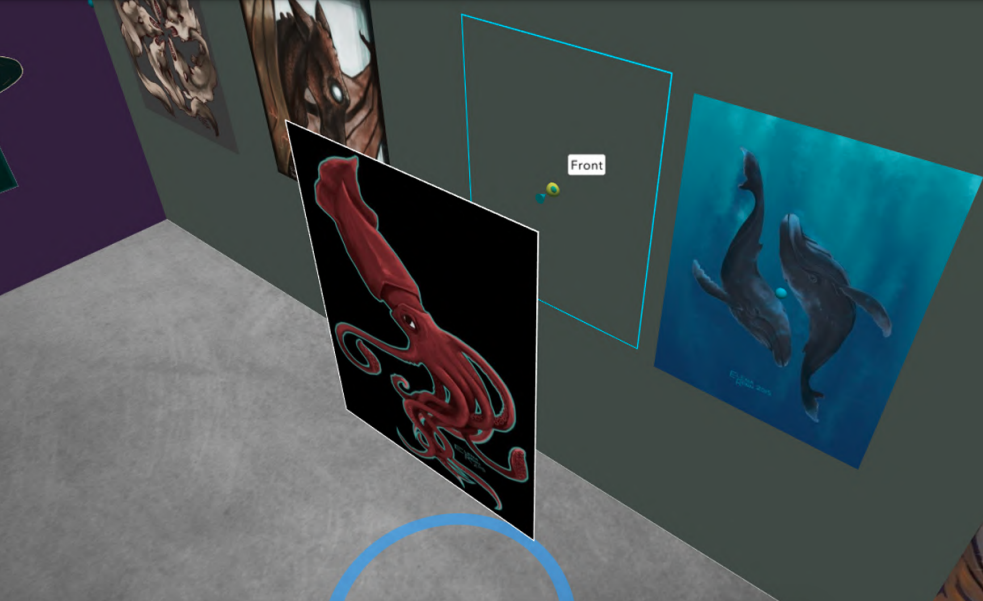
CoSpaces Edu is a versatile, very user-friendly platform that brings learning to life for our students. Through augmented reality (AR) and virtual reality (VR), with a variety of wonderful features that enable students to engage in 3D creation, coding, and collaboration, CoSpaces Edu can be integrated across all grade levels and subject areas. I have come up with six ideas for getting started with CoSpaces Edu in your classroom this fall. At all grade levels, you can foster creativity, critical thinking, communication, collaboration, and digital literacy—skills, all of which are essential for today’s learners.

1. Virtual Tour of Student Interests

One of the easiest and most engaging ways to get started with CoSpaces Edu, which I use every year, is having my students explore its gallery of available projects. Whether they’re in elementary school or high school, students absolutely love the time they have to explore existing projects such as games and virtual museums. By giving them time to explore, not only can it boost their own creativity, but it also helps us learn more about their interests, which is essential.

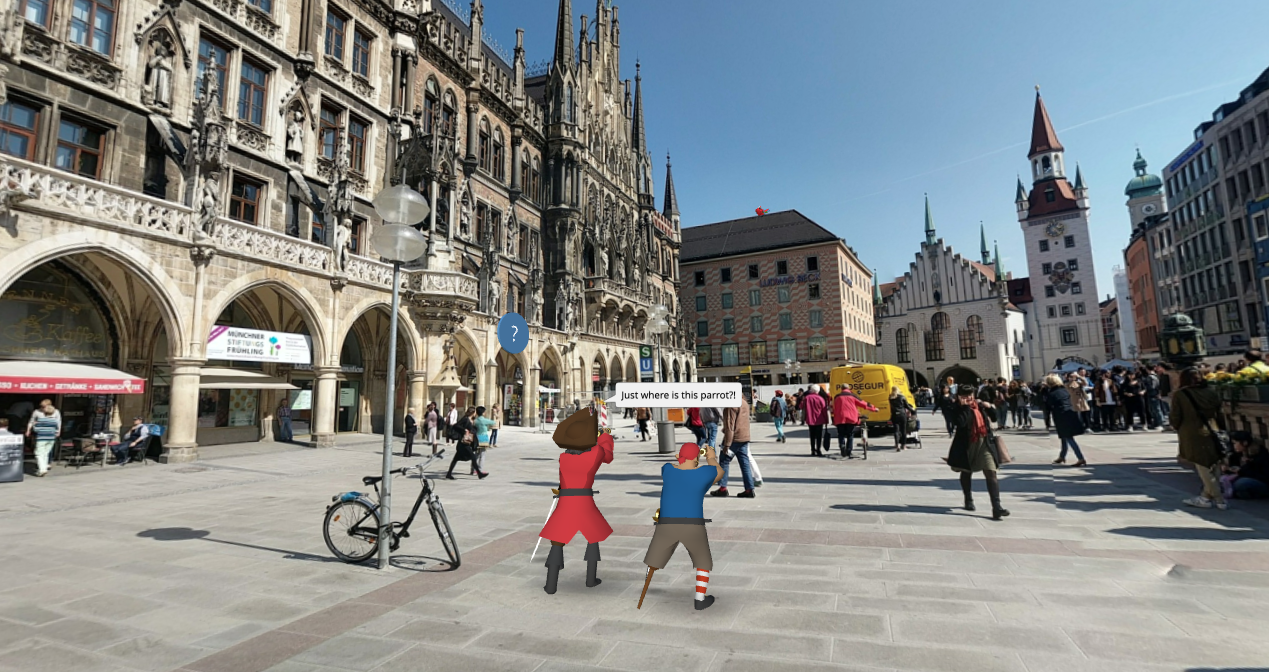
How to start? Direct them to the gallery and ask them to choose a project or space they find interesting. After exploring, ask them to consider why it captured their attention. Was it the design? The characters? The actual activity itself? Encourage them to think critically about what they might create or how they might change or enhance what they explored. For example, if they enjoyed exploring a historical simulation, maybe they can build their own historical event space or propose redesigning a famous historical space. Moving through in this way not only fosters critical thinking but encourages student discussion, idea sharing, and brainstorming ideas. And the best part is that CoSpaces Edu allows them to explore both virtual and augmented reality so they can fully immerse themselves in and connect with the content they’re learning.

I have used this activity as an icebreaker for new school years or any time throughout the year. It benefits by giving students the opportunity to explore, discover, and connect with their classmates over shared interests that they may not have realized they had in common. Talk about fostering a real learning community!

2. Create an “About Me” Space

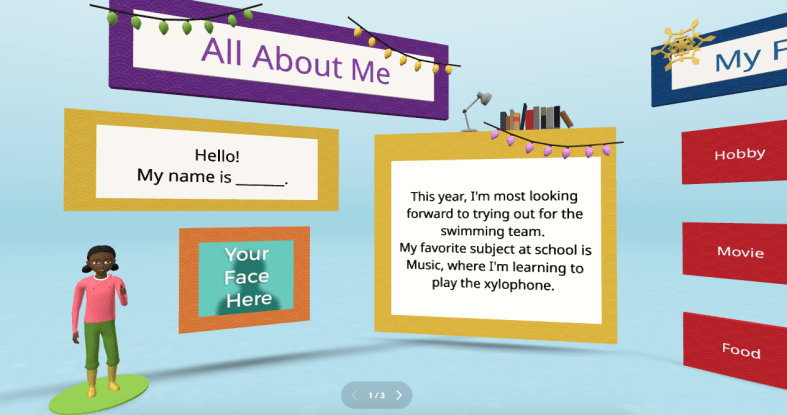
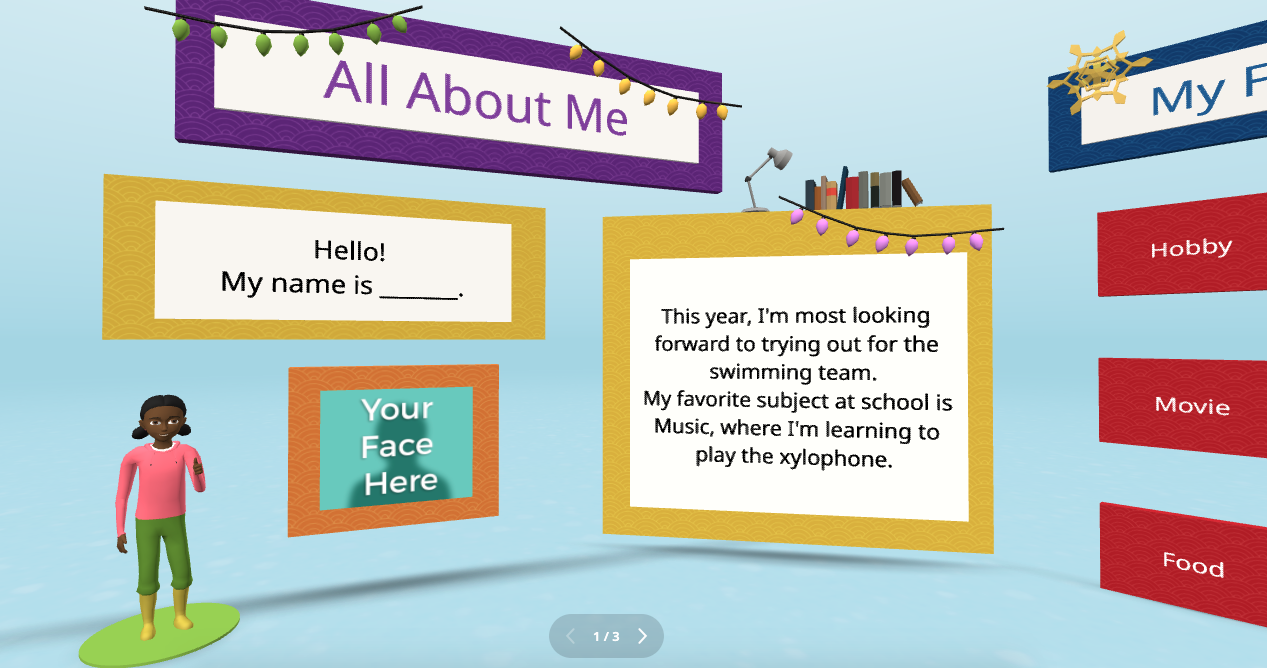
Every new school year, educators spend time finding ways to get to know their students better and for students to get to know each other. A new idea is to have students create an interactive “About Me” space. Not sure where to begin? CoSpaces Edu has a ready-to-use template that students can then customize and add fun characters, animations, and even their voice recordings to create a virtual introduction to themselves.

This activity is more than just fun—it builds digital literacy as students learn to manipulate 3D objects and text and even dive into coding. It’s a great way to build a learning community in the classroom as students explore each other’s spaces, and you will see the excitement as they learn from each other. You can easily adapt this project to any grade level. It is also a great way to introduce younger students to AR and VR in a structured way while also allowing older students to dive more into basic block-based CoBlocks or advanced coding with JavaScript.

My students have had a blast designing their virtual world to represent themselves. The About Me is a great way to spark creativity and help students develop essential communication skills as they express interests, hobbies, and goals with their classmates and teachers.

3. Interactive Storytelling in Virtual Worlds

Storytelling is an impactful way to promote learning whether you teach elementary or high school students. Now, students can bring their stories to life in immersive 3D environments with CoSpaces Edu!

In my STEAM course, I work with the other content area teachers to have students leverage what we are learning and connect it to their other classes. Students have created animated and interactive recaps of stories they’ve read, and some have written their own narratives. The magic is when they bring these stories to life using 3D characters in a variety of settings. For example, students could adapt a classic story or novel they have read and add a twist, such as an alternative ending. Many students enjoy using their imagination to create stories. Once they set the scene, they can use CoSpaces Edu’s coding tools—such as CoBlocks—to add interactivity, allowing their characters to move, speak, and more. We can share their work with classmates, which adds more meaning to and engagement with the learning experience.

These types of projects foster creativity and problem-solving and build communication skills. Students not only have to write their narrative but also decide how to visually and interactively represent it. They engage in a process that encourages collaboration, especially when students work in teams to script, design, and code their virtual worlds. This was a game-changer in my Spanish II class!

4. Revolutionize Language Learning with AR/VR

Interactive storytelling can also be an excellent tool for language learners. In my experience, students in Spanish II created virtual worlds in which their characters engaged in dialogues, which helped them build their language skills in a dynamic and engaging way. It also led to greater retention of the content.

One project involved students creating a virtual Spanish-speaking city where they placed shops, restaurants, and other landmarks. Each student had a role in the virtual environment and had to speak in Spanish to describe their location or interact with others. This project increased student engagement, content retention, and enthusiasm for learning the language. It was also a unique way to reinforce grammar and vocabulary.

Incorporating AR/VR into language learning allows students to “live” the language, making it a more authentic and enjoyable experience. This kind of immersive learning fosters deeper connections with the material. It helps students retain what they’ve learned, which is essential in all areas, particularly in building confidence in language skills.

5. Collaborative STEM Projects

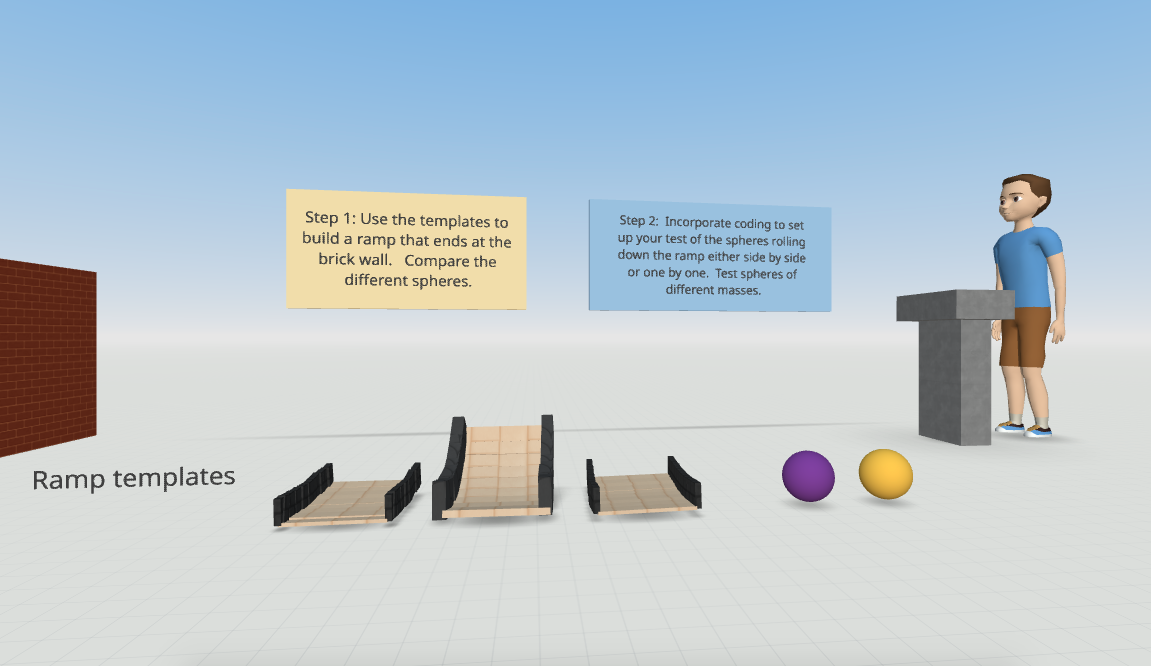
With CoSpaces Edu, students can design and code virtual prototypes, models, and even entire experiments. One of my favorite uses for the platform is collaborative STEM projects. Students can work in teams to design and build virtual spaces or objects, such as a virtual physics experiment exploring Newton’s laws or an architectural model of a bridge or building.

CoSpaces Edu’s collaborative features allow multiple students to work on the same project in real-time from different devices, making it perfect for group projects, whether students are in the classroom or learning remotely. Think about global collaboration possibilities, too! We want students to build teamwork, communication, and problem-solving skills and manage their time. Because they can collaborate in CoSpaces Edu, it makes opportunities available for STEM learning that is more engaging and hands-on.

6. Virtual Museums and Global Collaboration

Building global awareness is so important. Our students must learn about other cultures and have experiences connecting them with authentic and real-world learning opportunities. What if students from around the world collaborate to create a virtual museum that represents items from their different locations? With CoSpaces Edu, this is not only possible but easy to implement. Teachers can connect classrooms from different countries, enabling students to collaborate on a global scale to build and curate virtual museums on various topics, from world history to art or any topic they choose.

Students can design a virtual museum showcasing the art of different cultures. Using CoSpaces Edu’s 3D creation tools, they can build exhibit halls and import 3D models of art pieces or artifacts. Each student can contribute a different exhibit and then link them together into a larger museum space. A project like this not only fosters creativity and digital literacy but also deepens cultural understanding and instills empathy as students explore and share knowledge from diverse perspectives.

Where to begin

I have used CoSpaces Edu for many years. It is definitely way more than just a tech tool for students. It is a transformative platform that fosters the development of critical future skills like creativity, collaboration, critical thinking, and digital literacy. Whether you’re teaching elementary students to create 3D models or high school students to code virtual worlds, CoSpaces Edu offers endless possibilities for engaging, interactive, and collaborative learning experiences.

CoSpaces Edu shifts students from consumers to creators! My students are always wowed by what they explore when we get started. These are only six ideas to explore, and there are many more possibilities and lesson plans available for educators to explore right away.

CoSpaces Edu is easy to use, works on any device, and offers a secure, COPPA- and FERPA-compliant environment, which is critical. Dive into CoSpaces Edu this fall and watch your students’ creativity and future-ready skills soar.

About the Author

Dr. Rachelle Dené Poth is a Spanish and STEAM: What’s Next in Emerging Technology Teacher at Riverview High School in Oakmont, PA. Rachelle is also an attorney with a Juris Doctor degree from Duquesne University School of Law and a Master’s in Instructional Technology. Rachelle received her Doctorate in Instructional Technology, and her research focus was on AI and Professional Development. In addition to teaching, she is a full-time consultant and works with companies and organizations to provide PD, speaking, and consulting services. Contact Rachelle for your event!

Rachelle is an ISTE-certified educator and community leader who served as president of the ISTE Teacher Education Network. By EdTech Digest, she was named the EdTech Trendsetter of 2024, one of 30 K-12 IT Influencers to follow in 2021, and one of 150 Women Global EdTech Thought Leaders in 2022.

She is the author of nine books including ‘In Other Words: Quotes That Push Our Thinking,” “Unconventional Ways to Thrive in EDU,” “The Future is Now: Looking Back to Move Ahead,” “Chart A New Course: A Guide to Teaching Essential Skills for Tomorrow’s World, “True Story: Lessons That One Kid Taught Us,” “Things I Wish […] Knew” and her newest “How To Teach AI” is available from ISTE or on Amazon.

Contact Rachelle to schedule sessions about Artificial Intelligence, Coding, AR/VR, and more for your school or event! Submit the Contact Form.

Follow Rachelle on Twitter(X) and Instagram at @Rdene915

**Interested in writing a guest blog for my site? Would love to share your ideas! Submit your post here. Looking for a new book to read? Find these available at bit.ly/Pothbooks

************ Also check out my THRIVEinEDU Podcast Here!

Join my show on THRIVEinEDU on Facebook. Join the group here.

Digital Citizenship

Digital Citizenship Week is celebrated in October each year. The focus is on building digital citizenship skills, and there is a designated digcit week with events planned for schools to join in and learn more. These are concepts that teachers and schools should focus on throughout the year as well. With the increased use of digital tools in our classrooms and the amount of technology used in everyday life and work, we must consistently provide learning opportunities for students to develop “digcit” skills.

Being a responsible digital citizen means that all individuals are able to use technology ethically, responsibly, and effectively. It is important to develop an understanding of the impact that one’s digital actions can have on other individuals and on society as a whole. Students and teachers must be able to keep themselves safe, know how to protect their privacy, learn how to critically analyze information, and engage in respectful interactions online.

Teaching digital citizenship skills

Privacy and security: With increased data collection and online tracking of websites we use and how our information is shared, understanding how to safeguard our privacy is key. With more students using digital tools and at a younger age, it is essential to build in activities that will help students to better understand how to protect themselves and to respect the privacy of others as well. For instance, teaching students how to create unique passwords is key for securing personal information. With the increase in cybersecurity attacks over the past few years, updating passwords and even using two-factor authentication (TFA) will help to keep everyone safer.

Communication: With the variety of social media platforms available and how quickly we can post and respond, providing opportunities for students to practice responsible posting is an area that we need to focus on regularly. Even with young students, simulating a Twitter (X) chat or other online discussion can be done using Post-it notes, for example. Depending on grade level, another option is to use a tool like Padlet to help students learn how to properly post and interact with one another.

Continue reading the original post on Edutopia.

About the Author:

Dr. Rachelle Dené Poth is a Spanish and STEAM: What’s Next in Emerging Technology Teacher at Riverview High School in Oakmont, PA. Rachelle is also an attorney with a Juris Doctor degree from Duquesne University School of Law and a Master’s in Instructional Technology. Rachelle received her Doctorate in Instructional Technology, and her research focus was on AI and Professional Development. In addition to teaching, she is a full-time consultant and works with companies and organizations to provide PD, speaking, and consulting services. Contact Rachelle for your event!

Rachelle is an ISTE-certified educator and community leader who served as president of the ISTE Teacher Education Network. By EdTech Digest, she was named the EdTech Trendsetter of 2024, one of 30 K-12 IT Influencers to follow in 2021, and one of 150 Women Global EdTech Thought Leaders in 2022.

She is the author of nine books including ‘In Other Words: Quotes That Push Our Thinking,” “Unconventional Ways to Thrive in EDU,” “The Future is Now: Looking Back to Move Ahead,” “Chart A New Course: A Guide to Teaching Essential Skills for Tomorrow’s World, “True Story: Lessons That One Kid Taught Us,” “Things I Wish […] Knew” and her newest “How To Teach AI” is available from ISTE or on Amazon.

Contact Rachelle to schedule sessions about Artificial Intelligence, Coding, AR/VR, and more for your school or event! Submit the Contact Form.

Follow Rachelle on Twitter(X) and Instagram at @Rdene915

**Interested in writing a guest blog for my site? Would love to share your ideas! Submit your post here. Looking for a new book to read? Find these available at bit.ly/Pothbooks

************ Also check out my THRIVEinEDU Podcast Here!

Join my show on THRIVEinEDU on Facebook. Join the group here.