I recently spoke with several tech coaches who had audited digital tools in their buildings—they found more than 400 tools being used in their schools! I know a lot about technology, yet I still struggle to strike the right balance of technology in the classroom. Avoiding overreliance on technology in our highly digital world can be challenging. One solution is to “unplug.”
Integrating into your classroom unplugged activities that do not require technology can offer many benefits, including helping students develop a variety of skill sets. Although each of these ideas can also be implemented with technology, there are ways to use these without the tech and that help amplify the learning experience for students. Having an unplugged classroom does not always require a lot of planning or materials. When I notice a decrease in student engagement in my classroom, I shift to trying new methods and mixing up the activities to promote student choice and more active learning.
Ways to Unplug
1. Genius hour. Students select a topic of interest and have time to develop a presentation. They may refer to resources such as books, videos, or internet research, but their presentation must be done without the use of technology. Students can create a visual display, such as a poster, a replica, or a demo of their topic, and then deliver a presentation to their classmates.
2.Place-based learning. Opportunities to explore the community while connecting content to the real world make learning experiences more valuable and meaningful for students. One year, my students did an outdoor project about childhood, and they visited a local park and playground for research.
Students in a history class could visit local historical sites to better understand the content they are learning. Science classes such as biology or ecology can have students explore local areas, learn about the ecosystem, and participate in projects to clean up the community or learn about and present solutions to environmental concerns. Place-based learning boosts student engagement, fosters student agency, and helps students develop a greater understanding of their impact on the community and even the world.
Dr. Rachelle Dené Poth is a Spanish and STEAM: What’s Next in Emerging Technology Teacher at Riverview High School in Oakmont, PA. Rachelle is also an attorney with a Juris Doctor degree from Duquesne University School of Law and a Master’s in Instructional Technology. Rachelle received her Doctorate in Instructional Technology, and her research focus was on AI and Professional Development. In addition to teaching, she is a full-time consultant and works with companies and organizations to provide PD, speaking, and consulting services. Contact Rachelle for your event!
Rachelle is an ISTE-certified educator and community leader who served as president of the ISTE Teacher Education Network. By EdTech Digest, she was named the EdTech Trendsetter of 2024, one of 30 K-12 IT Influencers to follow in 2021, and one of 150 Women Global EdTech Thought Leaders in 2022.
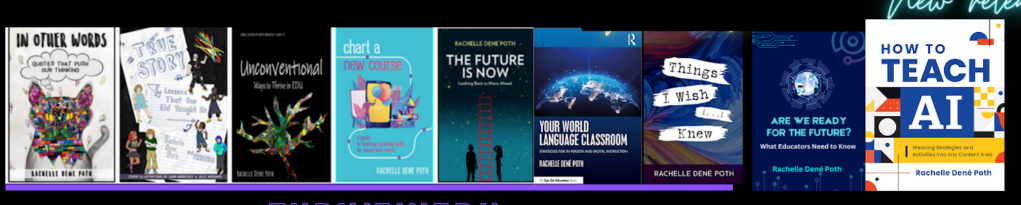
She is the author of nine books including ‘In Other Words: Quotes That Push Our Thinking,” “Unconventional Ways to Thrive in EDU,” “The Future is Now: Looking Back to Move Ahead,” “Chart A New Course: A Guide to Teaching Essential Skills for Tomorrow’s World, “True Story: Lessons That One Kid Taught Us,” “Things I Wish […] Knew” and her newest “How To Teach AI” is available from ISTE or on Amazon.
Contact Rachelle to schedule sessions about Artificial Intelligence, Coding, AR/VR, and more for your school or event! Submit the Contact Form.
Follow Rachelle on Twitter(X) and Instagram at @Rdene915
**Interested in writing a guest blog for my site? Would love to share your ideas! Submit your post here. Looking for a new book to read? Find these available at bit.ly/Pothbooks
************ Also check out my THRIVEinEDU PodcastHere!
Join my show on THRIVEinEDU on Facebook. Join the group here.
A post in collaboration with CodeMonkey. All opinions are my own
I remember when I started to learn how to code as a seventh grader many years ago and the impact it had on me. Writing lines of code and seeing what we could create was fascinating. Back then, we did not have the powerful tools or resources available in our classrooms today. As a student, I did not realize how beneficial of a skill coding was then, nor how much of an increasing demand for coding skills there would be.
As educators, we want to ensure that we prepare students for the future with the right skills and a variety of learning experiences to build those skills. Learning about STEM, especially AI and coding, is at the top of the list. I’ve taught a STEAM course to 8th graders for the past 8 years, and a lot of what we cover involves AI and coding. When I came across CodeMonkey, I couldn’t wait to try it in my classroom and share it with other educators.
CodeMonkey is a great option that benefits every student, regardless of their starting point and comfort level with coding. For educators wanting to dive into coding and unsure where to begin, CodeMonkey’s K-8 curriculum offers a great choice because it focuses on developing coding skills, fostering digital literacy, and introducing AI concepts to all students. Its design makes it easy for educators to get started in any classroom. I enjoyed learning more while chatting with Jonathan Schor, the CEO and Co-Founder of CodeMonkey, on my ThriveinEDU podcast!
Curriculum for Every Learner
One of the standout benefits of using CodeMonkey is that it helps educators meet students where they are. Preschoolers who are just learning about computational thinking can do so with CodeMonkey Jr. Elementary students can learn about logic by using Beaver Achiever. When students get stuck, they can get a hint to help them continue the coding process! It’s so much fun with the coding, sounds, and animations!
Students enjoy trying to problem-solve when different animals come up, and they have not programmed the right shake to be made!
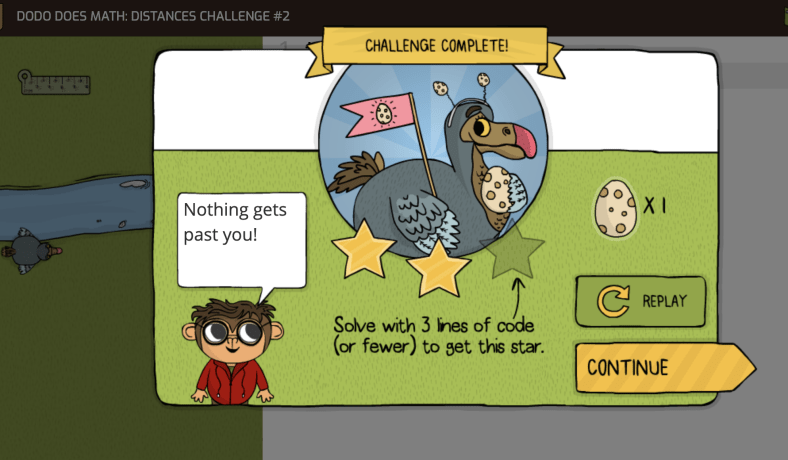
Courses like Dodo Does Math and Coding Adventure teach students to use code to solve problems and express their creativity. Students need to use the ruler, do math, figure out steps and learn the process of coding to carry out the task. So much fun!
When students reach middle school, they are better prepared to explore more complex concepts, like designing their games in Game Builder or exploring artificial intelligence in the award-winning AI for Kids curriculum. CodeMonkey offers something for all grade levels. The Artificial Intelligence lessons are great for building students’ understanding of AI, its components, how it works and building their skills in various areas.
Diving in with CodeMonkey
Whenever I try something new, I like to dive in on my own and just know enough to get my students started. It is fun to learn with and from them. In my 8th-grade STEAM classroom, I started my students with CodeMonkey’s advanced courses like Coding Chatbots and the AI for Kids curriculum since we had spent a lot of time learning about AI. These courses resonated with students who were excited about these rapidly advancing topics. I was thrilled to see their interest in continuing to work independently and sharing their learning with me and their classmates.
Beyond building coding skills, I also see how CodeMonkey’s gamified, scaffolded approach helps to empower students of any age to build their confidence and skills in coding. Building confidence is key, especially as I have seen how frequently students tend to be afraid of coding or hesitant to start for fear of being unable to figure it out and problem-solve. However, the support provided by CodeMonkey helps students become more comfortable with learning about coding, which leads to increased confidence.
Some of CodeMonkey‘s great features are the user-intuitive drag-and-drop functionality of block-based coding and the logic-driven challenges of Python. Each course helps teach students about core programming concepts while fostering creativity and problem-solving, which are essential skills for future preparedness. I also appreciate its emphasis on ethical considerations.
In my classroom, we discuss bias in AI, privacy concerns, and the societal impact of automation. Engaging students in discussions focused on these ethical considerations helps them understand that coding is not just about algorithms—it’s about understanding the implications and how to safely, ethically, and responsibly leverage this technology.
How CodeMonkey Benefits All Students
By the time students reach the 8th grade, they’re ready for more complex challenges and real-world coding applications. CodeMonkey’s progressive curriculum helps educators to provide great learning experiences for all students. My students have enjoyed working in Python-based courses like Banana Tales and Coding Chatbots, which move them beyond basic coding into text-based programming, focusing on logic, creativity, and problem-solving.
For students new to coding, the structured, scaffolded approach ensures they don’t feel overwhelmed. Each lesson builds on the previous one, and the platform’s gamified elements make it feel more like an adventure than a traditional coding class.
Bringing Artificial Intelligence into Every Classroom
The AI course is one of the highlights of using CodeMonkey with my 8th graders. Covering foundational AI concepts like machine learning, neural networks, and the ethics of AI, this course bridges the gap between theoretical knowledge and practical application. Now that my students know they can train models using image and pose recognition and then apply these skills to create games, the learning becomes more authentic and meaningful.
In class, we also connect these AI lessons to broader societal implications. For example, we discuss how neural networks are used in everything from social media algorithms to self-driving cars. Then, we connect it back to real-world scenarios the students can relate to. When we do this, it sparks meaningful conversations about the impact of technology on our lives. It highlights the importance of responsible AI use—a topic I’m passionate about as an educator and attorney.
Building Real-World Skills
CodeMonkey isn’t just about coding; it’s about preparing students for the future. Through its courses, students develop essential skills like problem-solving, planning, and critical thinking, which are invaluable not only in STEM fields but also in life.
For example, in the Game Builder course, students can design their games from scratch, learn to iterate on their ideas, debug their code, and test for user experience. This mirrors the iterative design process used in tech startups, giving students an idea of what creating in a professional environment would be like.
Digital Literacy and Citizenship
In addition to coding, CodeMonkey offers a Digital Literacy course that introduces students to the safe and responsible use of technology. This has been especially valuable in my 8th-grade emerging technology class, where we discuss topics like the metaverse, AI ethics, and digital citizenship and focus on cybersecurity and topics like phishing. CodeMonkey’s approach aligns seamlessly with these discussions, reinforcing that coding is not just a technical skill but a tool for thoughtful and ethical problem-solving.
Coding Tools for All Teachers
As a classroom teacher, one of the things I appreciate most about CodeMonkey is how user-friendly it is. When I explore new tools, I always evaluate how long it will take to get started, what the learning curve might be, and what it offers for all educators. In CodeMonkey, the Classroom Dashboard provides teachers with a clear overview of student progress, making it easy to identify students needing extra support quickly. Automatic grading and detailed lesson plans save time, allowing me to focus on fostering creativity and critical thinking.
CodeMonkey’s resources make it easy for teachers new to coding to get started, but I can’t recommend it enough. Whether teaching block-based coding to younger students or diving into Python and AI with older students, this platform has something for everyone. Its intuitive design, gamified approach, and focus on real-world skills make it an invaluable resource for K-8 classrooms as they prepare students for the future.
At a time when technology is evolving faster than ever, teaching coding and AI isn’t just an optional extra; it’s a necessity. Platforms like CodeMonkey make coding approachable and enjoyable—for teachers and students. As someone who has seen firsthand the impact it can have, I’m excited to continue exploring what’s possible with this incredible tool.
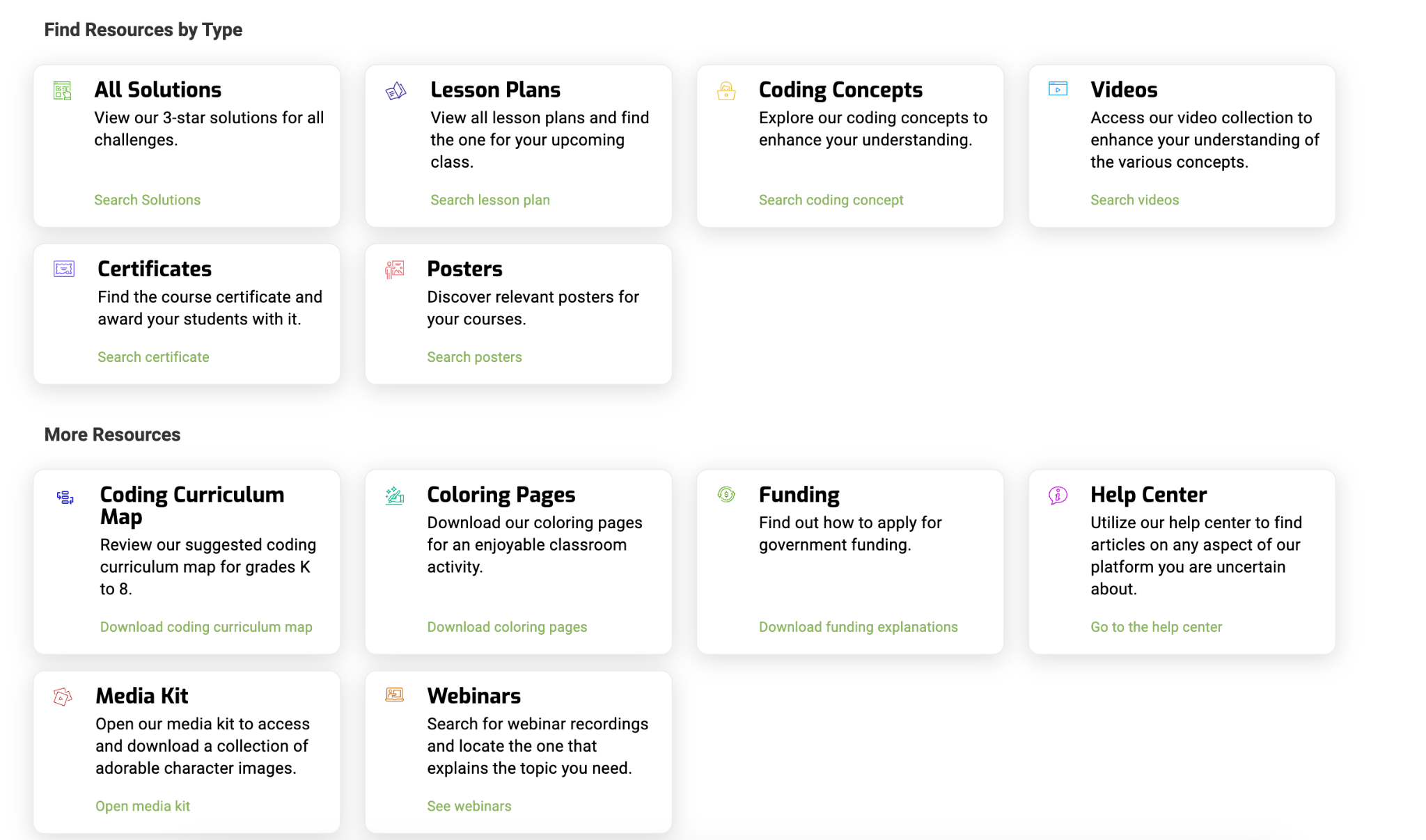
If you’re an educator ready to take your students on a coding adventure, CodeMonkey is the perfect place to start. CodeMonkey doesn’t just teach coding; it fosters creativity, critical thinking, and a love of learning that will serve students well in any field they pursue. There are so many support resources available for educators! You can find lesson plans, videos, webinars, and more!
It’s a great option for introducing coding to kindergarteners or guiding 8th graders through AI and Python. CodeMonkey offers a curriculum that adapts to students’ needs and inspires them to keep pushing through and having fun with it. Listen to my podcast with CEO and Co-Founder Jonathan Schor here. Happy coding!
About Rachelle
Dr. Rachelle Dené Poth is a Spanish and STEAM: What’s Next in Emerging Technology Teacher at Riverview High School in Oakmont, PA. Rachelle is also an attorney with a Juris Doctor degree from Duquesne University School of Law and a Master’s in Instructional Technology. Rachelle received her Doctorate in Instructional Technology, and her research focus was on AI and Professional Development. In addition to teaching, she is a full-time consultant and works with companies and organizations to provide PD, speaking, and consulting services. Contact Rachelle for your event!
Rachelle is an ISTE-certified educator and community leader who served as president of the ISTE Teacher Education Network. By EdTech Digest, she was named the EdTech Trendsetter of 2024, one of 30 K-12 IT Influencers to follow in 2021, and one of 150 Women Global EdTech Thought Leaders in 2022.
She is the author of nine books and a blogger and podcaster.
Contact Rachelle to schedule sessions about Artificial Intelligence, Coding, AR/VR, and more for your school or event! Submit the Contact Form.
Follow Rachelle on Twitter(X) and Instagram at @Rdene915
**Interested in writing a guest blog for my site? Would love to share your ideas! Submit your post here. Looking for a new book to read? Find these available at bit.ly/Pothbooks
************ Also, check out my THRIVEinEDU PodcastHere!
Join my show on THRIVEinEDU on Facebook. Join the group here.
Guest post by Dr. Richard Jones, CTE Advocate, and Author
NOTE: The following blog is part of a series posted by the New York State Trade and Technical Teachers Association. The complete set of blogs can be read on their website.
CTE educators must explore the exciting intersection of two “AIs.” One AI is Artificial Intelligence, a powerful tool with immense potential to reshape how we teach and learn. The other AI is Academic Integration—a cornerstone of Career and Technical Education (CTE) aimed at blending technical skills with academic knowledge to better prepare students for the modern workforce. Together, these two AIs can revolutionize education by addressing long-standing challenges and empowering educators.
For years, CTE teachers have expressed frustration with the difficulty of aligning academic content with technical programs. Common sentiments include:
“I don’t have an academic teacher to collaborate with.”
“The curriculum doesn’t align with my program.”
“I struggle with some of the math tools, and I don’t have time.”
While these challenges are real, Generative AI offers exciting new solutions. With its ability to generate ideas, content, and academic connections instantly, AI can bridge the gaps between subjects and make collaboration easier.
AI as a Collaborative Partner
In ideal situations, academic and technical teachers can meet face-to-face, brainstorm, and design powerful, integrated lessons. This hands-on collaboration allows academic teachers to observe technical programs in action and identify opportunities to align math, science, or English with practical applications. However, time constraints and staffing limitations often make this level of collaboration difficult.
This is where Generative AI steps in. When in-person collaboration isn’t possible, AI tools can act as a virtual partner. For example, if a construction teacher needs help aligning math standards with their lessons, AI can quickly generate relevant ideas. A cosmetology teacher wondering how English skills apply to their program can use AI to explore connections. This ability to “brainstorm” with AI offers new perspectives and sparks creative teaching ideas—without requiring multiple meetings.
Breaking Down Academic Barriers
It’s no secret that every subject has its own jargon, and sometimes academic terminology can feel like a foreign language to CTE teachers—and vice versa. Generative AI makes this less of a hurdle by translating complex concepts into plain language. Instead of sending you to external links, AI tools can provide clear, narrative answers tailored to your needs, helping you understand and apply academic content quickly.
Saving Time and Reducing Stress
Time is a constant challenge for teachers. Creating integrated lessons from scratch, coordinating with colleagues, and refining content takes time many educators simply don’t have. AI can lighten that load by generating lesson plans, project ideas, and assessments. While it’s still important to review and fine-tune AI-generated content, the process is much faster than starting from zero or juggling multiple conversations. This efficiency allows you to focus on what matters most: teaching and engaging students.
What’s Next?
As we promote academic integration, we must share practical examples of using AI to brainstorm, fine-tune integrated student projects, and assess higher-level thinking skills. Generative AI is the key to taking Academic Integration to the next level. By embracing these tools, CTE teachers can unlock new opportunities for collaboration and create innovative lessons that empower students for future success.
As an example of using AI tools, this blog was added to Google Notebook LM, and this engaging three-minute podcast was created. The future of education is bright, and with AI by our side, the possibilities are endless!
About Rachelle
Dr. Rachelle Dené Poth is a Spanish and STEAM: What’s Next in Emerging Technology Teacher at Riverview High School in Oakmont, PA. Rachelle is also an attorney with a Juris Doctor degree from Duquesne University School of Law and a Master’s in Instructional Technology. Rachelle received her Doctorate in Instructional Technology, and her research focus was on AI and Professional Development. In addition to teaching, she is a full-time consultant and works with companies and organizations to provide PD, speaking, and consulting services. Contact Rachelle for your event!
Rachelle is an ISTE-certified educator and community leader who served as president of the ISTE Teacher Education Network. By EdTech Digest, she was named the EdTech Trendsetter of 2024, one of 30 K-12 IT Influencers to follow in 2021, and one of 150 Women Global EdTech Thought Leaders in 2022.
She is the author of nine books and a blogger and podcaster.
Contact Rachelle to schedule sessions about Artificial Intelligence, Coding, AR/VR, and more for your school or event! Submit the Contact Form.
Follow Rachelle on Twitter(X) and Instagram at @Rdene915
**Interested in writing a guest blog for my site? Would love to share your ideas! Submit your post here. Looking for a new book to read? Find these available at bit.ly/Pothbooks
************ Also, check out my THRIVEinEDU PodcastHere!
Join my show on THRIVEinEDU on Facebook. Join the group here.
Guest post by Dr. Amy Mathews-Perez, a Director of Special Programs in a public school in Central Texas. Connect with Amy on X (formerly Twitter) at @drgrowtoknow, on Facebook at DrAmy MP, or at her website dramyperez.com
Legacy, Purpose, and In Between
It is very common to hear phrases, mottos, and comments about “purpose.” A few examples include finding your purpose and having a sense of purpose and purpose of life. It seems to have become so common that people may gloss over the words, dismiss it, or find it so daunting that they avoid all of the “How To” advice. Often this word also implies that a person’s purpose is a singular thing. We won’t launch into the grammar of it all, but in this blog, I’ll share a strategy that has helped me refocus on my purpose, and my hope is that it can help you get closer to figuring out yours.
An important thing to know is that your purpose can change. It is not like a New Year’s resolution that you either conquer or quit; purpose is fluid because it evolves as you grow and change; also, it typically impacts multiple levels of your preferences, your actions, your emotions, your interactions with others, your mindset and more which leads to more growth and change.
Also, your purpose doesn’t need to be something huge, life-changing, or change the world. If you are committed to it and true to it, your purpose will facilitate change that is needed. Some of these changes you’ll be lucky enough to know about, but many will happen as a ripple effect.
Now, let’s talk about the word “legacy.” It makes some people think of obituaries and inheritance, while others use it in reference to the “rich and famous.” The definition I am referring to for the purpose of this blog is this: the sum of the personal values, accomplishments, contributions, and actions that resonate and impact others in ways that yield change in character, progress, and/or learning. Everyone has a legacy, but not everyone recognizes it. Often, those who can see their legacy rarely accomplish it due to a lack of self-trust, intention, drive, and focus.
In 2024, I was honored to be a guest on Chip Baker’s podcast, “The Success Chronicles.” You can check out all of his episodes at https://www.youtube.com/c/ChipBakerTheSuccessChronicles. I highly recommend Chip Baker- he is authentic, hard-working, and truly wants you to succeed through learning. Although my episode has not yet been published, we talked about many things, including “legacy.” Chip Baker said, “…it all starts with your perspective and your heart posture.” We shared personal examples and were on the same page about legacy being more about the impact than the person.
Since then, I have been reflecting and processing the terms “legacy” and “purpose,” and my big “Ah-ha!” moment was this: I was working backwards. I was languishing over my purpose and what kind of legacy that would leave. I switched up my strategy and very quickly gained clarity, which provided me with alignment between my actions, mission, focus, and goals. Things are not perfect, but they are significantly better.
Here is what I discovered: In spending quality time reflecting on what I want my legacy to be, my purpose reveals itself (not all at once for me.) The “in-between” stuff is our everyday life; our choices, actions, values, words, and more – including what you put your energy into. Chip Baker described it as being “intentional about doing the right thing each moment of each day.”
As I continue my journey, I am collaborating with specific people that I trust to build on ideas and provide me authentic feedback. This is key in squashing self-doubt, the inner-critic and the “just give up” voice when things get hard, messy, or unclear.
You are a wonderfully unique person. This strategy is not a guarantee, but it is an idea for you to consider. If you give yourself enough time and grace, I am 100% confident that you’ll discover more about yourself, your legacy, and your purpose.
About Amy
About Amy Texas-born & raised, Amy is in her 34th year of serving public education. General Ed. Teacher, SLP, Diagnostician, SPED Supervisor, Assistant Principal, Principal, and Director of Special Education are roles she’s held. She is the CEO of Making Education Special for All (M.E.S.A), an LLC dedicated to training, facilitation, consultation, and speaking engagements that revolve around information, motivation, and insights on why and how to make education special for all stakeholders as well as leadership. Her passions are communication, joy, authenticity, and empowerment. “Life is short, but our influence is never-ending,” Amy is committed to connecting with others through service and smiles.
About Rachelle
Dr. Rachelle Dené Poth is a Spanish and STEAM: What’s Next in Emerging Technology Teacher at Riverview High School in Oakmont, PA. Rachelle is also an attorney with a Juris Doctor degree from Duquesne University School of Law and a Master’s in Instructional Technology. Rachelle received her Doctorate in Instructional Technology, and her research focus was on AI and Professional Development. In addition to teaching, she is a full-time consultant and works with companies and organizations to provide PD, speaking, and consulting services. Contact Rachelle for your event!
Rachelle is an ISTE-certified educator and community leader who served as president of the ISTE Teacher Education Network. By EdTech Digest, she was named the EdTech Trendsetter of 2024, one of 30 K-12 IT Influencers to follow in 2021, and one of 150 Women Global EdTech Thought Leaders in 2022.
She is the author of nine books and a blogger and podcaster.
Contact Rachelle to schedule sessions about Artificial Intelligence, Coding, AR/VR, and more for your school or event! Submit the Contact Form.
Follow Rachelle on Twitter(X) and Instagram at @Rdene915
**Interested in writing a guest blog for my site? Would love to share your ideas! Submit your post here. Looking for a new book to read? Find these available at bit.ly/Pothbooks
************ Also, check out my THRIVEinEDU PodcastHere!
Join my show on THRIVEinEDU on Facebook. Join the group here.







 Learning as I go: Reflections & lessons learned