
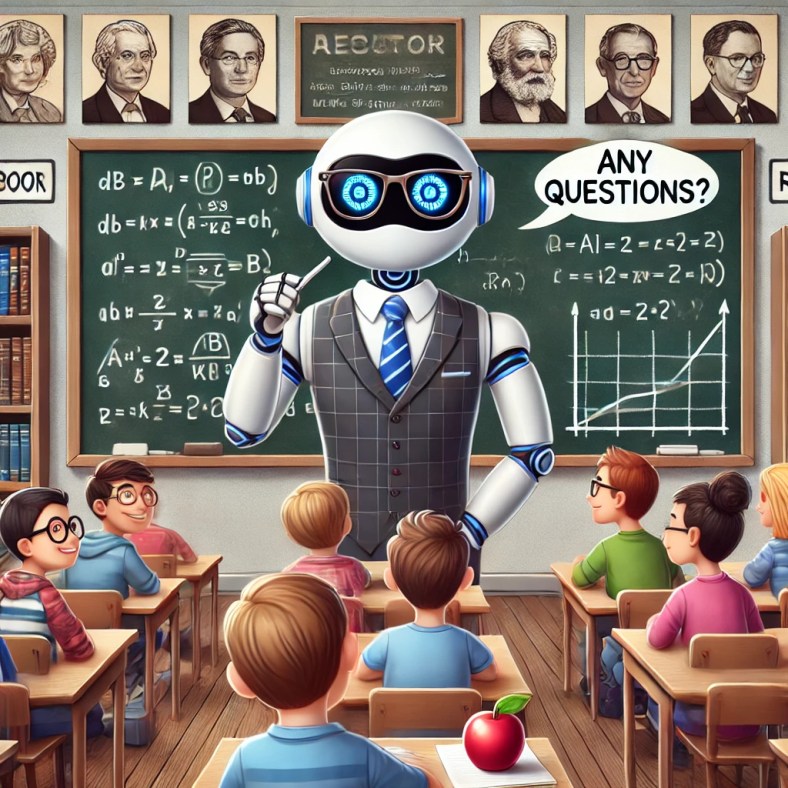
In Part 1 of this series, I shared some of the ways AI is transforming education—personalized learning, automation of routine tasks, and improved accessibility. But like any powerful tool, AI also comes with challenges that we need to think through carefully if we want it to truly support students and educators.
Thinking through it carefully doesn’t mean that we should ban the use of AI or greatly limit it. It means being intentional about how we use it, asking the right questions, and making sure that technology enhances learning rather than replacing it, and understanding how to make sure that we are using tools that are safe for students and educators.
Here are some challenges (and opportunities) that AI in education brings, as well as ideas for how we can navigate them wisely.
1. The Balance Between AI and Human Instruction
AI-powered learning platforms are helping teachers provide personalized instruction in ways that weren’t possible before. While we have always been able to personalize instruction in our classrooms, these tools can save time, enable faster feedback, and provide greater insights into student learning in less time. Adaptive learning tools can indicate gaps in understanding, adjust content based on individual student progress, and provide instant feedback.
All of these possibilities are beneficial. But these possibilities raise an important question: Where does AI fit into the teacher-student relationship?
Why It Matters:
AI can help educators, or anyone, to be more efficient, but teaching isn’t just about delivering content. It’s about essentially human qualities such as mentorship, creativity, and human connection—things AI can’t replicate. If we rely too much on AI-driven instruction, we risk creating a learning environment and experiences that are transactional rather than transformational in our schools.
Some solutions:
- Use AI to complement, not replace, teacher-led instruction. AI is capable of handling routine tasks and providing insights, but teachers bring authentic connections, relevant context, and inspiration that technology can’t.
- Prioritize collaborative learning, project-based learning experiences, and hands-on activities to balance AI-driven efficiency with human creativity.
- Encourage students to engage in critical thinking and discussion— essential skills that go beyond what AI is able to offer.
2. AI-Generated Content: Helpful or a Shortcut?
There are so many questions surrounding AI-generated content. Should we use it? Can we create with AI and sell it, or are we violating copyright? We know there are endless things we can create, from lesson plans to assessments, project ideas, audio and video creations, and more. AI has become a “go-to” tool for educators and learners alike. But is that always a good thing?
Why It Matters:
AI can generate fast, but speed doesn’t always mean quality or accuracy. Sometimes, AI outputs are generic, lack depth, or contain inaccuracies. As educators, we need to work with it, evaluate our prompts and the output, and find ways to guide students to appropriate use of the tools available. If students rely too much on AI for writing or problem-solving, they will miss out on the critical thinking and creativity that come with the process.
Some solutions:
- Guide students on how to engage with AI critically. It’s not about completely banning AI tools but helping students learn when and how to use them responsibly.
- Encourage students to edit, refine, and build on AI-generated content rather than accepting it at face value. Think of AI as a brainstorming tool, not a finished product.
- Use AI for efficiency, not as a replacement for thought. Generating a study guide is great. Letting AI do all the work is not so great.
3. Data Privacy and Student Security
AI-powered tools are collecting a lot of student data—performance analytics, typing patterns, and even behavioral insights in some cases. While this data can help improve learning experiences, it raises important questions surrounding privacy, security, and consent.
Why It Matters:
AI is making education more personalized, but we make sure that this enhanced personalization doesn’t come at the cost of student privacy. Some questions that schools and educators should consider on a regular basis are:
- What data is being collected, and how is it stored?
- Who has access to it?
- Is it being used to help students learn or for other purposes?
Some solutions:
- Choose AI tools that prioritize transparency and security. Ask companies tough questions about their data policies. Review the policies frequently to make sure that the companies are staying up-to-date as AI evolves.
- Teach students about digital literacy and privacy so they understand how their data is being used and can advocate for themselves.
- Dedicate time to developing clear school policies on AI and data use. If we don’t ask these questions now, we might not like the answers later.
4. Making Sure Every Student Benefits
AI has great potential for providing personalized support to students who need it most. However, if only well-funded schools have access to the best AI-powered tools, it could widen educational gaps.
Why It Matters:
- Not all students have equal access to technology. We learned this in 2020 as schools had to shift to virtual learning. If AI-driven learning becomes the norm, students in under-resourced schools could fall behind and risk being unprepared for the evolving world of work involving AI.
- Bias in AI models can unintentionally disadvantage certain student groups if the training data isn’t diverse enough.
Some solutions:
- Advocate for equitable access to AI tools in schools, ensuring that every student—not just those in tech-rich districts—benefits from AI-driven learning.
- Be mindful of bias in AI-driven assessments and grading tools. If AI is making decisions that impact students, we need to question how those decisions are being made.
5. The Need for Clear AI Guidelines in Schools
One of the biggest challenges right now is that there’s no universal roadmap for AI in education. Schools are adopting AI tools at different rates, and students are at different levels of understanding about their risks and benefits. Some schools do not have policies in place or have not even started the discussion. I have learned this over the past six months when working with schools across the country in my AI and the Law training sessions and speaking events.
Why It Matters:
- Without clear guidelines, educators are left to figure things out on their own, which can lead to inconsistent policies and even ethical dilemmas.
- Schools need AI policies that address data privacy, academic integrity, and responsible AI use.
Some solutions:
- It takes a team. Work together to develop best practices for AI in the classroom. AI in our schools isn’t just a tech issue—it’s a teaching issue.
- Push for state and district-level guidelines so that AI use in education is consistent and transparent.
- Keep the conversation going—AI is evolving fast, and education needs to keep up. We need to be proactive rather than reactive.
As we continue integrating AI into our schools, I believe the key is approaching it with curiosity, caution, and a commitment to making it work for all learners. I would not consider the challenges that I have shared to be giant roadblocks but rather opportunities for us to be proactive and strategic about the use of AI in the classroom.
By staying informed, advocating for responsible AI use, and keeping students and educators at the center of the conversation, we can ensure that AI enhances education rather than disrupting it. In Part 3 of this series, I plan to look at what’s next for the future of learning. What skills will students need in an AI-driven world, and how do we prepare for what’s coming?
Thanks for reading! Stay tuned for Part 3. If you’re looking for PD training for your school or a speaker for your event, contact me via bit.ly/thriveineduPD.
About Rachelle
Dr. Rachelle Dené Poth is a Spanish and STEAM: What’s Next in Emerging Technology Teacher at Riverview High School in Oakmont, PA. Rachelle is also an attorney with a Juris Doctor degree from Duquesne University School of Law and a Master’s in Instructional Technology. Rachelle received her Doctorate in Instructional Technology, and her research focus was on AI and Professional Development. In addition to teaching, she is a full-time consultant and works with companies and organizations to provide PD, speaking, and consulting services. Contact Rachelle for your event!
Rachelle is an ISTE-certified educator and community leader who served as president of the ISTE Teacher Education Network. By EdTech Digest, she was named the EdTech Trendsetter of 2024, one of 30 K-12 IT Influencers to follow in 2021, and one of 150 Women Global EdTech Thought Leaders in 2022.
She is the author of nine books including, ‘In Other Words: Quotes That Push Our Thinking,” “Unconventional Ways to Thrive in EDU,” “The Future is Now: Looking Back to Move Ahead,” “Chart A New Course: A Guide to Teaching Essential Skills for Tomorrow’s World, “True Story: Lessons That One Kid Taught Us,” “Things I Wish […] Knew” and her newest “How To Teach AI” is available from ISTE or on Amazon.
Contact Rachelle to schedule sessions about Artificial Intelligence, Coding, AR/VR, and more for your school or event! Submit the Contact Form.
Follow Rachelle on Bluesky, Instagram, and X at @Rdene915
**Interested in writing a guest blog for my site? Would love to share your ideas! Submit your post here. Looking for a new book to read? Find these available at bit.ly/Pothbooks

************ Also, check out my THRIVEinEDU Podcast Here!
Join my show on THRIVEinEDU on Facebook. Join the group here.






 Learning as I go: Reflections & lessons learned