Why Computer Science Matters: Preparing Students for the Future

Building skills in STEM—especially in computer science—is essential for students in today’s world. According to the World Economic Forum, approximately 1 billion jobs will be transformed by technology over the next decade. The Bureau of Labor Statistics also projects a 13% growth in computer and IT-related careers between 2020 and 2030. As educators, it’s our responsibility to prepare students for a rapidly evolving workforce, and one of the most impactful ways we can do this is by integrating computer science into their learning experiences.

Through the right resources, students can explore a wide variety of fields that require computer science skills. They begin to see not only the opportunities available in technology-related careers but also what it takes to succeed in them, and how they can start preparing now.

Bringing Computer Science into Every Classroom

Even if we don’t all come from computer science backgrounds, we can still create meaningful learning experiences that expose students to its benefits. Integrating computer science doesn’t require a full curriculum overhaul—it can start with small, engaging activities that fit within any grade level or subject area. There are a variety of tools that offer ready-made, standards-aligned projects to help teachers get started in less time.

Key Benefits of Computer Science for Students

Computer science education helps students develop versatile and future-ready skills, regardless of the careers they ultimately pursue. Some of the top benefits include:

  • Analytical Thinking: Students learn to collect, examine, and interpret data, identify patterns, and make informed decisions. Provide them with real-world challenges that require careful analysis and reasoning to develop effective solutions.
  • Collaboration: Working in teams on coding projects or computer science challenges fosters communication and teamwork. These experiences reflect the collaborative nature of today’s workplaces and help students develop both interpersonal and technical skills.
  • Creativity and Innovation: Whether designing a game, building an app, or developing a website, students gain confidence as creators. These projects help spark innovation and empower learners to bring their ideas to life.
  • Problem-Solving: Through programming and logic-based tasks, students learn to break down problems into smaller, manageable steps. This kind of structured thinking is not only critical in tech-related careers but also supports resilience and growth in everyday learning.

Practical Ways to Explore Computer Science in K–12

There are countless tools and platforms that can help students (and teachers) explore computer science in fun, engaging ways:

  • Augmented and Virtual Reality with Coding: We love using Delightex (formerly known as CoSpaces EDU) to create amazing worlds where students can collaborate, code, and engage in meaningful and fun learning! Try code DXPromoRDP today!
  • Coding: Coding skills are in high demand, with an estimated 58 million STEM jobs expected in the next few years. Platforms like Code.org, Scratch, and Tynker offer engaging, age-appropriate coding activities. Younger learners can benefit from screen-free robots like MatataStudio or KIBO from KinderLab Robotics. Code with Google also provides free resources with an equity-driven mission.
  • Hour of Code: While often highlighted in December, Hour of Code activities can be used year-round. Options like Scratch, Scratch Jr., and CS Unplugged provide accessible entry points, even for students without access to computers.
  • Game and App Development: Students can create their own games or mobile apps using tools like MIT App Inventor or Swift Playgrounds. These beginner-friendly platforms help students develop computational thinking while expressing their creativity.
  • ISTE Curriculum: The ISTE Computer Science Curriculum offers free guides designed to integrate CS and AI into elementary and secondary classrooms. These resources include standards-aligned activities, lesson plans, and ethics-focused content to make implementation easier.
  • Robotics: Hands-on robotics activities not only engage students but also give them a window into what computer science careers might involve. Exploring robotics fosters technical skill-building while supporting creativity and critical thinking.

Final Thoughts

Even if computer science isn’t your specialty, introducing its principles into your classroom can make a lasting impact. The benefits go beyond technical proficiency—students develop critical thinking, teamwork, creativity, and resilience. Whether through robotics, coding challenges, app development, or data analysis, computer science opens doors to future-ready learning.

By using a variety of resources and starting with small steps, we can make sure that every student has the opportunity to build these powerful and essential skills.

About Rachelle

Dr. Rachelle Dené Poth is a Spanish and STEAM: What’s Next in Emerging Technology Teacher at Riverview High School in Oakmont, PA. Rachelle is also an attorney with a Juris Doctor degree from Duquesne University School of Law and a Master’s in Instructional Technology. Rachelle received her Doctorate in Instructional Technology, and her research focus was on AI and Professional Development. In addition to teaching, she is a full-time consultant and works with companies and organizations to provide PD, speaking, and consulting services. Contact Rachelle for your event!

Rachelle is an ISTE-certified educator and community leader who served as president of the ISTE Teacher Education Network. By EdTech Digest, she was named the EdTech Trendsetter of 2024, one of 30 K-12 IT Influencers to follow in 2021, and one of 150 Women Global EdTech Thought Leaders in 2022.

She is the author of ten books, including ‘What The Tech? An Educator’s Guide to AI, AR/VR, the Metaverse and More” and ‘How To Teach AI’. In addition, other books include, “In Other Words: Quotes That Push Our Thinking,” “Unconventional Ways to Thrive in EDU,” “The Future is Now: Looking Back to Move Ahead,” “Chart A New Course: A Guide to Teaching Essential Skills for Tomorrow’s World, “True Story: Lessons That One Kid Taught Us,” “Things I Wish […] Knew” and her newest “How To Teach AI” is available from ISTE or on Amazon.

Contact Rachelle to schedule sessions about Artificial Intelligence, Coding, AR/VR, and more for your school or event! Submit the Contact Form.

Follow Rachelle on Bluesky, Instagram, and X at @Rdene915

**Interested in writing a guest blog for my site? Would love to share your ideas! Submit your post here. Looking for a new book to read? Find these available at bit.ly/Pothbooks

************ Also, check out my THRIVEinEDU Podcast Here!

Join my show on THRIVEinEDU on Facebook. Join the group here.

Professional Development on AI

Prior post on Edutopia

Over the past few years, we have seen many changes in education. We live and teach in an increasingly digital world that involves rapid technological advancements through emerging technologies such as artificial intelligence (AI). The technologies are not only impacting our lives as educators, but they are also impacting the world of work that our students will enter.

To best prepare our students, educators must constantly adapt and evolve to keep up with these changes. However, there are challenges associated with these technologies, including a lack of professional learning opportunities, insufficient time to participate, and uncertainty about the best options for learning. Bringing in new technology can also feel like adding to an already overflowing plate. 

Beyond the basic technology skills that educators need for everyday teaching, they also need to be knowledgeable about emerging technologies, particularly AI, and how to bring them into their classrooms. Over the past five years, my work has focused on collaborating with teachers to get them started with emerging technology—including, more recently, AI. Here are some things that work when designing AI-related professional learning.

AI Professional Development for Educators

Professional development (PD) focused on implementing classroom technology goes beyond simply training educators in how to use it and apply it to their curriculum. It requires rich and personalized learning experiences that will engage educators and enable them to see the possibilities available for amplifying learning through educational technology. 

Building knowledge in an area such as AI and other emerging technologies takes time with consistent and guided exploration. It also requires that educators be able to explore a variety of resources to find what best meets their specific needs. Without support, teachers are less likely to dive into these new technologies, especially if they do not see the relevance to their content area. 

Continue reading this post on Edutopia

About Rachelle

Dr. Rachelle Dené Poth is a Spanish and STEAM: What’s Next in Emerging Technology Teacher at Riverview High School in Oakmont, PA. Rachelle is also an attorney with a Juris Doctor degree from Duquesne University School of Law and a Master’s in Instructional Technology. Rachelle received her Doctorate in Instructional Technology, and her research focus was on AI and Professional Development. In addition to teaching, she is a full-time consultant and works with companies and organizations to provide PD, speaking, and consulting services. Contact Rachelle for your event!

Rachelle is an ISTE-certified educator and community leader who served as president of the ISTE Teacher Education Network. By EdTech Digest, she was named the EdTech Trendsetter of 2024, one of 30 K-12 IT Influencers to follow in 2021, and one of 150 Women Global EdTech Thought Leaders in 2022.

She is the author of ten books, including ‘What The Tech? An Educator’s Guide to AI, AR/VR, the Metaverse and More” and ‘How To Teach AI’. In addition, other books include, “In Other Words: Quotes That Push Our Thinking,” “Unconventional Ways to Thrive in EDU,” “The Future is Now: Looking Back to Move Ahead,” “Chart A New Course: A Guide to Teaching Essential Skills for Tomorrow’s World, “True Story: Lessons That One Kid Taught Us,” “Things I Wish […] Knew” and her newest “How To Teach AI” is available from ISTE or on Amazon.

Contact Rachelle to schedule sessions about Artificial Intelligence, Coding, AR/VR, and more for your school or event! Submit the Contact Form.

Follow Rachelle on Bluesky, Instagram, and X at @Rdene915

**Interested in writing a guest blog for my site? Would love to share your ideas! Submit your post here. Looking for a new book to read? Find these available at bit.ly/Pothbooks

************ Also, check out my THRIVEinEDU Podcast Here!

Join my show on THRIVEinEDU on Facebook. Join the group here.
How to Prepare Students for a Fast-Moving (AI)World

In the world of work and education, the pace of technological change is accelerating, and it is doing so faster than ever. As an educator who divides my time between teaching Spanish, STEM, and emerging tech, as well as an attorney and consultant, plus an avid learner, I’ve made it my mission to keep looking for more opportunities that will prepare our students and ourselves. I ask: “What skills do our students really need to thrive not just in today’s world but in the one that’s moving quickly toward us?”

The answer? We have to equip them with the right skills to be “future-ready.” And while technology is involved, it is not about being able to use the latest tech tool. It’s about building a solid foundation of skills, a resilient mindset, and the adaptability to navigate whatever comes next. With the right strategies, we can ensure every student is prepared for the careers and challenges they may face as they continue their learning careers in the world of work.

Education has always been about preparing for the future. But today’s future is driven by evolving AI, robotics, quantum computing, and more. The traditional school model, focused on memorizing content within siloed subjects, is no longer sufficient. We need to embrace change. Our classrooms must become spaces for risk-taking and helping students develop the skills that truly matter in a tech-driven world: critical thinking, creativity, collaboration, and digital literacy. These are the tools that will allow our students to navigate an unpredictable landscape with confidence.

The New Realities of Learning and Work

Artificial Intelligence is Already Here. AI isn’t a sci-fi concept; it’s woven into the fabric of our daily lives and is reshaping every industry, from healthcare to finance. To be prepared, our students need to be more than just users of AI—they need to be AI-literate. They must understand its power, question its ethical implications, and learn to leverage it as a tool that enhances, not replaces, their own intelligence. Future employers won’t just want employees who can do a job; they’ll want employees who can work alongside AI.

The Human Element in an AI World

Automation will continue to transform the job market. While some specific roles or jobs will change or even disappear, new ones we can’t yet imagine will be created. This is what makes our uniquely human skills more valuable than ever. Emotional intelligence, ethical reasoning, creative problem-solving, and resilience are the new power skills. This is where methods like challenge-based and project-based learning shine, as they push students to develop these essential human traits.

From Knowing to Doing

In an age where any fact is a quick Google search or LLM prompt away, what we know matters less than what we can do with what we know. The focus must shift from knowledge consumption to skills application. We need to create learning experiences that challenge students to evaluate, process, and apply information in real-world contexts. Project-based learning (PBL) is a fantastic vehicle for this. Exploring big, authentic questions, like those posed by the UN’s Sustainable Development Goals, empowers students to apply their learning in meaningful ways and develop a sense of global citizenship.

So, how do we build this future-ready foundation? It’s about fostering a culture of curiosity, resilience, and lifelong learning.

Preparing for a  Future-Ready Classroom

Here are the core components I focus on to prepare students:

1. Unleash Creativity and Problem-Solving. A future-ready student isn’t a passive consumer of information; they are a creator, an innovator, and a problem-solver. I use methods like design thinking to guide students in developing human-centered solutions to real-world challenges. We tackle big questions like, “How can we use technology to make our city more sustainable?” This process guides them through brainstorming, prototyping, and testing, all while fostering collaboration within the team.

As a STEAM educator, I love showing students how to use AI as a creative partner. We use AI art generators to spark discussions or interact with AI-powered chatbots from platforms like MagicSchool AI to supplement learning. For older students, designing their own simple chatbot can be a powerful lesson in both technology and ethics.

2. Weave in AI and Computational Thinking. In my emerging technology course, I’ve seen firsthand how engaging students with AI cultivates computational thinking and ethical awareness. We analyze AI-generated content to discuss fairness and bias. We investigate how AI powers the tools they use every day, from streaming services to self-driving cars, and I challenge them to imagine improvements.

Hands-on learning is key. Tools like Google’s Teachable Machine allow students to train their own simple AI models and understand machine learning concepts. We’ve also explored robotics with the VinciBot and the Nous AI Set from MatataStudio, which helps students grasp concepts like facial recognition and object detection. By using AI-powered teaching tools like Brisk Teaching, SchoolAI or Snorkl, we model how to use these technologies safely, ethically, and responsibly. This hands-on literacy prepares them not just to use AI, but to question, design, and innovate with it.

3. Cultivate Resilience and Adaptability. In a world of constant change, the ability to adapt and bounce back from setbacks is crucial. I design STEM and PBL activities where the process is more important than the final product. Failure is reframed as a learning opportunity. By encouraging students to reflect on their process, adjust their strategies, and support one another, we build the resilience they need to become confident, lifelong learners.

To get started, you don’t need a huge budget. If you are looking to create presentations that will help teach the content or show students the process of PBL, for example, you could try WorkPPT. It even offers AI Chat and Summarizer, and can create mind maps too! Try WorkPPT today!

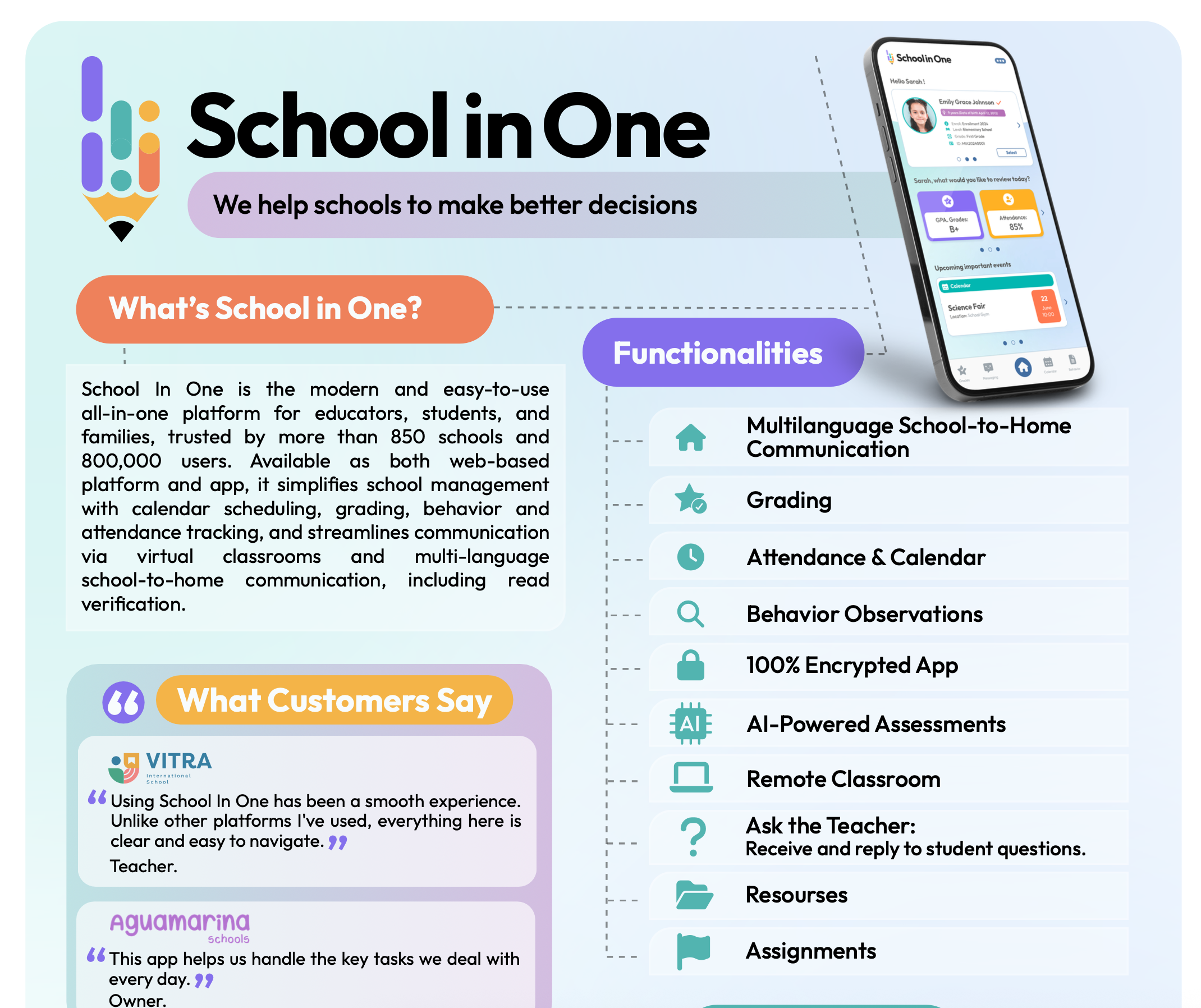
Free tools like EduaideAiTeachShare, or Enlighten AI, which can help you generate ideas and explore AI’s capabilities. With a tool like TeachShare, you can create a variety of learning materials aligned to specific standards and accommodations, helping you build these essential skills in your students. Also, dive into all-in-one platforms like School In One for all of your communication, collaboration, and assessment needs and more. (Schedule a meeting with CEO Mati Barbero to learn more and share that I sent you there.)

Ultimately, by designing authentic, real-world learning experiences, we empower our students with more than just knowledge. We give them the creativity, resilience, and critical thinking skills they need to not just face the future but to shape it.

About Rachelle

Dr. Rachelle Dené Poth is a Spanish and STEAM: What’s Next in Emerging Technology Teacher at Riverview High School in Oakmont, PA. Rachelle is also an attorney with a Juris Doctor degree from Duquesne University School of Law and a Master’s in Instructional Technology. Rachelle received her Doctorate in Instructional Technology, and her research focus was on AI and Professional Development. In addition to teaching, she is a full-time consultant and works with companies and organizations to provide PD, speaking, and consulting services. Contact Rachelle for your event!

Rachelle is an ISTE-certified educator and community leader who served as president of the ISTE Teacher Education Network. By EdTech Digest, she was named the EdTech Trendsetter of 2024, one of 30 K-12 IT Influencers to follow in 2021, and one of 150 Women Global EdTech Thought Leaders in 2022.

She is the author of ten books, including ‘What The Tech? An Educator’s Guide to AI, AR/VR, the Metaverse and More” and ‘How To Teach AI’. In addition, other books include, “In Other Words: Quotes That Push Our Thinking,” “Unconventional Ways to Thrive in EDU,” “The Future is Now: Looking Back to Move Ahead,” “Chart A New Course: A Guide to Teaching Essential Skills for Tomorrow’s World, “True Story: Lessons That One Kid Taught Us,” “Things I Wish […] Knew” and her newest “How To Teach AI” is available from ISTE or on Amazon.

Contact Rachelle to schedule sessions about Artificial Intelligence, Coding, AR/VR, and more for your school or event! Submit the Contact Form.

Follow Rachelle on Bluesky, Instagram, and X at @Rdene915

**Interested in writing a guest blog for my site? Would love to share your ideas! Submit your post here. Looking for a new book to read? Find these available at bit.ly/Pothbooks

************ Also, check out my THRIVEinEDU Podcast Here!

Join my show on THRIVEinEDU on Facebook. Join the group here.