
AI and the Law: What Educators Need to Know About Responsible Use in a Rapidly Changing Landscape

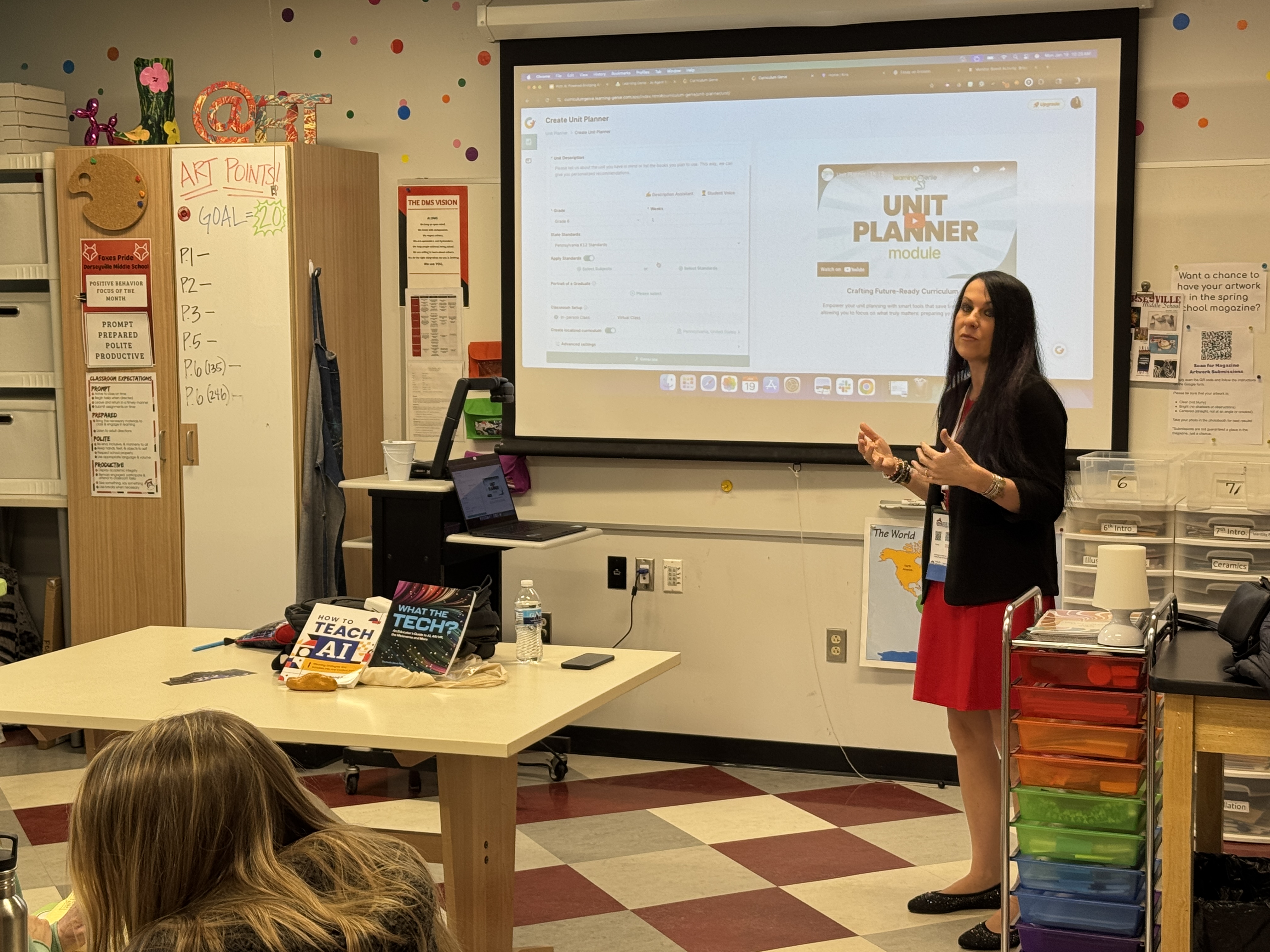
By Dr. Rachelle Dené Poth, JD

Artificial intelligence (AI) is rapidly transforming education. From lesson planning support to personalized learning pathways and administrative efficiencies, AI tools are a more common part of everyday classroom practices. At the same time, the speed at which this technology has advanced and been adopted into classrooms has led to understandable uncertainty among educators, leaders, and families who are asking important questions. These groups are concerned with the data thatis being collected, who owns AI-generated work, and what responsibilities schools have when students and educators use these tools.

As both an attorney and educator who has spent more than eight years researching, teaching, presenting, and writing about AI, I have worked with schools across K–12 and higher education that are navigating these exact questions. The legal implications of AI are not barriers to innovation, but I consider them to serve as guardrails that assist schools with adopting technology responsibly. The key is protecting students, educators, and institutions and staying informed. Understanding the legal landscape and any potential legal implications as a result of the use of AI in classrooms helps schools move forward with confidence rather than hesitation.

Why AI and the Law Matter in Education

AI relies on data in order to function effectively. When it comes to schools, this means having access to student information, classroom artifacts, writing samples, images, and even data related to physical or behavioral information. Intent is not the deciding factor. Even if educators believe they are only sharing minimal information, that does not clearly identify a student, family member, or colleague, even seemingly harmless details can qualify as personally identifiable information (PII).

I’ve often spoken about some examples like referencing a favorite restaurant, a local landmark, a pet’s name, or an extracurricular activity, all of which could make a student identifiable when combined with other data points. Last year, an educator in one of my sessions said, “Enough stars to still form a constellation,” and that has stuck with me and I have shared it in each AI and the Law session I have done. That is why evaluating tools carefully and teaching students to do the same are essential. I often reference scavenger hunts, in that educators should not feel like they are on a scavenger hunt when trying to find out what happens to their information. We need transparency from vendors so that educators are aware and informed.

AI is also changing how decisions are made in schools. With the many advances, there are recommendation systems, automated feedback tools, and predictive analytics, which can influence learning pathways, grading practices, and student support services. Having an understanding about how these systems work and how they should be used responsibly is becoming part of educators’ and school leaders’ professional responsibilities.

Key Laws That Shape AI Use in Schools

There are several important laws that guide how schools must approach AI.

FERPA (Family Educational Rights and Privacy Act) protects the privacy of student education records. When schools use AI-powered platforms that process student work or store learning data, they must ensure that these tools comply with FERPA requirements and clearly define how student information is handled.

COPPA (Children’s Online Privacy Protection Act) applies to students under the age of 13 and requires parental consent before collecting personal information through online services. Because many AI tools rely on user-generated input, COPPA compliance becomes especially important in elementary and middle school settings.

GDPR (General Data Protection Regulation), although it is a European Union law, it is relevant to U.S. schools that use tools developed by companies that operate internationally. There are many platforms created outside of the United States that educators may be unaware of and so understanding GDPR is essential. Many platforms now include cookie permissions and data-use customization features in response to GDPR requirements. These protections often benefit schools globally.

Schools should also consider state-level student data privacy laws, which are increasingly changing the expectations for vendor contracts, third-party integrations, and data retention timelines. District leaders and IT teams play an essential role in ensuring these requirements are addressed before tools are introduced into classrooms.

Data Privacy and Vendor Responsibility

AI tools require large amounts of data to function effectively. That data may be used to improve the tool itself, train additional models, or support integrations across connected platforms. Even when a tool states that it does not share user data, connected services or embedded features may still interact with stored information. I was asked two years ago, when speaking at LACOE in California during my AI and the Law session, if someone should “trust the platform when it says they do not share or store the data.” My instant answer was “No.” And it was for this exact reason.

Before introducing any AI platform in schools, educators and school leaders should review terms of service, privacy policies, and compliance documentation. Look for references to FERPA, COPPA, and additional privacy protections. Look for the date that the privacy policy was most recently updated. Districts should also confirm whether vendors use student information to train future AI models and whether contracts clearly define ownership and storage expectations.

This is where collaboration with district technology teams becomes essential. Responsible adoption is not an individual teacher decision. It is a system-level responsibility supported by leadership, policy teams, and instructional staff working together. Collaboration is key.

Transparency Builds Trust With Students and Families

Responsible AI adoption depends on communication. Families deserve clear explanations of the tools being used, the data being collected, and how that data is protected.

When working with students under age 13, written parental consent may be required. Even when it is not legally necessary, providing families with opportunities to ask questions strengthens trust and partnership. Transparency also empowers students. When students understand how AI systems work and the risks they may pose, they become more thoughtful digital citizens and more informed users of technology.

Schools that proactively communicate expectations for AI use are more likely to build families’ confidence and reduce misunderstandings about how these tools support learning.

Accessibility, Equity, and Emerging Legal Considerations

As schools adopt AI tools, accessibility and equity must remain part of the conversation. Laws such as Section 504 of the Rehabilitation Act and the Americans with Disabilities Act (ADA) require that digital learning tools be accessible to all students. If AI-powered platforms create barriers rather than support access, schools may face compliance concerns. We need to consistently audit the tools we are using. It must be an ongoing process.

Schools must also consider how AI intersects with Title IX responsibilities, especially with the rise of deepfake technology which leads to new risks related to harassment and impacts student safety. Policies must be in place for addressing the misuse of generative AI tools and clearly define expectations and response procedures.

Algorithmic bias and fairness are important parts of the conversation. Schools should evaluate whether AI systems produce equitable outcomes across student groups and whether automated recommendations influence learning opportunities in unintended ways. Responsible implementation includes ongoing evaluation, not just initial approval.

Teaching Digital Citizenship With AI Literacy

Legal compliance alone is not enough. Students must also develop the skills needed to evaluate AI responsibly.

Developing skills in these areas means recognizing risks such as deepfakes and misinformation, bias in generated content, and cyberbullying that is supported by emerging technologies. Schools that integrate digital citizenship with AI literacy will guide students to become thoughtful participants in technology-rich environments rather than passive users that lack true understanding and AI literacy skills.

Clear expectations around appropriate use and academic integrity help students develop ethical decision-making skills that extend beyond the classroom.

Supporting Schools and Organizations Through AI and Legal Guidance

As AI adoption accelerates, schools will benefit from having a structured support system in place that connects legal awareness with thoughtful and purposeful classroom practice. Through my work with educators in K–12 and higher education, I provide professional learning experiences that help schools understand privacy requirements, implement responsible AI strategies, and align classroom applications with policy expectations.

My work includes keynote presentations, workshops, district leadership sessions, curriculum planning support, and customized training focused on data privacy, academic integrity, digital citizenship, accessibility considerations, vendor evaluation, and responsible AI adoption. Each training is tailored to address specific needs, ranging from introductory awareness sessions to deeper implementation planning and leadership strategy development.

In addition to supporting schools and universities, I work with organizations across other sectors to explore how to implement AI responsibly while remaining aligned with legal expectations and organizational values. Many industries face the same challenges that educators do surrounding uncertainty about data privacy, questions about intellectual property ownership, concerns about transparency in decision-making systems, and the need to develop policies that support ethical innovation. My work helps organizations evaluate tools thoughtfully, identify potential risks early, and create practical guardrails that support responsible adoption rather than reactive compliance.

Organizations in healthcare, legal services, workforce development, nonprofit leadership, and corporate training environments are increasingly recognizing the importance of AI literacy for employees at every level. Through workshops, leadership sessions, and strategy conversations, I help teams understand how AI systems work, the legal considerations that may be applicable to them, and how to build cultures of responsible use that prioritize trust, security, and human judgment.

Moving Forward With Confidence

Artificial intelligence is already shaping how students learn, communicate, and prepare for future careers. The goal is not simply to adopt AI tools, but to adopt them responsibly. And this is where our work as educators comes in and why we need to dive in and learn with and guide our students.

When educators understand the legal landscape surrounding privacy, accessibility, intellectual property, and ethical use, they can make informed decisions in support of innovation and student protection. With thoughtful planning, collaboration, and transparency, schools will create learning environments where AI enhances opportunities while maintaining trust, safety, and integrity across the entire school community.

I work with schools and organizations both in person and virtually to support thoughtful and responsible AI implementation through professional learning, curriculum design, and resource development specific to educators, students, and families, and with a common language. I have also collaborated with leadership teams to develop AI guidance frameworks, classroom-ready activities, and policies that reflect legal considerations.

The resources created help districts communicate clearly and consistently with families about AI use, support educators in building AI literacy, and provide students with age-appropriate strategies for using AI safely, ethically, and responsibly. By combining legal insight with classroom experience, I help schools move beyond uncertainty toward sustainable systems that include clear expectations, transparency, and actionable guardrails for responsible use.

About Rachelle

Dr. Rachelle Dené Poth is a Spanish and STEAM: What’s Next in Emerging Technology Teacher. Rachelle is also an attorney with a Juris Doctor degree from Duquesne University School of Law and a Master’s in Instructional Technology. Rachelle received her Doctorate in Instructional Technology, with a research focus on AI and Professional Development. In addition to teaching, she is a full-time consultant and works with companies and organizations to provide PD, speaking, and consulting services. Contact Rachelle for your event!

Rachelle is an ISTE-certified educator and community leader who served as president of the ISTE Teacher Education Network. By EdTech Digest, she was named the EdTech Trendsetter of 2024, one of 30 K-12 IT Influencers to follow in 2021, and one of 150 Women Global EdTech Thought Leaders in 2022.

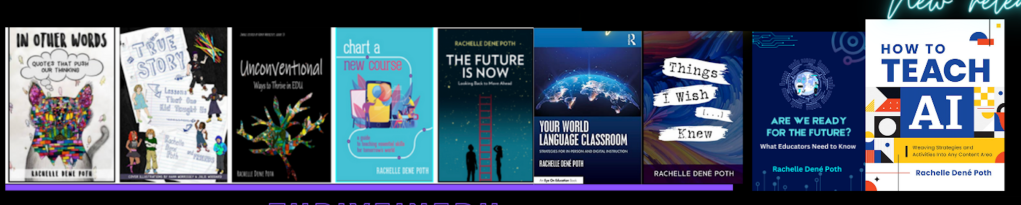
She is the author of ten books, including ‘What The Tech? An Educator’s Guide to AI, AR/VR, the Metaverse and More” and ‘How To Teach AI’. In addition, other books include, “In Other Words: Quotes That Push Our Thinking,” “Unconventional Ways to Thrive in EDU,” “The Future is Now: Looking Back to Move Ahead,” “Chart A New Course: A Guide to Teaching Essential Skills for Tomorrow’s World, “True Story: Lessons That One Kid Taught Us,” “Things I Wish […] Knew” and her newest “How To Teach AI” is available from ISTE or on Amazon.

Contact Rachelle to schedule sessions about Artificial Intelligence, AI and the Law, Coding, AR/VR, and more for your school or event! Submit the Contact Form.

Follow Rachelle on Bluesky, Instagram, and X at @Rdene915

**Interested in writing a guest blog for my site? Would love to share your ideas! Submit your post here. Looking for a new book to read? Find these available at bit.ly/Pothbooks

************ Also, check out my THRIVEinEDU Podcast Here!

Join my show on THRIVEinEDU on Facebook. Join the group here.

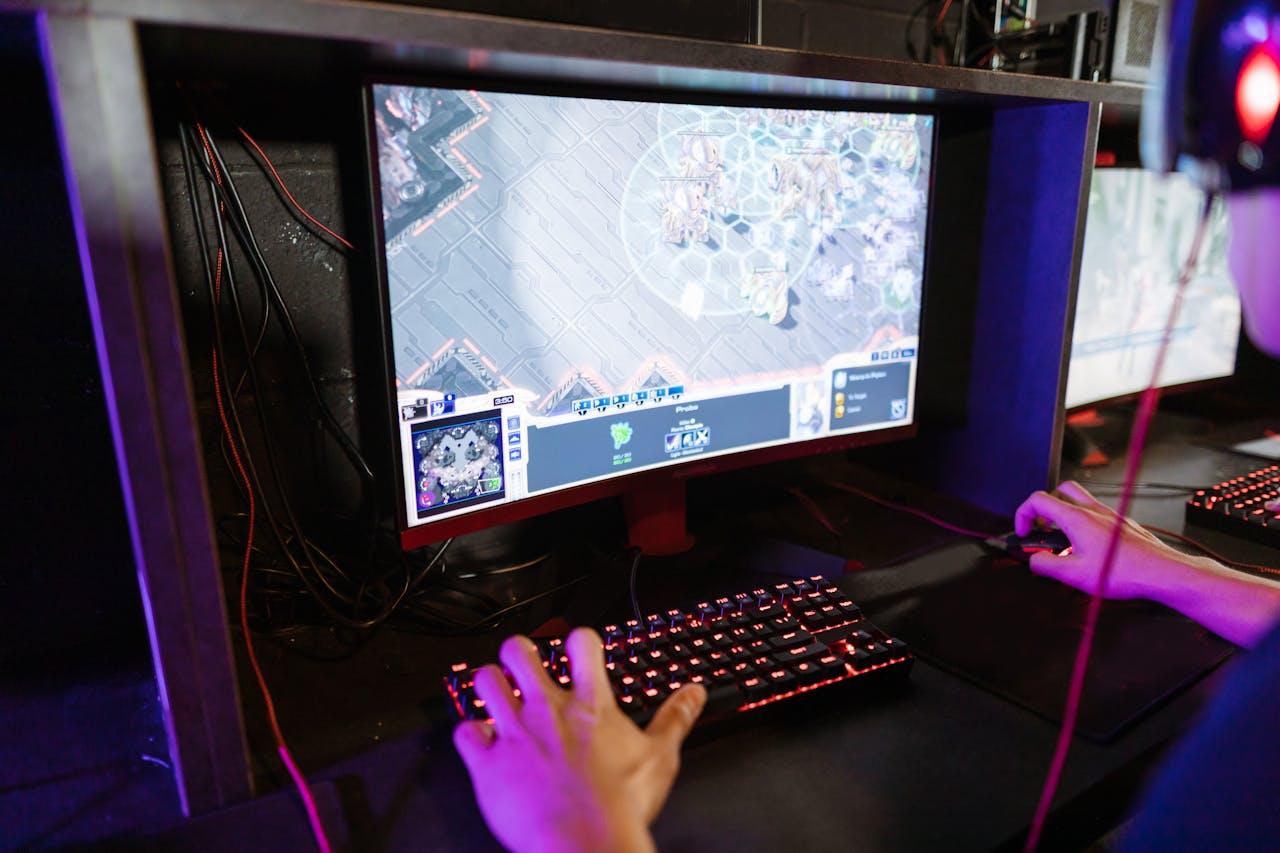
Breaking Down the Cognitive Benefits of Gaming for Lifelong Learners

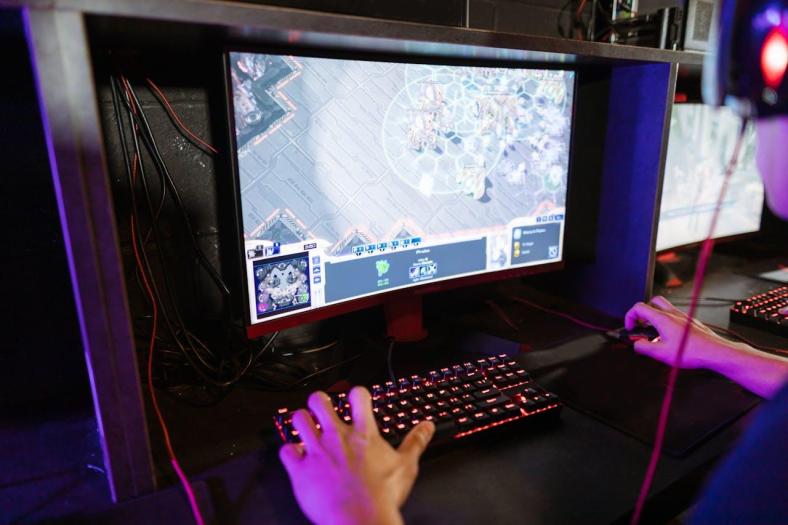
Photo by RDNE Stock project on Pexels

Contributed post by Kelly Dawson

People approach learning in many different ways. Some individuals prefer reading detailed information, while others respond well to visual demonstrations or interactive activities. Discussions about learning often refer to the idea of “learning styles.” As we explained in our Learning Styles article, this is a concept that perpetuates the idea that certain individuals learn better when information is presented in their preferred style of learning. This concept highlights the importance of exploring multiple ways to engage with information.

Interactive environments can provide powerful opportunities for learning and skill development. Gaming has become one of the most widely studied forms of interactive engagement. Researchers increasingly examine how digital games stimulate cognitive processes that support attention, memory, and decision making. For lifelong learners who enjoy exploring new challenges, gaming provides an environment that encourages constant adaptation and information processing.

What the Latest Research Says About Gaming and Cognitive Performance

Recent academic research continues to explore the connection between gaming and cognitive performance. A study published in Frontiers in Psychology in 2025 examined how gameplay activities support cognitive development across different age groups and educational backgrounds. Researchers found that many games involve rapid information processing, pattern recognition, and strategic thinking. These activities activate multiple cognitive systems that support learning and decision making.

Additional reporting has highlighted how video games engage players in tasks that require coordination, attention, and problem-solving. The Guardian used data to show that gaming environments often encourage players to react quickly to changing conditions while evaluating information on the screen. These interactive challenges stimulate the brain’s capacity for concentration and flexible thinking.

Different gaming genres contribute to cognitive engagement in unique ways. Each format presents players with challenges that involve analysis, planning, and observation. Exploring a variety of genres allows players to experience multiple types of cognitive stimulation.

Puzzle and Logic Games

Puzzle games focus on pattern recognition, spatial reasoning, and problem-solving. Players interact with shapes, sequences, or logical relationships that require careful observation. Popular examples include Tetris, where players rotate and position falling blocks to complete lines, and Portal, a physics-based puzzle game that challenges players to solve spatial problems using teleportation portals.

Many puzzles require players to identify patterns or relationships between different elements on the screen. Mobile titles such as Candy Crush Saga ask players to match symbols in strategic ways to clear the board, while games like The Witness present environmental puzzles that reward careful exploration and logical thinking. Solving these challenges often involves experimentation and deduction, with each step building toward a clear solution.

Puzzle-based gameplay encourages players to process information methodically while exploring different approaches to solving a challenge. These experiences stimulate attention and reasoning skills through repeated observation and problem-solving.

Action and Adventure Games

Action and adventure games emphasize quick reactions and spatial awareness. Players often navigate dynamic environments where movement, timing, and observation determine success. Well-known examples include The Legend of Zelda: Breath of the Wild, where players explore large landscapes while solving environmental challenges, and Uncharted, which combines exploration, platforming, and action sequences.

The Frontiers in Psychology research highlighted how action-oriented games require players to track multiple visual cues while responding rapidly to new information. Titles such as Call of Duty encourage players to monitor fast-moving environments while making split-second decisions during gameplay.

Players often move through complex environments while evaluating risks and opportunities. Games such as Assassin’s Creed place players in detailed historical settings where navigation, timing, and observation guide progress through missions. This constant interaction with visual information supports attention and coordination during gameplay.

Online Casino Games

Online casino games also offer cognitive engagement through decision-making and observation. Players often analyze patterns, evaluate probabilities, and choose strategies that influence how they interact with each game.

Platforms such as Jili illustrate how modern casino eGames incorporate a variety of gameplay styles. Jili slot titles offer a range of volatility levels that appeal to different preferences. Some players enjoy steady gameplay rhythms, while others prefer higher intensity experiences that involve larger swings in outcomes. The platform also offers diverse themes that allow players to switch between different styles of gameplay. Titles range from classic casino-inspired designs to skill-based arcade-style challenges. This variety encourages players to explore different game environments while adapting their approach to each format.

Switching between themes and mechanics introduces new visual patterns and gameplay systems. Players engage with each game by observing results, responding to gameplay cues, and managing their choices during each round.

Strategy and Simulation Games

Strategy and simulation games involve long-term planning and resource management. Players evaluate information, compare potential actions, and make decisions that influence future outcomes. These gameplay systems encourage careful analysis and strategic thinking. Popular examples include Civilization, where players guide a society through centuries of development, and XCOM, which challenges players to manage resources and coordinate tactical missions against alien threats.

Players frequently track multiple variables during gameplay, such as resources, time limits, or environmental changes. Managing these variables requires sustained attention and logical reasoning. In games like Civilization, players balance diplomacy, scientific research, and economic growth, while XCOM requires careful squad positioning and mission planning.

This genre encourages analytical thinking and decision-making because players evaluate both immediate and long-term consequences within the game environment.

Interactive Learning Through Gameplay

Gaming environments present information through interactive systems that encourage players to participate actively in the experience. Players observe patterns, evaluate outcomes, and adjust their decisions as they progress through the game.

The research discussed in Frontiers in Psychology emphasizes how gameplay activities involve multiple cognitive processes at the same time. Visual attention, memory recall, and strategic planning often occur simultaneously as players interact with a game.

The Guardian’s analysis of gaming data also highlights the importance of engagement. Players remain focused because gameplay systems deliver continuous feedback that responds to each action.

These interactive qualities make gaming environments well-suited for individuals who enjoy learning through exploration and experimentation.

Gaming as a Tool for Lifelong Engagement

The growing body of research on gaming continues to highlight how interactive experiences stimulate cognitive activity. Strategy games encourage planning and analysis. Puzzle games focus on logical reasoning and pattern recognition. Action games strengthen observation and quick decision-making. Online casino games introduce probability-based thinking and adaptive gameplay strategies.

For lifelong learners who enjoy exploring new challenges, gaming offers a dynamic environment that encourages active participation. Each genre provides a different set of cognitive tasks that stimulate observation, analysis, and decision-making.

As digital technology continues to evolve, gaming platforms will likely expand the range of experiences available to players. Interactive design, visual storytelling, and responsive gameplay systems continue to shape how people engage with digital entertainment.

Gaming remains one of the most interactive forms of media available today. Through its combination of visual stimulation, strategic thinking, and problem-solving, it continues to provide engaging opportunities for lifelong learners who enjoy exploring new ideas and challenges.

About Rachelle

Dr. Rachelle Dené Poth is a Spanish and STEAM: What’s Next in Emerging Technology Teacher. Rachelle is also an attorney with a Juris Doctor degree from Duquesne University School of Law and a Master’s in Instructional Technology. Rachelle received her Doctorate in Instructional Technology, with a research focus on AI and Professional Development. In addition to teaching, she is a full-time consultant and works with companies and organizations to provide PD, speaking, and consulting services. Contact Rachelle for your event!

Rachelle is an ISTE-certified educator and community leader who served as president of the ISTE Teacher Education Network. By EdTech Digest, she was named the EdTech Trendsetter of 2024, one of 30 K-12 IT Influencers to follow in 2021, and one of 150 Women Global EdTech Thought Leaders in 2022.

She is the author of ten books, including ‘What The Tech? An Educator’s Guide to AI, AR/VR, the Metaverse and More” and ‘How To Teach AI’. In addition, other books include, “In Other Words: Quotes That Push Our Thinking,” “Unconventional Ways to Thrive in EDU,” “The Future is Now: Looking Back to Move Ahead,” “Chart A New Course: A Guide to Teaching Essential Skills for Tomorrow’s World, “True Story: Lessons That One Kid Taught Us,” “Things I Wish […] Knew” and her newest “How To Teach AI” is available from ISTE or on Amazon.

Contact Rachelle to schedule sessions about Artificial Intelligence, AI and the Law, Coding, AR/VR, and more for your school or event! Submit the Contact Form.

Follow Rachelle on Bluesky, Instagram, and X at @Rdene915

**Interested in writing a guest blog for my site? Would love to share your ideas! Submit your post here. Looking for a new book to read? Find these available at bit.ly/Pothbooks

************ Also, check out my THRIVEinEDU Podcast Here!

Join my show on THRIVEinEDU on Facebook. Join the group here.

Brewing Better Teaching: Learning Latte with Learning Genie

In collaboration with Learning Genie: All Opinions are my own

If there’s one thing I value in education, it’s authentic and honest conversations about what’s really happening in classrooms. The January and February Learning Latte meetups with Learning Genie were exactly that.

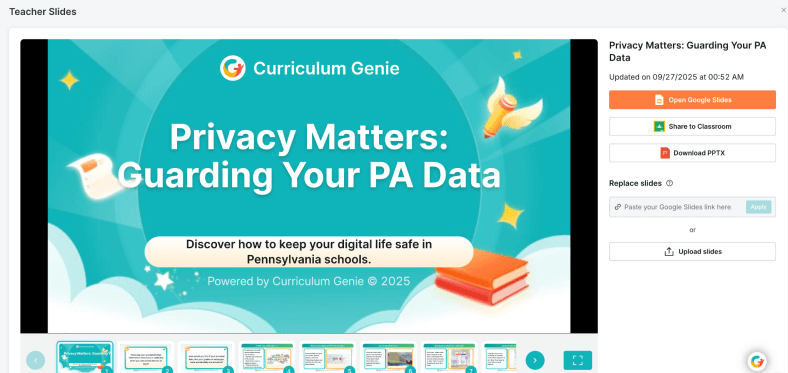
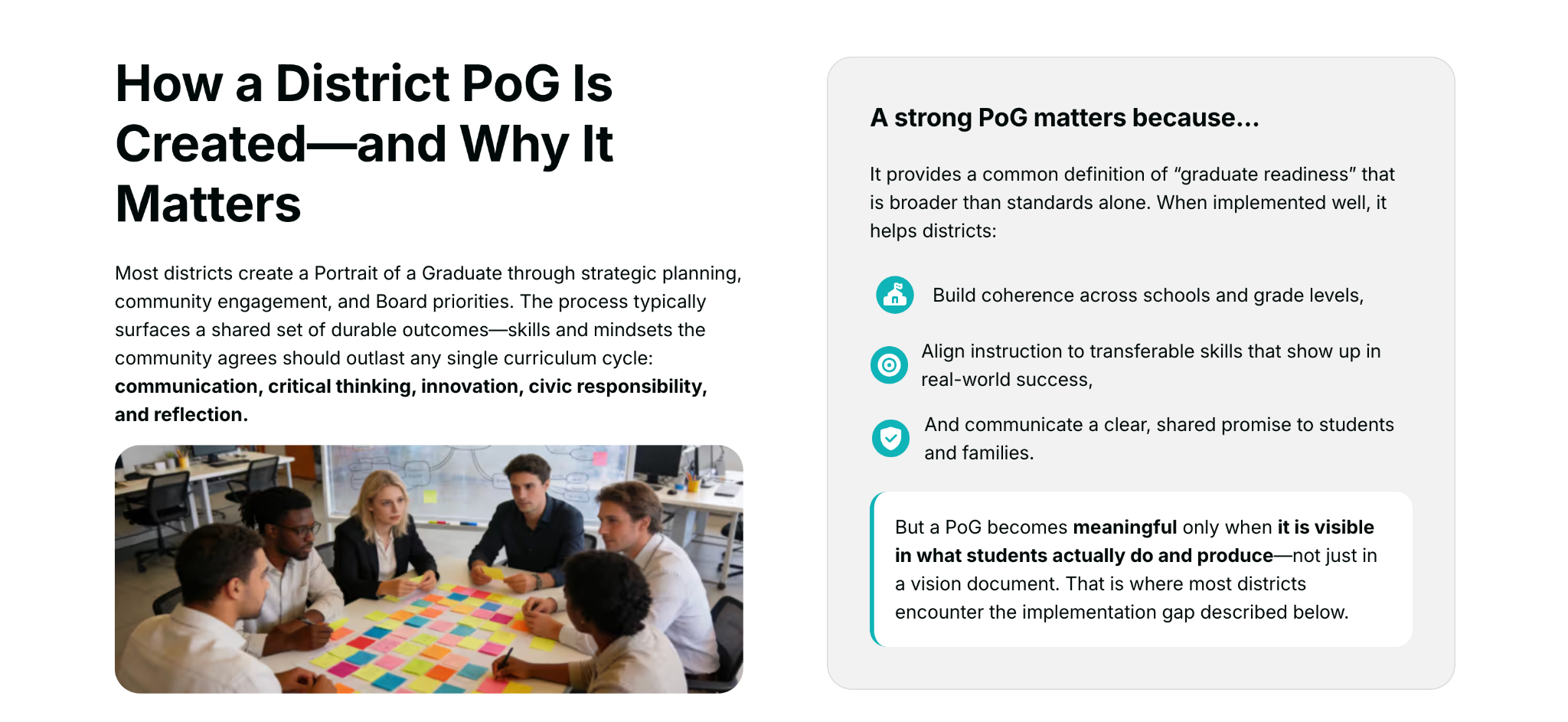
These meetups offered grounded, reflective discussions about teacher preparation, real classroom challenges, and how tools like Learning Genie can support, rather than replace, our professional judgment. And with a focus on UDL, Portrait of a Graduate, and Differentiation, Learning Genie offers everything in one solution!

Here are some takeaways:

January: Teacher Preparation, TPA Season & the “Idea Inventory”

January’s Learning Latte meetup focused on the importance of and value in truly listening to educators.

One of the most important parts of the conversation came from Robert Mayfield, who addressed a challenge that many of us have seen and experienced firsthand: pre-service teachers during the TPA season.

If you’ve worked with student teachers, you may notice the impact of getting started and how they feel about it. They can be:

  • Overwhelmed
  • Time-strapped
  • Focused on and worried about meeting rubric requirements
  • Relying heavily on pre-existing lesson plans
  • Trying to survive and balance all of the new tasks that come with our work.

Robert highlighted a key concern: When pre-service teachers rely too heavily on ready-made lessons, they may miss the opportunity to build their own instructional toolkit. That’s where the concept of an “idea inventory” comes in.

What Is an Idea Inventory?

An idea inventory is not just a folder of saved lessons over the course of the school year or years. It is a curated, reflective collection of strategies used, activity ideas, differentiation techniques, assessment approaches, and adaptable frameworks.

The inventory includes:

  • Multiple entry points for learners
  • Flexible scaffolding ideas
  • Variations for different readiness levels
  • Culturally responsive examples
  • Developmentally aligned strategies

All of this is especially critical in early childhood and elementary settings, where differentiation is foundational.

The January discussion reinforced what I have noticed when working with other educators. New teachers need to understand how to differentiate effectively and have the resources they need to support their work.

This is where Learning Genie can make an impact. It supports reflective planning and enables teachers to connect observations to instruction. It makes differentiation visible, which is essential.

A good question to consider is: “How do we help future teachers think like designers of learning?”

Learning Genie supports that mindset shift. When teachers reflect on student observations and use those insights to plan intentionally, it helps build professional capacity and confidence. And it builds community when educators and companies connect!

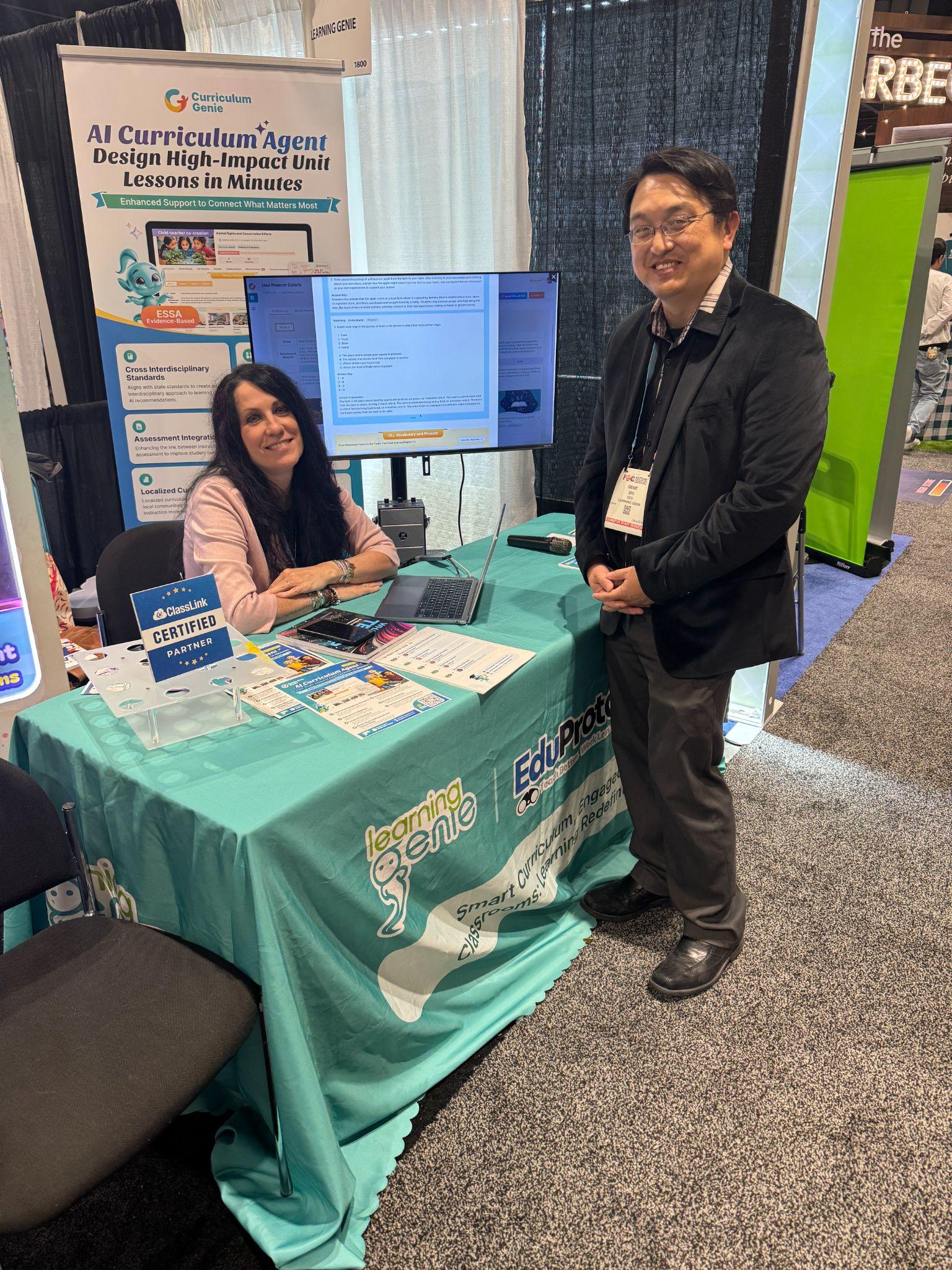
Enjoy learning from and sharing feedback with Dr. Gene Shi

February: Classroom Voices & Real-World Experience

February’s Learning Latte offered a clear view and many insights into a lived classroom experience.

February’s meetup included educators Sandy Ferguson and Gina Ogilvie. Sandy began by sharing classroom experiences, grounding the conversation in real practice rather than theory.

I always want to know the stories of other educators, the why behind the choices in activities, strategies, and tools used in their classrooms, and the impact.

Many conversations about edtech center around the features, dashboards, and integrations. But I’ve long said and heard it in their message. What matters is the impact it makes inside the classroom.

Highlights from Sandy and Gina

  • Authentic Application
    The conversation centered on how Learning Genie supports educators’ daily work. It helps with lesson planning, documentation, and communication, and it is easy to navigate and use.
  • Alignment with Developmental Needs
    In early childhood, especially, the tools we use must align with how children learn best.
  • Teacher Confidence
    When educators feel supported in leveraging technology to provide meaningful and personalized instruction, their confidence increases. Teacher confidence impacts classroom climate and positively boosts student engagement and interest in learning.

What stood out is that technology works best when it amplifies teacher expertise, not when it replaces it. Shifting from replacement to the enhancement and transformation potential of these tools is important. And when it enhances our students’ learning opportunities. Check out this video to learn more.

Connecting January and February: A Common Theme

Both sessions highlighted:

  • The importance of reflective practice
  • The need for intentional differentiation
  • The value of building professional capacity over time
  • The role of tools in supporting rather than shortcutting professional growth

January focused on building the foundation by helping new teachers develop their idea inventory. February provided a clear view of what this looks like in action, with experienced educators using tools to refine their professional practice and deepen students’ learning impact.

Final thoughts

The best educational tools don’t give us answers. I think that they help us ask better questions.

How are we differentiating? What patterns are we noticing? How are we building our “idea inventory?”

How are we supporting new teachers before they burn out?

Use these questions as a focus point, and I think you will find that a tool like Learning Genie is a catalyst for transformational and meaningful instruction and learning.

Enjoy sharing about Learning Genie in Pittsburgh and other conferences and school PD sessions!

About Rachelle

Dr. Rachelle Dené Poth is a Spanish and STEAM: What’s Next in Emerging Technology Teacher. Rachelle is also an attorney with a Juris Doctor degree from Duquesne University School of Law and a Master’s in Instructional Technology. Rachelle received her Doctorate in Instructional Technology, with a research focus on AI and Professional Development. In addition to teaching, she is a full-time consultant and works with companies and organizations to provide PD, speaking, and consulting services. Contact Rachelle for your event!

Rachelle is an ISTE-certified educator and community leader who served as president of the ISTE Teacher Education Network. By EdTech Digest, she was named the EdTech Trendsetter of 2024, one of 30 K-12 IT Influencers to follow in 2021, and one of 150 Women Global EdTech Thought Leaders in 2022.

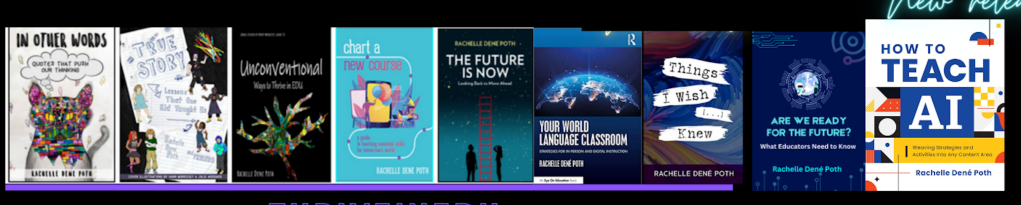
She is the author of ten books, including ‘What The Tech? An Educator’s Guide to AI, AR/VR, the Metaverse and More” and ‘How To Teach AI’. In addition, other books include, “In Other Words: Quotes That Push Our Thinking,” “Unconventional Ways to Thrive in EDU,” “The Future is Now: Looking Back to Move Ahead,” “Chart A New Course: A Guide to Teaching Essential Skills for Tomorrow’s World, “True Story: Lessons That One Kid Taught Us,” “Things I Wish […] Knew” and her newest “How To Teach AI” is available from ISTE or on Amazon.

Contact Rachelle to schedule sessions about Artificial Intelligence, AI and the Law, Coding, AR/VR, and more for your school or event! Submit the Contact Form.

Follow Rachelle on Bluesky, Instagram, and X at @Rdene915

**Interested in writing a guest blog for my site? Would love to share your ideas! Submit your post here. Looking for a new book to read? Find these available at bit.ly/Pothbooks
************ Also, check out my THRIVEinEDU Podcast Here!

Join my show on THRIVEinEDU on Facebook. Join the group here.
Building Tomorrow’s Skills Today: Career-Connected Learning

Technology is evolving at a pace we have never experienced before. There have been so many changes in the world through artificial intelligence, automation, data science, and other emerging technologies. These are reshaping industries in real time. As an educator, I feel this shift daily, and I try to push myself to keep learning and looking for opportunities to do more for my students. The challenge is no longer simply preparing students for a job. It’s knowing how to prepare them for careers that may not even exist yet and also supporting them as they develop a variety of skills to be prepared.

When I think about how to prepare students for the uncertainty around the world of work, I look at insights from the World Economic Forum and its Future of Jobs research. While AI was listed as #3 for 2027 and is now listed as #1 for 2030, the other rankings reinforce what we already know: adaptability, analytical thinking, creativity, and resilience are becoming increasingly important in our world.

If we cannot predict the careers that will exist five or ten years from now, the best we can do is prepare students to be flexible thinkers, confident problem-solvers, and ethical technology users. And this is why I believe that career-connected learning is essential.

Redefining “Career Ready”

When I thought about “career ready,” I aligned it with strong academics plus essential skills of communication, collaboration, and the other “soft skills.” These are still relevant and necessary for success, however with the changes in technology, there are other areas that I believe must be addressed and become part of preparing students to be career-ready. remain foundational. Now, I include:

  • Digital and AI literacy
  • Ethical reasoning in technology use
  • Data awareness and cybersecurity knowledge
  • The ability to evaluate and question AI-generated information
  • Comfort navigating complex digital systems

Students need to understand how to use tools like generative AI. And that means using it to enhance and not replace their own learning. They can learn to brainstorm with AI, analyze outputs for bias or inaccuracy, and be able to recognize when human judgment must be at the forefront, providing consistent oversight. Research and interviews of employers have shown that employees will be expected to work alongside AI systems. That preparation has to begin in our classrooms from K through 12 and beyond.

Career-connected learning ensures students understand how what they are studying connects with real careers and real-world impact.

Why This Matters Now More Than Ever

According to projections highlighted by the World Economic Forum, millions of roles will be displaced due to automation, while millions of new ones will emerge. This is not the first time. More than 100 years ago, thousands of traffic light controllers in New York were displaced due to automation. They did not all lose their jobs, some shifted into others. And many of these new positions demand higher-order thinking, digital agility, and ethical decision-making.

I like to talk about some career options that minimally existed a few years ago:

  • AI prompt engineer
  • Ethical technologist
  • Data privacy consultant

These are some of the many growing fields of work and some which are increasing because of AI. I think about how we are preparing our students and believe that career-connected learning will help to show the connections between classroom content and workforce relevance. I also believe this is something that can be done in every classroom and in all content areas.

What Does Career-Connected Learning Look Like?

Career-connected learning is more than occasional career days. It is something that is embedded into daily instruction, not an extra element. It can include a variety of possibilities, such as:

  1. Project-based learning connected to community or industry challenges. (Builds relevance for students).
  2. Integration of AI, data science, and emerging technologies
  3. Authentic problem-solving rooted in real scenarios
  4. Partnerships with local businesses, universities, or nonprofits
  5. Coding, AI, and cybersecurity challenges

Through opportunities like these, we can foster the development of student agency. When students understand how what they are learning connects to real opportunities, it sparks curiosity, increases students engagement and motivation. Learning is more purposeful, authentic, and meaningful.

Some ideas:

Artificial intelligence is an area that students need to understand. They need to know, how AI systems function, how to evaluate the outputs, how bias can be embedded, and what the ethical responsibilities are for using AI. In career-connected classrooms, AI might be used to discuss and explore how the legal field, healthcare and business industries, and schools are using AI tools. They can engage in role-playing that focuses on ethical decision-making. The goal is for students to leverage AI as a partner, rather than a replacement in learning.

STEM is a great option to focus on career-connected learning. In my own classroom experiences, I’ve seen what happens when students combine AI tools with engineering design, language learning, and problem-solving. When students train image classifiers and then collaborate, problem-solve, and evaluate where the model fails, they are not just learning about the technology, they are developing skills in critical analysis and bias detection.

Cybersecurity is another area that is seeing tremendous growth. Students need to understand how their data is collected, protected, and in some cases, misused. There are hundreds of thousands of cybersecurity roles unfilled in the United States alone, yet many students and perhaps even educators, have not heard of careers such as a threat analyst or a security operations engineer. Lessons on cybersecurity can be done in all classes. Here are some examples that I have shared:

  • English: Analyze phishing emails as persuasive writing
  • History: Debate privacy vs. security
  • Math: Explore encryption models
  • Technology: Investigate AI-related vulnerabilities

Career-ready also means a Human-Centered Future

With all of the technology, especially with AI and automation, we have to keep focused on what makes us uniquely human. Technology will continue to evolve, even faster than it has been. But empathy, integrity, resilience, and collaboration will always matter and we need to make sure that students develop these skills.

With career-connected learning opportunities, we will prepare students for success in the future, even in careers that don’t exist. We will offer opportunities for them to discover their interests and purpose and be prepared to embrace the changes they will encounter and be successful.

About Rachelle

Dr. Rachelle Dené Poth is a Spanish and STEAM: What’s Next in Emerging Technology Teacher. Rachelle is also an attorney with a Juris Doctor degree from Duquesne University School of Law and a Master’s in Instructional Technology. Rachelle received her Doctorate in Instructional Technology, with a research focus on AI and Professional Development. In addition to teaching, she is a full-time consultant and works with companies and organizations to provide PD, speaking, and consulting services. Contact Rachelle for your event!

Rachelle is an ISTE-certified educator and community leader who served as president of the ISTE Teacher Education Network. By EdTech Digest, she was named the EdTech Trendsetter of 2024, one of 30 K-12 IT Influencers to follow in 2021, and one of 150 Women Global EdTech Thought Leaders in 2022.

She is the author of ten books, including ‘What The Tech? An Educator’s Guide to AI, AR/VR, the Metaverse and More” and ‘How To Teach AI’. In addition, other books include, “In Other Words: Quotes That Push Our Thinking,” “Unconventional Ways to Thrive in EDU,” “The Future is Now: Looking Back to Move Ahead,” “Chart A New Course: A Guide to Teaching Essential Skills for Tomorrow’s World, “True Story: Lessons That One Kid Taught Us,” “Things I Wish […] Knew” and her newest “How To Teach AI” is available from ISTE or on Amazon.

Contact Rachelle to schedule sessions about Artificial Intelligence, AI and the Law, Coding, AR/VR, and more for your school or event! Submit the Contact Form.

Follow Rachelle on Bluesky, Instagram, and X at @Rdene915

**Interested in writing a guest blog for my site? Would love to share your ideas! Submit your post here. Looking for a new book to read? Find these available at bit.ly/Pothbooks

************ Also, check out my THRIVEinEDU Podcast Here!

Join my show on THRIVEinEDU on Facebook. Join the group here.