
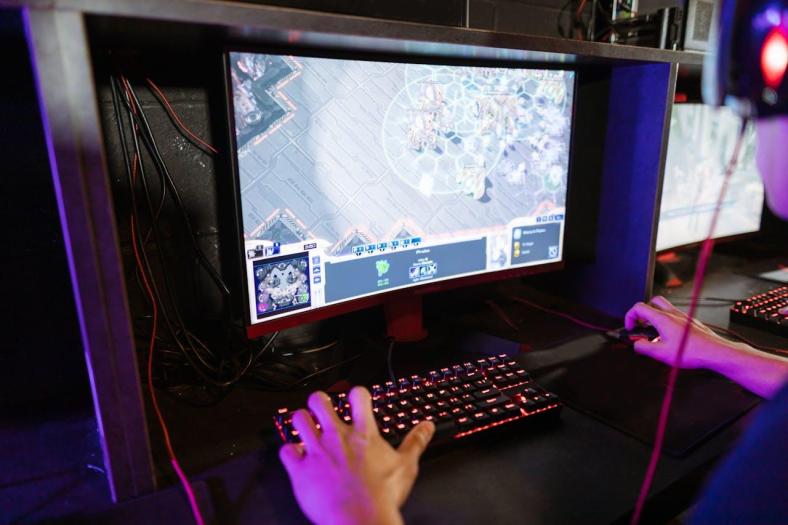
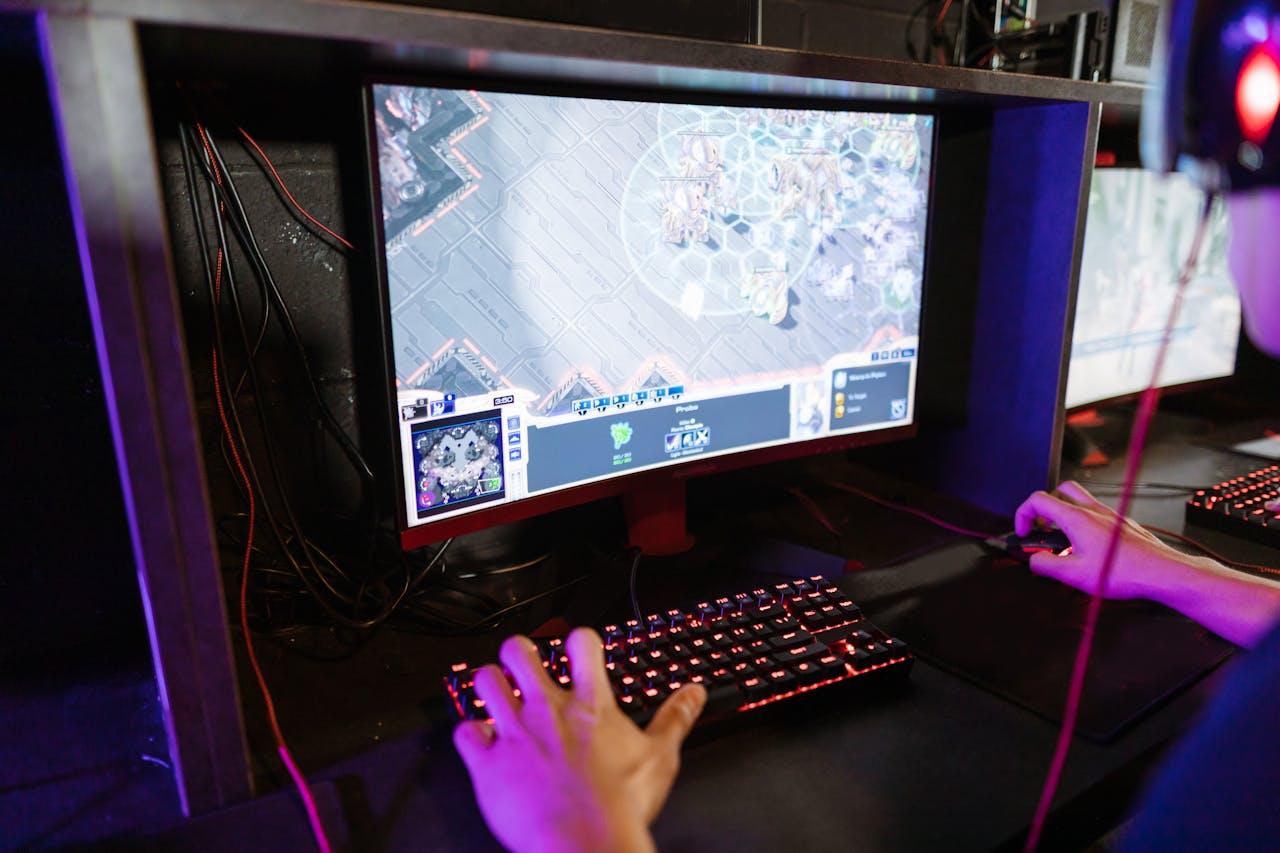
Photo by RDNE Stock project on Pexels
Contributed post by Kelly Dawson
People approach learning in many different ways. Some individuals prefer reading detailed information, while others respond well to visual demonstrations or interactive activities. Discussions about learning often refer to the idea of “learning styles.” As we explained in our Learning Styles article, this is a concept that perpetuates the idea that certain individuals learn better when information is presented in their preferred style of learning. This concept highlights the importance of exploring multiple ways to engage with information.
Interactive environments can provide powerful opportunities for learning and skill development. Gaming has become one of the most widely studied forms of interactive engagement. Researchers increasingly examine how digital games stimulate cognitive processes that support attention, memory, and decision making. For lifelong learners who enjoy exploring new challenges, gaming provides an environment that encourages constant adaptation and information processing.
What the Latest Research Says About Gaming and Cognitive Performance
Recent academic research continues to explore the connection between gaming and cognitive performance. A study published in Frontiers in Psychology in 2025 examined how gameplay activities support cognitive development across different age groups and educational backgrounds. Researchers found that many games involve rapid information processing, pattern recognition, and strategic thinking. These activities activate multiple cognitive systems that support learning and decision making.
Additional reporting has highlighted how video games engage players in tasks that require coordination, attention, and problem-solving. The Guardian used data to show that gaming environments often encourage players to react quickly to changing conditions while evaluating information on the screen. These interactive challenges stimulate the brain’s capacity for concentration and flexible thinking.
Different gaming genres contribute to cognitive engagement in unique ways. Each format presents players with challenges that involve analysis, planning, and observation. Exploring a variety of genres allows players to experience multiple types of cognitive stimulation.
Puzzle and Logic Games
Puzzle games focus on pattern recognition, spatial reasoning, and problem-solving. Players interact with shapes, sequences, or logical relationships that require careful observation. Popular examples include Tetris, where players rotate and position falling blocks to complete lines, and Portal, a physics-based puzzle game that challenges players to solve spatial problems using teleportation portals.
Many puzzles require players to identify patterns or relationships between different elements on the screen. Mobile titles such as Candy Crush Saga ask players to match symbols in strategic ways to clear the board, while games like The Witness present environmental puzzles that reward careful exploration and logical thinking. Solving these challenges often involves experimentation and deduction, with each step building toward a clear solution.
Puzzle-based gameplay encourages players to process information methodically while exploring different approaches to solving a challenge. These experiences stimulate attention and reasoning skills through repeated observation and problem-solving.
Action and Adventure Games
Action and adventure games emphasize quick reactions and spatial awareness. Players often navigate dynamic environments where movement, timing, and observation determine success. Well-known examples include The Legend of Zelda: Breath of the Wild, where players explore large landscapes while solving environmental challenges, and Uncharted, which combines exploration, platforming, and action sequences.
The Frontiers in Psychology research highlighted how action-oriented games require players to track multiple visual cues while responding rapidly to new information. Titles such as Call of Duty encourage players to monitor fast-moving environments while making split-second decisions during gameplay.
Players often move through complex environments while evaluating risks and opportunities. Games such as Assassin’s Creed place players in detailed historical settings where navigation, timing, and observation guide progress through missions. This constant interaction with visual information supports attention and coordination during gameplay.
Online Casino Games
Online casino games also offer cognitive engagement through decision-making and observation. Players often analyze patterns, evaluate probabilities, and choose strategies that influence how they interact with each game.
Platforms such as Jili illustrate how modern casino eGames incorporate a variety of gameplay styles. Jili slot titles offer a range of volatility levels that appeal to different preferences. Some players enjoy steady gameplay rhythms, while others prefer higher intensity experiences that involve larger swings in outcomes. The platform also offers diverse themes that allow players to switch between different styles of gameplay. Titles range from classic casino-inspired designs to skill-based arcade-style challenges. This variety encourages players to explore different game environments while adapting their approach to each format.
Switching between themes and mechanics introduces new visual patterns and gameplay systems. Players engage with each game by observing results, responding to gameplay cues, and managing their choices during each round.
Strategy and Simulation Games
Strategy and simulation games involve long-term planning and resource management. Players evaluate information, compare potential actions, and make decisions that influence future outcomes. These gameplay systems encourage careful analysis and strategic thinking. Popular examples include Civilization, where players guide a society through centuries of development, and XCOM, which challenges players to manage resources and coordinate tactical missions against alien threats.
Players frequently track multiple variables during gameplay, such as resources, time limits, or environmental changes. Managing these variables requires sustained attention and logical reasoning. In games like Civilization, players balance diplomacy, scientific research, and economic growth, while XCOM requires careful squad positioning and mission planning.
This genre encourages analytical thinking and decision-making because players evaluate both immediate and long-term consequences within the game environment.
Interactive Learning Through Gameplay
Gaming environments present information through interactive systems that encourage players to participate actively in the experience. Players observe patterns, evaluate outcomes, and adjust their decisions as they progress through the game.
The research discussed in Frontiers in Psychology emphasizes how gameplay activities involve multiple cognitive processes at the same time. Visual attention, memory recall, and strategic planning often occur simultaneously as players interact with a game.
The Guardian’s analysis of gaming data also highlights the importance of engagement. Players remain focused because gameplay systems deliver continuous feedback that responds to each action.
These interactive qualities make gaming environments well-suited for individuals who enjoy learning through exploration and experimentation.
Gaming as a Tool for Lifelong Engagement
The growing body of research on gaming continues to highlight how interactive experiences stimulate cognitive activity. Strategy games encourage planning and analysis. Puzzle games focus on logical reasoning and pattern recognition. Action games strengthen observation and quick decision-making. Online casino games introduce probability-based thinking and adaptive gameplay strategies.
For lifelong learners who enjoy exploring new challenges, gaming offers a dynamic environment that encourages active participation. Each genre provides a different set of cognitive tasks that stimulate observation, analysis, and decision-making.
As digital technology continues to evolve, gaming platforms will likely expand the range of experiences available to players. Interactive design, visual storytelling, and responsive gameplay systems continue to shape how people engage with digital entertainment.
Gaming remains one of the most interactive forms of media available today. Through its combination of visual stimulation, strategic thinking, and problem-solving, it continues to provide engaging opportunities for lifelong learners who enjoy exploring new ideas and challenges.
About Rachelle
Dr. Rachelle Dené Poth is a Spanish and STEAM: What’s Next in Emerging Technology Teacher. Rachelle is also an attorney with a Juris Doctor degree from Duquesne University School of Law and a Master’s in Instructional Technology. Rachelle received her Doctorate in Instructional Technology, with a research focus on AI and Professional Development. In addition to teaching, she is a full-time consultant and works with companies and organizations to provide PD, speaking, and consulting services. Contact Rachelle for your event!
Rachelle is an ISTE-certified educator and community leader who served as president of the ISTE Teacher Education Network. By EdTech Digest, she was named the EdTech Trendsetter of 2024, one of 30 K-12 IT Influencers to follow in 2021, and one of 150 Women Global EdTech Thought Leaders in 2022.
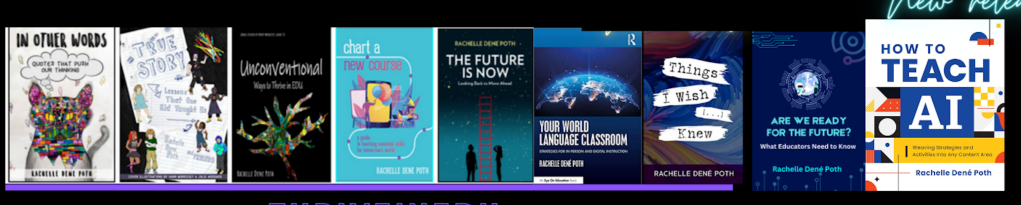
She is the author of ten books, including ‘What The Tech? An Educator’s Guide to AI, AR/VR, the Metaverse and More” and ‘How To Teach AI’. In addition, other books include, “In Other Words: Quotes That Push Our Thinking,” “Unconventional Ways to Thrive in EDU,” “The Future is Now: Looking Back to Move Ahead,” “Chart A New Course: A Guide to Teaching Essential Skills for Tomorrow’s World, “True Story: Lessons That One Kid Taught Us,” “Things I Wish […] Knew” and her newest “How To Teach AI” is available from ISTE or on Amazon.
Contact Rachelle to schedule sessions about Artificial Intelligence, AI and the Law, Coding, AR/VR, and more for your school or event! Submit the Contact Form.
Follow Rachelle on Bluesky, Instagram, and X at @Rdene915
**Interested in writing a guest blog for my site? Would love to share your ideas! Submit your post here. Looking for a new book to read? Find these available at bit.ly/Pothbooks
************ Also, check out my THRIVEinEDU Podcast Here!
Join my show on THRIVEinEDU on Facebook. Join the group here.
 Learning as I go: Reflections & lessons learned