This post may seem primarily for those who teach writing, as opposed to my usual posts that work for most content areas or teaching in general. However, even if you don’t teach writing, you might get a nugget by looking into how the analogy of fishing, coupled with some brain science (dual coding) or researched-based strategy (graphic organizer) can aid you in a way to present your content that makes sense to students when traditional ways may be failing. While graphic organizers can tap into the power of dual-coding merely by having shapes to which students then add words or text, when teachers (or students) also add images or clipart, it boosts the power of the learning so that it has a better chance of going from a student’s working memory to their long-term memory. I approach most of my activity creations with that in mind when students need something new from me to help them master the content.
DON’T YOU KNOW I’M STILL STANDIN’ BETTER THAN I EVER DID?
Recently, my last-period class of freshmen was struggling with creating an introductory paragraph as we dove head-first into our blended essay writing unit. It’s still early in the school year, so students are still getting into the learning mode as opposed to summer mode. As we discussed the parts of an introductory paragraph, we reminded them of the hook sentence, the bridge sentences, and then the thesis. Students generally understand and remember the hook, and they know they have to have a thesis, but generally speaking, students in several grade levels struggle with those bridge sentences. As mine struggled, I mentioned to the class that I needed a better word for them than bridge. Something that we could use in class that made more sense. A student in the back of the class responded, “Well, you have a hook, what about fish? A hook needs fish.” Okay, in my 28 years of teaching, why didn’t I ever think of that? The rest of the class period, we successfully had students writing hooks, fish sentences, and thesis statements.
LOOKIN’ LIKE A TRUE SURVIVOR, FEELIN’ LIKE A LITTLE KID
During my prep period the next day, I considered the analogy and modified it a bit as I created a graphic organizer for writing introductory paragraphs. While we have used outlines in the past, and those are great too, this class needed the information chunked, and I wanted to use research-based graphic organizers along with the learning or brain science of dual coding. I created a Google Slide that could be printed or used digitally to help students write good introductory paragraphs.
AND I’M STILL STANDIN’ AFTER ALL THIS TIME
That worked so well that I decided to carry the analogy further and do the entire essay. A quick, but possibly not super thorough, turned up nothing like my Fishing strategy for essay writing, so here you go. I asked ChatGPT for help on the title page so that educators know they can use it for free but should not sell it or take credit for it, and ChatGPT not only told me how to word it, but that I should get a Creative Commons (CC) or other license for it too, so I did. (PESA-Public Educator Service Announcement: ChatGPT can help you with areas outside of lesson planning and grading papers.)
I’M STILL STANDIN’ (YEAH, YEAH, YEAH)
Adapt it to fit your student’s needs. Instructions are in the gray non-printing areas for students completing it digitally. If you are using sheet protectors as whiteboards like I am, then these are great to print as a class set and put inside your DIY whiteboards to practice different parts of the essay. It works hand in hand with having students read a variety of texts too, without having to grade a lot of essays, in part or in whole, constantly. The practice and repetition with the essay structure will help students write organized essays, and these can be used throughout the year with any reading material, as long as you have or can create a question or prompt from the text. Use them for write/pair/shares (like think/pair/share but writing the thinking on the whiteboards or printed graphic organizers) too, and just like that, you have a valuable formative tool.
Feel free to grab the Fishing Essay Graphic Organizer template below. Specific permissions on how you can use it is explained on the first slide of the presentation.
**Interested in writing a guest blog for my site? Would love to share your ideas! Submit your post here. Looking for a new book to read? Find these available at bit.ly/Pothbooks
************ Also check out my THRIVEinEDU PodcastHere!
Join my show on THRIVEinEDU on Facebook. Join the group here
As instructional leaders and coaches, we have the incredible opportunity to elevate the effectiveness of teaching and cultivate a culture of continual growth in our schools. Embracing the new school year, review an array of high-impact instructional strategies that can truly ignite learning experiences within our classrooms. Each strategy presented in this post is accompanied by a practical application that can readily inspire teachers through an example and how coaches can support teachers in implementing these research-based strategies in their classrooms. Our mission is to empower teachers to incorporate these strategies into their lessons while providing them with supportive coaching along the way to build their confidence and instructional toolkit.
As a coach, focus on three to five of these strategies to start. Then, when you are on a coaching cycle with a teacher, focus on ONE of these strategies during a single coaching cycle interval. Additionally, each of these strategies can be done with or without technology integrated. It will depend on whether the lesson requires technology or if a teacher deems that technology may provide more opportunities for students to take in the content and skills learned to then put them into action in demonstrating their learning in a formative manner and summatively.
As instructional leaders and coaches, we hold the power to transform teaching and learning in our schools along with our teachers. By embracing these high-impact research-based instructional strategies throughout our classrooms, we can ignite profound learning experiences and cultivate a culture of growth in our classrooms for our students. Explore each strategy, classroom example, and coaching example to inspire and empower your work as you move into this school year!
Definition:Providing students with immediate and regular feedback aimed at effort, improvement, and mastery rather than relative performance. It involves both teacher and peer assessments. It can be done throughout an entire class session with formative assessment. Note: Be sure to provide feedback in a way that requires students to use the feedback in action as feedback without deliberate action of implementing the feedback is not as effective.
Classroom Example:In a science class, a teacher addresses a student’s misunderstanding about a chemistry concept right away during guided practice as the teacher presents the content during an interactive Pear Deck presentation as it embeds formative assessment throughout the presentation, instead of waiting until the end of the lesson. Additionally, key items from the lesson can be assessed when a teacher uses exit tickets to assess students’ grasp of the concept, providing opportunities for reteaching where necessary for the next time they will be focused on the content from this lesson.
Coaching Tip:Coaches can assist teachers in creating effective feedback mechanisms such as templates of interactive presentations, rubrics, and exit tickets. They can model through co-teaching or teach a lesson sequence with the teacher observing how to provide immediate, growth-focused feedback and how to structure peer assessments effectively.
Strategy 2: Retrieval Practice Techniques to Support Memory Recall
Definition:These techniques involve regular use of recall-based activities that enhance the retention and application of previously learned information. This can look like flashcards, formative assessments, or even activating prior knowledge based on an image or video that was about what was learned in a previous lesson. Note: Retrieval practice, formative assessment, and facilitating feedback are strategies that can be sequenced together during lessons.
Classroom Example: An English teacher begins each class with warm-up questions from previous lessons – like matching vocabulary terms with their definitions. Also, concept checks are embedded throughout the lesson such as the use of formative assessment using either mini-whiteboards or interactive slides such as Pear Deck, Nearpod, or Canva whiteboard, prompting students to recall key ideas and providing necessary feedback, if needed, before proceeding.
Coaching Tip: Coaches can support teachers in creating recall-based activities such as quizzes, brain dumps, or concept checks. They can also advise on how to incorporate these into lessons and homework assignments effectively.
Strategy 3: Generative Learning Strategiesto Process and Reorganized Learning Information
Definition: These strategies involve students actively processing and reorganizing information. They can include tasks like explaining concepts in their own words, creating examples or diagrams, and making predictions. Note: Be sure students have quite a bit of background knowledge in the content you will want to utilize for this strategy before implementing it.
Classroom Example: A history teacher asks students to explain a historical event “as if I don’t know it.” The students create their own diagrams to represent their understanding and compare similar events. This can be done with or without tech. Sketchnoting, word webs, or even student-created videos or podcasts discussing the historical event could all be examples of how this is done by students.
Coaching Tip:Coaches can demonstrate how to incorporate generative tasks into lessons and can provide feedback on the quality of tasks teachers have created. They can also suggest ways to scaffold these tasks for students at different ability levels.
Strategy 5: Spacing and Interleaving Techniquesto Improve Practice of Concepts and Skills Taught In Class
Definition: These techniques involve distributing practice over multiple sessions and mixing different types of content or problems within a single session. This can be done through practice problems given during independent practice. Note: We do not need to give our students hundreds of practice problems for them to improve their skills.
Classroom Example: A math teacher spreads out practice on a particular concept over multiple short sessions and interleaves different types of problems within a practice set. An example would be five addition problems followed by two subtraction problems and one addition problem at the end of the problem set.
Coaching Tip:Coaches can help teachers design their curriculum to incorporate spacing and interleaving. They can also suggest how to balance the rotation of old and new content. Coaches can build a template or calendar of how practice problem sets should be built and then distributed throughout the week. Then, they can support teachers by monitoring the practice they give students and at what intervals the practice is happening to support teachers in building this as a routine in their classroom.
Strategy 6: Scaffolding
Definition: Scaffolding refers to providing temporary support to students as they learn new concepts. Teachers can gradually decrease this support as students develop the skills and understanding to work independently.
Classroom Example: In a writing class, a teacher may initially provide a detailed writing template as the mentor text. Over time, the teacher might reduce the level of detail in the template, eventually only providing a simple outline, and finally asking students to create their own outline from scratch.
Coaching Tip: Coaches can support teachers by sharing effective scaffolding methods and resources. They can also help in determining when and how to reduce scaffolding based on students’ progress. For example, a coach can support teachers in reviewing their assessment data to then determine what support they may need to provide students. Additionally, they can also support a teacher in evaluating when they can begin to gradually release support over time during a given lesson or unit.
Strategy 7:Gradual Release Model (I Do, We Do, You Do)
Definition: The Gradual Release Model is an effective method of instruction that moves from teacher-centered to student-centered learning. The process involves three stages: “I do” (teacher demonstrates), “We do” (teacher and students work together), and “You do” (students work independently). Note: Scaffolding and gradual release tend to go together in tandem during an instructional sequence.
Classroom Example: In a math lesson, the teacher first demonstrates a problem-solving method (I do). The class then works through several similar problems together (We do). Finally, students solve similar problems independently or in small groups (You do). In this sequence, using mini-whiteboards or an interactive digital slideshow is helpful as then a teacher can see student progress over the course of this instructional sequence.
Coaching Tip: Coaches can assist teachers in structuring their lessons around the Gradual Release Model. This might include providing guidance on how to effectively demonstrate new concepts and techniques, facilitate collaborative work, and support independent student work. Coaches can also model how this looks in a teacher’s class as well as then plan a lesson with a teacher and observe the teacher practicing this strategy in action and then provide feedback.
Strategy 8: Modeling Content or Skills During Direct Instruction
Definition: Modeling is an instructional strategy in which the teacher demonstrates a new concept or skill to students in a step-by-step process. The teacher models the thought process as well as the actions so that students can see the “how” and the “why” of what they’re learning. This strategy is part of the gradual release of responsibility model, where the responsibility for task completion shifts gradually from the teacher to the student.
Classroom Example: In a writing lesson, a teacher could use modeling to teach students how to craft a compelling introduction for an essay. The teacher might write an introduction on the board, explaining their thought process out loud—why they chose specific words, how they structured their sentences, what information they included to hook the reader, etc.
Coaching Tip: Instructional coaches can support teachers by providing examples of effective modeling and giving feedback on their modeling techniques. Coaches can also model the modeling process—for instance, they might model a mini-lesson or co-teaching alongside the teacher they are working with, demonstrating not just the content, but also their thought process during the modeling sequence. This meta-modeling can be a powerful way to help teachers understand and apply effective modeling techniques in their own classrooms depending on the content and skills they are teaching their students.
Strategy 9:Formative Assessmentthroughout Lessons
Definition: Formative assessment is a range of formal and informal assessment procedures conducted by teachers during the learning process to modify teaching and learning activities. These assessments aim to improve student attainment throughout a lesson sequence. They serve as practice for students, check-ins for both student and teacher and a guide for teachers in planning future instruction and interventions in real-time or for a lesson in the future. Note: Mini-whiteboards, interactive slides, and short multiple-choice assessments tend to be some of the easiest mechanisms to deliver formative assessments.
Classroom Example: A science teacher could conduct a formative assessment by giving a short quiz on the material covered in that week’s lessons at the beginning and at the end of the class period. This allows the teacher to see which concepts students have understood and which they might be struggling with. The teacher can then use this information to adjust their lesson plans, providing additional instruction or practice on difficult concepts.
Alternatively, formative assessment can be as informal as a class discussion or a “thumbs up, thumbs down” quick check for understanding. The key is that the information gathered is used to inform instruction.
Coaching Tip: Instructional coaches can guide teachers in using formative assessments effectively by helping them design assessments that are aligned with learning objectives, providing feedback on the use of assessment data, and suggesting modifications or additional supports based on assessment results.
Strategy 10: Reduce Cognitive Load
Definition: Cognitive Load Theory (CLT) is an instructional design theory that uses the science of how the human brain processes information to inform the design of learning materials so they are easy to comprehend and remember. In essence, it emphasizes the importance of understanding and optimizing the cognitive load — the total amount of mental effort used in the working memory — during learning. Note: Many of the strategies discussed can reduce cognitive load, such as modeling in chunks, scaffolding, and gradual release sequences.
Classroom Example: A teacher introducing a complex concept, like photosynthesis, might first present the overall process in a simplified way, then progressively introduce details about each part. They might also use diagrams and real-life examples to help illustrate each part by chunking the information. By doing this, the teacher is intentionally managing students’ cognitive load, ensuring they’re not overwhelmed with too much information at once. Other examples include using only pertinent information in all displays of information to students. Reducing any extraneous information is helpful in managing cognitive load.
Coaching Tip: Coaches can support teachers in managing cognitive load by helping them to break down complex topics into manageable chunks. They can also support teachers in developing a variety of engaging, multimodal resources and teaching strategies, such as using visuals, analogies, and real-world examples, to support students’ understanding and reduce cognitive overload. Additionally, coaches can provide teachers with feedback related to how much extraneous information they may need to be watchful during their lessons – such as cutting out irrelevant information related to the topic during direct instruction.
Conclusion – Think Less is More and Sustainability
As coaches, we need to model why less is more and what sustainable teaching looks like to the teachers we are coaching. As mentioned at the beginning of this post, we need to focus on only one major strategy at once. Then, during our coaching sessions with teachers, model how that strategy looks, and how it can be incorporated into lessons, and then provide co-teaching and feedback opportunities to the teacher to support them in practicing the strategy over time in their classrooms. Last, focus on how teachers can use these strategies in a sustainable manner. What this means is developing the classroom routines and workflow in planning that allow these strategies to be readily utilized and practiced. Additionally, ensure teachers that not every lesson needs to have each of these strategies – it’s a matter of having these strategies in their toolkit to be used throughout the week is what ultimately matters most.
References
Agarwal, P. K. (2019). Powerful teaching: Unleash the science of learning. John Wiley & Sons. (Retrieval Practice Techniques)
Archer, A. L., & Hughes, C. A. (2011). Explicit instruction: Effective and efficient teaching. Guilford Press. (Modeling Strategy)
Black, P., & Wiliam, D. (1998). Assessment and Classroom Learning. Assessment in Education: Principles, Policy & Practice, 5(1), 7-74. (Formative Assessment Strategy)
Brookhart, S. M. (2017). How to give effective feedback to your students. ASCD. (Strategies for Facilitating Feedback)
Brown, P. C., Roediger III, H. L., & McDaniel, M. A. (2014). Make it stick: The science of successful learning. Belknap Press. (Retrieval Practice Techniques)
Cepeda, N. J., Pashler, H., Vul, E., Wixted, J. T., & Rohrer, D. (2006). Distributed practice in verbal recall tasks: A review and quantitative synthesis. Psychological Bulletin, 132(3), 354. (Spacing and Interleaving Techniques)
Fisher, D., & Frey, N. (2008). Better learning through structured teaching: A framework for the gradual release of responsibility. ASCD. (Gradual Release Strategy)
Fisher, D., & Frey, N. (2014). Better learning through structured teaching: A framework for the gradual release of responsibility. ASCD. (Gradual Release Strategy)
Fiorella, L., & Mayer, R. E. (2015). Learning as a generative activity: Eight learning strategies that promote understanding. Cambridge University Press. (Generative Learning Strategies)
Gibbons, P. (2014). Scaffolding language, scaffolding learning: Teaching second language learners in the mainstream classroom. Heinemann. (Scaffolding Strategy)
Hattie, J., & Timperley, H. (2007). The Power of Feedback. Review of Educational Research, 77(1), 81-112. (Strategies for Facilitating Feedback)
Kirschner, P. A., & Hendrick, C. (2020). How learning happens: Seminal works in educational psychology and what they mean in practice. Routledge.
Kirschner, P. A., & Hendrick, C. (2023). How teaching happens: Applying the science of learning in the classroom. Routledge.
Mayer, R. E. (2011). Applying the science of learning. Pearson. (Generative Learning Strategies)
OpenAI’s GPT-4 (2023, July 25). Personal communication. Instructional Coaching and Instructional Strategies.
Pearson, P. D., & Gallagher, M. C. (1983). The instruction of reading comprehension. Contemporary Educational Psychology, 8(3), 317-344. (Gradual Release Strategy)
Rohrer, D., Dedrick, R. F., & Stershic, S. (2015). Interleaved practice improves mathematics learning. Journal of Educational Psychology, 107(3), 900. (Spacing and Interleaving Techniques)
Roediger, H. L., & Karpicke, J. D. (2006). Test-enhanced learning: Taking memory tests improves long-term retention. Psychological Science, 17(3), 249-255. (Retrieval Practice Techniques)
Sweller, J., Ayres, P., & Kalyuga, S. (2011). Cognitive load theory (Explorations in the learning sciences, instructional systems and performance technologies). New York, NY: Springer.
Vygotsky, L. (1978). Mind in society: The development of higher psychological processes. Harvard University Press. (Scaffolding Strategy)
Wittrock, M. C. (1974). A Generative Model of Mathematics Learning. Journal for Research in Mathematics Education, 5(4), 181. (Generative Learning Strategies)
Wong, H. K., & Wong, R. T. (2009). The first days of school: How to be an effective teacher. Harry K. Wong Publications. (I Do, We Do, You Do Strategy)
Interested in guest blogging or learning more about Rachelle’s work?
Contact Rachelle to schedule sessions for your school about Artificial Intelligence, Coding, AR/VR, and more! Follow her on Twitter and Instagram at @Rdene915
**Interested in writing a guest blog for my site? Would love to share your ideas! Submit your post here. Looking for a new book to read? Find these available at bit.ly/Pothbooks
************ Also check out my THRIVEinEDU PodcastHere!
Join my show on THRIVEinEDU on Facebook. Join the group here
Preparation for college, university, and future careers starts early. High school students start thinking about what careers they might want to pursue in the future as early as their freshman year.
School courses can help students identify areas of interest or uncover specific talents. Other students find working part-time jobs gives them an idea of what they’re good at and extracurriculars or school clubs also allow students the opportunity to explore their passions. Additionally, students find that volunteering exposes them to careers or areas of work they might not have otherwise considered.
Over the years, districts have continued to see the importance and impact of civic engagement on students. Community-engaged students have improved student outcomes for many reasons: students develop important skills through volunteering, have leadership opportunities, experience a sense of belonging, and grow socially and emotionally as they serve others. Students also learn vital skills that allow them to find success in their lives after high school.
Educators work hard to ensure students receive a proper academic education but also are pivotal in spurring students on as they grow individually. As your students are exploring potential career paths and determining what they want to pursue after high school, encourage them to volunteer. As students are thinking about where to volunteer or complete their service hours, encourage students to reflect on what their areas of interest are. This is so personal to each student but it allows them to identify potential areas of focus or interests that could lead to a career path. From there, work with the student to identify opportunities or encourage the student to research needs in the community that would give them some real hands-on experience. Volunteering allows students to help others, see the impact of their work, and explore career interests.
Here are volunteer opportunities and service ideas for students to explore various career paths:
Social Services Agencies: Offering time at agencies supporting the homeless, elderly, or individuals with disabilities, allows students to explore careers in social work, counseling, or healthcare.
Political Campaigns: Students can assist in local political campaigns to learn more about the process. This is helpful for students interested in politics or public policy.
Art and Music Programs: Students interested in fine arts, art history, or music can volunteer at local art galleries or community music programs to gain insight into the arts and culture sector.
Community Events and Festivals: Volunteering to help organize or run community events is a great experience for students interested in hospitality or event planning.
Tutoring/Mentoring: Students with an interest in teaching can start by tutoring or mentoring other students to get a feel for a career in education.
Animal Shelter or Zoo: Students interested in veterinary careers or even zoology can gain experience and insight into the industry.
Technology or Marketing: Students interested in technology can volunteer to teach coding or basic tech-related lessons at community centers or nursing homes. Students interested in social media or marketing can put those skills to use volunteering to manage social media for local organizations.
Environmental Conservation Projects/ Community Gardens: Students can participate in a community garden or an environmental conversation project to learn about agriculture, sustainable practices, environmental sciences, or urban planning.
Library or Museums: Students can volunteer at a library or museum to gain insights into the world of archiving, curation, and education which can be useful for students interested in the arts, history, or information science.
Sports or Recreation Programs: Volunteer with youth sports teams or recreational programs. This can help students explore careers in coaching or sports management.
Outcomes of Service
Students can make a huge difference in their communities, and be engaged with others around them while exploring various careers and interests that will set them up for success.
Through volunteering, students can start making connections in their desired industry and gain experience that will benefit them long term. Students can discover new interests and talents, or conversely, realize specific careers aren’t for them.
There are so many benefits students experience while impacting their communities. Educators play a crucial role in leading students through this process and x2VOL is here to support schools and districts in these endeavors.
x2VOL makes it easy to manage community service and work-based learning all online. With benefits for students, educators, and district leaders, x2VOL provides functionalities to remove the burden of hours tracking and reporting, providing educators the space to engage students in these important developmental opportunities. Learn more about how x2VOL supports schools and districts in our demo.
**Interested in writing a guest blog for my site? Would love to share your ideas! Submit your post here. Looking for a new book to read? Find these available at bit.ly/Pothbooks
************ Also check out my THRIVEinEDU PodcastHere!
The world is constantly evolving and the skills that are in demand now may not be needed five years from now. Jobs are changing, technology is becoming even more advanced and careers that exist today may not be needed in the future. And on the other side, there are many jobs that don’t exist yet that will need to be filled by the students in our classrooms today. How do we prepare for what we can’t truly know and understand? We need to make sure that all students have opportunities to explore a variety of topics, careers and learn about their areas of interest and about themselves. We need to spark curiosity for learning and help to guide students to discovering what they might actually be interested in.
Students need to be active in learning and have time to explore the world around them. In some classrooms, students may experience passive learning and solely be consuming content, rather than creating. To amplify learning for students today, we need experiences that will potentially cause some chaos and shift from what has been the traditional classroom structure. Instead, we need to extend learning beyond our classroom space and embrace new learning models that promote student agency and spark curiosity for learning. We need methods and opportunities that foster the development of essential SEL skills and that will best prepare students for the future through real-world learning opportunities. Students need to understand the relevance of what they are learning in our classrooms and how that applies to the real world and careers that are available to them.
Finding methods and tools that will best meet student interests and needs is essential. In education, we have been focusing on the development of “21st-century skills” for many years. We can’t possibly know everything about what the future holds for students when it comes to careers and specific skills, so to prepare, we must help students build a variety of skills. With opportunities that support students as they learn how to adapt to changes and become flexible in learning and growing, will prepare them for whatever the world of work will look like five, ten, or more years from now. Defined Careers offers information that is applicable to all grade levels and has information for many different areas of work. It includes job descriptions, education requirements, and salary information. Recent webinars from Defined Learning have also focused on careers that are in demand and how to engage students in career-connected learning.
Here are three more ways to spark curiosity for careers of the future and engage students in career-focused learning:
CTE and Work-based learning: It is important for students to continue to learn about the career options that are available and how they may be changing. With CTE, work-based learning, and even job shadowing programs, students can gain practical and real-world insights into different fields. In the classroom, students can learn about careers and speak with people in their local community. However, being able to experience what it is like in the work environment, and interact with people who are working in careers of interest to students, will have a bigger impact. There are opportunities available locally and virtually that will greatly benefit students. By partnering with local businesses and professionals, inviting guest speakers, and involving students in real-world, hands-on projects, they will become more aware of the opportunities available to them. Through these experiences, they learn about what their interests are and how they can make an impact in the world. Diving into the Defined Careers resources can also help students learn more about specific careers and the types of work that may be involved. Career Course focuses on providing students with relevant career experiences and skills needed for a specific career. Each career course is a collection of projects that gives students hands-on learning opportunities.
Place-based learning: By shifting our focus from solely the content area, we can identify a geographical area or the culture of a place as a way to build content knowledge and help students develop SEL skills. Through place-based learning, we place students into the community to collaborate with local businesses, entrepreneurs, and other organizations. These experiences give students an opportunity to apply the content they are learning in the real world. They foster the development of student agency, boost student engagement, and enhance student awareness of the issues and perspectives of the world around them. To further engage students, we can organize field trips to relevant locations, invite guest speakers from the community, and encourage students to research and present on local challenges and solutions.
Project-based learning (PBL): With PBL, students take the lead in deciding what they want to learn and how they want to learn it. With PBL, students choose an area of interest, design their own learning journey and through the experience, see the process of learning rather than a finite end point. In our classroom, we explored a variety of student-chosen topics and also incorporated the United Nations Sustainable Development Goals (SDGs) into the projects. We can help students to become more globally aware and involved in finding solutions to challenges faced in the world. PBL helps students to become more independent in learning while developing essential SEL skills such as self-management and social awareness.
STEM-focused learning: We want to make sure that students take a break from technology, especially during the summer, however, there are some great resources available for students to explore on their own. With sites such as Defined Learning, Code.org, and Khan Academy, students can explore different STEM-focused courses and resources. With these tools, they can explore in-demand topics like data science, artificial intelligence, cybersecurity, and other STEM-related fields and be more involved through the interactive modules, videos, and other resources that are offered. Online platforms like these and many others like them enable students to explore areas of interest at their own pace and develop skills that may lead them toward a specific career. Find guest speakers who can provide some personal insight into careers in STEM-related fields and the importance of building skills that are applicable to these areas.
There are many options available to inform students of the possibilities for their future careers. While we may not know exactly which jobs will still exist, we do know that there are specific skills that will help students stay flexible and adapt to the changing landscape of learning and work. Through these real-world opportunities, students will make connections that will positively impact their learning and hopefully, spark curiosity or make them aware of areas they have an interest in for their future
About the Author:
Rachelle Dené is a Spanish and STEAM: What’s Next in Emerging Technology Teacher at Riverview High School in Oakmont, PA. Rachelle is also an attorney with a Juris Doctor degree from Duquesne University School of Law and a Master’s in Instructional Technology. Rachelle is an ISTE Certified Educator and Community Leader and served as president of the ISTE Teacher Education Network. She was named one of 30 K-12 IT Influencers to follow in 2021.
**Interested in writing a guest blog for my site? Would love to share your ideas! Submit your post here. Looking for a new book to read? Find these available at bit.ly/Pothbooks
************ Also check out my THRIVEinEDU PodcastHere!
Join my show on THRIVEinEDU on Facebook. Join the group here
Building skills in STEM-related fields especially in computer science is important for our students today. The World Economic Forum stated that approximately 1 billion jobs will be transformed by technology over the course of the next 10 years and the Bureau of Labor Statistics “predicts a 13% growth in computer and IT-related fields between 2020 and 2030. As educators, we must continue to find ways to best prepare all students for the rapidly evolving world we live in. A valuable skill that we can equip them with is computer science. By exploring the careers that are highlighted through Defined Careers, students become aware of the different fields that require skills in computer science the types of jobs that will exist in the future, and how to prepare.
Although not every teacher has a computer science background, it is important to find ways to bring related learning activities into our classrooms for the benefits they can offer students. There are many advantages of integrating computer science into different grade levels and content areas through activities and projects. Defined Learning offers many resources that can help educators to get started.
What are the benefits of computer science for students?
Computer science helps students to develop some of the essential skills that are required in the world of work and that will continue to be needed, even though we don’t necessarily know what types of jobs will exist. Computer science-related learning can help students to build the following skills:
Analytical Thinking: Students will need to learn how to analyze by examining data, identifying patterns, and making data-driven decisions as they learn. Provide students with some problems to solve and task them with analyzing various aspects of it and potential solutions.
Collaboration: Students can work together in teams to explore computer science topics or work through activities together. In these experiences, they not only develop skills related to the content but also other skills in collaboration, critical thinking, and problem-solving, they learn to work together as a team as they push through challenges that may come with learning. It will prepare them for future careers where collaboration is essential.
Creativity and Innovation: By allowing students to design their own projects, such as creating apps, designing websites, or even games, they learn about computer science in an engaging way. These experiences also empower them to bring their ideas to life and spark their creativity!
Problem-Solving Skills: Computer science encourages students to develop their critical thinking skills and be better able to solve complex problems in learning and in the future. Through lessons in coding and programming, students will learn to break down tasks into smaller, manageable steps. These skills are essential when thinking about SEL skills and developing resilience in learning and dealing with challenges.
Ideas for exploring computer science
Coding: There is an increase in need for people with coding skills and that need will continue to grow over the next five years. A predicted 58 million STEM-related jobs will exist, many of which will require coding skills. Some options include Code.org, Scratch, or Tynker which offer age-appropriate coding activities that make learning fun. Matatalab has several robots available for learners as young as 3 and which provide screen-free coding options too. For younger students, trying the KIBO robot from KinderLab Robotics is a great option. Code with Google is focused on closing equity gaps in computer science opportunities and it provides free resources for students.
Hour of Code: Even though the Hour of Code happens during December, it is something that should be a focus throughout the year. There are many websites that offer activities for all grade levels. Options to explore include Scratch and Scratch Jr. which are designed for kids and available for free. CS Unplugged is an option that does not require computers, which promotes accessibility for all students.
Game or App Development: Students can try MIT App inventor and other online tools to create their own game. It can be done as a project-based learning experience. Students can design and create their own video games, and focus on the process of learning. Students can design and build mobile apps using platforms such as App Inventor or Swift Playgrounds that offer beginner-friendly environments for app development. These will help to encourage students to take some risks and hopefully spark curiosity for coding and computer science.
ISTE Curriculum: ISTE offers free curriculum guides for computer science educators that also bring in Artificial intelligence learning into the classroom. These guides are full of standards, resources, activities, and lesson plans that make it easy to get started. The guides are focused on elementary, secondary, computer science, electives, and ethics.
Robotics:There are a lot of resources for students to learn about robotics and explore more about what a career in computer science might involve.
Regardless of whether computer science may not be our primary field of expertise, integrating it into our classrooms can be incredibly beneficial for our students. The advantages include the development of problem-solving skills, enhanced creativity, real-world learning experiences, fostering collaborative skills, and analytical thinking. By exploring coding challenges, robotics, game and web development, data analysis, and app development, students can gain valuable computer science skills.
About the Author
Rachelle Dené Poth is a Spanish and STEAM Educator at Riverview High School in Oakmont, PA. She is also an Attorney, Edtech Consultant, Speaker, and the Author of seven books about education and edtech. Rachelle is available to provide PD on Artificial Intelligence, Augmented and Virtual Reality, Coding, SEL and STEM.
Contact Rachelle to schedule sessions for your school about Artificial Intelligence, Coding, AR/VR, and more!
**Interested in writing a guest blog for my site? Would love to share your ideas! Submit your post here. Looking for a new book to read? Find these available at bit.ly/Pothbooks
************ Also check out my THRIVEinEDU PodcastHere!
Join my show on THRIVEinEDU on Facebook. Join the group here
We have access to billions of resources in less than a second. With all of this power through technology, as educators, we must be able to sort through the information and develop our own digital literacy skills in our work. But more importantly, we must help our students learn to navigate all of the information that they are receiving.
Years ago, we had to rely on methods of research using card catalogs, books, newspapers, and other periodicals, because we did not have the technology available that we do today. However, now, doing a quick Google search can yield up to billions of results within a fraction of a second. With instant access to resources like news articles, images, videos, and other formats, it is important for students to learn to sort the information, validate its reliability, and process it during learning. As educators, we must create opportunities and spaces for students to develop data and digital literacy skills.
Being able to process data is essential to our work as educators. We rely on data to better provide for our students, meet their individual needs and interests, and use it to determine our next steps. We rely on digital tools to provide us with information as well as in our observations in our classroom. Regardless of where the information comes from, we have to be able to process it and understand what it means for us, for our students, and for life. Data and digital literacy are essential skills for everyone and through learning experiences and the use of digital tools, we can continue to build these skills together in our classrooms.
Opportunities to build data and digital literacy skills
Data literacy is being able to take all of the information that we have available to us and process it. When we have data, there is a process that becomes somewhat automated, the more that we work with data and learn how to sort through the information. First, we consume the information and begin to analyze it. We can use the data to better understand something or use it to solve a problem and then we apply the data in other ways. Having the skill set to navigate and sort all of the information is important for our students to develop. Finding activities and tools for students that are more meaningful and connected to real-world experiences will help them to better understand how to use data.
In my STEAM course with eighth graders, we discuss digital citizenship and digital literacy. There are many resources available that give students the chance to look at news, headlines, photos, and more and evaluate the reliability of what they are viewing. One example, Checkology is a great resource to help students evaluate materials and then create opportunities for us to discuss their experiences and build our skills together. There are also headlines and news stories available for students to learn about information literacy at their own pace. We use these two resources as well as some teaching methods as a way to develop digital literacy skills as well as evaluating data and information that is provided within these spaces.
As a Spanish teacher, I want to provide meaningful learning opportunities that will help students to build their language skills while also becoming more globally aware as they develop the essential skills to prepare for the future. With methods like project-based learning (PBL), my students have the opportunity to build language skills while becoming curious for learning as they explore real-world issues. Choosing a topic to focus on, requires students to be independent in their work, conduct research, sort information, and evaluate how to best share what they have learned. PBL also promotes the development of essential SEL (social-emotional learning skills), in particular, social awareness as they learn about the United Nations Sustainable Development Goals.
As students become familiar with the process of PBL, at times they struggle with finding and then selecting the best resources to explore. It is also initially challenging to sort through the information and then determine how to share their learning. Students should take time to learn about and explore the 17 United Nations Global Goals and connect it with PBL and STEM learning.
Giving students the chance to learn through a STEM or STEAM curriculum, also helps students learn to experiment and better process data through authentic and unique learning experiences. Whether completing STEM challenges or learning about emerging technologies like augmented and virtual reality or artificial intelligence, students need to conduct research, experiment on their own, and process all of the information they receive. There are design challenges that we can bring into our classrooms that require students to prepare by conducting research, experimenting, evaluating, setting new goals, and processing all of the learning that happens.
Data literacy matters
As we prepare students for the future, becoming data literate helps them develop many essential 21st-century skills. Whether through PBL or STEM activities, or research done in class individually or with peers, students will develop their critical thinking and problem-solving skills, learn to communicate their ideas more effectively, and build essential SEL skills such as responsible decision-making.
About the Author:
About the Author
Rachelle Dené Poth is a Spanish and STEAM Educator at Riverview High School in Oakmont, PA. She is also an Attorney, Edtech Consultant, Speaker, and the Author of seven books about education and edtech. Rachelle is available to provide PD on Artificial Intelligence, Augmented and Virtual Reality, Coding, SEL and STEM.
Contact Rachelle to schedule sessions for your school about Artificial Intelligence, Coding, AR/VR, and more!
**Interested in writing a guest blog for my site? Would love to share your ideas! Submit your post here. Looking for a new book to read? Find these available at bit.ly/Pothbooks
************ Also check out my THRIVEinEDU PodcastHere!
Join my show on THRIVEinEDU on Facebook. Join the group here
A NEW-OLD IDEA TO BUILD STUDENT INDEPENDENCE FROM GRADES
As a high school teacher closing in on thirty years of teaching, I have heard students daily ask “Is this for a grade?” any time we do activities in class that are on paper or digital. Of course, I want them to do the activity because I have designed it to help them master the skills our content requires, but I also don’t want to grade every single thing we do. The conditioning of our students to only do things for a reward, which includes grades, is a soapbox I will get on another time, but for now, I believe I have a solution that suits my personal beliefs on not grading everything I ask students to do, and will have students participating and engaged without asking, “Is this for a grade?”
I JUST CAN’T TAKE IT
Teachers have been using small student whiteboards in the classroom for years. In the middle of my teaching career, my dad bought a couple of shower boards from a building supply store and then cut the boards into smaller squares that were a bit bigger than a piece of paper for me. My school purchased the dry-erase markers and tiny whiteboard erasers, and I was in business. I was teaching 5 different subjects, but I really only saw use for the whiteboards in my Spanish class, where I could see if they were learning the vocabulary words, sentence structure, etc. in a quick scan of the room. As I moved to other districts and taught other things, I forgot about the whiteboards and did not consider other uses. Sometimes it is really easy to dismiss a tool from the toolbox if I have relegated it to only one use, one purpose, and then the need for that declines.
MY TEACHERS ALL GAVE UP ON ME
While actual student-sized whiteboards are still in use, some creative people (I assume a teacher or teachers) realized that sheet protectors can be used with dry-erase markers. This, I thought (and still think), is an inexpensive way to tap into the formative power of using the whiteboards in class. By now I am teaching high school English and related subjects, so I didn’t see how that tool would be useful in my toolbox. Again, I was very shortsighted. I became “tool blind,” meaning I had blinders on where this tool was concerned, so if I wasn’t teaching vocabulary or easy concepts, the tool could not work in my room. I could only see the tool used in one specific way or with one particular type of content.
The sheet protector whiteboard & felt square were provided by John in his EDI Presentation.
NO MATTER WHAT THEY SAY, I DISAGREE
In a PD recently with Dataworks Education Research, the presenter and co-founder of the company, John Hollingsworth, spent the day teaching my colleagues and me how to use his Explicit Direct Instruction (EDI) daily in the classroom. John wasn’t the only presenter there, since we were split up into smaller groups than the 100 or so educators that I work with in my high school, but he is the one who worked with my group. As we walked in, he had us grab a folder, sheet protector whiteboard, and dry-erase marker. There was a white card stock or thin cardboard sheet inserted into the sheet protector, and also inside was a small square of felt to use as an eraser. Huh. why didn’t I think to put white cardstock or cardboard inside when I first heard of people using sheet protectors to write on with students? John also mentioned that we could slide a graphic organizer or other handouts inside the sheet protectors to use in class too. That for me, was a game-changer for how I now looked at this tool.
AND WHEN I NEED SOMETHING TO SOOTHE MY SOUL
Now let’s dive into the pedagogy and grades-based thinking on using this tool. John demonstrated how to have a question for each chunk of information (one question per slide of a presentation, one question every couple minutes of a lecture, etc.) that students then write down on their whiteboards. Students could write paragraphs, sentences, one word, a multiple choice letter, or whatever you need to quickly see if your students are learning the concepts or content. Now, here’s where the beauty lies for me. If students write their quick writes, quick check responses, or complete a graphic organizer on the whiteboard, the expectation of turning it in and receiving a grade diminishes almost instantly. Now, we could keep track of who participates consistently and who doesn’t for a participation grade, but this tool may very well eliminate even that as an expectation for every activity or as a daily score. Learning for its own sake could be freed from the bonds of grading.
I LISTEN TO TOO MUCH ROCK ‘N’ ROLL
However you choose to use (or not) this tool in your teaching, it is important to help re-orient students away from believing extrinsic rewards are a requirement for learning or completing work, and get their focus back on learning for the sake of learning. Curiosity, creativity, and more rely on intrinsic motivation. When students get extrinsic motivation (rewards) for doing what they are expected to do, or for learning what we expect them to learn, it erodes their intrinsic motivation, which eats away at their creativity and curiosity. So as you build your toolbox this year, remember that new and shiny aren’t always the best choices (sometimes they are, for sure), and we can always rethink how to use our old tools in new ways to elevate student learning.
HEADINGS ARE FROM PARTIAL LYRICS FROM THE SONG FOOLS BY VAN HALEN.
Looking for PD for your school? I provide in-person and virtual training on the following topics. If you want to learn more about and explore AI and ChatGPT, contact me to schedule! Rdene915@gmail.com
**Interested in writing a guest blog or submitting a sponsored post for my site? Would love to share your ideas! Submit your post here. Looking for a new book to read? Find these available at bit.ly/Pothbooks
Civic engagement is of the utmost importance for students. Service and community engagement during formative high school years improve social-emotional growth, student outcomes, leadership skills, and more. But how are these programs being managed when educators are leaving schools in record numbers?
The current teacher shortage in the United States has far-reaching implications for education.
According to The Washington Post, the teacher shortage is impacting schools across the country. In a study done by Kansas State University, 37 states were surveyed to assess the extent of the current shortage: The teacher shortage increased by 35% in the past year alone in these states. Districts across the country are seeing teachers and other faculty leaving education citing stress, low pay, and safety concerns, among other reasons.
While classrooms are suffering due to fewer teachers and larger class sizes, how do the teacher shortages impact other student programs?
Being “Voluntold”
Because there are many vacancies in school positions, there’s a lack of staff to run student programs. Many teachers and student administrators are reporting they are being “voluntold” to take on new responsibilities. These include different clubs and organizations, service programs and requirements, work-based learning programs, and more – programs that can’t run without staff involvement.
Teachers and educators are passionate about student success and want to see their students flourish; they take on these responsibilities for the betterment of their students.
However, educators aren’t always given the proper compensation or resources to manage these additional responsibilities. These student programs are vital in student development, but what happens when they aren’t given proper attention?
Student engagement suffers without proper leadership over these programs. Community service, service learning, and work-based learning programs are important elements of a student’s education. There are a number of benefits such as:
Betterment of skills such as communication, teamwork, leadership, initiative, and more
Career discovery from experiencing new industries and positions
Social-emotional development and widened worldview leading to personal growth
Increased feelings of belonging from being engaged in one’s community
These benefits lead to well-rounded students. Students who participate in community service during their high school career learn valuable life skills that increase college acceptance, university success, job acquisition, and more.
The Solution
x2VOL Founder & CEO, Michele Pitman discussed this topic and solutions to support teachers on the ThriveInEdu Podcast with Rachelle & Mel. Check out the full podcast and discussion below.
In this podcast, Michele joins the ThriveInEdu team to share current trends in schools, why student programs are vital, and what districts can do to better support their educators.
x2VOL is a resource that steps in to make the management of these important student programs much easier, allowing educators to focus on student engagement and growth. x2VOL takes tracking and reporting for student programs online. Whether schools have a service hour requirement or a work-based learning program, x2VOL tracks hours and experiences for student programs online. Students are empowered with an activity log of their experiences and reflections and educators are relieved from the burden of managing these platforms.
Student service and WBL programs are an important piece in a young person’s education and managing these programs shouldn’t be a burden to educators.
Learn more in our one-minute demo below and reach out to our team to get started!
Looking for PD for your school or keynotes for your conference? I provide in-person and virtual training on the following topics. If you want to learn more about and explore AI and ChatGPT, contact me to schedule! Rdene915@gmail.com or use the Book Me form on my website.
**Interested in writing a guest blog or submitting a sponsored post for my site? Would love to share your ideas! Submit your post here. Looking for a new book to read? Find these available atbit.ly.pothbooks
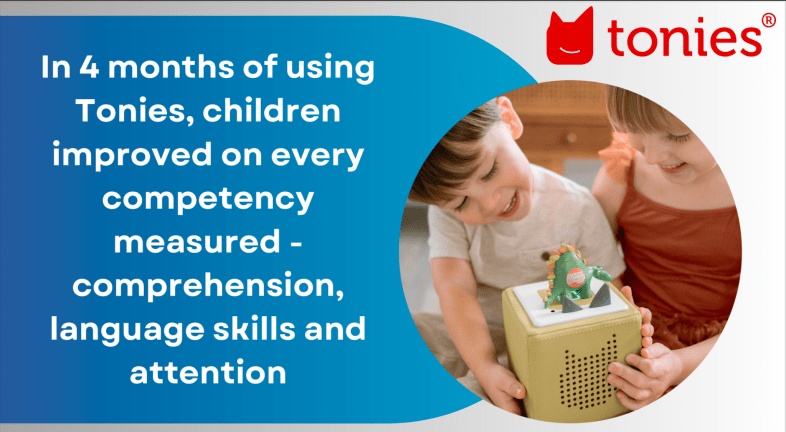
In a world where technology often competes with traditional learning methods, educators are always on the lookout for innovative tools that can genuinely impact children’s development. The Toniebox, a revolutionary audio device, has recently released the results of a study conducted between January and June 2023. The study explored how this creative tool can influence young learners’ comprehension, language skills, and attention.
Unlocking the Potential of the Toniebox
We should first understand what makes the Toniebox stand out. It’s an audio storytelling device that combines the magic of bedtime stories with captivating learning content. It makes it an excellent addition to the early childhood education toolkit and the best part is that kids are independent in their learning and can use it without much help at all.
A recent study
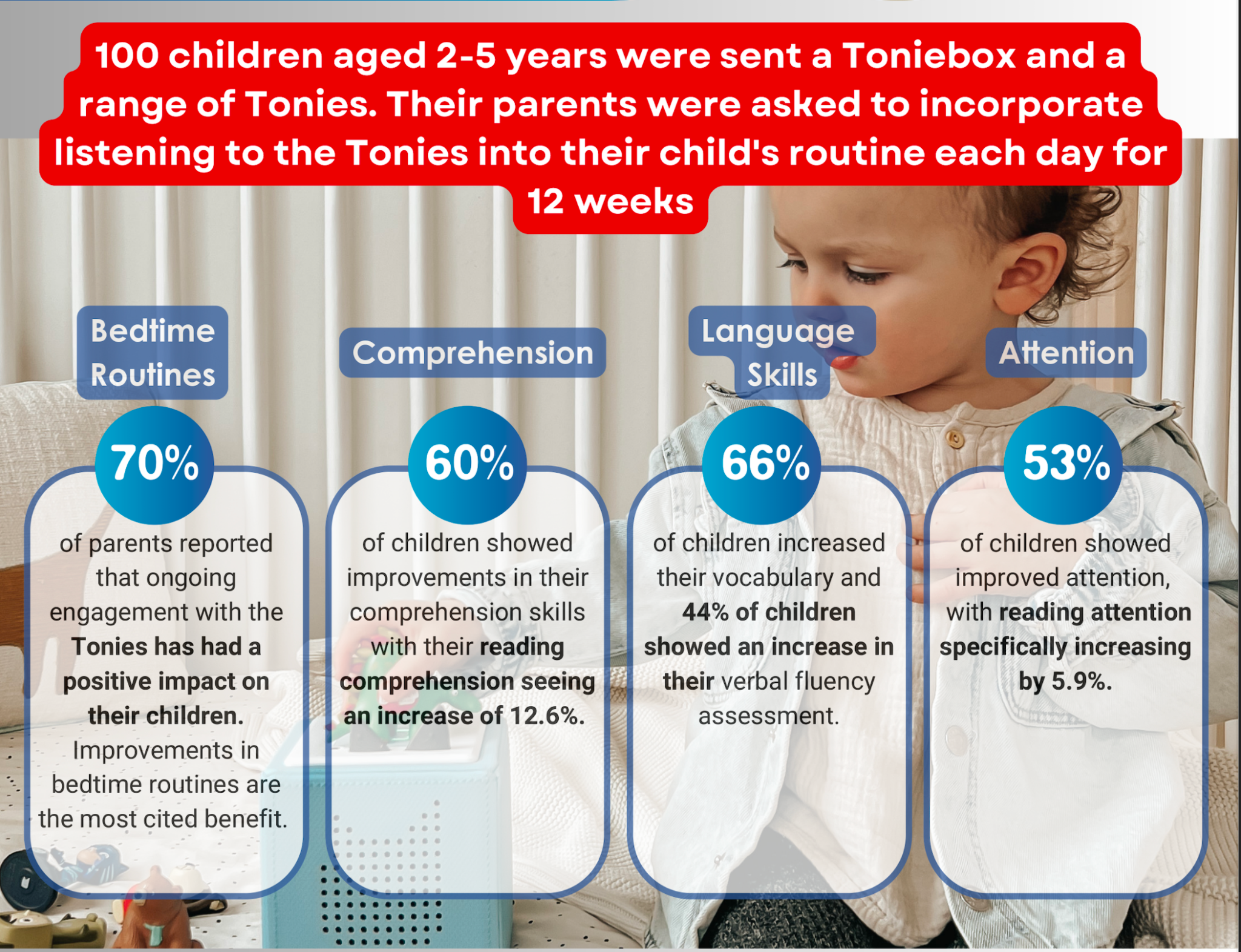
Imagine a learning tool that cultivates comprehension, language skills, and attention in young children. The recent study included 100 families from the UK and the United States, and involved children of ages 2 through 5. The research began with interviews to establish baseline measurements for each child’s development. Families were then provided with a Toniebox and bedtime Tonies, along with instructions to integrate them into their bedtime routines. After a period of 2-3 weeks, there were follow-up interviews that assessed the impact of Tonies on each child. Families were then provided with additional Tonies from the 4 Learning Centers: Discovery, Reading, Mindfulness, and Independent Play. After at least 12 weeks, there was another round of interviews which evaluated the effects of the Toniebox on children’s learning.
The Impact
1. Bedtime Routine Improvement:
– For parents who initially struggled with bedtime, using the Toniebox improved the situation for a remarkable 92% of them.
– Even if routines took longer, parents noted less resistance from their children, a welcome relief for many.
– Satisfaction scores increased significantly, from 6.6 to 7.4 out of 10, indicating happier bedtime experiences.
2. Comprehension and Language Skills:
– 60% of children’s comprehension scores increased
– Researcher-assessed comprehension levels improved by an impressive 6.3%.
– Reading comprehension scores saw a substantial increase of 12.6%.
– Verbal fluency jumped by over 10%, with 44% of children demonstrating improved verbal fluency.
– Vocabulary scores increased by 13.2%, with 66% of children scoring higher.
3. Enhanced Attention and Engagement:
– 53% of children’s general attention scores improved.
– For reading-specific attention, there was a 5.9% average increase.
– Engagement with stories increased by 7%, indicating greater interest.
Educators’ Takeaway: Tonies Toniebox
What makes the Toniebox an invaluable addition to early childhood education? It’s the perfect blend of entertainment and education. Here’s why educators should consider integrating it into their teaching strategies:
1. Promotes Literacy and Learning: The Toniebox enhances comprehension, language skills, and attention, crucial for early childhood education. The significant boost in reading comprehension is especially noteworthy.
2. Bedtime Routine Improvement: Better bedtime routines mean well-rested, alert learners in the classroom. Educators can appreciate the positive impact on children’s behavior and readiness to learn.
3. Screen-Free Learning: In a world dominated by screens, the Toniebox offers a refreshing screen-free alternative, promoting auditory learning and imaginative thinking.
4. Parent and Child Collaboration: The Toniebox encourages parent-child interaction, fostering a love for storytelling and learning from an early age.
Feedback from parents
The feedback offered by parents provides some valuable insights into the unique experiences they had with the Toniebox in their home.
1. Vocabulary Development and Screen-Free Engagement: A parent highlighted how Tonies significantly contributed to her child’s vocabulary development while serving as a screen-free alternative. The child’s enthusiasm for their Toniebox was so profound that he even listened to them for extended periods during road trips, showcasing the potential of this audio-based medium.
2. Design and Quality: Parents appreciated the figurine design of Tonies, which differentiated it from other devices. Many found Tonies ideal for storytelling, while other devices were preferred for music. The Toniebox engaged a child’s mind safely and offered high-quality manufacturing.
3. Innovative Possibilities: Parents associated reduced screen time with improved behavior in their children, emphasizing Tonies’ role in promoting a healthy balance.
The Toniebox is a valuable addition to childhood The feedback from parents underscores the versatility and potential of the Toniebox. While the study’s quantitative findings reveal its substantial impact on bedtime routines, comprehension, language skills, and attention, the individual comments paint a more comprehensive picture of its role in children’s lives. The Toniebox offers not only educational benefits but also a unique opportunity for children to engage with audio-based content in a screen-free and imaginative manner.
Toniebox is more than just a device; it’s a tool that empowers educators and parents to inspire young minds while nurturing positive habits and fostering a lifelong love for learning. As we navigate the ever-changing landscape of early education, the Toniebox supports the development of young learners in a dynamic and enriching way.
It is more than just a storytelling device; it’s a game-changer for early childhood education. Its potential to transform bedtime routines, enhance comprehension, language skills, and attention makes it a tool that educators should bring to their classroom. This innovative approach to learning is not only effective but also a whole lot of fun for young learners.
Contact Rachelle to schedule sessions for your school or keynotes for your conference about Artificial Intelligence, Coding, AR/VR, SEL, STEM and more!
**Interested in writing a guest blog for my site? Would love to share your ideas! Submit your post here. Looking for a new book to read? Find these available at bit.ly/Pothbooks
************ Also check out my THRIVEinEDU PodcastHere!
Join my show on THRIVEinEDU on Facebook. Join the group here
Over the past few years, teacher shortages have become a challenge in schools across the United States. There has been a shortage in filling full-time teaching positions as well as finding substitute teachers to fill in on a day-to-day basis. The shortages add to the pressure on all teachers as they take on additional responsibilities to cover classes and other duties. As a result, teachers lose time that can be spent working with students and also valuable planning time.
Earlier this year, I learned about Swing Education, which is a centralized platform that connects substitute teachers with schools and school districts. They serve as a recruiter of substitute teachers in support of school districts. Swing Education helps schools to streamline the process of hiring, expanding their pool of substitute teachers, easing payroll and onboarding. Swing’s value for substitute teachers is that they have more jobs to choose from because Swing lists all the openings in their area. They also get paid each week (instead of each month) and becoming a sub is much faster because Swing helps with onboarding. I had the opportunity to speak with Mike Teng, Co-Founder of Swing Education and enjoyed the conversation and also gained insight into how large of a problem schools in the United States are facing.
The teacher shortage is affecting schools in every state. According to a report by the nonprofit Learning Policy Institute, there is currently a shortage of approximately 314,000 teachers in the U.S. school system. That means they need subs, but when there aren’t enough, it negatively impacts the learning experience for students and can also lead to teacher burnout. Substitute teachers play a vital role in addressing teacher shortages. They can step in when full-time teachers are absent, ensuring that students receive consistent instruction. Furthermore, substitute teachers can also bring fresh perspectives and diverse experiences to the classroom, enriching students’ learning experiences. I have experienced this in my own classroom when I needed a substitute teacher.
Swing Education’s Initiative
Swing Education launched a campaign to recruit substitute teachers throughout California and in Texas, in the Dallas/Fort Worth area. These are the areas of biggest need at this exact moment for the Swing schools. However, schools all over the nation are facing a shortage, and substitute teachers are needed everywhere. Because Swing Education has a centralized platform, it is easier for schools to find and manage substitutes. The platform handles recruiting, onboarding, and payroll, giving schools more control over their substitute pool. Substitute teachers can find teaching assignments that fit their schedules and have the resources they need to be classroom-ready from day one.
The Benefits of Swing Education
The Swing Education platform offers numerous benefits, such as:
Streamlined Recruitment: Swing simplifies the recruitment process, making it easier for schools to find qualified substitutes quickly.
Improved Management: Schools can efficiently manage their substitute pool, ensuring they have adequate coverage for teacher vacancies.
Support for Substitutes: Substitutes have access to resources via the Swing Education site to help them get started.
Community Engagement: Swing encourages college students, prospective teachers, retirees, and others to sign up as substitutes, fostering community involvement.
Recruiting substitute teachers not only helps with immediate staffing needs but also helps to bring in opportunities for people who may not have considered teaching. There are substitute teachers that are college students, prospective teachers, or even retirees who decide to pursue teaching as a long-term career after having some experience in classrooms. By actively recruiting and supporting substitutes, schools can bring in prospective future educators and work toward eliminating or at least, reducing the teacher shortage crisis.
Swing Education’s initiative to recruit substitute teachers is a significant step toward addressing this challenge. By leveraging platforms like Swing, schools can ensure that classrooms are adequately staffed, and students continue to receive quality instruction. Furthermore, by the support offered for substitute teachers, schools can contribute to building a stronger and more sustainable teaching workforce for the future. Click here to learn how to become a sub. For schools and districts, click here to learn more about Swing.
Looking for PD for your school? I provide in-person and virtual training on the following topics. If you want to learn more about and explore AI and ChatGPT, contact me to schedule! Rdene915@gmail.com
**Interested in writing a guest blog or submitting a sponsored post for my site? Would love to share your ideas! Submit your post here. Looking for a new book to read? Find these available at bit.ly/Pothbooks















 Learning as I go: Reflections & lessons learned