Exploring AR and VR with CoSpaces Edu for Back-to-School

In Collaboration with CoSpaces Edu, opinions expressed are my own

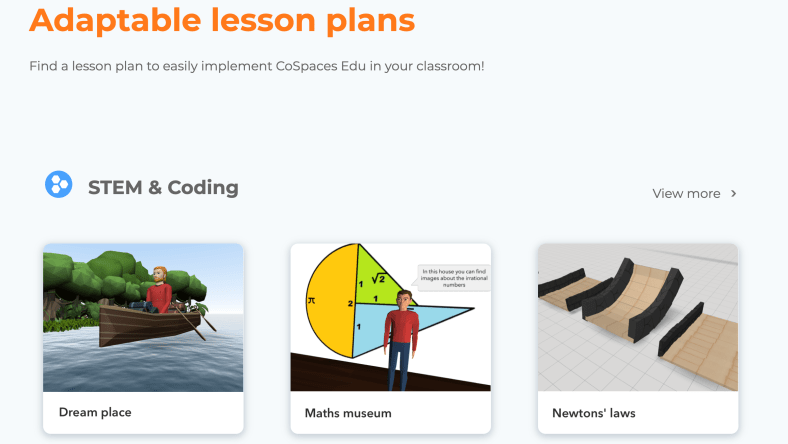
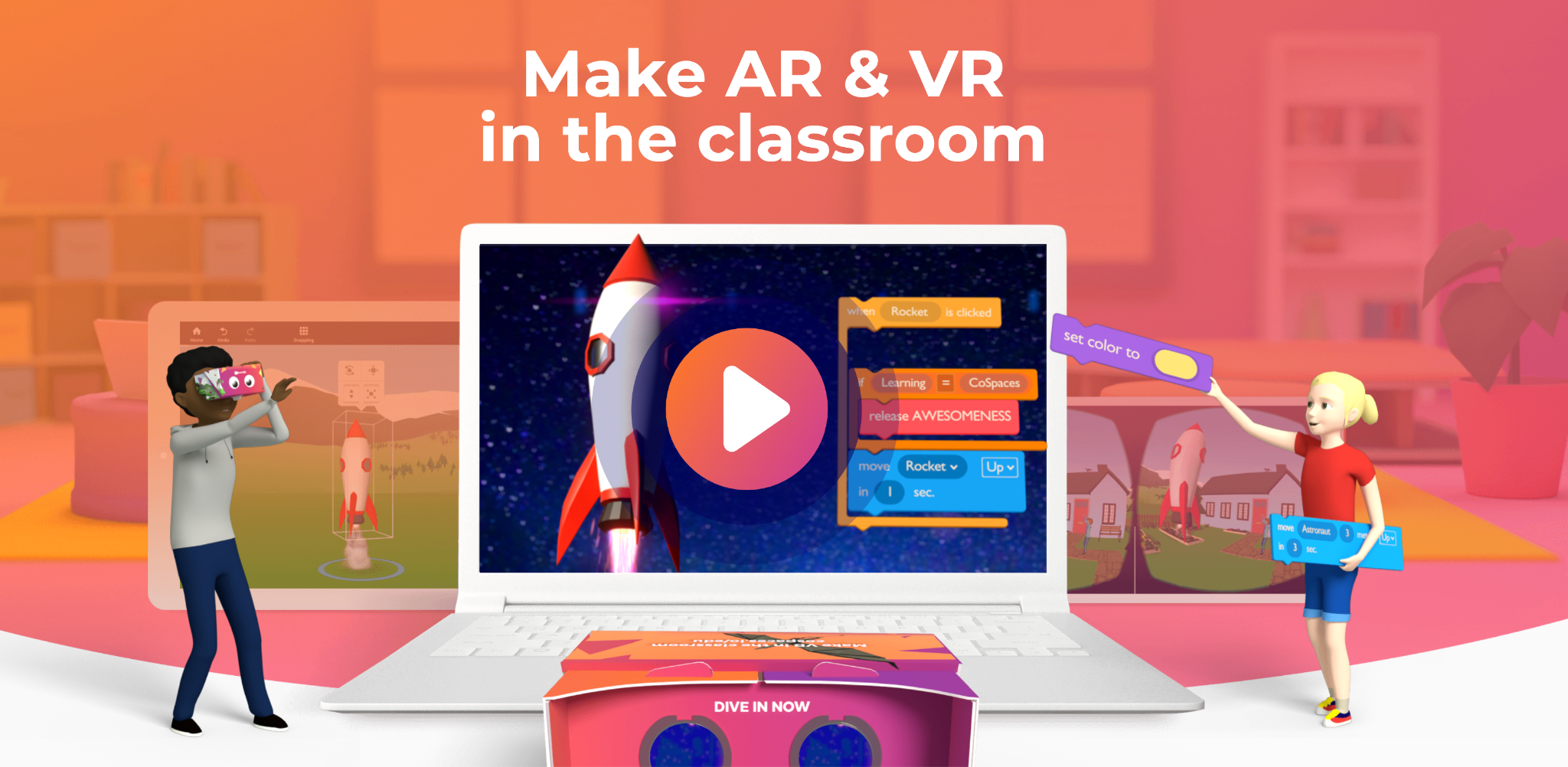
As we see the education landscape continue to evolve, especially with innovative technologies like Augmented Reality (AR) and Virtual Reality (VR) emerging as powerful tools to transform the way students learn and engage with academic content, we need to bring learning experiences to our students. In my classroom for the past six years, we have used CoSpaces Edu because it is such a versatile and accessible platform for educators. It is user-friendly, which makes it an excellent choice for teachers looking to integrate these technologies into their lessons without worrying about the learning curve or the time involved to get started. Another great benefit is that it can be used in any grade level or content area and there are lesson plans to explore!

Let’s take a look at some of the benefits of bringing AR and VR into our classrooms!

  • Immersive Learning: AR and VR are great ways to immerse students in more interactive, hands-on learning. With three-dimensional environments, CoSpaces can help students to enhance their understanding of complex concepts and it also encourages active and collaborative learning. Collaborative projects in CoSpaces foster teamwork and communication skills as students work together.
  • Personalized Learning: Because of all of the options available within CoSpaces, it can meet each student’s interests and needs. These AR and VR experiences can be tailored to individual preferences, which allows students to progress at their own pace and explore topics that better align with their interests. If students want to dive into coding, they can do that right within CoSpaces!

Project Ideas using CoSpaces Edu:

  • Virtual Museum Tour (Suitable for Social Studies, History, Art, and Language Arts): Have students create a virtual museum tour showcasing artifacts, and historical figures, and representing important events. Students can research and present what they have learned in a creative, interactive way. It also can be shared with classmates and the school community to highlight these emerging technologies and student innovation!
  • Storytelling in AR (Suitable for Language Arts and Creative Writing): Students can write and narrate their stories and then bring them to life in augmented reality. Using CoSpaces Edu, they can design interactive characters, scenes, and backgrounds to represent what they are learning. They can then turn their narratives into immersive experiences. A project like this fosters creativity and enhances storytelling skills.
  • Historical Time Travel (Suitable for Social Studies and History): Imagine a history project where students create a virtual time machine to travel to different historical periods. They can research various eras, dress up their avatars accordingly, and explore significant events and cultures firsthand through CoSpaces Edu. This project encourages historical empathy and a deeper appreciation for the past. It can be a great way to create exhibitions in AR and VR.
  • Literary Landscapes (Literature): Incorporate literature into AR and VR by having students create immersive environments inspired by novels or poems they have read in class. Students can use CoSpaces Edu to build scenes, depict characters, and even add audio elements to capture the essence of the literary work.

Integrating AR and VR into the educational journey has shown tremendous potential in transforming the way students engage with content and learn. With CoSpaces Edu, we can empower students to explore a wide range of subjects in an immersive and interactive manner. Just check out the gallery full of amazing examples and training for educators! The benefits of increased student engagement, more active learning, inclusivity, and creativity can positively and significantly impact students’ educational journeys.

As we head back to school, it is the perfect chance to explore and embrace these immersive technologies, making learning an adventure for all students in any grade level or content area. Diving in is easy with all of the support available in the Resources Hub from CoSpaces Edu!

About the Author

Rachelle Dené Poth is a Spanish and STEAM Educator at Riverview High School in Oakmont, PA. She is also an Attorney, Edtech Consultant, Speaker, and the Author of seven books about education and edtech. Rachelle is available to provide PD on Artificial Intelligence, Augmented and Virtual Reality, Coding, SEL and STEM.

Contact Rachelle to schedule sessions for your school about Artificial Intelligence, Coding, AR/VR, and more! Rachelle is also available for Keynotes.

Follow her on Twitter and Instagram at @Rdene915

**Interested in writing a guest blog for my site? Would love to share your ideas! Submit your post here. Looking for a new book to read? Find these available at bit.ly/Pothbooks

************ Also check out my THRIVEinEDU Podcast Here!

Join my show on THRIVEinEDU on Facebook. Join the group here

Embrace the New School Year with New Coding Resources: Matatalab’s Tale-Bot Pro and VinciBot

In collaboration with Matatalab, Opinions expressed are my own

As we head into a new school year, it’s the perfect time to explore innovative ways to ignite students’ passion for learning while providing them with opportunities to develop essential skills for the future. An area that is in demand and can be brought into every classroom is STEM-focused curriculum and activities. One great example is exploring coding!  In my STEAM course, we spend a good amount of time during the year learning about coding and talking about the importance of developing skills in these areas, especially for the increasing demand for coding skills in the future. 

Finding the right resources is key and it is so helpful when you can find one resource that provides options for multiple grade levels and content areas. Matatalab‘s coding resources are fantastic for learners of various age groups, starting as young as 3! 

Tailored for Different Age Groups

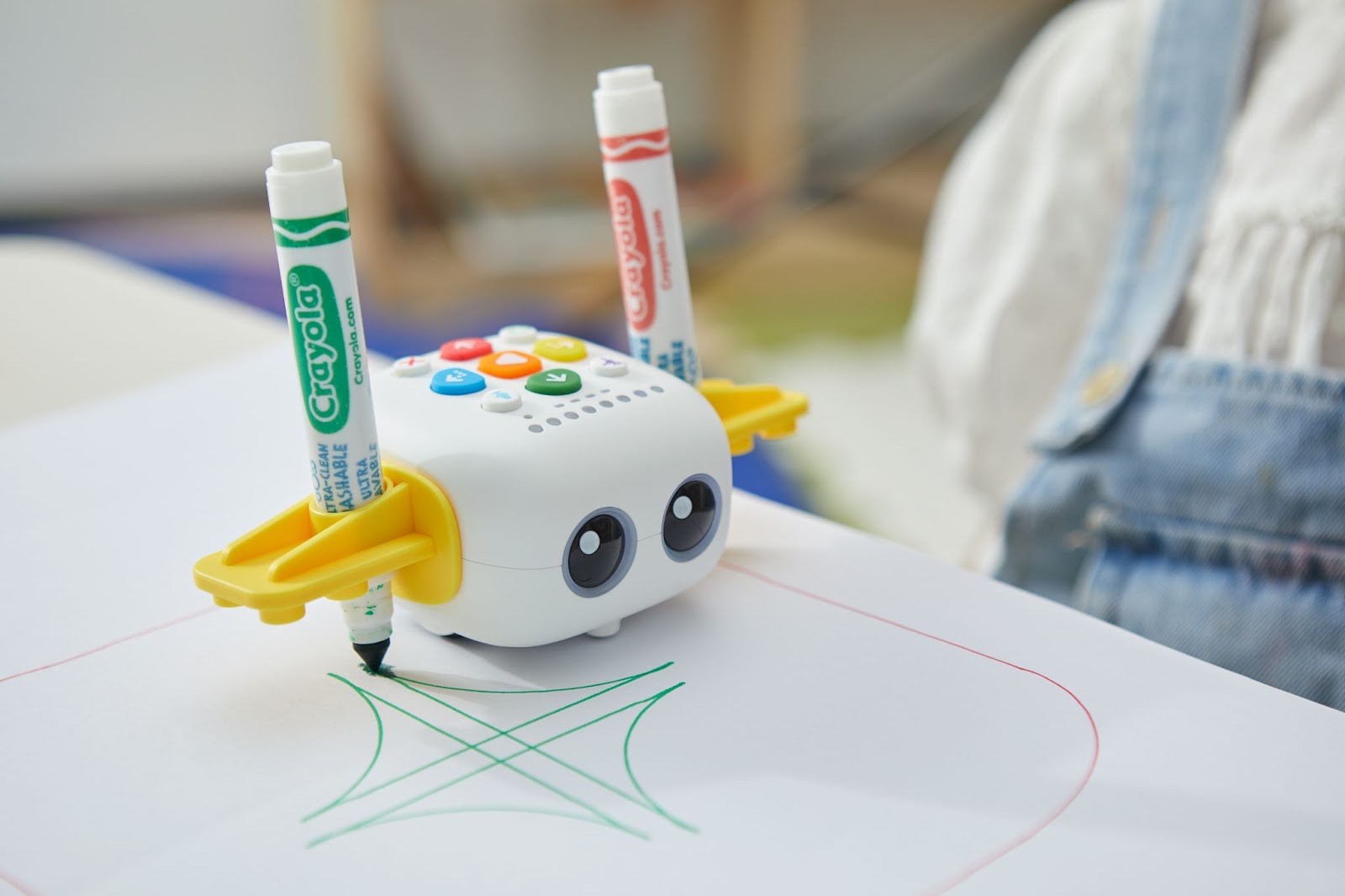
Matatalab recognizes that learning needs evolve as students grow. What I love about Matatalab is that they offer two coding robots that are easy to get started within the classroom. Students can dive right in and learn about coding and have fun exploring the possibilities with these great options! Read about our experience with the Tale-Bot Pro and the VinciBot

The Tale-Bot Pro is designed for Pre-K and above, while the VinciBot is geared towards students from the 3rd grade and up. Being able to bring coding opportunities to even the youngest learners is a way to spark curiosity and boost engagement in learning about these essential STEM skills.  

Here are four of the highlights for using Matatalab products:

1. An Ideal Autonomous Learning Assistant

Diving into coding and learning how to create opportunities for students can take time. However, Tale-Bot Pro and VinciBot come equipped with challenge booklets full of activities for students to explore. Matatalab also provides additional learning activities that can be downloaded from their website. With access to a variety of resources, it ensures that educators and students have enough materials to dive into the world of coding and also be able to infuse student choice in learning. What I think sets Tale-Bot Pro apart is that it provides instant voice feedback and guidance for students. As students code, they can observe the response of Tale-Bot Pro and understand if they completed the coding challenge correctly. This then empowers students to take charge of their learning and encourages self-guided exploration. As students take the lead more, it enables teachers to take on the role of facilitators in the classroom and be there to nurture student independence in learning.

2. Endless Creative Coding Practices

When it comes to using Tale-Bot Pro or Vincibot, there are so many ways that students can create something authentic, meaningful, and fun! We want to spark creativity and foster problem-solving abilities in our classrooms and with Matatalab’s coding robots, we are better able to facilitate this for our students. The beauty of Matatalab’s coding robots lies in their adaptability and versatility. By seamlessly integrating with Lego building bricks, students are not just limited to coding on screen; they can bring their creations to life in a tangible and interactive way. Imagine the excitement of coding a robot to navigate a custom-built obstacle course or perform a unique dance routine. This hands-on experience transforms abstract coding concepts into concrete, real-world applications, fostering a deeper understanding of the subject matter. 

As students experiment with different configurations and functionalities, they not only enhance their coding skills but also develop a strong sense of ownership over their learning journey. This not only brings in an element of play but it also nurtures imagination. 

As we think about the benefits, as students create and share their unique robot projects, they have opportunities to showcase achievements, which helps to boost their confidence and promotes more collaboration in the learning environment. 

3. Enjoyable Learning Experience

When you first open the box and get started with these robots, the fun starts right away. Students and teachers are excited to see the possibilities and amazed at how easy it is to create something. Coding can be thought of as something difficult that requires an extended amount of time or a higher level of knowledge, however, that is not the case with Matatalab. Their coding robots instantly make coding a more enjoyable and engaging experience for all students. It leads to more interactive learning with real-time feedback and is engaging for students.  Being able to quickly code and see the results, helps students to understand coding concepts right away. These robots bridge the gap between learning and fun!

4. Future-Proofing Your Career

With technology and the need for STEM skills increasing rapidly, understanding coding is no longer an option but has to be considered a necessity. When we introduce coding at an early age, it helps students to develop skills over time. Whether by starting early with Matatalab’s Tale-Bot Pro and then advancing to the VinciBot, educators are helping students gain skills that will benefit them in the future. Tale-Bot Pro and VinciBot not only nurture coding skills but also instill a growth mindset that is essential for adapting to the ever-evolving technological landscape. As students engage with these robots, they cultivate resilience, adaptability, and the ability to embrace challenges—all attributes that are highly sought after in any profession.

There are many “in demand” skills developed through coding such as collaboration, creativity, critical thinking, and problem-solving, which are transferable across various fields. As students master these skills, they not only enhance their academic skills but also set a strong foundation for future career success. 

If you are looking to get started with coding and worried that you don’t have enough time, or that your learners are too young, then it is time to explore Matatalab’s coding resources, particularly the Tale-Bot Pro and VinciBot. These options provide students with a chance to dive into coding and learning and appreciate the process involved. 

During ISTE 2023, I had a chance to talk with the team and share my experience with attendees!

About the Author

Rachelle Dené Poth is a Spanish and STEAM Educator at Riverview High School in Oakmont, PA. She is also an Attorney, Edtech Consultant, Speaker, and the Author of seven books about education and edtech. Rachelle is available to provide PD on Artificial Intelligence, Augmented and Virtual Reality, Coding, SEL and STEM. 

Contact Rachelle to schedule sessions for your school about Artificial Intelligence, Coding, AR/VR, and more!

Follow her on Twitter and Instagram at @Rdene915

**Interested in writing a guest blog for my site? Would love to share your ideas! Submit your post here. Looking for a new book to read? Find these available at bit.ly/Pothbooks

************ Also check out my THRIVEinEDU Podcast Here!

Join my show on THRIVEinEDU on Facebook. Join the group here

Exploring AI: Tools for All Learners

As a classroom teacher with more than five years of experience integrating AI into my teaching practice and also providing PD and conference sessions for educators, I have enjoyed exploring the different tools and seeing the changes happen over this time. I try to find a variety of resources to help educators, especially ones that offer something for all grade levels and content areas. When we give students the chance to explore AI and develop a greater understanding of it, we also help to foster skills of critical thinking, problem-solving, and a deeper understanding of AI concepts. opportunities for engagement, personalized learning, and skill development

By introducing AI tools and exploring generative AI like ChatGPT, learners can develop essential 21st-century skills such as critical thinking, problem-solving, and digital literacy. These experiences allow them to explore and engage with cutting-edge technologies, preparing them for the future workforce. It is important for educators to create a balance between AI and traditional teaching methods, ensuring that AI integration is purposeful, age-appropriate, and aligns with educational goals. By harnessing the benefits of AI, educators can inspire young learners, nurture their curiosity, and empower them to become active contributors in an AI-driven world.

AI Impact on Learners

In our schools, when we purposefully leverage technology such as AI, it can have many benefits for student learning. Here are four ways that AI can have a positive impact on education.

  • Adaptive learning: One way that AI can benefit learners, especially young learners, is through adaptive learning platforms. These platforms utilize AI algorithms to analyze students’ strengths and weaknesses and can then tailor educational content to each student’s individual needs, reinforcing concepts they struggle with and challenging them in areas where they excel. While the AI is not a replacement for the teacher-to-student interaction and the feedback loop, it does help to provide what each student needs, when they need it. DreamBox is an example of an adaptive learning platform that can enhance students’ mathematical and literacy skills. Prodigy is an adaptive math platform that uses AI to create personalized math lessons and practice activities.
  • Content retention: For students to have multiple methods of reviewing the material, Quizlet has AI functionality that adapts to students’ progress and identifies areas that need further review. It provides personalized feedback and helps students strengthen their understanding and retention of key concepts. “Q-Chat is the “first fully adaptive, AI-powered tutor experience built on OpenAI’s ChatGPT API.”
  • Language Learning: Chatbots powered by natural language processing (NLP) algorithms can engage students in interactive conversations, providing instant feedback and opportunities to build skills at their own pace. For example, Duolingo’s chatbots enable students to practice world language skills by engaging in conversational exercises. AI-powered translation tools like Google Translate can also be used to enable students to explore and compare different languages. Another option is to read articles through Newsela which uses AI to adapt reading materials to students’ reading levels, making comprehension more accessible and enjoyable.
  • Social-emotional learning: Students can develop their social and interpersonal skills as they learn to interact through a conversational chatbot. For building confidence, engaging in a conversation with a chatbot that can provide feedback, helps students to develop their skills in many ways.

In addition to the benefits for learners, especially with creating more personalized, “just-in-time” supports, there are many tools and resources that benefit students in all grade levels. Here are six that are great to get started with:

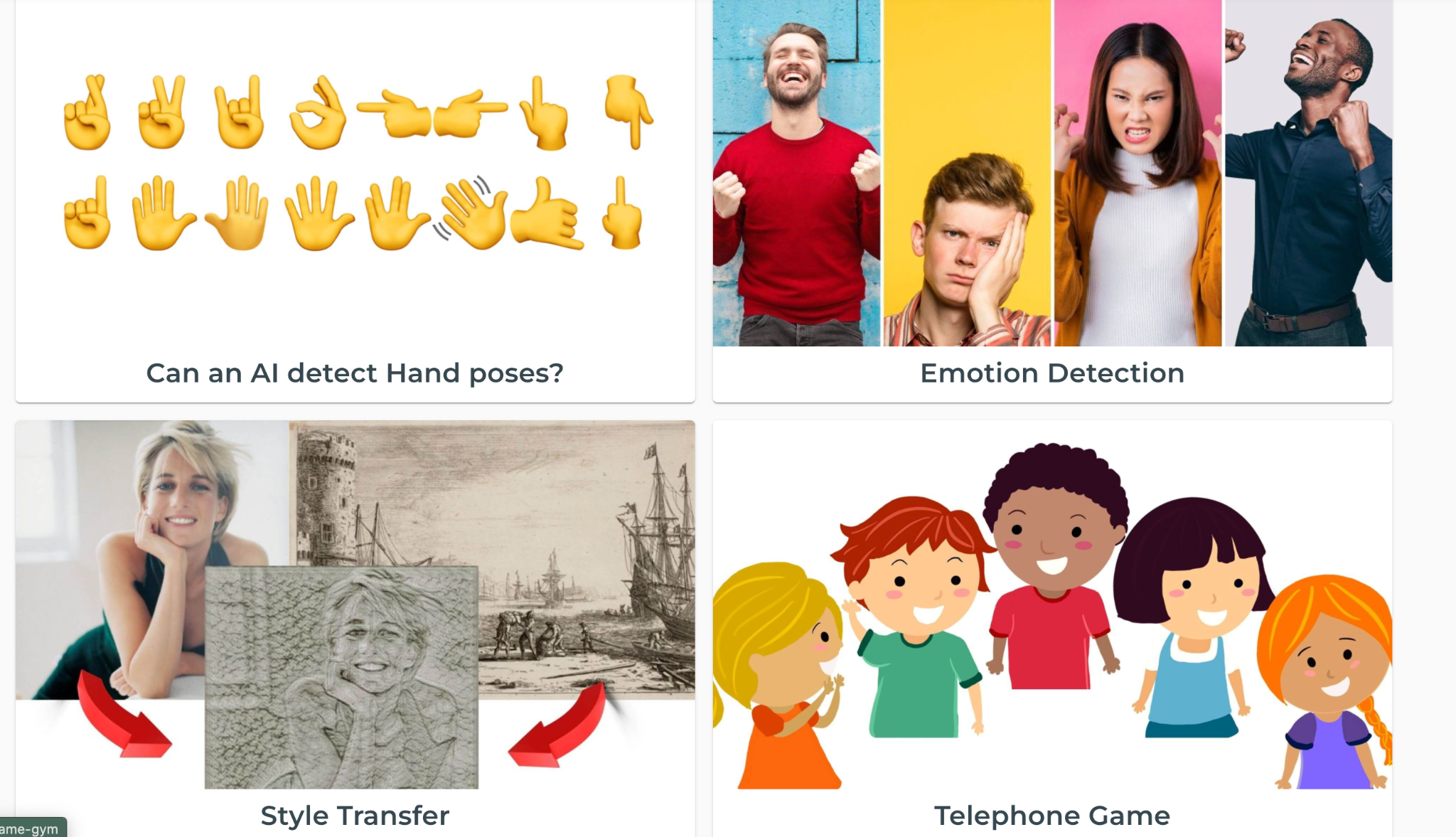
  • AIClub: An online platform that offers a K-12 curriculum covering AI, but it also has a range of AI-related resources and activities for students. There are interactive lessons, coding challenges, and AI project ideas. Middle school students and younger learners can explore the AI Club Gym and try some activities to develop an understanding of AI and how it works.

[via AI Club Gym resources]

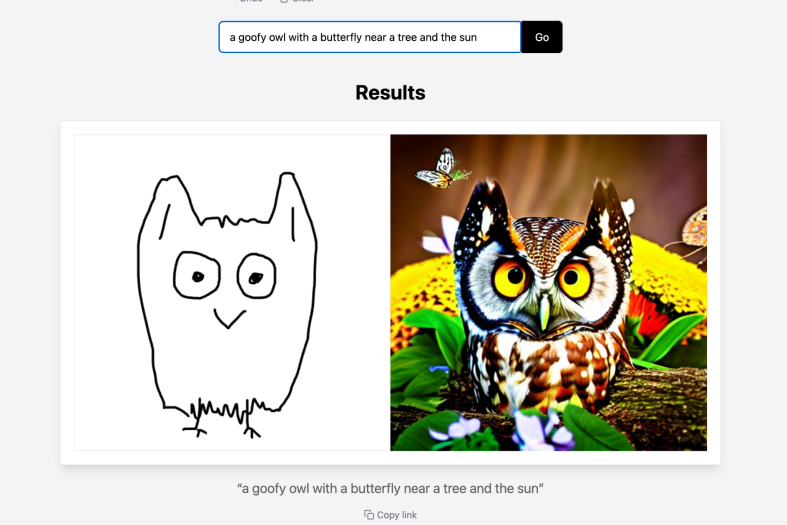
[Examples of resources via AI World School]

For educators looking for ways to learn more about AI and also experience some of its benefits, there is a growing list of tools we are already using that are building in AI functionalities and some new ones that help us save valuable time. Here are three examples to test out:

  • Canva Magic Write Canva now offers an AI text generator called Magic Write, which can inspire creativity in writing. It provides ideas, helps with brainstorming, supports lesson planning, crafting emails, making it a useful tool for educators.
  • Curipod: Teachers can create interactive lessons in minutes using AI. Teachers simply type in a topic and a ready-to-run lesson is generated.

[example generated lesson via Curipod]

As with all new technologies, we need to make sure that we explore the benefits and concerns. Don’t be afraid to explore these tools because as educators, we need to be prepared to guide our students and help them to understand the technologies that may become a big part of their future by equipping them with knowledge and skills to navigate the world of AI effectively and ethically.

Coming up on October 7th is the EduMatch AI Summit! A free event and I am honored to be a Featured Speaker during the Summit and can’t wait to share AI resources and how to get started! Read the post from Dr. Sarah Thomas here to learn more and find out how to sign up to present and participate!

About Rachelle:

Rachelle Dené is a Spanish and STEAM: What’s Next in Emerging Technology Teacher at Riverview High School in Oakmont, PA. Rachelle is also an attorney with a Juris Doctor degree from Duquesne University School of Law and a Master’s in Instructional Technology. Rachelle is an ISTE Certified Educator and serves as the past president of the ISTE Teacher Education Network. She was named one of 30 K-12 IT Influencers to follow in 2021.

She is the author of seven books including ‘In Other Words: Quotes That Push Our Thinking,” “Unconventional Ways to Thrive in EDU”, “The Future is Now: Looking Back to Move Ahead,” “Chart A New Course: A Guide to Teaching Essential Skills for Tomorrow’s World, “True Story: Lessons That One Kid Taught Us” and her newest book “Things I Wish […] Knew” is now available at bit.ly/thingsiwishedu.

Follow Rachelle on Twitter @Rdene915 and on Instagram @Rdene915. Rachelle has a podcast, ThriveinEDU available at https://anchor.fm/rdene915

Rachelle is available for PD sessions in-person and virtual on a variety of topics. Key focus areas are AI, ChatGPT, Generative AI, AR and VR, SEL and STEM.

**Interested in writing a guest blog for my site? Would love to share your ideas! Submit your post here. Looking for a new book to read? Find these available at bit.ly/Pothbooks

Ideas for Starting the new school year

It seems that summer passes by so quickly every year. We are so busy throughout the school year and sometimes miss out on trying new ideas or exploring new tools. However, we have the summer break to reflect and explore new experiences and it is an opportunity to take time to recharge. Before we know it, we are back in our classrooms and looking for some new ideas and ways to engage students in learning.

There are so many resources out there to explore for educators and sometimes it can be a bit overwhelming to find something that works well. Or, you want to create some new learning experiences for students and help them to develop a variety of skills beyond just the content area that we are teaching.
With the start of a new school year, I think it’s a great time to explore some new ideas. We need ideas that not only help students to build their skills in the content area but also help them to develop essential social-emotional learning (SEL) skills, learn about the world around them, and be prepared for whatever the future may bring.

As the summer draws to a close, it’s the perfect opportunity to set the tone for a successful academic year. Let’s explore a few ideas for back-to-school that will help us to kickstart the year.

  • Building relationships

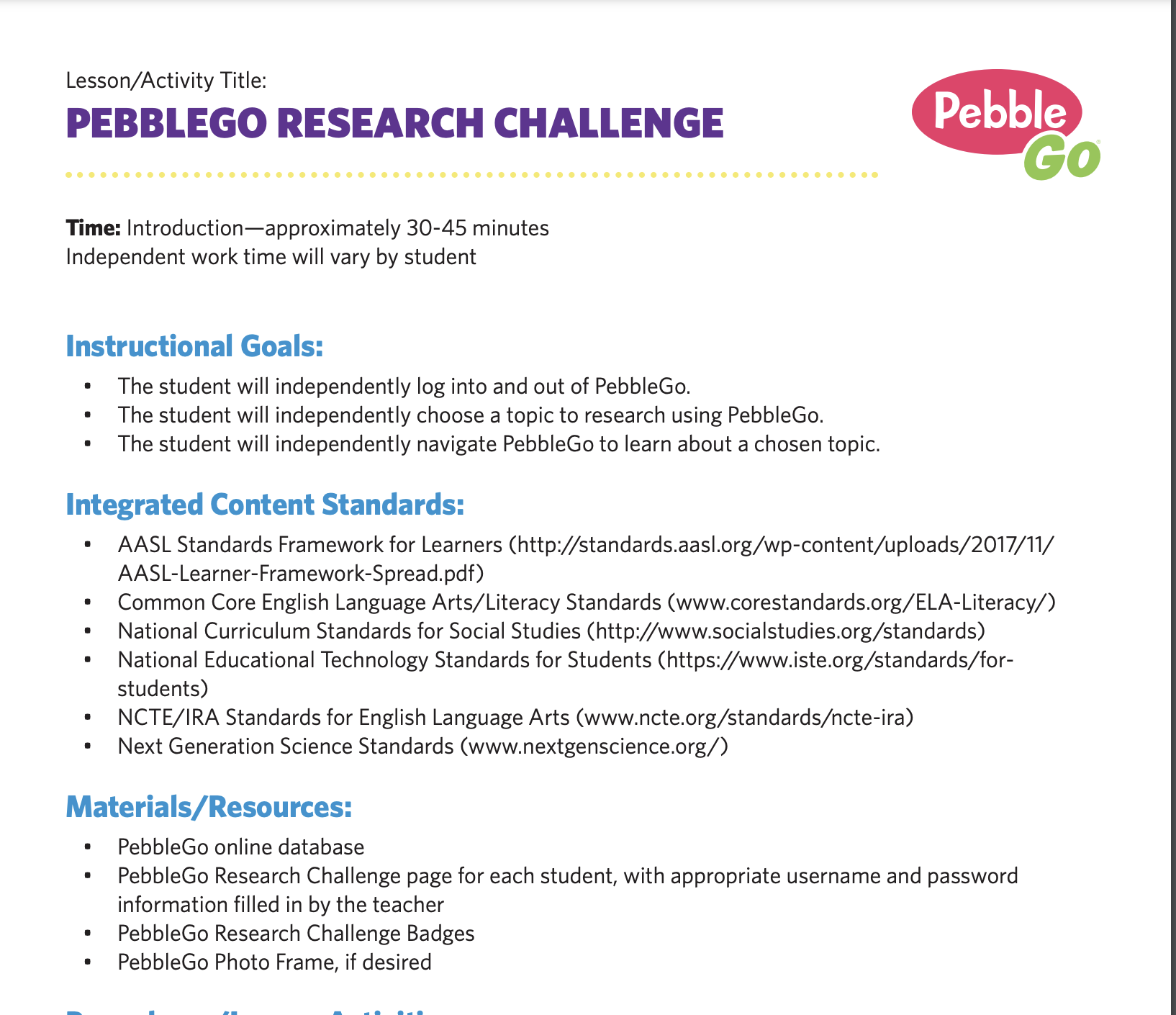
It’s important that we get to know our students, their interests, and what their specific needs are. A fun way to do this would be to encourage students to select a topic of interest from the PebbleGo Library and then use PebbleGo Create to share what they know about the topic and also to include some information about themselves. This is a great way to get to know our students and for students to get to know each other. When we do this, it helps us to build a successful and thriving learning community. You can also check out the lesson plan for “Making a New Friend” and explore the different articles available!

We want students to be successful and at the start of the year, it’s a good opportunity to set up some structure to help students set learning goals. Work with students to establish a clear vision for the academic year by setting personal and academic goals. Encourage students to think about what they want to achieve and how they plan to get there. Guide them to create realistic and achievable goals, and work with them to review progress throughout the year. When students set goals, it can help to motivate them, promote greater focus, and build valuable skills like time management and self-discipline which are essential SEL skills.

It’s always a great opportunity to start a new school year to have some fun getting to know each other and build those relationships. In the new school year or new class, students are often curious about what they will be learning. What better way than to use the Curiosity Game to get students excited about learning and then share that learning with classmates!

We want students to develop a love of reading and what better way than to create a book club in your classroom. Students can explore the diverse range of resources available from PebbleGo on so many different topics. We can have book talks in our classes and students can use PebbleGo Create to share a little about their book. These opportunities will foster critical thinking, creativity, and communication skills. It will also get students excited about reading!

An activity that is a lot of fun because we get to learn about students and their interest is genius hour. With genius hour, students choose a topic or an area of interest and then research it and create something to share with everyone else. It gives them a chance to share their genius. A great way to do this is by using the lesson plan available through PebbleGo. Students choose their research topic, have time to explore and then they can create with PebbleGo Create to share that learning and their excitement with their classmates. An activity like this also helps students to become more independent in learning which is a valuable learning experience as we want to prepare them for the future and develop student agency.

Back-to-school can sometimes bring feelings of anxiety and stress. We can help students to learn about health and wellness and create using PebbleGo Create to share tips for others! It is so beneficial for students and ourselves when we introduce mindfulness and stress-relief activities into our daily routine. It will help students cope with the challenges that can arise with academics and provide them with ways to deal with stress, or improve focus, concentration, and their overall well-being. Understanding their emotions is important for academic success.

You can even have students create something simple to reflect what they have learned and share it in class. So many wonderful options available to explore! Just choose one to start and then add in the others throughout the year to mix things up a bit, boost student engagement and spark curiosity for learning.

With so many already in or heading back to school, these ideas can offer a bit of a different approach to start the academic year with excitement, enthusiasm, and purpose. By fostering a positive and engaging learning environment, helping students with setting goals, encouraging peer interactions, and incorporating interactive methods, students and educators can experience a rewarding educational journey.

Starting with these ideas can help students to build relationships, be mindful of their well-being, focus on their academic growth and enjoy learning! It can help with making this academic year one to remember. Happy back-to-school!

About Rachelle

Follow Rachelle on Twitter @Rdene915 and on Instagram @Rdene915. Rachelle has a podcast, ThriveinEDU available at https://anchor.fm/rdene915.

Looking for PD for your school? I provide in-person and virtual training on the following topics. If you want to learn more about and explore AI and ChatGPT, contact me to schedule! Rdene915@gmail.com

**Interested in writing a guest blog or submitting a sponsored post for my site? Would love to share your ideas! Submit your post here. Looking for a new book to read? Find these available at bit.ly/Pothbooks

About the Author

Rachelle Dené Poth is an edtech consultant, presenter, attorney, author, and teacher. Rachelle teaches Spanish and STEAM: What’s nExT in Emerging Technology at Riverview Junior Senior High School in Oakmont, PA. Rachelle has a Juris Doctor degree from Duquesne University School of Law and a Master’s in Instructional Technology. She is a Consultant and Speaker, owner of ThriveinEDU LLC Consulting. She is an ISTE Certified Educator and currently serves as the past -president of the ISTE Teacher Education Network and on the Leadership team of the Mobile Learning Network. At ISTE19, she received the Making IT Happen Award and a Presidential Gold Award for volunteer service to education. She is also a Buncee Ambassador, Nearpod PioNear, and Microsoft Innovative Educator Expert.

Rachelle is the author of seven books, “In Other Words: Quotes That Push Our Thinking,” “Unconventional Ways to Thrive in EDU” (EduMatch), and “The Future is Now: Looking Back to Move Ahead,” Rachelle Dene’s latest book is with ISTE “Chart A New Course: A Guide to Teaching Essential Skills for Tomorrow’s World.” True Story: Lessons That One Kid Taught Us, Your World Language Classroom: Strategies for In-Person and Digital Instruction and Things I Wish […] Knew.

Rachelle is a blogger for Edutopia, Getting Smart, Defined Learning, and NEO LMS.

Follow Rachelle on Twitter @Rdene915 and on Instagram @Rdene915. Rachelle has a podcast, ThriveinEDU https://anchor.fm/rdene915.

Navigating AI Together! EduMatch Conference!

EduMatch Invites You to Dive into AI: Conference Highlights on October 7th

In an era marked by rapid technological advancement, artificial intelligence (AI) is taking center stage. The possibilities of AI in education are as endless as they are intriguing. To explore these potentials, EduMatch is hosting a one-of-a-kind virtual conference on Saturday, October 7th, 2023, from 12-4 PM Eastern Time. Here’s what to expect.

Uncover the Many Faces of AI

The EduMatch AI Exploration Conference offers an opportunity to explore AI from various angles:

  • AI & Ethics: Delve into the ethical considerations surrounding AI, a critical topic in our evolving digital age.
  • AI in Education: Discover how AI is revolutionizing the classroom experience, offering tailored learning and new teaching methods.
  • AI Literacy & Training: Learn about training resources and strategies to equip educators with the know-how to use AI responsibly.
  • The Impact of AI: Explore how AI affects daily life and work, shaping the world as we know it.

Join the Conversation: Call for Presenters

Are you passionate about AI and education? We invite you to submit a proposal and present at our conference. Submit your proposal here by September 8th.

Engage with a Community: Flip Discussion

Share your thoughts, insights, and questions on AI with other participants through our Flip discussion platform. Engage in the dialogue here.

An Inclusive Approach: Pay-What-You-Want

In line with our commitment to inclusivity, we’re offering this conference on a Pay-What-You-Want basis. Any contribution you make supports the EduMatch Foundation’s mission to foster global collaboration among educators and students.

Why Attend?

  • Networking: Connect with educators, administrators, and AI enthusiasts from around the world.
  • Knowledge Sharing: Learn from fellow educators, for topics relevant to you.
  • Community Building: Be part of a community that shares your interest in the intersection of AI and education.

Conclusion

The EduMatch AI Exploration Conference is more than an event; it’s a stepping stone toward a future where AI and education coalesce to create enriched learning experiences. Whether you’re an AI novice or an expert, there’s something here for you.

Register now and embark on this enlightening journey with us. Together, we’ll uncover the future of AI in education.

About the Author, Dr. Sarah Thomas, Founder of EduMatch

Sarah Thomas, PhD is a Regional Technology Coordinator in a large district in Maryland, and the founder of EduMatch, an organization that empowers educators to make global connections across common areas of interest.  She has spoken and presented internationally, participated in the Technical Working Group to refresh the 2017 ISTE Standards for Educators, and is a recipient of the ISTE Making IT Happen award.  Sarah is a co-author of the ISTE digital equity series, Closing the Gap, and the winner of the 2023 Maryland Society for Educational Technology Outstanding Leader Using Technology award.

En Francais:

Sarah Thomas, PhD est une <<Regional Technology Coordinator>> dans le comté écoles publiques de Prince George dans le Maryland aux États Unis. Elle est aussi certifiée Innovator et Entraîneuse de Google et la fondatrice du mouvement EduMatch, un projet qui permet aux éducateurs d’établir des connexions mondiales à travers les zones d’intérêt commun. Elle a présenté au niveau international, participé au Groupe de travail technique pour rafraîchir les normes 2017 ISTE pour les éducateurs et est récipiendaire du prix ISTE Making IT Happen de 2017. 

En español:

Sarah Thomas, PhD es Coordinadora Regional de Tecnología de las escuelas públicas en el Distrito Prince George. Cuenta con los certificados de Google Certified Innovator, Google Education Trainer. Fundadora del movimiento EduMatch, proyecto que empodera a los educadores a tener conexiones globales de sus áreas de interés. Se ha presentado internacionalmente, participado en el grupo Technological Working para actualizar los Estándares Educativos de ISTE para 2017, es ganadora del premio 2017 ISTE Making IT Happen. 

About Rachelle

Follow Rachelle on Twitter @Rdene915 and on Instagram @Rdene915. Rachelle has a podcast, ThriveinEDU available at https://anchor.fm/rdene915.

Looking for PD for your school? I provide in-person and virtual training on the following topics. If you want to learn more about and explore AI and ChatGPT, contact me to schedule! Rdene915@gmail.com

**Interested in writing a guest blog or submitting a sponsored post for my site? Would love to share your ideas! Submit your post here. Looking for a new book to read? Find these available at bit.ly/Pothbooks

How a Successful WBL Program Improves Student Outcomes

Sponsored post by @X2VOL

According to the Department of Education, successful work-based learning education has three important elements: “the alignment of classroom and workplace learning; application of academic, technical, and employability skills in a work setting; and support from classroom or workplace mentors.”

In recent years, districts and state education departments have been striving to bridge the gap between classroom learning and real-world application. Work-Based Learning (WBL) and Career and Technical Education (CTE) programs have emerged as powerful solutions to this challenge. By providing students with hands-on experiences in professional settings, these programs offer opportunities for skill development, career exploration, and personal growth. A successful WBL program can significantly improve student outcomes by setting them on a path to success.

Cincinnati Public Schools is a prime example of a district striving for improved student outcomes.

Their state requires tracking of certain graduation seals; some focus on CTE and WBL. Because of this, the district tracks student progress through various WBL and CTE programs that have students in internships, specialized classes, after-school jobs, job shadowing experiences, and more.

The district uses this state requirement as an opportunity to engage students in meaningful growth and helps prepare students for life after high school.

The goal at Cincinnati Public Schools is student preparedness:

“Our dream here (at Cincinnati Public Schools) and our vision is that when students are going for jobs even after high school, they can have a report with them in their interview, really as a part of a portfolio to say ‘You can look at this report and you can see these are the activities that I completed as a part of my high school program’.” – Mike Turner, Career and Technical Education Manager, Cincinnati Public Schools

Providing students with real-world experiences sets them up for success post-high school.

Learn More in this Case Study about their District

The Benefits of WBL:

Student outcomes are improved through a successful Work-Based Learning or Career and Technical Education program in a number of ways. These include:

Skill Development:

One of the primary benefits of WBL is the enhancement of students’ skill sets. By exposing students to real-world challenges and responsibilities, they acquire practical job skills that cannot be fully replicated in the classroom:

  • Job Skills: Students learn basic but very important job skills and expectations to set them up for success in the real world. They can also gain skill proficiency in fields they are interested in.
  • Soft Skills: Interpersonal communication, teamwork, problem-solving, and time management are just a few examples of soft skills that students develop through interactions in professional settings that will be necessary for future employment.

Career Exploration:

Work-Based Learning programs provide a unique opportunity for students to explore potential career paths. Through hands-on experiences in different industries, students can:

  • Identify Interests: Working in a professional setting allows students to assess their interests and passions, helping them make more informed career decisions or be exposed to careers they don’t want to pursue.
  • Build Networks: Networking with professionals in their field of interest exposes students to potential mentors and future job opportunities.
  • Refine Career Goals: Early exposure to different career options helps students set realistic and achievable career goals. In addition, they can make informed choices about what post high school education is suitable for their desired career.

Personal Growth and Confidence:

Being immersed in a professional environment empowers students to become more confident and independent individuals. They learn to:

  • Take Initiative: By actively participating in real work scenarios, students gain the confidence to take initiative and showcase their leadership.
  • Overcome Challenges: Dealing with real-world challenges helps students build resilience and problem-solving capabilities.
  • Personal Growth: The exposure to different work cultures and expectations fosters personal growth and maturity in students.
  • Finding Belonging: When students discover meaning behind their work or see the impact of their time and effort, they develop a sense of belonging. Whether it’s through volunteering or through their job, students can see the direct impact of their skills increasing a sense of personal meaning and belonging.

Bonus Content: Finding Belonging Through Service

Preparing for the Future:

All of this boils down to preparedness. High school WBL programs acts as a bridge between education and the workforce. It facilitates a seamless transition for students into the professional world through:

  • Gaining Work Experience
  • Skill Development
  • Personal Discovery

School districts play a crucial role in supporting student outcomes through work-based learning programs in high school. These programs are designed to provide students with real-world experiences and opportunities to develop essential employability skills and discover potential career paths. They learn both practical and soft skills while increasing confidence and leadership – all elements that will help a student succeed after high school.

By implementing and supporting work-based learning programs in high schools, districts can better prepare students for successful transitions to the workforce, higher education, or vocational training, ultimately leading to improved student outcomes and career readiness.

Learn more about managing these student programs with x2VOL. x2VOL makes it easy to track WBL and CTE programs online in one easy-to-use platform where districts can see student growth through real-time reports on student service and work.

Learn More about x2VOL

Rachelle’s blog

Follow Rachelle on Twitter @Rdene915 and on Instagram @Rdene915. Rachelle has a podcast, ThriveinEDU available at https://anchor.fm/rdene915.

Looking for PD for your school? I provide in-person and virtual training on the following topics. If you want to learn more about and explore AI and ChatGPT, contact me to schedule! Rdene915@gmail.com

**Interested in writing a guest blog or submitting a sponsored post for my site? Would love to share your ideas! Submit your post here. Looking for a new book to read? Find these available at bit.ly/Pothbooks

Guest post: Education is Killing Its Golden Egg-Laying Geese

It threatens the entire education system

Guest post by Jay Schroder, author of Teach From Your Best Self

Million Dollar Duck Trailer | Disney Video

When I was a kid, my parents took us to the drive-in theater to see Mary Poppins. This was the first movie I ever saw that wasn’t on our 19-inch living room television. After Mary Poppins, completely happy, I thought we were going home. But no. This was a double feature. The back of my head blew off. I could barely comprehend the outrageous good fortune of being able to watch two movies back-to-back, and in the process, completely demolish my bedtime. 

The second movie was one I’d never heard of. It was Disney’s retelling of the fable “The Goose that Laid the Golden Eggs,” called The Million Dollar Duck. This masterpiece of cinema was one of only three movies that film critic Gene Siskel walked out on during his professional career and Roger Ebert described it as “one of the most profoundly stupid movies I’ve ever seen.”  

Well, there is no accounting for a 5-year old’s taste in movies because I absolutely loved it. What I especially loved was the relationship between the young boy in the movie, Jimmy, and the golden egg-laying duck, Charley. When faced with the avarice of the adults, Jimmy was the only one who protected Charley. 

I identified with Jimmy and even as an adult, I find myself wanting to protect and support the golden egg-laying ducks and geese in the world. 

In the actual fable, there is no Jimmy—just a man and his wife whose goose lays one golden egg every day. The couple becomes rich, but they want even more. Surmising that this goose must have dozens and dozens of golden eggs inside of it, they decide to slaughter the goose and cut it open and become instantly rich beyond their wildest dreams. Of course, when they cut open the goose, there are no golden eggs inside. 

Who Are Education’s Golden Egg-Laying Geese?

The moral of the story, don’t kill your golden egg-laying geese, is easily grasped by first graders. However, the adults in charge of education reform seem confused. So, I will lay it out as simply as I can. 

In education the goose is not the textbook, it’s not the technology, it’s not the curriculum, and it’s definitely not the standardized test. It’s not even the students. 

If you put 30 students in a room by themselves and supply that room with textbooks, computers, and learning materials, it’s extremely unlikely for anything resembling constructive learning to occur. Learning only happens when you bring in a teacher. 

In education, teachers are the golden egg-laying geese. 

Because, for decades, education has been taking advantage of, undervaluing, and exhausting its golden egg-laying geese, the whole system is on the verge of collapse. Across the nation, teachers are quitting. Some of them are posting celebrative, or heart-breaking, videos about it on TikTok.

Every time a good teacher is driven to quit, it’s a needless tragedy. 

How “A Nation at Risk” Led to Education at Risk

Education reform was supposed to make education better, however, since the report A Nation at Risk was published in 1983, education reform has been focused on standards, rigorous testing, and a succession of new initiatives to implement. 

Rather than giving teachers a voice, reforms have increasingly marginalized and deprofessionalized teachers. Low test scores are blamed on teachers, so teachers are perpetually told they need to do more, apply new strategies, new techniques, new instructional methods, and new technology, all while under the gun of ever tighter micromanagement. 

This myopic focus on making teachers do more and controlling what they do is based on the false notion that if teachers could just do enough, and do the right things, then test scores would increase, classes would run smoothly, and schools would finally be successful. In fact, this approach exhausts teachers and makes them want to quit.

Sacrificing Teachers to the Test Score Gods

Maybe sacrificing teachers to the test score gods could be justified if those sacrifices actually led to better test scores, but these human sacrifices aren’t working. Trends in national data show that 12th-grade math skills in 2019 were the same as in 2005 while reading skills in 2019 dropped seven points compared with 1992.  

We’re killing our golden egg-laying geese, and students aren’t even benefitting. 

When teachers enter the profession, they aren’t thinking about quitting. They are thinking about helping a young person grow and fulfill their potential. They are thinking about making a difference.

They know it isn’t an easy job. They expect challenges. However, most are not prepared for the onslaught of too much to do and not enough support. They aren’t prepared for the pressure that over-stressed administrators put on teachers to raise test scores in the face of a surge of mental health issues in students. 

They aren’t prepared to be micromanaged, nor are they prepared for the way opportunist politicians are seizing on every excuse to interfere with, attack, and undermine the work that teachers do while beating a steady drum of disinformation that creates chaos and villainizes educators. How could they be? 

Teachers are a finite resource of which, in 2021, 27% were reporting symptoms consistent with clinical depression, and 37% reported symptoms consistent with generalized anxiety. 

In response to what is rapidly becoming a national teacher shortage, teachers are exhorted to take better care of themselves—eat right, exercise, get a hobby, and take a bubble bath. We are asking the abused and exploited golden egg-laying geese to do a better job taking care of themselves, so they can continue to be abused and exploited. 

The Starting Place for Education Reform That Actually Works 

Here is what I can be sure of, good teachers are not expendable. 

Unless we begin to prioritize teacher wellbeing, and actually factor it into each new policy decision, the education system is doomed and the whole country will go down with it. 

In the meantime, we teachers need to learn to teach in ways that are less expensive to our health and well-being. 

I have spent my 24 years in the classroom finding ways to teach that doesn’t eat me alive. 

Now I want to help you do the same. I wrote Teach from Your Best Self: A Teacher’s Guide to Thriving in the Classroom because I wanted to create a resource that gave educators a way to thrive in this messed up education system. 

As more educators see the value, not only for themselves but for their students as well, of prioritizing their own well-being, we can join our voices to turn schools into communities of learning that support the best of every teacher, learner, school employee, administrator, parent, and volunteer who steps into the building. 

Teaching is one of the hardest jobs in the world. To do it well, we need each other. 

Jay Schroder has taught high school English and social studies for 24 years. He’s the author of Teach from Your Best Self: A Teacher’s Guide to Thriving in the Classroom and received both the OCTE, and NCTE, High School Teacher of Excellence Awards. He’s an affiliate faculty member of Southern Oregon University and a Southern Oregon Regional Educator Network Implementation Coach focused on well-being and resilience. To learn more about Jay and Teach from Your Best Self go to http://teachfromyourbestself.org/.

About Rachelle’s Blog

Follow Rachelle on Twitter @Rdene915 and on Instagram @Rdene915. Rachelle has a podcast, ThriveinEDU available at https://anchor.fm/rdene915.

Looking for PD for your school? I provide in-person and virtual training on the following topics. If you want to learn more about and explore AI and ChatGPT, contact me to schedule! Rdene915@gmail.com

**Interested in writing a guest blog or submitting a sponsored post for my site? Would love to share your ideas! Submit your post here. Looking for a new book to read? Find these available at bit.ly/Pothbooks

2 Techy Tools That Help Students Catch Up, Keep Up, and Get Ahead

Guest post by laura steinbrink,

I STUDY NUCLEAR SCIENCE

Ever wondered what tech tools are out there that can maximize learning as we enter the era of Artificial Intelligence? Worried about reading or math gaps as we continue post-covid? In every district I have taught in, for the most part, there is a short period in the schedule, daily or 4 days a week, where students can catch up on work or receive intervention. While that is always a great idea, the reality is much different. Effective use of that extra shorter class period for intervention or to help students keep up with their classwork can be very challenging.

I LOVE MY CLASSES

One of the biggest issues with a study hall type/intervention class period or time slot during the day is the additional work added to teachers with little to no additional accountability for students. Introducing Microsoft’s (MS) Learning Accelerator tools for students, specifically, Reading Progress and Reading Coach within Microsoft Teams. Not a Microsoft school? No problem!  I’ll walk you through what the MS Learning Accelerators, Reading Progress, and Reading Coach, can do to help students improve their reading, and how to use your school Google accounts to create free Microsoft 365 Education accounts to get started!

I GOT A CRAZY TEACHER

You can use Teams for Education from most web browsers or by downloading the application. To download the Teams for Education app on mobile or desktop, visit the Microsoft Teams web application. You and your students can sign in with your school email and password. Before you try this with students, contact your school’s IT administrator to make sure you have access or contact IT if you do not have access to Microsoft 365 Education or Microsoft Teams for Education. Schools in which teachers, administrators, or other staff members who have Windows computers, laptops, or tablets will already have Microsoft Accounts, which are most likely the school email accounts, set up. Sometimes all the IT person has to do is add your students to the product or web tool, so start there.

HE WEARS DARK GLASSES

Now, let’s get back to how the MS Learning Accelerators, Reading Progress, and Reading Coach, can help us with those study hall/intervention times many schools have built into their daily schedule. Reading Progress and Reading Coach combined help students work independently on their reading fluency. Why is this important? Students who can read fluently have more available cognitive load capacity to comprehend the complexities of the text they are reading than students who are not skilled in reading fluency. In most districts, at least that I’m aware of in the United States, learning to read ends in the third grade. Generally, by the fourth grade, students are now reading to learn, whether they’re ready to do so or not. As a high school teacher, I am often frustrated with my inability to help students who are testing below grade level in reading (Microsoft).

Photo by Eliott Reyna on Unsplash

THINGS ARE GOING GREAT, AND THEY’RE ONLY GETTING BETTER

I teach students how to analyze what they read, not how to read, so I was thrilled when I learned about MS Reading Progress and Reading Coach. Then, when I found out that the amount of oral reading practice in high school is correlated with reading achievement gains more closely than the amount of in-class silent reading practice, I was hooked (Stallings, 1980). According to the National Research Council report, Preventing Reading Difficulties in Young Children (Snow, Burns, & Griffin, 1998), it states “Adequate progress in learning to read English (or, any alphabetic language) beyond the initial level depends on sufficient practice in reading to achieve fluency with different texts” (p. 223). This is how using Microsoft Teams with Reading Practice and Reading Coach can help us use those study hall/intervention periods during our daily or weekly schedule to help students without causing undue burden on teachers. Using AI, Reading Progress gives students and teachers valuable data on their reading fluency, and Reading Coach selects the top 5 words that the student struggled with while reading for some additional work on those words. Students can work independently, get immediate feedback, and the data is invaluable to teachers (Microsoft). Here’s how that works.

I’M DOING ALRIGHT, GETTING GOOD GRADES

Once you have a class Team ready to go, or perhaps you already use MS Teams with students, create a practice assignment with Reading Progress through assignments. To do this, click on the Assignments channel (on the left), and then click Create button on the lower lefthand side. Click “New Assignment,” fill in a title and basic (or specific) directions, and then fill out the options on the right. Select the due date and time, the Team it is to be assigned to, which students get the assignment (this is where customizing for individual students is easy because Reading Progress practice assignments can be assigned to specific students or the whole class), point value, etc.

THE FUTURE’S SO BRIGHT, I GOTTA WEAR SHADES

Now click the paper clip icon to “Attach” a file. At this point, you will see the Reading Progress option. Select it. You can use your own Word or PDF file or you also have the option to select a passage by browsing the sample library. If you’re using the sample library, select the grade level first, then you can choose by non-fiction or fiction, the Lexile level, and/or the word count.

I GOTTA WEAR SHADES

If you are uploading your own file, make sure you know what the reading level is because the level you enter here will be tracked in Insights, so consistency will provide more meaningful data. You will select the genre, decide how many attempts students will have for this practice, whether or not there is a time limit (Student performance will only be calculated for words read before the time limit), and what you want for the pronunciation sensitivity. To limit frustrations from your students (I recommend you try one yourself as a student), I suggest starting with the “less sensitive” option when you choose how sensitive the Auto-detect (preview) should be when listening and estimating errors. You can always manually edit errors for accuracy when looking at the report after students complete the practice, so you can reassure any student who is unhappy with their results at first.

WELL I’M HEAVENLY BLESSED AND WORLDLY WISE

The last two things you must decide prior to completing the assignment are whether or not you want Reading Coach turned on, and whether or not you want to require the assignment to be completed as video or audio only. Reading Coach identifies students’ 5 most challenging words and provides support for independent practice. This is great for helping students work on their reading fluency independently. As for the video option, most of the time it is best to use it with this option turned on. I have had students with IEPs (Individual Education Plans) or other documentation that prevents them from being on camera or video for any reason, so in those instances, turning that off and using audio only is a great option. That’s it! Now the magic happens.

I’M A PEEPING-TOM TECHIE WITH X-RAY EYES

If you are able, use the study hall/intervention time for Reading Progress practice. If your building uses a testing platform to gauge reading levels, students who are below their grade level in reading can work on 2 or more practices a week. A separate study hall or intervention is not necessary. However, if it is already set up that way, this gives the teacher data that can be used to help the students show improvement and eventually move back to a regular study hall class once they reach their grade level for reading fluency. Students and the teacher can access the data, track student goals, and prepare to see improvement. With the new Expression view, teachers can now see expressive and monotone reading, missed punctuation, excessive pausing, and more. When looking at the data provided for the student once they’ve completed the assigned practice, teachers also have the option of returning the full report, a simple report, or a customized report to the student.

THINGS ARE GOING GREAT, AND THEY’RE ONLY GETTING BETTER

With this amount of data available, the ability to customize the reading practices for each student, and the independence that the AI-generated feedback facilitates, this is a game changer for students who always feel like they are behind their peers when it comes to reading. We owe it to our students to do our very best to help them be successful once they graduate, and Microsoft Reading Progress and Reading Coach are valuable free tools that can help us all do our very best for our students. If you have a study hall or intervention period already set up, give this a try. If you don’t, pitch the idea to your administration, and don’t forget to talk with your technology department. Stay tuned for the next post where I’ll show you the mind-blowing power of Microsoft’s Immersive Reader. For more ideas on how to use Microsoft Teams as a Google School, see my post on using it for blogging with students.

REFERENCES

Microsoft Education Blog. (2023, June). Building reading foundational skills: A guide to reading progress and reading coach in Teams for educators. Retrieved July 30, 2023, from https://educationblog.microsoft.com/en-us/2023/06/building-reading-foundational-skills-a-guide-to-reading-progress-and-reading-coach-in-teams-for-educators.

Snow, C. E., Burns, S. M., & Griffin, P. (Eds.). (1998). Preventing reading difficulties in young children. Washington, DC: National Academy Press.

Stallings, J. A. (1980). Allocated academic learning time revisited, or beyond time on task. Educational Researcher 9 (11):11–16.

SUBHEADINGS ARE PARTIAL LYRICS FROM TIMBUK 3’S THE FUTURE’S SO BRIGHT, I GOTTA WEAR SHADES.

About Rachelle

Follow Rachelle on Twitter @Rdene915 and on Instagram @Rdene915. Rachelle has a podcast, ThriveinEDU available at https://anchor.fm/rdene915.

Looking for PD for your school? I provide in-person and virtual training on the following topics. If you want to learn more about and explore AI and ChatGPT, contact me to schedule! Rdene915@gmail.com

**Interested in writing a guest blog or submitting a sponsored post for my site? Would love to share your ideas! Submit your post here. Looking for a new book to read? Find these available at bit.ly/Pothbooks

Promoting collaboration in the classroom

Updated from prior post on Defined Learning

“Collaboration is being open to each other’s ideas and benefiting from each other’s perspectives in an open way.”

Alan Menken

Preparing our students for the future means that we need to continue to learn more about the types of jobs that are in demand and create opportunities for our students to develop a variety of skills that are transferable to many types of work. As we have experienced over the past few years, being able to collaborate whether in person or remote, was critical. We all faced challenges in our practice, especially in being able to connect with our students and create learning experiences that fostered the building of relationships and collaborative skills.

For our own professional learning, being able to facilitate instruction with students, and working with colleagues in the absence of being together in the physical space, we had to explore and learn what worked the best. By leveraging the right digital tools and spaces, whether in-person or virtual, we kept learning going and continued to build our own professional skills.

There is tremendous power in collaboration and if we want to best prepare our students with essential skills they need, being able to collaborate and work as part of a team are two of the top skills required by employers. There are a variety of ways that we can foster collaboration in our classrooms which are beneficial to our own learning and growth, but more importantly, for our students.

Benefits of Collaboration

When we collaborate, it not only impacts our growth as educators, it amplifies the learning potential for our students. In an article by Lily Jones, “The Power of Teacher Collaboration”, research showed that teacher collaboration helps to raise student achievement. They found that when teachers had more conversations that focused on the content area, that it helped to provide more for students. By modeling collaboration, students will see and experience the benefits of collaborating with classmates and even beyond our own classroom and school. Building relationships is important for social-emotional learning (SEL) and future preparedness, especially for having a system of support in place. Finding methods and tools that foster collaboration between students and teachers in the same school or school district as well as on a global scale, will provide many benefits.

When educators collaborate, it enables us to stay relevant and current with teaching methods and digital tools, and we have access to more feedback that helps with our professional growth. For our students, collaboration needs to be a priority so that we can provide the most beneficial learning experiences for them. When students work together on a common goal and share responsibility for creating a product of that learning, there are many benefits beyond just learning the content.

As students collaborate, they are building relationships and their own learning network. They can bounce ideas off of each other, provide peer feedback, work through learning challenges together and build SEL skills throughout. Through collaboration, students build their comfort and confidence in the classroom.

Here are three ideas to explore for promoting more collaboration:

  • Brainstorming spaces: Using a variety of digital tools, we promote collaboration beyond our classroom space. Whether through Google Jamboard, sharing ideas in a Wakelet collection, or posting on a Padlet board, everyone can contribute from wherever they are. With some of these options, audio or video can be added, which enhances the learning experience by feeling more connected to classmates and teachers. When students need to work together, they often need a way to collaborate beyond the school space. These options create a space for students to work as a team and feel more connected whenever they cannot be in the classroom working together. For students to explore and brainstorm ideas on their own, try Ideamapper for mind-mapping.
  • Methods: When we bring in methods like project based-learning, we provide many benefits for students. They can work together to solve a problem being faced in the world, for example, by learning about the United Nations Sustainable Development Goals (SDGs). PBL is also a good method that will help students to develop SEL skills, especially in self-management and decision-making. Game-based learning is always a good choice to not only build content area skills but also for promoting collaboration and boosting student engagement. Through the digital tools available, students can collaborate on teams and build teamwork skills while using the games to become self-aware of their growth and set new goals for learning. Some of my students’ favorites are Gimkit and Quizizz. Providing opportunities for summer learning and STEM exploration is another way to keep learning going and spark curiosity! Check out Lobee Learning and how they provide STEM and PBL experiences for students.
  • Feedback and reflection tools: Just as educators need feedback and opportunities to engage in conversations and collaborate, students also need to learn how to track their growth over time. Being able to identify strengths and also areas where they may want to focus on improving is important. Having a small group to collaborate and reflect with can help students not only become more self-aware, but also develop supportive relationships in the classroom. Some ideas for collaborating to help each other grow are to write a collaborative blog, launch a podcast, or even use collaborative spaces where students can share their progress and provide feedback. With Flip, students can record videos to reflect on their learning experiences and share these videos with the teacher or collaborate with classmates to reflect and give feedback to each other. Sharing a blogging space, even using Microsoft or Google tools, where students can write and collaborate would be beneficial. We also use Spaces EDU which offers individual, class, and group spaces, all great for collaboration at different levels. For teacher-to- student, the individual space helps students to build confidence in sharing their learning with teachers and the group spaces for working together on activities like a scavenger hunt, discussion, or PBL for example. In using formats like blogs, podcasts or even portfolios, students will not only develop skills for collaborating, but also skills of self-awareness and self-management which are vital for now and the future.

Each of these methods and tools offer a lot of ways to promote collaboration for students and teachers. Collaboration is an essential skill for everyone. Being able to ask for help, provide support to others, and work as part of a team, are transferable skills to any area of work and life. With a variety of methods and the use of different digital tools to facilitate them, we can foster collaboration and the other essential skills needed that are needed for future careers and success.

About the Author:

Rachelle Dené is a Spanish and STEAM: What’s nExT in Emerging Technology Teacher at Riverview High School in Oakmont, PA. Rachelle is also an attorney with a Juris Doctor degree from Duquesne University School of Law and a Master’s in Instructional Technology. Rachelle is an ISTE Certified Educator and serves as the past president of the ISTE Teacher Education Network. She was named one of 30 K-12 IT Influencers to follow in 2021.

She is the author of seven books including ‘In Other Words: Quotes That Push Our Thinking,” “Unconventional Ways to Thrive in EDU”, “The Future is Now: Looking Back to Move Ahead,” “Chart A New Course: A Guide to Teaching Essential Skills for Tomorrow’s World, “True Story: Lessons That One Kid Taught Us” and her newest book “Things I Wish […] Knew” is now available at bit.ly/thingsiwishedu.

Follow Rachelle on Twitter @Rdene915 and on Instagram @Rdene915. Rachelle has a podcast, ThriveinEDU available at https://anchor.fm/rdene915

I am available for PD sessions in-person and virtual on a variety of topics. Key focus areas are AI, ChatGPT, AR and VR, SEL and STEM.

**Interested in writing a guest blog for my site? Would love to share your ideas! Submit your post here. Looking for a new book to read? Find these available at bit.ly/Pothbooks

Dyslexia and Technology, Using Digital Tools in the Classroom

Guest post by Robert Abraham, opinions expressed are those of the guest author

Dyslexia is a condition that primarily affects the ease with which a person reads, writes, and spells. It is typically recognized as a learning disorder in children. Students with dyslexia find it more difficult to read and spell words, and it can have a major impact on their educational performance in school. Twenty percent, or ONE in FIVE students deal with dyslexia.  Fortunately, technology companies like Microsoft and Google are helping in the fight against dyslexia by creating tools to help students deal with and overcome this challenge. Microsoft has developed a suite of tools, and some of these include Immersive Reader and Reading Coach.  Google has some extensions for Google Chrome that are beneficial for students with Dyslexia and other vision impairments.

Immersive Reader is a free Microsoft tool available that helps users read and comprehend text. It allows individuals to customize features such as text layout, size, style, font type, and spacing. This makes it an improved and personalized reading experience for individuals with dyslexia and other visual issues. Immersive Reader also employs a text-to-speech feature, which allows users to hear the text read aloud, helping them decode challenging words and improving comprehension. In addition, the tool has a picture dictionary as well as the ability to break down words by syllables, like we used to do by clapping in the classroom. Here are some of their available tools:

Another Microsoft tool that assists students with dyslexia is Reading Coach. Reading Coach is an interactive and fun tool for students that helps teamwork on and improve their reading speed and accuracy. While Immersive Reader helps students with written text, Reading Coach is a tool to help students with oral fluency. It uses a virtual assistant to listen and correct children’s reading mistakes by providing them with personalized practice word lists. It also provides feedback to help improve their reading. Reading Coach, which is built into Immersive Reader also creates focused practice exercises for each student. Students can track their progress, and the tool provides cumulative stats that help identify areas they need to improve. 

Google Chrome extensions are programs that can be installed into Chrome in order to enhance the browser’s functionality. They can be found on Google Chrome’s Web Store and most of them are free although some have both free and premium versions. There are many helpful extensions available but I am going to mention a few that students with Dyslexia can use to enhance their learning experience.

Read&Write is a very robust extension that offers teachers and students many helpful tools. There is a free version with limited tools but those are still very helpful for people with vision disadvantages. There is also a free version available for teachers with all of the features available. This allows teachers using interactive whiteboards or screens to use the tools with small groups or full class. There is also a yearly subscription per student as well as a bulk price for schools.

Read&Write has many tools available including opinions for text, content, display, and colors. Students can change the size of text on websites or pdf documents as well as change the font and line spacing. Read&Write can also read web pages to students by page, paragraph, or word and allows for changing the pitch and speed of the spoken text. There are also tools for page translation, a built-in dictionary, and page magnification. It offers Dyslexia tools including ruler, specific dyslexia-friendly fonts, color blindness adjustments and focus tools.

Read&Write is a complete solution but only the full paid version (or free teacher option). There are other Google Chrome Extensions that have some of the options of Read&Write but at no cost. Speakit is a free extension that offers text-to-speech so students can have web pages and documents read to them. It is a simple-to-use extension found on the Google Play Store. Another useful fee extension is Postlight Reader. Postlight Reader strips away many of the busier elements on a website which allows students to focus on the text with less distraction. Here is an example of a webpage without Postlight Reader and the same page with Postlight Reader: 

https://educationblog.microsoft.com/en-us/2022/10/celebrate-dyslexic-thinking

In conclusion, Microsoft has developed great tools and inclusive technologies such as Immersive Reader and Reading Coach, with the goal of making reading and writing accessible to everyone, including those with dyslexia. These tools help improve reading accuracy, speed, and comprehension. They also empower individuals with dyslexia to achieve academic success. Microsoft offers other effective tools including Microsoft Translate, Reading Progress and Flip, formerly known as Flipgrid. Google has useful extensions to their Chrome browser and many of them are very beneficial to students with visual differences including Dyslexia. 

About the Author

Robert is an Instructional Strategist at Teq and an experienced technology coach in education with a passion for helping educators integrate technology into their teaching practices. A former NYC Department of Education teacher with almost 30 years of experience in the field, Robert has worked with teachers and administrators to develop technology-rich learning environments that engage students and enhance learning outcomes. Currently, Robert works for Teq, a technology education company in NY. Teq offers schools and districts a complete solution from planning and purchasing educational products to in-person and online professional development as well as follow-up support. In addition, Teq also offers Project Based Learning solutions, called iBlocks, which are beneficial to teachers in the classroom and in STEM labs as well.

About Rachelle

Follow Rachelle on Twitter @Rdene915 and on Instagram @Rdene915. Rachelle has a podcast, ThriveinEDU available at https://anchor.fm/rdene915.

Looking for PD for your school? I provide in-person and virtual training on the following topics. If you want to learn more about and explore AI and ChatGPT, contact me to schedule! Rdene915@gmail.com

**Interested in writing a guest blog or submitting a sponsored post for my site? Would love to share your ideas! Submit your post here. Looking for a new book to read? Find these available at bit.ly/Pothbooks