Boosting Academic Progress with Social-Emotional Learning (SEL)

In collaboration with StoryJumper

Meeting academic standards and staying on track to cover the required curriculum can be a stressful experience for educators during any school year. But because of school closures and transitioning learning environments during the past couple of years, meeting educational requirements on time has become even more stressful. Educators have been concerned with finding ways to make up for the instructional time and learning opportunities lost during Covid.

SEL Challenges that Negatively Impact Learning

In addition to making sure that students develop their academic skills, we also need to help students develop the social-emotional learning (SEL) skills they need to thrive at school. If students don’t have opportunities to develop essential SEL skills, their ability to recover from any “learning loss” will be more difficult. When students lack the skills to work through challenges, lack confidence in the classroom, or experience frustration or anxiety when it comes to learning, their learning potential will be negatively impacted.

Also, students who have underdeveloped SEL skills can exhibit behavioral problems that disrupt the classroom learning space. Examples can include acting out in class or having negative peer interactions that disrupt a lesson. Some students may have trouble managing their emotions, but with SEL practices in place, we can help students to regulate their behavior so they can learn better.

Choosing SEL Solutions

To address these challenges, teachers have resources such as a variety of learning activities as well as digital tools that provide them with what they need to get started to bring essential SEL opportunities to students. Finding the time to explore new resources can be limited by busy teaching schedules and other demands. As a result, it is essential to:

  • Find resources that provide a lot of options for teachers and students in any grade level or content area
  • Provide students with a variety of ways to meet their learning interests and needs through the power of choice
  • Offer authentic, meaningful, and engaging SEL experiences for students
  • Choose resources that make it easier and less time-consuming for teachers and students to get started.

Building SEL Skills with StoryJumper

Stories are an excellent way for students to learn social-emotional skills. Stories allow students to safely explore or express personal challenges through characters who serve as role models. Students gain a sense of agency over difficult situations because they get to control and determine what happens in their stories.

StoryJumper is a valuable digital storytelling platform that boosts students’ writing, reading, and SEL skills. But it’s not just digital. StoryJumper story books that are created by students are frequently published by schools and parents as “real” hardcover or paperback books, providing a memorable and tactile connection with their story books. StoryJumper provides many options for authentic learning and makes it easy to get started on writing projects. Imagine filling your classroom bookshelves with books written by your students.

Many Options in StoryJumper

Using resources like StoryJumper, K-12 students can explore and create books based on their specific interests and needs. These opportunities foster student agency and boost true engagement ​in learning. The power of choice leads to higher student motivation to learn, improving student achievement.

StoryJumper provides everything that teachers and students need for a writing project within one streamlined and robust learning platform. Multimodal (visual, voice, and text) creation options are integrated into StoryJumper, making it easier and more engaging for students to fully express their thoughts and emotions. These integrated options help reluctant writers and students with learning challenges overcome their resistance to writing and build their confidence.

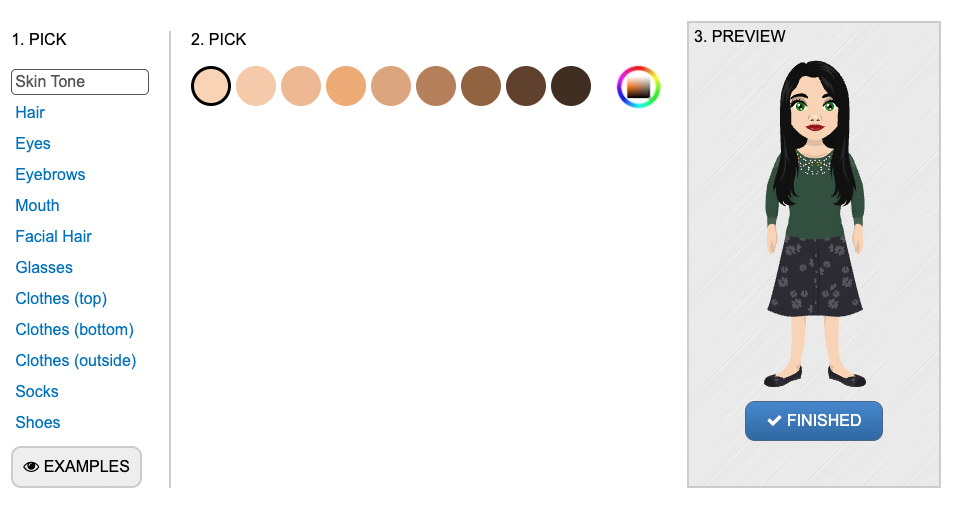
Visual. To make illustrating books easier, StoryJumper allows students to design their own characters who look like people in their own lives (see below). Students can also use illustrations from StoryJumper’s art library or upload their own drawings or photos. These options make learning more authentic and empower students to create and share their own stories, helping them connect with classmates & teachers and build self-awareness and social awareness skills.
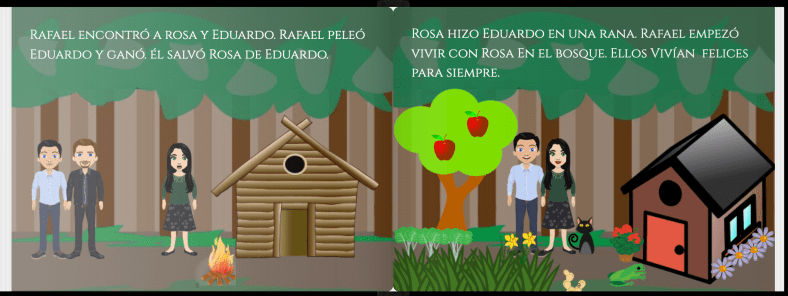
Voice. When a student records their voice narration within their books that they choose to share, other students can hear the author’s excitement and more deeply connect with them (see below). There are also options to add background music and sound effects that further bring students’ stories to life.
Text. Text can be entered in many different languages and styled with a variety of fonts. Students can also initially write their stories in Google Docs and then copy and paste their text into StoryJumper, which will auto-paginate the text across several book pages.

Authentic Learning through StoryJumper

Creating StoryJumper books with an authentic purpose (such as publishing their book) makes students more engaged in learning, boosting their academic progress. When students know that their work will be published as a “real” book and they have the option to share it with other students, they’re much more likely to put in their best work.

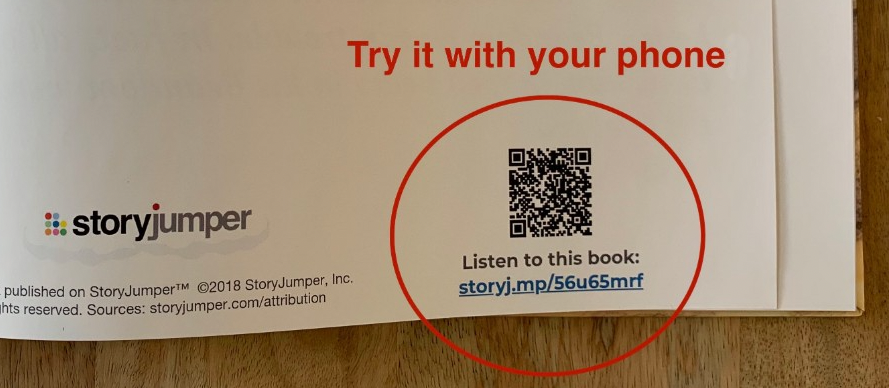
Teachers can also showcase outstanding student books to the rest of the school by printing out the StoryJumper QR codes for those books (see below) and posting them outside the classroom. Other students can scan the QR code using their device, read and listen to the outstanding book, and give positive feedback to the student author, boosting their confidence.
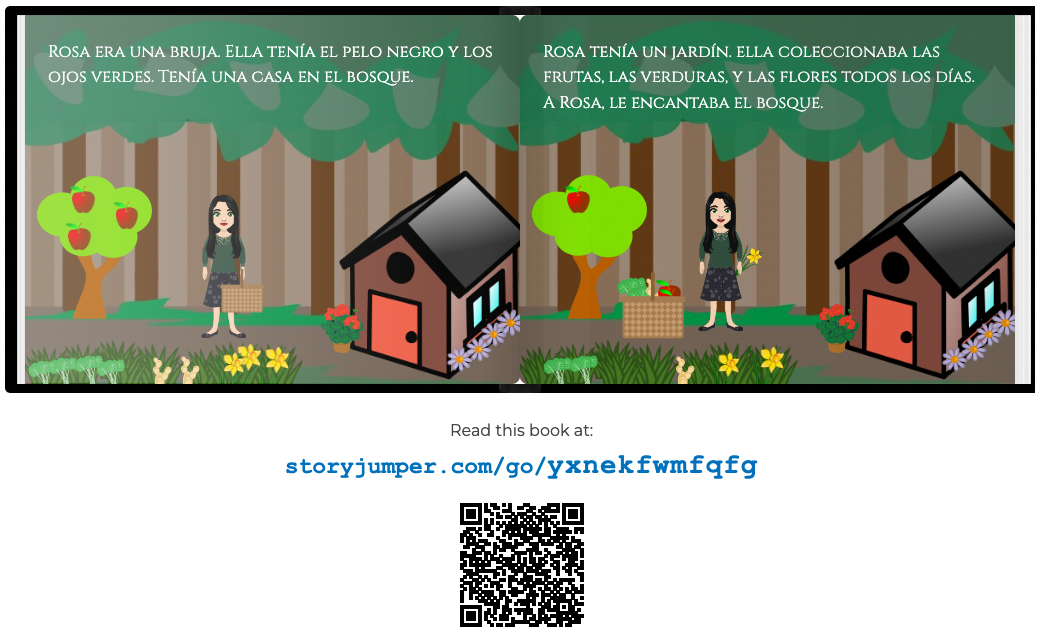
In my Spanish III class, students really enjoyed creating stories with StoryJumper. Being able to design characters and collaborate on a book boosted engagement in my classroom. My students increased their retention of content because they were able to work with classmates and build SEL skills while using a tool like StoryJumper that sparks curiosity and creativity in learning. It was fun seeing what they created and then having time to read each other’s stories made it even more meaningful.

Easy to Get Started with StoryJumper

Teachers can quickly get started with StoryJumper by leveraging the lesson plans and writing project ideas available. You can create template books to help students finish their books faster and import your Google Classroom classes to make class setup faster.

Students can also get started quickly with StoryJumper. Once they log into their accounts, students find that it’s easier to write with multimodal creation options (compared with a typical text editor), helping them write with more confidence and less hesitation.

Students can find props/scenes and upload their own images right into their books. As a language teacher, providing ways for my students to also build speaking skills is important. With the voice recording option, StoryJumper made it easy for my students to narrate their stories and build confidence in speaking through their writing.

Regaining Some of the Time Lost

If we need to reteach some of the content and help students to master their academic and SEL skills, using resources like StoryJumper will provide something that meets every student’s interests and needs. With StoryJumper, teachers are able to create more excitement for learning​ ​and better understand student needs​.​

Learn more about how StoryJumper helps to improve social behavior. Explore the Teacher’s Guide and StoryJumper Library to see examples of what’s possible. Choose inspirational stories that help students to build confidence. Get started with a writing lesson plan and see what students create and how it boosts their learning experience!

Head to StoryJumper today!

**Interested in writing a guest blog for my site? Would love to share your ideas! Submit your post here. Looking for a new book to read? Find these available at bit.ly/Pothbooks
************ Also check out my THRIVEinEDU Podcast Here!

Join my weekly show on Fridays at 6pm ET THRIVEinEDU on Facebook. Join the group here.

Becoming the Change

Let All Things Take Their Course

Guest post via Dan Wolfe Becoming The Change  Self-Management  

“Let your mind wander in the pure and simple. Be one with the infinite. Let all things take their course.”

-Chuanng Tzu

Often times we want to be in control of everything: our thoughts, dreams, and desires. However as Chuanng Tzu points out in today’s quote sometimes it’s okay to let go of our thoughts and let our minds wander. As they say, nature has a way of letting all things take their course. By no means is this an easy task because for most of us it is very difficult to have our brains shut off, even when we go to sleep. We just need to remind ourselves that it is ok to do so. It isn’t like we relinquish control we will never get it back. We will. Sometimes all we need to do is just step back and let things ride as it pertains to our minds. It is a good way to recharge ourselves too.

What does this quote mean to you and how can you apply today’s message towards managing yourself better?

A Centered Life
Becoming The Change Self-Awareness
“A centered life is one that is grounded in your core values rather than changing based on the most recent trend, compliment, or outside expectation.”

-Dr. Thema Bryant

If you heard the phrase “a centered life” what comes to mind? Someone that is focused? Someone who is locked in on their lives? Self-aware? All of these would be correct. As Dr. Thema Bryant points out in today’s quote a centered life means we are grounded. In other words, we don’t let our hopes and dreams lose sight of what is right in front of us. It serves as a sort of reality check. She mentions core values. This is your moral fiber essentially. It is the hill you are willing to die on for what it is you believe in and stand for.

When we are grounded in these core values no amount of persuasion such as keeping up with Joneses, what someone says about you (whether it is positive or negative), or even beyond the realm of what it is possible can sway your thinking. Why? Because you are focused on the here and now and understand if things don’t align with your own core values then it isn’t worth your attention in the first place.

What does this quote mean to you and how can you apply today’s message toward improving your self-awareness?

Learn about Dan’s book via Amazon and Follow Dan on Twitter @ServLeadInspire

**Interested in writing a guest blog for my site? Would love to share your ideas! Submit your post here. Looking for a new book to read? Find these available at bit.ly/Pothbooks

************ Also check out my THRIVEinEDU Podcast Here!

Join my weekly show on Mondays and Fridays at 6pm or 6:30 pm ET THRIVEinEDU on Facebook. Join the group here

Creativity: A Skill We All Need to Foster and Protect

 by laura steinbrink,

Believe it or not, and I am constantly surprised by the number of educators who don’t believe it, the research is clear on all of the ways that students’ success, creativity, and growth are harmed by extrinsic motivators. This leaves many educators, including my research partner, Kristy Graber, and me, searching for ways to eliminate rewards while equipping students with the gear needed to strengthen these areas. This can be especially challenging considering how prevalent rewards are in daily life. Here is the last portion of our research paper that I have condensed into a blog post.

SHE’S GOT A SMILE THAT IT SEEMS TO ME

Creative thinking is not just for the arts, though fine arts classes and programs in schools are generally safe havens of creativity. Rather, all grade levels and content areas need to be welcoming ports for creative thinking. One way in which teachers can create these ports and safe havens is by teaching “perseverance in the face of obstacles and moderate risk-taking” (Sternberg and Lubart, p. 231). These two attributes will carry students forward in life and help them strive for success, even when they may not be rewarded for their attempts or accomplishments. Ideally, students will come to realize that creative thinking often leads to problem-solving, and problem-solving leads to student success and self-confidence.

REMINDS ME OF CHILDHOOD MEMORIES

Kohn also discussed ways to foster intrinsic motivation, a critical component of creativity. He offers five recommendations to improve students’ motivation; allow for active learning, give the reason for an assignment, elicit their curiosity, set an example, and welcome mistakes, thus encouraging moderate risk-taking (2018, pp. 211-212). By following these guidelines, students should become more interested in their education and hopefully find greater intrinsic motivation for learning, leading to more creative performance. Kohn also claimed that educators do not need to try to motivate students using extrinsic motivators, “Given an environment in which they don’t feel controlled and in which they are encouraged to think about what they are doing (rather than how well they are doing it), students of any age will generally exhibit an abundance of motivation and a healthy appetite for challenge” (p. 199). Incorporating collaboration, content, and choice into pedagogy is what Kohn offers educators as a substitute for rewards. In fact, Kohn states that choice, above all else, is necessary to promote intrinsic motivation (p. 252), and therefore also creativity.

WHERE EVERYTHING WAS AS FRESH AS THE BRIGHT BLUE SKY

The importance of student voice and choice is not new to educators, and research supports it. Similar to Kohn, Pink recommends teachers provide students with autonomy in task, time, technique, and team to allow for increased intrinsic motivation (Pink, p. 92). Pink elaborated on Ryan and Deci’s description of autonomy as ”acting with choice” when he noted that “A sense of autonomy has a powerful effect on individual performance and attitude” (p. 88). By embedding these components into their pedagogy, teachers will help students find greater intrinsic interest in their learning, which will support their creative thinking and performance.

NOW AND THEN WHEN I SEE HER FACE

While research has made it clear that the effects of extrinsic motivation are harmful to the creativity of students, however, as we also discovered, there is no easy answer to the one best way to combat the damaging effects rewards have on student creativity. And to make matters more difficult for teachers who are trying to foster creativity and intrinsic motivation in their students, there are other barricades that teachers face daily. Problems quickly arise due to practices of reward systems that are implemented building-wide or baring that, the reward practices of the teacher just down the hall or in the next classroom.

SHE TAKES ME AWAY TO THAT SPECIAL PLACE

One big one that is outside the control of teachers, for the most part, is the reward-based programs such as the Positive Behavior Intervention System (PBIS), which is used by many districts in the United States. While dealing with these programs can be challenging for teachers as they work to decrease the use of rewards within their own classroom, it is achievable. Kampylis and Berki introduce creative thinking to educators as, “the thinking that enables students to apply their imagination to generating ideas, questions and hypotheses, experimenting with alternatives, and to evaluating their own and their peers’ ideas, final products and processes” (2014, p. 6). Thinking of it in these terms may help teachers build creative capacity within their students. There are other barriers besides school-wide reward systems and the teacher down the hall. Teacher turnover can also play a role in this inability to provide students with a stable learning environment that promotes creative thinking as well. We also must reconcile with the fact that rewards are relatively cheap and easy to implement, so finding the time and energy to plan, create, and implement activities and systems to promote creative thinking and nurture student intrinsic motivation can be difficult for teachers, especially as we navigate through the pandemic. The teacher shortage has only complicated this problem further since positions are more frequently filled by long-term subs or unqualified applicants who may rely on rewards to survive the year or as they learn classroom management and work toward certification.

AND IF I STARE TOO LONG, I’D PROBABLY BREAK DOWN AND CRY

In fact, the sustainability of student creativity is now and long has been a battleground in education. The problem stems from the fact that even though there is ample evidence that shows the importance of creative thinking (e.g. Hennessey, 2002; Sternberg and Lubart, 1993; Eisenberger & Shanock, 2003; Lepper, Corpus & Iyengar), teachers regularly rely on practices, like rewards, that hinder student creativity. Swanson’s (1995) own research touched on this by noting “Ann Bogianno (Bogianno, 1978), found that teachers and parents accept the notion that offering and withdrawing rewards produces good results, better than any other teaching strategy” (p. 44). Despite that prevailing belief, the research does not lie. After his review of the research literature, Kohn (2018) concluded that “it is simply not possible to bribe people to be creative” (p. 344). As teachers, we know that regardless of how many ways to promote creativity are presented, the fact that rewards show immediate gains will always put the intrinsic and extrinsic motivations at odds unless we find a balance, or in other words, reach Ryan and Deci’s nexus. As Kohn points out, “most studies have found that unexpected rewards are much less destructive than the rewards people are told about beforehand and are deliberately trying to obtain” (p. 53), so the unexpected reward here and there will minimize the destruction of student intrinsic motivation, yet help the teacher who believes strongly in rewards still achieve balance.

WHOA, OH, OH SWEET CHILD O’ MINE

Those who have reached this point of this blog are now more awake to the power of creativity, what can diminish it, and why the world needs it. There is no succinct answer for how to fully cultivate creativity and intrinsic motivation in the classroom and beyond. However, it is good to contemplate the words of the great basketball coach, Phil Jackson, who said, “You can’t force your will on people. If you want them to act differently, you need to inspire them to change themselves” (Jackson, 2013, p. 16). Carrots and sticks do not create the environment that creativity and intrinsic motivation need in order to thrive. Just being aware of the effect rewards have on students and putting in place some of the practices mentioned here will help alleviate the negative effects of rewards on your students, and will also be a giant step forward toward finding that nexus.

PREVIOUS POSTS IN THIS SERIES

Creativity, A Much Needed Skill

Finding the Nexus

HEADINGS USED ARE PARTIAL LYRICS FROM SWEET CHILD OF MINE BY GUNS AND ROSES

Follow Laura on Twitter: @SteinbrinkLaura

**Interested in writing a guest blog for my site? Would love to share your ideas! Submit your post here. Looking for a new book to read? Find these available at bit.ly/Pothbooks

************ Also check out my THRIVEinEDU Podcast Here!

Join my weekly show on Mondays and Fridays at 6pm or 6:30 pm ET THRIVEinEDU on Facebook. Join the group here

Color Me Impressed

Guest blog post via Laura steinbrink,

As I prepared my room for the new school year back in August, I did a lot of thinking about the hallway bulletin board that is under my control. I hate doing bulletin boards, generally speaking. A joke I often make is that I chose to teach high school in order to avoid having to create bulletin board displays. Then a Facebook ad crossed my feed (clearly big tech is reading my mind now ) about buying (for a lot of money) bulletin board-sized color sheets.

ONE WAY, OR ANOTHER, I’M GONNA FIND YA

Hmmm. While I didn’t want to spend over $60, I was intrigued. I discussed my idea for the bulletin board with a colleague, and she suggested I find color sheets online or from a book (I actually have some adult or more complex coloring books), scan or download the pages I want, then email them to the secretary to print on the poster printer in the office, so I did. The secretary was intrigued with my idea also, so she helped me refine my choices for the first three that would be on the board. When selecting the color sheets, it is important to make sure that any material from online sources is free to use and not copyrighted or restricted, so I searched carefully.

This picture was taken right after set up. I adjusted it a bit later to even out the spacing and height alignment.

I’M GONNA GET YA, GET YA, GET YA, GET YA

I envisioned a fun design, a tiger-related one (the school mascot is a tiger), and then a whimsical one. I did my best on the search, sent them to the secretary, and asked her nicely to print 3 vertical large poster-sized color sheets which I evenly-ish spaced on the board. And just like that, hallway magic was born. Well, it took a hot minute for students to realize that the bulletin board message, “Color Me,” actually meant they could color on it. A few staff members were also intrigued, and they wanted to color on it as well. It was decided, however, that the honor for the first coloring should go to the students, so we watched and waited then rejoiced when the first tiny piece of one of my chosen three was colored during the first week of school.

This picture was taken during the second week of school. The tiger was the first to get colored.

ONE WAY, OR ANOTHER, I’M GONNA WIN YA

There are a few negatives to consider when putting up an interactive bulletin board display like this one. Be prepared for the possibility that some students will draw or write something inappropriate on it. That hasn’t happened yet on mine, but when it does, I have my black Sharpie ready. Another drawback is that students are sneaking in a coloring moment on the way to or from the bathrooms during instructional time, and they could take too long when coloring during passing periods, causing them to be tardy to class. We have a lot of students stay after school for various clubs and tutoring, so I have noticed that the bulk of coloring is done during that time. So far I have not experienced any negatives, but I am aware and prepared for them. Those possible negatives did not prevent me from trying this. As George Couros, learner, author, and keynote speaker reminds us,

I’M GONNA GET YA, GET YA, GET YA, GET YA

So prepare but push forward with ideas for interactive bulletin boards. To have an impact, the content needs to stay fresh or people in general, students in this case, stop looking at it. The idea for a coloring bulletin board is to allow students to relax and enjoy creating something fun and beautiful that can be enjoyed by many. Coloring is a fun way to de-stress for a few minutes, and that positive should definitely be so loud that the negatives are all but silent. I believe the best surprise from creating this type of bulletin board is how many teachers and paraprofessionals have been coloring here and there also. That is an impact that goes beyond my original idea, though the company advertising for bulletin board-sized coloring sheets did show their product in offices and hospitals too, so I should not have been surprised when a teacher confessed to coloring a tiny part, or when a para told me she had brought in more colored pencils so that she could have options when she colored on it.

This picture was taken during the 6th week of school.

ONE WAY, OR ANOTHER, I’M GONNA SEE YA

As interactive bulletin boards go, this is a winner. Once a color sheet is finished, I will laminate it and hang it in the hallway. Low prep with a high yield is something that I am always looking for and embracing when I find it, and when I find it, I share it. Already tried this? Great! Tag me on Twitter at @SteinbrinkLaura and share out your Color Me board.

SECTION HEADINGS ARE PARTIAL LYRICS FROM ONE WAY OR ANOTHER BY BLONDIE.

**Interested in writing a guest blog for my site? Would love to share your ideas! Submit your post here. Looking for a new book to read? Find these available at bit.ly/Pothbooks

************ Also check out my THRIVEinEDU Podcast Here!

Join my weekly show on Mondays and Fridays at 6pm or 6:30 pm ET THRIVEinEDU on Facebook. Join the group here

Sparking Curiosity for Learning

In collaboration with iBlocksPBL

“You cannot teach today the same way you did yesterday to prepare students for tomorrow.”

John Dewey

In order to best prepare our students, educators need to be comfortable with taking some risks in the classroom. Whether by trying new ideas, embracing new tools, or shifting their role to more of a facilitator, we need to promote more student-driven learning. The benefits are that students are more connected to what they are learning and they become curious about the next steps in their learning journey.

When students are curious about learning, they become more invested in the process. Sparking curiosity will lead students to become problem solvers and critical thinkers and shift from being simply consumers to becoming creators and innovators. To bring these opportunities to our classrooms, we must first engage students in learning. But how?

Understanding student engagement

A few years ago, I noticed a decrease in student engagement in my own classroom. I tried a variety of learning activities and tools to offer more choices for my students, however, I did not see much improvement in student engagement. I realized that part of the problem was that I did not fully understand what student engagement meant. By not providing enough choices for my students and promoting more student-driven learning, I was missing some key components that would increase autonomy and motivation for learning.

While students had some choices in the types of projects they would create and the tools they could use, I was not providing open-ended, student-driven learning experiences made possible through methods like project-based learning (PBL). We want to increase student engagement in learning and this happens when students feel a sense of ownership in the learning or control in the choices they make for their learning journey. Without sustained engagement, students will not make significant progress in their learning environment. Once I started to do PBL in my classroom and involved students more in making decisions and driving their learning, student engagement increased and they became more curious about what they were learning.

Boosting Engagement and Curiosity

As educators, it is important to continue to reflect on our practice and make time to learn about student interests. By providing a variety of ways for students to show what they have learned and by using methods like PBL, we will foster student agency, boost engagement and increase student motivation in learning. Students need opportunities to dive into learning experiences that will stretch their thinking and place them in the lead. When we create learning experiences like PBL that will more meaningfully engage students with the content, while moving them from consumers to creators, it increases student engagement and positively impacts student achievement.

The impact of PBL

PBL was the topic of a recent Twitter chat. Educators shared their ideas about the benefits of PBL and the connection between PBL and SEL. Educator Laura Steinbrink said “PBL to me means learning is fun, hands-on, non-traditional, and tailored to each student. It means the learning can get deeper than traditional assignments and become an amazing EXPERIENCE.” Craig Shapiro believes that PBL means “risk taking – collaboration – socialization – mentoring.”

Through PBL, students find out about themselves and their interests. They invest more in and become curious about what they are learning and where they will go next on their learning journey.

Lynnae Ryberg sees many benefits from PBL. “PBL means giving students a different medium to show what they know. Not all students are great at tests, but they know the content. Offering them another avenue to show their mastery allows for confidence, critical thinking, and engagement.” These are skills that we want our students to build because they will help them to be successful in the future. Rob Abraham finds that “Communication is one of the most important skills in PBL. In standard classrooms, students often sit passively. In PBL activities, students not only communicate with their partners but present to the class.” Students need more active learning experiences that lead to sharing their work with others.

Connecting PBL and SEL

There are so many ways to address SEL in our classrooms. ​​Amy De Friese values the connection between PBL and SEL. She says that through PBL “there will be real-world problem-solving applications in play. Teachable SEL moments = building community, creating avenues for communication, and reacting to challenges.”

Mark Ureel says that we need to “allow PBL to be self-paced and allow for flexibility. A great project can be modified and still achieve its objectives.” For some educators, it can be scary to get started with PBL because it places students in the lead more and it has many moving parts, but it is of tremendous value for learning. As Cori Frede shared, “Since PBL takes students out of their comfort zone, it gives teachers the opportunity to encourage self-monitoring, collaboration, and more.” These are the essential SEL skills that PBL helps students to build.

As educators, PBL can help us learn more about our students’ passions and interests. We should continue finding ways to create unique, authentic, and meaningful opportunities for students to explore their interests in a way that connects them and prepares them for whatever they decide to do in the future. Use a hook, try a new method, do something completely different than what you have been doing, or ask students for their ideas. By cultivating a learning environment where students feel valued and choosing the right tools to facilitate methods like PBL, it will have a positive impact on student learning and foster the development of many essential skills.

iBlocks sparks student curiosity

When students are curious about learning, their motivation increases as they engage more with the content. With iBlocks, students can explore many topics that connect them with real-world learning experiences. The best thing about using iBlocks is that students can engage in learning that is authentic, meaningful, and personalized for them. Teachers can use this to start conversations with students to help them to develop self-awareness and self-management skills.

Teaching the content is important, but finding ways to spark student curiosity for learning is also important. With iBlocks, students have what they need to explore topics of interest, to design their learning journey, and use their student workbook as a space to gather their thoughts, add reflections, and share brainstorming of their work.

Using the different iBlocks, there are options for students in areas that match their interests. Students will enjoy creating, and sharing and will become increasingly curious about other interests and different perspectives. With these learning tools and PBL, educator Melody McAllister says that “learning is real, it sticks, & will be something students remember the most when they look back. It also creates skills they need for life & career!”

We must continue to look for innovative and student-driven activities to best prepare them for the future. How do we help students to develop an appreciation of the process of learning itself? We foster independent, student-driven learning through PBL. Because PBL is an iterative process, students will shift their focus to the process of learning itself rather than on the number of points they need to get a certain grade or a well-defined, specific final product. With the right methods and tools, students have the opportunity to design problems to solve, explore curiosities and passions, and as a result, focus more on the process of learning.

Learn more about iBlocks and don’t miss my upcoming webinar “Ten Strategies to Support Teachers as Designers of Active Learning” on Thursday, November 10th at 3:30 p.m. ET via OTIS. Sign up here: OTIS Webinar.

About the Author

Rachelle Dené Poth is an ed-tech consultant, presenter, attorney, author, and teacher. Rachelle teaches Spanish and STEAM: What’s nExT in Emerging Technology at Riverview Junior-Senior High School in Oakmont, PA. Rachelle has a Juris Doctor degree from Duquesne University School of Law and a Master’s in Instructional Technology. She is a Consultant and Speaker, owner of ThriveinEDU LLC Consulting. She is an ISTE Certified Educator and currently serves as the past -president of the ISTE Teacher Education Network and on the Leadership team of the Mobile Learning Network. At ISTE19, she received the Making IT Happen Award and a Presidential Gold Award for volunteer service to education. She is also a Buncee Ambassador, Nearpod PioNear, and Microsoft Innovative Educator Expert.

Rachelle is the author of seven books and is a blogger for Getting Smart, Defined Learning, and NEO LMS. Follow Rachelle on Twitter @Rdene915 and Instagram @Rdene915. Rachelle has a podcast, ThriveinEDU https://anchor.fm/rdene915.

**Interested in writing a guest blog for my site? Would love to share your ideas! Submit your post here. Looking for a new book to read? Find these available at bit.ly/Pothbooks

************ Also check out my THRIVEinEDU Podcast Here!

Join our weekly show on Fridays at 6pm ET THRIVEinEDU on Facebook. Join the group here.
Practical Tips For How Teachers Can Avoid Burnout

In collaboration with @Pikmykid

The past couple of years have been challenging for everyone, but especially teachers. So it’s not surprising that a recent study found that 52% of K-12 teachers reported feeling burnt out. With so much happening and extra burdens on our time, it is more important than ever to focus on ways to make time for self-care.

In this article we will talk about the symptoms of teacher burnout, how it affects both the teacher and students, and ideas for avoiding (or recovering from) teacher burnout.

Symptoms of teacher burnout

Especially in a new school year, we want to be available for our students and their families. But, if we do not set boundaries and make ourselves seemingly available 24 hours a day every day of the week, it will lead to teacher burnout.

The challenges and trying to do all the things can quickly lead to exhaustion, frustration, and potentially, burnout for educators.

Signs that you might be suffering from or on the brink of teacher burnout are:

You have the feeling of dread when thinking about going to work, like Sunday scaries to the extreme, which is likely an obvious sign you are burnt out. There are other less obvious signs you are well on your way there, however.

These signs look different for each person, but common signs of teacher burnout include:

  • Exhaustion
  • Frustration
  • Withdrawal
  • Anxiety
  • Anger
  • Agitation
  • Trouble sleeping
  • Feeling a loss of purpose or passion

How does teacher burnout affect students and others around us?

Impact on personal lives

As educators, we have a great deal of responsibility when it comes to focusing on student wellness and also for checking in on our colleagues. The experiences we go through each day can weigh heavily on us emotionally, mentally, and physically, which can lead to burnout.

More than just impacting our professional lives, burnout will negatively impact our personal lives, as well. These impacts could be poor physical health, declining mental health, strained relationships, isolation, lack of overall happiness, and more.

Therefore, we need to have the right strategies in place to deal with the impact of these daily challenges and also model these coping strategies for our students.

Impact to students

As teachers, we spend almost 200 days a year with our students each school year. All this time with them makes a large impact on their learned behaviors from the actions they see from us.

Demonstrating how to successfully manage our time, create boundaries, and maintain good mental and physical health is equally as important to teach our students as the other subjects we specialize in. These skills are critical learnings students will take with them into adulthood.

Teacher burnout prevention

We know the importance of self-care and wellness and so we have to find something that works for us and also enables us to provide our best selves for our families, friends, colleagues, and students.

When faced with challenges, uncertainties, or too many things on our plate, it can be difficult to take the break we need and focus on our well-being. But, if we don’t start with ourselves, we will not be well-prepared to provide the support that our students need. To prepare, it is important that we start with SEL.

SEL is essential

When facing challenges, managing emotions and being comfortable asking for help when we need it are essential skills for everyone. Both in our professional and personal lives, our well-being can have an impact on everyone that we interact with.

When we start with our own mental health and wellness, then we can bring our best selves to everyone that we are connecting with. What better time than the start of a new school year!

As we are just beginning the new school year, we should be intentional about finding ways to focus on our well-being and also involve our students in meaningful learning opportunities to really understand what they are experiencing. We can focus on SEL together.

How can we check in on one another as we enter a new school year, which brings a lot of demands on teachers, students, and families?

Each school has new initiatives, procedures, school events, and many wonderful experiences, but they can also be overwhelming and taxing on us physically, mentally, and emotionally.

Ideas for how teachers can avoid burnout

As we start a new school year and face new challenges, and deal with changing schedules and demands on our time, we need to have a plan in place that works for us.

Creating a new daily routine or even using an app that will help us to take a break, to engage in mindfulness practices, or to focus on our own social-emotional learning and our health and wellness is so important.

Mindfulness apps There are several different apps that can be used to help with mindfulness and setting aside time each day to take a break and reflect. Calm App includes breathing exercises and has categories for music, sleep, and body to find meditations and relaxing exercises. JabuMind has a 10-week wellness series for educators that features iRest tools. There are meditations for starting your day, break time, releasing your day, bedtime, and the weekend.

Exercise. Be active. It is so important to break away from screen time and work and be active. My advice is to pick two points in your day where you will hold yourself accountable for something. Maybe it is going for an early morning or late evening walk. Maybe it is taking a walk around the school building to connect with students and colleagues. Either way, it is great to get up and moving.

Reading. A good friend of mine often talks about the books that she is reading and how she chooses books that are not focused on education or anything related to work. One idea is also to decide to listen to a book instead while taking a walk and doubling up on your self-care.

Be okay with saying no. Sometimes it can feel easier to say yes to an extra responsibility, project or even a small task. It can be uncomfortable to say no, but we have to balance our days and sometimes we need to limit ourselves to avoid burnout.

Set boundaries. It is important to set some boundaries and even goals for ourselves. If we keep ourselves connected a lot, perhaps it means leaving our devices in another room for a period of time. Another idea is to not respond to emails after a certain point in the day, or reserve a specific day each week that is time for our family, and friends and focus on ourselves.

Leverage tech to save time. Take a look at your daily tasks and see if there’s something that consistently takes up your time – like school dismissal. Then research and ask colleagues any technology they leverage to streamline those tasks.

Taking care of ourselves is important so that we can best care for others. We can also share these ideas with our students depending on their age and model the practice of taking breaks or making time for meditation or mindfulness.

Looking for ways to save daily time at dismissal while making school safer? Check out how Pikmykid helps teachers save time, frustration, and stress. See the benefits for teachers!

Meet the Authors

Rachelle Dené Poth is an ed-tech consultant, presenter, attorney, author, and teacher. Rachelle teaches Spanish and STEAM: What’s nExT in Emerging Technology at Riverview Junior-Senior High School in Oakmont, PA. Rachelle has a Juris Doctor degree from Duquesne University School of Law and a Master’s in Instructional Technology. She is a Consultant and Speaker, owner of ThriveinEDU LLC Consulting. She is an ISTE Certified Educator and currently serves as the past -president of the ISTE Teacher Education Network and on the Leadership team of the Mobile Learning Network. At ISTE19, she received the Making IT Happen Award and a Presidential Gold Award for volunteer service to education. She is also a Buncee Ambassador, Nearpod PioNear, and Microsoft Innovative Educator Expert.

Rachelle is the author of seven books and is a blogger for Getting Smart, Defined Learning, and NEO LMS. Follow Rachelle on Twitter @Rdene915 and Instagram @Rdene915. Rachelle has a podcast, ThriveinEDU https://anchor.fm/rdene915.

In collaboration with Pikmykid

**Interested in writing a guest blog for my site? Would love to share your ideas! Submit your post here. Looking for a new book to read? Find these available at bit.ly/Pothbooks

************ Also check out my THRIVEinEDU Podcast Here!

Join my weekly show on Fridays at 6pm or 6:30 pm ET THRIVEinEDU on Facebook. Join the group here

Change Your Bat Angle

Guest post by Brian Kulak

K-5 Principal at Tatem Elementary School in NJ

@Bkulak11

Brian’s Book: Level Up Leadership: Advance Your EduGame

Read this blog long enough and you’ll realize how obsessed I am with baseball. Inevitably there will be posts devoted to baseball, anecdotes will center around baseball, and metaphors will be drawn from baseball.

Barguments often focus on which sport is the most difficult to play, the most demanding physically and mentally, the most failure heavy. As a lover of all sports, I can appreciate that an argument can be made for each of the four major sports: baseball, basketball, football, and hockey but, to me, there’s really only one answer.

Baseball.

Because of the physics (round ball, round bat), the variables (pitcher, weather), and the psychology (streaks, slumps), there is nothing more difficult than hitting a baseball consistently. A monster game at the plate can just as easily be followed by a soul-crushing slump of weeks, or months, the time in between at-bats seeming equal parts interminable and immediate as you perseverate on what went wrong.

As a 41-year-old weekend warrior, I only get a chance to play games on Sunday mornings. While my preparation for each game often dictates some midweek tee work or live batting practice, I’m still only playing once a week. Admittedly, I take baseball too seriously, but part of me doesn’t apologize for that because I don’t understand why folks would set out to do anything poorly, so I want to play as well as I can each week.

A few years ago I suffered through my worst season ever, and I’m including my high school playing days, during which I hit a paltry .179. During that summer, getting on base was such an anomaly that I could recall when I did reach base because it was only a handful of times. That ain’t good.

Deflated but undaunted, I continued to work that offseason because I was not going to return to my team the same player. At one point, I sent a video of myself taking swings off the tee to a friend of mine who is a hitting tactician. In seconds, he responded with a diagnosis and, ultimately, saved my swing.

“Dude, look at how far you’re wrapping the bat around your head. Change the bat angle to 1 o’clock before you load, and you’ll be quicker to the ball.”

Change. Your. Bat. Angle.

No amount of work on my own would have led me to that conclusion because, though I would have been working hard, I would have been working incorrectly. There was no way for me to self-diagnose my own flaw, so I had to ask for help.

Now, I “change my bat angle” all the time.

When I’m struggling with a certain colleague, I change my bat angle.

When I’m trying to convince my five-year-old that he can, in fact, put on his own socks, I change my bat angle.

When my early morning writing process stalls, I change my bat angle.

As you approach the upcoming school year, I challenge you to change your bat angle. Reflect intentionally on that which you have done the same way each year and change it.

  • Experiment with flexible seating and let the kids help you design the classroom’s layout
  • Revolutionize your “Back to School Night” by asking parents to leave their kids a video via Flipgrid
  • Reframe your instructional walkthroughs to focus on the kids, even a specific kid, in each room, and then write those kids a note of appreciation
  • Flip and hang old posters and allow kids to recreate them using their own words and images
  • Print, laminate, and hang Tweets or blog post excerpts about which you want your staff and students to think
  • Use a mobile desk so you’re in the hallways more and in your office less
  • Take time for yourself each day, even if it’s five minutes of nothing but sitting and breathing

Baseball is a game of failure, and in many ways, so is education. In each, the best players make adjustments all the time in order to best help their team. In each, those who refuse to make adjustments all the time don’t often have teams for long.

Change your bat angle.

**Interested in writing a guest blog for my site? Would love to share your ideas! Submit your post here. Looking for a new book to read? Find these available at bit.ly/Pothbooks

************ Also check out my THRIVEinEDU Podcast Here!

Join my weekly show on Mondays and Fridays at 6pm or 6:30 pm ET THRIVEinEDU on Facebook. Join the group here

5 Resources that help students become digital citizens

By Rachelle Dené Poth

October has become the month where educators participate in events focused on digital citizenship. However, the focus on digital citizenship is not only relevant during October — it’s important throughout the entire year. With so much use of technology, especially during the past school year, we need to make sure that we are helping students to build digital citizenship skills in our classrooms.


With so many students interacting and having access to social media and digital tools, they need to develop the right skills to navigate these spaces and be prepared to deal with any challenges or barriers that may arise. According to Pew research, some students expressed feeling overwhelmed due to the pressure that can come from social media, while others experienced positive outcomes such as strengthening friendships and developing a greater understanding of diverse perspectives and backgrounds.

We need to create opportunities for students to become more digitally aware and literate, and to be responsible when using technology. There are many ways to do this, depending on our content area and grade level. We can model best practices for our students, bring in a specific digital citizenship curriculum to guide them through their learning, or use digital tools and resources available to have students explore and create.

Helping students learn to safely navigate what has become a highly digital world is something that we are all responsible for. Students need to be aware of the impact of their posts online, how to create and manage social accounts and protect their information, and how to properly access and use resources they obtain through technology.

5 resources to explore

In my experience, I started by joining one of the October events and limited our focus on digital citizenship to that one day. However, for the past few years, I’ve been starting each new school year with a focus on digital citizenship and continue working on it throughout the year. I believe that it’s important to start with a discussion about interactions and what some of the challenges might be when it comes to using technology and our interactions.

In my eighth-grade STEAM class, we discuss each of the nine elements following the outline and the resources provided in the book Digital Citizenship 9 Elements by Mike Ribble. We have used the following resources in our class and, as an added activity, students choose one of the nine elements and create sketch notes that we display in the hall for the school community to learn about digital citizenship.


Here are five resources for teaching about digital citizenship:

  1. 21 Things 4 Teachers provides teachers with 21 different topics aimed at helping students to develop the technology skills they need for the digital world. There are learning activities and assignments for students to complete at their own pace. It also offers professional development through ten-hour self-paced learning modules which connect curriculum with technology and best instructional strategies. Students can learn about online safety and specific technology topics through activities, videos, and quests.
  2. Common Sense Education provides digital citizenship lesson plans to help educators address relevant topics and help students learn how to create their digital lives. There are many lessons available for different grade levels and topics such as media balance and wellbeing, digital footprint and identity, and cyberbullying. Each lesson includes a plan, estimated time, materials needed, and key vocabulary terms, making it easy for educators to get started.
  3. Be Internet Awesome offers a free curriculum that provides everything teachers need for teaching online safety and digital citizenship in the classroom. It has additional resources such as activities, charts, guides, and Google slides. Students can go to “Interland” to play different games to learn more about internet safety and keeping information secure.
  4. Book Creator now has three books on digital citizenship, created in collaboration with Common Sense Education. Students can also create their own books to share what they are learning, collaborate with classmates and build their own digital citizenship skills during the process. Books can include audio, images, text, and video. Have your class create their own Digital Citizenship book to inform others!
  5. Brain Pop has a variety of lessons and topics for educators and students. In the digital citizenship module, there are 16 topics, and one of the free lessons is Digital Etiquette. Students can learn about each topic by playing games, making graphic organizers, learning about primary sources, making a movie, and there are more interactive and personalized options available. Brain Pop has free and premium accounts.
  6. Nearpod has many lessons available for educators to get started quickly, with some lessons focused on digital citizenship. There are short videos that can be used to promote discussion and full lessons that offer a mix of content and activities that boost student engagement and involvement in discussions with their classmates. Nearpod offers more than 380 interactive lessons focused on digital citizenship and literacy.

Beyond using some different apps and websites, I also recommend checking out some blogs and books. A few of the books that I have used in my own classroom include Digital Citizenship in Action by Dr. Kristen Mattson, Digital Citizenship in Schools by Mike Ribble, and Digcit Kids: Lessons Learned Side by Side to Empower Others from Around the World by Dr. Marialice Curran et all. These books offer a wealth of resources for educators who are getting started with teaching about digital citizenship, and they include activities for use in classrooms.

Follow the hashtag #digcit  on Twitter!

**Interested in writing a guest blog for my site? Would love to share your ideas! Submit your post here. Looking for a new book to read? Find these available at bit.ly/Pothbooks

************ Also check out my THRIVEinEDU Podcast Here!

Join my weekly show on Mondays and Fridays at 6pm or 6:30 pm ET THRIVEinEDU on Facebook. Join the group here

Reflective Teaching and Powerful Professional Learning with LessonLoop

Reflective Teaching and Powerful Professional Learning with LessonLoop

Educators are always looking for new ideas to boost student engagement in the classroom. To do so, they need to understand student interests and needs and also be intentional about reflecting on their teaching practice. While teachers want to understand the impact of their instructional methods and tools on students’ learning, they often don’t have time to solicit feedback from individual students, and students are afraid to provide honest feedback when they feel saying the wrong thing could impact their grade. Yet students need to be part of the conversation, because not only is student voice a powerful tool that can be used to engage students in their learning, but student feedback surveys are better predictors of academic growth than principal observation and teacher self-ratings (Hanover Research 2013). 

As Alex Isaacs, an 8th-grade math teacher notes, “LessonLoop allows me to quickly conduct a survey with great questions built-in where I can quickly push this out to my students to better inform my practice.” 

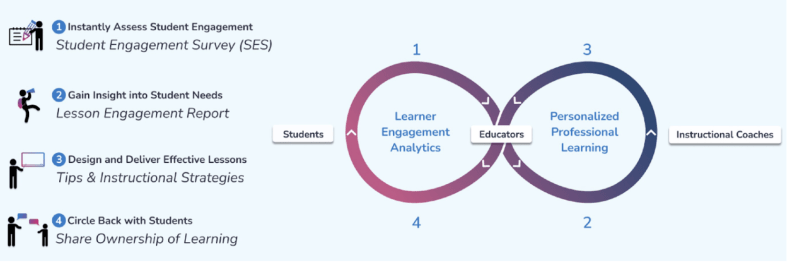
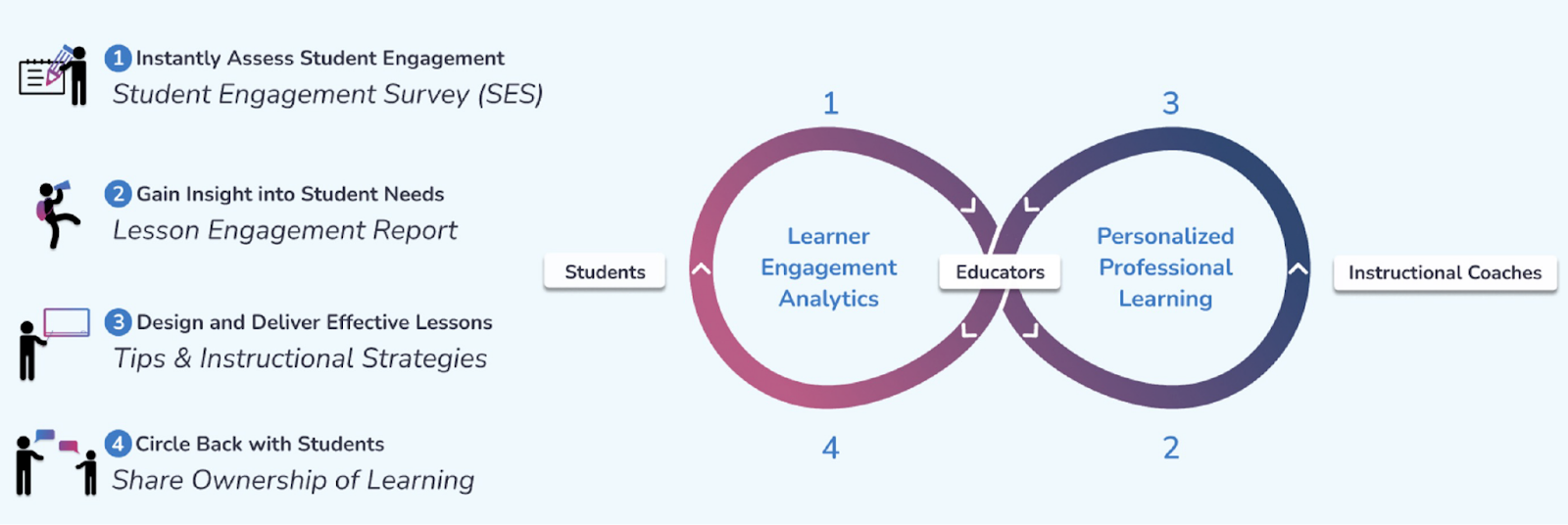
LessonLoop instantly shows you how engaged your students are with a class lesson so you can gain immediate insights and adjust your instruction in real-time to help them learn better. As shown below, LessonLoop works through the four simple steps of:

1. Anonymously survey students, 

2. Review instant actionable lesson engagement reports, 

3. Receive personalized instructional recommendations, 

4. Discuss results with students so learners feel seen and heard. 

How LessonLoop Works

How do the surveys guide teachers about their practice?

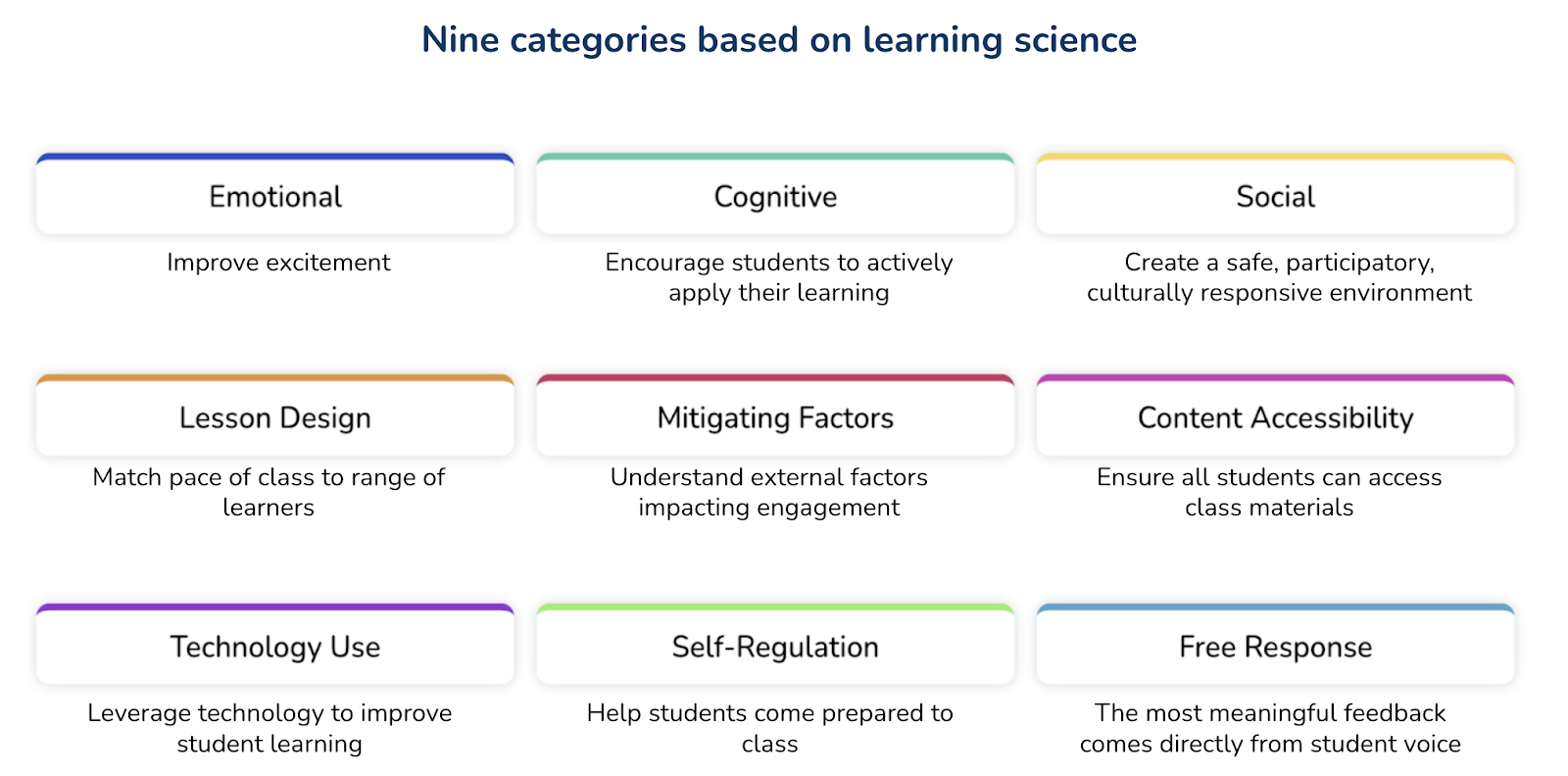
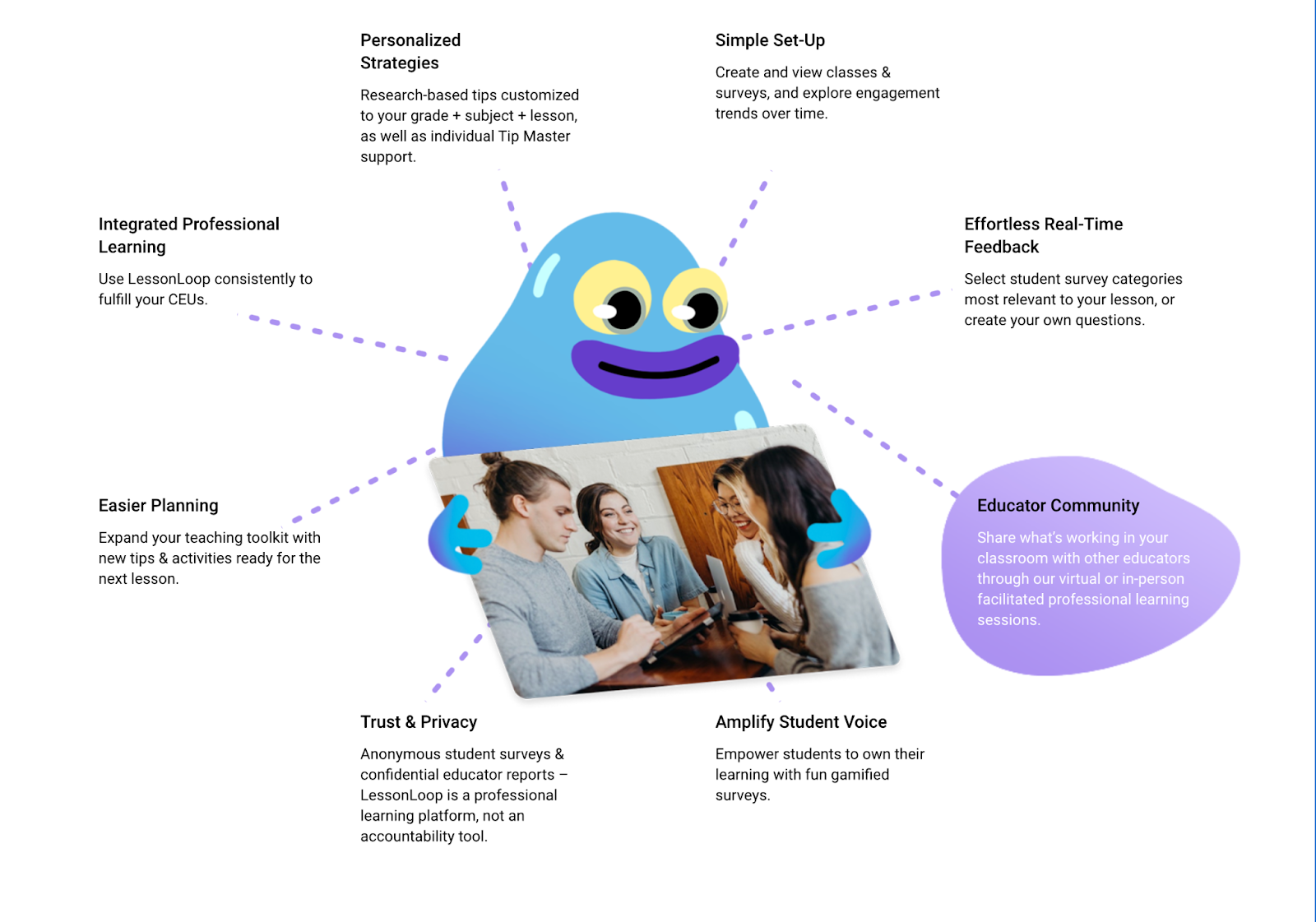
LessonLoop measures student engagement in nine actionable categories (see below) that provide you with insight on how to calibrate your instruction to support active learning at each student’s just-right instructional level. With these categories, teachers have better ways to focus on the specific needs and interests of their students. Especially for social-emotional learning (SEL) and determining student progress in class, the categories and questions provide tremendous insight for teachers with information not easily accessible in any other way. 

With the information the surveys provide, teachers have many ways to evaluate, analyze and then act upon authentic student feedback to improve their practice. Working with LessonLoop’s instructional coaches/Tip Masters, they can explore new methods and tools to help address some of the areas indicated in the survey.

Sample Lesson Engagement Report

What can we learn about student engagement from using LessonLoop?

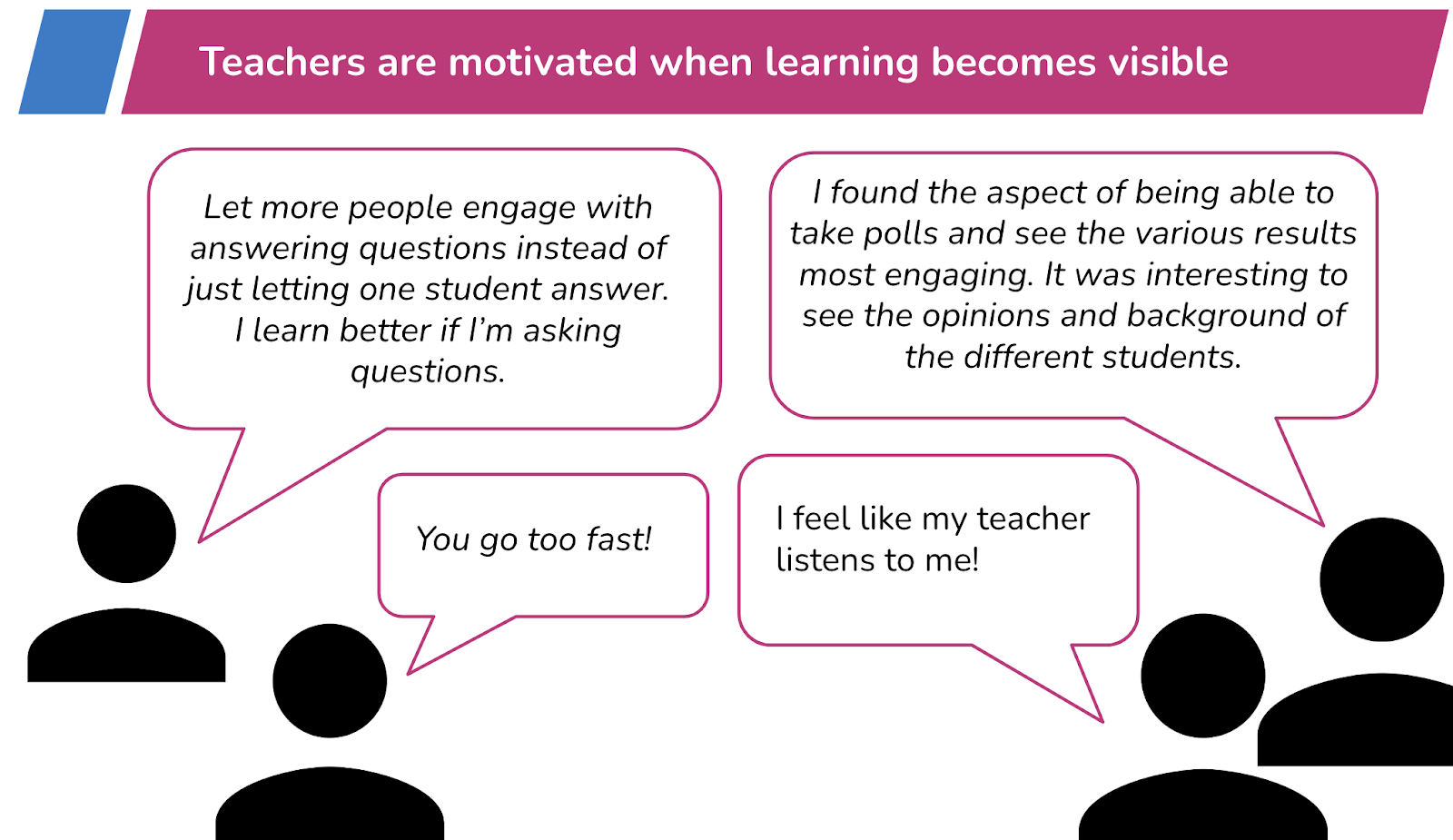
Through lesson embedded feedback, teachers better understand the impact of their instructional strategies and how students experience the learning environment. By reviewing the responses, especially the free responses, teachers receive feedback that promotes reflective practice. Using the survey results, Tip Masters work with each teacher to find strategies and tools that will increase active student learning.

Sample LessonLoop Student Free Responses

How does LessonLoop facilitate getting to know students? 

LessonLoop provides opportunities for every student to share their perspective on their immediate environment and how they are experiencing a lesson. Incorporating student voice allows students to experience a sense of respect and empowerment from their teacher. With LessonLoop, students can provide valuable feedback to their teacher and all feedback is provided through an anonymous survey, which promotes more honest feedback. Students feel comfortable responding to the survey, and because their opinions are heard, they feel more connected to and comfortable in their classroom community. When teachers circle back and discuss how to improve a lesson with students, students feel their voice is impactful and are empowered to take ownership of their learning. Students that feel seen and heard have greater motivation for and engagement in learning because they feel like an impactful member of the classroom community. 

How does the gamification aspect of LessonLoop lead to better and more authentic, honest feedback from students?  

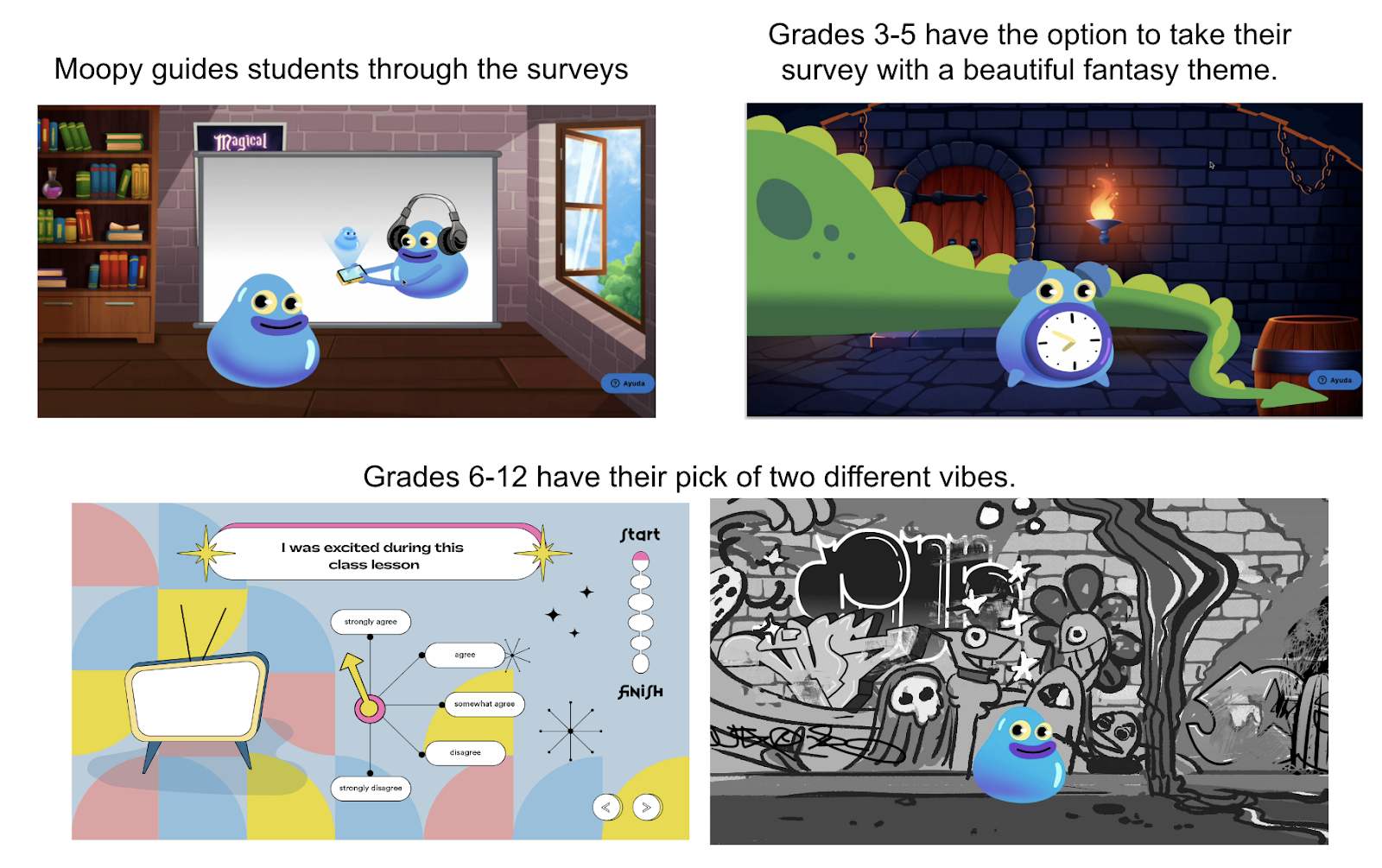
LessonLoop incorporates gamification elements through our fun, animated surveys (see pictures below). According to Dr. Shawn Clybor, “These gamification elements keep students more alert, more active in engagement, and therefore more likely to read the questions and think about their answers.”  LessonLoop is designed to be a robust platform that informs instruction and involves students in their learning experiences. It is also meant to “encourage joyfulness, to be fun, to be funny,” says Clybor.  Using it becomes its own experience, building bonds between teachers and students.

LessonLoop Gamified Surveys

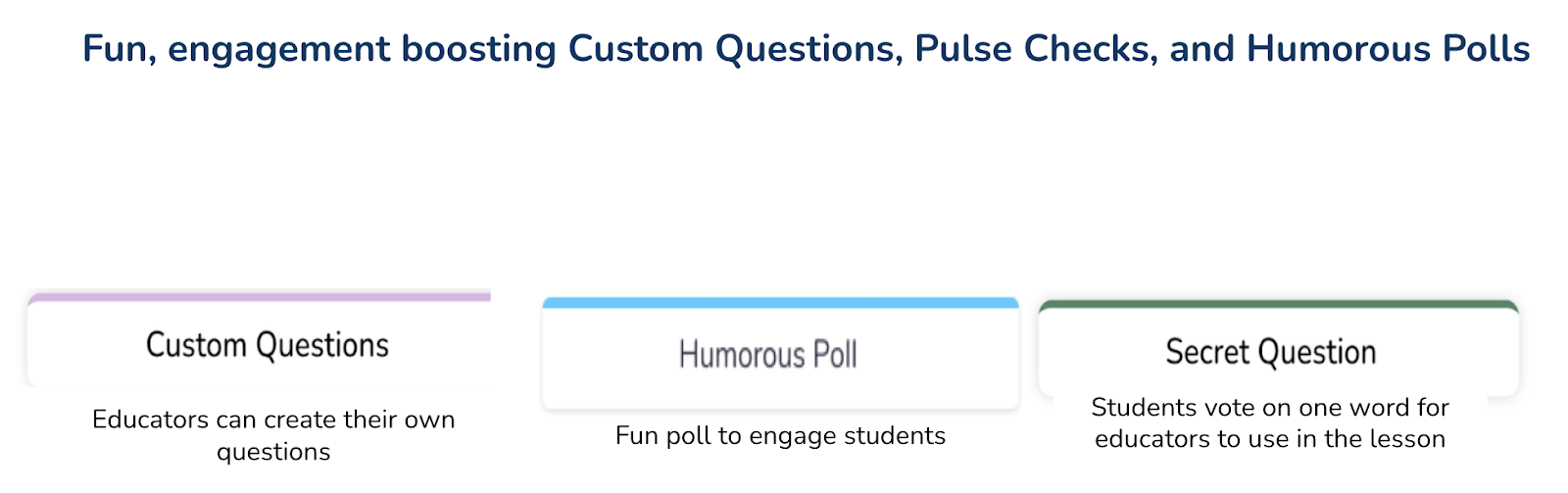
In addition to the gamified surveys, LessonLoop provides educators the ability to ask custom questions and generate two new games (humorous poll and secret word) with one click. These games focus on student engagement at the beginning of class, serve as a pick-me-up if attention is flagging mid-class, or are a fun way to end a student engagement survey.

What professional learning comes with LessonLoop?

LessonLoop provides personalized data-driven professional learning for teachers.  While all teachers have access to a knowledge base of free tips, with a paid tips subscription, every teacher is assigned an experienced Tip Master to help with reviewing their surveys and finding strategies and tools to try. The real-time lesson-embedded feedback helps educators better connect their instruction to students and be more reflective in their practice. Professional Learning Communities (PLCs) also benefit as all teachers receive instructional recommendations from subject-area specialists and coaches! PLCs can be organized around student-centered data for engagement and professional learning. Within the PLCs, teachers can share ideas and provide support to one another which then enhances the learning experience for all students. In addition, educators accumulate continuing education units (CEUs) based on minutes of use of the platform aligned with Learning Forward and/or Charlotte Danielson standards.

What to expect with LessonLoop

So many benefits!

Student Engagement Surveys: 

  • Amplify student voice through anonymous surveys
  • Strong predictor of academic outcomes 
  • Provide missing actionable data on why students aren’t learning 
  • Provide daily feedback on the delivery of the curriculum with a clear focus on social-emotional learning (SEL),  critical thinking and collaboration, and culturally responsive instruction.

We are offering free trials of LessonLoop to educators who provide feedback on our new gamified student surveys. Click here for a free trial!  And if you missed our webinar, here is the link!

Follow Rachelle on Twitter @Rdene915 and on Instagram @Rdene915. Rachelle has a podcast, ThriveinEDU available at https://anchor.fm/rdene915

**Interested in writing a guest blog for my site? Would love to share your ideas! Submit your post here. Looking for a new book to read? Find these available at bit.ly/Pothbooks

************ Also check out my THRIVEinEDU Podcast Here!

Diving into AI with AutoAuto!

In Collaboration with AutoAuto AI

As a language and STEAM educator, I am always looking for new ideas for my classroom. Especially when it comes to exploring emerging technologies, I enjoy diving into new resources and seeing how students respond.

A big area of focus in my eighth-grade STEAM course is artificial intelligence. For any educator thinking about getting started with artificial intelligence in the classroom, but worried about knowing enough or which resources to try, I definitely recommend checking out what is available through AutoAuto AI and their self-driving cars. If you are hesitant to bring STEM to your classroom, AutoAuto AI makes it easy to get started with their teacher on-board training and easy-to-navigate learning platform. Also, their free professional development courses are available where teachers can take a deeper dive and earn an AutoAuto Certificate of Completion.

Why learn about AI?

Many people wonder about the benefits of learning about AI and why bring it into our classrooms? The quick response: We are interacting with AI every day and our students need to understand what it is, how it works, the impact that it has on our lives, and what it might mean for the future of work and education. With resources like AutoAuto, we are able to provide the right learning opportunities that will spark student curiosity and help them to build skills in these emerging technologies. It also helps educators to feel more comfortable starting with AI and being able to support students along the way. We take them from consumers to creators and innovators. With the use of AutoAuto, students develop programming skills and educators can also meet the ISTE Student Standards.

Getting started

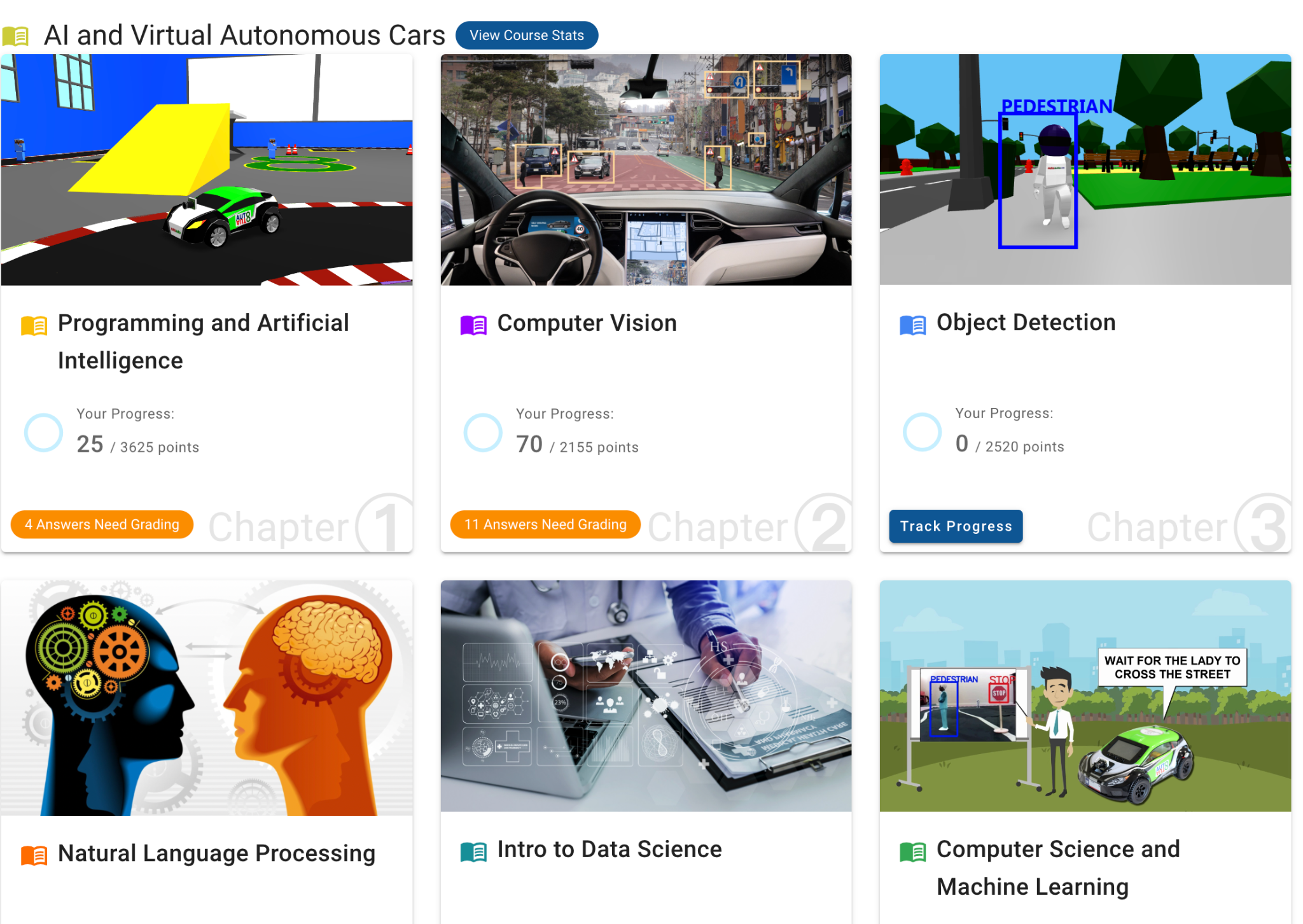
What I think is quite important, is engaging our students in conversations about what AI is and where we see it in the world. What are the benefits and concerns when it comes to AI? For anyone looking for an all-in-one space to get started right away with AI and to have access to videos, rich content, guides and more, AutoAuto AI is a great choice! The lessons include an Intro to Programming and AI, Computer Vision, Natural Language Processing, and more. Students can build skills in many areas and master Python programming.

What makes AutoAuto AI so beneficial, is that teachers are able to enroll students in their classroom and let them get started at their own pace. Being able to see each student’s progress and provide personalized feedback to them through the comments available or typing your own, makes a big difference for student learning. The teacher dashboard is great for seeing how students are working through each of the units. Being in class with students to hear their responses to receiving points and working through challenges was great to experience.

Students working through each unit.

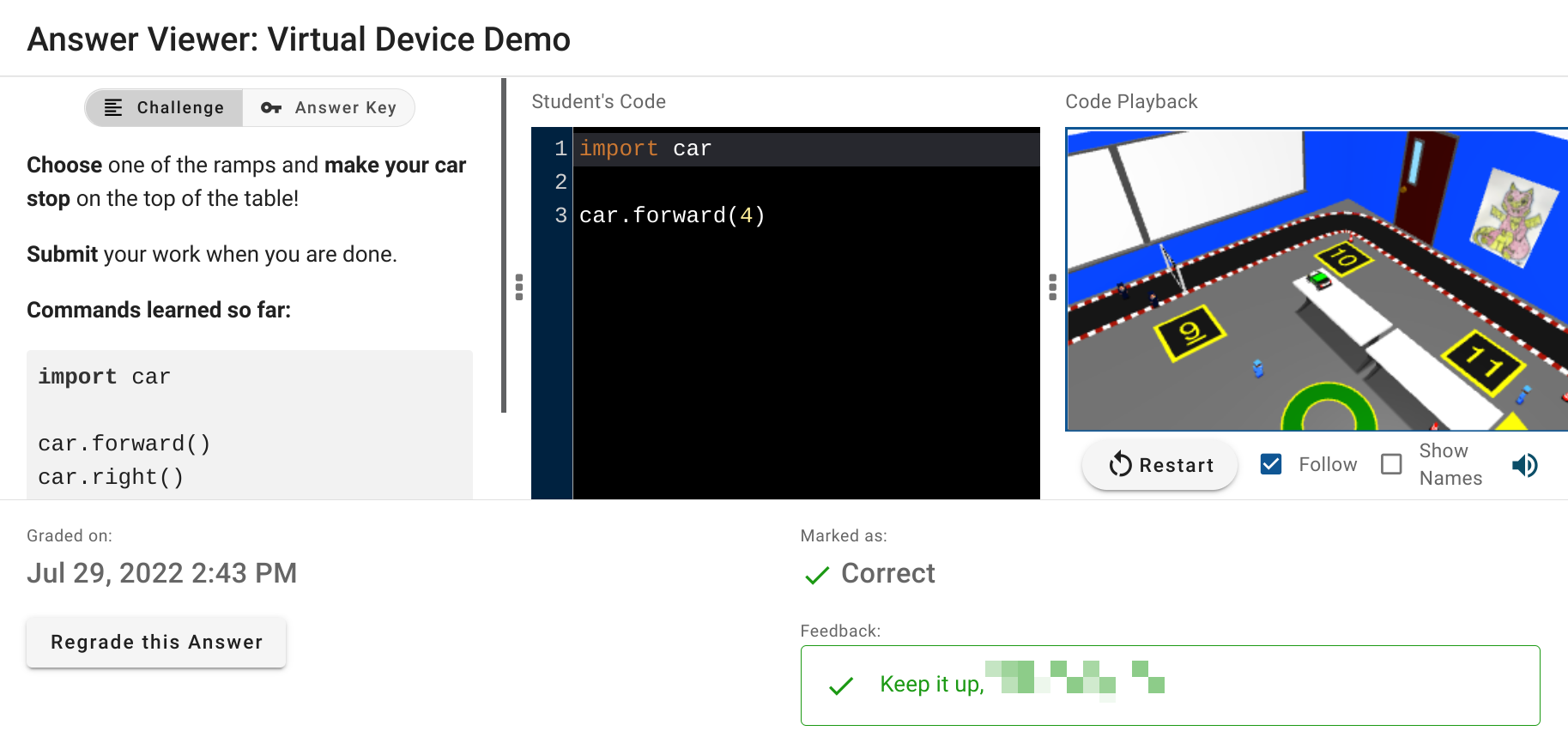
The auto-grading feature is definitely a timesaver and for manually graded lessons the availability of an answer key to review student submissions makes it easy to provide authentic and timely feedback! With some courses moving towards a 100% alignment to CSTA, and other common CS standards, AutoAuto is a great choice for 3rd-12th grades.

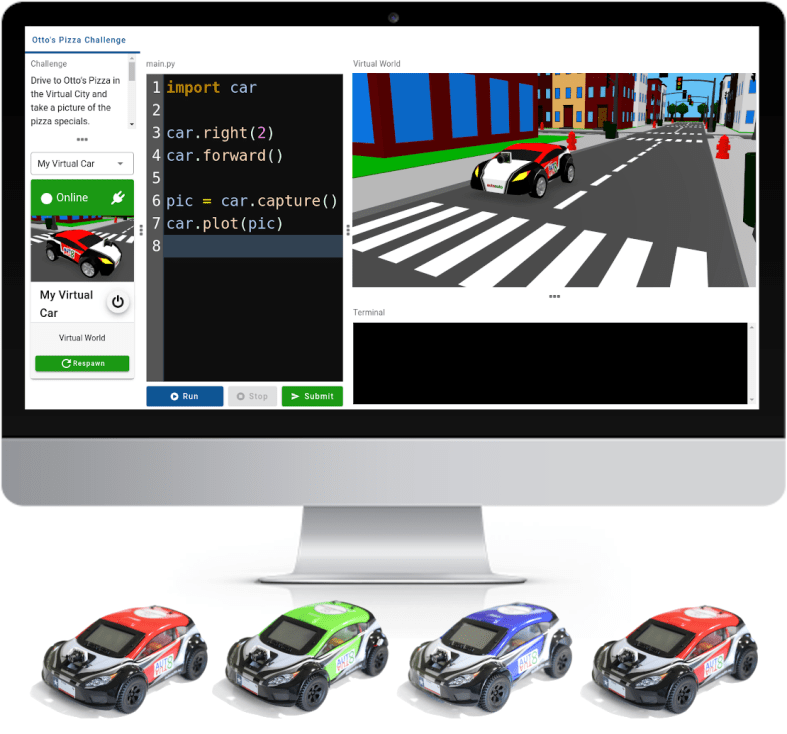
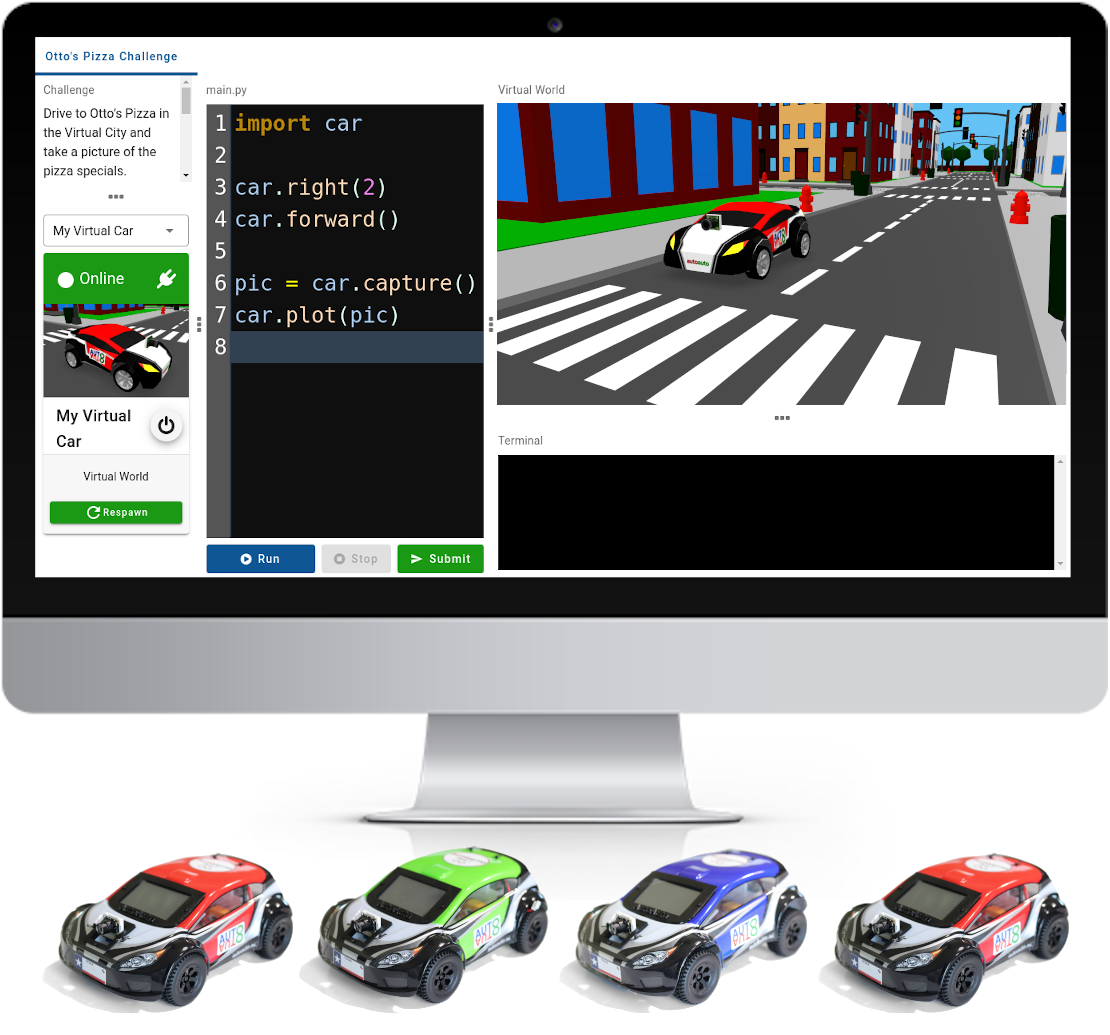
AutoAuto’s virtual car and worlds are quick to captivate students’ interest with its fun city where there are places to visit such as a pizza shop and a car wash. In the virtual city, students can go on different challenges such as the spy mission and the color hunting challenge. Using the physical and virtual AutoAuto cars, students are able to see the real ways that code can save lives, like in the pedestrian detection and avoidance project. Students really enjoy these real-world experiences!

All students can code!

Because the platform has video lessons, slides, and text to assist, students are guided throughout each unit. With a video overview, exercise hints, and instant feedback on their submissions, students can work independently and use these resources as a model. Even though some students were hesitant at first, saying that they “wouldn’t be able to figure out the code,” they quickly realized that they had the support they needed within the platform and from each other. When students were working on the more advanced projects, as I moved around the classroom, students were asking each other “How did you figure out the code?” or “Can you help me with this?” which was a change from them relying on me for answers. There was definitely excitement when students completed a task and were awarded points. Throughout the class I could hear some cheers for “Nice, 25 points!” and “ Yes, I got it right this time!”

Students really enjoyed having the opportunity to work through each of the courses and learn about the coding behind the virtual cars. For my students, they were able to choose where to begin based on their interests and this made them quite happy. As soon as I showed students the dashboard and the units, a few said “I’m starting with computer vision because that looks awesome!”

The power of choice is great for students and providing ways for them to develop problem-solving and critical thinking ways while sparking curiosity makes a difference for engagement levels. Even though at times, students get stuck with writing code, they are starting to help each other and are learning together!

Preparing for the future

To best prepare students, we need to help them develop a variety of skills that enable them to be flexible with changes that will happen in the world of work. With emerging technologies like AI, students need opportunities to work through some challenges and develop SEL skills such as self-awareness, self-management, and relationship-building. Students supported one another as they worked through the different modules, which can be challenging at times. It is great to see students developing their confidence when it comes to coding and also taking more of a lead in class.

When we provide students with experiences that will more meaningfully engage them with the content, by moving them from consumers to creators, it will increase student engagement and promote higher student achievement. In my class, students began asking each other for help with some of their tasks. As a teacher, it is great to see students take the lead more and also not be afraid to ask for help when needed. Seeing them collaborate and problem-solve together are just a few of the added benefits! With only 51% of U.S. high schools teaching computer science, and the demand for STEM jobs expected to increase 11% from 2020 to 2030, AutoAuto’s curricula can help you prepare your students for tomorrow.

We must make sure that we best prepare our students by providing access to resources like AutoAuto that provide them with opportunities to work at their own pace and explore based on their interests and needs. By providing students with opportunities to engage in more student-driven, hands-on learning, it adds more meaning and authenticity to the work that they’re doing.

About the Author

Rachelle Dené is a Spanish and STEAM Emerging Technology Teacher at Riverview Junior Senior High School in Oakmont, PA. Rachelle is also an attorney with a Juris Doctor degree from Duquesne University School of Law and a Master’s in Instructional Technology. Rachelle is an ISTE Certified Educator and serves as the past president of the ISTE Teacher Education Network. She is the author of sevens books including ‘In Other Words: Quotes That Push Our Thinking,” “Unconventional Ways to Thrive in EDU” “The Future is Now: Looking Back to Move Ahead,” “Chart A New Course: A Guide to Teaching Essential Skills for Tomorrow’s World”, “True Story: Lessons That One Kid Taught Us,” “Your World Language Classroom: Strategies for In-person and Digital Instruction” and “Things I Wish [..] Knew.” All books are available on Amazon and at Barnes and Noble.

Follow Rachelle on Twitter @Rdene915 and on Instagram @Rdene915. Rachelle has a podcast, ThriveinEDU available at https://anchor.fm/rdene915

**Interested in writing a guest blog for my site? Would love to share your ideas! Submit your post here. Looking for a new book to read? Find these available at bit.ly/Pothbooks

************ Also check out my THRIVEinEDU Podcast Here!