Turning Towards Focus in Schools

Guest post in collaboration with Focusable @getfocusable

Engagement is a concept that really has a hold on us, and it’s not just educators. Social media and game designers obsess about maximizing it. Enterprise software companies espouse the value of it towards team performance. Heck, our banking app tracks our session duration and tries to increase it. 

It’s likely accurate to say that the majority of educators have chosen engagement as the goal of their work. Overall, this is a good thing. It has helped move teaching methods beyond compliance and remain relevant. Engaged students are an unequivocally good thing. 

But recently we started to ask ourselves some questions about engagement. What does it really mean to be engaged? Both from the teacher’s perspective, and from the students’. Further, does it matter how engagement gets created? Or is all engagement the same? And if every experience you have across society is also aiming to maximize engagement, is it the right thing for educators to be doing? Or should educators be taking a left-hand turn…

We dug into the education literature on the topic. There are countless informative and thoughtful sources. What was most interesting to us was what our research didn’t reveal – a clear definition. Frankly, the more we dug, the more confused we got. There is a huge range of definitions. And not all of them agree. Here’s just a sampling. Engagement is paying attention. It is purposeful learning. It’s curiosity. It’s interaction (or action). It’s immersion in a task. It’s flow. It’s exhibiting a passion for learning. It’s excitement. It’s just compliance but with another name. There are scaffolds trying to integrate and make sense of all the disparate definitions. 

How does a teacher even know what engagement is and how to create it with this lack of definitional clarity? 

As we stated in our first post, our goal is to figure out how to set the conditions for an optimal learning experience, or flow, in education. We know this has the greatest potential for both academic performance and enjoyment of the experience for students. Our research into engagement was fueled by trying to understand how we can leverage the concept better towards this goal. But if we’ve learned anything about flow so far, the details matter in how you approach it. Deplete dopamine too much or avoid the struggle of balancing brain chemistry, and you simply never get there. 

The more we thought about it, the lack of clarity around engagement started to feel more like a hurdle than a concept for educators to leverage.

One early realization that we had was that engagement is an exhibited trait or behavior. This stands in contrast with flow, which speaks to inner experience. This introduces the potential for at least some disconnect. 

For example, do you look engaged when you are in flow? This must be true sometimes, but is it always true? And do the actions that set the conditions for flow look like engagement, too? Or do they look different? How do you know the difference between the two? And worse, what if what looks like engagement actually represents an internal state that interferes with flow (ie, overstimulation)? 

Our sense is that to strive for optimal, we need to work with terms that have more precise definitions, clearer look-fors, and less potential dualities. 

In our last post, we attempted to build a scaffold to help us seek this clarity. We already have some tweaks and improvements in mind based on the feedback we got that we’ll publish soon. 

In the meantime, we’ll turn our attention to the term focus. 

If you are interested in something, you will focus on it, and if you focus attention on anything, it is likely that you will become interested in it.MIHALY CSIKSZENTMIHALYI, AUTHOR OF FLOW, THE PSYCHOLOGY OF OPTIMAL EXPERIENCE

Focus is a term that we all know, or at least think we know. And it’s surely something that almost anyone would agree is essential to learning if you asked. But as we found in our last Twitter chat, it is not a hot topic with many educators (likely due to the emphasis of engagement). 

Focus is often equated with the words attention and concentration. In scientific circles, attention is the most clearly defined of this group. The neuroscientific definition of attention is a cognitive process of selectively concentrating on one thing while ignoring other things. Attention comes from a rather complicated interaction between several brain networks (the default mode and task-directed networks). Interestingly, ADHD and other attentional conditions are differences in how these two brain networks interact.

The definition of focus is more varied and less scientific. It is often described as the center of attention. But for educators, this definition isn’t as enabling as it could be. A more useful definition is to think of it as the control of attention. 

Why is control of attention a useful definition to educators? Most scientific findings support the idea that attention isn’t fixed. It varies. It varies between individuals and contexts. And importantly, it can change. You can improve it. Even those with ADHD can show progress with time, behavioral changes and yes, medication. It is both accurate and useful to think of it as a skill. Control of attention is a definition that captures this important fact. 

This means that not only is focus practically helpful towards things like managing classrooms, it is also a skill that you are developing through the learning experiences you create.

So what is the relationship between focus and flow? Flow can be defined succinctly as ordered consciousness. This is in contrast to normal consciousness which is usually disordered (distracted, out of our control, etc).  So it follows somewhat logically that control of attention is the very foundation. Some definitions for flow even use the words intense focus. But the two shouldn’t be directly conflated. Focus itself is not flow. Focus requires effort to get started. There is no loss of self, as there is with flow. Finding focus can provoke all sorts of reactions, often negative. Frankly, it’s a struggle. Flow is none of those things. Flow is what happens when your neurochemistry finds balance while struggling to focus and starts to feed further action more naturally. 

It is worth stating that you will never experience flow if you cannot control your attention.

It is also worth noting that focus is a useful skill beyond the purposes of finding flow. Most of the predictions about the future of jobs, and the skills educators should be aiming for in response, are misguided at this point. We can say this with confidence, because frankly, we have a horrible track record as a society of seeing the capabilities of technology in advance. 

But there is one aspect we are 100% confident in, and it is this: there will be more, and more sophisticated, experiences to control your attention with each passing year. It’s already a huge problem, as we all know. And it’s only going to get worse. Controlling your attention is just about the only ‘skill of the future’ we’d bet our life savings on. 

Control means you can direct, or redirect your attention at will. You can stop doing one thing, and start doing another. You are aware of where your attention is and where it isn’t. It is often a struggle, but in this case, visible struggle might be a positive sign. A sign that the skill of focus is being worked on. 

A lack of control, then, is distractibility. It is the inability to switch from one task to another. It is a lack of awareness of what you are doing. It could be a lack of struggle, or even just over-excitability. 

If you were to try to observe whether a student is focused, or not, these would be some of the things you would look for. 

While we recognize, again, that some definitions of engagement might match up – it’s really the ones that don’t that have us most concerned. They incent teachers to skip over the development of the skill of focus in the interest of more obvious interaction. And to us, this is a short-term gain for the long-term loss of the potential for flow, as well as interfering with the development of an essential skill. 

Perhaps moving away from engagement is the left-hand turn educators should consider.

**Interested in writing a guest blog for my site? Would love to share your ideas! Submit your post here. Looking for a new book to read? Find these available at bit.ly/Pothbooks

************ Also check out my THRIVEinEDU Podcast Here!

Join my weekly show on Mondays and Fridays at 6pm or 6:30 pm ET THRIVEinEDU on Facebook. Join the group here

Culture of Curiosity with Capstone!

At the start of a new school year and after a summer break, sometimes building the excitement for the return to school needs a little boost. When it comes to sparking curiosity for learning, educators are quite creative! We have different methods, a hook for a lesson, a variety of digital and traditional tools we can use with our students. When we consider our options, we always need to focus on the underlying purpose for our choice. What are we hoping to provide for our students? How does a certain method or tool amplify their learning potential? Why change what we have been doing in our classrooms?

Preparing students with the essential skills for the future requires ​all e​ducators to take some risks and create a culture for learning to spark curiosity and innovation. At times, finding ways to bring digital learning and innovation to schools can be challenging. However, when we can find one resource that provides everything in one space and is full of possibilities, it makes a big difference for us, but more importantly for our students. We need to explore methods and tools that will empower us to provide students with opportunities for risk-taking, ​for becoming curious for learning while also developing essential SEL skills.

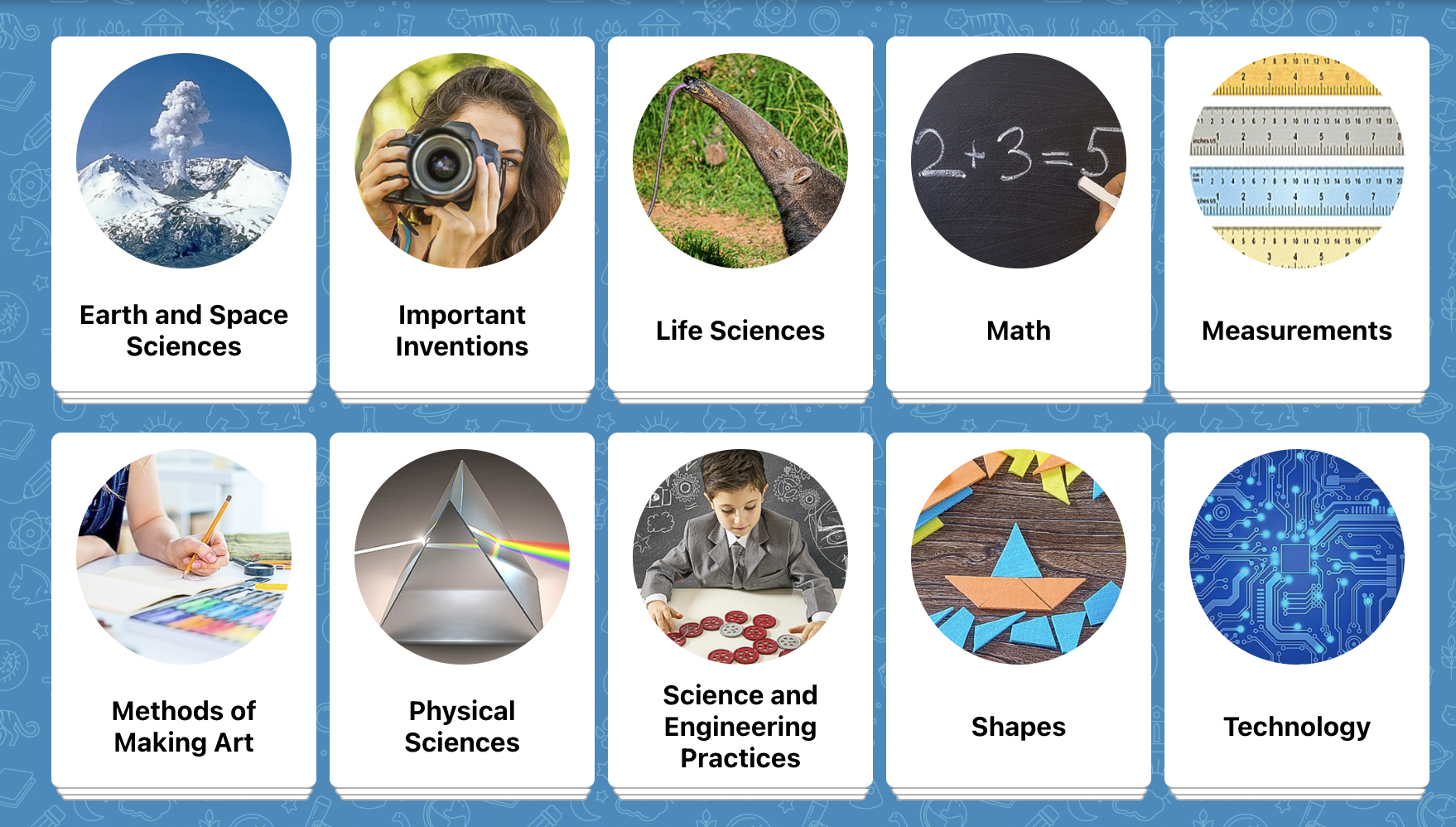
As teachers, we should strive to offer different choices for our students to be able to show what they are learning and to apply their knowledge in a way that provides opportunities for them to be creative, to have fun while creating, and that will engage students more in learning. We have used Buncee for many years and with PebbleGo Create now available, there are endless possibilities for creating a culture of curiosity for learning. Students can choose from so many amazing resources to learn about topics of interest and then use PebbleGo Create to share that learning in authentic, meaningful and personalized ways.

Maintaining culture of curiosity

Getting started as we head back to school is the perfect time to dive in! Students are excited for what they are going to learn and one way to hook them in, is by selecting a focus area from the Capstone resources. There are so many topics available to choose from related to the content area being taught. Instead of using materials you already have, explore the resources available from Capstone! Look at the book collections and have students select something of interest and then see what they create! By promoting student choice, it amplifies learning as students become excited to share that learning with their peers. They will interact with one another while engaging in purposeful learning and an extra bonus, having fun in the process.

In my own classroom, I want students to enjoy learning but also be curious about what they are going to learn and how they will show that learning. Providing my students with different choices for creating with the language will not only help them to build their language skills and foster creativity but also help with the development of technology skills and promote digital citizenship as they post online and share their work.

Ideas to try

Especially at the start of the new year, there are a lot of topics that we need to bring into our classrooms. Capstone offers a diverse group of book collections that focus on important topics like equity and social justice, issues related to the United Nations Sustainable Development Goals (SDGs) such as health and wellness for example, that help educators to provide the right learning experiences for students to develop greater self- and social-awareness. Students may be curious about a topic but hesitant to ask about it and what better way than to provide these materials for students to explore and then use PebbleGo Create to share what they have learned. When students share their work, it sparks curiosity amongst classmates and amplifies the learning that happens.

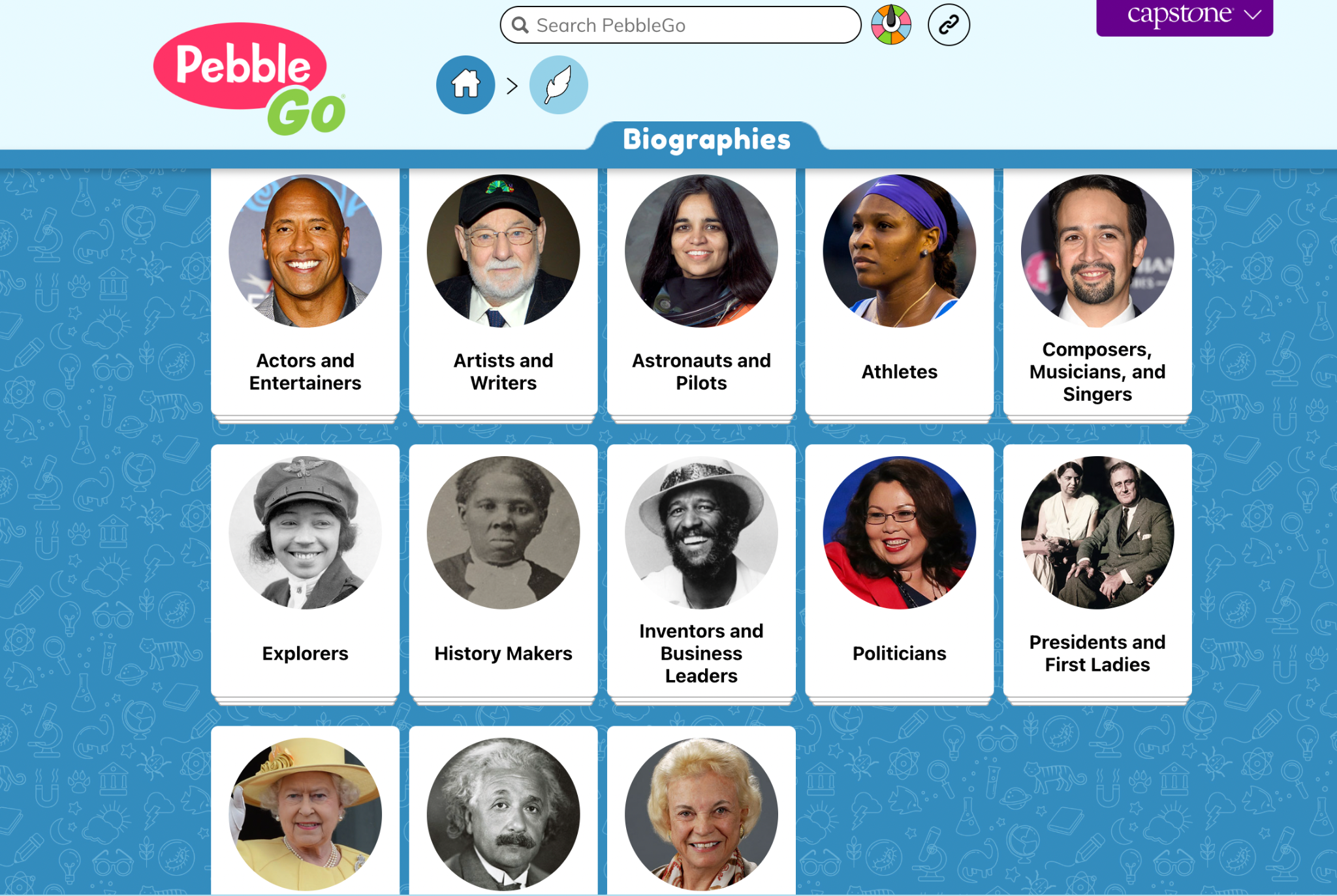
For your content area and grade level, find a relevant subject or share the “Biographies” with students and have them choose a person to study. Within these topics, there are activities, timelines, and more that will lead students to become curious for learning. After students have time to complete the activities, they can then use PebbleGo Create to share what they have learned. With so many options, it is easier to create a culture for curiosity and creativity in your classroom with all that Capstone offers for students and teachers.

An idea to place students more in the lead is to use the “States” and ask each student to choose one of the states to learn about and then create something that shares their takeaways. Or focus on each region of the United States and give students time to choose a state in that region.

With the states, there are activities, videos, timelines, and even recipes, so much to really draw students in and boost engagement in learning. It is so much fun to create and have so many choices in PebbleGo Create! We also learn about our students from the choices they make and what they choose to create!

When we offer more choices, we provide more hands-on, meaningful, and student-driven learning. With new ideas, we can boost student engagement and creativity, help to spark curiosity for learning and student needs can be better met. By bringing in new technologies and opportunities, we better prepare students with the skills that they will need moving forward.

Using a method like genius hour for example, and asking students to explore an area of interest and then “share their genius” or doing project-based learning (PBL) are more great ways to boost engagement in learning and place students in the lead more. Students need opportunities to explore their passions, design their own problems or challenges, and as a result, they will start to focus more on the learning process itself. Students will wonder what comes next for them and be motivated to continue learning and growing! To best prepare students for the future, we need to offer experiences that promote curiosity, student-driven independent learning, and help them to work through productive struggle, to reflect, and continue on their learning journey.

What I love about using Buncee and PebbleGo Create is that they help educators to amplify student learning through the right tools that enable each student, educator, or anyone to visually communicate learning, thoughts, and experiences and create something unique. It gives students a ton of options and a safe space to explore and find exactly what they need.

See the creativity come through your student work and even your own. Have fun creating!

About the Author

Rachelle Dené is a Spanish and STEAM Emerging Technology Teacher at Riverview Junior Senior High School in Oakmont, PA. Rachelle is also an attorney with a Juris Doctor degree from Duquesne University School of Law and a Master’s in Instructional Technology. Rachelle is an ISTE Certified Educator and serves as the past president of the ISTE Teacher Education Network. She is the author of sevens books including ‘In Other Words: Quotes That Push Our Thinking,” “Unconventional Ways to Thrive in EDU” “The Future is Now: Looking Back to Move Ahead,” “Chart A New Course: A Guide to Teaching Essential Skills for Tomorrow’s World”, “True Story: Lessons That One Kid Taught Us,” “Your World Language Classroom: Strategies for In-person and Digital Instruction” and “Things I Wish [..] Knew.” All books are available on Amazon and at Barnes and Noble.

Follow Rachelle on Twitter @Rdene915 and on Instagram @Rdene915. Rachelle has a podcast, ThriveinEDU available at https://anchor.fm/rdene915

Rachelle is available for in-person and virtual PD sessions for your school.

**Interested in writing a guest blog for my site? Would love to share your ideas! Submit your post here. Looking for a new book to read? Find these available at bit.ly/Pothbooks

************ Also check out my THRIVEinEDU Podcast Here!

Join my weekly show on Mondays and Fridays at 6pm or 6:30 pm ET THRIVEinEDU on Facebook. Join the group here

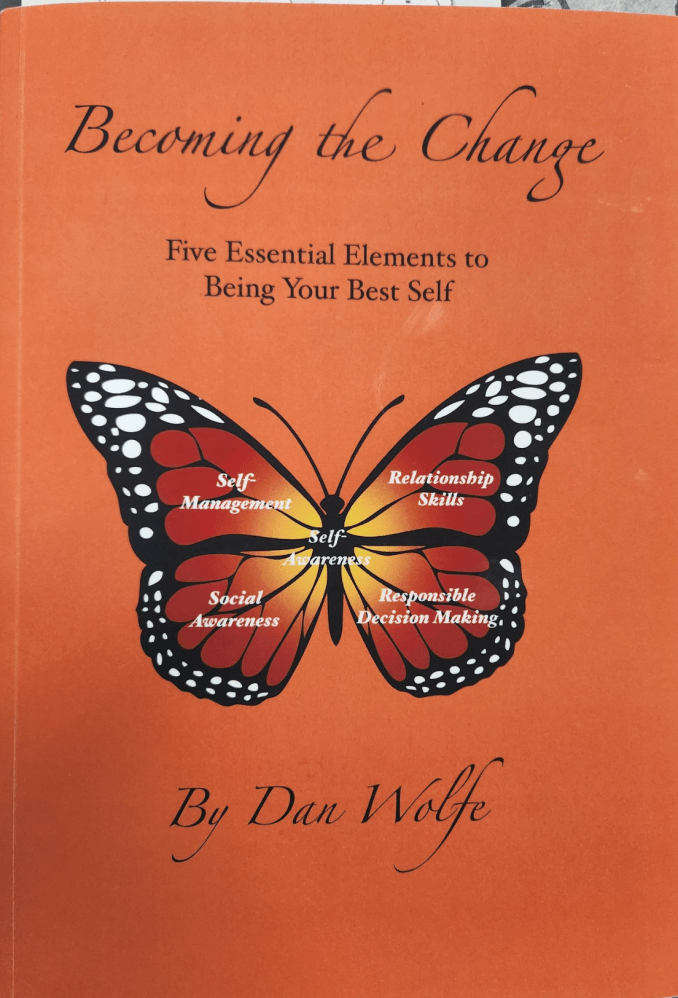
Becoming the Change via Dan Wolfe

Guest post by Dan Wolfe, Author of Becoming The Change

Becoming The Change: Being Socially Aware Of One’s True Character

 Becoming The Change  

“I’ve learned one thing: you only really get to know a person after a fight. Only then can you judge their true character.”

-Anne Frank

Empathize don’t criticize. Understanding someone and where they are coming from can be one of the most challenging things to master especially when you don’t agree with them. This can also lead to a fight. Not the physical kind but one that is verbal. Passion tends to overflow which sometimes prevents cooler heads from prevailing. As Anne Frank once said we can only judge someone’s true character after being in a fight with them. That is also when we truly get to know them.

Even though we are able to judge them and their character we must remember that it is only our opinion and ours alone as to what we think of them and their character. As long as we can understand their perspective, and respect them and what they believe in (even if it is different from how we view things) that is how we can truly embrace a higher level of social awareness.

What does this quote mean to you and how can you apply today’s message toward becoming more socially aware?

Becoming The Change: Patience Is Everything

 Becoming The Change  Self-Management  

“Adopt the pace of nature; her secret is patience.”

-Ralph Waldo Emerson

Do you ever get the feeling that life just seems to flash right before our eyes? We are in such a hurry to go from one task to the next. But do we ever take the chance to let things just slow down and patiently wait for the moments to come to us instead of us always going to them., As author Ralph Waldo Emerson reminds us in today’s quote we need to adopt the pace of nature and let patience lead the way. Good things come to those that wait or so does the saying go.

Nature waits for the caterpillar to bloom into a beautiful butterfly along with so many other things that take time. It is well worth the wait as is what we want to achieve in life. In life we want to take time and with patience leading the way it makes it all worth it in the end.

What does this quote mean to you and how can you apply today’s message towards managing yourself better?

Dan’s book is available on Amazon. Check out his daily blog and his podcast.

**Interested in writing a guest blog for my site? Would love to share your ideas! Submit your post here. Looking for a new book to read? Find these available at bit.ly/Pothbooks

************ Also check out my THRIVEinEDU Podcast Here!

Join our weekly show on Fridays at 6pm or 6:30 pm ET THRIVEinEDU on Facebook. Join the group here

The State of Student Service 2022 by x2VOL

Blog headers 2022

Sponsored post with x2VOL

Student service is on the rise. Student service programs in schools are returning to “pre-pandemic” status while students need re-education on the significance of service.

In a recent survey conducted by x2VOL to all users, service leaders across the country reported that their student service programs in schools are returning to normal as we emerge from the pandemic.

At the beginning of COVID-19 school service programs were either put on hold or were modified to account for the lockdown. Many students began serving in other ways from home such as volunteering online or in a virtual way, assisting their families and siblings at home, or serving others in their community in a socially distanced way.

In 2021, 66% of service leaders reported that their programs would be returning to their “pre-pandemic” requirements in the fall of 2021. However, in 2022 87% reported that their programs will be returning to their “pre-pandemic” requirements in the fall of 2022, showing a significant increase in the return to normalcy for many schools.

There has been a major push for re-engagement in service and in the community as students are grappling with the impact of the pandemic. Reinstating service programs in schools means students have another stepping stone to heal from the impact of the pandemic.

Schools and districts across the country have reported a drastic increase in student service.

Valley Christian High School in San Jose, California is simply one example – their students served approximately 10,000 hours in the 2020 – 2021 school year. That doubled twice over as their students volunteered over 50,000 hours this past school year and expect to surpass that in the 2022-2023 school year. Educators at Valley Christian High School increased the grade percentage service is worth for students and encourage meaningful service projects where students can connect with those they are serving and experience deep growth and development. These strategies assisted in increasing student service hours and supporting a culture of service in their school.

Allen High School in Allen, Texas as re-engaged their students post-pandemic through a day of service on their campus. In the past year, students served thousands of hours over two days of on-campus service.

Learn more in this interview and blog post with Allen High School

“We are excited to see the increase in service programs reinstating their requirements and goals,” said Michele Pitman, Founder, and CEO, intelliVOL. “Service is an incredible way for students to heal from the isolation and disturbance of the pandemic. It aids in students’ personal development and growth.”

As we emerge from the pandemic, educators reported that there is a need for motivation and “re-learning” about the importance of volunteerism. 31% of respondents reported that students are lacking engagement and follow through when it comes to their service requirements or goal.

Because many students came into high school during the pandemic, younger students might not have the knowledge or background about the importance of volunteerism. Service leaders report that students are trying to relearn simply how to be students, and reeducation about service comes with that.

“Service to others is a valuable part of education and growth for students,” said Pitman. “And at a time when the world needs volunteers the most, we are excited to see students re-engaging in their communities and making a difference.”

**Interested in writing a guest blog for my site? Would love to share your ideas! Submit your post here. Looking for a new book to read? Find these available at bit.ly/Pothbooks

************ Also check out my THRIVEinEDU Podcast Here!

Join my weekly show on Mondays and Fridays at 6pm or 6:30 pm ET THRIVEinEDU on Facebook. Join the group here

Back-to-school with BookWidgets!

In Collaboration with BookWidgets

We started to use ​B​ook​W​idgets last year and my students immediately fell in love with it. The first activity that I gave to them was a crossword and they thought it was the coolest thing ever. As a language educator, I want my students to be able to remember the vocabulary and the verbs of course, and a big part of that is knowing how to spell them. Using some of the ​options like crosswords or word searches helps students to build their skills in spelling because the words have to fit in the right place. The benefit of using a tool like ​B​ook​W​idgets is that students can work on these activities wherever they are. As long as students have access to a device, I can share different activities with them whether for extra practice, for enrichment, and sometimes just because they ask me to because they enjoy the activities and forget that it’s actually for learning!

​So many choices!​

There are more than 40 different templates available in ​B​ook​W​idgets and in case you didn’t know, in August they added some new features just in time for the upcoming ​school year. Beyond those activities that I had done with my students last year, something else that I recommend for students is using flashcard​s. With some tools, it can be difficult​ to know if students are in fact using the ​f​lashcards. However, in the live ​B​ook​W​idgets dashboard, I can see which cards the students practiced​, the time ​spent on them, and even how many times they flipped a specific card. Students even have the audio with the flashcards! ​Having this real-time data is great for me to be better able to understand what my students’ needs are so that I can provide additional resources and encouragement as they work on learning the content.

Another great feature is the scratch pad, my students love using the dry erase boards but the time that it takes to gather the materials and to keep cleaning them loses precious class time. However, with BookWidgets I can have students use the scratch pad and have them conjugate verbs or I could give them a sentence and have them draw something​. T​here are so many different possibilities​!​ I can even have ​students submit what they created so that I can review it and if I want to and also provide a grade for it. Just another way that I can really stay connected to where they are in the learning process and be able to provide timely​,​ authentic, and meaningful feedback to them when it is most essential.

A very important issue when it comes to using technology in our classrooms is accessibility. We want all of our students to be able to participate and engage in the methods and tools that we are using so that they all have the same opportunities to amplify their learning. In some tools, they have translation capabilities, and now in ​B​ook​W​idgets, it offers text to speech for students. Having students that use screen readers, ​this feature ​is fantastic because they have the option to listen directly through ​BookWidgets. ​Students can select the text and choose the language that they want to have it read out loud in. For teachers who use Google classroom, ​B​ook​W​idgets is one of the add-ons which makes it even better for keeping things streamlined and not overwhelming students but at the same time creating so many amazing learning opportunities.

Now with Google!

There are more than 40 interactive templates available that you can add to your Google classroom. The favorites for my students are the crossword puzzles, the word searches, and the split whiteboard​! There are possibilities for using these with all grade levels and content areas. ​​We will continue to add more to the list of the activities that we are using because​ ​students ​keep coming to class asking to use ​BookWidgets​! When this happens, ​ you know that it’s making a difference for them. Also as a language educator, it’s important that I be able to assess their speaking skills as they develop them, and having the option for students to record their voices is great​.​ ​Some students may not feel comfortable at first speaking in front of their classmates​,​ so this helps them to build their confidence because they can record at home or in a place that is comfortable for them. ​For teachers, it enables us to access their recordings at any time and be able to give feedback after it that the students can respond to. Check out some additional examples that can be used in language classes!

With the Google Chrome extension, it is so easy to get started with BookWidgets! Using the SSO, everyone saves time accessing activities and being able to understand where students are in their learning journey. Being able to provide feedback to students right within Google Classroom streamlines the process and keeps the learning going. If your school has the Google for Education teaching and learning upgrade or a plus account, you can ask your administrator to enable BookWidgets for your entire school!

For teachers that are using Google Classroom, it’s great that you can monitor the work students are doing in real-time whenever you’ve created a ​B​ook​Widgets​ assignment within Google ​Classroom. Being able to see when they completed the last activity, what their progress is, and how they responded, in a very visually engaging and easy-to-understand way, helps teachers be able to give feedback when it is critical. It’s also great to be able to visualize the progress of the class, to be able to provide additional instruction to the whole group or to have time to go and work with students on an individual basis. Check out these ideas for using BookWidgets with Google Classroom!

In addition to teaching Spanish, I also teach a ​STEAM course and if you didn’t know, ​B​ook​Widgets also has interactive ​STEM lessons available with 25 ideas to choose from​!​ You might want to check out the recent blog post on those 25 ready-to-use less​on​ ideas for ​STEM lessons​. T​​​here are so many and the key about them is that it helps students to work at their own pace ​and experience more active learning that becomes more meaningful for them and then of course will boost student engagement. Even if you don’t teach a specific course to ​STEM, you’ll find options for other courses that you can adapt to the course that you are teaching.

So if you are looking for some great back-to-school ideas for any classroom, head to BookWidgets and get started today. Check out the ready-to-use lesson ideas and many templates to choose from! And even better, sign up for one of their upcoming webinars! Join in and you might win BookWidgets for your entire school. At the end of the 1-hour webinar course, complete the survey and you’re in the running to win BookWidgets for 1 year for your entire school!

About the Author

Rachelle Dené is a Spanish and STEAM Emerging Technology Teacher at Riverview Junior Senior High School in Oakmont, PA. Rachelle is also an attorney with a Juris Doctor degree from Duquesne University School of Law and a Master’s in Instructional Technology. Rachelle is an ISTE Certified Educator and serves as the past president of the ISTE Teacher Education Network. She is the author of sevens books including ‘In Other Words: Quotes That Push Our Thinking,” “Unconventional Ways to Thrive in EDU” “The Future is Now: Looking Back to Move Ahead,” “Chart A New Course: A Guide to Teaching Essential Skills for Tomorrow’s World”, “True Story: Lessons That One Kid Taught Us,” “Your World Language Classroom: Strategies for In-person and Digital Instruction” and “Things I Wish [..] Knew.” All books are available on Amazon and at Barnes and Noble.

Follow Rachelle on Twitter @Rdene915 and on Instagram @Rdene915. Rachelle has a podcast, ThriveinEDU available at https://anchor.fm/rdene915

Becoming The Change: Putting Our Weaknesses To Some Good Purpose

Guest post by Dan Wolfe

 Becoming The Change  Self-Management  

“I think that it is useless to fight directly against natural weaknesses….in the ordinary course of life one has to know these weaknesses, prudently take them into account, and strive to turn them into good purpose; for they are capable of being put to some good purpose.”

-Simone Weil, Waiting for God

We all have our own weaknesses whether we like to admit it or not. We also often try so hard to improve on these weaknesses and divert our attention away from focusing on our strengths. French philosopher, mystic, and political activist Simone Weil’s quote she reminds us that this struggle to fight and/or improve upon those natural weaknesses is in essence wasted energy in that we are always trying to fix everything about our weaknesses instead of taking it for what it worth and applying things more so towards turning them into a greater purpose. Don’t get me wrong, this would be a complete mind shift in our thinking but something that is necessary for our own personal growth.

Often times it is our weaknesses that are someone else’s strengths and their weaknesses are your strengths. This helps to balance everything. We must keep in mind not to become overly focused on perfection because that is truly an unachievable feat. If we go in with the mindset that any improvement in a weakness shows signs of growth we are able to build on this and use it towards that good purpose that Weil refers to. This good purpose can be building things towards a better community through enhancing our relationships with one another or increasing the communicative needs of the group. Whatever that purpose is can only be enhanced due to using those weaknesses to our advantage. We have this all within our own control if we take the time to draw our attention to it.

What does this quote mean to you and how can you apply today’s message towards managing yourself better?

Becoming The Change: Great Leaders vs Weak Leaders

 Becoming The Change  Relationship Skills  

“Weak leaders have the luxury of looking into themselves. Great leaders have the honor of looking after others.”

-Simon Sinek

Relationships should be built on having people look after others instead of just themselves. That is author, speaker, and podcaster Simon Sinek’s take on the difference between great leaders and weak leaders. Weak leaders that only look after themselves are very self-centered as they are only concerned with what they accomplish and do everything only for their personal gain. On the other hand, great leaders put others before themselves by serving them and their needs. Their acts are selfless. Weak leaders destroy relationships while great leaders build and strengthen them. It’s time we answer our true calling and look after others. It’s the only way we can truly become united in order to sustain and enhance the world we live in.

What does this quote mean to you and how can you apply today’s message towards developing your relationship skills?

**Interested in writing a guest blog for my site? Would love to share your ideas! Submit your post here. Looking for a new book to read? Find these available at bit.ly/Pothbooks

************ Also check out my THRIVEinEDU Podcast Here!

Join my weekly show on Mondays and Fridays at 6pm or 6:30 pm ET THRIVEinEDU on Facebook. Join the group here

Future-focused: Preparing for 2025 and beyond with iBlocks

In collaboration with iBlocks

In preparing students with the essential skills they need for the future, we have a variety of methods and digital tools to choose from. Starting with methods first is my recommendation because it helps us to focus carefully on our specific learning goals and consider the “why” behind our decisions. We should focus on the skills our students will gain from a particular method or tool and then how these skills align with what they need to be prepared for what lies ahead after they leave our classrooms.

As we look to the future, there are many unknowns when it comes to the world of work. Jobs that exist today may not exist in five years due to changes in technology and automation for example. To stay informed, a resource that I often explore is the World Economic Forum which provides a Job Skills Outlook with a list of the top ten in-demand skills by 2025. Among the top skills cited include active learning, collaboration, resilience, stress tolerance and flexibility, critical thinking, problem-solving and ideation. How can we make sure our instruction is relevant to meet the growing demands in the world of work? And how can we help our students to deal with the challenges that might come from a changing world of work and be able to understand their strengths and areas that they need to improve in?

To meet the demand for these skills, we need to provide students with project-based learning (PBL) opportunities which foster the development of social-emotional learning (SEL) skills. The five core competencies of self-awareness, social awareness, self-management, relationship building, and decision-making are necessary in our classrooms today and are needed in the world of work. To learn more about SEL, explore the many resources available through the Collaborative for Academic, Social, and Emotional Learning (CASEL.org).

Why focus on SEL in PBL?

Because research shows that by addressing the five competencies of SEL in our classrooms, we can positively impact and see an increase in student academic performance. To be successful in the future, students need opportunities that will help them to build SEL skills, especially in the areas of self-awareness and self-management.

Self-awareness: As students work independently during project-based learning, they are becoming aware of their skills and their interests as they explore topics that they are curious about. As they design their PBL focus, they learn to self-assess and evolve as learners.

Self-management: Through project-based learning, students work on setting new goals, and dealing with stress as they work through their project or perhaps problem-based learning journeys. Because PBL is an iterative process, students will see learning as a process, rather than a final product as they develop their own personalized work plan.

With the Job Skills Outlook, developing self-awareness is essential for ideation and innovation. Self-management skills will help students to become resilient, tolerate the stress they experience, and above all, be flexible in learning.

Why start with self-awareness and self-management

When it comes to engaging in PBL, or other work that is focused on student choice and is student-driven, it can be a difficult shift at first for some students. Different than doing just projects, where specific requirements are given and a defined tangible end product is created, with PBL, students have to design their learning journey. By doing this, it can lead students to experience some stress and frustration because it is so open-ended and requires an ongoing iterative process. As students are trying to solve a problem or dealing with failure, they need to be able to process emotions, set goals, and push through the challenges faced. Students will engage in trial and error, testing and re-testing, and at times, may find that they cannot find a specific solution to a problem. When this happens, being able to deal with these stressors and work through them by setting new goals will be essential for students now and in their future. This is why SEL matters and starting with a focus on self-awareness and self-management is key.

Promoting SEL through iBlocks

I recently met the folks and Teq and have been researching their iBlocks solution for PBL. I think it provides a good structure for students to work through projects and supports the development of SEL skills in some specific ways.

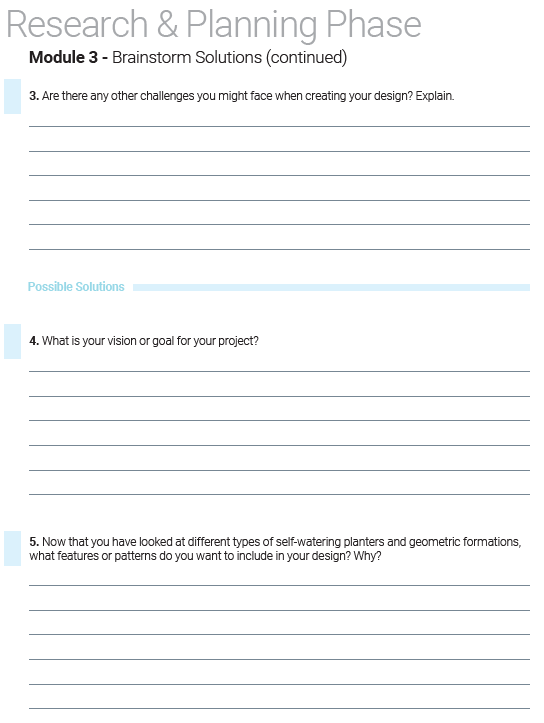
With iBlocks, students are working on authentic projects and with the resources provided, they will develop skills of self-awareness and self-management. Students have a student workbook that is used as they work through each module of the iBlock. What is the most helpful for students is that they have a space where they can really think through what they are learning and reflect on the experience they are having.

As they work through the research and planning phase, they can respond to the questions and capture their ideas in a space where they can reflect on them, evaluate them, set goals for themselves, and have the support of pacing. It is so beneficial for students to have that structured support available that they can use.

The right student resources

When focusing on self-awareness, students need to understand where they are in the learning process. They need to be able to process their learning and ask:

What are some of the things that they know and can do?

What are some areas that may be confusing to them?

What do they notice about how they learn?

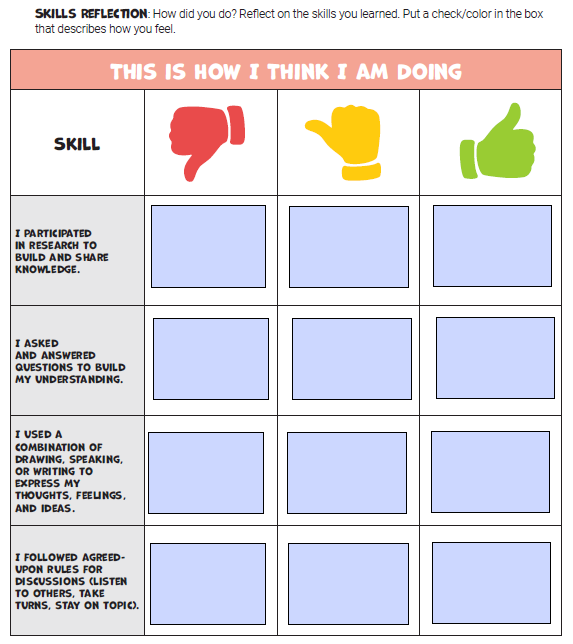
With iBlocks, the use of the student self-assessment rubric helps students to develop their skills of self-awareness by recording and reflecting on their iBlock work. Having the space and a system in place that guides students along the way, will help them to become more aware as they learn and develop confidence in the process as well.

With self-management, being able to tackle a big project or work through a challenge are skills that students need in our classes now. And for those skills for the future, stress tolerance, dealing with frustration, and being flexible in learning are all important. By using the self-assessment in their student workbook, it takes away some of that pressure for students of having to figure it out on their own. The student workbook helps them plan how much time to devote to their work, reflect on the progress they are making, and the next steps that will lead them to be successful in completing the work.

The student materials help teachers to facilitate rather than lead the learning. The workbook helps students to stay on track and be accountable to themselves in setting goals and working through challenges. They will better understand where they are in the learning process and what next steps they need to take.

The student workbook and iBlocks modules provide students with a structure that enables them to work with complex topics but in a way that builds their skills over time and at a good pace so that they can learn as well as build those self-awareness and self-management skills.

Learning to process thoughts and emotions

As students are working through their project-based learning, they have prompts throughout their workbook (and provided by the teacher as needed) that will require them to assess their own performance. They will be accountable to themselves and have a space where they can write down any of the challenges that they are facing in the work. They can even brainstorm ideas for how to work through those challenges and overcome them. As a result, they will build resilience and be better prepared for the next PBL experience and will continue to build those skills over time.

As students work through a project, they have the space and support to reflect on their learning, to evaluate where they are in the learning process, and learn to manage their emotions as they are working through the challenges of PBL.

As educators, we should continue to ask ourselves these questions:

  • How can we create opportunities for students to drive their own learning?
  • What options will provide a more interactive and collaborative experience, regardless of where learning is taking place?
  • How do we weave SEL into our classroom and boost student engagement in learning?
  • Which methods will provide students with the right skill development?

With the different iBlocks available, students engage in purposeful learning and figure out how to solve some of the challenges being faced by people in the world. With each iBlock, teachers receive a Framework, Teacher’s Guide, Student Workbooks, and more. There are issues being faced that have been researched for many years and still are without a solution. Our students can explore any area of interest and become innovators and problem solvers. They will learn about working as part of a team, pushing through failures, and engaging in hands-on STEM learning.

With the knowledge that students will gain through their experiences, they will have developed skills that will enable them to adapt to a changing world of education and work.

To get started, there are three sample iBlocks available to download: Rube Goldberg, Design a Comic Book, and Prosthetics iBlocks.

SEL Skill

Example PBL activities to Support SEL Skill Development

iBlocks-Specific Support for this SEL Skill Development

Self-Awareness

  • Career exploration based on interests
  • Independent work
  • Student voice and choice
  • Self-assessment
  • Defined learning pathways to select from that cover real-world projects
  • Place for students to record work and reflect on the learning process
  • Student self-assessment rubric
  • Workbook sections dedicated to asking questions and revising work

Self Management

  • Students design their learning journey
  • Iterate through a learning process
  • Goal setting
  • Scaffolded questions to support personal goals within the student workbook
  • Progress tracking charts/tables to maximize learning during the allotted time
  • Peer review and other collaborative activities within lesson plans that give an opportunity for students to recognize differences in opinion and respect others’ opinions
  • Teacher tips to support students with compromising during collaborative work (i.e. collaborative brainstorming)

About the Author

Rachelle Dené is a Spanish and STEAM Emerging Technology Teacher at Riverview Junior Senior High School in Oakmont, PA. Rachelle is also an attorney with a Juris Doctor degree from Duquesne University School of Law and a Master’s in Instructional Technology. Rachelle is an ISTE Certified Educator and serves as the past president of the ISTE Teacher Education Network. She is the author of sevens books including ‘In Other Words: Quotes That Push Our Thinking,” “Unconventional Ways to Thrive in EDU” “The Future is Now: Looking Back to Move Ahead,” “Chart A New Course: A Guide to Teaching Essential Skills for Tomorrow’s World”, “True Story: Lessons That One Kid Taught Us,” “Your World Language Classroom: Strategies for In-person and Digital Instruction” and “Things I Wish [..] Knew.” All books are available on Amazon and at Barnes and Noble.

Follow Rachelle on Twitter @Rdene915 and on Instagram @Rdene915. Rachelle has a podcast, ThriveinEDU available at https://anchor.fm/rdene915

Rachelle is available for in-person and virtual PD sessions for your school.

**Interested in writing a guest blog for my site? Would love to share your ideas! Submit your post here. Looking for a new book to read? Find these available at bit.ly/Pothbooks
************ Also check out my THRIVEinEDU Podcast Here!

Join my weekly show on Mondays and Fridays at 6pm or 6:30 pm ET THRIVEinEDU on Facebook. Join the group here

Author

Rachelle Dené is a Spanish and STEAM Emerging Technology Teacher at Riverview Junior Senior High School in Oakmont, PA. Rachelle is also an attorney with a Juris Doctor degree from Duquesne University School of Law and a Master’s in Instructional Technology. Rachelle is an ISTE Certified Educator and serves as the past president of the ISTE Teacher Education Network. She is the author of sevens books including ‘In Other Words: Quotes That Push Our Thinking,” “Unconventional Ways to Thrive in EDU” “The Future is Now: Looking Back to Move Ahead,” “Chart A New Course: A Guide to Teaching Essential Skills for Tomorrow’s World”, “True Story: Lessons That One Kid Taught Us,” “Your World Language Classroom: Strategies for In-person and Digital Instruction” and “Things I Wish [..] Knew.” All books are available on Amazon and at Barnes and Noble.

Follow Rachelle on Twitter @Rdene915 and on Instagram @Rdene915. Rachelle has a podcast, ThriveinEDU available at https://anchor.fm/rdene915

Everyone Needs a Throwing Partner

Guest post by laura steinbrink, posted on her blog site Rockntheboat

If you have ever played organized baseball or softball, at any level, chances are that you have gone through a warmup or drill of some sort that required you to throw the ball to another player. If you follow me on Instagram or Facebook, then you are aware that I have a son who is very active athletically, particularly in the sport of baseball, which is where I came up with the idea for this post.

My son Ryan plays travel baseball and high school baseball, and he is fortunate to get to play both of those with his cousin Hayden. They are three weeks apart in age, so they naturally get to do a lot of things together. However, having the same throwing partner for both the travel team and the high school team is pretty cool. In case you haven’t thought of this before, your throwing partner is important, so having the right one is crucial. I know, some of you are thinking that I should be saying my son should be open to throwing with anyone. Sure, and he is, but to get the most out of the warm-up consistently, throwing partners should be very similar in skill and ability. An occasional switch-up happens, but I’ve watched a lot of baseball and coached and watched a lot of softball, and most players prefer to use the same throwing partner every time, just like my son.

There are definite benefits to having a good and consistent throwing partner that correlate to education. Here are three key benefits:

  1. Similar skill and ability mean that you spend less time chasing badly thrown balls. Paring an experienced player with an inexperienced player in the throwing warmup may sound good on the surface, but a lot of frustration and embarrassment ensue when this happens. In education, the badly thrown balls can represent bad advice, redundant policies, activities, or practices. On the flipside, badly thrown balls can also be like advice or practices that seem totally out of reach by the more inexperienced teacher.
  2. Your throwing partner, by catching or attempting to catch what you throw to them, helps you see what adjustments need to be made so that you can throw it back at them with the accuracy and speed needed for them to be able to catch the ball. Or in educational terms, a good throwing partner can help you see what adjustments are needed for your strategy, activity, policy change, etc. big idea.
  3. Not only does your throwing partner catch what you throw, but they also, providing you have a good teammate, forgive your wild throws and missed opportunities to catch the ball each and every time. A good educational throwing partner will even retrieve bad or wild throws without making you feel bad about it. This is a much-needed skill today. We have all had a lesson go awry, so it’s nice to have a partner who will help you go get the ball so you can start throwing again.

So there’s my quick educational baseball analogy to help us all get ready for the new school year. Whether you have already started, are about to start back, or still have some time left before the school year officially begins, you need to consider someone in your building or district who could be your throwing partner. I a have local throwing partner and various ones in my expanded professional learning network (PLN) that can catch what I throw at them, will help me retrieve errant throws, and never make me feel bad about it. A partner can also make the experience more enjoyable. Do you have a throwing partner?

**Interested in writing a guest blog for my site? Would love to share your ideas! Submit your post here. Looking for a new book to read? Find these available at bit.ly/Pothbooks

************ Also check out my THRIVEinEDU Podcast Here!

Join my weekly show on Fridays at 6pm or 6:30 pm ET THRIVEinEDU on Facebook. Join the group here

How to Create Engaging ESOL Lessons in Four Easy Steps

Guest post by Allie Beldin, @AllieBeldin

There are several considerations when creating an engaging ESOL, English for Speakers of Other Languages, lesson. Just as we need specific ingredients and routines to cook a delicious meal, an ESOL lesson requires unique components to provide opportunities for English Language Learners to flourish! Luckily, this recipe only requires four steps and a few ingredients.

You will need:

Using WIDA’s four language domains, reading, listening, writing, and speaking, this online module activity creates opportunities for students to learn English while engaging in culturally-relevant conversations. As the activities spark conversation, they also support core content-specific standards.

4 Steps to Create An Engaging ESOL Lesson

Step 1Collaboration

If you are an ESOL teacher, email or meet with students’ core-content teachers so that you can find content-specific paragraphs to use for your writing, reading, listening, and speaking activity prompts. An efficient way to share and receive resources with core-content area teachers is to utilize a Google shared drive or collaborative folder to quickly send documents. By using informational text from teachers, students will be working on their English skills while also receiving core-content supports.

Step 2Language Supports
Next, decide which activities would benefit from read-aloud buttons. Read-aloud buttons are used in this activity to provide English and non-English audio clips to support students struggling to understand the text.

To create an English-speaking audio button for a listening activity: Use the free voice recorder website to record any prompts. Download the audio file, then upload the file to your Google Drive. IMPORTANT! Do not forget to change the share settings on the audio file to anyone with the link can view! If you skip this step, then the audio buttons will not work.

To create an audio button in a student’s first language: go to Google Translate, then type the writing prompt into the window. After you have typed your prompt, click record on your free voice recorder website, then play the audio button so that the computer begins speaking the translated message. While Google translate may have some translation errors, it still provides additional support if students are struggling to make connections from their first language to English.

Step 3Brain Breaks
Find games for brain breaks to practice skills! I normally find content-specific games from Quizziz!

Step 4Share with Students
Once you have finished typing the activities on the Google slides template, share the presentation on Google Classroom or your chosen learning management system.

How are you creating ESOL lessons? Please reach out! I would love to collaborate.
A special shoutout to SlidesMania for always being my go-to for creating presentations and to Dr. Stacie Pettit for her mentorship during my ESOL certification process.
To use the free ESOL lessons template, please first log in to your Google account, then click here! Once you click on the click, it will ask you to make a copy. The copy will then be added to your Google Drive.

About the Author

Rachelle Dené Poth is a Foreign Language and STEAM Educator at Riverview High School in Oakmont, PA. She is also an Attorney, Edtech Consultant, and Speaker. Rachelle is the author of seven books about education and edtech and a blogger. Follow her on Twitter and Instagram at @Rdene915

**Interested in writing a guest blog for my site? Would love to share your ideas! Submit your post here. Looking for a new book to read? Find these available at bit.ly/Pothbooks

************ Also check out my THRIVEinEDU Podcast Here!

Join my weekly show on Mondays and Fridays at 6pm or 6:30 pm ET THRIVEinEDU on Facebook. Join the group here

Preparing for the Future with Emerging Technologies

M prior post on Defined Learning

The world is constantly changing which means that in our work as educators, we need to continue to push ourselves to learn about the innovations happening in the world. We are in the position to help students to build skills in the right areas so that they will be ready for whatever the future brings. Beyond teaching our specific content area and bringing in a variety of content-specific learning methods and resources, we have to embrace opportunities to do more by adding in experiences that enable us all to keep up with and perhaps even get ahead of some of the changes that we are seeing in the world.

So what are the skills that students need? We’ve heard about the essential 21st-century skills for many years. Well into the 21st century, now we have to focus on the skills of transfer that promote flexibility when it comes to career opportunities. A great resource to learn more and stay informed is the job skills outlook provided by the World Economic Forum (WEF).

According to the World Economic Forum, among the top skills sought in the world of work are collaboration, communication, creativity, critical thinking, emotional intelligence, and problem-solving. There are many ways to help students to develop these skills in our classrooms and which rely on simple methods like PBL or STEM-related activities. Also to be considered are the five core competencies of social-emotional learning (SEL) which are directly related to 21st-century skills and the WEF outlook. The areas of self-awareness, social awareness, self-management, relationship building, and decision-making are vital to student success and equally as important for us as educators and adults.

Emerging Trends and Technologies

Over the past two years, we have seen a big shift to relying on technology not just for education, but also for work. Schools, businesses, and organizations have relied on technologies to keep moving forward. Schools experienced fully virtual and hybrid learning for several years and students, teachers, and families had to learn and adapt quickly. Companies relied on remote work and for many, there are jobs that are now being done fully remote, which means that our students need to know how to interact in the virtual space and how to complete tasks, use technology, communicate, and more, as they prepare for the future, whether that involves college or career.

Whether or not we think that we can bring these emerging technologies into our classrooms, we all can. Because of the way that some of these technologies are being used now and are predicted to be used in the future, educators are in the best place to help students prepare. Some of the examples include things like the use of artificial intelligence, augmented and virtual reality, and blockchain. While we may be more used to and familiar with some of these, for many educators these concepts may be quite new. It takes time to build skills in these areas and understand what their impact may be on our personal and professional lives, but there are a lot of resources out there to explore and ways that we can help students to learn about them while connecting it to the content we are teaching.

We know there is an increased need for STEM-related skills as it has been predicted there will be 58 million STEM-related jobs available by 2025. In particular, according to the Jobs of Tomorrow report, some areas such as artificial intelligence, data analytics, cloud computing, and cybersecurity will see an increased demand for skilled workers. An article from the World Economic Forum referred to a “reckoning for skills” and discussed how certain skills will be essential as 1 billion jobs will be transformed by technology over the next 10 years. Another resource that I read recently came from the “Learn to Code” website which had a list of 18 tech skills that are in demand now and recommended that everyone should learn. Artificial intelligence was number one on the list. Following AI, was machine learning, data science, data analytics, and data visualization making up the top five. Additional needs included cybersecurity and STEM-related fields. Because of this growing need and lack of qualified people to fill those positions as of today, we need to do more to prepare our students not just for these potential careers but others that will continue to be created as technology evolves and transforms how we live, learn, and work. How can we start today?

Getting Started

There are many options available for educators to choose from, some of which are free and some that come at a cost, but either way, many do not require a lot of time to get started. Here are seven options, some of which are organizations that offer individual lessons or an entire K through 12 curriculum which provides educators with the resources and support they need to get started in some of these “in-demand” areas.

  • AIClub offers resources for students ages 8 and up to learn about artificial intelligence and AI-related topics. There are free activities available for students to interact with AI and develop their own understanding of what AI is. AIClub also has lessons and sample projects created by students to explore.
  • ASU Crash Course Data Literacy offers a 15 video series for educators and students to learn about data literacy, an important topic for students to understand with so much data in our everyday lives. Using a course like this helps to promote student independence in learning by providing them with the opportunity to decide their pace and path as they work through the concepts related to data literacy.
  • Google AI Experiments offers a lot of interesting experiments based on AI and machine learning that students can interact with. Students also can create their own experiments and submit them to Google for possible inclusion on the site. There are also experiments to learn more about augmented and virtual reality and some based on areas like art, music, and more.
  • ISTE’s AI and STEM Explorations Network has four free hands-on AI project guides for the classroom which are available for download from ISTE and GM. I helped to design a lesson on the use of AI via translators in language classrooms. The guides are available in English, Spanish, and Arabic. Included in their guides are lessons for electives which brings in options for courses in STEM and Language classes.
  • Khan Academy offers online courses on a variety of topics related to STEM, coding, data science, and more. The courses include practice activities and videos and have materials for use with younger students through high school and college.
  • Microsoft AI for Good offers many resources for educators or anybody to look at how artificial intelligence is being used and to also better prepare teachers. Microsoft also has Hacking STEM which provides many additional resources for teaching about STEM in any classroom.
  • Nearpod: An interactive multimedia learning platform that provides a quick way for educators to get started with lessons focused on artificial intelligence, coding, cryptocurrency, STEM topics, understanding computers, and more. There are thousands of lessons to download that can include 3D objects for students to explore and VR field trips powered by 360 cities.

About the Author

Rachelle Dené Poth is a Foreign Language and STEAM Educator at Riverview High School in Oakmont, PA. She is also an Attorney, Edtech Consultant, and Speaker. Rachelle is the author of seven books about education and edtech and a blogger. Follow her on Twitter and Instagram at @Rdene915

**Interested in writing a guest blog for my site? Would love to share your ideas! Submit your post here. Looking for a new book to read? Find these available at bit.ly/Pothbooks

************ Also check out my THRIVEinEDU Podcast Here!

Join my weekly show on Mondays and Fridays at 6pm or 6:30 pm ET THRIVEinEDU on Facebook. Join the group here
While we have many methods and digital tools or even virtual spaces to explore, we must remember to always focus on the “why” behind the choices we make. There are great benefits through the use of digital tools to enable us to connect with one another, to access new learning experiences, to keep learning and the world of work going. When we can choose and leverage the right methods and digital tools, we foster collaboration, communication, and creativity which are some of the essential skills our students need now and in the future.
When students have opportunities to engage in more student-driven, hands-on learning, it makes their experiences more authentic and meaningful. We help to move them from consumers to creators and empower them to lead the way when it comes to learning about these emerging technologies. Through these opportunities, students will be better equipped to develop the skills that will enable them to adapt to a changing landscape of work and life.

About the Author

Rachelle Dené Poth is a Foreign Language and STEAM Educator at Riverview High School in Oakmont, PA. She is also an Attorney, Edtech Consultant, Speaker and Instructional Technology Coach. Rachelle is the Author of seven books about education and edtech and a blogger. Follow her on Twitter and Instagram at @Rdene915.