Strengthening teacher collaboration and raising student achievement

A recent post for NEO LMS

As we all know, teacher collaboration has always been an essential part of our practice. However, collaboration has become even more essential during the past two school years as we faced new challenges. In transitioning learning environments, we had to stay flexible in our practice and open to new possibilities. For professional development, in the absence of being together in the physical space, we had to explore and learn what worked the best. 

Leveraging the right digital tools and spaces, we were able to keep the learning going and continue to build our professional learning communities. 

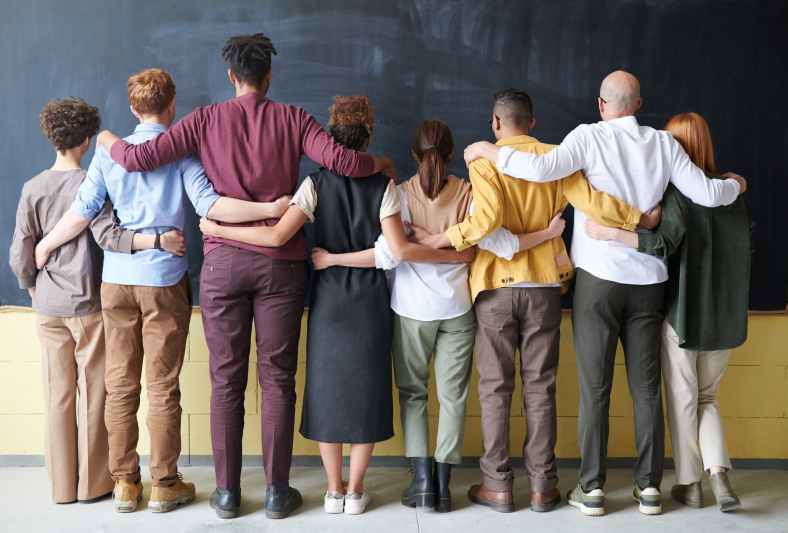
There is tremendous power in collaboration, especially when it comes to preparing our students with essential skills for the future. For teachers, collaboration means that we can continue to grow professionally, become better each day and also have the support that we need when we need it.

Benefits of teacher collaboration 

Collaborating with other teachers does not just impact our growth; it also leads to more benefits and potential growth for our students. We often hear about the importance of building meaningful relationships, but teaching can become an isolating profession as we know and may have experienced. Because of this, it’s important that teachers have a community where they can work together in the same school or school district, or even on a global scale. With so much technology available today, there are many different ways to do this. 

Over the past two years, we’ve all seen and experienced the benefits of being a connected educator and how collaboration makes a difference in our practice, helps us stay relevant and current with teaching methods and digital tools, and provides us with the feedback we need to grow. We know that we have to make it a priority so that we can provide the best learning experiences for our students. If teachers can select somebody to work with, aimed at a certain goal, share responsibility for creating a lesson or take turns observing one another, it can provide a lot of benefits for everyone involved, including:

Boosting student achievement

Research shows that teacher collaboration helps to raise student achievement. When teachers have more conversations focused on the content area, it helps provide more for students. So, we must build relationships and learn about our colleagues in order to understand our strengths and areas of need. The more resources we have and the more we can rely on one another, the better.

Continuous professional development

Additionally, professional development can be done by choice through teacher collaboration. We all need a way to continue learning. We need a support system in place that we can bounce ideas off of, provide us with feedback to help us grow, and provide our students with engaging learning opportunities for interdisciplinary collaboration. 

Modeling desired behaviors for students

We should model collaboration for our students in our classroom because we know it is a skill they will need in the future. Through collaborating, we learn about our colleagues, understand their challenges and offer solutions, and build relationships that benefit our students and us. We can connect in different ways that also help us to build our skills, encourage us to take new risks, and benefit our own SEL skills, which are equally as important.

More opportunities for learning on the job

When we collaborate, we have a better view and understanding of what learning looks like in other classrooms. We can communicate about the methods that we are using and which ones are working and how it is helping our students to achieve more. Through collaboration,  we build our own comfort and confidence by having a network to learn from which adds accountability to the work that we’re doing. 


Where to begin with teacher collaboration?

Start by finding some colleagues to collaborate with.  What happens is that you end up becoming a mentor to one another and share a safe space with what has often been called a “critical friend.” We all need feedback to grow and through collaboration, we promote the giving and receiving of feedback as we work together toward a common goal, to solve a problem, or figure out new methods to use in our classes. 

In the absence of being together in the same physical space, finding a tool or tools that we can rely on whether it’s social media, a voice message, jumping on a quick video call, or having a collaborative space and posting a question, there are tons of options. Just find something that will work for both of you that is accessible and that will enable you to grow as an educator.

How to strengthen teacher collaboration in schools? 

There is always so much happening during the school day that there can be challenges in finding the time to collaborate. Having options set up, especially with the technology tools that are available, helps us to facilitate collaboration in ways that were not available before. 

For example, some schools may have Professional Learning Communities (PLCs) with special time set aside during the day for teachers to engage in a learning experience to build skills in a certain area, plan curriculum, or even do something like a book study and increase their awareness about a topic of interest. 

Here are more ideas to help you find the time for teacher collaboration:

  1. Having various meeting options. Since meeting during the school day or after school can be a challenge, relying on tools like Google Meet, Microsoft Teams or Zoom helps to facilitate the collaboration in real-time. Even teaching next door to someone doesn’t mean that you’re guaranteed to have time to have a conversation let alone collaborate. Using some of these tools opens up more opportunities that meet people’s different schedules and gives them an opportunity to really focus on the art of collaboration.
  2. Use messaging tools. Using voice tools like Voxer, or messaging tools like Slack or even Microsoft Teams are great options for collaboration. Teachers can form small groups, ask questions, share resources and create a space for professional learning and networking to happen. However, using your learning platform is also a great way for teachers to share materials and be part of a community space. Read more: 4 Ways to promote collaboration in digital spaces
  3. Social network communities. When we look at social media options, teachers can join groups on Facebook and LinkedIn or communities on Twitter. Finding a group to collaborate with is much easier today with so many ways to facilitate the exchange of ideas and more importantly, the building of relationships. You can even use a hashtag on Twitter to search for content or seek educators to set up a collaboration. Any of these options would make a positive impact on educators when it comes to collaboration. There are times we get stuck and wish we could just reach out and ask somebody for help. We can also use different digital tools as ways to collaborate asynchronously with a lot of additional options. 
  4. Collaborative spaces. We use a Google Jamboard, create a Padlet or start a Wakelet collection. These are available for everyone to contribute to and the best thing about some of these options is that you can include audio or video. Another tool that’s great for giving feedback and responding is using Mote. Having a few quick options like these to post in a space at your convenience makes a huge difference. Read more: How LMS groups enable student collaboration for better learning outcomes

Teacher collaboration equals outstanding results

“It takes collaboration across a community to develop better skills for better lives.” Jose Angel Gurria

When teachers collaborate and model that for their students, they see the benefits of working together on group projects or on cross-curricular lessons. Collaboration is essential and it helps us when we can share the work that we are doing in our classrooms, which I refer to as “sharing our teacher talent.” When we have time or space set aside to work with the same grade level or content area teachers, it brings so many more opportunities for our students. 

Rachelle Dene Poth

Rachelle Dene Poth

Rachelle Dené Poth is a Foreign Language and STEAM Teacher at Riverview Junior/Senior High in Oakmont, PA. She is also an Attorney, Edtech Consultant, Keynote Speaker and the Author of seven books about education and edtech. Follow her on Twitter and Instagram at @rdene915

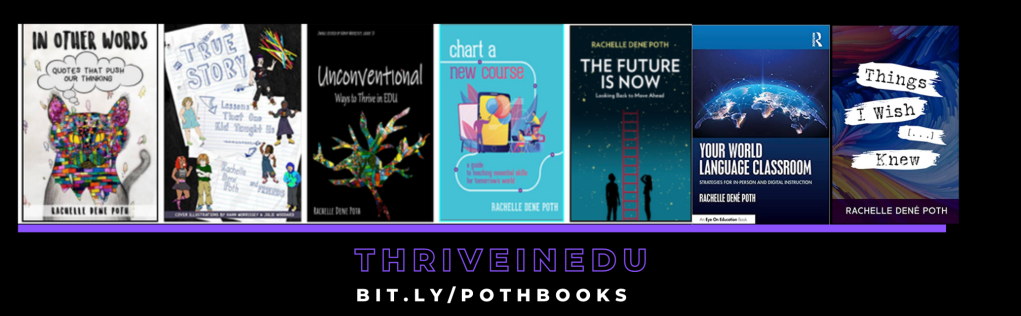
**Interested in writing a guest blog for my site? Would love to share your ideas! Submit your post here. Looking for a new book to read? Find these available at bit.ly/Pothbooks
************ Also check out my THRIVEinEDU Podcast Here!

Join my weekly show on Mondays and Fridays at 6pm or 6:30 pm ET THRIVEinEDU on Facebook. Join the group here

CONNECTING OUTSIDE THE CLASSROOM: Mystery Location

Guest post by Gina Ruffcorn, 5th-grade teacher, and author @gruffcorn13

One day while scooting around a teacher website, I encountered a request from another educator looking for a partner class for a mystery location session. The concept: our two classes would join on a video call. The teachers would know where each class was located. But the students would not. (Hence the mystery!) Once the call was connected, the students would ask each other yes/no questions back and forth about their geographic locations until they could guess them.

I thought it sounded like an interesting idea. I was excited by the idea of flattening the walls of my classroom and making connections with other classes and educators. I did some background research and prepared my students for the activity. The day of the session arrived and we eagerly launched into the mystery of locating the other class. We epically failed. My students really struggled to ask questions and guess where the other class was located. The other class didn’t have nearly as difficult a time as we did. In fact, it was the least fun I had ever experienced in a classroom. It seemed the call was never going to end. As we said goodbye to the other class, all I could think about was how much I never wanted to be in this position ever again. I felt completely ineffective. As far as I was concerned, this was the one and only mystery location activity we would ever do.

Once the kids were back in their seats, we began to talk about the session. I apologized for getting us involved in something I clearly didn’t know enough about. I explained how helpless I felt as we tried to work through the activity. I promised the students that we were not putting ourselves in that position again. Surprisingly, as I looked around the room at the students, they didn’t seem nearly as freaked out as I was. Instead, they talked excitedly about the fun and the challenge of the activity. In fact, they wanted to try another one. I wasn’t sure what to do. I openly admitted to the kids that if they wanted to try another session I’d have to think about it. It was truly that uncomfortable for me. I felt vulnerable and incompetent, both were new feelings for me in a school setting.

I went home that day haunted by the knowledge the mystery location activity had brought to my attention. My fifth graders had no critical thinking skills. They had struggled with analyzing and evaluating the information on their own. They lacked the problem-solving skills necessary to make independent decisions that could be supported by newly learned data. They had no idea how to collaboratively approach a large problem, assess it, and then work together as a team to systematically solve the problem. More importantly, I had no idea how to go about teaching those missing skills to them.

The students and I had an extensive discussion about our thoughts and feelings regarding the failed mystery location activity. They were eager to schedule another session. I was the one with a bruised ego. I had to openly admit that I had no idea what to do or how to help them learn the necessary skills to be competent opponents in a mystery location activity. I distinctly remember saying that I would have to learn right alongside them. They were determined to try again. The next attempt would genuinely be a student-driven activity. The kids would be completely in charge of all aspects of locating the mystery city. I had to learn to be comfortable with giving the session over to the kids and stepping back to the sidelines. Expressing my confidence in the students as they undertook the challenge would let them drive the activity. I put my faith in them and they began to make plans for the next mystery location call. Out of respect for their tenacity, I set up another session. With the students leading and me watching from the sidelines, we took the risk together.

The students’ skills got better with each session. They were developing characteristics that lead to resiliency and self-reliance. As my comfort level grew, I was also gaining a new appreciation for classroom activities that led to a stronger student-centered environment in order for children to become active participants in their own learning. The kids loved the challenge and as it turned out, so did I.

That first mystery location session was an eye-opening discovery for me as a teacher. Feeling inadequate and obtuse wasn’t a normal classroom experience for me. Being uncomfortable made me utterly vulnerable in front of my students and I didn’t like it. I wondered if this was how my kids were feeling in content areas when new concepts were being taught. If so, that was awful. I expected my students to take chances and risks as they learned new things. But, I wasn’t open to taking those same risks when it came to an activity that I didn’t understand. Suddenly it felt hypocritical to expect things from the kids that I couldn’t do myself. Reflecting caused me to begin to closely examine the way I was teaching.

As an educator, was I too scared of taking risks to make changes in my own classroom? Was I willing to give over the control of my classroom to the students in order for it to become a more student-driven learning environment?

I discovered that being open to changes and stepping out of my comfort zone was difficult. Implementing new and different ideas into the classroom required a shift in my attitude.

About the Author

Gina Ruffcorn

Author of “Our Class, Our Voice: Creating Choice and Amplifying Autonomy in the Elementary & Middle School Classroom”

5th-grade teacher, West Harrison Community School, Mondamin, Iowa

Twitter: @gruffcorn13

Website: www.ginaruffcorn.com

**Interested in writing a guest blog for my site? Would love to share your ideas! Submit your post here. Looking for a new book to read? Find these available at bit.ly/Pothbooks

************ Also check out my THRIVEinEDU Podcast Here!

Join my weekly show on Mondays and Fridays at 6pm or 6:30 pm ET THRIVEinEDU on Facebook. Join the group here

Building Community and Trust with Klassboard Pro

For families to be engaged in the learning experiences of their child and feel connected to their school, it is important to have an effective communication platform available that connects districts, schools, and homes. Knowing each family’s needs and preferences when it comes to communication and developing an understanding of any barriers to family engagement will help educators to better provide for each individual family’s needs. We can then proactively develop strategies and implement the right tool to better support families. When choosing a tool, focusing on how it will benefit families is essential. We know that families’ enjoyment and comfort in using the tool will be a deciding factor in whether the communication is successfully transmitted or not. Districts, administrators, and teachers need to reach families in a way that meets their specific preferences and also that makes them accessible. The Klassly app has over a 90% weekly engagement rate from parents’ accounts which shows that families appreciate all that it offers in one, unified and user-friendly space. According to a survey of Klassly users, 86% of the families surveyed preferred this app to any other previous system that they had used. Reaching out to families for feedback is important so that the best features are made available and that they have a choice that does not cause overwhelm because of the complexity or use of multiple tools.

Klassboard Master facilitates district-wide communication. It is an all-in-one communication platform that enables schools to streamline what normally requires many other apps and tools teachers and administrators might be using. In research from Project Tomorrow, it was reported that 88% of administrators saw a positive impact from communicating with families through the use of social media, while 66% of parents preferred emails or phone messages as communication. We know that families need to have a direct line of communication with schools. In the event of an emergency, or for updates about school news or class information, families need to be able to access what they need. Understanding the diverse needs of the families and students in our school system will enable us to provide a space where we can form a strong and collaborative home-to-school partnership. These strong connections have been shown to positively impact student performance and will empower families and further engage them in the learning experience of their children.

School districts enjoy the inclusive nature of social media and many are leveraging Twitter, Facebook, and even Instagram to foster more connections with their school community and share updates and information in a timely, accessible manner. While many families may engage in these posts, there are still many others who will miss important and time-sensitive information which can become lost in the noise and number of posts completely unrelated to school. With so much information, families will have to scroll through all of the posts to find the information. Although it is convenient, it is not the most effective or efficient way to connect the home to school. However, a platform that mimics the feel of social media, which is familiar, offers all the essential information from teachers, classes, schools, and the district that families are more interested in because it actually concerns their children will be more efficient. Elementary schools, for example, don’t need to receive messages about senior graduation events. However, the district might want to share photos of this and other special events with everyone so families can look forward to seeing their children grow up and be a part of this community.

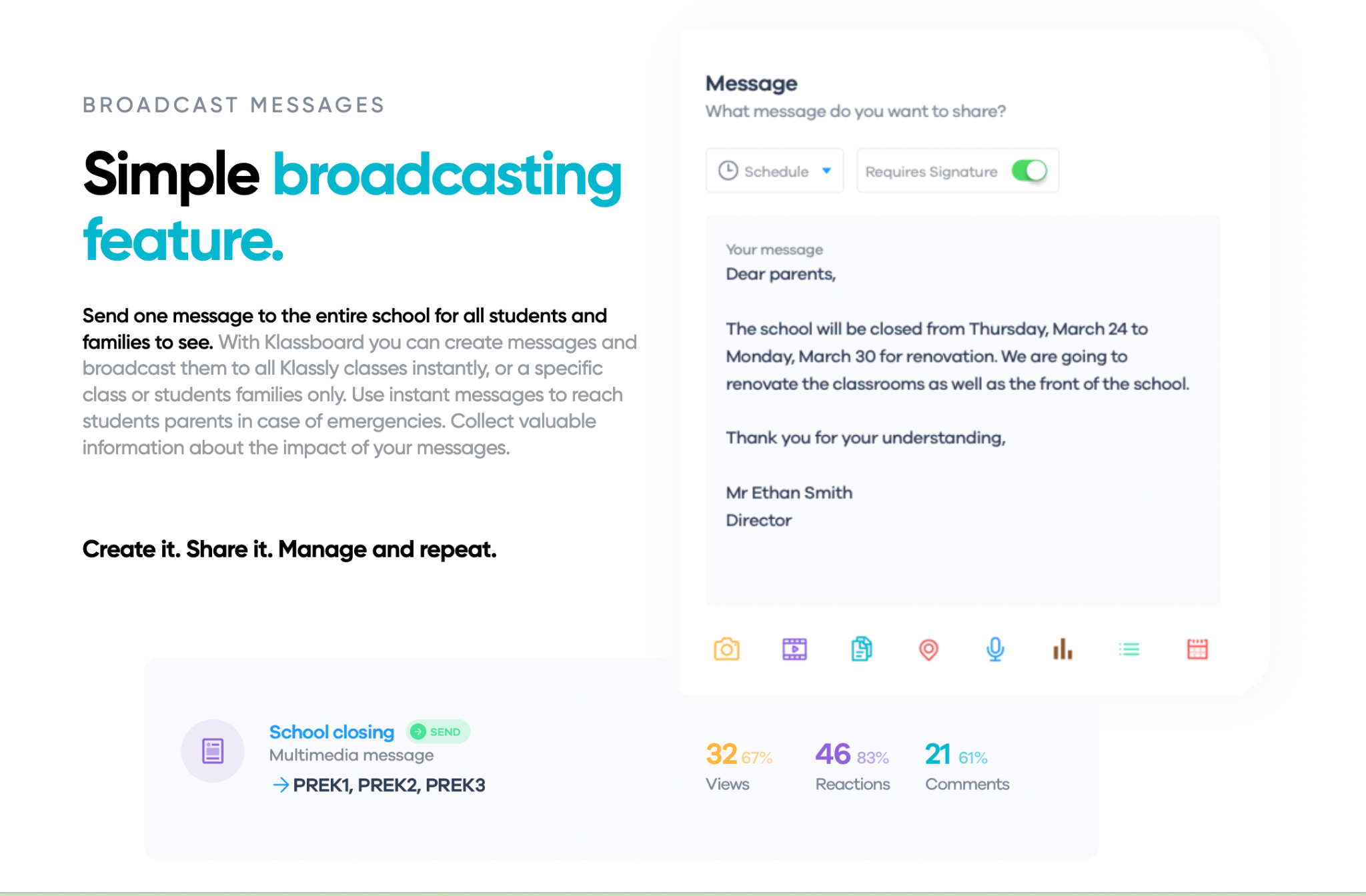
With the Klassboard and Klassboard Master, leaders can broadcast photos, videos, voice memos, and important messages that can be automatically translated. District leaders can also send private, direct messages to specific classes or families, to specific grades or schools, or to every class in every school. It’s a highly effective and inclusive way to communicate information on a safe and private platform. Parents receive push notifications and email notifications to see new posts and stay informed. Digital privacy is respected and every single user knows their information and the childrens’ data will be kept private, never shared or sold, it never leaves the company servers. The Klassroom company has made digital privacy a priority in the design of the app. To foster a positive partnership, each party included must feel respected.

The partnership: Home and School

From what we have learned, we know that we must move beyond the parent-teacher connection and foster a “family to school” partnership to truly engage families, collaborate, and grow together. When families know exactly where to look to obtain class and school updates, and resources, ask questions, or learn about upcoming events, it offers a more structured framework for families and fosters a greater connection between the whole community. When teachers can use one space via Klassly, to share pictures, videos, voice memos, documents, events, polls, and more, it has a big impact on families to stay informed and connected.

We know that sharing information is important, especially when it is time-sensitive. With Klassboard Master, school districts have access to a variety of features for sharing information with families and in an emergency, broadcasting text messages directly to families and schools, which bypasses the app. This feature is essential because although families have preferences for communication, they may choose to rely on text messages rather than the app. In an emergency situation, being able to reach all families immediately is critical. Districts and Schools can see engagement data for messages or posts in each class’s timeline, and know whether all families have been informed. It enables administrators to broadcast media and communicate in a transparent and inclusive way and also track important data from the schools’ Klassboards and each class’ Klassly for actionable insight.

With Klassboard Master (for districts) and Klassboard Pro (for Principals and school admin), messages can be broadcast to all Klassly classes (managed by teachers) instantly, or to a specific class or students’ families. Teachers and administrators can send instant messages to reach students’ parents in the event of an emergency. Through the dashboard, schools can collect valuable information about messages that have been sent, engagement data, comments, private responses, attendance records, and student information.

When district leaders use The Klassboard Master to link and access every school via their Klassboard in the community on which each Klassly class is linked, all communication becomes streamlined. They are better able to facilitate the management, organization and guidance of the school community by using one simple and free tool. It promotes clear communication from district to school to family, streamlining communication and in a centralized virtual space which helps everyone access the information they need clearly when they need it.

About the Author

Rachelle Dené Poth is a Foreign Language and STEAM Educator at Riverview High School in Oakmont, PA. She is also an Attorney, Edtech Consultant, and Speaker. Rachelle is the author of seven books about education and edtech and a blogger. Follow her on Twitter and Instagram at @Rdene915

**Interested in writing a guest blog for my site? Would love to share your ideas! Submit your post here. Looking for a new book to read? Find these available at bit.ly/Pothbooks

************ Also check out my THRIVEinEDU Podcast Here!

Join my weekly show on Mondays and Fridays at 6pm or 6:30 pm ET THRIVEinEDU on Facebook. Join the group here

Encourage Learning Over the Summer with Buncee & PebbleGo Create

Even though the summer means a break from school and the regular routines that we’ve grown accustomed to throughout the year, it is an opportunity where we can take advantage of a different kind of learning. There are opportunities everywhere for learning something new and this is something that I often tell my students. I am always excited to learn from students and focus on what I can learn new each day.

Over the summer, hopefully, students are spending more time outside, getting to reconnect with family and friends, getting involved in work, helping others through volunteer work, or maybe just taking a break and traveling. Students could come up with a bucket list of what they’d like to do over the summer.

In each of these, there are opportunities for students to take a close look at the world around them and become curious about learning. Students can connect with things that are happening in the real world. With the resources available through Pebble Go and using Pebble Go Create, students and teachers can have a lot of fun exploring, creating, and sharing what they have done and learned during their summer.

Finding the right prompt

Sometimes it’s hard to ask students how their summer was because we don’t always know what they are experiencing when they’re not with us in our classrooms. But, if we give them a couple of topics to choose from, maybe to learn about different animals they see in the summer using PebbleGo’s research articles, talk about some new friendships or relationships that they’ve built, and share activities that they’ve engaged in whether through camps or other activities, they can each find something to share!

Use my template!

Also in the summer, we have a little bit more time available so we can participate in new experiences that perhaps during the school year we didn’t have enough time for. When it comes to learning, it’s important that we share what we have learned with others so that they can learn from us too!

What I love about Capstone Publishing and PebbleGo, and of course, PebbleGo Create is that students have so many ways to share what they are learning, and experiencing, what they are excited about, and so much more! We spark curiosity and creativity in learning and also help to build confidence in learning!

Some schools may even give students assignments over the summer just to keep them thinking about things. Maybe it’s reading a book, maybe it’s looking at things related to science and exploring nature, or participating in different activities that are sports-related or wellness related. Create a fun scavenger hunt for students to participate in! There are templates ready to use and adapt to your own content or ideas!

We can also help students to develop student agency in learning by exploring a topic of interest kind of like a genius hour or project-based learning (PBL) and giving students a chance to really dive into something that they’re curious and excited for. When they are invested and can choose what and how to create something using PebbleGo Create to share with their classmates and their teachers when they return to school, what a difference it makes! Whatever it is, PebbleGo Create enables students to share what they know in a way that is personalized to them because they have so many choices available. They can share what they did, why they decided to do a certain activity or explore a different animal, or maybe why they engaged in an activity like volunteer work or whatever it is.

Benefits

Learning is fun and it doesn’t always have to involve a ton of work. We want students to be open to the possibilities, to look around them in their space and their community, and to connect with the world at large because that is what will best prepare them for the future. So when we think about encouraging learning over the summer, maybe it’s not so much about tying it to the content that they’re learning but giving them some possibilities to explore and letting them choose which one is of most interest. And then, if we are in our classrooms and have the same students or a mix of groups, it gives us an opportunity to then begin the year by building relationships and gaining and gathering new knowledge from our classmates.

Getting Started with Creating and Summer Learning

To get started, it always helps when there are templates and formats available so here are a few ideas to kick it off. Look no further than the inspiring books and themes brought up through Capstone Publishing and Pebble Go.

Have students that love animals? Encourage them to learn about animals they see in the summer or read a book about animals and create something to share their learning!

Are students feeling like they missed out on opportunities to connect with friends? Maybe they can talk about ways that they make time for friends, some of the ways of building relationships, and maybe even the challenges of relationships when it comes to things like peer pressure and bullying. There are books to explore relationships, making friends, and how they work through any challenges they encounter.

Also if they’re in the summer with more time available, students might take advantage of volunteer opportunities, working at a summer camp with younger children, helping out at a local community center, or maybe being involved in something at the school. Many schools offer some of the programs for students that might be for enrichment or might just be simply helping out with the school and the maintenance and the cleaning and all of those things that go into making the school a safe and welcoming place in the new school year,

No matter what the prompt, there are books, templates, and more to spark curiosity and creativity in learning and in sharing that learning. Get started today!

Meet the Author

Rachelle Dené Poth is an ed-tech consultant, presenter, attorney, author, and teacher. Rachelle teaches Spanish and STEAM: What’s nExT in Emerging Technology at Riverview Junior-Senior High School in Oakmont, PA. Rachelle has a Juris Doctor degree from Duquesne University School of Law and a Master’s in Instructional Technology. She is a Consultant and Speaker, owner of ThriveinEDU LLC Consulting. She is an ISTE Certified Educator and currently serves as the past -president of the ISTE Teacher Education Network and on the Leadership team of the Mobile Learning Network. At ISTE19, she received the Making IT Happen Award and a Presidential Gold Award for volunteer service to education. She is also a Buncee Ambassador, Nearpod PioNear, and Microsoft Innovative Educator Expert.

Rachelle is the author of seven books and is a blogger for Getting Smart, Defined Learning, and NEO LMS. Follow Rachelle on Twitter @Rdene915 and Instagram @Rdene915. Rachelle has a podcast, ThriveinEDU https://anchor.fm/rdene915.

**Interested in writing a guest blog for my site? Would love to share your ideas! Submit your post here. Looking for a new book to read? Find these available at bit.ly/Pothbooks

************ Also check out my THRIVEinEDU Podcast Here!

Join my weekly show on Mondays and Fridays at 6pm or 6:30 pm ET THRIVEinEDU on Facebook. Join the group here
Inspired Not Tired

Guest post by Julie Dossantos, @TeachMrsDTeach

I came to the teaching profession later in life. Several years ago, I purchased a book to read with my daughter, which would change my view on teaching forever. Malala: My Story of Standing Up for Girls’ Rights, written by Malala Yousafzai, is about her experience as a child living in Pakistan. The heart-wrenching story mesmerized us as we read about Mr. Yousafzai’s school in which all students were welcome to attend, including girls. Malala’s account of her aspiration to be educated, despite Taliban oppression and violence, motivated me to continue on my path to continue my own studies and realize my dream to teach. I became the first in my immediate family to graduate college at the age of 42.

The learning process is what inspires me as an educator. When I personally learn a new skill, I go through an entire cycle. Curiosity is first, a question or wondering prompts me to want to learn more. Then I begin the discovery process, digging deeper into the content. Finally, the practice portion takes place. It is in this space I gain confidence and experience. The skill or information I desire becomes part of me. I will now take it with me as I navigate through new experiences.

So it goes with my students and my peers. We are all learners. The learning that transpires every day inspires me. I take great joy in creating excitement towards learning new skills, discovering new ideas, and practicing for mastery with my students. Each lesson, in every content area, provides an opportunity for my students to connect, wonder, and share with others. Observing my own first graders as they tackle new challenges, take risks, and persist inspires me to do the same. There is nothing better than being witness to new knowledge being activated!

I continue to learn from my peers through the many professional development offerings through our school and district, my grade level team, as well as through alternative resources, such as Twitter chats. Learning from other teachers from around the world while seeing their students’ learning in action inspires me on a daily basis. These shared stories remind me to focus on being inspired when I feel tired. What an incredible time to be a teacher!

Julie Dossantos

@TeachMrsDTeach

Julie Dossantos has been an early childhood educator for over 20 years. Before becoming a public school teacher in 2016, Julie worked as a preschool teacher, preschool director, director of children’s ministry, and enrichment services provider. She also was a storyteller for over ten years at an independent children’s bookstore. Currently, she enjoys teaching first grade and serving as grade co-chair at an amazing elementary school in Vero Beach, FL.

**Interested in writing a guest blog for my site? Would love to share your ideas! Submit your post here. Looking for a new book to read? Find these available at bit.ly/Pothbooks

************ Also check out my THRIVEinEDU Podcast Here!

Join my weekly show on Mondays and Fridays at 6pm or 6:30 pm ET THRIVEinEDU on Facebook. Join the group here

Self-belonging

Guest post by Dr. Ilene Winokur

School experiences can have a long-lasting effect on how we perceive ourselves and our capabilities/lack of.

Today’s post delves into self-concept or what I call self-belonging and how we can attain it and support others, like our students, to find themselves and their sense of self-belonging.

Graduation speeches are usually upbeat and celebrate the time a student spends in the years leading up to their final year before adulthood. It was a bit different at my son’s high school graduation in 2005. Ahmed, my son’s friend, and the class salutatorian*gave a moving speech to his fellow classmates filled with this message: We are so much more than our grades, our SAT scores, and the rank of the universities that accepted us. His speech was a response to the negative beliefs about his entire senior class, the largest in the school’s 40-year history; 132 students. From the time they were in the elementary grades at this K-12 school, the whole class was labeled troublemakers, even the well-behaved, achieving students, and all were regularly disciplined. Even in their final year, discipline meant the loss of privileges such as having their own space to get together between classes and being allowed to move around campus with less supervision than lower grade levels.

Ahmed’s speech left me speechless and sad. I still have a copy of it to remind me of what schools shouldn’t do to students. Students shouldn’t be labeled, shamed, or punished for poor behavior without someone first trying to find the root cause of the problem. But that’s exactly what happened. In 7th grade, my son received a “D” grade on a literature response essay. My son is fluent in English, and an avid reader of books much higher than his reading level. However, when I began asking him questions about the book he used for his essay, his answers showed me that he only had a superficial understanding of the plot, characters, etc. I was shocked and made an appointment to see his teacher whose excuse for not exposing my son to a deeper analysis of the book was the poor level of reading comprehension by the majority of his classmates and a lack of English language support in middle school.

My son and many of his classmates, including the salutatorian, walked into college with a deficit mindset due to low self-esteem, self-efficacy, self-confidence, and self-worth based on hearing they “weren’t able to…”, “they lacked X skills,” throughout their school years. It’s difficult to continue doing your best when all that’s recognized is your worst. And while I tried to support him and do my best as a parent to minimize the effects of the constant negativity, my son, now in his mid-30s and working at a demanding job that appreciates his skills, has begun to believe in his capabilities and gain a sense of self-belonging.

It’s tough growing up without a positive self-concept. I spent the first 35 years of my life doubting myself, second-guessing my decisions, and wondering if people liked me or were just saying they liked me. It wasn’t until I found my sense of self-belonging in my mid-30s that I finally stopped my negative self-talk and started to believe in myself. In elementary school, I remember having to suck on cinnamon candy to stop my stomach from feeling queasy because I was so anxious about failing or making a mistake. In high school, I couldn’t wait to graduate, so I enrolled in summer school to have enough credits to graduate a year early. There are two times I remember feeling like a failure. In 7th grade, I received a “C” grade for an art project I worked on for many hours and was so proud of, and it convinced me I was not creative. The second memory I have is failing my first test in biology class in 10th grade. That reinforced my belief that I was unable to learn science. I was devastated and thought I’d have to repeat the subject. Since I already doubted my abilities, and my self-efficacy in science and art, those grades reinforced my self-concept and negatively impacted my sense of self-belonging.

So, what is self-belonging?

According to Healthline, “[y]our sense of self refers to your perception of the collection of characteristics that define you. Personality traits, abilities, likes and dislikes, your belief system or moral code, and the things that motivate you — these all contribute to self-image or your unique identity as a person.” (https://www.healthline.com/health/sense-of-self) This is what I refer to as “self-belonging.” It’s essential to our well-being because, without it, we doubt if people really like us for our authentic selves, we question each decision we make, and it negatively impacts our personal and professional relationships. So how can we develop self-belonging?

Here are a few tips from my own experience:

  • Be mindful and intentional about choosing to build your sense of self-belonging. Make a commitment to spending time and effort at it.
  • Build time into your schedule for daily reflection and use that time to make mental or physical lists of your personal and professional accomplishments, your strengths, and what obstacles you’ve overcome.
  • Find someone you trust and who values you to talk about the list from #2.
  • Celebrate your accomplishments (see #2) whenever you begin to doubt yourself. Make this a habit.
  • Don’t feel shy about sharing your accomplishments with others, even strangers. Learn to feel good about “bragging” to others. This will eliminate any thoughts you might have of “impostor syndrome.”
  • Surround yourself with people who value you for your authentic self and don’t insist that you “fit in.”
  • Practice giving yourself grace; allowing yourself to make mistakes because you’re human and valuing those mistakes or failures as opportunities to learn and grow.

Self-belonging plays an important role in how students navigate school. Without a sense of belonging, learning becomes secondary to what happened at home, or how others are treating me. If I don’t have self-esteem or self-efficacy, I won’t try to move out of my comfort zone because I’ll be worried about failing in front of my peers and my teacher. According to a recent interview (Allen and Gray, 2021) of Emeritus Professors and authors of the groundbreaking 1995 paper about belonging and human motivation, Baumeister and Leary, “There has been much discussion about whether self-esteem is important for education, and self-esteem is substantially (though probably not entirely) rooted in belongingness.” Baumeister notes, “belongingness remains an important driving force. If we can explore new ways to harness that motivation to strive for superior academic achievement, it would benefit plenty of individuals as well as society as a whole.” Leary emphasizes the point when he states, “belonging plays an important role in the degree to which students are motivated to go to school in the first place.”

How can we help students cultivate a healthy self-concept and a sense of self-belonging?

We can plan lessons that encourage independent thought and action, and that give them choices to explore, be curious, and learn about the world around them. Students who need a bit more guidance along the way should be able to choose topics that interest them and books that represent them. We can build their self-confidence by recognizing their accomplishments and giving them focused feedback about the areas they are still developing while supporting them along the way.

My life is so much happier and healthier because I found my sense of self-belonging and I wonder how much better my life would have been if I had found it before I was 35 years old. Think of how much better school and life would be if we could find our sense of self-belonging when we’re younger.

Now available: Journeys to Belonging: Pathways to Well-Being

A book about my journey to belonging in two very different parts of the world and how important a sense of self-belonging is for having healthy relationships with others, personal and professional.

Find out more about self-belonging on my website: www.ilenewinokur.com Be sure to sign up for my monthly newsletter which will be filled with strategies and ideas for cultivating a sense of belonging in your classroom and your school.

*graduating student with the second-highest grade point average

Related studies:

https://citeseerx.ist.psu.edu/viewdoc/download?doi=10.1.1.411.3391&rep=rep1&type=pdf

ttps://deepblue.lib.umich.edu/bitstream/handle/2027.42/55938/20174_ftp.pdf?sequence=1

https://srcd.onlinelibrary.wiley.com/doi/am-pdf/10.1111/cdev.12802

About Ilene

Dr. Ilene Winokur has lived in Kuwait since 1984 and is a professional development specialist supporting teachers globally including refugee teachers. Ilene has been active in learning innovation for over 35 years, is an expert in professional development, and is passionate about narratives related to belonging. Prior to retiring in 2019, she was a teacher and administrator at the elementary and pre-college levels for 25 years. Her blog, podcast, and book focus on the importance of feeling a sense of belonging.

Link to purchase Journey to Belonging: Pathways to Well-Being: https://journeys2belonging.com/3C5Ojig

You can connect with Ilene:

Twitter: @IleneWinokur, Instagram: @ilenewinokur

Facebook: IleneWinokur

LinkedIn: https://www.linkedin.com/in/ilene-winokur-edd-08683527

Blog: Website:

**Interested in writing a guest blog for my site? Would love to share your ideas! Submit your post here. Looking for a new book to read? Find these available at bit.ly/Pothbooks

************ Also check out my THRIVEinEDU Podcast Here!

Join my weekly show on Mondays and Fridays at 6pm or 6:30 pm ET THRIVEinEDU on Facebook. Join the group here

Classroom Community Building

Guest post byLaura Steinbrink

I FOUND THE SIMPLE LIFE AIN’T SO SIMPLE

It is summertime or almost summertime for teachers in the United States, but no matter where you are or when you are reading this post, classroom community building is something you are likely to prioritize at the beginning of each school year. What you may not do consistently, however, is continue to do community-building activities in January or periodically throughout the school year. If the thought of doing that sounds good, but you are concerned about where to find the time to fit it in, then I have a few ideas about that as well.

WHEN I JUMPED OUT ON THAT ROAD

Relationships between students and their teachers are important, but so are the relationships built in class between classmates. While pacing guides and other curriculum demands can become overwhelming fast, there are some easy ways to work in relationship building too. New students popping in throughout the school should definitely be a reminder to add team building or relationship building into your plans, but the truth is that all students benefit from regular or periodic activities that help them get to know their classmates. One way to embed this into your classroom routine is through protocols.

I GOT NO LOVE, NO LOVE YOU’D CALL REAL

The first time I introduce any new strategy or tech tool, I’ve always had success when using fun content or content with a low cognitive load. My goal is to help them learn the tech or strategy in a low-stress way before they use it with content. Enter a relationship-building opportunity. The following are examples of how I might use the same relationship-building content when introducing the tech tool and the learning strategy. To be clear, I would do one or the other with the ideas below, not both.

Buncee (1st-time use)

  • Group students either within their tables or by grouping them in any way you prefer. There should be 3-4 students in the group.
  • Give students a set of questions to answer about each member of the group. Questions should be geared toward helping students get to know each other, such as “What is your favorite song?” “How many siblings do you have?” “When is your birthday?” “What is your favorite brand of shoe?”
  • Have students create one graphic or slide per group member that features a picture of the student, the answers to the questions, and tons of creativity.
  • Do a Gallery walk, print out, or digitally share their creations with the class.

Numbered Heads Together (1st-time use)

After reading how the activity works, if it is new to you, apply the same questions to students grouped as suggested in the directions. Again, I would use 3-4 students. An easy way to facilitate the questions is by projecting them onto a Smartboard or whiteboard, or handwriting them onto a blackboard, or simply write them on one index card per group. Instead of having students focus on merely discussing their answers, have them dig a little deeper by sharing out one thing that they all have in common based on their answers to those questions. The commonality can be negative like nobody likes to wear Crocs.

AIN’T GOT NOBODY WAITIN’ AT HOME

The great thing about using “get to know you” content with new tools and strategies is that it creates memorable and low-stress fun while helping students get to know each other. The next time you want to use that tool or strategy, students will have a positive association with it, making their work with the actual content have a much better chance of being productive and successful too, as well as fun.

HEADINGS ARE PARTIAL LYRICS FROM VAN HALEN’S SONG, RUNNIN’ WITH THE DEVIL.

Be sure to follow Laura Steinbrink on Twitter @SteinbrinkLaura and her blog!

**Interested in writing a guest blog for my site? Would love to share your ideas! Submit your post here. Looking for a new book to read? Find these available at bit.ly/Pothbooks

************ Also check out my THRIVEinEDU Podcast Here!

Join my weekly show on Mondays and Fridays at 6pm or 6:30 pm ET THRIVEinEDU on Facebook. Join the group here

The Increasing Role of Artificial Intelligence in Our Lives

Artificial intelligence is being used in so many facets of our everyday lives. Three years ago when I first started to learn more about artificial intelligence, I was surprised at how much we interact with it on a daily basis and most of the time, may not even realize it. Over the past few months, there has been an increase in information about how AI is being used in various fields and the innovative ways that people are developing new technologies with it. Artificial Intelligence has been an area identified as one of the top five areas of IT in demand as a result of COVID-19. There has also been a huge increase in the number of online courses available to learn more about AI and develop the skills needed to fill some of the nearly 58 million projected jobs that will be available by 2024.

All of this recent information has made me even more curious about the role artificial intelligence will play over the next few months as we hopefully get back to more of a normal life experience and can engage in work and learning but also in leisure activities. What can we learn from the recent uptick in AI information and how can it help us in the future?

Recent AI Accomplishments

I was updating my resources for a presentation on AI, and I was amazed at how much more we are seeing AI being used in the world and the ways in which it is being used. While there are concerns to be mindful of when it comes to AI, especially in regard to privacy and ethics, there are also tremendous possibilities to learn from and share with students. What can we learn from studying how AI is used to create content such as poems, music, paintings, or even stories for the news? Some of the interesting uses of AI are:

Books. AI has written a new series of five chapters after sorting through the novels that Game of Thrones was based on. What can this capability mean for our students? It could be interesting to see what AI would create if it took sample writing from a group of students and generated a new story. Can AI help writers to overcome writer’s block? If so, what are the legal ramifications/copyright issues involved in something like this that has been generated by AI?

Business & Legal. Marcy Smorey, a Pittsburgh attorney, has been using AI to help students understand more about signing rental leases. Clover Contracts uses machine learning to automatically analyze and provide information on whether an agreement should be signed or not. This capability leads to more efficient processing of business and legal documents, however there is still the need for human interactions and conversations. Other possibilities are synthesizing all of the data, looking for errors, and saving time in what can be a lengthy process. Recently, Microsoft began using more AI to process data or even, in some cases, as replacements for journalists. Chatbots are now being used to replace call center workers.

Medicine. AI has been used to detect lung cancer, to track the Coronavirus, and recently, for online vision tests. Students at Duke are working on a machine learning system that will help doctors diagnose COVID-19 faster by analyzing CT scans rather than relying on the swab test being used now. The benefits of AI are that we can provide medical treatment faster and make it more accessible through online technologies.

Song Writing. AI has been used to create a song that was written similar to the style of the band AC/DC. The song was created by a chatbot using lyrics of AC/DC songs. The AI analyzed the most frequent words from the songs and then wrote its own lyrics.

Visual Arts. AI can be used for creating works of art. By showing it different styles or genres of art, the AI can then create its own painting. A portrait was recently created that then sold for $432,599 at a Christie’s auction. How can we use this in education? The potential could be for students to program AI to include additional data sets that would then enable AI to generate a work of art reflective of a specific painter or time period, but with content related to the current time or state of the world.

These are just a few of the ways that AI has been in the news lately that lead us to think about our needs in the future and what we can do as educators to prepare our students. With AI in education, it means being able to provide more personalized learning opportunities for students and educators through intelligent tutoring systems and adaptive assessments and platforms. What could this mean for these and other industries, who have clearly been impacted by the pandemic and the resulting shutdowns of businesses and services provided? If social distancing and limits placed must continue for an extended period of time, will society become increasingly dependent on AI to perform jobs and tasks previously done by humans, as a way to flatten the curve? If so, are we prepared to develop the AI and fill those jobs that will result? And as an educator, if there are shortages in school district funding and even teachers, will the potential use of AI increase to provide students with continued opportunities to learn? Could teachers temporarily be replaced because of this?

It makes for an interesting conversation. We can embrace the technology to help but we still need the human connection to make sure that students develop SEL skills and so we are mindful of bias, privacy, and equity when it comes to AI.

There is a huge deficit in the number of people needed to design and maintain the technologies that we will need in the future. It comes as no surprise that there has been a spike in the number of courses available and people enrolling in courses to learn more about machine learning and artificial intelligence. Universities are offering AI degrees and the first AI university is set to open in Abu Dhabi in January 2021. Recent articles have highlighted the need for more women to enter the AI field, and a group of women researchers at CMU are leading efforts in AI research. Because of these trends and predictions for the future, we should explore options to help students understand these technologies and their potential at an earlier age.

How can we help students to learn more?

We provide opportunities for students in our schools and also connect them with global possibilities for learning and challenging themselves based on personal interests. By providing options such as PBL or genius hour, we can create more opportunities for students to become the creators of their own AI.

Sixth grade students in San Jose created the Calmzilla app, which is aimed at helping students manage stress. The girls trained their AI by using survey results from classmates and analyzed the data to determine which responses indicated stress. They entered the Technovation Families AI Challenge and took first place with their app. Looking at their experiences and finding solutions to problems and challenges faced by their peers was the inspiration behind the app design.

Montour School District in Pittsburgh has a middle school AI curriculum where students learn about AI, work with and program Cozmo the robot, interact with an autonomous robot that delivers packages, and explore their own interests in the AI curriculum.

Explore some of the resources available that students can access regardless of where they are learning. A few to check out:

  • Create-Learn offers online courses to students in grades K through 9.
  • Ready AI is offering a virtual AI summer camp for grades K through 12, and also provides workbooks, resources, and other training for students and educators.
  • Constellations Virtual Computer Science Summit is offering professional development on a variety of topics related to computer science and AI from June 15-17.
  • Living with AI is a summit designed to explore the impact of AI in various areas including criminal justice, education, healthcare, and the workforce.

**Interested in writing a guest blog for my site? Would love to share your ideas! Submit your post here.

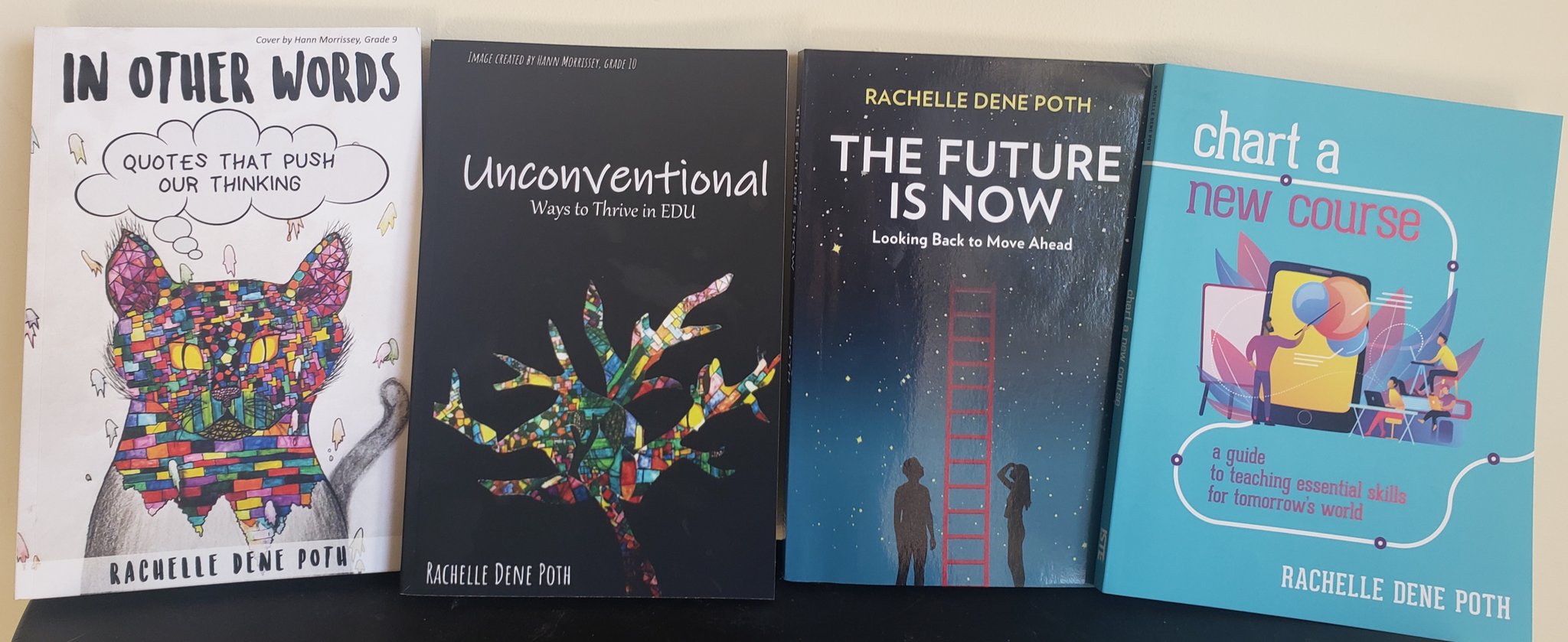
Looking for a new book to read? Many stories from educators, two student chapters, and a student-designed cover for In Other Words.

Find these available at bit.ly/Pothbooks  

Boost Student Engagement and more with BookWidgets

In collaboration with BookWidgets, opinions are my own

I absolutely love finding new tools to try out in my classroom, especially when I notice a dip in student engagement or want to explore different options that will provide more active learning experiences for my students. Whenever I try something new, typically I create an account and try it out first myself, whether it is playing a game, creating a presentation, recording a video, so that I know what students might expect and because I rarely have the chance to use these tools myself! I am also interested in the learning curve that comes with digital tools since we know that teachers’ time is valuable and finding extra time to learn something new can be tough. Finding a tool that enables us to provide authentic, interactive, and engaging learning experiences for our students while also saving time is essential. This is why I love using BookWidgets!

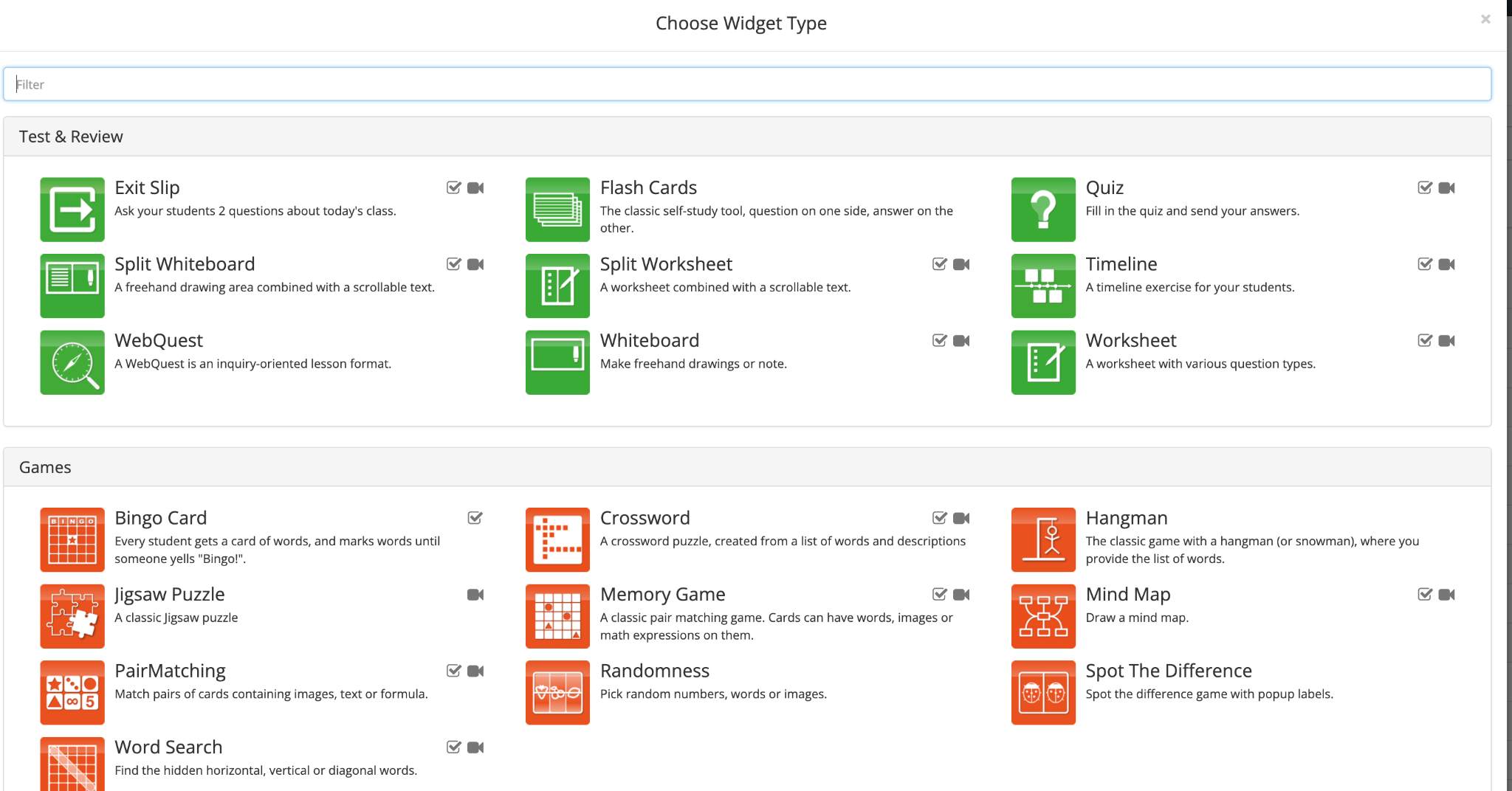
When I first tried BookWidgets on my own, I couldn’t wait to create some “widgets” for my students! It was easy to create and there were so many options that deciding on which to try first was tough! One of the best things about BookWidgets is that it offers more than 40 interactive templates for teachers to use as they design activities to help students build their skills. You can create bingo cards, crosswords, exit slips, hangman games, jigsaw puzzles, timelines, a word search and so much more to use with any content and for any grade level. The interactive lessons can be accessed from any device or you can opt to print some of the widgets like the word search or crossword as well. Check out this crossword!

Some of the choices in widgets

Awesome features for teachers and students!

The power of voice: During my teaching career, there have been times when I’ve been unable to be in the classroom and worried about how to best provide my students with meaningful learning experiences in my absence. Should I create a packet? Should I assign reading and activities with worksheets? What about giving them feedback? These are just some of the many concerns I have when I cannot be in the classroom as well as for everyday planning.

BookWidgets helps by providing many great features and one of my favorites is the audio recording option. For the first crossword that I created for students in my Spanish classes, when they clicked submit, they heard my voice congratulating them and giving them some feedback. It was funny to see their reactions when they heard my voice. Even though I was in the classroom it still provided some encouragement and motivation. Imagine how much more meaningful it is when our students hear our voice when we cannot be there to provide feedback or support in person. Depending on the activity that you choose, you have several options. You can record specific directions for the activity. As a language teacher, I can use it to pronounce some of the vocabulary words or can record a message for when students complete the activity, which is great for providing positive feedback and motivating our students. You can create a question using the audio recording feature rather than typing it in as text.

There is so much power in our voices, that being able to record and add further instructions into a quiz or use the hotspot image for example, gives students more support as they work through an activity. When we think about promoting accessibility in learning, being able to provide instructions via the audio recording feature and with widgets like the memory game and flashcards, using the text-to-speech option functionality will help to support all learners, and in my case, language learners as they build their skills.

We can promote the development of speaking skills by having students record their responses. It helps them to practice their pronunciation and to do so in a way that is more comfortable and will help them to build confidence. When we were in fully virtual or hybrid learning, our opportunities to interact with our students one-on-one were so limited. Having this functionality of the audio recording where students can also submit recordings that we can listen to and provide feedback makes an impact on their learning potential.

additional options in widgets

Rubrics!

In addition to having templates to create activities and interactive exercises, BookWidgets also has a rubrics function which makes it easier to review and score student work. There are ready-to-use rubrics or you can simply create your own and then add them to assignments right within BookWidgets. Some of the choices in rubrics include a checklist rubric for students to use as they work on a project for example, self-assessment rubrics which are great for students to develop social-emotional learning (SEL) skills such as self-awareness. Using rubrics helps students to understand what the expectations are for an assignment or project and develop SEL skills such as self-management as they set goals for themselves and work through the challenges. With rubrics, educators can evaluate student work and responses and be better able to provide authentic and timely feedback to students and use it to guide our instruction. You can also use emojis and other symbols in your rubrics!

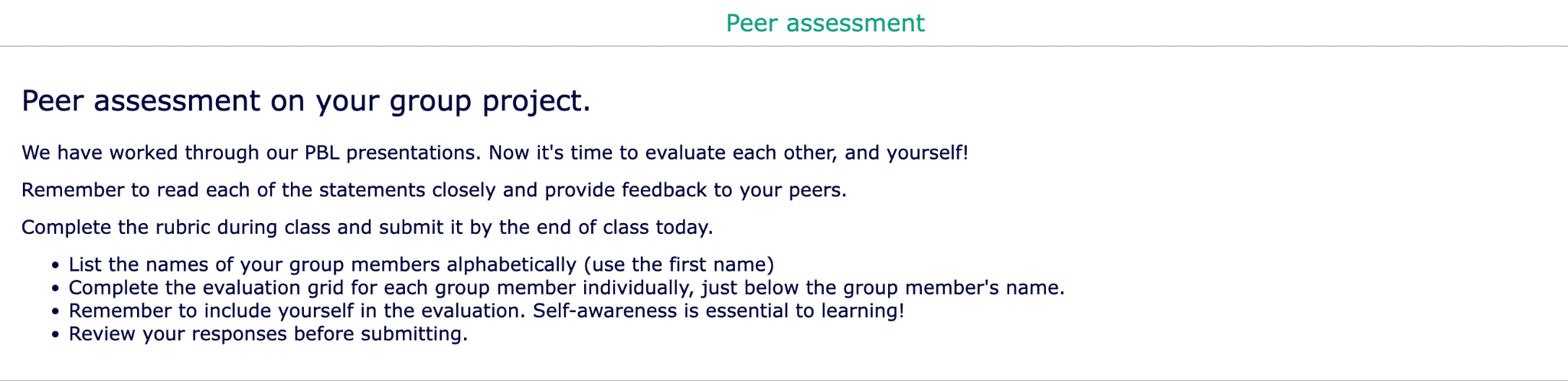
directions for rubric completion

Provide instructions for the rubric completion.

Integrations: BookWidgets integrates with Canvas, Google Classroom, Microsoft Teams, Schoology and more so you can easily share the widgets with students without much effort at all. When we have access to tools that enable us to bring in a variety of learning experiences, without the overwhelm of navigating to different sites, it saves valuable time for class interactions and more activities together.

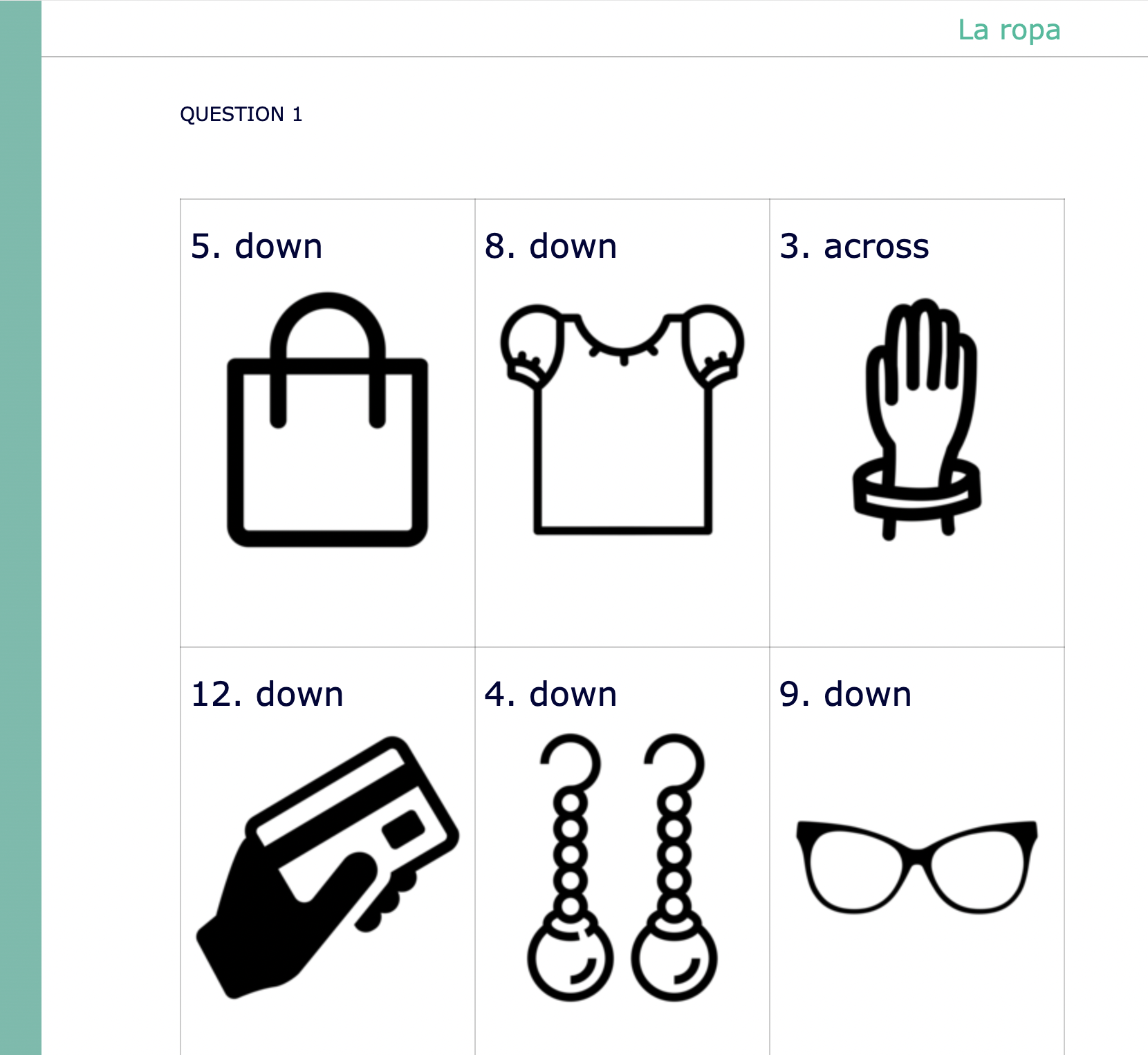
Spanish art word search

So many choices

Regardless of the grade level or content area you teach, BookWidgets has something for you. Math teachers will appreciate being able to quickly create a spreadsheet or a chart for use in the classroom. When we want students to focus on specific images or use video in our classrooms, BookWidgets offers some engaging options such as random images or a 3D file viewer. How about teaching students to play the piano and read notes, all with BookWidgets! There are many ways to use these templates in our classrooms and it gives students the opportunity to practice the content in more active, engaging, and personalized ways with support provided along the way. Also, check out the BookWidgets blog for more ideas!

A fun crossword for Spanish class! With the recent addition of “instructions”, you can let students know exactly what to do for each widget that you create!

With crosswords, you can use images rather than words for the clues!

Get started today!

Now that you know about some of the many possibilities with BookWidgets, it’s your turn to find something to create and get started. Creating a widget simply requires typing in words for use in a puzzle or selecting from the many templates available to find the right learning activity for your students. Add in some audio or use the live monitoring feature too! BookWidgets is also a great option for professional development! Engage teachers in one of the activities and in the process, teach them about a new tool that they can bring to their classrooms. Sometimes the best way to encourage teachers to try new tools is to dive right in!

Headed to ISTE? Don’t miss the BookWidgets ISTE Conference Session: Transforming the Traditional Learning Environment with BookWidgets, Wednesday, June 29, 1:30 – 3 p.m. Location: La Nouvelle Ballroom, Table 17

For more information about BookWidgets, head to:

Twitter @ibookwidgets

Facebook BookWidgets

About the Author

Rachelle Dené Poth is a Foreign Language and STEAM Educator at Riverview High School in Oakmont, PA. She is also an Attorney, Edtech Consultant, and Speaker. Rachelle is the author of seven books about education and edtech and a blogger. Follow her on Twitter and Instagram at @Rdene915

**Interested in writing a guest blog for my site? Would love to share your ideas! Submit your post here. Looking for a new book to read? Find these available at bit.ly/Pothbooks

************ Also check out my THRIVEinEDU Podcast Here!

Join my weekly show on Mondays and Fridays at 6pm or 6:30 pm ET THRIVEinEDU on Facebook. Join the group here
Finding time for all the things

In collaboration with Invzbl, all opinions are my own

As educators look back over the past couple of school years, the way that we teach and the activities that we do in our classrooms have changed a lot. When schools closed in March of 2020 and we shifted to fully virtual learning, teachers had to adapt quickly. They had to shift away from typical classroom procedures and completely rethink how to prepare for class with new tasks that had not been imagined before. 

There were uncertainties in many aspects of teaching. More than just focusing on the lesson of the day, teachers had to think about how to structure the lesson to account for students logging in and interacting in the virtual space. It took effort and caused frustration to figure out how to best manage time, especially if students didn’t have access to Wi-Fi or reliable, working devices. We had to work through those challenges, always having a backup plan in place in the event of a technology glitch. 

We had to ensure that all students were able to participate in learning, and if students did not have access, we had to find ways to provide access and resources to our students and their families. Even though we are back in our classrooms again and many of these challenges have diminished, there are still issues when it comes to devices and the learning spaces for our students. One is making sure that our students have a safe and clean learning environment. We must be even more mindful of cleaning/disinfecting their devices, making sure that the devices are working for our students, and providing a safe/sanitized space for students to learn.

When it comes to the use of technology in our schools, there will likely always be challenges. Whether certain websites cannot be accessed because of school network restrictions, students are without a device because of repairs, or we lose time because of cleaning procedures that are ineffective, we are responsible for our students’ learning environment. Added to this frustration are concerns about providing a sanitized learning environment for our students and making sure that our class procedures include cleaning desks and devices and doing so within the class period. We know the importance of this however we can lose valuable class time due to technology issues we experience and the extra time it takes to complete these additional but essential tasks which promote the safety of our students.

Balancing our routines

When we made the shifts to virtual learning, I was surprised and I am sure that a lot of educators were also surprised at how much they can accomplish within each class period. When we’re together in the same physical space, there is a flow to what we do. We have our instructional strategies, the tasks, and classroom routines that we implement from the beginning of the year, that we follow to make sure everything flows as best as it can. Of course, we can’t always account for unforeseen circumstances but having a plan in place that we know and that students know definitely helps. Consistency and reliability are key. 

In virtual learning, we had new challenges. When it came to logging into class, not all students had a device that worked or reliable service. Now that we are back in our classrooms, we have to be mindful of the space where students are learning and if students are sharing devices, have an efficient plan for how we clean the devices so that we’re not taking away too much time from the learning process.

Image via Shutterstock

Adapting to the new “typical day”

In my class, on most days students use a device, whether their phone or school laptop, to check what I have posted on our Microsoft Teams page, or to access an online activity. Sometimes I create an interactive lesson or use one of the game-based learning tools to engage students with the content. While not all students may have their own devices, schools, and some classrooms have a set of devices on hand for students to use. Since we may be relying on these devices and sharing them between students and classes, it’s important that we have efficient and effective cleaning procedures in place. When we have the right tools with a consistent procedure, it will help to ease the minds of teachers and students knowing that they have clean and working devices. 

Many teachers may take a few minutes at the start of class to distribute devices and then to collect and clean them before class ends. Because of this, we end up losing potentially between 5 and 7 minutes of valuable class time. Think about how different it would be if students come into the class and pick up a clean and working device ready for use during class. As they leave the classroom, students place the device back into a cabinet where it will be sanitized for the next group of students that come in. During that 3 to 5 minutes between groups of students as classes change, the next group of students would enter and grab a device, and proceed as the prior class did. A process like this can continue throughout the day, saving valuable minutes for more important things like connecting with students and instruction. There would be less worry about the time needed to clean each individual device. And in the event that a device needs repair or further sanitation, INVZBL Protect Express powered by FedEx can make that happen and have devices back in the hands of students in very little time. It provides schools, teachers, and students with a reliable service that enables everyone to know exactly where the device is in the repair process and when it will be back for student use.

Image via Shutterstock

In many schools, devices need to be repaired on a regular basis and depending on the school, this can take a week or more. In some instances, students and teachers are left wondering when the device will be returned and students may be left without access to the right tools that will enable them to fully participate in class when technology is needed. 

It’s also important since we may or may not be required to wear masks in our schools, that we have clean air and recognize the options that exist for providing this for our students in our schools. Access to clean air and a process for disinfection will help to ease the worry that can come with what we have experienced and will enable teachers and students to focus more on the learning in the classroom, knowing that they are protected.

Being able to teach and learn in a classroom that has access to clean air, where students have access to reliable and sanitized devices will improve the education experience for all.

**Interested in writing a guest blog for my site? Would love to share your ideas! Submit your post here. Looking for a new book to read? Find these available at bit.ly/Pothbooks

************ Also check out my THRIVEinEDU Podcast Here!

Join my weekly show on Mondays and Fridays at 6pm or 6:30 pm ET THRIVEinEDU on Facebook. Join the group here

TeacherCast Educational Network | Developing Standards-Based Instructional Technology Integration

Technology Integration - Instructional Coaching - Productivity Secrets for Educators

Leadership Liner Notes: Sean Gaillard

Built on Connection. Tuned for Impact.

Stories by Thomas Oppong on Medium

Dr. Rachelle Dené Poth @Rdene915 Educator, Consultant & Keynote Speaker, Author, Attorney #THRIVEinEDU

Hooked On Innovation

When Innovation slaps you in the face, we slap back.

Teach Better

Dr. Rachelle Dené Poth @Rdene915 Educator, Consultant & Keynote Speaker, Author, Attorney #THRIVEinEDU

BrianKulak.com

Dr. Rachelle Dené Poth @Rdene915 Educator, Consultant & Keynote Speaker, Author, Attorney #THRIVEinEDU

The Principal of Change

Stories of learning and leading

Mandy Froehlich

Dr. Rachelle Dené Poth @Rdene915 Educator, Consultant & Keynote Speaker, Author, Attorney #THRIVEinEDU

Katie Martin

Informed by research, refined by practice

#RocknTheBoat

Rocking today's classrooms, one teacher, student, and class at a time.

User Generated Education

Education as it should be - passion-based.

Learning as I go: Reflections & lessons learned

Dr. Rachelle Dené Poth @Rdene915 Educator, Consultant & Keynote Speaker, Author, Attorney #THRIVEinEDU

Serendipity in Education

Join me, Allyson Apsey, as I stumble upon the fortunes of learning, laughing, and celebrating alongside incredible people.