Guest post by Ross Loveland, opinions expressed are those of the guest blogger
Am I a Bad Person if I Make Good Money in Education? Why It’s OK to Make Money in Educational Consulting
As an educator, your work is incredibly valuable. You do some of the most important work on the planet: teaching and molding the rising generation to successfully face life’s problems and to (hopefully) help make the world a better place.
And yet, too many educators, especially those in public education, are not rewarded for the work that they do. Educational consultants have the chance to change that for themselves, but it doesn’t happen automatically. It can also be extremely difficult to accept the mindset that making good money is acceptable and even desirable.
I met with several wonderful leaders in educational consulting to gather their thoughts on how to overcome the stigma that being “too” financially successfully should be avoided at all costs.
Vernon Wright, creator of shapethewrightvision.com. He also has a great, free audiobook, “10 Steps to Becoming a Gamechanger,” which you can find here.
Money isn’t the root of all evil. The love of money may be, but money itself is a tool. It can be used for evil, and it can also be used for good in incredible ways.
“Educators want to reach as many people as possible, but what they miss and don’t grasp at a deeper level is that in order to expand that reach, to reach as many people as possible, it takes money. What I would ask educators is this, ‘How much do you want to reach people on a wide scale.’”
We never put money before people; always people first. But money can allow us to fulfill our purpose on a larger scale and do more good in the world.
Daniel Koffler, founder of New Frontiers Executive Function Coaching, nfil.net.
In this field of educational consulting, your product is your knowledge and your experience, and you shouldn’t be giving that away. You spent a long time developing your skills and expertise (and likely your formal education wasn’t cheap, either!).
“My staff are professionals and very high quality people. I’m very comfortable arguing that they deserve to make a living. And I’m not ashamed of doing so either. As long as you believe in the value that you and your services bring, you should feel at ease charging what you’re worth.”
Mike Anderson, founder of Leading Great Learning, leadinggreatlearning.com. He also has a wonderful course for prospective education consultants, found here.
“We don’t need to be paupers in order to still be mission-driven. As long as we continue to do great work for kids, and great work for teachers, then I don’t think it needs to be antithetical to also be able to put more money into retirement or send your kid to college. You just need to be careful that the money doesn’t become the purpose.”
Dr. Kevin Leichtman, co-founder of TLC Education, tlceducate.com.
“If you forget that you’re making an impact or that you’re bringing any value, it’s really easy to devalue yourself. In this industry, we tend to think it’s all about service and not about money, meanwhile our families struggle.”
But you need to understand that you are bringing tremendous value to your clients. Remember that you’re not selling packets or worksheets or even your time; those are just the tools. The value you’re bringing is a struggling student getting a new perspective and having that “aha” moment, or a burned out teacher becoming inspired again and taking that energy back to his/her entire classroom. That has real value to it.
Ross Loveland, from Grow Green Profit Advisors, growgreenprofits.com
There’s a common myth that profits and purpose are mutually exclusive. It’s this idea that if you make a lot of money, you must be selfish and therefore taking from the world, not giving to it. And it’s absolutely true that there are some rich, selfish people.
“In my experience, most of the time, people with more money give more. So when we’re talking about this myth that making too much money is wrong, I have to disagree. In fact, I believe the opposite is true: greater profits lead to greater purpose.
Money, like so many things in life, is a resource. You can use that capacity to do good, to fulfill your purpose and lift those around you. Hence, the name of our blog, “From Profits to Purpose.” The financial success, the money isn’t the purpose, but it leads to and supports the purpose.
**Interested in writing a guest blog for my site? Would love to share your ideas! Submit your post here. Looking for a new book to read? Find these available at bit.ly/Pothbooks
************ Also check out my THRIVEinEDU PodcastHere!
Join my weekly show on Mondays and Fridays at 6 or 6:30pm ET THRIVEinEDU on Facebook. Join the group here
Knox Doss Drakes Creek Middle School #sumnerconnect #sumnerachieves
Social, Emotional Learning—such jargony term. At least, this seems to be the mindset for many educators in the current days of checking off all of the boxes before 3pm rolls around, and trust me, there are MANY boxes to check off. But what if SEL is not just a part of “this list”? What if this term is in fact THE answer to connectivity in all aspects of learning? How do we treat this terminology now? Do we just throw SEL around by asking some questions or using a scripted curriculum saying we gave it a shot to check the box, or do we actually dive deep and come to the realization that SEL is the key to student success?
Social Emotional Learning is not just about figuring out how our students are feeling, but it is about getting to know who our students are and how we can meet their needs. In our classroom, we do daily student check-ins via google form. Having students fill out this form is just the very beginning. I take five minutes each day to read how students are rating their emotions and if they have anything they need to share with me. These check-ins have opened the doors to daily communication and relationship building opportunities. Here are a few personal stories to demonstrate the true power of making SEL part of who we are and our community of learning:
For a few days leading up to this check-in I had noticed this student marking he was struggling. On this day, he opened up and told me he was having family issues at home. His behavior had been off, and he seemed apathetic about school and not completing his work. One conversation about his struggles changed the entire trajectory for the rest of his school week. This student knows I read each of these check-ins, and although I am still working to build our relationship stronger, he continues to share openly and honestly with how he is feeling each day. This notion alone, creates belief in himself and belief that I care about him, so now he cares about our class and his learning.
Students who do not take interest in school or are apathetic to learning are why SEL is so vital in our classrooms. We are a community, and when one student is not an active member, then there is a downward shift in the expectations and beliefs of the community. The photo below is a screenshot of a daily check in, and this student did not enjoy our ELA class at the beginning of the year. He was constantly laying his head down, not answering questions when discussions were happening, and not completing classwork or assessments. The student started asking me questions through the daily check-ins. These specific types of questions I would typically view as meaningless candor, but they meant something to this student. My answers gave him the assurance that I was reading his check-ins and could see all concerns and needs. We quickly established a great student, teacher relationship, and now he is so incredibly excited to come to our classroom and learn. Checking in with this student daily made all of the difference in the meaning of being at school versus being a part of the school. He feels like he belongs–because he does.
Bottom line: relationships and trust are established first; then, learning can happen.
Technology Transforms Student SEL
Nicole Vaughn @MrsNicoleVaughn
ELA Teacher @co_sumner @SumnerConnect
Knox Doss Drakes Creek Middle School #sumnerconnect #sumnerachieves
**Interested in writing a guest blog for my site? Would love to share your ideas! Submit your post here. Looking for a new book to read? Find these available at bit.ly/Pothbooks
************ Also check out my THRIVEinEDU PodcastHere!
Join my weekly show on Mondays and Fridays at 5pm EST THRIVEinEDU on Facebook. Join the group here
There are many tools available for educators to create a more interactive and engaging learning experience. Over the past year, especially as we transitioned from fully virtual, to hybrid and in-person learning, I wanted to make sure that students had access to the right resources to help them better understand the content and have access to review materials. For this, I relied on Screencastify for creating quick screen recordings of explanations, demos and other resources to benefit student learning.
In March of 2020, during the early days of the pandemic, schools shut down and educators quickly searched for tools to support remote learning. This created huge growth for Screencastify as they quickly grew 497% in videos made per day, an increase of 340% in daily users and over 1 million minutes of recording. The number of videos being created each month went from approximately two million before March of 2020 to twenty million videos created in April. Last spring, I had an opportunity to speak with James Francis, the CEO of Screencastify, who shared the story of Screencastify and its mission for replacing what had typically been a complicated experience when creating screencasts and making it simple.
Because of the ease of using Screencastify, over the last school year I have greatly increased my use of it in order to create and share videos with students, colleagues and members of my PLN quickly. As I have considered my class activities and the types of resources to provide or materials to use in my classroom, Screencastify has played a larger part in the solution. Some of the questions that I ask myself when deciding to use Screencastify are:
How might the use of a video benefit students whether virtual, hybrid or in-person?
How can I design more active learning experiences for use in or out of the classroom?
Is there a better way to review content or practice activities so that all students have access?
5 Ways to Use Screencastify
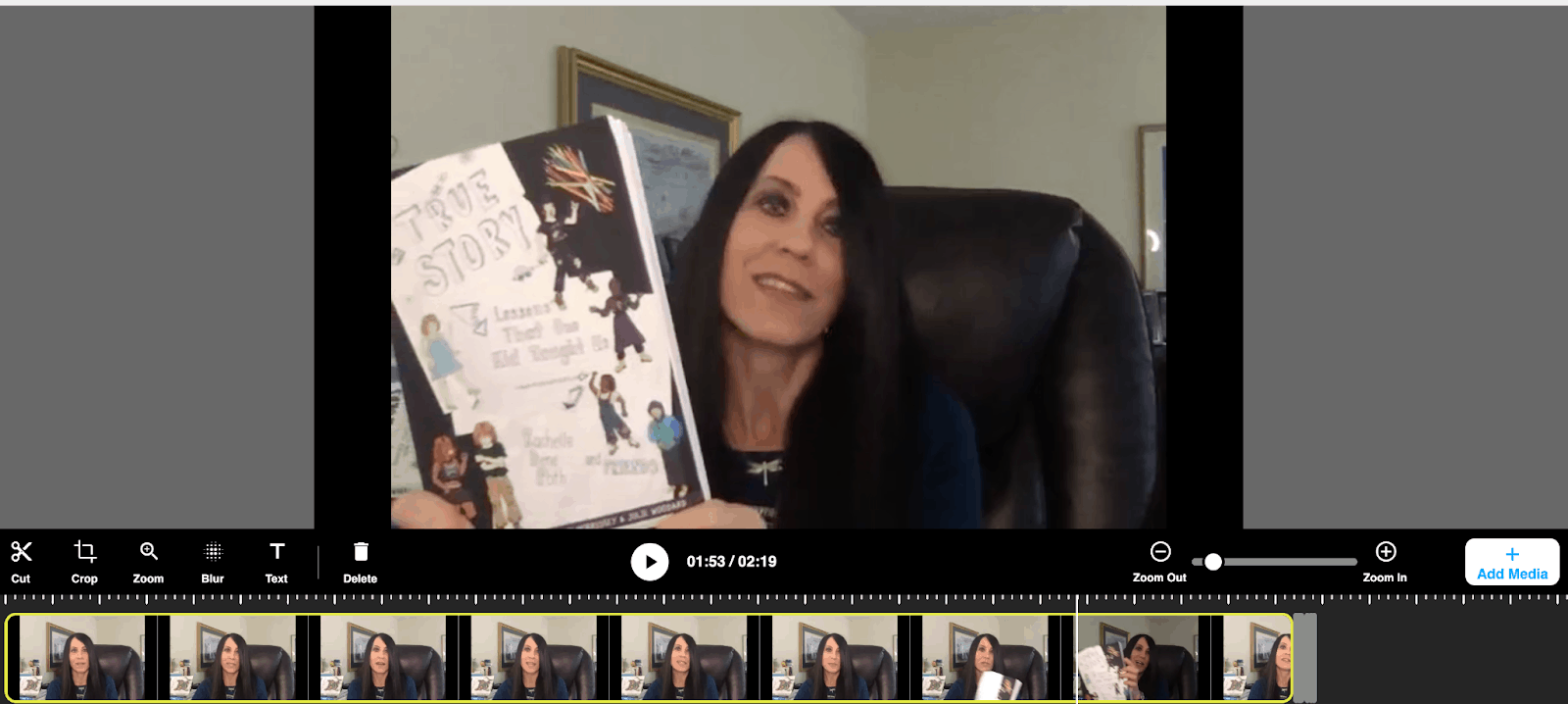
1. Create Quick Lessons. My favorite use of Screencastify has been for creating quick video lessons to review activities or explain grammar content. When I spoke with Francis last year, he said “nothing replaces hearing your teachers’ voices, seeing their face and the authentic learning that happens because students have become used to the way their teachers present.” While I explain and give examples in class, there are times when students have connectivity issues, may lose focus or I am not clear enough in my explanations. I like to make a quick video to post and share so that I know students can access it whenever they need it.
From Screencastify Blog
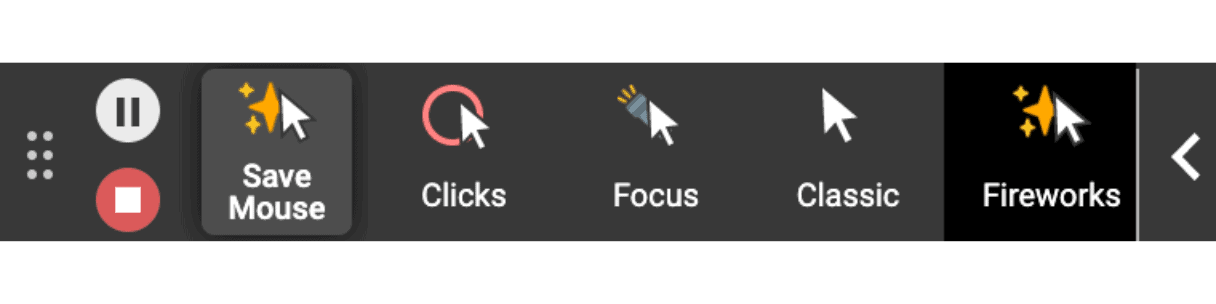
With the new Recording Toolbar of Screencastify, I can add emojis to my video or provide feedback for students using stickers, shapes, and even fireworks to the recording!
eFrom Screencastify websit
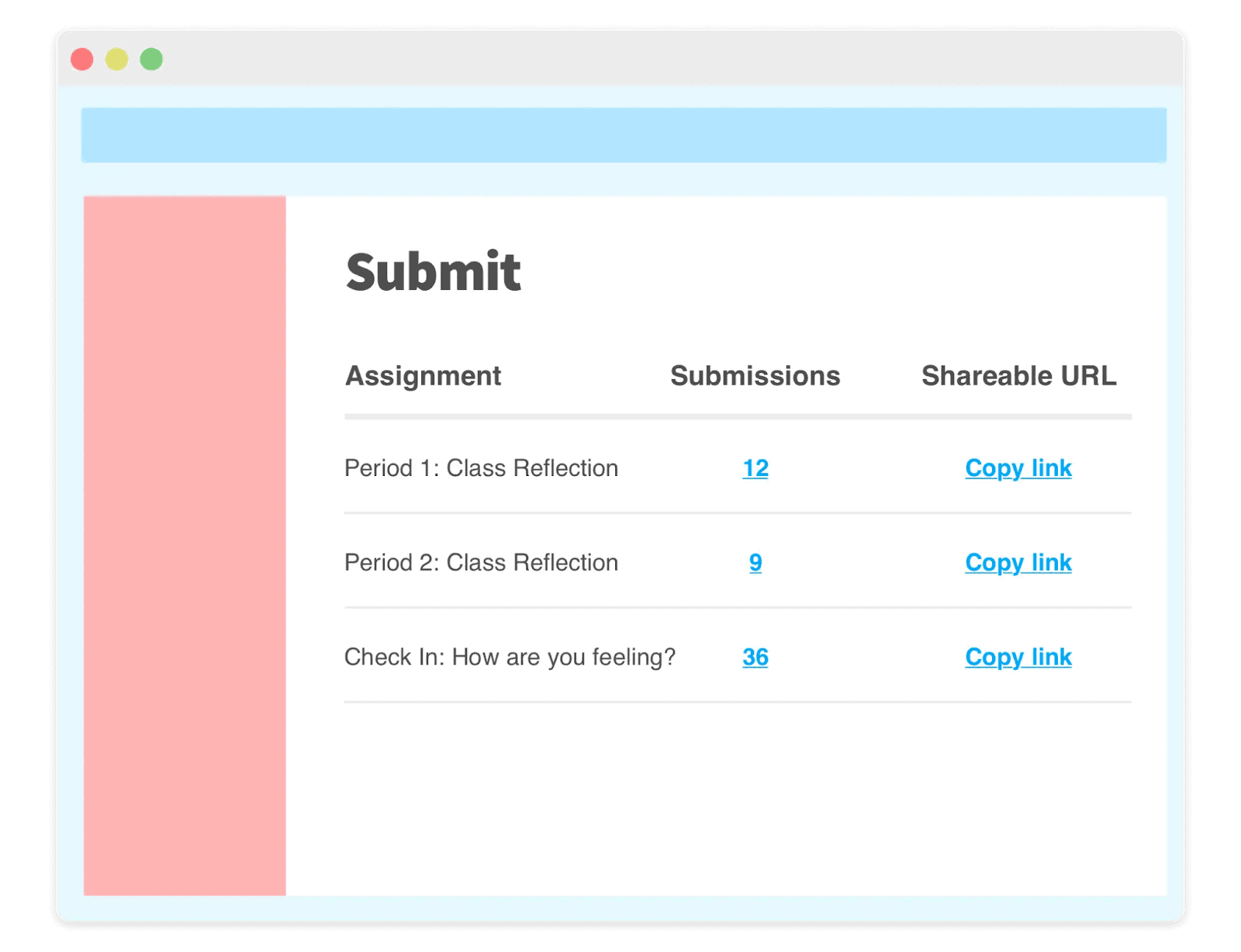
2. Check in on student learning. A beneficial feature from this school year is Screencastify Submit. Students can record videos without needing anything more than a recording link shared by the teacher. Students can then record using their webcam or screen. The Submit feature provides a beneficial way to focus on SEL by providing a space for students to check-in, share their learning experiences and feelings, and explain their ideas. Teachers can better understand the thought process of students and be able to provide authentic and meaningful feedback.
3. Explain assignments and class activities. For creating short videos to explain an assignment or project, you can record (up to five minutes with a free account). In addition to providing students with a written task, being able to explain it and even provide examples in the video, gives them access to the right information they need when they need it. It is easy to edit videos and add other media into your video recording. The setup enables you to work with your video and make any adjustments needed before sharing. The video can then be uploaded directly to Google Drive, added to YouTube and shared, or downloaded as an mp4. I have used Screencastify to make a quick review for students that missed a class or a review of an assignment.
45. Answer individual student questions. Think about the number of times that we as educators may be asked the same questions. Being able to create a quick explanation to share with one student makes a difference. The use of short videos helps with the accessibility of a lesson and for creating a personalized tutorial. Many times students have asked questions in the evening or the weekend and it takes only a few minutes to create a quick explanation to share with them, but that can also be shared with other students as needed.
6. Learning journeys and digital portfolios. Depending on the age of students, having students create their own video to share what they have learned during a specific course, for project-based learning (PBL), or as a way to create a digital portfolio that enables them to share their growth throughout the year. Students build essential skills for the future while creating a more meaningful artifact of their learning journey.
When teachers are unable to be in their classroom or for students who miss a class, tools like Screencastify make a huge difference. Creating video messages or lessons that can easily be shared with students and families is something that will benefit us regardless of where learning takes place.
**Interested in writing a guest blog for my site? Would love to share your ideas! Submit your post here. Looking for a new book to read? Find these available at bit.ly/Pothbooks
************ Also check out my THRIVEinEDU PodcastHere!
Join my weekly show on Mondays and Fridays at 5pm EST THRIVEinEDU on Facebook. Join the group here
Guest post by Heather Lyon, @LyonsLetters, previously published on her site.
Hello,
Disclaimer: I’m about to tell you some information about how I performed in school. My point in sharing is to show that grades are commonly a reflection of teacher bias and subjectivity. Therefore, when I include the grades I got in school, please read the information about my academic successes in the spirit in which it is intended, i.e., to make a point about the subjectivity of grading.
I did very well in school. To give you a sense of what I mean, I was in my school’s Academic Society beginning in the seventh grade. If I remember correctly, to “make it into” the Academic Society, students needed to have at least a 92.5 average with no grade below an 85 on their report card. I not only achieved this feat in seventh grade, I did it every quarter from seventh through twelfth grade. That’s 24 marking periods. That’s in upper level classes. That’s without weighted grades.
Even so, one year, for one of the marking periods my overall average was something like a 93.66. For the next marking period, my overall average dropped to a 93.33. The reason I remember this is not because I cared about the decline. I really didn’t. The courses I took were hard and my overall average was certainly good. Nevertheless, my mom (who, if not a tiger mom, was someone who lived vicariously through her children and therefore insisted that they were successful), lost her marbles and grounded me. This is why I remember that the drop from one marking period to the other was 0.33 of a point. At that time I was beside myself with irritation that this negligible decline mattered so much to my mom.
Fast forward twenty-five years (give or take) and I am irritated by this memory, but now I am better armed for the ridiculousness related to the grading conversation. Let me explain why we should all be suspicious of report cards to measure student success.
I’ll start with traditional report cards that report student learning according to averages, which is most common at a secondary level (watch this AWESOME TEDTalk, “The Myth of Average” about why averages are flawed). With report cards, I ask you, what is that average supposed to represent? If you said, “The student’s knowledge of the content,” you would be correct. However, in almost every single case, that average takes into account all manner of non-content based information. For example, if a student turns in an assignment late and is penalized by reducing the grade on the assignment, then the grade earned does not reflect only the student’s content knowledge—it reflects the student’s content knowledge PLUS the student’s behaviors towards learning. Yet, show me in any standards for any state where behaviors towards learning are included in content knowledge standards. They are not.
Let me give you an example of what this looks like in action, though I’m sure that you have experience with this even if you’re not an educator. As I shared in the May 12, 2020, post, “Redefining Student Success,” my oldest son had a
Spanish teacher who gave all late work a zero even if the work would have scored a 100% if turned in on time. On the other 7th grade team, there was a long-term sub for Spanish who was much more lenient. My son repeatedly complained to me about how he wished he had the sub so that his grade would be higher. I told him that the other students were likely not going to be as capable in Spanish as he was. In fact, on his Spanish final, he scored a 98% with a score of 100% for his speaking portion. I am sure that the students with a sub did not score as high on their finals. Nevertheless, in the fourth quarter he turned in an assignment late due to a band lesson and he received a zero on it. His average was significantly and negatively impacted by this one zero for homework (we’re talking a difference of nearly 10 percentage points on his fourth quarter average) and was lower than the students on the other team who did not do nearly as well on the final—which is the actual measure of how much Spanish the students knew (or didn’t).
Turing in work late is concerning and should be addressed. However, turning in work late has no bearing on a student’s knowledge of content. Period. End of story. And neither should a student get extra credit for behaviors like bringing in a box of tissues to school, contributing to the canned food drive, or showing up at a school-sponsored event. Nice kids are no smarter than challenging kids and challenging kids are no less knowledgeable of content than nice kids. We need to stop including behaviors in our assessments of students’ content knowledge. That’s what the comment box is for.
The more common and progressive “standards-” or “skill-based” report cards usually seen at the elementary level still have problems. Here rather than taking the average of how a student does over time (even if the student has improved throughout the term and therefore can demonstrate high levels of proficiency), standards- or skills-based report cards are designed to report on how a student is doing with isolated standards or skills. This is an improvement on traditional report cards in theory because these skills and standards can tease out content knowledge from behaviors and usually have a section devoted to scoring students’ behaviors separately.
Unfortunately, there is very poor training in how to score students using the scales that are created for this style of report cards which usually uses a 1-4 scale. If done well, the highest mark, a 4, should show that a student demonstrated learning above what is expected for that grade level or time of year. This means that students who might consistently get all the questions correct would earn a 3 if those questions only asked about material that was taught. This is because unless a teacher provides the students with opportunities to demonstrate that they have the ability to do more than what was taught, a 4 is impossible. It can be true that a student’s writing can more easily demonstrate the ability to write beyond expectation. For example, a student might include transition words or dialogue even though the child wasn’t taught to do that. However, in math, most of the time unless a teacher puts one or two extension questions on the assignment, the teacher would have no way of knowing if the student could go above expectation. This is also problematic for parents who don’t understand the difference between a 3 and a 4. If the teacher is sending home papers with 100s on the top but never gave a student a chance to go above expectations, the parent is going to expect to see 4s on the report card, not 3s.
I am not saying that grades or report cards are bad. They are not. It is important that students and the adults connected to the students know how the students are progressing with their learning. This is important feedback and should be shared often. Just as often, the students should be asked to reflect on their progress and even set goals on what they hope to learn and accomplish. The challenge is that without a solid feedback cycle, the one-sided, quantitative feedback is insufficient to allow that number stand on its own.
For all of the reasons above, I am even more frustrated now about the drop of 0.33 with my average as a student. Unless all the grades that I got were hundreds—meaning I answered everything perfectly (which we know I didn’t because my overall average was not 100), all of the grades that I got (particularly for courses that have higher levels of subjectivity like English, art, etc.) were more or less made up. Even for courses with higher levels of objectivity—like math or science—though the answers I gave could be scored right or wrong, the value of the assignments was completely arbitrary. As well, one teacher could have weighted specific assignments like tests or quizzes, while another teacher might have made homework worth more points. One teacher could have decided to drop the lowest grade and another may not. One teacher might have just counted homework as completed or incomplete and another may decide that every assignment gets a grade out of 100. One teacher might have allowed for bonus points or extra credit and another may not. THIS is what I now understand as “an educational lottery.”
Report cards and grades in general are not a science—they are an art. They are subjective. They are arbitrary and capricious. My report card grades had some reflection of my efforts and knowledge, but the actual numbers out of 100 were wildly invalid and unreliable. This is why my report card average of a 93.66 meant nothing when compared to the 93.33 since those numbers actually had as much (and I would argue more) to do with how the teachers graded me, rather than a true reflection of my knowledge of the content.
Now that this is off my chest, I’m dying to hear your stories of grading.
If you’re a teacher, what are your challenges regarding grading and how have you attempted to resolve them?
If you’re a parent, tell me about what has been challenging for you with your child(ren)’s grades.
Either way, tell me about a time when you were in school and what grades/report cards were like for you.
Don’t worry. I’m not grading your response.
~Heather
P.S. Brian Kulak is a K-5 principal in New Jersey and the author of Level Up Leadership: Advance Your EduGame, a clever look at how the evolution of the gaming industry closely mirrors that of educational leadership. His work has also been featured in Stories in EDU: Sail With a Fleet, in Educational Viewpoints, and on Edutopia. Brian has also presented on teaching, learning, and leadership at conferences such as NJAMLE and NCTE/CEL.
Organizational Psychologist Adam Grant rents space in Brian’s brain and drives his leadership. Grant’s podcast, Work Life with Adam Grant, examines how to “make work not suck” by digging into all the nooks and crannies that make organizations tick. In particular, Grant’s interview with Brene Brown and his interview with Trevor Noah provided plenty of fodder for Brian to use with his staff at Tatem Elementary School. You can follow Grant, who works at the University of Pennsylvania, @adammgrant.
**Interested in writing a guest blog for my site? Would love to share your ideas! Submit your post here. Looking for a new book to read? Find these available at bit.ly/Pothbooks
************ Also check out my THRIVEinEDU PodcastHere!
Join my weekly show on Mondays and Fridays at 5pm EST THRIVEinEDU on Facebook. Join the group here
It’s Time To Write! Join the Digital Story Contest hosted by The Global Write and Bronwyn Joyce
Did you know that November is National Novel Writing Month? It is a great time to join the Digital Story Contest! We can promote writing in our classroom by providing prompts to spark some curiosity and creativity and give students time to work together to brainstorm ideas for their own story. This contest is perfect for creating that spark!
As many of us are now finishing up the first quarter of our school year, it’s always a good opportunity to think about what we’ve tried in the new year, what has gone well and what is something we might want to explore next. I am always looking for ways to have my students build their social emotional learning skills, to collaborate, and definitely to get them writing more especially as a Spanish teacher. I want students to enjoy reading, writing and creating in my classroom and sometimes it requires that I provide them with some prompts to get started. Other times when they work collaboratively, they can support one another in the writing process. Literacy is important and as educators there are many ways that we can promote literacy and the development of these essential skills in our classrooms regardless of grade level or content area that we are teaching.
With November being national literacy month, there is a great opportunity for students and educators to participate and learn from not just with members of their school and school community but to collaborate on a global scale. This year, teachers can participate with their classrooms in the Digital Story Contest hosted by The Global Write and supported by Bunceee and Capstone!
Getting started
You can learn more about the contest here. For teachers that do not already have an account, you can try Buncee free for 45 days when you enter the code Globawrites1121. Once registered, choose a classroom account to get started and add students who can then write their own stories and create a book. As students develop their skills and have fun in the writing process, they will be engaged in authentic and meaningful learning that is more personalized to their own experiences. These experiences will better meet their needs and interests for writing and help them to feel comfortable as they are creating.
This contest will encourage students to write and share their work with students and educators beyond your school community. Students will have real-world experiences that will help them to better prepare for the future by seeing the relevance of their learning and sharing it with the world. Talk about promoting creativity and interest in writing!
There are three grade level categories: K-2 , 3-6, and 7-12.
In their stories, students can use audio, animations, stickers, text, video, and more to write their own stories on Buncee. During the month, there will be several events happening including three live streams with educators such as Bronwyn Joyce, Michael Drezek, and Shannon Miller who will share ideas and inspiration for promoting literacy in our classrooms.
Giving students an opportunity to find something that is interesting or unique to them and providing a chance to write a story, to brainstorm, to work together, to be creative, and to express themselves in ways that meet their interest and needs will lead to more student engagement. Learning opportunities like these will boost student confidence and will help to build relationships and a sense of community within the classroom and beyond the classroom space.
During the contest, teachers can share students’ work with their school, school community and globally. They can build a library of resources for all students to learn from and build their essential SEL skills, in particular social awareness and relationship building.
Literacy is important and finding ways that we can encourage students and support them along the way in the writing and creating process is important.
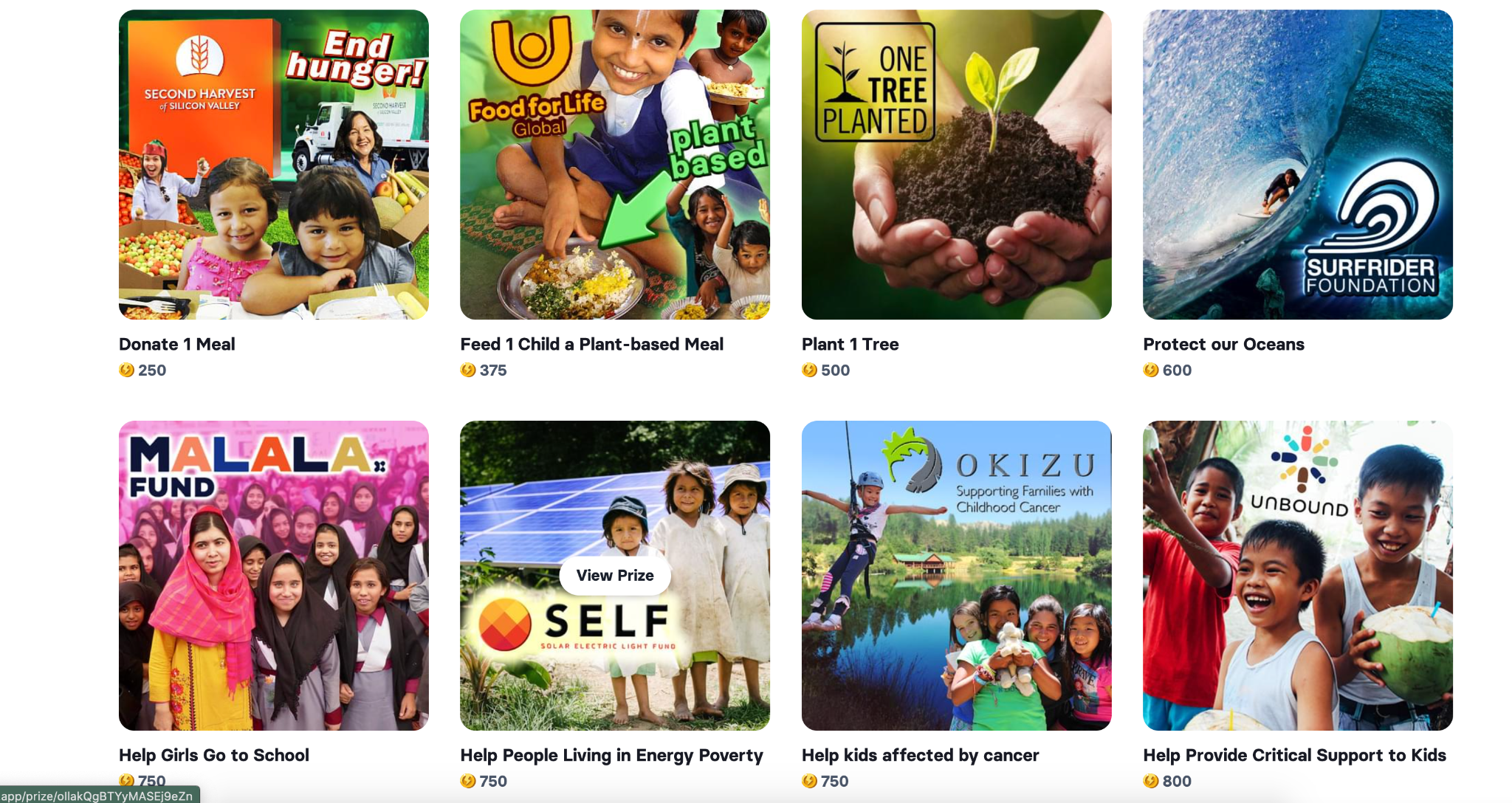
Have fun creating and entering to win prizes! Check out the prizes available:
All educators receive a digital badge that can be shared with students who participate. On December 3 there will be a livestream event, where Bronwyn Joyce will showcase the stories that were chosen as winners for each category. Prizes can include:
**Interested in writing a guest blog for my site? Would love to share your ideas! Submit your post here. Looking for a new book to read? Find these available at bit.ly/Pothbooks
************ Also check out my THRIVEinEDU PodcastHere!
Join my weekly show on Mondays and Fridays at 5pm EST THRIVEinEDU on Facebook. Join the group here
The start of a new school year is a great time to think about long-term plans for the upcoming year, but also the plans we need to make for our students for years to come. Each day there are news alerts on topics such as artificial intelligence and machine learning, augmented and virtual reality, digital citizenship and literacy and their relation to education. These are the trends and terms that are already a part of our world and will become an increasing part of our future.
Beyond these technology-themed trends, we’re learning more about social-emotional learning (SEL), mental health awareness, mindfulness and trauma-informed teaching. These are important issues and educators must stay informed on best practices and ways to make these ‘themes’ part of our daily practice.
As educators today, it’s no longer about simply planning instruction with our students in mind. We also have to consider how changing technology trends and important societal issues will impact our students both now and beyond high school. How can we best prepare them to not only find success for themselves but also make an impact on others? So the pressure is on, to really consider how we can best prepare students not just for this school year, not just for life after high school graduation, but well beyond. We need to prepare our students for the year 2030 and the future. But how?
What Skills Are Needed?
A recent McKinsey report shows nearly 40% of the jobs that currently exist will be obsolete by 2030. Jobs held by approximately 15 million workers between the ages of 18 to 34 will be automated, which means that these individuals will need to continue acquiring new skills. Research shows the most common skills needed are collaboration, problem-solving, critical thinking, coding, and computer science—many of which were the common skills required five and ten years ago.
We are also looking at changes in ‘who’ is doing the work. A prediction was made that by 2025, there is an expected shift to 48% human, 52% machine or algorithm making up our workforce. In order to stay relevant and to keep up with the changing landscape of work and required skills, estimates are that leading up to the year 2022, we will need an extra 101 days of learning.
While technologies will continue to evolve, some skills may not change as much. ‘Human’ skills such as creativity, originality and initiative, critical thinking, persuasion and negotiation will likewise retain or increase their value, as will attention to detail, resilience, flexibility and complex problem solving. Also named were emotional intelligence, leadership and social influence, which can be developed through the right opportunities to build SEL skills. Students will need these soft skills as much if not more than technical skills in order to be successful in the future.
“Communication, the ability to work as part of a team to overcome difficulties, listening mindfully and empathizing with others,” are all characteristics this College Central Network article identifies as just as important as hard skills. This means that as educators we must create truly different learning opportunities and find unique experiences for our students that will provide all of this and more. Beyond simply possessing skills like collaboration, our students need to know how to collaborate from wherever they are with anyone in the world.
Organizations and Experiences That Can Help Make a Difference
If you follow various blog series from Getting Smart, many resources are available for educators to explore best practices and ways to prepare students for the future. In particular, referring to the future of work series and the future of learning topic, we can learn more about entrepreneurialism, generation DIY, the gig economy and preparing students for the future.
We best support students by staying informed of different learning networks, organizations, and opportunities available, which provide resources for these emerging topics and trends. Here are some ways to learn more and to start making connections with real-world learning for students and educators.
Organizations With Global Reach
1. Remake Learning, a Pittsburgh-based network formed in 2007, that provides networking and professional learning opportunities for educators and offers events throughout the year.
2. Future Ready, a network started through an initiative in 2014, provides support and resources to educators and districts who want to bring about transformations in learning for students. The Future Ready framework provides seven key categories for successful digital transformation with students at the center.
3. StartEdUp Foundation, formed by Don Wettrick (@DonWettrick), is an organization focused on innovation and fostering an entrepreneurial mindset. Through StartEdUp, Don wants to create a “new normal” for students. Listen to Don’s podcast with Tom Vander Ark on teaching entrepreneurship and the benefits for students.
Experiential Learning and Different Learning Experiences
1. Career Technical Education (CTE) offers students an opportunity to build academic and technical skills by exploring career options while in high school. Students build knowledge and develop skills applicable to many different types of work.
2. Project-based learning (PBL) is a way to promote personalized learning and help students develop many of the necessary skills for future work. Through PBL, students can explore areas of interest, and engage in meaningful, real-world learning experiences.
3. Teach SDGs promotes global understanding by providing resources for educators and students on issues faced around the world. The United Nations identified 17 areas related to sustainability and finding solutions to these issues by 2030. Students can explore global issues and focus on finding solutions on a local scale.
Programs
1. One Stone is a student-led nonprofit that empowers students through experiential learning, entrepreneurship and a goal of reinventing the learning experience. More than two-thirds of the One Stone board are students.
2. NExT: Network for Experiential Teaching and Learning is a platform to connect students in grades K through 12 with experiential learning opportunities. NExT supports educators by connecting with higher education and community partners, providing professional development and other resources for educators and their classrooms.
3. New Tech Network (NTN) is a school design partner that helps schools and districts to create more innovative learning experiences for students. NTN focuses efforts around four design principles and two outcomes: agency and collaboration, and designed rubrics for these outcomes.
We can best prepare by exploring options such as these to connect our students with real-world learning within their school, community and globally. We must start by ensuring that all students have an equal opportunity to explore and discover their passions. By supporting our students as they set learning goals, engage in more self-driven learning experiences and self-assessments, we will provide them with a solid foundation and diverse skill set, that they will need to be successful in the future, far beyond 2030.
As I scrolled through Twitter recently, I happened upon a quoted tweet by Scott Adams, creator of the Dilbert cartoon. The tweet he was quoting was making statements about him, and his response in the quoted tweet was simply, “The imaginary version of me has many wrong opinions. Here’s a sample.” Regardless of how you feel about Scott or his cartoon Dilbert, that phrase, imaginary version of me really struck me as something I could use with students. We all must handle critics at various times in our lives, and we also know that we can frequently be our own worst critics. I always work with students on positive thinking strategies as part of my Train Like a Navy SEAL SEL program, and when I saw this phrase, several ideas hit me all at once.
We’ve all had to deal with others who call us names, and those who make assumptions and judgements about us. How we handle those and the resulting after waves of self-doubt can determine current and future successes, well-being, and resiliency. I’ve frequently looked back on that old saying, “Sticks and stones can break my bones but words can never hurt me,” with amazement. Words certainly can hurt us. I remember a parent telling my mother, after our 4th grade music concert, that I couldn’t sing but was really loud. Those words haunted me for 30 years. As an adult, I battle them each time they crop up in my mind, but I know now that they aren’t true. I’ve sung in front of hundreds of people and have been paid to sing, and still those words make an appearance periodically. Now I know what to say to those words: That’s the imaginary me, the one who can’t sing. That’s not the real me.
So how do we use this with students? There are a lot of possibilities, but here are just a few that I’ve come up with so far.
WHEN TEARS ARE IN YOUR EYES
FIRST DAYS OF SCHOOL ACTIVITY
Introduce the idea of “The Imaginary Me” during the first few days or weeks of school (or anytime, really). Find your own story of words that hurt, and then explain how those words must fit the imaginary version of you, because they are certainly NOT true of the real you. Then, like me, you might be tempted to have students share out things they have been called or assumptions or judgments that have been made about them. Don’t. As my friend, Elizabeth Merce, reminded me when I ran my idea by her, it is best not to have students share those negatives out loud in class. That kind of information in the hands of other students with whom a relationship hasn’t been solidly built yet can be very detrimental. I knew this, but in my excitement of the possibilities with this strategy, I forgot about Piggy. Piggy, you ask? Yes, for those of you who haven’t read The Lord of the Flies, Piggy is the only character whose real name we never learn. In the very beginning of the book, he tells the Ralph, main protagonist, that he could call him anything other than Piggy, which is what the bullies at his school called him, and so Piggy wasn’t known by any other name throughout the book. So, to avoid another Piggy situation in your own classrooms, let’s look at ways to utilize this strategy without giving undue power over others to our students before solid relationships and trust have been built.
I WILL DRY THEM ALL
THE IMAGINARY ME / THE REAL ME
After you introduce the idea of the imaginary version our ourselves to your students, you now have some options for using it as an activity. Students can think up the UNTRUE things people have said about them and then for each untrue statement or adjectives, they come up with statements or adjectives that are TRUE about themselves. Those are what you build the following activities on:
Word Cloud (individual or class)
Class word wall
Poster silhouette
Affirmation cards (use index cards & have students write ONE of their Truths on it for a class set or all of their truths, one per card, for individual sets)
Reflection/blog post writing
Graphics / comic strip stories
Our Truths bulletin board (anonymous)
I’M ON YOUR SIDE
I will likely start my high schoolers off with affirmation cards, and possibly a word cloud for the whole class first, but all of these activities are in play throughout the year. January is a great time to do some activities like this since the start of the second semester can be hard, and you can also tie it in with One Word (students think of one word that can shape, guide, or theme their new year instead of resolutions) activities. For a digital version of affirmation cards, students can use Google Slides, and then those could be combined for a class set, either all of their affirmations or just one per student. It may also help to give students a number of the UNTRUTHS and then corresponding TRUTHS to brainstorm and then use for the activities so that you can manage the amount of time and or responses for the activities you choose. Each class I have is different, so the activities will be tailored to suit the needs of those students. I will add to this post once I have examples from our classrooms, but I’m sharing the idea now so that you can also find ways to adapt it for your students. Happy new school year.
**Interested in writing a guest blog for my site? Would love to share your ideas! Submit your post here. Looking for a new book to read? Find these available at bit.ly/Pothbooks
************ Also check out my THRIVEinEDU PodcastHere!
Join my weekly show on Mondays and Fridays at 5pm EST THRIVEinEDU on Facebook. Join the group here
Each October, educators and students have opportunities to participate in events focused on digital citizenship. This year “digcit week” will be held from October 18-22. Learning about digital citizenship is important not only during October, but should be something that we focus on throughout the entire year. With such an increase in the use of technology, especially during the past school year, educators need to intentionally create opportunities for students to build digital citizenship skills in our classrooms by exploring the digital tools and learning experiences that we can provide with them.
Book Creator for DigCit!
Using Book Creator, we can create opportunities for students to become more digitally aware and literate and to be responsible in using and creating with technology. Helping students to learn to safely navigate through what has become a highly digital world is something that we are all responsible for. Students need to learn how to collaborate online, to access and share information, to create and manage accounts and protect their personal information, which are essential elements of digital citizenship.
With so many students interacting and having access to social media and digital tools, they need to develop the right skills to navigate in these spaces and be prepared to deal with any challenges or barriers that may arise. When students have the chance to collaborate and create a book together, there are many benefits. Some of the positive outcomes include building essential SEL skills like strengthening relationships, becoming more self-aware and developing a greater understanding of diverse perspectives and backgrounds.
Ideas for a digital citizenship book with Book Creator
Creating passwords and Internet safety
Using social media and responsible posting
Cyberbullying and how to respond
Finding balance on social media platforms and with technology
Communicating and collaborating in the online space
Create a book about an experience related to the theme of digital citizenship or one of the focus areas.
Getting started with Book Creator is easy!
Book Creator now has three books available to help educators get started with activities and experiences focused on digital citizenship. In June of this year, the new books were created in collaboration with Common Sense Education and are available for use in classrooms with students ages 5 through 11. In addition to using these books, Book Creator is a great choice for having students create their own books to share what they are learning about being a responsible digital citizen. Students are able to collaborate with their classmates in the digital space and learn how to post responsibly, access and use information, and build their own digital citizenship skills during the process.
Book Creator promotes more authentic and meaningful learning that helps students to build content knowledge and the essential skills they need now and for the future. All books can include audio, images, text, and video. Why not have students select a relevant topic or one of the nine elements of digital citizenship, to create a book to share with others in their school community or with global connections?
Templates!
The Book Creator team worked with the Hillsborough County Public School district in Florida to design special events for their entire district. Using the Digital Citizenship Week curriculum from Common Sense Education, they created templates to use for activities which will be part of a competition. There are many important topics to choose from including: Choosing the right words, avoiding drama in the online space, social presence on the social media platforms, this is also great for educators. There are options available to use with students in grades K through 12 as well as for teachers. Everyone can use their templates which makes it easy to get started today with some digcit activities using Book Creator!
Having access to great topics and ready-to-use templates saves a ton of time! All you need to do is add the books to your library and with the “remix” feature, students and educators can really make the books their own.
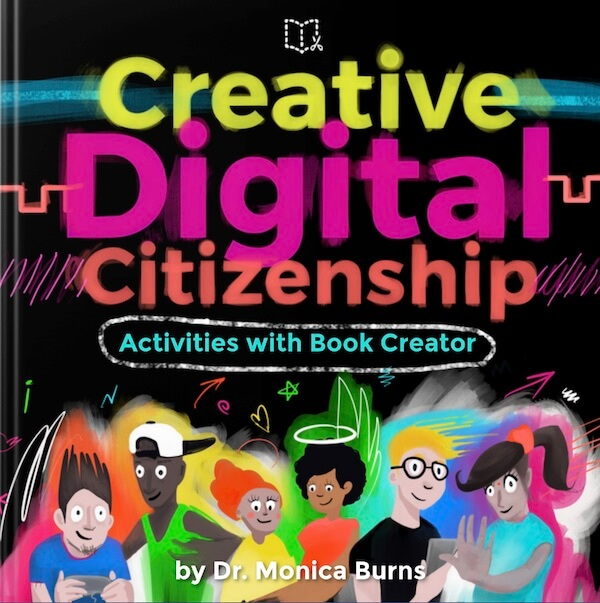
Also check out the book by Dr. Monica Burns which is based on the 6 themes of the Digital Citizenship curriculum from Common Sense Education.
Join some of the events happening during #digcitweek through Common Sense Education and @BookCreatorApp. Be sure to sign up for some of the upcoming Book Creator webinars to learn more!
About the author
Rachelle Dené is a Spanish and STEAM: What’s nExT in Emerging Technology Teacher at Riverview High School in Oakmont, PA. Rachelle is also an attorney with a Juris Doctor degree from Duquesne University School of Law and a Master’s in Instructional Technology. Rachelle is an ISTE Certified Educator and serves as the past president of the ISTE Teacher Education Network. She was named one of 30 K-12 IT Influencers to follow in 2021.
**Interested in writing a guest blog for my site? Would love to share your ideas! Submit your post here. Looking for a new book to read? Find these available at bit.ly/Pothbooks
************ Also check out my THRIVEinEDU PodcastHere!
Join my weekly show on Mondays and Fridays at 5pm EST THRIVEinEDU on Facebook. Join the group here
To create authentic and meaningful learning experiences for our students, we need to provide choices in learning. With the power of choice, students will engage more in learning while also developing essential social-emotional learning (SEL) skills that will best prepare them for the future. Project based learning (PBL) is a great way to do this. A method that works well for any grade level and content area and that provides many benefits beyond learning the content area, is project-based learning.
Authentic PBL has been a great way to promote student choice as they explore areas of interest, brainstorm ways to solve a problem, or look for challenges that are impacting their community or the world. PBL promotes student-centered learning which empowers students to develop critical thinking and problem solving skills, fosters creativity, time management, and leadership skills to name a few. When I first got started in my own classroom, I took time to learn about the elements of authentic project-based learning and the benefits for students before diving into it with my students. PBL has become a very popular topic of discussion, especially in the past school year as we have looked for new methods and tools to provide for our students that will amplify their learning potential. I have recommended that educators use PBL especially when having to transition between in-person and virtual learning environments.
Why Tract is perfect for PBL and more!
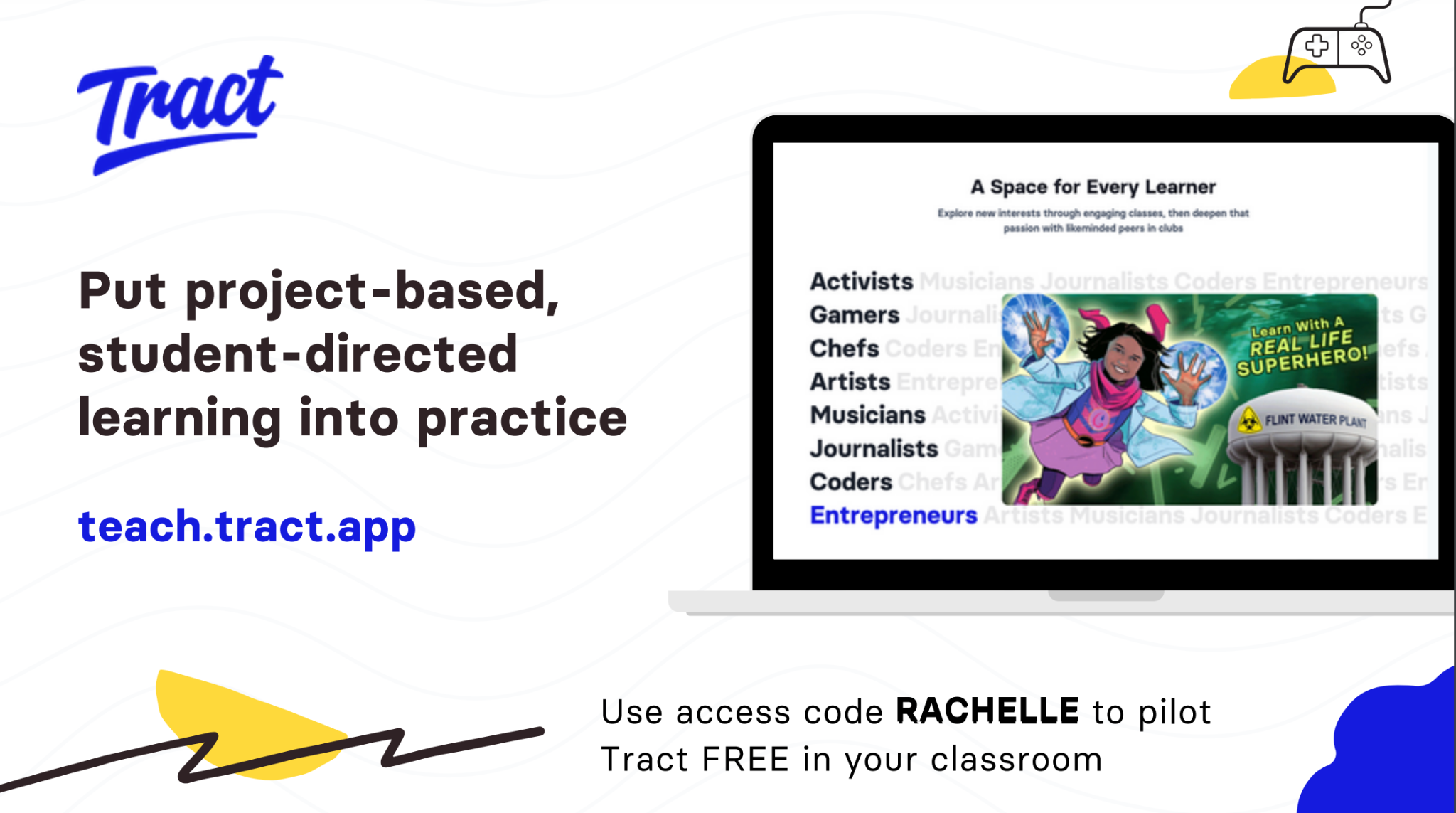
At the end of the past school year, I found Tract. If you’re looking to try out a new platform and get started with PBL, then Tract is definitely the way to go. In project based learning, students drive their learning experiences based on inquiry or trying to identify a problem happening in their community or globally, or they choose to explore an area of interest or curiosity. As they work through their research, they develop solutions, and may find additional challenges, which helps them to develop their problem solving and critical thinking skills. In PBL, students explore topics that are meaningful to them which then leads to greater student engagement and content retention.
Tract is a great space that provides teachers with what they need to get started with PBL in their classroom in a way that amplifies student choice and voice in learning.
Looking through the platform, you will learn that Tract is a web-based application, which means that teachers can access it from any device. Students become the creators and through Tract they have a space to share what they are learning. Throughout the process, they have fun with the gamification aspect of Tract by earning coins and giving awards through the Tract platform. Most of the awards available are digital and are things that will benefit others.
Beyond the classroom
Besides using Tract for project-based learning, it is a great option to use as an extra activity for students to explore on their own or for a school club. It would also work well for doing genius hour with your students.
Why Tract is different
Unlike other platforms, students are in the lead and determine their path and pace.. Students can dive in and take classes that are already made and taught by students or they can choose to become the creators and design their own classes for other students to take. Teachers shift from being the sole creators of content and give students the opportunity to become leaders in the classroom and design their own learning experiences and even better, to share those experiences with others. Students can start with the 7-mission, self-directed learning path and will soon be creating and presenting their own video lessons. What I really like about each class that is available is that it gives the overview and some guiding questions, it tells you what the subject or relevant areas are and the difficulty level is included. It also tells you a little bit of information about the creator so that you know their background and experiences and when you click on the about me it also links to other classes available from this same creator. Each class has missions to work on and as students complete it then they move on to the next mission.
To get started you can use my access code RACHELLE to try out the platform. Be sure to look at some of the many examples available and the different topics available for students to choose from.
Rachelle Dené is a Spanish and STEAM: What’s nExT in Emerging Technology Teacher at Riverview High School in Oakmont, PA. Rachelle is also an attorney with a Juris Doctor degree from Duquesne University School of Law and a Master’s in Instructional Technology. Rachelle is an ISTE Certified Educator and serves as the past president of the ISTE Teacher Education Network. She was recently named one of 30 K-12 IT Influencers to follow in 2021.
Schools know that the more involved parents and carers are in their children’s learning, the more effective that learning will be. The benefits are numerous, with positive effects on students’ behavior, motivation, attendance, and achievement – and a parent’s engagement with their first child’s learning also brings benefits for siblings.
Tech provides the way in
EdTech opens the door as far as parental engagement is concerned and, in many ways, creating a digital connection with all parents and carers (the hard-to-reach group included) can be easier than trying to encourage face-to-face interaction at school or from the classroom.
With the complete change to the education landscape over the last 18 months, parents of elementary-age children have had to take on a much more active role in supporting learning at home. It hasn’t been easy. Nor has it been for educators, who had to adapt with lightning speed to delivering lessons, activities, and resources online, as well as remaining in the classroom to teach the children who were still in attendance. However, a valuable lesson they have learned in terms of technology is that ‘less is more’ – and becoming familiar with just a couple of EdTech tools and then using them to their full capability is much more productive than using multiple solutions for different activities.
Keeping it simple
This idea of keeping it simple extends to parents supporting learning at home, too. If parents are juggling all the balls of trying to work remotely, supervise more than one child’s schoolwork, cook, clean, look after family members, and so on, making access to online resources for learning needs to be easy as possible or it simply will not happen. Elementary teachers have understood this well and have therefore used EdTech in its simplest forms during periods of remote learning, for example, by sharing resources directly from their school website or uploading videos of stories and activities to YouTube for parents and children to watch together.
For families struggling to get themselves and/or each child online during normal school hours, technology means that the learning resources supplied by the class teacher can be used and accessed at different times. Providing this flexibility lifts the burden of having to be online for school at a set time (impossible for those sharing a device anyway) and allows the parents and children to better engage with activities perhaps later in the day, the evening, or at the weekend when there is less pressure and more time to explore them together. Having these as prompts to talk about what is being learned is valuable for parents. It allows them to engage with and support their child as they learn – and involves them to a greater degree than if their child were simply in school.
Join the conversation where it takes place
Social media is a valuable tool for schools, not just because of its widespread use but also because it can help to give its users a voice that they may not feel they have the right to use in person. With millions of people using it every day, it is technology that parents are both familiar and comfortable with.
Schools can capitalize on this by choosing dedicated EdTech apps with a communication element that prompts and supports conversations; ones that parents will find intuitive to use because they are modeled on familiar technology. Even starting with short exchanges when a child has achieved something good can help to create a sense of pride for them and the parent – a positive experience for everyone that forms the basis for further communication.
Parent-Teacher conference
The time teachers most want to talk with parents is at parent-teacher conferences and, of course, during the duration of the pandemic, face-to-face meetings have not been possible.
However, many schools are now using digital solutions to allow meetings to be delivered virtually. This offers several benefits. From the school’s perspective, it allows the evening to be measured with fixed times for each parent, prevents appointments from running over, and ensures concise and clear sessions with each one. And for parents, using technology solutions means they can talk to their child’s teacher wherever they are, and they will know exactly how long it will take.
Much of the feedback from schools is that these virtual sessions are reaching more parents and are even preferred by some, as they feel they’re having a more private conversation than they typically would if they were sitting at a group of tables, for example.
Moving forward
What have we learned about encouraging parental engagement during this time that we can take forward?
Having found success with easy-to-access resources for parents and students from school websites and YouTube, schools will hopefully bring these into play for snow days and revision sessions and the like, so that teaching and learning can continue uninterrupted and any potential loss of learning is minimized.
When schools are choosing new EdTech to implement, such as social-media-style apps for observing skills in the classroom, I think they will be more mindful of considering the parental part of the equation and how easy they will be for parents to use to support and contribute to their child’s learning journey.
And let’s not forget social media itself as a tool to support connection and conversation. Until now, some schools have hesitated to embrace it fully, perhaps put off by its immediacy. But both WhatsApp and Facebook are heavily accessed by parents, so, with careful use and good digital safety policies in place, this is a logical way to reach out.
At the heart of encouraging digital parental engagement is enabling them to do so easily. And now, after supporting their own children’s education themselves, many parents have a new-found respect for the job that educators do and this, in itself, will prompt a higher level of communication, at least for a while, giving schools the chance to develop those valuable connections and build on them for the future.
Tech tips
Tips for successful use of technology for parents:
Make it easy for them to become involved and invested in their child’s education by choosing simple, intuitive technology solutions to communicate and share achievements.
Minimize digital barriers by requiring them to only use one or two carefully chosen EdTech apps for communication, alongside regular social media.
Maximize your school’s social media use and go to where the parents are. Parents use it all the time and understand it well. Even if you don’t hear back from everyone in a Facebook class group, they will likely read the messages and remain informed.
Use a variety of messaging media. It’s easy to upload text notices to your website, however, video messages can speak directly to every parent and may also be easier for those with English as a second language to understand.
About the author:
Al Kingsley is the author of “My Secret #EdTech Diary”, Chair of two MATs, Chair of his local Governors’ Leadership Group, and is a member of the Regional Schools Commissioners Advisory Board for the East of England and North London. Connect with him on Twitter at @AlKingsley_Edu.











 Learning as I go: Reflections & lessons learned