Keys to Successful PBL: Lessons from Our Video Game Arcade Project

Guest post from David E. Thomascall, @Stembits

What if instead of just playing video games, students could create their own? That’s exactly what we did in my class, transforming a love for gaming into a hands-on project that blended coding, design, and creativity into a student-run video game. Using Scratch, students transformed their ideas into interactive games, coding everything from high-speed chases to intricate jumping challenges. But, the project went beyond coding as it integrated multiple STEM disciplines, including video production, graphic design, and even 3D modeling. The project culminated in a student-run arcade, where other classes came to play. By the end, students weren’t just players—they were game designers, engineers, and creative thinkers, bringing their ideas to life in an interactive, hands-on way.

This project is an example of project-based learning (PBL), an approach that makes learning more meaningful and engaging by connecting academic concepts to real-world applications. PBL immerses students in hands-on experiences that build critical skills like problem-solving, collaboration, communication, and creativity. It also helps students see the relevance of what they’re learning by giving them opportunities to apply their knowledge in practical ways. Perhaps most importantly, PBL allows for personalization—students can shape their projects around their own interests and strengths, making the learning process both more enjoyable and more impactful.

To make a PBL project successful, it needs to be broken down into manageable steps. Game development is complex, so I structured our arcade project into stages: coding, graphic design, video production, and 3D modeling. We started with coding since a working game was the foundation for everything else. Once students had their games running, they designed backgrounds and characters, then created posters to promote their work. After that, they produced instructional and promotional videos. Finally, they used 3D modeling to design a custom game controller and token. Some students needed extra time debugging their code, while others jumped ahead to designing graphics or planning their arcade setup. By keeping the schedule flexible, everyone had the time they needed to finish their game while still engaging in other aspects of the project.

A good PBL project teaches students the skills they need, one step at a time, so they can finish successfully. Since our students had different levels of coding experience, we began with Scratch tutorials—some moved through them quickly, while others needed more time. The goal wasn’t to get everyone to the same level but to ensure each student had sufficient skills to build their own game. The same idea applied to 3D modeling, where some students were already comfortable with the design tools while others were just getting started. By meeting students where they were and providing targeted support, we made sure everyone could engage with the project in a meaningful way.

PBL isn’t about having the latest equipment—it’s about making the most of what’s already available. For this project, we used Scratch for coding, Adobe Express for graphic design, WeVideo for video editing, and Google SketchUp with our 3D printer for modeling. These were tools I was comfortable with and ones our school already had. However, the project could have worked just as well with different tools—Python instead of Scratch, Google Slides for design, or Google Vids for video. If we didn’t have a 3D printer, modeling clay could have been an alternative, or we could have skipped that step altogether. The key was staying flexible and using what we had to keep the project engaging and manageable for both students and teachers.

Finally, giving students a way to share their work makes PBL more meaningful. Finishing a project feels good, but presenting it to others gives it real purpose. For our arcade, we transformed the classroom into a real gaming space—students designed posters and signs, and we handed out tokens so visitors could “pay” to play. This small detail made a big difference. Students saw their games being played and enjoyed, which made their hard work feel real. No matter the project—whether it’s a school newspaper, a model city, or a website—having a clear end goal and a way to showcase the final product is essential. Giving students the chance to share their work helps them gain confidence and see the impact of what they create.


About Rachelle

Dr. Rachelle Dené Poth is a Spanish and STEAM: What’s Next in Emerging Technology Teacher at Riverview High School in Oakmont, PA. Rachelle is also an attorney with a Juris Doctor degree from Duquesne University School of Law and a Doctorate in Instructional Technology. Her research focus was on AI and Professional Development. In addition to teaching, she is a full-time consultant and works with companies and organizations to provide PD, speaking, and consulting services. Contact Rachelle for your event! She speaks on AI, AI and the Law, AI and the Environment, Cybersecurity, SEL, STEM and other topics.

Rachelle is an ISTE-certified educator and community leader who served as president of the ISTE Teacher Education Network. By EdTech Digest, she was named the EdTech Trendsetter of 2024, one of 30 K-12 IT Influencers to follow in 2021, and one of 150 Women Global EdTech Thought Leaders in 2022.

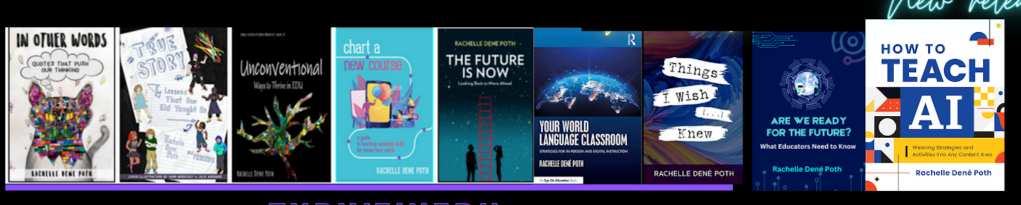
She is the author of nine books including, ‘In Other Words: Quotes That Push Our Thinking,” “Unconventional Ways to Thrive in EDU,” “The Future is Now: Looking Back to Move Ahead,” “Chart A New Course: A Guide to Teaching Essential Skills for Tomorrow’s World, “True Story: Lessons That One Kid Taught Us,” “Things I Wish […] Knew” and her newest “How To Teach AI” is available from ISTE or on Amazon.

Contact Rachelle to schedule sessions about Artificial Intelligence, Coding, AR/VR, and more for your school or event! Submit the Contact Form.

Follow Rachelle on Bluesky, Instagram, and X at @Rdene915

**Interested in writing a guest blog for my site? Would love to share your ideas! Submit your post here. Looking for a new book to read? Find these available at bit.ly/Pothbooks

************ Also, check out my THRIVEinEDU Podcast Here!

Join my show on THRIVEinEDU on Facebook. Join the group here.

CodeMonkey Review: Fun, Effective, and Engaging for All Classrooms

In collaboration with CodeMonkey. All opinions are my own.

As an educator with over nine years of experience in teaching, researching, and presenting on artificial intelligence, educational technology, and computer science, I enjoy trying out new coding and STEM-related platforms and tools with my eighth-grade STEAM students. My students and I have enjoyed using CodeMonkey this year because it sparks curiosity in learning about coding, and they are excited to work through the activities. It does this through engaging gameplay, structured curriculum, teacher resources, and essential topics, all of which are available in one easy-to-navigate place.

This was my first year using CodeMonkey in my STEAM course, where I cover many topics such as AI, augmented and virtual reality, coding, robotics, and other emerging technologies. I also train other educators and often speak at conferences, and one question that I am asked is what educators should use with elementary students to get them started with STEM. I always enjoy finding resources that work well for even the youngest learners, while also offering more challenging topics for high school students. And these platforms must offer a robust, standards-aligned platform that makes a real impact. I took a closer look at the new curricula and believe that educators will become more confident as they get started with CodeMonkey, especially with all that is provided to make it easy to implement in every classroom.

My first impressions of CodeMonkey’s Typing and Computer Science curricula is that it is colorful and engaging, Intuitive, and definitely student-centered

I noticed right away how kid-friendly it is. The platform was clearly designed with the student in mind, especially younger learners in grades K–8. The characters are animated, each lesson is interactive, and the exercises are gamified which keeps students engaged in learning.

The K–8 Typing Course uses a mix of activities, exercises and games that help students learn proper finger placement, improve typing speed, and develop accuracy— while having fun in the process. Students are excited to move to the next level! It’s also fun for teachers to see the impact on students as they build these essential skills.

I always look at the navigation of these tools and platforms. The CodeMonkey platform is visually appealing and easy to navigate. Younger students will be able to log in and get started with minimal teacher guidance, while older students can work through structured lessons, receiving teacher and program feedback, and self-paced learning. The program offers a lot of autonomy, which is a benefit to students as they develop self-awareness, self-management, and student agency.

The Typing Curriculum includes:

13 courses

92 lessons (ranging from 10–35 minutes each)

760+ exercises

Progress tracking

Teacher Dashboard

Accuracy and Speed Assessments

Educators want better ways to scaffold student learning. I recommend trying out “Ready, Set, Type! Jr” which offers 7 lessons and 118 exercises and is ideal for students in grades K through 2, who are just starting to recognize the keyboard. It makes it fun for students as they build typing skills, which can be stressful at the start.

In “All Fingers Aboard” and “The Secret of Symbols,” students start to build up to more complex words, punctuation marks, symbols, and using the number pad. When working through these exercises, it is not just about providing students with drills that were common in the past. These resources provide challenges, mini-games, and even reward systems that help to keep students engaged and excited about learning. An approach like this is incredibly effective in helping younger students build comfort with the keyboard while also building their confidence in their digital abilities. Being comfortable and confident while learning is so important for student growth. Get started with CodeMonkey today!

Teacher-Friendly Features

When I start using a new program or platform, I also explore the teacher features and see how easy it is to get started and also to find information related to student progress and other resources available for teachers. With CodeMonkey, there is a comprehensive teacher dashboard. Teachers are able to track individual student progress, typing accuracy and speed, and student engagement levels. It provides real-time data that teachers can use to quickly adjust instruction or provide in-time help for students.

About Rachelle

Dr. Rachelle Dené Poth is a Spanish and STEAM: What’s Next in Emerging Technology Teacher at Riverview High School in Oakmont, PA. Rachelle is also an attorney with a Juris Doctor degree from Duquesne University School of Law and a Master’s in Instructional Technology. Rachelle received her Doctorate in Instructional Technology, and her research focus was on AI and Professional Development. In addition to teaching, she is a full-time consultant and works with companies and organizations to provide PD, speaking, and consulting services. Contact Rachelle for your event!

Rachelle is an ISTE-certified educator and community leader who served as president of the ISTE Teacher Education Network. By EdTech Digest, she was named the EdTech Trendsetter of 2024, one of 30 K-12 IT Influencers to follow in 2021, and one of 150 Women Global EdTech Thought Leaders in 2022.

She is the author of nine books including ‘In Other Words: Quotes That Push Our Thinking,” “Unconventional Ways to Thrive in EDU,” “The Future is Now: Looking Back to Move Ahead,” “Chart A New Course: A Guide to Teaching Essential Skills for Tomorrow’s World, “True Story: Lessons That One Kid Taught Us,” “Things I Wish […] Knew” and her newest “How To Teach AI” is available from ISTE or on Amazon.

Contact Rachelle to schedule sessions about Artificial Intelligence, Coding, AR/VR, and more for your school or event! Submit the Contact Form.

Follow Rachelle on Twitter(X) and Instagram at @Rdene915

**Interested in writing a guest blog for my site? Would love to share your ideas! Submit your post here. Looking for a new book to read? Find these available at bit.ly/Pothbooks

************ Als, check out my THRIVEinEDU Podcast Here!

Join my show on THRIVEinEDU on Facebook. Join the group here.

AI in Education, Part 3: Looking Ahead – The Future of AI in Learning

In the first and second parts of my AI series, I focused on where we see AI in classrooms. Benefits range from personalized learning and accessibility tools to AI-driven grading and support of a teaching assistant. In Part 2, I chose to focus on some of the important considerations related to ethics that must be part of the conversation. Schools need to focus on data privacy, bias, overreliance, and the equity divide. I wanted to focus on the future for this last part in the current AI series. Where do we go from here?

I have seen a shift in the focus of conversations around AI and also a shift in the mindset when thinking about AI. Where there once was heightened concern about the use of AI for cheating on assignments and hesitation to start using AI, now there is more of a realization that AI is here to stay, and its role in education will only grow. The conversation is no longer about whether we should use AI—it’s about how we choose to use it, and more importantly, why.

AI will, without a doubt, be part of that future. It’s our responsibility as educators, tech leaders, school community members, and edtech providers to ensure we’re guiding its integration in a way that best serves students, empowers teachers, and prepares us all for the future.

Here are some things that I have been thinking about:

Human-AI Collaboration in Teaching?

We’ve heard it many times before: AI will never replace great teachers. But it will “change how we teach” and how we think about teaching, impacting our work in many ways.

For some educators, they are just exploring AI or have only recently heard about the possibilities for human-AI collaboration. Have you thought about AI becoming a co-pilot in your classroom? Consider some of the possibilities:

  • Teachers can get real-time insights into student understanding. (Feedback that is authentic, meaningful, and timely is essential. AI helps with timeliness and gives us time back that can be spent providing authentic and meaningful feedback to students.
  • AI assistants can help educators to further differentiate instruction. (Think about the time it takes to evaluate student responses and adjust our instruction to best meet student needs. Using AI can help with saving some valuable time).
  • Brainstorming new ideas can be faster with the help of an AI assistant.

Will AI stick around?

AI is not new, and it is not going away.

Our roles as educators are evolving. Beyond delivering content, we have to be content curators, learning coaches, and mentors. We need to understand how to best leverage the AI tools available to create meaningful learning experiences for all students.

Some things to consider:

  • Shift from thinking that AI is going to replace us. Think of it as a teammate that is always available instead. There are many ways that it can supplement the work we are doing.
  • Work toward ongoing professional learning that supports AI fluency. Move beyond learning how to use a tool, think about its potential for enhancing our work, and be aware of its limitations.
  • Create space in your school or district for educators to experiment, reflect, and share what’s working (and what’s not). Pop-up PD events where someone shares a new idea, resource, or tips are great ways to continue learning and share the teacher talent!

How Can Schools Prepare Students for an AI-Driven World?

As we have probably said ourselves and heard many times, we are preparing students for a future that doesn’t exist yet, while we know that AI will definitely be a part of it. So we have to be intentional in the opportunities we create and the tools we choose to use.

Our students will need to be technologically savvy, but their knowledge needs to go beyond that. They will need to understand how AI works, how it can hallucinate or return inaccurate information, and how to use it ethically and creatively. Understanding AI is about more than computer science—it’s about focusing on skills such as critical thinking, media literacy, and how to innovate responsibly.

What Are The Key Skills for an AI-Ready Generation?

  • AI literacy: Knowing what AI is, how it functions, and how it makes decisions. We talk a lot about AI Literacy, but we need to focus on exactly what it means and how to create opportunities for these skills to be developed.
  • Ethical reasoning: Developing an understanding of bias in algorithms, the importance of data privacy, and the impact of automation on humans and the future of work.
  • Enhanced Creativity: Deciding how to use AI to enhance storytelling, design, research, and innovation.
  • Collaboration and adaptability: These are critical skills which means that developing skills for problem-solving in interdisciplinary, tech-rich environments.

Schools now need to think about: How should we shift our curriculum to reflect this new reality? How often should we bring digital citizenship into our conversations about AI use? Do students have opportunities to create with AI and not just consume it?

What are the Biggest Opportunities with AI on the Horizon?

When I think about the future of AI in education, I think about a lot of concerns, but also focus on the benefits. Often, I say responsibilities versus possibilities, or maybe you have heard of “guidelines and guardrails.” More than just automation or replacing work done by humans, streamlining tasks and more. It’s about amplification. When integrated with purpose and oversight, AI has the potential to:

  • Help educators identify gaps in learning earlier and more accurately.
  • Support neurodiverse learners with personalized, accessible tools.
  • Provide just-in-time support for language learners, students in rural areas, and those who might otherwise be overlooked.
  • Enable more student-centered learning by freeing up educator bandwidth.
  • Support schools and organizations in many of the time-consuming administrative tasks and other responsibilities that take away from time working with students and colleagues.

Also at the school-wide and district-wide level, there has been a rise in AI-informed school operation. I just returned from the ASU+GSV AI Show and saw more of this than in prior events. With AI, schools can take advantage of tools for smart scheduling, predictive analytics for attendance and engagement, and AI-supported mental health monitoring (of course, only when used responsibly and ethically).

But here’s something to remember: AI will not by itself make learning better. It will amplify or enhance the system it’s placed in. While we have new opportunities, the big responsibility belongs to us to use this technology ethically, purposefully, and safely.

What Can We Do?

Here’s how we start:

  • Create school-wide policies for AI that address ethics, bias, and transparency—before tools are adopted.
  • Build educator confidence through ongoing, hands-on training and support.
  • Collaborate across roles— administrators, teachers, tech staff, students, and even the school community, should be involved when AI decisions are made and aware of changes that happen.
  • Model digital citizenship by treating AI as part of the ecosystem of responsible technology use.

Looking Ahead:

We’re all going to need to keep learning and expanding our skills together. AI will continue to evolve quickly, and because of this, education may continue to play catch-up if we don’t dive in and continue to learn and expand the work we do.

We have a chance—right now—to lead the conversation, set the norms, and create the kind of learning environments we believe in—not ones driven by hype or fear but by intentionality, inclusion, and imagination.

Some questions to consider:

  • How do we want our classrooms to feel? What experiences do we want to create for our students?
  • How can AI support relationships, not replace them?
  • What does equitable, empowered learning look like—and how can AI help us get there?

Let’s Keep the Conversation Going

What are you seeing in your school or district right now when it comes to AI? What conversations are happening—or still need to happen?

I’d love to hear how you’re navigating this space, what challenges you’re facing, and what’s working for you. Whether you’re just getting started or already diving in, this is a journey we’re on together.

Drop your thoughts in the comments, send a message, or reach out. I would love to work with you and your school or speak at your event. Contact me at bit.ly/thriveineduPD.

If our current system is inequitable, overworked, and compliance-focused, AI won’t fix that—it might just accelerate it.

Let’s also remember that students are watching how we respond to new tools. They’ll model our curiosity, our caution, and our creativity. If we approach AI with a balanced, thoughtful mindset, they will too.


About Rachelle

Dr. Rachelle Dené Poth is a Spanish and STEAM: What’s Next in Emerging Technology Teacher at Riverview High School in Oakmont, PA. Rachelle is also an attorney with a Juris Doctor degree from Duquesne University School of Law and a Master’s in Instructional Technology. Rachelle received her Doctorate in Instructional Technology, and her research focus was on AI and Professional Development. In addition to teaching, she is a full-time consultant and works with companies and organizations to provide PD, speaking, and consulting services. Contact Rachelle for your event!

Rachelle is an ISTE-certified educator and community leader who served as president of the ISTE Teacher Education Network. By EdTech Digest, she was named the EdTech Trendsetter of 2024, one of 30 K-12 IT Influencers to follow in 2021, and one of 150 Women Global EdTech Thought Leaders in 2022.

She is the author of nine books including, ‘In Other Words: Quotes That Push Our Thinking,” “Unconventional Ways to Thrive in EDU,” “The Future is Now: Looking Back to Move Ahead,” “Chart A New Course: A Guide to Teaching Essential Skills for Tomorrow’s World, “True Story: Lessons That One Kid Taught Us,” “Things I Wish […] Knew” and her newest “How To Teach AI” is available from ISTE or on Amazon.

Contact Rachelle to schedule sessions about Artificial Intelligence, Coding, AR/VR, and more for your school or event! Submit the Contact Form.

Follow Rachelle on Bluesky, Instagram, and X at @Rdene915

**Interested in writing a guest blog for my site? Would love to share your ideas! Submit your post here. Looking for a new book to read? Find these available at bit.ly/Pothbooks

************ Also, check out my THRIVEinEDU Podcast Here!

Join my show on THRIVEinEDU on Facebook. Join the group here.
The Future of AI Education: Leveraging the Power of Nous AI

In collaboration with MatataStudio EDU, All opinions are my own

As educators, we seek innovative ways to prepare our students for the future. Whether we choose different teaching methods or leverage the technology available to us, we have to make sure they are prepared to succeed in today’s rapidly evolving technological landscape. According to recent studies, the global AI job market is expected to grow exponentially in the coming decades. However, a significant skills gap threatens to limit opportunities for many individuals.

Educators must ensure that all students have opportunities that will equip them with the necessary skills. By incorporating tools like the Nous AI Set, educators can help bridge this gap, ensuring their students are not only employable but also leaders in the workforce. Introducing them to AI concepts early on is essential, and with the MatataStudio EDU and their great robot kits like the Nous AI Set, we can help students build these essential skills.

For educators seeking to prepare students for a world increasingly driven by AI and STEM, the MatataStudio Nous AI Set is a game-changer. Its modular design, real-world applications, and extensive resources make it an invaluable addition to any classroom. My students are excited to explore the possibilities of becoming innovators and problem-solvers.

Experience in STEM or AI is not necessary because the Nous AI Set provides everything educators need to create a dynamic, engaging, and impactful learning environment.

Real-World Applications in the Classroom

You may be wondering how to use Nous AI in the classroom. Because the MatataStudio Nous AI Set is such a versatile, modular AI educational robot, it is easier for educators to bring AI-focused learning experiences to elementary and secondary schools. The Nous AI offers students an opportunity to independently or collaboratively explore AI technologies and bring abstract AI concepts to life through practical, hands-on activities. Here are some ways it can be used in the classroom:

  • Autonomous Navigation
    Programming the robot to follow paths or avoid obstacles teaches students about the principles of autonomous driving.
  • AI-Generated Content
    Exploring AI-generated music, art, or text (AIGC) enables students to understand the creative potential of AI technologies.
  • Image and Object Recognition
    Students can train the robot to recognize and categorize different objects, introducing them to machine learning and neural networks.
  • MatataChat: Engage students with AI-powered chatbots that can respond to queries and provide information.
  • Neural Networks: Introduce the concept of artificial neural networks, inspired by the human brain, and the role networks have in carrying out complex tasks like image and speech recognition.
  • Speech Recognition Projects
    By programming the robot to understand and respond to voice commands, students gain insights into natural language processing and its real-world uses, such as virtual assistants. Engage students with activities that teach them how machines can process and understand spoken language.

Students can choose one of these areas to focus on and build something of interest or something for fun. Great examples include an Automatic Door, a Smart Fan, a Car, or the Gimbal set that teaches students about advanced face and color tracking.

What Makes the Nous AI Set Special?

The Nous AI Set is a versatile, modular AI educational robot tailored to the needs of primary and secondary school students. What sets it apart is its ability to make complex AI concepts accessible, engaging, and practical for learners of all skill levels.

Key Features

  • Advanced AI Functions Students can explore state-of-the-art AI technologies, including:
    • Machine learning
    • Neural networks
    • Machine vision
    • Speech recognition
    • Autonomous driving capabilities
    • AI-generated content (AIGC)
    • Interactive MatataChat functions
  • Hands-On Learning Opportunities The Nous AI Set emphasizes experiential learning. Students can collect data, train AI models, and deploy them using graphical and Python programming interfaces.
  • Durable, Flexible Design Built with a sturdy metal structure, the robot is compatible with building block systems. Its structure fosters creativity and adaptability, which allows students to design and reimagine their projects.

Why all educators need to bring AI and STEM into the classroom

AI is rapidly transforming industries, from healthcare to finance and transportation. STEM skills are increasingly in demand, especially as we move toward the future and look at the Job Skills Outlook. By introducing these concepts early on, we can:

  • Cultivate Future Innovators: Inspire the next generation of AI researchers, engineers, and entrepreneurs.
  • Develop Critical Thinking Skills: Encourage students to analyze complex problems and develop creative solutions.
  • Foster Problem-Solving Abilities: Equip students with the tools to tackle challenges and find innovative solutions.
  • Enhance Computational Thinking: Develop logical reasoning and algorithmic thinking skills.
  • Prepare for the Future Workforce: Ensure students are ready for the jobs of tomorrow, which will increasingly rely on AI and automation.

Resources to Support Educators

One of the standout aspects of MatataStudio is the extensive support available for educators. Their curriculum guides, aligned with ISTE and CSTA standards and the 5 Big Ideas for AI, provide step-by-step instructions for integrating Nous AI into various learning environments. Building the robot is easy to do with their step-by-step instructions. Additionally, tutorials and professional development workshops ensure that educators are confident in teaching these advanced topics.

These resources save valuable time and effort. Everything you need—from lesson plans to assessments—is ready to go, allowing you to focus on fostering creativity and exploration in your students.

About the Author:

Dr. Rachelle Dené Poth is a Spanish and STEAM: What’s Next in Emerging Technology Teacher at Riverview High School in Oakmont, PA. Rachelle is also an attorney with a Juris Doctor degree from Duquesne University School of Law and a Master’s in Instructional Technology. Rachelle received her Doctorate in Instructional Technology, and her research focus was on AI and Professional Development. In addition to teaching, she is a full-time consultant and works with companies and organizations to provide PD, speaking, and consulting services. Contact Rachelle for your event!

Rachelle is an ISTE-certified educator and community leader and served as president of the ISTE Teacher Education Network. She was named the EdTech Trendsetter of 2024 by EdTech Digest, one of 30 K-12 IT Influencers to follow in 2021, and one of 150 Women Global EdTech Thought Leaders in 2022.

She is the author of nine books including, ‘In Other Words: Quotes That Push Our Thinking,” “Unconventional Ways to Thrive in EDU,” “The Future is Now: Looking Back to Move Ahead,” “Chart A New Course: A Guide to Teaching Essential Skills for Tomorrow’s World, “True Story: Lessons That One Kid Taught Us,” “Things I Wish […] Knew” and her newest “How To Teach AI” is available from ISTE or on Amazon.

Contact Rachelle to schedule sessions about Artificial Intelligence, Coding, AR/VR, and more for your school or your event! Submit the Contact Form.

Follow Rachelle on Twitter(X) and Instagram at @Rdene915

**Interested in writing a guest blog for my site? Would love to share your ideas! Submit your post here. Looking for a new book to read? Find these available at bit.ly/Pothbooks

AI in Education, Part 2: Challenges, Opportunities, and Responsibilities

In Part 1 of this series, I shared some of the ways AI is transforming education—personalized learning, automation of routine tasks, and improved accessibility. But like any powerful tool, AI also comes with challenges that we need to think through carefully if we want it to truly support students and educators.

Thinking through it carefully doesn’t mean that we should ban the use of AI or greatly limit it. It means being intentional about how we use it, asking the right questions, and making sure that technology enhances learning rather than replacing it, and understanding how to make sure that we are using tools that are safe for students and educators.

Here are some challenges (and opportunities) that AI in education brings, as well as ideas for how we can navigate them wisely.


1. The Balance Between AI and Human Instruction

AI-powered learning platforms are helping teachers provide personalized instruction in ways that weren’t possible before. While we have always been able to personalize instruction in our classrooms, these tools can save time, enable faster feedback, and provide greater insights into student learning in less time. Adaptive learning tools can indicate gaps in understanding, adjust content based on individual student progress, and provide instant feedback.

All of these possibilities are beneficial. But these possibilities raise an important question: Where does AI fit into the teacher-student relationship?

Why It Matters:

AI can help educators, or anyone, to be more efficient, but teaching isn’t just about delivering content. It’s about essentially human qualities such as mentorship, creativity, and human connection—things AI can’t replicate. If we rely too much on AI-driven instruction, we risk creating a learning environment and experiences that are transactional rather than transformational in our schools.

Some solutions:

  • Use AI to complement, not replace, teacher-led instruction. AI is capable of handling routine tasks and providing insights, but teachers bring authentic connections, relevant context, and inspiration that technology can’t.
  • Prioritize collaborative learning, project-based learning experiences, and hands-on activities to balance AI-driven efficiency with human creativity.
  • Encourage students to engage in critical thinking and discussion— essential skills that go beyond what AI is able to offer.

2. AI-Generated Content: Helpful or a Shortcut?

There are so many questions surrounding AI-generated content. Should we use it? Can we create with AI and sell it, or are we violating copyright? We know there are endless things we can create, from lesson plans to assessments, project ideas, audio and video creations, and more. AI has become a “go-to” tool for educators and learners alike. But is that always a good thing?

Why It Matters:

AI can generate fast, but speed doesn’t always mean quality or accuracy. Sometimes, AI outputs are generic, lack depth, or contain inaccuracies. As educators, we need to work with it, evaluate our prompts and the output, and find ways to guide students to appropriate use of the tools available. If students rely too much on AI for writing or problem-solving, they will miss out on the critical thinking and creativity that come with the process.

Some solutions:

  • Guide students on how to engage with AI critically. It’s not about completely banning AI tools but helping students learn when and how to use them responsibly.
  • Encourage students to edit, refine, and build on AI-generated content rather than accepting it at face value. Think of AI as a brainstorming tool, not a finished product.
  • Use AI for efficiency, not as a replacement for thought. Generating a study guide is great. Letting AI do all the work is not so great.

3. Data Privacy and Student Security

AI-powered tools are collecting a lot of student data—performance analytics, typing patterns, and even behavioral insights in some cases. While this data can help improve learning experiences, it raises important questions surrounding privacy, security, and consent.

Why It Matters:

AI is making education more personalized, but we make sure that this enhanced personalization doesn’t come at the cost of student privacy. Some questions that schools and educators should consider on a regular basis are:

  • What data is being collected, and how is it stored?
  • Who has access to it?
  • Is it being used to help students learn or for other purposes?

Some solutions:

  • Choose AI tools that prioritize transparency and security. Ask companies tough questions about their data policies. Review the policies frequently to make sure that the companies are staying up-to-date as AI evolves.
  • Teach students about digital literacy and privacy so they understand how their data is being used and can advocate for themselves.
  • Dedicate time to developing clear school policies on AI and data use. If we don’t ask these questions now, we might not like the answers later.

4. Making Sure Every Student Benefits

AI has great potential for providing personalized support to students who need it most. However, if only well-funded schools have access to the best AI-powered tools, it could widen educational gaps.

Why It Matters:

  • Not all students have equal access to technology. We learned this in 2020 as schools had to shift to virtual learning. If AI-driven learning becomes the norm, students in under-resourced schools could fall behind and risk being unprepared for the evolving world of work involving AI.
  • Bias in AI models can unintentionally disadvantage certain student groups if the training data isn’t diverse enough.

Some solutions:

  • Advocate for equitable access to AI tools in schools, ensuring that every student—not just those in tech-rich districts—benefits from AI-driven learning.
  • Be mindful of bias in AI-driven assessments and grading tools. If AI is making decisions that impact students, we need to question how those decisions are being made.

5. The Need for Clear AI Guidelines in Schools

One of the biggest challenges right now is that there’s no universal roadmap for AI in education. Schools are adopting AI tools at different rates, and students are at different levels of understanding about their risks and benefits. Some schools do not have policies in place or have not even started the discussion. I have learned this over the past six months when working with schools across the country in my AI and the Law training sessions and speaking events.

Why It Matters:

  • Without clear guidelines, educators are left to figure things out on their own, which can lead to inconsistent policies and even ethical dilemmas.
  • Schools need AI policies that address data privacy, academic integrity, and responsible AI use.

Some solutions:

  • It takes a team. Work together to develop best practices for AI in the classroom. AI in our schools isn’t just a tech issue—it’s a teaching issue.
  • Push for state and district-level guidelines so that AI use in education is consistent and transparent.
  • Keep the conversation going—AI is evolving fast, and education needs to keep up. We need to be proactive rather than reactive.

As we continue integrating AI into our schools, I believe the key is approaching it with curiosity, caution, and a commitment to making it work for all learners. I would not consider the challenges that I have shared to be giant roadblocks but rather opportunities for us to be proactive and strategic about the use of AI in the classroom.

By staying informed, advocating for responsible AI use, and keeping students and educators at the center of the conversation, we can ensure that AI enhances education rather than disrupting it. In Part 3 of this series, I plan to look at what’s next for the future of learning. What skills will students need in an AI-driven world, and how do we prepare for what’s coming?

Thanks for reading! Stay tuned for Part 3. If you’re looking for PD training for your school or a speaker for your event, contact me via bit.ly/thriveineduPD.

About Rachelle

Dr. Rachelle Dené Poth is a Spanish and STEAM: What’s Next in Emerging Technology Teacher at Riverview High School in Oakmont, PA. Rachelle is also an attorney with a Juris Doctor degree from Duquesne University School of Law and a Master’s in Instructional Technology. Rachelle received her Doctorate in Instructional Technology, and her research focus was on AI and Professional Development. In addition to teaching, she is a full-time consultant and works with companies and organizations to provide PD, speaking, and consulting services. Contact Rachelle for your event!

Rachelle is an ISTE-certified educator and community leader who served as president of the ISTE Teacher Education Network. By EdTech Digest, she was named the EdTech Trendsetter of 2024, one of 30 K-12 IT Influencers to follow in 2021, and one of 150 Women Global EdTech Thought Leaders in 2022.

She is the author of nine books including, ‘In Other Words: Quotes That Push Our Thinking,” “Unconventional Ways to Thrive in EDU,” “The Future is Now: Looking Back to Move Ahead,” “Chart A New Course: A Guide to Teaching Essential Skills for Tomorrow’s World, “True Story: Lessons That One Kid Taught Us,” “Things I Wish […] Knew” and her newest “How To Teach AI” is available from ISTE or on Amazon.

Contact Rachelle to schedule sessions about Artificial Intelligence, Coding, AR/VR, and more for your school or event! Submit the Contact Form.

Follow Rachelle on Bluesky, Instagram, and X at @Rdene915

**Interested in writing a guest blog for my site? Would love to share your ideas! Submit your post here. Looking for a new book to read? Find these available at bit.ly/Pothbooks

************ Also, check out my THRIVEinEDU Podcast Here!

Join my show on THRIVEinEDU on Facebook. Join the group here.
Preparing for The “Real World”: How Poker and Card Games Teach College Students Practical Life Lessons

Poker may not seem like a great topic to teach college students, but the game can teach them crucial know-how and skills that go beyond the classroom. Preparing to enter the “real world” after school can seem daunting, especially with little experience to guide them. 

As such, poker and card games have become helpful for building their confidence and honing strategies that can be transferred to the workplace and daily life. Poker can teach college students about managing risks, observing others, and emotional regulation while also emphasizing the importance of constant learning for growth. It makes sense why institutions like MIT have begun offering courses on playing poker and how to apply theories and analysis in other industries. Here’s a closer look at how poker and card games can teach college students practical life lessons:

Managing risks

Poker is exciting because of the high stakes, but it also makes the game incredibly risky. Players put a lot on the line to win big, but being too aggressive or emotional can lead to hasty decisions, clouded judgment, and major losses. The same also applies to the working world, which is full of risks and opportunities. College students can benefit from taking cues from poker and card games when it comes to assessing and managing risks, and learning how to do so while still in school can prepare them for the professional landscape early on. 

As such, programs like Poker Power have been created to empower students, particularly women, to boost their confidence and critical thinking at the table and at work. Founders Jenny Just and her daughter Juliette Hulsizer aimed to bring more women to the game while improving professional skills. The program at Kellogg School of Management at Northwestern University helps women learn about observing subtle cues, strategic decision-making with incomplete information, capital allocation, and improving confidence—essential skills for avoiding and minimizing risk. Jenny Just described how poker skills helped her evaluate a negotiation, allowing her to spot another company’s bluff, evaluate the risk, and land the deal on her terms.

Constantly learning and growing

While poker is often seen as a game of chance and luck, it also requires a lot of strategy and skill to improve. Poker players encounter all kinds of opponents with varying techniques, tricks, and habits, which encourages people to keep learning and growing so they can adapt and react easily. Take the case of poker pro Ana Marquez, also known as the Spanish Supernova. While studying global history and economics at American University in Washington, D.C., she discovered a passion for poker and even wrote her thesis on the World Series of Poker. She started with low-stakes online cash games and started seeing wins in online tournaments and live tournaments, where she has amassed over $1.6 million and $2.6 million in winnings, respectively. Today, her success has allowed her to become a Team Pro for the leading online site America’s Card Room

What made her a formidable opponent was her strategic approach. She describes her style as methodical and professional, and she credits much of her improvement to constantly studying, even at the peak of her game. Like Ana Marquez, college students can use poker to understand the importance of constantly learning and growing. Keeping an open mind to learn new information and skills can help students be more formidable at poker, education, and the workplace. Rather than being content with a bare minimum amount of strategy and know-how, students can be more motivated to learn new ways of thinking and approaching problems and situations to perform their best, much like a poker player would. 

Improving situational awareness

A significant part of poker and card games involves engagement and participation. When playing poker, players have to observe their opponents to look for tells that can inform their next move. They also have to be present in the moment and focus on the game, as getting distracted can lead to poor decision-making and cost them the win. Similarly, the world outside of college will require students to be present and observant of their situations, which can be improved with engagement and participation. Poker and card games can teach students to be more attentive to others and participate in the action, training their observational and social skills and staying in the moment to absorb all the information. Our “How to Boost Student Engagement” post highlights how gamifying lessons and making them more interactive can motivate college students to stay engaged in class, and card games can be a great way for students to learn something new while keeping their attention. 

Educators can use poker-like card games to teach lessons, allowing the gameplay to keep students engaged, even the more reserved students. Aside from lesson material, they’ll better understand the importance of being in tune with others and their surroundings for improved situational awareness that they can take to the professional world. Programs like Aces High in the UK are a great example of this in the working landscape. It runs workshops that teach participants how to read others, communicate effectively, and reevaluate decisions while playing, which needs players to be fully focused and immersed, pushing them to be engaged and participative. 

For more insights and reflections on education, visit the Rdene915 blog for more.

About Rachelle

Dr. Rachelle Dené Poth is a Spanish and STEAM: What’s Next in Emerging Technology Teacher at Riverview High School in Oakmont, PA. Rachelle is also an attorney with a Juris Doctor degree from Duquesne University School of Law and a Master’s in Instructional Technology. Rachelle received her Doctorate in Instructional Technology, and her research focus was on AI and Professional Development. In addition to teaching, she is a full-time consultant and works with companies and organizations to provide PD, speaking, and consulting services. Contact Rachelle for your event!

Rachelle is an ISTE-certified educator and community leader who served as president of the ISTE Teacher Education Network. By EdTech Digest, she was named the EdTech Trendsetter of 2024, one of 30 K-12 IT Influencers to follow in 2021, and one of 150 Women Global EdTech Thought Leaders in 2022.

She is the author of nine books including ‘In Other Words: Quotes That Push Our Thinking,” “Unconventional Ways to Thrive in EDU,” “The Future is Now: Looking Back to Move Ahead,” “Chart A New Course: A Guide to Teaching Essential Skills for Tomorrow’s World, “True Story: Lessons That One Kid Taught Us,” “Things I Wish […] Knew” and her newest “How To Teach AI” is available from ISTE or on Amazon.

Contact Rachelle to schedule sessions about Artificial Intelligence, Coding, AR/VR, and more for your school or event! Submit the Contact Form.

Follow Rachelle on Twitter(X) and Instagram at @Rdene915

**Interested in writing a guest blog for my site? Would love to share your ideas! Submit your post here. Looking for a new book to read? Find these available at bit.ly/Pothbooks

************ Also check out my THRIVEinEDU Podcast Here!

Join my show on THRIVEinEDU on Facebook. Join the group here.

AI in Education: Innovation, Ethics, and the Need for Digital Literacy

I have been researching artificial intelligence for almost 8 years. I enjoy teaching my students about it and working with educators to help them get started with it in their classrooms. Over the past two and a half years, many concerns have been expressed about the impact of AI in education, whether or not it is just a fad, and whether or not it belongs in education. 

As someone who has spent years teaching, researching, and presenting sessions or in class about AI’s role in education, I’ve seen its potential to transform learning. I’ve also seen the risks and negative impacts when schools rush to adopt AI tools without considering ethical implications, data privacy, or long-term effects.

AI is all around us in our work as educators, whether we realize it or not. AI automates tasks, helps to personalize learning, and even serves as a co-teacher or teaching assistant in some classrooms. But if we don’t take the necessary precautions when deciding how we use AI, it could also have negative effects. Without careful consideration, we could widen inequities and compromise student privacy, leaving schools unprepared for the legal and ethical challenges that come with it.

Where AI is Thriving in Education

There are attention-grabbing headlines daily, and I receive at least ten emails related to AI and its benefits. Educators can access AI tutors, save time with AI-generated lesson plans, and have AI assistance in grading. These AI tools can be highly beneficial for overworked teachers or underfunded schools. Talks about teacher burnout and schools looking for resources and grants are ongoing focus points of conversations surrounding AI.

Let’s consider the benefits of AI-powered personalized learning platforms, for example. They can analyze student performance and adapt the content in real-time, offering remediation or enrichment based on each student’s needs. Feedback needs to be authentic, meaningful, and timely. Providing immediate feedback is invaluable, especially when teaching large group sizes, where personalized instruction can be a bit more challenging because of time constraints. 

Then there’s AI-assisted grading. Tools like CoGrader and other AI essay graders are helping teachers provide feedback more efficiently. Instead of spending hours marking papers, educators can use AI to highlight patterns in student writing, suggest improvements, and free up time for deeper instruction and evaluation of student work. 

AI has a role in accessibility. Speech-to-text software, real-time language translation, and adaptive technologies powered by machine learning are breaking down barriers for students with disabilities and English language learners.

AI provides many benefits to educators and students, but it’s also raising some serious concerns that we must address.

The Data Privacy Problem 

Most AI tools require data to function. They need student performance metrics, behavioral analytics, and keystroke tracking. What happens to that data? Who owns it? Who protects it? We need to know the answers to these and more questions. 

Another area that I focus on is cybersecurity. I have spoken with educators from schools adopting AI without fully understanding its implications. FERPA and COPPA exist to protect student data, but many AI tools may not follow these perfectly.  Some may collect and store more data than necessary, and schools may not have the time or the team to carefully evaluate whether a tool is in compliance with COPPA and FERPA.

Take AI-powered proctoring software, for instance. These systems monitor students through webcams, track eye movements, and flag “suspicious” behavior. However, false positives are common, and the amount of biometric data collected raises ethical concerns.

Even seemingly harmless AI chatbots designed to answer student questions collect interactions that could be stored indefinitely. Without strong policies, we risk turning education into a massive, unregulated data experiment.

So, Where Do We Go From Here?

Educators must regularly lead the AI conversation. One of my biggest concerns is that educators are left out of it. School leaders and edtech companies might be making decisions about AI adoption in their schools without input from the teachers who will use these tools.

We also need to teach students how to engage critically with AI. Just as we teach digital citizenship, we should teach AI literacy—how to evaluate AI-generated content, spot misinformation, and understand the limits of machine learning.

If we want AI to work for education, not against it, educators must be trained not just on how to use AI but on its implications. 

AI isn’t going away. If anything, its role in education will only expand. The question isn’t whether we should use AI in schools—it’s how we use it responsibly.

Stay tuned for the continued conversation in part two of this AI series. 

About Rachelle

Dr. Rachelle Dené Poth is a Spanish and STEAM: What’s Next in Emerging Technology Teacher at Riverview High School in Oakmont, PA. Rachelle is also an attorney with a Juris Doctor degree from Duquesne University School of Law and a Master’s in Instructional Technology. Rachelle received her Doctorate in Instructional Technology, and her research focus was on AI and Professional Development. In addition to teaching, she is a full-time consultant and works with companies and organizations to provide PD, speaking, and consulting services. Contact Rachelle for your event!

Rachelle is an ISTE-certified educator and community leader who served as president of the ISTE Teacher Education Network. By EdTech Digest, she was named the EdTech Trendsetter of 2024, one of 30 K-12 IT Influencers to follow in 2021, and one of 150 Women Global EdTech Thought Leaders in 2022.

She is the author of nine books including ‘In Other Words: Quotes That Push Our Thinking,” “Unconventional Ways to Thrive in EDU,” “The Future is Now: Looking Back to Move Ahead,” “Chart A New Course: A Guide to Teaching Essential Skills for Tomorrow’s World, “True Story: Lessons That One Kid Taught Us,” “Things I Wish […] Knew” and her newest “How To Teach AI” is available from ISTE or on Amazon.

Contact Rachelle to schedule sessions about Artificial Intelligence, Coding, AR/VR, and more for your school or event! Submit the Contact Form.

Follow Rachelle on Twitter(X) and Instagram at @Rdene915

**Interested in writing a guest blog for my site? Would love to share your ideas! Submit your post here. Looking for a new book to read? Find these available at bit.ly/Pothbooks

************ Also check out my THRIVEinEDU Podcast Here!

Join my show on THRIVEinEDU on Facebook. Join the group here.

Fostering Collaboration in Our Classrooms

Prior post on Defined Learning

Fostering collaboration among students and educators enhances learning, builds essential skills, prepares students for the future, and more! Explore practical methods to enhance collaboration, such as project-based learning, game-based learning, and leveraging digital tools to align technology with students’ needs and goals, leading to meaningful engagement.

One thing that I have focused on a lot more over the past couple of years is creating more opportunities for students to collaborate with each other and also, for my own learning, to be able to collaborate with other educators. As we moved through changing learning environments, from fully remote to hybrid and, fortunately, back in person, there were a lot of challenges, and being able to collaborate was definitely one of them. One of the essential skills that employers seek is teamwork, which grows from opportunities to collaborate and build relationships. As we consider how to best prepare our students with the essential skills they need, there are many ways that we can foster meaningful collaboration in and beyond our classroom spaces. Not only will these opportunities benefit students’ learning and growth, but they will also greatly benefit our work and getting to know our students.

As students collaborate more, they can engage more meaningfully in learning and have fun. Brainstorming ideas together, providing feedback, working through learning challenges, and even teaching each other benefit their growth and learning journey. They will also build confidence in the classroom and feel more confident speaking in front of and working with their peers. This will impact them far beyond the physical classroom space.

What are some quick ideas for boosting collaboration?  

We can select different methods to have students work together in or outside our classrooms. Some methods, such as project-based learning (PBL) or problem-based learning, or through STEM-related activities, for example, provide students with opportunities to work independently and collaboratively towards a common goal or to solve a problem. These student-driven methods foster greater connections with the content knowledge, offering more learning choices and leading to more active learning. In my classroom, when students have designed their own PBL experience, it empowers them with more choices and helps them to develop self-management skills when setting goals. Some students may need help with choices during student-driven, independent work such as PBL and setting goals. However, having classmates to support them will help them to further develop these essential skills such as self-management skills. Exploring something more authentic, such as a personal interest or a curiosity, also promotes student agency in learning.

Continue reading on Defined Learning to learn about Kialo Edu, Wakelet and more ideas.

CONTACT RACHELLE FOR TRAINING OR KEYNOTES RELATED TO AI, AI AND THE LAW, CYBERSECURITY, DIGITAL CITIZENSHIP, STEM, AND OTHER TOPICS.

6 Ways to Unplug From Classroom Technology

I recently spoke with several tech coaches who had audited digital tools in their buildings—they found more than 400 tools being used in their schools! I know a lot about technology, yet I still struggle to strike the right balance of technology in the classroom. Avoiding overreliance on technology in our highly digital world can be challenging. One solution is to “unplug.”

Integrating into your classroom unplugged activities that do not require technology can offer many benefits, including helping students develop a variety of skill sets. Although each of these ideas can also be implemented with technology, there are ways to use these without the tech and that help amplify the learning experience for students. Having an unplugged classroom does not always require a lot of planning or materials. When I notice a decrease in student engagement in my classroom, I shift to trying new methods and mixing up the activities to promote student choice and more active learning. 

Ways to Unplug

1. Genius hour. Students select a topic of interest and have time to develop a presentation. They may refer to resources such as books, videos, or internet research, but their presentation must be done without the use of technology. Students can create a visual display, such as a poster, a replica, or a demo of their topic, and then deliver a presentation to their classmates.

2. Place-based learning. Opportunities to explore the community while connecting content to the real world make learning experiences more valuable and meaningful for students. One year, my students did an outdoor project about childhood, and they visited a local park and playground for research.

Students in a history class could visit local historical sites to better understand the content they are learning. Science classes such as biology or ecology can have students explore local areas, learn about the ecosystem, and participate in projects to clean up the community or learn about and present solutions to environmental concerns. Place-based learning boosts student engagement, fosters student agency, and helps students develop a greater understanding of their impact on the community and even the world.

Continue reading this post on Edutopia.

About Rachelle

Dr. Rachelle Dené Poth is a Spanish and STEAM: What’s Next in Emerging Technology Teacher at Riverview High School in Oakmont, PA. Rachelle is also an attorney with a Juris Doctor degree from Duquesne University School of Law and a Master’s in Instructional Technology. Rachelle received her Doctorate in Instructional Technology, and her research focus was on AI and Professional Development. In addition to teaching, she is a full-time consultant and works with companies and organizations to provide PD, speaking, and consulting services. Contact Rachelle for your event!

Rachelle is an ISTE-certified educator and community leader who served as president of the ISTE Teacher Education Network. By EdTech Digest, she was named the EdTech Trendsetter of 2024, one of 30 K-12 IT Influencers to follow in 2021, and one of 150 Women Global EdTech Thought Leaders in 2022.

She is the author of nine books including ‘In Other Words: Quotes That Push Our Thinking,” “Unconventional Ways to Thrive in EDU,” “The Future is Now: Looking Back to Move Ahead,” “Chart A New Course: A Guide to Teaching Essential Skills for Tomorrow’s World, “True Story: Lessons That One Kid Taught Us,” “Things I Wish […] Knew” and her newest “How To Teach AI” is available from ISTE or on Amazon.

Contact Rachelle to schedule sessions about Artificial Intelligence, Coding, AR/VR, and more for your school or event! Submit the Contact Form.

Follow Rachelle on Twitter(X) and Instagram at @Rdene915

**Interested in writing a guest blog for my site? Would love to share your ideas! Submit your post here. Looking for a new book to read? Find these available at bit.ly/Pothbooks

************ Also check out my THRIVEinEDU Podcast Here!

Join my show on THRIVEinEDU on Facebook. Join the group here.
Empowering Students Through CodeMonkey: A Journey into Coding and AI

A post in collaboration with CodeMonkey. All opinions are my own

I remember when I started to learn how to code as a seventh grader many years ago and the impact it had on me. Writing lines of code and seeing what we could create was fascinating. Back then, we did not have the powerful tools or resources available in our classrooms today. As a student, I did not realize how beneficial of a skill coding was then, nor how much of an increasing demand for coding skills there would be.

As educators, we want to ensure that we prepare students for the future with the right skills and a variety of learning experiences to build those skills. Learning about STEM, especially AI and coding, is at the top of the list. I’ve taught a STEAM course to 8th graders for the past 8 years, and a lot of what we cover involves AI and coding. When I came across CodeMonkey, I couldn’t wait to try it in my classroom and share it with other educators.

CodeMonkey is a great option that benefits every student, regardless of their starting point and comfort level with coding. For educators wanting to dive into coding and unsure where to begin, CodeMonkey’s K-8 curriculum offers a great choice because it focuses on developing coding skills, fostering digital literacy, and introducing AI concepts to all students. Its design makes it easy for educators to get started in any classroom. I enjoyed learning more while chatting with Jonathan Schor, the CEO and Co-Founder of CodeMonkey, on my ThriveinEDU podcast!

Curriculum for Every Learner

One of the standout benefits of using CodeMonkey is that it helps educators meet students where they are. Preschoolers who are just learning about computational thinking can do so with CodeMonkey Jr. Elementary students can learn about logic by using Beaver Achiever. When students get stuck, they can get a hint to help them continue the coding process! It’s so much fun with the coding, sounds, and animations!

Students enjoy trying to problem-solve when different animals come up, and they have not programmed the right shake to be made!

Courses like Dodo Does Math and Coding Adventure teach students to use code to solve problems and express their creativity. Students need to use the ruler, do math, figure out steps and learn the process of coding to carry out the task. So much fun!

When students reach middle school, they are better prepared to explore more complex concepts, like designing their games in Game Builder or exploring artificial intelligence in the award-winning AI for Kids curriculum. CodeMonkey offers something for all grade levels. The Artificial Intelligence lessons are great for building students’ understanding of AI, its components, how it works and building their skills in various areas.

Diving in with CodeMonkey

Whenever I try something new, I like to dive in on my own and just know enough to get my students started. It is fun to learn with and from them. In my 8th-grade STEAM classroom, I started my students with CodeMonkey’s advanced courses like Coding Chatbots and the AI for Kids curriculum since we had spent a lot of time learning about AI. These courses resonated with students who were excited about these rapidly advancing topics. I was thrilled to see their interest in continuing to work independently and sharing their learning with me and their classmates.

Beyond building coding skills, I also see how CodeMonkey’s gamified, scaffolded approach helps to empower students of any age to build their confidence and skills in coding. Building confidence is key, especially as I have seen how frequently students tend to be afraid of coding or hesitant to start for fear of being unable to figure it out and problem-solve. However, the support provided by CodeMonkey helps students become more comfortable with learning about coding, which leads to increased confidence.

Some of CodeMonkey‘s great features are the user-intuitive drag-and-drop functionality of block-based coding and the logic-driven challenges of Python. Each course helps teach students about core programming concepts while fostering creativity and problem-solving, which are essential skills for future preparedness. I also appreciate its emphasis on ethical considerations.

In my classroom, we discuss bias in AI, privacy concerns, and the societal impact of automation. Engaging students in discussions focused on these ethical considerations helps them understand that coding is not just about algorithms—it’s about understanding the implications and how to safely, ethically, and responsibly leverage this technology.

How CodeMonkey Benefits All Students

By the time students reach the 8th grade, they’re ready for more complex challenges and real-world coding applications. CodeMonkey’s progressive curriculum helps educators to provide great learning experiences for all students. My students have enjoyed working in Python-based courses like Banana Tales and Coding Chatbots, which move them beyond basic coding into text-based programming, focusing on logic, creativity, and problem-solving.

For students new to coding, the structured, scaffolded approach ensures they don’t feel overwhelmed. Each lesson builds on the previous one, and the platform’s gamified elements make it feel more like an adventure than a traditional coding class.

Bringing Artificial Intelligence into Every Classroom

The AI course is one of the highlights of using CodeMonkey with my 8th graders. Covering foundational AI concepts like machine learning, neural networks, and the ethics of AI, this course bridges the gap between theoretical knowledge and practical application. Now that my students know they can train models using image and pose recognition and then apply these skills to create games, the learning becomes more authentic and meaningful.

In class, we also connect these AI lessons to broader societal implications. For example, we discuss how neural networks are used in everything from social media algorithms to self-driving cars. Then, we connect it back to real-world scenarios the students can relate to. When we do this, it sparks meaningful conversations about the impact of technology on our lives. It highlights the importance of responsible AI use—a topic I’m passionate about as an educator and attorney.

Building Real-World Skills

CodeMonkey isn’t just about coding; it’s about preparing students for the future. Through its courses, students develop essential skills like problem-solving, planning, and critical thinking, which are invaluable not only in STEM fields but also in life.

For example, in the Game Builder course, students can design their games from scratch, learn to iterate on their ideas, debug their code, and test for user experience. This mirrors the iterative design process used in tech startups, giving students an idea of what creating in a professional environment would be like.

Digital Literacy and Citizenship

In addition to coding, CodeMonkey offers a Digital Literacy course that introduces students to the safe and responsible use of technology. This has been especially valuable in my 8th-grade emerging technology class, where we discuss topics like the metaverse, AI ethics, and digital citizenship and focus on cybersecurity and topics like phishing. CodeMonkey’s approach aligns seamlessly with these discussions, reinforcing that coding is not just a technical skill but a tool for thoughtful and ethical problem-solving.

Coding Tools for All Teachers

As a classroom teacher, one of the things I appreciate most about CodeMonkey is how user-friendly it is. When I explore new tools, I always evaluate how long it will take to get started, what the learning curve might be, and what it offers for all educators. In CodeMonkey, the Classroom Dashboard provides teachers with a clear overview of student progress, making it easy to identify students needing extra support quickly. Automatic grading and detailed lesson plans save time, allowing me to focus on fostering creativity and critical thinking.

CodeMonkey’s resources make it easy for teachers new to coding to get started, but I can’t recommend it enough. Whether teaching block-based coding to younger students or diving into Python and AI with older students, this platform has something for everyone. Its intuitive design, gamified approach, and focus on real-world skills make it an invaluable resource for K-8 classrooms as they prepare students for the future.

At a time when technology is evolving faster than ever, teaching coding and AI isn’t just an optional extra; it’s a necessity. Platforms like CodeMonkey make coding approachable and enjoyable—for teachers and students. As someone who has seen firsthand the impact it can have, I’m excited to continue exploring what’s possible with this incredible tool.

If you’re an educator ready to take your students on a coding adventure, CodeMonkey is the perfect place to start. CodeMonkey doesn’t just teach coding; it fosters creativity, critical thinking, and a love of learning that will serve students well in any field they pursue. There are so many support resources available for educators! You can find lesson plans, videos, webinars, and more!

It’s a great option for introducing coding to kindergarteners or guiding 8th graders through AI and Python. CodeMonkey offers a curriculum that adapts to students’ needs and inspires them to keep pushing through and having fun with it. Listen to my podcast with CEO and Co-Founder Jonathan Schor here. Happy coding!

About Rachelle

Dr. Rachelle Dené Poth is a Spanish and STEAM: What’s Next in Emerging Technology Teacher at Riverview High School in Oakmont, PA. Rachelle is also an attorney with a Juris Doctor degree from Duquesne University School of Law and a Master’s in Instructional Technology. Rachelle received her Doctorate in Instructional Technology, and her research focus was on AI and Professional Development. In addition to teaching, she is a full-time consultant and works with companies and organizations to provide PD, speaking, and consulting services. Contact Rachelle for your event!

Rachelle is an ISTE-certified educator and community leader who served as president of the ISTE Teacher Education Network. By EdTech Digest, she was named the EdTech Trendsetter of 2024, one of 30 K-12 IT Influencers to follow in 2021, and one of 150 Women Global EdTech Thought Leaders in 2022.

She is the author of nine books and a blogger and podcaster.

Contact Rachelle to schedule sessions about Artificial Intelligence, Coding, AR/VR, and more for your school or event! Submit the Contact Form.

Follow Rachelle on Twitter(X) and Instagram at @Rdene915

**Interested in writing a guest blog for my site? Would love to share your ideas! Submit your post here. Looking for a new book to read? Find these available at bit.ly/Pothbooks

************ Also, check out my THRIVEinEDU Podcast Here!

Join my show on THRIVEinEDU on Facebook. Join the group here.