We have thousands of resources to choose from, and ideas we can gather from the different learning communities that we belong to, however, it can be overwhelming and time-consuming to sort through all of our options. It is always important when we consider our options to think about the purpose for using them. I try to find tools that have benefits beyond their educational use and that are applicable to the real world and will help students to prepare for the future.
As we look for activities and new ideas to keep students engaged, I think it is the perfect opportunity to explore some of the emerging technologies like augmented and virtual reality. While traveling around the world or exploring objects up close is limited during this time, we can use some of the AR and VR tools available to explore and also to have students create their own. Giving students the chance to engage in a more meaningful way with the content they are studying and move from consumers to creators using these tools helps to increase student engagement and leads to higher student achievement.
Using tools for exploring and immersing more in learning through AR and VR enables students to connect more closely with what they are studying. Having choices for creating with these tools, also enables us to meet specific student needs and interests. As a bonus, these tools are also fantastic options for anyone interested in learning about these emerging technologies.
Here are eight options to get started with:
Big Bang AR. Download the Big Bang AR app to learn about the big bang theory and engage in an interactive journey in mixed reality. Travel back 13.8 billion years and see the formation of the universe happen right in your real-world space. Imagine seeing the stars as they form right in front of your eyes.
Devar: Choose from one of the lively characters to bring into your classroom or home. Devar is easy to get started with and is a fun way for students or anyone to learn more about what augmented reality is and how it can be used for storytelling. Start by selecting a character and add music or your own narration to it and record. Share the video with students or have students create their own to tell a story. Check out the other resources available from Devar such as games and books related to different content areas and grade levels.
DisruptED. Provides augmented and virtual reality tools for students in pre-K through third grade. I recently learned about this one from Jaime Donally and had a chance to see the possibilities for engaging students through AR books. The new starter kit includes activity books, gamified activities, a headset and more. The newest AR book “Bee Safe” is available for a free download.
Google AR/VR. A website full of resources for learning about augmented and virtual reality through Google. Check out the experiences which include opportunities to learn about math, science, the human body, and more in AR. Bring prehistoric creatures or other animals into your environment. You can even create your own AR experience by downloading the software development kit (SDK) to create with Google ARCore. With the SDK, you can create new AR experiences or enhance existing apps with AR features.
Nearpod: Offers many options for promoting student engagement through its interactive multimedia platform. My first VR experiences were with Nearpod and there are thousands of lessons to choose from which include 3D objects and VR field trips. Lessons through Nearpod are great options for immersing students in different learning experiences and traveling around the world or exploring places and objects more closely.
It is important to offer multiple options to students that lead to more meaningful experiences that promote the development of essential skills for the future and empower them through self-driven learning. We have an opportunity to innovate and reimagine learning as we embrace the new school year. We can use these immersive tools to create new learning experiences for our students and empower them to create their own!
**Interested in writing a guest blog for my site? Would love to share your ideas! Submit your post here. Looking for a new book to read? Find these available at bit.ly/Pothbooks
************ Also check out my THRIVEinEDU PodcastHere!
Join my weekly show on Fridays at 6pm ET THRIVEinEDU on Facebook. Join the group here
I recently attended my fourth TCEA conference. This year marked the 43rd year of the TCEA (Texas Computer Educators Association) Convention and Exposition which was held in San Antonio, Texas at the Henry B. Gonzalez Convention Center. Since the first time I attended TCEA in San Antonio in 2017, it has become one of my must-attend conferences each year. With more than 700 sessions to choose from on a variety of important topics, TCEA provided a great learning experience for educators again this year. There were also lots of spaces for educators to connect and build their network. Luann Hughes served as the 2023 Convention Chair and sent emails each day with an overview of the day’s schedule, some “Sessions to Savor” and other helpful information to get attendees excited for the day!
The highlights
The people: It is so nice to be able to join together in person at events like the TCEA conference again. For some people, this may have been the first time meeting a friend face-to-face or the first time seeing a friend in the past few years. For me, I love the opportunities to spend time with friends, make new connections and build our learning networks.
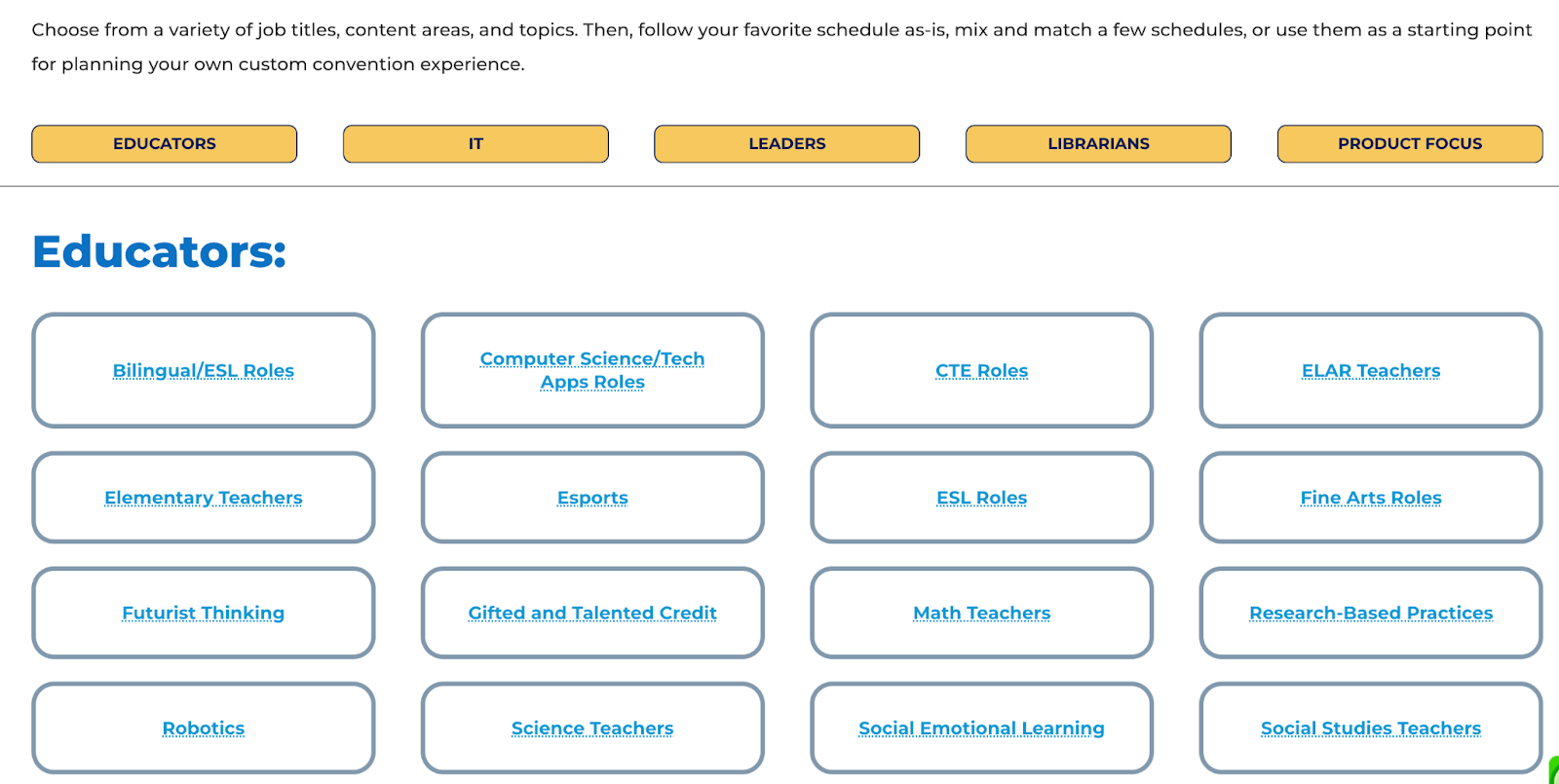
The mock schedules: Deciding on sessions to attend can always be a challenge especially when there are so many choices. One of the things I love about TCEA is that they put together mock schedules focused on the different roles of educators. The conference planning team reviews all sessions being offered for roles such as classroom teachers, IT, leaders, and librarians, or with a specific focus on SEL or STEM, special populations, and other important topics in education. Being able to look at a sample schedule helps any attendee but definitely, a first-time attendee to build a schedule focused on their specific interests and needs for professional learning.
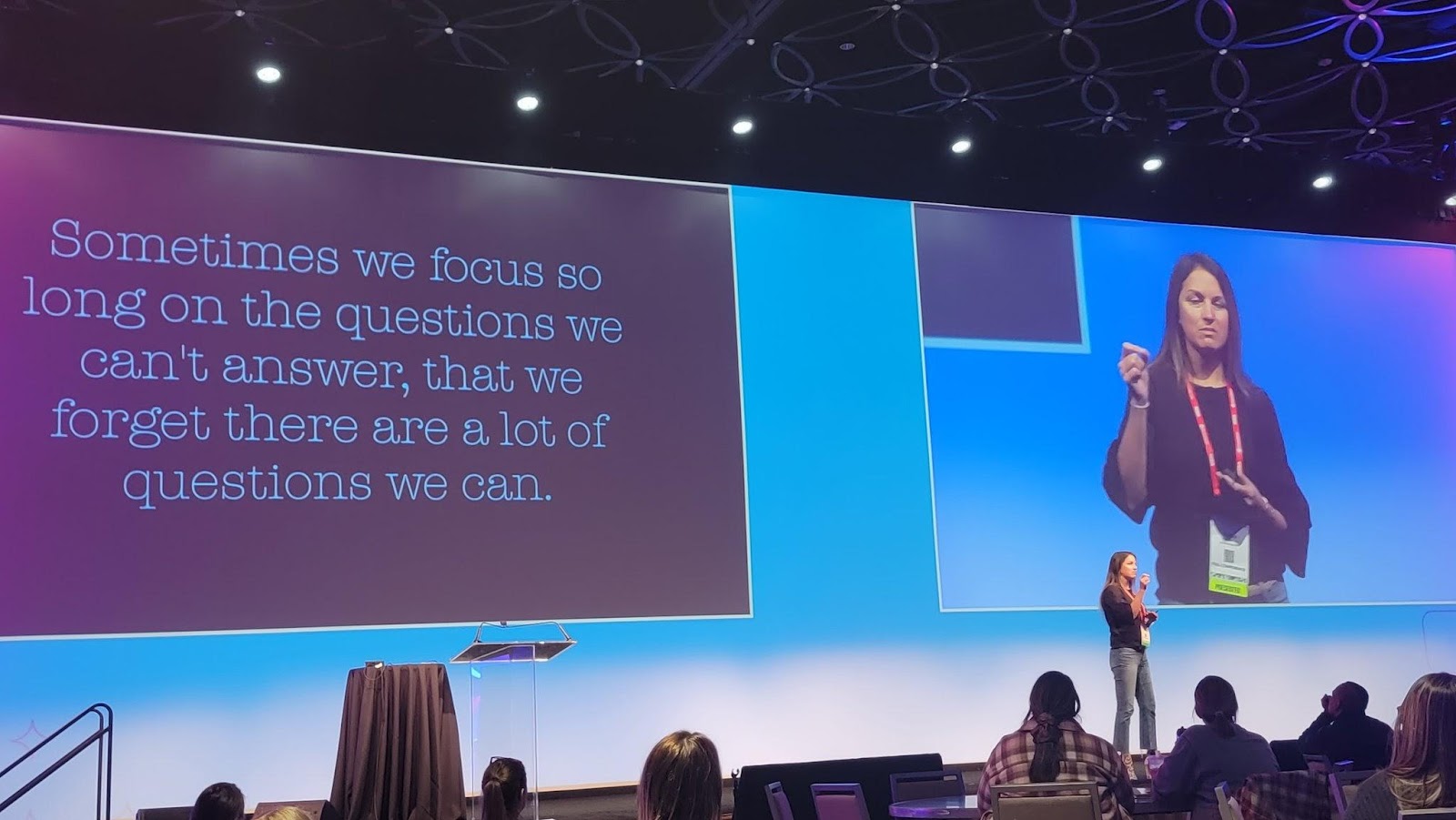
Power Hours: There were a variety of session types and events during the conference. Each day started with a Power Hour with a featured speaker. On Monday, Dr. Adam Saenz focused on “The Power of a Teacher” and how important it is to remember the “why” behind the work that we do and the importance of focusing on relationships. On Tuesday, Dr. Michael Hinojosathe spoke about “How to Leverage Educational Technology as a Learning Strategy.” He has more than 40 years of experience in public education, as a teacher, coach, and superintendent/CEO. On Wednesday, the Power Hour “Keep it REAL. Keep it FUN. Keep it UP!” with Joe Dombrowski, an educator who has studied the art of improv comedy. He shared ideas and personal stories about how he uses improv to boost student engagement. His goal is to help students “want to be in school rather than have to be in school.” There was a lot of laughter during his inspiring session.
[Kaitlin Roig-DeBellis]
Thursday’s Power Hour was with Kaitlin Roig-DeBellis, a former Sandy Hook Elementary teacher and the founder and executive director of Classes 4 Classes. She inspired educators with her message focused on making choices with “purpose, passion, perspective, resilience, and hope.”
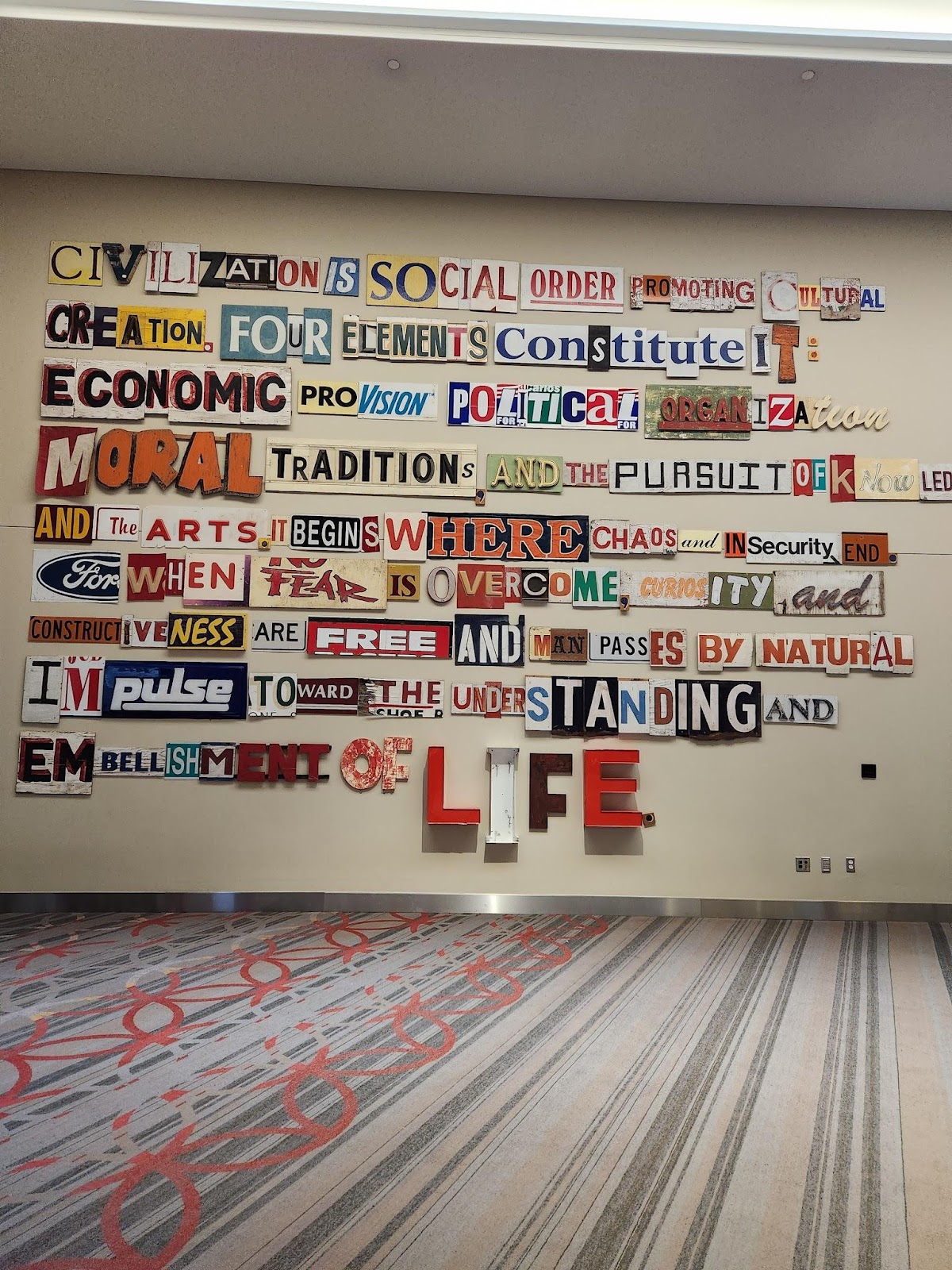
One of many interesting spaces in the center.
The sessions and topics
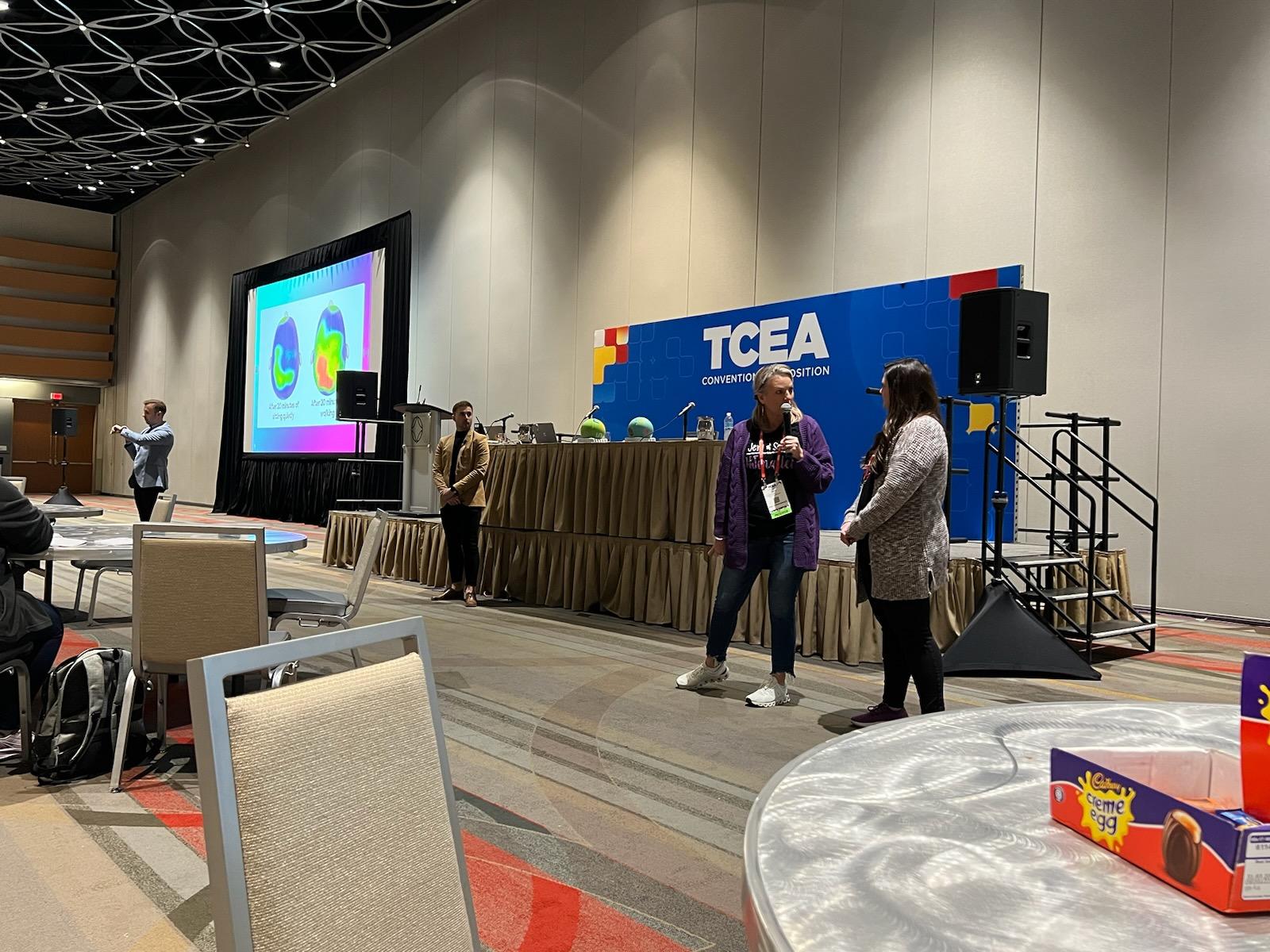
There were several hot topics this year. Attendees were very interested in learning about AI and in particular, ChatGPT, and its implications for education. Blockchain, NFTs, and the metaverse were also of interest, with several sessions available covering each of these. I presented a few sessions on artificial intelligence, emerging tech like NFTs, blockchain, the metaverse, and augmented and virtual reality. I also presented and attended several sessions on SEL. There were so many great sessions to choose from. As a presenter, I learn so much from attendees and I look forward to those opportunities to connect. The interactions in sessions lead to new connections and spark interest in new areas for teachers who walk away feeling more confident in diving into some of these new topics and trends.
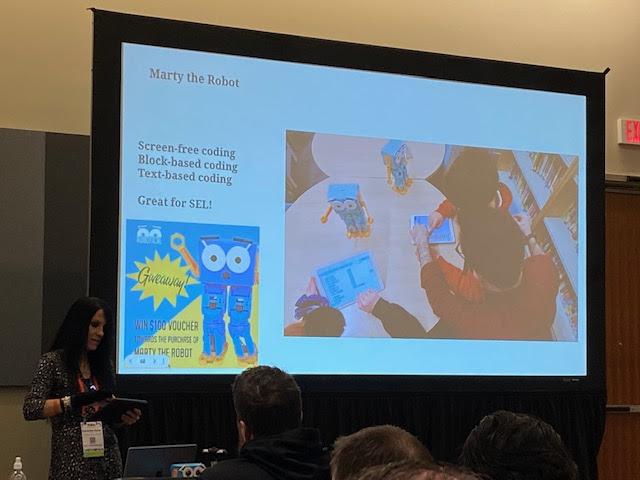
One of my presentations focused on Chart A New Course: Teaching Essential Skills. Sharing methods and tools like BookWidgets, StoryJumper, Marty the Robot and many more!
Jaime Donally had a great experience for anyone looking to learn about augmented and virtual reality during her sessions such as “Top AR/VR Trends to Transform Learning” and the Digcit VR Journey. Rabbi Michael Cohen (The Tech Rabbi) presented a few sessions on Cryptocurrency, Blockchain, NFTs, and web 3. Also, a big focus was on SEL, with a great session for teachers presented by Jenallee, the eTwinz, and Scott Bricker. Many sessions covered these topics and drew large crowds. Monica Burns had so many ideas to share in her “15 Ways to Collect Actionable Formative Assessment Data” session. She presented quick ideas and also digital tools that help educators gather important data about student learning.
Strategies for Teachers Session by Jenalee and the eTwinz
There were a variety of sessions focused on specific tools such as Google from Dr. Desiree Alexander who had a lot of great tips for streamlining Google Drive. Holly Clark and Matt Miller presented on AI and ChatGPT and shared some ideas for how educators can explore this technology and ways to help students understand it and its implications for learning now and working in the future. Another engaging session was “Three by Thursday! Electrifying Strategies to Ensure Engagement in Learning” by Stormy Daniels and Wendy Hedeen. These are just some of the many topics you could explore and sessions that provided actionable strategies and many resources and also helped with building confidence in taking some risks in our classrooms.
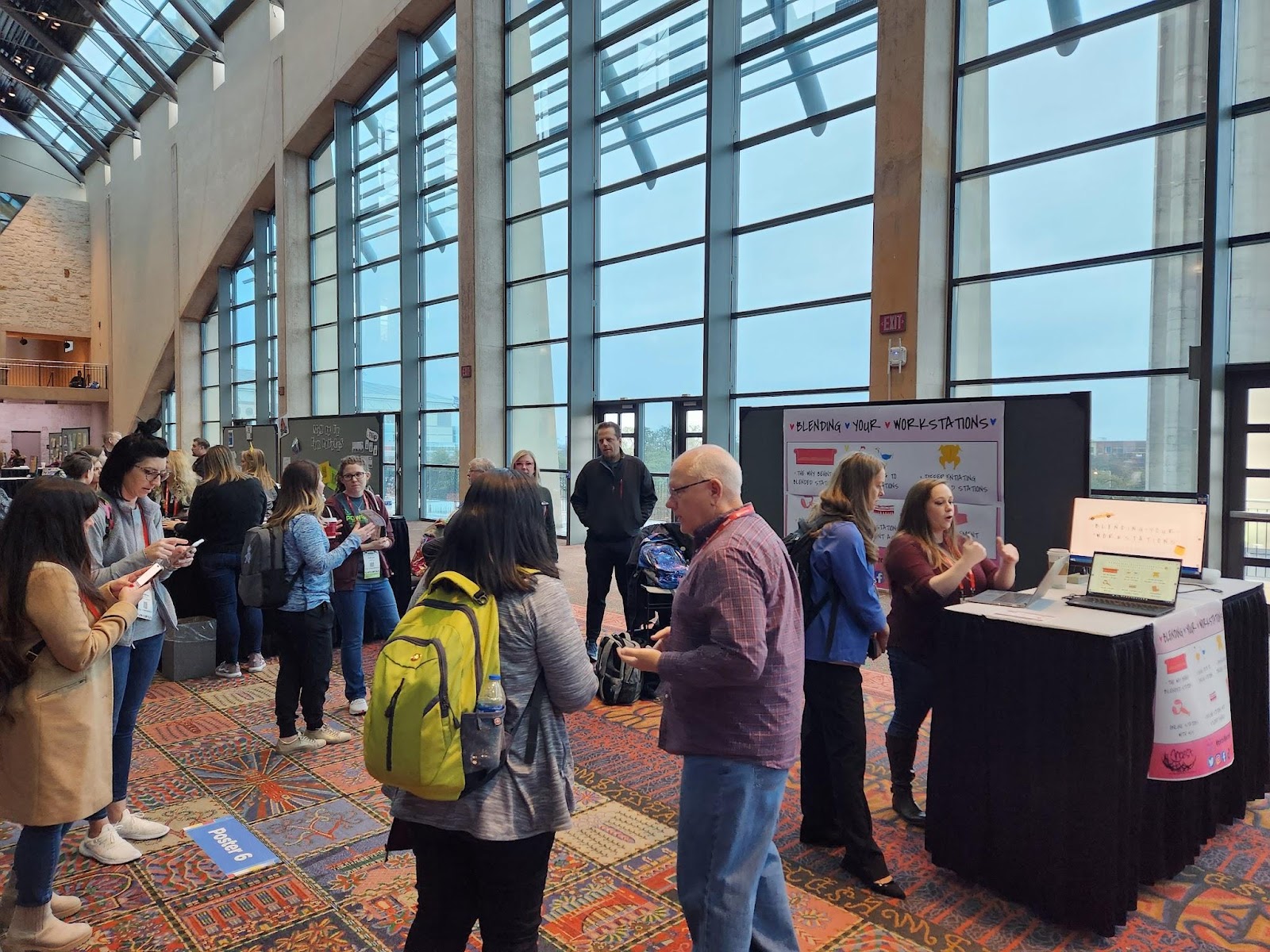
The poster sessions: At each conference, poster sessions are a great way to take in a lot of new ideas in a short amount of time. Being able to interact one-on-one and ask questions specific to your needs in these topic areas really does make a difference. There were poster sessions for CTE, Librarians, Professional Learning, STEM, CTE, and content areas. Sometimes it can be tough to decide which sessions to attend at a conference, but there were opportunities everywhere, especially through the poster sessions.
Panel and Roundtable Discussions: There were roundtable and panel discussions held each day on topics such as equity, personalized professional learning, sustainability, and really relevant focus points for educators. Each day had a variety of panel discussions focused on issues relevant to classroom teachers, educators, and librarians and provided an engaging space to ask questions and make new connections.
Presenting on AI and sharing Marty the Robot
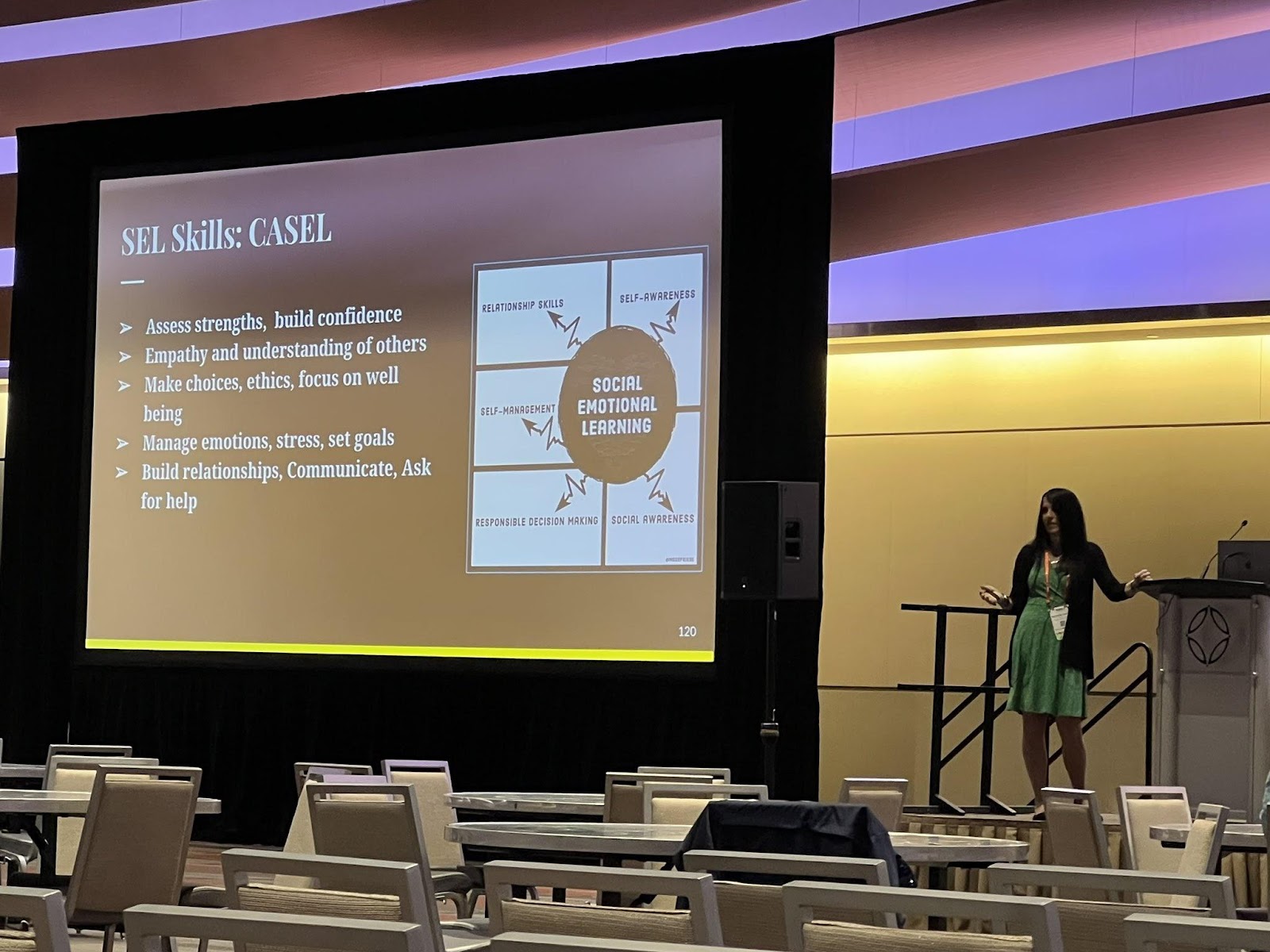
The big topics: Some of the big topics in emerging technology this year were blockchain, cryptocurrency, the metaverse, NFTs, and also ChatGPT. There were also a lot of sessions focused on SEL for students and ideas for educators for their own well-being. TCEA even had an SEL room available for educators to take time to relax in a calming and relaxing environment. It was also a space where educators could learn more about SEL practices and gather some resources.
The Exhibit Hall
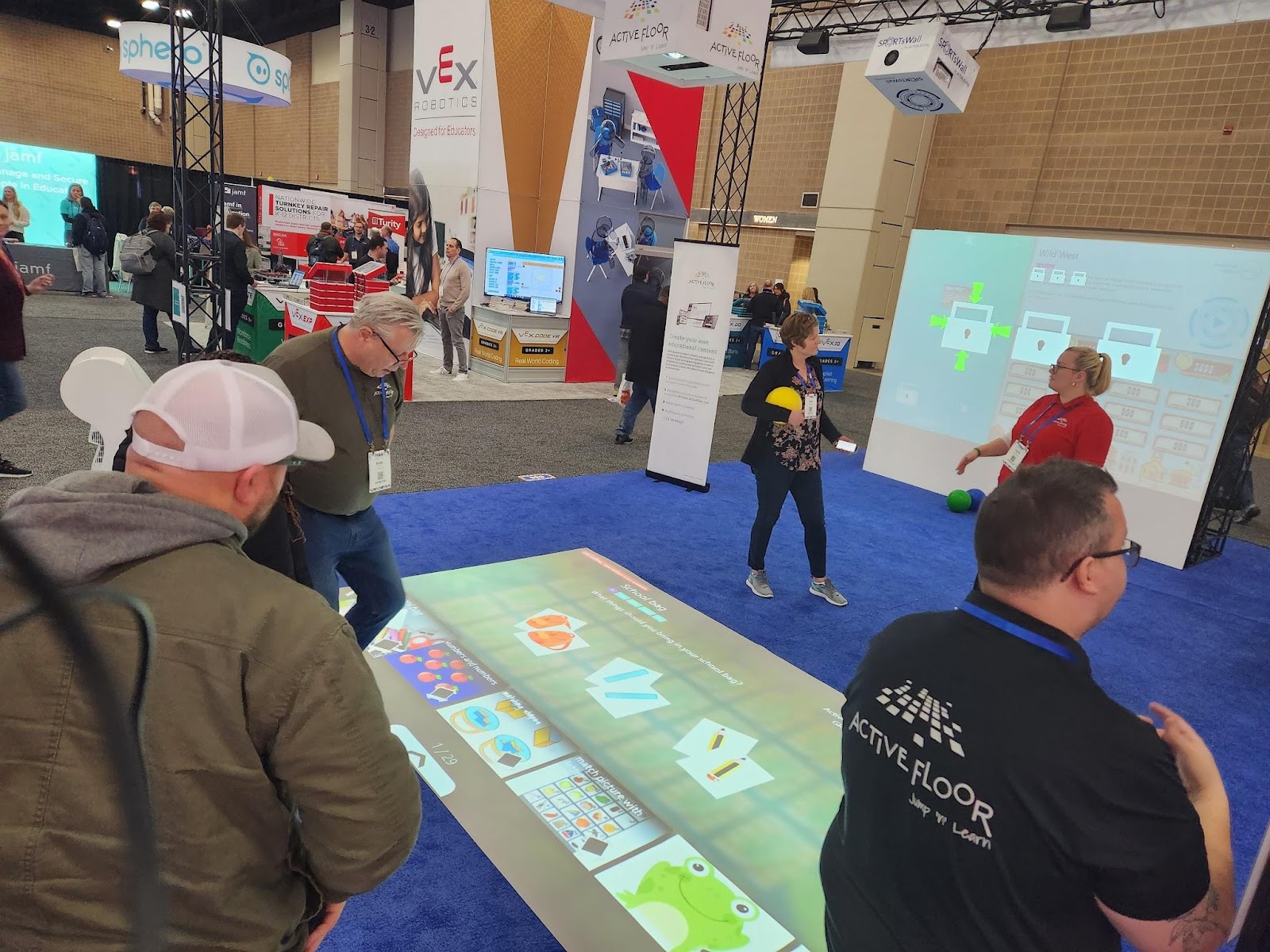
I enjoyed exploring the exhibit hall this year with so many companies present and different opportunities to interact with cutting-edge technologies and new ideas for STEM and emerging technologies. Some of the favorites were the Escape Room bus, the Esports area, and of course the endless swag that was available to attendees. There was a lot of interest in STEM-related resources such as Ozobot, Sphero, Marty the Robot, and more hands-on learning materials for younger students like this awesome learning mat from Active Floor.
It is also another great way to learn some new ideas by checking out the different technologies and solutions or catching some of the booth demos given by educators. It gives attendees the chance to learn about a lot in that one space and also to walk away with some fun swag too!
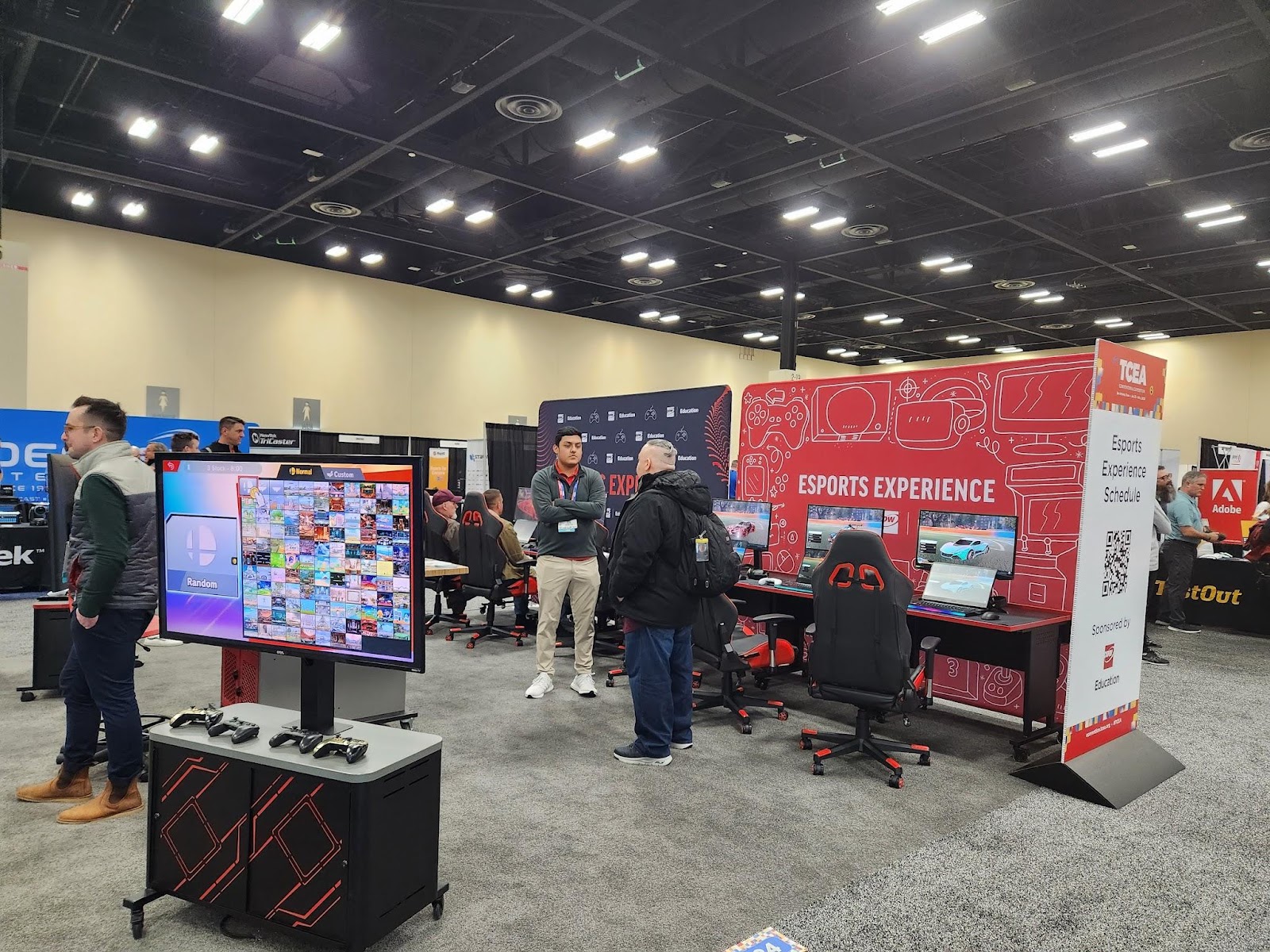
Esports was popular this year with several sessions happening as well as a space in the expo for attendees to take in the esports experience. Throughout the hall, there were booth demos by educators sharing their experiences of using some of the tools like Book Creator, Edpuzzle, Kami, and Spaces EDU, and many booths with live presentations happening every 15 minutes.
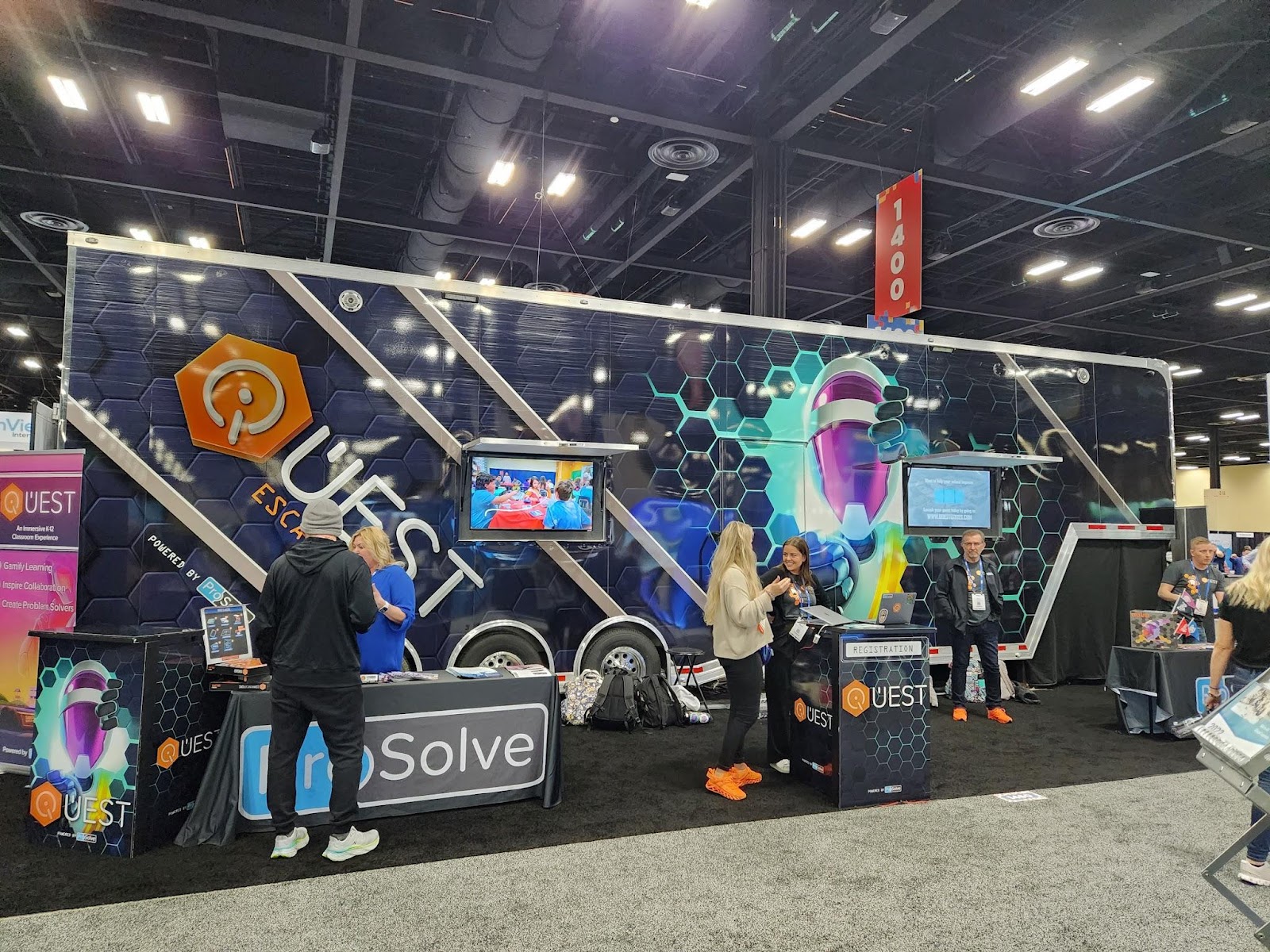
Attendees could also step inside and take a tour of a fully renovated, 43-foot school bus that has become a makerspace on wheels. It’s a STEAM dream come true!
The Quest Escape Room bus
The space that TCEA creates
Arriving at TCEA each year, attendees are welcomed as soon as they enter the space. There are volunteers ready to assist you and lead you in the right direction, make sure you are enjoying the experience and check in on presenters to make sure everything is set to go. Don’t worry about attending this conference alone. It is a welcoming space and you will meet and connect with educators right away!
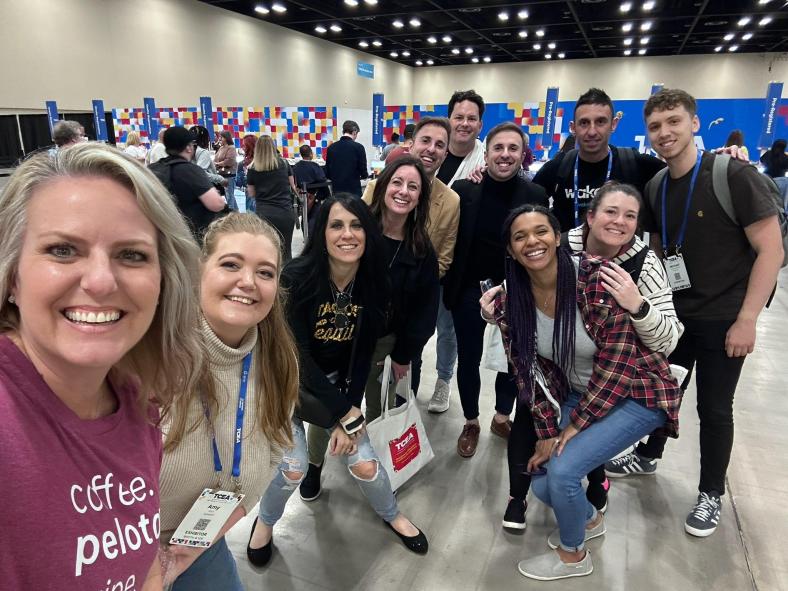
Meeting up with friends at registration to kick off the week!
Planning for next year! If you have been thinking about attending a conference, I definitely recommend TCEA. It has become a favorite event each year. The topics and strands focused on different roles for educators, the variety of sessions, and the welcoming TCEA staff and volunteers, really provide a tremendous learning experience for all attendees.
Rachelle Dené is a Spanish and STEAM: What’s nExT in Emerging Technology Teacher at Riverview High School in Oakmont, PA. Rachelle is also an attorney with a Juris Doctor degree from Duquesne University School of Law and a Master’s in Instructional Technology. Rachelle is an ISTE Certified Educator and serves as the past president of the ISTE Teacher Education Network. She was named one of 30 K-12 IT Influencers to follow in 2021.
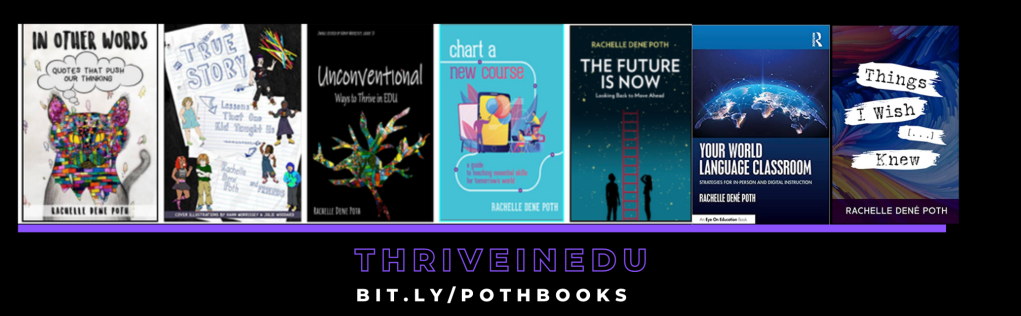
She is the author of seven books including ‘In Other Words: Quotes That Push Our Thinking,” “Unconventional Ways to Thrive in EDU”, “The Future is Now: Looking Back to Move Ahead,” “Chart A New Course: A Guide to Teaching Essential Skills for Tomorrow’s World, “True Story: Lessons That One Kid Taught Us” and her newest book “Your World Language Classroom: Strategies for In-person and Digital Instruction” and Things I Wish […] Knew.
**Interested in writing a guest blog for my site? Would love to share your ideas! Submit your post here. Looking for a new book to read? Find these available at bit.ly/Pothbooks
************ Also check out my THRIVEinEDU PodcastHere!
Join my weekly show on Fridays at 6pm ET THRIVEinEDU on Facebook. Join the group here
Guest post by Dr. Shelly Vohra in collaboration with @ClassComposer
Response to Intervention (RTI) is a strategy geared towards students who face learning challenges. Students struggle for a variety of reasons and it’s important to understand why these students are struggling and the best way to create a learning path so that they are successful and feel good about themselves. The premise behind “interventions” is to ensure that students receive the supports they need so that the gaps in learning are not exacerbated. It is important to note, however, that “gaps” should not be seen as deficits; rather gaps are areas of growth for students and each student has their own areas of growth based on a wide range of assessments. I, personally, have an issue with the term “gaps” but that is a topic of discussion for another time. It is also important to know that RTI is not a program; it is an approach that identifies student needs based on collecting data from various sources and in a variety of ways and then identifies and applies relevant instructional strategies to develop those skills in students.
Gathering and accessing data
When it comes to data, there are many sources available for educators to learn about the needs of individual students. Being able to gather all of this information, sort through it, share it with other teachers, and develop a plan can take time. Not having a streamlined space for this makes it challenging. With Class Composer, educators have everything they need to be able to monitor student progress. The information is readily accessible to anyone, at any time. It enables all teachers to access the information they need about each individual student when they need it.
With Class Composer, it is easy to track and record student growth toward individualized goals and share this information within your PLC to best provide for all students. Simplify how you manage all the assessment data collected!
Supporting teachers to support students
As it is, one of the most important parts of the RTI process is to build a team to effectively support students who are struggling. The team should include classroom teachers, administrators, teachers who support special education students and those students who are learning English, the school psychologist, speech-language therapist, and parents. Teachers provide targeted teaching and then use formative assessment practices to determine if the intervention strategies are working.
With Class Composer, it makes it easier for teachers to have access to all this information in one space. It enables teachers to create a supportive learning community for students. These teacher-student connections lead to the development of the essential relationships that need to exist for all students to be successful. The simplified space creates a better way for teams to collaborate and access the information they need when they need it.
If they are not working, the team must decide how they will adapt and modify their instructional practices to ensure that students are indeed learning and growing. A significant aspect to keep in mind is that formative assessments inform us of what we must do to ensure student success, not what the student needs to do. In other words, how are we adjusting our practice to best support students? Assessment informs instruction; it is our responsibility to continuously revise what we are doing so that students meet the learning goals related to curriculum standards and expectations.
Even though there is no one correct way to implement RTI, it is a three-tiered approach and you can think of it as a pyramid in which each tier increases in the intensity of support. They are:
(1) whole class
(2) small group, and
(3) intensive interventions.
Some school boards call this a multi-tiered system of supports or MTSS. Although there are many benefits to this approach, I also see several problems and issues arising from the basic foundation upon which RTI and MTSS were built.
I will be discussing these issues in future blog posts as well as digging deeper into this system of support and how to best implement this framework so that all students succeed, grow, and have positive self-worth.
About the Author
Dr. Shelly Vohra is an educator, coach, and consultant. Dr. Vohra teaches undergraduate and graduate level courses in Technology and Mathematics as well as working with students who are learning English. She holds an M.Ed in Adult Education & Distant Learning and a Ph.D. in Educational Technology. Dr. Vohra has over 20 years of experience in education (K-12) teaching various subject areas. Dr. Vohra has written several courses related to Indigenous Education, Multilingual Learners, and Mathematics.
Most recently, she was on a writing team that revised the Science Curriculum (K-8) for Ontario. She has presented at various conferences in Canada and the U.S.A. Dr. Vohra’s work includes designing learning experiences for students through an integrated curriculum lens that combines inquiry with equity. Her research interests include social media in education and blended learning, Dr. Vohra is currently writing a book on her journey. You can find her blog at https://techdiva29.wordpress.com/. Her website will also be launching in late Fall. You can also follow her on Twitter @raspberryberet3 and on Instagram @elevate_ed_21.
**Interested in writing a guest blog for my site? Would love to share your ideas! Submit your post here. Looking for a new book to read? Find these available at bit.ly/Pothbooks
************ Also check out my THRIVEinEDU PodcastHere!
Join my weekly show on Fridays at 6pm ET THRIVEinEDU on Facebook. Join the group here
One of the largest questions schools are facing this year is how to try to improve student behavior. We all understand that one side effect of the pandemic was students were deprived of learning key social skills that can help regulate their behavior.
The National Center for Education Statistics reports that 84% of schools agree that student behavioral development has been negatively impacted and that has led to everything from student misconduct to acts of disrespect toward teachers and staff to prohibited use of electronic devices.
In reaction, many schools have used their COVID relief federal funding to start or bolster existing social-emotional learning programs. In fact, 88 of the top 100 districts in the U.S. reported spending funds on SEL – that meant more districts expanded SEL than sought additional technology, teacher training, or extended learning opportunities.
And that’s not a surprise. Many studies show that addressing and building students’ social-emotional skills can result in better academic performance, fewer disruptive behaviors, and less emotional distress.
As a quick aside, if your district is still searching for a solution, I have a detailed column that explains how to best vet a new program, considering your district’s available funds, current climate, and hoped-for outcome.
But if like so many districts, you have already purchased a program and are in the early stages of implementation, I have some advice that seeks to flatten your learning curve, enhance buy-in from staff, and start producing results quicker.
The first key lesson is that even if you have chosen the right program, simply buying something and beginning to train staff isn’t enough to guarantee success. Just as we know that students do better when they understand the relevance of the work they are completing, your staff is more likely to find success if they believe in the option you’ve chosen.
One way to accomplish this is by sharing with them the process you went through to choose your solution. You likely not only gauged your product’s effectiveness in schools in general but also studied exactly how it worked in schools that mirror your district. Let your teachers know what research went into it, and freely share any examples you have from other implementations, from successes to roadblocks.
If you completed a trial with a small group, let staff know. Allowing teachers and others to talk with multiple people about implementation will help tamp down fear of the unknown.
You should also set clear expectations for your program, even if it’s already been rolled out district-wide. Explaining that usage can deepen in coming years will offer a roadmap to staff, and help teachers see the end goal without allowing day-to-day frustrations to hamper their efforts.
The last method to improve your staff’s buy-in is to extend your SEL program to include care for their social and emotional states. During the last several years, teachers may have been working so hard to mitigate the negative effects from the pandemic on students, they ignored their own self-care. Teacher resignations and polls that show increased unhappiness in their jobs are proof that stress, extra work, and uncertainty have taken their toll on your staff.
Remind your teachers to take care of themselves and offer them programs in yoga or controlled breathing. This can not only reduce their stress, but also prove you care about their well-being. In short, take care of your staff like you hope they take care of your students.
Above all, remind staff that all of this work takes time to master, like any new skill. While you can’t expect students to absorb SEL lessons and improve behavior immediately, if staff is consistent with their lessons, progress will begin in mere weeks. This will then reinforce the importance of your SEL program.
Al Kingsley is an author, the CEO of NetSupport, Chair of a Multi-Academy Trust in the UK, Education Author and co-chair of Workstream 5 at the Foundation for Educational Development, whose mandate is to develop a framework for long-term vision and sustainable planning for education in England. He travels the world, speaking about and studying education. Al’s latest book isMy School Governance Handbook.@AlKingsley_Edu.
Guest blog opportunities
**Interested in writing a guest blog for my site? Would love to share your ideas! Submit your post here. Looking for a new book to read? Find these available at bit.ly/Pothbooks
************ Also check out my THRIVEinEDU PodcastHere!
Join my weekly show on Fridays at 6pm ET THRIVEinEDU on Facebook. Join the group here
In preparing students for the essential skills they need for the future, we have different methods and digital tools that we can bring into our classroom space. But what skills do students really need?
A great resource to explore is the skills outlook provided by the World Economic Forum. The top skills cited include emotional intelligence, collaboration, communication, creativity, critical thinking, and problem-solving.
What is important to note is that these skills align with the five core competencies of social-emotional learning (SEL) skills of self-awareness, social awareness, self-management, relationship building, and decision-making.
Because of the changes that we experienced in the past year, I believe that it is important to have various options, whether teaching in-person, hybrid, or virtually. Choosing methods like Genius hour or project-based learning, activities such as scavenger hunts or learning stations, or selecting digital tools that promote more interaction with and between students will help foster the development of essential future-ready and SEL skills.
How to foster the development of future-ready skills
Educators might wonder how to build SEL activities into the classroom and whether it takes a lot of time. Depending on the methods or tools chosen, some of them do require more planning and preparation initially, but there are so many benefits that the time is definitely worth it.
Here are four methods to consider:
Digital breakouts and Escape rooms
These have become more popular over the past few years. Even during virtual learning, they can be a great way to have students work together and build skills of collaboration, communication, problem-solving, and critical thinking. Using breakouts and escape rooms is also beneficial for the development of social-emotional learning skills as well. There are a lot of ready-to-use games available to get started with.
With Genius hour, students explore an interest or a passion. It is focused on inquiry-based and student-driven learning, and infuses more student choice and student agency. Students have a chance to “Share their genius” with classmates. Genius hour builds student curiosity, encourages collaboration, and will help students to become more confident as they explore on their own and share their knowledge.
Learning stations
When I changed my classroom a few years ago and changed the rows into stations, there were many benefits for students and my own practice. With stations, using a mix of hands-on materials and digital tools enables students to experience more personalized learning and promotes the development of SEL.
It enables educators to develop a better understanding of where each student is on the learning journey to better plan for their lessons. Using stations also creates a collaborative classroom community where students can engage in activities with their peers, which supports building self-awareness, social awareness, and peer relationships.
Project-based learning
With methods like project-based learning (PBL) or problem-based learning, students drive their own learning, leading them to become more independent and have choices that lead to more authentic and meaningful opportunities.
It helps them to develop self-management skills in particular when setting goals for their research and dealing with any that come with independent work like PBL. Giving students the chance to explore something of personal interest or curiosity, promotes independence in learning, builds student agency, and also helps us to learn about their passions and interests, which assist us in designing learning activities with them in mind. As educators, we must focus on connecting them with the world and preparing them for whatever they decide to do in the future.
Especially during the past school year, digital tools helped facilitate learning in many different settings. Choose one or two versatile tools that will promote student choice and empower them to move from content consumers to creators.
Here are three ideas using digital tools:
Interactive lessons: With some of the platforms available, we can keep students engaged in learning by including a variety of activities that promote collaboration, discussion, and creativity in learning while they build skills in the content they are learning. Some of my favorites include using Formative, Google Jamboard, Nearpod, and Classkick, all of which are beneficial for connecting students in learning, whether in-person or remote, and which enable educators to have access to data or information about where students are in the learning process.
Multimedia presentations: Students can develop vital technology and digital citizenship skills as they learn to create multimedia presentations to demonstrate learning. Our favorites include using tools that offer options for all students that meet their specific interests and comfort levels with technology. Check out Buncee, which has designed an SEL toolkit with ready-to-use template activities for grades K-6 and 7-12 in addition to having thousands of ideas for classroom use and more than 38,000 items in their media library. Using a tool like Wakelet enables students to include images, text, Flipgrid short videos, and other links to share with classmates and their teachers. It is simple to get started with, and it offers students the chance to create their own lesson or even a digital portfolio to show their learning journey. Book Creator is another option for having students collaborate on a book and include audio, video, text, images, and more and build SEL skills. Read more: 8 Digital tools for engaging classroom presentations
Digital portfolios: Spaces offers a digital portfolio platform that assists teachers in better understanding students, their interests, and their needs in learning. Digital portfolios help students to develop SEL skills of self-awareness and self-management. Having students share their portfolios with classmates is also helpful for building relationships and social awareness. The benefits of portfolios are that students track their growth over time and can identify strengths and areas where they can set new goals.
There are many methods and tools to explore, but it’s important to focus on the why behind the choices we make for our students. The use of digital tools promotes collaboration, communication, creativity, and many more essential skills while also promoting the power of choice for students to share what they have learned.
**Interested in writing a guest blog for my site? Would love to share your ideas! Submit your post here. Looking for a new book to read? Find these available at bit.ly/Pothbooks
************ Also check out my THRIVEinEDU PodcastHere!
Join my weekly show on Fridays at 6pm ET THRIVEinEDU on Facebook. Join the group here
Over the past two school years, educators, students, and their families have experienced learning and living in new ways. There have been many challenges that we have all faced in education. For some educators, it was a necessary push to take risks, try new ideas or bring different technologies into their classrooms. Although those school years may not have gone as we had planned and we may not have covered as much of the content as we had hoped or had opportunities that we wanted for our students, learning still happened.
In many conversations, teachers are starting to shift from what has been a focus on “learning loss” and instead focus on reflecting on the skills that students gained by learning in different yet challenging ways. Some skills such as digital citizenship, how to collaborate and build relationships when not in the classroom together, and essential technology skills. Teachers learned a lot about themselves and the importance of reflecting on their practice. We learned in new ways and now, we have to continue to provide more authentic and meaningful learning experiences for all students.
Learning in New Ways
If we want to bring about changes for our students, we have to take some risks in our classroom and be open to new ideas, especially from students. It is important for our own professional growth that we continue to stretch ourselves and embrace new, and perhaps non-traditional methods of instruction. We need to foster student agency by promoting student choice and voice in learning.
It took some time for me to make changes in my classroom, but once I did, I noticed an increase in student engagement, the development of SEL skills, and a shift from students as consumers, to being creators and innovators. Students should have learning experiences that push them to drive their learning, problem-solve, create and reflect on the learning process itself. And just like for educators, this can be a risk for students and it can feel uncomfortable. Having the power to decide one’s learning journey provides many benefits, but it can be an adjustment to shift from having a specific end product to being the one to decide what the end product will be.
Promoting Student Agency
There are many ways to promote student agency in the classroom. Whether we try different teaching methods or bring in digital tools, we can amplify student learning potential. Leveraging a digital tool that connects students with real-world learning opportunities and expands their global awareness, for example, can transform the student learning experience. Using methods in our classrooms that foster social-emotional learning (SEL) skills, benefit students now and in the future, as these are the skills in demand. When students experience learning that is meaningful, purposeful, and relevant to their lives, it boosts student engagement and amplifies their learning potential, to better prepare students for their future careers.
Strategies and Tools
Because technology can and will change, it’s important that we focus on strategies first, and then find tools that help to facilitate these strategies whether in or outside of the classroom space. And when considering strategies, having goals in mind as to the skills we hope to help students develop. When thinking about the 21st-century skills or the skills in demand based on the Job Skills Outlook from the World Economic Forum, we know that the skills of collaboration, communication, creativity, critical thinking, and problem-solving are a few of the skills our students need. What are some activities and methods that will help students to develop these skills? Here are three ideas to get started:
1. Stations:
My first risk was making a shift to using station rotations in my classroom. Without any experience, I decided to dive right in and make my classroom a more student-centered and even student-led space. Using the activities and some digital tools that we commonly used in class and working together at the same pace, I divided these into 4 or 5 stations in my classroom. Students worked together and it enabled me to interact with each student more. Rather than being the sole provider of content, I was the facilitator of learning. Although at first, it was a big change, felt uncomfortable not being fully in control for the whole class, the impact was quickly noticed. Students developed SEL skills, became leaders in the classroom, and developed confidence in learning and it fostered a supportive learning community. Students felt connected to their peers and enjoyed the different ways they were engaging with the content.
2. Project-based learning (PBL):
PBL is a method that I thought I was using however I was just assigning projects, which were a finite learning experience for students. When doing authentic PBL, students decide on their focus and it also gives students a chance to work at their own pace through learning that can happen anywhere. With PBL, my students built their skills of collaboration and communication by working with classmates and connecting globally with a class in Argentina. Beyond building their Spanish language skills, students explored topics of interest and developed social awareness about global issues, which led to a much more powerful learning experience. By leveraging tools like Microsoft Teams, Flip, Buncee, Wakelet, and others, students were engaged in a more meaningful and personalized learning experience which promoted student agency in learning. In addition to these benefits, students built their skills using technology by being able to collaborate, communicate, create, problem-solve, and connect during this experience. Engaging in PBL connects students with more authentic and real-world learning experiences.
3. Student-led lessons:
A few years ago, as part of the review at the beginning of the school year, I decided to have students become the teachers. Working in pairs, students had a topic and then had to come up with a way to teach it to their partner. After the first lesson, the roles would switch and the other student would teach the lesson. It was open for students to select a topic or two and they could use anything to create their review lesson. Students came up with great ideas which used some traditional activities such as creating a worksheet or making flashcards and others relied on the many digital tools available. Some students used Buncee, Formative, Nearpod, and Padlet to design their lessons. There are methods that I am using in my classroom today because of what I learned from students. This “teacher for a day” activity was a risk but with many benefits for learning the content and developing essential SEL skills as well as fostering student agency in learning.
Rewards for Learning
Trying new methods or digital tools, or taking a different role in the classroom may be uncomfortable at first, however, there are so many benefits for students and for teachers. Taking risks and facing challenges along the way is a great model to set for students. In using these three methods, teachers can shift to being the facilitator and enjoy opportunities to collaborate and co-learn with students.
As we prepare our students, we need to provide opportunities for students to work at their own pace and explore ideas based on their specific interests and needs.
About the Author:
Rachelle Dené is a Spanish and STEAM: What’s nExT in Emerging Technology Teacher at Riverview High School in Oakmont, PA. Rachelle is also an attorney with a Juris Doctor degree from Duquesne University School of Law and a Master’s in Instructional Technology. Rachelle is an ISTE Certified Educator and serves as the past president of the ISTE Teacher Education Network. She was named one of 30 K-12 IT Influencers to follow in 2021.
**Interested in writing a guest blog for my site? Would love to share your ideas! Submit your post here. Looking for a new book to read? Find these available at bit.ly/Pothbooks
************ Also check out my THRIVEinEDU PodcastHere!
Join my weekly show on Fridays at 6pm ET THRIVEinEDU on Facebook. Join the group here
Ever find yourself looking for a quick activity that has value for your learners but doesn’t require a lot of prep or extra work on your part? I think most educators find themselves in this position occasionally, whether it is an activity to kick off the class period, the learning session, or the conference workshop. A powerful but often overlooked tool in our arsenal is the quickwrite. Some of you are already thinking, that’s great, but I don’t teach English. I know, but the quickwrite is a flexible tool that all subjects, except maybe physical education (PE) and fitness/conditioning, can use daily, weekly, or periodically. Here are a few ways to make use of it regardless of the learning management system (LMS) that your district uses. While most of those listed on the graphic I created for a recent AVID presentation are self-explanatory, there are a few that will benefit from a closer look.
WHO’S GONNA PICK YOU UP WHEN YOU FALL?
BELL RINGER & PRIOR KNOWLEDGE
All three of these can be rolled up into one fabulous quickwrite activity. When used as a bell ringer, simply give students a prompt that they must respond to in a short amount of time (that’s the “quick” part of the “quickwrite”) in a sentence or more, depending on the age group of students. When students are writing, they are thinking. By using quick writes in the classroom, we provide students with opportunities to write to learn, to show what they know, to process information, and to stimulate their thinking. A bell ringer quickwrite can be used to access or assess prior knowledge before starting a new unit. You, the teacher, are in charge of what students write and think about during this activity, so using it to see what your students already know about the new unit is a great way to get double the value out of this powerful learning activity.
WHO’S GONNA HANG IT UP WHEN YOU CALL?
BRAIN DUMP
Brain dump, also called “free recall,” is a cognitive strategy based on decades of research that can take 5 minutes or less of class time and requires minimum prep by you, the teacher. It is a great way to implement retrieval practice, a strategy for helping students get out or “retrieve” the information they are receiving from instruction. The more students retrieve the information, the better chances it has for transferring from short-term to long-term memory. There are several ways to use this at different stages of the lesson. This quickwrite can be a “stop and jot” where you simply stop the lesson or activity after a few minutes and have students jot down everything they can remember up to that point. Continue your lesson or activity after the allotted time for the quickwrite. When using this type of quickwrite at the beginning of the lesson, have students write down as much as they can remember within a short time frame about what was covered, learned, discussed, or practiced in class yesterday. Adding in spacing or the passage of time between what is learned and retrieving that learning does increase the impact on student learning. If you want to use this type of quickwrite as an exit ticket, then simply have students write down everything they can remember from what you covered during the class period or lesson. This should be done individually, and it should not be graded. For the added benefit of students practicing academic conversations, allow partners to share their quickwrites with each other occasionally in order to provide timely feedback for students. (Click here for more information about retrieval practice and brain dumps).
WHO’S GONNA PAY ATTENTION TO YOUR DREAMS?
NONLINGUISTIC REPRESENTATION
A great way to use quick writes is to combine them with the power of nonlinguistic representation. Give students an image and minimal directions so that students have multiple correct responses and must make multiple decisions over what they write. This type of assignment ups the level of student engagement because they are able to make personal choices about what they write or how they write. The teacher can provide the image and have students generate text, or teachers can provide text that students then use to express ideas in a way that goes beyond the use of words. Students may express ideas about the text through diagrams, pictures, 3D models, movement, demonstrations, role-plays, simulations, or mental images. Math problems can be represented by cartoon characters instead of numbers, for example. Any time there are multiple ways to respond to or solve the problem there is more depth or critical thinking involved for the learner. According to an article by Robert Marzano via the ASCD website, there are five points to keep in mind about nonlinguistic representations:
come in many forms
must identify crucial information
students should explain their representations
nonlinguistic representations can take a lot of time
students should revise their representations when necessary
Marzano further points out that nonlinguistic representations are a powerful technique and fresh approach that is available to classroom teachers that have a positive effect on student learning as well as provide diversity in the way students process information.
YOU CAN’T GO ON, THINKING NOTHING’S WRONG, BUT NOW
QUICK NOTES
This may seem different from a pure quick write, but quick notes can function as one. There are many ways to do this in the classroom, and it can be a great way to start class by preparing students to “get their thinking on.” To help students start the notetaking process, give them a choice from a few pre-printed or digital generic graphic organizers. By generic, I am referring to one that does not have explicit directions or labels that might direct how a student uses the organizer. If those are all you have, then just make a copy and delete the labels or directions prior to making copies for the students or delete them digitally before placing the organizer in your class Learning Management System (LMS) for students to access. Provide either printed material or digital content for the students to take notes over, and explain to them what you want them to look for and the amount of time they have to do that. Since this is quick, you will want to keep the time you give students to complete it on the short end. Instruct students to use the organizer how they see fit, giving them autonomy over their notetaking process. When students become adept at taking quick notes (or notes in general), the graphic organizer may not be needed, but at first, it serves as a scaffold to help students get started. A blank piece of paper or digital document can be intimidating, but the graphic organizer immediately helps students begin planning where to put their information, and can also help them determine how much information to include, depending on the shapes present on the graphic organizer.
Graphic organizers also tap into the power of dual coding, which is when text and images related to the text are combined to help the brain encode the information in two ways. It helps make the learning sticky. The shapes on the graphic organizer can act as the image for each chunk of text placed within them, helping students move that information from their short-term memory to their long-term memory. If quick notes become your routine for starting class, students can work on the same article or chapter for several days in a row, like a jigsaw activity but completed by the same student over a span of a few days. Day one can cover section 1, day 2 section or paragraph 2, etc. This concept can be similar to a close reading, where students look for different things each time they read. With this activity, they might look for the same things but over different parts of the text each day. What students focus on and for how long they have for taking notes is within the control of the teacher. How students take their notes should be within the control of the student.
WHO’S GONNA DRIVE YOU HOME TONIGHT?
LISTICLES
Listicles have become an established genre of online writing. A listicle is an article written in list format. Each list item typically includes a few sentences or multiple paragraphs, and a listicle is meant to either educate or entertain readers, such as The Top 10 Songs of 2022, or a more informational one, like 5 Steps to Building Classroom Culture. Assignments for listicles can fit any subject or content area, and most grade levels. It is a great way to: do a quick write or longer research project, assess/access prior knowledge, have a fun or more engaging exit ticket, and the list of classroom applications for the listicle goes on and on. For example, if you are working with new vocabulary words, have students create a listicle of the Top 3 or Top 5Vocabulary Words (or come up with a more creative title). Students can choose from their list and create an informative listicle over their chosen vocabulary words. To also qualify as a quick write, be sure to require only the number of words that students could list, define, and use in a sentence within the amount of time you plan to give them for the quick write. Listicles can also be used in summarizing content, and if used for a quick write, again be conscious of the amount of content you expect within the time constraints. (Click here for more information or ideas on how to use listicles in your classroom).
There are many more ways to utilize quickwrites in your classroom, but I hope these ideas help you get started using this powerful tool with your students.
HEADINGS ARE PARTIAL LYRICS FROM DRIVE BY THE CARS.
**Interested in writing a guest blog for my site? Would love to share your ideas! Submit your post here. Looking for a new book to read? Find these available at bit.ly/Pothbooks
************ Also check out my THRIVEinEDU PodcastHere!
Join my weekly show on Fridays at 6pm ET THRIVEinEDU on Facebook. Join the group here
While we cannot predict with certainty the types of jobs that will exist in the future, we know that today’s students will need a variety of SEL skills, whether referred to as “21st-century skills” or “future-ready” skills, they need to be flexible to adapt with change.
The Importance of SEL in the Classroom
As we have seen and experienced, there has been an increased focus on the mental health and wellness of our students and ourselves. Dealing with the changes in our schools and in the world, we’ve all had to make adjustments and develop or enhance our social-emotional skills to work through the challenges that we faced in our personal and professional lives. The way that we handled these challenges and worked through stress was important as we are modeling for our students. What are the best ways to provide all students with authentic, unique, and innovative learning experiences that will foster the development of these essential skills? How can we prepare students for jobs which may not exist yet in our ever-changing world?
To best prepare students for the future, we need to help them develop the essential SEL strategies that will enable them to adapt as they work through potential challenges they may encounter in the future. With learning and preparing for the future comes additional challenges and stress related to the work we do. To prepare students, we need to design experiences that will best support them on their journey and this means helping them to become future-ready by developing essential social-emotional learning (SEL) skills.
What are social-emotional skills and why do they matter?
Social-emotional learning or SEL has five competencies: self-awareness, social awareness, self-management, responsible decision-making, and relationship skills. SEL matters because there is a direct correlation between social-emotional learning and the skills that students will need for future employment. Being “future-ready” means possessing the essentials like collaboration, communication, decision-making, problem-solving, and teamwork, which are a few of the future-ready skills listed by the World Economic Forum.
Research shows that by regularly addressing the five competencies of SEL in our curriculum, we will positively impact and see an increase in student academic performance. To learn more about SEL, I recommend that educators check out the resources available from CASEL, the Collaborative for Academic, and Social and Emotional Learning.
Teaching Social-Emotional Skills through the 5 Competencies
In our work, we need to promote the future readiness of our students, and the five SEL competencies directly correlate to the social-emotional skills students need. The five competencies are:
Self-awareness: Being self-aware helps students to understand where they are during the learning process and identify their skills and interests as they continue to learn and evolve as learners.
Self-management: Students develop the skills to deal with any emotions or stress experienced during the learning process. In building self-management skills, students focus on setting goals and dealing with any stress they experience. Through learning activities that are scaffolded or promote independent learning, students will see learning as a process, rather than a final product as they develop their own personalized work plan. Developing skills of self-management is essential for the future.
Social awareness: Students develop an understanding of others’ perspectives and different cultures. The development of compassion and empathy are important for students as they learn to interact with others and build interpersonal skills.
Relationship skills: As employers seek skills such as teamwork and leadership qualities, providing opportunities for students to build supportive relationships will help them to feel confident in asking for help and working as part of a team. Developing relationship skills will best prepare students for future workplace success.
Decision making: Students develop critical thinking and problem-solving skills, learn to process information, and find solutions. By providing students with learning activities that promote higher-order thinking and collaboration, for example, we will empower students to make decisions about their own personal growth and develop social-emotional skills that will transfer to whatever they decide to do when they leave our classrooms.
How to Implement SEL in the Classroom
Finding ways to bring SEL strategies in the classroom is not meant to be something extra or time-consuming. There are many ways to weave SEL activities into what you are already doing. Social-emotional learning programs can promote student engagement and help them to develop the essential SEL skills to best prepare them for the future.
Digital tools. There are digital tools that can help educators to create spaces for students to build self-awareness and self-management. Using tools that promote reflection or check-ins are good options for helping students to gauge their understanding and check their progress in learning.
Digital portfolios. Creating evidence of learning is important for students. Using a digital portfolio is an option that can help students develop self-awareness and self-management as they reflect on their growth and set new goals for their learning journey.
Collaborative spaces. Using online collaborative spaces is beneficial for fostering a sense of community, in particular, useful for when students are learning from home rather than in the classroom and good preparation for future work.
STEM activities. With the variety of options available, STEM can promote the development of SEL and empower students with new ways to create, innovate, iterate and reflect, all of which help to develop SEL skills. EVERFI has a variety of programs and resources that can provide students with access to learning about STEM careers, business planning, and career readiness.
Inquiry methods. Methods such as project-based learning (PBL) promote the development of SEL and self-efficacy through a student-directed, independent learning experience. We want to promote student agency and PBL helps students to work through challenges, decide how to balance their work and come up with their own workflow. PBL promotes critical thinking, creativity, and problem-solving, and enhances the learning potential of each student as they design their own learning path. Students need more real-world experiences, where they can assess needs in their community and brainstorm ways to effect changes that will positively impact others beyond their classroom walls.
Benefits of SEL for the Future
With more social-emotional awareness, students will be better able to evaluate their skills and set goals for the steps they need to take in order to continue to grow as learners. As for long-term benefits, teaching SEL in the classroom positively impacts the future success of students whether in college or in the workplace.
If we provide ways for students to learn and explore the world, they will build skills in communication, collaboration, problem-solving, resilience, and others that employers seek. Students will have the right skills, real-world awareness, and flexibility that will best prepare them for a constantly evolving world and changing work environments.
Rachelle Dené is a Spanish and STEAM: What’s nExT in Emerging Technology Teacher at Riverview High School in Oakmont, PA. Rachelle is also an attorney with a Juris Doctor degree from Duquesne University School of Law and a Master’s in Instructional Technology. Rachelle is an ISTE Certified Educator and serves as the past president of the ISTE Teacher Education Network. She was named one of 30 K-12 IT Influencers to follow in 2021.
She is the author of six books including ‘In Other Words: Quotes That Push Our Thinking,” “Unconventional Ways to Thrive in EDU”, “The Future is Now: Looking Back to Move Ahead,” “Chart A New Course: A Guide to Teaching Essential Skills for Tomorrow’s World, “True Story: Lessons That One Kid Taught Us” and her newest book “Your World Language Classroom: Strategies for In-person and Digital Instruction” is now available.
**Interested in writing a guest blog for my site? Would love to share your ideas! Submit your post here. Looking for a new book to read? Find these available at bit.ly/Pothbooks
************ Also check out my THRIVEinEDU PodcastHere!
Join my weekly show on Fridays at 6pm ET THRIVEinEDU on Facebook. Join the group here
It’s a short list, but the older I get, the longer it becomes.
Jeff Buckley’s “Last Goodbye.”
Pearl Jam’s “Release.”
James’s “Out To Get You.”
Regardless of where I am (except in the car; I’m not a lunatic) or what’s happening in my life, there are certain songs that make me close my eyes. A reaction both genuinely involuntary and intimately purposeful. A strange, dichotomous shutting off of one sense in favor of another, telling our eyes to sit this one out while our ears do the heavy lifting.
And then there’s the goosebumps. The sensation, dubbed frisson, is triggered by a dopamine flood measuring 4-5 seconds associated with seeing, hearing, or experiencing something that triggers an emotional response. Interestingly, the brain elicits the same reaction to fear.
I like to think about it as moment recognition. My conscious decision to dim everything else in an effort to brighten the experience of a deeply personal, infinitely resonant moment in my life. But in order for it to take hold, to really matter, I have to remember that moment, often at a random, unrelated or loosely connected time.
So I do.
And it works.
Now, while I don’t walk around my school, eyes shut, meditating on moment recognition, the practice itself has made its way into my leadership. Instead of song lyrics, however, it’s small moments with kids, staff, and community.
When a kindergartener found out he would be repeating this year, he said, “it’s okay. I love kindergarten, and Mr. Kulak is my best friend.”
When I responded to a Twitter question about leadership catchphrases, a teacher chimed in that I often say, “I trust you” and don’t even realize it. Now, I do.
During the promotion, a Tatem OG, whose final child was leaving, approached me sheepishly and asked for a hug. I told her to bring it in, and she cried while we hugged.
Education, unlike any other profession, is a mosaic of these experiences. Without the predictability or isolation of other fields, we have daily opportunities to create and store these brief moments of zen. And the best part? They will always include other people.
So do it. Find small moments for which you close your eyes, literally or figuratively, and store them up. There will come a time, and it might be soon, when you want to close your eyes because of frustration or fatigue, and when you do, behind your eyelids and just within reach will be these moments of frisson.
**Interested in writing a guest blog for my site? Would love to share your ideas! Submit your post here. Looking for a new book to read? Find these available at bit.ly/Pothbooks
************ Also check out my THRIVEinEDU PodcastHere!
Join our weekly show on Fridays at 6pm ET THRIVEinEDU on Facebook. Join the group here
As a teacher in elementary school, I’m passionate about making the classroom a fun and engaging place where students can take charge of their own learning. The Learner-Centered approach puts students in the driver’s seat and encourages them to be more involved in their own education. This type of classroom is designed to fit each student’s needs, interests, and abilities.
Student-centered learning empowers students to take control of their own education by allowing them to explore topics, generate questions, and find answers on their own. This type of learning helps students develop critical thinking skills and encourages them to take an active role in their education. When students are given the freedom to direct their own learning, they are more likely to be engaged, motivated, and develop a deeper understanding of the material.
It has been demonstrated through research that a Learner-Centered Classroom can significantly enhance the motivation, engagement, and success of students. By adopting a student-focused approach, educators are able to facilitate the development of important skills such as critical thinking, problem-solving, and self-reflection in their students. With this student-centered approach, students will become more confident and empowered learners.
The implementation of seven key strategies can help the transformation of a conventional classroom into a student-driven learning environment, in which students are equipped with the skills necessary to take a lead role in their education.
Student-led discussions
I encourage my students to lead discussions in class by sharing their ideas and perspectives. I use strategies such as Think-Pair-Share or Socratic Seminar discussions to facilitate student-led conversations. During these types of discussions, students are given the opportunity to share their thoughts and engage in active listening with their peers. This type of student-led discussion promotes critical thinking and helps students develop strong communication skills.
Collaborative learning
I encourage my students to work together in small groups or pairs on projects, assignments, or activities. Collaborative learning helps students develop important skills such as communication, teamwork, and problem-solving. I use techniques such as Jigsaw or Group Concept Mapping to encourage my students to collaborate and share ideas and I use online collaboration tools such as Google Classroom or Schoology to allow my students to work together on projects from anywhere. This type of learning not only promotes social and emotional growth but also helps students understand and retain information better through shared exploration and discussion.
Choice-based learning
I believe in offering my students a range of learning options, allowing them to choose activities that interest them and align with their learning styles and passions. Choice-based learning is a student-centered approach that empowers students to take the lead in their learning. I use centers, stations, or choice boards to provide my students with a variety of options and let them choose what they want to work on. This type of learning creates a more engaging and personalized learning experience for each student and enhances students’ organizational skills.
The ability to choose a learning path based on individual goals is equally valuable beyond K–12 education. For example, a student who completes a bachelor’s in nursing may want to pursue an online post master’s FNP program to move a step closer to their career goal.
Inquiry-based learning
Inquiry-based learning is a student-driven approach where students are encouraged to ask questions and engage in their own investigation to increase their critical thinking and problem-solving skills. I use prompts such as “I wonder…” or “How can we find out…” to support inquiry-based learning, and provide opportunities for students to engage in hands-on activities, simulations, and experiments to support their investigations. And to make the process even more meaningful, I encourage students to keep a student inquiry journal where they can jot down all their curious questions about the world around them. This journal not only helps them keep track of their progress, but it also gives them a sense of ownership over their own learning journey.
Project-based learning
Project-based learning, a hands-on method of education where students engage in real-world projects that showcase their knowledge and skills, can lead to a deeper understanding of the material and increased engagement in the learning process. By working on challenging projects that require critical thinking, problem-solving, and application of knowledge, students can see the relevance of their education and make connections to the world around them. This approach aligns with the Sustainable Development Goals (SDGs) as it promotes active, meaningful learning and the development of skills that are essential for success in the 21st century. Examples of project-based learning activities may include creating a podcast, designing a website, or constructing a model of a historical landmark.
Self-reflection
I encourage my students to reflect on their own learning process and to think about how they can improve. This type of self-reflection helps students to understand their strengths and weaknesses and to set goals for themselves. By regularly reflecting on their own learning, students can better understand how they learn and how they can become more effective learners.I use online journaling tools such as Flip, SeeSaw, or Kidblog for students to document and reflect on their learning experiences.
In-class projects
I assign in-class projects that allow my students to apply the concepts and skills they have learned in class in a hands-on and engaging way. These projects can involve independent or group work and can be used to reinforce the material covered in class. For example, a student might create a poster or model to demonstrate their understanding of a particular subject. In-class projects give students the opportunity to be creative and to showcase their learning in a tangible way. This type of project also helps students to develop important skills such as research, collaboration, and presentation skills.
Imagine being in a classroom where the focus is on you and your learning journey. It’s all about empowering students to make the most of their education, and helping them understand the importance of what they’re learning. That’s what makes a Learner-Centered Classroom so special. A learning space for students to actively participate and be engaged is key to inspiring students and sparking a lifelong love for learning.
Kellie Bahri is an experienced instructional specialist, teacher, and children’s book author. With over a decade of experience in education, she has successfully implemented innovative instructional strategies resulting in improved student performance and engagement. As Elementary Teacher of the Year for 2020-2022, her dedication to education and creative teaching methods are highly regarded. Kellie also uses her writing talent to inspire a love of learning in young readers through her children’s book. Her goal is to make a positive impact on children’s lives and help them reach theirisll potential.
About the Author
Kellie Bahri is an experienced instructional specialist, teacher, and children’s book author. With over a decade of experience in education, she has successfully implemented innovative instructional strategies resulting in improved student performance and engagement. As Elementary Teacher of the Year for 2020-2022, her dedication to education and creative teaching methods are highly regarded. Kellie also uses her writing talent to inspire a love of learning in young readers through her children’s book. Her goal is to make a positive impact on children’s lives and help them reach their full potential.
**Interested in writing a guest blog for my site? Would love to share your ideas! Submit your post here. Looking for a new book to read? Find these available at bit.ly/Pothbooks
************ Also check out my THRIVEinEDU PodcastHere!
Join my weekly show on Fridays at 6pm ET THRIVEinEDU on Facebook. Join the group here







 Learning as I go: Reflections & lessons learned