How Can We Give All Students a Voice? Let’s Get Students Talking

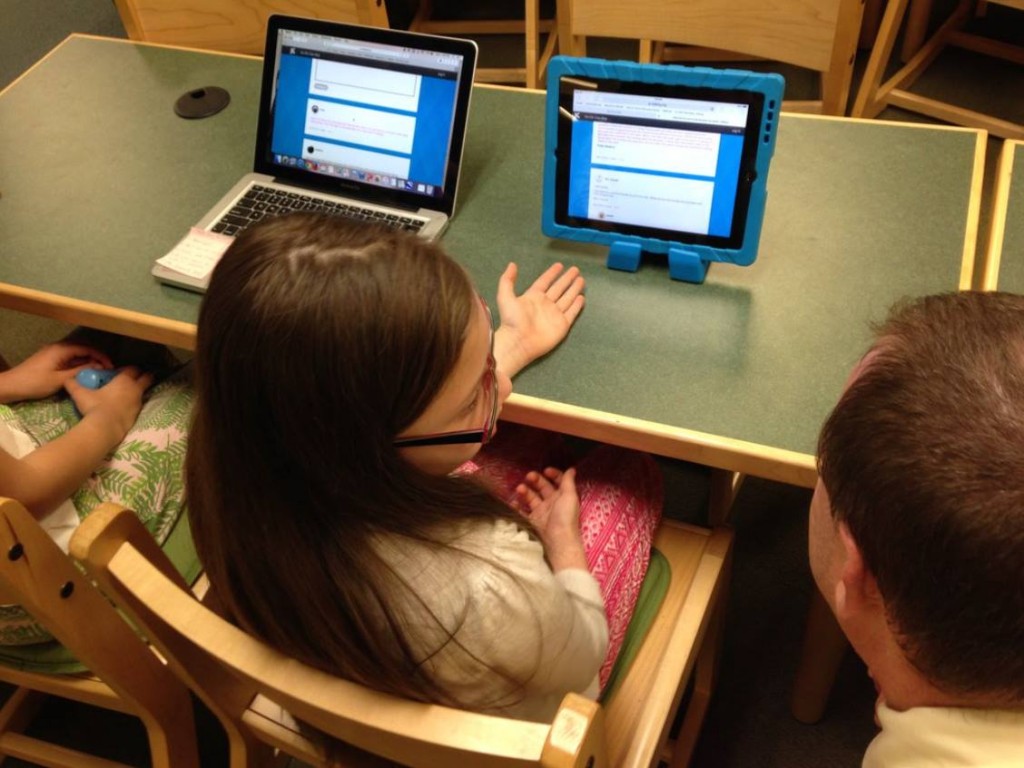
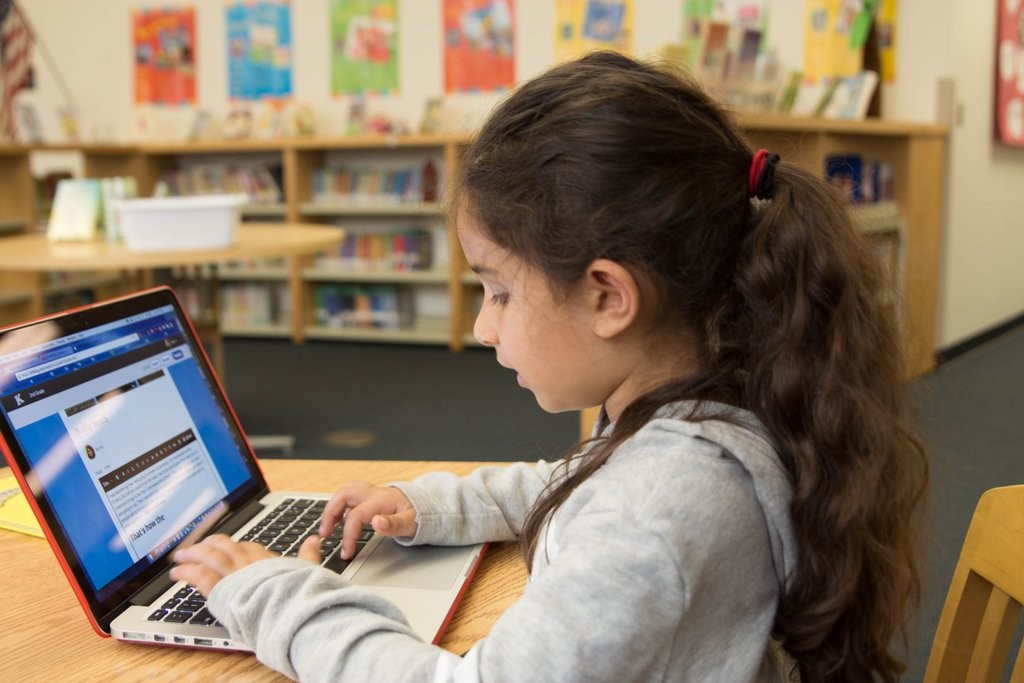
There are a lot of ways that teachers can involve students in conversations both in and outside of class.  Students sometimes have fear of responding in class.  Sometimes it is the fear of being wrong, there is that fear of speaking in public, and it can also be simply that some students prefer not to speak in class.  But as teachers, we have to make sure that we provide diverse ways for all students to contribute and to do so in a way which is comfortable and can help to build student confidence.  Finding one’s voice and being comfortable in using it, are important in today’s classrooms.

The helpful aspect of technology in this scenario, is that communication, conversations and collaboration can happen and take various formats, because of technology. In my classroom, I can tell when I ask a question, whether it be the lack of students eager to respond, or just by observing the physical reactions to the question being posed, that many students have some aversion to responding in class.  Whether this happens as a result of the hesitancy of speaking out in front of others or the fear of not knowing the right answer or perhaps something else entirely, it’s sometimes difficult to encourage the students to speak and share what they are thinking, feeling and express true opinions. Even as a teacher, at times, answering in front of others, sharing my thoughts or perspective can feel uncomfortable and has made me nervous as well.  Even as a teacher, I sometimes become nervous when I am in a similar situation. There’s that fear having the wrong answer or of saying something that might not be well received, cause a bigger discussion or even create an argument.

But regardless, we need to involve students in class discussions and ask questions, and there are many ways that this can be done.  Using some of the tools out there can help to share ideas, expand learning, and maybe even more importantly, enable the students to feel more comfortable in the classroom.

How can technology help in this area?  Is there a purpose?

Teachers want to know what students are thinking, to understand their learning and needs, we have to ask questions, and it is critical to help them feel more secure in responding both in and outside of class.  One way to do this is by using a digital tool that can offer these securities and provide opportunities for students to really express their thoughts and feelings. In this regard, I believe the technology does truly have a purpose because it can serve to give students a voice and in a comfortable way, where otherwise students may be apprehensive about expressing themselves.

I am not saying that technology should be used as a substitute for having students speak in class or for courses in which public speaking is part of the requirement.  Developing the ability and confidence to stand up and speak out in front of others and to voice one’s opinion are important skills and characteristics that students need to develop in classrooms today, to be prepared for their future. And if use technology to replace this, then we also take away a part of the learning process and the risk taking that is involved in developing these public speaking and independent skills, which leads to us doing a disservice to our students and to ourselves.So maybe offering some alternatives for how students can express themselves would be a good way to start.

Some options

Depending on the type of question or the feedback we want from the students, there are many tools such as SurveyMonkey, Responster, TodaysMeet, Socrative or Riddle. A tool like GoSoapBox can be used for a variety of question.  Even using some game based tools like Quizizz or Kahoot! also provide options for having students respond to questions and reflections.

Teachers can review the answers and then use it as a way to start a new discussion in class. Answers can be shared anonymously, and of course some students will acknowledge that you are reading their answer, but this can also help to boost confidence and create more comfort in the classroom for all students.

Some other options are for using things like Wikis or blogs, or another tool for backchannel discussions, to have students respond and collaborate on different topics.

If students create their own blog, their responses can be kept private and this has been a very beneficial tool in my classroom which helped students to practice their content area skills, in a way that is more comfortable, through which I can give them personalized feedback and also learn more about them in the process. A Wiki can also be a good way to have students collaborate if they are working in small groups.

It all comes down to what type of conversation, the questions or discussion we are hoping to involve the students in. Do we want something that is more open-ended? Do we want students to think about something and then respond later, once class is over? These are some of the reasons why technology can help, and also can enable teachers to offer a more blended or flipped learning experience in the classroom. Just because the bell rings and class is over for the day, our conversations don’t have to end.  We can discuss, ask questions, provide feedback after the class is over. We need student feedback we want learning to be meaningful and students to feel comfortable.  The use of these tools are helpful for students to express their ideas, we can learn more about what they want to do, what they can do and what they need help with.

These are some of the reasons why I think technology has a real purpose. It helps to expedite the process by delivering real live results so that we can give feedback to the students when they need it. We can use these tools to encourage students to share thoughts and answer questions, and to feel more comfortable in doing so.

Visme: How to Use Narrated Presentations With Voice Overs in the Classroom

Thank you Visme for the opportunity to share this and involve my students in this blog post.

How to Use Narrated Presentations With Voice Overs in the Classroom

image: http://blog.visme.co/wp-content/uploads/2016/08/AudioHeader.png

Projects are one way that teachers can assess students throughout the year. Regardless of the theme, students have a lot of opportunities today to complete their projects using a variety of presentation formats. They have more options for showing what they have learned and how they can apply the material covered in class.

With each passing school year, the options available to students increases, enabling each student to find and work with a digital tool that is personalized to them because it meets their interests and needs, and also their comfort level with technology.

While using tools such as Microsoft Word or a standard PowerPoint to create reports and presentations provides students with a foundation for learning technology skills, taking their knowledge of these formats and applying them to new technology tools can maximize their learning in many critical areas.

Audio11

Depending on the type of project or assignment that a student must complete, tools such as Visme offer many options to users who want to create any type of project or presentation with a single multi-tool that integrates multimedia and many other visual elements. As a foreign language teacher, for example, I often want students to include an audio component to their project so that I can assess their speaking skills.

A recent example of this is a project I assigned to Spanish III students which entailed describing the life and work of an artist. The project required a certain amount of vocabulary to assess their Spanish language skills, but it also had to include images or video and an audio narration with their comments on the project.

Whereas in the past, they may have needed to use two separate digital tools to do this, depending on their choice, they can now rely on Visme to create their projects with all of these elements in one presentation.

There are many choices as to the type of format, whether it be an infographic, flyer or a presentation. Each of these have options to include multimedia and many other choices for audio, video, and other visual representations. With the new updates, these choices are even greater than they were for our prior student projects.

There are a lot of tools available which integrate various components, enabling students to record audio or upload audio files into their presentation, but these often require multiple steps, or specific formats, and in some cases may require advanced knowledge of technology.

However, with the recent addition of Visme’s new audio feature, students only need to look to this one tool to create their presentations. They can add their voice-over directly into their project with just a few clicks.

RELATED: How to Create a Narrated Presentation With Voice Over Using Visme


Ideas for Using Narrated Presentations

Rosa

There are tons of possibilities for using audio in presentations. As a teacher, I can create lessons for my students, with instructions on each slide, to guide them through the presentation. This is a great option for students who are absent from class or who would like to revisit a specific lesson.

I can also teach a lesson and explain grammar, vocabulary, culture, or any topic we are covering in class, and easily add the recording to the slide, making it easier for the students to follow along. The potential for this is huge, especially in flipped classrooms, or blended learning environments.

Anyone who creates a presentation, regardless of whether it is for use in an educational setting, can take advantage of the audio component of Visme, to really add that something extra to the presentation.

CostaRica8

It can be a recording of one’s own voice, or it can be other audio that has been added in from the library or uploaded from another source. There really are a lot of possibilities for enhancing anyone’s presentation.


What Can Students Do With This?

collage

Students were excited to use Visme’s audio feature for recording voice overs and creating narrated infographics and presentations for our class. Some of the students shared their opinions of Visme’s audio feature.

Ellie: “The audio feature makes it easier to explain your work more in depth when you don’t want to have too many words on the screen, or simply want to describe an image.”

Alexa: “With voice overs, it’s easier to include all of your information and faster than reading slides word for word. It would be a lot easier to present it to people because I could take my time and make sure that my pronunciations were right rather than having to speak in front of people from memory. It’s really easy to use, and it made my presentation more interesting.”

Camp

From a student’s point of view, presenting information to classmates can be a bit scary, and rather than speaking while displaying the presentation, the students can pre-record their information, and let the presentation run on its own.

This is a great way to help students gain confidence in the classroom and keep comfort levels in check. It is also a great way to have presentations available for sharing with peers and for use as a resource for future classes. Teachers can benefit by being able to record their own lessons, but students benefit by having everything they need to create highly visual and engaging multimedia presentations.

image: http://blog.visme.co/wp-content/themes/blog/img/pei1.png

image: http://blog.visme.co/wp-content/themes/blog/img/pei4.png

Visme simplifies presenting and storytelling for you and your team.

Start Creating!6.png

About the Author


Getting started with blogging

Thank you @Kidblog for publishing my recent post on how to start blogging with your students.  Great way to start off the new school year.

Getting Started: Tips for launching a successful class blog

Enthusiastic Students Showcase Kidblog

Summer is full of opportunities for reflecting, learning, and planning. Teachers and students have the ability to review the past year and develop goals for both the summer and the upcoming school year.  While summer gives teachers a chance to unwind and relax, it is often used as a time for exploration and preparation for the new year.

During their time off, many teachers participate in professional development events, become involved in learning communities, and look for new ways to engage their students in the classroom.  I am no different. This summer I had many opportunities to connect with other educators and discuss ideas for increasing engagement in students’ learning and blogging became a common topic. I welcomed these conversations as I have seen first hand the positive results blogging has had on my students.  These discussions revolved around questions about getting students started, privacy, the best use of blogs in the classroom, and how to create new ideas and keep students motivated to blog in and out of the classroom. I was always happy to offer my advice. I created this post in hopes of sharing what I learned from these discussions with a wider audience.

The benefits to student blogging are endless. If you are looking for something new to try with your students, to get them talking, and to learn about your students, I highly recommend blogging as a way to start this new school year.

If you are not familiar with classroom blogging, I suggest setting up your “class URL” first – select a theme, familiarize yourself with the settings, features and how students will create their accounts and log-in.  Additionally, by setting up an account as a student in your class you can better understand the student experience and be prepared to answer any questions. Once everything is ready for real students, creating a handout to explain the use of blogging for your class, listing your expectations and some guidelines, and encouraging creativity in the process, is a great way to start the blogging conversation.

I have tried various methods to getting students started in our class blog. Regardless of the method you choose, it is always worth while to start with a conversation regarding your class blog. Talk about what students will write, when they will use the blog, who will be reading their posts, etc. Getting students excited about the options for post styles, fonts, and the wide audience they can reach in the process is helpful in driving motivation to write.

One option to get students started writing in class is through the use of prompt responses. I started small by instructing students how to join the class and having them begin responding to my posts with meaningful discussion points. If you have time in class to do this, facilitate as the students create their account, personalize their page and begin writing. Eventually students will feel comfortable and excited about creating their own ideas for writing.

Another successful way to get students blogging is to start with what they know – pen and paper. Try providing a prompt and having students write a response on paper, as they had done in the past. This is a great way to ensure students learn to evaluate their work and self-correct. It also reinforces that the true value in blogging is to feel comfortable and confident in expressing one’s ideas and using it as a means for personal growth. Once the students have written their responses, you can ask them create their Kidblog student account and use their writing as the first entry.  By having the first draft, and then entering it as a blog post, students have the opportunity to think, reflect and work on their skills.

Either option provides a great starting point. I recommend that you base your decisions for your class blogging on your students and what will be the most beneficial to your classroom.

Getting students excited about blogging only takes that first step. It is a continuous work in progress.  We are all involved in ongoing learning, and by being learners ourselves, we can help our students to take risks, accept challenges, reflect, and grow. And, through the process, we learn about each other, reinforcing the value of relationship building and support in the classroom.

ABOUT THE AUTHOR

I am a Spanish Teacher at Riverview Junior Senior High School in Oakmont, PA. I am also an attorney and earned my Juris Doctor Degree from Duquesne University School of Law and recently received the Master’s Degree in Instructional Technology from Duquesne. I enjoy presenting at conferences on technology and learning more ways to benefit student learning. I am the Communications Chair for the ISTE Mobile Learning Network, a Member at Large for Games & Sims, the Innovation Resources Co-Chair for the Teacher Education Network and the PAECT Historian. Additionally, I am proud to be involved in several communities including being a Common Sense Media Educator, Amazon Inspire Educator, WeVideo Ambassador, Edmodo Certified Trainer, Nearpod Certified Educator and also participate in several other networks. I enjoy blogging and writing for Kidblog and I am always looking for new learning opportunities to benefit my students. You can connect with me on Twitter @rdene915.

Integrating Technology: Try Creating an Infographic

Posted in the Edutopia Community Discussion

If you are looking for new ways to share information, or create a new sign for your classroom, or have students work on a project, then perhaps infographics is what you need.

Infographics are one of many options for presenting information in a vibrant, engaging way. There are many digital tools out there that can be used to create an infographic, and you may know of a few of these tools. If you have not heard of an infographic or you have not yet created one, then I hope I can provide some new information or ideas. And if you have been looking for a way to integrate technology into your classroom, or a quick and easy way to make a slight change in your classroom, then perhaps using one of the great web tools for creating an infographic is just what you need.

An infographic is something that I learned about two summers ago while participating in a weeklong technology conference. I had seen infographics before, but did not know the term and had no knowledge of any of the tools available for creating one. I was anxious to create my own and decided to start the new school year, by creating infographics for each class in place of printing a course syllabus. I used three different tools to create an infographic for each course and then posted them on our class website.

Creating an infographic is quite easy and there are so many templates and options available to include in your work. Making the change from a paper syllabus to an infographic is easy. Simply take the file that you already have and copy and paste your content into one of the many templates that are available, and then have some fun with it. Depending on which web tool you use,  I have used Piktochart, Canva and Smore, you have a variety of choices for the additional icons, images, and more that you can add into your infographic. The possibilities are endless for creating a diverse, vibrant, multi-media, engaging presentation for any kind of use.

So changing from my paper formatted syllabus over into an infographic was the first step that I took. I then decided to take it a few steps further and have my Spanish I students create an infographic to describe themselves. This was something I had them do each year, to practice the beginning vocabulary and to learn about them,  but it was a project usually done on paper. I gave them the choice of a few different tools, and provided my infographics as a model. But I left it up to the students to decide and to explore the options within each of these choices. There were no limits on what they could add into the presentation, nor requirements about which tool they should use. Some students even added some audio and video into their projects, something that cannot be done using the traditional paper format. The best part was how their individuality, interests, and creativity were expressed using infographics.

On a personal level, I enjoy using infographics for creating presentations for graduate course work, book studies, moderating Twitter chats, and even birthday cards and more. It’s a lot of fun to work with these tools and to see what you can create, and even better, what the students create.

** I always give my students choices as to which tool to use, they all have benefits and unique features.  It depends on what works best for our needs.

Suggestions: Piktochart, Visme, Canva, Smore    @piktochart @canva @smorepages

Pikto1


Recap: Let’s Get Students Talking

I tried Recap at the end of the year and really enjoyed what it offered.   I appreciate the opportunity to have my experience shared on Recap.

Posted on July 20, 2016Posted in Guest Post

Student voice is very important in education today. Teachers benefit greatly by understanding what the students’ needs and interests are, their backgrounds and other experiences they bring with them to the classroom. Students participate in so many diverse learning experiences aimed at providing the best practice through multi-modal instructional methods, to personalize instruction, drive student learning and to provide the resources and support necessary for student success. And while the teacher may believe that each learning experience they provide is valuable and will benefit the students’ growth in the class, it is critical to seek input from the students themselves to really understand the impact these methods have on their learning.

Involving students in conversations can happen in many mediums. With all of the digital tools available today, there are endless possibilities available for substituting the traditional face-to-face conversations or having students write some type of a response such as a self-reflection in class. Having students reflect on a particular learning experience or participate in a discussion after class, are valuable opportunities for teachers as well to learn more about the students and to continue building those vital relationships. Including students in the planning and gathering input from them benefits the learning environment tremendously and there are many ways to do this. I found a new method of encouraging students to share their thoughts this year, through Recap.

Deciding to Try Recap

Toward the end of the school year, I wanted to try some new tools in the classroom, to keep students engaged and motivated through the end of the year. I thought that trying out some new ideas would work well at this time, because I could use the information to reflect and plan over the summer. I came across Recap and was very interested in trying it out with my students.
I was initially unsure of whether it would be easy to implement into my classroom, or even how I would use it, but as with all things, sometimes you have to just take a chance and see how it works out. So I did just that and created a class for my students using Recap. The first time I logged in and created a video in which I asked the students to share their thoughts about some of the projects we had done, some of the tools that we had used, and any other insight that they wanted to provide to me. I explained how Recap would work and set up my recording for them. It was very easy to use and to set up. More important, students were excited about this new experience and felt comfortable in sharing their ideas.

Ideas for Using Recap

There are many uses for Recap in and outside of the classroom to have students respond to a prompt, have a debate on a topic, use it for a speaking assessment, and many more possibilities depending on content and grade level taught. But one of the biggest benefits I think it provides is a comfortable way for students to connect with their teachers and to honestly share their ideas, thoughts or reflections. Students are often afraid to speak up, we all are, and having a tool which enables the assessment or reflection to be done in the comfort of one’s own home or place, is very beneficial.
After the first time my students completed the assignment, watching their responses compiled into a daily reel, several things were clear. I could see that they were comfortable, which was very important to me, especially when trying something new like Recap. I also appreciated the fact that they took the risk to share their ideas and provided honest evaluations of my teaching and their classroom experiences. And I really like that I was able to give them feedback as well following their video responses.

The Foreign Language Classroom

As a foreign language teacher, I can use this in my classroom to have students complete speaking assessments, discuss topics we are working on in class, whether it be a work of art or particular reading, and they can give their honest opinions in a more comfortable, safer environment for expressing themselves. It is also quite useful for students to do a reflection of my instruction or of their own skills, interests and needs in the classroom. The nice thing is that either way, teachers and students can learn about each other, and grow from the feedback given.

I was very excited after this initial experience with Recap and so I tried it with several of my other classes. The response was all positive and I know that I will use it a lot more in the upcoming school year to have students complete speaking assessments, have discussions and more activities like these. But more than these uses, it is a way for me to better understand their needs and to learn more about them in the process. A way to continue building the vital relationships that help to build a positive, supportive classroom environment.

There are many ways to use Recap in the classroom but also as part of professional development, conference presentations and much more.

About Rachelle Dene Poth

She is a Spanish Teacher at Riverview Junior Senior High School in Oakmont, PA. She is also an attorney and earned her Juris Doctor Degree from Duquesne University School of Law and recently received the Master’s Degree in Instructional Technology from Duquesne. She enjoys presenting at conferences on technology and learning more ways to benefit student learning. She is the Communications Chair for the ISTE Mobile Learning Network, a Member at Large for Games & Sims, the Innovation Resources Co-Chair for the Teacher Education Network and the PAECT Historian. Additionally, She is proud to be involved in several communities including being a Common Sense Media Educator, Amazon Inspire Educator, WeVideo Ambassador, Edmodo Certified Trainer, Nearpod Certified Educator and also participate in several other networks. She enjoys blogging and writing for Kidblog and is always looking for new learning opportunities to benefit my students. You can connect with her on Twitter @rdene915.

IMG_20160629_103429847 (2) (1)

Interactive Lessons: Let Students Create & Lead

After recent technology showcases, finishing up an independent study focused on Student engagement, motivation and social presence, I wanted to learn more about what students want and what they need to do well.  Taking the digital tools we had used, with me leading the lesson, I put it in their hands to create and lead.  It was an exciting opportunity, as the year was winding down, to keep motivated and try new things, but to give choices for all.  Here is the second part of a series of stories, with student reflections.


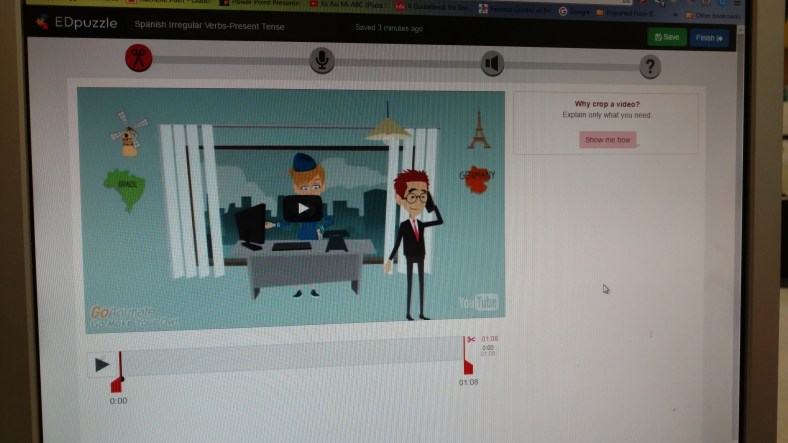
Interactive Video Lessons:  EDpuzzle

Rachelle Dene Poth: I am a Spanish and French Teacher and I look for ways to include student voice, choice, and leadership when finding the right materials for every student. With the help of some students, we worked with EDpuzzle as part of a new learning adventure, I wanted to empower students to become more than learners in the classroom. I wanted them to lead the class and develop these critical skills and have choices.

Choosing EDpuzzle

EDpuzzle is a tool that I have been increasingly interested in using with my students, to add to our video experiences and find new ways to engage them more in and out of class.  As the school year started to wind down, I found myself wanting to try some new methods of instruction with my students.  We have used a variety of digital tools to complete assessments, have discussions, create projects, collaborate on class wikis and more.  The benefits have been tremendous.  Students have improved their Spanish language skills by creating a more authentic and meaningful representation of what they know and can do with the material by having a choice in tools. This personalization  meets their interests and needs and helps to motivate them.  

Motivation for trying new things in the classroom

One of my main goals is to work to find creative and innovative ways to introduce content in my classroom and above all, to make sure that students have choices and feel valued and supported in the classroom.  Giving choices for how to show their learning, leads to a more beneficial and personalized experience for all students and even myself.  If each student chooses something different, this promotes more meaningful and unique learning experiences, and builds vital technology skills in the process. Opportunities like this lead to many benefits.   

So who benefits from these new, interactive and flipped experiences?

IMG_20160531_131429391

We all do. Teachers and students benefit because not only have we all reinforced our knowledge of the content material, (Spanish language and culture in our case), we are learning about new tools, and maybe even more importantly, about each other.  

Giving choices is a risk.  With so many options available, it is not possible to know everything about each tool and its benefits.  So as teachers, we have to learn as much as we can, and then relinquish some control to our students.  They need to have the chance to explore, create, and share.  Give them the opportunity to do more than simply produce the same product as the other students, because they are not the same.  Let them become the “creators” and the leaders in the classroom.  Let them take on a more active role and see how this promotes engagement, curiosity and motivation within them.

Putting the plan into action

With these new reflective thoughts, I began a new venture into having students select from diverse tools, which are typically used by teachers for delivering content, and had them create and teach a lesson.  I thought this could be a bit risky, but would also be beneficial for many reasons.  It seemed like an interesting twist to try, especially at the end of the year, and I wanted to see if and how it was of benefit.

Why make the change to student created lessons

Accountability.  In education, there is a lot of accountability.   Both teachers and students are accountable for learning and classroom involvement, as well as many other responsibilities.  In my classroom, I use a variety of learning activities and offer choices of tools to help the students to learn.  I often tell the students that it is like having a room full of toys, find one and try it, if you like it, keep it.  If you don’t then select something else, because the idea is for it to be something that is beneficial and meaningful to you. No matter what you do, use each as a learning opportunity and a chance to reflect and grow.

Videos for learning

One area I rely on for helping students is the use of videos. In the past, I would assign the videos to be viewed outside of class, flipping the learning environment, and hope the students watched the videos as instructed, but without any real way to know.  Sometimes we would discuss the video or I would have them complete an in class activity, ways to hold students accountable for watching the video.  But students could skip through the video, gathering only the highlights, and get by with just enough information to complete the activity, or without watching the video, could learn the information elsewhere.  So the problem remained student accountability.


That is before tools like EDpuzzle which enable the creation of interactive video lessons with analytics to show who watched, analyzing their responses to questions and much more. Without having tools like EDpuzzle, assigning students to watch a video alone does not promote accountability and is not quite as engaging, nor is it interactive.  Students are less likely to really focus on the material.  

How else can videos be used?

We use a variety of videos to enhance our learning in the classroom and I have spent time this year, creating more interactive lessons, to hold the students accountable.  I also started wondering how the students would like being the creators, more active and interactive, rather than passive in their learning, and using these traditionally considered “teacher” resources to produce an assessment or a project and let them lead in the classroom.  

I am thrilled with how this new approach has gone. While I may think that it went well and was very helpful, what matters more to me is what do the students think?  I make it clear that I do not want to waste their time and would not assign something that I did not truly believe was beneficial. This is my hope, but I rely on the honest feedback of students, to reflect and move forward.


So what do the students have to say?   

Three of my 10th grade, Spanish III students reflect on their experience with EDpuzzle.

Adam: I had been struggling to find a good web source to meet my needs for entertainment as well as my education in the classroom and EDpuzzle is a great way to meet both of these needs.  When I faced the challenge of preparing a lesson to teach to my Spanish 3 class, I honestly didn’t know where to start.  I first tried some other resources that we had used but they really weren’t getting the message across like I wanted. Then Mrs. Poth recommended a new tool by the name of EDpuzzle to me and my reaction was

“Edpuzzle? Mrs. Poth this is a Spanish project, not a puzzle!”
“Just try it out!” She said.
So I went home that night, and after thinking it through, I again began my Spanish project.  I started with another source and was still disappointed in my product.  Finally I decided to give EDPuzzle a chance. By the time the loading bar hit 100 percent and that page loaded up I knew I found the perfect tool for not only this project but many more to come!

EDpuzzle was a fantastic way for me to use my sports video and transform it into something completely unique with a few easy changes. And for future projects, I will never have the issue of handing out papers with the questions. I can simply tell my “class” to pull out their mobile devices and answer the questions that I have integrated into my video. There are so many options for a user to enjoy and learn from the features that EDpuzzle has to offer! Thank you for providing the tool to not only teach my Spanish 3 class but to have them enjoy  as well.

BEN: I used EDpuzzle for a class project. The first time I saw EDpuzzle was in class and I thought it had a pretty interesting concept. So, when we were assigned a project for the camping unit, I decided to try EDpuzzle.

I created a lesson for my classmates by adding comments and questions to a camping video I found online. I found that EDpuzzle was easy to use and that it was a new fun way to make a class project that could be used as an interactive lesson. I especially enjoyed the many features EDpuzzle offers such as the being able to crop the video, make an audio recording over the video, and being able to make different types of questions. I felt that EDpuzzle impacted me in that it gave me a new way to present a topic and a more fun way to create projects and relay information. EDpuzzle is a fun and different digital tool to use that can be a great tool for learning.

EDpuzzle


A student who participated in the lessons of Adam and Ben said: “ By having all of the different choices of tools to use for our project made it easier to find something that I was interested in and comfortable with.  The activities included in their video lessons were educational and fun,  and made learning more enjoyable for the students. It provides more than just watching a video and not really being held accountable for paying attention. You had to pay attention in order to answer the questions.   I would recommend EDpuzzle to anyone looking for a new way to present information, in any setting.”


In the end

It is all about giving the students choices and allowing them the opportunity to try new things, lead the class and develop their content area skills, as well as many other critical 21st century skills.  EDpuzzle and the other tools,  provided an opportunity for students to take on a new role, to build their comfort level, and to learn new ways of integrating technology and having fun in the process.  They were the teachers and we all were the learners. 

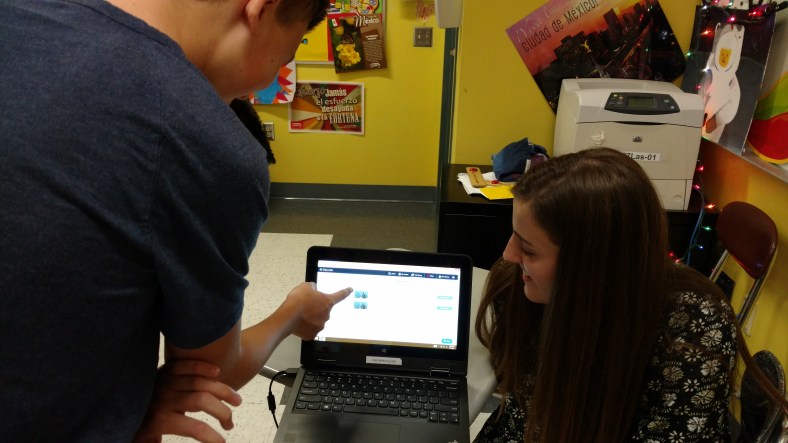
Showing how to use EDpuzzle in class.  IMG_20160601_105253829

Trying to Keep Students Involved: What Can We Do About Homework?

 Toward the end of this past school year, I noticed a quick decline in homework completion, student progress and motivation. I knew that it had been a very busy final few weeks full of testing, athletic events, and much more, and thought that I should work on ways to engage the students more, try some new things in class, and finish the year strong. So I used that time to test out some new tools, offer some new opportunities and different choices to the students. I found myself allowing for more spontaneity in our learning, taking a few more risks, and asking the students for more input into what they wanted to do and how they wanted to learn. It became part of my “staying strong till the finish” experiment, which included mixing up the seating arrangements, giving students opportunities to teach class, choosing how to show what they had learned and more. With positive responses, I then shifted to another area which concerned me and that was homework.
Do we need to assign homework?
As a student, I always had homework and it was always the same as everyone else. We did worksheets, or outlined chapters, or had some other task. When I first started teaching, I found myself teaching similar to how I had been taught. Homework was assigned to my students on most days, and on most days it was the same. For a very long time I did not see any problem with this, I was using the homework to assess the students and give them the practice they needed to master the content. But as part of my professional development and interest in trying new methods and focusing more on student needs, I realized that it does not have to be the same. So I shifted my focus to evaluating the types and the frequency of homework assignments that I was giving to my students.
Over the past few years, I have changed my thinking, looking for ways to move away from those “one size fits all” assignments and aim toward providing more personalized, authentic assignments for my students. Some other reasons are that students can possibly find answers online, or worse, copy the homework. And as a language teacher, I also wanted to find ways to discourage students from using online translators. These experiences, along with feeling a bit frustrated about the homework not being completed, led me to really try some new methods at the end of the year. And have led me to really think about what types of homework I will have for the upcoming year. It is an ongoing learning process. Some areas that I have been reflecting on are: the types of assessments used in my classroom, my different groups of students, the frequency of their homework completion, and even more closely, a look at the individual students within each of the classes. My goal is to continue to reflect on whether or not the type of instruction and the strategies I am using, are beneficial to them and if what I am assigning truly has value and is helping to build their skills, or is it simply busy work.
Questions I asked myself I have been thinking about a few areas of my teaching. What are the types of materials use in class? Have I been using the same resources each year with each class? Was I assigning the same homework to each class? There are times when I had used the same worksheet, or a test over the years. Not because I was lazy, but rather, because it was a quick assessment to use or I believed it was the best way to provide the students with practice. But I have been working to find something that would work best for and help the students. And I have realized that it is more than taking a look at each individual class, it means really developing an understanding of the needs of each individual student. What helps them to learn the best? What do our students want and need from us?
An experiment
I do believe in the value of homework and I know that students today have a lot of homework each day. Homework is one of the ways to help students to practice and evaluate what they know, what they don’t know and how they can improve. It is one of many ways teachers can assess students and learn about their needs, provide instruction and valuable feedback. To change things a bit, I decided to make things more personal and have the students decide what they could do for homework.
I assigned each student to be the teacher for the next class period. The students were working in pairs and their homework was to come to class the next day with a lesson to teach. It could be something tangible such as a worksheet or could be a website, a video, a game, or any other resource. I was fine with whatever they chose as long as they could use it in class and more importantly, that they could teach their partner. I thought this would be a great way for the students to have more meaningful learning and also build relationships and collaborative learning skills. And in the process, also see there was more than one teacher in the room.
The results
During the lessons, I interacted with each group to see the lessons they prepared. Students had created worksheets, written notes, brought flashcards, had games and videos and more. A few even created a game for their partner to play. But what was most important was that they sought out resources, they had an opportunity to teach someone else and their homework was personalized not only for them, but also for other students. It went well and they were enjoying it and learning. I was nervous about doing this, about not having clear expectations, and leaving it up to the students. It was a risk. But it went very well and I was impressed with how creative they were, their level of engagement, and the variety of “homework” that had been done.
The student responses
I value student input and regularly engage them in informal conversations because I want to know their thoughts. Did they learn? Was this an effective way to practice? It was a very positive experience and the end result was that the students became teachers, the learning was more personal, they felt valued, and it was meaningful and beneficial to their learning experiences. It is a risk and when you don’t necessarily have the whole plan set out, and you just kind of go with it, you might be surprised at the results. Giving up some control to the students is not always easy, but in doing this, it opened up more opportunities for facilitating their learning, providing more individualized instruction and continuing to build those relationships which are the foundation of education. I still have some time before the new school year and I am looking forward to trying more ideas like this, which give students more control and provide diverse learning opportunities.
There are a lot of great tools out there and students really like having choices in the classroom and learning new ways to use technology that helps them to develop their language skills.

New challenge in my classroom: Interactive Lessons

A New Challenge For My Classroom: Creating Interactive Video Lessons

 IMG_20160425_133159414
A New Challenge For My Classroom: Creating Interactive Video Lessons

Thank you Terry Heick and TeachThought for posting this on June 27, 2016

In my prior blog posts, I talked a lot about taking steps into integrating some type of technology into your classroom. I started with some general ideas about what you might consider and questions you might ask yourself to determine what might benefit your classroom.  Thinking about the best ways to help your students is the first step, and also an important way to focus on what you can do that will also benefit your practice as a teacher.

The underlying premise is that all involved have to take some sort of a risk. The teacher has to risk trying something different and new that perhaps is way off from the traditional practice of their classroom or perhaps it’s just a minor change in how they deliver instruction, with a learning target in mind. The students have to take a risk because they are the ones that will be using this new technology.  They will be trying a new tool, creating a project with a new presentation style, communicating and collaborating outside of the traditional classroom. And maybe even more importantly, stepping outside their comfort zone.

So it comes down to not only a change in thinking but also a willingness to expand one’s comfort zone and through collaboration, work on building something that can lead to many benefits for students and teachers in the learning environment.

The reason I decided on this topic is that while I have been talking about things I’ve been using in my classroom and how I got started, I also decided that I needed to branch out and try some new methods of delivering instruction. And even more important than my own risk in trying these things was the risk in getting the feedback from the students and learning what the impact was on them as well.

One of the things I love most about Twitter chats and reading blogs is that you get a lot of great ideas and feedback and I very much value the perspective of others.  So when trying something new in my classroom, I truly want to know what the students think about it. Did they like it? Did they have problems accessing it? Did it enhance their learning or did it take away from something that would have been more beneficial? In other words,  could it have been considered a total waste of valuable learning time.

Getting Started

A few months ago I decided to try Educanon (now Playposit). I have wanted to try it for a while, and since it was available as an app with Edmodo, I definitely wanted to try it with a group of my students. Over the past few years, I have been using some tools to flip my classroom and provide more blended learning experiences for my students.

In doing this, I also wanted a way to make them accountable for the activities that I was having them do outside of class. Without specific interactive tools, it can be difficult, aside from actually giving students a test or other assessment, to have proof that they watched a video; this was a risk for me.

I’m fortunate that my students are interested in learning new things and tolerant of the fact that I like to try new tools in our classroom and work to find a variety of engaging ways to help them learn. Playposit is integrated with several different Learning Management Systems, making that part easier.

I decided to take a small step and have Spanish II try it out first,  chose a YouTube video and created a lesson. There were some initial glitches, most of which occurred because students did not follow my instructions and I had to troubleshoot, however the feedback was very positive and the students really enjoyed it. Another area which was challenging for me was that I would not necessarily be able to answer their questions, because it was new to me as well.

I had researched and learned as much as I could before assigning the first “bulb” which is a lesson.  Other concerns I had were whether it would it be accessible to the students, would it indeed benefit their learning and how would they respond to yet another new tool.  My goal was to find another way to connect the learning and engage students, and even more, transform their roles from learners to leaders in the classroom.

How Does It Work?

It is very user friendly to create your own “bulb.”  You can select your video from YouTube, Vimeo, SchoolTube, TeacherTube, and Google Drive, and simply paste the URL into your lesson.  You then can add a variety of questions, discussion, audio, images, equations and more for your lesson, even explanations and descriptions. Once you are finished, assign the lesson and the students can begin.

There are a lot of choices for analytics to see how the students are progressing, their answer selections, see if any questions were skipped or that students found confusing, and look for trends across the class. Several ways to share the lesson, either by having students sign up, upload a roster, or have it integrated with your LMS.  There are diverse ways to create the lessons that will help to engage your students more and deliver lessons which provide more personalized learning experiences and give you the means to provide feedback to the students.

I have encouraged students to create presentations using tools like this, because I think it really helps them to learn the material, they can personalize it, it is interactive, they build on their technology skills, and they can see what it is like to be the teacher, to have the power to drive the learning in the classroom. Feeling valued and having input into the classroom, engages students more and enhances the learning opportunities for all.

As the teacher, I take part in their lesson and enjoy learning from them as well.


Conclusion

The nice thing about Playposit is that there are premade “bulbs” or public lessons already available, so if you don’t have a lot of time right now to build your own, take a look at what is already made and try it in your classroom. Talk to your students and see how they like it and how it impacts your learning environment.

There is nothing wrong with trying it out and seeing what others have done. Sharing leads to new ideas and it is all part of the growth process. The important thing is to just start somewhere, start small, and work your way up.  It may go really well and it may not go as hoped, but it is an opportunity to learn, expand skills and involve students in the process.

Thinking about Improving Homework

Thanks Terry Heick and TeachThought for publishing this recent post on June 20, 2016.

IMG_20160425_133159414

The end of the school year can be challenging with so many changes occurring: the weather, spring sports, weeks of standardized testing, field trips and other activities lead to oftentimes, chaotic schedules.  These changes can decrease motivation in students and in some cases, teachers as well, and result in a feeling that the school year is over before it really is.

I notice this gradual transformation each year, and do my best to mix things up, to keep learning going, and to stay strong until the end.  This year seemed to be a more challenging year, although I cannot pinpoint why, but as I mentioned in my prior post, I decided to do something about it. I made the decision to try some new methods, reevaluate how I have been doing things in my classroom, and what could I be doing better.

The last grading period has been a time to test out some new tools, give students new opportunities, more choices and be a little less structured, allowing for some spontaneity in our learning.  So as part of my “staying strong till the finish”, after mixing up the seating arrangements and receiving positive responses, I shifted my focus to a new area:  Homework

What Is Homework, Anyway?

Recently I have been giving a lot of thought to homework.  My focus has been on really looking at the types and the frequency of assignments I give.  Over the past few years, I have changed my thinking and tried to move away from a “one size fits all” assignment and move toward a more personalized, authentic assignment.  There have been several reasons for this change in thought.

Hearing from other educators at conferences, input from my students, and as a language teacher, also having to find ways to avoid student use of translators for assignments. These experiences, in addition to a little frustration from homework not being completed, have led me to really try some new methods in this area.

Some of the areas I considered when thinking about homework were: the types of assessments I use in my classroom, my students, the frequency of homework completion, the type of homework, and even more closely, a look at the individuals within each group of students that I am teaching.  My goal is to continue to reflect on whether or not the type of instruction and the strategies I am using, are beneficial to them and if the homework I assign truly has value and builds their skills, or is it just busy work. A lot of the discussion out there now is about getting rid of homework assignments and traditional grading.

Why I Decided To Do Something Different

I have been teaching foreign languages for almost 20 years, and I notice how quickly time has passed, when I find myself teaching a concept and I feel like I just taught the same thing the day before. This “déjà vu” experience leads me to think about the progress I am making with the curriculum in the current school year, and how I have paced my instruction throughout the year. But what I have come to realize more this year than any other, is that it should not be the goal to be at the same point at the same time each year. In my mind, that simply should not be how it goes.

I think a lot of people consider teaching as a profession in which the same plans are used, lessons are taught at the same pace, the same assignments and tests are given each year. If we truly did that, then the profession of teaching would seem to be a rather easy and predictable one. However, that is not the way it is.

I had a conversation with someone that thought teachers simply used the same exact materials each year, with each class, and that teaching was a really easy profession.  This conversation bothered me, and the last part about it being “easy” really hit me. So this inspired me to think about my teaching practice.  What materials I was I using in class? How was I providing instruction for my students and was I using the same resources each year with each class?  Had I been doing the same thing in my classroom every year?  Did I simply pull out a folder to make copies or open up a computer to reprint what I had used each of the 19 years prior to this one?

Honestly, sometimes yes. I had. I had used the same worksheet, or a document for a part of a test over the years.  I hadn’t done this because I was lazy.  In some cases it was for providing a quick activity or assessment, and others it was because I thought the materials were valuable and would help the students to learn.

Thinking About Homework In Your Classroom

Ask yourself these same questions.  What do you come up with?  If you have been doing the same thing, then maybe it is time to make a few changes.  Think about what would work best for and help your students.  This means more than just looking at each individual class, it means really looking at the needs of each individual student.  To do this requires that we get to know our students, and to know our students means we have to build relationships and understand where they’re coming from and what they’re interested in doing in class.

What helps them to learn the best?  What do they want and need from us?  So I decided to use this as an opportunity to take a bit of a risk and try some new methods during this final grading period. It made sense because then I could really think about it over the summer and start fresh in the fall.

The first homework experiment

Students have a lot of homework and I do believe in the value of homework.  It is the way we help students to practice and figure out what they know and what they don’t know and how they can become better. It is one of many ways teachers can assess students and learn about their needs, provide instruction and valuable feedback.  But I’ve changed my thinking about homework.  I used to think that I had to give students homework every day.  And I also thought that homework had to be the same for each student and each class. In part, my methods were a result of the experience I had as a high school student.  I decided to change the daily homework assignments and make things more personal,  let the students determine for themselves what they could do for homework, and have choices.

Just as a start, I assigned each student to be the teacher for the next class period.   With a partner for example, we are working on the past tense in Spanish and in pairs, I let the students decide which verb tense they would like to teach their partner.  The homework was to simply come to class the next day with a way to teach their partner the verbs.  I said it could be something tangible in the form of a worksheet or any activity that they found, a website, a video, a game, or another resource. It really did not matter to me as long as whatever they had they could use in class and they could teach.

I believed that in the process the students would learn more and also develop collaborative learning skills.

What Did The Students Think?

While they taught, I moved around to interact with each group to see what it was they had prepared. There were worksheets found online, worksheets that students created, handwritten pages of notes, flashcards, some had found websites with games and others had found videos or had created a Kahoot or Quizizz game for their partner to play. But what was most important was that they sought out resources, they had an opportunity to teach someone else and their homework was personalized not only for them, but also for other students. It went well and they were enjoying it and learning.

I will admit that I was nervous about doing this.  Not requiring a specific form or product for each student to show in class, and being open to any format the students brought in, was very different. It was a risk. But I was amazed at how creative they were, how engaged each group was, and the variety of “homework” that had been done.

Student feedback is very important for me and I value their input and regularly engage them in informal conversations or will have them complete a survey.  I want to know their thoughts. What did they like?  What did they not like?  Did they learn? Was this an effective way to practice the material we were covering in class?  We spent two days doing this first assignment, so each person could teach.  And then I had them switch groups, and teach again.  The end result was that students were teachers, the learning was personal, they were engaged, felt valued, and the experience was meaningful and beneficial to their learning.

It is a risk and when you don’t necessarily have the whole plan set out, and you just kind of go with it, you might be surprised at the results.  Giving the students control, seeing their interactions, and knowing that this homework was the type that was beneficial to each of them, encouraged me to continue to find new ways to give more classroom control to the students.  Giving up some control is not always easy, but in doing this, it opens up more opportunities for facilitating learning, providing individualized instruction and building those relationships which are the foundation of education.

Blogging: Assessing Student Growth

Assessing Student Growth Over Time

@CESMediaCenter Ana works on KB post about buddy bench

Blogging is an effective classroom tool used to exceed learning objectives beyond traditional methods. It offers more than just a platform for writing and sharing ideas. It is a means for teachers to assess, connect, empower, and understand their students. For students, it is a way to to find their voice, while continuously learning more about their interests, strengths, and areas of growth.

There are many innovative ways to use blogging in the classroom to meet these goals. As a teacher, you simply need to be open to new ideas, implement creative lesson plans, and relinquish some control by offering the students a chance to choose their own inspiration for writing.  These choices, this freedom in writing, lead to higher student engagement, more meaningful learning, and an enhanced classroom experience for both teachers and students.

Within my classroom, blogging has become one of the best tools to promote literacy skills, while building students’ confidence to express ideas without the fear of making mistakes. Additionally, it has become a way to learn about my students and create a deeper teacher-student relationship. Blogs offer teachers the ability to learn about students and for students to learn about themselves. Yet, what I have found most valuable is blogging’s ability to foster an engaging learning environment, personal to each student, while providing a means for student growth to be tracked and to promote student reflection in the process.

With Kidblog, we have an opportunity for assessing students in multiple areas of communication. It provides a unique, personalized environment for encouraging students to convey their thoughts, demonstrate understanding and make meaning out of content material. Because of Kidblog’s ability to be used class-over-class, year-over-year, students can begin blogging at a young age and continue into higher grade levels. At each phase, they further develop their skills, find comfort sharing knowledge and ideas freely, and continuously develop their content-rich digital portfolio. This ever-growing content can later be used as a focal point to help students see their progress and reflect on their work. They are able to review their first blog posts, compared to their current blog posts, and acknowledge their progress as writers throughout the year.

This progress is built upon the ability to engage students in the writing process through student collaboration and the opportunity to reach an authentic audience. In my class, students are asked to review the comments, to re-read their work, and to consider how they have developed over the year.  It has proven to be an effective way to provide feedback to students, to teach them to reflect and work on goal setting, but in a way that puts the control in their hands.

Students often surprise themselves. They develop skills in ways that are personal to them, and they can use this to track their own growth throughout the year. Even those students who initially were not the biggest fan of writing have been motivated after realizing their progress throughout the year.  Additionally, by taking a look back at where they started and where they are now, students will be inspired to take the next steps to keep moving forward.


Current Kidblog members: If you’re a teacher with multiple colleagues using Kidblog in your school/district, Admin Pro is simply a better plan for you.  Email membership@kidblog.org to learn about benefits and volume discounts.

ABOUT THE AUTHOR

I am a Foreign Language Teacher at Riverview Junior Senior High School in Oakmont, PA. I am also an attorney and received my Juris Doctor Degree from Duquesne University School of Law, and I will receive my Master’s Degree in Instructional Technology from Duquesne University in May 2016. I have presented at several conferences on technology, including PETE&C in Pennsylvania and four sessions at ISTE in Philadelphia in 2015. I look forward to presenting at these and other conferences again this year and enjoy sharing ideas and collaborating with others. I am an officer for ISTE Mobile Learning Network and Games & Sims Network, the PAECT Historian, and fortunate to represent several communities working with educational technology.