Student voices, learners become leaders

Empowering Students To Find The Best Resources For Them

May 23, 2016  – Shared on the Formative Community Forum

By Guest Author Rachelle Dene Poth

HS French and Spanish Teacher Rachelle Dene Poth argues for more student voice, choice, and leadership when finding the right materials for every student. One of her students, Cassy, a 9th grader in Spanish I, reflects on what she’s learned from that experience.

Resources Are Everywhere: Where Do We Start?

Teachers work hard to find diverse resources to help students learn. Supplemental materials can be found in textbooks and other resources, through a quick search online or implementation of teacher-created or student-made materials.  An online search will result in a tremendous list of resources which includes webpages, images, documents, videos, and other media formats for a teacher to choose from. It seems simple enough, but it really isn’t quite that simple.  The challenge is finding the right resource for each student.  Being able to do this requires more than just conducting a simple online search. It requires that we truly know our students and understand their needs. Students do not all respond the same way when it comes to learning and feedback and developing these relationships will help teachers to provide the best learning opportunities.  Finding something that will enable each student to have an opportunity to grow, receive personal feedback, to experience learning multiple ways, is something that teachers strive to provide for their student.

Choosing Tech Tools For Students Is A Good Starting Point…But What’s The Next Step?

Technology offers many ways for teachers to differentiate instruction through digital tools. The number of tools and the features available changes every day. Finding something that works for everyone may take a little bit of time, and it involves some risk taking, flexibility and reflection to truly find what works best for each student.  And while teachers are good at determining what might work best for their students, it is important to hear from the students themselves.  Asking the students directly what helps them to learn better, stay engaged, and feel challenged will enable teachers to differentiate instruction and provide appropriate opportunities for all students.  Student voice in how they learn and their opinion of tools used in the classroom offers the teacher valuable information and different perspectives.  So it is worthwhile to take the time to investigate some tools, ask the students to try new things and then see what they think.
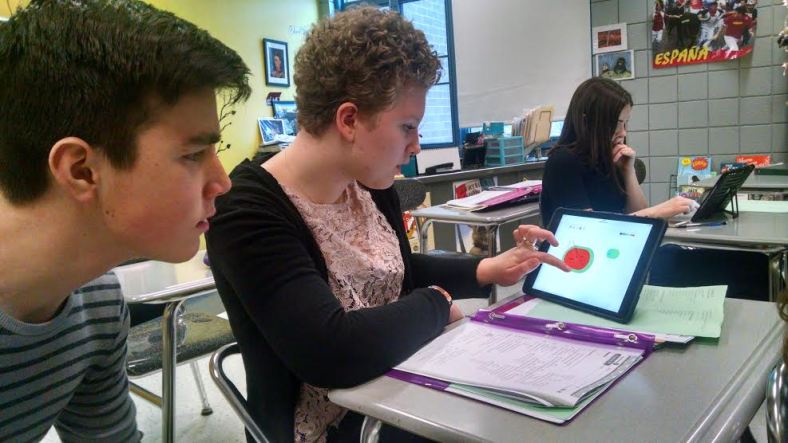
Rachelle's students drawing a watermelon with our "Show Your Work" drawing tool!

Rachelle’s students drawing a watermelon with our “Show Your Work” drawing tool!

Give Them Choices And Let Them Lead

So I wanted to know, what do students get from the choices they are given? Does it make a difference?  What helps the students to learn?  A few years ago I started giving the students different options for how to complete a project or an assignment. Other times,  rather than assigning a worksheet for  homework, they had other options such as creating a game, participating in a classroom discussion online, or even the use of blogging, all which made learning more personalized and meaningful for each student. I value the feedback that I receive from the students and when I try something new, I always want to know what they think of it. In order to learn more about student needs, I decided to have one of my students become the teacher, create a lesson using Formative, and share their thoughts about the new experience and the benefits.

Student Perspective On Edtech: Cassy Becomes The Teacher

Cassie getting ready to show tech tools that help her learning "catapult".

Cassie getting ready to show tech tools that help her learning “catapult”.

Cassy: I believe technology is an important part of learning and is a great asset to teachers and to students. Technology allows students to have the freedom to choose how to do projects, homework assignments or other classroom activities. This freedom allows students to thrive and do the best they can. I know that I love the process of finding a new website, game, project or teaching tool that I can use to help my learning catapult. It is also fun to explore the possibilities of technology and what it offers me. I can be creative and innovative. Classes which integrate technology are completely different than those which do not, because they provide more opportunities for students to learn.
Formative is a great example of the infinite possibilities technology can offer students and teachers.Documents, websites, pictures, questions and drawings are integrated into this program which allows for differentiation and creativity in various ways. Also, many people can participate in one formative assignment. The teacher or creator of the formative can see individual responses and work with the student one on one and provide personal feedback. Formative creates an effective learning experience while keeping a fun atmosphere.
On May 16th, 2016, I participated with other students in the PAECT (Pennsylvania Association for Educational Communications and Technology) student technology showcase, where students from Pennsylvania showed how they use technology to its fullest potential. I made my own Formative and allowed others to try it, and highlighted all of the different uses and how effective it is for education. I enjoyed sharing how a digital tool like Formative can provide different learning activities, enhance how students learn and how teachers can teach.

"Formative is a great example of the infinite possibilities technology can offer students and teachers."- Cassie

“Formative is a great example of the infinite possibilities technology can offer students and teachers.”- Cassie

Why Having Tech Available In The Classroom Matters

I feel that making students turn off their phones or computers is not fair and is not smart choice. Teachers do that for their benefit, not for the students. The current  generation of students is extremely involved and knowledgeable about technology. If all teachers could dive into the world of technology and understand its importance, significance and benefits, and then take the time to explore new ways to integrate some technology into class, it would make a huge difference in a student’s learning experience. I don’t know why more teachers don’t use technology to teach because it is a way to get the students more involved in the learning material.

What Do Students Want?

I want teachers to empower, engage and inspire me. I want teachers to give me the freedom to be creative while I am learning. I want teachers to make learning relevant to my time, and my life experience. Technology is the way to do that, to get students involved. It allows me to have my own voice and learn in the way that is best for me. I do not want to be held back from the infinite possibilities that technology offers any longer.

Student Voices: Listen To What They Say

Rachelle: It is clear that students have opinions about technology and its benefits.  Having choices in how to learn, being exposed to different learning tools and styles, and receiving feedback are all benefits of technology integration and ones which positively impact students.  When they have opportunities to work with technology and choose how they learn, including them in the conversation and asking for feedback empowers students even more. Since students are the group most affected by the technology used in the classroom, we need to hear what they have to say.

Staying strong to the end of the year! Thanks Teach Thought

treePSU


The Year Is Almost Over. Don’t Miss The Opportunities.

by Rachelle Dene Poth

As the final grading period sets in, it’s hard to not look forward to summer vacation, having days where we don’t have any particular place to be or tasks to attend to, but we have to remind ourselves to keep our focus, stay motivated, and keep up that momentum until the finish. Too many days can be lost as a result of changes in schedules, standardized testing or any number of things that can take away from the valuable class time at the end of the year. There are many factors that can lead students and teachers to lose momentum such as: nicer weather, school sports, school musicals and activities and the rounds of standardized tests.

Classes, teachers and students can be pulled into many different directions and finding ways to stay engaged, motivated and working right up until the end can be a challenge. I am not saying that I have all of the right answers but I decided to do things a little bit differently for the end of this school year.  I decided to take some risks.  I wanted to try some new things, give the students more control in the classroom, and see what happened.

What brought about this change of mind, change of plans and new perspective?

Lots of things. A combination of finishing out a two-and-a-half-year graduate program for a Master’s in instructional technology, getting involved at education/technology conferences and edcamps, and interacting with people having various roles in these areas and hearing some really great ideas. A lot of my inspiration came from seeing my students involved in a technology showcase and the pride that I felt while watching them taking the lead, advocating for technology use, interested in more opportunities, and my desire to make things better, more interesting and meaningful for them.

So taking a bit of time over the recent spring break, I thought about what had not been going so well, things I might like to try to change or improve upon. I referred to my list of different ideas and tools that I’ve wanted to try in my classroom, but did not have enough time. I wanted to try different ways of doing things I had always done, to see if it made an impact in the classroom. I figured that now was as good a time as any to integrate some new ideas, to seek student input and to change things up a bit.

I thought that the end of the year seemed like a decent time to do this because it could lead to creative and innovative way of trying things, different from how we had done things throughout the year.  And it would provide an opportunity for reflecting over the summer break.

Sometimes change is good and the benefits are seen quickly and sometimes they are not. Worst case scenario in my mind was that the changes I would make and the different methods for enhancing student learning and interactions in class would not end up as I or the students hoped, but in the end, it’s all about learning and growing. And then figuring out what the next steps should be and starting from there. It is about taking risks, evaluating, reflecting and then moving forward. But there has to be a first step.

So if you find yourself feeling like this.  If you are seeking a way to help the students hang in there for the final stretch of the school year or to keep yourself going as well, think about trying something different, that has been on your list. Maybe it is a new classroom setup, or trying a different tool, or some other activity, that will give you just enough time to get some experience, involve the students in the decisions and get their feedback.

Having this information at the end the year can provide some really valuable information, leading you to reflect over the summer. Perhaps you will start off the new school year with these ideas. Worst case scenario is that it doesn’t go as you or the students had planned, and so you use that information to reflect and grow and plan something different or better for the future.

Starting with change number one.

I had a day to think about where I wanted to start.  Was it a specific activity? Or should I try a new tool in class? After some thought, it ended up being the same way I started the school year, creating a new learning space.

I am always trying new ideas, activities, tools and more now with my classes than I have never done before.  In some cases it’s trying out a new idea that I just thought up right before they came in, and in other cases it’s integrating a tool that we had used before, but because of lack of time, did not have opportunities to use recently. Regardless of what you decide, it will be something new and different and just might be that extra spark that you and your students need to stay strong to the finish.

I can give you some examples that have been working for me but again, it’s what you need and what’s best for your students. I will share some additional ideas and how they went in my next post but here are a few simple ideas to consider if the learning space is an area you would like to change.

Can you change around your learning space?  Can students be paired up and then rotate seats every so many days so they have a new partner to work with?  Does your classroom lend itself to movement and flexibility?

I changed the arrangement of my classroom so students would be seated across from each other. I wrote numbers on cards and the day they came to class, I gave each student a number written in Spanish.  They had to put themselves in numerical order and then starting with one, were able to go in and select their seat.  It was a fun activity and the students were really excited about the opportunity to choose their seat and the different setup.  I was nervous because I was not sure how it would all work, but I was willing to give it a try.

So, what happened?

I used the new arrangement as a way to have students work with peers more in cooperative learning activities during class.  This has had many benefits. I am still working through it, but my students like the arrangement and sharing the role of teacher and having opportunities to collaborate more in class.  I had them take on various roles and complete different activities with their partners over the first week. Sometimes it was seated in their group, others it was combining with another group, and a few times we did gallery walks with activities and stations in the classroom.

These are just the first in a series of changes/new ideas that I started with and I will admit, I was a bit hesitant and nervous at first because I did not feel as in control.  I can tell you that each class reacted differently and some reactions initially to the new seats, new methods were not all positive.

So I took this as an opportunity to ask my students for their input, whether in conversations, in writing, or surveys.   I had to set up some expectations and let them know that it was a risk and that it might need adjustments along the way.  After a few days, it worked out and the students have said how much they are enjoying this new experience. And I’ve noticed less students looking at the clock and less counting down the days to the end of school.

As a facilitator more with this arrangement, I have been able to interact more with them, answer individual questions, assess their needs more regularly, and continue to work on the relationships.  So I take these as good signs and what’s even better is that they seem to be making more progress with the material which is an area that is quite difficult for students in Spanish II to master.

So this is an evolving process and I would love to keep you up-to-date to where it goes for the rest of the year. So I leave you with this: think of a class or classes that you have, in which it seems like students need a little something extra.  Find a spark.  Ask them what could help them to learn better, make things more exciting, and then just try something.

Get them up and moving, mix it up, whatever you do it will be new and different and hopefully keep everyone going strong. And don’t give up too soon, give it some time and see what happens.

The Year Is Almost Over. Don’t Miss The Opportunities.; image attribution flickr user vexrobotics

How I Got Started Using Technology To Assess Student Learning


Thank you Terry Heick for publishing this post today in TeachThought.

How I Got Started Using Technology To Assess Student Learning

by Rachelle Dene Poth

If you are looking for another way to integrate technology into your classroom, why not start with assessment?

In order to learn what our students need and how we can better design our lessons to prepare them, we use formative and summative assessments.  Assessments are vital in for determining what learning has occurred, what areas need to be reinforced, and what our next steps must be. This kind of information helps to guide our instruction and provide additional opportunities for our students. Assessments give us the information we need to provide feedback to them, to guide their learning, and to set new goals.

(See ‘The Most Important Question Every Question Should Answer.’)

Providing timely, relevant learning feedback is essential to personal growth and reflection for student learning.  So how can we make assessments more effective, informative and engaging too?

Why use technology for assessments?

Depending on the number of classes and students in each class, creating assessments in a variety of forms, grading them and providing feedback in a timely manner, can become quite time consuming. However, with the numerous digital tools available, teachers have many choices available for assessing students.

Options exist for using quick entrance and exit slips, surveys, having students interact in discussions both in and outside of the classroom, just for a few examples. There are so many possibilities, and what’s even better is how quickly results are obtained, can be evaluated and feedback provided to the students.

Teachers have choices in the types of feedback they receive. In addition to live results, teachers can save data in downloadable spreadsheets, receive emails with the results and some tools offer other formats as well. These all enhance the ability of teachers to further their understanding of where the students are in terms of their learning and what areas need a bit more focus and instruction.

What changes will you notice in your classroom?

As a foreign language teacher, I need to assess my students regularly because learning a foreign language, especially at the lower levels, requires an ongoing evaluation of the students’ understanding and ability to use the language.  Providing regular feedback is critical for students to learn structure, build their vocabulary and enhance the four language skills.

Teachers with larger classes find that providing assessments and giving feedback to the students in a timely manner can be challenging and need a way to make this process easier.  However, sometimes due to other time constraints, or the length of assessments, grading student work and returning it the next day, in spite of one’s best efforts, is not always possible, and for this there are solutions.

With the variety of digital tools available, many of these concerns have disappeared and make a tremendous difference in the efficiency of classrooms and teaching procedures, and the types of assessments that teachers can create for students to meet the diverse learning styles.

Where to begin: What are some tools to start with?

Using tools such as GoFormative, Kahoot!, Quizizz, Riddle, SurveyMonkey, and others like these, I have quickly created discussion questions, quizzes, reflection surveys, or combination of all of these.  There are so many options for creating formative assessments by using any of these and other tools available today.  As the students finish, teachers can see the live results or download the results directly to their computer, and can analyze the data in a variety of ways. It is a great way to focus on the needs of each individual student, but also for the class as a whole, to address what the areas are that the students need some help with.

Integrating tools for assessment such as these, makes the use of entrance and exit slips easier and quicker to use.  Having students complete an entrance slip for example, using one of these tools at the beginning of a period, enables you to have the results within a few minutes and use this valuable feedback to help guide the lesson for the day and make changes as needed based on the data.  The results can then provide valuable feedback to the students, one on one, and help them to work on their personal growth and reflection.

Teachers can refer back to the results to track student growth, to note patterns in certain classes or students, and to work with students on determining strengths and weaknesses. I have found it very beneficial to my professional growth and use these results to reflect on my instructional methods. Paper assessments get lost but assessments created using one of these tools are stored and can be referred to as often as needed.


Benefits of using digital tools for assessment

So many options are available for assessing students, giving them a way to express thoughts, learning and be involved in the classroom. These tools enable teachers to conduct this type of evaluative work faster, decreases the paperwork, and provides more time for working with the students using the data.  Students benefit because they have this feedback when they need it most and also learn additional vital technology skills in the process.

Some quick examples: Use GoFormative to have students complete assessments in class, respond to them with feedback instantly and track their progress. They can draw, write, watch a video and much more. Kahoot! and Quizizz can be used in class as an engaging way to assess students and then use the information to focus on areas which need review. Quizizz can even be assigned as homework, which students actually ask for.

And taking it a step further, students can create their own games with either of these, further enhancing their learning and involvement in the course. Riddle and SurveyMonkey can be used for quizzes, reflective surveys, and more, it all depends on what your needs are.

SURVEY

These are just a few of many ways to use these tools. Each of the tools mentioned can be used in any grade level or subject area and they do not require students to create an account but can be shared simply through a shareable URL, posted on a class website or written on the board.  The ability to design, share and evaluate students using these and other tools is remarkable.
So if you’re looking for better, more effective ways to provide feedback to your students, and to reduce the amount of paper used, I recommend trying out one of these tools.

There are many options available but these are just a few that I used when I started integrating more technology into my classroom and that have had a tremendous impact on the assessments I have created for students. My students have responded positively and truly enjoy having alternate ways to show what they know and can do with the material.

Using these tools really enables teachers to personalize instruction and help students to reach their fullest potential in the classroom.


Images from each website