Integrating Technology: Edutopia discussion

EdutopiaApril19

An updated post from a prior blog I wrote for Edueto Magazine.

Integrating Technology: Getting Started with the First Steps
RELATED TAGS: Technology Integration,Classroom Technology,All Grades,All Subjects
More Related Discussions

Rachelle Dene Poth
Posted 04/19/2016 9:36PM | Last Commented 04/19/2016 9:36PM

Every day, there are tons of discussions to be found through social media, online resources, conversations with colleagues and more. Becoming involved in Twitter chats or being a member in a Google Community or other Learning Network, are ways to access some of the resources that describe the best ways, the best tools, and the best ideas for integrating technology in the classroom. Educating oneself about the tools available and best strategies for integrating technology into the classroom is never a bad idea. But the most important thing is that there has to be a first step. Teachers have to take a chance and find some way to integrate technology into the classroom. Not all teachers may feel comfortable with the idea of technology integration, and may find themselves on varying ends of the spectrum of what I will refer to as being technology savvy.

Teachers who have taught around 20 years or were 80s children like myself, have seen many changes in the world of technology from the entrance of Apple computers and programming in the early 1980s to the start of the Internet in the nineties to cloud computing and other emerging technologies today. There will continue to be more tremendous and innovative changes in technology available.

I was an 80s child and I have grown up in the age of computing, fascinated at the opportunity to program computers in 7th grade. Because of this fascination and continued interest in learning about the tools available, incorporating technology into my classroom was not something I was afraid to do nor would I consider that it has been a seamless process either. Risks are always involved when trying something new such as integrating technology. With any new venture comes many questions such as where to begin, how to begin and what is the best way to use the new tech so it does not interfere with the learning process.

Getting Started

So where to begin? This is the most difficult question when first starting. There are some things that you have to ask yourself. How comfortable are you with computers and web 2.0 tools? For several years, I had been using technology with my students in the form of some online language learning games and activities, or occasionally had students’ complete projects using word processing or some other presentation software. Besides these occasional activities, other than audio and video resources for my course, the technology use in my classroom was limited. Although at the time, I thought that I was really providing a variety of technology opportunities for my students.

The Changing Point

I had attended a national conference and realized that there were so many possibilities out there for enhancing learning experiences and new ways to engage students, so I reflected a bit to figure out what I could add to my classroom that would benefit my students and bring about positive changes.

I also asked myself, what is it that I am not offering my students, and also, what is something that the students could do as well, to enhance their experiences.

For my classroom, it came down to what I have referred to as a “disconnect” between my students, our class and their access to the vital resources. I focused on finding something that could make a difference. I decided to start with finding a way to facilitate communication.

Communication Resources: Why We Need Them

We have all experienced this in our classrooms. How many times have your students come in to class after a long weekend, with questions about the homework, that they did not complete because they did not understand it? And then there are the times when students missed class and appeared the start of class, wondering what they missed in their absence. These situations led me to find Celly. Celly is a messaging tool that can be used in many ways. When I started, it was simply a way for me to send reminders to students, to be accessible for their questions, to provide helpful resources and to be available when the students needed, which often was later in the evening or during the weekend when they were working on their assignments and had the questions appear.

So how did this impact my classroom? It quickly helped to solve the problem of the “disconnect”. Integrating Celly into my classroom was the first step in a series of changes that I made to my classroom procedures that has brought about many positive changes in the educational experiences I provide for my students. Most importantly for me, it provides the students with a way to get help when they need it. If this sounds like something that could benefit your classroom, try one of the many great messaging tools available. There are many choices and it simply takes starting with one, working with it and seeing how it can impact your classroom and students. Once you feel comfortable with your choice, then start thinking about another way that you can add to the learning experience in your classroom. Just remember to find what works best for YOU and your students, that is an important aspect to keep in mind. Integrating technology is great when it adds to the experience and provides new opportunities and extends learning and communication. But the important thing to remember is that it has to be beneficial for your classroom.

Another Step for Communication and Collaboration.

After some time had passed and new ways for using Celly had been found, I started looking for something else that I could improve in my classroom. This would be the next step for you as well. It might be finding a way to keep your class materials organized and accessible for students or find the requirements for a project that’s due the next day. Or maybe you post some many web tools and review activities that you have shared with them. If these sound like some areas that may be beneficial, then what you need is a Learning Management System or a classroom website. For myself, this was the next step and after some research I found Edmodo.

I have made presentations at conferences and my message is the same, which is this: There are many wonderful learning management systems available and options for creating websites, and depending on where and what you teach, Edmodo may or may not be the best choice for you. But I believe that each classroom should have a common site. For my classroom Edmodo has been a great choice. I have worked with many of the other options and I can tell you what you might want to know about them. I have continued to use Edmodo because my students stay with me throughout their Spanish studies, and it makes sense to keep them in the system, so they can see their growth, so I can track their progress and have access to the materials which then become a part of their digital portfolio. Maybe an LMS is not what you want but instead you choose to create a website, for example through Google sites, Google Classroom, Weebly or even use Wikispaces as a way to post resources and links. No matter what you choose you can’t go wrong. Creating a space online for your class materials and to communicate with your students is a great idea and you will see the benefits of this.

Making the Decision

In my experiences, referring back to that feeling of “disconnect”, I hope it is clearer now how these two tools really helped to solve that problem. By choosing a messaging tool or creating a class websites or using an LMS, either would serve to promote the communication and collaboration with the students, have class materials and resources readily available, but in my classroom, having both of these in place enhances the learning experiences and support I provide for my students. I have new options for ways to communicate with students, different ways to assess their learning, and students have more support available through these communication and collaboration tools.

So now it is your turn. Think about your students and your classroom. Ask yourself, what is something that could help make the learning experience better? Is there something that you would like to change? Think about it and when you figure out what that one thing is, do a bit of research, find a tool, start small and build. Try it within your classroom and give it some time. You may decide that it is not working as you had hoped, and that is part of the learning process. Give it some time. It is a risk to try something new and different, but well worth it. Sometimes we are successful and other times we are not, and this is something that as educators we need to experience as well. We have to model challenges and struggles for our students, to show it is okay to try something new, to set goals, and that there will be challenges along the way. It is part of learning, reflecting and continuing to grow.

If you have wanted to integrate more technology into your classroom, now is the time to start. Find something, work with it and keep going. It is an ongoing learning process and well worth it for you and your students.

So keep wondering, taking risks, and be persistent.

But more than that, be patient. Learning has no time limit.
Retelling the Story: Kidblog post

Thank you Kidblog, my recent post published April 14, 2016

Retelling the Story: What Comes Next?

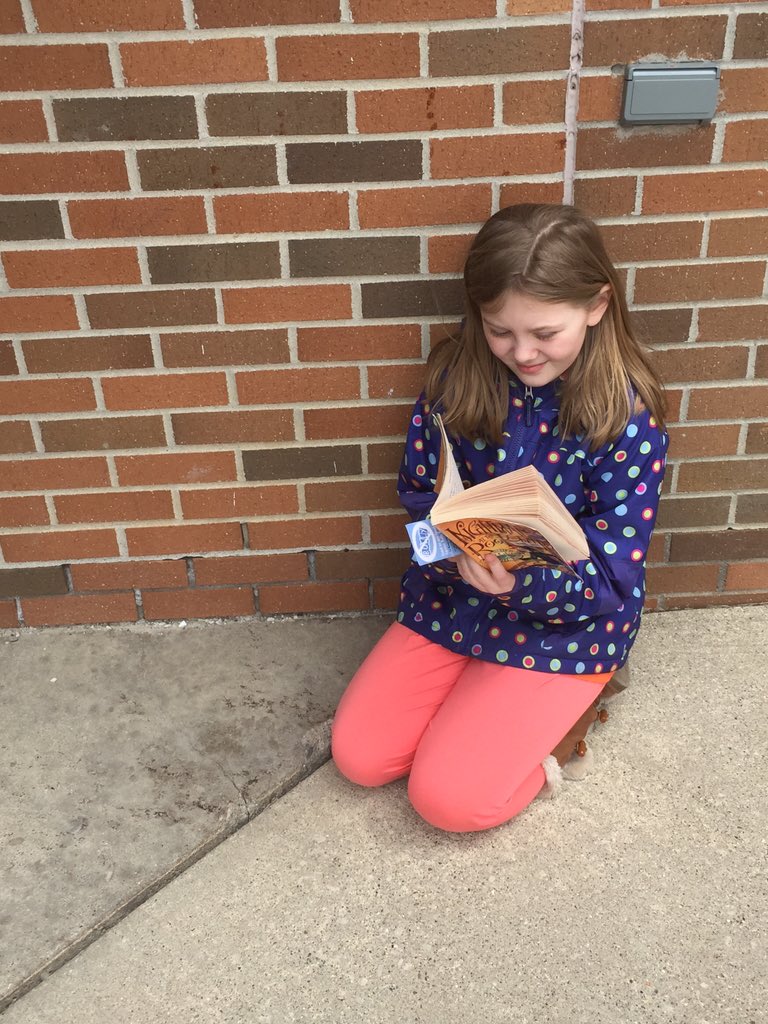
@mrsgrun4th reading and blogging at recess 3

My prior blog posts have focused on the benefits of blogging for students and teachers in the classroom. Some of these posts included using blogs as a way to encourage students to write freely without fear of mistakes, as a way to build relationships with classmates and the teacher, and as a way to create with a new language and build their vital language skills.  In addition to these, there are many ways to use blogs in place of a traditionally used assignment or assessment. It is simple to set up a loose prompt for students and use their blog as a way to assess their learning in relation to topics covered in class, while welcoming creativity.

Retelling the story:

Recently, I have used blogging as a means for students to retell portions of a story that we have been reading in class in a way that helps them better understand the meaning of the book. In my Spanish class, we use leveled readers throughout the year to build our language skills. Sometimes we will discuss the readers in class and other times students may complete a worksheet with comprehension questions. While, these are both great methods to determine what students have learned, they do not allow for student creativity or differentiation.  To assure all students have the opportunity to be involved in the discussion, expressing their creative views and offering insights, I have the students blog.

Screen Shot 2016-04-13 at 2.10.09 PM

What happens next?

Recently, I assigned the students the task of reading a chapter in the Spanish reader “Amigos Detectives” and asked them to write about what they read. I gave some guiding questions to provide ideas and spark their creativity. In addition to answering some of my questions, I asked the students to either predict what may come next in the story or to create a new title for the current or next chapter. Later, I asked them to create their own chapter and give some of the highlights of what might happen to the main characters. This encourages deeper thinking and creativity, while the blogging medium gives the students an opportunity to share their ideas and opinions on a higher level.

Screen Shot 2016-04-13 at 2.10.23 PM


Student example


The benefit:

Giving blog assignments related to a reading has increased the levels of comprehensive reading being done by my students.  The requirements given, a summarization, retelling the story, or creating a next chapter, lead to more student involvement in the reading process and makes it more interesting and personal process. Students are able to choose how they demonstrate comprehension of the language, which increases student motivation. Additionally, it  provides a great prompt for classroom discussion. Using blogs as the medium enables students to narrate in their own personal way and hopefully have fun in the process.

Blogging provides a more engaging way to have students show what they have learned, to express what interested them, and to create with the language.  Students truly enjoy sharing story predictions and choosing our favorites from the newly created titles.

Build Confidence Through Blogging, Edueto post

Build Confidence Through Blogging

Regardless of the course one teaches, or the content being covered, it is important to provide opportunities for students to practice their literacy skills. As a foreign language teacher, I continually seek new, creative ways for my students to practice their reading, writing, speaking and listening skills and in the process, to become more confident in their language usage. Students today often struggle with a fear of speaking in class and of making mistakes. As a teacher, I try to support the students as best as I can by reinforcing that it is natural to make mistakes and it is part of the learning process. I share my own experiences to help build a connection with my students.

But even with these supports, the fear of mistakes continues to limit the willingness of students to participate in class activities. They are afraid to be wrong. I have noticed this is very common among students today and even in my own experience, as a teacher and even now as a graduate student, I experience this fear as well. As a teacher, it is important to provide support and model risk-taking for our students. We must work to find different ways to encourage them to use the language and express themselves, without worrying about mistakes.

So how do we do this?

A great way to involve students in expressing themselves and also to provide valuable feedback to them and to help boost confidence in the process, is through blogging. I decided to try this with my students as an alternate homework assignment, to provide some differentiation and to learn more about the specific needs of my students in the process. Blogging was something that I had recently started and so I thought I would give it a try with my students, as a way to help them be more comfortable in expressing themselves.

Because it is critical for students to practice their language skills, I focused on providing some unique and creative writing prompts that would be a comfortable way for them to start writing and blogging. I set some requirements, such as that they do not use translators, that they simply write their response, cast aside any worries about making mistakes, to just write in Spanish and do their best. I continued to emphasize that making mistakes is a normal part of the learning process and how we improve as a result of having made mistakes. It is important to also share stories of our successes and failures with our students, so they can relate and have the support that they need. So when I started assigning the blogs to my students for homework assignments, I encouraged them to focus on expressing their ideas, to write freely without worrying about the grammar and language accuracy, but rather to focus on using and creating with the language.

The first assignment KIDBLOG

The decision to integrate Kidblog as my blogging platform, and to use blogging as a way to encourage my students to write, and create with the language, has had great benefits on their language skills. The tools available for blogging today are similar to what I had done many years ago, with students in my Spanish IV course, who had paper journals. At that time, I set aside ten minutes in class, a few days each week for the students to write a response to a prompt I had written on the board. I tried to come up with a variety of interesting, fun, content related prompts, to help with comfort level but also to have them practice the related vocabulary and verbs we had been studying. While they wrote, I also took the time to write because I wanted to be involved in the process, and it is beneficial for me to work on continued writing as well. Most of the prompts were created by me, but there were days that I left it up to the students, and their fun, creative ideas, led to even better prompts than those which I had created.

I would collect each of their notebooks on Friday, read their responses over the weekend, provide feedback and comments, but they were not graded based on grammatical correctness. I wanted to assess their skills, use the information to guide my instruction, and also quite importantly, use it as a way to understand the students and their interests. As teachers, it is critical to work on building relationships with our students, to better understand their needs and interests, and the journal writing was a great way to accomplishment each of these goals.

On Monday, I would return the journals, and the students would read my comments and try to implement some of the corrections or feedback that I provided into their work for the new week, and build their language skills.

Blogging: What are some of the benefits?

Blogging is a means for teachers to encourage students to express themselves, to be creative, to build literacy skills, to become more confident in their writing, and focus more on sharing their ideas without fear of errors. Blogging helps students to develop their creative side, to have a choice in what they are writing, to become more expressive and to have some individualized instruction. Paper is fine for students to being blogging and the most important thing is that students have the opportunity to blog and use the experience to build their skills in the language or in any area.

But rather than using paper, students and teachers can benefit by using a tool such as Kidblog. The blog can be written using any device for access. Students can personalize their blog by choosing from different templates, fonts, and more. The use of digital tools for blogging is great for tracking student growth and having the writing available, longer than a piece of paper would last. As teachers, and with our students, we can watch the student’s growth and track their progress in writing skills and more, over a period of time, and provides opportunities for self-reflection.

I enjoy creating new prompts for the students to blog about and I encourage them to find blogs of interest to read as well. Reading their entries provides me with valuable information to help guide my instruction, to give them feedback, but more importantly, I can learn more about the interests and needs of each of my students.

If this sounds like an area that might be of benefit to your classroom and your students, then I recommend trying it out. It is a risk, but it is worth it. Blogging might just be the way to open up communication, collaboration and enhance creativity in your classroom. Find your blogging tool and get started. Good luck!

edueto1

How I Got Started Using Technology To Assess Student Learning


Thank you Terry Heick for publishing this post today in TeachThought.

How I Got Started Using Technology To Assess Student Learning

by Rachelle Dene Poth

If you are looking for another way to integrate technology into your classroom, why not start with assessment?

In order to learn what our students need and how we can better design our lessons to prepare them, we use formative and summative assessments.  Assessments are vital in for determining what learning has occurred, what areas need to be reinforced, and what our next steps must be. This kind of information helps to guide our instruction and provide additional opportunities for our students. Assessments give us the information we need to provide feedback to them, to guide their learning, and to set new goals.

(See ‘The Most Important Question Every Question Should Answer.’)

Providing timely, relevant learning feedback is essential to personal growth and reflection for student learning.  So how can we make assessments more effective, informative and engaging too?

Why use technology for assessments?

Depending on the number of classes and students in each class, creating assessments in a variety of forms, grading them and providing feedback in a timely manner, can become quite time consuming. However, with the numerous digital tools available, teachers have many choices available for assessing students.

Options exist for using quick entrance and exit slips, surveys, having students interact in discussions both in and outside of the classroom, just for a few examples. There are so many possibilities, and what’s even better is how quickly results are obtained, can be evaluated and feedback provided to the students.

Teachers have choices in the types of feedback they receive. In addition to live results, teachers can save data in downloadable spreadsheets, receive emails with the results and some tools offer other formats as well. These all enhance the ability of teachers to further their understanding of where the students are in terms of their learning and what areas need a bit more focus and instruction.

What changes will you notice in your classroom?

As a foreign language teacher, I need to assess my students regularly because learning a foreign language, especially at the lower levels, requires an ongoing evaluation of the students’ understanding and ability to use the language.  Providing regular feedback is critical for students to learn structure, build their vocabulary and enhance the four language skills.

Teachers with larger classes find that providing assessments and giving feedback to the students in a timely manner can be challenging and need a way to make this process easier.  However, sometimes due to other time constraints, or the length of assessments, grading student work and returning it the next day, in spite of one’s best efforts, is not always possible, and for this there are solutions.

With the variety of digital tools available, many of these concerns have disappeared and make a tremendous difference in the efficiency of classrooms and teaching procedures, and the types of assessments that teachers can create for students to meet the diverse learning styles.

Where to begin: What are some tools to start with?

Using tools such as GoFormative, Kahoot!, Quizizz, Riddle, SurveyMonkey, and others like these, I have quickly created discussion questions, quizzes, reflection surveys, or combination of all of these.  There are so many options for creating formative assessments by using any of these and other tools available today.  As the students finish, teachers can see the live results or download the results directly to their computer, and can analyze the data in a variety of ways. It is a great way to focus on the needs of each individual student, but also for the class as a whole, to address what the areas are that the students need some help with.

Integrating tools for assessment such as these, makes the use of entrance and exit slips easier and quicker to use.  Having students complete an entrance slip for example, using one of these tools at the beginning of a period, enables you to have the results within a few minutes and use this valuable feedback to help guide the lesson for the day and make changes as needed based on the data.  The results can then provide valuable feedback to the students, one on one, and help them to work on their personal growth and reflection.

Teachers can refer back to the results to track student growth, to note patterns in certain classes or students, and to work with students on determining strengths and weaknesses. I have found it very beneficial to my professional growth and use these results to reflect on my instructional methods. Paper assessments get lost but assessments created using one of these tools are stored and can be referred to as often as needed.


Benefits of using digital tools for assessment

So many options are available for assessing students, giving them a way to express thoughts, learning and be involved in the classroom. These tools enable teachers to conduct this type of evaluative work faster, decreases the paperwork, and provides more time for working with the students using the data.  Students benefit because they have this feedback when they need it most and also learn additional vital technology skills in the process.

Some quick examples: Use GoFormative to have students complete assessments in class, respond to them with feedback instantly and track their progress. They can draw, write, watch a video and much more. Kahoot! and Quizizz can be used in class as an engaging way to assess students and then use the information to focus on areas which need review. Quizizz can even be assigned as homework, which students actually ask for.

And taking it a step further, students can create their own games with either of these, further enhancing their learning and involvement in the course. Riddle and SurveyMonkey can be used for quizzes, reflective surveys, and more, it all depends on what your needs are.

SURVEY

These are just a few of many ways to use these tools. Each of the tools mentioned can be used in any grade level or subject area and they do not require students to create an account but can be shared simply through a shareable URL, posted on a class website or written on the board.  The ability to design, share and evaluate students using these and other tools is remarkable.
So if you’re looking for better, more effective ways to provide feedback to your students, and to reduce the amount of paper used, I recommend trying out one of these tools.

There are many options available but these are just a few that I used when I started integrating more technology into my classroom and that have had a tremendous impact on the assessments I have created for students. My students have responded positively and truly enjoy having alternate ways to show what they know and can do with the material.

Using these tools really enables teachers to personalize instruction and help students to reach their fullest potential in the classroom.


Images from each website

Blendspace: How it can benefit your classroom

What Is Blendspace?

 Thanks to Terry Heick and TeachThought for publishing this today.

What Is Blendspace? Using Blendspace In The Classroom

by Rachelle Dene Poth

In my prior two posts, I talked about the way I started to gradually work toward integrating more technology into my classroom.

I focused on what I thought was an area that could use some improvement, and found that there was a disconnect occurring.  I needed a better way to communicate and collaborate with my students and for them to access help when they needed it and the resources that would help them to be successful.  So for me I started with Celly (a messaging app) and once I felt comfortable, integrated Edmodo as our classroom LMS.

BLEND

Once I felt like these were having a positive impact on my classroom, which came in the form of solving problems of lost papers, forgotten assignments, and missed learning opportunities due to class absences.  I began searching for another way to make some improvements and found a tool called Blendspace.

Change takes time, there is no doubt, but we must persist when we take on any new venture. Sometimes it can take longer than we like because we run into difficulties and roadblocks.  In the search for answers to your initial questions, new questions arise, And that is the nature of the game. it becomes an ongoing cycle which helps in the promotion of goal setting and growth as teachers.

How Does Blendspace Fit?

Blendspace is a tool that provides many possibilities and initially I used it as a method of curating resources and flipping my classroom. There are similar tools available, and regardless of which you choose, having one place to keep your resources is a really great idea. So how do you make the decision of which to rely on?

Looking at sites such as Graphite or EdShelf can help. Reading blogs and participating in Twitter chats are also great ways to find out what others are using and their thoughts.  For example, using something like Graphite or EdShelf, you can get a summary of the uses of a web tool, read the reviews and stories about user experiences. Hearing about how other educators are using tools like Blendspace is tremendously helpful when deciding on what tool to integrate into your classroom.

3 Ways To Use Blendspace In The Classroom

1. Flip Your Classroom

I like Blendspace because it really does provide a variety of benefits to me both personally and professionally.  It can be used as a way to flip the classroom and to save that vital classroom time for student interactions, engaging activities, or having students work independently while teachers facilitate their activities and provide feedback one-on-one.

Blendspace can be used to create a lesson using the TES Resources tab, then shared with students through their class account or through a direct link. Regardless of how the lesson is shared, students have access to many resources and can learn asynchronously outside of the classroom, on their own schedule, using whatever device they choose.

This means that, in ideal circumstances, learning can take place anywhere at any time. The choice is the students’ and that’s the great thing about technology and the usefulness of tools like Blendspace. It can also be used to store favorite web tools, presentations, or one’s personal work. It makes it easier to share ideas with colleagues, and organized teaching and learning materials with students.

BlendspacesSpanish5A

2. Present Student Work In Class

Blendspace is a way to avoid fumbling with flash drives, losing valuable class time opening emails and attachments.  All of the student projects can be added by their URL or uploaded into one lesson, given it a title, and in class, only one lesson has to be opened to display the student work for the class to enjoy.

FOODSImage

3. Build A Lesson

Building a lesson for any level or discipline is easy with Blendspace. Simply choose your topic and by using the TES Resource tools provided such as Google Search, Educreations, Google Drive, Dropbox, uploads from your computer, and more, you can quickly build a lesson.  All it takes is finding the resource and dragging it into place in your lesson.

You can add boxes, move items around, and no matter what you do it is done quickly. It really is a great way to share information, keep track of projects, and so much more. These are just some of the reasons why I am really happy that I found Blendspace and how its use has benefited my classroom. I recommend checking it out if you have not, and letting me know in the comments below what your experience was!

BlendspaceLessonCreation

Promote Student Expression​ through Storytelling

Published on March 17, 2016 by Kidblog. Thankful for the opportunity to be a Blogger for Kidblog.

Promote Student Expression​ through Storytelling

Practicing commenting on paper @woodlandtaglets @anna_bilyeuDepending on particular class content, concepts, or topics, blogging can have a strong, positive impact on several aspects of the learning process.  Recently, I have found that providing students with a short prompt and having them create or tell a story has been extremely beneficial. In doing this, they not only build knowledge and skills in the relevant academic area, but also improve their writing, literacy, and critical thinking skills.  In addition to these learning opportunities, blogging also gives students a means to build skills in technology and become reflective writers in the process.

One way to guide students in writing successful stories is to provide them with writing prompts. Typically, I aim to supply a writing prompt focused on a certain theme we have been covering in class.  This assignment enables me to provide differentiation in their learning and lends itself to more student creativity and choice. I post a writing prompt related to a recent class lesson or theme and ask the students to be creative with their responses. Being a foreign language teacher, I often provide my students with a few specific elements that I would like the responses to contain. Depending on the content area, these elements range from the use of a specific verb or verb tense, a focus on grammar usage, topic of discussion, specific style of narration, or a method of debating an issue.

One example in a foreign language class may be discussing one’s childhood.  By providing a prompt which asks for students to discuss their childhood, they are focused on narrating in the past tense and using specific themed vocabulary.  By requiring students to use a few specific verbs in the blog, it helps to guide their practice with an area in which students may be having some difficulty.

Using blogging in this way has helped promote student discussion and creativity and has served as an alternate means for student assessment. It enables teachers to provide reinforcement of specific content in an individualized way that promotes more authentic learning. For students, it provides a unique way to complete a homework assignment, share ideas, and develop critical thinking skills and learning in multiple areas.

Kidblog has been an awesome medium to get students creating and writing in class. One feature of Kidblog that has helped increase engagement for students in any writing prompt and, in some cases, may also be used as a prompt itself, is the ability to add a photo to your post. Using the photo as a focus helps promote discussion and increase curiosity. Kidblog provides students with the option to enhance creativity through the diverse images and formatting choices. Images and customized formatting brings students’ writing to life and provides a way for instruction to be personalized for each student.

Giving students options empowers them in their choice for writing, and leads to a more engaging and fun learning experience.

TeacherCast Educational Network | Developing Standards-Based Instructional Technology Integration

Technology Integration - Instructional Coaching - Productivity Secrets for Educators

Leadership Liner Notes: Sean Gaillard

Built on Connection. Tuned for Impact.

Stories by Thomas Oppong on Medium

Dr. Rachelle Dené Poth @Rdene915 Educator, Consultant & Keynote Speaker, Author, Attorney #THRIVEinEDU

Hooked On Innovation

When Innovation slaps you in the face, we slap back.

Teach Better

Dr. Rachelle Dené Poth @Rdene915 Educator, Consultant & Keynote Speaker, Author, Attorney #THRIVEinEDU

BrianKulak.com

Dr. Rachelle Dené Poth @Rdene915 Educator, Consultant & Keynote Speaker, Author, Attorney #THRIVEinEDU

The Principal of Change

Stories of learning and leading

Mandy Froehlich

Dr. Rachelle Dené Poth @Rdene915 Educator, Consultant & Keynote Speaker, Author, Attorney #THRIVEinEDU

Katie Martin

Informed by research, refined by practice

#RocknTheBoat

Rocking today's classrooms, one teacher, student, and class at a time.

User Generated Education

Education as it should be - passion-based.

Learning as I go: Reflections & lessons learned

Dr. Rachelle Dené Poth @Rdene915 Educator, Consultant & Keynote Speaker, Author, Attorney #THRIVEinEDU

Serendipity in Education

Join me, Allyson Apsey, as I stumble upon the fortunes of learning, laughing, and celebrating alongside incredible people.