From Passive Video Consumption to Active, Personalized, Data-Driven Learning with AI

Sponsored post by Chris Petrie, via Kwizie.ai; opinions are those of the author

Language tutors are facing unprecedented challenges in keeping students engaged and motivated. The shift towards video-driven learning, accelerated by the COVID-19 pandemic, has only intensified these problems. With studies saying that GenZ students consume an average of 7.2 hours of video content daily and a staggering 500 hours of video uploaded to YouTube every minute, educators are competing with a barrage of digital content designed for instant gratification. This massive influx of content, coupled with the addictive design of platforms like TikTok and Instagram, has made it increasingly difficult to capture and retain students’ attention. One key to overcoming this challenge lies in aligning educational content with student interests, but the heavy burden of personalizing interactive and engaging resources can be overwhelming.

Enter the power of AI in language learning. Kwizie.ai is transforming the way language educators personalize learning content by automating the creation of quiz games from any video in 20 different languages. This tool turns passive video watching into an active learning experience, making language comprehension both aligned with student interests and highly personalized.

Laura Homs Vilà from Couch Polyglot shares her experience:

“I was blown away by how fast it was possible to create such quizzes. It’s definitely a game-changer for teachers and learners alike, helping to clarify whether the video content was truly understood.”

Practical Strategies for Engaging Language Learning

Imagine many possibilities: an English video the student knows well paired with a Spanish quiz, or a Spanish video reinforcing language skills with a quiz in Spanish. The combinations can be tailored to suit any learning objective.

For a creative approach, consider using the learner’s favorite music videos. A familiar Taylor Swift song, for instance, could be the basis for a quiz in a different language (click here for a Spanish quiz, for example), making learning both fun and engaging.

Another great strategy is to get students into study groups and have them engage in peer assessment; they can easily create quiz games for each other from their favorite videos as a powerful way to learn together.

How Kwizie works in 3 steps:

1. Select Content: Start by choosing video content that resonates with your students’ interests. For example, a short National Geographic documentary on sharks could captivate a student fascinated by marine life. Kwizie’s AI can then generate a quiz based on this content in 20 languages.

2. Share and Collaborate: Once the quiz is generated, you can edit what you like and set the quiz conditions. Then, sharing it with students is done in one click.

3. Leverage Analytics for Future Learning: Kwizie provides valuable analytics that offer insights into student engagement and listening comprehension. This data-driven approach allows educators to tailor their delivery strategies to meet the individual needs of their students. For more advanced learners, incorporating activities like recording their own presentation and speaking sessions can add an extra layer of challenge and engagement for audiences.

Impact

By leveraging Kwizie’s AI capabilities, educators can significantly increase the rate of language learning while radically decreasing the time spent creating personalized and engaging learning experiences. This not only motivates learners but also sets them on a path to success, which is the ultimate goal for any educator.

“I have to say this technology is outstanding! It’s one of the most impressive quiz-making tools

that we’ve come across. It does it instantly. It does it in seconds. It even makes it a little gamified.” – Russell Stannard from Teacher Training Videos

It is free to try – it takes less than a few minutes to get your first quiz up and running, and, with a special offer, to try Kwizie for just $1 in the first month. Visit Kwizie.ai and click “Try Now for Free” to embark on a journey that transforms passive video consumption into an active, data-driven learning adventure.

Chris Petrie, PhD, CEO & Co-Founder Kwizie.ai

Helsinki, Finland

Bio:

Chris Petrie is the CEO and Co-Founder of Kwizie.ai, bringing 20 years of experience in education, research, and product leadership. Previously, he has led more than 25 global research projects for well-known international clients, including Supercell, the OECD, the LEGO Foundation, and the World Bank.

Twitter/X: @Chrispetrie6

#languagelearning #Kwizie #polyglot #activelearning #videolearning #aiineducation #educationinnovation #edtech

Contact Rachelle to schedule sessions about Artificial Intelligence, Coding, AR/VR, and more for your school or your event! Submit the Contact Form.

Follow Rachelle on Twitter(X) and Instagram at @Rdene915

**Interested in writing a guest blog for my site? Would love to share your ideas! Submit your post here. Looking for a new book to read? Find these available at bit.ly/Pothbooks

************ Also check out my THRIVEinEDU Podcast Here!

Join my show on THRIVEinEDU on Facebook. Join the group here

Enhancing STEM Learning: The Role of Ethical AI-Powered Text-to-Speech Technology

In collaboration with ReadSpeaker

In the world of education, particularly in the fields of science, technology, engineering, and mathematics (STEM), accessibility and engagement are paramount. However, traditional methods of instruction often fall short in providing accommodations for diverse learning needs and fostering active participation. Enter ethical AI-powered text-to-speech (TTS) technology, a tool revolutionizing the educational landscape by bridging accessibility gaps and enhancing learner engagement in STEM content.

Focus on accessibility

Accessibility in education means providing equal opportunities for all learners, regardless of their abilities or disabilities. Visual impairments, learning disabilities, dyslexia, neurodiversity, and language barriers can pose significant challenges for individuals seeking to access STEM materials. Traditional textbooks are often overfilled with complex diagrams, graphs, and equations. These can create formidable obstacles for these students. However, TTS technology offers a solution by converting written text into spoken words, making STEM content accessible through auditory means. Through the seamless integration of TTS technology into digital platforms and Learning Management Systems (LMS), learners can engage with scientific concepts with ease and independence.

The benefits of TTS

Moreover, TTS technology transcends accessibility barriers to benefit a broader spectrum of learners, including those without disabilities. By providing alternative modalities for accessing information, TTS provides diverse learning methods. Learners thrive by adding auditory environments, where they can process and retain information more effectively through listening rather than reading. TTS facilitates this auditory learning process by transforming written STEM content into engaging audio presentations, which helps with enhancing comprehension and retention.

Additionally, TTS technology acts as a catalyst for increasing engagement among STEM learners. Engagement is crucial for fostering a deeper understanding of complex scientific concepts and promoting lifelong learning. However, traditional instructional materials often fail to captivate students’ interest, leading to disengagement and disinterest in STEM subjects. AI-powered TTS addresses this issue by transforming static text into dynamic, interactive experiences. By incorporating natural language processing and speech synthesis algorithms, TTS systems deliver content with human-like intonation and expression, capturing learners’ attention and sustaining their engagement throughout the learning process.

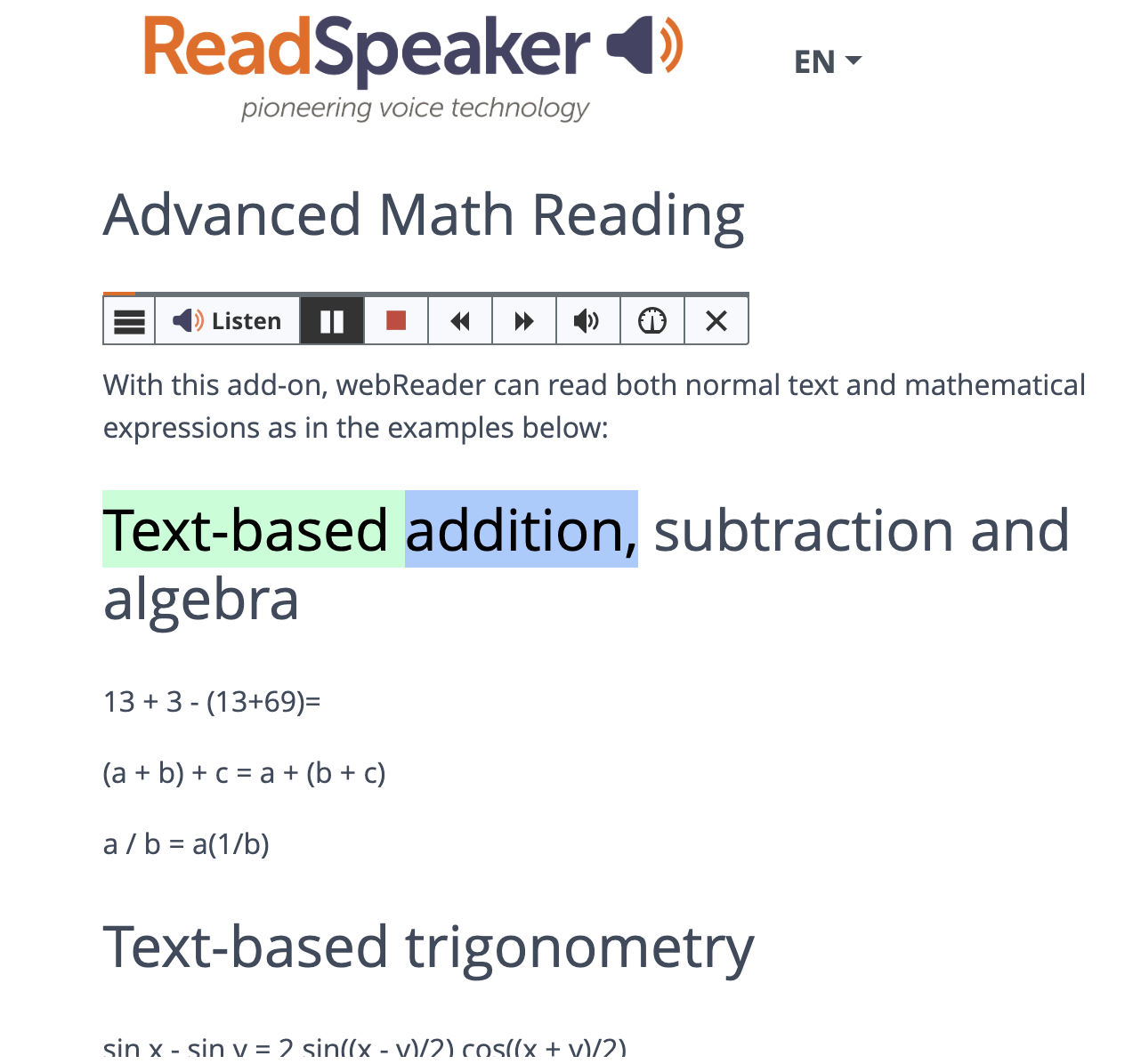
TTS technology also enables personalized learning experiences tailored to individual needs and preferences. Through customizable settings such as playback speed, voice selection, and highlighting options, learners can adapt the TTS output to suit their unique learning styles. For example, students can adjust the playback speed to accommodate their preferred pace of learning or select voices that resonate with them personally. These customization features empower learners to take control of their learning journey, promoting autonomy and self-directed learning.

TTS technology facilitates multimodal learning experiences by integrating audio with visual and interactive elements. For instance, TTS-enabled e-books can synchronize spoken text with highlighted visuals, enabling learners to follow along seamlessly. Additionally, interactive simulations and virtual labs accompanied by TTS narration offer hands-on learning opportunities, further enhancing engagement and understanding. By leveraging the power of AI and multimedia integration, TTS technology transforms static STEM content into dynamic, immersive learning experiences that appeal to learners of all ages and backgrounds.

In conclusion, AI-powered text-to-speech technology represents a paradigm shift in STEM education, offering unparalleled accessibility and engagement for learners worldwide. By breaking down barriers to access and fostering interactive learning experiences, TTS technology empowers individuals to explore the wonders of science, technology, engineering, and mathematics with newfound enthusiasm and confidence. As technology continues to evolve, so will the possibilities for leveraging AI to enhance STEM education and inspire the next generation of innovators and problem solvers.

See ReadSpeaker.com for more information. Interested in seeing how TTS would look in your environment? Contact us at contact@readspeaker.com.


About Rachelle’s blog

Contact Rachelle to schedule sessions about Artificial Intelligence, Coding, AR/VR, and more for your school or your event! Submit the Contact Form.

Follow Rachelle on Twitter(X) and Instagram at @Rdene915

**Interested in writing a guest blog for my site? Would love to share your ideas! Submit your post here. Looking for a new book to read? Find these available at bit.ly/Pothbooks
************ Also check out my THRIVEinEDU Podcast Here!

Join my show on THRIVEinEDU on Facebook. Join the group here


Empowering Teachers with Conversational AI

In collaboration with Kyron Learning, All opinions are my own

As educators, we have access to a wide variety of digital tools to bring into our classrooms. We use these to enhance learning and provide new opportunities for students to build content knowledge, as well as help them to develop essential digital skills. With the right methods and tools, educators are able to achieve the goal of providing the most authentic, meaningful, and personalized learning experiences for all students. Leveraging these resources helps us to do this more efficiently and effectively and enables us to provide timely feedback and support to our students.

Now, with the power of generative AI, there are even more valuable resources available for educators to bring into their classrooms. We can use these tools to enhance the content being taught and also to support students so they learn how to interact with AI responsibly and safely.

Kyron Learning is a revolutionary interactive video learning platform that leverages conversational AI to transform the way educators can support their students. Kyron empowers teachers by saving them time, personalizing instruction, and providing valuable student data. With Kyron, students have access to a personal tutor who works with them as they build their skills in an engaging space. The power of AI helps teachers create interactive lessons that are student-paced and student-focused. As students work through a lesson, it truly feels like a one-on-one tutoring session with a real teacher. Students can ask and respond to questions, engage in further discussions, and receive immediate feedback, all made possible by Kyron’s AI assistant. The “conversational engine” listens to the student’s responses and selects the most appropriate pre-recorded video segment to play next. When you try a Kyron lesson for the first time, you will be amazed at how well it flows!

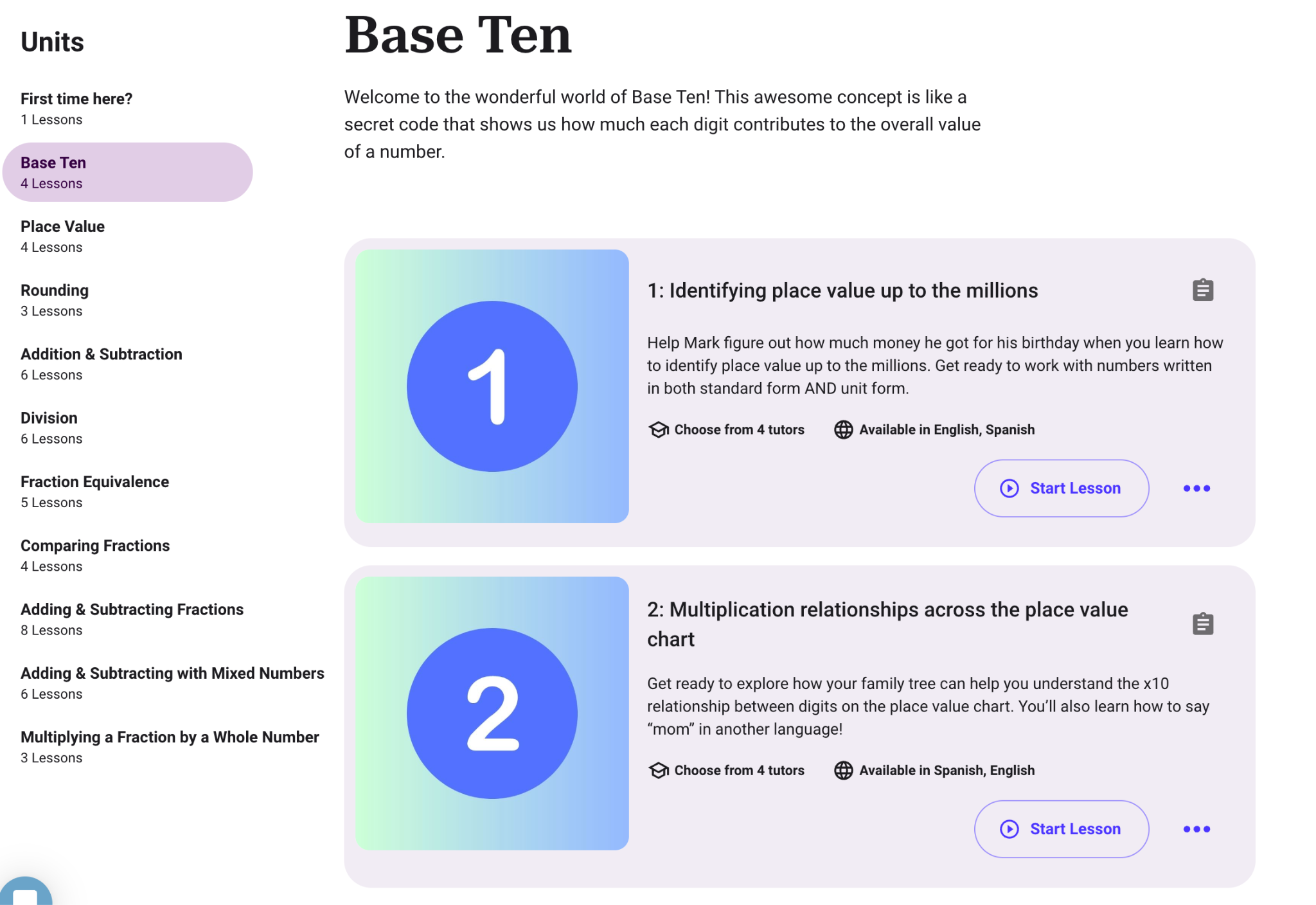
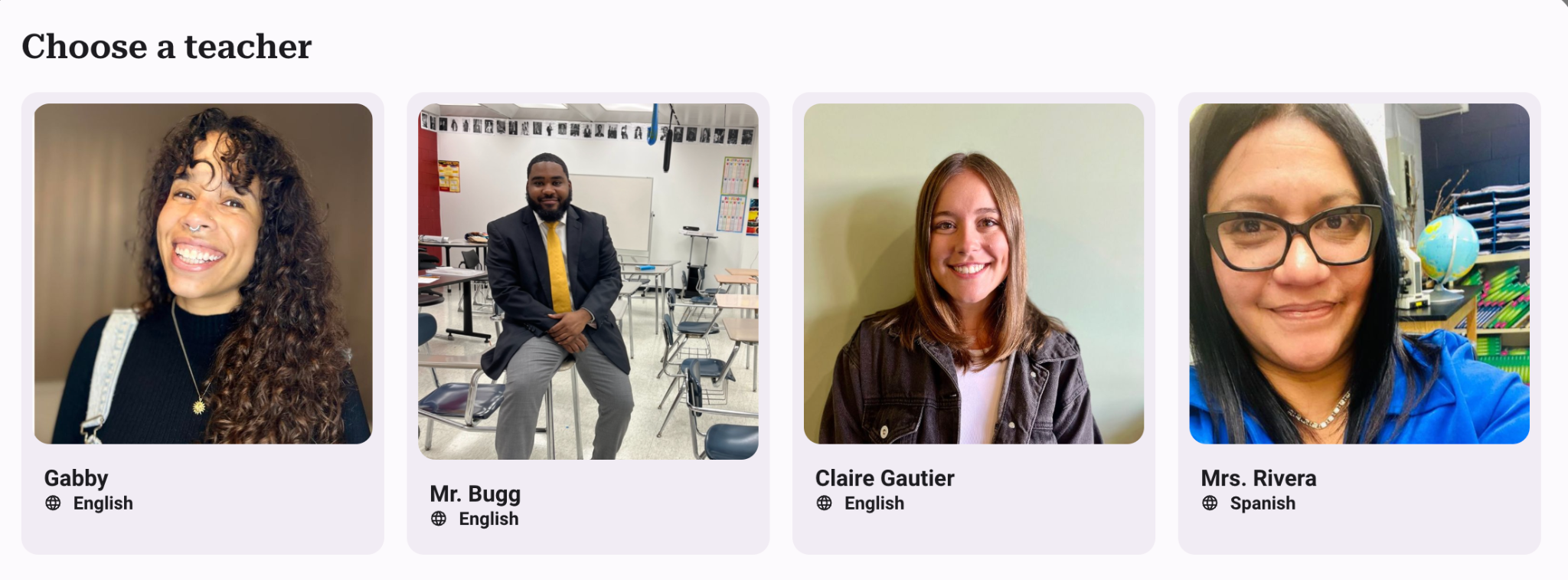
Using Kyron, teachers can provide additional opportunities for students that give them more individualized learning experiences. It is easy to get started by simply choosing from the many lessons already available for students. Are you teaching math? Explore the lessons available such as “Base Ten,” “Place Value,” or “Comparing Fractions.” You will see the objectives, the number of lessons, and the languages available. You can even choose your tutor! With Kyron, teachers also have access to resources such as blogs and other materials to get them started!

Kyron Studio

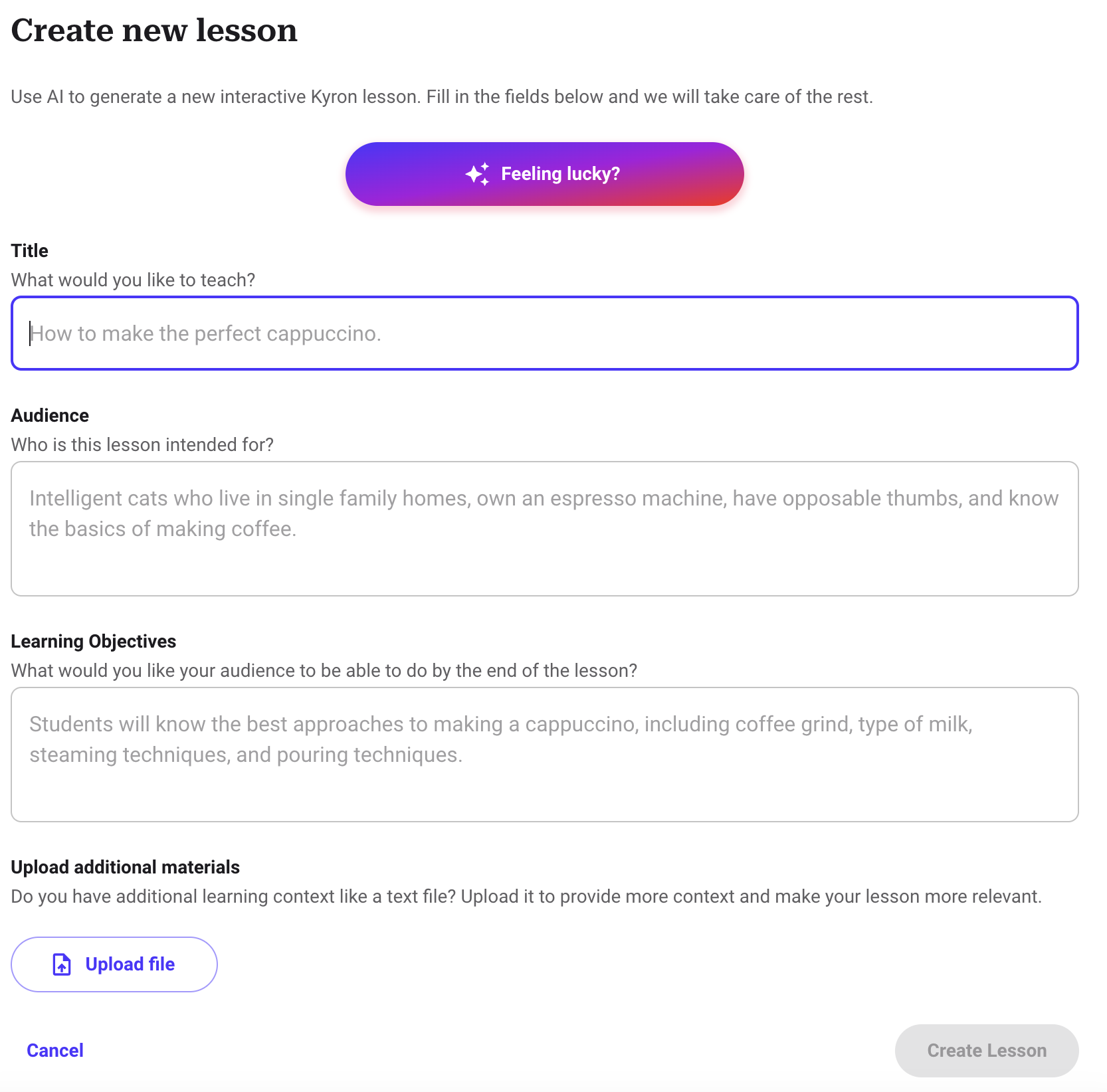
Newly available in March, teachers can now create their own lessons for students using Kyron Studio! In addition to what Kyron already provides, with Kyron Studio, teachers can become AI tutors! Educators are also able to share and collaborate on lessons, leveraging the collective expertise of the teaching community. In Kyron Studio, teachers can design multi-modal AI-facilitated tutoring sessions for their students and make them even more personalized.

The sessions can be customized based on each teacher’s curriculum and include videos and visuals. It is a learning experience that engages and helps every learner to understand a concept in an authentic way and at their own pace.

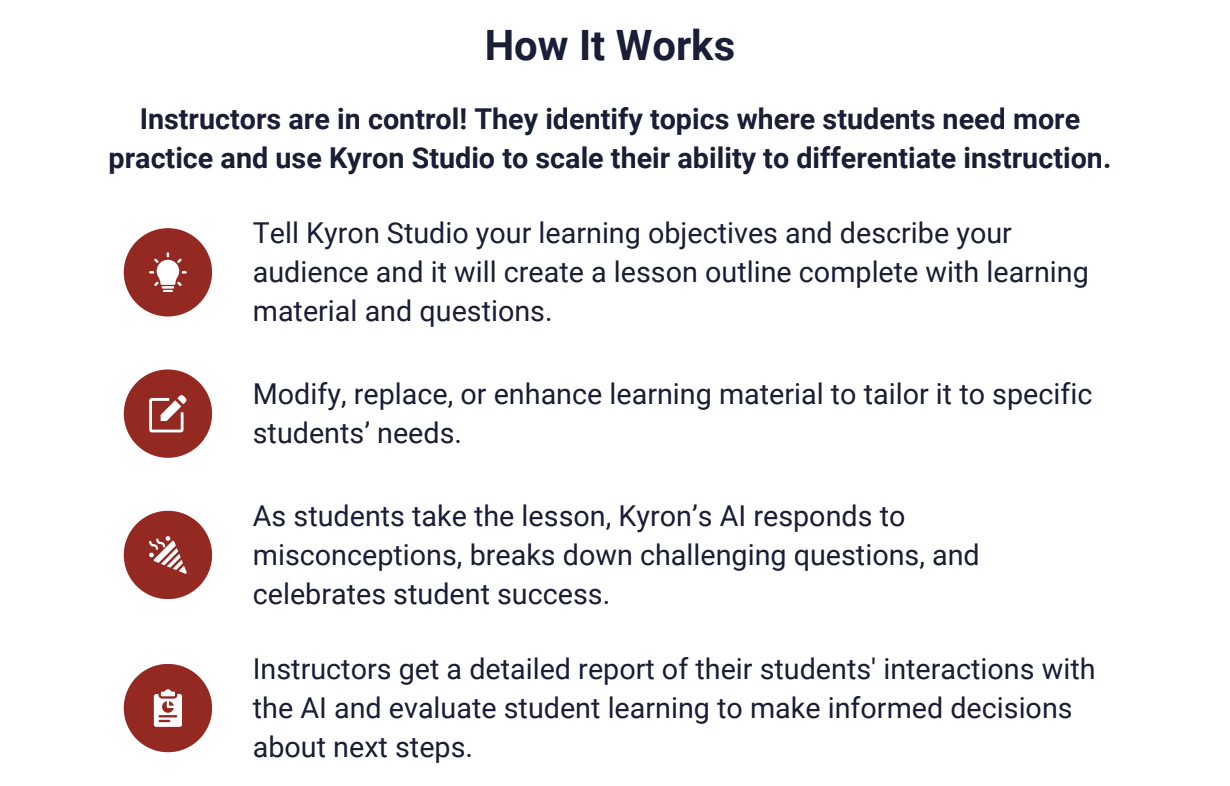
Getting started with Kyron Studio is easy! You simply enter your objectives and provide relevant information about your learners, and a lesson outline with materials and questions will be generated. Once the lesson is generated, teachers can make any changes to the AI-generated content.

Learning with Kyron is fun!

As students work through lessons, they experience those “aha” moments when they finally understand something, and you can see their excitement! It is an engaging learning experience for students and one that also teaches them about purposeful and safe uses of AI. It benefits teachers because they can see students’ progress and support them right when they need it! While we all know technology can’t replicate the relationships between a teacher and a student, Kyron aims to also provide a supportive digital environment where students feel seen and valued.

I worked through several lessons and really enjoyed the experience. It was very different from other interactive lessons and platforms that place students in the lead. To start, I spent time selecting a lesson to dive into and then was surprised that I was able to choose my tutor! I enjoyed testing how my tutor would respond to my answers and questions. I told my tutor that I was confused, entered incorrect answers, and asked for help and more clarification. Each time it responded to me in such a personalized way that helped me to understand. If I got an answer wrong, my tutor provided me with an explanation or another example. It was amazing to see how well it responded to my questions and adjusted similarly to how a teacher would with students in the classroom.

Some of the great features of Kyron are:

Multimodal Learning: Lessons can incorporate videos, images, and text, catering to diverse learning preferences and creating a more engaging experience.

Easy Lesson Creation: Kyron Studio offers an automated and user-friendly interface for educators to build custom AI-powered tutoring sessions.

Educator Choice: Educators control lesson content, can upload their own visuals, and curate the questions and answers, which makes it more authentic for students.

Assessment and Misconception Detection: Kyron identifies student misconceptions during lessons, providing valuable insights for educators to personalize and target instruction.

Focus on Safety and Ethics: Kyron prioritizes student safety by implementing controls and moderation layers to prevent inappropriate interactions.

Commitment to Transparency: User data is anonymized and used ethically to enhance the platform.

Supporting Educators and Students

In an increasingly digital world, especially with the rapid advancements in AI, what I value about Kyron is its approach when it comes to the use of AI and the creation of this platform. The key principles are:

  • Connect, Engage, Encourage: When students complete a lesson, they are supported and receive encouraging feedback during their learning journey.
  • Teach Through Dialogue: The lessons are interactive and fun for students to complete because they are involved in a conversation. Through prompts that promote critical thinking and problem-solving, students can build their skills in ways that meet their pace and specific needs.
  • Work in Concert with Teachers: Kyron provides high-quality, differentiated curriculum and gives teachers access to real-time student progress data. It helps teachers to target instruction and personalize instruction for every student.

There are so many great lessons available to start with, or just dive in and create your own lesson in very little time. I definitely recommend that you try some lessons to experience how unique Kyron is.

Ready to transform your classroom and empower your students? Visit Kyron Learning today at http://app.kyronlearning.com and see how Kyron can help you create a personalized and engaging learning experience for all students!

And if you want to learn more and connect with other educators, Kyron just launched a community for educators called the Visionaries! Educators can join at www.kyronlearning.com/visionaries. Explore the great resources such as tutorials and more!

About the Author:

Rachelle Dené is a Spanish and STEAM: What’s Next in Emerging Technology Teacher at Riverview High School in Oakmont, PA. Rachelle is also an attorney with a Juris Doctor degree from Duquesne University School of Law and a Master’s in Instructional Technology. Rachelle is currently finishing her doctorate with a focus on AI and Professional Development. In addition to teaching, she is a full-time consultant and works with companies and organizations to provide PD, speaking, and consulting services. Contact Rachelle for your event!

Rachelle is an ISTE-certified educator and community leader and served as president of the ISTE Teacher Education Network. She was named one of 30 12 IT Influencers to follow in 2021 and one of 150 Women Global EdTech Thought Leaders in 2022.

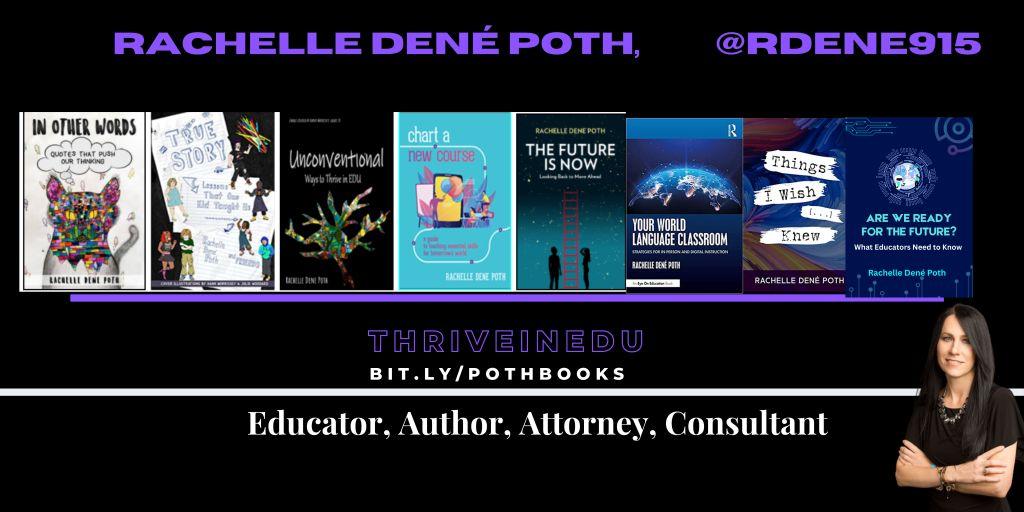
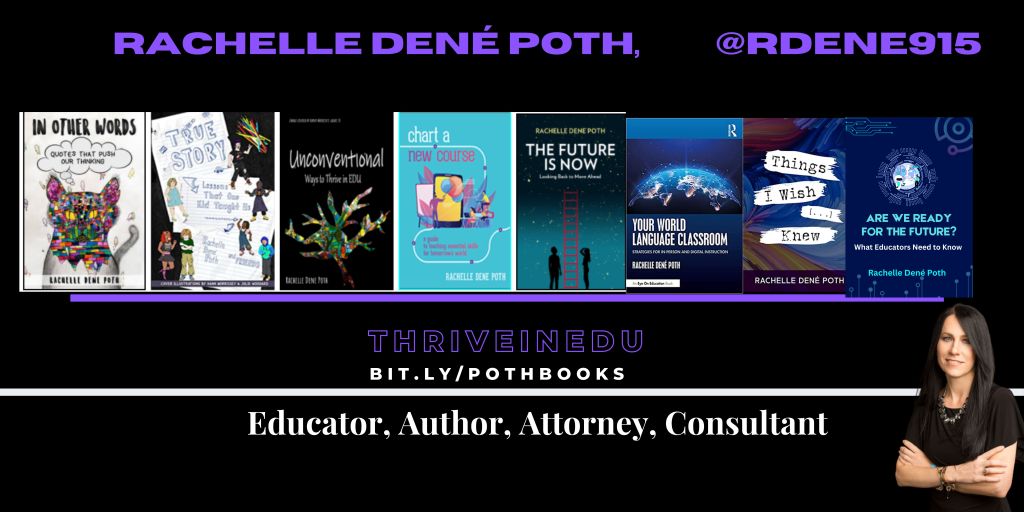
She is the author of eight books including ‘In Other Words: Quotes That Push Our Thinking,” “Unconventional Ways to Thrive in EDU,” “The Future is Now: Looking Back to Move Ahead,” “Chart A New Course: A Guide to Teaching Essential Skills for Tomorrow’s World, “True Story: Lessons That One Kid Taught Us,” and her newest book “Things I Wish […] Knew” is now available at bit.ly/thingsiwishedu.

Contact Rachelle to schedule sessions about Artificial Intelligence, Coding, AR/VR, and more for your school or your event! Submit the Contact Form.

Follow Rachelle on Twitter(X) and Instagram at @Rdene915

**Interested in writing a guest blog for my site? Would love to share your ideas! Submit your post here. Looking for a new book to read? Find these available at bit.ly/Pothbooks

************ Also check out my THRIVEinEDU Podcast Here!

Join my show on THRIVEinEDU on Facebook. Join the group here

Diving Into Tomorrow: AI’s Role in Revolutionizing Writing Education

Guest post by Micah Miner @MinerClass

As GenAI tools increasingly shape the spaces where we teach and learn, it’s time to reimagine how we assess student writing. By embracing distributed assessment, we can harness the power of AI to foster growth, safeguard integrity, and center the student experience in a dynamic and exciting way. This shift aims to ensure students get the necessary support and guidance to thrive. Enter distributed assessment, a game-changing strategy that marries the strengths of AI with the irreplaceable insight of human teachers, nurturing student growth, fostering integrity, and sparking engagement in writing.

Unlocking the Potential of Distributed Assessment

Imagine breaking down the essay writing process into smaller, more manageable pieces. With each step, students receive specific feedback, guiding their journey. Picture the structure of a typical 5-paragraph essay. By harnessing AI tools in collaboration with educators, students are enveloped in a tailored support system, one that adjusts to their personal needs and aspirations through every phase of writing. From the initial AI starter that helps students generate a table of contents or starting sentence, to the multiple checkpoints where both AI and human teachers provide feedback and record grades, this distributed approach ensures that students receive timely and tailored support throughout the writing journey.

The Synergy of AI and Educators

What makes distributed assessment stand out is its inherent collaborative spirit. AI excels in offering immediate, precise feedback on the technicalities of writing, and identifying areas for enhancement such as clarity and coherence. Teachers, on the other hand, bring a human touch that AI cannot replicate. They provide in-depth, personalized advice, exploring the reasons behind writing decisions and fostering creativity and analytical thinking. This powerful combination ensures students receive well-rounded feedback throughout the writing journey.

Navigating Through Checkpoints

Gone are the days of assessing an essay only at its conclusion. Distributed assessment introduces a paradigm shift—feedback is integrated at pivotal moments throughout the writing journey. This approach allows students to refine their work continuously, ensuring a polished final piece. It empowers students, offering them the chance to improve with the guidance of both AI and their teachers at crucial intervals, like after drafting their first version or during peer reviews. This method not only bolsters learners but it ensures students receive well-rounded human and AI feedback throughout the writing journey.

Championing Academic Integrity

The rise of AI in writing education brings up valid concerns about academic honesty. Distributed assessment addresses these head-on. By engaging students in a process where drafts are reviewed, and feedback is given regularly, educators can closely follow each student’s writing evolution, identifying any discrepancies early. This ongoing dialogue between students, teachers, and AI tools creates a culture of transparency and accountability that is essential in an era where the lines between human and machine-generated writing are increasingly blurred.

Empowering Learners Every Step of the Way

Perhaps the most significant impact of distributed assessment lies in its ability to transform writing education into a student-centric experience. With ongoing support and feedback, students are better positioned to grasp new concepts, set achievable goals, and actively participate in their learning journey. This shift from focusing solely on grades to fostering growth and introspection encourages students to view writing as an evolving, continual process.

Looking Forward

As AI starts playing a bigger part in how we learn and teach, it’s clear that distributed assessment is becoming a game-changer. It’s all about using this tech to its fullest while keeping things personal and focused on the students. This means teachers can do more than just beef up writing skills; they can help students think more deeply and reflect on their learning, skills that are gold in today’s world. So, let’s dive in, eager to try new things, shift gears when needed, and put our hearts into guiding our students forward.

It is important to note that the U.S. Department of Education’s guidelines advocate for a human-centric, equitable, and transparent application of AI in classrooms where humans are in the loop. It is true that we should always remind ourselves as educators of the importance of keeping human relationships, reasoning skills, and ethics at the forefront of educational AI use. AI holds incredible potential to automate mundane tasks, enabling a deeper focus on fostering student relationships and growth. By moving forward with equity and collaboration at the core, we can collectively harness AI’s power to enrich education like never before.

About the Author

Micah Miner – District Administrator Instructional Technology & Social Studies at Maywood, Melrose Park, Broadview School District 89, American Consortium for Equity in Education Contributing Writer, Times 10 Publications Author

Contact Rachelle to schedule sessions about Artificial Intelligence, Coding, AR/VR, and more for your school or your event! Submit the Contact Form.

Follow Rachelle on Twitter(X) and Instagram at @Rdene915

**Interested in writing a guest blog for my site? Would love to share your ideas! Submit your post here. Looking for a new book to read? Find these available at bit.ly/Pothbooks

************ Also check out my THRIVEinEDU Podcast Here!

Join my show on THRIVEinEDU on Facebook. Join the group here

Digital Badging

Digital Badges & Micro-credentials: Being an Edtech Librarian in 2024

By Amanda Hunt aka @thenextgenlibrarian

These two concepts, badging, and education, play crucial roles in modern classrooms and libraries, bridging the gap between learning, recognition, and advocacy. In today’s rapidly evolving digital landscape, educators are not just running to catch up to new technologies; they’re becoming the pioneers and advocates for their integration into the classroom, library, and beyond. As traditional teaching methods intersect with innovative digital tools, educators are seizing the opportunity to become leaders in educational technology (EdTech). One notable trend in this realm is the rise of educators earning digital badges and ambassadorships from EdTech apps, websites, and more.

Digital badges have emerged as a means to recognize and showcase an individual’s skills and accomplishments in various fields, including education. By showcasing these badges, educators are putting their resumes in their email signatures. They are showing how they are still learning, usually on their own time, how to best take these new apps and bring them into the school buildings. Badges serve as virtual credentials, providing evidence of a teacher’s expertise in utilizing specific EdTech tools or implementing innovative teaching practices. The process of earning digital badges typically involves completing training modules, sharing lessons created using the tools, participating in workshops, or demonstrating proficiency in using a particular technology within an educational context.

Ambassadorships, on the other hand, involve a deeper level of engagement between educators and EdTech companies. Educator/Teacher ambassadors are selected representatives who possess in-depth knowledge of a company’s products or services and are passionate about integrating them effectively into teaching and learning environments. These ambassadors serve as advocates, sharing their experiences, insights, examples, and best practices with fellow educators, thereby fostering a community of learning and collaboration. A lot of times, they will present these tools in webinars, online, and in-person conferences.

What is the draw for educators to get certified in badges and earn ambassadorships? Firstly, in a rapidly digitizing world, staying abreast of the latest technological advancements is crucial for educators to deliver high-quality instruction. Many schools require teachers to use some form of technology in their classrooms. By having the librarian earn micro-credentials and badges through professional development training, they’re able to teach the teachers how to use the tools so they can use them in the classroom with students. By earning digital badges, educators demonstrate their commitment to training, growth, and improvement, as well as their willingness to adapt to new teaching methodologies. These badges also serve as a tangible record of their ongoing learning journey, which can be invaluable for career advancement and professional recognition.

Secondly, ambassadorships offer educators a platform to amplify their voices and influence within the EdTech community. Sometimes there’s even swag involved! As ambassadors, educators have the opportunity to network with industry professionals, participate in exclusive events and conferences, and contribute to the development and improvement of educational technologies. Moreover, serving as an ambassador allows educators to shape the direction of EdTech tools by providing feedback based on their practical experiences in the classroom.

Additionally, both digital badges and ambassadorships contribute to building a culture of collaboration and innovation within the education world. By sharing their knowledge and expertise, educators inspire their peers to explore new technologies and teaching methodologies, ultimately enhancing the learning experience for students. Moreover, the recognition and validation offered by digital badges and ambassadorships motivate educators to continuously seek out opportunities for professional growth and development. Too often these edtech companies don’t think as a teacher, but as a business owner. Asking for teacher input is critical for making their products successful, adaptable and future ready.

The increasing prevalence of educators earning digital badges and ambassadorships reflects a growing recognition of their pivotal role in driving innovation and transformation in education. Teachers and librarians want to be recognized for the work they’re doing and oftentimes, that’s not happening on their campuses. By leveraging these opportunities, educators can not only enhance their own professional development but also contribute to the broader goal of creating more engaging, inclusive, and effective learning environments for students around the world. As we continue to navigate the ever-changing landscape of educational technology, educators will undoubtedly remain at the forefront, shaping the future of teaching and learning. In the dynamic landscape of education, digital badges, and ambassadorships empower both learners and educators. Whether it’s recognizing discrete competencies or championing innovative tools, these concepts shape the future of teaching and learning.

Remember, every badge earned and every ambassadorship created contributes to a deeper, more connected educational ecosystem.


References:

Amanda Hunt, aka TheNextGenLibrarian, is a 6th-8th middle school librarian in New Braunfels ISD and is the Secondary Lead Librarian for NBISD. She’s been a librarian for twelve years at both elementary and secondary campuses. She was the chair for the Mavericks Graphic Novel Reading List Committee for TLA from 2021-2023. She was also the chair for TxASL Talks Editorial Board and presently is the TxASL Councilor through 2025. She also serves on the Conference Planning Committee for the TLA 2024 conference. Hunt is on the Bylaws Committee for TLA and the Operating Procedures Committee member for TxASL. She is on the AASL Committee for rewriting the new AASL Standards. Amanda has served on the Cybil Award YA Speculative Reading List Committee for 2023 and the Margaret Edwards 2025 Award Committee. She was a TLA TxASL Media and Visual Presence (MVP) Honoree for 2021 and 2023, and the TLA Branding Iron Award 2022 Winner for Digital Only Communications in a School Library. Amanda is a certified Apple Teacher and Apple Learning Coach, as well as a Google-certified Trainer and Coach. She has certifications in a variety of #edtech tools and is a voracious reader. Visit her linktree: http://bit.ly/biolinkthenextgenlibrarian and follow her across social media @thenextgenlibrarian

**Interested in writing a guest blog for my site? Would love to share your ideas! Submit your post here. Looking for a new book to read? Find these available at bit.ly/Pothbooks

************ Also check out my THRIVEinEDU Podcast Here!

Join my show on THRIVEinEDU on Facebook. Join the group here

Fun Ideas As We Head Into Spring

It’s a busy time of year in our schools with assessments, sports, musicals, and other activities. I have often noticed a decrease in student engagement and often look for ways to create some excitement and get students more engaged and excited about learning. I think that this is the perfect time of year to try some new things and make time to ask students for feedback too. Also, once the school year ends, we have time to explore these new ideas and reflect on them.

Here are a few ideas that I have used in my own classroom. Some of these are great for getting your students up and moving and also for learning about emerging technologies like AR and VR! Active learning is great for students and for us, and it will help boost student engagement and lead to better content retention. Using a variety of strategies and trying different tools helps students develop the skills that they need to be successful now and in the future. Here are three to start with:

Augmented and Virtual Reality

Have you explored augmented or virtual reality in your classroom yet? If not, now is a great time! There are many options available, and the benefits are that students can be immersed in learning; they can hold and manipulate an object in augmented reality for example, and attach more meaning to it. Students can even create using a variety of the options available to bring their learning to life.

Besides having students create, they can explore through a virtual field trip to places they would not otherwise be able to visit, such as the bottom of the ocean or the surface of Mars. The use of VR for simulations for career exploration or science labs is a great way to engage students in more authentic and meaningful ways. Using AR or VR, students could create 3D models of objects, which they can then explore and manipulate. There are many tools available for students to create their own AR and VR experiences, which can be a great way to help them develop their creativity and problem-solving skills.

I started with the Virtual Reality trips available from Nearpod. Easy to get started with, and then you can add your own content and activities to the interactive lessons to engage students in a variety of learning experiences. CoSpaces EDU has been a great choice for my Spanish and STEAM classes. They have a library full of sample projects and lessons to download that make it easy to get started. Students also enjoy MergeVR, a holographic cube that enables them to hold and interact with different 3D objects in their hands. The Merge cube can be used with various apps, including Merge Explorer and Object Viewer, which allow students to create scenes and place objects in the real world.

Scavenger Hunts and Breakouts

There are a lot of benefits to creating a scavenger hunt. One of the most important skills that students can learn is teamwork. To successfully complete all of the tasks, students have to work together, share ideas, problem solve, be creative, and within a certain time limit. These valuable skills can be applied to many different areas of life.

The use of paper is fine, or you can explore different digital options such as Flip, Goose Chase, Padlet, or Wakelet. My friend Laura Steinbrink created a great scavenger hunt and used Wakelet to share it with students.

Digital breakouts are another great option for students and teachers, especially for professional development! Typically, a content-related theme is used for a hook. The purpose is to engage students in learning and help them connect with the content while boosting engagement. The theme also creates excitement for learning! Choosing tools such as Flip or Wakelet also makes great options for these.

Peer teaching

In my own classroom, to do some review at the start of the year, students are paired with a classmate and choose a topic that they feel confident teaching. Students come up with their own ways to teach or explain and then reverse roles. It is a great way for students to also build confidence and comfort in the classroom while building relationships. You can do this as an end-of-the-year review too!

I learned some fun new ideas that I could use in my practice. Students felt more valued because they took the lead and shared their knowledge to help others. They also appreciated the support that they received. Some students made games with Kahoot! or created a Nearpod or Edpuzzle lesson for classmates.

These are just a few ideas to explore that can help to boost student engagement and creativity. With the right methods and tools to facilitate them, we can spark curiosity for learning and all student needs and interests will be better met.

About the Author:

Rachelle Dené is a Spanish and STEAM: What’s Next in Emerging Technology Teacher at Riverview High School in Oakmont, PA. Rachelle is also an attorney with a Juris Doctor degree from Duquesne University School of Law and a Master’s in Instructional Technology. Rachelle is currently finishing her doctorate with a focus on AI and Professional Development. In addition to teaching, she is a full-time consultant and works with companies and organizations to provide PD, speaking, and consulting services. Contact Rachelle for your event!

Rachelle is an ISTE-certified educator and community leader and served as president of the ISTE Teacher Education Network. She was named one of 30 12 IT Influencers to follow in 2021 and one of 150 Women Global EdTech Thought Leaders in 2022.

She is the author of eight books including ‘In Other Words: Quotes That Push Our Thinking,” “Unconventional Ways to Thrive in EDU,” “The Future is Now: Looking Back to Move Ahead,” “Chart A New Course: A Guide to Teaching Essential Skills for Tomorrow’s World, “True Story: Lessons That One Kid Taught Us,” and her newest book “Things I Wish […] Knew” is now available at bit.ly/thingsiwishedu.

Contact Rachelle to schedule sessions about Artificial Intelligence, Coding, AR/VR, and more for your school or your event! Submit the Contact Form.

Follow Rachelle on Twitter(X) and Instagram at @Rdene915

**Interested in writing a guest blog for my site? Would love to share your ideas! Submit your post here. Looking for a new book to read? Find these available at bit.ly/Pothbooks

************ Also check out my THRIVEinEDU Podcast Here!

Join my show on THRIVEinEDU on Facebook. Join the group here
Nurturing Digital Literacy and Citizenship in Students with PebbleGo

In collaboration with Capstone

As we start to see more technology being used in our classrooms and students having access to endless resources with just a few clicks, it’s critical that students not only become proficient in using digital tools but also understand the responsibilities that come with it. Providing opportunities for students to develop skills in digital literacy and digital citizenship will help them to navigate the digital world safely and effectively. With resources available through Capstone, students have access to so many beneficial and engaging learning materials. In addition to the educational content, the learning materials provide students with an opportunity to practice and develop good habits when it comes to using digital tools. Using PebbleGo and PebbleGo Create are excellent ways to help students build essential digital citizenship and digital literacy skills.

Why does Digital Literacy matter?

Digital literacy is a skill that is required now and for the world of work. When we start building these skills early, it equips students with the tools they need to succeed in their future careers, where technology is certain to play an integral role. Digital literacy also helps to promote critical thinking. For students, being able to think critically, evaluate and process the information they find online is important, especially when trying to avoid fake news and misinformation. Teaching students to discern credible sources, fact-check, and critically analyze digital content are vital skills for making informed decisions. Using PebbleGo resources, students learn about proper citations and reliable resources and they learn basics about how to use digital technology!

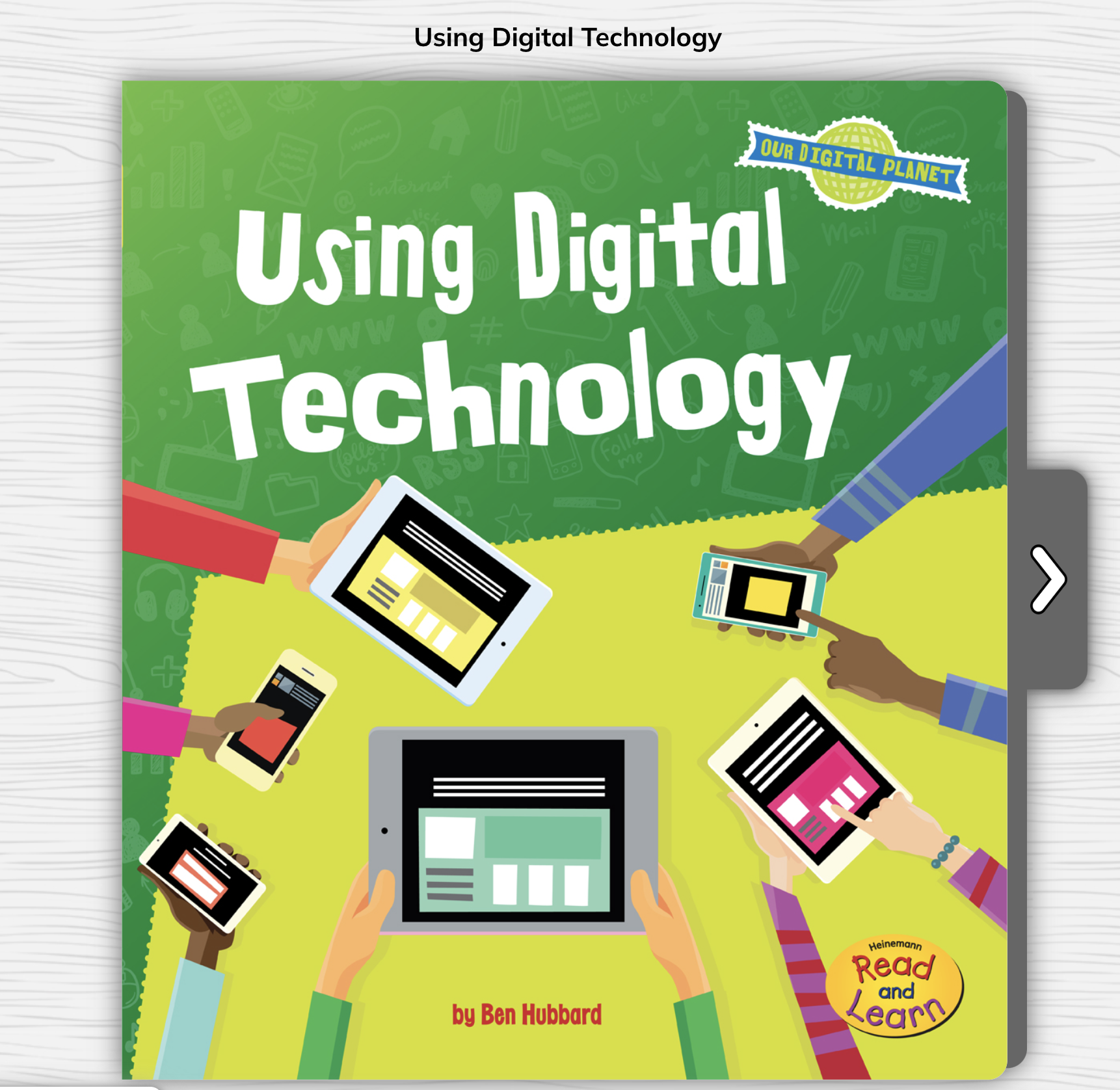
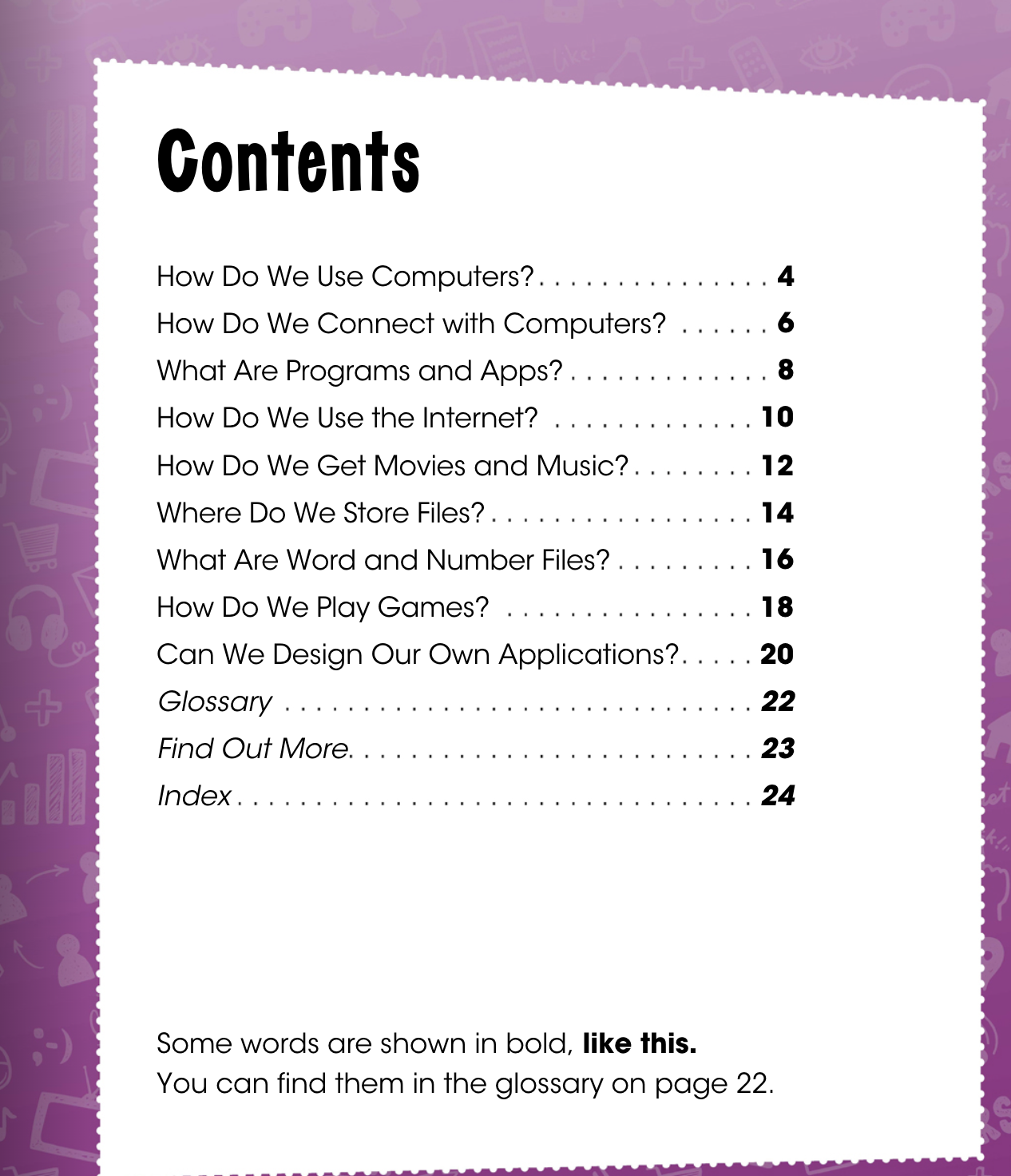
With ebooks available to take students through lessons on important topics related to the use of technology, teachers can guide students through activities to help them develop their skills and understand the power of the technology they have access to.

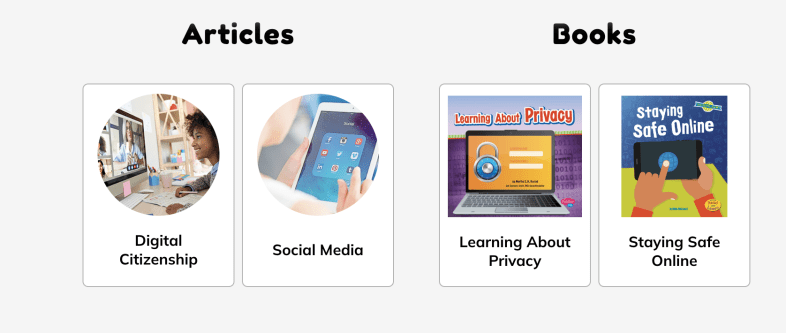
Digital literacy also teaches students about the importance of online safety, privacy, and the responsible use of technology. Students need to understand the potential risks and know how to protect themselves when using technology and interacting online. With resources available on PebbleGo focused on topics like cyberbullying, online privacy, and internet safety, students can explore on their own and understand the importance of these topics We want students to know how to stay safe online and there are great books available to read with students that can spark classroom discussions and a positive learning community.

It is important to engage students in conversations about real-world online situations, and support and guide them in making safe and ethical choices. There are articles and books available to help students learn about these topics and then create a presentation to teach classmates or make a poster to display in the classroom.

Students can explore articles on topics such as digital citizenship or read books to learn more about privacy and how to keep themselves safe. PebbleGo offers interactive materials that make learning fun for students!

Here are five creative ideas for using PebbleGo and PebbleGo Create to build digital citizenship and digital literacy skills:

  • Digital Citizenship Pledge: Once students learn about digital citizenship, they can then create digital citizenship pledges using PebbleGo Create. With all of the fantastic choices, students can create visually engaging infographics that share their commitment to responsible online behavior, respecting others, and being kind online. We can then display their PSAs in the classroom or on the school’s website to promote a positive digital environment.

Digital literacy and digital citizenship are essential components that will best equip students with the skills they need to navigate the digital world responsibly, ethically, and safely. Educators have valuable resources from PebbleGo that will help students by providing a structured and engaging platform for teaching these crucial skills. PebbleGo Create allows students to take what they have learned and illustrate their understanding and ideas through a variety of media features in authentic and meaningful ways.

About the Author

Rachelle Dené Poth is an edtech consultant, presenter, attorney, author, and teacher. Rachelle teaches Spanish and STEAM: What’s Next in Emerging Technology at Riverview High School in Oakmont, PA. Rachelle has a Juris Doctor degree from Duquesne University School of Law and a Master’s in Instructional Technology. She is a Consultant and Speaker, owner of ThriveinEDU LLC Consulting. She is an ISTE Certified Educator and currently serves as the past -president of the ISTE Teacher Education Network and on the Leadership team of the Mobile Learning Network. At ISTE19, she received the Making IT Happen Award and a Presidential Gold Award for volunteer service to education. She is also a Buncee Ambassador, Nearpod PioNear, and Microsoft Innovative Educator Expert.

Rachelle is the author of seven books, “In Other Words: Quotes That Push Our Thinking,” “Unconventional Ways to Thrive in EDU” (EduMatch), and “The Future is Now: Looking Back to Move Ahead,” Rachelle Dene’s latest book is with ISTE “Chart A New Course: A Guide to Teaching Essential Skills for Tomorrow’s World.” True Story: Lessons That One Kid Taught Us, Your World Language Classroom: Strategies for In-Person and Digital Instruction and Things I Wish […] Knew.

Rachelle is a blogger for Edutopia, Defined Learning, Getting Smart, and NEO LMS.

Rachelle provides professional development and keynotes on topics including artificial intelligence, augmented and virtual reality, emerging technologies, SEL, and STEM.

Follow Rachelle on Twitter @Rdene915 and on Instagram @Rdene915. Rachelle has a podcast, ThriveinEDU https://anchor.fm/rdene915.

Data Science for Everyone

Updated post from an earlier post for Getting Smart

As the world continues to change, educators need to stay up to date with all of the emerging technologies to best understand the essential skills that students need for whatever lies ahead in the future. To do so, we have to find the most beneficial resources to bring into the classroom regardless of the content area or grade level being taught.

With the rise in the use of artificial intelligence, augmented and virtual reality, blockchain, NFTS, the metaverse, and web3, the world of work will look very different. Students need to develop a variety of skills, especially in STEM-related fields and in areas such as computational thinking or data science. Students need to be data literate and have opportunities to develop their skills in all grade levels.

What does being data literate mean?

Let’s first look at the difference between data science and data literacy. When we take the information that we get from data and interpret it, look for patterns, this is data science. Educators inform instruction based on assessments given in classrooms. The data we receive from students helps us understand where they are in their learning journey and helps us to plan our next steps. Data science skills are an essential component of life and work.

​While we hope that students will become more interested in data science because of the increase in jobs available, the focus needs to be on providing each student with an opportunity to learn. It has been predicted by the Bureau of Labor Statistics that the number of statistician jobs will increase by almost 34% from 2016 to 2026.

Being data literate means that you understand what the data represents, know how to process it, and use it to inform your next steps and make decisions. ​While it is a technical skill, it is how we analyze, visualize, interpret, and even communicate what we are taking away from the data.

How do we prepare?

More schools are starting to offer courses in data science to students in grades K through 12. Some are providing a full-year course or an individual lesson or unit of study for courses. Colleges have data science degrees and some majors require students to demonstrate competency in data science before taking certain courses.

In some schools, data science becomes part of the math curriculum or is offered as an elective. There are schools that may require it for graduation. There are 65 schools in the United States, in which the first full-year course called Introduction to Data Science is now being taught. These offerings are highly beneficial but may not be an option due to budgeting or lack of staff. A solution is for teachers to incorporate data literacy into different lessons or as a standalone learning experience during the year. Whether students are in elementary, middle or high school, there are resources available.

Data Science 4 Everyone

Fortunately, educators have access to a variety of resources to make it easier and less time consuming to bring data science to the classroom. Learn about the Data Science 4 Everyone (DS4E) Coalition that has been created to help students in grades K through 12 build the necessary skills in data literacy. The Data Science 4 Everyone was created by the University of Chicago Center for Radical Innovation for Social Change (RISC). In addition to the resources provided by DS4E, the RISC launched Algo-Rhythmas a gamified way for students to learn about data science. Students in grades 4 through 6 can learn about the basics of data science through music! There are multiple levels and the player has to analyze the different music types to find the right data set. It is fun for educators too!

Knowledge and skills in data science will lead to more opportunities in education and careers in the future. DS4E provides teachers with lessons for use with students in grades K through 12

Thinking about colleges, having all students take a course in data science would be something that could benefit them across all sectors of work and in terms of education, with pre-service teachers, helping them to become more diligent with benefit them in the work that they do.

In addition to DS4E, here are more options to explore for learning about data science.

  • ASU Crash Course Data Literacy offers a 15-video series for educators and students to learn about data literacy. It helps students to build their skills while promoting more student independence in learning as they work through and learn the basics and continue all the way to advanced concepts and interpreting data.
  • Khan Academy offers online courses that include practice activities and videos. These can be used with younger students all the way up through high school and college. Relevant activities can be found by searching for a specific topic area related to data science and the interpretation of data.
  • MOOCS: There are paid options through some of the MOOCs available such as Coursera, EdX. Udacity, and Udemy. Some of these courses are provided from institutions such as Harvard, Johns Hopkins and MIT. Depending on exactly what an educator wants to learn, or in some cases, another option for older students considering majors in data science or related fields. Taking these courses can also be used as a model for younger students.

Get started

With DS4E, there are ready-to-use presentations that can be used to show the importance of data science and why it needs to be added to the K through 12 curriculum in our schools. There is also an advocacy pack available for educators to share with their school administrators.
It can be uncomfortable for teachers who feel like they don’t have the expertise needed to teach a concept, however there are enough resources available that make it easier for educators to get started.

About Rachelle

Follow Rachelle on Twitter @Rdene915 and on Instagram @Rdene915. Rachelle has a podcast, ThriveinEDU available at https://anchor.fm/rdene915.

Looking for PD for your school or keynotes for your conference? I provide in-person and virtual training on the following topics. If you want to learn more about and explore AI and ChatGPT, contact me to schedule! Rdene915@gmail.com or use the Book Me form on my website. bit.ly/thriveineduPD

**Interested in writing a guest blog or submitting a sponsored post for my site? Would love to share your ideas! Submit your post here. Looking for a new book to read? Find these available at bit.ly/Pothbooks

Dictation To The Rescue!

Guest post laura steinbrink, posted in education

So it has been a hot minute since my last post, but I have been working on several things, grading tons of AP Language and Composition and PreAP ELA 10 essays and trying my best to be present for my son’s senior year of fall baseball, basketball, spring baseball, and all things in between, while handling new responsibilities at school as well. However, for the December Microsoft Innovator Educator Expert (MIEE) Central Region Community Call, I was able to share some of my ideas for how the powerful Microsoft Word dictation tool can be used in the classroom. This post also includes using Google Docs.

THE MIST IS SLOWLY LIFTING

I created a dictation activity choice board, so for my blog, I’ll expand on each activity and then include the choice board in the last post. For my first dictation activity, I chose Dictation to the Rescue. For a basic tutorial on using the Microsoft Word dictation tool, check out my Dictation tools in MS Word video. There are plenty of tutorials out there for Word and Docs, but I did make this one for the MIEE call. Now on to the main event.

THE SOUND OF LIFE MISPLACED YOUR MIND

This activity is a great entrance or exit ticket or a great pause midway through a lesson to ensure students understand the presented content. If you have language learners or young learners, then this has some additional valuable outcomes. Practice these tools in a fun or non-penalty / non-grade-based way before using them with content.

YOU’RE SITTING, SPELLBOUND THRU OUT TIME

In Microsoft Word or Google Docs, have students:

  1. Type or copy and paste into a new document a problem they are struggling with from today’s (or a previous) lesson, something they still aren’t sure how to do, or something they got wrong in the activity.
  2. Dictate their explanation below the problem of what they were thinking as they worked through that part of the assignment (in Microsoft Word, select the primary language spoken; in Google Docs, under Tools, select “voice typing” and then the students dictate in their primary language and then translate the page using the translate tool in Docs). Students should include what questions they still have, and why they think they got it wrong. Getting students to explain their thinking is very revealing for understanding how to help them make connections.
  3. Make corrections to any translations used, but all native language responses should be changed to English and then proofread and corrected.
  4. Pair up and read each other’s areas of struggle. Carefully structure the pairs or allow students (depending on age) to choose who they feel comfortable sharing with for this part. It takes trust to share struggles with someone, so build this in slowly, and listen to student input on how to adapt it for your class. This part can potentially develop a healthy academic risk-taking classroom climate, or destroy what trusting class climate you already have, depending on how you approach and monitor this in progress.
  5. Offer suggestions to their partner or show their partner how to respond to the prompt.
  6. Turn in their dictations so that you can see where communication of content or understanding of concepts may need to be corrected or improved.

I HOPE THAT YOU REMEMBER WHAT YOU FIND

Keep in mind that you as the teacher need to bring the energy needed to help students see the value in academic risk-taking. Your excitement or passion for the activity and content will greatly impact the result, either positively or negatively, so use your power wisely and have fun. Enjoy the process. Model for students that learning is a journey and an experience that must be lived. It’s never a one-and-done.

HEADINGS ARE PARTIAL LYRICS FROM THE SONG, OF A LIFETIME BY JOURNEY.

About Rachelle

Follow Rachelle on Twitter (X) @Rdene915 and on Instagram @Rdene915. Rachelle has a podcast, ThriveinEDU available at https://anchor.fm/rdene915.

Looking for PD for your school or keynotes for your conference? I provide in-person and virtual training on the following topics. If you want to learn more about and explore AI and ChatGPT, contact me to schedule! Rdene915@gmail.com or use the Book Me form on my website. bit.ly/thriveineduPD

**Interested in writing a guest blog or submitting a sponsored post for my site? Would love to share your ideas! Submit your post here. Looking for a new book to read? Find these available at bit.ly/Pothbooks

CoSpaces Edu for Out of This World Learning!

In collaboration with CoSpaces EDU

The start of a new school year or calendar year is always a great time to explore some new ideas, especially with all of the amazing tools and technologies available to us. There are many exciting options available to educators and students to choose from, and sometimes, making the choice is a challenge. Personally, one of my favorites is bringing augmented and virtual reality into my classroom through CoSpaces Edu.

Initially, I used CoSpaces in my STEAM emerging technology course for several years, having students work on a variety of projects in my class and for some cross-curricular collaboration. One day, I was challenged by a few of my students in a Spanish II course who had seen the projects being created, and they wondered why they were not able to do something similar. I was speechless, and I didn’t have an answer for them. Honestly, I had not thought about bringing AR/VR into my Spanish classes. Fortunately, I knew about all of the benefits and great features of CoSpaces that foster collaboration, creativity, and many other essential skills. I also loved that students have the ability to create independently or to work together on the same project from wherever they are. So I thought to myself, why not?

If you are not familiar with CoSpaces Edu, it is a truly versatile, user-friendly platform that enables students and teachers to create virtual spaces full of animals, people, objects, and more. It is a great way to focus on developing many skills in schools, from SEL to STEAM and more. It is also a great option for helping students develop an interest in STEM, especially coding, a highly in-demand skill.

From coding and language learning to STEAM and collaboration, CoSpaces Edu offers so many ways for students (and teachers, we need to learn, too!) to create their own AR and VR experiences. An alternative to traditional tools that might be used for digital storytelling, explaining and exploring complex topics, or for creating virtual field trips through a moment in history, for example.

So, with all of the options available, why choose CoSpaces Edu? It has been a game-changer in my classroom. It provides an intuitive, user-friendly platform that educators, students, and families supporting students can easily navigate. It offers a different way to share and show learning as students can create, explore, and interact with 3D virtual worlds, which not only engages students but also provides more for different student interests. It also provides lesson plans and activity ideas for teachers to explore!

Most importantly, CoSpaces Edu encourages creativity, collaboration, and problem-solving — skills that are essential for today’s learners. It also gives students the chance to learn about coding, which is not something just for those studying computer science or teaching a STEM-related course. The best part of CoSpaces Edu is that it introduces students to the basics of coding in a truly engaging and meaningful way. As students explore independently while designing their virtual worlds, they learn how to create by selecting and manipulating different characters and objects and can start coding either with block-based coding or a scripting language like JavaScript.

Over the years, I have seen hesitancy when it comes to coding, and with CoSpaces, students build confidence as they create and enjoy working together with classmates in their virtual space. The variety of options available and with coding helps students understand what can be abstract concepts, develop logical thinking, and hopefully and ideally, lead to the development of an interest in computer science!

5 ideas to try in 2024!

  1. Take a tour!  First, When I get started in my own classroom with my students, I always give them time to explore all of the different projects that are available in the gallery. What types of projects do they see, which ones do they like, and what might they like to create? I think it’s a good way to get them thinking about the different possibilities and also give them time to explore on their own and see what clicks with them. So when I say take a tour, I tell them to just choose a topic, whether it’s STEM or if they see some games to play, and then I ask them to share with their classmates what they found, why they liked it, and any other ideas that they come up with for what they could do that is similar or how they would make it different or improve it. But it’s a fun way to get students talking and brainstorming to help them prepare to make their own projects. 

2) About Me: I love using the templates or giving students the option to create their own to design an About Me space. CoSpaces offers a great template to get students started and comfortable with learning how to navigate, change text, add, and animate characters by using this as a starter. 

It leads to more excitement and creativity and is also a fantastic way to learn about our students and for them to learn about each other.  

3) Interactive Storytelling: My students loved exploring the different projects in the gallery, and one way for students to use CoSpaces is to have them create an interactive experience. They can retell a story with a different ending or summarize something they have learned in class. To demonstrate, they can then include a variety of characters and other props to bring it to life. By diving into coding, they can really make it an interactive experience with animated characters and animals! Students can even create scenarios where they script and act out dialogues, recording their voices directly in the space. Also, give students the option to create on the Merge Cube, which makes interactive storytelling a real hands-on, fun learning experience!

4) Language Learning: A complete game changer for that Spanish class that pushed me to realize that I needed to bring in some new opportunities for them. Through a more immersive and collaborative learning experience with classmates, what a difference it made for language learning, student engagement, and increasing motivation! CoSpaces Edu offered all of that, and it was so much fun for them and for me! I was nervous at first, but it was a risk worth taking and one that paid off for them and their retention of the language.  It also led to building relationships with classmates as students worked together to create their projects. Students had a different and more authentic way to practice vocabulary, build grammar skills, and engage in conversation in the virtual environment. And, they retained the content, which typically is a bit challenging because of the grammar, far beyond prior years!

5) Collaborate: Think about the grade level you teach and the content area. There are many ways to incorporate projects for students to create virtual models, or design prototypes, or bring a story to life! When CoSpaces Edu added the ability for students to work in groups, what a difference that made! Fostering collaboration is so important as we prepare students for the future. The ability to work effectively in teams is one of the most in-demand skills on the Job Skills Outlook from the World Economic Forum

With the collaborative features of CoSpaces Edu, multiple students can work on the same project from different devices and from wherever they are!  Not only can they learn about augmented and virtual reality and build essential skills, but it also boosts digital citizenship skills in the process.  For collaborating, we can teach them how to manage a group project, assign roles, and problem-solve. 

One of my other favorites is for a class project where all students are involved in a complex project where each student is responsible for a part of the virtual world. Think of a topic or a theme. Each student can create their space and then design one comprehensive experience that everyone can learn from and reinforce their content area skills through.

As educators, our primary goal is to prepare students for the future. CoSpaces Edu is not just another tech tool; it’s a platform that fosters the essential skills needed in the 21st century. It encourages creativity, critical thinking, collaboration, and digital literacy. By integrating CoSpaces Edu into your curriculum, you’re enhancing your students’ learning experiences and equipping them with the skills to thrive in an increasingly digital world. And, for extra fun, check out the goodies available, such as classroom posters, badges, and more! Use my code: COSRACHELLED or COSPromoRDP24.

About the Author:

Rachelle Dené is a Spanish and STEAM: What’s Next in Emerging Technology Teacher at Riverview High School in Oakmont, PA. Rachelle is also an attorney with a Juris Doctor degree from Duquesne University School of Law and a Master’s in Instructional Technology. Rachelle is an ISTE-certified educator and community leader and served as president of the ISTE Teacher Education Network. She was named one of 30 12 IT Influencers to follow in 2021 and one of 150 Women Global EdTech Thought Leaders in 2022.

She is the author of eight books including ‘In Other Words: Quotes That Push Our Thinking,” “Unconventional Ways to Thrive in EDU,” “The Future is Now: Looking Back to Move Ahead,” “Chart A New Course: A Guide to Teaching Essential Skills for Tomorrow’s World, “True Story: Lessons That One Kid Taught Us,” and her newest book “Things I Wish […] Knew” is now available at bit.ly/thingsiwishedu.

Contact Rachelle to schedule sessions about Artificial Intelligence, Coding, AR/VR, and more for your school or event! Submit the Contact Form.

Follow Rachelle on Twitter(X) and Instagram at @Rdene915

**Interested in writing a guest blog for my site? Would love to share your ideas! Submit your post here. Looking for a new book to read? Find these available at bit.ly/Pothbooks

************ Also check out my THRIVEinEDU Podcast Here!

Join my show on THRIVEinEDU on Facebook. Join the group here