Building Skills with App Smashing: Buncee, Padlet and now new Buncee Boards!!

Buncee

There are a lot of great digital tools that promote student creativity and choice and give students an opportunity to learn about each other in the process. Two tools that have worked well together for this purpose are Buncee and Padlet. Using these together promotes student creativity, provides more authentic and meaningful ways for students to share backgrounds and introduce themselves to classmates. It builds digital citizenship and technology skills by teaching students how to interact in a virtual space. It promotes communication and collaboration through the sharing of projects and opens the ability to engage in conversation through the commenting feature on Padlet.


When students start the school year, learning about classroom procedures and becoming familiar with their peers are important activities. Teachers go about these procedures in different ways, some even choosing to dive right into the content material and to open up opportunities for these typical procedures on a daily basis. The past few years I have tried to get students to interact more at the start of the year, share who they are, their experiences, their interests and have them set some goals as well. I try to do so with variety of icebreakers or other activities like surveys or classroom games to get the conversations started. However, this year I plan to have students share their information by creating a visual representation. Students will be able to choose from the library of thousands of images, props, icons, animations and more in Buncee to tell their story. The requirement will be that they use very little in terms of text and rather choose the images, animations and even videos to tell their story. I also hope that it creates a way for students to share some learning goals they may have or things they wish their teacher knew.

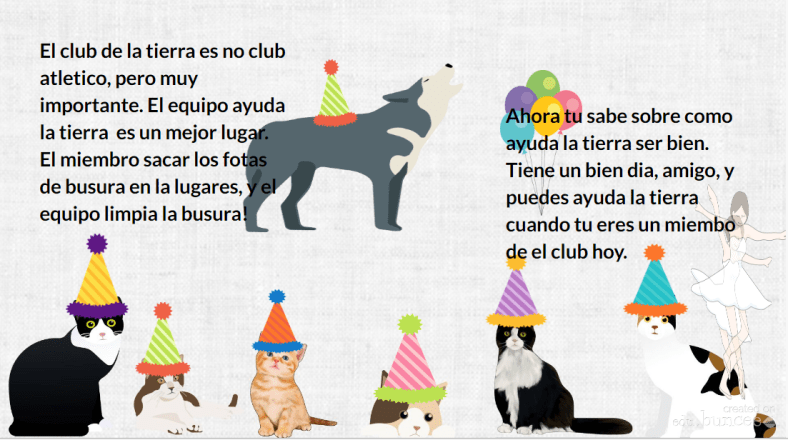
BunceeJenna

Before the advancements in technology and the increase in types and number of tools available, sharing these creations required either printing or sending through email or storing on a flash drive. But with collaborative tools such as Padlet, it has been very simple to not only share the information quickly but to embed a Buncee project right onto the Padlet so it is fully visible to everyone instantly. By doing this, students have gained new knowledge of technology, developed peer relationships, teachers learn about the students, the students will learn about each other, and it will start the conversations going. By using imagery rather than so many words, students will be able to see some commonalities in the classroom which will help to drive the development of a classroom culture.

Besides the learning potential in this, I think it is a lot of fun and highly engaging for students to create and to see what their classmates have created. I would not be setting a good example if I myself did not create a Buncee and add it into the group. Students need to learn about their teachers as much as the teachers need to learn about the students. I’ve heard the quote and read the quote of Teddy Roosevelt many times “Children do not care how much you know until they know how much you care.”  This couldn’t be truer, so we need to learn about our students and show that we care about them and their success.

BunceeSpain

Combining Buncee and Padlet

Throughout this app smashing (when two tools are used in conjunction to create and present a product), students enhance their skills in many areas. In terms of the ISTE Student Standards, all seven are addressed in completing these activities. The main one addressed is 6, Creative Communicator. Students have a choice and their voice is represented in creating their Buncee. But in the process of creating, they become Global Collaborators because by posting it on Padlet, others can view their work and comment. They are Empowered Learners because they have choice and voice in their learning experiences. Computational Thinkers because they are deciding how to present the information in the Buncee, Innovative designers choosing from the thousands of features available in the library to put into their own creation. Digital Citizens because they are learning to respect others’ work and to publish and post responsibly. For some students, this will be the first time they are really interacting with digital tools and so it will be perhaps a big learning curve. However, everyone will be doing the same thing and there will be comfort in this which will help student confidence to increase. I promote student empowerment and it will be a good way to set up the classroom culture and to help students gain some new skills moving forward.

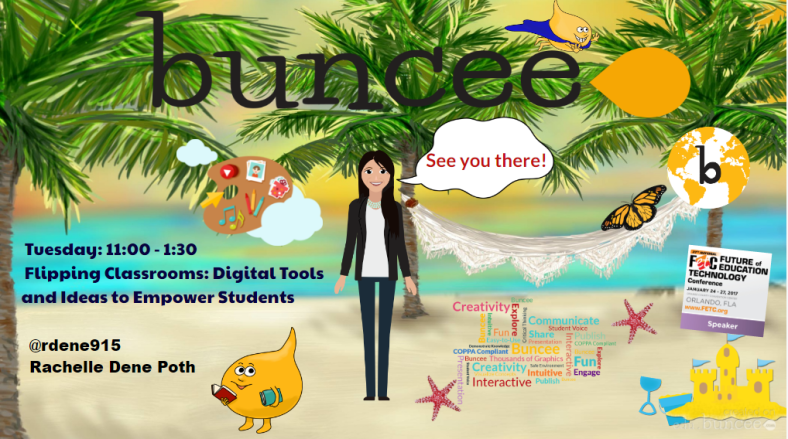
FETCpresentation

New Buncee Boards! Announced today!

Today is an exciting day for Buncee and the many users of Buncee. The newest feature, Buncee boards, provide a great way to gather resources in one place, open up communication and collaboration, and share ideas with others in and out of the classroom. There are a lot of great ideas for using #BunceeBoards in the classroom, so be sure to check out this post: 10 ways to use Buncee Boards to see some of the ways Buncee Boards can be used in the classroom. There are a lof of great ways to use these in the classroom, and even better, students can have fun sharing, commenting and posting reactions to the boards.

There are many possibilities for using Buncee in the classroom and the nice thing about it, the best thing about it, is that it promotes choice and authentic creations for students and teachers and anyone. It is a skill that students can learn and can share with their families which will open up more learning opportunities beyond the school setting and move it into the community and beyond.


Storytelling with Kidblog

Previously Published on MARCH 9, 2017   Kidblog

hands-hand-book-readingBlogging helps develop critical skills students need. In addition to working on necessary skills for communication and mastering grammar, blogging boosts creativity, increases confidence in expressing thoughts and ideas, and encourages authenticity when students write with purpose. Blogging for increased social interaction in the classroom will also lead to a more positive learning environment and help students develop critical peer relationships and collaboration skills.

The prompts

I have focused on transforming my classroom from “teacher centered” to “student-centered” and, as a result, created a student-driven learning environment. Moving the direction of your classroom in this way can help students emerge from learners to leaders and become more aware of their strengths and weaknesses in writing. Writing prompts are often discouraged in blogging – hindering student creativity. However, there are ways to design prompts that increase student engagement, lead to more authentic and meaningful learning, and provide an opportunity for students to be in charge of their learning.

It is important to offer a varietyof prompts to reinforce student choice and voice in the classroom. Additionally, prompts that include a picture lead to a variety of creative and authentic responses, while also giving students ownership in learning. Not to mention, it is a fun way to practice their writing skills.

Something new I tried this year, in an effort to open up more options for student choice and authentic and meaningful learning, was to design a “let’s tell a story” prompt. My goal was to help students build their vocabulary and refine their writing skills by learning and applying new words outside of our textbook chapter theme. To do this, students in Spanish II read a short Spanish book and while reading, they were tasked with creating a list of unfamiliar vocabulary words in each chapter. These lists would become their personal “dictionary” of (ideally) 50 – 60 words. I wanted them to select words that they did not understand and incorporate these words within their stories. This provided an authentic method for the students to create with the language and practice their writing skills.

Co-creating a story

I decided to have students participate in writing a collaborative story. Using a theme similar to the reader, which was a story involving a student who solved a crime and helped to capture a thief, each student was to select a certain number of their words, and create a story of their own. Once a story had been created, we selected another student to continue the story using different words from their vocabulary “bank”. In the process, I would read each of the posts, provide feedback and keep my own lists of some of the most commonly selected words, so that I could later use these additional words for building vocabulary.

This was a fun way for students to collaborate with their peers and make learning more meaningful through their own choice and voice. It enabled students to work together, to provide support and to keep each other focused on the writing task. After all, collaborative skills are so important, especially for building vital classroom relationships and social interactions.

Overall, this activity was an engaging way for students to practice the language, increase opportunities to show their language skills, all while being the main driver in their learning. Giving students the chance to demonstrate what they know, in their own way, amplifies their learning and connects them with the subject content in a more personalized, meaningful way.

Kidblog

3 Ways to Implement Blended Learning In The Classroom


3 Quick Ways to Implement Blended Learning In The Classroom

Best practices for blending or flipping your classroom continue to be topics of discussion in education today. Much of the discussion focuses on finding clear definitions of what these terms mean and the benefit to classrooms.

There are many resources and ways to educate yourself on this topic available including a diverse selection of books and blogs (such as the book Blended by Michael B. Horn and Heather Staker, and of course the Getting Smart blog) related to the topic, reaching out to colleagues or members of your PLN or attending conferences such as FETC, ISTE, state edtech conferences, edcamps and other professional development experiences.

All of these are great for finding examples, vignettes, templates, suggested tools and ideas. But even with all of these options, sometimes it is more valuable to take a risk and try something out on your own. The outcomes will not always be the same for each teacher, classroom or student, but it’s at least worth a try.

There are different models for implementing blended learning, and the method used will vary depending on your classroom. I recommend starting with one method–if you see positive effects, that you have more time to collaborate in class and your students are more engaged then continue. If not, then use this opportunity as a way to learn more about your students and their needs. As teachers, we need to constantly reflect on our methods and encourage self-assessment with our students, all part of learning and growing together. Getting started can take some risk and exploration, and definitely time.

Here are some different ways to use technology to “blend” or “flip” learning that in my experience have worked well. These tools can offer innovative or creative learning methods in your classroom, opening up the time and space for where and when the learning occurs.

1. Flipping and Blending with Videos

In the past when I heard “flipped classroom” I thought that meant simply assigning a video for students to watch. It can be, as it was originally considered the traditional way of flipping the classroom, but there has to be follow-up, accountability and more than just simply assigning a video. How will we know what the students gained from the experience?

The benefit of having students watch a video outside of class is that it reserves the class time for discussion and peer collaboration, and moves the teacher to more of a facilitator in the classroom. There are video tools such as EDpuzzle and PlayPosit, through which students interact with the video.

By responding to questions throughout, they are held accountable for the material and can show what they are learning. The teacher has instant feedback and can better understand how the students are learning and provide more personalized instruction. Either of these tools are great for the teacher to create lessons, but also provide the opportunity for students to create lessons that can be shared with other students.

In my experience, these tools have both provided a lot of authentic learning, problem-solving, critical thinking and collaboration. More importantly, they create an opportunity for students to move from learners to leaders, and from consumers to creators in the classroom. This is one of our main goals as teachers–to provide opportunities which empower students to take more control and drive their own learning. These leadership opportunities also help the students to feel valued because of the work that they are doing. There are sample lessons or “bulbs” available, so try one of from the library, and see how it works in your classroom.

2. Game Based Learning and “Practice” as Homework Alternatives

Perhaps you want students to simply play a game or have some practice beyond the school day. There are lots of options available, some of which enable students to create and share their games as well.

A few of these that you are probably familiar with are Kahoot, Quizizz and Quizlet. Creating a game with any of these three apps is simple. There are many public games and Quizlet flashcards available to choose from, and it is simple to create your own or for students to create something to share with the class. You can use these to differentiate homework and have students create something more personalized and beneficial for their own learning, and then share these new resources with other students and classes.

It’s another great opportunity to understand student needs because of the types of questions they design and the vocabulary they choose to include. Another bonus is that using something like Quizizz means students can complete it anywhere. Have you tried these  three? Give Gimkit a go. Created by a high school student, this is a game that students enjoy, especially because they can level up, use multipliers and really practice the content with the repetitive questions that help them to build their skills.

3. Discussion Beyond the School Day and Space

There are tools available for having students brainstorm, discuss topics or write reflections which can be accessed at any time and from any place.  For example, Padlet is a “virtual wall” where teachers can post discussion questions, ask students to brainstorm, post project links and more. It is a quick and easy way to connect students and expand where and when learning occurs. Take the posts and use them as discussion starters in the next class.

Synth is great for having students create or respond to a podcast. The idea is that students can do some of these activities outside of the classroom period, and teachers can create prompts which provide opportunities to engage students with their peers in a more comfortable way.

Even though all of these involve technology at some level, they are interactive tools to engage students, to expand and “flatten the walls” of the classroom and offer students an opportunity to do more than just sit and learn; to become more actively involved, giving them a voice and choice, through more authentic learning.

By giving the students a chance to do more than absorb information, but instead to create, design and think critically, we not only give them the knowledge to be successful, we encourage them to create their own path to success. And hopefully, in the process, they learn to better self-assess and reflect, both of which are critical skills they’ll need for success in school and in their careers.


10 EdTech Tools for Encouraging Classroom Collaboration

Thank you Getting Smart for the opportunity to be a Guest Author for this post.

10 EdTech Tools for Encouraging Classroom Collaboration

By Rachelle Dene Poth

Today’s technology offers so many options for educators and students that deciding on where to begin can be overwhelming. To get started, think about one new approach that could be the catalyst for positive change in your classroom. In looking at your learning environment, what could benefit your students the most?

How do you find tools to help meet your needs? Resources are everywhere: books, blogs, social media like Twitter chats, Voxer groups, your PLN, or even conferences, EdCamps and similar professional development opportunities. But even with all of these resources available, it still comes down to taking a risk and trying something new.

Here are some helpful and versatile technology tools to easily and quickly integrate into your classroom and help meet your needs.

Discussion Tools: Get Them Talking

Teachers need to hear from students, and we know that asking questions or calling on students to discuss a topic can often make them nervous. When students, or anyone, develop that feeling of “being on the spot”, it can become more difficult to encourage students to share what they are thinking, what they are feeling and what their true opinions are. This is where digital tools can provide security and opportunities for students to express themselves. Technology has a true purpose. Students still need to develop an ability and gain confidence to speak in class, but these tools can help by providing a comfortable way for students to develop their voice and express themselves.

Depending on the type of question or discussion format you want for your classroom, there are many tools available that can help.

  1. SurveyMonkey is a good way to ask a variety of questions, find out what students are thinking, use it for a quick formative assessment, and many other possibilities. I have used it to find out how students prepared for tests, what areas they need help with, and even for voting for club officers and planning trips. You have the results quickly and can provide feedback instantly, to plan your next steps in class. It can be a different way to find out about your students and their needs.
  2. TodaysMeet is a backchannel tool that can be used in or out of class, as a way for students to contribute to a discussion or ask questions. It can also be used to provide “office hours” online, for students to ask questions beyond the school day. There are many possible uses for this tool, and setting it up is easy.
  3. GoSoapBox is a response tool that can be used to ask a variety of questions without students having to create accounts. Students simply need an “event code” provided by the teacher to access the activities available. GoSoapBox can be used for polls, discussion questions, quizzes and more, and provides a fast way to assess students or to simply learn more about them and their thoughts.
  4. Recap is a video response tool, where students can respond to a prompt and all responses are compiled into a “daily reel” for teachers to view and provide feedback. Students can respond from anywhere and feel comfortable in sharing their thoughts using this tool.

These are just four of the many options—sometimes it just takes a bit of research. Asking the students for new ways to use the tools you have already been using in class can also be helpful.

Communication Through Collaboration

There are many options which promote student collaboration and enhance writing skills and student voice.

5) Blogging: Through blogging, teachers can provide support for students and help them to gain confidence in writing and speaking. We have used Kidblog to complete many writing tasks and creative writing assignments.

6) Wikispaces: A Wiki has worked really well in our classes for having students collaborate on a topic, create a discussion page, and set it up to inform on a topic, to list just a few examples. We created a wiki on Spanish art and also created our own travel agency.

7) Padlet: Padlet is a “virtual wall” which promotes collaboration, communication, creativity and more because of its versatility. Students can write a response to a discussion question, add resources for a collaborative class project, work in small groups, use it for brainstorming or connect with other students and classrooms throughout the world.

Using digital tools in this way is great because the discussions don’t have to end when class does. These tools give ways to get students talking, share their ideas, so that we can help them grow.

Creating presentations and telling a story

A few options for having students present information in a visual way with options for multimedia include the following:

8) Buncee is a web based tool that can be used for creating presentations, interactive lessons and more, with many options for including different characters, fonts, animations, video and more.

9) Piktochart is a tool for creating infographics, social media flyers, engaging presentations and more. Students have created menus, self-descriptions, movie and tv advertisements, recipe presentations and much more.

10) Visme is a “drag and drop” tool that is easy to use for creating infographics, reports, different presentations and more. It has a library full of images, charts and more, making it easy for users to create exactly what they need.

What are the benefits of these tools?

Each of these tools promote more personalized and meaningful learning for students. These tools can be used to enhance, amplify and facilitate deeper and more authentic learning . Using technology just for the sake of using it doesn’t make sense. But using it to help students find their voice, learn what they want to do, what they can do and what they need help with, does makes sense. Purpose.

For more, see:

Rachelle Dene Poth is a Foreign Language and STEAM Teacher at Riverview Junior Senior High in Oakmont, PA. Follow her on Twitter at @rdene915.

Quizizz and ZipQuiz: Fun ways to learn!


Ever since I had the opportunity to talk to the creators of Quizizz in January of 2016, I have been fascinated by how hard they work and appreciate how active they are in continuing to seek feedback from educators.
Quizizz began in 2015, the idea of Ankit and Deepak, who wanted to create a learning tool that would help students and teachers in the classroom. I remember that first conversation. Hearing their story was so inspiring, knowing how hard they worked to achieve success, not giving up, really emphasizes the importance of working through challenges, setting goals, reflecting and to keep moving forward when you believe in something like they did. They did not give up but rather worked harder. 


I had the chance to meet them face to face at ISTE in Denver last summer. I really enjoyed the conversation and seeing people learning about Quizizz for the first time. We have kept in touch, they send updates and announcements about new features on a regular basis and I have been fortunate enough to be included in some of the testing and conversations. My students even had some fun creating their own memes to be used in our games, imagine their surprise when I added some of theirs into our game the first time. 

ISTE 2017

Photo from #ISTE17 Twitter feed


If you have not yet tried Quizizz, I recommend giving it a try for some additional ways to engage your students in learning and provide more opportunities for practicing the material. In addition to reinforcing the content material, students will definitely have a lot of fun in the process. The benefits of Quizizz are that not only can you play it live in class, it can be assigned for practice and students can redo the Quizizz game for extra practice and preparation whenever they want. Students can start a game and continue later as long as they use the same join code and user name, which makes it really beneficial for having the opportunity to learn anywhere and anytime, regardless of their schedule.

I caught up with the Quizizz team again this year at ISTE in San Antonio, before the conference officially kicked off and I was excited to learn about their newest app which is called ZipQuiz. I definitely enjoyed playing it, although I did not do so well and felt really bad when I was told at what grade level the questions were. I will not share that information now. But you can’t always remember everything, can you? Or maybe there is a way. This is what ZipQuiz can help you do!

So here is how ZipQuiz works:


Quizizz itself is a great way to review in the classroom and even use the games as an assessment for quick feedback for the students and for you to plan your next steps. And now, with the new app ZipQuiz, students are able to continue practicing and even compete against friends and others, on various school subjects whenever and wherever they want.


ZipQuiz is easy to use. Once students have the app, they simply need to select their appropriate grade level from 1st through 12th grade and choose one of the subjects that are currently available: math, science, English, history, geography, or even select the “fun” subject.​ A​ll​ of​ the content ​in ZipQuiz​  is created by teachers  and curated by editors at Quizizz.
Once the subject is selected, a quiz will be generated with a 60 second timer that the students can then start to play. Once the game ends, they have an option to challenge someone to try the same quiz and beat their score.​ Students can play these “s​olo” games and then​ share the​ games​ as challenges to friends​ ​or​ they can play​ in a ​ “Versus” mode where ​they will be pair​ed​ with other students from around the world.​ As for safety, I have been told there is no​t a ​way for students to communicate with each other through the app​ and so it is safe to play.
They showed me a few of the games and some of the features of ZipQuiz. I had a lot of fun playing it and trying to figure out the correct answers was not always easy, as the subjects were ones that I had studied many years ago. I look forward to trying this with my students and sharing it with colleagues and who knows maybe even challenging a few friends myself. But I think I should probably practice first to see if I need to practice on my subject knowledge

Currently it is available as an app for the iOS systems and they are of course working on the Android app, which I am sure will come out soon.

ZipQuiz

​As for Quizizz, some of the other great features ​are that Quizizz integrates with Google classroom, it has great ​d​ata ​t​racking​,​ teachers can look at reports ​and quickly understand which questions were answered incorrectly by all ​students and they can also look at each student’s response​, question by ​question. ​Reports are saved, making it easy to go back in and check the ​results. There is also the option to ​s​end an email to parents with the student’s’ ​results from the ​Quizizz, which is a great way to keep that communication open with parents and share the assessment data.

Quizizzmeme2

Another fun meme, thanks Quizizz 🙂


For added fun, Quizizz also offers memes​,​ question timers, ​music and the ​option of including a l​eaderboard​,​ all of which can be turn​ed​ on or off by the teacher, depending on their preferences.
Not a lot of time to create a game?  No worries. There are thousands of public Quizizz games available, and creating a game is quite easy with the “search” feature. You can quickly create a game by gathering questions and adapting them to your specific content or changing the choices by using the search and pulling questions from the various public games available.


If you are looking for a new tool to start the school year with that provides some different options for learning and fun, try Quizizz. And if you have some fun ways to play or ideas to share, let me know, or contact Quizizz directly. They will be happy to hear from you!

Thanks Quizizz for making the meme for me!

Thanks Quizizz for making the meme for me!

Quizizz1


My takeaways from ISTE 2017 part I: Relationships and Networking

This slideshow requires JavaScript.

Hard to believe that I have been back home almost two weeks since ISTE. The conference seemed to fly by this year and I am still trying to process my thoughts and reflect on what my takeaways are for this experience. I initially get stuck on thinking how do I begin to describe the awesome learning experience of ISTE? The anticipation of such a tremendous event and what it involves can be overwhelming. There are so many benefits of attending ISTE: the opportunity to spend time in the same space with Twitterverse/Twittersphere and Voxer friends, meet up with one’s PLN, to have so many choices for learning opportunities, networking, social events, are just a few of the possibilities. But where to begin and how to find balance? That is always the question.


I’ll admit that as my departure for San Antonio approached, I was full of anticipation and excitement, but also a bit anxious and nervous all mixed up in one.  Without even realizing, I had created quite a busy schedule for myself this year, even though I had planned to set out to have a lot of time to explore.  I simply kept adding things to my schedule, trying to make sure to have time to see everyone and figured I would get a better look at everything, a few days before leaving.  For my personalized professional development, I had not looked at the schedule too much, but I knew of some areas that I really wanted to grow in, and I was excited to connect with my friend Jaime Donally, who I consider to be an expert in AR/VR and many other areas, and definitely wanted to learn from her.

 IMG_20170628_111914745.jpg

I was very excited to connect with the Edumatch family, to finally connect with people I have come to know well over the past year through the Tweet and Talks, Edusnap books and Voxer discussions. We met at a luncheon on Sunday afternoon, celebrated the launch of the Edumatch cookbook and even did some carpool karaoke while heading back in the Uber to catch the Ignite talks. It was great to see Jaime’s and Kerry Gallagher’s Ignites on Sunday afternoon, and hear from so many educators and students about what they were doing in and out of the classroom.

It was an opportunity to reconnect with friends from FETC and meet others face to face, for the first time. For me, as the conference approached, it seemed more about finding time to connect with my friends and making sure to have time for those conversations in person that we don’t often have time for, rather than focusing on sessions and planning my schedule. 

IMG_20170625_133148212.jpg

One part of the ISTE experience that I was thrilled about was the opportunity to present with two of my good friends, Rodney Turner and Mandy Froehlich during the conference. Knowing that we would be sharing our work together and interacting with others was a high point for me. The bonus of having that definite period of time set aside to spend with them, especially after we had such a great time in Orlando at FETC (also with Jaime!). Rodney and I presented at the Mobile Learning Network Megashare on Saturday (which I almost missed because of late flights), and the three of us presented at the Monday poster session and during the ISTE  Teacher Education Network Playground on Wednesday.  It was a really great experience to share with them and I enjoyed learning from them.

This slideshow requires JavaScript.

Fun on the Riverwalk

I am very appreciative of the opportunities I have through being involved with several of the ISTE communities, PAECT, Edumatch, and the chance to meet up with friends and other “PioNears” and “Ambassadors” from some of the different edtech companies that I am involved in. Being able to run into so many friends on the Riverwalk, take some selfies, was phenomenal. The social events and time for networking were the highlights of this year. Starting with Saturday night at the Participate event, there was a lot of time to connect with friends and meet some for the first time F2F. And I am thankful to my PAECT friends for inviting me to have dinner with them, and for their willingness to put up with my shenanigans at times. 

This slideshow requires JavaScript.

The experience this year was quite the change from two years ago when I attended my first ISTE conference in Philadelphia. I knew a few people but the experience then does not compare to the way it was this year. Having made more connections over the past two years, especially through these different ISTE and PAECT learning communities and the group of educators I have met through Edumatch.  Being able to walk and run into friends along the way and be pulled in an entirely different direction was so much fun.  We even ran into some of our friends from Peekapak along the Riverwalk! 

This slideshow requires JavaScript.

Three very different ISTE experiences and I can’t say that I prefer or recommend one over the other, because just like preparing for ISTE, what works best for me will not necessarily work best for somebody else. We each come in with our own expectations and leave with different, unique experiences. I think the common factor is looking back on the relationships and the people that we interacted with. Whether through the connections made in a Voxer group, a Twitter chat or through email, having even a quick moment to interact with those people (and take a selfie) is tremendous. Thank you ISTE!

Next post: Learning opportunities and things to consider

IMG_20170626_205417708.jpg

This slideshow requires JavaScript.

Social Media: Oh goodness…Voxer: Did somebody just say 10-4?

This is the next post in my series about Social Media and the different tools available for learning and connecting. I was wrong about Facebook, Twitter and LinkedIn….and now Voxer. WOW!

I think that this might be one of my favorites, even though it is difficult for me to make any kind of decision when given more than 1 option. But the thing about Voxer is that it enables live communication between anyone and anywhere. It absolutely fascinates me and I am wowed each day by the many ways it can be used.

Why am I such a fan? Well honestly, maybe a part of this is because I had a real set of walkie talkies and was amazed that you could talk into it and somebody, somewhere else could hear and answer you right back.  When I was 13, I remember trying out the set in my parents’ car and talking to someone that ended up living a few streets away.  Michele and I became great friends and it amazes me to this day that I met someone by using the Walkie-Talkie,way back then in 1984. Who knew what the possibilities would be for today, using Voxer, is amazing.

I remember having a set of them sometime in the late 1990’s and using them at the mall, thinking it was the coolest thing ever. (I know, there were probably cell phones, I did not have one yet, they were still in the big bags or attached in cars).

Learning about Voxer

But my first experience with Voxer was becoming involved in a group preparing for ISTE in Denver last summer. How did I find out about this? Ironic moment. You might laugh but it was through a Facebook group. An interesting series of events. Sometimes we question what if? What if I had made a different choice? What if I didn’t go in that direction  and in this case what if I had never created a Facebook account? Still can’t believe that I am asking myself that question.

There are still many things between then and now that would be so different. I would have found less classmates for high school reunions, I wouldn’t know about friends who’ve moved away from or back into the area. Connecting with family and friends, seeing pictures and sharing news would happen a lot less often. So the crazy thing is that the one account I was so hesitant to get, led me to become involved with all of these different social media platforms and build my connections even more. So very wrong I was. 

Adding on Voxer: There was a Facebook group for people attending ISTE 2016, and someone (Rodney Turner, @techyturner) started a Voxer group. I had no clue what it was but I joined it and at the time I was on a basic account, but upgraded to the PRO account, which is nice because if you send a message and you want to recall it, you can. How many times do you wish you could say something over?  Once again, it did not take too long to see the tremendous value in this form of communication as well. Being able to ask a question and have someone answer you immediately, a person who may be on the other side of the world and talking to you live is tremendous. Seeing the green light up that indicates they are talking live is amazing.

Now people might think “well it’s not that much different than talking to somebody on the phone.”  And that is partially true, you are having a conversation or could have a conversation just as you would on the phone, however the difference is if you have a question and you make that phone call, that person may not answer right away, if at all. Being part of a Voxer group, there are many people available to answer instantly while we pose the question. Unlike a phone call, it goes out to many people, leading to many responses and perspectives immediately. 

Some uses

Voxer has been a great platform for leading and participating in a book study, which might sound a little bit different when you think about how traditional book studies occur. It is a great way to connect with others for a book talk. I have been able to connect with so many more educators through Voxer which  has led to more connecting on those other social media platforms, yes Facebook and Twitter and LinkedIn. The ability to listen and learn anywhere at anytime is unbelievable.

With my students, it has been a tremendous way to listen to their PBL ideas and help them brainstorm, for them to ask questions when needed and for them to form their own groups.  They love the capabilities of using Voxer for education and fun!

If you don’t yet have Voxer, try it out. There are so many groups full of conversation, inspiration and motivation and definitely fun! If you want some ideas, let me know.  There are groups for connecting Educators, learning about Snapchat!, Breakouts, LeadupChat and so many more.  Connect with me on Voxer, I am @rdene915


Thanks for reading!voxer

Another social media “risk”: Wrong again

This is the second part of my posts sharing how I was wrong about the value of Social Media for professional learning

So enter Twitter, the “twitterverse”. I was really wrong about this one and as a very reflective person, if I am mistaken, I will readily admit when I am wrong. And I will also take a step back and think about why I was wrong. For Twitter, I had no idea what was out there in the Twitterverse. I really knew nothing about anything related to Twitter.

I have had a Twitter account for probably 10 years, an account that was created only because a family member sent me a link, which required a Twitter account in order to see the post. I used my regular email address (original AOL by the way) and joined Twitter. I think I looked at it a few times for a week and then 5 years went by, never again looking at Twitter.

It wasn’t until the summer of 2014, when I was leading a session at a technology Summit, when someone tweeted about my session, to what they thought was my Twitter account. So I decided to create an account in that username and I have been actively involved in Twitter more or less ever since.

I had the misconception that it was only for celebrities. But I decided to look into it a bit more. I really didn’t know how it worked but I came across a Twitter chat one night and I started to connect with a few people from North Carolina and Tennessee. That was my start toward becoming a more connected educator and seeing the true value in Twitter. I added additional Twitter chats to my weekly activities and looked forward to the interactions with the new friends that I had made.

Shortly before ISTE 2015, I learned about “tweetdeck”. I had no idea what that meant, and I did not ask because I figured that it was something that I should know if I was using Twitter. I think I googled it. Before Tweetdeck, I used one window, with 1 chat and flipped back and forth between each chat window. To say it was a bit difficult at times is an understatement. I decided to try Tweetdeck, during my train ride to ISTE, multitasking by reading my Teach like a Pirate, involved in a Saturday chat with Tweetdeck and amazed at what was happening. It hit me. The power of communication and technology. In and of itself the fact of sitting on a train, reading a book with Wi-Fi access to enable me to use my computer, engage in multiple tasks, communicating with people around the country and world, at any point in the day during the travels. When you stop and think about it, it’s so amazing what we are capable of today. And with these two social media platforms alone, (ones which I adamantly avoided), the possibilities for learning, connecting, and so much more happen instantly anytime and anywhere. But that’s just my view of it and people may not see the value in having accounts with these or may prefer to stay away from social media. And it may not be for everyone, but I’ve learned that you can’t really say that you don’t like something or that you hate something, until you at least give it a try. And you certainly can’t go based on what somebody else says. While I greatly value the opinion of others, and can and have in the past been swayed because of someone else’s opinion, I really try to think about what is best for me. As an educator, I think about what is best for my students. I might love a certain digital tool but if it’s not going to benefit my students,  I won’t just throw it out there and say have fun with it. And that’s what I’m saying about Facebook and Twitter. As a start, either of these would be something that might surprise you in terms of the benefits personally and/or professionally. And again, I admit that I was wrong.  Lessons learned about Facebook and Twitter: Educational value is huge and learning to write concisely is an acquired skill.

12 Tools That Made The Biggest Difference In My Teaching

Posted on TeachThought, January 5, 2017

12 Tools That Made The Biggest Difference In My Teaching This YearRachelle Dene Poth

There are so many digital tools available today to promote student learning in the classroom. The task is in figuring out what you need for your classroom. What could benefit your students the most?

Over the past year, I took as many opportunities to learn as I could, spending time gathering information from reading books and blogs, staying active through social media in Twitter chats, Voxer groups, and by attending many conferences, both physically and virtually. I created long lists of new ideas, new tools, and created new accounts for many digital tools and tried as many as I could.

12 Tools That Made The Biggest Difference In My Teaching This Year

Communication, Collaboration

Technology can help give students a voice, where otherwise they may not be willing to or want to respond, especially within the traditional classroom space.  Here are the tools that changed our classroom this year and why.

1. Recap recap pioneer badge 2017 (1)

A video response tool that can be used for many purposes including formative assessments, student reflections and for sharing student work with parents. One of the biggest benefits of using Recap is that it provides a comfortable way for students to connect with their teachers, to share their ideas, thoughts or reflections, in a way which promotes student voice.

After using Recap with students for assessments, for providing their feedback to me about what they liked and did not like about class, and more, I could see that they were comfortable being able to speak freely, in their own space. I like being able to ask questions, provide different prompts, give feedback, and receive the daily reel that Recap compiles, to make reviewing it an easy process.

2. Voxervoxer

I found out about Voxer after being invited into a group created for ISTE Denver 2016. It started with a group on Facebook, and led to the implementation of Voxer as a means to connect everyone, build excitement for the conference and much more. I was amazed with the diverse uses of Voxer, ranging from individual conversations, a specific topic focused chat focused, a book study and much more.

Becoming more familiar with the different uses  got me to thinking how I could use it as a way to be accessible to students when they needed help with assignments. I had already been using various platforms including a messaging app and an LMS, but thought I would try Voxer out with a small group of students. The students loved it and used it for a few Spanish projects and even on a personal communication basis. After some time reflecting, I thought it could probably be a good tool to use for speaking assessments and to get the students involved in having conversations in Spanish with each other.

There are many uses for Voxer in general, but as an educator, it can be a good way to become more connected, receive and provide support for colleagues and students.

3. PadletPadletBlended
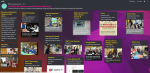
Padlet, which is equated to being a virtual wall, kind of like writing on a bunch of post it notes, has emerged as quite the multi-purpose tool in my classroom. What initially began as a way to have back-channel discussions, emerged as a means to communicate with other classrooms on Digital Learning Day, to have students quickly research and post pictures for a fun class activity, to curate student projects for easy display in the classroom, and even for students to use to create a project which included activities and multimedia links.

The uses keep emerging and I’ve found that sometimes it’s best to turn to the students for some extra ideas of how you can use some of these tools in your classroom.

4. PiktochartPIKTODash
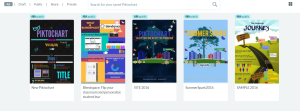
A tool for creating infographics, social media flyers, presentations and more, Piktochart has become one of the tools that my students enjoy because they find that it is easy to use and enjoy the options which enable them to really personalize and make their project authentic. I have used it to create visuals such as birthday cards, classroom signs, Twitter chat graphics, and also for creating presentations for conferences. Regardless of what your needs may be, if you want to give students an option to create something visually engaging, personal to their interests and which enhances their creativity, according to my students this is something that you should try.

5. Vismevisual-storytelling-in-the-classroom-1024x590
Several of my students who have been very hesitant to use anything other than traditional presentation tools through Google or Microsoft Office, have found Visme to be a tool which encouraged them to take some risks and try new things this year. Students had to create a timeline about their summer, or basically anything they wanted, as a back to school project. At first, several asked to use something different, but they quickly found how easy it was to create something and have fun in the process.

Several students enjoyed it so much that they contributed to two blogs about the use of audio and the benefits of it for education as well as other areas. (hearing from the student’s perspective, and seeing them featured for their work was a great experience). So if you want to try something more engaging that promotes creativity, helps to build those vital technology skills and also lets students have fun in the process, then this could be a tool to try in the new year.

You can create infographics, reports, presentations, social media flyers and more. It is an easy drag and drop tool, that encouraged those “hesitant” students to take some risks and try new things. Check out Visme’s video series for “how-to” information!

6. Nearpodnearpod4
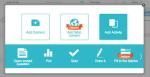
This is one of the game changers in my classroom this year. After many years of using the same Spanish reader in Spanish III, I wanted to add to the learning experience of students by enabling them to see some of the locations described in the book. I had found many videos and magazines, but I found Nearpod to be a much better way to really engage students in the lesson. Not only did students enjoy the lessons because of the interactive nature of it, they were overwhelmed by the ability to become immersed in the virtual field trips and feel like they were in the places they read about in the book.

I knew it was working when those students who were constantly watching the clock move were the last to leave the classroom. The only thing that made this better was when students created their own lessons and took over the classroom, becoming the teachers and giving me the opportunity to become the student and experience it from their perspective. There are many uses for this in the classroom: interactive lessons, multiple question formats, ability to upload content, assigning a lesson for practice and more.

It is definitely worth taking some time to try out, even looking over some of the lessons available in the Nearpod library, and asking your students what they think. And the Nearpod for Subs is AMAZING!

7. FormativeGoForm

A tool that can be used for having students complete formative assessments either live in class or as practice outside of the classroom, and a great way for teachers to get students more involved and be able to provide real-time feedback so that they can continue their learning process. Formative is a tool that has gone through many tremendous changes and improvements throughout the course of this year which make it a great tool for teachers to use for assessing students.

Formative is another tool that my students enjoy using because of the individual benefits of having feedback sent instantly and directly to them, being able to “show” their work or have their answers corrected immediately. It has been a way to create a more interactive classroom and also another tool which I have used to flip roles with students so that I could also learn from their perspective. It is something which students ask to use and which they are excited to tell others about, which is why I know that it is having a positive effect in my classroom.

Join #formativechat on Monday nights

8. QuizizzQuizizz1

A way to involve students in game-based learning in the classroom and also to provide more personalized instruction, based on the feedback you receive when students participate in a live lesson, or when you assign it as a homework practice assignment. I have enjoyed seeing students create their own Quizizz games, which I have found provides more focused practice for the students because they choose the material they need to practice.

Another benefit is that it also enables me to share these resources with the class and with individual students who may need some extra practice There are many features offered by Quizizz, and if time is lacking for creating your own Quizizz, you can gather questions and edit from all the public ones available. Try the game with your students and see what they think, and use their input to help plan the next game!

9. Buncee

The first time I created my own Buncee, I was amazed by the number of choices available for adding elements into my creation. I found myself thinking about how much the students would enjoy creating using it and having so many choices available. I have some students who like to “dab” every time they get an answer correct and so I quickly realized they would really love the fact that they could add a dabbing dancer into their presentation.

I created a Buncee for our annual Open House and was able to record my voice and add extra elements in from the diverse library of choices.  Being able to create a Buncee like this, is a great way to share the information with parents who may not be able to attend. I had students create projects with themes ranging fr9. om a medical chapter to a lesson on teaching verbs and more. Students love the choices and the ideas for how we can use this tool keep growing. But the best part of it is that it enables every student to find something to add into their project and to bring out their creativity. And it definitely builds confidence with a lot of fun in the process.

10. Blendspace TES Teach

A few years ago I found “Blendspace” and it was exactly what I was looking for. I wanted an easier, more reliable way to share some websites with students to use for practice during and outside of the classroom. I had been doing this, by typing the links on paper, but the problem was that deciphering the link (between i’s, l’s, for example) sometimes made it a bit challenging. So when I started using Blendspace, now “TES Teach,”  it was simply as a way to put activities and resources into a lesson and share one link which would open an entire page full of possibilities for enhanced learning.

But over this past year I have found many more uses for it, ranging from providing an asynchronous lesson, curating professional resources, storing student projects for easy presentation in class, and mostly for the simplicity of building a digital lesson full of multimedia resources, from scratch to share with students and colleagues. Creating a lesson is easy to do and can be done quickly when using the TES resources or when adding your own content.

Students can also use it to create their own presentations and this is a great way for them to incorporate a variety of media and to have everything available in one “lesson” using one tool. Accounts are free and you can have students join your class through a “pin” or Google Classroom or through a link. Teachers can also look at the lessons available through TES Teach and try some in the classroom.

11. Storyboard ThatSToryboardCH
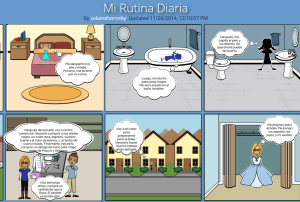
Storyboard That is an online tool that is used to create storyboard and provide a way for students or anyone to tell a story in a comic strip presentation Style. You can create by choosing from so many different characters props background scenes comma speak Bubbles and so much more. It is easy for students to create as this work as a drag and drop tool. It is a lot of fun for students to be able to really personalize the characters and create a very authentic and meaningful representation of the story they are trying to tell.

There are many characters and backgrounds related to specific times in history, you can change the color of the characters, their clothing, adjust their movement and more. It’s really nice for the students because they can customize so much according to their personal needs which really enables them to be creative and have fun and be more engaged in their learning.

Another benefit is that by having an account with school, there are lesson plans and examples available that can really help to see how to integrate StoryboardThat into your classroom, or really into any type of setting, to communicate information in a more visual, creative and innovative way. Another nice feature is that students can use it to present in class and have it presented similar to a power point.

12. BloomzApp bloomz1
Bloomz is a tool which I began using at the end of the past school year, to see how it could enhance my classroom and open up more communication with parents. Bloomz offers a lot of great features, integrates the features of a messaging app, LMS, an event planner and more. It even provides translation capabilities with translation into 84 languages. Teachers can quickly create an event, share permission slips, create a sign-up sheet, track RSVPs, send reminders, and share photos and videos with parents.

Bloomz also enables teachers and parents to communicate instantly, privately, and as often as needed each day throughout the year. It recently added the features of a student timeline for building a digital portfolio to share with parents, as well as a behavior tracking program, for communicating about student behavior and providing positive reinforcement.

Conclusion

Even with all of the great digital tools available, we have to make some decision about what will work the best for our classrooms. What is the purpose for the implementation of technology? In looking over this list, are there any that you think might help to enhance, amplify or facilitate student learning in a more beneficial way than what you are currently doing in your classroom? Determining the answer is the first step, as we know that using technology just to use it doesn’t make sense. However, when we use technology in a way that enables us to help students find their voice, discover more about what they want to do, what they can do and what they need help with, makes sense. These are some of the tools which helped my students and had a positive impact on our classroom and learning experiences this year. To get started with the new year and some of these tools, my advice is to simply choose one of these tools and try it out.  See how it goes and be sure to ask your students for their feedback as well.

Kidblog: Don’t Let the Learning Stop: How to keep students engaged over extended breaks

Don’t Let the Learning Stop: How to keep students engaged over extended breaks

stocksnap_c91r095cw5

The “Slide”

Throughout the school year, extended breaks provide both teachers and students the opportunity to give their mind a chance to reboot. However, learning opportunities do not have to stop while we take a break from the classroom to devote time to family, friends, and relaxation. Without opportunities for active learning during these extended breaks, some loss of knowledge is inevitable.  Similar to what has been termed the “summer slide”, this phenomenon also occurs during shorter breaks throughout the course of the school year.

There are many opportunities available to avoid this “slide”; teachers can help students engage in learning in fun ways that do not feel like “learning” at all. For my students, this means  blogging. Thanks to the availability of technology and platforms like Kidblog, students can stay connected, while still working on building skills over the break.

From “assignment” to “activity”

So, what turns a blog post from “an assignment by the teacher” over break to a fun student activity? It’s all about the content. For example, students may be asked to write a blog surrounding their time over break. Perhaps they describe what activities they participated in; writing a review of a book or movie they experienced, sharing how they spent time with friends or family, or even posting a new recipe they learned over break. These open-ended prompts enable students to work on their writing and literacy skills in a low-key and fun way. Additionally, it gives teachers the chance to stay connected with their students and provide any necessary feedback.

For more reflection, students may be given prompts which ask them to take a look back at some of the work that they have done prior to the break. They can focus on a few specific skills they have gained as well as their strengths or weaknesses throughout the year. Using blogging as a journal, they may then write a personal blog to themselves addressing these areas.  The blog can be shared with the teacher as a reflection, to explain how they perceive their progress in class and offer some ideas for personal goals or describe areas where improvement can be made. This prompt can be a great way for students to prepare for the year ahead of them.

It’s about staying connected

Blogging enables the students and teachers to communicate through a comfortable medium. It gives students an opportunity to write, read, and practice any critical skills they have learned leading up to the break as well as some reflective writing.  Students are encouraged to be creative while they are engaged in the practice of reflection, setting them up for future growth and helping you as the teacher develop a better understanding of student needs.