Providing Different Learning Tools

As educators, it is important that we find ways to provide more personalized learning experiences to meet the individual needs of our students. What this means is that beyond simply offering more choices in the types of assessments we offer students, we must do more by learning to understand the specific learning styles and interests of each of our students. We must differentiate our instruction and to do so requires that we develop a clear picture and gain a deeper understanding of the various learning styles of the students in our classrooms. When we do this, we can then design lessons that are focused on the specific student learning styles and offer more individualized choices for students. Whether that offers more options to work independently or in groups based on a specific topic, an area of interest or even based on the level of understanding of the content, we serve them best by having the right resources available for them.

Each of our students have specific needs and preferences for how they learn and we do the best for them when we help them to identify these preferences and then offer a variety of materials and resources for them to explore. It is not about always using a digital tool or shifting away from traditional methods, but rather being able to determine which of these options will work best for each of our students. It also means helping students to become more self-aware of their own interests. One change that has helped me to better identify these styles and guide students in my classroom is by using the station rotation model.

Through the use of stations, I am able to provide multiple activities that enable students to interact with the content in a variety of ways. There are tech and no-tech options, student and teacher-created materials, hands-on activities to choose from, and times where students decide on a focus for their group. By providing a variety of learning options for each student, giving them all the opportunity to explore, we empower students with more meaningful and personalized learning that will lead to more student engagement and content retention.

Learning Styles: The VARK Model

In 1987, Neil Fleming designed what has become known as the VARK model. Fleming developed this model as a way to help students learn more about their individual learning preferences. The VARK learning styles include: visual, auditory, read/write, and kinesthetic.

Personally, I have always been more of a visual and somewhat kinesthetic or “hands-on” learner. At varying points throughout my life, I can recall taking a test and being able to see specific notes that I had written in my notebook, but still being unable to respond to questions. I tended to create graphic organizers and had my system for making more visual connections with the content. Many of my students are visual learners and over the past two years, have often noticed that they have specific ways of processing the information in class as well as how they prepare and respond during assessments. We must be able to provide different options for our students where they can choose a format that will best suit their interests and needs in more authentic and personalized ways.

Visual Learners

Visual learners are more likely to use charts, icons, images and are able to more easily visualize information and as a result, can retain it longer. An estimate is that visual learners make up approximately 65% of the population, and remember 75% of what they read or see. Visuals learners prefer to do projects and presentations that involve creating visualizations of their learning. For visual learners, some good options include creating infographics, using Augmented and Virtual reality for creating immersive experiences, designing 3D objects, sketchnoting, or using digital tools such as Padlet or Wakelet to curate content in ways that promote better visualization of content. Visual learners would also benefit by creating a mindmap or making flashcards, which can also be done using a digital tool like Quizlet.

Auditory Learners

Auditory learners listen carefully and often focus on the tone or the rate of speech, and may also benefit more by having supplemental resources made available to them such as videos or audio recordings. Learners of this type can recall information such as song lyrics and conversations, and can often recreate a story more easily because of that auditory connection they have. There are many options to engage auditory learners more by selecting options that promote listening and speaking skills. Some ideas include using video response or podcasting tools to have students explain concepts or brainstorm ideas. Another option is by creating a more interactive presentation using a tool such as Voice Thread, students will connect with the sounds, dialogue, and tone used in a presentation such as this, where they can listen and respond.  Another idea is to use Flipgrid to post a question and have students also respond to classmates to further the discussion and promote higher-order thinking. Try using Synth to create a podcast for students to have the active listening component addressed, and invite students to listen and respond to the prompts by adding a thread to the podcast.

Read/Write Learners

Read/write learners prefer to have the text available to them in some written/tangible format. Whether students first take notes and then decide to rewrite their notes for additional practice, or read over their notes each day for review and class preparation, these learners benefit from sustained interactions with the text. The more they interact with written formats, the better equipped they are to understand the content. Beyond writing in pen or pencil, or creating a document, using some tools such as Kidblog, for writing a story and getting started with blogging is a good way to promote reading and writing opportunities. Another idea is to have students create a multimedia presentation with a tool like Buncee to tell a story, adding text and icons to make the content more meaningful. These options make the activities more authentic and aligned with the needs of learners of this type.

Kinesthetic Learners

Kinesthetic learners learn best through hands-on learning opportunities. Students spend a lot of time sitting in classrooms and perhaps more passively learning. We need to design ways for students to be more active in the classroom. Some choices would be through a STEAM curriculum, the use of makerspaces, place-based learning, game-based learning and creation, designing projects and having students engage in project-based learning (PBL).

Multimodal Learners

For some students, providing options that foster a multimodal learning style is most beneficial. A multi-modal learning style means that you benefit through multiple ways of processing the information which can be through images, sounds, movement, speech, audio, visuals and more.  When I have used stations in my classroom, providing the different options at each station was helpful for students who are multimodal learners, to be able to interact with the content in different ways. Some of the tools that I have used include NearpodKahootQuizlet, in addition to giving students options to create something based on their own choice, which lends itself to more hands-on learning. The use of infographics, hyperdocs, choice boards, and even digital breakouts can give students a variety of ways to engage with the content and provide activities that will meet each learning style.

All students benefit from multimodal learning options that support a Universal Design for Learning (UDL). Providing something for each student and offering a mix of learning tools will help students to master the content in more authentic and personalized ways.

Interested in learning more about your own learning style preferences? You can take the VARK questionnaire and find out what type of learner you are.

Interested in writing a guest blog for my site? Would love to share your ideas! Submit your post here.
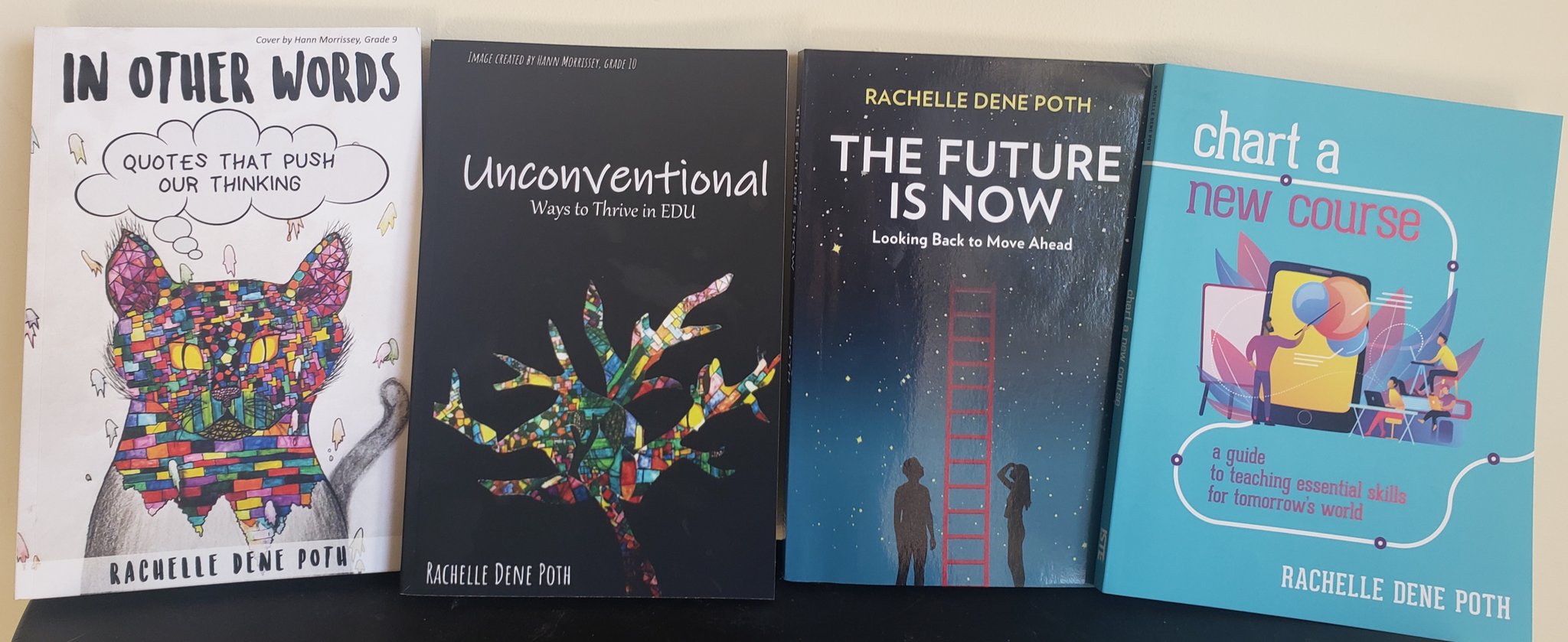
 

Looking for a new book to read? Many stories from educators, two student chapters, and a student-designed cover for In Other Words.

Find these available at bit.ly/Pothbooks  


3  books.png


Buncee: Learning Anywhere

Providing Ways to Keep the Learning Going

Over the past week, there has been a lot of conversation about what educators can do if schools need to close for a period of time, especially due to recent events related to the Coronavirus. Finding ways to extend the “space” of learning for our students has been a topic of discussion for many years, so it is not entirely something new. However, with the current situation, educators and schools are seeking to find the right resources that can be put into action right away.

Over the past few years, many schools have started to offer flexible learning days to deal with school closures due to weather conditions, environmental issues or something else entirely. Being able to keep learning going and have ways to collaborate without being in the same physical space is important. Having a specific platform or digital tool in place that all educators can use and making sure that all students will have access is very important. With so many choices out there, it can be tough to figure out exactly where to begin, especially when time is a factor.

As I’ve been talking with some friends this week, a large part of our conversation has focused on what to do if our schools were to close and even in the general sense, how can we also provide more for our students for times when we need to be out of the classroom? For times when I have not been able to be in class, whether due to illness or a pre-planned conference, I rely heavily on technology to be able to connect with my students so that they can ask questions and have the support they need. However, I also rely on it to provide them with rich learning experiences through versatile tools that they can work on independently wherever they are. With Buncee, we can work remotely and provide meaningful learning experiences that engage students in the digital space.

Buncee = Learning Anywhere

As I have been thinking about some of our recent Buncee projects, my 8th grade STEAM course has been working on a few activities. They have created an About Me Buncee, a few for gratitude and most recently, “Tech Over Time.” In the Tech Over Time project, students have been exploring the transformation of some digital tools or electronic devices over the past 10, 20, 30+ years and also making predictions for the future.

As students create, they can work from school, at home, or anywhere, and be able to share their work with me wherever I am. Teachers can assign fun projects for students or choose from the many ideas in the Buncee Ideas Lab.

We have used Buncee for years in all of my classes and through it I have been able to provide opportunities for my students to engage in more authentic and meaningful learning, to be creative and to drive their learning experience. Whether students use it to design a Buncee to share their experiences, engage in project-based learning, summarize a book they have read, explain a concept in math or science, for a few examples, the possibilities are endless for what students can create.

As teachers, we have so many choices for how we can use Buncee in our classrooms. It can be used to have students work through a Hyperdoc, or used as a model template for students to then create their own Buncee, make a timeline, solve word problems, and more. The idea is that we can leverage the tool to provide something that will connect with each student and it can be done from anywhere.

Ideas for your Classroom

1.Make an interactive book

2. Create a timeline

3. Design a digital business card

4. Explain steps in a process

5. Teach a lesson, add audio and video

6. Book summary

7. Design classroom signs

8. Create study aids

9. Create an ebook

10. Recreate a moment from history, personal experience, or make a future prediction

5 Ideas for Learning About Digital Citizenship

Digital citizenship is a topic that educators must continue to be mindful of within their classrooms and our schools. Because so many tasks involve the use of technology, it is our responsibility to embed digital citizenship into our lessons so our students are prepared and knowledgeable about the responsibilities that exist and also expectations of them when it comes to digital learning. There is an increase in technology being used in our classrooms, students have more access to digital resources and global connections than ever before, so regardless of our roles in education, we must stay current with issues, trends, and resources related to this topic. Digital citizenship skills have to be a part of what we teach and model for students, especially because we ask our students to do research, to collaborate online and perhaps even use social media as part of our coursework.

There are many resources available to learn more about digital citizenship, ranging from participation in virtual or in-person learning events held throughout the year to websites, books, blogs, and more that bring attention to and inform about this important topic. When I first started teaching about digital citizenship, I recall myself telling students the things that they should not do rather than focusing on how to use the tools safely and responsibly and showing how they could enhance learning. I recognize this now as I’ve researched more and become more aware of the different resources available for use in education today and following the conversations happening in different educational networks. And along with what’s being done out there, I believe that we need to convey the message to our students of how to use digital tools, to interact responsibly, and also share the importance of knowing how to use these tools for good.

Building these skills is critical because they will transfer to the real world space as well. For some students, they build confidence and comfort by interacting with peers and become better collaborators in an online space first, then apply these to the physical classroom setting and the real-world.

Here are five resources to explore and which offer activities for students to explore on their own and construct their own knowledge and apply it.

1. Events Educators can participate in Digital Citizenship Week, happening from October 14th through the 18th online. During this week-long event, educators can participate by connecting with other classrooms globally, joining in a panel discussion organized through the DigCit Institute and EduMatch Tweet and Talk, or listening to a DigcitIMPACT talk. Sign up on the website and stay connected by following the #digcitsummit hashtag on Twitter.


2. Online resources There are many interactive ways for students to explore DigCit topics. Common Sense Education’s Digital Compass provides interactive lessons, tutorials, and fun activities for students to engage in to learn about digital citizenship. One of the many benefits is that students choose how to proceed through the interactive lessons, and can see the positive or negative effects of these choices. Digital Compass addresses topics such as cyberbullying, fake news, social media, and more that are in alignment with today’s trends. Be Internet Awesome by Google has students explore four lands and complete activities and games to build their digital citizenship skills. This is another good way to let students drive their learning, to become curious and develop their own understanding in a space that is safe and that we can support. 21 things for students offers 21 different lessons on topics related to digital citizenship, technology skills, cyberbullying and more. Nearpod offers interactive lessons on Social Media use and topics related to Digital Citizenship in addition to many other content areas and levels.

3. Books Three books that I recommend are Digital Citizenship in Action by Dr. Kristen Mattson, Digital Citizenship in Schools by Mike Ribble, and Digcit Kids: Lessons Learned Side by Side to Empower Others from Around the World by Marialice Curran and Curran Dee. Each of these books offer a wealth of resources for getting started with lessons on digital citizenship and they provide activities for use in our classrooms. Dr. Mattson’s book is also used for the ISTE U Course on Digital Citizenship.

4. Social Media Students are using more social media, especially Instagram and Snapchat, and need to develop an understanding of how to post, the type of information that is okay to share, and how to interact responsibly and respectfully in these spaces. Depending on student grade level, it can be helpful to have students participate in a simulated Twitter chat, create a Padlet wall, or use post-it notes and a space in the room to have students create posts and write responses. It is important to help students understand how social media works and how to properly post. We want to emphasize the safety of our students and knowing how to distinguish between reliable and unreliable sources.

5. Organizations ISTE (the International Society for Technology in Education) offers a Professional Learning Network (PLN) focused on Digital Citizenship for members. In PLNs such as this one, educators can find many resources for teaching about digital citizenship that match the grade level, content area, and specific needs of their students. Individuals can sign up to be a part of the #digcitcommit movement. DigCitCommit is a coalition with the mission of providing educators with the right resources for teaching students about digital citizenship. Educators can sign the pledge and become more involved in promoting digital citizenship around the world.

To provide the best possible opportunities for our students to learn their roles and responsibilities when it comes to digital citizenship, we simply need to start with one of these resources and include it in our daily activities. The idea is not that it’s something extra added onto the curriculum but rather becomes woven into our classrooms each day throughout the year.

*Interested in writing a guest blog for my site? Would love to share your ideas! Submit your post here.


Looking for a new book to read? Many stories from educators, two student chapters, and a student-designed cover for In Other Words.

Find these available at bit.ly/Pothbooks  


3  books.png

Math Mentoring: The Struggle is Real AND it’s an Asset!

Struggling in math has been my greatest asset as a math teacher.  Remembering the pain of negative self-talk while feeling like giving up was my only option…well, math trauma is not easily forgotten. It’s why so many adults, decades after high school graduation, will still tell you they are bad at math. For me, the silver lining to that trauma has always been the ability to relate to my students, and even my own children, when they have math struggles.  One of the greatest compliments students and former students have shared with me is that math finally made sense to them when they were in my class.

One thing I’ve never said, and will never say, to my children is that I was bad at math.  Even as a new teacher, I asked parents not to say that to their children. Telling your children or students you are bad at math is like encouraging them to quit before they even begin.

Now, I have always told my students and children that I struggled in math.  We all understand what struggle means, and the good news is that there is always the possibility of winning in a struggle!  Every year, I tell them how I had to stay in at recess in first grade because I could not understand the concept of subtraction.  Crazily enough, my teacher had no idea how to teach it in a new way that made sense to me. She tried to explain it repeatedly in the same way…and it didn’t make sense to me for the longest time.  I also tell them about how in first grade I received a C in math and it made me feel terrible. I never wanted another C on my report card and made sure I never did again. That desire to make the Honor Roll (I was a middle child and wanted to stand out in some way, and academically was my route) kept me from quitting.  Math was a struggle, but I found a way to understand. As early as seven years old, I realized that quitting was not an option. Finding math success was never easy for me, but through my school years, I found what worked for me. This is what I share with my students hoping it will help them, too.

Addressing the Struggle at the Beginning of the Year

First week of school when I say the word “math”I look around to see who dreads the very word itself. It’s not just about reading expressions, but I look for patterns of misbehavior and any kind of drama that might commence when that dreaded word is spoken.  I always begin the year assuring my students that if they stick with me and trust me, as their math teacher, I will not leave them behind. I have promised that to my students for years, and I mean it with every fiber of my being. I explain that when they don’t quit, math can be fun like a puzzle.

What does it take to help children dig into math when they want to check out? It takes patience and time to do it to do it to do it to do it right, child, I got my mind set on math, I got my mind, set on math…

All singing aside (remember He gave me a melody *wink wink*), in a whole group lesson, the ones who get the concept easily, I normally allow them to begin the assignment and do it at their pace.  The students who have questions stick with me and the ones who are lost become a small group.

Helping my own child, a fifth grader review geometry!

What does helping kids through math struggle look like?

Sitting next to a child who struggles is important.  That nearness factor makes a difference. They know I won’t ignore them or allow them to pretend to work when really they are just doodling or trying to look busy.  See, by the time they reach fifth grade, they’ve pretty much given up. They don’t want the attention! One of my students, who was desperately struggling, knew how to look busy, so sitting next to me kept him from trying to con me that he was actually trying to solve problems.  He definitely tried to trick me, but I called him out. A few more times like this, and he knew I meant business. He stopped trying to look busy and started attempting the problems before him. Just attempting…finding a starting place to solve is huge when you struggle in math.  I remember this from my own childhood.

When students have progressed to where they begin solving problems more easily, I still encourage them to ask for help, but I do not let them come to me unless they have attempted the problem.  I can ask them, “What do you think you are going to do here?” or “Where do you think you should start?” They are so used to struggling and the teacher just giving them an answer that they often ask before even thinking about how/where they should begin.  Getting them to dig in and try to understand the problem is foundational in developing grit and sticking with the problem. When solving math equations or word problems, it’s truly important to have a place to stick information to, so beginning the problem and attempting to solve it gives them something to add or learn from. If they don’t think through this first part, a teacher’s lesson is like throwing darts into the dark without any specific target that will reach their students.

I also coach my students while giving notes. At some point, they may stop understanding. I coach them to keep taking the notes I give them, but make a note to themselves that this is where they have stopped understanding.  Again, I learned this from my own struggles. In fact, in my Algebra one course when the teacher was finished with the lesson and asked for questions, I was able to ask my questions clearly. To do this well, I had to turn off my negative self-talk.  If I allowed my negative self-talk to take over, the only thing I heard from that point on was me telling me how stupid I was and how I was the only person not understanding. In place of negative self-talk, I encouraged myself to take a deep breath and remind myself that even though I didn’t understand the concept just then, I knew I would eventually if I didn’t shut down.  That allowed me to keep paying attention and sometimes even cleared my confusion. When I shut down, this wasn’t possible.

Something else that helps students is allowing them to talk about patterns they notice.  Whether they struggle or not, when they notice a math pattern, letting them talk it out with the rest of the class will help everyone!! Worst case, it’s also a way a  teacher can help clear up misconceptions early on. The best math teachers for me were my peers. Sometimes students identify specific items that make a world of difference for their peers. My son is in third grade and has a more natural way of understanding math than his older sister.  Whenever he notices a pattern, he stops and we have an entire conversation about it. He truly amazes me. We can, and should, help our students learn the patterns because often times when they figure it out for themselves, they feel more confident and the knowledge isn’t dumped after an assessment. My son talking about the patterns he sees also helps his older sister and younger sister think through that math pattern, too.  That’s a win!!

It’s a Journey

For students who struggle in math, it is an emotional journey.  When teachers stop and say, “I know you are struggling, and I’m here to help, and I won’t go on until you understand,” it’s a balm for our students’ insecure nerves. When they are fifth graders coming to me, they usually have three to four years of feeling left behind.  Hoping to help my struggling students, my mindset is firm that their struggles stop with me and I do all in my power to get them to grow and decrease any learning gaps.

Over time, I have developed the wisdom necessary to see when students quit before even trying or when they are totally overwhelmed.  It’s important to know the difference because both situations require different responses. The quit-before-trying-learner needs a firm reminder of not giving up and figuring out a place to start, while the overwhelmed learner needs to know they can take a break or use another method to help them.

Helping students dig into math struggles is such a beautiful way to help them learn perseverance and purpose.  When they decide to lean into the struggle, they form a mental confidence that can’t be stolen from them. Can you see how facing their insecurity in math can help them in other areas of life, too? Having a teacher who will go the whole distance means everything for these students, and many times, changes a negative academic course into a new path of learning and goal setting!  I have seen the glory! I have seen the joy of confidence from the same student who broke down and cried with me at one point. So yeah…when my students have told me that my fifth grade class was the first time math made sense to them, I feel like I’ve earned an Oscar!

Resources 

Have you heard of the book written by Alice Aspinall called Everyone Can Learn Math? Recently, I read it with my five children and it sparked great discussion.  My oldest, who is currently in fifth grade, found the main character, Amy, very “relatable.” Amy feels the math struggle deeply and so does her mom! I would recommend this book for every parent and educator to keep in their home or classroom library.  I know we will be pulling it out to reread a lot. It’s also a good way to combine your academics. Author, Alice Aspinall also recommends Adding Parents to the Equation by Hilary Kreisburg and Matthew Bayranevand.

Also, have you heard of Nearpod and Flocabulary? When I went back into teaching public school a few years ago, they were the first technologies that I implemented in my lessons.  My students and children love it. They can be personalized or differentiated for the different level of learning going on in your classroom. These resources are engaging and will definitely make a difference in small group learning.  The coolest part is now they are together!!!

Before Christmas, I went to the Anchorage Barnes & Noble and bought some new books by Jo Boaler in hopes of helping me grow in teaching and understanding the math struggle: What’s Math Got To Do With ItMathematical Mindsets, and Limitless Mind.  There is another book calledMath Recess: Playful Learning in an Age of Disruptionby Sunil Singh that I hope to purchase and read. All of these books, and both of these authors, are mentioned frequently when the topic of math struggles come up–and they do frequently! We can also Google their videos!

What are resources that have helped you? Let’s work together to help our students learn through the math struggle!

**Interested in writing a guest blog for my site? Would love to share your ideas! Submit your post here.


Looking for a new book to read? Many stories from educators, two student chapters, and a student-designed cover for In Other Words.

Find these available at bit.ly/Pothbooks  


3  books.png

Creating an Action Plan Through Reflection

Guest Post by Debbie Tannenbaum @MrsTannenb

During Winter Break, I read three amazing and thought-provoking books. Each one provided me with new ideas, takeaways and made me examine my practice. The last book I finished was Innovate Inside The Box by George Couros and Katie Novak. As I began reading Part Three: You Are The Change You Seek of this book, George issues this challenge, ” We can consume pages and hours of great content, but until we do something with it, we have no ownership over the process of learning. He then asked the reader to reflect on these three questions based on our reading

1. What has challenged you?

2. What has been reaffirmed?

3. What will you do moving forward?

When I began to consider what challenged me from my reading, I really had to stop and think. Having already read Innovator’s Mindset last year and having prior experience with UDL, so much of what I read in this book resonated with me.

As I returned to school on Monday, several ideas from my reading kept bubbling up in my mind.

1. Shifting our focus and practice to be learner-driven and evidence-focused

2. What does risk mean?

3. Encouraging problem-finding and not just problem solving

Learner-Driven, Evidence Focused

In chapter 2 of the book, George Couros describes how he dislikes the term data-driven. Working in a model PLC school, there is no doubt that we spend a lot of time on data- in fact, some months, with increased testing, it feels like all we do is collect data. So when I read this, it gave me pause. Are we truly learner centered? Are we telling the story of the whole child? Are we preparing students for their futures or to meet benchmarks and goals based on our school improvement plans?

This section really led me to question our practices as educators. It made me examine why we do things the way we do, why I do things the way I do? Is the support I provide “opening doors” to the future? If so, are there any ways that I can further tweak this to make it more learner centered?

Risk-takers

In chapter 5, George and Katie discuss risk-taking, which is one of the characteristics of the Innovator’s Mindset. As I read this, their definition of risk caught my attention and made me look at risk through a different lens. I have always called myself a risk-taker, an early adopter, but reading this definition made the WHY behind it so clear. “Risk is moving from a comfortable average in pursuit of an unknown better.“Looking at risk through this lens took the negative connotation usually associated with this word away. It equated risk with innovation.

As a tech coach, I am constantly not only taking risks, but modeling it for all my learners. How can I better empower my learners through the use of UDL to develop more agency and risk-taking.

Problem Finders- Solvers

Chapter 6 shares how when we act as problem finders-solvers, we demonstrate an Innovator’s Mindset. In the district I work in, we have been heavily immersed in PBL or Project/Problem Based Learning. In late November and early December, one of our PBL Leads even came to our CLTs to help us plan upcoming PBL units. I love the idea of PBL and giving our students authentic purposes for their learning.

So when the idea of being a problem finder was introduced, I looked a little closer. I love this idea; it reminds me of 20% time and Passion Projects. It sounds amazing, but once again, time seems to be a culprit. How can we provide time for students to cultivate such endeavors while covering the curriculum? Could we involve students more in planning our PBLs beyond just the “Need to Knows?”

Reading this book reaffirmed so many things for me especially as I CHALLENGE myself this year to establish healthier habits and take more risks.

In chapter 3, as George and Katie described the importance of empowerment and shared how it leads to ownership and agency. It reminds me of how Ron Ritchart emphasized the importance of language when I attended WISSIT19 this summer.

In chapter 4, George and Katie share the importance of not only being a master educator, but also a master learner. If I have learned anything this break, it has been what a dramatic impact that reading 10-15 minutes a day can make in my learning. “In a profession where learning is the focus of our job, growth is essential and the target is always moving.” We all need to embrace that mantra and model being lifelong learners for our colleagues and students

So as I look towards the future, what will I do moving forward? The first thing that came to my mind was reflection. As part of #myoneword2020, I CHALLENGE myself to journal regularly. Journaling is such a huge component of reflection. George shares, “Reflection is what links our performance to our potential.” As I journal and monitor my goals daily, I am focused on my goals and making progress towards them. Linked to that is the idea of self care. ” When our job is about serving other people, we have to not forget to serve ourselves.” Moving forward, I CHALLENGE myself to be committed to healthier eating, regular exercise, doing activities that fill my bucket such as blogging, reading and writing. Dedicating time each morning to this pursuit has been so inspirational so far.

“Is there a better way?” Sometimes there is and we need to take a risk. Other times, we need to examine if what we are currently doing meets our students’ needs. But behind it all, there are so many ways we can take our learners and the relationships we build with them and empower them for an amazing future. I am ready to take the CHALLENGE, are you?

************************************************************************************


**Interested in writing a guest blog for my site? Would love to share your ideas! Submit your post here.

 

Looking for a new book to read? Many stories from educators, two student chapters, and a student-designed cover for In Other Words.

Find these available at bit.ly/Pothbooks  


3  books.png

Pushing Ourselves Professionally: 5 Ways to Share Our Educator Talent

Previously posted on Getting Smart

As educators, we need to actively take part in the reflection of what we do in our classrooms and schools, our interactions, and make sure we are intentional about setting aside time to think about each day as we plan for the next. As humans, we need to reflect on who we are, our growth, our goals, and be mindful of what we are doing to make a difference in the world and how we can support others each day.  Here are five ways to reflect on our practice, push ourselves personally and professionally, and also highlight the work that we are doing. We each have special talents and need to share them with other educators so that we can continue to grow.

Blogging

One way to reflect more closely, beyond simply processing our thoughts is by starting a blog. Finding the time to sit and write a blog, can present a slight challenge, however, a blog can take whatever form that we want it to. Getting started might simply mean having a stack of post-it notes, where each day you write down one thought on the post-it notes and then at the end of the week or over the weekend, reflect on the questions or comments you made. Compile your thoughts into a document, use voice to text to save time, and share with your PLN.

Another option would be to create your own blog site and start a draft to gather your thoughts in a short or long post. Whether you just keep a draft for your own personal review and growth or choose to publish it and share it with your PLN and the larger educator community, it will still benefit your growth. Sharing our thoughts like this makes us vulnerable, which can be uncomfortable, but if we truly want to grow, we need to put ourselves out there. It is important not only for our own growth but also serves as a good model for our students and our colleagues.

Podcasting

There are a lot of podcasts available to educators today. Some choose to launch a podcast focused on a specific topic or theme, or to create a podcast for the purpose of highlighting other educators and the work being done in our schools. Podcasts can be another beneficial addition to our practice not only for reflecting, but to share the ideas of what we are doing in our classroom. One might ask, what would I talk about? What would I have to contribute? We all have our own unique ideas, skills and perspectives. Even if we reach just one person with a word of advice or a new idea, that still makes an impact. It might be exactly what that one person needed to hear. Again time can be an issue but there are many tools out there that make it easy to create a short podcast. It might be just 5 minutes sharing what happened in your classroom, or 10 to 15 minutes spent talking about a specific topic that was part of a conversation within your PLN or brought up in class. Other options include inviting other educators to be guests on your podcast to share what they are doing. Podcasting is another option for pushing ourselves to continue to grow personally and professionally. I recently started my own podcast after thinking about it for a few years, and it has been a good way for me to think about different topics and reflect on my practice.

Live Streaming

Technology has really enabled educators to do so much more and engage in learning that far extends the reach of classrooms and schools.  Being able to talk about an activity that we did in our classrooms, or describing projects that students presented, of course does not provide a clear picture of what that actually looks like in practice.  We can be as descriptive as possible, we can even share photos and talk about it, but to be able to live stream and invite other classrooms, students and educators into our learning space to see it firsthand is far more powerful. As educators, we can also use these different tools to give a quick update, to talk about topics that are important to us, to share new ideas, to ask for help, and sometimes, to escape the isolation that can happen in our profession. Selecting from options like PeriscopeInstagram, or Facebook Live, we can leverage the platform that makes the most sense for us. Each month, a group of educators hold #PassTheScopeEDU and throughout the day, educators from around the world stream using Periscope to share their experiences and thoughts based on a monthly theme. Look at the different platforms and how educators are using these tools to make connections, and give one of them a try. It can definitely stretch us beyond our comfort zone, but the personal and professional benefits that can result are worth it!

Educators at ISTE presentation. Image courtesy of Rachelle Dene Poth.

Presentations

There are many ways for teachers to share the work they are doing and make new connections. For years, professional development in schools often involved sessions that were presented by outside organizations who sent trainers into the schools for the PD days.  However, more recently, teachers are taking the lead on professional development days within their own schools, traveling to local schools to share the work that they are doing, or even planning special learning events at their own school as my friend Zee Poerio does with a “Taste of Technology”. Opportunities like these foster a more authentic learning experience for educators, just as we want for our students, and also provides the opportunity to receive peer feedback and build our knowledge base. There are many in-person and virtual learning events that seek presenters. Find a conference to submit a proposal for or create your own meet-up with educators and stretch yourself a bit. Taking advantage of these opportunities is important as it pushes us to take some risks, enables us to expand our own learning network, and fosters our professional growth.

Video Tutorials

Something else that not only benefits our own practice but helps to create a resource that we can use in our classrooms, is to create video tutorials or screencasts. For times when we may not be in our classroom and need to have lessons available to share with our students or our colleagues, having video lessons or tutorials available can make a difference. It is something that can take as little as a few minutes to create. Using tools like Screencastify, you can record your screen and navigate a website, explain a project, discuss a concept, work through a problem, teach a lesson, or anything else on your screen. Taking advantage of this technology makes this fairly easy and quick to do. You can also create screencasts and other helpful videos to share with other educators which can explain how to use a certain digital tool or showcase some examples of student projects or other work that you have done. Creating these can be more comfortable because we control the recording and can redo as often as needed. However, the benefit is that we are continuing to build our skills and share our expertise with others; creating more learning opportunities that will benefit educators and students.

Each of these ideas offer many benefits for educators and students. If our students engage in these learning activities or create presentations for our classes, we should also engage in them ourselves. Modeling this for our students, being willing to take some risks, to put ourselves out there, and stretch beyond our comfort zone, is important for our growth as well as theirs.

**Interested in writing a guest blog for my site? Would love to share your ideas! Submit your post here.


Looking for a new book to read? Many stories from educators, two student chapters, and a student-designed cover for In Other Words.

Find these available at bit.ly/Pothbooks  


3  books.png

Authentic Writing You Can Do … with your Students!

Guest post by Sarah Kiefer, @kiefersj


I’ve shared several times that as a Technology Integration Specialist, I do not have my own classroom of students. Nor do I have any kind of regular teaching schedule. This allows me to work with any teacher and any group of students! My goal is that anything/everything I do supports classroom instruction and I love when teachers come to me and ask me to work with students. Sometimes, what we set out to do morphs into something else … and it’s always a good thing!

At the beginning of March, Mrs. Laura Counts approached me to help a group of her students. These 5 students had read several books by Sandra Markle (@Sandra_Markle) and had decided they wanted to write their own book, in her style. Laura asked if I would help. Wow! They wanted to do the research, writing, AND the designing of the book!

The overall task was → the students were inspired after reading a non-fiction book to write their own book. As a group, they decided to research bird feet and each selected a bird that interested them. They would use their research to write in the style of Sandra Markle. Meanwhile, I would work with them to take their writings and make it into a book.

We set to work. I met with the students a couple times a week to work on the actual book design and on the other days, they would do their research. I had such fun talking through the design process … we had a LOT of decisions to make! Which tool do we use? Book Creator? Google Slides? Something else? We settled on Slides. Then we poured over every detail … the dimensions of the book (we literally pulled out a ruler to measure!); making the wooden sign; which font(s) to use – this was a BIG conversation … do we all use the same? does each author use a different one?; whose page goes first? last? order?; gathering the credits for the images we used; and many more! I have to hand it to these 5 kiddos. They did an AMAZING job! They put forth their very best. It really shows!

A very interesting conversation we had very early on was whether or not Ms. Markle would be “mad” they were writing this. One of the boys was worried she would be angry. I asked him why, and basically he was worried she would think we were copying her. I assured him we weren’t going to profit off of this and we would be giving her the credit. Mrs. Counts added that she thought Ms. Markle would be thrilled we were doing this. I offered to reach out to her. I did so, via Twitter – our world really isn’t as big as one would think! – and she responded very quickly! It was awesome to be able to show them that the author was proud of them.

We used several digital tools to help us create our book. One of our favorites is a website “Build Your Wild Self” from the Bronx Zoo (unfortunately, it doesn’t seem to be available anymore). Then we also used a couple of “digital scissors” — https://online.photoscissors.com/ (to be able to take the “wild self” and attach their specific bird legs) and https://www.remove.bg/ (for our author pages – not shown in the preview below because of the age of the students). Showing the students the power of a Google Slide was incredible! I don’t know who enjoyed it more, them or me!

I am happy to share the final version of their book! The attention to detail and the excitement of these students showed through this whole project is heartwarming. I’m not sharing their author pages due to their age, but several of them have commented on wanting to be authors! ……. I believe they already are!

*** Link to a published Slides that shares the majority of the book the students created.


**Interested in writing a guest blog for my site? Would love to share your ideas! Submit your post here.


Looking for a new book to read? Many stories from educators, two student chapters, and a student-designed cover for In Other Words.

Find these available at bit.ly/Pothbooks  


3  books.png

Buncee + BETT = What a week!

20200131_182015

What an amazing week it was spending time with Buncee at BETT, the biggest edtech conference in the world held in London. I am so thankful to be a part of the Buncee family and to have had the opportunity to travel to London and share in this experience with Marie Arturi, Francesca Arturi, Eda Gimenez, and Bryan Gorman. It truly was an honor to be there. I love having an opportunity to share Buncee with educators from around  the world and to be able to talk about the impact it has made for students in my classroom and for me as an educator.


BETT was unlike any other conference that I have attended. It was definitely a unique experience to be in a space with around 34,000 people,  many educators who traveled from around the world to learn about trends in education, emerging technologies, best practices and to exchange perspectives with one another. There were so many exhibits and learning sessions happening, but for me, my favorite part of conferences are the connections that are made and the learning from the conversations that happen with those connections. 


Promoting Awareness

For me, being able to spend time learning about what the educational system is like in so many different countries and to better understand the challenges that are faced by educators around the world was eye opening. During my time at the conference, we had so many groups of educators come to the Buncee booth, eager to learn more about how to amplify student choice in learning, promote creativity, nurture a love of learning and support all students. We had conversations with educators from countries like Nigeria, India, the Netherlands, Pakistan, Belgium, France, Saudi Arabia, Portugal, and many others, almost all of whom had never heard of Buncee before coming by the booth and being drawn in by the “Unlock the Power of Creativity” and the beautiful booth display and many Buncee examples showing on the monitor. Educators and students were curious about what Buncee was and how it could be used.

ImageMarie, Eda, Bryan and Francesca

The booth set up was beautiful and everybody who passed by stopped as soon as they saw it and wanted to capture a picture of Unlock the power of creativity. It might have been the most photographed area of the conference if I were to guess, because there were so many pictures taken during those four days!


null

Francesca had a whole team come together to learn about the power of Buncee

Working Together

There was so much activity in the Microsoft Education space, which highlighted themes focused on personalized learning, student voice and choice, accessibility and learning tools, unlocking the power of creativity, and collaboration, for a few. Educators moved throughout the Microsoft and partner spaces to learn about each of these topics and find out how to provide more for students using the tools available. It was interesting to see the collaboration of colleagues and teams from the same district or even government organizations showing up to learn about what Buncee has to offer students and educators.

Sharing the Power of Buncee

Every time that I have the opportunity to introduce someone to Buncee, I love seeing their response as they observe all of the possibilities for creation that are available. During presentations, I always ask attendees about their familiarity with Buncee, whether they have heard of it or used it before, and I’m always very excited when a lot of hands  go up to say that it is new to them. Being able to share and show all of the options and ways that it can be used at any level, with any content, is always a good experience for everyone. And I always learn more from those attending because of the specific needs they have for their classroom or the ideas that they are looking for.

null

Francesca and Bryan

Powerful learning

Something that I find to be so beneficial in conferences like BETT whether from presenting in the booth, doing demos, or even through poster sessions, is that you get to have those one-on-one conversations to find out exactly what educators are looking for and hoping to learn. You can really connect and work together to explore the tools and strategies out there and personalize it to exactly what each educator needs for their students and themselves. 

When you can make that direct contact and work with closely with them, they walk away with new ideas that they can put into practice right away, and with the reassurance that is sometimes necessary when it comes to technology, that it can be easy to get started, especially with tools like Buncee.

Sharing a love of learning and love of Buncee

nullI was honored to present a session with with Eda Gimenez, about using creativity to nurture a love of learning and the power of immersive reader for accessibility for all learners. We worked on the presentation for a while and I was excited and nervous of course, to present. But what always makes a difference is talking about something  that you are passionate about and believe in and also making a connection with the attendance.

null

Ready for our presentation

What made this session special is that those in attendance had not experienced the wonder of creating with Buncee and were there to learn about it for the first time. Being able to share all of the potential it has for empowering our students with choices and creating opportunities for all students. I admire Eda and the work that she does, the message she shares about the power of Buncee and Immersive Reader for language  learners and for nurturing “a sense of participation, inclusivity, fun and creativity.”  

Image

We checked out our presentation room early.

An added bonus is that we were also able to try out the live captioning during our presentation. For attendees in our session, they could join with a code and then select their language of choice for captions during the presentation. Being able to communicate your message, tell a story, share learning between students and families is vital for educators and for student learning. With the power of technology, through tools like Buncee and Immersive Reader, we can make sure that families are involved and information is accessible for every student and their families. 

Image may contain: 1 person, coffee cup and text

Eda shared Christine Schlitt’s story during our presentation

There are some common questions when it comes to using technology: 


What are the ways you can use it? 

How much time does it take to get started? 

Is there a big learning curve? 

How does it benefit students?

I always anticipate these questions and appreciate the pushback that comes sometimes because that’s how we know we are truly looking at the tools and methods we want to bring into our classroom with the right lens. I enjoyed seeing attendees from our session head to the booth to learn more!  It was fun interacting with everyone, seeing their reactions to the Buncees on the screen, and many wondering how to unlock the power Several times there were requests to make sure that somebody would be available to explain Buncee, to do a demo, to answer questions later when they brought back the rest of their team.

Image may contain: 4 people, including Eda Charmaine Gimenez, people smiling, text

Image from Buncee

Highlights

One of my biggest takeaways from experiences like this is that regardless of if we are a teacher in the classroom or the one doing the presentation, we learn so much more from those who are participating in our session or the learners in our classroom. Without a doubt, I walked away with so many new ideas for my students and a greater understanding of how different educational systems are and the challenge that educators have when it comes to a lack of resources. 

It is definitely a joint effort where they want to have everybody involved and learning together with a theme of global collaboration, it surely was that. We made new connections, shared and learning experiences together and continue to learn and grow together.

null

We got to meet Maria in person!

Meeting Buncee Ambassadors

Something else that made it wonderful experience was being able to connect with Buncee ambassadors from around the world. Meeting Maria in person for the first time was exciting and she even brought gifts for us from Argentina. She is a beautiful person and I’m so thankful to be connected with her! 


20200122_212639

Thank you Maria for the thoughtful gift from Argentina!

I am so thankful to be part of the Buncee team and Buncee family, who truly does join together to do what’s best for all students, and build a nurturing learning community fueled by a love of learning.

Image

Thank you Buncee for making a difference.

The Power of Listening

Guest post by Charles Williams, @_cwconsultingOpinions expressed are those of the author.

Anthony* stormed into the office, marched past the front desk without acknowledging the startled office manager, and into my office where he dropped into a chair heaving deep breaths with a hint of moisture in his eyes. Calmly, I stopped working on whatever mind-numbing report I was completing and turned to him.

“Hey Anthony.What’s going on?” I asked as I took a tissue from my desk and handed it to him.

Wiping his face, he responded, “They never listen. They always get to talk but they never want to listen.”

I didn’t need to ask. I already knew to whom he was referring and it was something that I knew needed to be addressed. But how? How do we get teachers to actually listen to our students?

Recently I was introduced to the concept of Talking Circles through the book “Circle Forward: Building a Restorative School Community” by Carolyn Boyes-Watson and Kay Pranis. I was sharing my frustrations with a colleague and he immediately reached for the book. As I listened to his similar experiences I thumbed through the pages noting that it offered strategies for both students and staff both in the classroom and during meetings. Two days later, I had my own copy.

This past August we held our first Courageous Conversation as a staff during our back-to-school orientation week.

The first question asked was what led us to the field of education. We were surprised to find that many of us did not start in this field and thus brought an entirely different world of expertise that we could now tap into. We had chefs, engineers, and even artists. It was enlightening.

The second question asked was why we have remained in education. The stories varied but they all had the same central theme – we’re invested in our students. From those ah-ha moments to grieving with families through loss to providing for a family in need to celebrating a student’s graduation, we knew that our students had potential and that we were committed to helping them find it. It was emotional.

The final question asked about privilege. Some teachers reflected on how they struggled growing up, needing to figure out how to reach their goals with substantially less than some of their peers. Others talked about their appreciation for the ability to have access to resources and materials without worry. Some noted that they had forgotten what it was like to struggle now that they were financially secure. It was powerful.

There were several reasons that I wanted my staff to engage in these Courageous Conversations.

First, I wanted my staff to understand the power of listening. A central tenet of Talking Circles is that only one person at a time is allowed to speak. Furthermore, the other speakers are encouraged to share their own thoughts and are not expected to respond to someone else’s comments. Participants are, essentially, forced to listen to others.

Second, I wanted my staff to separate themselves from their titles. Talking Circles remove any form of hierarchy. During these conversations, no participant is more important than the other. The information being shared by all is equally valuable and should be treated and respected as such.

Third, and the biggest driving force, I wanted my staff to connect this experience with our students. I wanted them to see how they learned something new about a colleague and how that information may shape their interactions moving forward. I wanted them to readjust their perceptions from seeing our students as at-risk to budding successes. I wanted them to remember that our students come to school on a daily basis dealing with so much more than academic tasks.

My teachers were hooked and asked that this become a regular part of our staff meetings. It has.

More importantly, this practice has become common place in the school. It may be implemented differently from class to class – some start the week to get a pulse of the students’ after a weekend while some end to help students bring the week to a close while some use it when the vibe in the classroom isn’t quite right – and that is okay.

This simple yet powerful practice has had profound impacts on the school’s culture and climate. During the first two months of school, our referrals have dropped nearly 70%. Our attendance rating has soared to 97%. I now see teachers and students mutually engaged in honest conversations when issues arise to develop solutions.

And Anthony? Well, he still visits my office regularly. Only now its to check in on me and to take a peppermint.

Charles Williams is a professional educator with nearly 15 years of experience. Williams currently serves as a K-8 Principal in Chicago, IL. He is also a member of Great Expectations Mentoring and Men of Color in Education. Williams has presented at numerous conferences including the Statewide ESSA Conference, the Annual INCS Conference, and the CPS Leadership Institute. He has also started his own educational consulting firm, CW Consulting.

**Interested in writing a guest blog for my site? Would love to share your ideas! Submit your post here.


Looking for a new book to read? Many stories from educators, two student chapters, and a student-designed cover for In Other Words.

Find these available at bit.ly/Pothbooks  


3  books.png

TeacherCast Educational Network | Developing Standards-Based Instructional Technology Integration

Technology Integration - Instructional Coaching - Productivity Secrets for Educators

Leadership Liner Notes: Sean Gaillard

Built on Connection. Tuned for Impact.

Stories by Thomas Oppong on Medium

Dr. Rachelle Dené Poth @Rdene915 Educator, Consultant & Keynote Speaker, Author, Attorney #THRIVEinEDU

Hooked On Innovation

When Innovation slaps you in the face, we slap back.

Teach Better

Dr. Rachelle Dené Poth @Rdene915 Educator, Consultant & Keynote Speaker, Author, Attorney #THRIVEinEDU

BrianKulak.com

Dr. Rachelle Dené Poth @Rdene915 Educator, Consultant & Keynote Speaker, Author, Attorney #THRIVEinEDU

The Principal of Change

Stories of learning and leading

Mandy Froehlich

Dr. Rachelle Dené Poth @Rdene915 Educator, Consultant & Keynote Speaker, Author, Attorney #THRIVEinEDU

Katie Martin

Informed by research, refined by practice

#RocknTheBoat

Rocking today's classrooms, one teacher, student, and class at a time.

User Generated Education

Education as it should be - passion-based.

Learning as I go: Reflections & lessons learned

Dr. Rachelle Dené Poth @Rdene915 Educator, Consultant & Keynote Speaker, Author, Attorney #THRIVEinEDU

Serendipity in Education

Join me, Allyson Apsey, as I stumble upon the fortunes of learning, laughing, and celebrating alongside incredible people.