

Guest Post by, Jeffrey Patrick, M.Ed, Computer Science Integration Teacher, Propel Homestead @jeffreypatrick_
The worst thing happened. My MacBook Pro fell. It slipped right off of my lap. The black screen of death has arrived. I got this MacBook Pro to get me through graduate school. It did its job, and I taught with it everyday for over 5 years. Since switching to Mac in 2004, it was my second in over a decade. The Apple tax hits you hard at first, but honestly these devices seem to last way longer than PCs that I’ve owned. I realize that there are alternatives, but I’m in the Apple ecosystem, and for me it’s a good place to be. None of that mattered now, I needed a new device, and I went on the internet to research. There it was, the iPad Pro.
The new iPad Pro (2018) has been my daily driver for about 6 months. I’m not yet running iPad OS, but its “MacBook” features are promising. More on that a little later. The main eye catching specification on the new iPad Pro is the A12X bionic chip. Apple has been making huge strides with its SOC chips. The iPad Pro, the one I’m using, has a Geekbench score of 5000 and a multi core score of 18000. It’s fast. It’s really fast. My old 2012 MacBook Pro 15 inch with and I7 processor and 16GB of Ram maxes out at 13000. Yes, this iPad is faster than many entry level MacBooks and some of the pros, and all MacBook airs. In some situations, the 11 inch model can be had for bout 700.00 dollars. That’s easily 3 hundred cheaper than the cheapest air, and it’s more powerful.
This device does everything faster. Typing, with a Bluetooth keyboard, editing Doink videos with green screens, coding applications, social media, mirroring examples for students to Promethean boards, using external displays with usb-c, and taking great photos are a few of my favorites. I’ve even had a smoother experience using Apple Classroom when controlling student iPads. The blazing fast 120hz screen refresh rate makes for nearly zero latency for the Apple Pencil too.
This machine is almost the MacBook that I’ve forgot about. Here’s where the caveats come in. It is a mobile device. That means using mobile versions and apps for almost everything. I ran into several issues when editing google docs and sheets because of the mobile platform. This was exacerbated by the limited view of document settings and tool bar menus. I imagine that Google with eventually fix some of these issues, but I’m sure they are more concerned about developing for their own devices. There is also no SD card reader. I mainly use this to print from our classroom 3D printer, but it’s annoyingly very mobile when it comes to these little tasks. My MacBook Pro could handle these simple tasks without any issues at all. Oh, and no mouse. This is really frustrating when doing word processing or trying to select specific text. It’s more like a long press with a little menu that you get on iPhones. It’s not as fast as a mouse right click, and painfully awkward when editing and moving things around.
The future is bright with iPad OS though. iPad OS is set to be announced soon, and it is the first time that iPad will have its own version of Apple’s OS. Part of the main features are the ability to use external storage, like SD cards, and a native file management system. It will also feature a full version of Safari that will display and act the same as a browser on a full Mac OS platform. It also has a very color accurate display which Apple calls the Liquid Retina display. Text, videos, apps, and the camera look great. They look really good. I’m even typing on it right now. This is not going to replace desktop hardware, and it’s not meant to. However, as a busy teacher, I use the iPad Pro everyday to teach with. It’s a good choice if considering a new device or in the case you don’t want to pay Apple 600.00 dollars for a new display in an out of warranty 2012 MacBook Pro.
If you think this is a good transition for you or you already own and/or teach with iPads, I recommend becoming an Apple Teacher. I have earned all of their badges, and they do a great job at getting you oriented as an educator. In addition to this, Apple has started an Everyone can Create and an Everyone can Code program. You can download their free CS For all Scope and Sequence as well as easy to use lesson plans. Also visit their Apple Disguised Educator forum to get great ideas from teacher leaders from around the world.
So the MacBook isn’t entirely dead, and I like to tinker. I’ve decided to take the hinge off of my old MacBook, and its’ currently hooked up to my school Promethean board with a wireless keyboard and a mouse. When I have it at home, I use it in target display mode with an iMac. It still works really well as a desktop replacement. It’s also a great teaching tool when showing students different components of hardware.
**Interested in writing a guest blog for my site? Would love to share your ideas! Submit your post here.
Looking for a new book to read? Many stories from educators, two student chapters, and a student-designed cover for In Other Words.
Find these available at bit.ly/Pothbooks




 which simplifies to:



 Next, Ms. B asked her students to listen to the introduction of the song and try to predict
 As students read and highlighted, Ms. B prepared a video of the song being performed by






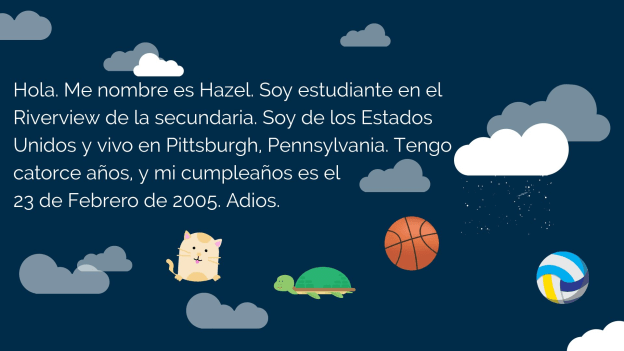
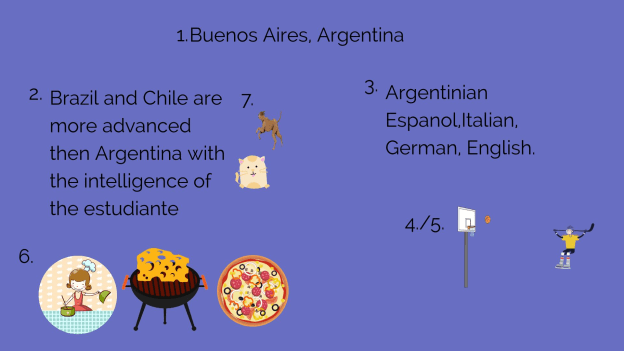
 I also thought this would be a good opportunity for them to choose and learn a little about a place where Spanish is spoken and create an “About_(country)_____” to share that information with the rest of the class. But I also realize that there are many students who are visual learners like me and I wanted to encourage students to be able to quickly look at and process information and represent it in a different way. Rather than simply restating the same content, push them to apply it at a higher level or find a different way to demonstrate an understanding of a concept.

 Learning as I go: Reflections & lessons learned