Your Story Matters, Here’s Mine

LEAN ON ME, WHEN YOU’RE NOT STRONG

From the time I became very aware of what my parents did for a living, I firmly decided that I did not want to follow in their educational footsteps. They worked too hard for too little compensation for all the time and effort they spent on their work, students, and school. They were outstanding educators (my dad retired as an elementary principal, and my mom retired as a psychological examiner for an educational cooperative). In college, as I considered my major area of study and degree options, Dad pointed out that careers define where we live. At the time, I wanted to write for a magazine, so I was considering a Bachelor of Arts in English. However, Dad suggested that if I completed a Bachelor of Science in Education with an English major, then magazine companies would still view it as an English degree, but I would have the flexibility to become a teacher as well, allowing me to live anywhere.

AND I’LL BE YOUR FRIEND

I took over my first classroom a few years later in October, becoming the third Spanish teacher that year for McDonald County High School after working for Missouri State University for 3 years. I nearly hyperventilated the night before my first day as I pondered all of the responsibility I had just agreed to shoulder, but the next morning, as I stood in front of my first class of thirty high school students, I realized that I was finally home. Education was where I belonged.

I’LL HELP YOU CARRY ON

Thoughts of my greatest accomplishments in education over the years always have me looking outward, not inward for impact. Have I made a difference in anyone’s life? Many have made a difference in mine. Am I transmitting inspiration and motivation? Many have inspired and motivated me. Have I equipped students to be able to walk through any door they want in life to fulfill their dreams? Am I walking through my own doors? These questions are why I am never satisfied with my own knowledge and skill. I must know better so that I can do better. Toward that end, I relentlessly pursue professional development, typically completing 150 or more hours each year (and I’m blessed to have a passion be what I do for a living, though I also get time away from PD, so don’t judge your own learning based on mine. Nothing normal here.) As I learn, I share what I know with other educators everywhere. Since the summer of 2016 (I had Twitter before that, but I had no idea what to do with it), I have become a connected educator on social media and have discovered my voice, my audience, and shifted my focus to being a conduit of empowerment for all learners, adults and students alike.

FOR IT WON’T BE LONG

I tell my students that while in my classroom, they will learn to be comfortable with being uncomfortable. Together we will push ourselves to take risks and go beyond the boundaries of what we think we can do (Thanks, Dave & George!). In my classes and professional development sessions, we leverage technology to flatten the walls of our classroom so that the world awaits. I have connected my students with experts and companies (Thanks, Buncee!) from all over the world during global DigCit Summit 2019 (Thanks, Marialice!). We connect with students from as close as Jackson, Missouri (Thanks Lance!) and as far away as Argentina (Thanks, Rachelle!) to learn other cultures, spread kindness (Thanks, Heather!), practice digital citizenship, and to develop authentic audiences for our work (Thanks, JessicaJamie, and Heather!). My passion for technology helps me guide students in a world where they no longer have to wait “grow up” to make an impact (thanks for reminding me, Kevin!).

‘TIL I’M GONNA NEED

Besides leveraging technology to empower students, I also cultivate their voice. Communication is another big skill that employers look for when hiring. Google, at the time this post was written, ranks it second in their top 7 desired employee skills, so I want my students to be able to articulate ideas then see them come to fruition. Students guide my teaching by giving me after action reports when I try a new activity or lesson. They give me as much feedback as I give them. Students have input on what activities we do, how we do them, and in choice of tool for completing the activities. Their voice matters (Thanks for reminding me, Rick & RebeccaLet Them Speak: How Student Voice Can Transform Your School).

SOMEBODY TO LEAN ON

But I don’t stop there. While I flatten the classroom walls for my students, I also do that for myself. An educator in North Carolina, my friend Holly King, pointed out that one of my talents is in connecting the dots, whether that be in combining learning sciences with supported research based teaching strategies, social emotional skills with academics, using tools in new and unique ways to help students learn, or just in the realm of ideas and theories, I make connections. By doing so, I connect people. Whether it is high school students or adults, I connect people, which connects ideas, and that elevates us all and empowers us with a platform, with a sounding board, with a brainstorming opportunity to be better, to elevate the field for us all. (Speechless, Holly.) This is what a lot of us in education do, whether we realize it or not. It’s why left our own islands and continue to grow our professional learning network. Teaching is a life changing business (Right, Dave?), and not just for students. It changes us all.

HEADING TITLES ARE PARTIAL LYRICS FROM BILL WITHERS’ SONG, LEAN ON ME, © UNIVERSAL MUSIC PUBLISHING GROUP

******************************************

**Interested in writing a guest blog for my site? Would love to share your ideas! Submit your post here.


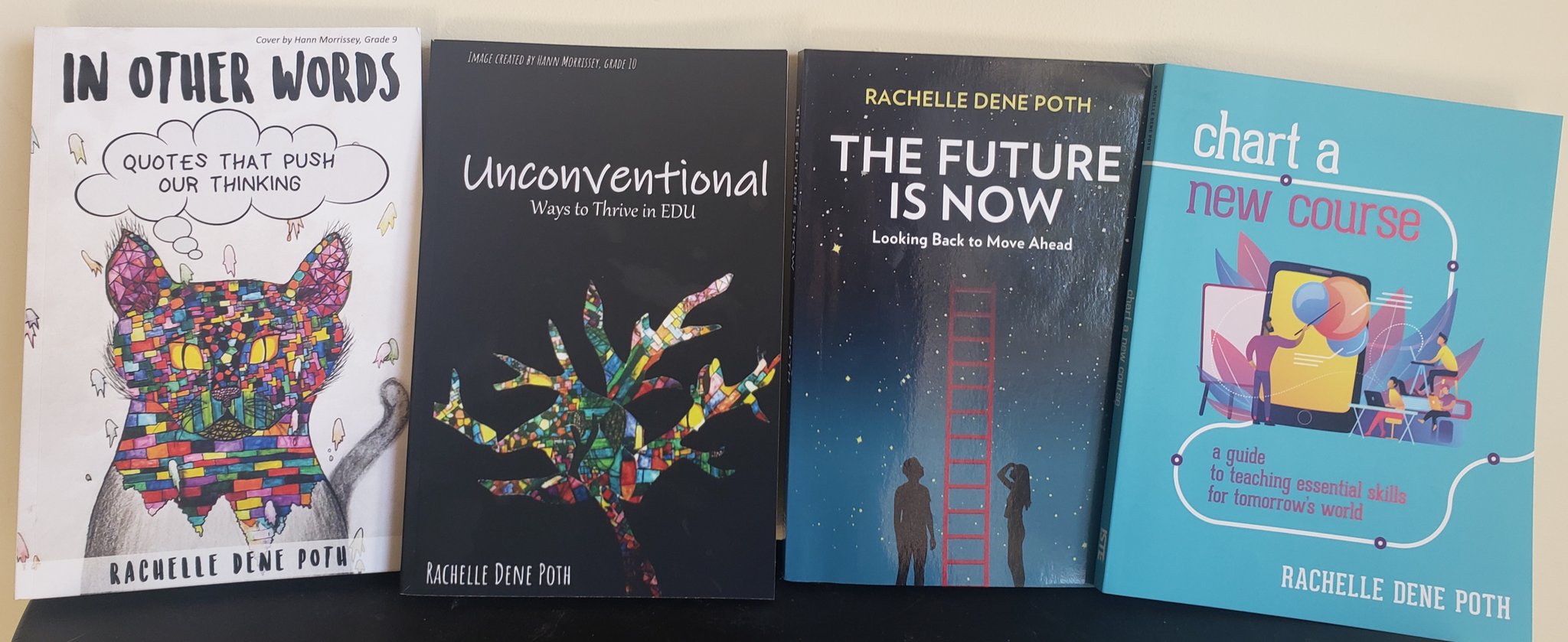
Looking for a new book to read? Many stories from educators, two student chapters, and a student-designed cover for In Other Words.

Find these available at bit.ly/Pothbooks  

Preparing for the Future: Career and College Ready

Previously posted on Getting Smart

Over the past couple of months we have had to make many adjustments to our personal and professional lives. During this unprecedented time, educators and families have been trying to find balance in their days, to work together to keep learning going, and perhaps more importantly, to provide the academic, emotional, and mental support that our students need.

For many educators, finding the right resources that can be used to teach and mentor remotely, and which will also engage students in learning activities, can be difficult. The challenge is not so much in finding tools, but rather in knowing whether our students can access them, determining which will benefit them the most, and making sure that we can provide the support that students and families need. At this time of the year in particular, guidance counselors and educators who work with mentoring programs are quite busy as they help seniors prepare to graduate from high school or other students as they transition to a new grade level or school. In many school districts across the United States, students are required to complete a job shadow, explore careers, and develop a digital portfolio that will become part of their application for college or work. Integral to these requirements are school guidance counselors.

After speaking with a guidance counselor from my school and following conversations in different learning communities and on social media, I’ve noticed that guidance counselors are seeking resources that can help them to provide this same support for students during remote learning. Even when we are in school with access to guidance counselors and resources, it can be difficult for students as they prepare to transition to their next grade or the next phase of their educational or work journey after graduation. Trying to plan their next steps, whether entering the workforce or pursuing a college education, has not been easy during this time. Students have questions about jobs, college applications, and skills needed for the future and without being in the same space, providing that information can be a challenge. However, there are many resources available to educators, students, and parents that can help now while we are experiencing school closures and that will be beneficial throughout the year in addition to the programs already in place.

Here are seven options for guidance counselors to support students during their transitions between grades, schools, and education and career. These options provide ways for students to explore careers, find job shadow opportunities, create digital portfolios, and even visit college campuses.

Career Readiness. In Pennsylvania, the Lincoln Intermediate Unit has a website that provides many links related to career awareness and readiness that will be helpful to elementary, middle and high school educators and students everywhere. It also offers resources for secondary transitions for special educators, direct links to the PA Department of Education, opportunities for virtual college and job visits, and many other relevant materials for educators that are helping students to determine their career pathways.

Couragion. Provides work-based learning experiences for students. Some options include career shadowing for students in grades 4 through 8 and micro badging for career exploration for middle and high school students. There are four curricular models to explore including technology, engineering, manufacturing, and business. There is also information provided for doing remote externships during the summer months and students can also build career portfolios.

Ecampus Tours. Educators and students can choose from more than 1,300 tours to explore college campuses in 360-degree virtual tours. The website also offers additional resources for college planning as well as materials for guidance counselors such as documents and other handouts for students and parents to plan for college.

MyPlan. Through the Career Exploration section of their site, there are videos, salary calculators, and other resources that enable students to explore different careers at their own pace. Students can learn about different industries, find out about the top 10 careers, and even ask questions in the community to learn more about specific careers and skills needed.

Nepris. This site offers educators the opportunity to connect students with professionals working in many different careers and industries. Through their Career Explorer program, educators can request a speaker to join in a virtual discussion with students, provide students with an authentic audience as they present project-based learning, or even arrange a panel discussion. There are live virtual chats and more than 9,000 recordings available for students to explore different careers on their own time. The virtual industry chats and video library are available to everyone during this time.

Smart Futures. This Pittsburgh-based company has created SmartFutures.org, an online career planning platform for students, whether kids or young adults. Using Smart Futures, students take surveys and complete activities to learn more about their skills and interests, and are able to explore careers and create their digital portfolio. E-Mentors are also available through Smart Futures.

Xello. This resource provides a variety of options for students to learn more about careers and build future-ready skills as they transition through each level of school. Using Xello, students take an assessment and then can explore hundreds of career and college options that match their results. As they work through the activities, reading biographies and engaging with the resources provided, a portfolio of their work and explorations is created. Xello’s software also assists students with gathering documents needed as they prepare college applications.

Regardless of whether in the physical or virtual space, we need to support students and provide them with opportunities to explore their interests and prepare for the future, whether for careers or college. Using any one of these resources, students have opportunities to build self-awareness of their skills and interests and can engage in different learning experiences that prepare them for the future.


**Interested in writing a guest blog for my site? Would love to share your ideas! Submit your post here.


Looking for a new book to read? Many stories from educators, two student chapters, and a student-designed cover for In Other Words.

Find these available at bit.ly/Pothbooks  

#singlevoicesglobalchoices

Guest post by Barbara Zielonka  @bar_zie


Dear educators,

We would like to invite you to the global and collaborative project for middle and high school students and teachers #singlevoicesglobalchoices. We are reaching out to educators who want to bring the real world into their classrooms and who want to engage their students without the coursebook.

We are going to do that by focusing every month on one or more international event/ events created by the United Nations and other organizations and by analyzing current events. International days are occasions to educate our students on issues of concern, to mobilize political will and resources, to address global problems and to celebrate and reinforce the achievements of humanity. The existence of international days predates the establishment of the United Nations but is also a powerful advocacy tool that may help us empower our students and create global citizens who are aware of the wider world, have a sense of their role as world citizens, respect and value diversity, want to tackle social justice, and believe that all children and young people have a right to an education.

Each international day offers the opportunity to organize activities related to the theme of the day at our schools. The themes of international days we have selected will always link to:

  • the maintenance of international peace and security;
  • the promotion of sustainable development and global mindedness;
  • the protection of human rights, and the guarantee of international law and humanitarian action

The main aims of this global and collaborative project are to:

  • infuse curriculums with more project-based learning and exposure to real-world examples;
  • empower students by giving them the opportunity to co-create knowledge and learn through mistakes in a safe environment;
  • support students in becoming familiar with the professional environment and behaviours such as clear and timely communication, thinking critically, problem-solving and time management;
  • help students to see how their achievements are based upon more than just the grades they earn in class, but also the experiences they develop during their lessons

Upon completion of this project, students will:

  • define real world problems and find solutions;
  • meet international students and become a part of a global community;
  • participate in thought-provoking conversations and self–reflection activities that challenge students to investigate global problems;
  • gain factual knowledge of human rights and environmental issues;
  • learn and expand their digital citizenship skills;
  • be challenged to share the information they learn;
  • develop their global competency.

More than ever before rapidly changing working conditions and social structures require students to actively shape their role in society. Schools form future leaders for positions in society that require a high degree of social emotional skills and global mindedness. In response to that, our project provides specific collaborative assignments and strategic threads to realise related education goals. Democracy and citizenship, health and life skills, sustainable development are three interdisciplinary themes the project aims to address.

After having registered, we will verify your identity and invite you to our Microsoft Team where all the collaboration will take place.

Find more information about out project here:

Home

Registration: https://singlevoicesglobalchoices.wordpress.com/join-us/

We hope to see you soon! Join us in this collaborative and global adventure!

Kind regards,

Lesley Fearn, Lynn Thomas and Barbara Anna Zielonka

Project logo- created by Barbara Anna Zielonka


**Interested in writing a guest blog for my Rdene915 site? Would love to share your ideas! Submit your post here.


Looking for a new book to read? Many stories from educators, two student chapters, and a student-designed cover for In Other Words.

Find these available at bit.ly/Pothbooks  

What skills will students need


I’ve been thinking about the world of education and work right now. We are experiencing so many changes, uncertainties and yet have to determine how to plan for the upcoming school year and what types of learning experiences to design for our students. For myself, something that keeps coming to mind is providing ways for students to have more choices, to become flexible with learning and new ideas, and to consider strategies or tools that enable us to transition between our physical and virtual learning spaces.  I thought back to some research that I started a few years ago and how that can help us now as we consider options in the new school year.

About two years ago, I read about something called the “gig economy.” Not knowing what that meant, I turned to Google to do a search and within .30 seconds, I had over 35 million results. After a more advanced search and filter, I learned that the term refers to jobs or work assignments that are the equivalent to a “gig.” Short-termed, specific types of tasks. Common applications of this are jobs that employ freelancers or independent contractors. When searching for the top “gig economy” jobs, a few common themes of the top 10 list include Deep Learning (think AI and machine learning), Bitcoin, Blockchain and Social Media Marketing.

Employment in a gig economy is on the rise, which means that our students need to develop a variety of skills that will prepare them to adapt to the changing landscape of work since we cannot predict what jobs will exist in the future. With statistics such as:

  • In 2015, 54 million people worked as freelancers and on average earned an estimate of 17% more per hour than full-time employees.
  • A projected 60% of companies plan to hire more freelancers rather than full-time employees. In 2016, 35% of workers were freelancers and it leads me to wonder what the number will rise to in another 10 years?

We need to prepare students for their future by offering innovative and challenging learning experiences. Experiences that will push their problem solving, critical thinking, creativity and collaboration skills and that involve real-world experiences.

As a Spanish and STEAM teacher, I am commonly asked why students need to learn a foreign language, or why I have them create different projects using emerging technologies rather than traditional document or powerpoint style presentations. My response is always that students need to develop a variety of skills that will enable them to adapt and be marketable to multiple job possibilities in the future. The ability to communicate in another language can benefit students in many ways and it is always a marketable skill to have.

Students also need the opportunity to explore their interests, whether in the arts, music, technology, through entrepreneurial courses, as a few examples. Learning how to establish oneself as an independent contractor, to be self-employed and to understand the traditional components of working in business, but yet preparing for non-traditional forms of business and work.

What experiences will help?

Entrepreneurial Courses: How can educators best prepare students for a gig economy workforce or to possibly become entrepreneurs? By designing learning experiences where students have an opportunity to explore, create, and innovate and have choices in the how, what and where they learn, we will offer more possibilities for inquiry-based learning and foster a growth mindset. Some schools offer programs and courses which lend themselves to these types of possibilities for students.

In my own school, we have a course on entrepreneurship, sports and entertainment management, and a variety of STEAM courses where students design problems to solve and explore emerging technologies. Patsy Kvortek, one of our business teachers, recognized a need for more relevant courses that provide students with opportunities to learn in more authentic ways. She believed that these courses “would prepare students for future success.” She created a course in “Entrepreneurship” and “Sports and Entertainment Management”  a few years ago and has continued to build more real-world experiences and project-based learning into the curriculum. In her classes, students learn about project management, business management, social media, finances and how to plan large events. In courses like this and others like it offered across the country, students are not only developing skills that will prepare them for many career options, they are also building critical skills of communication, collaboration, problem-solving and as an added benefit, SEL (Social and Emotional Learning) skills as well.

Project-based learning: Alan November, international keynote speaker, and author, said we have to “teach students ​how to learn.​”​ During his keynote, November stated: “I think we should begin to move more and more toward the skill side, because if we teach you to memorize and regurgitate content and your job is wiped out by technology, you’re not well prepared to reinvent yourself if you didn’t learn how to learn.”

November’s message reinforces the importance for students to learn to communicate, collaborate, problem-solve, and think critically. These are key skills that will benefit students whether they choose to enroll in college, get a job, pursue specialized training, or possibly take a gap year to explore the world and different learning experiences before deciding.

Project-based learning (PBL) helps students to create their own learning path by looking for an answer to a question they come up with and not having a specific direction to go, nor one right answer to find. With PBL, students ​engage in sustained inquiry and the skills of critical thinking, creativity, and problem-solving become part of the learning process. Students need more real-world experiences, especially those like in place-based learning where they can assess needs that exist in their own community or look globally, and then brainstorm possible solutions. Learning beyond the classroom walls with a more authentic purpose will benefit all students.

STEM and Emerging Technologies: Artificial Intelligence is a growing area in education and in the world. It is estimated that 40% of the jobs will be replaced by AI, so how can we prepare students to be competitive? We create opportunities for students to become the creators of AI, to learn how to code, to design new technologies that will make an impact on not only their learning experience but for the future. Even using AI for learning, students have access to virtual tutors and can enroll in online courses that are taught by AI, which expand the how, when and where they can learn. Knowing how to code becomes a skill that is marketable to many areas. Students can become app designers, create new innovations, and develop the critical “21st-century” skills that they need to be successful in whatever their goals may be.

Educators can facilitate greater, more personalized learning experiences for students by fostering a “STEM mindset” in students. As Dr. Jacie Maslyk states, “The way we engage with our students can build confidence and fuel curiosity.” In a world where the future of learning and work are uncertain, the best way we can provide for our students is to push their curiosity, promote risk-taking and challenge them to explore emerging technologies and different STEM concepts and be there to support them along the way.


**Interested in writing a guest blog for my Rdene915 site? Would love to share your ideas! Submit your post here.


Looking for a new book to read? Many stories from educators, two student chapters, and a student-designed cover for In Other Words.

Find these available at bit.ly/Pothbooks  

Skip the Course, Get the Curriculum

Guest  post by Monica Gupta Mehta  @EmotionalMUSE

I know there are many teachers who just don’t have the time to read anything extra right now, but would love to include more social emotional learning into their virtual week. For those teachers, I have pulled together all of the student activities in one place. In order to not feel overwhelmed, I would recommend choosing just 1-2 activities to include in your curriculum this month!

These activities are organized by topic, so you can find them in the following order:

Curiosity, Mindsets, Self Awareness, Social Awareness, Self Care, Emotional Regulation, Calming Mind and Body

Feelings Board: Make a feelings board for your own students. You can do this using Padlet as I did, using your own digital tools…or simply make it an activity at the start of classroom chats, having every student share with one word how they are feeling.

Exit Slips: Use digital exit slips in your next class session to ask students what they most want to learn about a specific topic. Try to incorporate their ideas in your next unit.

Personal Projects: (Not a typical curriculum item, but especially helpful for emotional regulation and coping during this time of high stress) If your teaching team agrees, you could reduce workload for each course and jointly allow students to come up with their own project, something they would like to spend their time doing. Each teacher could take charge of one component – helping students set goals, make a plan, and checking in to see how it is going and if adjustments need made. I did this with my own kids over Spring Break – one chose to create a website for collecting people’s experiences during COVID19 (covid19capsule.org), one chose to study neuroscience, and one learned Scratch programming. It was a great form of mental engagement and inherently motivating.

Gratitude Journal: Begin a gratitude journal with your class. You can do this in numerous ways – you can use digital learning tools, ask them to complete one at home in a journal, make it simple or artistic. The practice of writing down what we are grateful for each day helps us to focus our attention on the positives in our life. A positive attitude helps us cope, and makes it easier to avoid excessive worrying.

Here is a link to one on teacherspayteachers but it costs money – fairly simple to make your own.

Gratitude Read-a-Loud: Choose your favorite picture book about gratitude and read it to your students, or record yourself reading it and post it for them. If you can find your book on Storyline Online, it will be read aloud by a celebrity and have beautiful illustrations to accompany it.

One book that works well for this is ‘Please, Please the Bees’ by Gerald Kelley – you can find it on Storyline read by Rashida Jones. It is an excellent story of gratitude and appreciation.

Everyday Heroes: For very young students, you could use this game to discuss gratitude for our everyday community heroes.

Mastery Orientation: Ask students about a time they did something well. Ask them to write a few sentences about what rewards they received. Ask them to think about what external praise they got for their work, and what internal rewards they felt. Ask them what else makes them feel proud inside themselves.

Growth Mindset Charts: Ask students to list sentences they have said or heard about their ability, and have them classify each as growth or fixed mindset on a chart. Have them convert fixed mindset expressions to growth mindset ones.

Growth Mindset Discussion Question: Ask students about something they used to struggle with, but now are good at. What are all of the things that helped them to improve?

Self Check-In: Using the Starfish/Tornado visual below, ask your students to check in about how they are feeling. Are they calm as a starfish, or agitated like a tornado (or have fun making up something in between!). Brainstorm a list of ways to calm back down when they feel agitated inside. Ask them to stop and think a few times each day about how they are feeling. It helps to give them a place to make a tally (worksheet, digital document) each time they remember to stop and check in with themselves.

Emotional Vocabulary: Ask students to process one emotional vocabulary word each week. Ask them to define it, comment on times when they have felt it themselves, and times they have seen others exhibit it. For example – ‘What is courage? What is a time when you felt courageous? When have you noticed others being courageous?’

Identity: For older students interested in personality as a component of identity, a basic starting point is on the topic of extroverts/introverts. This is an often misunderstood dichotomy, and it can help students to understand themselves better. Many are surprised to learn that being an introvert is not about being antisocial…it is about where we get our energy from. An interesting discussion point: many argue that these days, our society more publicly rewards people for being extroverted. Being in quarantine, we are seeing introverts thrive (relatively) and extroverts have a much more difficult time.

One of my all-time favorite TED Talks is this one, on the Power of Introverts.

Coping Skills: Take a ‘Coping Skills Inventory.’ Give students a list of activities that are often useful for coping with big emotions. Explain that people all around the world are feeling complex emotions – for example, a child may be happy they are getting to play more games with their family, but sad that their birthday party is cancelled. Ask them to check off which coping strategies most help them, and to brainstorm others that may help as well.

Sample List: Going for walks, Music, Sleeping, Family Movies, Online Communities, Connecting with Friends, Puzzles, Comedy, Audiobooks, Books

This site has some great printables.

Sesame Street and Big Emotions: For very young students, Sesame Street continues to have wonderful content about understanding and processing our feelings. Here is a very sweet song with Abby Cadabby about big emotions. Here is a link to activities and other Sesame Street videos on emotions.

Calm Down Spot: If possible, ask students to create a place that is just for them to sit and be calm. This is a great place to have ready for later in this course, when students will practice going there to cool down when their emotions become overwhelming. For now, it can just be a place to sit and think about how they are doing, and what they might need at that moment. They can keep a few books nearby, perhaps some coloring, or even a water bottle can be helpful. A favorite stuffed animal is always nice to have. My daughter keeps her ipod and headphones there to listen to some music when she wants to relax and reset and think about life.

Empathy and Appreciation: One fun way to build empathy is to give your students an ‘Acts of Kindness’ challenge. Explain that to do effective acts of kindness, students need to observe others and think about what would make the recipient happy – not what the student themselves would want. Ask students to document their acts of kindness, ideally in a way that can be shared with their classmates. For example, you could ask students to create short videos about their act of kindness using FlipGrid or to create Padlets. For older kids, share the Berkeley study on acts of kindness and their impact on happiness. The study discovered the greatest benefit to self came from doing 5 acts of kindness all on the same day, once a week every week for 6 weeks. Teenagers could even do my #fiveacts challenge on Tik Tok!

Social Detective: You can teach students active listening and observation of others by playing ‘social detective.’ Ask students to think of a situation coming up in which they will be interacting with others. At this time, it will most likely be other family members in their household. Have students draw the anticipated scene and place each family member in it. Then ask students to give each person a thought bubble, and to write in one thing that person might be thinking – something the person might be feeling strong emotions about or hoping for.

Another way to play social detective is to use picture books. Stop at an interesting scene and ask students to notice everything they can about the scene and the people in it. This can also be done with movies. Here is a sample worksheet from the Michelle Garcia Winner Social Thinking series.

Cry Baby: This is a simple ‘social detective’ type activity as well. Show students a picture of a crying baby, and ask them to think of all the reasons a baby might cry. This is particularly effective as young babies can not yet talk to communicate their needs, and so students must work hard to be observant and practice empathy skills.

Turtle Time: Ask students to sit and observe people by acting like a turtle. They should move their head around in a slow, exaggerated fashion. Ask them to write (or draw) everything they notice. Then ask them to think of a behavior that would be appropriate for them when entering that scene…and one that would be inappropriate. For example, if their brother is having a school video chat, it would not be appropriate to be loud as they enter that scene.

(They do not have to be turtles. They could be spies with binoculars, or anything else they can come up with!)

The Main Point: Host small group virtual chats, ideally with 2-4 students per session. Ask students to take turns sharing a short story about their day, and ask other students to listen carefully. Then have each student practice showing they were listening by identifying what they felt was a ‘main point’ in the story, along with an appropriate emotion word. An example might be, “It sounds like you felt really scared when your sister got sick.”

Same But Different: Tell your students a statement in a neutral tone, and then practice saying it in different tones of voice. Ask students to differentiate the possible emotions and thoughts of the speaker.

Feelings Cards: There are countless online resources for creating a stack of ‘feelings cards.’ These are simply a collection of photos of people expressing different emotions. Ask students to identify what they notice in the photo, helping them make careful observations. Then ask them students what they think the person is feeling. I enjoy doing this activity with gifs, as they show a bit more of the natural movements of a person’s body and face.

Whichever images you choose, please don’t use emojis for your feelings cards. They teach very little, as they are not realistic expressions and have no body language.

Connection: Students are in need of connection to their peers, and as teachers we can serve as facilitators for this. Schedule video chats with students in small groups of 2-4, and send out a sign up sheet ahead of time. This allows students to sign up for slots with friends they are missing. If that does not work well for your schedule, you can also create ‘break out rooms’ in Zoom chats to allow a few students to be together during a full class video chat.

Some ideas for games students can play together virtually are Simon Says, Guess Who, I Spy, and Twenty Questions.

Vulnerability and Belonging Discussion: For older students, just a great TED Talk that can be spun off into a discussion about connection: Brene Brown and the Power of Vulnerability.

Simple Self Care Practice: One very simple activity is to ask students to print out this handout, or something similar, and ask them to check off each item across the week.

Piloting Your Plane: This activity is a complex metaphor, but tends to resonate very well with young students. For a fun example of how to explain this analogy to students, watch my own videos here: Piloting Your Plane. (I made these today quickly to give you an example – the sound quality is not stellar. If anyone wants a better quality version to actually use in class, let me know and I can remake it.)

You’ll need to give kids some way to keep track of checking in with their bodies all day. Here is a sample worksheet you could ask them to use for this activity. Some other ideas: you could ask them to check in on a spreadsheet or document in Google Classroom, or use Padlets.

The script goes something like this:

“Imagine your body is a plane, and your mind is the pilot. Your mind is in charge of keeping the plane flying smoothly, without crashing. When you have tantrums, overreactions and large emotional outbursts, that is like your plane crashing. If you pay attention to piloting your plane, you can fly it smoothly all day.

Just like a real pilot, there are important gauges you can check to make sure you are flying smoothly all day. It is important to stop and check on your gauges all throughout the day. These gauges are:

Temperature: When you are feeling calm, you are in the green. If you check your gauge and it is green, you can go back to your normal activities. If you are in the red, that means you are very angry, frustrated, or upset for some reason. It is important to stop what you are doing and calm your body back down to green. Blue means you are feeling sad, or lonely, or disappointed, and perhaps could use a hug or something that makes you feel happier.

Fuel: Your fuel gauge measures if you are hungry or thirsty. Take a minute to check in with your body, and if you are running low on fuel, fill it up! Being hungry or thirsty can actually make our emotions overreact to situations.

Energy: Your energy gauge tells you if you are too full of energy, or perhaps too low on energy. If you are too full of energy, do some exercise and movement to help release it. If you are not getting enough exercise and movement in your day, then your energy gauge is going to get too full and could cause a crash. If you are low on energy, allow your body some rest – if not a nap, then perhaps reading a book or just relaxing on the sofa for a bit.

Weather: Your weather gauge tells you if your plane is going to run into some turbulence ahead! Think a little forward in your day – is anything coming up that might cause your emotions or body to not fly smoothly? Something exciting, or difficult, or a change of routine? Preparing for bad weather ahead can help you to handle it better.”

This analogy can extend further than teaching kids to check their gauges. Here are some additional pieces you can add on to this activity.

The Watchtower: The Watchtower is essential to flying a real plane, because there are events or conditions that a pilot cannot detect by themselves, even if they are very good about checking all of their gauges. Let’s take a moment to think who acts as our watchtowers? Often, this can be your parents or teachers, and perhaps even siblings. It is important to listen to our watchtowers about our emotional well being, because they often see things we don’t see ourselves.

The Rocket Ship: When something really big or exciting is going on, sometimes our everyday plane turns into a rocketship!! When this happens, it usually means our emotions are turbo charged!! This means we have to be even more careful about checking our gauges often, and taking care of our bodies all day. When we blast off for a big event, we have to look out for not only bad weather turbulence, but also asteroid fields and meteors!! When in our rocket ship, we fly fast, and that also means we can crash fast! It can be really helpful to take extra good care of your body when you are flying in a rocket ship.

Habit Tracking for Older Kids: Older students may not need the full ‘piloting your plane’ analogy, but they do need to learn about taking care of their bodies. For teens, a helpful activity is to ask them to track for themselves:

1. Sleep

2. Exercise/Movement

3. Screen Time (non academic)

4. Socializing Time

5. Outdoors Time

6. Water

7. Food

8. Mood

Ask them to draw connections between their activities and their feelings/energy levels. What is one habit they want to keep in their daily life to feel better? Have them set a personal habit goal and check in on it weekly.

Mindfulness – Nature Walk: One mindful activity that is often satisfying for young children is going on a nature hunt. Ask them to take a magnifying lens if possible, and to walk slowly around their yard or neighborhood looking for nature. They can analyze leaves, look for insects, find snails, notice spiderwebs…there is so much to discover. Ask them to remember the things they are seeing and to come back and journal them.

GoNoodle – not just for movement!: GoNoodle has a number of video series that are helpful for self care, beyond their movement and exercise videos. One that is good for self care is: Take on the Day,

Movement and Exercise: Since movement and exercise are so critical to emotional regulation and sleep quality, it would be beneficial to offer students ideas for how to stay active at home. To get you started:

GoNoodle

Backyard Play

Biking

Walks

Station Rotations (sit ups, jumping jacks, push ups, plank)

Games (tag, Simon Says, hide and seek, freeze dance, animal workout)

Dancing – zumba videos, Kidz Boop, Just Dance

Cosmic Kids Yoga or simple yoga on own

Mental Enrichment: Students may need mental stimulation beyond school work. It could be fun to brainstorm a list together of things students can do to stay busy beyond school, ideally without devices. To get you started:

Reading

Video Chats

Obstacle Courses

Escape Room

Imagination Play

Art

Board Games and Cards

Puzzles

Brain Teasers

Cleaning/organizing/tidying

Helping parents with tasks or chores

Clue Hunts

Learn a new skill

DIY projects

Experiments

Writing stories, poems, comic strips, etc.

Building (Legos, scrap materials)

Acts of Kindness

Origami

Audibooks

Journaling

Problem Solving Wheel: Teach students to stop, calm down, and then think. Use this wheel to help them make a good choice for what to do next.

Bending the Rules: Try playing games but changing the rules of the game. This might be met with resistance, but if you can come up with rules that make the game slightly more fun, eventually it may be met with joy and curiosity.

Three Solutions: Students often come up with one answer, and then dig in their heels defending that answer or way of doing things. Ask students to come up with three possible answers to various questions or riddles. This is a very important skill to hone for group work.

Breathing with Cookie Monster: For very young kids, they might enjoy watching Cookie Monster use breathing to calm down and increase his patience while waiting for his cookies to be ready.

Yoga/Stretching: There are many printables available online of ‘animal yoga.’ These stretches are relaxing to the body. You can also find great story-telling style yoga at Cosmic Kids Yoga.

Calm Down Spots: I mentioned these earlier, but having a spot that students are used to using as a ‘calm’ area will also help them when agitated. Students can be asked to go to their calm down spots until they are back in the green, or at least the yellow. It should be explained to students ahead of time that this is not a punishment, being ‘sent’ to their calm down spot. It is merely a strategy that is very helpful for avoiding poor behavior when agitated. In this article, I give lots of advice for how we made a calm down spot at our home for my son. This includes building a ‘calm down kit‘ to keep nearby.

Breathing Shapes and Props: A unique way to practice breathing is to ask students to choose their favorite breathing shape. I have included one example here, but there are many different ways to practice deep breathing – often one style will suit a particular student better than another. Ask students to practice this daily, so that they build their muscle memory. Students who attempt to do deep breathing when agitated, without practice, often end up breathing far too rapidly and feeling more frustrated. This site also includes props, such as breathing with bubbles.

Exercise and Movement: As discussed in the unit on Self Care, exercise is great for emotional regulation. While a child who is very upset won’t likely be in the right state to go for a bike ride, taking a little walk or doing some movement in place, such as jumping jacks, might help them to work out some of their energy. Whatever movement they choose should not be one that requires much coordination. My favorite is to keep a balloon around, and to ask them to bop the balloon in the air and keep it up for at last 10 iterations. This helps their mind focus and clear, while also giving them an opportunity for safe movement. If something more aggressive is needed, students could try ripping up a pile of junk mail paper.

5-4-3-2-1 Grounding: For children who struggle with anxiety, it can be helpful to teach them grounding activities. 5-4-3-2-1 Grounding is a method in which you use all your senses to ground yourself in the moment. Ask students to list:

5 things they can see

4 things they can touch

3 things they can hear

2 things they can smell

and 1 thing they can taste

Here is a graphic you could use while practicing.

Accomplishments Box: Celebrating accomplishments can help build confidence, self esteem and optimism, all of which are helpful to staying regulated. Here is a fun activity for building an accomplishments box, which will help keep students motivated as well.

Finding Humor: Humor is often the secret key to help students return to a state of calm. Keep some joke books, comics, or even comedic audiobooks handy for when a child needs a pick-me-up.


________________

The Importance of Being a Mentor & Having a Mentor

Mentoring is a very important part of what we “engage” in as educators. Whether we serve as a mentor to a colleague or a student, or perhaps we seek out a mentor to help us with challenges or simply to have a system of support in our personal and professional lives, it has a tremendous impact. Whether or not we even realize it at times, we are all serving as a mentor to someone.

Recently a colleague stopped in to talk and confided in me that they were experiencing challenges with classroom management, student behaviors such as disrespect and keeping up with the responsibilities of teaching in general. Without a doubt, teaching can be tough sometimes. I’ve been in that same position more than once during my teaching career.

Having taught for the last 25 years, I’ve had a lot of experiences, some good, some bad, and some in between. At times in a position where I needed to improve, fearing I would possibly lose my job, and felt like no matter what I tried, that I just would not succeed. There were days that I left school feeling helpless and alone. I was embarrassed to confide in anyone that I was struggling. There were people who impacted my life, not because they were assigned as my mentors, but because they just took the time to listen, care, and support me to keep pushing through. Because of their impact on my life, I learned the importance of relationships, of being available to listen and to support, but also to give pushback and critical feedback when needed.

The Roles of Mentors

Mentors have a pivotal role to play in education. Whether you are enrolled in a pre-service teacher program, working as an intern in a school, new to teaching or to a new school, you often have a mentor to help guide you through any transitions along the way. Most of the time the “mentorship” is formed between a more veteran teacher and a newer teacher, to help to lessen any feelings of being overwhelmed when starting the teaching journey. Mentors can help newer teachers find their place in the school, establish their classroom presence and get into daily teaching practice. While I believe that mentoring for new teachers is critical, I think that an area that is often overlooked is that veteran teachers need mentors as well. For many years I thought that teachers were only assigned mentors as part of a school induction program, part of an improvement plan, or simply because it was part of the pre-service or teacher preparation program.

Teaching can become an isolating profession if we let it. Isolating in the sense that we don’t have enough time to connect with colleagues. We have many tasks to keep up with, but the most important part of our work is making time for our students. We must be available and invest our time to help them to succeed. Whether specified or not, everyone is a mentor and I believe that sometimes we don’t even realize it.

We mentor students. We don’t know everything that they might be experiencing when they leave our classroom. Students need a constant in their life, a relationship based on trust and support that they know is there when they need it. Our colleagues need to establish these same relationships as well. But how do we find time to seek out a mentor or to act as a mentor to someone else? For these mentorships, the relationships are critical for our personal and professional growth. We need to be intentional in serving as mentors for those we lead and lead with. Finding mentors for ourselves will help us continue to learn, grow and improve our practice each day.

Mentorships Today

Mentorships typically involve a mentor and mentee, with clearly defined roles. A mentorship is defined as a “wise and trusted counselor or teacher.”  However, I think the definition has evolved and within mentorships today, an individual can be both a mentor and a mentee. New teachers paired with more veteran teachers both bring unique skills, experiences, and knowledge to their mentorship. They each have something to teach and a lot to learn, which is why finding time to be part of a mentorship is critical for professional growth.
Colleagues within the same school can serve as mentors to one another, or even connect with a colleague from a neighboring school. However, finding the time to sit down in the same space or have a quick conversation can be a challenge on most school days. The lack of time is one of the most common problems facing educators. When we think about all of the tasks that we do in a given day whether, in school or home, there can be little time left for mentoring. But there are many options that can solve this problem of lack of time and assist you in pairing up with a colleague or creating small groups of educators to serve as mentors to one another.

And finding a mentor does not require, at least in my opinion, that pairing of a new teacher with a veteran teacher. Everyone has something to offer and as a teacher of 25 years compared to a teacher early in their career, there is a lot of knowledge and skills that can be shared between us. But how can we find time to connect? When used with purpose, technology can make a difference. The purpose being professional growth, avoiding isolation or having somewhere to turn when feeling frustrated or in need of support.

How to Connect

  1. Social Media – Social media platforms such as Facebook and Twitter, enable educators to connect and share stories, ask questions, and to interact whenever is convenient. These platforms offer educators a space to learn about issues educators are facing and brainstorm ideas for making changes in their practice, or engage in conversations and foster some connections on their own. There are even focused communities available on Facebook to connect based on the content area, grade level or even topic.
  2. Book studies and Voxer groups – There are many book studies happening, many of which are announced on Twitter or Facebook, and focused on books related to education or specific trends in education. Personally, I have made some great connections with educators from around the world, simply by joining in a Voxer book study and building relationships in a supportive environment. The book study of “Four O’Clock Faculty” by Rich Czyz led to a #4OCFPLN, which has become a large part of my professional growth and reflective practice every day.
  3. ISTE: The International Society for Technology in Education is a worldwide Network that includes more than 20 Professional Learning Networks (PLNs). By getting involved in these networks, you have access to thousands of educators and can engage in conversations, post questions, and make your own connections that will help you to keep building your practice.
  4. School committees- Schools can offer different activities for teachers to engage in whether it be a health and wellness committee or a leadership council which gives teachers an opportunity to talk, share ideas, or bring school concerns to light. By bringing teachers together in a meeting like this, it is an intentional way to create time for teachers to collaborate and form those valuable relationships.
  5. Clubs –  Another option for establishing mentorships in your school that can be beneficial for teachers and students, is to create a club which has mentoring, building leadership skills and student confidence as its purpose. One possibility is creating a Ted-ED Club. where students get to know their peers, explore passions, build confidence and become mentors for their peers. All schools need to have mentoring in place for students and give students the opportunity to serve as mentors for their peers.

We all need mentors whether in our first or thirtieth year of teaching. At times it might be someone assigned to us, a friend or a member of our PLN. Sometimes we don’t even realize that we are in a “mentorship,” we are just supporting one another on our teaching journeys. Veteran teachers need to seek out mentors as well, and that might mean connecting with a teacher who is new to your building or to the profession. How can we expect our students to interact and understand different perspectives, and to be accepting if we ourselves do not do the same thing and go beyond that? It starts with us. It always starts with us to take that first step.


**Interested in writing a guest blog for my Rdene915 site? Would love to share your ideas! Submit your post here.


Looking for a new book to read? Many stories from educators, two student chapters, and a student-designed cover for In Other Words.

Find these available at bit.ly/Pothbooks  

Unconscious Bias

Guest post by Sari Goldberg McKeown @sgteach_sari & Jessica Liakonis @MrsLiakonis

Opinions expressed are  those of the guest blogger. 


I embrace education as an opportunity to inspire and empower. As an educator, it is my goal to enhance student learning as a transformative experience. Teaching is a privileged position. It  demands humility as much as respect. It is crucial that as educators, we recognize the power inherent in our role and are self-reflective about our actions. It is critical that we are mindful of our position as a role model and the kind of learning we strive to promote among students. Our students are always watching. They are always learning from us. When the image below was recently posted by Adam Welcome, it forced me to stop in my tracks. This small image has a BIG impact.

“We say we teach all children, but do we teach all stories?  Do we teach the whole truth, and nothing but the truth, or just the sanitized version that will not ruffle any feathers? I can choose to bring others into our classrooms so that their stories are told by them. I can choose to model what it means to question my own assumptions and correct my own wrongs.” As Jessica and I unpacked Pernille Ripp’s post “These Divided Times,” with our Voxer group #StrongTies, Pernille’s words swirled in my head. This conversation brought my own assumptions to the forefront. Do I support all stories? Do I create a space that encourages the whole truth? What do I model? -Sari


𝕊𝕒𝕣𝕚 𝔾𝕠𝕝𝕕𝕓𝕖𝕣𝕘 𝕄𝕔𝕂𝕖𝕠𝕨𝕟@sgteach_sari

How do you flatten the walls in your classroom? @pernilleripp @kemnitzer3 @JamiePandolf @AKennedy61 @MrsLiakonis @lopescommack @ChrisKauter @MrECuff

View image on Twitter

Who’s different? What’s fair? As a society, discussions about bias, discrimination, culture, and social justice tend to happen more in middle and high schools. Educators sometimes believe that younger children may not understand these complex topics, or maybe they just want to delay exposing them to injustices as long as possible. However, young children have such a passion for fairness. They want to do the right thing; they want to be fair. The best though is that they notice differences without apology or discomfort. Why does your hair feel different than mine? What is that in your lunchbox? How come you have two mommies?

As Sari mentioned, while we unpacked Pernille’s post, I thought to myself, bias can be unlearned or reversed if children are exposed to everyone’s differences in a positive way. The burning question, how do we do that?  -Jessica

Searching Inward

I quickly realized I had a lot to learn. I am so grateful for the time that Pernille spent with us that week digging deep into this meaningful work. As Pernille shares in this message (that I highly encourage you to listen to), this is messy, exhausting work that is so incredibly important. Before we can do the work with our students, we need to do the work with ourselves. I needed to search inward and identify my own personal bias. Bias. What does that mean? I used to believe that word had a very negative connotation. This learning journey has shifted my perspective.

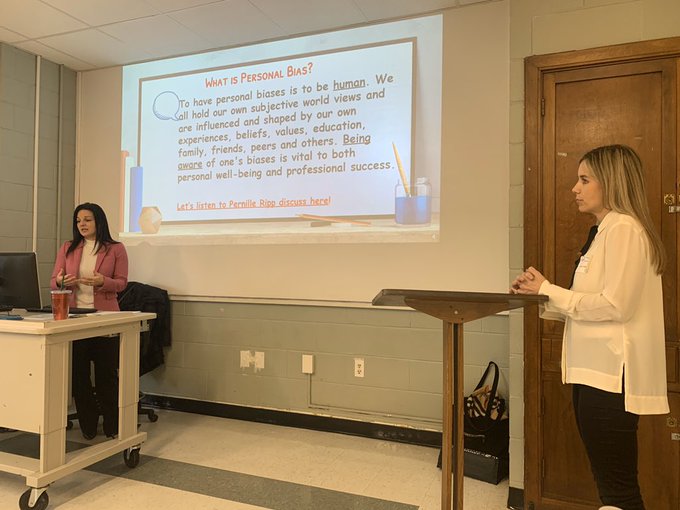
To have personal biases is to be human. We all hold our own subjective world views and are influenced and shaped by our own experiences, beliefs, values, education, family, friends, peers and others. Being aware of one’s biases is vital to both personal well-being and professional success.

Our lens is created through our experiences. These experiences create our bias. That does not make our lens wrong…it just makes it personal. Believing that our lens is the only lens or the correct lens, is wrong. – Sari

The Power of a Story

Yes, Sari! We must identify our own bias first, and it’s not always easy. Once we can understand and recognize this, we can begin to teach students how to acknowledge their own. The early years are the time to begin helping children form strong, positive self-images and grow up to respect and get along with people who are different from themselves. So, how can we start beating bias? With books!

Jessica Liakonis@MrsLiakonis

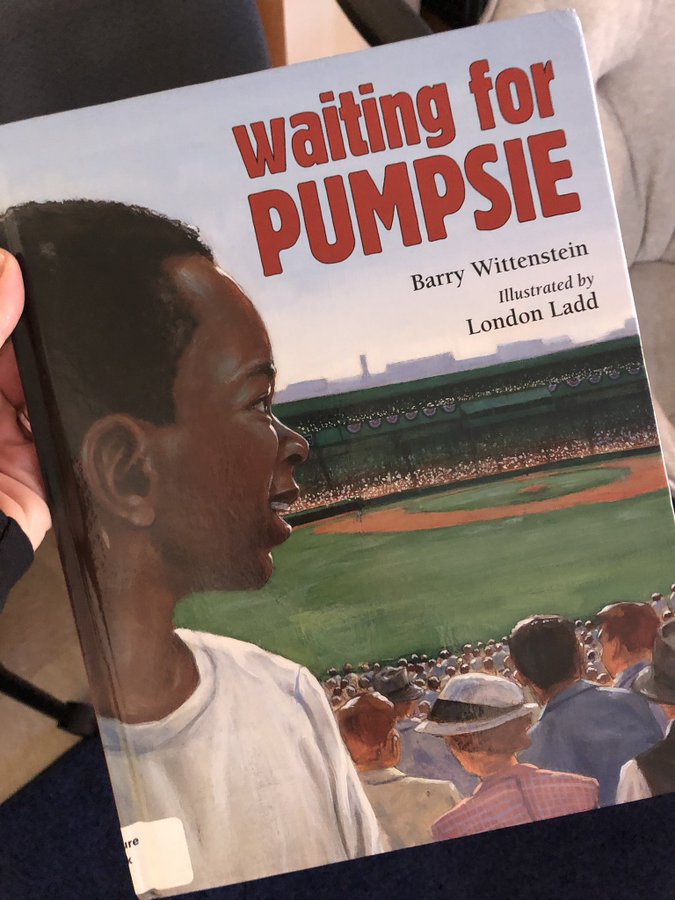
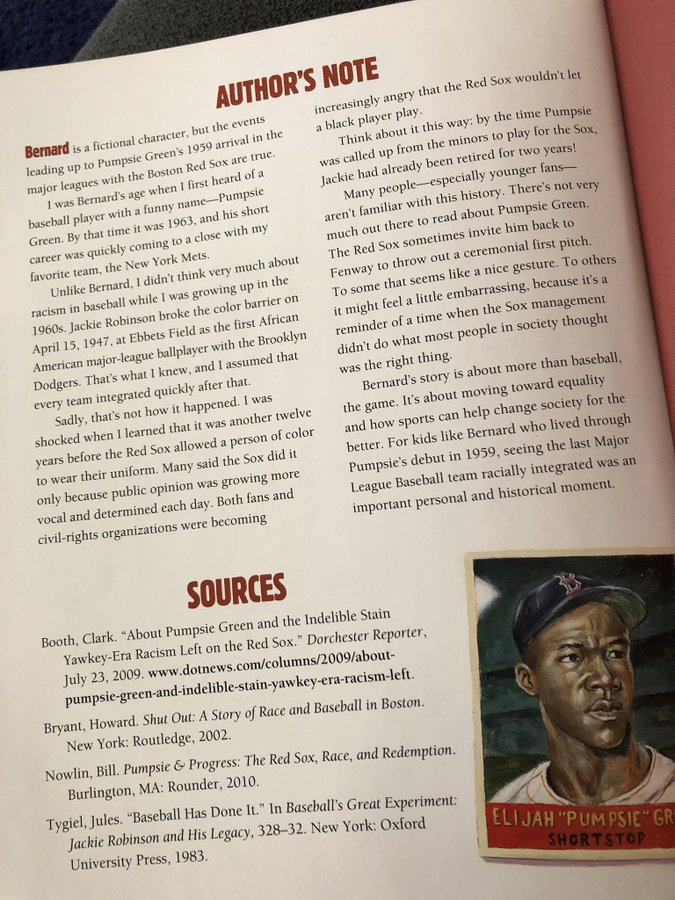
Day 46 Another great story by @bwittbooks & @LondonLLadd set in 1959 about Bernard’s wish for the Red Sox to finally integrate their baseball team! @JLVacchio @miss_anderer @WilletsRoadMS Ss loved learning from the back matter! @EastWillistonSD

View image on TwitterView image on Twitter

Jessica Liakonis@MrsLiakonis

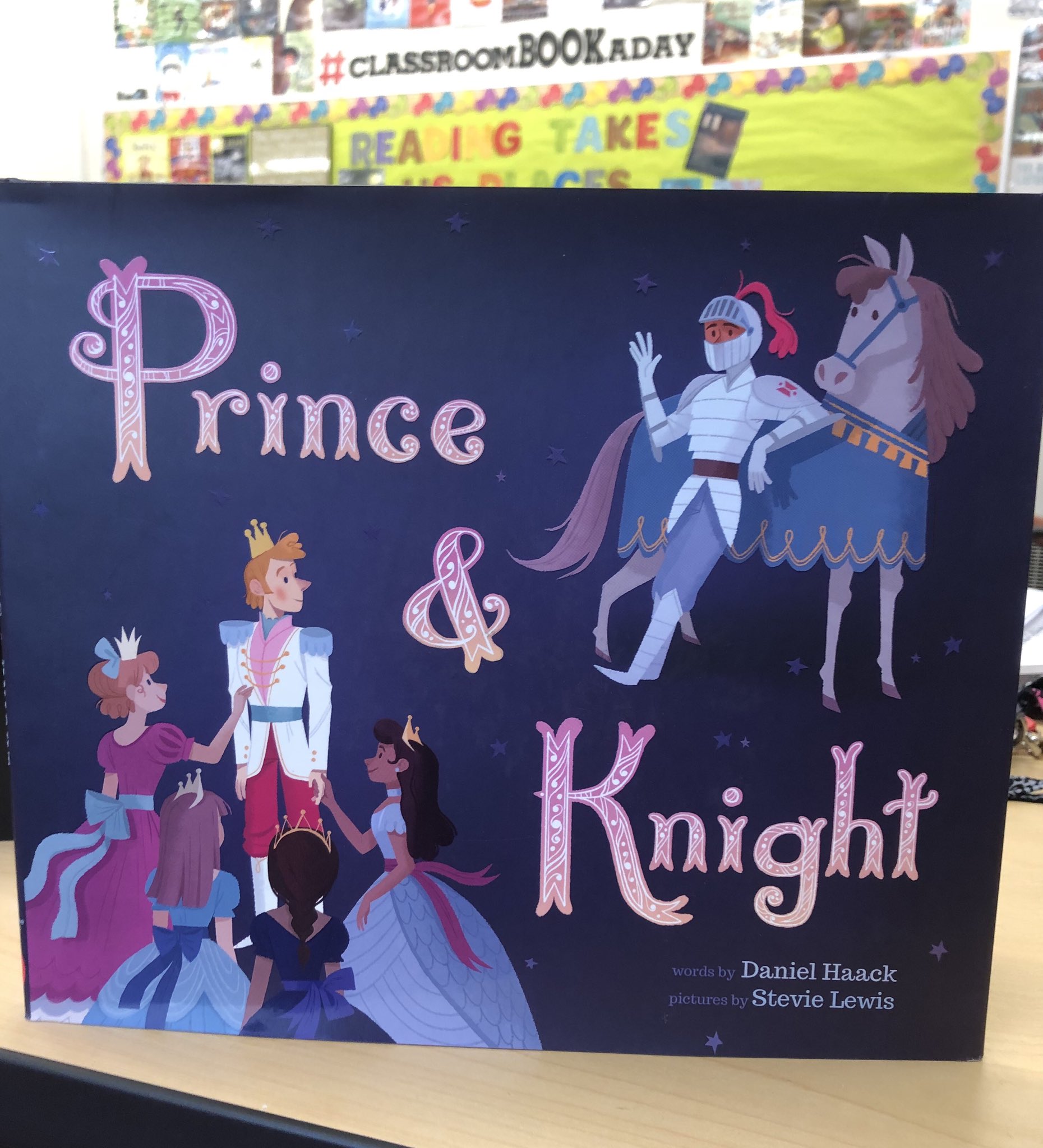
Day 160 An important topic told in a fairy tale. Student discussion was powerful. Thank you @DanielHaack @EastWillistonSD @WilletsRoadMS @kemnitzer3 @sgteach_sari @JamiePandolf @AKennedy61 @dmgately @pernilleripp

View image on Twitter

Children’s books continue to be an invaluable source of information and values. These books can begin extremely positive and powerful discussions in your classroom, if we allow them to. We must allow them to. The experience of listening to others read aloud or reading picture books with an anti bias message provides an opportunity for young children to see and identify with characters often different from themselves. They can also experience a wide range of social dilemmas and points of view. These stories teach students how to look at events from a variety of perspectives, in other words, feel what it is like to “be in another person’s shoes.” Jessica

Jessica Liakonis@MrsLiakonis

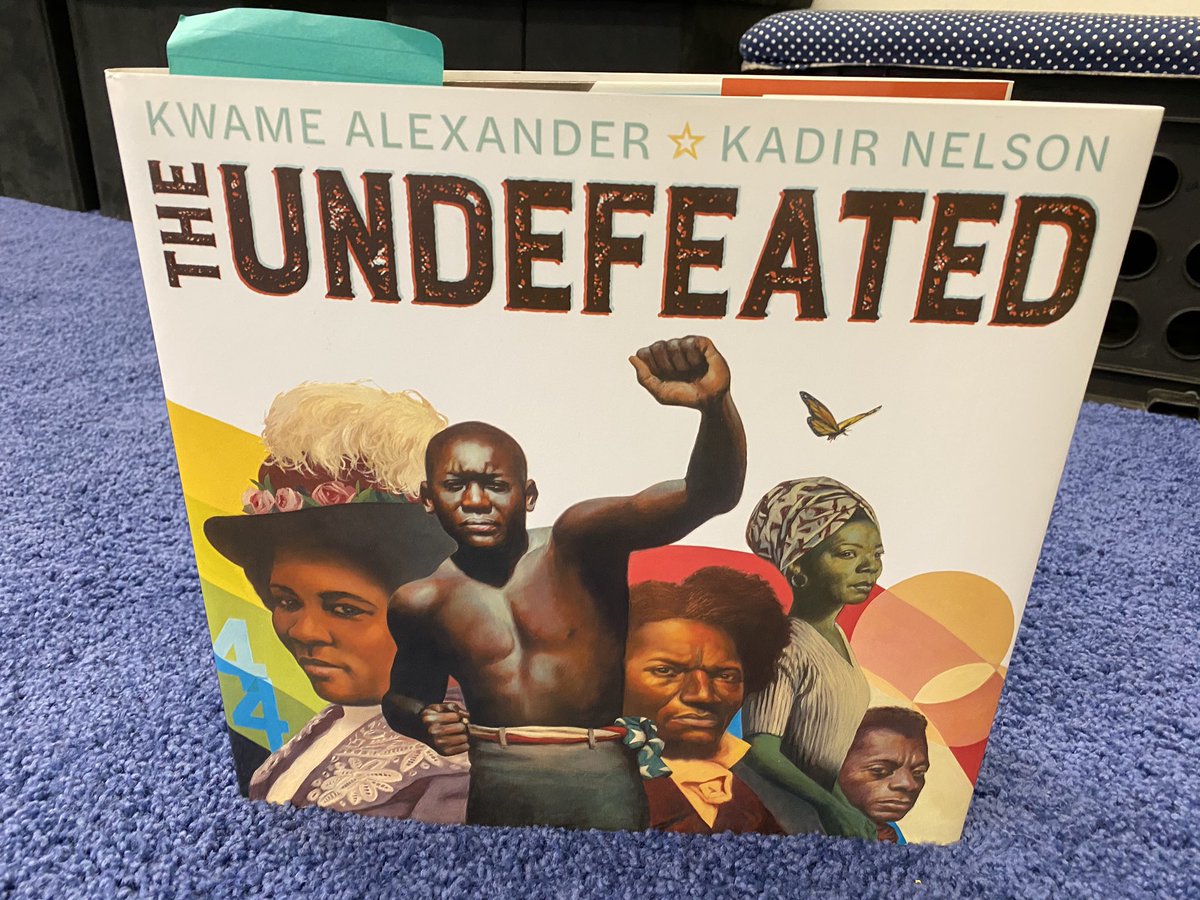
Day 70 The Undefeated by @kwamealexander is an ode to black Americans through history: the dreamers and the doers who have made a difference despite the many injustices endured and challenges faced. @JLVacchio @miss_anderer

View image on Twitter

Continuing the Conversation

Pernille ignited a flame within me. Jessica and I gravitated towards one another. We shared a strong desire to seek more answers. This marked the beginning of our journey. We continued to dig deep in an effort to understand our own personal bias. We explored books, podcasts, TED Talks, hashtags, blogs, and workshops that have stretched our thinking. Please click here to find the list of resources that have opened our eyes. This document also includes many of the incredible read alouds Jessica has utilized as a catalyst for these important conversations with students. (Please also reach out to us with recommendations to help support our journey!) We developed a workshop, Unconscious Bias. To date we have facilitated sessions at EdCampLI and The New York State Middle School Association Regional Conference. We designed this workshop not as experts, but as learners. Our intention is to create a space to continue the conversation and learn with others. – Sari

I read picture books to my students on a daily basis as part of #ClassroomBookADay. Recently, I decided to look back on some of the picture books I have read to my students and connect them with our current Civil Rights unit, as well as current events. Having the students explore the literature and discuss hard topics was just what we needed in order to reflect back on our biases. 

Through meaningful activities that promote critical thinking and problem solving, based on carefully selected books, our students can begin to build the empathy and confidence needed for becoming caring and knowledgeable people who stand up for themselves and others in the face of discriminatory behavior. Let’s continue to teach them the beauty of others.  -Jessica

Ed Kemnitzer@kemnitzer3

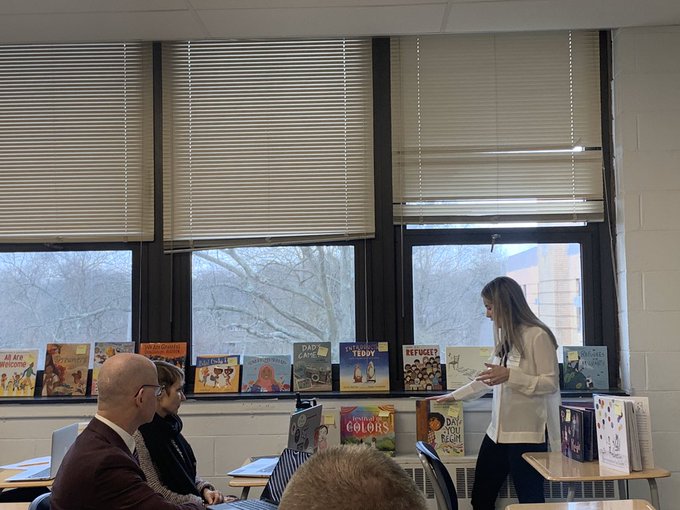
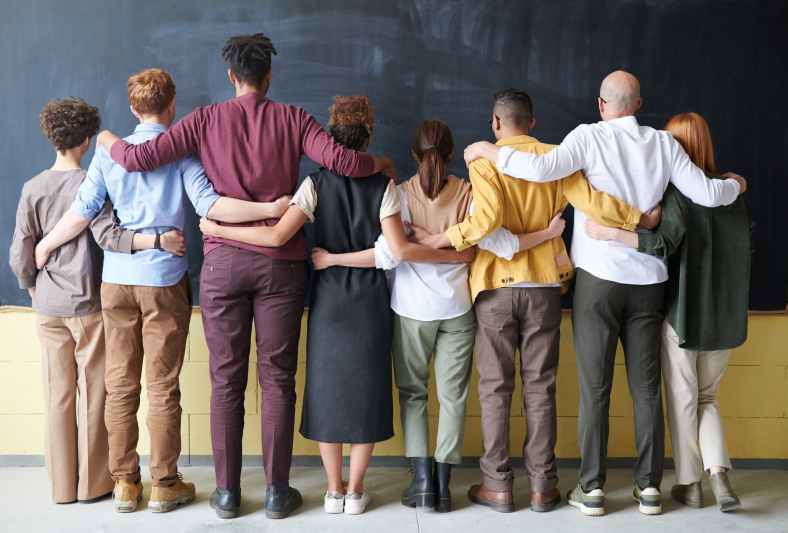
This presentation is just amazing! Great conversation on bias, putting all stories on bookshelves, and engaging all voices. Using gentle stories to talk about heavy topics. Shout outs to @pernilleripp and @dmammolito. Great work, @MrsLiakonis and @sgteach_sari.

View image on TwitterView image on TwitterView image on TwitterView image on Twitter

____________________ Thank you Sari for the Guest Post _____________________


**Interested in writing a guest blog for my site? Would love to share your ideas! Submit your post here.


Looking for a new book to read? Many stories from educators, two student chapters, and a student-designed cover for In Other Words.

Find these available at bit.ly/Pothbooks  


Keeping What Matters Most


Our son, Nick, sees an occupational therapist each week who does amazing work with him to help strengthen his core, quicken his response time to questions, practice his social interactions, and work on his fine motor skills. The best part is that she does all of that while he rides a horse around an arena. The horse provides sensory input and forces him to focus his core on maintaining balance, which allows his brain more freedom to work. As Nick rides, he plays Pictionary with a whiteboard, sprays water guns at targets, moves cones from side to side, identifies letters, and has conversations with the therapist and the other assistants as they walk next to the horse to make sure he stays safe while riding around. At the end of each session, he takes responsibility to prepare a bowl and feed the horse a snack to thank him.

His skills have grown tremendously since we started this therapy. We have missed going while we have been home, so we were so relieved that he was able to return last week. They had all kinds of new safety rules that we had to follow. His therapist met us in the parking lot; he had his temperature taken and had to thoroughly wash his hands as soon as we walked in. We all wore masks. We stayed distanced from one another as best as possible. They shifted the options for therapy so there were fewer clients in the facility at one time. We didn’t do some of the classroom-based exercises before he got on the horse, and he couldn’t prepare the bowl of snacks on his own. The most significant shift was that I was suddenly the volunteer walking alongside the horse. It helped to limit the number of people in the arena, but also allowed me a new opportunity to understand more about what he is working on in therapy and how he responds to the staff and the horse. I am not convinced that I am the best guide as it was much harder to hold the materials, keep an eye on his safety, and not get distracted by the beauty of the horse than I thought it would be, but we made it work.

I didn’t realize how much I needed to do something that felt “normal” to our routine until I walked through the doors of the arena. It was so comforting to do something that we used to do even though the process of doing it was different. Nick was excited to see the therapist, and I had the chance to help him share a little more about himself as we did the exercises and walked around the arena that she wouldn’t have otherwise known even though she has a great relationship with him.

As we start planning for school to look different in the fall, the first week of therapy had me feeling hopeful about what we can maintain when the process and school system may look really new for a while. A big question for me has been how to explain the shifts to staff, learners, and families. I read a great article by the Harvard Business Review that helped me to start thinking about communicating what’s to come.

The first point in the article is to acknowledge your own anxiety. I am nervous, very nervous about how we will make the process of school work in the fall while following the safety guidelines and still meet the needs of our families that need childcare. I am nervous about the gaps in learning or experience that may be happening for our learners. I’m nervous that they will miss out when we can’t give the reassuring hugs and high-fives we are used to. What I am not nervous about is our ability to maintain our relationships with our learners and grow them in new ways. We’ve bonded during this time at home, which has deepened many of our relationships with learners and families. Those get to continue and get to keep growing no matter how we provide schooling.

Nick’s relationship with his occupational therapist was not different. His ability to complete the tasks and work on his skills was not different. We just did it differently. He was super quiet in the arena, which honestly surprised me and helped me to learn more about him in that setting. He still talked the whole way home about his horse and the experience just as he usually does. I know I will be anxious as we drive there and as we walk in again this week, but I am hoping that goes away with time.

“Listen for the need underneath the question” is something I have practiced a lot recently. When a parent, staff member, or school leader gets frustrated, it sometimes takes asking many additional questions to get at the root of the concern or the reason behind the issue, which is almost always a genuine fear about something. To help build our skills in understanding one another and ourselves, we are working on summer professional development options for our staff that include having critical conversations about challenges, trauma training, mindfulness, and compassion resiliency. We all need to be able to see one another through an empathetic lens more than ever and give each other grace. Our stress as a collective society is high, and our composure tends to fail us when we are stressed. We need to prepare as best as possible for strategies to reduce stress in our schools, for and with our staff, as well as learn how to have more open communication about what is happening so we can acknowledge our fears and build hope whenever we can.

We have seen some absolutely inspiring efforts by our staff and learners that we continue to try and capture and share. It is hard to always stay focused on those positives, but they are also ways to find strength as we move into our next steps. I have seen teachers doing evening bake-offs with learners online, daily video announcements to celebrate birthdays and accomplishments, safely going to homes to drop off supplies or check-in, creating videos with shared books, songs, and poems, writing personal notes, sending “flat teachers” to each learner, and many, many more. We have worked to support our community and help our learners find their passions during this crazy time. I get to ask our leaders and staff about those moments to help them see all the positives and make sure we recognize the impact of those remarkable connections. The Harvard article said, “Asking, “What’s one of the worst things you’ve ever overcome or endured?” helps people tap into sources of hope and fortitude from their own stories.” Our stories of what our staff has done with learners and families during this time, as well as what our families have done on their own, are perfect sources of hope and fortitude to carry us forward through our next challenge.

As I start to find my way back to social events and daily activities, I think a lot about one of my favorite quotes from Maya Angelou, “I can be changed by what happens to me. But I refuse to be reduced by it.” I certainly feel changed by much of what has happened and what I know is coming. Some days it really gets to me, but it has not reduced my desire to do the work we get to do each day with learners and families as I know how much it matters no matter the setting or the format in which we do it.


**Interested in writing a guest blog for my site? Would love to share your ideas! Submit your post here.


Looking for a new book to read? Many stories from educators, two student chapters, and a student-designed cover for In Other Words.

Find these available at bit.ly/Pothbooks  


Distance Learning, the Good, the Bad, and the Ugly!

COVID-19 & Education:

Guest post by Shelly Vohra: See the prior posts in the series.

The shift to “emergency online learning” in the last month or so has created some discussions and debates about what ‘school’ will look like once we do return. Depending on the structure and demographics of the school (e.g., K-5, middle school, high school etc), how will students and teachers return to ensure everyone is safe? Will there be a staggered schedule? In other words will we have students rotating through school for half days or full days to maintain physical distancing rules? Will each class be split in half and desks spaced out 2m/6ft with everyone wearing a mask and then sanitizing their space when the class/day is done? For example, in middle school, will we see half of the Grade 6s come into school in the morning and the other half in the afternoons 2- 3 times a week? Will grades 7s and 8s come in the other days and the rest of the time is being supplemented by virtual learning? And what are the implications for daycare, babysitting and parents work schedules depending on their work situation? Will teachers move from class to class instead of the students to minimize contact between individuals? If students are coming in for half days, what does that look like in terms of mathematics, language, social studies, science, and subjects like art, phys-ed, music, etc? There are so many factors to consider in terms of our kids returning to school and still ensuring their safety. Will we even return at all depending on what unfolds over the next few months? Many experts are talking about the fear of a second wave of COVID-19 cases if we ease restrictions too soon as well as the regular flu season later this year that will cause many to get sick. Or another scenario could be that we stagger students back into schools in September (or whenever your school year starts) to meet each other and build community and then in October, move to virtual learning. Again, there is so much to think about moving forward and the truth is we don’t really know what will happen because it all depends on what will happen over the next three months in terms of how the coronavirus is contained or how it might cause a second wave of infections. For now, it’s a wait and see situation.

The shift has also created discussion about more permanent changes to the future of education. I have seen teachers and various other stakeholders talk about some of the ‘permanent’ changes they would like to see as a result of this pandemic. While some of these ideas are good and can move education in a positive direction, some of the ideas need to be considered carefully due to several factors (e.g, developmental levels of students, equity, etc). Based on what I have heard and discussed with a variety of students, parents, and educators, here are five changes I would like to see:

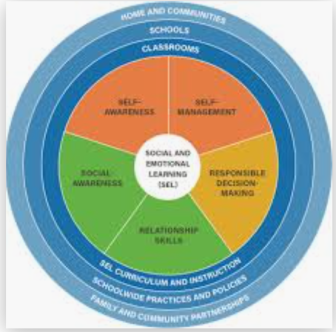
1. Focus on Wellness & SEL: this pandemic has brought to light the importance of wellness and mental health. Many of our students are going through a range of emotions, which includes, fear, anxiety, and sadness. There are many reasons our kids are feeling this way and some of those reasons are: (a) they are missing their friends, (b) they are missing the regular routine of school, (c) their parents are front line workers, (d) they might have lost a loved one, (e) they are stuck in an abusive household, (f) they are bored, (g) they are stressed about school work and meeting deadlines set by teachers (which is another issue in itself!). According to CASEL (Collaborative for Academic, Social, and Emotional Learning), “Social and emotional learning (SEL) is the process through which children and adults understand and manage emotions, set and achieve positive goals, feel and show empathy for others, establish and maintain positive relationships, and make responsible decisions.” They identify five core competencies (self-awareness, self-management, social awareness, relationship skills, and responsible decision making). Research has demonstrated that when there is a focus on SEL, there are positive changes in behaviour (e.g., attendance, classroom behaviour, etc) and academic achievement (https://casel.org/what-is-sel/). This pandemic has demonstrated that we need to invest more resources and time in this area. Students need to learn how to manage emotions when challenges and difficulties arise, which is currently happening due to the impact of the coronavirus. They need to identify their emotions and have a range of strategies to deal with these feelings, which might help them build a positive relationship with themselves and others. This pandemic has also brought to light the importance of play. As I’ve mentioned in my other posts, many parents/guardians are talking about how they are spending more time with their kids engaged in a variety of activities (e.g., cooking, baking, sewing, talking, playing board games, gardening etc), which has helped their relationships with their children. Perhaps there is something to be learned here. Should the school day be shorter, placing an equal or more important focus on SEL and play? If many parents are going to continue to work from home due to the shift in thinking in terms of what work now looks like, should we be re-thinking what school looks like? Again, these are all questions that came up during my conversations with parents, friends, and educators that I’ve had the privilege of having over the last few weeks. Our kids these days, in my opinion, are over-scheduled. Between school/homework and all the extra-curricular activities, children these days are overloaded. It seems they just don’t have time to just be kids! I think we can all agree that we don’t want them to hate learning; we want them to be excited about learning and new ideas. We want them to be thoughtful, and kind and compassionate and curious. But to be happy, we can’t and shouldn’t overload them. Do we really want to take away their present for whatever the future may hold? I believe somewhere along the way, we forgot that we need to be educating the whole child. In the recent past, there has been way too much emphasis placed on exams, grades, and standardized test scores, that we have forgotten we need to teach to the heart. We need to be placing more emphasis on teaching habits of mind, relationships, ethics, and morals.  What about bringing in the community to support student learning? I truly believe we have lost the community aspect of educating our children. As the saying goes, “It truly takes a village”.  We need to get back to working with our community members and organizations in order to educate the whole child.

Screen Shot 2020-05-18 at 11.44.40 AM

(www.casel.org)

2. Focus on personalized learning:  this pandemic should also bring to light the need for personalized and individualized learning. Learning needs to be student-centered and not teacher-centered; in other words a focus on learning over teaching. Learning should be approached from an inquiry stance (big idea and driving questions) with a social justice & equity lens. This approach is linked to student wellness & SEL – students learning in a manner in which empathy and other habits of mind are developed as well as digital citizenship skills. We need to move away from traditional worksheets and teaching methods as well as busy work to more authentic learning. Information is everywhere; it’s pretty much at the end of your arm and we need to be asking questions of our students that require critical thinking, evaluating, judging, synthesizing, and constructing, just to name a few. If you can Google an answer to a question, it’s not a good question. This kind of learning means we need to move away from exams, which usually test knowledge & facts and not on understanding, thinking, and application to more ‘projects’ and assignments that are choice-based. It also means we move away from using textbooks (yes, I still see teachers using this as the sole source of information and there are reasons behind this, which I will talk about in another blog post), and teacher ‘lectures’ where students sit and take notes; in other words students are not passive recipients but they take control of their learning and become active members of their learning. This type of learning just might fit nicely with shorter and staggered school days, especially in middle and high schools. Students would come into school to participate and host seminars, focus groups, and discussion with their teachers and classmates on their learning tasks and learning journey; then they might spend some time in the LLC (Library Learning Commons) or go home to continue their learning and complete their work. They need to be provided with opportunities to access learning in a manner that suits them. This type of learning model not only lends itself to students focusing on deeper learning and less on tests and exams but it also builds time for students to focus on their passions and interests, more time for play, and their well-being. For this to be successful, we need to re-examine the curriculum so that it is more flexible and there is a focus on skills and not content. We would also need to focus on digital literacy skills – we have all heard the term “digital natives” but our students are not digital natives. Yes, they were “born with technology” and they might know how to use tech tools like social media for personal reasons but they still require a lot of support on how to use technology for learning purposes (one example is teachers conveying to me that most students don’t know basic online etiquette when talking to their teachers and peers online). They not only need to learn how to collaborate online but they need to learn to use tech responsibly and in ways which deepen and extend their learning. Of course, this blended model will require parameters in terms of teacher availability and students’ schedules. Teachers can not be expected to be available 24/7 and students learn and complete their work at different times. And as always, privacy and security issues need to be maintained in this type of environment (more to come on this). We also need to look at equity in terms of this type of model to work. As I’ve said before, “equity is an institutional commitment, it’s not a band-aid strategy we use when needed.”  How are we getting devices into the hands of every student? How are we ensuring they have strong internet/wi-fi connections? In order to close the achievement gap, we need to start by closing both the engagement gap and the opportunity gap.

Screen Shot 2020-02-10 at 9.20.59 PM

3.Assessment and Evaluation: related to personalized learning, we need to rethink how we assess and evaluate students. We need to move away from “unit tests” and exams, which only seem to test knowledge and not understanding of the material. These types of assessment do not for the most part, develop student skills in critical thinking and other higher order skills. We need to look at providing more descriptive feedback based on learning goals and success criteria (and know the difference between success criteria and task requirements) and moving away from assigning grades; we know research has indicated that when we provide a grade with descriptive feedback, students only focus on the grade and not the feedback the teacher provided and when teachers provide only descriptive feedback, learning is enhanced. For example, students are given descriptive feedback on a writing piece and given the opportunity to improve on their next draft and subsequent drafts based on just descriptive feedback. This type of assessment shifts the focus from achievement to learning. I know grades are a contentious issue in education because of the implications related to higher education but I honestly don’t remember the last time an employer asked me for my transcript during an interview. They want to see what skills I bring to the role and how I can contribute to the team as a whole to improve the organization’s mission and vision. If we are to give grades, then let’s sit side by side with the student and negotiate a grade based on all their work and effort throughout the learning experience (e.g. not just after two drafts of a writing piece). And in the age of technology, let’s ensure all students have an online portfolio and some sort of online presence in the form of a blog and/or website. And let’s please get rid of standardized testing; not only is it not necessary but it’s harmful and negatively impacts students well being and we all know it is not a true reflection of what a student knows and understands.

Screen Shot 2020-05-18 at 11.48.13 AM

4.Conferences: We also need to rethink educational conferences (or all conferences for that matter). Conferences have either been postponed or cancelled for the foreseeable future due to the pandemic. I know several conferences have opted for an online version of what should have been their face to face conference and I believe this is something we need to examine more closely. Costs to attend a conference has become astronomical. From registration fees to hotels and from flights to food, attending even one conference can take a significant bite out of anyone’s budget (a very small percentage of educators get their expenses covered by their district or school). And even when we get past the pandemic, flying may never be the same. So why not move towards more online conferences where educators can attend live sessions as well as pre-recorded sessions from the comfort of their home? If you must, charge a minimum fee to cover any costs based on the platform(s) you are using. And organizations can archive these sessions and have a repository available for everyone to access at any time.

Screen Shot 2020-05-18 at 11.51.25 AM

5.Teacher Professional Learning: last but certainly not least, let’s rethink teacher professional learning (PL). I’ve always believed that teacher PL needs to be  personalized, differentiated, and self paced. Teachers should be able to choose their own PL based on their goals, experiences, and background knowledge. This makes the learning more meaningful for teachers if they are allowed to pursue their own interests and passions related to education in the form of action research, collaborative inquiry cycles, etc. I believe the quote/image below says it all in terms of my beliefs for teacher PL. Let’s use an LMS (Learning Management System) like Brightspace to enhance teacher PL where teachers are learning from and with each other across districts – technology gives us the power and opportunity to learn with teachers from around the world so why not connect with teachers from different schools around the world to enhance and positively impact our practice? Why not use these PL opportunities to create learning experiences with these teachers for your students that incorporate social justice and equity mindsets (as mentioned in my bit about personalized learning? Let’s start putting PL back into the hands of educators.

Screen Shot 2020-02-10 at 9.21.22 PM

It will be interesting to see what education looks like when we do return and if any of these five points will be examined and explored further to not only enhance and improve education but also ensuring we keep students at the centre of it all.

I will be writing in more detail about each of these five points in upcoming blog posts but for the next few weeks, I am going to shift to writing about some other topics in education 🙂


**Interested in writing a guest blog for my site? Would love to share your ideas! Submit your post here.


Looking for a new book to read? Many stories from educators, two student chapters, and a student-designed cover for In Other Words.

Find these available at bit.ly/Pothbooks  


TeacherCast Educational Network | Developing Standards-Based Instructional Technology Integration

Technology Integration - Instructional Coaching - Productivity Secrets for Educators

Leadership Liner Notes: Sean Gaillard

Built on Connection. Tuned for Impact.

Stories by Thomas Oppong on Medium

Dr. Rachelle Dené Poth @Rdene915 Educator, Consultant & Keynote Speaker, Author, Attorney #THRIVEinEDU

Hooked On Innovation

When Innovation slaps you in the face, we slap back.

Teach Better

Dr. Rachelle Dené Poth @Rdene915 Educator, Consultant & Keynote Speaker, Author, Attorney #THRIVEinEDU

BrianKulak.com

Dr. Rachelle Dené Poth @Rdene915 Educator, Consultant & Keynote Speaker, Author, Attorney #THRIVEinEDU

The Principal of Change

Stories of learning and leading

Mandy Froehlich

Dr. Rachelle Dené Poth @Rdene915 Educator, Consultant & Keynote Speaker, Author, Attorney #THRIVEinEDU

Katie Martin

Informed by research, refined by practice

#RocknTheBoat

Rocking today's classrooms, one teacher, student, and class at a time.

User Generated Education

Education as it should be - passion-based.

Learning as I go: Reflections & lessons learned

Dr. Rachelle Dené Poth @Rdene915 Educator, Consultant & Keynote Speaker, Author, Attorney #THRIVEinEDU

Serendipity in Education

Join me, Allyson Apsey, as I stumble upon the fortunes of learning, laughing, and celebrating alongside incredible people.