Some Alternatives to Traditional Homework

Posted in Edutopia Community Discussion, the second part of my thoughts on Homework Alternatives.

As a student in elementary and high school, I recall having homework assignments in most, if not all of my classes each night. I remember carrying home a lot of worksheets, lugging home several textbooks, and at times transporting poster board and binders back and forth to school.  We had a lot of tests, pop quizzes, and projects.  Most of the time, I remember the homework was the same for each student, in each class, and I cannot recall now nor do I even know if I was aware back then, of students doing different assignments. I understand why teachers assign homework which is the same, the purpose is to assess students on a particular skill, and maybe it just really works for that learning target. And some benefits for students are having a peer, to work through an assignment with or ask for clarification, can be helpful.  But it can also be detrimental, for a few reasons.  Students are not getting the practice they need by having the same assignment, and the possibility of students copying assignments is also something to consider.  Copying assignments leads to a loss of learning, and students will have to re-learn the material twice. There is a lot of discussion about the real value of and purpose for homework, and these are just a few of the pros and cons to consider.


Over the past few years, with the rise of technology and so many options available for learning experiences through it, solely using a worksheet or assigning the same homework does not have to persist. I have noticed variations in my students, both during our interactions in the classroom but also while grading assignments and projects, or even just reading the responses to their reflections or blogs.  For homework, some students can finish the worksheet in two minutes, possibly before the end of the class period, if time remains.  And there are others, who may struggle to complete the work and as a result, end up spending 20 or 30 minutes on the exact same assignment. So, I asked myself, how can I reach both types of learners, and provide opportunities that will be beneficial, meaningful, but more importantly more personal to their needs. How can I give each student the practice that they need?

Making some changes

So how did I decide to change the “everybody has the same homework” practice?  After a holiday break and taking some time to reflect over the first part of the year and talking with students, I decided to seek ways to give students options for the type of homework they wanted to complete.  I came up with two or three choices of how I could do this, and will admit, that I was a bit anxious, since changing the traditional homework assignments would involve taking a risk.  But I truly believed that it was worth it, to see what, if any difference it would make for my students.

The three options I started with were:

1.    Quizlet: I had sets of cards and as an alternate assignment, I asked the students to select and complete activities which they felt would help them the most.  Because we have a class account, I can monitor their progress and they have many options for practicing the vocabulary, playing games and other activities to build their skills.

2.    Kahoot!: We have played games of Kahoot! in class for the past few years, and initially I was using it as a class game, using games which I created. But I soon realized that making up so many quizzes was really time consuming.  While there are lots of public quizzes available, I wanted to have the questions be more specific to their needs.  So for a different type of homework assignment, I asked students to create their own Kahoot! game using a specific number of terms or verbs and share it with our class. This led to more authentic practice and a lot more resources for all students to learn from.

3.    Blendspace: I have an account with Blendspace, and I can create and share lessons that I have created which include videos, games, tutorials and much more.  As homework practice, I can decide to assign a particular lesson for students to work through or I can simply share the URL and provide resources and give students the choice to use the resources within the lesson.

4.    Other options: Some other ideas for changing the type of homework assignments used are to create a list of different assignments or tasks and give students some choices in how to practice the content material. They may decide to work through all of them, or simply use some, but the important thing is that the choice is theirs and the practice will be more meaningful. Assigning homework in this way encourages students to have a choice on where to begin, not all students have to do the same thing, and it helps to focus on their individual needs.


What did the students think?

The students appreciated having more of a choice in assignments.  Using these options gave them the chance to try some new ways of learning, which they were not used to, but it was a way to provide differentiation.  I know that having a lot of games available to play in class with Kahoot and the extra Quizlet study cards, benefitted all students. The one tricky part is being able to monitor their work, but this comes with developing the relationships and having clear expectations. Including students in the conversation and making sure we focus on the accountability and responsibility aspects will help. The students are more engaged, become more empowered by having a choice in their learning path.

We can use methods like this to focus on the areas where students need help the most. Personalizing the homework assignments in these ways can prove to be time consuming, as far as tracking their work, but it is completely worth it because of how beneficial it is to their learning. And that is what matters most.

How I Solved My Classroom Management Problems

How I Solved My Classroom Management Problems

Achievement unlocked: Making assignments and resources available to everyone, anytime.

Common Sense Education, posted on September 15, 2016

Rachelle Dene Poth

Classroom teacher, Technology Presenter

Students often have organizational problems. It’s an ongoing struggle, so I’ve always done the best I could to help them stay organized. Years ago, that often came in the form of a planner students were supposed to fill out with assignments, and I’d sign off on it.

There was one particular student with a planner whom I remember. The system worked well when she remembered the planner, but sometimes she didn’t.

On the whiteboard at the back of my room, I have a space where I write down the assignments for students. I keep my door open most days, so if they want to stop in and peek at the board, they can. I’m available anytime; the only thing I ask is that they kind of discreetly come in.

So, this particular student would appear in the morning during homeroom or at the beginning of class to check the whiteboard. Sometimes she got the assignment. But sometimes, what I wrote was erased. Anything can happen: Other students might erase it and write over it, for example.

Then her mom would send an email to clarify things — and I’m really good about checking email, but sometimes email doesn’t go through. And if you call me — well, we work with voicemail extensions so it’s not like there’s a direct line to me. You have to filter through the office, and I’m always available to talk, but obviously if I’m teaching class, I’m not reachable.

Other students would pop in to check on an assignment, or they’d want to stop by and pick up a worksheet. I have everything in my room set out, but students would put papers down, and things would get covered up. So it might not be easy to find.

Or, the students would come in and leave notes saying, “I stopped by to find out … ” or “I wasn’t sure … ,” and they’d leave me a note on the board or on my desk. But if I were going to be late or had a long meeting, I might not see those notes until the next day. And if my board was cleaned that night, I might not see them at all.

So again, the students came in to get help, and I wasn’t there.

That’s when I really started to ask, “What can I do?”

I thought the board was great because students could come in anytime, but that’s not accessible in the evening when they sit down to do homework. Planners are great, too, but what if you forget them or they’re lost? I was looking for something to fix a lot of these things I saw impeding the learning process. The lack of access to resources was really bothering me because I wanted to do more.

I first decided to use the messaging tool Celly to message my students. I used it to send reminders and answer questions. I could quickly respond to messages about homework or what was missed during an absence, and I didn’t have to use class time to help students catch up.

I use it with my Spanish club, too, and now there are other groups in the school that use it for field trips and other things. It’s really quite nice, because if you’re on the bus and you’re missing students, now you can reach them instead of waiting and wondering.

But students were still asking for help finding class materials and keeping them organized. I wanted some kind of assurance that everything was centralized and easy to find. And I hadn’t found an easy way to keep parents in the loop. I decided to give another tool a try: Edmodo.

It’s a web-based app, so students can use their phones to log in, or a computer at home if they don’t have a phone, or a phone with data. Students get a join code so they can join a class when I’ve created one, and parents get a parent code so they can sign up and see what I post to the class and see their kids’ work, the grade they got, and the comments I’ve made. They know everything we’re doing in class.

Usually students log in once a day. I post homework reminders and share links. One of the nice things about Edmodo is students can reply to a post I’ve made and ask a general question, and anyone in the class can answer. For example, if they forget something — a textbook or a worksheet — they can ask, “Can somebody please share an image of the homework?” They help each other out.

It helps me, too, because if a student has been absent for a day or more, they can easily go back and see what you did in class. It’s part of my routine now, and I have five courses. Generally if a student says, “I was absent three days ago. What did I miss?” I have some idea but I’m not exactly sure. So it’s nice to have that reference.

It’s more than just communication — it’s collaboration. And I keep thinking of new ideas I can use it for.

The first two assignments I gave my Spanish 1 and 2 classes this year were discussions on Edmodo. The first was on how they study and learn, with personal kinds of questions so I could get to know them and give them ideas. The second was to come up with five personal learning goals. I gave them a reply, and in a week or two we’re going to reevaluate: “You said you were going to study every day for 30 minutes. What happened?”

You can use it as a reflection tool or as a digital portfolio. If the students do a project with technology, they can put it on Edmodo, and we can go back to it to share learning.

These tools have made a tremendous difference in my ability to provide the best possible learning experience for my students — and that’s what I wanted. And bonus: They’ve made my life easier, too.

Recap: Let’s Get Students Talking

I tried Recap at the end of the year and really enjoyed what it offered.   I appreciate the opportunity to have my experience shared on Recap.

Posted on July 20, 2016Posted in Guest Post

Student voice is very important in education today. Teachers benefit greatly by understanding what the students’ needs and interests are, their backgrounds and other experiences they bring with them to the classroom. Students participate in so many diverse learning experiences aimed at providing the best practice through multi-modal instructional methods, to personalize instruction, drive student learning and to provide the resources and support necessary for student success. And while the teacher may believe that each learning experience they provide is valuable and will benefit the students’ growth in the class, it is critical to seek input from the students themselves to really understand the impact these methods have on their learning.

Involving students in conversations can happen in many mediums. With all of the digital tools available today, there are endless possibilities available for substituting the traditional face-to-face conversations or having students write some type of a response such as a self-reflection in class. Having students reflect on a particular learning experience or participate in a discussion after class, are valuable opportunities for teachers as well to learn more about the students and to continue building those vital relationships. Including students in the planning and gathering input from them benefits the learning environment tremendously and there are many ways to do this. I found a new method of encouraging students to share their thoughts this year, through Recap.

Deciding to Try Recap

Toward the end of the school year, I wanted to try some new tools in the classroom, to keep students engaged and motivated through the end of the year. I thought that trying out some new ideas would work well at this time, because I could use the information to reflect and plan over the summer. I came across Recap and was very interested in trying it out with my students.
I was initially unsure of whether it would be easy to implement into my classroom, or even how I would use it, but as with all things, sometimes you have to just take a chance and see how it works out. So I did just that and created a class for my students using Recap. The first time I logged in and created a video in which I asked the students to share their thoughts about some of the projects we had done, some of the tools that we had used, and any other insight that they wanted to provide to me. I explained how Recap would work and set up my recording for them. It was very easy to use and to set up. More important, students were excited about this new experience and felt comfortable in sharing their ideas.

Ideas for Using Recap

There are many uses for Recap in and outside of the classroom to have students respond to a prompt, have a debate on a topic, use it for a speaking assessment, and many more possibilities depending on content and grade level taught. But one of the biggest benefits I think it provides is a comfortable way for students to connect with their teachers and to honestly share their ideas, thoughts or reflections. Students are often afraid to speak up, we all are, and having a tool which enables the assessment or reflection to be done in the comfort of one’s own home or place, is very beneficial.
After the first time my students completed the assignment, watching their responses compiled into a daily reel, several things were clear. I could see that they were comfortable, which was very important to me, especially when trying something new like Recap. I also appreciated the fact that they took the risk to share their ideas and provided honest evaluations of my teaching and their classroom experiences. And I really like that I was able to give them feedback as well following their video responses.

The Foreign Language Classroom

As a foreign language teacher, I can use this in my classroom to have students complete speaking assessments, discuss topics we are working on in class, whether it be a work of art or particular reading, and they can give their honest opinions in a more comfortable, safer environment for expressing themselves. It is also quite useful for students to do a reflection of my instruction or of their own skills, interests and needs in the classroom. The nice thing is that either way, teachers and students can learn about each other, and grow from the feedback given.

I was very excited after this initial experience with Recap and so I tried it with several of my other classes. The response was all positive and I know that I will use it a lot more in the upcoming school year to have students complete speaking assessments, have discussions and more activities like these. But more than these uses, it is a way for me to better understand their needs and to learn more about them in the process. A way to continue building the vital relationships that help to build a positive, supportive classroom environment.

There are many ways to use Recap in the classroom but also as part of professional development, conference presentations and much more.

About Rachelle Dene Poth

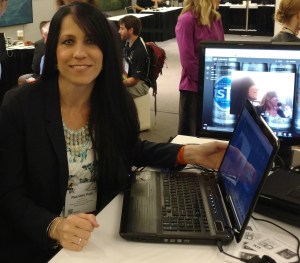
She is a Spanish Teacher at Riverview Junior Senior High School in Oakmont, PA. She is also an attorney and earned her Juris Doctor Degree from Duquesne University School of Law and recently received the Master’s Degree in Instructional Technology from Duquesne. She enjoys presenting at conferences on technology and learning more ways to benefit student learning. She is the Communications Chair for the ISTE Mobile Learning Network, a Member at Large for Games & Sims, the Innovation Resources Co-Chair for the Teacher Education Network and the PAECT Historian. Additionally, She is proud to be involved in several communities including being a Common Sense Media Educator, Amazon Inspire Educator, WeVideo Ambassador, Edmodo Certified Trainer, Nearpod Certified Educator and also participate in several other networks. She enjoys blogging and writing for Kidblog and is always looking for new learning opportunities to benefit my students. You can connect with her on Twitter @rdene915.

IMG_20160629_103429847 (2) (1)