I was wrong (really): How I became more involved through Social Media


***This is the first in a series of posts about the benefits of social media tools for education, and how I learned the value of them for becoming more connected.

I was not always into social media and cannot say that I truly saw the value of what each platform might have to offer. Part of this is my fault because I did not take time to learn about Twitter or Facebook and the others, and I had some misconceptions about what each social media platform was being used for. The other part is that I relied on the comments and experiences of others to judge the value and the benefit of trying any of these for my own use.

I love technology.  Ever since I was a child, I have been interested in trying new things, spending time learning and working with all things tech. I was fine with communicating through email, text messaging, and the occasional phone call.  I held off on creating a Facebook account because I thought that it was just a way to tell people what you were doing on a daily basis, “status updates”. I had the perception it was just about updating everyone on the  basic chores and daily life habits that we all take part in. I also did not consider using Twitter because I thought it was simply a way to keep up with what celebrities were doing and I had other ways to do that. Being an avid reader of publications like People magazine or US for many years, I kept up with what was going on in the celebrity world. Enough anyway.

So for me, I didn’t really think about or see any benefit personally, nor professionally, for having either of these social media accounts. So what led to the change? Class reunion planning. I had the task of locating classmates for an upcoming high school class reunion. I graduated with nearly six hundred people, and knew it would be a very tedious task. My options were to spend time looking online or flipping through the pages of a telephone book,  assuming that people still lived in the area or that I could easily locate their information using these methods. The possibility of Facebook had not entered my mind until a friend suggested it. So I gave in, created my Facebook account and little by little, sure enough, I began finding some of my classmates, friends from childhood and college and even making new connections.

Once I started using Facebook more,  I realized that I had been mostly wrong. I found out that not everyone used Facebook as I had thought. It really was a way to locate classmates, reconnect with friends and I started seeing that Facebook could be valuable and not at all what I had thought.

I found different learning communities and groups to join through Facebook. It became a great platform for sharing information, adding resources and amazingly, not that I thought this years ago, has the capability of being a tremendous tool for learning and professional growth. It is a way for people to connect instantly with anyone throughout the world, at any time and can be used as a system of support. You can keep up with friends, family, colleagues, and see how people live in other places of the world by sharing photos or going “live”.

So I discovered that I was wrong. I had this idea of Facebook and its uses in my mind and actively stayed away from it for years. So what is the lesson I learned? I learned that in order to really understand the benefit and use of something, you have to investigate it yourself. You have to take that chance, take a step, take a risk and look into something before making a judgment about its value. (A lesson for life as well). But the flip side is that you can’t just start using something because everybody else is, or you “heard” that it was the best way or best method of doing something. Everybody is different and everything affects people in different ways. I’ve always said that we can all read the same book but get a different story. And that’s the case with Facebook.

Thank you Facebook for being the means through which I have been able to reconnect with friends, join new learning communities and keep up with family and members of my PLN who I do not get to see very often.  It is a means to share good news and bad, but the main point is that it is a way to become connected and we all need to be connected to someone and something.

So I was wrong about the power of social media….and that’s okay, because I know the possibilities now and learned the lesson of keeping an open mind, judging for myself, and then reflecting.


Next up….Twitter!

Making Global Connections: How and Why it Matters

ecg

See what great events will be happening during #ECGC17

Making Global Connections: How and why it matters

A post written as part of the EdChange Global Classrooms event coming up on February 28th. Sign up today.

by Rachelle Dene Poth

It is amazing today what we can accomplish through the use of technology. In the past, the methods we relied on for communicating with friends, family, other schools, and abroad were limited to telephone calls, letters, meeting in person (if geographical location afforded this), for a few examples. And for providing opportunities for students to connect with other students or classrooms, these connections were limited to classrooms located within the same school or at the furthest point a nearby school. These interactions had to be set up in advance by means of a telephone call or through letters in standard mail. (I am referring back to my own elementary and high school experience, a time in which cell phones and the Internet did not exist). Providing diverse learning experiences, took a good deal of time and collaboration for everyone, between setting up required transportation, schedule planning and logistics, and the actual interaction time needed for the result to be a beneficial learning experience. Another factor was the cost involved, if transportation to another location was necessary.

Today, these types of activities and learning experiences for students can be set up instantly, even without any pre-planning, because of the diverse tools offered with technology. By simply using a form of social media or by connecting with a member of your PLN, and perhaps using a tool like Voxer, we enable a quick conversation instantly. And time and place do not matter, there is no need to move either group or anyone who is going to be connected.  We are able to simply talk, share an image, livestream videos, collaborate to add resources, (anything is possible) and connect our classroom and students, with another classroom and students somewhere in the world. Amazing.

How we can open up these opportunities

We have so many options for helping our students to become globally connected with other students and experiences. We need to promote these connections so that students develop a broader understanding of diverse world cultures, experiences and have an appreciation of different perspectives. With so many resources available, we can bring learning experiences to life, immerse students into different cultures and parts of the world, by simply connecting. It just takes one step forward. 

A few examples of how easily this can be accomplished are through some of the web based tools available to teachers and students today. Through the use of video tools, many of which are available as free platforms, we now enable classrooms to connect with others throughout the world, regardless of differences in time and place. You can truly see what others experience in their day-to-day learning and living, and have conversations in real time, at a moment’s notice. Students can participate in activities like a mystery Skype or collaborate through a discussion, by using tools such as  Padlet or Wikispaces or use something like Appear.In or Zoom, for a live interaction or even Google Hangouts. These are just a few of the many options available to classrooms today. To promote conversation without video, we can use collaborative tools such as Padlet, TodaysMeet or perhaps use Wikispaces or even a class Twitter account, (depending on grade level), as ways to have students connect through writing. In addition to learning about different cultures and establishing global connections, we work on other critical skills like communication and collaboration, digital citizenship and help to engage students more in the learning environment.  Imagine being able to have a conversation with people from 80 different countries at the same time. Regardless of geographical location or time zone, everyone can connect using one of these forms of technology and the many others that are out there.


Getting Started

Connecting globally requires that we as educators be connected. It starts with us. We have to build our own professional and globally connected network so that we can provide these learning opportunities to our students. It is worth the time, the risk,and the effort to seek out learning communities and build a community of support. We become stronger and better together, and when we collaborate to provide opportunities for our students to learn from other students, to gain new perspectives, to experience the multitude of ways of collaborating and communicating globally, we take their educational experience to a whole new level. Become a more globally connected classroom today. #ECGC17    EdChange Global Classrooms


ecg2

Sign up today and display your badge!

#ISTE16 Part 2: Highlights & Takeaways

#ISTE16 Part 2: Highlights & Takeaways

By Rachelle Dene Poth

This post is part two of #ISTE16 reflections from Rachelle. Click here to read part 1: Let’s Talk About Relationships.

Where does one start to describe the highlights from a conference experience like ISTE? The tremendous number and types of events offered during this experience make it a real challenge to focus on only a few here. There are so many wonderful things that you could highlight about the conference. With numerous concurrent events, pulling you in so many directions and with all of the choices, how can you possibly decide on a schedule? It definitely is not an easy task, but it does not have to be difficult either. You just need a little focus.

So how do you focus? Talk to people about some of the “must” events, but also think about what your personal focus might be. What are you hoping to gain from attending ISTE? So many choices. I believe that no matter which option you choose, you can’t be wrong because of the endless opportunities available at a conference of this magnitude.

Planning with #ISTE15 in Mind

Even though I had attended ISTE last year, and had a pretty good idea of what to expect, I don’t know that I was any more prepared. It seems to me, that each day had one event people considered to be a “must attend.” Aside from having this one focal point, the rest of the days were filled quickly with a combination of time spent at the poster sessions, playgrounds, Keynotes, Ignites, and 1 in 3 sessions. Every day was also filled with networking and connecting everywhere: stopping in the Expo hall to grab some swag; hanging out in the Bloggers Cafe and the PLN Lounge; enjoying ice cream and shopping for ISTE wear and books at ISTE Central; and so much more.

With so much to do, I think sometimes it’s better off to not put too much thought into having the “master plan/schedule” because you don’t know who you might meet, what you might find or where you will end up once you enter the convention center. It is so easy to be pulled in so many different directions, so it is always a good idea to have a flexible “plan” of where to start but keep your options open because there’s a whole lot going on out there in the world of ISTE

My #ISTE Highlights

A lot of people come in for the pre-conference events starting on Saturday with Hack Education’s ISTE Unplugged and the Mobile Learning Network’s Mobile Megashare. Both of these offered opportunities for people to meet up with their Twitter friends or “tweeps”, make new connections and do a lot of learning and networking. The great thing about these two events on Saturday is that there are so many diverse topics for discussion and so many people to share and brainstorm ideas with. And nobody says you have to stay at either one for the whole time. Just like the EdCamp “law of two feet”, you can go back and forth whenever you want, because you are in charge of your learning. This is your personalized PD. Enjoy the time to CHOOSE what you what to learn about.

For the Mobile Megashare, there were 24 tables each with a presenter or presenters facilitating a discussion about a topic. Attendees were able to choose a table to join in and could come and go as they wanted, or just move about the room and listen in and participate in a bunch of different conversations, moving around from table to table and idea to idea. .

There were two unconference events attached to ISTE, #HackEd and Teachmeet. #HackEd was much like a traditional Edcamp, and with TeachMeet, you can submit an idea to present on a topic for either a 2, 7 or 20-minute time period. It’s another place to connect and make new friends, and really build up the excitement for the rest of the conference.

Sunday night kicked off officially with the Keynote speech by Dr. Michio Kaku, who questioned whether we are “equipping students for the 1950’s or cultivating future ready learners.” The Balco Theater was packed, and more people gathered in the Bloggers Cafe to spend some time collaborating and to listen in to the Keynote. In the first two days alone there were many opportunities for personalized professional development and learning.

More Highlights

New #ISTE Student Standard: One of the highlights this year was the launch of the newISTE Standards for Students. The updated version was released and includes 7 standards of student statements, with focus on empowering student learners and giving students a voice through technology. There was a lot of excitement and discussion of these new standards and the focus toward student-centered learning.

Keynotes:
The two other inspirational and motivating keynotes were given by Dr. Ruha Benjamin and Michelle Cordy. Both shared experiences and messages that called upon educators to take action to provide opportunities and digital equity for all learners.

#CoffeeEDU: If you’re not an early riser, then get up early and go to #CoffeeEdu. Join in the conversations, get a great start to the day, talk with Alice Keeler and make some new connections.

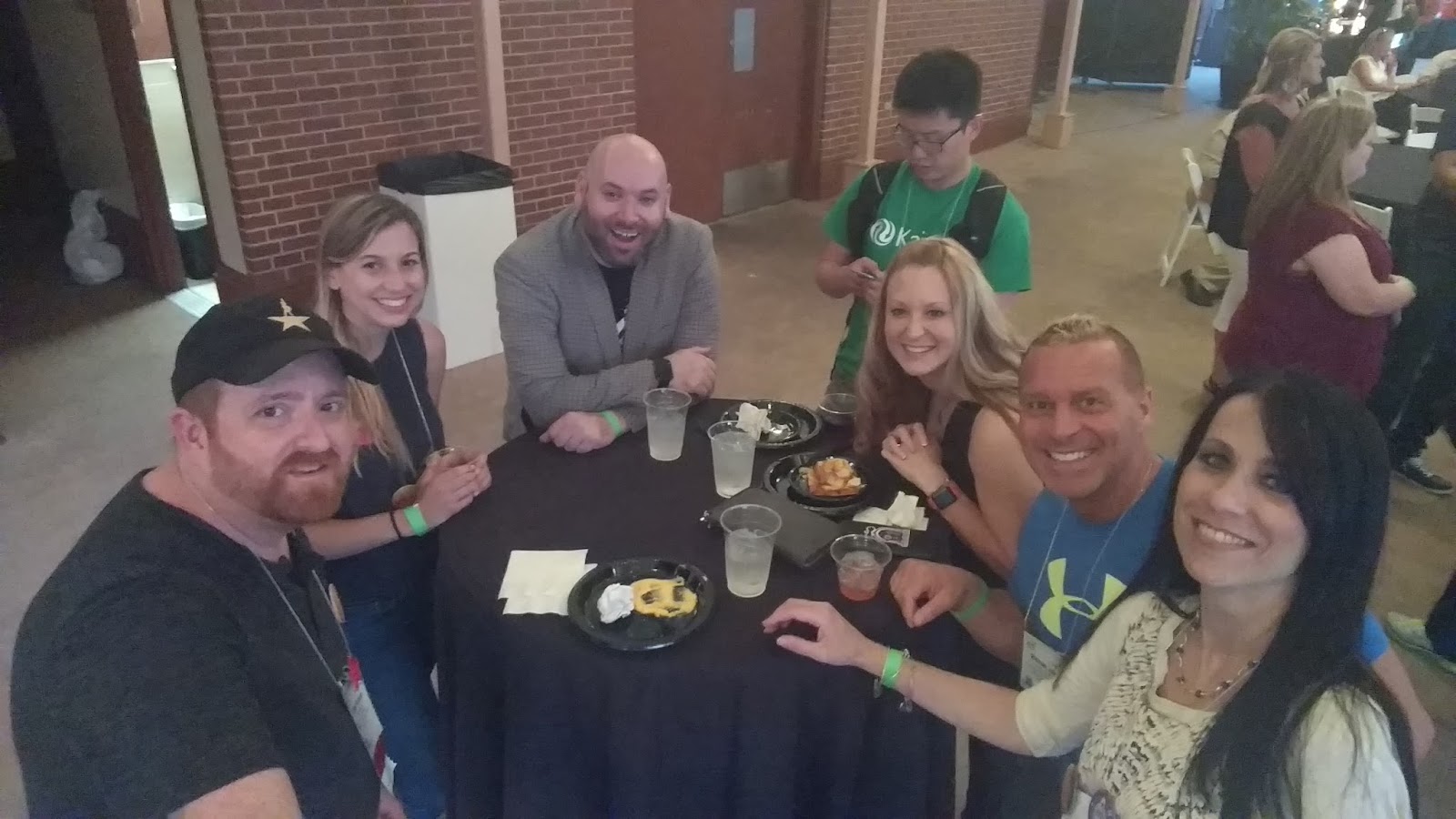
Parties!: If you don’t normally stay out late, then make sure you get to the Gaggle party or EdTech Karaoke. The Gaggle Party was held at the Denver Athletic Club, multiple levels of nothing but fun and ETK was at the City Hall Events Center. Both of these events are a lot of fun and well attended, so you need to at least make some time to stop in for a bit to find out what the buzz is all about and why so many people are so quick to get those badges and passes to attend.

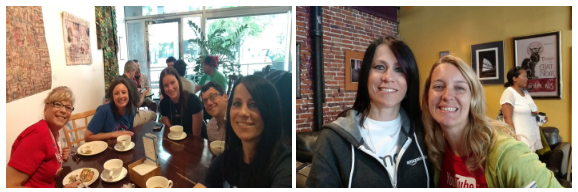
Hanging at Gaggle: Sean Farnum, Melanie Broder, Bryan Miller, Edward Sun, Katrina Keene & Michael Jaber
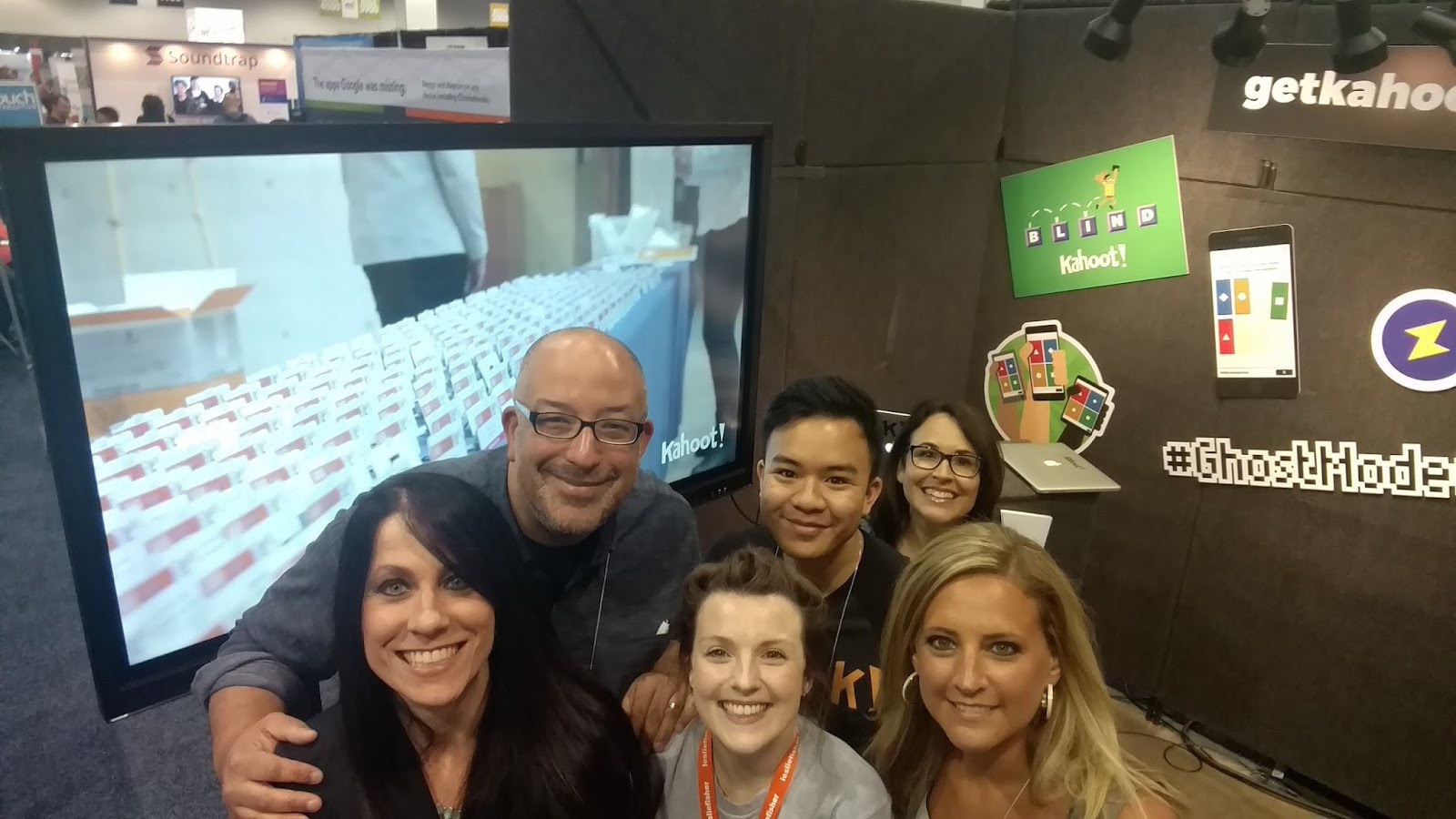
Sean Gaillard, Fran Siracusa, Mandy Froehlich and Kahoot!

At #ISTE16, the opportunities for learning came from all directions. Everything and everyone is always moving. Doors opening to sessions, lines crowding the hall, students excitedly sharing their work, drawing you into their poster sessions, and all of the different tables and topics that each of the playgrounds offered. It is hard to pass any one of these opportunities up. And it’s even harder to decide when to stop and when to keep going. It’s variety and connecting that made this learning special.

Planning Ahead: #ISTE17

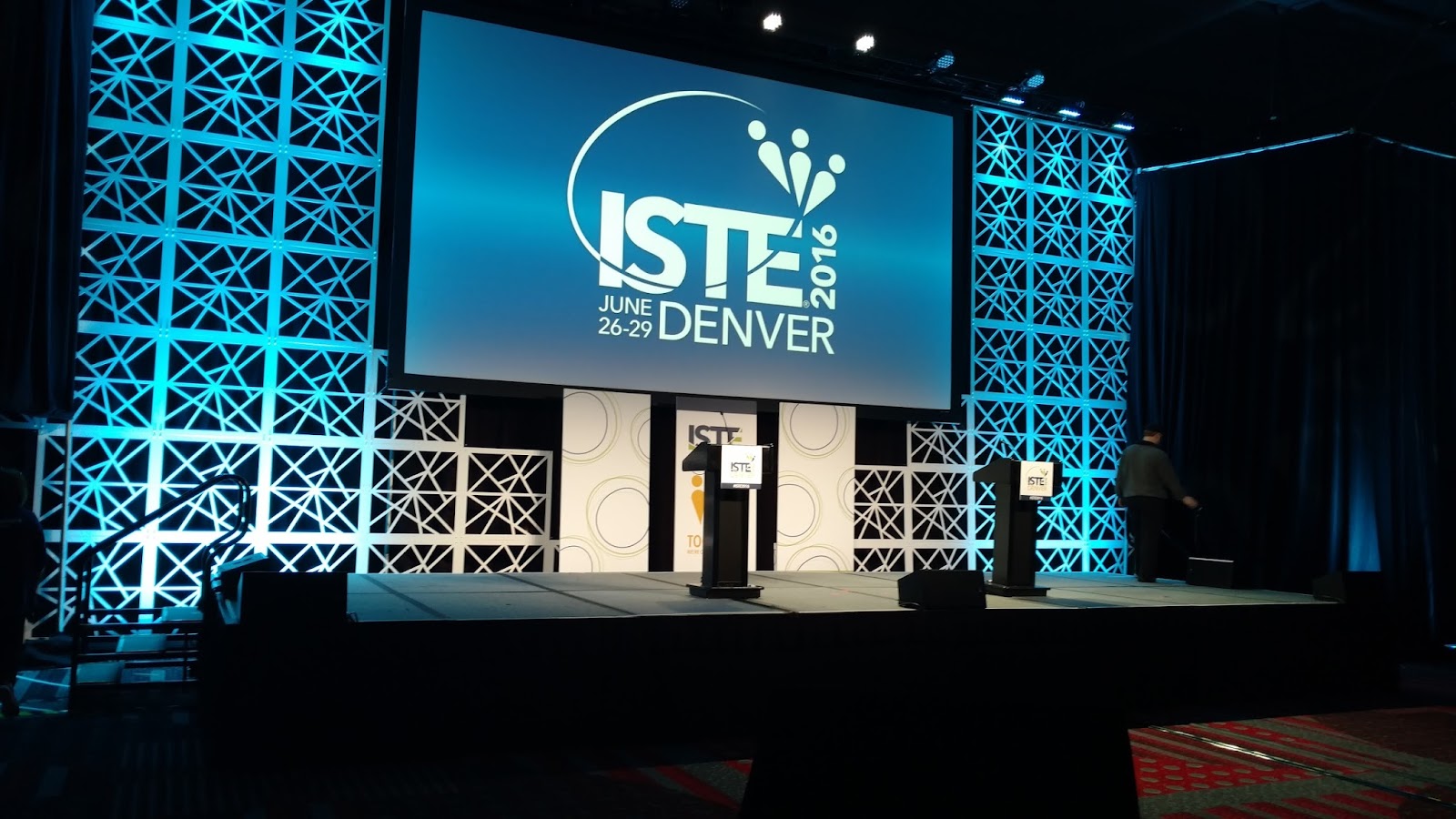
Now is the time to plan your schedule for #ISTE2017. The location for next year is San Antonio, TX from June 25-28, and now is the time to start planning ahead. Not deciding on where or how you want to spend your time while there, but planning to be there to experience the awesomeness of ISTE and the Connected World. See you in San Antonio!

What are your takways and highlights from #ISTE16? Share in the comments or on Twitter with #TheEduCal!