The deal with homework

What Is Homework, Anyway?

There are so many conversations happening every day that focus on homework. The benefits, the purpose, the best way to give homework and if it should be given at all. I used to assign homework almost every night in almost every class.  For years, a big part of my practice involved assigning, grading and going over homework assignments. But then I started to think about how much time was being used in class going over the work, how many times it was not completed or only partially completed, and sometimes copied as well. So I shifted my focus to evaluate the types and the frequency of assignments I was giving.  Over the past few years, I changed my thinking and moved away from a “one size fits all” assignment and moved toward a more personalized, authentic form of practice, that students can choose and that is kept open for them.

Talking with other educators at conferences and through Twitter chats, gathering feedback from my students, and because I am a foreign language teacher, I also had to find ways to eliminate student use of translators for their assignments. A combination of these experiences and even a little frustration from homework not being completed, led me to try some new methods in this area.

I first considered the types of assessments I use in my classroom. Looking at the needs and interests of my students, the overall frequency of homework completion, the type of homework, and even more closely, a look at the individuals within each group of students that I taught.  I thought that I had to assign homework and it had to be the same. But after reflecting and trying new ideas, I now ask myself one question: Why? Why do I need to assign something, what is the purpose and what are the benefits for student learning? Will the task help the students to build their skills, in a meaningful and authentic way? Or is it just busy work.

Why I Decided To Do Something Different

I recognized a pattern when teaching a concept and I get that feeling like I just taught the exact same thing, in the same way, the day before. My “déjà vu” experience leads me to then consider the progress I am making with the curriculum in the current school year, and how I have paced my instruction based on covering the curriculum throughout the year. I emphasize the word “curriculum” because it was driving my instruction for a long time. But what I have come to realize is that I need to focus on the students, their needs and providing the best learning opportunities for them. The goal should not be to be at the same point at the same time each year, because students are not the same, and the daily class progress is not the same either.

I have had people tell me that being a teacher is easy after the first few years because the same plans are used, the lessons are taught at the same pace with the same assignments and tests each year. If that was true, then teaching would seem to be a rather easy and predictable profession. However, we all know that is not an accurate description of life as a teacher.

One of the times that I had this conversation with someone inspired me to closely examine my own teaching practice.  What kind of materials was I using in class? How was I providing instruction for each of my students and did I use the same resources each year with each class? I wondered if I truly had been doing the same thing in my classroom every year for 20 years?  Had I simply pulled out the folder and make copies of what I had used during each of the 19 years prior to that one?

Honestly and unfortunately, sometimes yes. I had. I used the same worksheet, or a similar part of a test in my classes over the years.  Not because I was too lazy to create something new.  Sometimes it was to provide a quick activity or assessment, and others it because I thought the materials were valuable for student learning.

Think About Homework In Your Classroom

Are you wondering about your own practice? If so, ask yourself the same questions and then reflect on your responses.  If you have been doing the same thing, then it is time to make a few changes.  What would work best for and help your students?  We need to do more than just look at each individual class, we need to really look closely at the needs of each individual student.  And this means that we must get to know our students and that comes from building relationships. We must understand where they’re coming from and what their individual needs are.

Do a homework experiment

I took a chance and did an experiment. We know that students often have a lot of homework.  It is the way teachers have helped students to practice and figure out what they know and what they don’t know. It is only one of the many ways that teachers can assess students, provide instruction and valuable feedback.  But do they all need homework every day?  I used to think that I had to give students the exact same homework every day.  My methods were a result of the experience I had as a student.

My experiment was to give students an opportunity to create a lesson, using their material, and become the teacher for a class period.   One example was having the students decide on a  verb tense to review and to simply come to class the next day with a way to teach the verbs.  I said it could be something tangible like a written activity, or an activity that they found on a website, a video, a game, or another resource. I believed that with choices, the students would learn more and develop collaborative learning skills in the process.

What did they think?

While the students taught their lesson or led the activity, I interacted with each group to see what they had prepared. Some were using worksheets they had found online and added more vocabulary to it, there were some worksheets that students had created, handwritten pages of notes, sets of flashcards, a few had found websites with games or videos. The next time, a few students chose to create a game of  Kahoot or Quizizz game, which was really helpful when it came to the vocabulary words and verb forms. They felt that the learning experience was personalized and they enjoyed the change.

Of course, I was nervous about doing this.  It felt uncomfortable to not specify a particular format. It was a risk, but it was well worth it. Based on their feedback, the input I received was that they enjoyed being the teachers, the learning was more personal, they felt valued, and it was a more meaningful learning experience.

I have not given nightly homework in over a year. Instead we practice in class, work in stations, and students write a blog post once per week. They choose the topic and I simply read and give feedback and try to incorporate some of their work into our class activities. When they have time outside of class, I suggest some different learning tools or activities. I would rather that they spend time doing something that meets their needs and time, rather than everyone doing the exact same thing.

Take a chance

Don’t worry about now having the whole plan thought out. Sometimes we just need to take a risk and go with it.  Giving up some control in the classroom is not always easy, but it is necessary. We need to step out of the way more and be okay with students taking the lead. It creates more opportunities for us to be the facilitators of learning, and we can provide more individualized instruction to our students. Step one is building relationships which are the foundation of education. When we have a solid foundation for learning in place, amazing things can happen.


What are your thoughts on homework? Please share!

Why students should blog


What Are The Benefits Of Student Blogging?

What are some ways to assess students and engage them more in conversation? How can we help students to become more confident in expressing their ideas and more comfortable in sharing their ideas in and out of class? Good question.

As I have reflected more on my practice over the past couple of years, I have realized that I needed to make some changes. One of the most important areas has been finding ways to better differentiate and personalize my instruction and to empower students to take responsibility for their learning and have an opportunity to express themselves more.

Teachers have so many options to choose from when it comes to technology, and it can be a challenge to decide where or how to start. The best advice I can share is to find one area that you feel like you can improve upon, or maybe there is something that takes a lot of your time or does not offer students enough opportunities to participate in class, just to name a few.  A couple of years ago, I started to have my students blog. I had read blogs for several years, had only recently started writing my own, and thought they offered a great opportunity to learn about a lot of different topics in short passages.

While tremendously beneficial for the reader,  it seemed like a great way for the “blogger” to share ideas and even helpful hints to anybody who wanted to learn just a little bit more about a topic. Blogs are great for those who do not have time to read a book and want to follow or learn about specific topics.  It is also a great way to express oneself. With this in mind, I started having my students write blogs in Spanish and I chose Kidblog for them.

Choosing A Blogging Platform

There are many blogging platforms available, depending on your grade level, the specific platform needs and also funding if needed.  On a personal level, I have used Blogger, Word Press and Edublogs. These are great options and there are many other ways to share a blog, and depending on what your personal needs are and how you would like to incorporate blogging into your classroom, you may decide to use any one of these. But for my students when I started, I began with Kidblog in my Spanish II, III and IV courses.

At first many of the students were quite apprehensive about writing and worried about who would be reading their work and there was the fear of writing correctly and making mistakes. These are all common concerns for anybody when confronting something that’s new and different than what has been the traditional way of doing things, especially when it comes to the classroom setting.

I had never written a blog myself until I was asked to write one for a few Edtech companies and share how I was using the tools in my classroom. I was apprehensive at first, having no experience writing a blog at that time.  I was not sure where to begin nor how I would write so many words. However, it’s true what they say, once you take that first step you can keep moving. It’s just that getting started is the most difficult part, finding the right words, learning about your writing style, it’s all part of the process.

What Are The Benefits Of Student Blogging?

The blogger has the benefit of improving writing skills whether in basic grammar structures in English or learning foreign language skills as is the case for my Spanish students, or for other courses, learning to write in a specific way whether it be persuasive text or narrative for example. And the theme can be relevant to any course or personal interest topic. An additional benefit is the ability to share ideas and experiences, enabling people to learn from each other.

Blogging enables you to write freely about your ideas and thoughts, and you can choose to share them or you can keep them private, but the end result is that you have a way to express yourself, be creative and can then use it as a means for personal growth and reflection.

All of my students in Spanish II, III and IV have accounts for blogging and sometimes I will give them a prompt and other times I leave it up to them to write about whatever they feel like writing about. I do set guidelines for the blog to be a certain length, a number of words, or specific verb tenses, but I really want it to be a way for them to express themselves, be creative and have it be more personalized.

Getting Started

Before we begin blogging and throughout the year, I continue to emphasize that it’s really important to remember a couple of things. The purpose of the blog is to work on writing skills and that means their own skills and not those enhanced by trying to use a translator. They need to put forth the effort and try to write in Spanish, in my case, while keeping in mind some of the grammar, vocabulary, and verbs that we have learned in class. And finally, they need to read the feedback from me, or if they are paired with a classmate, peer-review and not worry about any errors.  I reinforce that we’re all in this together to help each other learn and grow and that it’s okay to make a mistake.  While my experience is with students studying a foreign language, you can apply these same parameters to any course.

I use the blogs as a way to have them work with a new vocabulary unit on their own. I let them get into small groups and take turns writing and then commenting on blogs, but either way, I read them all. I can learn more about what their needs are in terms of language skills, but I also learn more about them as a person and it helps to build relationships with them as well.

Final Thoughts

Blogging can be used for many purposes and can be a regular activity or maybe it’s something that you would do occasionally, depending on your class. It could be a great way for students to write their interpretation of something they read in English or in a history course for example. I have written blogs for graduate coursework and at times, I am still apprehensive because I am putting my ideas out there for somebody else to read and I think it’s natural to feel a little bit afraid of expressing yourself openly, but that’s what the purpose is.  We need to feel free to share our thoughts, to communicate with others, and to build connections.  These are all important parts of the learning process.

So think about blogging.  Whether it means you find a blog to read, start to write your own blog once a week, once a month or try it out in one of your classes. I will tell you that it can amount to a lot of reading when you have your students do it, but it’s completely worth it for you and for them. And don’t be afraid to take a chance with it, we learn from our experiences and we reflect and continue to grow.

Among the benefits of students blogging?

  • Student autonomy and student engagement
  • Promotes student choice and builds confidence in writing and in communicating
  • The natural “cognitive load” of the writing process. Writing is hard and writing that will actually be read by someone outside the classroom is another thing altogether. Students need to share their work.
  • 21st-century skills, collaborating, thinking critically, and publishing ideas with authentic audiences.
  • Opportunities to practice digital literacy and citizenship, very important to include in our classroom.

If you have any questions or comments I’d love to hear from you, happy blogging!

Digital Citizenship Week

5 resources to help students — and teachers — understand copyright law

Originally posted on ISTE 

As educators, we provide opportunities for students to research and create using new media and technologies.

When students create a presentation, make a video or write a report, it is important that they understand not only how to evaluate the sources of information, but also how to properly cite where they obtained the information. Students also need to understand how to access information, repurpose various media and create their own works while respecting the laws of copyright.

It’s our job to model responsible use for students and guide them to find resources.

Keeping track of copyright law can seem daunting, but it doesn’t have to be. There are quite a few quality resources to help you ensure that your students are practicing good digital citizenship. Here are my five favorite resources for understanding and teaching copyright law:

Common Sense Education.

This is the education arm of Common Sense Media. It provides resources and activities that help students develop a better understanding of copyright as well as topics related to digital citizenship. Some of the activities include self-directed activities, where students respond to prompts that help them to navigate through online safety and copyright issues. The site also offers a series of videos that can help students — and educators — understand the ins and outs of copyright.

The Center for Copyright Information.

The site provides information and resources to help students, parents and teachers understand how to access information and how to properly and legally use it. The site offers videos with explanations of copyright infringement, how copyright alerts work and many links for how to search for digital media, including movies, TV and music.

21things4students.

This site, which earned the ISTE Seal of Alignment for Readiness, allows students to learn 21 themes related to using digital media, several of which cover copyright and other ethical issues. Students watch a video and then work through a series of tasks to achieve a goal and level of completion. For some tasks, students can earn badges and print a certificate.

Internet Education Foundation.

This site provides resources and lessons to help students learn their rights and responsibilities under copyright and fair-use laws. The emphasis is on helping students become good critical thinkers and active contributors and savvy consumers of digital media.

Brainpop.

This paid resource for educators has an entire section on copyright and fair use. Educators can post assignments on movie making, coding and more that help students learn about copyright. Students then complete various activities, like making a video, that demonstrates their understanding of copyright and fair use while allowing them to express their creativity.

As educators, it is our responsibility to provide opportunities for students to interact online, to be creative and to develop the digital literacy skills they need for the future. To do this, we need to provide resources and teach them how to better understand copyright law.

Making Global Connections: How and why it matters


by Rachelle Dene Poth

It is amazing today what we can accomplish through the use of technology. Past methods we relied on for communicating with friends, family, other schools, and abroad were limited to telephone calls, letters, meeting in person (if geographical location afforded this), for a few examples. When it came to learning, our opportunities for connecting students with others were limited to classrooms within the same school or a nearby school. These interactions had to be set up in advance either by making a phone call or even sending a letter in standard mail. (This goes way back to  my own elementary and high school experience, we did not have cell phones or the Internet and I am not sure about fax). Finding ways to create diverse learning experiences, took a good bit of time and collaboration for everyone. Schools needed to set up transportation, plan the schedule and other logistics, and of course the purpose had to be for a beneficial learning experience if it meant disrupting the school day.

We can provide so many more activities and learning experiences for students today, and they can be carried out with little to no real pre-planning, because of the diverse tools we have available through technology. Whether we use a form of social media or connect with a member of our PLN, and try using a tool like Voxer, or Slack, we can have a quick conversation instantly. Differences between time and place do not matter anymore, there is not even a need to move groups to different locations. We can simply talk, share images, livestream videos, use web conferencing, collaborate to add resources, (anything is possible) for us to quickly connect our classroom and our students, with another classroom and students somewhere in the world.

How we can open up these opportunities

There are many options for encouraging and supporting our students as they become globally connected. We should promote these connections so that students can develop a broader understanding of diverse world cultures, perspectives and have an appreciation of different experiences. With so many resources available, we have the ability to truly bring learning experiences to life, immerse students into different cultures and parts of the world, by simply connecting. It just takes one step.

Some examples of how easily this can be accomplished are by using some of the web-based tools available to teachers and students today. Through the use of video tools, many of which are available as free platforms, classrooms can connect with others throughout the world, regardless of differences in time and place. You can truly see what others experience in their day-to-day learning and living, and engage in conversations in real time.

Students can participate in activities like a mystery Skype or collaborate through a discussion, by using tools such as  Padlet or Flipgrid or use something like Appear.In or Zoom, for a live interaction or even Google Hangouts. These are just a few of the many options available to classrooms today. To promote conversation without video, we can use collaborative tools such as Padlet, Gecko or even a class Twitter account, (depending on grade level), as ways to have students connect through writing. In addition to learning about different cultures and establishing global connections, we can build other critical skills like communication and collaboration, digital citizenship and help to engage students more in the learning environment.  Imagine being able to have a conversation with people from 80 different countries at the same time. Regardless of geographical location or time zone, everyone can connect using one of these forms of technology and the many others that are out there.

Getting Started

Connecting globally requires that we as educators be connected. It always starts with us to set an example for our students. We have to build our own professional and globally connected network so that we can provide these learning opportunities to our students. It is worth the time, the risk, and the effort to seek out learning communities and build a community of support. We become stronger and better together, and when we collaborate to provide opportunities for our students to learn from other students, to gain new perspectives, to experience the multitude of ways of collaborating and communicating globally, we take their educational experience to a whole new level. Become a more globally connected classroom today.


Start by joining in on Global Maker Day!

Connecting with Students at the Start of the School Year

Recently published on DefinedSTEM

The start of each new school year is such an exciting time for educators and students. After the summer break, educators head back into their classrooms and schools, hopefully feeling recharged, excited for the new school year, and ready with a list of new teaching ideas. Planning for the first day and first week back to school are so important, we want to set up our classrooms but also need to focus on the environment and culture we are creating. Of course, there are classroom expectations and class details that we need to share with our students, but we need to do something first. In starting to plan instruction and methods, we first should focus on learning about our students and showing that we are invested in their success. By starting here, we begin to develop our classroom culture and set up a welcoming environment for learning.

Welcoming students in and learning together

At the start of the school year, and every day thereafter, we should be intentional about being present. We need to spend time greeting all students and welcoming them back to school. Beyond the students on our rosters, It is important to acknowledge all students as we see them in the halls and throughout the building.  The power behind creating a positive and supportive climate in the building and in each classroom starts with teachers. When we are visible and show students that we are excited about school, we will start making connections that will help in fostering a positive classroom culture.

It can be challenging to start a daily routine of school after a summer break, or any extended break during the year. We must set a good example by engaging our students in conversations, showing an interest in who they are, encouraging and providing opportunities for peer connections. These intentional strategies to get to know our students will positively impact the learning environment

There are many ways to learn about our students. There are icebreakers and other games that can be used as a way to learn about one another. As educators, this is our opportunity to take time to encourage students to share their thoughts and interests with peers, and also what and how they hope to learn in your class.

Making those connections

There are many tools available to set up methods of communication and collaboration and to help students develop these critical skills for their future. For learning, we have to determine how to make ourselves available to students when they have questions or need additional support or resources. The questions do not stop when the school day ends, or over the weekend break. Without a way to ask questions during these times, students can become frustrated and the potential for learning diminishes. In our increasingly digital world, we have access to so many resources, but we also need to know how to find the right tools. First, I recommend that educators find a tool that enables students to connect, to ask questions, and to access classroom resources. Among the digital options available today, it still can be challenging to select the right one. A few examples are setting up a classroom website, a messaging app or using an LMS.

A classroom website is great for having a centralized location for students to access resources, post questions, review content and more. Websites and using LMS platforms can easily be set up using EdmodoSchoologyGoogle ClassroomWeebly a Google Site, or even Padlet.  Communication is also easier with a messaging tool that enables the sending of reminders, links to resources, or that integrates with other digital tools for learning. A few options are Bloomz (for parent-teacher communication) and Remind. There are several other options available, depending on your needs and the level you teach. I have used Voxer with several of my classes, especially for talking about Project Based Learning and sharing ideas and reflections.  One thing to keep in mind is to find out about the kind of technology and internet access available to the students.

Learning about each student

Even the slightest interactions can provide so much information about a student. It happens through those quick conversations as students enter the room, or by including fun activities in the lesson, and creating a supportive, welcoming environment where students feel valued. Engaging in some of these practices will help to build and foster positive relationships. The beginning of the year is the perfect time to start creating connections with one other.

Some quick ways to get started are by having students create a collaborative Google Slides Presentation, or use another digital tool, like Buncee or even Padlet perhaps,  for students to create one slide or add some information. Encourage each student to contribute by adding in fun facts, share how they spent the summer, or the weekend,  to help each member of the class to learn about one another. I did this with my Spanish III and IV students and it was fun to learn more about each student and their summer experiences and we had some fun in the process.

A personal goal at the start of each school year is to learn about my students and help everyone start to feel comfortable in our classroom. We used some icebreaker games, a great game of Bingo, shared stories, and it definitely helps students to learn about each other and for me to learn about them.  Our classroom culture continues to develop each and with it brings new learning opportunities.

Another great way that I have found to learn about each student is through the use of project-based learning. When students have the choice to determine what it is that they want to study and can drive their own learning, we can connect more with each student and understand who they are and what their passions are for learning.  The students can learn about their peers as well as become more globally aware of what it is like to be a student in different parts of the world and to just really explore whatever it is that they want. For us as educators, it creates a way to extend our own learning and we can continue to improve and learn and grow with and from our students,  starting from the beginning of the year.


Why we all need mentors and how to make it happen

Published originally on Getting Smart 

One of the most important roles for educators today is that of being a mentor. As educators, we are often called upon to mentor the students in our classroom, as well as colleagues in our school. Throughout our lives, we have all had at one time or another a person who has served as a mentor, whether they have been selected for us or it is a relationship that simply formed on its own. Take a moment and think about the different mentors that you have had in your life. How many of them were teachers? How many of them were other adults, such as family friends or perhaps even coaches? How many of your own mentors have been the colleagues in your building or members of your PLN (Personal or Professional Learning Network)?

There may be a few that come to mind immediately, both because you remember having a specific time that was set aside to work with your mentor, maybe during your first-year of teaching or as a teacher who needed some guidance while working through some of the challenges of teaching. There is probably a mentor that comes to mind because you credit them with some aspect of personal and or professional growth. For myself, I have been fortunate to have some supportive mentors that have helped me to grow professionally and taught me what it means to be a mentor. These relationships are so important because it is through mentorships that we continue to learn and grow and become a better version of ourselves. In the process, we also develop our skills to serve as a mentor to someone else and continue the practice promoting growth.

Getting Started with Mentoring

Take a moment and think about your classroom or your school and the types of programs which may be already in place in your building. Are there specific times set aside for teachers to act as mentors for students? To their colleagues? In my school district, Riverview, we implemented a homeroom mentoring program a few years ago, as part of our RCEP (Riverview Customized Educational Plan) which we were making available for our students. A few years prior to that, we began with the Olweus Bullying Prevention Program, and our school was among the first schools in the United States to achieve national/state recognition for bully prevention. Through the program, we implemented a variety of learning activities, with the goal of engaging students in learning and collaboration, to promote a positive school climate and to create opportunities for students to build positive and supportive peer relationships.

For our Homeroom Mentoring Program, small groups of students in grades 9 through 12, are assigned to a homeroom, with a mentor. By having these smaller groups, the teachers are able to serve as a mentor for each student, working with them closely, to not only support them during their high school experience but also to prepare them for their future after graduation. It is a way to provide a more personalized learning approach for each student and for each student to know they have support available to them. These mentoring homerooms meet on a regular basis, providing ongoing opportunities for the teacher and students to interact in team-building and work on fostering peer relationships. During these homeroom meetings, some of the activities include pride lessons, goal-setting discussions, career exploration surveys and job shadowing, community service experiences and other topics which come up throughout the year. It is a good opportunity for the students to have a small group to work with and to develop critical skills for their future, such as communicating, collaborating, problem-solving, and developing social and emotional learning skills as well.

In addition to the planned activities, a key part of our mentoring program is the creation of a “portfolio” which includes samples of student work, a job shadow reflection, resume, list of volunteer experiences and additional artifacts that students can curate in their portfolio. The past few years, students have organized these materials into a binder, which has been kept in the mentoring homeroom. The materials become a part of their required senior graduation project. This year, we have started creating an e-portfolio, using Naviance, a program that promotes college and career readiness. Students begin by creating their online profile and sharing their activities and interests. Using the program, students can take surveys to learn more about their own skill areas and interests, learn about colleges which might match their interests, and also continue to build their digital citizenship skills. According to one of our guidance counselors, Mrs. Roberta Gross, the mentoring program was implemented to help students make transitions toward post-secondary goals and plans, and moving to the e-portfolio is creating more opportunities for students to explore their own interests and create their online presence.

There are many benefits of having students create an e-portfolio. Moving to an e-portfolio makes it easier to access the information for each student, it can be shared with parents and it opens up more conversations between the students and the mentor teacher. It is important to prepare our students for whatever the future holds for them beyond high school graduation, and working with them as they grow, in these small groups, really promotes more personalized learning experiences and authentic connections.

As a final part of this program, our seniors take part in a senior “exit interview”, a simulated job interview with a panel of three teachers, a mix of elementary teachers and high school teachers. It truly is a great experience to have time to see the growth of each student, learn about their future plans and to provide feedback which will help them continue to grow and be better prepared for their next steps after graduation. And for students, being able to look through their portfolios, reflect on their experiences, self-assess and set new goals, knowing they have support available, is the purpose of the mentoring program.

Resources on Mentoring

There are many resources available that can provide some direction for getting started with an official mentoring program.

  1. The “Adopt a class” program, founded by Patty Alper, who also wrote a book on mentoring called “Teach to Work: How a Mentor, a Mentee, and a Project Can Close the Skills Gap in America.” Alper talks about the impact of mentoring and how her view of it is towards an “entrepreneurial” mindset, preparing students for the future, with the skills they need. Alper breaks down the process into practical steps, with examples and encouragement for those new to the mentoring experience.
  2. The national mentoring partnership “MENTOR”, offers a website full of resources and ways to connect with other mentoring programs. MENTOR even held a Mentoring Summit in Washington, D.C., this January, where professionals and researchers gathered to share ideas and best practices for starting a mentoring program. Be sure to check out their monthly themes and presence on Twitter.
  3. The National Mentoring Resource Center offers a collection of different resources for mentoring include manuals, handouts and a long list of additional guidelines for different content areas, grade levels, culturally responsive materials, toolkits and more. The website has most of the resources available as downloads.

How you can get started

I would recommend that you think about mentors that you may have had at some point during your life. What are some of the qualities that they had which made them a good mentor and why? For me, I felt comfortable talking with my mentor, being open to the feedback that I would receive, and I knew that my mentor was available to support me when I needed. Another benefit is that we learn how to become a mentor for others, and when we have these programs in place, our students will become mentors for one another. I have seen the positive effects in my own classroom, and many times, these new mentorships have formed on their own.


A phenomenal mentor that taught me what it means to be an educator.

DSC00538

DSC00515

Thrilled to have an awesome mentor and professor, thank you Bruce Antkowiak

Counting the days…?

It’s back to school time! Depending on who you are, your feelings about heading back to school might differ dramatically. And I don’t just mean whether you are a parent versus a teacher, I mean even within these two groups. Among those of us in the classroom, the realization that we are headed back to school brings about a lot of different reactions. Of course there is still that perception that teachers have the best, easiest job, because we have summers off and all those holiday vacations as well, and don’t forget about the weekends. And there may even be a perception that teachers are happy when the school year ends. I have been asked many times, “How many days left until you’re off for the summer?”

I have never been one to count down the days till the end of the school year. While I am cognizant of the end of the year, I don’t, nor have I ever posted a countdown of how many days until summer vacation begins. A few years back there was a countdown board posted, but it was just for a student’s birthday. (Fun fact, she had written using a sharpie, so it kind of became a permanent birthday countdown board).

For me, I consider school to be year-round. Even though I don’t have to report to my classroom during the summer months, I am still involved in professional learning and trying to grow and learn as much as I can during that period of “free” time. I love being able to set my own schedule, in my own space, definitely perks of having the summer off. But I know that there are educators who do count the days until the end of the year, not because of excitement for a family event or vacation, or any special occasion, simply because they are done “working” for the summer.  I think that to be in education today, you really have to love what you do. You have to know your “why” behind it and you need to stay focused on what your purpose is for having chosen to be in this amazing profession.

Just like any other job, teaching has its challenging moments as well. And who hasn’t been excited about the weekend or an extended holiday break coming around? That’s natural regardless of what profession you are in. But if you are in education and you are counting down the days, you end up conveying the message to students that you cannot wait for the year to end. Why would they want to be in your class, or even be positive about being a student your class whenever you’re sending the message that you can’t wait to have a break over the summer? That may be blunt, but that’s exactly what I think of when I hear of “countdowns” in classrooms. 

I know that students may count down the days, especially seniors, until summer vacation starts. This is understandable because they have spent so much time in classrooms, sitting in uncomfortable desks for nearly eight hours a day and then going home to do even more work. And I know there’s a big controversy regarding the benefits of whether or not homework should even be given, especially when we think about the real world and the jobs that are out there, like teaching, where work does not end at the end of the “work day”. But at this point in time, I think that we need to focus on preparing students to make decisions about their future. To do this, I changed my practice of nightly homework and instead, created more ways for them to work in class and for me to work with them individually and in small groups. It is also important to stay positive about the learning experience and to do that means not counting down until the end of the school year.

Now the flip side is the back to school. Some parents are thrilled to have their children head back to school after a busy summer of family activities and hectic schedules. Some teachers are not as excited to head back to school because for them it means giving up that flexibility in the schedule where they can spend time doing what they want, learning, or just simply relaxing with family and friends.  But there are some educators who are excited about heading back to the classroom, so much in fact that they go in over the summer to prepare their classroom, to buy school supplies for their students and to really work on making it a welcoming place starting with Day one.

Now don’t get me wrong, I have enjoyed this summer, and I am somewhat sad that there are two weeks remaining before I head back to school for the year. However, once I get there, I’m happy to be there. The opportunity to work with students and my colleagues and to just have something new and exciting to learn and explore every single day inspires and motivates me. And I think if you are in the business of counting down the days until the school year ends and openly sharing how upset you are that the school year is beginning again, you might want to consider a career change.  Again, apologies for being slightly blunt.


A few weeks ago my #4OCFPLN noticed that there were tons of negative memes being placed on Twitter and social media by educators about heading back to school. So to make a difference, they began to create their own memes with positive messages and excitement for heading back into the classroom. Think about it. As an educator you have the opportunity to do something different every single day. You make the decisions, it’s your classroom, you interact with the students and your colleagues and you have the power to make it something wonderful and unique and fun. It is YOUR choice to make it amazing. If you don’t enjoy heading back into the classroom, then maybe you should think about the way that you are doing things and ask the students for some input. Don’t be afraid to mix things up a little bit. Especially if you find that teaching can be overwhelming at times or if you have been counting down at the end of the year.

Each summer I spend a lot of time traveling to conferences, reading a lot of books and trying to take care of things that I can’t get done during the school year. I do stay connected with my students over the summer, as they have some ongoing reading to do to keep up their language skills. As much as I love teaching, I definitely get used to my routine of sleeping in later or staying up late and reading, and not really having any set schedule to follow. But a lot of the time I find that I’m thinking about what I’m going to do once I get back into the classroom, how can I be better than I was last year, and what can I do differently to really make it an exciting learning experience for my students.

So if you are thrilled to be heading back to school, I think that’s awesome. Please share your positive outlook with others who may not be as excited as you. And if you are thinking about how sad you are that school is starting so quickly, think back to your previous year and some of your best interactions, or your best lessons or even your worst lessons. What made them go so well and why do you think some of them didn’t go as well? Invest some of your remaining summer “break” rethinking the lessons that didn’t go as well and make those the point that you start the new year with. Challenge yourself to do something different and something better than the year before. Maybe that will be the motivation and the catalyst that you need to build some excitement for heading back and greeting your students for the upcoming school year.

2fn33h

Welcome back to school!


Here are a few from the #4OCFPLN –

1534006495342_0994470725_6570db251534006495356_0901452263_6570db251534006495357_0184287231_6570db25


A fun way to learn, a great story

PBL and GimKit

So the tool was Gimkit and I only heard bits of a conversation in the #4OCFPLN group (Thank you Laura Steinbrink) and I honestly thought it was something only for elementary school. I decided last weekend to look it up, create an account and give it a try. At the end of the school year, I love trying new tools and ideas to keep students engaged in learning and finish strong. A few years ago, Goose Chase was a huge success, and so I was excited for the possibilities with Gimkit.

It was so easy to create a game, referred to as a “kit.” I created several “kits” for my classes and then noticed that I needed to upgrade to make additional kits. I reached out to the game’s creator to find out if I could have a brief trial period, so that I could make more games. Since the school year was ending, and I had conferences coming up, I really wanted to try out as many features as I could.  I was quite surprised to find out that this is a tool that has been created by a high school junior, as a part of project-based learning.

“Being uncomfortable is a great way to increase your skill of learning”

Learning the story behind the creation of Gimkit

When I asked Josh asked about his background, he told me that during the last school year, a new project-based learning high school opened in his district and he decided to attend.(See an interview done by Michael Matera, #xplap, where he interviews Josh).

In May of 2017, as he was completing one of his projects , he thought back to traditional school, where he really enjoyed using other game based learning tools, and thought he could create something to improve upon them. He started by interviewing different students and teachers, and compiled a list of the most common issues expressed, which became part of his focus in creating Gimkit.

GimKitHW

As an assignment

Last summer he worked on creating the first version of Gimkit, and ran a small beta test in October and officially launched the day before Halloween. He says they have spent “little to no time and money on marketing,”  and the user base is growing, over the past few weeks he has seen around 20x the usage he did from just a month ago. As for the team, for the most part, it’s just Josh who does all of the engineering and responds to customer support messages. He started to code between freshman and sophomore years, and then developed GimKit over the following summer. Josh also has a mentor who works with the customers and provides business advice. Listening to his interview with Michael, there are three questions that he asked himself which impressed me. “Am I working to improve the product every single day? Am I improving myself every single day? Am I doing something to push the product further everyday?” He clearly has a growth mindset and is reflective in his “challenges” that he has set up for himself.


I was so surprised when I received a response to my email to Gimkit  within about fifteen minutes of having sent it. I can’t recall the last time that I got a response so quickly.

GImkitCreate

Giving it a try

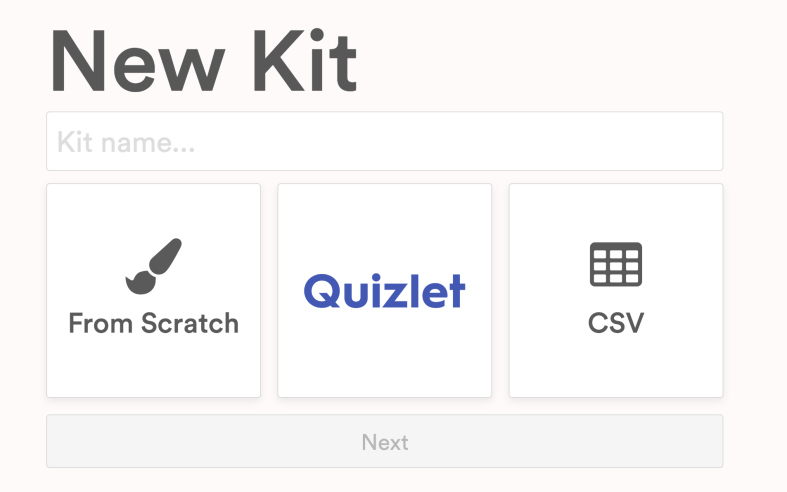
So last week I decided to give it a try in my classes without really knowing what to expect. I got started over the weekend by creating classes, entering the students’ names to make it easier in class. I created a few “kits”, which are games. It is very easy to create. You can start from scratch, upload your own sets of terms or connect with Quizlet to export a list of words directly into your game. The goal is to make as much money as you can, or for students to reach a set goal. Students can play individually or in teams and logging in is done through a code, where students can then either find their name if part of a class, or enter their name.. You can also set a time period to play, I have been using 10 and 12 minutes, just as a start.

I was very excited to try this with my classes and actually only intended to play during my Spanish I classes. To start, I told them that I really wasn’t sure how it worked and told them to just go for it.

Playing this reminded me of that day five years ago when we play Kahoot! for the first time. The students wanted to keep on playing more games every day and said it was their favorite. They were excited and having fun but more importantly I noticed that they were learning the words and their recall of the words became faster and faster with each time played. It was fun to observe them as they played, learning how the game worked, and hearing their interactions. Some students were yelling at their teammates “to stop buying things”, as they can “shop” and level up with extra money per question, buy insurance, bonus streak or other options. Eventually they all had fun buying things,  when they saw how quickly the money was being added to their account.

After the first round of games, I think the total won was around three million which seemed like a lot until the next class came in and had 17 million. The third group to play earned 37 million and when we decided to continue this the next day we were in the billions!

GimkitLIbrary

Gathering feedback and assessing the benefits of the tool

Once the game is done, a report is available which opens as a PDF. The summary shows the class results and the individual report lists each student, money earned and lost, correct and incorrect answers, followed by a list of the terms asked and the number of correct and incorrect responses. It is a great way to see what areas that the class as a whole needs some review with, but more importantly, something that can be shared with each student and used as a tool to study. Teachers can create 5 kits for free and edit each kit once. There are also paid plans that enable you to create more.


For the determining the benefit for students, I value their feedback very much and I ask them what they liked about the game and how they felt it impacted their learning of the vocabulary. They liked the game setup and the repeated questions, the music and the teamwork made it fun as well. Creating the kits was so fast and made it easy to keep adding more into my library. Another nice feature is the ability to assign kits for students to play outside of class for practice.

There are different options available for play in class as well as assignments. I love that students can work at their own pace and that they are learning more and feeling more confident with the material.  I definitely recommend that you check them out and follow them on Twitter, @Gimkit. Just in the past few days, there are already new features added, one favorite is the messages sent to teammates letting them know when someone on the team buys something.


12 Tools to Try…before summer break!

Updated from the Original Post on Getting Smart, January 19, 2018

Looking for new ideas to try before the end of the school year? If you have not tried some of this, now is the time!

There are so many digital tools available today that offer opportunities for promoting student creativity, student voice, and expanding where and how students learn. I had my own list of the tools that I found made a big difference in my classroom, but decided to ask students for their input.

Here is a list of tools to try in 2018, (or to try before the end of the year, let’s keep learning!)

Each of these offer multiple ways for students to create, connect and engage in more authentic learning experiences.

Promoting Connected Learners

We were able to take our learning to a whole new level this year through Project Based Learning (PBL). Using these tools enabled us to connect with students from several Spanish speaking countries, which created tremendous possibilities for more authentic learning and broadening our cultural understanding.

1) Edmodo: Virtual learning space, where teachers can set up a digital classroom to connect students with the resources they need, in a safe learning environment. Edmodo can be used for assessments and integrates with Microsoft Office and Google, making it easy to share files with students. Students relied on Edmodo to connect with students in Argentina, Mexico and Spain for their PBL. One student said “these connections enabled me to sculpt my PBL, and learn in ways that books, videos and regular classroom lessons cannot provide.”

2) Flipgrid: Video response tool, which became one of the most talked about tools this past year after launching new features, making it even easier and more fun for students to share their ideas. Students can record up to a five minute response, add emojis to their photos and access the “grid” quickly through a grid code. It is a great tool for helping students to become more comfortable and confident in sharing their ideas and sparking curiosity with their peers.

3) Padlet: Padlet, a virtual wall, is a favorite in our classroom. Students can create a digital portfolio by uploading files and links to projects, curate resources for PBL, or have discussions with classrooms around the world. Other popular ways to use Padlet are to ask questions, post homework, or as a classroom website. Newer features include being able to “like”, “grade” or “upvote” a post and directly transfer posts to another Padlet wall.

4) Recap: Recap 2.0 is a free video response tool, which integrates with Edmodo, Canvas, Schoology, Google Classroom and Blackboard, making it easy to implement right away. It provides a comfortable way for teachers and students to ask questions by setting them up in a “Queue”. Students can submit questions and receive direct feedback, in a safe moderated environment.

Tools to Engage Students in Learning

5) Quizlet Live: Quizlet Live is a fun way to encourage student collaboration by playing a team game using a set of Quizlet study cards. Teachers select a set of study cards, launch a Live game by providing students with a join code, and students are divided into teams. To play, you need at least four players and a study set with at least 12 unique terms. Only one member of the team has the correct answer and answering incorrectly bounces the team score back to zero.

6) Quizizz: Quizizz has launched some new features, including integrating with Edmodo and Google Classroom, which makes sharing or assigning games and reviewing results much easier. When playing live, students can see the class accuracy reflected as it updates the leaderboard live with each response. There are thousands of games available in the library, making it easy to get started or create your own.

7) Kahoot!: Some big changes to the layout and options of the platform make it easier to navigate and review questions in class. Teachers can now assign “challenges” to students as a fun way to practice by sharing a code. The new “Nickname Generator” creates fun and unique usernames such as “Mystery Panda” or “Fantastic Bat” to students. It definitely saves time rather than waiting for students try to come up with their own “creative” names.

8) Kidblog: Blogging has many benefits for helping students to express themselves and begin to develop their online presence. Teachers can provide students with a variety of writing prompts to not only assess student learning, but promote creativity, communication, collaboration and digital citizenship skills. With Kidblog, teachers can even AppSmash (use two or more apps or tools together to complete a task) by embedding other tech tools into the platform, such as Buncee, Flipgrid or by uploading images and documents directly from Google Drive.

Creativity, Assessments, Interactive Lessons and More

9) Buncee: Buncee, a versatile presentation and assessment tool, is great for creating multimedia projects full of animations, graphics, audio, and videos. Choose from thousands of templates, backgrounds, animations and other graphics to create invitations, classroom signs, and unique “Buncees” for any purpose. Buncee enables every student to find exactly what they need to add into their project and to bring out their creativity.

10) Formative: An interactive tool for creating formative assessments, for use in class or as student-paced practice. Students enjoy using Formative because they receive feedback quickly, they are able to “show” their work and when done as practice, move at their own pace. Teachers can create Formatives with different question types, content and even the ability to upload and transform files. Try having students create their own Formatives as a way to have more personalized and authentic practice.

Immersive Learning, Coding and Problem Solving

11) Nearpod: Nearpod continues to be a game changer in our classroom. It provides so many options for presenting material as well as assessing students through diverse activities. The chance to be immersed in the virtual field trips and explore places around the world is of tremendous value for students. Educators can quickly create interactive lessons which include multiple question formats, the ability to upload content, BBC lessons, PhET simulations, and even add in GIFS! Nearpod integrates with Google Classroom and Canvas, and most recently with Remind, making it even easier to share lessons. Nearpod also added 27 “College Tours”, available in VR, a great way to have students experience different schools by immersing in the campus, without having to travel the distance.

12) CoSpacesEDU: CoSpacesEDU provides students with a way to not only create their own “spaces”, but to be able to walk in the spaces created by their peers. To explore in VR (Virtual Reality) and problem solve by figuring out how to code using Blockly, offers students a truly authentic way to learn, create and problem solve. The Gallery is full of examples to get you started with ideas for your classroom. Use CoSpaces to have students represent a scientific concept, a book report, or create a scene representing something studied in any content area. Talk about creativity, imagination, innovation and critical thinking, and more all in one tool.

In the End

These are just 12 of the many tools out there for education. The most important thing to remember is the “Why”? behind using these in the classroom. While these 12 tools made a difference in my classroom, they may not have the same impact in yours, but I do recommend giving them a try. Think about the tools you are currently using to amplify or facilitate student learning. What is making a difference in how, what and where students learn? Could one of these be used in place of another, as a way to engage students more in learning, or even better, provide opportunities for students to move from consumers to creators?

My advice is to simply choose one of these 12 tools and give it a try. See how it goes, ask your students for some feedback, and then plan your next steps.

Rubicon Summit: Classroom’s Journey To Student-Led, Interactive Lessons

A Classroom’s Journey To Student-Led, Interactive Lessons

Written for the RUBICON SUMMIT

About two years ago, I found myself struggling to find ways to keep my students engaged in the lesson. I tried to get them involved more in class activities by offering more choices and providing opportunities for them to be part of the decisions made about what we were doing in the classroom. Why did I do this? Partially because I saw – and could feel – a decrease in student motivation and engagement. It was approaching the end of the school year, and the focus had shifted more to “when does summer begin?”

So I tried to do things a bit differently, think creatively, and take some risks. I wanted to keep us all moving, to finish strong at the end of the school year and begin summer vacation with a sense of accomplishment, to celebrate all that we had learned throughout the year and also what we had gained from these new experiences.

Educational Technology and Digital Tools with Purpose
Educational Technology provides so many resources that enable students to learn anywhere and at any time, and at a pace that is comfortable for each student. We can instruct from inside the traditional classroom, ​”​the brick-and-mortar​” ​as it is called, or from anywhere around the world. Using digital tools provides more differentiation and personalized learning, and provides opportunities for the students to move from consumers to creators. When students have choices in how to show what they have learned, they are more likely to be engaged and excited for learning. They will feel valued​,​ and the lesson and learning will be more meaningful because it has been made perso​n​al to them.

Creating Interactive Lessons
What did I change? I started by having my students create some interactive lessons using educational technology tools like Formative, Nearpod, and EDPuzzle, or even games with Kahoot! and Quizizz. It proved to be a very beneficial learning experience for all of us. By doing this, we had extra resources available that could be shared with students who might need some extra practice. I thought it went so well that I decided to take it a step further and start a “teacher for a day” activity during which the students create a lesson based on a grammar topic or vocabulary.

I stepped back and had the students lead our classroom. It was a really good way to learn a lot more about the students, to better understand what their needs were in terms of the content material, and for the students to learn about each other. Giving students the control and the opportunity to become the creators and leaders in the class has tremendous benefits and it has been something that we have enjoyed.

Giving Students the Control
At first when students created interactive lessons, I would launch the lesson and control it on the SmartBoard, but find ways to involve the student who created it during the presentation. I eventually decided to move aside, and took a seat in the back of the room, having the student lead the lesson, give explanations, answer questions, call upon students for answers, and provide feedback. Having the opportunity to sit back and experience this was tremendous. The students enjoyed the activity, supported each other, collaborated, and provided some positive feedback to each of their classmates. I was very impressed with how well they taught, led, and learned during each of the “teacher for a day” lessons.

Empowering Students in Learning
The use of these digital tools means ​that ​the “time and place for learning” is no​ longer​ confined to the ​traditional time and setting of the physical ​classroom​. It opens up the learning environment ​to​ anywhere​, at any time and at a pace that is comfortable for the students as well. Learning and having timely, purposeful and authentic feedback is critical ​for growth to happen. When we shift our focus to creating opportunities, giving students the control, leaving the decision making to students to choose ​how t​o show what they have learned, or ​letting them​ design their own assessments, they are more empowered in their learning.

What are the Next Steps?
Have a conversation with your students and ask for their honest feedback. What did they like? What did they not like? Which lesson or format seemed to help the most? What did it feel like to be in control, decide how to deliver the lesson, and experience being the teacher? You can have this as a face to face conversation, students can respond on paper, or use one of the many digital tools available for communication. No matter which way you choose, look to your students for the valuable feedback to decide your next steps. Be sure to ask yourself these same questions and continue to reflect on steps taken and progress made!

For more strategies about integrating technology into instruction, read Overcome

EdTech’s Problems With Blended Learning!