How Curriculum Genie Helps Students Thrive

In collaboration with Learning Genie

Education is evolving faster than ever. Artificial intelligence, personalized learning, and competency-based models are transforming the way educators determine the most effective ways to prepare students for the future. Even with so many options available, in my own experience and for others, the same curriculum may be used each year, in more of a one-size-fits-all format, rather than reflecting the diversity, creativity, and individual needs of our students today.

Each student brings their unique abilities, background experiences, and identities into the classroom. To continue engaging and empowering students in learning, educators need tools that provide robust options and possibilities. We need tools that help us design learning that is relevant, inclusive, and connected. An extra bonus is finding tools that save time, allowing us to spend more time with students.

I have enjoyed using Curriculum Genie, developed by Learning Genie. This innovative platform helps educators transition from traditional instruction to personalized and UDL-aligned learning, supporting the whole learner and also the competencies outlined in the Portrait of a Graduate.

Why Curriculum Needs An Update

A standardized curriculum was initially developed to promote fairness, ensuring that all students had access to the same information. But equal content doesn’t mean equitable learning. If lessons are not adjusted to meet student needs and are not more personalized, then they will fail to:

  • Reflect students’ local cultures or communities, and authentic learning is lost.
  • Connect abstract concepts to real-world experiences, reducing comprehension.
  • Maintain student engagement when lessons feel irrelevant or disconnected.

As educators, we know the need for personalization, but creating differentiated lessons can be time-consuming and, at times, even overwhelming, as we worry about meeting each learner’s needs. Curriculum Genie removes that barrier by making relevance, accessibility, and inclusion achievable and in a platform that is easy to navigate and user-friendly.

Curriculum Genie: AI Meets Authentic Learning

Curriculum Genie is not just another planning tool—it’s an AI-powered educational design partner. It helps teachers build or adapt a curriculum that authentically and meaningfully connects to students’ needs and experiences.

✨ Key Features

1. Location-Based Unit Generation Educators can select a location (state, city, or region), and generate unit planners tailored to that specific place in no time at all. The examples, activities, and cultural connections align with the local environment, which makes the lessons more authentic and relatable.

2. AI Lesson Assistant Teachers can:

  • Create new lessons in a short amount of time that reflect a specific location or cultural context.
  • Transform existing lessons without rewriting them from scratch.
  • Have a thought partner to build out a truly impactful lesson for students.

This flexibility empowers teachers to make any lesson more meaningful while saving hours of preparation time. The time saved can then be spent with students and colleagues, continuing to learn and grow together.
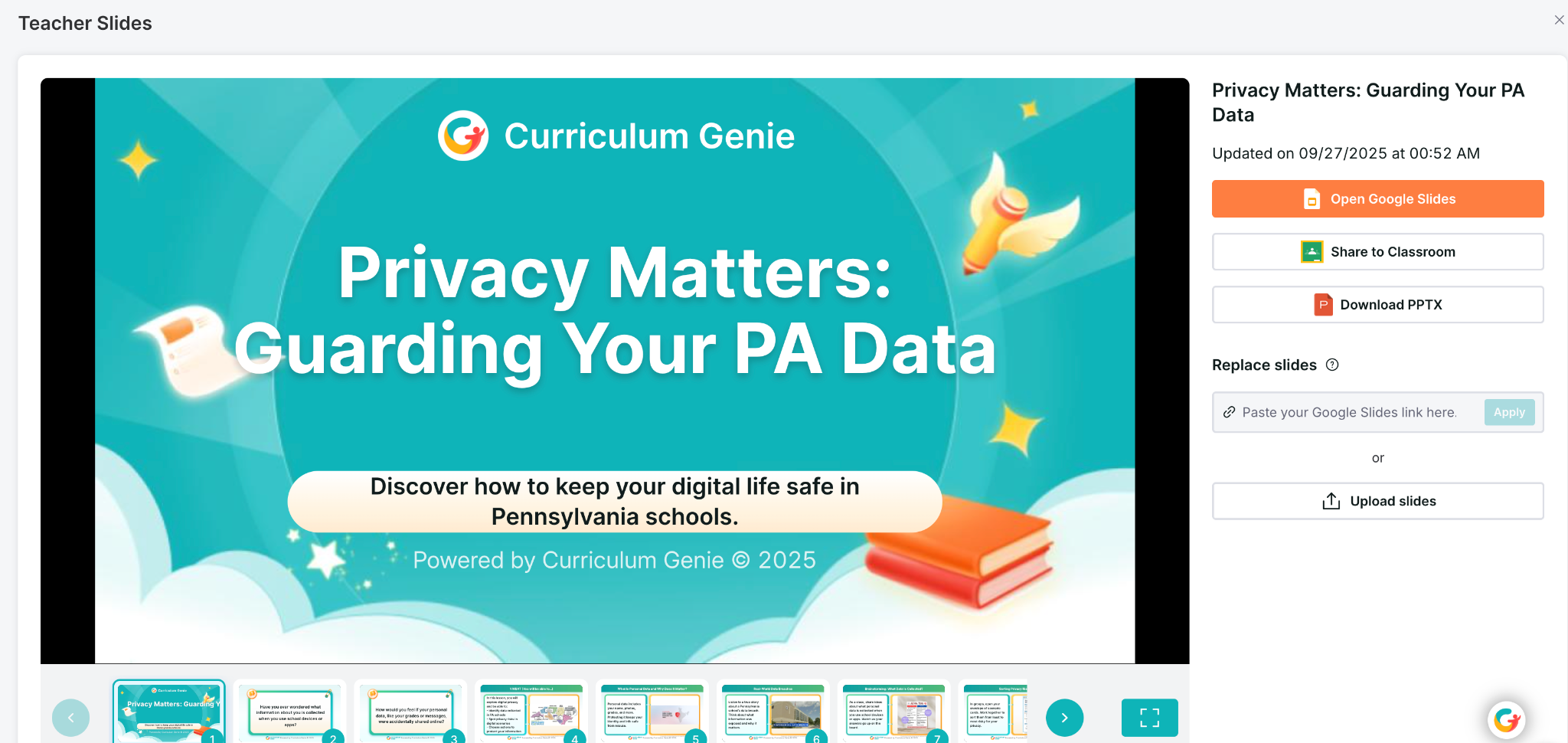
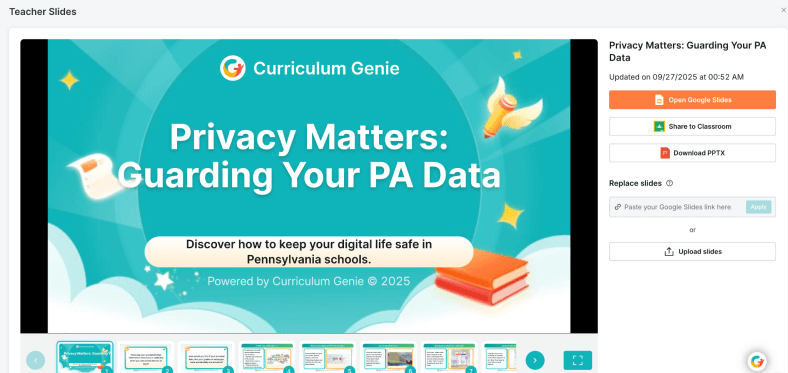
Generates interactive slides!

3. UDL-Embedded Supports Curriculum Genie doesn’t just create lessons; it also aligns them with Universal Design for Learning (UDL) principles, helping educators plan for accessibility and inclusion from the start. UDL is a focus area for many educators, and making sure to provide the right supports and activities is key. Curriculum Genie helps with this. Why UDL?

UDL ensures multiple means of:

  • Engagement: Connecting to student interests and motivation.
  • Representation: Presenting information in diverse ways (visual, auditory, tactile).
  • Action & Expression: Giving students options to show what they know.

For example, when designing a science lesson, Curriculum Genie might suggest hands-on experiments, visual diagrams, or video explanations to make sure that every learner can engage and succeed. For my STEAM course, I can create robust lessons focused on digital citizenship and wellness or other important topics that boost student engagement and make truly interactive lessons to amplify learning. How? Curriculum Genie provides all of the resources that I need to make a lesson successful, meaningful, and personalized to my students.

4. IEP and ELL Integration
Supporting diverse learners is a key aspect of Curriculum Genie’s design. It automatically weaves strategies for students with IEPs and English Language Learners, helping educators to build their instructional practices, too.
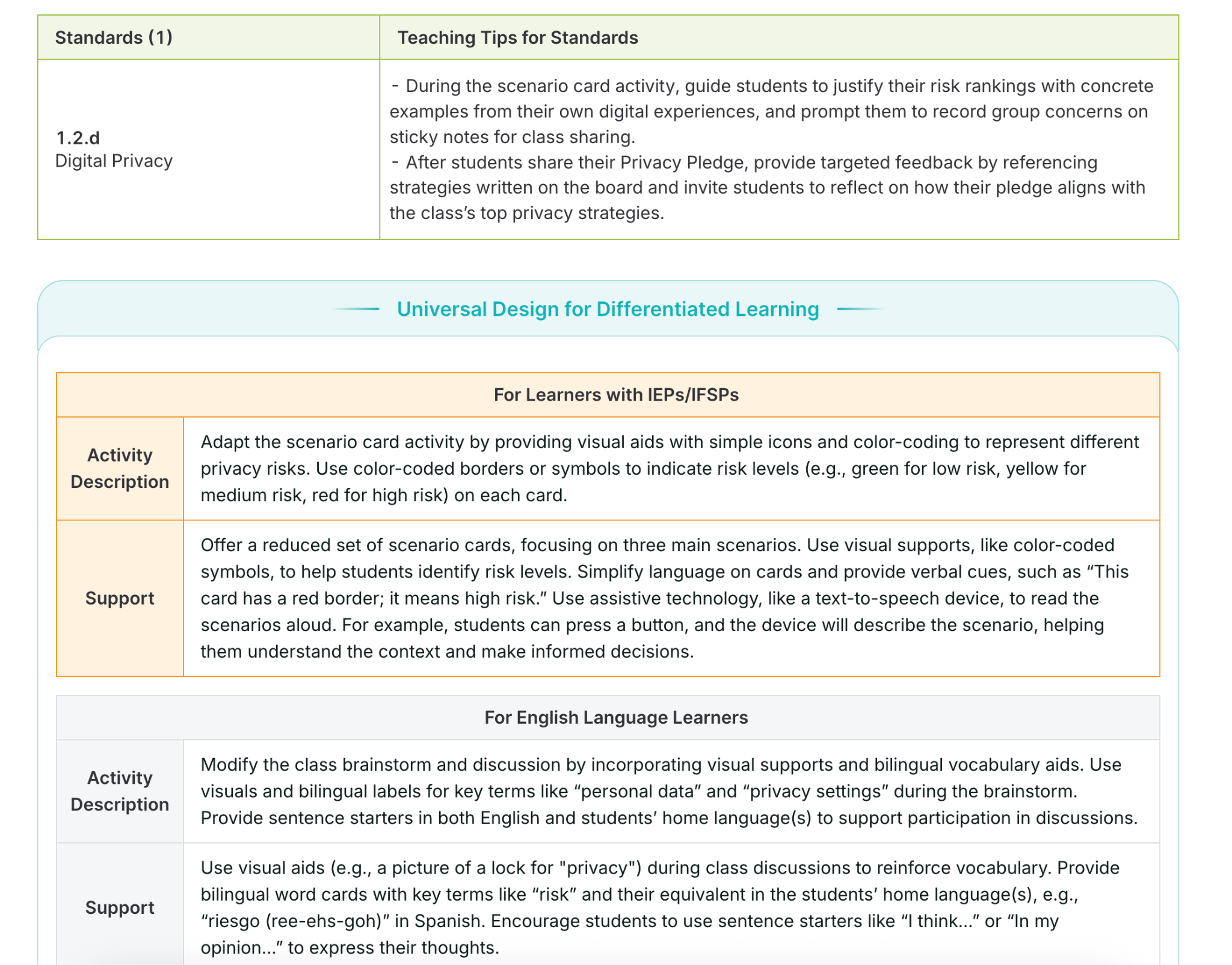
5. Portrait of a Graduate Alignment Many districts are focusing on the Portrait of a Graduate, and also, Portrait of an AI Graduate, which outline the essential skills our students need to be successful in the future. They develop skills such as critical thinking, communication, creativity, collaboration, and global citizenship.

Curriculum Genie helps educators design lessons that cultivate these competencies through:

  • Real-world, problem-based learning grounded in local and global contexts.
  • Collaborative and inquiry-driven activities that foster communication and creativity.
  • Culturally responsive projects that honor diverse perspectives and promote empathy.

Using Curriculum Genie enables educators to connect academic standards with the Portrait of a Graduate competencies, which ensures that students learn more than the content; it helps them to build the mindset and skills needed for their future.
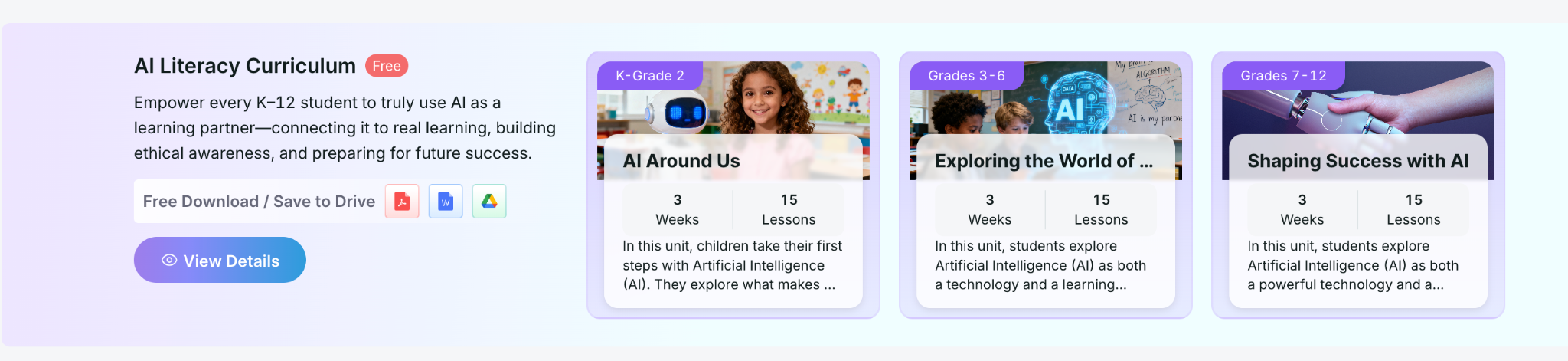
They also offer FREE K-12 Lessons on AI Literacy!

Free AI Literacy Courses for K–12 Educators

Another great feature offered by Learning Genie is that it provides free AI Literacy Courses for K–12 educators.

The courses are self-paced and help teachers and school leaders:

  • Understand how AI works and how it’s shaping learning.
  • Explore classroom-ready strategies for AI integration.
  • Learn to design lessons that teach students to think critically about AI.

You can access these courses and learn more about Curriculum Genie at https://www.learning-genie.com/.

Transforming Education, Together

The future of learning depends on our ability as educators to make education more personal, purposeful, and powerful. Curriculum Genie offers guidance that helps educators move beyond traditional and one-size-fits-all instruction to learning that is inclusive, authentic, and future-focused.

More than just a platform with limited capabilities, through its integration of AI, UDL, Portrait of a Graduate competencies, plus the great and free AI literacy courses, Curriculum Genie supports educators with the tools to make it a reality.

If you’re looking for a new platform that will save you hours of time by addressing many important areas, then I definitely recommend that you dive into Learning Genie and explore creating with Curriculum Genie. I have been amazed at how quickly it creates, how responsive it is, and the quality of resources and materials that it shares for teachers. Learn more and request a demo at https://www.learning-genie.com/

About Rachelle

Dr. Rachelle Dené Poth is a Spanish and STEAM: What’s Next in Emerging Technology Teacher at Riverview High School in Oakmont, PA. Rachelle is also an attorney with a Juris Doctor degree from Duquesne University School of Law and a Master’s in Instructional Technology. Rachelle received her Doctorate in Instructional Technology, and her research focus was on AI and Professional Development. In addition to teaching, she is a full-time consultant and works with companies and organizations to provide PD, speaking, and consulting services. Contact Rachelle for your event!

Rachelle is an ISTE-certified educator and community leader who served as president of the ISTE Teacher Education Network. By EdTech Digest, she was named the EdTech Trendsetter of 2024, one of 30 K-12 IT Influencers to follow in 2021, and one of 150 Women Global EdTech Thought Leaders in 2022.

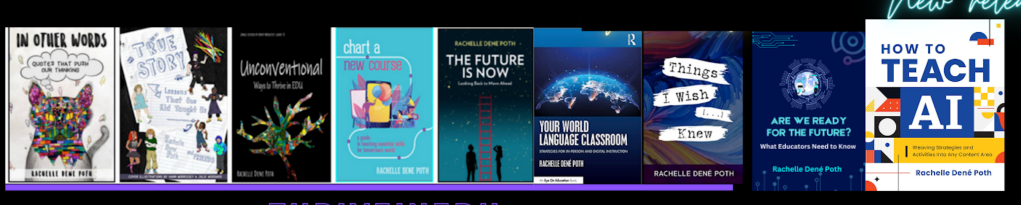
She is the author of ten books, including ‘What The Tech? An Educator’s Guide to AI, AR/VR, the Metaverse and More” and ‘How To Teach AI’. In addition, other books include, “In Other Words: Quotes That Push Our Thinking,” “Unconventional Ways to Thrive in EDU,” “The Future is Now: Looking Back to Move Ahead,” “Chart A New Course: A Guide to Teaching Essential Skills for Tomorrow’s World, “True Story: Lessons That One Kid Taught Us,” “Things I Wish […] Knew” and her newest “How To Teach AI” is available from ISTE or on Amazon.

Contact Rachelle to schedule sessions about Artificial Intelligence, AI and the Law, Coding, AR/VR, and more for your school or event! Submit the Contact Form.

Follow Rachelle on Bluesky, Instagram, and X at @Rdene915

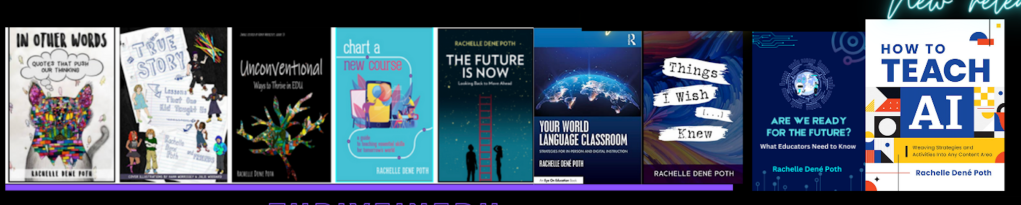
**Interested in writing a guest blog for my site? Would love to share your ideas! Submit your post here. Looking for a new book to read? Find these available at bit.ly/Pothbooks
************ Also, check out my THRIVEinEDU Podcast Here!

Join my show on THRIVEinEDU on Facebook. Join the group here.
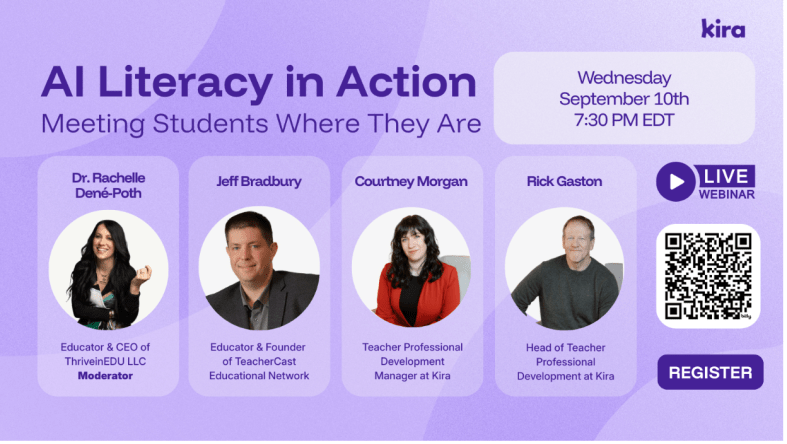
From Curiosity to Confidence: Building AI Literacy Together

In collaboration with Kira

“Where are you with AI today—curious, testing, using weekly, or all in?”

That’s how we opened our recent panel on AI literacy for educators. Whether you feel energized, overwhelmed, or skeptical, you’re not alone, and that’s exactly why having conversations around AI and how to bring it into our schools matters.

Why AI Literacy, Why Now?

I enjoyed the opportunity to serve as the panelist for this great discussion about AI Literacy. We had so much engagement from attendees from more than 25 countries around the world!

The panelists engaged in rich discussion and offered insight into our role as educators and how we can help our students and ourselves better understand: What do we need to be doing when AI-powered tools surround us?” How does learning change?

Literacy isn’t about knowing how to navigate AI platforms, but rather it is about habits of mind. Asking better questions, evaluating outputs, knowing how to evaluate sources, understanding the limitations of AI, and aligning use with learning goals, ethics, and policy. AI is something that we need to consider and how it is involved in our planning, teaching, assessment, and reflection. And being able to determine whether something is real or not, something that I thought more about after reading the book Futureproof, by Kevin Roos, two years ago. Shifting from digital literacy to discernment is key.

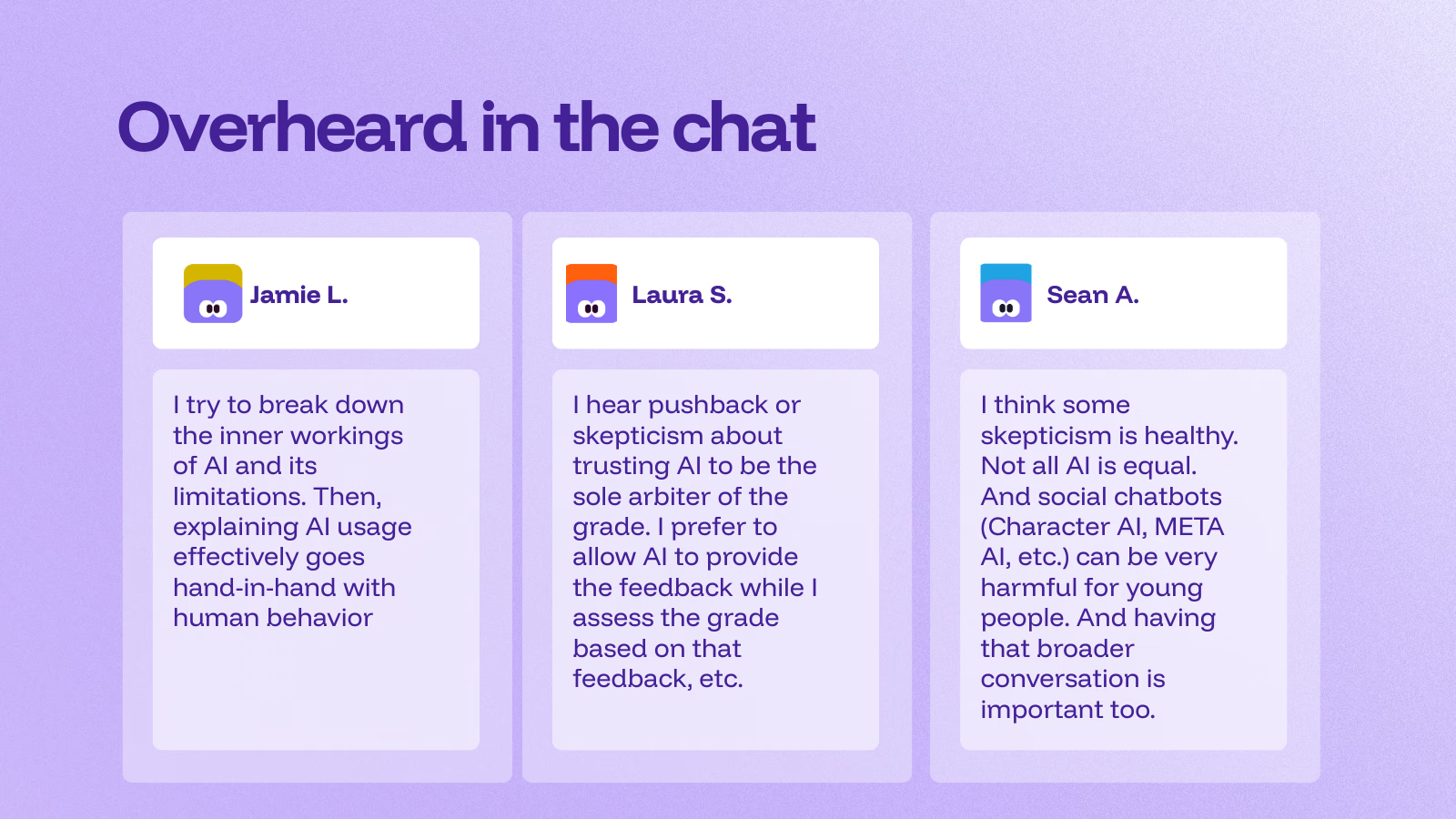
The Skepticism Is Real (and Reasonable)

We started our discussion with what we called initial skepticism. Many teachers are hesitant to introduce AI into their classrooms, schools, or even their own workflows. As Jeff Bradbury put it:

“There are educators out there trying to figure this out, but they are not yet sure how to do it. There are educators out there who are scared. And then you have educators on the other side of the innovation curve… How do you work with all of those at the same time?”

He continued: “That question hits home. In every district I visit, I meet the AI All-Ins, the Cautious Curious, and the Not-Now crowd. Suppose this is your staff, good, because having discussions with educators who have these different viewpoints is key. It means you have internal mentors and internal skeptics—the two groups you need most to build something responsible and resilient, especially when the topic is AI”.

Some ideas shared: Start with a common language or practices. Define “AI literacy” and what that means. Identify how to best use AI (lesson planning, differentiation, feedback drafting) and some ways where you want to avoid the use of AI or be more cautious (grading without verification, sensitive data, replacing teacher judgment). Establishing clear guardrails reduces anxiety and helps to ensure that AI implementation in our schools is consistent and purposeful.

The “Aha” That Changes Everything: Specificity

Jeff told a story about a colleague—a music teacher—who tried AI “seven or eight different ways” to create a budget and concluded, “I hate this thing.” The pivot came with one question: “Were you specific?” Did he tell the AI it was for a middle school music program? The approximate budget? The categories? The constraints?

“You didn’t fail eight ways,” Jeff said. “You found eight ways the system didn’t have enough to listen to you.”

The quality of your prompt is not about clever “hacks”—it’s about context, criteria, and constraints.

Prompting is a pedagogy: We are modeling for students how to ask precise questions, set criteria, and iterate. That is AI literacy.

Meet Teachers Where They Are

Rick Gaston and Courtney Morgan from Kira emphasized a simple, human truth: people learn faster when they feel safe and seen.

“We like to meet teachers where they’re at to help them begin with AI,” Rick said. “Start with lesson content they’re comfortable with and have them experience how quickly AI can provide new ideas in that content area.”

“We believe in learning by doing,” Courtney added. “We facilitate that process so teachers can experience that our AI tools can be their teaching buddies.”

I love that phrase: teaching buddies. Not a shortcut. An assistant or collaborator who drafts, riffs, and reframes so that educators can focus on the human aspects of teaching, such as relationships, feedback, and instructional decision-making.

Time: The Gift Teachers Actually Feel

Jeff’s coaching mantra resonated with the chat: “What is the one thing I can give you that no one else can? Time.” When AI saves a teacher 30 minutes tonight, their stance moves from skeptical to curious. When it saves them three hours before conferences, they become advocates.

Concrete time-savers that build trust:

  • Parent emails: Draft a positive progress update with two examples of growth and one specific next step—translated into Spanish and English.
  • Rubric remix: Convert a long analytic rubric into a student-friendly checklist; add “I can” statements.
  • Formative checks: Generate two exit tickets (one multiple-choice, one open-ended) targeting the same standard; include an answer key/rubric slice.

When teachers see the time they can save and then shift to students or colleague interactions, they’re more willing to explore deeper integrations of AI into their practice.

Additional insights from participants (courtesy of Kira)

About Kira

Kira is an AI-powered teaching & learning platform built to save teachers time, personalize instruction, and keep teachers in control. During the panel discussion, attendees had the chance to learn more about the platform and the AI Tutor. “This is just a quick preview of the Kira platform,” said Courtney, “and why we keep mentioning the built-in AI Tutor we’re really proud of.”

At its core, the AI Tutor is designed to coach, rather than simply provide answers. Students can highlight any passage and ask a question, or simply discuss it directly with the tutor. “You’re going to see me try to make it solve the problem for me,” Courtney joked, “but it won’t. Instead, it walks you through highly scaffolded steps.” That means support questions, targeted hints, and extra practice. The Tutor will work at nudging learners toward the how and why, not just the what. You can adjust the support level and reading level per student. It never gives direct answers and provides context-aware, course-specific feedback.

The AI Tutor is subject-agnostic and works across K–12 courses, math included. It’s available to both teachers and students, and it’s been a game-changer for first-time teachers who lean on it to deepen their own understanding while teaching. The message is clear: AI as a teaching buddy, not a replacement.

Differentiation is built in. Teachers can adjust the tutor’s level of support if students are over-relying on it, or increase it for learners who need more targeted assistance, including those with IEPs or language-learning needs. The goal is precision teaching: the right help, to the right student, at the right moment.

Getting started is easy. Kira offers ready-to-use courses, including AI Demystified for students, answering the big questions, “What is AI? What is it doing? How do I use it responsibly?”—and AI 101 for Educators, which builds teacher AI literacy. Looking to be part of a learning community?

Join the upcoming AI 101 for Educators cohort starting in October. Learn more and express your interest here! It is a short, self-paced PD (about 2 hours) for any subject area that builds confidence using AI in real classrooms.

It will cover:

What is AI, and what AI tools are helpful for educators?

How can I teach my students to use AI responsibly?

How can I use AI tools to enhance my students’ critical thinking?

How can I reduce risks and maximize the benefits of using AI in the classroom?

Once you fill out the form, the team at Kira will follow up with more details.

Learn more about their AI 101 PD cohort here.

About Rachelle

Dr. Rachelle Dené Poth is a Spanish and STEAM: What’s Next in Emerging Technology Teacher at Riverview High School in Oakmont, PA. Rachelle is also an attorney with a Juris Doctor degree from Duquesne University School of Law and a Master’s in Instructional Technology. Rachelle received her Doctorate in Instructional Technology, and her research focus was on AI and Professional Development. In addition to teaching, she is a full-time consultant and works with companies and organizations to provide PD, speaking, and consulting services. Contact Rachelle for your event!

Rachelle is an ISTE-certified educator and community leader who served as president of the ISTE Teacher Education Network. By EdTech Digest, she was named the EdTech Trendsetter of 2024, one of 30 K-12 IT Influencers to follow in 2021, and one of 150 Women Global EdTech Thought Leaders in 2022.

She is the author of ten books, including ‘What The Tech? An Educator’s Guide to AI, AR/VR, the Metaverse and More” and ‘How To Teach AI’. In addition, other books include, “In Other Words: Quotes That Push Our Thinking,” “Unconventional Ways to Thrive in EDU,” “The Future is Now: Looking Back to Move Ahead,” “Chart A New Course: A Guide to Teaching Essential Skills for Tomorrow’s World, “True Story: Lessons That One Kid Taught Us,” “Things I Wish […] Knew” and her newest “How To Teach AI” is available from ISTE or on Amazon.

Contact Rachelle to schedule sessions about Artificial Intelligence, AI and the Law, Coding, AR/VR, and more for your school or event! Submit the Contact Form.

Follow Rachelle on Bluesky, Instagram, and X at @Rdene915

**Interested in writing a guest blog for my site? Would love to share your ideas! Submit your post here. Looking for a new book to read? Find these available at bit.ly/Pothbooks

************ Also, check out my THRIVEinEDU Podcast Here!

Join my show on THRIVEinEDU on Facebook. Join the group here.
Developing AI Literacy

Educators must stay informed, current, and ahead of the game (if possible) when it comes to emerging technologies. This means fostering the development of AI literacy skills. Being AI literate means more than knowing the basics about the technology or understanding relevant terms such as machine learning and algorithms. Literacy involves knowing the uses of AI in the world and being aware of the ethical considerations involved with its use. AI literacy should focus on developing skills to critically evaluate information and content generated by AI as well as to identify misinformation. Teachers should also know how to use AI in safe, ethical, and responsible ways and model this use for students.

Getting Started Teaching AI Literacy Skills

Introducing AI concepts at an earlier age gives students the opportunity to build their knowledge and skills over time—with younger students, starting with the basics of AI, such as focusing on where we see it in daily life. Begin with key definitions, and find resources that have been vetted and are safe for student and educator use. Several organizations provide a wealth of resources for educators, including ready-to-run lessons.

Modeling AI use in the classroom: As we teach students about AI, we can engage them in activities where they evaluate images, text, or videos to decide whether they are AI-generated or real. I have used game-based learning tools, such as Quizizz AI, to quickly create a quiz to check students’ understanding of the concepts covered, or Eduaide.Ai, to make a gamified activity or lesson related to AI literacy.

Continue reading on Edutopia.

About Rachelle

Dr. Rachelle Dené Poth is a Spanish and STEAM: What’s Next in Emerging Technology Teacher at Riverview High School in Oakmont, PA. Rachelle is also an attorney with a Juris Doctor degree from Duquesne University School of Law and a Master’s in Instructional Technology. Rachelle received her Doctorate in Instructional Technology, and her research focus was on AI and Professional Development. In addition to teaching, she is a full-time consultant and works with companies and organizations to provide PD, speaking, and consulting services. Contact Rachelle for your event!

Rachelle is an ISTE-certified educator and community leader who served as president of the ISTE Teacher Education Network. By EdTech Digest, she was named the EdTech Trendsetter of 2024, one of 30 K-12 IT Influencers to follow in 2021, and one of 150 Women Global EdTech Thought Leaders in 2022.

She is the author of ten books, including ‘What The Tech? An Educator’s Guide to AI, AR/VR, the Metaverse and More” and ‘How To Teach AI’. In addition, other books include, “In Other Words: Quotes That Push Our Thinking,” “Unconventional Ways to Thrive in EDU,” “The Future is Now: Looking Back to Move Ahead,” “Chart A New Course: A Guide to Teaching Essential Skills for Tomorrow’s World, “True Story: Lessons That One Kid Taught Us,” “Things I Wish […] Knew” and her newest “How To Teach AI” is available from ISTE or on Amazon.

Contact Rachelle to schedule sessions about Artificial Intelligence, Coding, AR/VR, and more for your school or event! Submit the Contact Form.

Follow Rachelle on Bluesky, Instagram, and X at @Rdene915

**Interested in writing a guest blog for my site? Would love to share your ideas! Submit your post here. Looking for a new book to read? Find these available at bit.ly/Pothbooks

************ Also, check out my THRIVEinEDU Podcast Here!

Join my show on THRIVEinEDU on Facebook. Join the group here.
CodeMonkey Review: Fun, Effective, and Engaging for All Classrooms

In collaboration with CodeMonkey. All opinions are my own.

As an educator with over nine years of experience in teaching, researching, and presenting on artificial intelligence, educational technology, and computer science, I enjoy trying out new coding and STEM-related platforms and tools with my eighth-grade STEAM students. My students and I have enjoyed using CodeMonkey this year because it sparks curiosity in learning about coding, and they are excited to work through the activities. It does this through engaging gameplay, structured curriculum, teacher resources, and essential topics, all of which are available in one easy-to-navigate place.

This was my first year using CodeMonkey in my STEAM course, where I cover many topics such as AI, augmented and virtual reality, coding, robotics, and other emerging technologies. I also train other educators and often speak at conferences, and one question that I am asked is what educators should use with elementary students to get them started with STEM. I always enjoy finding resources that work well for even the youngest learners, while also offering more challenging topics for high school students. And these platforms must offer a robust, standards-aligned platform that makes a real impact. I took a closer look at the new curricula and believe that educators will become more confident as they get started with CodeMonkey, especially with all that is provided to make it easy to implement in every classroom.

My first impressions of CodeMonkey’s Typing and Computer Science curricula is that it is colorful and engaging, Intuitive, and definitely student-centered

I noticed right away how kid-friendly it is. The platform was clearly designed with the student in mind, especially younger learners in grades K–8. The characters are animated, each lesson is interactive, and the exercises are gamified which keeps students engaged in learning.

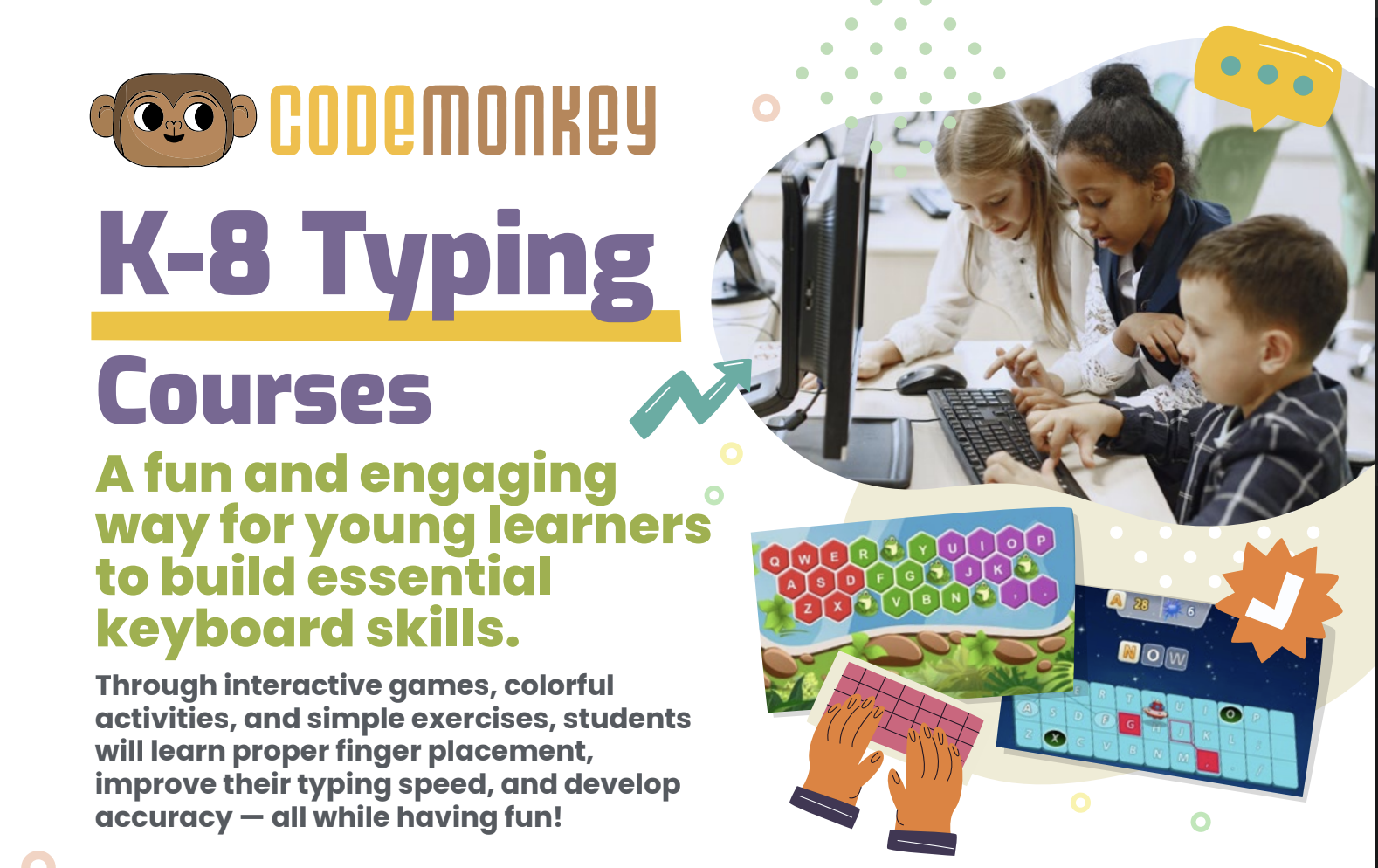
The K–8 Typing Course uses a mix of activities, exercises and games that help students learn proper finger placement, improve typing speed, and develop accuracy— while having fun in the process. Students are excited to move to the next level! It’s also fun for teachers to see the impact on students as they build these essential skills.

I always look at the navigation of these tools and platforms. The CodeMonkey platform is visually appealing and easy to navigate. Younger students will be able to log in and get started with minimal teacher guidance, while older students can work through structured lessons, receiving teacher and program feedback, and self-paced learning. The program offers a lot of autonomy, which is a benefit to students as they develop self-awareness, self-management, and student agency.

The Typing Curriculum includes:

13 courses

92 lessons (ranging from 10–35 minutes each)

760+ exercises

Progress tracking

Teacher Dashboard

Accuracy and Speed Assessments

Educators want better ways to scaffold student learning. I recommend trying out “Ready, Set, Type! Jr” which offers 7 lessons and 118 exercises and is ideal for students in grades K through 2, who are just starting to recognize the keyboard. It makes it fun for students as they build typing skills, which can be stressful at the start.

In “All Fingers Aboard” and “The Secret of Symbols,” students start to build up to more complex words, punctuation marks, symbols, and using the number pad. When working through these exercises, it is not just about providing students with drills that were common in the past. These resources provide challenges, mini-games, and even reward systems that help to keep students engaged and excited about learning. An approach like this is incredibly effective in helping younger students build comfort with the keyboard while also building their confidence in their digital abilities. Being comfortable and confident while learning is so important for student growth. Get started with CodeMonkey today!

Teacher-Friendly Features

When I start using a new program or platform, I also explore the teacher features and see how easy it is to get started and also to find information related to student progress and other resources available for teachers. With CodeMonkey, there is a comprehensive teacher dashboard. Teachers are able to track individual student progress, typing accuracy and speed, and student engagement levels. It provides real-time data that teachers can use to quickly adjust instruction or provide in-time help for students.

About Rachelle

Dr. Rachelle Dené Poth is a Spanish and STEAM: What’s Next in Emerging Technology Teacher at Riverview High School in Oakmont, PA. Rachelle is also an attorney with a Juris Doctor degree from Duquesne University School of Law and a Master’s in Instructional Technology. Rachelle received her Doctorate in Instructional Technology, and her research focus was on AI and Professional Development. In addition to teaching, she is a full-time consultant and works with companies and organizations to provide PD, speaking, and consulting services. Contact Rachelle for your event!

Rachelle is an ISTE-certified educator and community leader who served as president of the ISTE Teacher Education Network. By EdTech Digest, she was named the EdTech Trendsetter of 2024, one of 30 K-12 IT Influencers to follow in 2021, and one of 150 Women Global EdTech Thought Leaders in 2022.

She is the author of nine books including ‘In Other Words: Quotes That Push Our Thinking,” “Unconventional Ways to Thrive in EDU,” “The Future is Now: Looking Back to Move Ahead,” “Chart A New Course: A Guide to Teaching Essential Skills for Tomorrow’s World, “True Story: Lessons That One Kid Taught Us,” “Things I Wish […] Knew” and her newest “How To Teach AI” is available from ISTE or on Amazon.

Contact Rachelle to schedule sessions about Artificial Intelligence, Coding, AR/VR, and more for your school or event! Submit the Contact Form.

Follow Rachelle on Twitter(X) and Instagram at @Rdene915

**Interested in writing a guest blog for my site? Would love to share your ideas! Submit your post here. Looking for a new book to read? Find these available at bit.ly/Pothbooks

************ Als, check out my THRIVEinEDU Podcast Here!

Join my show on THRIVEinEDU on Facebook. Join the group here.

AI Literacy: Opportunities for Students to Learn

It is essential in our schools that we focus on promoting responsible AI use in our classrooms and provide opportunities for students to become AI literate. With such increased use of artificial intelligence in the world and our classrooms, it has never been more important to involve students in learning how to use AI ethically, responsibly, and safely. As AI becomes even more common, students need to understand how AI works, its capabilities, and its limitations. They also need to explore how it is being used in the world.

With guided exploration and learning opportunities, we will promote responsible AI use; we can ensure that it is used to benefit students and help them develop “future-ready” skills. AI is a powerful tool, and therefore it requires responsible and informed users. There are special events that focus on developing AI literacy. In April, we recognized AI Literacy Day, designed as a day for learning about and exploring AI. Schools and classrooms hosted events, participated in learning, and had access to resources to support the development of AI literacy skills. AI Literacy Day is led by organizations such as EDSAFE AI, AIEDU Common Sense Media, AI for Education, and The Tech Interactive, and provides resources that are helpful for educators, especially when there is some concern about the use of AI.

In my classroom, we use various AI-powered tools, and I always seek student feedback. Here are some thoughts after using Snorkl and SchoolAI.

“The chatbot was very helpful. Immersing yourself with technology that helps you learn Spanish or any other language can help a lot. You have real-time conversations, and the chatbot expands the conversation so you can learn even more about the language. It also helps you become more comfortable speaking!” – Lily Hood, 11th-grade student.

The Day of AI, a free event, occurs in May and was held on May 13th. Throughout the day, elementary, middle, and high school students had access to activities and curriculum. In my classroom, whether in my Spanish classes or my STEAM course for 8th graders, we talk a lot about AI. For over six years, I have explored resources to help students understand how and when AI should be used. By modeling the responsible use of different tools and having students interact with AI in the classroom, we will best prepare them for the changes this technology will bring. We often have discussions about the benefits and concerns of any tools that we explore.

When I use something in my classroom, I consider how the tool can enhance the learning experience. I share my thoughts with students before we explore and then ask for their feedback about the experience after. I greatly value their opinions and make time to ask them about what they think and the impact. Here are some student reflections:

Feedback after using SchoolAi to practice Spanish conversation

Antonio Boyer, 11th grade student

“It was so helpful for practicing the language. It knew my level, adjusted the questions to meet my specific needs, and gave me additional practice to help build my skills. It gets you to where you need to be.”

Grace Johnson, 10th grade student, after using Snorkl

“I was amazed when I submitted my response using Snorkl and instantly received feedback with comments about my speaking. It provided questions and explanations to help me understand the grammar more.”

Here are a few tools that students enjoy using. It gives them more insight into the benefits of AI and how it can be used as an enhancer rather than a replacement for doing our own work

  • Brisk Teaching: A free Chrome extension with four features: Create, Give Feedback, Inspect Writing, and Change Level. I have shown students how I can write something with Google and use the Give Feedback feature of Brisk to analyze my writing and receive feedback. I’ve also shown how I can quickly generate questions based on a video that we are watching in class or how I can quickly generate slides for my presentations.
  • Eduaide.Ai: A platform for AI-assisted lesson planning that offers more than 100 resources to help teachers create instructional materials. Eduaide has a Content Generator, Teaching Assistant, Feedback Bot, Free-form Chat, and an Assessment Builder. I have explored Eduaide a lot to create fun activities, a project outline, gamification, and also some of the assessment builder options.
  • Noodle Factory: For AI-driven personalized learning, automated grading and feedback, engaging and interactive lessons, Walter+ adapts to each student’s learning pace, helping to promote a more inclusive and effective learning environment. Noodle Factory offers Walter+, the AI teaching assistant designed for grades K through 12. Walter+ is designed to help educators enhance and transform the learning experiences they provide for students. I definitely recommend exploring Noodle Factory!
  • School AI: In Spanish classes, I have used it to create a ”Sidekick,” an assistant that engages students in conversations. I prompt the chatbot to focus on specific vocabulary or grammar patterns with my students. In this case, they interact individually, and the chatbot Sidekick adapts to their needs and provides them with feedback and continued questions based on their responses. I share with students what I can see in the teacher dashboard, and it helps them understand the importance of being mindful of the interactions and the information that they share online, specifically when using any generative AI.
  • Snorkl: An easy-to-use tool that gives students a space to talk through their thought processes while they are learning. Have students explain their learning, solve a problem, or complete any task that we give them. It records their screen and their audio, and we can set it to generate AI feedback for them and then provide feedback directly to them. Students were amazed at how quickly they received feedback and how helpful it was for their learning.

Whether at the end of a school year or exploring over the summer and diving in at the start of a new year, trying some of these tools in your classroom will provide a fun learning experience for your students and you! More importantly, it will help to promote AI literacy which is critical today!

About the Author:

Dr. Rachelle Dené Poth is a Spanish and STEAM: What’s Next in Emerging Technology Teacher at Riverview High School in Oakmont, PA. Rachelle is also an attorney with a Juris Doctor degree from Duquesne University School of Law and a Master’s in Instructional Technology. Rachelle received her Doctorate in Instructional Technology, and her research focus was on AI and Professional Development. In addition to teaching, she is a full-time consultant and works with companies and organizations to provide PD, speaking, and consulting services. Contact Rachelle for your event!

Rachelle is an ISTE-certified educator and community leader and served as president of the ISTE Teacher Education Network. She was named the EdTech Trendsetter of 2024 by EdTech Digest, one of 30 K-12 IT Influencers to follow in 2021 and one of 150 Women Global EdTech Thought Leaders in 2022.

She is the author of nine books including ‘In Other Words: Quotes That Push Our Thinking,” “Unconventional Ways to Thrive in EDU,” “The Future is Now: Looking Back to Move Ahead,” “Chart A New Course: A Guide to Teaching Essential Skills for Tomorrow’s World, “True Story: Lessons That One Kid Taught Us,” “Things I Wish […] Knew” and her newest “How To Teach AI” is available from ISTE or on Amazon.

Contact Rachelle to schedule sessions about Artificial Intelligence, Coding, AR/VR, and more for your school or your event! Submit the Contact Form.

Follow Rachelle on Twitter(X) and Instagram at @Rdene915

**Interested in writing a guest blog for my site? Would love to share your ideas! Submit your post here. Looking for a new book to read? Find these available at bit.ly/Pothbooks

************ Also check out my THRIVEinEDU Podcast Here!

Join my show on THRIVEinEDU on Facebook. Join the group here

Authentic Writing You Can Do … with your Students!

Guest post by Sarah Kiefer, @kiefersj


I’ve shared several times that as a Technology Integration Specialist, I do not have my own classroom of students. Nor do I have any kind of regular teaching schedule. This allows me to work with any teacher and any group of students! My goal is that anything/everything I do supports classroom instruction and I love when teachers come to me and ask me to work with students. Sometimes, what we set out to do morphs into something else … and it’s always a good thing!

At the beginning of March, Mrs. Laura Counts approached me to help a group of her students. These 5 students had read several books by Sandra Markle (@Sandra_Markle) and had decided they wanted to write their own book, in her style. Laura asked if I would help. Wow! They wanted to do the research, writing, AND the designing of the book!

The overall task was → the students were inspired after reading a non-fiction book to write their own book. As a group, they decided to research bird feet and each selected a bird that interested them. They would use their research to write in the style of Sandra Markle. Meanwhile, I would work with them to take their writings and make it into a book.

We set to work. I met with the students a couple times a week to work on the actual book design and on the other days, they would do their research. I had such fun talking through the design process … we had a LOT of decisions to make! Which tool do we use? Book Creator? Google Slides? Something else? We settled on Slides. Then we poured over every detail … the dimensions of the book (we literally pulled out a ruler to measure!); making the wooden sign; which font(s) to use – this was a BIG conversation … do we all use the same? does each author use a different one?; whose page goes first? last? order?; gathering the credits for the images we used; and many more! I have to hand it to these 5 kiddos. They did an AMAZING job! They put forth their very best. It really shows!

A very interesting conversation we had very early on was whether or not Ms. Markle would be “mad” they were writing this. One of the boys was worried she would be angry. I asked him why, and basically he was worried she would think we were copying her. I assured him we weren’t going to profit off of this and we would be giving her the credit. Mrs. Counts added that she thought Ms. Markle would be thrilled we were doing this. I offered to reach out to her. I did so, via Twitter – our world really isn’t as big as one would think! – and she responded very quickly! It was awesome to be able to show them that the author was proud of them.

We used several digital tools to help us create our book. One of our favorites is a website “Build Your Wild Self” from the Bronx Zoo (unfortunately, it doesn’t seem to be available anymore). Then we also used a couple of “digital scissors” — https://online.photoscissors.com/ (to be able to take the “wild self” and attach their specific bird legs) and https://www.remove.bg/ (for our author pages – not shown in the preview below because of the age of the students). Showing the students the power of a Google Slide was incredible! I don’t know who enjoyed it more, them or me!

I am happy to share the final version of their book! The attention to detail and the excitement of these students showed through this whole project is heartwarming. I’m not sharing their author pages due to their age, but several of them have commented on wanting to be authors! ……. I believe they already are!

*** Link to a published Slides that shares the majority of the book the students created.


**Interested in writing a guest blog for my site? Would love to share your ideas! Submit your post here.


Looking for a new book to read? Many stories from educators, two student chapters, and a student-designed cover for In Other Words.

Find these available at bit.ly/Pothbooks  


3  books.png

THOSE KIDS: A Connection Makes A Difference, but Does it Make THE Difference?

Guest post by 

Opinions expressed are those of the author.

I recently followed a chat that started from the claim that all a student needs to be is liked. That all they need is a connection or relationship or positive interaction with an adult. Initially I thought of course I agree, but after some time of that idea rattling around in my head I changed my mind. I don’t think I agree. I would still agree that connections can and do make a huge difference. I just don’t think they make THE difference.

20190517_123745702418090265244780.jpgI work in alternative education. I work with really challenging kids. THOSE KIDS. The ones who didn’t make it in other schools. The ones who know incarceration and the system. The ones who know trauma and abuse and pain and abandonment. The ones who know failure. These kids don’t like me when they enter my classroom. They don’t like anyone. They don’t care if I like them. They are quite used to no one liking them. They don’t care about grades and learning and futures. They don’t plan. They don’t have goals. They don’t dream. They don’t have hope.

So I have to connect with them and I have to do it fast. I have found that I relate to these kids. I get them. Maybe it’s my own quirkiness or off-beat sense of humor or stubborn streak or willingness to do about anything to make that connection – smile, laugh, sing, dance, tell jokes, laugh at bad jokes, pat backs, give hugs, and just never stop trying. They push me away, but I come back. Again. And again. And again. Until finally they push back a little less, and if I’m lucky, they stop pushing back at all. That is connection and it is the absolute first step. No question. It will be the foundation for everything that comes next.

Next. That is the thing that I think has gotten lost. It’s not the connection that’s the most important thing. It’s the next. Jump into any education chat or conversation and you will hear the word connection and relationships, but it’s becoming this idea that if I make a connection with my student then that is all they need. If I care enough or like them enough or love them enough or if we talk enough or have enough in common then that will make a difference to my students. And it will. It will make A difference, but I don’t think it’s enough to make THE difference.

We need the next. They need the next. Think about the process of building a house. When carpenters build a house they build the foundation first. It is what supports everything. But once they have a foundation, they keep going. They build the walls and 20191218_180417-16324819778329009069.jpgthe roof and they put in duct work and plumbing and electrical. It’s finished off with paint and flooring and appliances and décor. There are so many steps that come after the foundation. There are so many steps to building a completed house. If they stopped after the foundation, then they don’t have a house. They just have a piece of concrete.

We, as educators, we need to build the house for our students. Let’s build a foundation. Let’s work hard and quickly to make connections and build relationships, but then let’s not stop there. Let’s do something with that foundation. Let’s give them walls and a roof – a framework to support them. We can teach social skills and coping skills. How to enter a classroom and take turns and ask for help. How to approach tasks independently and with their peers. How to adjust to different procedures and expectations. How to make mistakes. How to celebrate successes. How to work through problems. How to find an answer. How to ask for help. How to be a successful student but also a successful member of society. Let’s give them all the systems inside that house – let’s bring that house to life. We can teach them academics. We can fill in the gaps while giving opportunities for new growth. It may look different than how other students learn and they may need to express what they know differently, but they will learn. They will learn mistakes aren’t failures. They will learn to try again. They will experience success. Knowledge is a powerful thing. So is confidence. Let’s decorate their house. Personalize it. Make it belong to each individual student. Let them be creative. Think outside the box. Celebrate individuality. Find their own unique strengths and weaknesses. Let’s make that house their own.

20191218_1806315978855054264078087.jpgLet’s do something with the connections we work so hard to make. Let’s use those foundations we’ve built. Let’s push our students out of their comfort zone. Let’s move past easy and complacent and good enough. Let’s set high expectations. Let’s push them to struggle and even fail. But then let’s teach them to persevere and to adapt and to overcome. It will be hard for them and us. We will all get tired and experience frustrations, but it’s what they need. And they will be okay because we will there. We will support them and guide them and believe in them and teach them. We use that connection that we created in the beginning to be our foundation to support everything we do next.


**Interested in writing a guest blog for my site? Would love to share your ideas! Submit your post here.


Looking for a new book to read? Many stories from educators, two student chapters, and a student-designed cover for In Other Words.

Find these available at bit.ly/Pothbooks  


3  books.png

How to Read (in) Music

Guest Post by:

 Peg Grafwallner, Instructional Coach/Reading Specialist, Ronald Reagan IB High School, Erica Breitbarth, Music Teacher, Ronald Reagan IB High School

One of my favorite ways to spend the first block is to observe a music class. I am an
Instructional Coach and Reading Specialist at a large, urban high school. I collaborate with dozens of teachers by supporting them in embedding literacy into their classroom teaching with disrupting their learning objectives. This particular morning I observed Ms. B’s Beginning Chorus class. As students practiced their scales, Ms. B played the piano and offered instructions. She encouraged students to use Curwen hand signals to align to the notes. These hand signals offer a kinesthetic connection to the notes giving students the chance to, according to Ms. B, “visually and spatially represent the sound they are producing.”

As students were practicing their scales, I noticed explicit similarities between reading and music; and most notably, reading in music. Ms. B. prefaced the lesson’s song by offering background on the composer and the arranger. Frequently, the background of an artist can be directly related to the piece they create. Therefore, that background is often analyzed to make meaning from the piece. Likewise, when I introduce a short story, I always share with students the background of the author. Often, the author’s interesting life experiences is a hook to get students interested. As an example, the life of Edgar Allan Poe is as emotionally complex as his poem, “Annabelle Lee.” Therefore, it is beneficial to spend time on the connections between author and text and in this case, between the composer and the music.

6E56F311-72C8-4FAC-83B5-79D1E9CCAF0ANext, Ms. B asked her students to listen to the introduction of the song and try to predict
what it was about. What mood did the piece evoke? How did it make them feel? These questions encouraged students to imagine what the composer or musician is saying within the music. What do they want us to know, to feel, to understand? In addition, students were encouraged to apply music terminology to their explanations. Utilizing that terminology supports their practice of music language and inspires them to communicate as a musician. In a similar way, when I teach a new piece of text, I often “tease” students with the first couple of lines from the story (“It was the best of times; it was the worst of times,” A Tale of Two Cities) or the name of the main character (“Bigger Thomas,” Native Son) or the location of the setting (“Starkfield,” Ethan Frome). I ask them to predict what they think the story is about, or to anticipate the attitude of the character or to foresee the importance of the place. That conversation helps students to imagine the theme, the characters and the setting.

Next, Ms. B distributed the sheet music and asked students to take a few minutes to
“read” it over. She asked them to sing the rhythms on counts and encouraged them to keep reading the music even if they mixed up a rhythm, but to continue working on it both visually and aurally. As a reading specialist, I encourage students to keep reading if they get stuck on a word. I remind them of various “fix it” strategies to make meaning. As an example, can the student determine meaning from the prefix, the root word or the suffix? Is the student able to understand the gist of the reading without the word?
When students finished reading, Ms. B asked them to highlight their individual line so
that it would “stick out of the musical texture as you read.” This type of close reading, or
“musical annotation” is a valuable skill in all content areas. When students begin a new piece of text, even a brief close reading supports their annotation skills. By doing a close reading, students are asking questions, making comments and deciphering unknown vocabulary. This engagement with the text helps students for the challenge of reading and making meaning of what could be an unfamiliar topic.

2F7ECCC0-891D-4DF0-AE40-86521386832BAs students read and highlighted, Ms. B prepared a video of the song being performed by
an authentic ensemble, so students could “feel” the style and the spirit of the piece. This visual is critical in making an auditory connection. By listening to the music and watching the singers’ body language, the student is hearing and seeing the relationship between the singers and the music. Similarly, I often show a video or play a recording of an author reading a portion of their short story, poem or novel. I want students to see the author’s demeanor when reading and hear the tone and inflection of the author’s voice.
Finally, after a visual and spatial warm-up, an introduction of the artist, a prediction of
the piece, a detailed close-reading with annotation, and lastly, a visual and auditory opportunity to hear the music, Ms. B’s students were ready to practice the piece themselves.

In closing, it is essential to create scaffolded reading opportunities in all classes, not just
the four “core” where one would most expect them. To support students in reading, explicit and useful strategies are necessary to make meaningful reading connections, which in turn, highlights the value of reading in every single subject. Applying those specific reading strategies in music and all classes demonstrates the value of that discipline and the ability to transfer those strategies from one content area to the next.

References
Dickens, C. (1859). A tale of two cities. London: Chapman Hall.
Wharton, E. (1860). Ethan Frome. New York, Charles Scribner’s Sons.
Wright, R. (1911). Native son. New York, Harper.

Peg Grafwallner is the author of Ready to Learn: The FRAME Model for Optimizing Student Success, available now through Solution Tree.

EB9E4BE1-B0CE-4383-9A1D-316C6DF1DB91  Ready to Learn


**Interested in writing a guest blog for my site? Would love to share your ideas! Submit your post here.


Looking for a new book to read? Many stories from educators, two student chapters, and a student-designed cover for In Other Words.

Find these available at bit.ly/Pothbooks  


Books available

Building a Culture of Readers

Guest Post by Liz Janusz, Instructional Coach in SD113A in Lemont, IL. @mrs_janusz

I know the end of the school year is near, but I can’t seem to stop thinking about next year already! I have many goals for next school year: get into some coaching cycles with our amazing teachers, share more professional development books, but my number one goal for next year is to begin to build a culture of readers in our school.

Creating a reading culture in a school is essential if we want to encourage students to become engaged and motivated readers. Reading for fun should be celebrated and encouraged throughout the school day! Developing a strong culture of readers takes time and commitment from all involved, which is why I’ve already started planning for next year!

What do you need to begin to build a culture of readers?

  • Everyone should have a clear understanding of why building a culture of readers is so important. Reading for pleasure is the BEST way to develop and strengthen literacy skills and improve academic achievement.
  • A shared vision of what your school’s reading culture means in real words.
  • Full support of all staff in the building, including custodians, PE teachers, paraprofessionals, etc.
  • Books, books, and more books!

What are some things I can do to start building a culture of readers?

  • Encourage students to book talk the book they just finished reading to the rest of the class. Most of the time, they will be able to hook their peers on a book better that we could! Peer recommendations are one of the most powerful ways we can get more books into the hands of students!
  • Offer book clubs during the lunch periods. Pick a few books from an award list (Caudill, Newbery, Monarch, etc) and offer the chance for students to come in during their lunchtime to discuss the book that everyone is reading. Picking a book from an award list, will more than likely will leave them wanting to read the rest of on the list!
  • Set up an area in the school library where teachers can leave book recommendations for students.
  • As you are walking around the hallways, try simply carrying a book with you. I’m shocked at how many kids stop me in the hallway when I am carrying a book! They want to either tell me that they are reading it too or want me to tell them what they book is about.
  • Make your classroom library and sacred and inviting space. Don’t just throw random books in tubs and be done with it. Get your students involved and be thoughtful about how you arrange your library so it would be most accessible for your class.
  • Make books available all throughout the building! Put some shelves in the hallways and make displays based on what grade levels are teaching about or highlight a certain genre.

How can I get ALL staff members involved?

  • Over the summer have students and staff take pictures of themselves reading and post them with a school hashtag. When school begins in the fall create a slidedeck with all the all different pictures so we can celebrate all of the summer reading!
  • Create “What I’m Currently Reading” signs for EVERY SINGLE staff member in your building. These can hang outside their classroom, office, lunchroom, gym etc. Staff members can update these every time they read a new book. Students can see that all staff members value reading for fun and will hopefully get them excited about their own reading.
  • Set up a book swap! Have all teachers look through their classroom libraries and select books that they would put in the swap. Other teachers and students could then come look through the books and decide which “new” books they would like in their library. Everyone gets “new” books for their library, without spending money!
  • Make sure your school has a wide variety of books! For example, there are a lot of great math books out there. Buy some for your math teachers to have in the classroom that they can read aloud or reference while teaching.


**Interested in writing a guest blog for my site? I would love to share your ideas! Submit your post here.


Looking for a new book to read? Many stories from educators, two student chapters, and a student-designed cover for In Other Words.

Find these available at bit.ly/Pothbooks  


Books available

7 Ways to Get Kids Reading

Guest Post by Laura McDonell@lmcdonell14

A look at What Actually Worked for Me

david-lezcano-1xzSAlZUVSc-unsplash

Reading is one of those things that I go to the wall on.  Growing up, reading was something I struggled with. As a teacher, I see how critical it is to overall success as a student.  Today, one of the reasons my life is so incredibly rich has to do with the books I read. As a parent, I am determined to give my kids opportunities to find success with reading. As with everything in life, some days everything comes together, connects and makes a beautiful picture.  However, there are other weeks or years where the struggle is real and seems like it is never going to end.

It doesn’t matter where my kids are starting from (I can still remember checking out different copies of the Dick and Jane anthology because it worked, and my middle son needed repetition.  While all three of my kids have grown up in the same environment, they have all been unique in regards to what works best for each of them as readers.  Overall the key is persistence, and never giving up no matter how challenging it might seem. I have found success as a parent by visiting the library often, allowing them to change their minds about what they like, becoming their personal assistant, reading and talking about books in front of them, using audiobooks, hosting a book tasting and celebrating accomplishments.

  1. Visit the Library Often.

jaredd-craig-HH4WBGNyltc-unsplashLibraries might seem dated, but they are in fact one of the best-kept secrets.  We got library cards for our kids as soon as they could write their names. Today, cards can be used to check out everything from audiobooks to new release movies.   Apps like Hoopla and Overdrive are amazing. With a library card, these two sites offer thousands of books, movies, and music. Giving kids the opportunity to borrow a stack of books without any cost is ideal for many families.  Taking advantage of MEL, the state’s interlibrary loan program, allows people to request books from all over the state of Michigan and have them sent right to your local library. Showing someone how to use the library unlocks a world of possibility.  Anything can be learned by using the public library. And, using the library saves a lot of money. Surrounding kids with books is one of the best things you can do to get them reading. The library makes reading an inexpensive activity. I am not alone when it comes to using the library.  Several financial enthusiasts highly recommend it.

2.  Allow them to Change Their Mind Often. 

When my middle son was in first grade, he loved the Nate the Great series. The books were right at his reading level, and I thought I had struck gold since there were several of them in the library.  I requested every copy I could find. After reading about 10 of the books, one day he said, “I don’t really want to read Nate the Great anymore.”  At first, I was a little sad since there were still books to be read, but after thinking about it, I was excited that he was willing to be honest about what he wanted to read.  Minutes later, I realized had a new challenge. I had to help him find his next book, and do it quickly so that he did not lose momentum to continue reading. Humans are always evolving.

matthew-fournier-G971e4EFKtA-unsplashA few years ago one of my boys really got into hockey. We found all of the Matt Christopher books about hockey in the library, and he eagerly read each one cover to cover. Last summer my daughter was obsessed with learning about swimming.  We raided the library for any nonfiction book we could find on the topic. During the winter it was graphic novels, and today she loves to dive into anything related to fairy tales. Even though I have a pretty good idea about what each of my kids likes to read, I had experiences where I selected a book or two I thought might be perfect, only to have them not show an interest in what I picked out.  I do not take it personally, since there is no cost associated with it, and know that as a reader I don’t read every book I take home from the library.

3. Be their Personal Assistant.  

Kids need to be taught skills to thrive on their own. However, when they are starting out, they need someone to guide them:  like a coach, or a personal assistant.  The personal assistant does not do the work but instead sets a person up for success.

If we want to raise a reader, the more times children can be successful will improve the overall possibility of them sticking with reading early on, and then eventually becoming adults who are drawn to books.

Personally assisting a child, looks like helping him or her find books, help them find books that are just right for their level, challenging them, suggesting new authors, reading a chapter aloud, placing books in their path, and helping them organize their schedule to support reading time. As an adult, I have read a lot of books and heard hundreds of titles and authors, and because of it I am in a great position to offer guidance.  Scrolling through Bestseller Lists helps me to find current and high-interest reading material.  As my kids get older, I have started to transfer this responsibility. However, it is still important for young adults to have help in selecting books. My husband even enjoys it when I pick out a book for him tailored to his interests.

Reading aloud the first chapter of a book can help a child get into a story.  I knew my middle son would love John Grisham’s Theodore Boone Kid Lawyer books.  I was also aware that some of the terminology, setting, and background given in the first chapter could be very new, and confusing.  So I offered to read the first chapter to him. After hearing and then talking about the chapter, he was hooked and settled in for a great series of books.

4.  Read in Front of Them.  And Talk about Your Books.

dan-dumitriu-3w1XBUGj4ds-unsplash.jpgWhen I first started teaching, I would ask the parents of my really motivated readers who seemed to always be reading, “Tell me how you did it?  What do you think has made the difference in getting your child excited about reading?” Almost every time I was given the same answer, “I suppose he just sees me reading all the time, and it just seemed like the thing to do.  My nose is always in a book”.

If you expect your kids to read, you have to also be a reader.  You gain credibility when you pick up a book on a regular basis.

It is also important to be a “Real reader”, and model what it is like to struggle with something in a book, fall in love with a new series, or make the choice to abandon a book because you cannot get into it.  It is helpful for kids to know that they are not alone in how they think about books.

5.  Use Audio Books

When my kids were really little, I would get audio CDs with the corresponding picture book from the library.  It helped me to team parent with myself, as I could catch a break where my kids could listen to a story and follow along with the words.  As my kids have grown older, they continue to enjoy audiobooks. We listen to them on vacation in the car, and two of my three kids absolutely love hanging out in their room listening to a book while putting together Legos or doing chores.  We have found that they are awesome for the kids to fall asleep listening to.

Lastly, as a Spanish student, I remember being able to listen at a higher level than I could read or speak.  One of the coolest things about audiobooks is that students can comprehend at higher levels than they can speak or read.  Plus, audiobooks give kids practice listening to correctly pronounce words, perfected grammar, and give them the opportunity to work on fluency as a reader.

6. Do a Book Tasting.

hannah-busing-0BhSKStVtdM-unsplashExposure to good literature and authors is one of the best gifts we can give our readers.  I absolutely love sharing some of my favorites with kids. Just as we could taste cheese, wine, sauces, desserts, or other menu items, book tastings are a great way to try new things.  I typically put a book in front of each place setting. Each child will get a chart to list the title he or she tasted along with the author, genre, and the likelihood that he or she might read the book.  The tasting is timed to keep it moving. And so after a total of several, ninety-second tastings, kids are able to walk away with several new titles that could be considerations for future reading. This activity can be adapted to any size (I have had great success with it in the classroom).

7.  Celebrate Success as a Family.

daniel-olah-VUGAcY35Ubw-unsplashThere are times that I find my kids book hopping, and not finishing titles.  I have also seen my kids plateau as readers. It is fun when we all work together and focus on completing a challenge that encourages reading and celebrating the success of others.  It works well for us to keep a running list of books read on the refrigerator. We set a goal for a number of books to be read and immediately start brainstorming how to we will celebrate our success.  It is nice to focus on working together and cheering each other on.

Maybe some of these ideas will work for you. What works well one day to encourage reading, might not work as well the next.  Plus, reading is personal. Everyone is motivated differently. But, the important thing is as a parent or teacher, you never stop trying.  Persistence is so important. Sometimes it is really tough to find the perfect author or series for a child. But, there is always one more book, genre, author, or method to try.  It won’t necessarily be easy, but it will be worth it.


Read more from Laura: Her blog site

***Interested in writing a guest blog for my site? Would love to share your ideas! Submit your post here.


Looking for a new book to read? Many stories from educators, two student chapters, and a student-designed cover for In Other Words.

Find these available at bit.ly/Pothbooks  


Books available

bit.ly/Pothbooks