Keys to Successful PBL: Lessons from Our Video Game Arcade Project

Guest post from David E. Thomascall, @Stembits

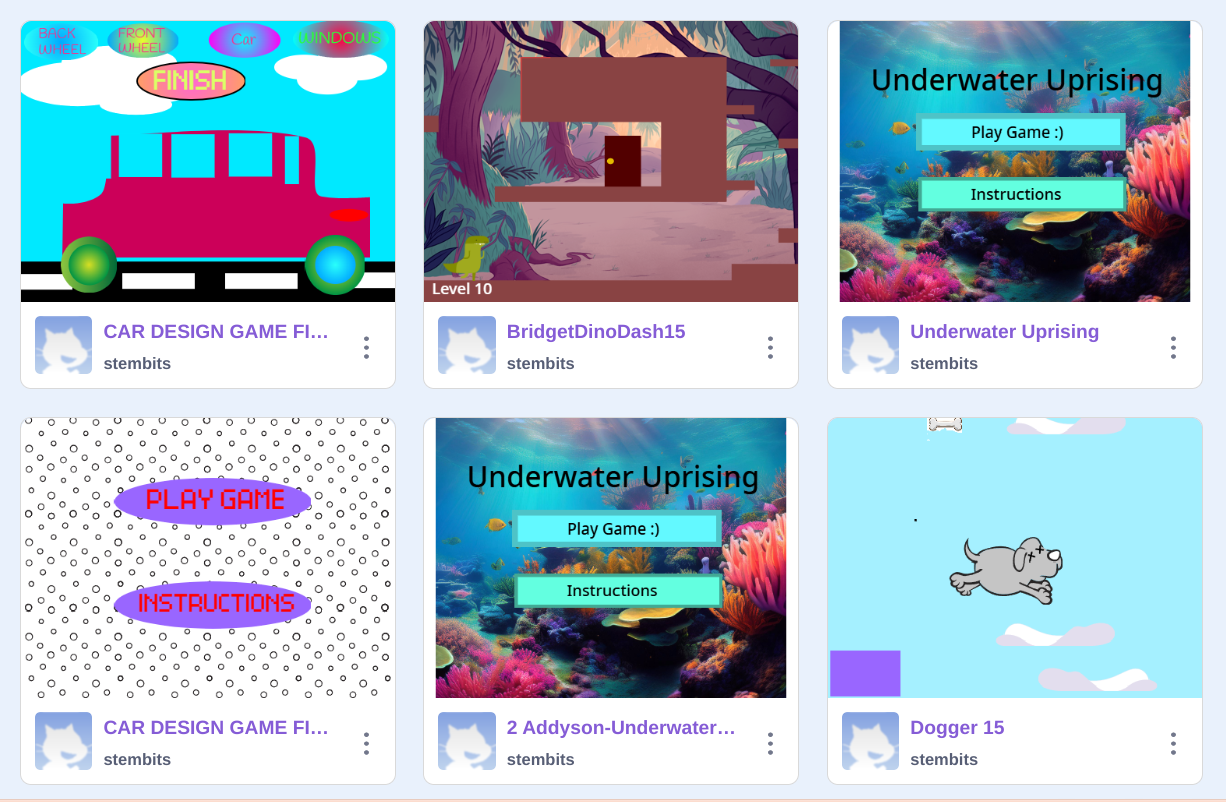
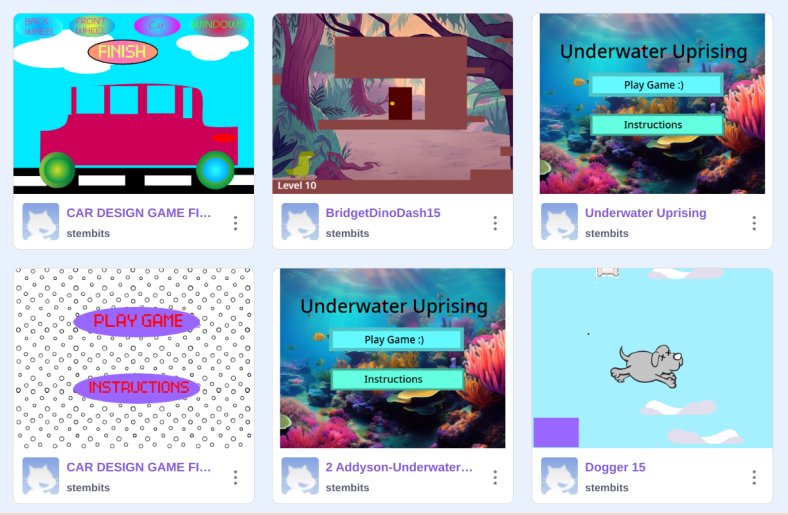
What if instead of just playing video games, students could create their own? That’s exactly what we did in my class, transforming a love for gaming into a hands-on project that blended coding, design, and creativity into a student-run video game. Using Scratch, students transformed their ideas into interactive games, coding everything from high-speed chases to intricate jumping challenges. But, the project went beyond coding as it integrated multiple STEM disciplines, including video production, graphic design, and even 3D modeling. The project culminated in a student-run arcade, where other classes came to play. By the end, students weren’t just players—they were game designers, engineers, and creative thinkers, bringing their ideas to life in an interactive, hands-on way.

This project is an example of project-based learning (PBL), an approach that makes learning more meaningful and engaging by connecting academic concepts to real-world applications. PBL immerses students in hands-on experiences that build critical skills like problem-solving, collaboration, communication, and creativity. It also helps students see the relevance of what they’re learning by giving them opportunities to apply their knowledge in practical ways. Perhaps most importantly, PBL allows for personalization—students can shape their projects around their own interests and strengths, making the learning process both more enjoyable and more impactful.

To make a PBL project successful, it needs to be broken down into manageable steps. Game development is complex, so I structured our arcade project into stages: coding, graphic design, video production, and 3D modeling. We started with coding since a working game was the foundation for everything else. Once students had their games running, they designed backgrounds and characters, then created posters to promote their work. After that, they produced instructional and promotional videos. Finally, they used 3D modeling to design a custom game controller and token. Some students needed extra time debugging their code, while others jumped ahead to designing graphics or planning their arcade setup. By keeping the schedule flexible, everyone had the time they needed to finish their game while still engaging in other aspects of the project.

A good PBL project teaches students the skills they need, one step at a time, so they can finish successfully. Since our students had different levels of coding experience, we began with Scratch tutorials—some moved through them quickly, while others needed more time. The goal wasn’t to get everyone to the same level but to ensure each student had sufficient skills to build their own game. The same idea applied to 3D modeling, where some students were already comfortable with the design tools while others were just getting started. By meeting students where they were and providing targeted support, we made sure everyone could engage with the project in a meaningful way.

PBL isn’t about having the latest equipment—it’s about making the most of what’s already available. For this project, we used Scratch for coding, Adobe Express for graphic design, WeVideo for video editing, and Google SketchUp with our 3D printer for modeling. These were tools I was comfortable with and ones our school already had. However, the project could have worked just as well with different tools—Python instead of Scratch, Google Slides for design, or Google Vids for video. If we didn’t have a 3D printer, modeling clay could have been an alternative, or we could have skipped that step altogether. The key was staying flexible and using what we had to keep the project engaging and manageable for both students and teachers.
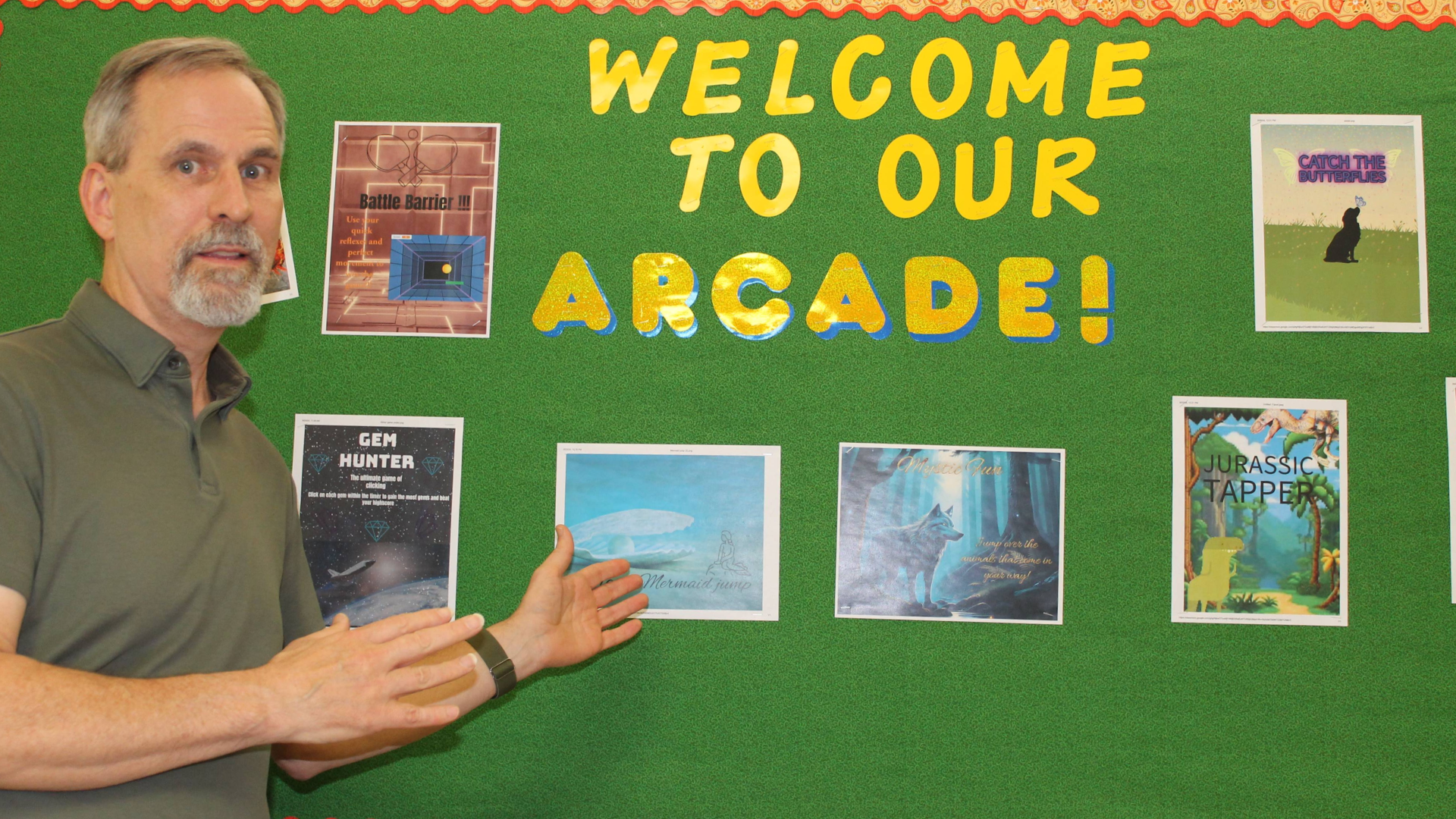
Finally, giving students a way to share their work makes PBL more meaningful. Finishing a project feels good, but presenting it to others gives it real purpose. For our arcade, we transformed the classroom into a real gaming space—students designed posters and signs, and we handed out tokens so visitors could “pay” to play. This small detail made a big difference. Students saw their games being played and enjoyed, which made their hard work feel real. No matter the project—whether it’s a school newspaper, a model city, or a website—having a clear end goal and a way to showcase the final product is essential. Giving students the chance to share their work helps them gain confidence and see the impact of what they create.


About Rachelle

Dr. Rachelle Dené Poth is a Spanish and STEAM: What’s Next in Emerging Technology Teacher at Riverview High School in Oakmont, PA. Rachelle is also an attorney with a Juris Doctor degree from Duquesne University School of Law and a Doctorate in Instructional Technology. Her research focus was on AI and Professional Development. In addition to teaching, she is a full-time consultant and works with companies and organizations to provide PD, speaking, and consulting services. Contact Rachelle for your event! She speaks on AI, AI and the Law, AI and the Environment, Cybersecurity, SEL, STEM and other topics.

Rachelle is an ISTE-certified educator and community leader who served as president of the ISTE Teacher Education Network. By EdTech Digest, she was named the EdTech Trendsetter of 2024, one of 30 K-12 IT Influencers to follow in 2021, and one of 150 Women Global EdTech Thought Leaders in 2022.

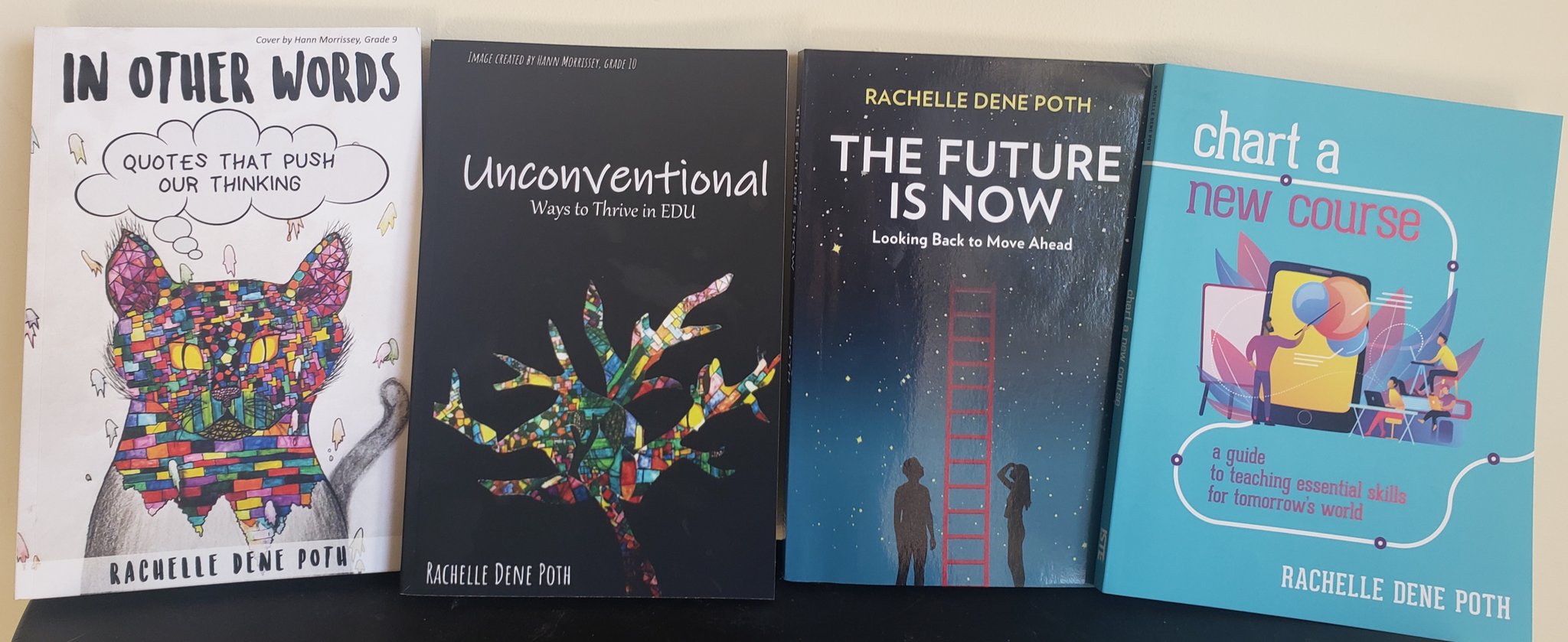
She is the author of nine books including, ‘In Other Words: Quotes That Push Our Thinking,” “Unconventional Ways to Thrive in EDU,” “The Future is Now: Looking Back to Move Ahead,” “Chart A New Course: A Guide to Teaching Essential Skills for Tomorrow’s World, “True Story: Lessons That One Kid Taught Us,” “Things I Wish […] Knew” and her newest “How To Teach AI” is available from ISTE or on Amazon.

Contact Rachelle to schedule sessions about Artificial Intelligence, Coding, AR/VR, and more for your school or event! Submit the Contact Form.

Follow Rachelle on Bluesky, Instagram, and X at @Rdene915

**Interested in writing a guest blog for my site? Would love to share your ideas! Submit your post here. Looking for a new book to read? Find these available at bit.ly/Pothbooks

************ Also, check out my THRIVEinEDU Podcast Here!

Join my show on THRIVEinEDU on Facebook. Join the group here.

4 Student Engagement Boosters for the Fall!

Keeping students engagemed throughout the school year can be a challenge. Integrating hands-on learning activities such as STEM, project-based learning (PBL), outdoor activities, gamification, and more helps maintain student engagement and develop essential skills like creativity, problem-solving, and collaboration.

Now that most schools have been in session for a few months, educators like myself might be looking for new ideas to explore. Some may already be seeing a decrease in student engagement. While the start of a new school year brings great excitement, that can wear off as activities pick up, colder months set in, and the content becomes more complex. Keeping all students engaged in authentic and meaningful learning experiences becomes even more critical during this time and throughout the year. 

Along with engaging students more in learning, It’s important that we find ways to foster essential skills, such as creativity, collaboration, problem-solving, and critical thinking, while making lessons authentic and relevant. In my experience, I have advocated for bringing STEM to all classrooms. Other ideas besides STEM activities include involving students in more active and even outdoor learning, challenge, or project-based learning (PBL) opportunities and using some out-of-the-box ideas. Each of these methods is versatile, and when combined with tools like Defined resources, they help to boost student engagement, spark curiosity, and, best, students retain their content knowledge even more.

Essential Skills Development

As we see so many changes happening in education, especially with technology like AI and other digital tools, students need to develop essential skills that will prepare them for the in-demand careers of the future. According to the World Economic Forum Job Sills Outlook for 2027, these skills include creativity, critical thinking, problem-solving, and collaboration, and now, number three is AI and big data. STEM-related activities provide all students with an excellent way to build these skills. Whether done through coding lessons, hands-on projects, or exploring scientific concepts, STEM encourages students to think critically and solve real-world problems and hopefully spark an interest they may not have realized they had.

Continue reading the original article on Defined Learning.

About Rachelle

Dr. Rachelle Dené Poth is a Spanish and STEAM: What’s Next in Emerging Technology Teacher at Riverview High School in Oakmont, PA. Rachelle is also an attorney with a Juris Doctor degree from Duquesne University School of Law and a Master’s in Instructional Technology. Rachelle received her Doctorate in Instructional Technology, and her research focus was on AI and Professional Development. In addition to teaching, she is a full-time consultant and works with companies and organizations to provide PD, speaking, and consulting services. Contact Rachelle for your event!

Rachelle is an ISTE-certified educator and community leader who served as president of the ISTE Teacher Education Network. By EdTech Digest, she was named the EdTech Trendsetter of 2024, one of 30 K-12 IT Influencers to follow in 2021, and one of 150 Women Global EdTech Thought Leaders in 2022.

She is the author of nine books including ‘In Other Words: Quotes That Push Our Thinking,” “Unconventional Ways to Thrive in EDU,” “The Future is Now: Looking Back to Move Ahead,” “Chart A New Course: A Guide to Teaching Essential Skills for Tomorrow’s World, “True Story: Lessons That One Kid Taught Us,” “Things I Wish […] Knew” and her newest “How To Teach AI” is available from ISTE or on Amazon.

Contact Rachelle to schedule sessions about Artificial Intelligence, Coding, AR/VR, and more for your school or event! Submit the Contact Form.

Follow Rachelle on Twitter(X) and Instagram at @Rdene915

**Interested in writing a guest blog for my site? Would love to share your ideas! Submit your post here. Looking for a new book to read? Find these available at bit.ly/Pothbooks

************ Also check out my THRIVEinEDU Podcast Here!

Join my show on THRIVEinEDU on Facebook. Join the group here.

Exploring Careers Through Real-World Learning

We have experienced so many changes in the world of education and the world of work. Technology is constantly evolving, and skills in demand now may not be needed five years from now. Jobs are changing, technology is advancing rapidly, and careers that exist today may not exist in the future. We also have to remember that many jobs don’t exist yet that will need to be filled by the students in our classrooms today. How do we prepare for what we can’t truly know and understand? 

Students must have opportunities to explore a variety of topics and careers. They need experiences that will guide them to learn about their areas of interest and themselves. We need to spark curiosity about learning and help students discover what they might actually be interested in. 

Students must be active in learning and have time to explore the world around them. In some classrooms, students may experience passive learning and solely consume content rather than create it. To really enhance and transform learning for our students, we must create experiences that may even cause some good chaos. It might push us to shift from what has been a traditional classroom structure of our teaching practice. What I have learned by stepping out of my comfort zone and taking some risks is that learning can and should happen beyond our classroom space. We must embrace new learning models that promote student agency and spark student curiosity for learning. Using methods and creating opportunities that foster the development of essential SEL skills, we will best prepare students for the future through real-world learning opportunities. When they see the relevance of what they are learning and how that applies to the real world and careers that are available to them, it will boost interest and excitement for learning.

How do we prepare?

We have to consider which methods and tools will best meet the needs and interests of our students. In education, we have been focusing on developing “21st-century skills” for many years. We can’t possibly know everything about what the future holds for students when it comes to careers and specific skills, so to prepare, we must help students build a variety of skills, especially skills that are beneficial to many areas of work. Opportunities that support students as they learn how to adapt to changes and become flexible in learning and growing will prepare them for whatever the world of work will look like five, ten, or more years from now. I also recommend following the Job Skills Outlook Report shared by the World Economic Forum to look at the Top Ten Skills in Demand and gain insights into careers that are on the rise. In my STEAM class, we recently did some career research on areas such as Cybersecurity Experts, Ethical Hackers, Data Analysts, Smart City Developers and more.

Here are three more ways to spark curiosity for the future and engage students in career-focused learning:  

  1. CTE and Work-based learning: Students need to continue to learn about the career options that are available and how they may be changing. With CTE, work-based learning, and even job shadowing programs, students gain practical and real-world insights into different fields. Being able to experience what it is like in the work environment and interact with people working in careers of interest to students will have a bigger and more meaningful impact. By partnering with local businesses and professionals, inviting guest speakers, and involving students in real-world, hands-on projects, they will become more aware of the opportunities available. Through these experiences, they learn about what their interests are and how they can make an impact in the world.
  2. Place-based learning: By shifting our focus from solely the content area, we can identify a geographical area or the culture of a place as a way to build content knowledge and help students develop SEL skills. Through place-based learning, we place students into the community to collaborate with local businesses, entrepreneurs, and other organizations. These experiences allow students to apply the content they are learning in the real world and see the impact. These experiences foster the development of student agency, boost engagement and excitement for learning, and enhance student awareness of the issues in the world around them. To further engage students, we can arrange field trips to local industries, invite guest speakers to our schools, and have students research local challenges and offer solutions.
  3. Project-based learning (PBL): With PBL, students take the lead in deciding what they want to learn and how they want to learn it. With PBL, students choose an area of interest, design their own learning journey, and, throughout the experience, will see the “process” of learning rather than a finite endpoint. In our classroom, we explored a variety of student-chosen topics and also incorporated the United Nations Sustainable Development Goals (SDGs) into the projects. We can help students to become more globally aware and involved in finding solutions to challenges faced in the world. PBL helps students to become more independent in learning while developing essential SEL skills such as self-management and social awareness.

There are many more options available, but starting with just a few is the way to go. Think about your local community or reach to your global network. There are organizations available that help educators to provide these types of opportunities. While we may not know exactly which jobs will still exist, we do know that there are specific skills that will help students stay flexible and adapt to the changing landscape of learning and work. In real-world opportunities, students will make connections that will positively impact their learning and, hopefully, spark curiosity and excitement for learning!

About the Author:

Dr. Rachelle Dené Poth is a Spanish and STEAM: What’s Next in Emerging Technology Teacher at Riverview High School in Oakmont, PA. Rachelle is also an attorney with a Juris Doctor degree from Duquesne University School of Law and a Master’s in Instructional Technology. Rachelle received her Doctorate in Instructional Technology, and her research focus was on AI and Professional Development. In addition to teaching, she is a full-time consultant and works with companies and organizations to provide PD, speaking, and consulting services. Contact Rachelle for your event!

Rachelle is an ISTE-certified educator and community leader and served as president of the ISTE Teacher Education Network. She was named the EdTech Trendsetter of 2024 by EdTech Digest, One of 30 K-12 IT Influencers to follow in 2021 and one of 150 Women Global EdTech Thought Leaders in 2022.

She is the author of nine books including ‘In Other Words: Quotes That Push Our Thinking,” “Unconventional Ways to Thrive in EDU,” “The Future is Now: Looking Back to Move Ahead,” “Chart A New Course: A Guide to Teaching Essential Skills for Tomorrow’s World, “True Story: Lessons That One Kid Taught Us,” “Things I Wish […] Knew” and her newest “How To Teach AI” is available from ISTE or on Amazon.

Contact Rachelle to schedule sessions about Artificial Intelligence, Coding, AR/VR, and more for your school or your event! Submit the Contact Form.

Follow Rachelle on Twitter(X) and Instagram at @Rdene915

**Interested in writing a guest blog for my site? Would love to share your ideas! Submit your post here. Looking for a new book to read? Find these available at bit.ly/Pothbooks

************ Also check out my THRIVEinEDU Podcast Here!

Join my show on THRIVEinEDU on Facebook. Join the group here

Designing Authentic Project Based Learning

Guest Post by Stephanie Rothstein, @Steph_EdTech

I hear it often, “Oh yeah, I do projects.” But doing a project is very different from Project Based Learning. Chairing a Design Thinking PBL pathway has changed me as an educator. I now look at all situations through a project application lens. A few years ago at a leadership conference, I went to a session on Project Design. The speaker explained that there are three ways to approach project design. 

When designing projects, you can be inspired by your content, you can be inspired by a real need in your own community, you can be inspired by an issue that impacts the world. 

I have thought back to this approach often as I approach project design. I find when I work with educators, that most approach projects trying to figure out how to apply their content to a project that helps students showcase their learning. But Project Based Learning means revamping this idea and essentially inverting it. So instead of a project at the end after doing the learning, it is through the project that students learn the concepts. It might not be in the order we would have planned for them, but they will learn it and in my experience will go deeper because they developed questions and created meaningful connections. 

So, what does this actually look like in the classroom? How does it actually work? I will take you through one of my English 9 projects to walk you through.

I have done Service Learning for 18 years but it was only about 8 years ago that I finally felt like this really became Project Based Learning. Based on a general interest survey on service topics, I split the class and bring them to 6 different locations. We learn about that service organization and volunteer. These students then come back and present to the class about the organization. Students in the class are able to ask questions to the student experts. After, students then pick their topic to focus on for the unit. 

Students are then organized into shared topic groups and together these students pick a non-fiction book. I have a suggested book list that has been made by local and global non-profit groups, teachers, and students. Groups are also encouraged to propose a new book. While reading their book, students hold their own book chats, record them and use them to create their own podcasts to submit to the NPR student podcast challenge. This is not “the project” and is just one part of the project design. Students also select their own individual research topic and use articles, the interview of an expert at their non-profit, and reflection on their time volunteering to help inform their research paper. 

The last part of this unit came because students asked me a question. They said, “I’m glad we volunteered 20 hours, interviewed someone, read, researched, wrote a paper, but shouldn’t we be doing something more? Shouldn’t we apply our learning and give back in some way?” After that, the real Project Based Learning opportunity was born. Students create a Give Back Opportunity that helps spread awareness, collects items to donate, or fundraises and must be based on the needs of that organization. These projects have brought about real impact. This year, being virtual has broadened my perspective on how to make an impact with this project and we will use Solve In Time Cards to Design Think their Give Back Opportunity and The Global Goals for Sustainable Development to help students think both locally and globally. This unit takes 14 weeks and closes with group presentations to the class and an invited group of non-profit panelists. 

This project approaches from all three focus areas: content, local, and global. I always knew for this project that I wanted to connect with local non-profits and that I wanted students to better understand non-fiction resources. The other layer to consider when building the unit plan is which tech skills will students build upon during this project. 

Project Based Learning is complex and is rooted in questions. It must begin with an entry experience. My “workshops” are based on student needs that they create at the start of the unit. These workshops may be for small groups or the entire class. Students still have deadlines, they still have goals, but project based learning means that groups may be at different stages of the project. I use a shared SCRUM board to help students track project progress so that I know where they are and the team understands where they are in the process. Topics for this project vary based on year and interests. And this is real life. I have had students who focus on Foster Care, Women’s Rights, LGBTQI, the Environment, Black Lives Matter, Food Insecurity, Animal Rights, Homelessness and more. It is the variety of topics that helps me know that my students are connecting individually and are able to teach something to their classmates and to me. They are all learning the skill of researching using articles, non-fiction books, interviews, and personal experiences. 

It keeps me on my toes and no year is ever the same but I am proud of the learning experiences created through deep Project Based Learning.

**Interested in writing a guest blog for my site? Would love to share your ideas! Submit your post here.

Looking for a new book to read? Many stories from educators, two student chapters, and a student-designed cover for In Other Words.

Find these available at bit.ly/Pothbooks  

Choosing the Right Tools for Amplifying Learning Through PBL

Photo by August de Richelieu from Pexels

During the last few months of the 2019-20 school year, we faced a lot of challenges in planning our instruction and making transitions from our classrooms into the virtual learning space. For me, the difficulty was in deciding what tools and strategies to use and knowing whether students had access to devices or their class materials. I wanted to provide meaningful and authentic opportunities that would enable all students to engage in learning, while being mindful of individual circumstances that may have made that difficult at times. We know there is definitely not a shortage of digital tools and options available to us as educators for expanding the how, when and where students learn, however there are a few important things we need to consider, not just now, but always.

As we continue in the new school year, there are still many unknowns when it comes to where learning will take place. It can help to choose methods and tools that enable us to transition. We should focus on these considerations first when thinking about the types of lessons and opportunities we will choose and design for our students.

First, what access do our students and their families need and what do they have? Second, are we using digital tools in our classroom that families will be able to help support students if they must learn from home? And third, what types of learning experiences can we create for our students that enable us to work together even when apart? Experiences that promote student choice in learning, leveraging technology where it makes sense, while also making sure that we can support and involve families are good options.

Choose a method not a tool

With school closures, it was an opportunity to try new ideas and tools, or perhaps to bring back some methods that we got away from. Project-based learning (PBL) is something that I believe worked well during this time, regardless of content area, grade level, or teacher experience with PBL in the classroom. I also believe that it will allow for smoother transitions in the event we have to shift throughout the upcoming school year.

According to the PBLWorks, PBL is “a teaching method in which students learn by actively engaging in real-world and personally meaningful projects.” PBL is an iterative process requiring reflection, which makes it a good method to guide students to become more independent learners and to develop a greater motivation for learning. Through PBL, we help students to focus on the process of learning itself and not on a final product that serves as an end to a unit of study and is forgotten.

With PBL, the learning space itself does not matter, it simply requires that we set up guidelines and work through the challenges that may arise as we go. PBL gives students the opportunity to explore their passions, design their own problems or challenges, and have the time to focus more on the process rather than the product of learning. To best prepare students for the future and for navigating what may be a constantly changing look of school this year, we need to offer experiences which promote curiosity, independent learning, and working through productive struggle. PBL is good for this and is also a great option for addressing the 4 C’s: critical thinking, collaboration, communication and creativity.

Tools for PBL

Moving beyond the traditional classroom time and place is easier with technology, and it only takes that first step to begin creating these opportunities for students. In my classroom, we leveraged some digital tools for students to explore global issues and broaden their cultural awareness and global understanding. The use of digital tools to connect with other students, educators and experts added to the authenticity and meaningfulness of the work they are doing.

While in the physical classroom space, PBL promotes the development of SEL skills, students also become better at collaborating and providing ongoing feedback and support to their peers. However, when not in the  same physical space, we need to find ways to foster the development of these same skills.

Tools that we can use:

1.Ideas for PBL: Students can find ideas on Wonderopolis that promote curiosity for learning about new ideas and challenges. With platforms like Thrively, educators and students have access to a project library of standards-aligned projects, including rubrics and resources such as documents, videos, and website links, making it easy to get started with a ready-made project or to start from scratch. With the tools available, students can work in real-time with classmates and teachers through the collaboration feed and also build digital portfolios to track their work.

2. Collaborative spaces: PadletWakeletTrello, LMS such as Edmodo. With these options, students can work together and interact in the virtual space and will help with the transitions we may need to make in this school year. The use of tools such as these also enables students to share their work with a larger audience, bringing in opportunities for global collaboration through these platforms.

3. Providing feedback: Being able to give students timely and authentic feedback is critical for learning. It is also important that our students be able to provide peer feedback and develop their skills of communicating and collaborating with their classmates. Some of the tools that help this give students the opportunity to build confidence in learning and be able to share through voice or video or combination are FlipgridSynthAnchor, and Kialo. With Flipgrid, educators can even explore topics in the Disco Library for students to use as a  PBL focus and with the  features, students have many options for sharing their learning. Through Kialo, students have a space to ask questions, engage in discussions and exchange ideas.

4. Products of learning: It is important for students to have choices when it comes to sharing what they have learned, especially for creating something to share with a public audience. Leveraging some of the different digital options out there will give students choices such as blogs, infographics, podcasts, videos, and interactive, multimedia class presentations. Students can create a multimedia presentation using Buncee and then all students can share their work on a Buncee board, with the ability to comment and give feedback. Using a tool like Nearpod, students can include additional content such as virtual trips, polls, collaborative discussion boards and more.

5. Reflections, revisions and project workflow: It is also important to provide students with a space to work through the different phases of PBL and develop a system for project management and working through feedback.  The use of tools like Google Forms to submit ideas, voice recordings within Google documents or Microsoft OneNote are quite helpful. In addition to these, there are larger platforms available for an all–in-one PBL work. Headrush is a PBL management system that enables teachers to provide a space for students to design their learning journey.

Asking students for feedback about the methods we use and the tools we bring into our classroom is also important. One student shared this with me after our recent PBL experience during school closures: “Using different digital tools helped me to really understand and see what school is like in other countries. Being able to connect and ask questions directly to students my own age helped me to sculpt my project in a way unlike anything I have experienced.”

It is all about having choices. Promoting student choice and voice through PBL and leveraging the digital tools available will engage students in more authentic and personalized learning experiences regardless of where learning is actually taking place.

**Interested in writing a guest blog for my site? Would love to share your ideas! Submit your post here.

Looking for a new book to read? Many stories from educators, two student chapters, and a student-designed cover for In Other Words.

Find these available at bit.ly/Pothbooks  

Zigazoo: Start Creating Today!

I have been recommending Zigazoo to many of my educator friends lately because of all of the wonderful opportunities available for having students engage in more authentic and meaningful learning opportunities by creating their own videos! I learned about Zigazoo about two months ago and have had fun checking out the videos being submitted by kids! 

When people ask me what Zigazoo is, I explain that it has been compared to popular social media tools such as Instagram and TikTok. Because of the similarity, this means that students feel more comfortable with the user experience and are more likely to enjoy the learning process on Zigazoo. It also is a good way to help students build their digital citizenship skills and become involved in more active learning and be creative!

What is Zigazoo?

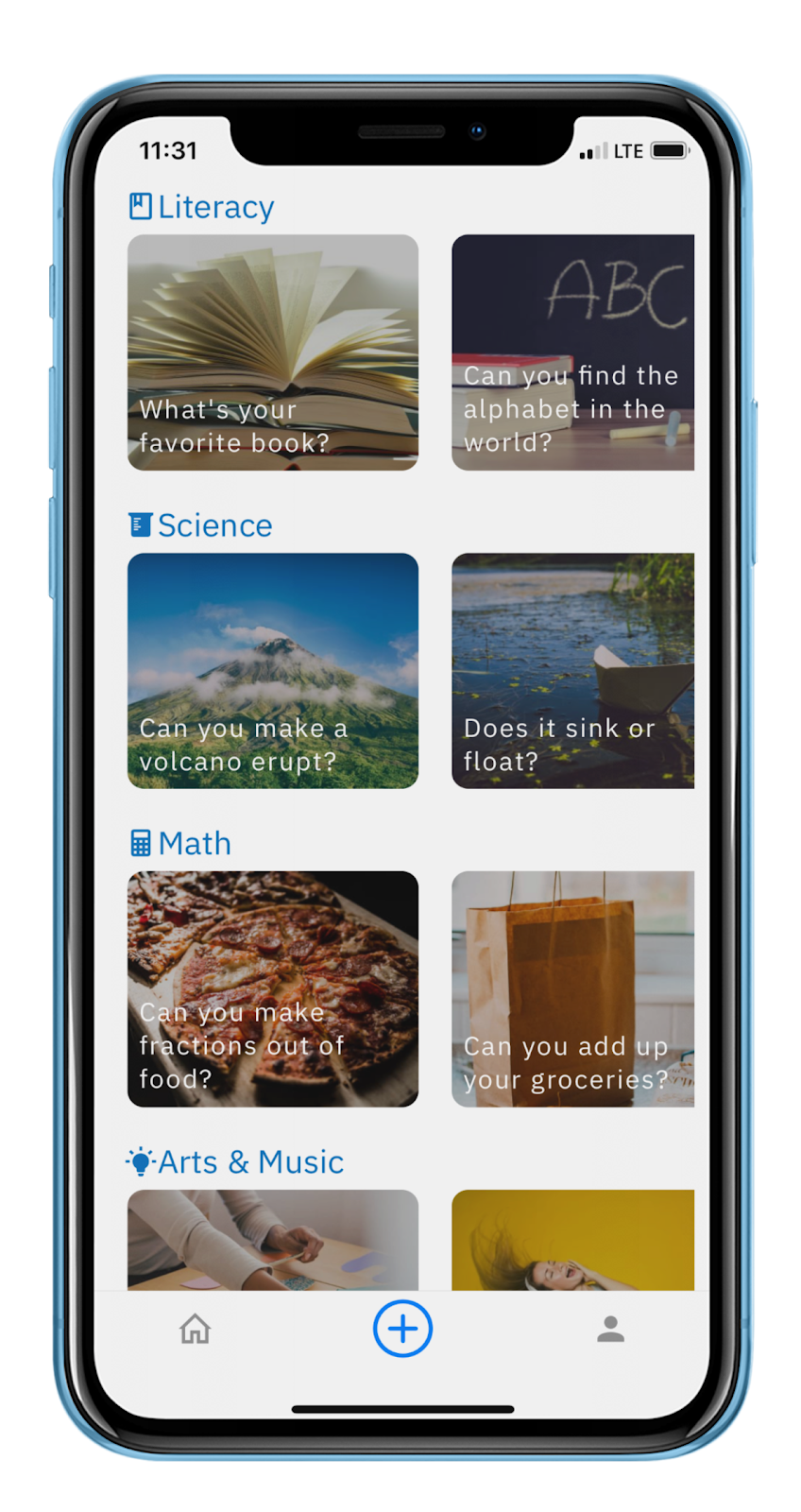
Zigazoo is a free video sharing app that gives students the chance to create a short video in response to daily prompts and other activities. Teachers have been using it to provide students with a different way to share their learning and explore new ideas.  It is easy to get started with Zigazoo and find some prompts to assign to a class or to create your own.

Each video created can be up to a length of 30 seconds. There will be daily featured projects and the Zigazoo app gives kids a fun way to think about and try new things. It is a good way for parents to be more involved in learning with their kids. Creating their own videos also helps students to develop their understanding of privacy and social networks. Teachers can also record responses to student videos. 

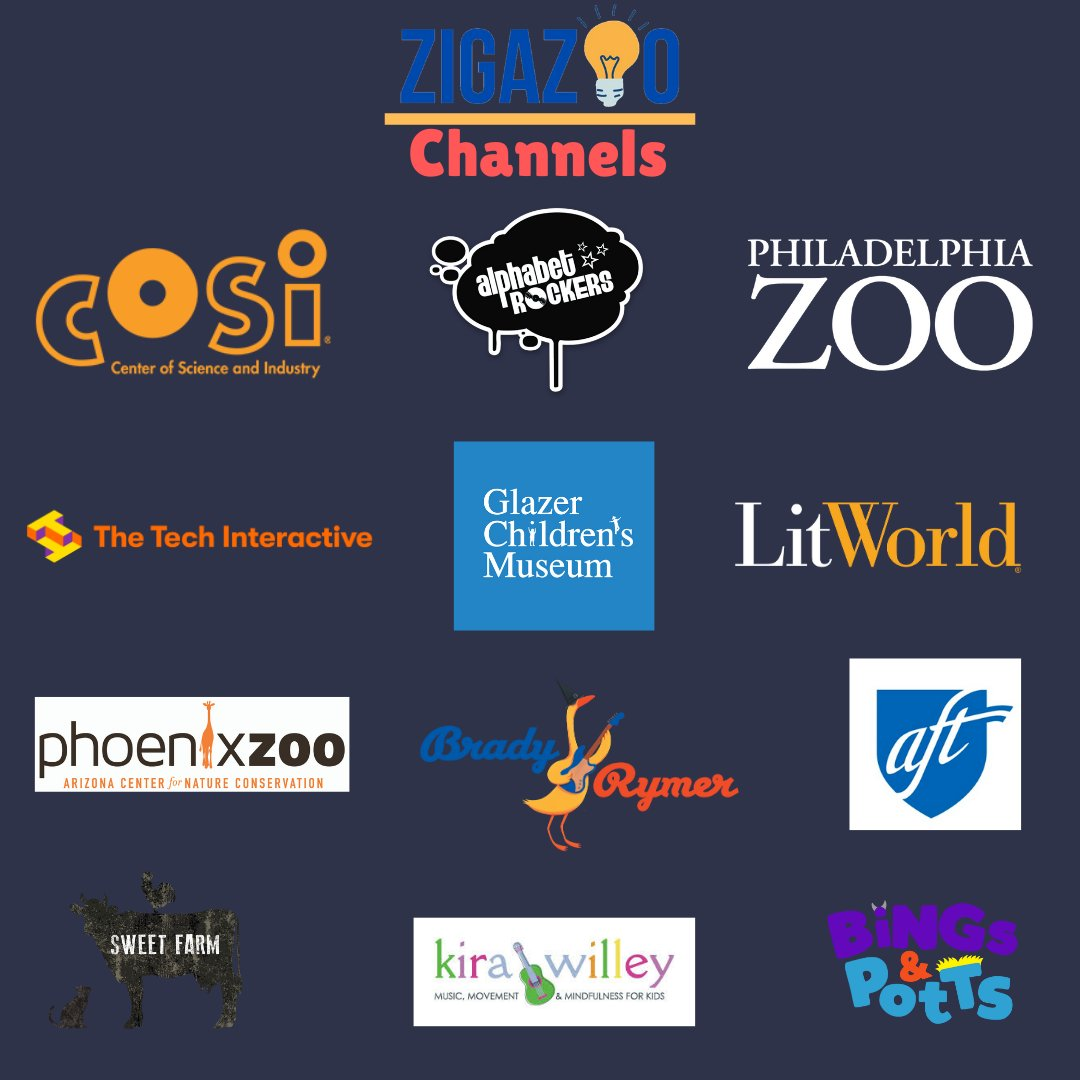
Beyond the prompts that teachers can create, Zigazoo also gives families and teachers access to many prompts provided from a variety of educator channels that are now available. With these channels, we have the ability to share video-based responses to projects and interactive media from museums, zoos, educators, children’s musicians, and education organizations. In a recent article by TechCrunch, Zigazoo was referred to as the “future of remote learning.” There are so many possibilities for creating videos during remote and hybrid learning and exploring the new channels is a great way to start.

Through the addition of channels, there are many new possibilities for students to learn from global organizations! Check out the channels that have been added so far and stay tuned for new channels that will be added!

Some of the educator channels available

Zigazoo is an app that can be used to offer new and more engaging ways for students to share what they are learning in creative ways. Teachers and parents can find daily projects to explore or search through the hundreds of other projects available.  I also recommend checking out their Twitter feed and follow @GetZigazoo to see the videos and challenges being shared!

Explore the #dailyzigazoo to get started quickly. Here is one example, which was Kira Willey’s first project, “What is something kind you’ve done for someone?”

Many different topics to choose from!

In Zigazoo, there are challenges that offer kids a chance to explore and then create a video to talk about what they learned. It can also be a great option for project-based learning types of activities. What an opportunity to spark curiosity for learning and increase student engagement.

What do students think?

Here are some comments from educators about their experience trying out Zigazoo. 

“I love the energy behind it and the energy it brings out in my students!”

“My 2nd graders said it looked like Tik Tok (how 7-8 year olds know this, I do NOT know, lol).”

“The other video creation app that I have been using with my students in Spanish is Flipgrid. As I discussed the app with students this week, they hands down prefer to use Zigazoo for my assignments. They couldn’t adequately articulate why, but it basically comes down to the fact that Zigazoo feels more like TikTok or social media, which then makes it more fun.” (high school teacher)

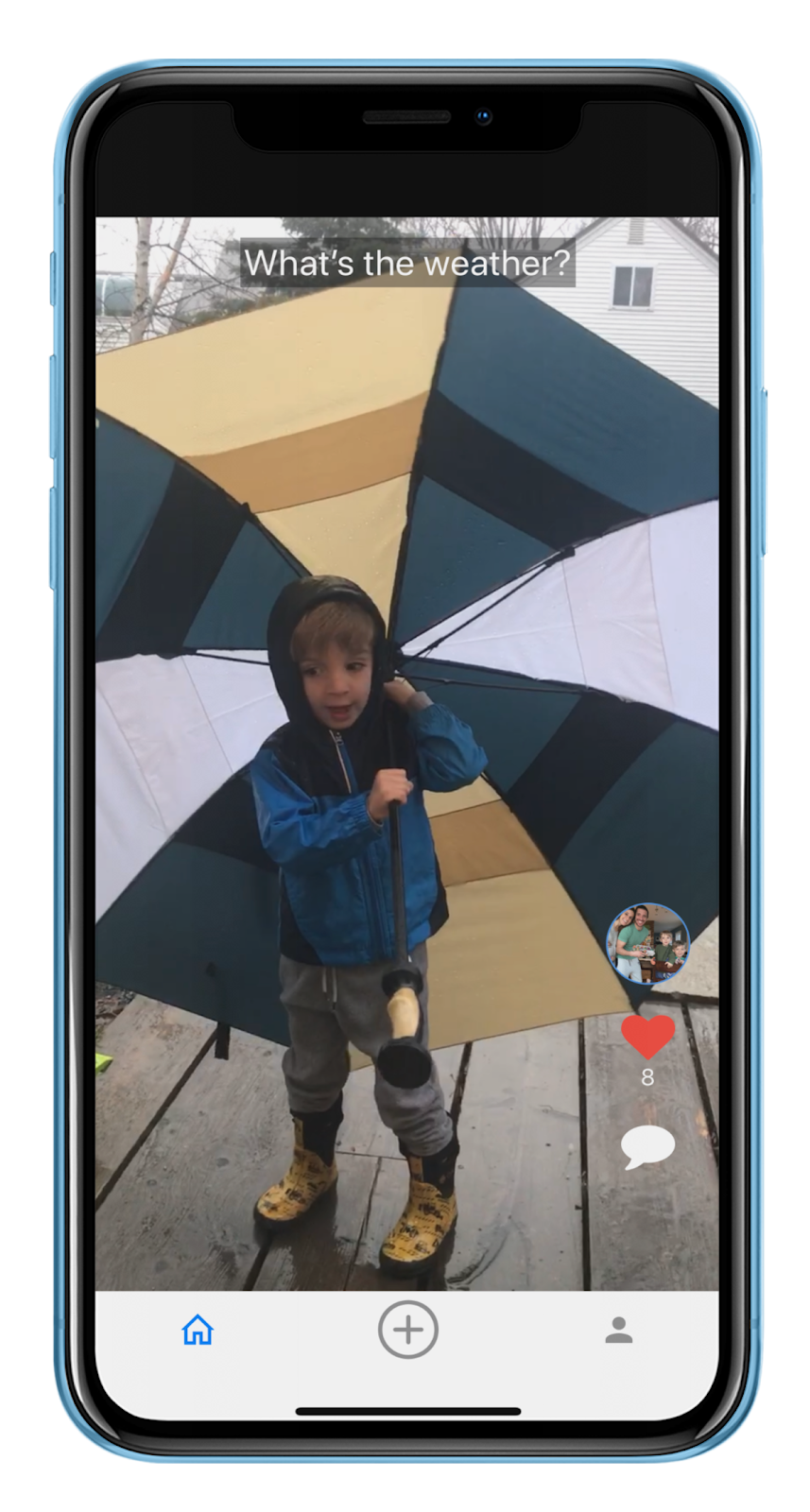
A prompt for describing the weather

Zigazoo is free and educators can create their own classroom projects or choose from those available. Zigazoo is now offering a free premium account for educators, use the code ZPremium and sign up by October 31st. Parents can join in the global Zigazoo community. 

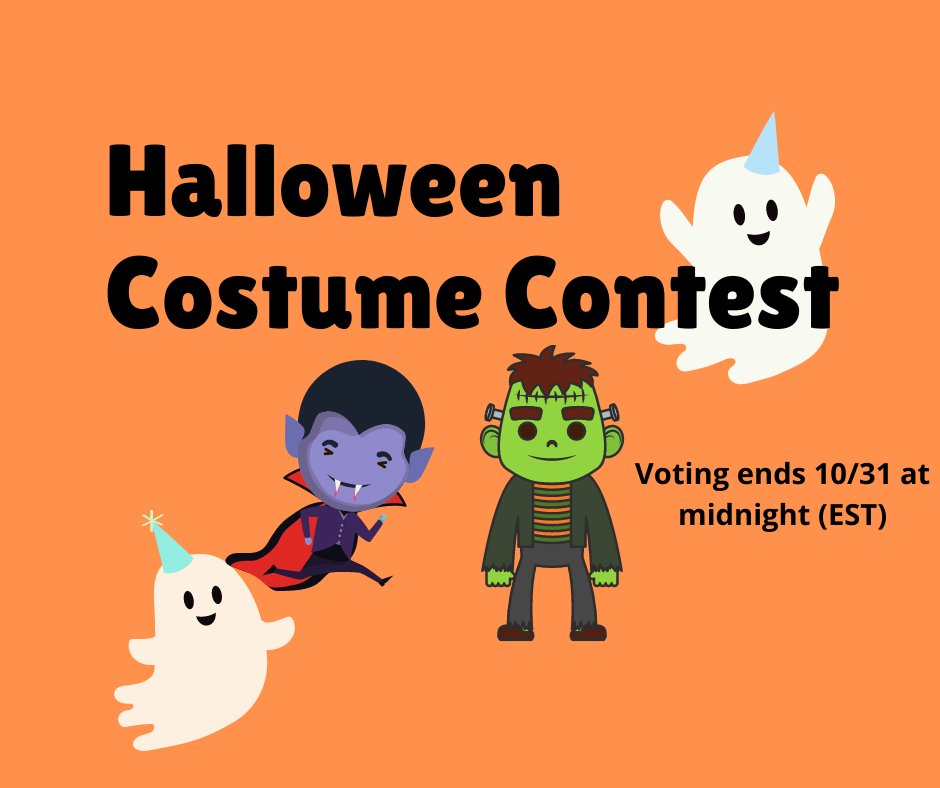
And join in Zigazoo’s Costume Contest! The contest is the first of several Halloween activities Zigazoo will host from now through October 31st. Other virtual activities will include haunted house tours, decorating jack-o-lanterns and telling Halloween jokes.

**Interested in writing a guest blog for my site? Would love to share your ideas! Submit your post here.

Looking for a new book to read? Many stories from educators, two student chapters, and a student-designed cover for In Other Words.

Find these available at bit.ly/Pothbooks  

3  books.png

Providing for Different Learning Styles

As educators, it is important that we find ways to provide more personalized learning experiences to meet the individual needs of our students. What this means is that beyond simply offering more choices in the types of assessments we offer students, we must do more by learning to understand the specific learning styles and interests of each of our students. We must differentiate our instruction and to do so requires that we develop a clear picture and gain a deeper understanding of the various learning styles of the students in our classrooms. When we do this, we can then design lessons that are focused on the specific student learning styles and offer more individualized choices for students. Whether that offers more options to work independently or in groups based on a specific topic, an area of interest or even based on the level of understanding of the content, we serve them best by having the right resources available for them.

Each of our students have specific needs and preferences for how they learn and we do the best for them when we help them to identify these preferences and then offer a variety of materials and resources for them to explore. It is not about always using a digital tool or shifting away from traditional methods, but rather being able to determine which of these options will work best for each of our students. It also means helping students to become more self-aware of their own interests. One change that has helped me to better identify these styles and guide students in my classroom is by using the station rotation model.

Through the use of stations, I am able to provide multiple activities that enable students to interact with the content in a variety of ways. There are tech and no-tech options, student and teacher-created materials, hands-on activities to choose from, and times where students decide on a focus for their group. By providing a variety of learning options for each student, giving them all the opportunity to explore, we empower students with more meaningful and personalized learning that will lead to more student engagement and content retention.

Learning Styles: The VARK Model

In 1987, Neil Fleming designed what has become known as the VARK model. Fleming developed this model as a way to help students learn more about their individual learning preferences. The VARK learning styles include: visual, auditory, read/write, and kinesthetic.

Personally, I have always been more of a visual and somewhat kinesthetic or “hands-on” learner. At varying points throughout my life, I can recall taking a test and being able to see specific notes that I had written in my notebook, but still being unable to respond to questions. I tended to create graphic organizers and had my system for making more visual connections with the content. Many of my students are visual learners and over the past two years, have often noticed that they have specific ways of processing the information in class as well as how they prepare and respond during assessments. We must be able to provide different options for our students where they can choose a format that will best suit their interests and needs in more authentic and personalized ways.

Visual Learners

Visual learners are more likely to use charts, icons, images and are able to more easily visualize information and as a result, can retain it longer. An estimate is that visual learners make up approximately 65% of the population, and remember 75% of what they read or see. Visuals learners prefer to do projects and presentations that involve creating visualizations of their learning. For visual learners, some good options include creating infographics, using Augmented and Virtual reality for creating immersive experiences, designing 3D objects, sketchnoting, or using digital tools such as Padlet or Wakelet to curate content in ways that promote better visualization of content. Visual learners would also benefit by creating a mindmap or making flashcards, which can also be done using a digital tool like Quizlet.

Auditory Learners

Auditory learners listen carefully and often focus on the tone or the rate of speech, and may also benefit more by having supplemental resources made available to them such as videos or audio recordings. Learners of this type can recall information such as song lyrics and conversations, and can often recreate a story more easily because of that auditory connection they have. There are many options to engage auditory learners more by selecting options that promote listening and speaking skills. Some ideas include using video response or podcasting tools to have students explain concepts or brainstorm ideas. Another option is by creating a more interactive presentation using a tool such as Voice Thread, students will connect with the sounds, dialogue, and tone used in a presentation such as this, where they can listen and respond.  Another idea is to use Flipgrid to post a question and have students also respond to classmates to further the discussion and promote higher-order thinking. Try using Synth to create a podcast for students to have the active listening component addressed, and invite students to listen and respond to the prompts by adding a thread to the podcast.

Read/Write Learners

Read/write learners prefer to have the text available to them in some written/tangible format. Whether students first take notes and then decide to rewrite their notes for additional practice, or read over their notes each day for review and class preparation, these learners benefit from sustained interactions with the text. The more they interact with written formats, the better equipped they are to understand the content. Beyond writing in pen or pencil, or creating a document, using some tools such as Kidblog, for writing a story and getting started with blogging is a good way to promote reading and writing opportunities. Another idea is to have students create a multimedia presentation with a tool like Buncee to tell a story, adding text and icons to make the content more meaningful. These options make the activities more authentic and aligned with the needs of learners of this type.

Kinesthetic Learners

Kinesthetic learners learn best through hands-on learning opportunities. Students spend a lot of time sitting in classrooms and perhaps more passively learning. We need to design ways for students to be more active in the classroom. Some choices would be through a STEAM curriculum, the use of makerspaces, place-based learning, game-based learning and creation, designing projects and having students engage in project-based learning (PBL).

Multimodal Learners

For some students, providing options that foster a multimodal learning style is most beneficial. A multi-modal learning style means that you benefit through multiple ways of processing the information which can be through images, sounds, movement, speech, audio, visuals and more.  When I have used stations in my classroom, providing the different options at each station was helpful for students who are multimodal learners, to be able to interact with the content in different ways. Some of the tools that I have used include NearpodKahootQuizlet, in addition to giving students options to create something based on their own choice, which lends itself to more hands-on learning. The use of infographics, hyperdocs, choice boards, and even digital breakouts can give students a variety of ways to engage with the content and provide activities that will meet each learning style.

All students benefit from multimodal learning options that support a Universal Design for Learning (UDL). Providing something for each student and offering a mix of learning tools will help students to master the content in more authentic and personalized ways.

Interested in learning more about your own learning style preferences? You can take the VARK questionnaire and find out what type of learner you are.

**Interested in writing a guest blog for my site? Would love to share your ideas! Submit your post here.


Looking for a new book to read? Many stories from educators, two student chapters, and a student-designed cover for In Other Words.

Find these available at bit.ly/Pothbooks  


3  books.png

What skills will students need


I’ve been thinking about the world of education and work right now. We are experiencing so many changes, uncertainties and yet have to determine how to plan for the upcoming school year and what types of learning experiences to design for our students. For myself, something that keeps coming to mind is providing ways for students to have more choices, to become flexible with learning and new ideas, and to consider strategies or tools that enable us to transition between our physical and virtual learning spaces.  I thought back to some research that I started a few years ago and how that can help us now as we consider options in the new school year.

About two years ago, I read about something called the “gig economy.” Not knowing what that meant, I turned to Google to do a search and within .30 seconds, I had over 35 million results. After a more advanced search and filter, I learned that the term refers to jobs or work assignments that are the equivalent to a “gig.” Short-termed, specific types of tasks. Common applications of this are jobs that employ freelancers or independent contractors. When searching for the top “gig economy” jobs, a few common themes of the top 10 list include Deep Learning (think AI and machine learning), Bitcoin, Blockchain and Social Media Marketing.

Employment in a gig economy is on the rise, which means that our students need to develop a variety of skills that will prepare them to adapt to the changing landscape of work since we cannot predict what jobs will exist in the future. With statistics such as:

  • In 2015, 54 million people worked as freelancers and on average earned an estimate of 17% more per hour than full-time employees.
  • A projected 60% of companies plan to hire more freelancers rather than full-time employees. In 2016, 35% of workers were freelancers and it leads me to wonder what the number will rise to in another 10 years?

We need to prepare students for their future by offering innovative and challenging learning experiences. Experiences that will push their problem solving, critical thinking, creativity and collaboration skills and that involve real-world experiences.

As a Spanish and STEAM teacher, I am commonly asked why students need to learn a foreign language, or why I have them create different projects using emerging technologies rather than traditional document or powerpoint style presentations. My response is always that students need to develop a variety of skills that will enable them to adapt and be marketable to multiple job possibilities in the future. The ability to communicate in another language can benefit students in many ways and it is always a marketable skill to have.

Students also need the opportunity to explore their interests, whether in the arts, music, technology, through entrepreneurial courses, as a few examples. Learning how to establish oneself as an independent contractor, to be self-employed and to understand the traditional components of working in business, but yet preparing for non-traditional forms of business and work.

What experiences will help?

Entrepreneurial Courses: How can educators best prepare students for a gig economy workforce or to possibly become entrepreneurs? By designing learning experiences where students have an opportunity to explore, create, and innovate and have choices in the how, what and where they learn, we will offer more possibilities for inquiry-based learning and foster a growth mindset. Some schools offer programs and courses which lend themselves to these types of possibilities for students.

In my own school, we have a course on entrepreneurship, sports and entertainment management, and a variety of STEAM courses where students design problems to solve and explore emerging technologies. Patsy Kvortek, one of our business teachers, recognized a need for more relevant courses that provide students with opportunities to learn in more authentic ways. She believed that these courses “would prepare students for future success.” She created a course in “Entrepreneurship” and “Sports and Entertainment Management”  a few years ago and has continued to build more real-world experiences and project-based learning into the curriculum. In her classes, students learn about project management, business management, social media, finances and how to plan large events. In courses like this and others like it offered across the country, students are not only developing skills that will prepare them for many career options, they are also building critical skills of communication, collaboration, problem-solving and as an added benefit, SEL (Social and Emotional Learning) skills as well.

Project-based learning: Alan November, international keynote speaker, and author, said we have to “teach students ​how to learn.​”​ During his keynote, November stated: “I think we should begin to move more and more toward the skill side, because if we teach you to memorize and regurgitate content and your job is wiped out by technology, you’re not well prepared to reinvent yourself if you didn’t learn how to learn.”

November’s message reinforces the importance for students to learn to communicate, collaborate, problem-solve, and think critically. These are key skills that will benefit students whether they choose to enroll in college, get a job, pursue specialized training, or possibly take a gap year to explore the world and different learning experiences before deciding.

Project-based learning (PBL) helps students to create their own learning path by looking for an answer to a question they come up with and not having a specific direction to go, nor one right answer to find. With PBL, students ​engage in sustained inquiry and the skills of critical thinking, creativity, and problem-solving become part of the learning process. Students need more real-world experiences, especially those like in place-based learning where they can assess needs that exist in their own community or look globally, and then brainstorm possible solutions. Learning beyond the classroom walls with a more authentic purpose will benefit all students.

STEM and Emerging Technologies: Artificial Intelligence is a growing area in education and in the world. It is estimated that 40% of the jobs will be replaced by AI, so how can we prepare students to be competitive? We create opportunities for students to become the creators of AI, to learn how to code, to design new technologies that will make an impact on not only their learning experience but for the future. Even using AI for learning, students have access to virtual tutors and can enroll in online courses that are taught by AI, which expand the how, when and where they can learn. Knowing how to code becomes a skill that is marketable to many areas. Students can become app designers, create new innovations, and develop the critical “21st-century” skills that they need to be successful in whatever their goals may be.

Educators can facilitate greater, more personalized learning experiences for students by fostering a “STEM mindset” in students. As Dr. Jacie Maslyk states, “The way we engage with our students can build confidence and fuel curiosity.” In a world where the future of learning and work are uncertain, the best way we can provide for our students is to push their curiosity, promote risk-taking and challenge them to explore emerging technologies and different STEM concepts and be there to support them along the way.


**Interested in writing a guest blog for my Rdene915 site? Would love to share your ideas! Submit your post here.


Looking for a new book to read? Many stories from educators, two student chapters, and a student-designed cover for In Other Words.

Find these available at bit.ly/Pothbooks  

To Be a Global Educator

Guest post by Ava-Gaye K Blackford (@BlackfordAva)

(I read this post and and agree with the foreword below, Ava is an inspiration and her passion for education is clear.)
From Ava’s blog

I had the pleasure of connecting with Ava through my work with Participate. I was helping to pilot a new professional development program, and Ava was one of the brave teachers who took a risk and learned alongside her students as they looked for ways to make their school lunch healthier through multiple student-driven avenues. I was immediately impressed with her motivation and excitement toward teaching and learning and her openness to feedback. Here’s what Ava believes about education and what she’s been up to since I last worked with her.


lunchAva.jpg

I believe that teaching is the foundation for all other careers which requires compassionate and patient individuals who have a passion for scaffolding students and imparting knowledge. I feel that it is the ability to help others to acquire new information, competencies or values and implementing specific interventions to help students who need support to learn particular things. I also believe that teachers are born and not made. I know that I am an outstanding teacher because I am able to connect with and relate to my students to bring out their true potential. I also do not crumble under pressure or when I face obstacles instead I persevere. I am intrinsically motivated, and the reward I find in teaching is the personal satisfaction I obtain when I see students learn something new and achieve academic success and development. Being a part of the Participate international teaching program has been a very fulfilling and life-changing experience, and I recommend more teachers to gravitate towards this adventure.

My decision to join participate was due to several reasons. First, I wanted to share my culture by acting as a Cultural Ambassador so people can learn the uniqueness of my Jamaican culture as well as learning about other cultures. Secondly, I wanted the opportunity to travel the world, meet new people and build partnerships with stakeholders in the education system. Besides, I would be able to learn new strategies so that I may share with colleagues back home, learn about different technological devices, apps, and sites that may be used to boost students’ engagement and learning. Finally, to grow professionally as an educator. Reflecting on my journey thus far, I can safely say that I have achieved all of these goals and have grown into a productive Global Educator.

Currently, I have been assigned the role of Local Advisor. I have been granted the opportunity to guide two new Participate teachers and help them to transition smoothly in their new job position. As a local adviser, I serve as a mentor to new international teachers and share my own experiences, cultural opportunities, and ideas on how to be a successful exchange visitor teacher and cultural ambassador of their country.

School lunch project

School lunch project

 To be a successful exchange teacher, one has to capitalize on both human and physical resources present within the walls of the school to maximize students’ full potential, improve one’s self as a Global Educator and adjust to the school’s culture and climate. In my first year, I worked closely with the Academic coach to plan classroom routines and school-wide management procedures. The use of technology in my lessons made my work as a teacher easier because I am able to allow students to direct and take control of their own learning by conducting research, become involved in Project Based Learning, and participate in online quizzes. I researched different sites that I may use with students to boost active engagement and learning.

I share students’ work on Twitter, send emails and write letters to pen-pals in Jamaica and other countries like Mexico. We participate in video calls with students from Jamaica sharing culture or concepts learned, and we have even video called resource persons from Nigeria.

In addition, I try to globalize my lessons as much as possible. Students enjoy learning about other countries, and this makes learning more authentic and meaningful. I also collaborate with grade level teams to focus on differentiated learning opportunities for students to meet students where they are at. We also gather suitable resources and plan effective and developmentally appropriate instructional lessons and strategies. We progress monitor students and use data to set grade-level goals and identify students who need tier 2 or tier 3 interventions.

I have learned so much throughout my journey as a Participate teacher, and I have enjoyed sharing and showcasing my culture. My students and I participated in a Last Year’s Winter Celebration (December 2017) where were attired in Jamaican costumes and paraded for parents and community members to view. We also did a presentation where we sang Jamaican Christmas Carols like “Christmas a Come me Waan me Lama.” My colleagues, principal, students, and parents were fascinated by the performance, and we received positive feedback. This was the perfect opportunity to connect with the school community and bridge the gap between home and school.

Ava’s students learning about Jamaican culture.

Ava’s students learning about Jamaican culture.

We also prepared a Jamaican display for all to view, ask questions and learn about the Jamaican culture. Students seem to be eager to learn about other countries and cultures so by globalizing lessons this makes the teaching and learning process more meaningful and interesting. I have also done research and read about schools that have shown marked improvements in academics because of the inclusion of Global Education to the curriculum. This has helped me to develop a new level of understanding and depth to my teaching.

I have made a positive impact on my school and living community by allowing each stakeholder to develop vicarious experiences about my culture. In data meetings or team meetings, I help to include information about the Jamaican culture in our lessons. I also bring colleagues and community members Jamaican souvenirs, teach songs and stories from my culture and share past experiences about my country. I mount multiple display boards showcasing the Jamaican culture in the classroom, also during culture night and market day celebrations. For Market Day this past year, my students and I made Jamaican souvenirs such as key chains, flags, and bracelets. We were also mentioned in the Time News. You may click here to read the story.

Being a teacher means demonstrating the ability to provide authentic, engaging, meaningful and cultural learning experiences to cater to the needs of diverse learners. It also means equipping students with effective and efficient skills needed to function in a global society. I have learned to do this through imparting knowledge, skills, and attitudes required to be a global citizen, giving students the opportunity to build vicarious experiences and travel the world through virtual exchange. The world is becoming a smaller place due to advances in technology and mobility. Hence, students need to be globally prepared, develop self-awareness, cultural understanding and empathy so that they will be able to appreciate others and their culture. As Global educators, we should incorporate Global Instructional Practices used to integrate global concepts and lenses in the classroom meaningfully.

AVA JRNEY.png

My continuous participation in Professional Development activities has boosted my self-confidence and determination as an educator. When I return home to Jamaica, I also plan to conduct workshops to impart some of the fabulous strategies and interventions that I have learned here. I have already started sharing best practices with some of my colleagues back home, and they all seem to be loving them and are trying new things in their classroom.

Since writing this post, Ava was invited to present at Participate’s Global Schools Symposium on “Using Cooperative Learning Strategies to Boost Students’ Learning and Engagement”. In addition she attended a Life Lab PD in Santa Cruz, California, and she continues to inspire her students and the community through innovative projects like incorporating garden-based learning into the mainstream curriculum and being a facilitator at three of ABSS’ Core Four Professional Development workshop focusing on “Learning in the Outdoors.”


**Interested in writing a guest blog for my site? Would love to share your ideas! Submit your post here.


Looking for a new book to read? Many stories from educators, two student chapters, and a student-designed cover for In Other Words.

Find these available at bit.ly/Pothbooks  

What if Students Designed Their Education?

In education today, there have been a lot of discussions in regard to what skills students may need for the future. Many times we hear conversations about “21st-century skills” and how to best prepare students for life and work in the 21st century. Often these 21st-century references are followed by reminders that we are well into the 21st century. We are not only thinking of the future, but these are also the skills that our students need today.

According to Alan November, keynote speaker and international leader in educational technology, there are certain skills that students need and that teachers need to promote within the classroom. Students need to be taught “how” to learn and prepare for more than knowing the content, by developing skills that are transferable to multiple areas of life and work. During a keynote presentation, November stated: “I think we should begin to move more and more toward the skill side, because if we teach you to memorize and regurgitate content and your job is wiped out by technology, you’re not well prepared to reinvent yourself if you didn’t learn how to learn.”

November’s message reinforces the importance of students developing skills such as being able to communicate, collaborate, problem-solve, think critically, to name a few. These are some of the key skills that will enable students to be adaptable to whatever type of work they ultimately find or whatever the next steps are once they leave high school. They are skills they will need whether they enroll in college, seek employment, pursue specialized training, or even take a gap year to decide. With changes in technology and in the capabilities when it comes to learning and the future of work, we can’t truly know what employers will look for five years down the road. The best we can do is to give students access to the right tools to equip themselves with not only the content that we are teaching, but infuse the curriculum with choice through independent learning and exploration of interests that students have. An important goal in schools today should be for students to drive their own learning and develop skills that are authentic and meaningful for learning but at the same time are unique to them.

Changing the Look of Schools and Learning

We’ve heard about the “gig economy” and how students need to have the capability of working in different industries and with different types of work. In a gig economy, each job or work assignment is comparable to an individual “gig” or temporary employment. The generation do-it-yourself (DIY) ties into that same thinking. We need for students to do more than simply consume content, we need for them to create and beyond just creating with the content we have given them, they need to come up with their own questions and problems to be solved. Students need to be the designers of their learning journeys.

So what can we do to help our students become part of Generation DIY?

We need to give students the space to design their own learning path and to take charge of their education. There are a lot of instructional strategies that lend themselves to this “generation do-it-yourself” such as a genius hour, project-based learning, service-learning, experiential learning, and makerspaces, among others. As educators, what can we do to ensure that all students have an equal opportunity to explore and have access to whatever it is that they might need? How can we truly know what they will need in the future to enable us to help them? We can best prepare by giving and being open to options that diverge from the traditional look of schools and learning.

Schools around the country have started to offer more courses based on emerging trends and what the “predictions” are for future-ready skills. Some courses or components of courses available in schools, including my own, are entrepreneurship, web design, sports and entertainment management, and other courses with content and opportunities to help students develop the skills necessary to design their own learning journeys. Students need more real-world opportunities to engage in that connect them with their community and develop the skills to assess needs in the community and globally, and brainstorm ways to offer services that will be beneficial for others. It happens that educators often assume that students have certain skills, for example, they know how to use and leverage technology effectively because they have grown up in a technology-infused era. However, the reality is quite different. We need to make sure that students have time to learn basic skills and then can push themselves to go beyond. Students need time to learn to adapt and be flexible and move beyond the traditional format of school and move into more learning that does not necessarily have clear-cut specifications.

Options for Generation DIY

You might wonder what options exist for students in the Generation DIY. Here are a few ways for students to explore different choices after high school that would promote some of the skills they will need as they prepare for the uncertainty of the future of work and learning.

  1. Schools can consider creating more opportunities for students through Career and Technical Education (CTE) programs. Through these programs, students can explore careers and work on building skills that are transferable to diverse types of work. When students have access to  CTE programs, they get to look into emerging trends in the workforce, explore different careers and walk away with certifications that can increase their marketability in the workforce. For students who may be unsure of the next steps after graduation, CTE programs can offer them time to be curious by exploring possible career options, while developing their skills in high school.
  2. Place-based education gives students the opportunity to explore their communities, learn about the geography and immerse more in authentic learning by stepping out into the “real-world” for more meaningful ways to develop skills in math, social studies, science, language arts, and other content areas. There are six design principles in PBE, which are not required as part of the place-based education, however, when they are included, lead to more authentic and higher quality experiences. The Place Network is a collaborative of rural K-12 schools which provides a wealth of resources for learning more about PBE and becoming a PBE school.
  3. Service learning programs give students an opportunity to learn by exploring real-world issues, even investigating on a global scale and then taking action in their own community. Educators can implement methods such as project-based learning or inquiry-based learning to engage students more by addressing problems or challenges identified in their local environment. Involving students in service learning programs gives them the chance to build skills for the future and learn about their own interests in the process.
  4. The Generation DIY Campaign is aimed at giving students the chance to “chart” their own course through high school and college by exploring different careers and developing diverse skills that are transferable to multiple areas of work. The Generation DIY toolkit provides information and resources for educators and students to get started and also includes personal stories about the process and impact of Generation DIY.
  5. Artificial intelligence (AI) is a growing area in which students can design their own technologies to address issues they identify in the world. AI use is increasing and students can become the creators of AI that can possibly change the way students learn, by creating things like chatbots, or learn how to code and create a virtual assistant. There are many tools available for students to explore how AI is used in everyday life and design their own project based on  AI. These technologies help students to build skills in problem-solving, critical thinking, collaboration, and creativity, to name a few, which are essential skills for whatever the future holds for them.

In the end, it comes down to the different choices that we make available for students in schools today. While we certainly cannot predict the jobs that will exist in 10 years, when the current kindergarten students will be entering their high school years, the best way to prepare is by having options in place and connecting school and community.

TeacherCast Educational Network

Technology Integration - Instructional Coaching - Productivity Secrets for Educators

Leadership Liner Notes: Sean Gaillard

Built on Connection. Tuned for Impact.

Stories by Thomas Oppong on Medium

Dr. Rachelle Dené Poth @Rdene915 Educator, Consultant & Keynote Speaker, Author, Attorney #THRIVEinEDU

Hooked On Innovation

When Innovation slaps you in the face, we slap back.

Teach Better

Dr. Rachelle Dené Poth @Rdene915 Educator, Consultant & Keynote Speaker, Author, Attorney #THRIVEinEDU

BrianKulak.com

Dr. Rachelle Dené Poth @Rdene915 Educator, Consultant & Keynote Speaker, Author, Attorney #THRIVEinEDU

The Principal of Change

Stories of learning and leading

Mandy Froehlich

Dr. Rachelle Dené Poth @Rdene915 Educator, Consultant & Keynote Speaker, Author, Attorney #THRIVEinEDU

Katie Martin

Informed by research, refined by practice

#RocknTheBoat

Rocking today's classrooms, one teacher, student, and class at a time.

User Generated Education

Education as it should be - passion-based.

Learning as I go: Reflections & lessons learned

Dr. Rachelle Dené Poth @Rdene915 Educator, Consultant & Keynote Speaker, Author, Attorney #THRIVEinEDU

Serendipity in Education

Join me, Allyson Apsey, as I stumble upon the fortunes of learning, laughing, and celebrating alongside incredible people.