Professional Development on AI

Prior post on Edutopia

Over the past few years, we have seen many changes in education. We live and teach in an increasingly digital world that involves rapid technological advancements through emerging technologies such as artificial intelligence (AI). The technologies are not only impacting our lives as educators, but they are also impacting the world of work that our students will enter.

To best prepare our students, educators must constantly adapt and evolve to keep up with these changes. However, there are challenges associated with these technologies, including a lack of professional learning opportunities, insufficient time to participate, and uncertainty about the best options for learning. Bringing in new technology can also feel like adding to an already overflowing plate. 

Beyond the basic technology skills that educators need for everyday teaching, they also need to be knowledgeable about emerging technologies, particularly AI, and how to bring them into their classrooms. Over the past five years, my work has focused on collaborating with teachers to get them started with emerging technology—including, more recently, AI. Here are some things that work when designing AI-related professional learning.

AI Professional Development for Educators

Professional development (PD) focused on implementing classroom technology goes beyond simply training educators in how to use it and apply it to their curriculum. It requires rich and personalized learning experiences that will engage educators and enable them to see the possibilities available for amplifying learning through educational technology. 

Building knowledge in an area such as AI and other emerging technologies takes time with consistent and guided exploration. It also requires that educators be able to explore a variety of resources to find what best meets their specific needs. Without support, teachers are less likely to dive into these new technologies, especially if they do not see the relevance to their content area. 

Continue reading this post on Edutopia

About Rachelle

Dr. Rachelle Dené Poth is a Spanish and STEAM: What’s Next in Emerging Technology Teacher at Riverview High School in Oakmont, PA. Rachelle is also an attorney with a Juris Doctor degree from Duquesne University School of Law and a Master’s in Instructional Technology. Rachelle received her Doctorate in Instructional Technology, and her research focus was on AI and Professional Development. In addition to teaching, she is a full-time consultant and works with companies and organizations to provide PD, speaking, and consulting services. Contact Rachelle for your event!

Rachelle is an ISTE-certified educator and community leader who served as president of the ISTE Teacher Education Network. By EdTech Digest, she was named the EdTech Trendsetter of 2024, one of 30 K-12 IT Influencers to follow in 2021, and one of 150 Women Global EdTech Thought Leaders in 2022.

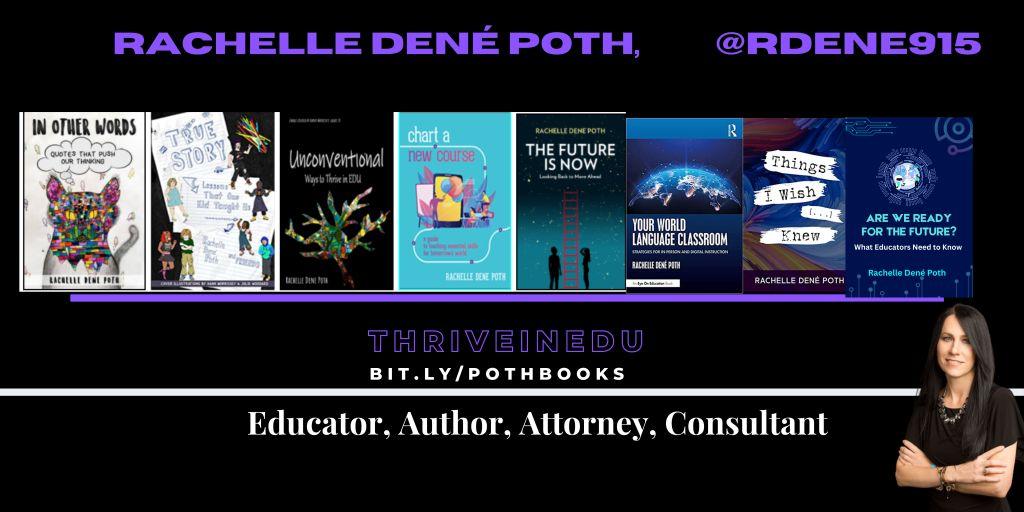
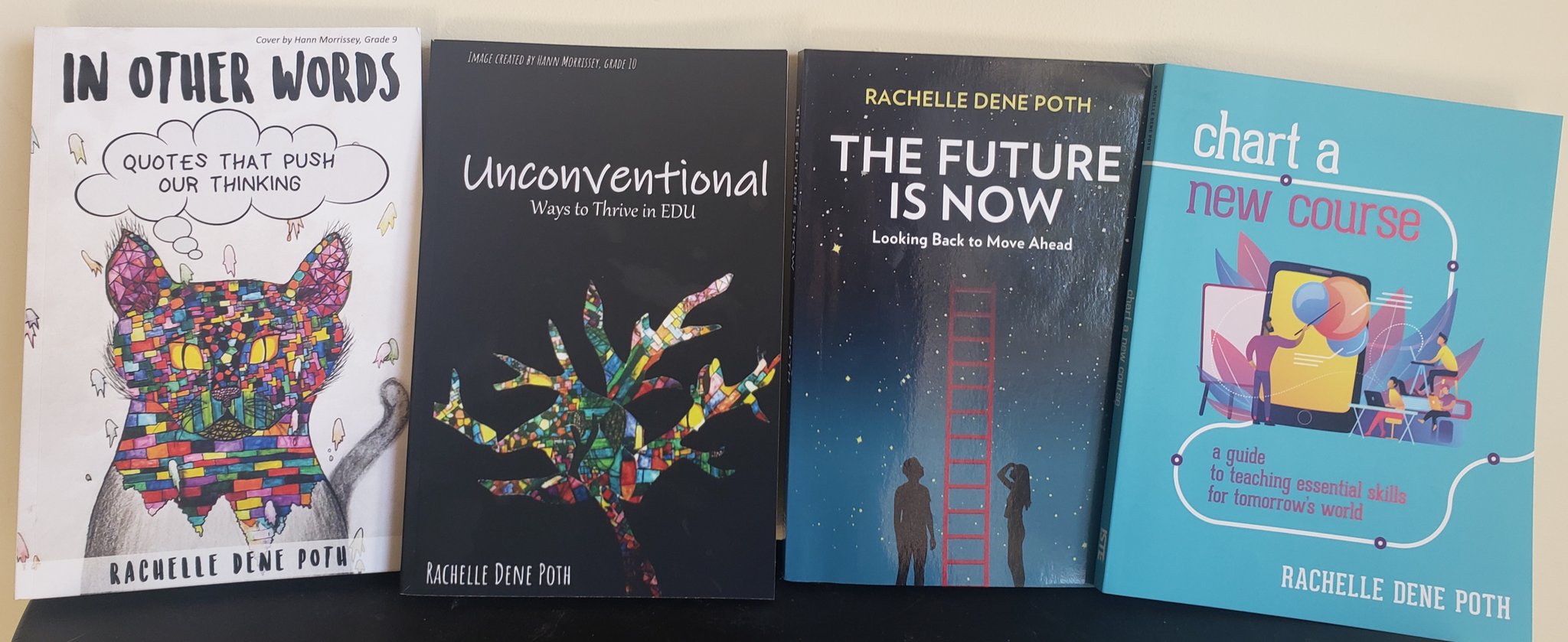
She is the author of ten books, including ‘What The Tech? An Educator’s Guide to AI, AR/VR, the Metaverse and More” and ‘How To Teach AI’. In addition, other books include, “In Other Words: Quotes That Push Our Thinking,” “Unconventional Ways to Thrive in EDU,” “The Future is Now: Looking Back to Move Ahead,” “Chart A New Course: A Guide to Teaching Essential Skills for Tomorrow’s World, “True Story: Lessons That One Kid Taught Us,” “Things I Wish […] Knew” and her newest “How To Teach AI” is available from ISTE or on Amazon.

Contact Rachelle to schedule sessions about Artificial Intelligence, Coding, AR/VR, and more for your school or event! Submit the Contact Form.

Follow Rachelle on Bluesky, Instagram, and X at @Rdene915

**Interested in writing a guest blog for my site? Would love to share your ideas! Submit your post here. Looking for a new book to read? Find these available at bit.ly/Pothbooks

************ Also, check out my THRIVEinEDU Podcast Here!

Join my show on THRIVEinEDU on Facebook. Join the group here.

Effective Professional Development on AI

Over the past few years, we have seen many changes in education. We live in an increasingly digital world that involves rapid technological advancements through emerging technologies such as artificial intelligence (AI). The technologies are not only impacting our lives as educators, but they are impacting the world of work our students will enter.

To best prepare our students, educators must constantly adapt and evolve to keep up with these changes. However, there are challenges when it comes to these technologies: a lack of professional learning opportunities, not enough time to participate, and uncertainty about the best options for learning. Bringing in new technology can also feel like adding to an already overflowing plate.

Beyond the basic technology skills that educators need for every day teaching, they also need to be knowledgeable about emerging technologies, particularly AI, and how to bring them into their classrooms. With these technologies impacting our work, especially with the capabilities of AI to generate content and concerns about the impact of this technology on our work, it is essential that educators receive training. Over the past five years, my work has focused on collaborating with teachers to get them started with emerging technology including, more recently, AI. Here are some things that work when designing AI-related professional learning.

AI professional development for educators

Professional development focused on implementing classroom technology goes beyond simply training educators to use it and apply it to their curriculum. It requires rich and personalized learning experiences that will engage educators and enable them to see the possibilities for amplifying learning through educational technology.

Continue reading the original post via Edutopia

About the Author:

Dr. Rachelle Dené Poth is a Spanish and STEAM: What’s Next in Emerging Technology Teacher at Riverview High School in Oakmont, PA. Rachelle is also an attorney with a Juris Doctor degree from Duquesne University School of Law and a Master’s in Instructional Technology. Rachelle received her Doctorate in Instructional Technology, and her research focus was on AI and Professional Development. In addition to teaching, she is a full-time consultant and works with companies and organizations to provide PD, speaking, and consulting services. Contact Rachelle for your event!

Rachelle is an ISTE-certified educator and community leader who served as president of the ISTE Teacher Education Network. By EdTech Digest, she was named the EdTech Trendsetter of 2024, one of 30 K-12 IT Influencers to follow in 2021, and one of 150 Women Global EdTech Thought Leaders in 2022.

She is the author of nine books including ‘In Other Words: Quotes That Push Our Thinking,” “Unconventional Ways to Thrive in EDU,” “The Future is Now: Looking Back to Move Ahead,” “Chart A New Course: A Guide to Teaching Essential Skills for Tomorrow’s World, “True Story: Lessons That One Kid Taught Us,” “Things I Wish […] Knew” and her newest “How To Teach AI” is available from ISTE or on Amazon.

Contact Rachelle to schedule sessions about Artificial Intelligence, Coding, AR/VR, and more for your school or your event! Submit the Contact Form.

Follow Rachelle on Twitter(X) and Instagram at @Rdene915

**Interested in writing a guest blog for my site? Would love to share your ideas! Submit your post here. Looking for a new book to read? Find these available at bit.ly/Pothbooks

************ Also check out my THRIVEinEDU Podcast Here!

Join my show on THRIVEinEDU on Facebook. Join the group here.

A Huge Opportunity for Adult Education: Preparing and Navigating an AI-Driven Future

Guest post by @MattRhoads1990 Matthew Rhoads, Ed.D.

As generative AI continues to evolve and reshape the way we work, the need for a workforce that can thrive in this new landscape is becoming increasingly apparent. How can we ensure that adult white-collar workers are equipped with the necessary digital, data, and AI literacy skills to meet the needs of businesses and communities? One promising solution lies in adult school CTE programs that focus on reskilling and upskilling adults for the AI-driven future. With an emphasis on lifelong learning and adaptability, these programs can serve as a catalyst for expanding adult education and bridging the skills gap.

The New Landscape of Adult Ed

As we navigate a world of AI, adult education has an opportunity to provide non-credit and credential programs that prioritize digital, data, and AI literacy. These programs can be in various forms, from short-term, intensive courses to flexible online, blended, and in-person learning options. What does this mean for adult learners? With an array of choices at their fingertips, they can now customize their learning experience to align with their needs, interests, and professional goals to meet the ever-evolving world, which will require consistent retooling and upskilling.

Let’s jump into one example of this that is happening now. The Los Angeles Valley College offers a “Data Science Bootcamp,” an intensive, hands-on program designed to equip adult learners with the skills needed to analyze, visualize, and interpret data in today’s data-driven world. Programs like this demonstrate the immense potential of adult education in preparing workers for the future.

Tailoring Programs to Local Communities

To maximize their impact, adult CTE programs must be tailored to the unique needs of local industries and communities. By understanding the specific demands of their region, adult education providers can design relevant and effective programs that truly resonate with learners.

Take, for instance, the partnership between the San Francisco Adult School and local tech companies. By collaborating with these businesses, the adult school has been able to create a curriculum that addresses the specific skills needed for employment in the thriving local tech industry. This close collaboration ensures that students gain the most relevant skills for their local job market while businesses benefit from a more skilled and prepared workforce.

Emphasizing Lifelong Learning in Adult Education

As the world of AI and technology continues to evolve at breakneck speed, becoming a lifelong learner is no longer a luxury – it’s a necessity. Adult CTE programs must prioritize fostering a growth mindset and a commitment to continuous learning among their students.

One way to achieve this is by creating learning environments that encourage curiosity, resilience, and adaptability. For example, an adult education program might incorporate real-world projects, mentorship, and peer collaboration into its curriculum, allowing students to learn from one another and apply their newly acquired skills in practical contexts.

Section 4: The Role of Adult Education in Bridging the Skills Gap

By reskilling and upskilling adults in digital, data, and AI literacy, adult CTE programs can play a critical role in bridging the skills gap in the workforce. The economic and social benefits of expanding adult education in this area are immense, but realizing this potential requires collaboration between adult education providers, businesses, and governments.

Take, for instance, the initiative launched by the state of California to invest in adult education programs aimed at equipping workers with the skills needed for in-demand jobs in the tech sector. This investment demonstrates the importance of collective efforts to support and invest in adult education as a key solution for the challenges ahead.

Conclusion: Navigating an AI-Driven Culture

As we navigate the AI-driven future, the importance of adult education cannot be overstated. Adult education providers have a unique opportunity to redefine and expand their role in this new landscape. By embracing this challenge, they can help to ensure that our workforce is prepared to thrive in the world of AI.

References

To brainstorm and develop various drafts of the blog, the following prompt was utilized on GPT-4 by Open AI. The AI Generative Response was edited and revised: I am an education innovator in adult education. I am writing a blog post on generative AI and how we will have to re-train the adult white collared workforce to meet the needs of our businesses and communities in the world of AI. The premise of the blog is that adult school CTE programs can offer a wide range of programs that integrate digital, data, and AI literacy to reskill adults in our communities to work in these new work environments. Additionally, we will need to have an emphasis on our programs to teach our students to be lifelong learners where they will have to reinvent themselves often to navigate the world we live in. Focus on how non-credit and credential programs we can offer locally can help solve this program for our local communities. Outline in-depth how this is a huge opportunity to expand adult education – keep this as the central theme.


About Rachelle:

Dr. Rachelle Dené Poth is a Spanish and STEAM: What’s Next in Emerging Technology Teacher at Riverview High School in Oakmont, PA. Rachelle is also an attorney with a Juris Doctor degree from Duquesne University School of Law and a Master’s in Instructional Technology. Rachelle received her Doctorate in Instructional Technology, and her research focus was on AI and Professional Development. In addition to teaching, she is a full-time consultant and works with companies and organizations to provide PD, speaking, and consulting services. Contact Rachelle for your event!

She is the author of nine books, and her newest, “How To Teach AI,” is available from ISTE or on Amazon.

Contact Rachelle to schedule sessions about Artificial Intelligence, Coding, AR/VR, and more for your school or your event! Submit the Contact Form.

Follow Rachelle on Twitter(X) and Instagram at @Rdene915

**Interested in writing a guest blog for my site? Would love to share your ideas! Submit your post here. Looking for a new book to read? Find these available at bit.ly/Pothbooks

************ Also check out my THRIVEinEDU Podcast Here!

Join my show on THRIVEinEDU on Facebook. Join the group here

Guest Post: Culturally Responsive Teaching

Guest post by Chris Orlando @Dr_ChrisOrlando

When COVID-19 struck in the spring, it forced an unprecedented portion of our country’s schools to suspend brick-and-mortar instruction. Teachers were thrown into distance teaching—referred to by many as “crisis teaching”— with little preparation. It was like trying to build a plane while flying it.

The crisis has exposed societal inequities impacting our students’ daily lives including food deficits, inadequate health care—including mental health care, issues with housing stability, and insufficient access to the internet.

This fall, to ensure that I’m meeting the needs of my marginalized students even as I shift to a new learning environment, I plan on creating a culturally responsive digital classroom, one that can provide a space where students feel welcomed and valued. Culturally responsive instruction centers on building the learning capacity of all students. According to Zaretta Hammond, author of Culturally Responsive Teaching and the Brain, “There is a focus on leveraging the affective and the cognitive scaffolding that students bring with them.”

Here are three ways in which I plan to implement culturally responsive teaching this year:

Building Relationships

The single greatest investment teachers can make is to build relationships with their students. Relationships boost motivation, create safe spaces for learning, build new pathways for learning, and improve student behavior. The question, of course, is how can I build relationships with students who I might never see in person?

First, I plan to master the soft start to class in order to ease students into our learning environment each day. Though often thought of as an elementary school strategy, my middle schoolers respond well to soft starts. It allows time for students to transition and to re-engage their mental muscles with a short game, puzzle, brainteaser, reading, or interesting “Would You Rather” question. Be cognizant that typical icebreakers like, “What I did this summer” may leave children with nothing positive to share and create a social hierarchy of who had the most impressive summer break. Instead, pose questions like, “Imagine your best day ever. What would happen?” or “If you could change one thing about the world, what would it be?” Taking even ten minutes to check-in with students at the beginning of class each day is vital because high-trust, low-stress environments can help marginalized students effectively process and retain learned information. Additionally, I plan to do the following to build relationships and increase connectedness virtually:

  • Learn my students’ names promptly and use them as much as possible. As a teacher who often mispronounces my students’ names, I’ll assign students to create a short video in which they pronounce their name so that I can reference it.
  • Ask for student feedback regularly through an ungraded video or Google Form known as “Friday Feedback”
  • Host informal office hours that will encourage one-on-one communication
  • Collect and share virtual notes of gratitude and appreciation

Be a Personal Trainer of Students’ Cognitive Development

As a teacher who is preparing for Round 2 of distance teaching this fall, much of the success or failure of this upcoming school year will depend on my students’ ability to work independently. In order to foster this independence, I will be providing students who are dependent learners with cognitive routines and tools that will help them organize their thinking and process content. Consistently using a regular set of prompts in all assignments helps students internalize cognitive routines so that they can use them when I’m not around. After all, isn’t the goal of education to help students become lifelong learners who can marshal their critical thinking skills long after they’ve left the classroom? Internalizing cognitive routines will help expand the learning capacity of students who have been historically marginalized and work to dismantle dominant narratives about students of color.

Make It a Game, Make It Social, Make It a Story

Each day students walk into our classrooms (or this year, log in to our classrooms) armed with their own learning tools, but too often teachers fail to use them to maximize student learning. Students’ culture can inform us whether they learn best on their own or by collaborating with others. In a distance learning context, students are often given packets and assigned independent projects, which serve independent learners, but are a detriment to communal learners. For example, diverse students who come from oral traditions, might benefit from activities that require social interaction, physical manipulation of content, or narrative. In other words: make it a game, make it social, or make it a story. Utilizing breakout features in Zoom and apps like Jamboard, Flipgrid, and Socrative can help engage communal learners. However, it’s important to remember that culturally responsive teaching isn’t simply a set of strategies. It’s consistently mirroring students’ cultural learning styles and tools.

My job is to be responsive to students’ individual and collective lived experiences, and in particular this year, their experiences with the COVID-19 pandemic. That will require me to integrate my students’ cultural learning tools into my pedagogy and be a warm demander of their cognitive development. But above all, this year will be about relationships. Creating a learning partnership that encourages my students to take ownership of their learning has always been important, but this year it will be paramount to address gaps in learning outcomes between diverse students and their white counterparts. Through robust reflection of my own pedagogy and the adoption of culturally responsive teaching practices, I plan to make learning exciting and joyful for my students so that they’ll be motivated to take ownership of their own learning. Students will be seen. They’ll be heard. They’ll be loved. And we’ll make it through this school year together.

Gonzalez, J. (2017, September 10). Culturally Responsive Teaching: 4 Misconceptions. Cult of Pedagogy. https://www.cultofpedagogy.com/culturally-responsive-misconceptions/

**Interested in writing a guest blog for my site? Would love to share your ideas! Submit your post here.

Looking for a new book to read? Many stories from educators, two student chapters, and a student-designed cover for In Other Words.

Find these available at bit.ly/Pothbooks  

If it ain’t broke, then break it


Guest post by Cory Radisch, Follow Cory on Twitter @cradisch_wc

Wait, that’s not how the saying goes! However, even though data still demonstrates consistent opportunity and achievement gaps in schools, there are many who think things are not broken. It doesn’t matter that the data tells a different story. In many places, if adults are satisfied and comfortable, many believe the system “ain’t broke”! My longtime mentor, Marc Natanagara, used the title of this blogpost with former staff, not only to inspire them to challenge the status quo, but also to let them know it’s perfectly acceptable to break the system! It was appropriate long ago and it’s even more appropriate today. If we are going to truly transform education, then we just may need to break it. 

  • We need to break the system that marginalizes students!
  • We need to break the system that perpetuates learning and opportunity gaps!
  • We need to break the system that disproportionately disciplines students of color!
  • We need to break the system that disproportionately has fewer students of color in AP and advanced classes!
  • We need to break the system where your zip code usually determines what level of education you receive!
  • We need to break the system that fails to recruit and retain teachers of color!   
  • We need to break the system that teaches a unilateral perspective of history!


Breaking the system is not blowing up the system. Breaking the system is about addressing and interrupting implicit and explicit bias in our policies, curricula, and procedures. It will undoubtedly cause discomfort. Then again, when has breaking something not created discomfort? We can either be comfortable or we can grow, but we can’t do both!  I would love to know what you will break in order to ensure equity in your district, school, or classroom.

This post is dedicated to my longtime mentor and friend, educator Marc Natanagara, who recently retired after 33 years of breaking things that weren’t broken!


**Interested in writing a guest blog for my site? Would love to share your ideas! Submit your post here.


Looking for a new book to read? Many stories from educators, two student chapters, and a student-designed cover for In Other Words.

Find these available at bit.ly/Pothbooks  

The Importance of Being a Mentor & Having a Mentor

Mentoring is a very important part of what we “engage” in as educators. Whether we serve as a mentor to a colleague or a student, or perhaps we seek out a mentor to help us with challenges or simply to have a system of support in our personal and professional lives, it has a tremendous impact. Whether or not we even realize it at times, we are all serving as a mentor to someone.

Recently a colleague stopped in to talk and confided in me that they were experiencing challenges with classroom management, student behaviors such as disrespect and keeping up with the responsibilities of teaching in general. Without a doubt, teaching can be tough sometimes. I’ve been in that same position more than once during my teaching career.

Having taught for the last 25 years, I’ve had a lot of experiences, some good, some bad, and some in between. At times in a position where I needed to improve, fearing I would possibly lose my job, and felt like no matter what I tried, that I just would not succeed. There were days that I left school feeling helpless and alone. I was embarrassed to confide in anyone that I was struggling. There were people who impacted my life, not because they were assigned as my mentors, but because they just took the time to listen, care, and support me to keep pushing through. Because of their impact on my life, I learned the importance of relationships, of being available to listen and to support, but also to give pushback and critical feedback when needed.

The Roles of Mentors

Mentors have a pivotal role to play in education. Whether you are enrolled in a pre-service teacher program, working as an intern in a school, new to teaching or to a new school, you often have a mentor to help guide you through any transitions along the way. Most of the time the “mentorship” is formed between a more veteran teacher and a newer teacher, to help to lessen any feelings of being overwhelmed when starting the teaching journey. Mentors can help newer teachers find their place in the school, establish their classroom presence and get into daily teaching practice. While I believe that mentoring for new teachers is critical, I think that an area that is often overlooked is that veteran teachers need mentors as well. For many years I thought that teachers were only assigned mentors as part of a school induction program, part of an improvement plan, or simply because it was part of the pre-service or teacher preparation program.

Teaching can become an isolating profession if we let it. Isolating in the sense that we don’t have enough time to connect with colleagues. We have many tasks to keep up with, but the most important part of our work is making time for our students. We must be available and invest our time to help them to succeed. Whether specified or not, everyone is a mentor and I believe that sometimes we don’t even realize it.

We mentor students. We don’t know everything that they might be experiencing when they leave our classroom. Students need a constant in their life, a relationship based on trust and support that they know is there when they need it. Our colleagues need to establish these same relationships as well. But how do we find time to seek out a mentor or to act as a mentor to someone else? For these mentorships, the relationships are critical for our personal and professional growth. We need to be intentional in serving as mentors for those we lead and lead with. Finding mentors for ourselves will help us continue to learn, grow and improve our practice each day.

Mentorships Today

Mentorships typically involve a mentor and mentee, with clearly defined roles. A mentorship is defined as a “wise and trusted counselor or teacher.”  However, I think the definition has evolved and within mentorships today, an individual can be both a mentor and a mentee. New teachers paired with more veteran teachers both bring unique skills, experiences, and knowledge to their mentorship. They each have something to teach and a lot to learn, which is why finding time to be part of a mentorship is critical for professional growth.

Colleagues within the same school can serve as mentors to one another, or even connect with a colleague from a neighboring school. However, finding the time to sit down in the same space or have a quick conversation can be a challenge on most school days. The lack of time is one of the most common problems facing educators. When we think about all of the tasks that we do in a given day whether, in school or home, there can be little time left for mentoring. But there are many options that can solve this problem of lack of time and assist you in pairing up with a colleague or creating small groups of educators to serve as mentors to one another.

And finding a mentor does not require, at least in my opinion, that pairing of a new teacher with a veteran teacher. Everyone has something to offer and as a teacher of 25 years compared to a teacher early in their career, there is a lot of knowledge and skills that can be shared between us. But how can we find time to connect? When used with purpose, technology can make a difference. The purpose being professional growth, avoiding isolation or having somewhere to turn when feeling frustrated or in need of support.

How to Connect

  1. Social Media – Social media platforms such as Facebook and Twitter, enable educators to connect and share stories, ask questions, and to interact whenever is convenient. These platforms offer educators a space to learn about issues educators are facing and brainstorm ideas for making changes in their practice, or engage in conversations and foster some connections on their own. There are even focused communities available on Facebook to connect based on the content area, grade level or even topic.
  2. Book studies and Voxer groups – There are many book studies happening, many of which are announced on Twitter or Facebook, and focused on books related to education or specific trends in education. Personally, I have made some great connections with educators from around the world, simply by joining in a Voxer book study and building relationships in a supportive environment. The book study of “Four O’Clock Faculty” by Rich Czyz led to a #4OCFPLN, which has become a large part of my professional growth and reflective practice every day.
  3. ISTE: The International Society for Technology in Education is a worldwide Network that includes more than 20 Professional Learning Networks (PLNs). By getting involved in these networks, you have access to thousands of educators and can engage in conversations, post questions, and make your own connections that will help you to keep building your practice.
  4. School committees- Schools can offer different activities for teachers to engage in whether it be a health and wellness committee or a leadership council which gives teachers an opportunity to talk, share ideas, or bring school concerns to light. By bringing teachers together in a meeting like this, it is an intentional way to create time for teachers to collaborate and form those valuable relationships.
  5. Clubs –  Another option for establishing mentorships in your school that can be beneficial for teachers and students, is to create a club which has mentoring, building leadership skills and student confidence as its purpose. One possibility is creating a Ted-ED Club. where students get to know their peers, explore passions, build confidence and become mentors for their peers. All schools need to have mentoring in place for students and give students the opportunity to serve as mentors for their peers.

We all need mentors whether in our first or thirtieth year of teaching. At times it might be someone assigned to us, a friend or a member of our PLN. Sometimes we don’t even realize that we are in a “mentorship,” we are just supporting one another on our teaching journeys. Veteran teachers need to seek out mentors as well, and that might mean connecting with a teacher who is new to your building or to the profession. How can we expect our students to interact and understand different perspectives, and to be accepting if we ourselves do not do the same thing and go beyond that? It starts with us. It always starts with us to take that first step.


**Interested in writing a guest blog for my Rdene915 site? Would love to share your ideas! Submit your post here.


Looking for a new book to read? Many stories from educators, two student chapters, and a student-designed cover for In Other Words.

Find these available at bit.ly/Pothbooks  

Unconscious Bias

Guest post by Sari Goldberg McKeown @sgteach_sari & Jessica Liakonis @MrsLiakonis

Opinions expressed are  those of the guest blogger. 


I embrace education as an opportunity to inspire and empower. As an educator, it is my goal to enhance student learning as a transformative experience. Teaching is a privileged position. It  demands humility as much as respect. It is crucial that as educators, we recognize the power inherent in our role and are self-reflective about our actions. It is critical that we are mindful of our position as a role model and the kind of learning we strive to promote among students. Our students are always watching. They are always learning from us. When the image below was recently posted by Adam Welcome, it forced me to stop in my tracks. This small image has a BIG impact.

“We say we teach all children, but do we teach all stories?  Do we teach the whole truth, and nothing but the truth, or just the sanitized version that will not ruffle any feathers? I can choose to bring others into our classrooms so that their stories are told by them. I can choose to model what it means to question my own assumptions and correct my own wrongs.” As Jessica and I unpacked Pernille Ripp’s post “These Divided Times,” with our Voxer group #StrongTies, Pernille’s words swirled in my head. This conversation brought my own assumptions to the forefront. Do I support all stories? Do I create a space that encourages the whole truth? What do I model? -Sari


𝕊𝕒𝕣𝕚 𝔾𝕠𝕝𝕕𝕓𝕖𝕣𝕘 𝕄𝕔𝕂𝕖𝕠𝕨𝕟@sgteach_sari

How do you flatten the walls in your classroom? @pernilleripp @kemnitzer3 @JamiePandolf @AKennedy61 @MrsLiakonis @lopescommack @ChrisKauter @MrECuff

View image on Twitter

Who’s different? What’s fair? As a society, discussions about bias, discrimination, culture, and social justice tend to happen more in middle and high schools. Educators sometimes believe that younger children may not understand these complex topics, or maybe they just want to delay exposing them to injustices as long as possible. However, young children have such a passion for fairness. They want to do the right thing; they want to be fair. The best though is that they notice differences without apology or discomfort. Why does your hair feel different than mine? What is that in your lunchbox? How come you have two mommies?

As Sari mentioned, while we unpacked Pernille’s post, I thought to myself, bias can be unlearned or reversed if children are exposed to everyone’s differences in a positive way. The burning question, how do we do that?  -Jessica

Searching Inward

I quickly realized I had a lot to learn. I am so grateful for the time that Pernille spent with us that week digging deep into this meaningful work. As Pernille shares in this message (that I highly encourage you to listen to), this is messy, exhausting work that is so incredibly important. Before we can do the work with our students, we need to do the work with ourselves. I needed to search inward and identify my own personal bias. Bias. What does that mean? I used to believe that word had a very negative connotation. This learning journey has shifted my perspective.

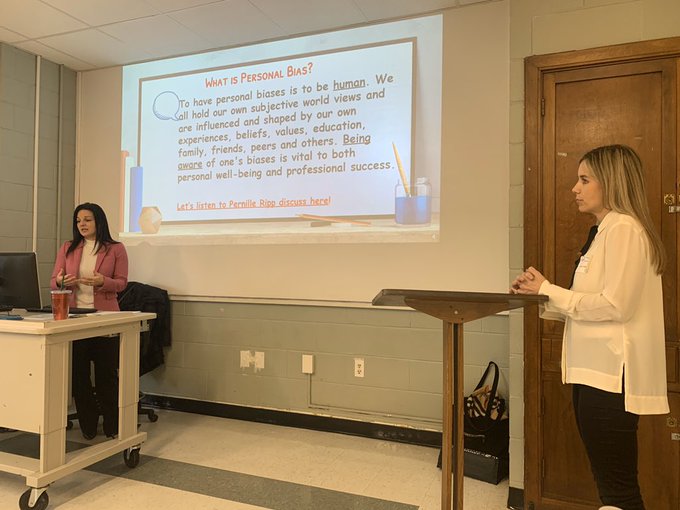
To have personal biases is to be human. We all hold our own subjective world views and are influenced and shaped by our own experiences, beliefs, values, education, family, friends, peers and others. Being aware of one’s biases is vital to both personal well-being and professional success.

Our lens is created through our experiences. These experiences create our bias. That does not make our lens wrong…it just makes it personal. Believing that our lens is the only lens or the correct lens, is wrong. – Sari

The Power of a Story

Yes, Sari! We must identify our own bias first, and it’s not always easy. Once we can understand and recognize this, we can begin to teach students how to acknowledge their own. The early years are the time to begin helping children form strong, positive self-images and grow up to respect and get along with people who are different from themselves. So, how can we start beating bias? With books!

Jessica Liakonis@MrsLiakonis

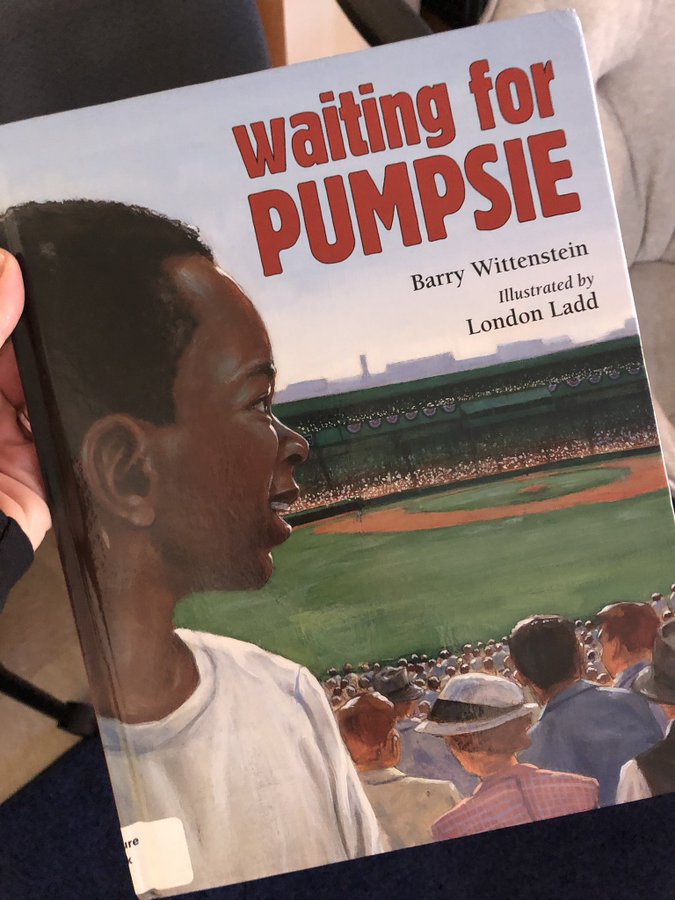
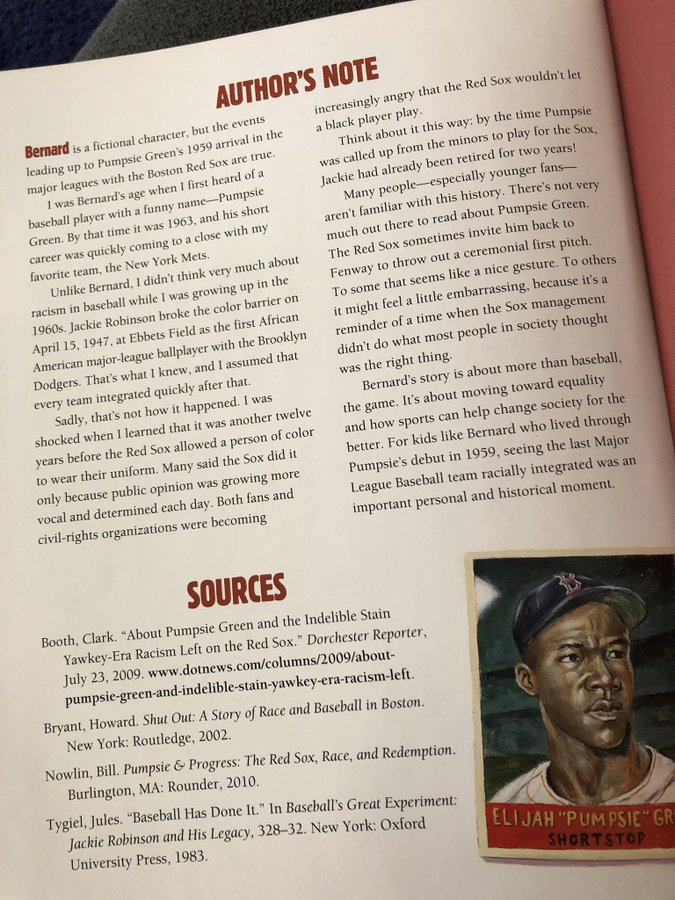
Day 46 Another great story by @bwittbooks & @LondonLLadd set in 1959 about Bernard’s wish for the Red Sox to finally integrate their baseball team! @JLVacchio @miss_anderer @WilletsRoadMS Ss loved learning from the back matter! @EastWillistonSD

View image on TwitterView image on Twitter

Jessica Liakonis@MrsLiakonis

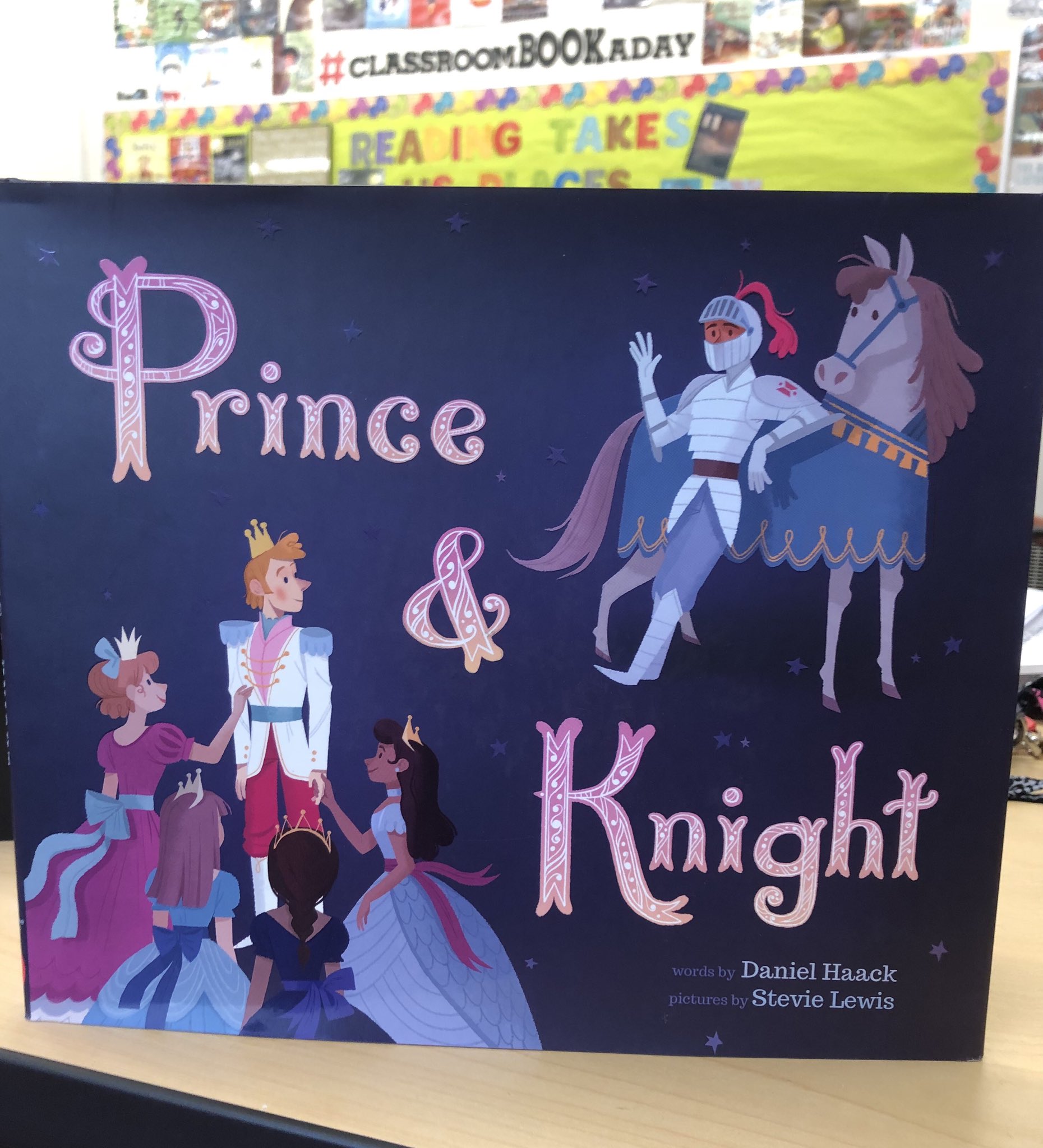
Day 160 An important topic told in a fairy tale. Student discussion was powerful. Thank you @DanielHaack @EastWillistonSD @WilletsRoadMS @kemnitzer3 @sgteach_sari @JamiePandolf @AKennedy61 @dmgately @pernilleripp

View image on Twitter

Children’s books continue to be an invaluable source of information and values. These books can begin extremely positive and powerful discussions in your classroom, if we allow them to. We must allow them to. The experience of listening to others read aloud or reading picture books with an anti bias message provides an opportunity for young children to see and identify with characters often different from themselves. They can also experience a wide range of social dilemmas and points of view. These stories teach students how to look at events from a variety of perspectives, in other words, feel what it is like to “be in another person’s shoes.” Jessica

Jessica Liakonis@MrsLiakonis

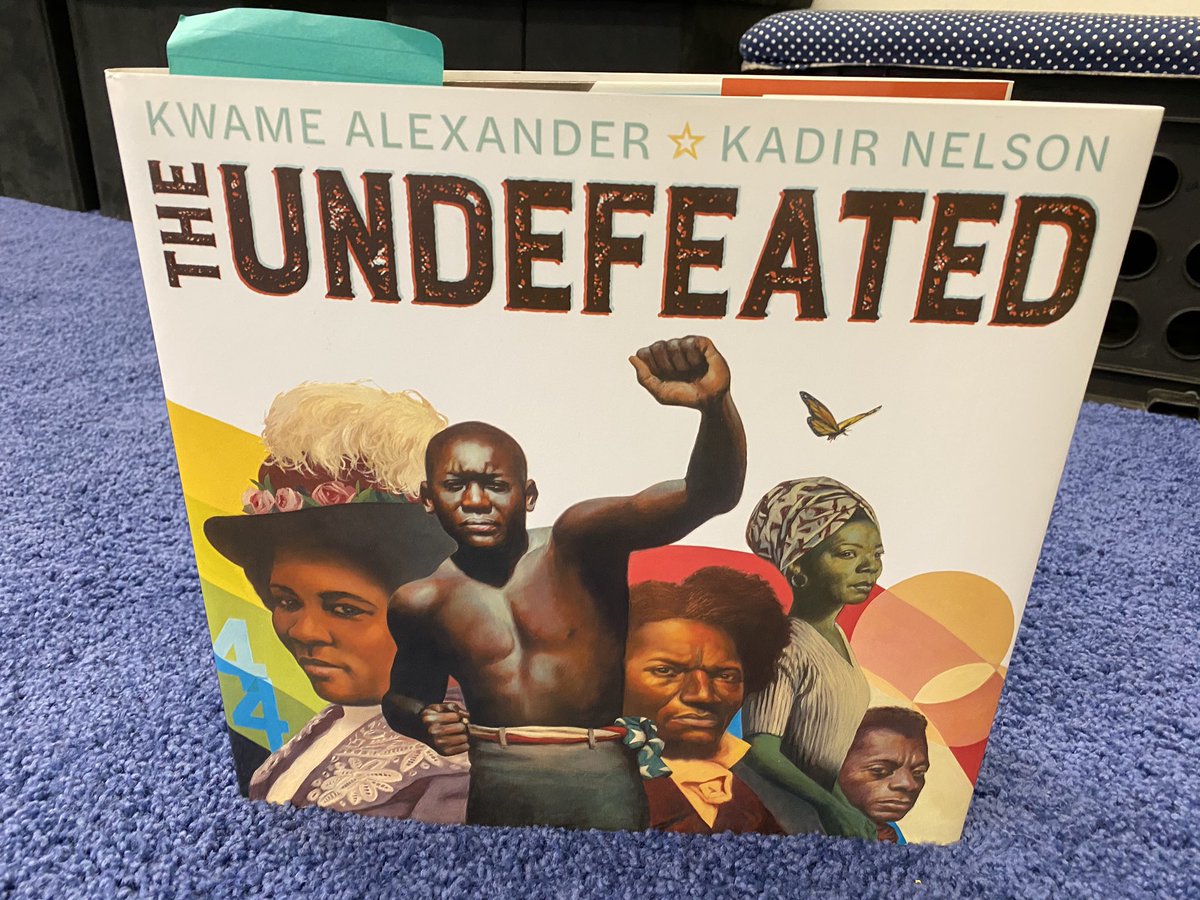
Day 70 The Undefeated by @kwamealexander is an ode to black Americans through history: the dreamers and the doers who have made a difference despite the many injustices endured and challenges faced. @JLVacchio @miss_anderer

View image on Twitter

Continuing the Conversation

Pernille ignited a flame within me. Jessica and I gravitated towards one another. We shared a strong desire to seek more answers. This marked the beginning of our journey. We continued to dig deep in an effort to understand our own personal bias. We explored books, podcasts, TED Talks, hashtags, blogs, and workshops that have stretched our thinking. Please click here to find the list of resources that have opened our eyes. This document also includes many of the incredible read alouds Jessica has utilized as a catalyst for these important conversations with students. (Please also reach out to us with recommendations to help support our journey!) We developed a workshop, Unconscious Bias. To date we have facilitated sessions at EdCampLI and The New York State Middle School Association Regional Conference. We designed this workshop not as experts, but as learners. Our intention is to create a space to continue the conversation and learn with others. – Sari

I read picture books to my students on a daily basis as part of #ClassroomBookADay. Recently, I decided to look back on some of the picture books I have read to my students and connect them with our current Civil Rights unit, as well as current events. Having the students explore the literature and discuss hard topics was just what we needed in order to reflect back on our biases. 

Through meaningful activities that promote critical thinking and problem solving, based on carefully selected books, our students can begin to build the empathy and confidence needed for becoming caring and knowledgeable people who stand up for themselves and others in the face of discriminatory behavior. Let’s continue to teach them the beauty of others.  -Jessica

Ed Kemnitzer@kemnitzer3

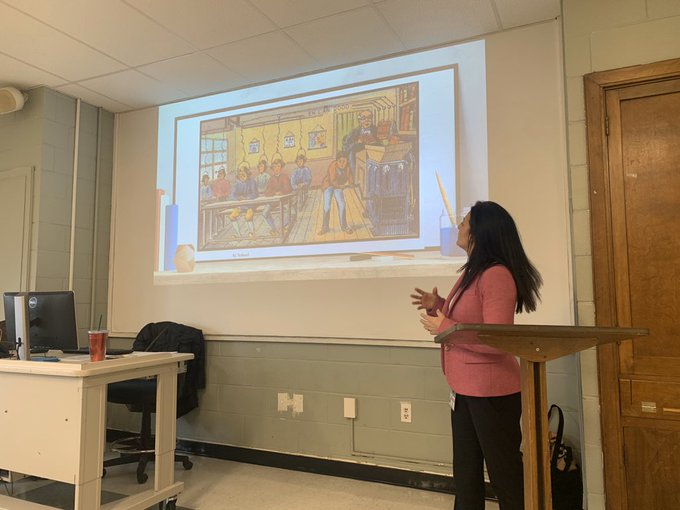
This presentation is just amazing! Great conversation on bias, putting all stories on bookshelves, and engaging all voices. Using gentle stories to talk about heavy topics. Shout outs to @pernilleripp and @dmammolito. Great work, @MrsLiakonis and @sgteach_sari.

View image on TwitterView image on TwitterView image on TwitterView image on Twitter

____________________ Thank you Sari for the Guest Post _____________________


**Interested in writing a guest blog for my site? Would love to share your ideas! Submit your post here.


Looking for a new book to read? Many stories from educators, two student chapters, and a student-designed cover for In Other Words.

Find these available at bit.ly/Pothbooks  


Keeping What Matters Most


Our son, Nick, sees an occupational therapist each week who does amazing work with him to help strengthen his core, quicken his response time to questions, practice his social interactions, and work on his fine motor skills. The best part is that she does all of that while he rides a horse around an arena. The horse provides sensory input and forces him to focus his core on maintaining balance, which allows his brain more freedom to work. As Nick rides, he plays Pictionary with a whiteboard, sprays water guns at targets, moves cones from side to side, identifies letters, and has conversations with the therapist and the other assistants as they walk next to the horse to make sure he stays safe while riding around. At the end of each session, he takes responsibility to prepare a bowl and feed the horse a snack to thank him.

His skills have grown tremendously since we started this therapy. We have missed going while we have been home, so we were so relieved that he was able to return last week. They had all kinds of new safety rules that we had to follow. His therapist met us in the parking lot; he had his temperature taken and had to thoroughly wash his hands as soon as we walked in. We all wore masks. We stayed distanced from one another as best as possible. They shifted the options for therapy so there were fewer clients in the facility at one time. We didn’t do some of the classroom-based exercises before he got on the horse, and he couldn’t prepare the bowl of snacks on his own. The most significant shift was that I was suddenly the volunteer walking alongside the horse. It helped to limit the number of people in the arena, but also allowed me a new opportunity to understand more about what he is working on in therapy and how he responds to the staff and the horse. I am not convinced that I am the best guide as it was much harder to hold the materials, keep an eye on his safety, and not get distracted by the beauty of the horse than I thought it would be, but we made it work.

I didn’t realize how much I needed to do something that felt “normal” to our routine until I walked through the doors of the arena. It was so comforting to do something that we used to do even though the process of doing it was different. Nick was excited to see the therapist, and I had the chance to help him share a little more about himself as we did the exercises and walked around the arena that she wouldn’t have otherwise known even though she has a great relationship with him.

As we start planning for school to look different in the fall, the first week of therapy had me feeling hopeful about what we can maintain when the process and school system may look really new for a while. A big question for me has been how to explain the shifts to staff, learners, and families. I read a great article by the Harvard Business Review that helped me to start thinking about communicating what’s to come.

The first point in the article is to acknowledge your own anxiety. I am nervous, very nervous about how we will make the process of school work in the fall while following the safety guidelines and still meet the needs of our families that need childcare. I am nervous about the gaps in learning or experience that may be happening for our learners. I’m nervous that they will miss out when we can’t give the reassuring hugs and high-fives we are used to. What I am not nervous about is our ability to maintain our relationships with our learners and grow them in new ways. We’ve bonded during this time at home, which has deepened many of our relationships with learners and families. Those get to continue and get to keep growing no matter how we provide schooling.

Nick’s relationship with his occupational therapist was not different. His ability to complete the tasks and work on his skills was not different. We just did it differently. He was super quiet in the arena, which honestly surprised me and helped me to learn more about him in that setting. He still talked the whole way home about his horse and the experience just as he usually does. I know I will be anxious as we drive there and as we walk in again this week, but I am hoping that goes away with time.

“Listen for the need underneath the question” is something I have practiced a lot recently. When a parent, staff member, or school leader gets frustrated, it sometimes takes asking many additional questions to get at the root of the concern or the reason behind the issue, which is almost always a genuine fear about something. To help build our skills in understanding one another and ourselves, we are working on summer professional development options for our staff that include having critical conversations about challenges, trauma training, mindfulness, and compassion resiliency. We all need to be able to see one another through an empathetic lens more than ever and give each other grace. Our stress as a collective society is high, and our composure tends to fail us when we are stressed. We need to prepare as best as possible for strategies to reduce stress in our schools, for and with our staff, as well as learn how to have more open communication about what is happening so we can acknowledge our fears and build hope whenever we can.

We have seen some absolutely inspiring efforts by our staff and learners that we continue to try and capture and share. It is hard to always stay focused on those positives, but they are also ways to find strength as we move into our next steps. I have seen teachers doing evening bake-offs with learners online, daily video announcements to celebrate birthdays and accomplishments, safely going to homes to drop off supplies or check-in, creating videos with shared books, songs, and poems, writing personal notes, sending “flat teachers” to each learner, and many, many more. We have worked to support our community and help our learners find their passions during this crazy time. I get to ask our leaders and staff about those moments to help them see all the positives and make sure we recognize the impact of those remarkable connections. The Harvard article said, “Asking, “What’s one of the worst things you’ve ever overcome or endured?” helps people tap into sources of hope and fortitude from their own stories.” Our stories of what our staff has done with learners and families during this time, as well as what our families have done on their own, are perfect sources of hope and fortitude to carry us forward through our next challenge.

As I start to find my way back to social events and daily activities, I think a lot about one of my favorite quotes from Maya Angelou, “I can be changed by what happens to me. But I refuse to be reduced by it.” I certainly feel changed by much of what has happened and what I know is coming. Some days it really gets to me, but it has not reduced my desire to do the work we get to do each day with learners and families as I know how much it matters no matter the setting or the format in which we do it.


**Interested in writing a guest blog for my site? Would love to share your ideas! Submit your post here.


Looking for a new book to read? Many stories from educators, two student chapters, and a student-designed cover for In Other Words.

Find these available at bit.ly/Pothbooks  


Distance Learning, the Good, the Bad, and the Ugly!

Serenity, Courage, Wisdom

Guest post by Charles Williams (@_cwconsulting)

I do not profess to be a religious man. A man of faith, yes? But not a man of religion. I could dive into my reasons but that is not the purpose of this reflection nor do I believe this is the proper space to have that discussion. Maybe another time in another place.

There are, however, three words that have consistently presented themselves to me during this pandemic. Three words taken from The Serenity Prayer written by the American theologian, Niebuhr (nee-bur), around 1932. Despite various renditions curated by various groups for their unique purposes, all centralize on three concepts.

Serenity. Courage. Wisdom.

I recently took my daughter to pick up her high school graduation items. It was a surreal experience as we drove along a nearly empty roadway through the school’s campus to various stations returning books and collecting items. Aside from the handful of teachers at each station, there were no crowds, there was no cheering, there was no … celebration. And, nearly as quickly as it started, it was over. The whole process lasted maybe 5 minutes.

Four years of high school. Four years of studying. Four years assignments and exams. Four years of late nights and early mornings. Four years culminated in five minutes.

As we drove away, my daughter sat in silence. When I asked if she was okay she replied that she never imagined that this is how it would have ended. She had held onto a feeble hope that maybe, somehow, this would all go away and that she would have a real graduation. After all, she had already lost prom and senior banquet.

I drove along contemplating how to best respond. Knowing my initial logical response void of emotion would only make the situation worse, I kept quiet while I attempted to formulate the right words. During that time, those same three words returned.

Serenity. Courage. Wisdom.

With them in mind, I delivered a response. I don’t know if it was the right one. I don’t know if it could have been better. She gave me that smile, you know the one. “Thanks Dad, I know you’re doing your best.”

So I will do my best to share those words with you. I know that there are other seniors out there dealing with the same frustrations, hurt, confusion, and sadness. I know that there are adults experiencing similar emotions for their respective situations. This is for you.

Serenity, the state of being calm, peaceful, and untroubled.

Seek to find peace in your troubles by letting go. I know that this is easier said than done but when you attempt to control the uncontrollable, you will find nothing more than additional stress. Accepting this fact is not easy. I know. As a leader it was one of the toughest lessons that I had to learn.

A story I share is one when I was still in the classroom. I was attempting to teach a lesson to a group of students who were particularly talkative that day. Few were paying attention and I was quickly growing aggravated. At some point, someone decided to stick a small piece of chalk into the automatic pencil sharpener resulting in a persistent drone. I attempted to remove the chalk by tapping the sharpener on the desk. Nothing.

Chatter, chatter, chatter. Buzz, buzz, buzz. Tap, tap, tap.

Nothing. I tried again. Harder this time.

Chatter, Chatter, Chatter. Buzz, Buzz, Buzz. Tap, Tap, Tap.

Nothing. I tried again. Even harder this time.

CHATTER, CHATTER, CHATTER. BUZZ, BUZZ, BUZZ. TAP, TAP, TAP.

Silence.

The students stopped. The buzzing stopped. The tapping stopped. I had smashed the sharpener on the desk.

I was embarrassed and ashamed. I had allowed my emotions to take over. I focused on something over which I had no control. And I failed myself and my students.

I encourage you to reflect on your situation and categorize the various aspects as controllable or not. What you will quickly realize is that a majority of the external factors are uncontrollable. You cannot control what others think or do. You cannot control the passage of time. You cannot control the outcomes of your actions. Your best hope is to influence.

What you can control is how you respond to situations. You can control your thoughts and actions. You can control your beliefs and attitude.

Find peace in focusing on those aspects over which you have control.

Courage, the ability to do something despite the presence of fear.

Fear takes many shapes and forms. It is present in many situations. It has the power to control us. It is imperative, however, that we find the means to not only face our fears but to overcome them.

For so many right now, there is a huge fear of the unknown. We don’t know what to expect in terms of this pandemic. Are things going to get better? Is it safe to begin reopening? Will we be returning to a sense of normalcy?

My daughter has been sitting on a huge decision. Should she attend Purdue or IU. She has been accepted to both. She has wonderful opportunities at both. She has friends that will be attending both. Outside of distance, the two are virtually identical. And yet, she has yet to make a decision. Why? Because she is scared. She has no idea what the future holds. She was accustomed to the fairly predictive nature of high school. This is different.

Stepping into courage is the first step of battling fear.

I sat on my podcast for years. I was scared that nobody would listen. I was scared that I wouldn’t have the knowledge or skill sets. But as I listened to other educators, I slowly grew more confident. I can recall listening to Jennifer Gonzalez from the Cult of Pedagogy and finding episode 130 – Tips for Starting a Podcast. I started getting excited. This sounded very possible. Then I started listening to Tim Cavey’s Teachers on Fire Podcast. I found elements of myself in nearly every guest and started realizing that I too had something to share. Then I connected with Mike Earnshaw from the Punk Rock Classroom. He and his co-host, Josh Buckley, shared their experiences from their unique perspectives as punk rock educators.

That was it. I sat down. I started recording. And now The Counter Narrative Podcast exists. I have no idea where this will go but I challenged my fear by stepping into courage.

Wisdom, the quality of having experience, knowledge, and good judgment.

Both serenity and courage rely on wisdom. You need to be able to identify situations over which you have no control and those in which you need to step into courage.

Wisdom requires experience. Knowledge in the absence of experience is little more than facts.

Unfortunately many students, like my daughter, have not yet had the opportunity to gain the wisdom that comes from making mistakes. Instead, they must rely on family, teachers, faith leaders, or others to guide them in the right direction. Even as adults we do not always have wisdom and must rely on the counsel of others.

It is a humbling experience to admit that you do not know and even more so to ask for assistance. It means that you are vulnerable and thus you should seek out this advice from someone you can trust.

In time, you will gain enough experience to differentiate between those situations in which you need to let go and those in which you need to step forward.

For all of you reading who are experiencing times of difficulty, know this. It is okay not to be okay (thank you Traci for that one). Don’t let anyone tell you otherwise.

What is not okay, however, is to give up. Giving up is not the answer.

Find peace with those things that you cannot control. Find the courage to deal with those things that you can. And find the wisdom so that you may know the difference.

Until next time.

_______________________________________________

**Interested in writing a guest blog for my site? Would love to share your ideas! Submit your post here.


Looking for a new book to read? Many stories from educators, two student chapters, and a student-designed cover for In Other Words.

Find these available at bit.ly/Pothbooks  


TeacherCast Educational Network

Technology Integration - Instructional Coaching - Productivity Secrets for Educators

Leadership Liner Notes: Sean Gaillard

Built on Connection. Tuned for Impact.

Stories by Thomas Oppong on Medium

Dr. Rachelle Dené Poth @Rdene915 Educator, Consultant & Keynote Speaker, Author, Attorney #THRIVEinEDU

Hooked On Innovation

When Innovation slaps you in the face, we slap back.

Teach Better

Dr. Rachelle Dené Poth @Rdene915 Educator, Consultant & Keynote Speaker, Author, Attorney #THRIVEinEDU

BrianKulak.com

Dr. Rachelle Dené Poth @Rdene915 Educator, Consultant & Keynote Speaker, Author, Attorney #THRIVEinEDU

The Principal of Change

Stories of learning and leading

Mandy Froehlich

Dr. Rachelle Dené Poth @Rdene915 Educator, Consultant & Keynote Speaker, Author, Attorney #THRIVEinEDU

Katie Martin

Informed by research, refined by practice

#RocknTheBoat

Rocking today's classrooms, one teacher, student, and class at a time.

User Generated Education

Education as it should be - passion-based.

Learning as I go: Reflections & lessons learned

Dr. Rachelle Dené Poth @Rdene915 Educator, Consultant & Keynote Speaker, Author, Attorney #THRIVEinEDU

Serendipity in Education

Join me, Allyson Apsey, as I stumble upon the fortunes of learning, laughing, and celebrating alongside incredible people.