Connecting with Students at the Start of the School Year

Recently published on DefinedSTEM

The start of each new school year is such an exciting time for educators and students. After the summer break, educators head back into their classrooms and schools, hopefully feeling recharged, excited for the new school year, and ready with a list of new teaching ideas. Planning for the first day and first week back to school are so important, we want to set up our classrooms but also need to focus on the environment and culture we are creating. Of course, there are classroom expectations and class details that we need to share with our students, but we need to do something first. In starting to plan instruction and methods, we first should focus on learning about our students and showing that we are invested in their success. By starting here, we begin to develop our classroom culture and set up a welcoming environment for learning.

Welcoming students in and learning together

At the start of the school year, and every day thereafter, we should be intentional about being present. We need to spend time greeting all students and welcoming them back to school. Beyond the students on our rosters, It is important to acknowledge all students as we see them in the halls and throughout the building.  The power behind creating a positive and supportive climate in the building and in each classroom starts with teachers. When we are visible and show students that we are excited about school, we will start making connections that will help in fostering a positive classroom culture.

It can be challenging to start a daily routine of school after a summer break, or any extended break during the year. We must set a good example by engaging our students in conversations, showing an interest in who they are, encouraging and providing opportunities for peer connections. These intentional strategies to get to know our students will positively impact the learning environment

There are many ways to learn about our students. There are icebreakers and other games that can be used as a way to learn about one another. As educators, this is our opportunity to take time to encourage students to share their thoughts and interests with peers, and also what and how they hope to learn in your class.

Making those connections

There are many tools available to set up methods of communication and collaboration and to help students develop these critical skills for their future. For learning, we have to determine how to make ourselves available to students when they have questions or need additional support or resources. The questions do not stop when the school day ends, or over the weekend break. Without a way to ask questions during these times, students can become frustrated and the potential for learning diminishes. In our increasingly digital world, we have access to so many resources, but we also need to know how to find the right tools. First, I recommend that educators find a tool that enables students to connect, to ask questions, and to access classroom resources. Among the digital options available today, it still can be challenging to select the right one. A few examples are setting up a classroom website, a messaging app or using an LMS.

A classroom website is great for having a centralized location for students to access resources, post questions, review content and more. Websites and using LMS platforms can easily be set up using EdmodoSchoologyGoogle ClassroomWeebly a Google Site, or even Padlet.  Communication is also easier with a messaging tool that enables the sending of reminders, links to resources, or that integrates with other digital tools for learning. A few options are Bloomz (for parent-teacher communication) and Remind. There are several other options available, depending on your needs and the level you teach. I have used Voxer with several of my classes, especially for talking about Project Based Learning and sharing ideas and reflections.  One thing to keep in mind is to find out about the kind of technology and internet access available to the students.

Learning about each student

Even the slightest interactions can provide so much information about a student. It happens through those quick conversations as students enter the room, or by including fun activities in the lesson, and creating a supportive, welcoming environment where students feel valued. Engaging in some of these practices will help to build and foster positive relationships. The beginning of the year is the perfect time to start creating connections with one other.

Some quick ways to get started are by having students create a collaborative Google Slides Presentation, or use another digital tool, like Buncee or even Padlet perhaps,  for students to create one slide or add some information. Encourage each student to contribute by adding in fun facts, share how they spent the summer, or the weekend,  to help each member of the class to learn about one another. I did this with my Spanish III and IV students and it was fun to learn more about each student and their summer experiences and we had some fun in the process.

A personal goal at the start of each school year is to learn about my students and help everyone start to feel comfortable in our classroom. We used some icebreaker games, a great game of Bingo, shared stories, and it definitely helps students to learn about each other and for me to learn about them.  Our classroom culture continues to develop each and with it brings new learning opportunities.

Another great way that I have found to learn about each student is through the use of project-based learning. When students have the choice to determine what it is that they want to study and can drive their own learning, we can connect more with each student and understand who they are and what their passions are for learning.  The students can learn about their peers as well as become more globally aware of what it is like to be a student in different parts of the world and to just really explore whatever it is that they want. For us as educators, it creates a way to extend our own learning and we can continue to improve and learn and grow with and from our students,  starting from the beginning of the year.

 

Counting the days…?

It’s back to school time! Depending on who you are, your feelings about heading back to school might differ dramatically. And I don’t just mean whether you are a parent versus a teacher, I mean even within these two groups. Among those of us in the classroom, the realization that we are headed back to school brings about a lot of different reactions. Of course there is still that perception that teachers have the best, easiest job, because we have summers off and all those holiday vacations as well, and don’t forget about the weekends. And there may even be a perception that teachers are happy when the school year ends. I have been asked many times, “How many days left until you’re off for the summer?”

I have never been one to count down the days till the end of the school year. While I am cognizant of the end of the year, I don’t, nor have I ever posted a countdown of how many days until summer vacation begins. A few years back there was a countdown board posted, but it was just for a student’s birthday. (Fun fact, she had written using a sharpie, so it kind of became a permanent birthday countdown board).

For me, I consider school to be year-round. Even though I don’t have to report to my classroom during the summer months, I am still involved in professional learning and trying to grow and learn as much as I can during that period of “free” time. I love being able to set my own schedule, in my own space, definitely perks of having the summer off. But I know that there are educators who do count the days until the end of the year, not because of excitement for a family event or vacation, or any special occasion, simply because they are done “working” for the summer.  I think that to be in education today, you really have to love what you do. You have to know your “why” behind it and you need to stay focused on what your purpose is for having chosen to be in this amazing profession.

Just like any other job, teaching has its challenging moments as well. And who hasn’t been excited about the weekend or an extended holiday break coming around? That’s natural regardless of what profession you are in. But if you are in education and you are counting down the days, you end up conveying the message to students that you cannot wait for the year to end. Why would they want to be in your class, or even be positive about being a student your class whenever you’re sending the message that you can’t wait to have a break over the summer? That may be blunt, but that’s exactly what I think of when I hear of “countdowns” in classrooms. 

I know that students may count down the days, especially seniors, until summer vacation starts. This is understandable because they have spent so much time in classrooms, sitting in uncomfortable desks for nearly eight hours a day and then going home to do even more work. And I know there’s a big controversy regarding the benefits of whether or not homework should even be given, especially when we think about the real world and the jobs that are out there, like teaching, where work does not end at the end of the “work day”. But at this point in time, I think that we need to focus on preparing students to make decisions about their future. To do this, I changed my practice of nightly homework and instead, created more ways for them to work in class and for me to work with them individually and in small groups. It is also important to stay positive about the learning experience and to do that means not counting down until the end of the school year.

Now the flip side is the back to school. Some parents are thrilled to have their children head back to school after a busy summer of family activities and hectic schedules. Some teachers are not as excited to head back to school because for them it means giving up that flexibility in the schedule where they can spend time doing what they want, learning, or just simply relaxing with family and friends.  But there are some educators who are excited about heading back to the classroom, so much in fact that they go in over the summer to prepare their classroom, to buy school supplies for their students and to really work on making it a welcoming place starting with Day one.

Now don’t get me wrong, I have enjoyed this summer, and I am somewhat sad that there are two weeks remaining before I head back to school for the year. However, once I get there, I’m happy to be there. The opportunity to work with students and my colleagues and to just have something new and exciting to learn and explore every single day inspires and motivates me. And I think if you are in the business of counting down the days until the school year ends and openly sharing how upset you are that the school year is beginning again, you might want to consider a career change.  Again, apologies for being slightly blunt.


A few weeks ago my #4OCFPLN noticed that there were tons of negative memes being placed on Twitter and social media by educators about heading back to school. So to make a difference, they began to create their own memes with positive messages and excitement for heading back into the classroom. Think about it. As an educator you have the opportunity to do something different every single day. You make the decisions, it’s your classroom, you interact with the students and your colleagues and you have the power to make it something wonderful and unique and fun. It is YOUR choice to make it amazing. If you don’t enjoy heading back into the classroom, then maybe you should think about the way that you are doing things and ask the students for some input. Don’t be afraid to mix things up a little bit. Especially if you find that teaching can be overwhelming at times or if you have been counting down at the end of the year.

Each summer I spend a lot of time traveling to conferences, reading a lot of books and trying to take care of things that I can’t get done during the school year. I do stay connected with my students over the summer, as they have some ongoing reading to do to keep up their language skills. As much as I love teaching, I definitely get used to my routine of sleeping in later or staying up late and reading, and not really having any set schedule to follow. But a lot of the time I find that I’m thinking about what I’m going to do once I get back into the classroom, how can I be better than I was last year, and what can I do differently to really make it an exciting learning experience for my students.

So if you are thrilled to be heading back to school, I think that’s awesome. Please share your positive outlook with others who may not be as excited as you. And if you are thinking about how sad you are that school is starting so quickly, think back to your previous year and some of your best interactions, or your best lessons or even your worst lessons. What made them go so well and why do you think some of them didn’t go as well? Invest some of your remaining summer “break” rethinking the lessons that didn’t go as well and make those the point that you start the new year with. Challenge yourself to do something different and something better than the year before. Maybe that will be the motivation and the catalyst that you need to build some excitement for heading back and greeting your students for the upcoming school year.
2fn33h

Welcome back to school!


Here are a few from the #4OCFPLN –

1534006495342_0994470725_6570db251534006495356_0901452263_6570db251534006495357_0184287231_6570db25


It’s not too late to take advantage of the summer for learning

Rachelle Dene Poth

While it’s true, that most teachers do have their summers “off.”, I know that the reality is quite the opposite. Being involved in a few different PLNs,( #4OCFPLN , #EDUGLADIATORS, #EDUMATCH) the talk has been about our ongoing pursuit of learning, with the benefit being that we have the extra time to spend on personal and professional growth. As for myself, I had a tremendously busy but awesome June, several conferences and so many opportunities to make new connections and learn.  I know many educators who participate in some form of professional development or get involved in teaching summer classes, working at camps, or find other temporary employment. Summer is a great time to learn, explore and seek out new opportunities. It’s also an excellent time to continue to build PLN!


It is the end of July, (I cannot believe it!), but there is still plenty of time for PD, and the best part is that so much of the PD is available any time, through Twitter, Voxer, learning communities through ISTE, Google Communities, as well as the different edtech companies that offer webinars and podcasts for educators.   We all need a break, time to relax, reflect and recharge, but it is really nice to be able to learn over the summer and create our own schedule for learning and growing as educators. And also to come up with a few new ideas to get the year started.

Some ideas for summer learning

As has been the case the past few years, this has been a summer full of conferences (Superior Tech 4 Teachers, Summer Spark and ISTE), as well as virtual events including EdChange Global and EdCamp Voice on Voxer. There are ongoing book studies, Twitter Chats, Voxer groups, Google Hangouts, Podcasts, Webinars and more. There are also some great blogs to read, see the side of my page for those that I follow).  So many choices, but where to begin? My advice?  At least what has worked for me, is to think about an area that you would like to improve upon or something maybe you have been wanting to try, and make that a goal in the upcoming school year.  

 

Twitter chats and Voxer Groups

There are so many chats going on, some nights are difficult to keep up with Tweetdeck because you don’t want to miss the conversation. But the nice thing is that you can always go back and read through, see the resources shared and add to your PLN. If you are not on Voxer, I highly recommend that you give it a try. You can read about it in my prior post linked above, but it is so helpful for engaging in conversations with educators from around the world. Groups are available based on interest areas such as Blended Learning, ARVRinEDU, BreakoutEDU, PasstheScopeEDU, and there are some for PLN/PLFs such as Edugladiators, Edumatch and the #4OCFPLN !! Interested in a book study? There are those too. I have been in an Innovators Mindset, Four O’Clock Faculty, What School Could Be, Let Them Speak, LAUNCH and a few more. Let me know if you want to join any that I belong to, or I can share a link of groups as well.

4OCFPLN

20180625_202832

Matt, two Spanish Teachers!

FOUR awesome opportunities! (online and on your schedule!)

Going on now is the Ditch Summit, hosted by Matt Miller! Different speakers each day from July 25-29, awesome way to learn. Sign up here  You will receive an email each morning and you have until August 10th to watch the videos, so plenty of time. Don’t forget to get your Badges!

Coming up next week, there will be a few virtual learning events that might be of interest. Quizlet will be holding an “unconference” on August 1st and 2nd. Join in to see what the new topics are and the ideas for using Quizlet. Register here .quizletlive

The Hive Summit kicks off on August 1st and goes for 14 days of learning, great speakers and promises to be a fantastic opportunity for adding to our toolkits. And there are live chats each day as well #HiveSummit,  lots of ways to learn and connect. More information here. 

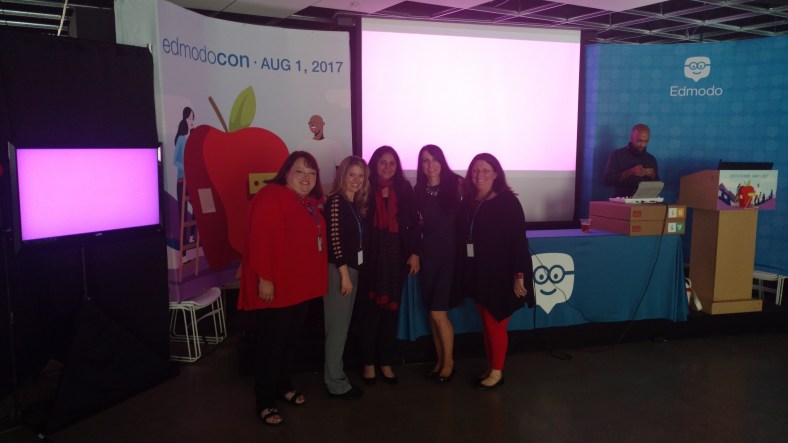
The following week is EdmodoCon, a two-day virtual event held on August 6th and 7th. I was fortunate to speak at EdmodoCon last summer and brought back so many new ideas, so I definitely recommend checking it out.

IMG_20170801_184215600.jpg

Celebrating our time speaking at Edmodocon 2017

Last few weeks of summer

Sign up for one of those virtual learning events, jump into a Twitter chat, or read a book (See BookCampPD) for some recommendations or join in the chat on Saturday mornings, 9:00 a.m. EST. Meredith Johnson has a great lineup of authors.

Lots of ways to learn, on a relaxed summer schedule, and have a little extra time for the PD that you need. You don’t have to leave the comfort of your home, move away from the pool, or be anywhere specific. Find something that you are curious about and make some time for it now, before the school year arrives and time starts to disappear quickly. You might find that these experiences will get you excited to return to school and feeling refreshed! 

And if you have extra time, check out the upcoming conferences(EdSurge 60+) and see where your PLN might be headed! Let me know if you will be attending iNACOL, FETC or ASCD Empower


Power of a PLN

I wrote this about a month ago…time flies when you’re spending it with your PLN! #iste18 #RealEDU #USMSpark #ST4T #tlap #FETC Connecting is everything!

135692


unset

ISTE


img_20180611_2006221

Live tweeting for #tlap at Summer Spark

unset

Women in EDTech Ignites

Why you need a PLN

One of the many benefits of being part of a PLN (Personal or Professional Learning Network) is having a constant system of support. Because of my PLN, I have access to new ideas, tools, methods at any time. Being “connected” means having a personal and professional support system, whenever you need it and wherever you are. We can connect in person with colleagues at our schools or during conferences, but at times this can be difficult because of the availability of time or based on location. The solution? Technology. We can connect virtually through the numerous forms of social media and web tools that promote anytime collaborating, communicating and conferencing. We become “connected” by connecting.

Gone are the days where educators have to scour the Internet for resources, search through books, or even travel for professional learning. We don’t even have to leave our homes to participate in professional development.  (Although it is nice to get out and meet our PLN F2F). And when it comes to our teaching practice, we don’t necessarily need to create all of our own materials or wait in line at the copier. (if we are in the habit of making packets, but that is another conversation entirely #paperless).


We have access to support and thousands of resources instantly, simply by connecting through our devices and reaching out into our “network.” The power of connecting and collaborating. Sharing our own ideas and gathering new ones, building on our strengths and honing in on areas in which we need to grow. Through our PLN, we have these opportunities and whatever we need, available to us at any time. It just takes one tweet, one post, one Vox, and the connecting begins and the support is available.

This slideshow requires JavaScript.

Unexpected PLN

Sometimes we just happen to become part of a PLN, or a PLF (Personal or Professional Learning Family). The same can be said for mentoring. Sometimes we make these connections, develop relationships that grow into something powerful and life-changing, without even realizing it as it is happening. When I first heard about the “power of a PLN”, I really didn’t get it. I thought it was the same as being a “colleague” or having “work friends” as they are often called. But I have learned that I was way off about this, and I am glad to know that I was wrong (again). I have become “connected” through several PLNs, that have also somehow interconnected with one another.  It has become a super PLN, or mega PLN. And it evolved through Social Media, which I was so wrong about the value for education.


My first true PLN is referred to as the “53s”. A group that grew from a Facebook group of ISTE goers, created by Rodney Turner, that then evolved into a Voxer group. Rodney’s message was to make connections, see someone sitting alone, ask them to join in. As a group, we met face to face at ISTE 2016 in Denver. There are also a few members of this group that I met through Twitter chats and then met in person at other conferences, and had time to spend with them learning in the same physical space. We welcomed our friends into the group and continued to build a core PLN. We have come together to be the 53s, a name significant to us. A name which evolved after our initial core group grew. A group based on trust, transparency, empathy, kindness, pushback, fun and passion for education and the power of learning. And most importantly, true friendship.

These people, my friends, are my source of inspiration and the ones that I rely on heavily each day. We are a unique group that spans the United States and Canada.  I am so fortunate to be a part of a core PLN that I know will be there for me no matter what. The only thing I wish I could change is our geographical locations. We are from different states and a different country, and so time together does not happen that often. But when it does, it truly is the best time ever. #singoff #booksnaps #carpoolkaraoke.  LOVE our times at FETC, Summer Spark, ShiftinEDU and ISTE and more to come!

I am not sure where I would be without my 53s. The times we have shared are so special, and I am so thankful for this group and wish for everyone to have a core PLN like this: Evan Abramson, Jarod Bormann, Jennifer Casa-Todd, Jaime Donally, Mandy Froehlich, Tisha Richmond and Rodney Turner. Add to that our awesome Snapchat singing group which also includes Tara Martin, Andrew Easton and Mandy Taylor. They are an amazing group of educators, who would drop everything to be there to support you. I am proud and honored to call them my friends.

Another PLN: adding to the PLF

I am also fortunate to be connected with two other tremendous groups (my PLF) and cannot wait to meet more of them in person.  The #4OCFPLN and Edugladiators! Loved the adventures trying to meet up in Chicago!

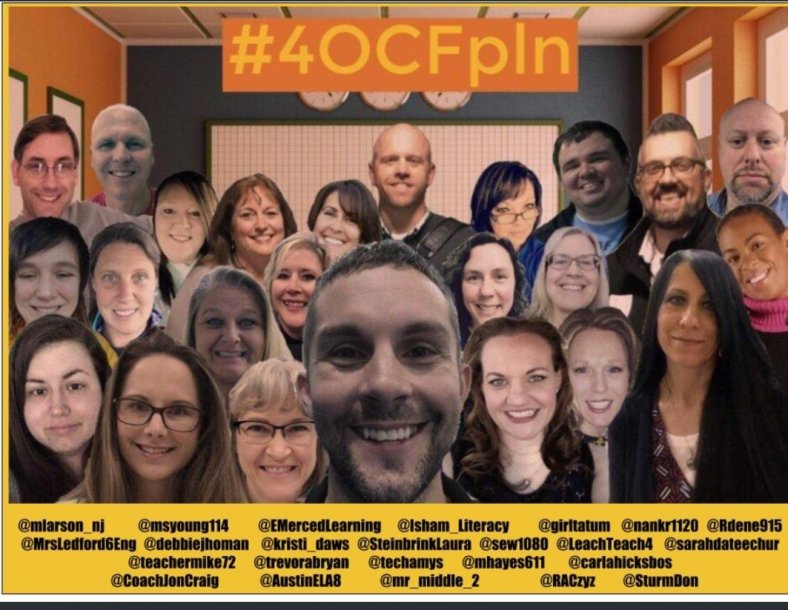
 I had read the book “Four O’Clock Faculty” by Rich Czyz  and was part of a Voxer group doing a book study. Once the book study ended, many members of the group stayed connected and kept the conversation going. A group that stayed together and continued to connect and grow long after the book study had ended. We have become a real PLF and I enjoy learning new things from this group every day and knowing that they are there when I need them. “We” have had our picture taken with many authors and we have stickers and our own hashtag even #4OCFPLN. And stickers too! Shirts on the way.

4OCFPLN

There are so many great conversations, a lot of laughs and fun that happens within this group every day.  I love knowing that I can reach out to this group at any time. It is a very supportive and fun group with a lot of diverse perspectives and a bond that continues to grow and get better. Laughs, inside jokes, challenges, pushback, inspiration and amazing connections. REAL connections. We know more about each other and learn and push boundaries of learning every day.

Everybody needs to be part of a PLN. Depending on your time and what you’re looking for, there are lots of options available for making these connections fit with your schedule and based on your interests. It might be formed through Twitter and it might be through a book study or other focus group using Voxer,  or one of the other social media tools out there. It doesn’t really matter what you use, as long as you make connections that will help you to continue to grow and have the support you need when you need it. Whether it is a group you join, a chat you follow, or a mix, get out there and connect. The best is when we get to spend time together, learn from each other, share the same nervousness before giving an ignite, and knowing that there is always someone there to help you whenever you need. (ST4T Tech Fail, thank you David Lockhart and Nik!)

We are better together!

Love meeting up with my #4OCFPLN, Fellow #Edugladiators Core Warriors, Edumatch PLF, Buncee Family, Future Ready PLN, the Women in EdTech and of course, the 53s.

And a tremendous surprise having one of my students be in Chicago during ISTE. That may have been the best part! Sharing some of the awesomeness of ISTE and the people there.


I am a work in progress

**this is a work in progress

Things on my mind: Self-awareness, Competition,  Failure, Focus

During the last couple of weeks as the school year was winding down, the demands on my time were increasing exponentially. While this may seem a bit exaggerated,  there really is no other way to describe it. Granted, I take a lot of extra things on personally and professionally, when most people meet me, they ask if I sleep. I do, some. So why do I, or educators take on so much? For me, the reason is because I truly am a lifelong learner. I don’t want to miss opportunities, especially when that might mean I miss out on creating opportunities for others.  I don’t want to say no to someone that needs my help, because I realize that for some people, asking for help required that they be vulnerable and step out of their comfort zone. So I will always try to help someone else, even if it means delaying my own goals or veering from some path that I am on. And I am good with that, but I also realize that there is only so much that I can do. 


Self-awareness

Being self-aware means you recognize your strengths and weaknesses, emotions, thoughts, and have a deeper understanding of what motivates you, at least this is my way of defining it. I can somewhat identify my strengths, but it is uncomfortable to openly admit my weaknesses.  I have no problem admitting mistakes and failures in front of my students. The more that I can do this with them, will help to dispel that misconception that failure is final. Personally or among friends, for me, admitting weakness is tough, but the first step in trying to improve is acknowledging that there is a something to improve upon.  I’m well aware that I have certain areas that I need to devote some time to in order to become more effective and consistent and possibly attain some level of balance. If balance is really a thing. Maybe it is because I set demands on myself that are too high or overly ambitious, but I have reached a point in my career and my life, where I feel I need to engage in activities that I am passionate about being involved in. Even while I was in law school,  my friends would often laugh at my ability to multitask and my methods of over-preparation for class. I did then what I try to discourage my own students from doing now. I would take notes on the computer, write notes on paper, listen to the lecture and grade papers all while sending text messages throughout the class. And somehow while doing all of that I still managed to answer a question when called upon. I survived the four years of teaching full-time and four nights a week of law school. When I think back and compare schedules of then and now I feel so much more out of balance now than I did back then. It just does not make sense. 


While this post has started off as random thoughts,  they do have a point, which will present itself sooner or later. (perhaps not even in this post, as I am between a few projects).  These random thoughts are my reflections, and how I become more self-aware. As some of my friends know, I tend to not sit and type but rather speak my thoughts into a document and then go back and revise and reflect in the process. It simply works for me and it makes me more productive, at least I think that it does.  We don’t need to make big gains each day, it is in the small wins, ongoing progress that we achieve more. Reading this post yesterday, reminded me of this fact.  I got away from reading the posts by Thomas Oppong, and this quote helped me through some of my reflections. “It’s so easy to overestimate the importance of one defining moment and underestimate the value of making small gains on a daily basis.” 

But lately, I have not felt as productive as I would want to be. Yes I’ve made lists, checked items off as I completed them, kept up with email only to have two or three emails pop in as soon as one is sent. I have opened Voxer to find four or five hundred messages waiting and many other notifications from other forms of social media. So how does one find balance? How does one keep focus when surrounded by and consumed by so much “connectedness.” In the pursuit of learning, how much is enough and how much is too much?

What I mean is I think as educators we need to involve ourselves in a variety of learning possibilities. We no longer need to leave our homes to go out for professional development, nor be limited to that which we have at our schools. There are so many options available that meet our needs as far as goals and time and passions. But it seems that more and more time is consumed by social media like Voxer or Twitter, just for a few examples. Don’t get me wrong, these are tremendous tools for becoming a connected educator, for breaking away from the isolation that can happen. But how do we keep up with everything and everyone?  If you know, please share.


Competition

It is tough “keeping up” lately. I read a lot of blogs, books and stay active through Twitter and Voxer, and have a pretty good routine for keeping up-to-date with information. Reading has never been a problem for me. The area in which I need to improve is with my own writing. Some days I feel like I just can’t keep up. I feel like I’m falling behind, that I’m not meeting the goal, not pushing myself enough to accomplish things. But today I had a moment to pause and think, and it came after reading  some of the The Path to Serendipity , by Allyson Apsey and also “What School Could Be,” by Ted Dintersmith.  After reading these, it occurred to me that I am doing the exact same thing that I try to stop my students from doing which is push myself so hard, judge myself so critically, to the point where my desire to work and to get things done becomes consumed as soon as my eyes focus on that ever-growing list of goals. I put up a wall and that inner voice tells me that I will never get things done. The inner voice convinces me that I can’t, so I don’t even try.  And then I remember the quote  “the only thing standing in your way is you,” so I need to get out of my own way. 

My list is full of things which are not part of my daily work as a teacher, but rather tasks that I have voluntarily pushed myself into becoming a part of. Maybe it’s my fear of missing out, maybe it’s my drive to keep doing better, to keep pushing myself to do one more thing, take one more step, to see how much I can handle and how much I can learn. But in recognizing this, I realize that my students do this as well. I’ve seen them push themselves and worry that they won’t finish something in time, that they won’t get into the college that their parents want them to, that they won’t get the highest grade, that they won’t be as smart, as quick or as good as somebody else in the class.  Pressure.

How many times this year I have said to them “You don’t need to worry about anybody else. You only need to worry about yourself because you aren’t in competition with anyone else but yourself.”  I came across an anonymous quote a while ago that said “I’m in competition with no one but myself.” The power of this quote really hit me. These are the reminders that I give to my students, but yet are ones that I have failed to be cognizant of within myself.

In reading “Path to Serendipity”, so much of what Allyson says resonated with me, especially when thinking back to when I first started teaching. And in reading “What School Could Be,” I am thinking about the structure of school, the “game” of school and all of the pressure that exists. Pressure which is placed on students whether by the school system itself, the testing, parents, teachers or the students themselves. How do we break this cycle? Wanting the best for someone should be more about supporting them with whatever decision they make, and being there if they find out that it was not the best decision to be made. That’s the risk we take when we step out of our comfort zone, when we go against the grain and do something that is different, that may not be the traditional way to do something but it’s the way that we want, it’s personal to us, it’s our passion.


And I know I have derailed a bit in this, maybe more than a bit, but sometimes it’s good for me to just sit with my computer, and thanks to the voice to text, I can close my eyes and talk through what has been going through my mind, and then edit the writing. Lately it’s been that I just can’t get enough things completed. Countless presentations, proposals, webinars you name it, I am doing and experiencing the same thing that many other educators are experiencing as well. However the difference is that my perception of others is that there are no struggles. Blogs are being published, podcasts are being recorded, books are being written, speeches are being given, and my question is where do you find the time? How can I find a time? And I am so impressed and inspired by the work of my friends and my colleagues who share their stories and seem to have a lot of balance, but then again how do I really know? My perception is not necessarily their reality.

A good friend of mine Mandy Froehlich has written a book which just came out today, called “The Fire Within”, in which she shares personal stories as well as stories of educators who talk about the different struggles that they’ve gone through. We don’t often hear of the struggles and the negative experiences that we as educators may have, but there are a few things that I’m sure of. We need to start with relationships. We need to be open and vulnerable. We have to tell our stories. It is from these stories, whether they are stories of great innovations or epic failures, where we can connect and provide the inspirational redirection that someone else may greatly need. And while telling our story makes us vulnerable, there is great power in vulnerability. Vulnerability does not mean weakness, as defined by Brene Brown in her book “Daring Greatly”. It is “uncertainty,risk and emotional exposure.” My favorite quote from Brown is that vulnerability is “the courage to  show up and be seen even when you have no control over the outcome.” This quote is one I read last summer, and I kept in the back of my mind while preparing for different events in which I felt completely out of control. I didn’t think I had the courage and was ready to back down, but this served as a reminder to me that it was better to try and fail, than to never try at all. The interesting part about this book is that she came up with the title after reading a quote by Teddy Roosevelt from 1910, where he spoke about the man who enters into battle valiantly, and at best he has success and at worst he errs while daring greatly.


Focus

So there is nobody pushing me to get things done but me. Nobody adding more items to the list but myself. And there is nobody that I’m in competition with. I have to accept that I will accomplish the things that I need to accomplish in my own time and in my own way. Pushing the publish button on this was definitely out of my comfort zone, but I’ve been thinking a lot and decided to put my thoughts out there. 

comfort

The real story of being a teacher

ocean under blue sky

Photo by Artem Bali on Pexels.com

Being a teacher is easy.

It must be nice to have your summers off.

You’re so lucky, you don’t have to work on the weekends.

You have such long holiday breaks!

If you are a teacher, you likely have heard at least one of these statements before, perhaps from friends and family, or from people you just meet, that respond with similar statements when they find out that you are a teacher. Are these statements accurate? Well, I guess to an extent, but there are some ways to counter these comments.


It can be easy to be a teacher, if you love what you do, it does not feel like” work.” I enjoy  working with students, learning with and from them, and having the opportunity to start fresh each day and create experiences to engage students in learning. Having the summer off is nice too, but most teachers I know either work in the summer, attend conferences, or pursue some professional development. The “summer off” is nice for providing a more flexible schedule, and a time to reflect, explore new things and prepare for the new school year.
And as for weekends, I am fairly certain that most teachers look forward to the weekend for many reasons. Of course, time with family and time to relax are important. But it is also a time to catch up on some grading, emails, or exploring new methods to bring into the classroom. So weekends without work, I don’t think they happen too much.

And the extended holiday breaks are nice as well. But again, many teachers use this time to reflect, recharge and prepare for the return to school.

So, What is the reality?

The reality of being a teacher is that teaching today can be quite challenging. Maybe in the past, the life of the teacher was perceived to be a pretty comfortable and easy profession. The typical school day of 7:00 to 3:00 or some variation, with weekends and holidays off and of course, that summer break. With those hours and that schedule who wouldn’t want to be a teacher? From the outside looking in, it might seem like each day is the same, right? Each passing year the same as the year prior. How could it be that difficult? Once you make a worksheet or a test you have them to use forever, right?  Lesson plans are the same, projects are the same, and folders full of worksheets and activities pulled from the file cabinet, simply copy it, teach it and then move on to the next day. Same. (hopefully not).

There may be some truth to this, as I’m sure there are some teachers who are teaching the same way that they were taught and/or are using the same materials each day with each class and then doing it all over again the next year. No judgments made.

To an extent, I myself was this type of teacher for a long time. Not because I was trying to take the easy way out or save time. Rather I was using some of the methods that worked for me when I was a student. I thought this was the right way to prepare. And sometimes I used some of the same materials each year because I thought there was value to them for student learning. I know that when I was a student, some of the same issues that exist today existed then (copying homework, cheating on tests), but we didn’t have the technology, which creates tremendous learning opportunities but it also takes away some opportunities as well.

Foreign Language Teacher vs. Online Translators

I thought that being a foreign language teacher meant that I was a member of a group that had a distinct battle not experienced by any other content area.  It took some time for me to notice some bothersome trends in student work. The copying of assignments, the use of online language translators, and even copying information directly from websites. So the struggle was to find a way for students to have authentic practice that would not encourage student copying or trying to take a shortcut with learning. But each year it becomes more and more challenging to stay ahead of technology in this sense. I don’t know the answer as to how to get students to stop copying homework other than to not assign homework. And this has been a very strong discussion as to the value of homework, the type of homework, and whether or not homework should even be given at all. #ditchthehomework (follow the hashtag)


I will not make a decision either way, other than to say that for me, I do assign some “practice” tasks for the students to do, but they typically don’t come in the form of a worksheet. And sometimes when we are working in stations in class, if students do not finish something, I do ask that they work on it until complete. But I do add, “at their pace.”  Instead, I encourage students to practice the content by playing a game of review using the Quizlet cards, sharing a Quizizz game or provide prompts for writing a blog post. And these are ongoing practice tasks that are due on a weekly basis or that I have students create to use in the class. Why? Because in doing this rather than assigning the same worksheet to each student to complete,  I know that it is more authentic, will provide students with personalized practice and it is not something that can readily be copied.

But recently I was rather surprised when I saw some students switching between screens on their computer while working in their practice workbook. (As a side note, I stopped assigning practice from the workbook for homework because of copying).

I thought that by having students work on the pages in class, during stations, that I could interact more and provide more one on one feedback and  give time for students to collaborate with their peers. I did not anticipate this “new” form of copying, until one day a few weeks ago, I caught a glimpse of a student switching screens on his laptop and then writing in the workbook. The process repeated and continued for a few minutes. From across the room I had an idea of what they were doing, but I gave it some time before I walked over. Hoping that I was wrong, and that it was not the website that provides answers to so many books and workbooks. (Still cannot believe what is available).


It was exactly as I had thought, one of the students was using that website, to look up and copy the answers for the workbook. While I understand that there can be comfort in having a resource to look at, especially when a student may be struggling with a concept, it is helpful to learn that you were on the right track. But I do have a problem when the answers to all questions in every book are so easily accessible and available to students. I know when I was in school, often our math teachers would assign questions opposite to the answers that were available in the back of the book. It was nice to have an option to look at some answers to do practice problems and see if we were working on them correctly, and there were times when I did wish that all of the answers were available. But it forced us to push through the challenges and solve the problems. There were struggles in the learning but that’s how we improved and kept going forward.

Simple lesson learned. In these experiences, and on a personal basis, you cannot or should not assign students the exact same thing if you can avoid it. Especially when teaching a higher level course or one in which students have the possibility to create, rather than simply consume. We need to give them more authentic opportunities to practice what they are learning. They need to create, not consume, be active, not passive, and have the opportunity to set their learning path and be curious in their pursuit of knowledge. This is how we prepare them for the future.

DEWEY


12 Tools to Try…before summer break!

Updated from the Original Post on Getting Smart, January 19, 2018

Looking for new ideas to try before the end of the school year? If you have not tried some of this, now is the time!

There are so many digital tools available today that offer opportunities for promoting student creativity, student voice, and expanding where and how students learn. I had my own list of the tools that I found made a big difference in my classroom, but decided to ask students for their input.

Here is a list of tools to try in 2018, (or to try before the end of the year, let’s keep learning!)

Each of these offer multiple ways for students to create, connect and engage in more authentic learning experiences.

Promoting Connected Learners

We were able to take our learning to a whole new level this year through Project Based Learning (PBL). Using these tools enabled us to connect with students from several Spanish speaking countries, which created tremendous possibilities for more authentic learning and broadening our cultural understanding.

1) Edmodo: Virtual learning space, where teachers can set up a digital classroom to connect students with the resources they need, in a safe learning environment. Edmodo can be used for assessments and integrates with Microsoft Office and Google, making it easy to share files with students. Students relied on Edmodo to connect with students in Argentina, Mexico and Spain for their PBL. One student said “these connections enabled me to sculpt my PBL, and learn in ways that books, videos and regular classroom lessons cannot provide.”

2) Flipgrid: Video response tool, which became one of the most talked about tools this past year after launching new features, making it even easier and more fun for students to share their ideas. Students can record up to a five minute response, add emojis to their photos and access the “grid” quickly through a grid code. It is a great tool for helping students to become more comfortable and confident in sharing their ideas and sparking curiosity with their peers.

3) Padlet: Padlet, a virtual wall, is a favorite in our classroom. Students can create a digital portfolio by uploading files and links to projects, curate resources for PBL, or have discussions with classrooms around the world. Other popular ways to use Padlet are to ask questions, post homework, or as a classroom website. Newer features include being able to “like”, “grade” or “upvote” a post and directly transfer posts to another Padlet wall.

4) Recap: Recap 2.0 is a free video response tool, which integrates with Edmodo, Canvas, Schoology, Google Classroom and Blackboard, making it easy to implement right away. It provides a comfortable way for teachers and students to ask questions by setting them up in a “Queue”. Students can submit questions and receive direct feedback, in a safe moderated environment.

Tools to Engage Students in Learning

5) Quizlet Live: Quizlet Live is a fun way to encourage student collaboration by playing a team game using a set of Quizlet study cards. Teachers select a set of study cards, launch a Live game by providing students with a join code, and students are divided into teams. To play, you need at least four players and a study set with at least 12 unique terms. Only one member of the team has the correct answer and answering incorrectly bounces the team score back to zero.

6) Quizizz: Quizizz has launched some new features, including integrating with Edmodo and Google Classroom, which makes sharing or assigning games and reviewing results much easier. When playing live, students can see the class accuracy reflected as it updates the leaderboard live with each response. There are thousands of games available in the library, making it easy to get started or create your own.

7) Kahoot!: Some big changes to the layout and options of the platform make it easier to navigate and review questions in class. Teachers can now assign “challenges” to students as a fun way to practice by sharing a code. The new “Nickname Generator” creates fun and unique usernames such as “Mystery Panda” or “Fantastic Bat” to students. It definitely saves time rather than waiting for students try to come up with their own “creative” names.

8) Kidblog: Blogging has many benefits for helping students to express themselves and begin to develop their online presence. Teachers can provide students with a variety of writing prompts to not only assess student learning, but promote creativity, communication, collaboration and digital citizenship skills. With Kidblog, teachers can even AppSmash (use two or more apps or tools together to complete a task) by embedding other tech tools into the platform, such as Buncee, Flipgrid or by uploading images and documents directly from Google Drive.

Creativity, Assessments, Interactive Lessons and More

9) Buncee: Buncee, a versatile presentation and assessment tool, is great for creating multimedia projects full of animations, graphics, audio, and videos. Choose from thousands of templates, backgrounds, animations and other graphics to create invitations, classroom signs, and unique “Buncees” for any purpose. Buncee enables every student to find exactly what they need to add into their project and to bring out their creativity.

10) Formative: An interactive tool for creating formative assessments, for use in class or as student-paced practice. Students enjoy using Formative because they receive feedback quickly, they are able to “show” their work and when done as practice, move at their own pace. Teachers can create Formatives with different question types, content and even the ability to upload and transform files. Try having students create their own Formatives as a way to have more personalized and authentic practice.

Immersive Learning, Coding and Problem Solving

11) Nearpod: Nearpod continues to be a game changer in our classroom. It provides so many options for presenting material as well as assessing students through diverse activities. The chance to be immersed in the virtual field trips and explore places around the world is of tremendous value for students. Educators can quickly create interactive lessons which include multiple question formats, the ability to upload content, BBC lessons, PhET simulations, and even add in GIFS! Nearpod integrates with Google Classroom and Canvas, and most recently with Remind, making it even easier to share lessons. Nearpod also added 27 “College Tours”, available in VR, a great way to have students experience different schools by immersing in the campus, without having to travel the distance.

12) CoSpacesEDU: CoSpacesEDU provides students with a way to not only create their own “spaces”, but to be able to walk in the spaces created by their peers. To explore in VR (Virtual Reality) and problem solve by figuring out how to code using Blockly, offers students a truly authentic way to learn, create and problem solve. The Gallery is full of examples to get you started with ideas for your classroom. Use CoSpaces to have students represent a scientific concept, a book report, or create a scene representing something studied in any content area. Talk about creativity, imagination, innovation and critical thinking, and more all in one tool.

In the End

These are just 12 of the many tools out there for education. The most important thing to remember is the “Why”? behind using these in the classroom. While these 12 tools made a difference in my classroom, they may not have the same impact in yours, but I do recommend giving them a try. Think about the tools you are currently using to amplify or facilitate student learning. What is making a difference in how, what and where students learn? Could one of these be used in place of another, as a way to engage students more in learning, or even better, provide opportunities for students to move from consumers to creators?

My advice is to simply choose one of these 12 tools and give it a try. See how it goes, ask your students for some feedback, and then plan your next steps.

My takeaways from ISTE 2017 part I: Relationships and Networking

This slideshow requires JavaScript.

Hard to believe that I have been back home almost two weeks since ISTE. The conference seemed to fly by this year and I am still trying to process my thoughts and reflect on what my takeaways are for this experience. I initially get stuck on thinking how do I begin to describe the awesome learning experience of ISTE? The anticipation of such a tremendous event and what it involves can be overwhelming. There are so many benefits of attending ISTE: the opportunity to spend time in the same space with Twitterverse/Twittersphere and Voxer friends, meet up with one’s PLN, to have so many choices for learning opportunities, networking, social events, are just a few of the possibilities. But where to begin and how to find balance? That is always the question.


I’ll admit that as my departure for San Antonio approached, I was full of anticipation and excitement, but also a bit anxious and nervous all mixed up in one.  Without even realizing, I had created quite a busy schedule for myself this year, even though I had planned to set out to have a lot of time to explore.  I simply kept adding things to my schedule, trying to make sure to have time to see everyone and figured I would get a better look at everything, a few days before leaving.  For my personalized professional development, I had not looked at the schedule too much, but I knew of some areas that I really wanted to grow in, and I was excited to connect with my friend Jaime Donally, who I consider to be an expert in AR/VR and many other areas, and definitely wanted to learn from her.

 IMG_20170628_111914745.jpg

I was very excited to connect with the Edumatch family, to finally connect with people I have come to know well over the past year through the Tweet and Talks, Edusnap books and Voxer discussions. We met at a luncheon on Sunday afternoon, celebrated the launch of the Edumatch cookbook and even did some carpool karaoke while heading back in the Uber to catch the Ignite talks. It was great to see Jaime’s and Kerry Gallagher’s Ignites on Sunday afternoon, and hear from so many educators and students about what they were doing in and out of the classroom.

It was an opportunity to reconnect with friends from FETC and meet others face to face, for the first time. For me, as the conference approached, it seemed more about finding time to connect with my friends and making sure to have time for those conversations in person that we don’t often have time for, rather than focusing on sessions and planning my schedule. 

IMG_20170625_133148212.jpg

One part of the ISTE experience that I was thrilled about was the opportunity to present with two of my good friends, Rodney Turner and Mandy Froehlich during the conference. Knowing that we would be sharing our work together and interacting with others was a high point for me. The bonus of having that definite period of time set aside to spend with them, especially after we had such a great time in Orlando at FETC (also with Jaime!). Rodney and I presented at the Mobile Learning Network Megashare on Saturday (which I almost missed because of late flights), and the three of us presented at the Monday poster session and during the ISTE  Teacher Education Network Playground on Wednesday.  It was a really great experience to share with them and I enjoyed learning from them.

This slideshow requires JavaScript.

Fun on the Riverwalk

I am very appreciative of the opportunities I have through being involved with several of the ISTE communities, PAECT, Edumatch, and the chance to meet up with friends and other “PioNears” and “Ambassadors” from some of the different edtech companies that I am involved in. Being able to run into so many friends on the Riverwalk, take some selfies, was phenomenal. The social events and time for networking were the highlights of this year. Starting with Saturday night at the Participate event, there was a lot of time to connect with friends and meet some for the first time F2F. And I am thankful to my PAECT friends for inviting me to have dinner with them, and for their willingness to put up with my shenanigans at times. 

This slideshow requires JavaScript.

The experience this year was quite the change from two years ago when I attended my first ISTE conference in Philadelphia. I knew a few people but the experience then does not compare to the way it was this year. Having made more connections over the past two years, especially through these different ISTE and PAECT learning communities and the group of educators I have met through Edumatch.  Being able to walk and run into friends along the way and be pulled in an entirely different direction was so much fun.  We even ran into some of our friends from Peekapak along the Riverwalk! 

This slideshow requires JavaScript.

Three very different ISTE experiences and I can’t say that I prefer or recommend one over the other, because just like preparing for ISTE, what works best for me will not necessarily work best for somebody else. We each come in with our own expectations and leave with different, unique experiences. I think the common factor is looking back on the relationships and the people that we interacted with. Whether through the connections made in a Voxer group, a Twitter chat or through email, having even a quick moment to interact with those people (and take a selfie) is tremendous. Thank you ISTE!

Next post: Learning opportunities and things to consider

IMG_20170626_205417708.jpg

This slideshow requires JavaScript.

Social Media: Oh goodness…Voxer: Did somebody just say 10-4?

This is the next post in my series about Social Media and the different tools available for learning and connecting. I was wrong about Facebook, Twitter and LinkedIn….and now Voxer. WOW!

I think that this might be one of my favorites, even though it is difficult for me to make any kind of decision when given more than 1 option. But the thing about Voxer is that it enables live communication between anyone and anywhere. It absolutely fascinates me and I am wowed each day by the many ways it can be used.

Why am I such a fan? Well honestly, maybe a part of this is because I had a real set of walkie talkies and was amazed that you could talk into it and somebody, somewhere else could hear and answer you right back.  When I was 13, I remember trying out the set in my parents’ car and talking to someone that ended up living a few streets away.  Michele and I became great friends and it amazes me to this day that I met someone by using the Walkie-Talkie,way back then in 1984. Who knew what the possibilities would be for today, using Voxer, is amazing.

I remember having a set of them sometime in the late 1990’s and using them at the mall, thinking it was the coolest thing ever. (I know, there were probably cell phones, I did not have one yet, they were still in the big bags or attached in cars).

Learning about Voxer

But my first experience with Voxer was becoming involved in a group preparing for ISTE in Denver last summer. How did I find out about this? Ironic moment. You might laugh but it was through a Facebook group. An interesting series of events. Sometimes we question what if? What if I had made a different choice? What if I didn’t go in that direction  and in this case what if I had never created a Facebook account? Still can’t believe that I am asking myself that question.

There are still many things between then and now that would be so different. I would have found less classmates for high school reunions, I wouldn’t know about friends who’ve moved away from or back into the area. Connecting with family and friends, seeing pictures and sharing news would happen a lot less often. So the crazy thing is that the one account I was so hesitant to get, led me to become involved with all of these different social media platforms and build my connections even more. So very wrong I was. 

Adding on Voxer: There was a Facebook group for people attending ISTE 2016, and someone (Rodney Turner, @techyturner) started a Voxer group. I had no clue what it was but I joined it and at the time I was on a basic account, but upgraded to the PRO account, which is nice because if you send a message and you want to recall it, you can. How many times do you wish you could say something over?  Once again, it did not take too long to see the tremendous value in this form of communication as well. Being able to ask a question and have someone answer you immediately, a person who may be on the other side of the world and talking to you live is tremendous. Seeing the green light up that indicates they are talking live is amazing.

Now people might think “well it’s not that much different than talking to somebody on the phone.”  And that is partially true, you are having a conversation or could have a conversation just as you would on the phone, however the difference is if you have a question and you make that phone call, that person may not answer right away, if at all. Being part of a Voxer group, there are many people available to answer instantly while we pose the question. Unlike a phone call, it goes out to many people, leading to many responses and perspectives immediately. 

Some uses

Voxer has been a great platform for leading and participating in a book study, which might sound a little bit different when you think about how traditional book studies occur. It is a great way to connect with others for a book talk. I have been able to connect with so many more educators through Voxer which  has led to more connecting on those other social media platforms, yes Facebook and Twitter and LinkedIn. The ability to listen and learn anywhere at anytime is unbelievable.

With my students, it has been a tremendous way to listen to their PBL ideas and help them brainstorm, for them to ask questions when needed and for them to form their own groups.  They love the capabilities of using Voxer for education and fun!

If you don’t yet have Voxer, try it out. There are so many groups full of conversation, inspiration and motivation and definitely fun! If you want some ideas, let me know.  There are groups for connecting Educators, learning about Snapchat!, Breakouts, LeadupChat and so many more.  Connect with me on Voxer, I am @rdene915


Thanks for reading!voxer

Another social media “risk”: Wrong again

This is the second part of my posts sharing how I was wrong about the value of Social Media for professional learning

So enter Twitter, the “twitterverse”. I was really wrong about this one and as a very reflective person, if I am mistaken, I will readily admit when I am wrong. And I will also take a step back and think about why I was wrong. For Twitter, I had no idea what was out there in the Twitterverse. I really knew nothing about anything related to Twitter.

I have had a Twitter account for probably 10 years, an account that was created only because a family member sent me a link, which required a Twitter account in order to see the post. I used my regular email address (original AOL by the way) and joined Twitter. I think I looked at it a few times for a week and then 5 years went by, never again looking at Twitter.

It wasn’t until the summer of 2014, when I was leading a session at a technology Summit, when someone tweeted about my session, to what they thought was my Twitter account. So I decided to create an account in that username and I have been actively involved in Twitter more or less ever since.

I had the misconception that it was only for celebrities. But I decided to look into it a bit more. I really didn’t know how it worked but I came across a Twitter chat one night and I started to connect with a few people from North Carolina and Tennessee. That was my start toward becoming a more connected educator and seeing the true value in Twitter. I added additional Twitter chats to my weekly activities and looked forward to the interactions with the new friends that I had made.

Shortly before ISTE 2015, I learned about “tweetdeck”. I had no idea what that meant, and I did not ask because I figured that it was something that I should know if I was using Twitter. I think I googled it. Before Tweetdeck, I used one window, with 1 chat and flipped back and forth between each chat window. To say it was a bit difficult at times is an understatement. I decided to try Tweetdeck, during my train ride to ISTE, multitasking by reading my Teach like a Pirate, involved in a Saturday chat with Tweetdeck and amazed at what was happening. It hit me. The power of communication and technology. In and of itself the fact of sitting on a train, reading a book with Wi-Fi access to enable me to use my computer, engage in multiple tasks, communicating with people around the country and world, at any point in the day during the travels. When you stop and think about it, it’s so amazing what we are capable of today. And with these two social media platforms alone, (ones which I adamantly avoided), the possibilities for learning, connecting, and so much more happen instantly anytime and anywhere. But that’s just my view of it and people may not see the value in having accounts with these or may prefer to stay away from social media. And it may not be for everyone, but I’ve learned that you can’t really say that you don’t like something or that you hate something, until you at least give it a try. And you certainly can’t go based on what somebody else says. While I greatly value the opinion of others, and can and have in the past been swayed because of someone else’s opinion, I really try to think about what is best for me. As an educator, I think about what is best for my students. I might love a certain digital tool but if it’s not going to benefit my students,  I won’t just throw it out there and say have fun with it. And that’s what I’m saying about Facebook and Twitter. As a start, either of these would be something that might surprise you in terms of the benefits personally and/or professionally. And again, I admit that I was wrong.  Lessons learned about Facebook and Twitter: Educational value is huge and learning to write concisely is an acquired skill.