When Schools Resume

Guest Post by Kathryn Starke (@KathrynStarke)

Opinions expressed are those of  the guest contributor.


Schools and districts across America have been closed for over a month now, and many schools are closed through the end of the year. It is sad and shocking for all of us. Teachers and children can’t wait to be back in their classrooms. Unfortunately, it will not be anytime soon. Therefore, teachers and parents across the country are sharing their passion and purpose in the teaching and learning process in a variety of creative ways. I have seen car parades through neighborhoods, teddy bear hunts in windows, nature scavenger bingo boards, and daily food delivery to bus stops. I have seen educational companies and some authors provide free access to their learning tool and NFL athletes help families Tackle Reading at home. This is an unprecedented event in our history.

The health and safety of others becomes the primary concern. Curriculum should not be a priority. Copyright should not be a priority. Digital learning is not accessible to every home. Not every child has a parent at home who is able to work with them. Just like in the classroom, differentiation is key. Teachers should feel empowered to create their own lessons and share their ideas with their students. Elementary school parents do not care about grades or attendance at this time. They want educational ideas and support, and most importantly, they want their children to be happy, healthy, and safe. Therefore, educators should focus on the new school year. So, what will happen when schools finally resume? Will every child be passed on to the next grade? Will every teacher receive the reading support they will need to effectively support these vast gaps while maintaining their designated grade level literacy objectives?

According to the most recent report by the National association for Educational Progress, sixty- four percent of all fourth-grade students in America are unable to read proficiently. The number increases to seventy-eight percent of fourth-grade students in low-income areas. When schools finally open, which may not be until August or September, the focus on learning will be a priority and it is going to need to change. Children will return to schools without six months of formal reading instruction. Some of our children will be significantly behind. The teaching and learning process will have to adjust. One hour of reading instruction will not be enough. It is in times like this when innovation and creativity in school communities will make the greatest impact and should be encouraged.

Teachers will need to feel supported and empowered to make decisions to match the needs of their students. They will be tasked with having to conduct remediation, intervention, reteaching, and teaching. One solution may be to incorporate transitional grades in the fall. For example, a first-grade teacher may be reviewing kindergarten standards while introducing new first grade standards. Another idea would be to group children by reading and math abilities multiple times throughout the day. One to two hours of daily language arts instruction will not be enough in the fall. Literacy needs to be at the forefront of instruction through all content from pre-K to fifth grade. This means we need to incorporate the five pillars of reading instruction or the “science of reading” in every lesson including math, science, and social studies. Team teaching across grade levels is another option. We have to think outside of the box.

Kathryn Starke is a national urban literacy consultant, reading specialist, author of Amy’s Travels and Tackle Reading, and founder of Creative Minds Publications, LLC, an educational publishing company. She created the annual Tackle Reading initiative supported by the NFL and NFL Alumni.


**Interested in writing a guest blog for my site? Would love to share your ideas! Submit your post here.


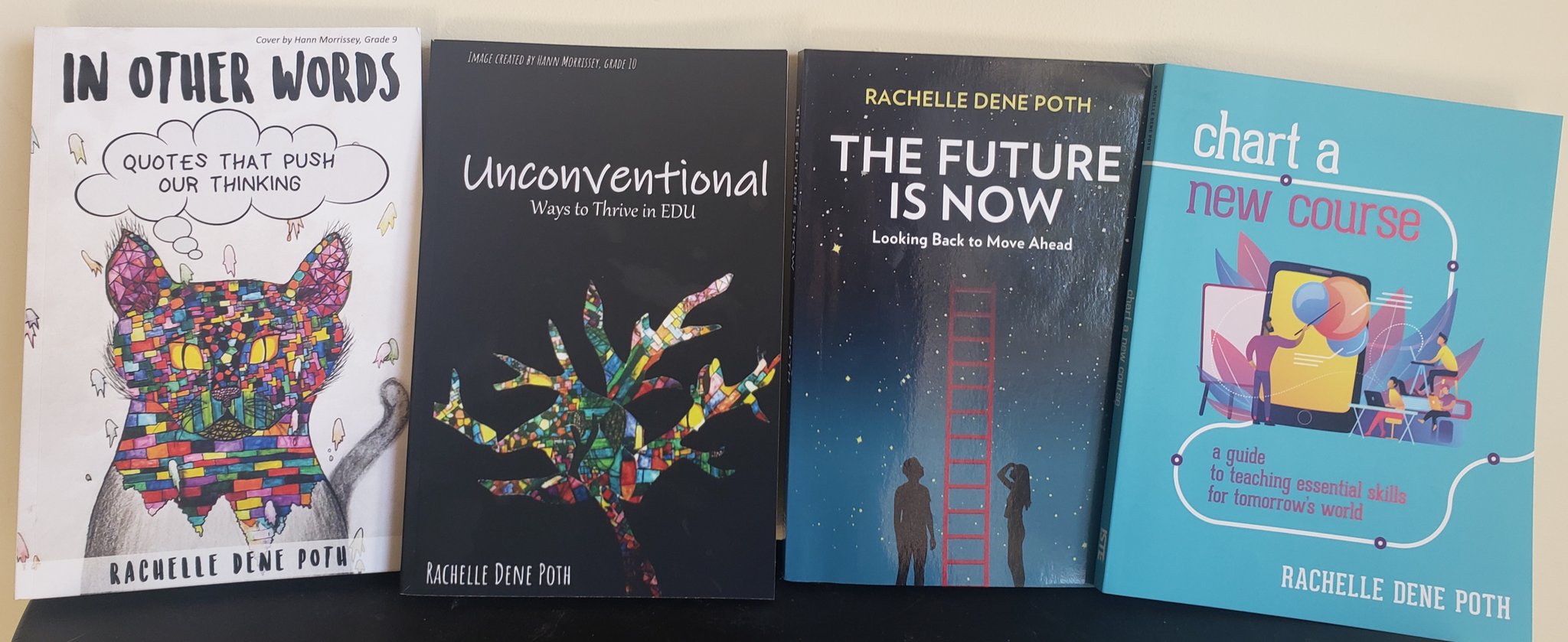
Looking for a new book to read? Many stories from educators, two student chapters, and a student-designed cover for In Other Words.

Find these available at bit.ly/Pothbooks  


When you feel like you’re not getting anywhere

Sometimes it’s difficult to figure out what the problem is or where to start when you feel like you’re not getting anywhere. What I mean is that as teachers, we may have days when we might feel like we’re just not connecting with the students. Sometimes when trying to create a lesson or some new experience for students, we are met with less enthusiasm than we had hoped for, and sometimes, it might even be nonexistent.

About two years ago, I really struggled with finding ways to engage my students in learning. I reached out to my PLN to ask for advice, I tried Twitter, pretty much anywhere that I could think of to gather ideas from other educators who might be experiencing the same thing. That’s probably the most important point if anything out of my thought process, is that had it not been for those connections and knowing where to look to find help that I greatly needed, I would have been working through it on my own in isolation, as I had been for many years of my teaching career.

It’s not easy to ask for help especially when as teachers, we feel like we are supposed to be the experts when it comes to students and learning and teaching. There may or may not be assumptions about our abilities to manage our classroom, deal with student behaviors, to be flexible in our instruction, and to balance so many different things every day. But without having a way of connecting with others, we would be stuck doing the same things we’ve always done. While in some cases that might be good if the experiences went well, often times it might not be that great. And that is how it was for me.

Last year is what I considered to be probably my best year in teaching and it came to be because of relationships I had formed over the years and also because I got away from doing some of the same traditional things I had always done and pushed the limits a little bit and tried some different things in my classroom. There were some things I just didn’t appreciate any more like standing in the front of the room and talking at my students. It was exhausting trying to think of ways to spend 42 minutes leading the class and keeping the students “busy.”

I had reached a breaking point early in September two years ago when I just decided to get rid of the rows in my classroom and see what would happen. The combination of these actions and everything in between is what I believe led me to have the best year yet. I felt connected with the students, I could see them learning and that they were more engaged. Students would come in throughout the day and say how much they liked class better than the prior-year. I just felt that there was a different vibe, I sensed a more of an excitement about being in the class and while at times it was uncomfortable worrying about if my class was too noisy or if students were off task on occasion, I really felt good about it

So I decided to keep the same kind of methods and habits in the new school year, making changes here and there, but I was not seeing the same results. I had different students than I had in the past and so it kind of led me to go back and rethink what I had been doing. What had worked so well last year was not working as well this year. I did not expect that because I was assuming that things would be the same as they were the year before. Thinking like this, the “way we’ve always done it” is what gave me some trouble in the first place. I taught the way I had been taught using methods that worked for me as a student and even as an adult, but these methods did not work for all of my students. So by doing that I was doing them a disservice. Flash forward to this school year, trying to use the same methods and strategies should not work because I had different students than the year before.

There have been days that I left school feeling frustrated and overwhelmed, a bit uneasy because like I said, last year I had a great year. And I had not experienced that type of struggle in several years. so trying to figure out what the problem was and how to work through it has been something I’ve been working ever since. I felt some moments of success and other times I thought I just couldn’t do it anymore. Sometimes I became so frustrated at the behaviors, whether it be lack of respect or lack of wanting to work or negative attitudes that instead of trying to better understand the students and focus on having conversations, I responded to their behaviors and the reactions. I lost my “cool,” I lost my composure, my eyes filled with tears of frustration and I didn’t like it. I even told them that it was something that would bother me the rest of the day and for days to come, because that was not like me but I had “had it.” I had been doing everything that I thought I could to help them and I was getting nothing or the bare minimum in return. I just wanted them to hear me and to understand that their behavior matters. Being respectful matters, and that it doesn’t matter how great your grades are or what you have in life if you are not a nice person. If you do not show respect and you don’t take time to listen to others and give them their attention when they ask for it or when they deserve it, that makes it very uncomfortable.

I thought it was just me, I had convinced myself that it was something that I was not doing. There was something wrong with me that I needed to fix within myself. But the more that I talked to people I was connected with locally, nationally and even around the world, I soon realized it was not just a problem that I was facing. Again, if I was still in isolation staying in my room and not connecting anywhere in my school building, I would feel exactly like I did. It’s just me, I’m the problem. Because I had those connections, I was able to recognize that it isn’t just me it’s a struggle other educators face and there are different ways that they deal with it that may or may not work for me.

I had lots of recommendations, great ideas, stories of how changes in different classrooms made a big difference for different friends of mine and for every suggestion they offered I felt terrible telling them that know it just would not work for me. While I may not have all the answers, I know my students well enough to be able to figure out what might and might not work for them. So while I did not come up with a magic solution to any of the challenges that I feel like I’m facing, which in the scheme of things in the rest of the world they’re not that big at all. But there are bumps in the road, a road which prior to this year had finally been mostly well paved with occasional potholes along the way.

But a new year, new challenges changes just to show why we can’t teach every year the same way that we were taught. You can’t do things the way you’ve always done them and as Don Wettrick’s dad said: “Don’t teach the same year 20 times.”

I guess I felt that because my methods worked so well last year, that I should just do the same thing again this year. I was wrong. New year, new beginnings, some changes, a bit of discomfort, challenges, through all of it. Yes, please. That’s what keeps us moving, what keeps us active and engaged and although sometimes you feel like you’re becoming disengaged from the profession when you sit back at the end of the day or in the middle of the day or whenever it is that you reflect, you must stay focused on your why. The why is your purpose, your passion for what you do and why you’ve gotten up early every morning and worked through weekends, holidays and even summer vacations. It is when you come full circle and realize that you’re there to make it work to find an answer and a solution because it might be that you are the problem

And sometimes you might be the problem creator, it’s never the same. It’s always changing, it’s uncomfortable but it’s how we grow. And if you don’t share your experiences with others then you are going to be limited to only growing in your own space. To put yourself out there, be vulnerable and ask for help when you need it, that is not a sign of weakness it’s a sign of tremendous strength. When you can identify that you have a need, a weakness, an area of struggle, you show that you are vulnerable and that is more than okay. Because as many times as I’ve said it, I will continue to say it twice as much:

I’m not an expert.

I don’t know everything.

I make tons of mistakes every single day.

I’m willing to try and I’m willing to grow.

I’m willing to get up no matter how many times I’m knocked down and go for it again.

I am a work in progress and I am learning as I go. 


**Interested in writing a guest blog for my site? Would love to share your ideas! Submit your post here.


Looking for a new book to read? Many stories from educators, two student chapters, and a student-designed cover for In Other Words.

Find these available at bit.ly/Pothbooks  


Metacognition and Why it Matters in Education

Some of my thoughts during this remote learning time.  Image created by Kitty Tripp for my book In  Other Words: Quotes That Push Our Thinking.

An important part of learning and teaching is the art of reflection. As teachers, we need to be reflective in our practice so that we can continue to grow, be prepared to meet our students’ needs, and evaluate our own skills and growth. It is important that we model this same practice for our students so that they can develop their own reflective practices and build skills of metacognition in preparation for their future. Metacognition enables students to reflect on who they are, what they know, what they want to know, and how they can get to that point. I’m not an expert but this is a topic that I’ve become more interested in so I started to look into multiple resources to learn more.

What is metacognition?

Metacognition, a term that was first defined by John H. Flavell in 1979, is basically thinking about thinking. With metacognition, we become aware of our own learning experiences and the activities we involve ourselves in our paths toward personal and professional growth. We are better able to understand ourselves in the whole process of learning and can develop skills to think about, connect with, and evaluate our learning and interactions each day. But how and why is metacognition important in education?

It has been identified as an essential skill for learner success. Therefore, do we need to design specific lessons focused on metacognition for use in our classrooms each day? And if so, how can we make this happen?

From the beginning of the school year, I noticed some responses from students when it came to learning, the struggle of learning, and making mistakes. I also noticed that many times students were okay with avoiding an answer or accepting that the answer given was incorrect and did not push themselves to understand why or how to improve. It made me wonder if we need to be more intentional about working with our students on metacognition each day and how can we include it in our teaching practice.  My initial reaction is that it does and while I feel as though it is something that I have been doing, I need to be more intentional and consistent about doing more to promote metacognition with my students.

It starts with us

As educators, we need to be able to identify personal strengths and weaknesses in our teaching practice and think about them so that we can best provide for our students. We need to guide students to develop these same skills by modeling it for them and then by supporting them as they build their own metacognitive practices. With an increased focus on the importance of developing skills in social-emotional learning (SEL), metacognition plays an important part in the SEL framework. Through resources such as CASEL, which sets forth the five areas of focus for social-emotional learning, we can now learn more about how to find the right resources and the best strategies for helping our students develop these essential skills.

For our students to be successful in the future, they need opportunities to develop skills that are transferable beyond high school to do whatever it is that they ultimately decide to do once they graduate. They need to be able to self assess their needs in learning, areas of potential weaknesses and identify their strengths. Students then need to know how to use this information to plan their next steps. While the world of work will continue to change, some of the essential skills that students will need the most will stay the same. Skills like the ability to set one’s own goals, to problem solve, to analyze the tasks that they have before them, and to evaluate any challenges that might come along the way. These skills are in alignment with the three phases of metacognition: planning, monitoring, evaluating. Each of these is essential in the learning process and students need to learn how to reflect and to self-direct to the next steps.

What does it look like in the classroom?

In my classroom, something that I have noticed more each year is that students often possess self-doubt and lack of confidence in responding in class. When called upon to respond, students try to avoid answering by saying “I don’t know, I won’t get it, I can’t do it.” Any of these statements are often followed by “please call on someone else.” By avoiding the chance of being wrong, or extending the conversation, it does not help students to understand exactly what it is they don’t know, why they don’t know it, and how to push through to figure it out. I’ve been there. Even as an adult and educator, I struggle with this at times. But the difference is that I can push through it because I think back to my own experiences and try to relate to my own students that it is in our control to take the steps we need to go beyond the “I don’t know.” We have to say “I don’t know…yet.”

Following the “Power of Not Yet,” by  Carol Dweck, we need to place emphasis on adding that one word to the end of those statements and helping students to self-assess and determine how they can get there.

Strategies to promote metacognition

  1. Relationships: I believe that it starts with building relationships that are supportive and which promote two-way conversations in the classrooms. Creating a space where students feel comfortable answering and making a mistake, where failures are expected and welcomed as a boost to the learning experience, and where teachers model the same for students.
  2. Think aloud: Sometimes I have just talked one-to-one with the student and asked them to share what they know. Giving students the chance to think through it with you, or by rephrasing the question, can be a simple way to help them push through that productive struggle and develop their own strategies for when they feel that same sense of doubt.
  3. Share ideas: I try to share learning strategies and ways to help students question their learning process, figure out how they learn best, try different strategies and then take time to think through how a particular one worked for them or didn’t. Sometimes helping students to identify their learning style will lead to a quick boost in confidence and build self-confidence in learning.
  4. Resources: There are many strategies for metacognition. Catlin Tucker shared four strategies for metacognitive thinking and how to get students to think about their learning. These are easy to get started with and provide a way for students to build comfort in sharing their learning and help us identify some areas they might need some help with. Ideas include SMART goal setting (Specific, Measurable, Attainable, Relevant, and Timely), weekly exit slips, video response or reflection tools, and ongoing self-assessment documents. For these, I think of using things like Google Forms, FlipgridSynth, or a tool like Kidblog for student reflections. There are many strategies available for educators to get started.
  5. Visible thinking: Help students to make thinking visible. Whether using an outline with questions or prompts and having students fill in their thoughts or trying a strategy like sketchnoting, where students can jot down ideas and make connections to learning, these can be beneficial for all learners. Some other strategies like Think, Pair, Share, or “I used to think…but now I think…” and others that have students interact with peers and also build on prior knowledge are helpful for students to build metacognitive skills.

Regardless of the method we choose, the end goal is the same: to empower students to drive their learning, build student agency, and foster a growth mindset in learning. We start by providing the right support, share our own experiences whether we struggled or we’ve had success, and showing our authentic selves to our students.

There are resources available like Benchmark Education, or posts which share example prompts we can use to get started. It is important that we help students understand that who they are now does not define them for the future; meaning that mistakes or areas of weakness in learning are just starting points for our learning journey.  Metacognition is critical for helping students work through these challenges and when we model and integrate self-assessment,  look at prior knowledge, and then evaluate what we need to know and determine our next steps, we build those metacognitive skills.


**Interested in writing a guest blog for my site? Would love to share your ideas! Submit your post here.


Looking for a new book to read? Many stories from educators, two student chapters, and a student-designed cover for In Other Words.

Find these available at bit.ly/Pothbooks  


Guest post: Teachers have earned the benefit of the doubt

Be patient during the COVID-19 pandemic

As schools throughout the nation close for the remainder of the year, take a minute to consider what this will mean for thousands of teachers who are doing their best to educate our children. School leaders and local officials are scrambling to “flatten the curve” of the COVID-19 pandemic. This is our top priority, and as we retrofit our education system on the fly to meet the needs of millions of students, we ask for your patience and understanding.

Schools are not designed to adapt quickly

Be kind to teachers who are on the front lines navigating school closures in an education system that is, like so many institutions, incapable of meeting the demands placed upon it by the outbreak. At best, the expectations for most teachers right now are loosely defined by school leaders. Many teachers are trying to patch together inadequate distance learning programs without guidance. This is not the time for parents to use social media platforms to compare teachers or to publicly complain about a teacher who is slow to adapt. Our nation’s teachers have earned the benefit of the doubt, so please show some grace if you are irritated.
During normal times, school districts take several months, even years, to institute changes in curriculum and instructional methods. Expecting teachers to do this at a high level, with no time to prepare, during a national emergency is ridiculous. If you feel the need to share feedback with an educator, consider what would be helpful before you hit send. Negativity toward a teacher at this time will bruise deeply and could limit the creativity of teachers trying their best to meet student needs. A measured tone is imperative if you feel discouraged as a parent and wish to share your frustration. Trust me, teachers wish they could meet the needs of every student and family they serve.

More than the internet

Connecting and teaching students in a distance-learning environment is not akin to a teacher simply jumping online and presenting academic material to students. Conducting meaningful virtual instruction requires dedicated professional coaching for staff, and it also requires significant training and practice for students and families. Most teachers have never been expected to integrate remote learning into their curriculum. The instinctive knowledge teachers have spent their respective careers amassing has a vastly different application online, and most educators have never been trained to deliver robust instruction in that format. In addition, the inequity of student access to technology and broadband internet service is woven into the challenge of teaching students remotely.

Teachers are pros at building relationships

Teachers are well versed in building relationships with students so be grateful for the teachers who are trying to maintain their connection to students. This connection — virtual or in-person — is critical for academic and social-emotional growth. Our best educators specialize in making those human connections and they are experts at molding positive relationships, devoting their talent to create a culture of learning, and contributing to the school culture. Those indelible skills for expressing care and demonstrating a commanding presence may translate online for some teachers, but it is unfair to expect it to happen naturally.

Teachers are stuck waiting

Many of our teachers can’t share with you that they are at the whim of school leaders and state mandates that are not always communicated to them effectively. While teachers are on the front lines of most communication with parents and students, they are not always armed with the information parents seek. Your child’s teacher understands your concerns about assessments and grades, your child falling behind and your desire to have access to more resources. Teachers are trying to be flexible and they do not want to throw their school leaders under the bus by voicing their misgivings to you and fueling the anxiety parents are feeling.

Uncertainty and sadness

Educators lament the loss of the celebrations, getting that last high five, hug or final word of encouragement to students. Teachers have been working hard to get your child to the finish line, and in a career that has always included clear beginnings and ends each school year, this new reality is bewildering. Many educators are helping their own children cope with the loss of a traditional school year while they also cope with the same reality as a professional. Not being able to grieve the loss of the school year together is tough on the children and the adults who serve them. Teachers wonder if their current efforts are making much of an impact on students. In some cases, only a handful of students are still connected to school and that is disheartening. Teachers are used to receiving regular feedback from students and adjusting their teaching strategies accordingly.

Moving forward

The best thing you can do to help teachers is to unite with them and let them know you appreciate them. If you feel the need to share your concerns about school district policies and local programs, reach out to school leaders. Our educators are committed to serving all children and we know that we’re in this together. Teachers and school leaders throughout the country care deeply about the health, safety, and engagement of their students. Right now our teachers need your support.

**Interested in writing a guest blog for my site? Would love to share your ideas! Submit your post here.


Looking for a new book to read? Many stories from educators, two student chapters, and a student-designed cover for In Other Words.

Find these available at bit.ly/Pothbooks  

What we deny

Check out the Podcast too: “Just Conversations” with Melanie White and Amanda Potts. https://voiced.ca/project/just-conversations/

Only in our isolation and disconnectedness do we discover that everything and everyone is localized and connected. And, in this distancing, I am beginning to question what we deny.

Rebecca Solnit kept appearing in my daily consumption of media and I’m beginning to wonder if this is the work of a latent existential force drawing my attention to something I should have known or done long ago. I listened to her voice in an episode of On Being last week. She wrote, “When all the ordinary divides and patterns are shattered, people step up to become their brothers’ keepers…and that purposefulness and connectedness bring joy even amidst death, chaos, fear, and loss.” The unusual lilt of her voice and calm intellect still spin in my mind’s ear. And, this morning, I stopped scrolling my Twitter feed struck by this linguistic wisdom. She wrote,

“Inside the word ’emergency’ is ’emerge’; from an emergency new things come forth. The old certainties are crumbling fast, but danger and possibility are sisters.” #RebeccaSolnit

And then on Twitter, Gianpiero Petriglieri wrote that an “old therapist friend” told him why everyone was “so exhausted after video calls. It’s the plausible deniability of each other’s absence. Our minds tricked into the idea of being together when our bodies feel we’re not. Dissonance is exhausting. Our bodies process so much context…” I stopped to think about that wording, “plausible deniability”, and the more common legalistic use for one escaping criminal repercussions as a member of a corrupt organization or political power.

However, I couldn’t wrap my head around this experience of dissonance and the connotations of “plausible deniability” as something happening to us rather than something we choose to avoid like the truth or an injustice. According to Wikipedia“the expression was first used by the CIA” but the idea apparently has a longer history. I needed to understand the term, like Solnit explored “emergency”; it was an itch that pressed me, so I read further. “Plausible denial involves the creation of power structures and chains of command loose and informal enough to be denied if necessary”.

Then a thought struck me. What power structures are currently in place which I deny? What small almost imperceptible movements have made me complicit in this dance of distraction? Solnit reappeared during my longer moment of breakfast reading in The Guardian article entitled: “The impossible has already happened: what coronavirus can teach us about hope”. How marvelous and uplifting it is to read her vibrant words calling us to action and existence, to make the most of the worst.

While I cannot deny there is absence in my new-found isolation, I can also see that my thoughts attend a new experience. I am paying attention to moving about my house, to walking the dog, to gazing out the window with no real productivity pressure of this instant. And, yes, I am teaching remotely, but connecting, supporting personalized learning is my focus rather than a product on the line of academic factory life. This is where I cannot sense Petriglieri’s Tweet about “plausible deniability”. I am now working on processing the context of my daily life which I previously ignored in mind-numbing haste consumed by the blind goals of my own productivity or some socialized version of productivity.

My body is processing the context of my life in isolation and thinking about the actions needed for when we might connect again. I am trying not to deny my own physical interaction with and existence in the world.


**Interested in writing a guest blog for my site? Would love to share your ideas! Submit your post here.


Looking for a new book to read? Many stories from educators, two student chapters, and a student-designed cover for In Other Words.

Find these available at bit.ly/Pothbooks  

How I Created a Podcast PD for Teachers

Guest post by Laura Cahill @engageducate

I’m always looking for ways to innovate professional development. Teachers are busy people and sometimes those after-school, face-to-face sessions just aren’t doable. I actually prefer PD that comes to me…webinars, Twitter chats, blog posts, podcasts…so I ran with that and created a podcast PD for the teachers in my district. Think book club, only with podcast episodes and online discussions. This was really simple to set up, especially because we are a G Suite for Education district but this could be done in other platforms as well. To get this running, I:

  1. Posted a sign-up to my district (this could be done at any level; district/school/grade-level/etc.)
  2. Created a Google Form with links to 20 episodes for participants to vote on (I chose all Cult of Pedagogy episodes for this initial session because I am familiar with the high quality of them but episodes could be from any/many podcasts.)
  3. Chose the top five episodes and created a Google Classroom with the link to one episode per “assignment”.
  4. Added open-ended discussion questions (What resonates for you? What do you agree/disagree with? How can you see this working in your own setting?)
  5. Set two-week “due dates” for each episode.
  6. Sat back and watched amazing conversation unfold…I didn’t really sit back, I participated, BUT I was shocked at how rich and thoughtful the conversation was!

Some logistics:

  • I offered 2 professional development hours for each week (10 total), assuming that listening takes about an hour and posting/commenting takes another hour.
  • We require that our PD participants demonstrate learning through some type of product, so we are going to create reflection videos at the end.

The participants are already asking for additional sessions and I’m thinking that participants could make suggestions for podcast episodes in the future! Such a simple solution to creating accessible and relevant PD for educators!


************ Check out my THRIVEinEDU PodcastHere!

Looking for a new book to read? Many stories from educators, two student chapters, and a student-designed cover for In Other Words.

Find these available at bit.ly/Pothbooks  

An In-Home Learning Strategy for Busy Quarantine Families

Guest post byAndrew Easton: teacher, edu-blogger, podcaster, and future author for Dave Burgess Consulting Inc. Follow him on Twitter @EastonA1, on Instagram @andrew.d.easton, or at andrewdeaston.com/


In our household there are two teachers and two primary-age students, and during our first week staying at home, we had a problem. As adults, we still have work responsibilities, and at ages 5 and 8, the kids need help navigating the five subjects of schoolwork they receive each day.

Our first thought was to set a schedule so that routines would be established. In that way, designated times would kick-start certain subjects and tasks. 

Fail. 

What we quickly realized was that sometimes the kids needed support with certain tasks, and if there happened to be a Zoom staff meeting or any other commitment that prevented us from supporting them in that immediate moment, the structure fell apart. The schedule needed more flexibility.

Then, we tried a checklist.

Fail.

Next, we tried using a checklist. I mean, who doesn’t love the feeling of crossing things off your to-do list?!? Well, the answer to that is my children. Even though a checklist does not have to be done in a specific order, don’t try telling that to them. The checklist was frustrating, and stopping a task to take a break routinely killed all their motivation to continue on with their work.


Finally, an answer.

Recognizing the shortcomings of our initial attempts, we felt optimistic about using a “To-Do, Doing, Done” board. The idea was that each day we would write down each item on their to-do list on a separate post-it note. Those post-its get placed in their “To-Do” column, and then as they start a task, the post-it moves to the “Doing” column. Once complete, it gets moved to “Done” and five completed tasks earns a sticker that is worth 30 minutes of free time.

Success.

Here’s what’s happened since we started. The kids now wake up each morning and run to their board to search through their list for the day. We intentionally scatter the post-its so that there is no implied order, and we like to put a fun, surprise activity on a post-it and hide it in the mix. 

Oh, and in case you are wondering, yes, chores also go on post-its.

The “Doing” column has also been a godsend. There are times throughout the day when our responsibilities as adults make us momentarily unavailable to lead them through a portion of their work. The kids now know that they can leave a task in the “Doing” column and start something else if an adult is busy.

The “Doing” column has also been great for motivation. When the kids choose to stop mid-activity, we ask them to reflect on how close they are to finishing and to move that post-it to the place between the start/finish lines in the “Doing” column that reflects just how close they are to completing that task. Last week, my daughter had stopped her writing earlier in the day, but she was bent on moving the post-it to done. Seeing just how close she was to finishing, she, unprompted, wrote for an additional 30 minutes later that night.


Overall, this board has made our household happier and more productive. It’s helped us to maintain a more positive learning dynamic during these stressful times, which is why I wanted to share our story. I hope this strategy can help you! 


So from our family to yours, please know that we are thinking about you all and are sending our best wishes your way.


**Interested in writing a guest blog for my site? Would love to share your ideas! Submit your post here.


Looking for a new book to read? Many stories from educators, two student chapters, and a student-designed cover for In Other Words.

Find these available at bit.ly/Pothbooks  

Creating an Action Plan Through Reflection

Guest Post by Debbie Tannenbaum @MrsTannenb

During Winter Break, I read three amazing and thought-provoking books. Each one provided me with new ideas, takeaways and made me examine my practice. The last book I finished was Innovate Inside The Box by George Couros and Katie Novak. As I began reading Part Three: You Are The Change You Seek of this book, George issues this challenge, ” We can consume pages and hours of great content, but until we do something with it, we have no ownership over the process of learning. He then asked the reader to reflect on these three questions based on our reading

1. What has challenged you?

2. What has been reaffirmed?

3. What will you do moving forward?

When I began to consider what challenged me from my reading, I really had to stop and think. Having already read Innovator’s Mindset last year and having prior experience with UDL, so much of what I read in this book resonated with me.

As I returned to school on Monday, several ideas from my reading kept bubbling up in my mind.

1. Shifting our focus and practice to be learner-driven and evidence-focused

2. What does risk mean?

3. Encouraging problem-finding and not just problem solving

Learner-Driven, Evidence Focused

In chapter 2 of the book, George Couros describes how he dislikes the term data-driven. Working in a model PLC school, there is no doubt that we spend a lot of time on data- in fact, some months, with increased testing, it feels like all we do is collect data. So when I read this, it gave me pause. Are we truly learner centered? Are we telling the story of the whole child? Are we preparing students for their futures or to meet benchmarks and goals based on our school improvement plans?

This section really led me to question our practices as educators. It made me examine why we do things the way we do, why I do things the way I do? Is the support I provide “opening doors” to the future? If so, are there any ways that I can further tweak this to make it more learner centered?

Risk-takers

In chapter 5, George and Katie discuss risk-taking, which is one of the characteristics of the Innovator’s Mindset. As I read this, their definition of risk caught my attention and made me look at risk through a different lens. I have always called myself a risk-taker, an early adopter, but reading this definition made the WHY behind it so clear. “Risk is moving from a comfortable average in pursuit of an unknown better.“Looking at risk through this lens took the negative connotation usually associated with this word away. It equated risk with innovation.

As a tech coach, I am constantly not only taking risks, but modeling it for all my learners. How can I better empower my learners through the use of UDL to develop more agency and risk-taking.

Problem Finders- Solvers

Chapter 6 shares how when we act as problem finders-solvers, we demonstrate an Innovator’s Mindset. In the district I work in, we have been heavily immersed in PBL or Project/Problem Based Learning. In late November and early December, one of our PBL Leads even came to our CLTs to help us plan upcoming PBL units. I love the idea of PBL and giving our students authentic purposes for their learning.

So when the idea of being a problem finder was introduced, I looked a little closer. I love this idea; it reminds me of 20% time and Passion Projects. It sounds amazing, but once again, time seems to be a culprit. How can we provide time for students to cultivate such endeavors while covering the curriculum? Could we involve students more in planning our PBLs beyond just the “Need to Knows?”

Reading this book reaffirmed so many things for me especially as I CHALLENGE myself this year to establish healthier habits and take more risks.

In chapter 3, as George and Katie described the importance of empowerment and shared how it leads to ownership and agency. It reminds me of how Ron Ritchart emphasized the importance of language when I attended WISSIT19 this summer.

In chapter 4, George and Katie share the importance of not only being a master educator, but also a master learner. If I have learned anything this break, it has been what a dramatic impact that reading 10-15 minutes a day can make in my learning. “In a profession where learning is the focus of our job, growth is essential and the target is always moving.” We all need to embrace that mantra and model being lifelong learners for our colleagues and students

So as I look towards the future, what will I do moving forward? The first thing that came to my mind was reflection. As part of #myoneword2020, I CHALLENGE myself to journal regularly. Journaling is such a huge component of reflection. George shares, “Reflection is what links our performance to our potential.” As I journal and monitor my goals daily, I am focused on my goals and making progress towards them. Linked to that is the idea of self care. ” When our job is about serving other people, we have to not forget to serve ourselves.” Moving forward, I CHALLENGE myself to be committed to healthier eating, regular exercise, doing activities that fill my bucket such as blogging, reading and writing. Dedicating time each morning to this pursuit has been so inspirational so far.

“Is there a better way?” Sometimes there is and we need to take a risk. Other times, we need to examine if what we are currently doing meets our students’ needs. But behind it all, there are so many ways we can take our learners and the relationships we build with them and empower them for an amazing future. I am ready to take the CHALLENGE, are you?

************************************************************************************


**Interested in writing a guest blog for my site? Would love to share your ideas! Submit your post here.


Looking for a new book to read? Many stories from educators, two student chapters, and a student-designed cover for In Other Words.

Find these available at bit.ly/Pothbooks  


3  books.png

The Power of Listening

Guest post by Charles Williams, @_cwconsultingOpinions expressed are those of the author.

Anthony* stormed into the office, marched past the front desk without acknowledging the startled office manager, and into my office where he dropped into a chair heaving deep breaths with a hint of moisture in his eyes. Calmly, I stopped working on whatever mind-numbing report I was completing and turned to him.

“Hey Anthony.What’s going on?” I asked as I took a tissue from my desk and handed it to him.

Wiping his face, he responded, “They never listen. They always get to talk but they never want to listen.”

I didn’t need to ask. I already knew to whom he was referring and it was something that I knew needed to be addressed. But how? How do we get teachers to actually listen to our students?

Recently I was introduced to the concept of Talking Circles through the book “Circle Forward: Building a Restorative School Community” by Carolyn Boyes-Watson and Kay Pranis. I was sharing my frustrations with a colleague and he immediately reached for the book. As I listened to his similar experiences I thumbed through the pages noting that it offered strategies for both students and staff both in the classroom and during meetings. Two days later, I had my own copy.

This past August we held our first Courageous Conversation as a staff during our back-to-school orientation week.

The first question asked was what led us to the field of education. We were surprised to find that many of us did not start in this field and thus brought an entirely different world of expertise that we could now tap into. We had chefs, engineers, and even artists. It was enlightening.

The second question asked was why we have remained in education. The stories varied but they all had the same central theme – we’re invested in our students. From those ah-ha moments to grieving with families through loss to providing for a family in need to celebrating a student’s graduation, we knew that our students had potential and that we were committed to helping them find it. It was emotional.

The final question asked about privilege. Some teachers reflected on how they struggled growing up, needing to figure out how to reach their goals with substantially less than some of their peers. Others talked about their appreciation for the ability to have access to resources and materials without worry. Some noted that they had forgotten what it was like to struggle now that they were financially secure. It was powerful.

There were several reasons that I wanted my staff to engage in these Courageous Conversations.

First, I wanted my staff to understand the power of listening. A central tenet of Talking Circles is that only one person at a time is allowed to speak. Furthermore, the other speakers are encouraged to share their own thoughts and are not expected to respond to someone else’s comments. Participants are, essentially, forced to listen to others.

Second, I wanted my staff to separate themselves from their titles. Talking Circles remove any form of hierarchy. During these conversations, no participant is more important than the other. The information being shared by all is equally valuable and should be treated and respected as such.

Third, and the biggest driving force, I wanted my staff to connect this experience with our students. I wanted them to see how they learned something new about a colleague and how that information may shape their interactions moving forward. I wanted them to readjust their perceptions from seeing our students as at-risk to budding successes. I wanted them to remember that our students come to school on a daily basis dealing with so much more than academic tasks.

My teachers were hooked and asked that this become a regular part of our staff meetings. It has.

More importantly, this practice has become common place in the school. It may be implemented differently from class to class – some start the week to get a pulse of the students’ after a weekend while some end to help students bring the week to a close while some use it when the vibe in the classroom isn’t quite right – and that is okay.

This simple yet powerful practice has had profound impacts on the school’s culture and climate. During the first two months of school, our referrals have dropped nearly 70%. Our attendance rating has soared to 97%. I now see teachers and students mutually engaged in honest conversations when issues arise to develop solutions.

And Anthony? Well, he still visits my office regularly. Only now its to check in on me and to take a peppermint.

Charles Williams is a professional educator with nearly 15 years of experience. Williams currently serves as a K-8 Principal in Chicago, IL. He is also a member of Great Expectations Mentoring and Men of Color in Education. Williams has presented at numerous conferences including the Statewide ESSA Conference, the Annual INCS Conference, and the CPS Leadership Institute. He has also started his own educational consulting firm, CW Consulting.

**Interested in writing a guest blog for my site? Would love to share your ideas! Submit your post here.


Looking for a new book to read? Many stories from educators, two student chapters, and a student-designed cover for In Other Words.

Find these available at bit.ly/Pothbooks  


3  books.png

TeacherCast Educational Network

Technology Integration - Instructional Coaching - Productivity Secrets for Educators

Leadership Liner Notes: Sean Gaillard

Built on Connection. Tuned for Impact.

Stories by Thomas Oppong on Medium

Dr. Rachelle Dené Poth @Rdene915 Educator, Consultant & Keynote Speaker, Author, Attorney #THRIVEinEDU

Hooked On Innovation

When Innovation slaps you in the face, we slap back.

Teach Better

Dr. Rachelle Dené Poth @Rdene915 Educator, Consultant & Keynote Speaker, Author, Attorney #THRIVEinEDU

BrianKulak.com

Dr. Rachelle Dené Poth @Rdene915 Educator, Consultant & Keynote Speaker, Author, Attorney #THRIVEinEDU

The Principal of Change

Stories of learning and leading

Mandy Froehlich

Dr. Rachelle Dené Poth @Rdene915 Educator, Consultant & Keynote Speaker, Author, Attorney #THRIVEinEDU

Katie Martin

Informed by research, refined by practice

#RocknTheBoat

Rocking today's classrooms, one teacher, student, and class at a time.

User Generated Education

Education as it should be - passion-based.

Learning as I go: Reflections & lessons learned

Dr. Rachelle Dené Poth @Rdene915 Educator, Consultant & Keynote Speaker, Author, Attorney #THRIVEinEDU

Serendipity in Education

Join me, Allyson Apsey, as I stumble upon the fortunes of learning, laughing, and celebrating alongside incredible people.