My first book: Why I wrote In Other Words

All books available at  bit.ly/Pothbooks

It has  been quite a year. Three books  published this year, looking back to one year ago as I was writing all three, very different books at the same time. But  the book In Other Words came to me as I was preparing to work  on The Future is Now.  It stemmed from a quote:

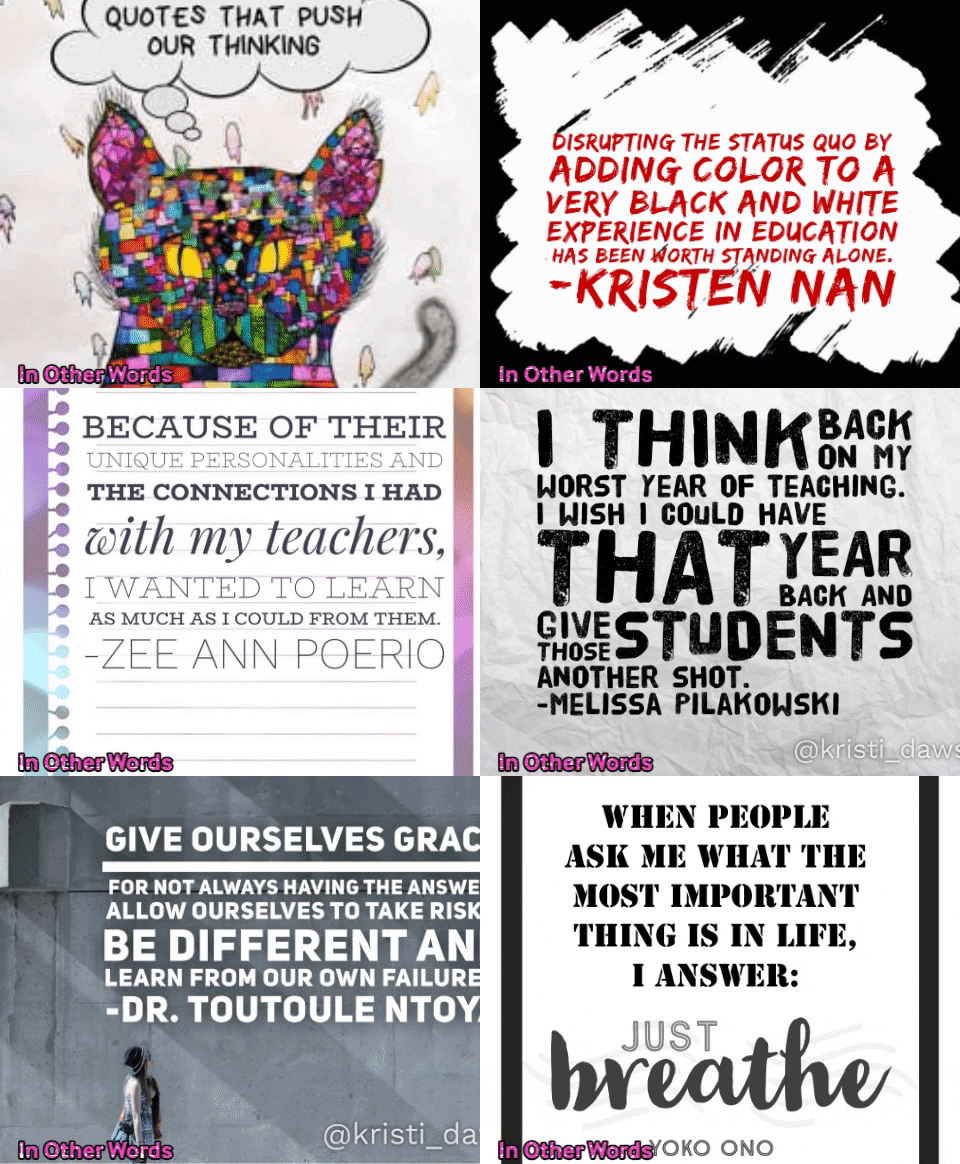
Teddy Roosevelt once said, “I am a part of everything I have read.” When I read his quote, it greatly resonated with me because of my love of quotes and the impact they can have in our lives. In Other Words is a book full of inspirational and thought-provoking quotes that have pushed my thinking, inspired me and given me strength when I needed it. The book shares stories around the importance of growing ourselves as educators, knowing our why, as well as learning from and embracing failures and taking risks with learning so we can become our best selves for those we lead and learn with.

Get your signed copy here: bit.ly/Inotherwordsbook

1553983585916_0601087574_47b12722

There are stories shared by educators with different backgrounds and different perspectives. My own experiences and interpretations and the educator vignettes shared by my PLN (Personal or Professional Learning Network) will hopefully push your thinking, inspire you, and provide whatever it is that you need. My hope is that by sharing our stories, it will inspire you to share yours.


There were many people involved throughout this journey. I reached out to members of my PLN and friends to include as many educators and students as possible. I  wanted to share more than just my story, but rather many stories and experiences.   This book is one that can be read by anyone, not just people in education. There are many quotes, unique personal experiences, beautiful graphics and more.

About the book #Quotes4EDU

In this book, I share some of my experiences and reflections based on quotes. I have included the stories of different educators in the form of vignettes or guest chapters. One chapter was written by two of my students and my book cover was drawn by one of my 9th-grade students. The story behind the book cover is included at the beginning of the book.  The book is available on Kindle or in paperback: bit.ly/Inotherwords  A few of the stories are available for listening on Synth. gosynth.com/p/s/pyzbnm  

Chapter Authors
Dennis Griffin
Maureen Hayes
Holly King
Elizabeth Merce
Melissa Pilakowski
Laura Steinbrink
Amy Storer
Donald Sturm
Cassy DeBacco
Celaine Hornsby
Vignettes
Marialice B.F.X. Curran
Jon Craig

Kristi  Daws

Sarah Fromhold
Jeff Kubiak
Matthew Larson
Jennifer Ledford
Kristen Nan
Toutoule Ntoya
Paul O’Neill
Zee Ann Poerio
Rodney Turner
Heather Young
Graphics 
Michael Mordechai Cohen
Dene Gainey
Manuel Herrera
Shelby  Krevokuch
Amber McCormick
Dana Ladenburger
Heather Lippert
Scott Nunes
Chris Spalton
Tisha Richmond
Monica Spillman
Laura Steinbrink
Kitty Tripp
Julie Woodard
Animated GIF-downsized_large (5)

Thank you Kristi Daws for creating these images!!


This slideshow requires JavaScript.

Why Connections Matter

Guest Post by Sean Scanlon, @polonerd

Republished from his blog site, a great message about why we need to connect, and how to do so at conferences. 


On Tuesday night I returned from Summer Spark in Milwaukee. My head was still spinning and full from all of the great presentations and new ideas I heard, my heart was still racing from Joe Sanfelippo’s keynote, but most of all my heart was full from all of the love shared between friends at an Edtech conference.

This was the 4th year I’ve been to Spark (sorry to say I missed year 1) and every year my PLN grows but in different ways than just connecting with someone on Twitter or Facebook groups. At a mid-sized conference like Summer Spark you make awesome personal connections with people who have been in your PLN for months (maybe even years). You get to have dinner with people you haven’t seen in a year or more, or maybe people you’ve never even met before.

game night

It’s pretty clear when we go to dinner for game night on the first evening of the conference, and we turn 10 tables into one giant table so we can all sit together (until the table literally can’t grow anymore), this group is close and wants to learn more about what we’re doing in our classrooms, our schools, and even more about our future plans.

As far as game night goes, Jon Spike walks in with his bag of games, along with others who bring their favorite board games and let the fun begin. The fun and connections at this point are amazing and there are even some grudge matches from two years ago when it comes to CodeNames. Right Kristin?

Screen Shot 2019-06-20 at 11.27.05 AM

The conference is wonderful because Pam NosbuschChuck TaftMichael Matera, and so many others put their heart and soul into making it great. However, the true “Spark” we get in June is an uplifting of spirits and excitement from connecting with other inspiring educators, learning from them, and most importantly sharing with them what we do, what we want to do, and how they can help us get there.

All of this fun and all of these close relationships really go back to where it all started for many of us – Twitter. When we connect on Twitter, or any Social Media platform, we share what’s we’ve accomplished, we look to others for advice or ideas, and we ‘talk’ with each other about different topics in chats.

Who to Follow –When you find that first person you want to follow, click on their name and then click on where it says “Following”. Look at who those people follow because that is a choice they made to follow those people. You can glance at their profile and even see who those people follow – welcome to the most awesome rabbit hole.

Twitter Chats – If you haven’t done any Twitter chats, I’ve listed a few below but feel free to try ones that more closely tie into your content area or grade level. The chats are usually 30 or 60 minutes long and you’ll be connecting with educators from all over the country and possibly people from other parts of the world. Make sure you don’t pull a @GameBoyDrew and forget the #. If you don’t use the #, nobody else in the chat will know you’re saying anything.

122edchatgroup

Use Tweetdeck – Tweetdeck allows you to created columns based on a # or a particular user – plus other choices.  This makes it easier to track what people are talking about in that chat. You also have a notifications column so it makes it easier to see who ‘liked’ your post, replied to your post, or even just mentions you in possibly a different chat.

Simply put, get on Twitter and follow other educators. It’s polite and good practice to follow the people who follow you; except for the bots and the inappropriate accounts – check who they are and what they’ve posted before you follow someone. Check your feed occasionally and search some hashtags (#) to see what people are talking about.

Most of all, have fun connecting with other educators and don’t forget to introduce yourself when you meet them in person at awesome conferences like Summer Spark @usmspark #usmspark


Sign up for  Summer Spark, happening in June 2020!


Challenges, Connections, and Learning every day!

Recently I had a colleague ask me for some ideas for dealing with challenges when it comes to classroom management, student behaviors and just keeping up with the responsibilities of teaching in general. I’m always happy to have time to talk with other educators, there is so much to learn by connecting. I think sometimes there is an assumption that because someone may have been teaching for 10 or more years, or worked in the same school district for a long period of time, that’s there is a higher level of knowledge and skill held by a teacher that fits into this description. While of course the more that you teach, it might seem like you would have a lot of ideas and answers to share with younger or new to the school teachers, but the longer you have taught also means, I think, that you have that much more to learn.

Having taught for about the last 25 years, I’ve had a lot of different experiences, some good, some bad, some in-between and some just absolutely fantastic. I have been in the position where I needed to improve, and felt like no matter what I tried to do or could try to do, that I just would not succeed. That I would lose my job. I’ve also been at the opposite end where I felt like things were going well, I could feel more success and a change in how I had been teaching in the classroom and in my connections and relationships that I had built with the students and colleagues.


I think if you ask any educator, most can probably identify the best year they’ve had, and if they can’t, they just can’t yet. We always have room to grow and things take time. How do educators decide what makes it the best year? For some, is it a year without many challenges, the students are well-behaved, homework is complete, other clerical tasks and responsibilities held by the teacher are finished, observations went very well and teacher ratings are satisfactory or proficient or whatever the ranking may be? Maybe. But how do we truly define what would be the best year ever?

It takes time to build

I am fairly certain that last year was the best year I’ve had yet. I think because I changed a lot of things in my classroom, I stopped worrying so much about having every minute of every class accounted for and instead gave the students more possibilities to lead in the classroom and for me to have more opportunities to interact with them. Now it did not come without its challenges, some student behaviors that in some cases pushed me so far beyond frustration that I thought I reached my breaking point. I reacted in ways that I was not proud of, but I let the frustration get the best of me. I stopped seeing the student and only saw the behaviors. My “lens” had become clouded and it took some reflection and just not feeling very good about it for me to realize that I had to do something different.


The common feeling or response is when you feel like there is a lot to handle or come up with a plan for, can feel so isolating. you might feel lost or like others are judging you based on what you perceive to be your weak areas when it comes to instruction. And I’ve had a few people confide in me that they feel like they’re too different or too weird or they’re not normal enough to be teachers. Hearing those kinds of things breaks my heart because I don’t want to see teachers become disengaged or to lose their passion for doing the work that teachers do because of worrying about how others may or may not perceive them.

My response is always it’s good to be different, what does normal look like anyway? Does normal mean everybody gets and does the same thing? Does being normal mean you fit into some kind of mold, one that may or may not be who you truly are? I think the best that we can do for our students is to show them who we are because we want to know who they are.

We can’t hide behind some perceived idea or model of what a teacher should or should not look like. Nor should we compare ourselves to our colleagues or other teachers that we may have had in our own experience. When we do this we lose sight of something and I think it’s important for us to demonstrate and model for students. We need to worry about ourselves first and only compete with who we are today by judging it based on who we become tomorrow. Everyone has weaknesses, everybody struggles, everybody feels like they don’t belong at times, a friend once wrote about being in the land of misfits, I’m totally fine with that.


What can we do, regardless of what year we are in during our careers? New teachers have a lot to offer us veteran teachers, there are better pre-service teacher programs and more information available to current students that are seeking to get into the profession, than what is available to us veteran teachers, who may not have access to or may not even know they exist. And for the new teachers, when you are assigned to have a mentor in your school, I really don’t think you should consider it to be that you are the learner and that you must follow and adhere to all of the advice of your mentor. You have to decide who you want to be, what is your purpose, your why, your spark, your passion for doing what you’re doing?

It starts with us and it always starts with us to take that first step. We have to be okay with who we are and commit to doing whatever is best for our own personal and professional growth but being mindful of what that means and how it will impact those we lead and learn with.

So if at any time you feel down or lost or frustrated or like you’re becoming disengaged or that you don’t fit in, please send me a message. I’d love to talk to you and share some of my own experiences on my 25-year learning journey.


**Interested in writing a guest blog for my site? Would love to share your ideas! Submit your post here.


Looking for a new book to read? Many stories from educators, two student chapters, and a student-designed cover for In Other Words.

Find these available at bit.ly/Pothbooks  

Book4.png

Teaching Can Be Challenging


Guest Post by Andrew Easton, @EastonA1, Personalized Learning Collaborator and Consultant, Westside Community Schools in Omaha, Nebraska

*Future DBC Inc. author on Personalized Learning, Spring 2020

Now that we are into November, it’s likely that at some point this year you’ve been asked the question, “So, do you have a pretty good group this year?” In my time in education, I’ve heard a myriad of answers to this question – some that I don’t want to repeat. Whether it’s right or wrong or not even a thing worth discussing, I do find it interesting to hear what a teacher has to say. And actually, there is one word in particular hat comes up rather consistently when this question is asked. One that on its own doesn’t completely address the question. The word “challenging.”

This year, I am redesigning our high school’s English 4 course and am teaching that class for the first time. When the teacher who had previously taught that course retired, she politely used the word “challenging” when describing to me the group of students that she typically supported in that course. She quickly followed that up with a “Good luck!” that felt more like a warning than words of encouragement.

English 4 is an appealing option for students who are simply looking to pass an English class to graduate and pick up a few helpful life hacks along the way. Many of our students have had significant struggles with learning in the past for a variety of reasons. Those reasons have made it hard for them to find consistent academic success. For these students, senior year has brought both the liberating promise of change once they reach the end of May but along with it the stinging reality that they have navigated their K-12 education to the 12 end of that spectrum and the experience has left them feeling like they have not taken much from a system that has helped some of their peers to thrive. 

Planning over the summer was, well, challenging in its own right. I knew very little about this group that wasn’t second hand knowledge. But as I perused the gradebook and academic history for some of my students prior to the start of the year, I knew one thing: I had to give these learners the opportunity to feel what accomplishment feels like. There is a certain rhythm to success that has to be found and then felt before it starts to beat and almost swell from within. I guessed then and now know that many of these students have never heard, nor much less felt that beat, and I knew that I would be working against thirteen years of baggage if I tried to convince them, initially at least, to search for this experience in an academic setting. But I had an idea.

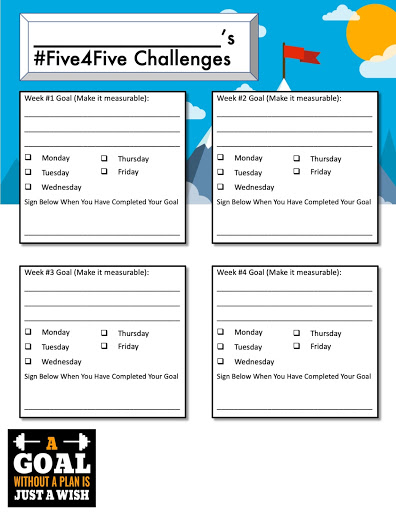
When I find myself feeling stagnant in my own motivation, I often start a #Five4Five Challenge. The #Five4Five challenge was created by Michael Matera, author of Explore Like a Pirate, in the spring of 2018. He posed this challenge through his Twitter and YouTube account, and I was immediately intrigued by the idea. The #Five4Five Challenge asks individuals to select one “thing to do” and do that thing each day for five days straight. What you decide to do is entirely up to you, but you have to do it once a day for each of the five days to succeed. I myself had done six #Five4Five Challenges before the school year began. I had created a vlog, done anonymous acts of kindness, set workout goals, even given up Starbucks for five days straight (that one was brutal). The goal itself doesn’t matter; it’s not about the goal. It’s about intentionality and filling your day with purpose and success. It seemed like the right fit for my learners, and so in the second week of school, I issued them all a challenge.

Now, if I’m being honest, I wasn’t exactly sure how they would respond to it. Would they laugh this off? Would they be into it for a week or two and then fade away as the grind of the semester progressed? Well, I’m happy to share that as I’m writing this, we just finished our fourth week of #Five4Fives (we go two weeks on, one week off), and the experience has not only gone well but it has exceeded all my expectations.

Our implementation has been pretty simple. We created a one-sided handout that has four boxes on it, one box for each of the first four weeks of the course. Each box contains a line for the learner to write out their goal for that week, the days of the week with a checkbox next to each day, and a place for the learner to sign their name if they complete the challenge by the end of the week. 

This is not for a grade and we try to keep our daily commitment to discussing these goals to five minutes or less each class period. We don’t always open class with our #Five4Fives, but when we do, I really enjoy it. It’s captivating and powerful for class to begin with students openly sharing their passions and accomplishments. It’s been such a positive culture piece. It’s also been encouraging to watch students fail for a day and then keep going for that week. I’ve noticed too a greater sense of resilience in the students; in the first week, most would hang their head if they had to share about missing their goal the previous day, but now they confidently share their failures too. In those moments, I try to ask, “So are you going to get back on track tomorrow?” Most answer yes and at least make that goal for another day or two that week.

One month in, I’m really glad that we don’t require that the #Five4Five goals be education related. It’s funny, despite having the freedom to set any goal they wish, several students each week still choose a goal that has something to do with school. The goals that they set often speak to their values, their challenges, and desires for change; by offering them the freedom to create the goal that they want they are more willing to follow through with it. The only stipulation we have set for the goals is that they must be measurable. 

Check out how we are doing! Here’s some of the data we have collected thus far…


#Five4Five Challenge: Number of Students Completing a Certain Number of Goals Per Week

Completed One Goal  Completed Two Goals Completed Three Goals  Completed Four Goals Completed All Five Goals 
Week One 4 Students 5 Students 4 Students 10 Students 25 Students
Week Two 5 Students 4 Students 4 Students 8 Students 27 Students
Week Three 1 Student 2 Students 7 Students 2 Students 36 Students


Though I’m not sure that I needed this data to have a sense that this practice was having a positive influence on our learners, I’m very happy with the story these numbers seem to tell. I’ll leave you to draw your own conclusions from it.

A final piece of evidence that I would like to share comes from our weekly Flipgrid video reflections that students have gotten into the habit of recording. Every two weeks, the students create a video in which they reflect on their efforts in the course and with their #Five4Five goals. This reflection comes from a student named Luis. In week two, Luis chose to set an academic goal for himself, and I’m proud to say that Luis met his goal that week. Afterward he reflected on his experience saying, “…my goal was to do my homework for every class, and I was surprisingly successful. I picked it because junior year I was not good with homework at all and I just had so many missing assignments. And for senior year I want to be able to do all my homework and get some good grades because my grades were terrible last year. I just want to be able to see what I can do, and this goal has really helped me this week.” 

Ugh, I love that! 

So, the next time someone asks me, “Do you have a pretty good group this year?” I’m looking forward to shooting them a smirk and answering, “Yes, they are definitely… challenging.” Challenging themselves, challenging me to be a better teacher and a better person, and challenging the way I think about my responsibility to help them grow both as people and learners.

Andrew is the Host of the Westside Personalized Podcast (bit.ly/WPPodcast)

WestsidePersonalized.com

httpslh4googleusercontentcomiqqmugjnikqwzg6btyvzwn8yfzsage9nrprlahpsorfcrl44eb5hzn2_pz8uaco2qnx61-0k67btfpht52z_t7oxezszosdt1zjtphib

**Interested in writing a guest blog for my site? Would love to share your ideas! Submit your post here.


Looking for a new book to read? Many stories from educators, two student chapters, and a student-designed cover for In Other Words.

Find these available at bit.ly/Pothbooks  


Books available

Core Solutions Provided through the Abre Platform

This post is sponsored by Abre, all opinions are my own.

Abre provides a set of solutions for schools looking to manage and consolidate the different software apps and websites used for student attendance, assessments, communication, student data and much more. Abre offers a robust platform that enables you to choose specific solution areas to get started and then add to it over time, continuing to build additional features of Abre into your school.

Communication

With Abre, you can facilitate faster and better communication within the district, schools, and between home and school. Abre offers a consistent and reliable way to streamline the numerous communications happening within the school and school district. Having a consolidated and reliable platform helps to foster and build home-to-school relationships, promote better communication, and student success.

Learning Management Solution

Abre provides one space where teachers can access the resources necessary for classroom instruction and teaching responsibilities. Included within the Learning Management solution are a group of web apps such as Class. A teacher uses Class to communicate and manage all classroom activity, do grading, post homework and generally manage instruction. The Assessment App allows for easy creation, delivery, and analysis of formative and summative assessments. Schools can organize the curriculum, including pacing guides, for all their classes with the Curriculum App. For tracking progress through a lesson, the Learn App delivers on that. To make sure students are staying on task with their devices, the Focus App ensures that the browser is only being used for teacher-defined websites and documents.

Data Management & Integrations

Abre is all about consolidating data to help administrators, teachers, and students improve. Abre integrates with a large and growing number of other software providers. They even integrate with products that provide competitive solutions to theirs. The Students App is the centerpiece of this solution and provides a clear view of student progress and makes it easy to find all relevant student data in one place. It also saves paper! Rather than students and parents having to fill out and exchange multiple papers, they access forms right from Abre. Some options such as an Acceptable Use Policy (AUP), medical forms, and athletic forms, which are easily accessible within the Abre platform. Individual student plans are also accessible in the Student app. Again, this provides a single place for staff and parents to easily find all their student’s information.

Administrators can access all student data and track growth over time, look at state and local assessments to analyze trends in academic performance. Parents can access student data which includes academic performance, behavior, forms completed, attendance, and state assessments. Access to this vital data is made simple with one platform!

Teacher Professional Learning Solution

For districts looking for better professional development options for teachers, through Abre, teachers can create their own staff and individualized professional development plan for use over an extended time. Abre offers a more flexible solution making it easier for administrators and teachers to create, deliver, and track professional development activities. Abre can integrate schools’ digital courseware and customized courses for delivering staff development.

For completing courses online or in face-to-face environments, districts can offer teachers opportunities to earn badges, micro-credentials, and engage in gamified professional development. This is great for building professional portfolios, as teachers can use these activities to receive CEU credits or hours awarded based on state requirements for continued professional development.

School Management Solution

Similar to Learning Management, Abre provides great functionality for staff to manage day-to-day school requirements. The Behavior App helps with the workflow, easy documentation and tracking student data when either positive or negative behavior needs to be documented. The workflow features are especially helpful for office referrals where other administrators are needing to get involved and having transparency for parents is important. Abre Behavior takes on a significant portion of this manual work.

  • Easy to understand graphs and plots for tracking student progress.
  • Teachers can see details in terms of specific consequences as a result of any behaviors and referrals. The bar graph represents conferences, detentions, in-school and out-of-school suspensions.
  • The behavior app links directly to the student information so everything is readily accessible which leads to a better understanding of each student and their needs.

Beyond behavior, the School Management Solution allows admins and teachers to easily create and manage individual student and teacher plans. Rather than students and parents having to fill out and exchange multiple papers with the school, they access forms right from Abre. Some options such as an Acceptable Use Policy (AUP), medical forms, and athletic forms, are easily accessible within the platform. Whether teachers need to create an IEP, a gifted education plan, behavior or Response to Intervention (RTI) plan, teachers can build exactly what they need and have it live in Abre. And Abre provides a clear view of student progress and makes it easy to find all relevant student data in one place.

Likewise, administrators can work with teachers to create professional development plans using the same solution. It makes sense to have one platform that provides all of these options. For teachers, students, parents and administrators, having access to student data and other information is vital for promoting and tracking student growth. This solution really saves a lot of paper.

Connected Community Solution

Abre sees connecting schools with the communities they serve as critical to student growth. The Connected Community solution facilitates the exchange of important information, data and communications between students and administrators and members of their community. Abre allows a school’s learning partners to register in the Abre platform, roster the students in their programs back to the school, and enable the safe exchange of student attendance and other data. This is critical for schools to evaluate all of the influences that are growing their students. And for learning partners, it is how they can better understand whether their programs are meeting the needs of the students.

As an example, looking toward the future of learning and work, it’s important that we provide options for our students to engage in real-world learning experiences. One outstanding feature coming from the Partners App is where districts can add local businesses into the platform and facilitate connections between students and members of the community. The goal is to manage, track and capture quality attendance data when students take advantage of opportunities for place-based learning, experiential learning, CTE, and service-based learning.

Abre also lets students and staff create digital portfolios based on the work they’ve done. These portfolios are a powerful way of demonstrating, beyond the test scores, what they have learned and the skills they have acquired. Schools can then choose to allow these portfolios to be shared with others such as businesses, other schools, or organizations.

Privacy

Abre is FERPA compliant. The student information is only released with parental permission.

Using Abre is quite simple and I find that it is easy to navigate, which makes it a great choice for all users, whether they are beginners or advanced when it comes to implementing technology. By using a robust tool like Abre, educators and parents have immediate access to a lot of data. Abre is a multi-purpose platform with capabilities to facilitate communication, collaboration, and much more. It provides benefits for teachers for tracking PD, administrators looking to provide a comprehensive and consolidated platform to meet the needs of their schools and students, parents looking to stay connected with student learning and be informed of important information regarding their child’s education.

What made me better

Guest post by Deidre Roemer,  Director of Leadership and Learning West Allis, WI, @deidre_roemer


When I reflect on my skills as a teacher throughout my career, I can think of examples of what I did well and a million things I would have done differently.  I am teaching a class at a local university this semester and know confidently that I am a better teacher now than I was when I was in the classroom. The opportunity to see other teachers in action in my leadership role for the last several years is what has made me better.  I get to speak to educators and learners all the time about what is working well in their classrooms and what they would like to see grow. It includes spending time in many classrooms where we and others are getting it right and learners can articulate the process of their learning in order to create great things.

Professional development that is connected to a vision of our work with meaningful processing time to reflect is how we push teachers to move from single projects to true learner driven practice.  We take a lot of teachers and teams on site visits to schools in our area and across our country who are already doing the kind of work we are trying to do to see it in action. It is hard to find a large comprehensive system that is there yet, so we are often at small charters of specialty programs that are offshoots of schools.  The visits are always amazing as we are able to interact with teachers and learners and see learner driven practice, but often the most important part of the time is the meal after the visit or the long trip home where we can talk about what we saw, process, and plan for what parts we can implement within our system. The goal is not to replicate but to figure out how to ask the right reflective questions of ourselves and one another to tie what we saw to our personal passions and interests and figure out how to bring all of that together to shift the learner experience.

We also spend a lot of our time talking about how this is the kind of learning experience ALL learners should have.  It should not be reserved for some kids in special programs or special schools. The visits with the deep discussions are often the leverage point that takes an educator from trying a few things to a true shift of practice that is more inclusive.  It helps them to be more collaborative as they are often on these visits with other staff from across our district that they might not already know having a shared experience . The power in seeing some things we are already doing well and celebrating those helps us to not be overwhelmed when looking for ways to grow.  The key is to make the time, take the staff who are ready to take some bold steps, and then follow up with them multiple times throughout the year so they have support to keep going with the work.

On a recent site visit, I took a chance and messaged some of the teachers to join us off-site after the formal conference to continue our learning.  Fortunately, they were willing to take the opportunity to discuss their work with us over dinner. It was an impactful experience to listen to teachers that have been doing this work for some time engage in professional discourse about grading, telling their story and standards.  The teachers were open about their own growth over time and how our staff could take pieces of what they saw back to our schools to create a more equitable opportunities for all learners through empowerment. We went back to the site the next day with a new lens on what to look for in learner and teacher observations that we could do instead of being lost in the surface things like the physical set-up.  Things that may have looked idealistic the day before now looked possible. The modeling of professional discourse created space for our team to do the same and ask some great questions about how we can do this work and how it does not have to look the same across all our schools.  Encouraging staff to push boundaries and challenge one another’s thinking is how we look at someone else’s professional practice and find a way to make it our own.

A few things we discover each time we do a site visit became apparent:

  • This work is messy.  It takes deep dialogue on what is right for learners and how to give up control in a way that is not always natural for teachers.
  • Change is uncomfortable and unpredictable, but easier with the proper support.  People tend to say, “Change is hard.” There was a great article from the Harvard Business Review in January of 2008 that explained why that phrase becomes a self-fulfilling prophecy that permits us not to try.  We have to be able to think bigger than that.
  • We need to get more comfortable with professional discourse and open discussion about where we are now and where we can go that may push our thinking.
  • Teachers have to connect their own passion to their work in schools.  When it is authentic to the teachers, it becomes authentic with the learners.
  • Our teachers need to see the work in action often and learn how to get and give productive feedback.
  • The standards are always embedded in innovative, learner driven work.  They just aren’t always owned solely by the teacher.
  • Many times, the teacher in a learner driven classroom finds joy in their work.

We have evolved our district wide professional development to hopefully reflect all of these.  Our teachers will have time in small groups to learn their standards well enough to empower learners to take ownership of mastery of those standards within cross-curricular projects.  Staff will then have the opportunity to sign up to see another teacher modeling classroom practice that is learner driven. They will be our own internal site visits. We will use structured protocols to get and give feedback at each site to ensure we are using the time for genuine collaboration as we know that is what drives teacher practice.  We can’t make more time than we have, so we use the protocols from The School Reform Initiative as a way to restructure the time and make sure it is used for purposeful feedback and collaboration.

Our teachers hosting visits that day have been invited to participate for the first round as they are already trying new things, having success with learner empowerment and finding joy in their work.  It is not expected that anything that is “perfect” or a “show”.  It is meant for one teacher to share their experience and encourage others to try new things with an open dialogue about how and what supports they will need. Our goal is that our teachers engage with one another to see what’s possible, work together to get there for every learner and find joy in the work.


**Interested in writing a guest blog for my site? Would love to share your ideas! Submit your post here.


Looking for a new book to read? Many stories from educators, two student chapters, and a student-designed cover for In Other Words.

Find these available at bit.ly/Pothbooks  


Books available

Education Write Now: An Amazing Experience

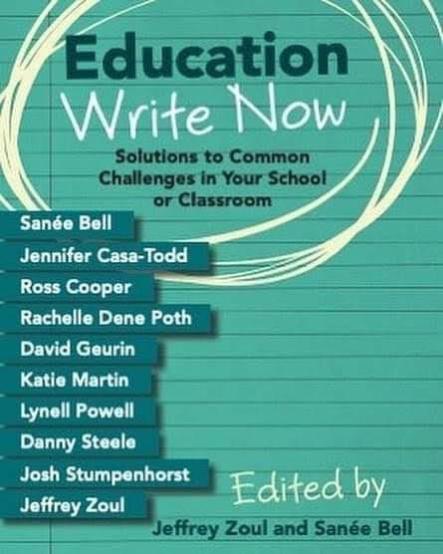
To say that the summer of 2019 was tremendous is an understatement. Besides having time to spend with family and friends, I enjoy having extra time in the summer to participate in professional learning opportunities and to connect with educators from around the world. As educators, it is important that we continue learning and involving ourselves in opportunities to build our own skills and also to contribute to the personal and professional growth of others. I am fortunate to have been asked to be one of the writers for this year’s Education Write Now book.

In July, ten of us met in Boston for three days to work on chapters that will become part of Volume 3 of Education Write Now, a book whose proceeds will go toward The Will to Live Foundation, a non-profit organization founded to support teen suicide prevention. The time together started with a welcome from Jeff, an introduction to what the organization does, and an opportunity to hear from John Trautwein, a father who lost his son to suicide. John created The Will to Live Foundation to honor his son and to provide support for other families and their children.

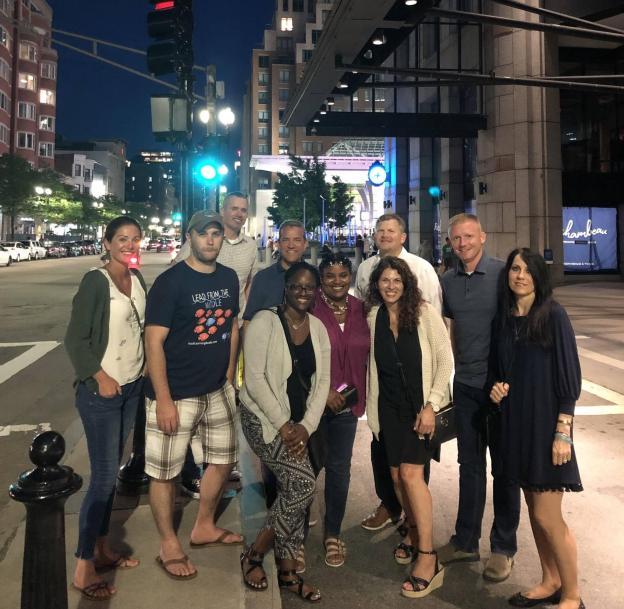
It was an honor to be a part of this project and work alongside and collaborate with Jeff Zoul, Sanee Bell, David Guerin, Josh Stumpenhorst, Jennifer CasaTodd, Danny Steele, Katie Marin, Ross Cooper, and Lynell Powell. It was a great experience, although initially, the thought of writing a chapter within a short period of time of two days was a little bit stressful. However, having that time to work together, have peer feedback time, to listen and share out what we were writing with the other collaborators, made all the difference. It just reaffirmed the importance of connections and building those professional relationships. We need to make time to share what we are doing in our classrooms, exchange ideas, solve problems together, and embrace risks and face the challenges that are part of education today, but to do so with a supportive network.

The theme for this year was “Solutions to Common Challenges in Your School or Classroom.” In thinking about this theme, I decided to write about teaching in isolation and sharing my own story of how I chose to be isolated for many of my years of teaching. In my chapter, I explore how isolation happens and offer ways for educators to escape what can sometimes become an isolating profession.

Here are a few excerpts from my chapter, Chapter 2: Choosing to teach in isolation is a choice to isolate our students from a world of learning opportunities.

Have you ever experienced any of the following?

You have to make your very first phone call home to a parent and you are worried that you won’t say the right thing.

You are going to be observed for the first or fifteenth time, and you are worried that you will make a mistake or not use the right instructional strategies. The class starts in five minutes.

How many of these statements can you relate to? For each one, think about if you reached out to someone or just kept it to yourself. Did you choose isolation rather than asking for help?

Clarity:

You are not alone

For years I struggled with classroom management and student behaviors. Rather than ask for advice, explore resources, or try to work it out by talking with my students, I kept it to myself and did my best to make it through each day. I hoped for improvement, but I did not actively try to make changes. I did not ask for help or even talk about the problems that I was having. I did not know where to begin but at that time, so I thought that I was better off keeping it to myself. My biggest mistake was hiding in my classroom and not reaching out to colleagues or other educator friends.

Isolation is not something new

Life as an educator, trying to complete everything that we need to can lead to a career spent in isolation if we let it.

Ten ways to break free or avoid isolation

There is so much potential for connecting regardless of where we are and the amount of time we have. We must take the first step and just start somewhere. We can leverage technology to check-in with colleagues, even if they teach next door to you. Sometimes seeing our neighbors does not happen on our busy days, which are most days. There are ways to stay connected while driving to and from school, taking a walk, wherever you are and on your schedule.

In the end

The most important thing to remember is that you are not alone.

You are not alone in feeling like you do, like the job is difficult, or there are too many things to remember, too many initiatives to keep up with.

We all understand the importance of asking for help; Those who achieve big things are the ones who accept it when it’s offered. Simon Sinek

The choice is now yours, how do you want to connect?


Be sure to check out next week’s post from Jennifer Casa-Todd, Chapter 3 “The Challenge: Broadening our Definition of Literacy.”


Reaching All Learners

Guest Post by  Laurie Guyon, @smilelearning

If you have met me at a conference, a workshop, or in a school, you would consider me an extrovert. I’m friendly, always smiling, and comfortable talking to anyone.  Even as a self-proclaimed chatterbox, I get anxious in certain social situations. One on one conversations makes me nervous. My mind reels with thoughts like “will I talk too much” or “will I overshare” or “will I say something stupid” or “what if there is a lapse in the conversation’.  These thoughts have caused me to avoid what might have been a wonderful conversation. I try to step outside my comfort zone and engage in these moments more often. I know that these thoughts and ‘what ifs’ are part of being human.

“I restore myself when I am alone.” – Marilyn Monroe

While reflecting on these moments, I thought about my teenage daughter.  She is a self-proclaimed introvert. Her anxiety in social settings is completely the opposite of mine.  She is fine one on one, but crowds get her inner thinkings reeling. She hates public speaking and will avoid group situations whenever possible.  She once told me that my teaching style would give her hives because I like a loud and active classroom. She prefers quiet and independent work. In our classrooms, we have students with all different communication abilities and fears.  How do we foster an environment that can support all learners and communicators?


In the TED talk about introverts by Susan Cain, she defines shyness as fear of social judgment.  She states that introversion is more about how you respond to stimulation.  In the classroom, there is a multitude of stimulation. These can be visual noise, people, and expectations.  How each of our students responds to this stimulation tells us if they are comfortable or not. We may even discipline students based on their behaviors.  But, what if we are pushing students outside of their social norms?


Bob Dillon and Rebecca Louise Hare ask educators to make sure that there are spaces for all learners in their book, “The Space: A Guide for Educators”.  They mention creating areas that give students a chance to learn and work so they can thrive. When I taught 6th grade, I created a variety of learning spaces.  I then asked my students to choose the spots in the room where they feel they could learn best. I learned so much about my students by giving them the agency to choose.  I utilized choice boards to give students autonomy. Students were more likely to create quality work when given a choice on how they would showcase what they learned.

Have you ever gone to a presentation or a workshop and the presenter asks you to do something you don’t want to do?  For example, I was in one recently where they asked us to do charades. I am not a fan of playing that game for a variety of reasons, but we had to.  I did everything I could to be the guesser and never have to act it out. Then, at ISTE I lead a mini engagement session with the amazing MCE Melody McAllister and Nearpod.  In the session, we had to lead the participants in a rousing game of charades. Once again, I was outside of my comfort zone. The energy of Melody, the Nearpod team, and engaged educators allowed me to participate in the activity.  It was the support and encouragement that allowed me to be successful.

“The greatest art is to sit, wait and let it come.” – Yogi Bhajan

To reach all learners, we need to think about our learning spaces.  We need to think about the amount of agency we give our students and give them a chance to be inside their own heads.  We also need to encourage them to try and do what may not be in their wheelhouse. We can support them with encouragement and time to build on their comfort level.

We want to maximize talent and success for all our students.  This does not need to always be group work and active activities.  Sometimes, the best activity is in speaking softly or to work alone in silence.  But sometimes, it’s using our talents as part of a community that can make us successful.  Finding this balance is what will help us reach all learners.  


Interested in writing a guest blog for my site? Would love to share your ideas! Submit your post here.


Books available

bit.ly/Pothbooks


Learning and Growing as Educators On A Busy Schedule

Educators have busy schedules and one thing that I hear quite often is that there never seems to be enough time. We need time to plan for our classes, to complete different tasks required by our roles in education, and of course, most importantly is time to spend with our students. But in order to be at our best, we need to find time to take advantage of different learning opportunities to stay informed of best practices and emerging trends in education. We also need time to connect with other educators. It’s through these relationships and finding the right tools that we will grow personally and professionally, and bring our best selves into our classrooms each day. The challenge is not so much in finding resources, but rather in finding the most valuable ones that will fit into already busy schedules.

Personally, I stay involved in a lot of different ways so I can continue to build my professional knowledge and my connections with other educators around the world. Having chosen to spend many of my first years of teaching isolated, I missed a lot of opportunities to learn more, to do more, and to provide more for my students. A few years ago I made a shift to becoming a more connected educator by leveraging the technology available through social media. It has been an ongoing personal and professional transformation. Becoming connected has increased my awareness of the plethora of learning opportunities available for educators. I have changed my teaching methods, broadened my perspective of strategies and best practices in education and have more options for getting the support that I need to bring new ideas into my classroom.

Here are different ideas for ways to learn on any schedule. These options create a lot of possibilities for how, when, and where we can engage in professional development and become more connected educators. With the summer break coming for many educators, it can be the perfect time to explore new ideas.

Social Media

Over the past few years, there has definitely been an increase in the amount of social media used by educators for professional learning and networking. Depending on your level of comfort and how often you choose to interact, there are many ways to learn, crowdsource ideas and access different perspectives and people with different backgrounds and experiences.

  1. Twitter. Although I was hesitant for many years to create a Twitter account, once I did a few years ago, my Professional Learning Network (PLN) has continued to grow. Whether you have time to engage in a nightly or weekly Twitter chat or just follow one of the many hashtags related to education, there is something for everyone when it comes to Twitter. Do you have ideas and want to gather more? Create your own hashtag and use it to invite people to share their ideas with you. Post a poll to get quick feedback, find educators to follow and create a list to keep track of resources and ideas shared. In addition to hashtags, there are many chats and topics to follow. If you want to find educators to follow on Twitter, David Lockhart created a list of 100 educators to look into.
  2. Voxer. A walkie-talkie messaging app that promotes communication and collaboration. It’s easy to get started with and it provides a lot of different ways to add to your professional learning. Use it for somewhat asynchronous conversations with a colleague, create a small group to discuss specific topics such as blended learning, project-based learning or augmented and virtual reality. Using Voxer for a book study also works very well. It provides a great platform for talking about a book and sharing resources, without having to be in the same space at the same time. There are even groups on Voxer, you can search the list and join them. It’s nice to be able to listen to the messages on the way to or from school, perhaps during a lunch break, or while making time for a walk and self-care.
  3. Facebook. Initially used with friends and family as a way to share what’s happening in each other’s lives and maybe to reconnect to organize events like family or class reunions, Facebook is now used by a lot of educators. There are many educator accounts to follow as well as groups of educators to join.

Information Sharing

Sometimes it is easier to find the information that you need, especially information which is current and offers a lot of resources, by exploring the different digital forms of information such as books, blogs, and podcasts. Knowing that the information is credible, up-to-date, and provided by educators with experience, is what sets these options apart from other options.

1. Blogs are a quick way to get information from a variety of sources, especially when you look at different blogs available from publications such as Getting SmartEdSurgeTeachThoughtEdutopiaeSchoolNews and EdWeek to name a few. Searching the list of top education blogs to follow is helpful for finding specific topics, content areas, and grade levels, or even for opportunities to contribute to a blog.

Many educators have personal blogs which offer a lot of inspiration and share ideas and even struggles. You can browse through this list of educator blogs to follow. Some educators that I follow are Mandy FroehlichJennifer GonzalezEric SheningerKasey BellKristen NanMatt Miller, and David Lockhart.

2. Podcasts can be a great way to pass time when traveling to and from work, relaxing or even during exercise. Most podcasts are short enough that you can listen to an episode and pick up new ideas and inspiration. Over the past year, there has been an increase in the number of podcasts available to teachers, whether created by educational organizations or simply teachers wanting to share their experiences and inviting others to join in the conversation. Some that I regularly listen to and which have been recommended to me are: Edumatch Tweet and Talk, Jennifer Gonzalez (Cult of Pedagogy), Vicki Davis (Ten Minute Teacher), Will Deyamport (The Dr. Will Show, the Edupreneur), Barbara Bray (Rethink Learning), Brad Shreffler (Planning Period Podcast), Don Wettrick (StartEDUp),  Google Teacher TribeTeachers on Fire, Andrew Wheelock (Coffee with a Geek), Dan Kreiness (Leader of Learning), and Denis Sheeran (Instant Relevance Podcast).

3. Books. There are more educational books available for professional learning than ever before. It’s easy to find book recommendations by following specific hashtags on Twitter or looking at different curated lists of education books. For some book recommendations, I generally follow the hashtags #bookcampPD#PD4uandMe, and #Read4Fun, which are led by different educators. The Read4Fun group also shares books in a Voxer group. For a list of recommended books, ISTE crowdsourced recommendations last year and I also created a survey to gather ideas from educators. Some of the books mentioned on the list include: Teach Like a Pirate by Dave Burgess, The Innovator’s Mindset by George Couros, Courageous Edventures by Jennie Magiera, Culturize by Jimmy Casas, LAUNCH by A.J. Juliani and John Spencer, Lead Like a Pirate by Shelley Burgess and Beth Houf, Start with Why by Simon Sinek, Daring Greatly by Brené Brown, Take the L.E.A.P.  (Elisabeth Bostwick), and What School Could Be by Ted Dintersmith. Many publishers have books coming out on an almost weekly basis it seems. Check into DBC ConsultingEduMatch PublishingIMpress and ISTE to explore more books available.

Online Learning Opportunities

When we leverage technology in a way that opens up powerful learning opportunities and pushes back the limits based on time and location constraints, we find innovative ways that we can learn.

4. Online Learning Communities. There are different learning communities to join in for professional development. As a Common-Sense Certified Educator, you have access to the newest tools and resources. By becoming Google Certified or a Microsoft Innovative Educator Expert, educators can enroll in learning modules, training sessions, and receive a digital badge for completion of each different module. Besides building PLN, these opportunities offer yet another way to learn on your schedule, in a time and place that meet your own needs.

5. Summits and Webinars. There are organizations that provide webinars for educators, many of which are offered free of charge or a minimal fee or are subscription-based. For example, if you take advantage of providers like EdWeekSimple K12, or ASCD there are webinars available on a variety of different topics that work with your schedule. As a member of ISTE, joining in any of the PLNs gives you access to a series of weekly webinars and sometimes even more than once per week depending on the PLN. These webinars can be viewed live or as recordings when most convenient to you. The topics are always current and in some cases cutting edge or emerging trends, so you can keep informed of new ideas and teaching strategies, better than you ever could before.

Throughout the year there are even online conferences, or “Summits” which provide a series of speakers and sessions, sometimes held over a multi-day format. These are offered free and in my own experience, have always provided a wealth of knowledge and resources. Personal favorites include the Ditch Summit hosted by Matt Miller, Hive Summit hosted by Michael Matera and EdCamp Voice on Voxer, started by Sarah Thomas of EduMatch.

It’s clear there are many options and resources available to educators for professional development. It simply takes thinking about an area you would like to learn more about, exploring one of the choices and giving it a try.

Summer: Family, Friends, Learning


This slideshow requires JavaScript.

When people find out that I am a teacher, one of the first things they say is “it must be nice to have your summers off.”  Yes, it is, but in all honesty, I would be fine if my school switched to year-round schooling. I enjoy being in the classroom and look forward to each day and what it brings, even the challenges that might pop up. More than anything, I love working with students and learning from them. My reason for loving the summer is not because I don’t have to go to work; it’s because it is an opportunity to have more time with family and friends and to take part in professional development and reflection.

Time for Reconnecting

Life gets so busy sometimes that before you know it, weeks and months pass by and you might find that you haven’t had a lot of time to spend with family and friends.  Of course, technology helps us to stay connected more than we could before. Whether we use text messaging, different apps, FaceTime or even a hangout to see our family and friends, it’s not the same as time together in person. More days at home means more time for family and friends.

I’m also excited for conference season to be here and to have time to spend with some of my closest friends learning together and relaxing. It was an amazing week at ISTE 2019 in Philadelphia and it is hard to believe that it has already passed! Time to start prepping for ISTE 2020!

I presented several sessions while at ISTE, which is such a fantastic conference that brings so many educators from around the world together every year.  We had so much fun and some of these pictures totally capture that well. It is great to spend time with my 53s and the 4OCFPLN and meet some PLN for the first time in person.  I loved getting to finally meet (in person) Elisabeth Bostwick, Rich Czyz, Tamara Letter, Scott Nunes, David Lockett,  Annick Rauch, Stacey Roshan, the Gimkit team of Josh and Jeff, and a few members of the 4OCFPLN that I only knew through Voxer!

Now I am prepping for the next learning adventure which is coming up in 2 weeks. I’m fortunate to be part of the EdWriteNow Volume 3 group of authors who will meet in Boston to write the book together. An added bonus is that I will get to spend extra time with my good friend Jennifer Casa-Todd while there. After Boston, a few of us are going on a writing retreat to Nashville. While each of us will be working on our respective books, it will be nice to spend time together!

Knowing that I will spend time with my core groups, the 53s and the #4OCFPLN, plus meet other members of my PLN for the first time, in real life, is one of my favorite things about the summer.   


This slideshow requires JavaScript.

Time for Recharging

Summer is a time for a lot of things, one of the most important is self-care and recharging. So doing some normal summer things like sleeping in late, catching up with friends and family, going on vacations, ditching our devices and not worrying about setting the alarm are important for our self-care. Summer is also a valuable time for teachers to do even more on a personal and professional basis like think about their practice and take advantage of the opportunities that are out there for personal and professional development and growth. Attending conferences like ISTE give me a renewed excitement for the work that I do. My energy rarely dips when I am at these events, surrounded by friends and learning.

Time for Learning

A more flexible schedule for the summer means more time for attending conferences or webinars, joining in book studies or Voxer groups, or connecting within different learning communities. It might be easier to get involved in a Twitter chat, whatever it is during the school year that just doesn’t seem to fit as part of your routine, make it part of your summer routine.


There are lots of opportunities out there and my advice is to decide what is best for you. Do you want to be in one Voxer group or join one book study? Then make that your focus. Or maybe you want to start a blog or create a  new website. It’s up to you because it is your time to decide how to spend your summer break. I’m thrilled to be part of the summer BookcampPD book study with my book In Other Words. Looking forward to discussing the six books included in the study and of course, the two weeks in July (July 15-28), when we get to talk about my book and share ideas and takeaways from it.


Enjoy yourself

Each summer gets better and better, and it’s not because I traveled and spent hours on beaches, or to the contrary, kept idle. It is because I have used the time to learn more, to read, to connect, to reflect and to prepare for the next year.  My summer goal is to work so I can start stronger and be better than I was the year before. Whatever you do this summer, make time to recharge, connect and learn. And don’t set the alarm 🙂


This slideshow requires JavaScript.

TeacherCast Educational Network | Developing Standards-Based Instructional Technology Integration

Technology Integration - Instructional Coaching - Productivity Secrets for Educators

Leadership Liner Notes: Sean Gaillard

Built on Connection. Tuned for Impact.

Stories by Thomas Oppong on Medium

Dr. Rachelle Dené Poth @Rdene915 Educator, Consultant & Keynote Speaker, Author, Attorney #THRIVEinEDU

Hooked On Innovation

When Innovation slaps you in the face, we slap back.

Teach Better

Dr. Rachelle Dené Poth @Rdene915 Educator, Consultant & Keynote Speaker, Author, Attorney #THRIVEinEDU

BrianKulak.com

Dr. Rachelle Dené Poth @Rdene915 Educator, Consultant & Keynote Speaker, Author, Attorney #THRIVEinEDU

The Principal of Change

Stories of learning and leading

Mandy Froehlich

Dr. Rachelle Dené Poth @Rdene915 Educator, Consultant & Keynote Speaker, Author, Attorney #THRIVEinEDU

Katie Martin

Informed by research, refined by practice

#RocknTheBoat

Rocking today's classrooms, one teacher, student, and class at a time.

User Generated Education

Education as it should be - passion-based.

Learning as I go: Reflections & lessons learned

Dr. Rachelle Dené Poth @Rdene915 Educator, Consultant & Keynote Speaker, Author, Attorney #THRIVEinEDU

Serendipity in Education

Join me, Allyson Apsey, as I stumble upon the fortunes of learning, laughing, and celebrating alongside incredible people.