#ISTE16 Part 2: Highlights & Takeaways

#ISTE16 Part 2: Highlights & Takeaways
By Rachelle Dene Poth

This post is part two of #ISTE16 reflections from Rachelle. Click here to read part 1: Let’s Talk About Relationships.

Where does one start to describe the highlights from a conference experience like ISTE? The tremendous number and types of events offered during this experience make it a real challenge to focus on only a few here. There are so many wonderful things that you could highlight about the conference. With numerous concurrent events, pulling you in so many directions and with all of the choices, how can you possibly decide on a schedule? It definitely is not an easy task, but it does not have to be difficult either. You just need a little focus.

So how do you focus? Talk to people about some of the “must” events, but also think about what your personal focus might be. What are you hoping to gain from attending ISTE? So many choices. I believe that no matter which option you choose, you can’t be wrong because of the endless opportunities available at a conference of this magnitude.

Planning with #ISTE15 in Mind

Even though I had attended ISTE last year, and had a pretty good idea of what to expect, I don’t know that I was any more prepared. It seems to me, that each day had one event people considered to be a “must attend.” Aside from having this one focal point, the rest of the days were filled quickly with a combination of time spent at the poster sessions, playgrounds, Keynotes, Ignites, and 1 in 3 sessions. Every day was also filled with networking and connecting everywhere: stopping in the Expo hall to grab some swag; hanging out in the Bloggers Cafe and the PLN Lounge; enjoying ice cream and shopping for ISTE wear and books at ISTE Central; and so much more.
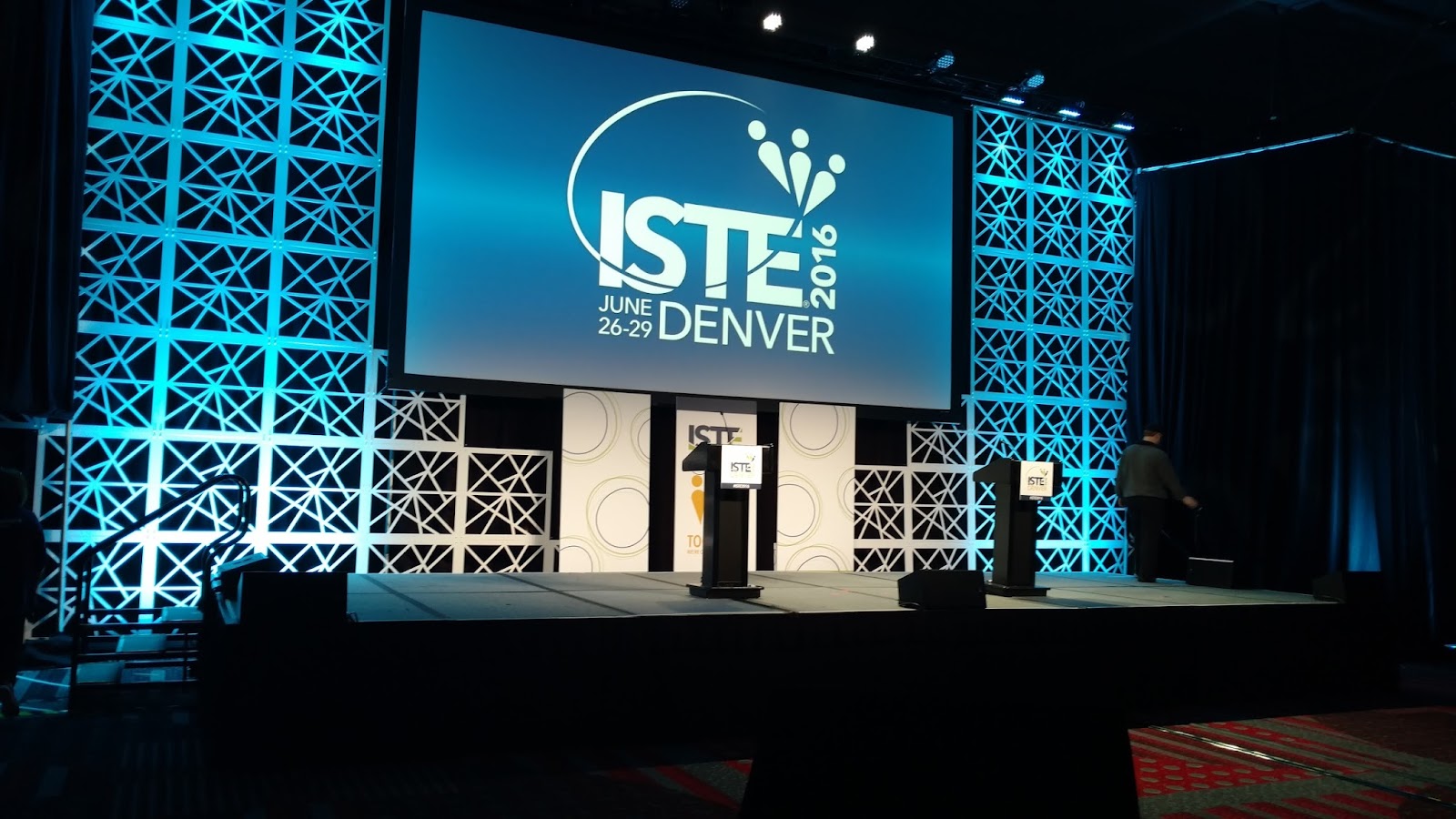
With so much to do, I think sometimes it’s better off to not put too much thought into having the “master plan/schedule” because you don’t know who you might meet, what you might find or where you will end up once you enter the convention center. It is so easy to be pulled in so many different directions, so it is always a good idea to have a flexible “plan” of where to start but keep your options open because there’s a whole lot going on out there in the world of ISTE

My #ISTE Highlights

A lot of people come in for the pre-conference events starting on Saturday with Hack Education’s ISTE Unplugged and the Mobile Learning Network’s Mobile Megashare. Both of these offered opportunities for people to meet up with their Twitter friends or “tweeps”, make new connections and do a lot of learning and networking. The great thing about these two events on Saturday is that there are so many diverse topics for discussion and so many people to share and brainstorm ideas with. And nobody says you have to stay at either one for the whole time. Just like the EdCamp “law of two feet”, you can go back and forth whenever you want, because you are in charge of your learning. This is your personalized PD. Enjoy the time to CHOOSE what you what to learn about.

For the Mobile Megashare, there were 24 tables each with a presenter or presenters facilitating a discussion about a topic. Attendees were able to choose a table to join in and could come and go as they wanted, or just move about the room and listen in and participate in a bunch of different conversations, moving around from table to table and idea to idea. .

There were two unconference events attached to ISTE, #HackEd and Teachmeet. #HackEd was much like a traditional Edcamp, and with TeachMeet, you can submit an idea to present on a topic for either a 2, 7 or 20-minute time period. It’s another place to connect and make new friends, and really build up the excitement for the rest of the conference.

Sunday night kicked off officially with the Keynote speech by Dr. Michio Kaku, who questioned whether we are “equipping students for the 1950’s or cultivating future ready learners.” The Balco Theater was packed, and more people gathered in the Bloggers Cafe to spend some time collaborating and to listen in to the Keynote. In the first two days alone there were many opportunities for personalized professional development and learning.

More Highlights

New #ISTE Student Standard: One of the highlights this year was the launch of the newISTE Standards for Students. The updated version was released and includes 7 standards of student statements, with focus on empowering student learners and giving students a voice through technology. There was a lot of excitement and discussion of these new standards and the focus toward student-centered learning.

Keynotes:
The two other inspirational and motivating keynotes were given by Dr. Ruha Benjamin and Michelle Cordy. Both shared experiences and messages that called upon educators to take action to provide opportunities and digital equity for all learners.

#CoffeeEDU: If you’re not an early riser, then get up early and go to #CoffeeEdu. Join in the conversations, get a great start to the day, talk with Alice Keeler and make some new connections.
Parties!: If you don’t normally stay out late, then make sure you get to the Gaggle party or EdTech Karaoke. The Gaggle Party was held at the Denver Athletic Club, multiple levels of nothing but fun and ETK was at the City Hall Events Center. Both of these events are a lot of fun and well attended, so you need to at least make some time to stop in for a bit to find out what the buzz is all about and why so many people are so quick to get those badges and passes to attend.
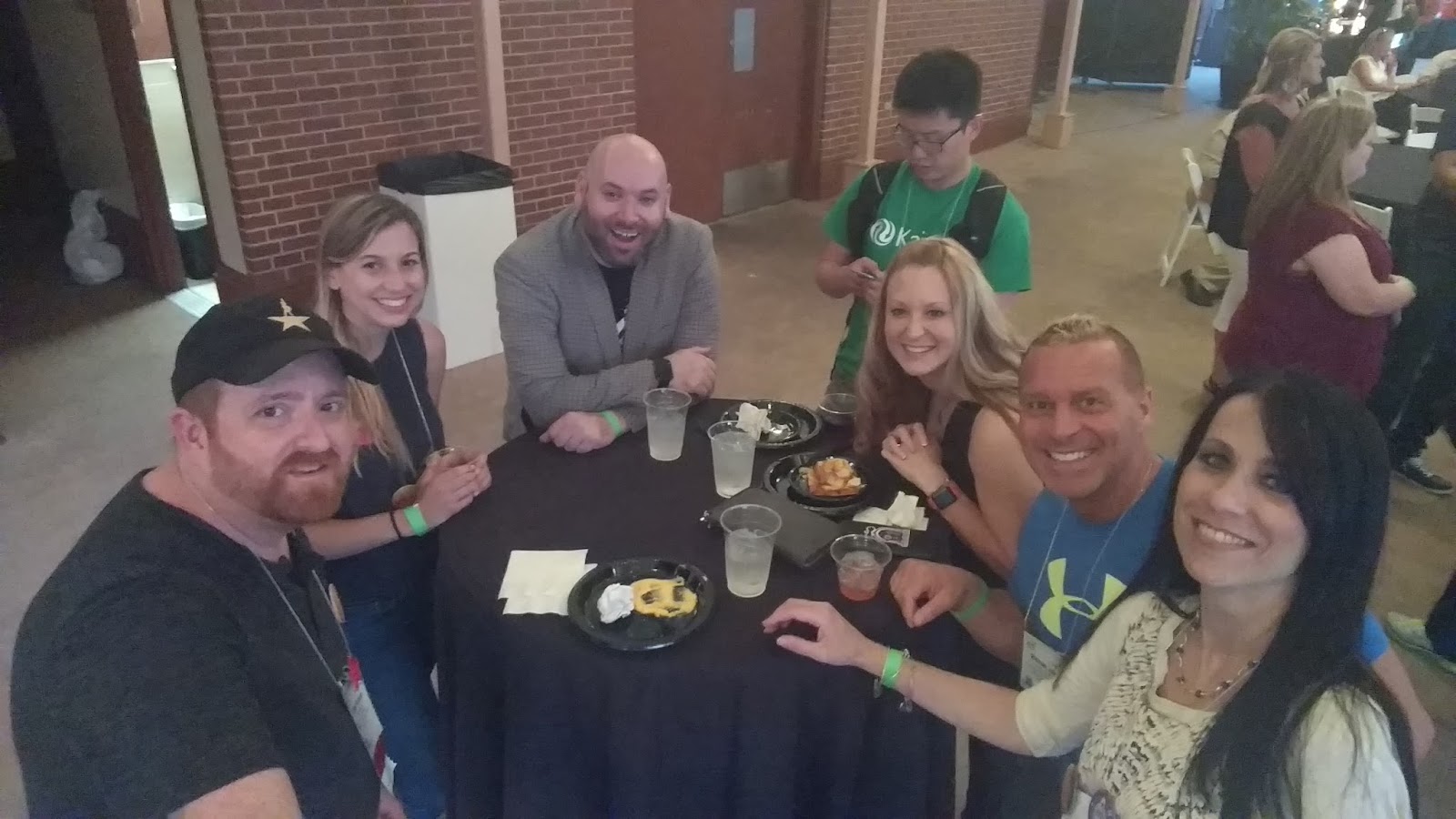
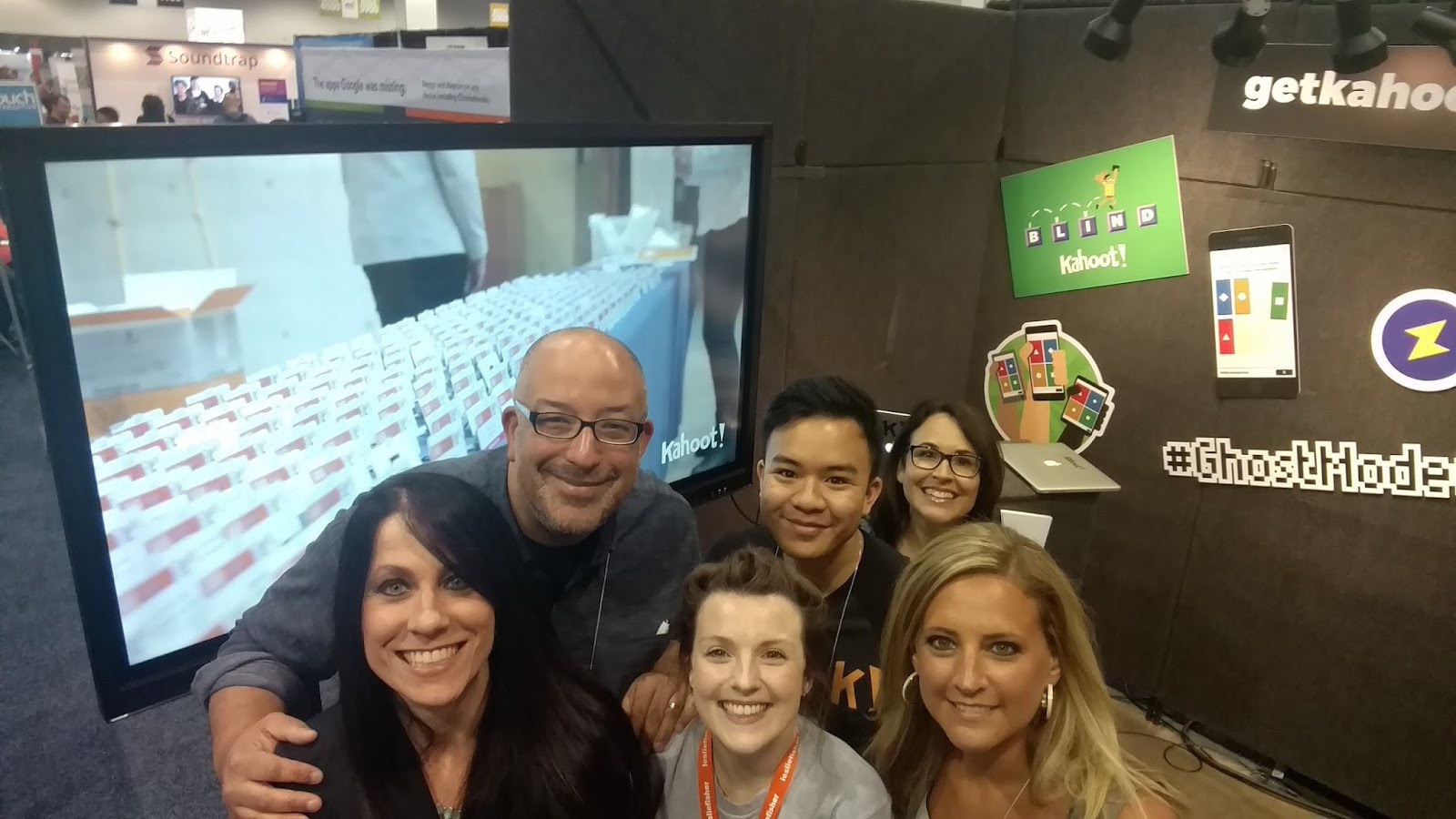
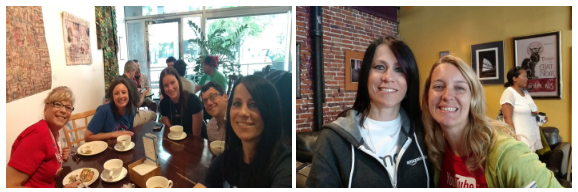
Hanging at Gaggle: Sean Farnum, Melanie Broder, Bryan Miller, Edward Sun, Katrina Keene & Michael Jaber
Sean Gaillard, Fran Siracusa, Mandy Froehlich and Kahoot!

At #ISTE16, the opportunities for learning came from all directions. Everything and everyone is always moving. Doors opening to sessions, lines crowding the hall, students excitedly sharing their work, drawing you into their poster sessions, and all of the different tables and topics that each of the playgrounds offered. It is hard to pass any one of these opportunities up. And it’s even harder to decide when to stop and when to keep going. It’s variety and connecting that made this learning special.

Planning Ahead: #ISTE17

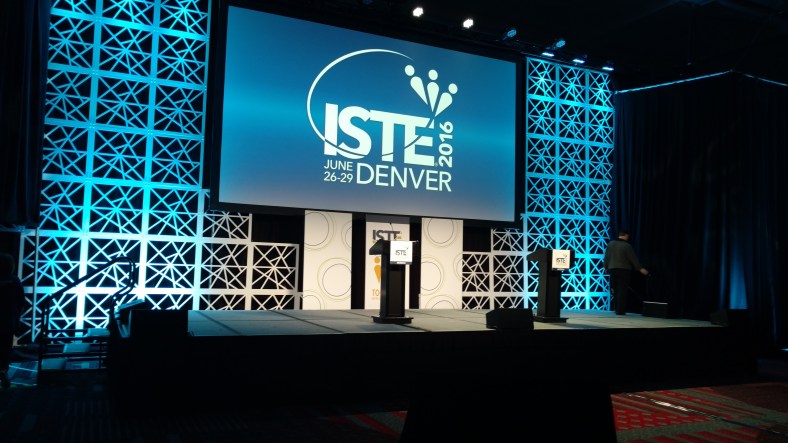
Now is the time to plan your schedule for #ISTE2017. The location for next year is San Antonio, TX from June 25-28, and now is the time to start planning ahead. Not deciding on where or how you want to spend your time while there, but planning to be there to experience the awesomeness of ISTE and the Connected World. See you in San Antonio!
What are your takways and highlights from #ISTE16? Share in the comments or on Twitter with #TheEduCal!

ISTE 2016: My takeways

#ISTE16 Takeaways Part 1: Let’s Talk About Relationships

By Rachelle Dene Poth

ISTE Takeaways

Let’s talk about the relationships (part 1 of a series)

Rachelle Dene Poth

ISTE (International Society for Technology in Education) is a conference that draws in people from all over the world and all levels of education and technology. With an estimate of close to 20,000 people from 70 countries in attendance, this year’s conference was tremendous. An event so large but yet at times seems so small, when you find yourself running into the same people in different areas of such a large event space. It has so much to offer, that it is hard to do it justice by summarizing or simply writing about one aspect of it.  So I thought I would highlight a few of the biggest takeaways that I had, and ones which I gathered from others.


Going to ISTE? What can you expect?
There are a lot of discussions and questions leading up to the conference. For people attending for the first time, the most common questions are: What sessions should I choose? What type of clothing is appropriate? What items should I carry in my bag? What should I expect? What are the “must do” events? and many more questions like this.  Simply put, where do I begin?

I myself was a first-time attendee last year and had absolutely no idea what to expect.  I had been to many different conferences, but none as large as ISTE. I was nervous about not really knowing a lot of people there.  I was fortunate to have just gotten involved with PAECT (Pennsylvania Association for Educational Communications and Technology) and two of the ISTE networks (MLN and Games & Sims).  Being involved with these organizations helped because I knew some people and had some events lined up, but I figured the chances of seeing them with all of our different schedules, were not too likely.

PAECT Friends

IMG_20160626_173826603_TOP-COLLAGE

I tried doing some research, asking questions on social media, reading through and studying the ISTE website to learn as much as I could. I think I studied the program multiple times every day, each week leading up to my travels to Philadelphia. I had a nice schedule planned out, my favorites marked and areas that I wanted to focus on, so it seemed like I was ready to go.  But as I quickly learned last year, and definitely felt the same this year, is that it really doesn’t matter what you decide to do, what schedule you set up to follow, whether or not you know anyone, because no matter what decision you make you can’t go wrong. Honestly. There are no “wrong” or “bad” choices because there are opportunities everywhere. Even if you have a schedule, it is really tough to stick to it. And if you are traveling alone for the first time, don’t worry about being alone. It is a place for building relationships and making connections above anything else. So if you want to learn what ISTE is about let me start by telling you about the relationships and why they matter.

(Photos from #iste2016 Twitter)

(Photo from TechieTeacherTalk @GUAMlovesAT)


It starts with relationships: The value of connections

I had to conquer a big fear this year: my fear of flying. Last year, I traveled by Amtrak to Philly, and it was no problem. I don’t mind traveling alone, I use the time to read, participate in Twitter chats, catch up on work, and enjoy the trip.  But this year, preparing to travel to Denver, with my fear of flying, something I have not done in 21 years, was a bit difficult.  I have avoided air travel, preferring to drive or take a train any distance. However with Colorado being a bit far of a drive, bus ride or travel by train, I was not left with much in the way of options. So that meant flying. Fortunately, I had a good friend providing me with the support to help me get to the airport, get on the plane and get to Denver without worry. At least not too much. I just kept thinking about the week ahead.

My support for the travels started with another conference.  Karyn and I met at a Keystone Technology Innovator Summit in Pennsylvania a few years ago. I was also fortunate that at Karyn had another friend traveling with us, Chris, so I had two amazing companions to ease my nerves and it really made a huge difference during the flight and throughout the conference.

Chris Stengel and Karyn Dobda


Relationships started through Social Media.  Now aside from the travel, another tremendous part of this experience was a group that originated on Facebook, educators connecting in an ISTE2016 group.  The group then transferred into a Voxer group created and led by Rodney Turner. We communicated in the weeks leading up to ISTE. Lots of conversation, lots of questions and more than anything a ton of inspiration and excitement fueled by the chatter, the shared experiences, the anticipation and even more so, motivation provided by the guidance of our named “Concierge Rodney.”

He started each day with a Vox, a countdown to ISTE, an inspiration and a story.  He brought a bunch of people together, a group of connected educators, who became friends, excited to meet F2F after developing these relationships. Becoming friends through technology. I could hardly wait to meet the members of this group, officially, because we had already learned so much about each other. And we even had t-shirts and stickers made for our group, thanks Mike Jaber.   

(Meeting in Bloggers Cafe, VoxUp)

And at conferences like ISTE, meeting your “Tweeps” and #eduheroes finally F2F is a possibility.  Even though we all feel like we already know each other, after many Twitter chats and social media interactions, it is nice to be together and talk (about technology) without the technology.

Sean Gaillard and Natalie Krayenvenger     (Photo from Katrina Keene)


First steps for ISTE

Having these core groups to connect with is something I highly recommend.  All it takes is one or two people and you can build your entire group, so at no point do you feel alone during the conference. One of Rodney’s messages was to be on the lookout for people you notice sitting alone. If you see someone sitting alone, go over and start a conversation, invite people to join you, be welcoming, and it worked. We had our “VoxUp” in the Bloggers Cafe on Sunday before the Keynote, and what a great experience that was.  There were lots of hugs, laughs, smiles and excitement.   This was truly a defining moment.  In looking around, people joined in this group, new connections were made, the excitement and power of this PLN was contagious.  All it took was joining in a group, taking that step and becoming part of something, and having a support system already in place.  Looking around the Bloggers Cafe, there were a lot of small groups of people, gathered to listen to the Keynote, take pictures, make new connections, network and just to absorb everything that was going on. No matter where you looked, you could see the energy and excitement. The energy was so high and it was just the starting point for what would be a phenomenal 3 day event.


So, what should your plan be?

Well, maybe the best plan is to not have a plan.  Maybe just have an idea. A focus.  Time goes by so quickly and the choices are so numerous that it can be overwhelming, especially for a first time attendee.  Not everybody can make the same decision about what would be the best session or event to attend. You have to make your own decision and even though there is comfort in going to a session with somebody you know, it is equally if not more beneficial to go your own way, interact with other educators and create new relationships.  You can then come back to that core group with new ideas and new friends, and you never know, it’s such a small world sometimes that you might all know the same people.  And by going to different sessions and different events, there are more stories and experiences to be shared. So the learning possibilities are even greater.  And friends made along the way become part of different groups but connected into one.
Having these different groups really added to the experience.  We shared ideas, attended events together, grabbed early coffees at Coffee Edu, and so much more. Even if you weren’t at ISTE, you could join in virtually and be a part of the ISTE community as well.  The idea behind attending conferences like ISTE is to make new connections, gain new knowledge, to grow professionally, and to explore.  I can’t think of a better way to start doing this than by focusing on relationships. It is where I start each school year and it is where I focus for conferences like ISTE.

(#coffeeEdu, Thanks Craig Yen for Periscoping for #notatiste)

(Mobile Megashare)


Share your thoughts and experiences and photos, we would love to hear from you! Next up, focus on some of the ISTE events and takeaways.

Guest Post via @Rdene915: “Summers: The life of educators”

Thank you Sarah Thomas @sarahdateechur and @EduMatch #edumatch for the opportunity for this post on August 1, 2016. Logo from Edumatch.com

A couple of reasons why I love summer

Rachelle Dene Poth

I am a teacher and when people find this out, one of the first things they say is “it must be nice to have your summers off.”  Yes, thank you, it is nice to have a more relaxed schedule over the course of the summer break. But in all honesty, I would be fine if I taught year round. And there are a lot of teachers who don’t really have the whole summer “off” because their school operates on a different type of school calendar. And like I said, I love summer, not because it means that I don’t have to go to work. I enjoy being in the classroom and working with students.  I look forward to each day and what it brings. I love the routine, the new challenges each day, and more than anything, working with the students and learning from them. However, the main reason I look forward to the summer is because it is an opportunity to seek out new learning experiences that will enable me to return to my classroom refreshed, with new ideas and hopefully improved skills that will help me to provide the best learning experiences for my students.

Connections

Another great thing about summer is that it is a time to connect with other educators. And I have been fortunate to meet a lot of educators over the past few years, but even more so this summer because I had the opportunity to be involved in several tremendous conferences and learning experiences including Summer Spark, ISTE 2016, and EdCampUSA.  So yes, it is nice to be a teacher and to have those breaks throughout the year and especially during summer, but I bet if you ask some of your friends who are teachers or even if you meet someone new who is a teacher, if they really have their summers “off”, I bet almost all of them will tell you no, and maybe even follow up with a laugh. And here is why.

Summer for educators

Summer is a time for a lot of things. One of the nice things about being in education, in my role as a classroom teacher is that I do have the summers off. But we all know the reality of it is that we don’t really have the time off.  Teachers have time of course for some of the normal summer things like sleeping in late, catching up with friends and family, going on vacations and not worrying about setting the alarm.  But it is also valuable time for teachers to do even more, on a personal and professional basis. Time to think about their practice and take advantage of the opportunities that are out there for professional development and growth. 

Teachers devote most of their time during the school year, focusing on students’ skills and needs, their interests and providing a supportive, positive, meaningful,  engaging learning environment for their students. For some of our students, school is the safe place to be.  Each teacher’s classroom is unique and offers an opportunity for the teacher to create a whole new world, for lack of a better phrase, to immerse their students in learning, to draw them into new experiences and help each student develop their skills, to become reflective, to have choice and voice in their learning. In addition to striving to provide this for our students, we work to be a constant source of support and guidance for each student each day.

And contrary to the “school day schedule”, when the school day ends, these tasks, jobs, responsibilities do not end with the ringing of the bell. We may leave our work on our desk in our classroom, but these other parts of our work continue 24 hours a day every day. The impression that we make on our students and the atmosphere that we create for them, the guidance we provide have an impact that does not end when they leave our classroom nor when they leave the school for the day.  Each student takes something unique away from the classroom when they leave us. Whatever our connection is with each student, the relationships that we build and that continue to grow throughout the year, in some way help each student. There is something created unique to each teacher-student relationship, that forms the foundation for the learning to occur.  We are their teachers, but also their mentors, providing more than just a lesson in the classroom. We don’t just teach. We give ourselves and our support to our students.

And it is exhausting, in a good way. And if you leave your classroom at the end of the day, and you are not exhausted when you get home, then something is wrong.  There is more work to be done.

Our schedules

Teachers put a lot of time in outside of the classroom and that time is not evident to the rest of the world. The hours at night at home or on the weekend grading papers, making parent phone calls, preparing lessons, attending conferences, are not factored into how people view the time and place of the job of the teacher. And I do not see this as negative, it’s just the reality that because school is perceived as an 8 hour day experience, that is where the work ends. And maybe in the past it would be viewed in that way because technology did not exist to enable emails or other collaboration to occur beyond the school day.  But the work involved and the personal investment was and still is the same.

So back to why I love summer

Getting back to some of the reasons I love summer. Each summer gets better and better, and it’s not because I traveled and spent hours on beaches, or to the contrary, kept idle. It is because I have used the time to learn more, to read, to connect, to reflect and to prepare for the next year.  My summer goal is to work so I can start stronger and be better than I was the year before. This summer has been an unbelievable period of growth for me and I knew at the end of the school year that it would be exhausting but a well worth it kind of exhausting.

I have been fortunate to travel to different conferences throughout the country, to confront some fears such as flying and speaking in front of many people, to challenge myself more each day. And no worries, I am enjoying some time sleeping in and also sitting outside on the deck with my cup of coffee, but the computer, a book or a magazine are always there. The Voxer groups I join are part of each day, listening and learning. I use the time I have because I want to learn, to connect, to develop skills so I can be the best teacher and mentor that I can be for my students. I will do whatever it takes to make that happen. And this summer I have met a lot of inspirational role models, leaders in education, Eduheroes, people I have known through Twitter chats,Voxer groups or Google communities. These are things which two years ago I would not have even thought possible. But learning from these different groups and developing a new awareness and new perspectives and facing new challenges, has really given me pause.   To be among some of the great educators and benefit from truly amazing professional development experiences, has served to make me want to use every moment of this summer “break” to take in and learn as much as I can.  Does this sound like you?

My summer recommendations

Some things that I think are important to do in the summer. I think you have to give yourself some freedom and flexibility with your schedule. So that means if you want to go to bed early and get out of bed late, that’s fine. If it means that you then spend the majority of your day working and reading, or doing nothing at all, that’s okay too. You have to make time for friends and family, connect with people that are important and that matter and that maybe throughout the school year you don’t have as many opportunities to spend time with. Once the school year starts, schedules become very hectic. That is the nice thing about being a teacher in some sense, is that your availability is more open in the summer but then again people with year-round jobs aren’t as available as you. You should find conferences or webinars, join in book studies or Voxer groups, or try connecting with some different learning communities. Get involved in a Twitter chat, whatever it is during the school year that just doesn’t seem to fit as part of your routine, make it part of your summer routine.

There are lots of opportunities out there and while there is not time for everything, there can be time for a little bit of everything. So decide what is best for you.  Do you want to be in one Voxer group or join one book study ? Then make that your focus. Or maybe you want to participate in writing tips for a blog or website. It’s up to you, because it is your time to decide how to spend your summer break.

Personally I stay in good practice during the summer because I keep my schedule as chaotic as possible because it’s better prepares me for the school year. The first day or two of summer break I feel a bit out of it because of that absence of routine, the lack of students waiting to hear from me, but I soon develop my summer plan and get started right away.  On Monday.