Throughout the country, states and districts are taking different approaches to student cell phone use. Some have implemented complete bans, while others are leaving the decision to individual schools or educators.
What I’ve learned over the past 12 years of using devices in my classroom is that while policies can help create structure, they don’t build consistent digital habits. Digital wellness has to be taught, modeled, practiced, and reflected upon.
Why tech habits matter
With so much access to technology, we need to guide students in developing good digital habits. Digital wellness involves helping students understand when technology is helpful, when it becomes draining, and how to make intentional choices that will keep them balanced and present. Cell phone bans and updated device policies have been designed to promote digital wellness in our schools.
I’ve observed that in schools with cell phone bans, students are more interactive with one another, and their socialization skills are improving. For some students, knowing where their phone is and having it close by is important, and I can relate. But I also understand the importance of disconnecting and being present in the moment, especially in our classrooms, to be more focused on learning.
I have done a variety of activities with students and educators focused on digital habits. In one of them, I focus on the “benefits” and “drains” of devices. A simple way to start is with activities that help students map their “digital day.” Ask them to list all the ways they use their phone or other devices from morning to night. Next, have them decide when the use helps learning (taking a photo of notes, defining or translating a word, keeping time, conducting research, or even recording a podcast draft) or benefits their well-being (such as tracking steps, doing meditation, or using focus apps). They then identify when it is draining (doomscrolling or game-playing; checking notifications; causing reduced energy, lack of attention, or mood changes).
Continue reading the rest of my article on Edutopia.
About Rachelle
Dr. Rachelle Dené Poth is a Spanish and STEAM: What’s Next in Emerging Technology Teacher. Rachelle is also an attorney with a Juris Doctor degree from Duquesne University School of Law and a Master’s in Instructional Technology. Rachelle received her Doctorate in Instructional Technology, with a research focus on AI and Professional Development. In addition to teaching, she is a full-time consultant and works with companies and organizations to provide PD, speaking, and consulting services. Contact Rachelle for your event!
Rachelle is an ISTE-certified educator and community leader who served as president of the ISTE Teacher Education Network. By EdTech Digest, she was named the EdTech Trendsetter of 2024, one of 30 K-12 IT Influencers to follow in 2021, and one of 150 Women Global EdTech Thought Leaders in 2022.
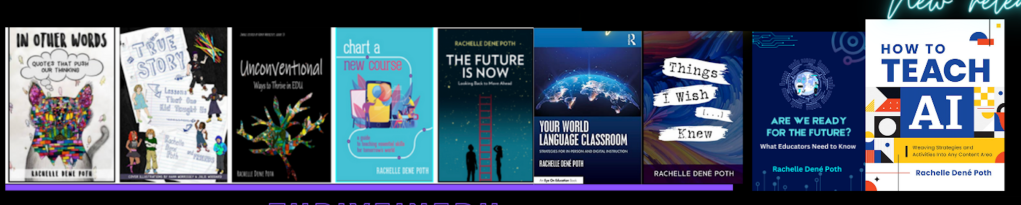
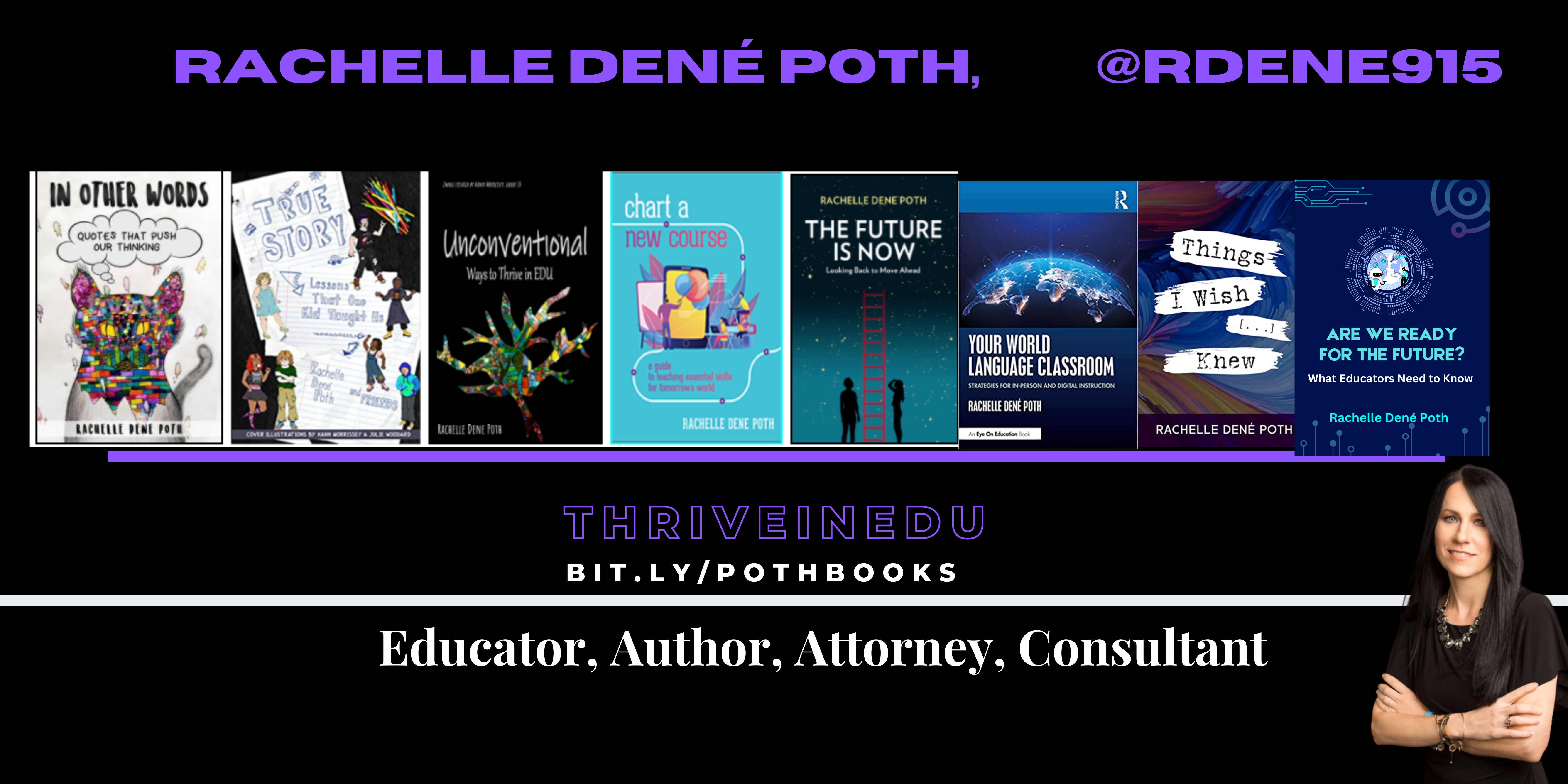
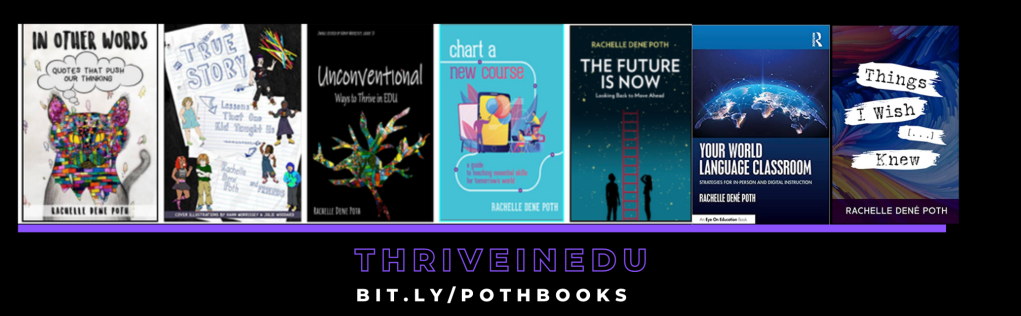
She is the author of ten books, including ‘What The Tech? An Educator’s Guide to AI, AR/VR, the Metaverse and More” and ‘How To Teach AI’. In addition, other books include, “In Other Words: Quotes That Push Our Thinking,” “Unconventional Ways to Thrive in EDU,” “The Future is Now: Looking Back to Move Ahead,” “Chart A New Course: A Guide to Teaching Essential Skills for Tomorrow’s World, “True Story: Lessons That One Kid Taught Us,” “Things I Wish […] Knew” and her newest “How To Teach AI” is available from ISTE or on Amazon.
Contact Rachelle to schedule sessions about Artificial Intelligence, AI and the Law, Coding, AR/VR, and more for your school or event! Submit the Contact Form.
Follow Rachelle on Bluesky, Instagram, and X at @Rdene915
**Interested in writing a guest blog for my site? Would love to share your ideas! Submit your post here. Looking for a new book to read? Find these available at bit.ly/Pothbooks
************ Also, check out my THRIVEinEDU PodcastHere!
Join my show on THRIVEinEDU on Facebook. Join the group here.
In collaboration with Tonies. All opinions expressed are my own.
In our increasingly digital world, where technology has the potential to be used too often, it’s great to discover innovative tools that don’t require a screen. Educators and families alike are always looking for ways to nurture creativity and spark a love of learning without the need for extra screen time. Enter the Toniebox, a brilliant and innovative audio system that reimagines storytelling and learning for children. With its kid-friendly design, engaging content, and screen-free functionality, the Toniebox has become a favorite in homes and classrooms worldwide.
As an educator who has used Tonieboxes with students, I’ve experienced the impact of this simple yet powerful tool. From the first time you use it, it draws you in, and the excitement builds up for more stories and fun in learning.
What is the Toniebox?
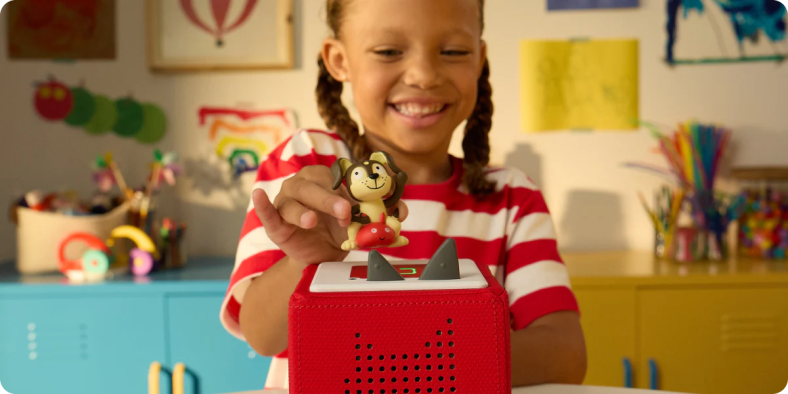
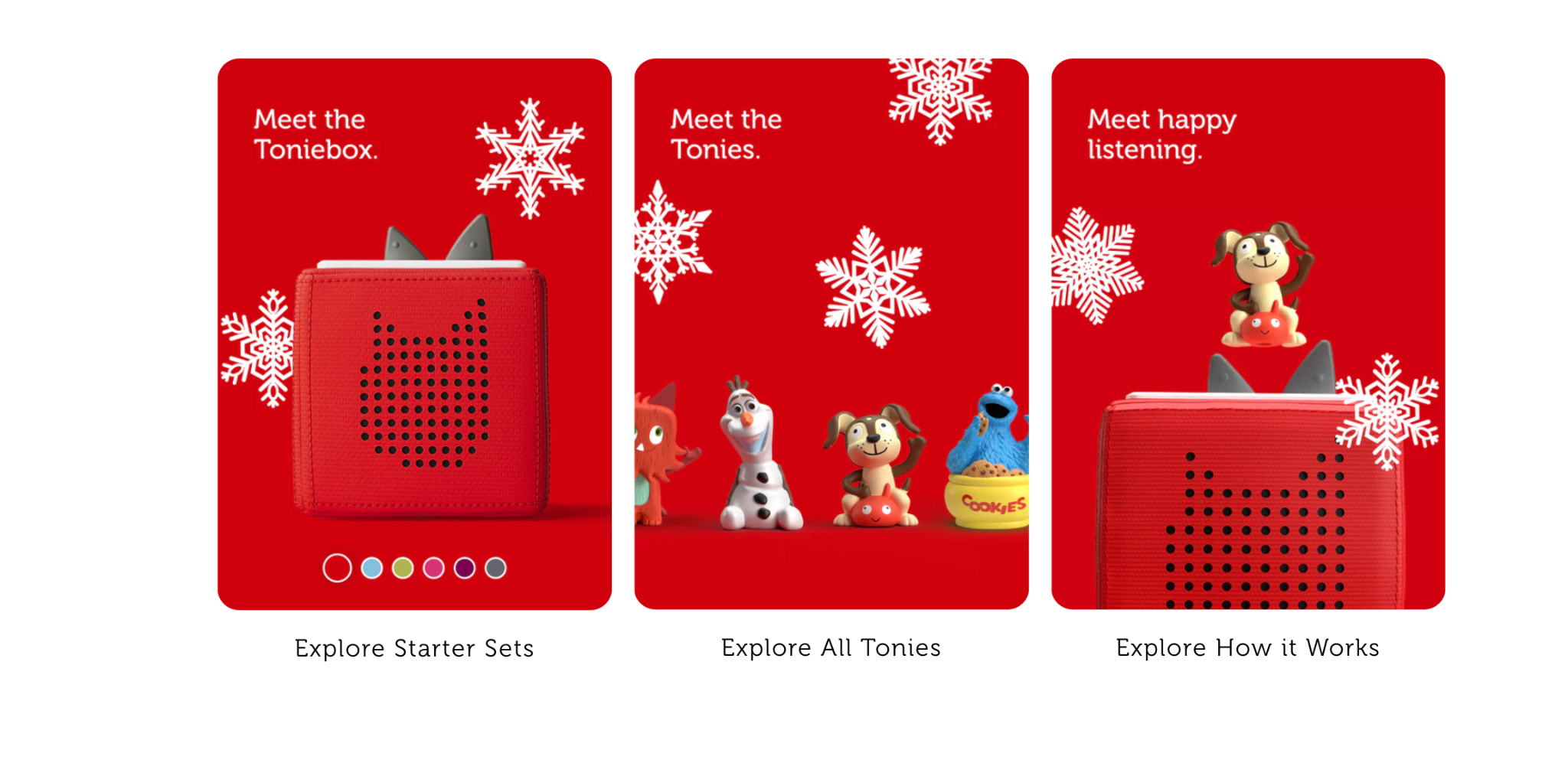
The Toniebox is a soft, cube-shaped audio player designed for children. I have a red and a light-blue one that I have used, and they are truly great for children. Unlike traditional speakers or audio tools that may be used in the classroom, the Toniebox is completely screen-free and user-friendly. It operates through the use of Tonies, which are adorable characters that come preloaded with content, such as songs, stories, or educational lessons. Children ages three and up can use the Toniebox without any problems because it requires them to simply place their Tonie on top of the Toniebox, and the content will play automatically.
The design of the Toniebox is perfect for young learners. It is soft to the touch, durable, and easy for children to operate. What I love about its design are its controls. The volume can be adjusted by pressing the “ears” on top of the box, and tracks can be skipped by tapping the sides of the Toniebox.
What are Tonies?
Tonies are adorable characters that come to life through the Toniebox. The Tonies are placed on a Toniebox to play stories, songs, and language learning activities. There are so many great characters, more than 200 to choose from, and more are being added.
The Magic of Screen-Free Play
The Toniebox stands out from other storytelling products because it is screen-free. By encouraging imaginative play, Tonies helps children develop essential skills such as:
Creativity: Children can create stories or adventures using their Tonies as inspiration. Give students a Tonie and ask them to write or tell a story about it. It is a great way to build many essential skills and for them to have fun, too!
Focus and Attention: The variety of narratives and how the Tonies create a more engaging audio experience helps children as they develop their ability to focus and concentrate. They become drawn into the stories, develop close listening skills, and get excited to share what they learn.
Language Development: To develop language skills, students need a variety of learning opportunities. With the Toniebox, they can listen to stories and songs that will help expand their vocabulary, language skills, and comfort in speaking.
Toniebox in the Classroom
For educators, the Toniebox will be a versatile and impactful addition to the classroom.
Artina Ellsworth, an early educator at Lakeside Primary in Prairieville, Louisiana, told me that she uses Tonies in her “pre-K classroom with the 3-year-olds during music and movement time, read-aloud time, and also in my literacy centers. It helps keep them focused and engaged during reading, helps me teach concepts of print, and also story comprehension for retelling stories. During center time, it also helps them follow the story without me having to sit and read the book with them. It builds their confidence in knowing that they can listen and pretend to read stories by themselves!”
There are so many great uses of the Toniebox! Here are some ideas for bringing a Toniebox into your teaching practice:
1. Listening Centers
The Toniebox can be used in a listening center where students can independently enjoy audiobooks or songs. This fosters self-guided learning and a comfortable way for students to practice their listening comprehension and auditory processing skills.
2. Mindfulness and Relaxation
The Toniebox is perfect for creating a calming environment. During transitions or after lunch, use Tonies that provide mindfulness exercises to help students refocus and relax.
3. Story Time
Use Tonies as a way to create engaging story time sessions for students. Students can create their own stories and even work together to build essential skills of collaboration and creativity!
4. Group Activities
Use Tonies to engage students in some discussions about the story. Ask questions and have students create alternate endings. There are so many possibilities!
Inclusion and Accessibility
The simplicity of the Toniebox makes it accessible to all learners, including those with special needs. Its tactile interface and audio format cater to diverse learning styles and abilities, ensuring every student can participate.
Here are some of the standout features that make the Toniebox a must-have for both classrooms and homes:
1. Durability
The Toniebox is built to withstand the wear and tear of young hands. Its soft padding and design ensure it can handle daily use.
2. Portability
With its rechargeable battery, the Toniebox can go anywhere. Whether it’s used in the classroom, on a field trip, or during a long car ride, it offers hours of uninterrupted learning and fun.
3. Content Variety
From fairy tales to educational lessons, the Tonies’ library ensures something that will meet every child’s interest and learning level. And new Tonies are being released, which helps to keep the learning experience engaging and fun!
4. Customization
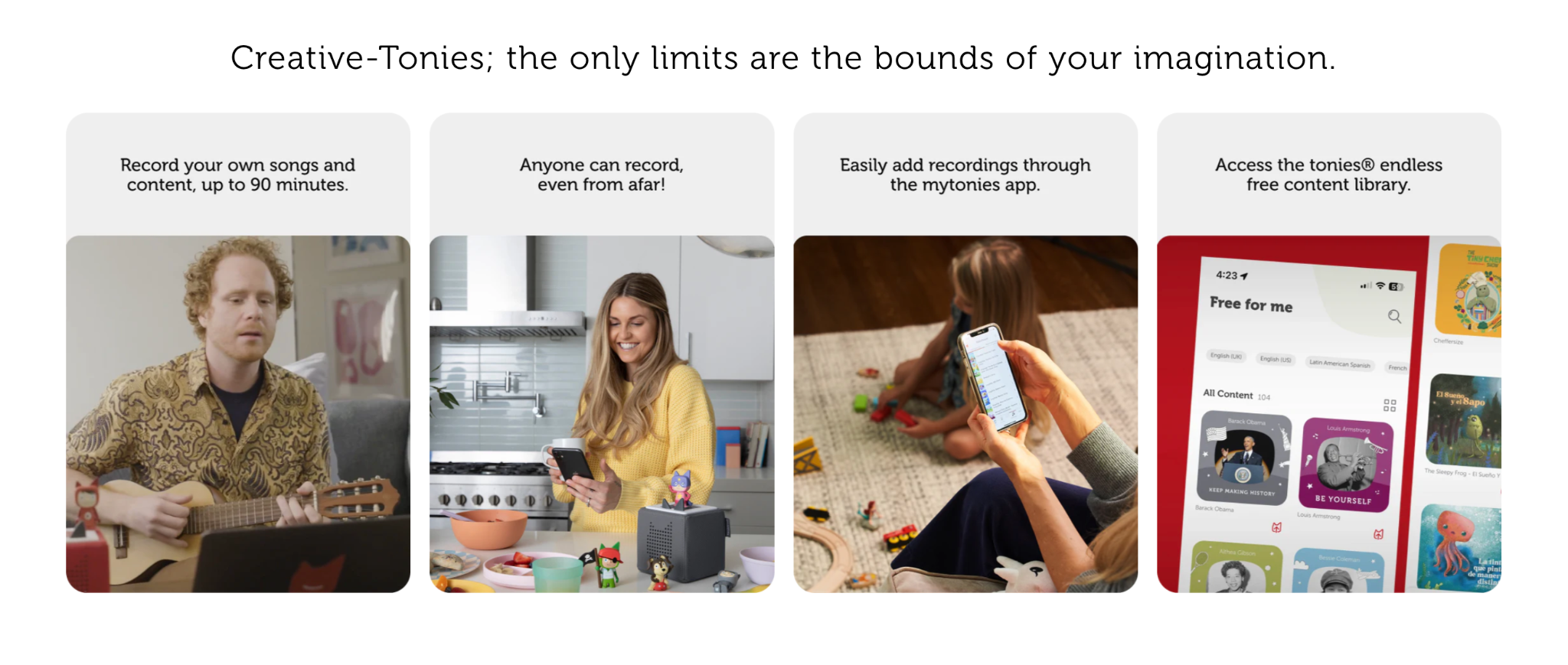
Creative Tonies provide even more opportunities for personalization. Parents can record bedtime stories, and teachers can create custom lessons or messages for their students.
5. Ease of Use
Its unique design means that even the youngest learners can operate the Toniebox independently, which promotes confidence and autonomy.
And now there are even audiobooks that offer more content for kids 6-9! Tonies offer a unique and engaging way to spark children’s imagination and foster a love of learning. By providing a screen-free experience, Tonies helps children develop essential skills while having fun. Whether you’re an educator or a parent, Tonies is a fantastic option to enhance children’s learning and development. Educators, get started today with Tonies through their educator discount!
About Rachelle
Dr. Rachelle Dené Poth is a Spanish and STEAM: What’s Next in Emerging Technology Teacher at Riverview High School in Oakmont, PA. Rachelle is also an attorney with a Juris Doctor degree from Duquesne University School of Law and a Master’s in Instructional Technology. Rachelle received her Doctorate in Instructional Technology, and her research focus was on AI and Professional Development. In addition to teaching, she is a full-time consultant and works with companies and organizations to provide PD, speaking, and consulting services. Contact Rachelle for your event!
Rachelle is an ISTE-certified educator and community leader who served as president of the ISTE Teacher Education Network. By EdTech Digest, she was named the EdTech Trendsetter of 2024, one of 30 K-12 IT Influencers to follow in 2021, and one of 150 Women Global EdTech Thought Leaders in 2022.
She is the author of nine books including ‘In Other Words: Quotes That Push Our Thinking,” “Unconventional Ways to Thrive in EDU,” “The Future is Now: Looking Back to Move Ahead,” “Chart A New Course: A Guide to Teaching Essential Skills for Tomorrow’s World, “True Story: Lessons That One Kid Taught Us,” “Things I Wish […] Knew” and her newest “How To Teach AI” is available from ISTE or on Amazon.
Contact Rachelle to schedule sessions about Artificial Intelligence, Coding, AR/VR, and more for your school or event! Submit the Contact Form.
Follow Rachelle on Twitter(X) and Instagram at @Rdene915
**Interested in writing a guest blog for my site? Would love to share your ideas! Submit your post here. Looking for a new book to read? Find these available at bit.ly/Pothbooks
************ Also check out my THRIVEinEDU PodcastHere!
Join my show on THRIVEinEDU on Facebook. Join the group here.
Guest post by Dr. Amy Mathews-Perez, a Director of Special Programs in a public school in Central Texas. Connect with Amy on X (formerly Twitter) at @drgrowtoknow, on Facebook at DrAmy MP, or at her website dramyperez.com
I’m wondering how you read the title of this blog. Did you read it as Dear, Stressed Me (self pity-ish) or as the beginning of a letter? Either way works (and both apply at some point or another for all of us, right?) and serve as an opportunity to self-reflect on why you read it that way. The intention was that the title is the beginning of a note – to yourself.
We all get stressed out, no doubt. Stress is not a selective force – it impacts every one of us in different ways, at different times, for different reasons, for different lengths of time, and with different results/responses. If you have spent time reflecting, you’ve probably figured out (or are figuring out) how to talk yourself through these stressful times. There is a popular quote by Zig Ziglar: “The most influential person you will talk to all day is you.” There are also many varieties of this message floating around, but the point is the same: Self-talk is powerful.
The hard part about self-talk is easy to identify: judgment. We second guess ourselves, we feel silly, we want to do it “right.” However, I want to make you aware of two important things related to self-talk: (1) You already talk to yourself, whether out loud or just in your head -or both for some of us. When it is instinctive, we don’t pause to evaluate it, we just do it. Whether we are pumping ourselves up to do something challenging (EX: A job interview), calming ourselves down to get through something difficult (EX: Getting pulled over) or celebrating our success in getting something accomplished (EX: We got the job?). Here is your challenge: pay attention next time it happens, and then add to it with an intentional, positive phrase. The second thing I want to make you aware of is this: (2) There is no “right” or “perfect” way to do self-talk. You know yourself – or are learning about yourself. We figure out if we need a voice of rant, rage, encouragement, empowerment, cheer (or all of these). Some of us need a pep-talk, some of us need to be reminded to live up to our potential, some of us need to be remotivated with goals, some of us need a “no-excuses” approach, and some of us need empathy during times of stress.
We live, we learn; we stress, we recover; we breathe and continue going forward in learning.
Understanding the value of positive talk, encouragement and kindness, imagine if you could facilitate a positive outcome for someone else that is going through a stressful time. This blog provides a method for you to do that. Originally intended for leaders in work settings, this activity can be done with any group or person you choose.
Whatever your relationship (leader, friend, co-worker, etc.) I’m going to assume that you want to help others be their best; you do your best to meet the needs of others. There will be times when your support will be effective & that is awesome. However, other times, a person’s “self-talk” support can be more helpful than our support. A common situation we all face is that we get so busy we don’t take the time to think about motivating ourselves or others, much less by writing it down. So, here is an activity that capitalizes on creating that opportunity for others: it honors each person’s self-awareness/knowledge and allows you to support each person individually during stressful times. This is an activity that I’ve done with my staff for three years in a row and it has had multiple positive outcomes every time.
You pick the “Who” & the “When.”. Here is the “How” (then we’ll visit the benefits):
Give each person a blank note card & envelope. (have each person seated away from each other)
Have the person write their name on the envelope.
Ask each person to write themselves a “Dear Stressed Me” note. Assure them that this is 100% confidential; NO ONE will read their note.
Once they each complete the note, have them put it in the envelope that they put their name on – and seal the envelope.
Collect the envelopes and put them in a place you’ll remember.
During the school year, when you notice that one of those people is stressed out, hand-deliver their note to them. (If you want to give them a treat when you do that, that typically brings a smile; a Sonic drink, candy bar, favorite pen, etc., but this is not foundational to this activity)
When they say, “Thank you” (they typically do) you can respond with something like: “Don’t thank me, thank yourself.”
What they are really thanking you for is “seeing” them; acknowledging them, and showing care about them being stressed. Done with authenticity, this can build relationships, ease stress, and create a moment to take a breath. As an added benefit, it promotes the value of you being in tune with each person because YOU are going to give each person their own note….at a time that you notice they need it. Notice a need, share your care, and build resiliency.
I believe in positive intent, and I’m passionate about empowering and encouraging others. I hope that this has provided an easy action you can take, and, equally importantly, I hope you take time to validate yourself for the hard work you’ve done, the progress you’ve made, and your willingness to learn. If you use this activity & would like to share your outcomes, I’d appreciate the opportunity to connect. dramymp@gmail.com or on X @drgrowtoknow.
About Amy
Texas-born & raised, Amy is in her 32nd year of serving public education. General Ed. Teacher, SLP, Diagnostician, SPED Supervisor, Assistant Principal, Principal, and Director of Special Education are roles she’s held. She is the CEO of Making Education Special for All (M.E.S.A), an LLC dedicated to training, facilitation, consultation, and speaking engagements that revolve around information, motivation, and insights on why and how to make education special for all stakeholders. Her passions are communication, joy, authenticity, and empowerment. “Life is short but our influence is never-ending,” and Amy is committed to connecting with others through service and smiles.
Rachelle’s blog
Dr. Rachelle Dené Poth is a Spanish and STEAM: What’s Next in Emerging Technology Teacher at Riverview High School in Oakmont, PA. Rachelle is also an attorney with a Juris Doctor degree from Duquesne University School of Law and a Master’s in Instructional Technology. Rachelle received her Doctorate in Instructional Technology, and her research focus was on AI and Professional Development. In addition to teaching, she is a full-time consultant and works with companies and organizations to provide PD, speaking, and consulting services. Contact Rachelle for your event!
Rachelle is an ISTE-certified educator and community leader who served as president of the ISTE Teacher Education Network. By EdTech Digest, she was named the EdTech Trendsetter of 2024, one of 30 K-12 IT Influencers to follow in 2021, and one of 150 Women Global EdTech Thought Leaders in 2022.
She is the author of nine books including ‘In Other Words: Quotes That Push Our Thinking,” “Unconventional Ways to Thrive in EDU,” “The Future is Now: Looking Back to Move Ahead,” “Chart A New Course: A Guide to Teaching Essential Skills for Tomorrow’s World, “True Story: Lessons That One Kid Taught Us,” “Things I Wish […] Knew” and her newest “How To Teach AI” is available from ISTE or on Amazon.
Contact Rachelle to schedule sessions about Artificial Intelligence, Coding, AR/VR, and more for your school or your event! Submit the Contact Form.
Follow Rachelle on Twitter(X) and Instagram at @Rdene915
**Interested in writing a guest blog for my site? Would love to share your ideas! Submit your post here. Looking for a new book to read? Find these available at bit.ly/Pothbooks
************ Also check out my THRIVEinEDU PodcastHere!
Join my show on THRIVEinEDU on Facebook. Join the group here.
Part II: Getting students to think about their learning journey
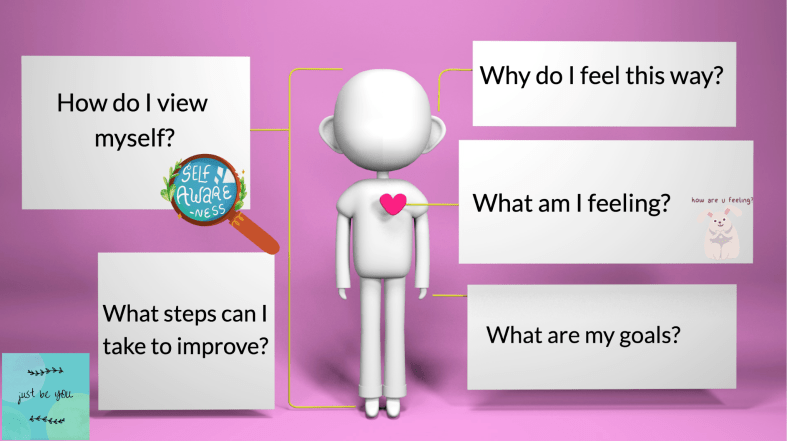
Throughout the year, engaging students in ongoing reflection on what they are learning is essential. One of the five core competencies of social-emotional learning (SEL) is for students to develop self-awareness. It’s also vital for them to build self-management skills to work through challenges that can come with learning, reflect on their growth, and set new goals.
Whether students engage in discussions with classmates or use digital tools to share ideas in a comfortable virtual space, there are many options. We need to get our students to share what they are thinking and take time to reflect on their learning. We also need to model this reflective practice for them. This is essential for academic, personal, and future professional growth. To best prepare students for the future, ongoing reflection is vital.
With an opportunity to reflect, students are able to better understand their thought processes and interests. It helps them to identify areas where they can improve and recognize areas that they are strong in. Creating opportunities for students to share their learning with classmates and with us promotes collaboration, fostering a stronger sense of community in our classrooms. Together, we can create a supportive learning community.
Through the five competencies of SEL, we can help students focus on developing skills of social awareness and building relationships. Students will better understand their own thought processes and deepen their understanding of the content they are learning. However, getting students to share their thoughts and reflect on their learning can be challenging. Here are five ideas for encouraging students to reflect on their learning and share their thoughts.
1.Think-Pair-Share is an activity that doesn’t require much time at all to use and can be very effective. It encourages students to share their ideas, learning experiences, and thoughts with one another. The teacher can provide a short prompt or topic for discussion and then give students time to think individually before pairing up with a partner. Those one-on-one conversations can help students become more comfortable expressing themselves in class. After a certain period of time, each pair can share their thoughts with the class. This strategy will work well without digital tools; however, there are some options to explore.
2. Peer-pairing: To randomly place students in pairs, use a random name generator so students build relationships with their classmates. It is fun to have the names on the big wheel and place students into groups. I have used this also as a way to select the order of presentations. It helps to reduce a bit of the stress with wondering when you have to present and makes it a fun experience.
3. Class sharing: To help students build confidence, use a tool such as Padlet or Flip to have students post ideas on a collaborative board or create audio or video responses. Whatever way we have students “share,” it encourages them to engage in conversation and more active listening. Students learn about different perspectives on a given topic, which promotes the development of social awareness skills.
4. Snorkl is a new AI-powered tool that I found, and I really love the possibilities. Teachers assign an activity and it enables students to record their screen and speak about the work they have done. For example, how they solved a math problem, writing and reading in the language they are learning, describe an image, and so much more. It can be set to provide AI feedback with or without teacher approval. It was fun to try for the first time in my class. Look for more information in an upcoming post.
With the tools that offer audio or video options, it is a more authentic way to learn about the student. Teachers see and hear their students’ thought processes and can then offer more personalized and meaningful feedback to each student.
One extra is for teacher and student reflection. Learning about students’ thoughts about our methods, their comfort in the classroom, and more is important. Last year, I started exploring LessonLoop, which provides anonymous surveys that teachers can issue to students. It provides a rating with explanations based on student engagement, SEL, and comfort in the learning space and provides additional insights. Teachers can then take the information and use it to reflect on their practice and involve students by showing their input is valued through the use of these surveys. LessonLoop also has educators who will prepare some tips for teachers to try!
Whatever method or tools we choose to bring into our classrooms, the goal is still the same: Prepare students for the future with skills that enable them to be flexible and adapt to the changing look of education and work. Reflective practice is a key component of this future preparation!
Author
About the Author:
Rachelle Dené is a Spanish and STEAM: What’s Next in Emerging Technology Teacher at Riverview High School in Oakmont, PA. Rachelle is also an attorney with a Juris Doctor degree from Duquesne University School of Law and a Master’s in Instructional Technology. Rachelle is an ISTE-certified educator and community leader and served as president of the ISTE Teacher Education Network. She was named one of 30 12 IT Influencers to follow in 2021 and one of 150 Women Global EdTech Thought Leaders in 2022.
Contact Rachelle to schedule sessions about Artificial Intelligence, Coding, AR/VR, and more for your school or your event! Submit the Contact Form.
Follow Rachelle on Twitter(X) and Instagram at @Rdene915
**Interested in writing a guest blog for my site? Would love to share your ideas! Submit your post here. Looking for a new book to read? Find these available at bit.ly/Pothbooks
************ Also check out my THRIVEinEDU PodcastHere!
Join my show on THRIVEinEDU on Facebook. Join the group here
This will be the first post where I will share some different tools or resources to explore!
Each year, I like to take time and think about the digital tools we use in our classroom, the benefits, and how I might find new ways to use them. When I look to use technology in my classroom, I always start with the “purpose”Why” behind it. What will it help me to do better as a teacher? How can it help students to learn in more personalized or authentic ways? And what skills will students build as a result that traditional non-technology methods might not afford?
There are tools that I continue to use each year because they have added new features or they have integrated with other tools that we are using in our classroom. Here are six tools to check out as we start 2024! And one that is highly recommended to dive into AI in your classroom!
CoSpaces EDU is a virtual reality platform that became a favorite for some of my 8th-grade students this year. Whether creating a space in 360, designing a game, an interactive story, or an experiment, students will enjoy creating in VR and developing coding skills too. Another benefit is the Merge Cube add-on, which enables students to hold the space they have created in their hands! Students can even collaborate by working in teams to create a space together. With MergeEDU, educators can use the cube as an interactive tool to further engage students in learning about the earth, dissecting a frog, exploring a volcano, and more.
Gimkit, a game-based learning tool, has continued to be a favorite with my students because of the potential for increased content retention through repetitive questions and because of the different ways it can be played in the classroom. It enables students to develop strategies and have fun while learning. There are multiple ways to look at the student data and provide authentic and timely feedback. And there are always new modes to play, which helps to boost student engagement and gives us some laughter, too! Check out Blastball!
ISTE’s AI and STEM Explorations Network has created four free hands-on AI projects for the classroom guides, which are available for download from ISTE and GM. For elementary, secondary, electives, computer science courses, and a new guide on ethics, these guides offer various topics relevant to all content areas. The guides are available in English, Spanish, and Arabic.
Nearpod is a multimedia, interactive presentation tool that enables teachers to create engaging lessons that can include virtual trips and 3D objects. It offers lessons on topics such as digital citizenship, social-emotional learning, career exploration, English learner lessons, and professional development resources for teachers. Educators can create lessons with many options, including quizzes, polls, drawings, matching pairs, audio, video, and content from PhET Simulations, Desmos, BBC, YouTube, and more. Nearpod lessons can be done live in class or student-paced, and there is also the option for use as sub plans.
Wakelet is a content curation tool and so much more. I use it to curate blogs, videos, and other resources I want to access quickly to be a powerful tool for student learning. With Wakelet, teachers can provide blended learning experiences, use it for station rotations, have students create a digital portfolio, share class projects, create a scavenger hunt, and many other possibilities. It even offers the ability to record a Flip short video within the Wakelet collection. Educators and students can collaborate in a Wakelet collection and so much more!
Think about some of the tasks that might be taking up a lot of your time, or consider some issues or challenges you might be having. A few years ago, I noticed a decrease in student engagement and looked for ways to open up more choices for students to share their learning. Any of these tools can be suitable for addressing those concerns.
My Advice? Start thinking about your own personal goals and start with one thing. Try it and see how it goes, ask students or colleagues for feedback, and then make adjustments as needed.
Looking for PD for your school or keynotes for your conference? I provide in-person and virtual training on the following topics. If you want to learn more about and explore AI and ChatGPT, contact me to schedule! Rdene915@gmail.com or use the Book Me form on my website. bit.ly/thriveineduPD
**Interested in writing a guest blog or submitting a sponsored post for my site? Would love to share your ideas! Submit your post here. Looking for a new book to read? Find these available at bit.ly/Pothbooks
Preparation for college, university, and future careers starts early. High school students start thinking about what careers they might want to pursue in the future as early as their freshman year.
School courses can help students identify areas of interest or uncover specific talents. Other students find working part-time jobs gives them an idea of what they’re good at and extracurriculars or school clubs also allow students the opportunity to explore their passions. Additionally, students find that volunteering exposes them to careers or areas of work they might not have otherwise considered.
Over the years, districts have continued to see the importance and impact of civic engagement on students. Community-engaged students have improved student outcomes for many reasons: students develop important skills through volunteering, have leadership opportunities, experience a sense of belonging, and grow socially and emotionally as they serve others. Students also learn vital skills that allow them to find success in their lives after high school.
Educators work hard to ensure students receive a proper academic education but also are pivotal in spurring students on as they grow individually. As your students are exploring potential career paths and determining what they want to pursue after high school, encourage them to volunteer. As students are thinking about where to volunteer or complete their service hours, encourage students to reflect on what their areas of interest are. This is so personal to each student but it allows them to identify potential areas of focus or interests that could lead to a career path. From there, work with the student to identify opportunities or encourage the student to research needs in the community that would give them some real hands-on experience. Volunteering allows students to help others, see the impact of their work, and explore career interests.
Here are volunteer opportunities and service ideas for students to explore various career paths:
Social Services Agencies: Offering time at agencies supporting the homeless, elderly, or individuals with disabilities, allows students to explore careers in social work, counseling, or healthcare.
Political Campaigns: Students can assist in local political campaigns to learn more about the process. This is helpful for students interested in politics or public policy.
Art and Music Programs: Students interested in fine arts, art history, or music can volunteer at local art galleries or community music programs to gain insight into the arts and culture sector.
Community Events and Festivals: Volunteering to help organize or run community events is a great experience for students interested in hospitality or event planning.
Tutoring/Mentoring: Students with an interest in teaching can start by tutoring or mentoring other students to get a feel for a career in education.
Animal Shelter or Zoo: Students interested in veterinary careers or even zoology can gain experience and insight into the industry.
Technology or Marketing: Students interested in technology can volunteer to teach coding or basic tech-related lessons at community centers or nursing homes. Students interested in social media or marketing can put those skills to use volunteering to manage social media for local organizations.
Environmental Conservation Projects/ Community Gardens: Students can participate in a community garden or an environmental conversation project to learn about agriculture, sustainable practices, environmental sciences, or urban planning.
Library or Museums: Students can volunteer at a library or museum to gain insights into the world of archiving, curation, and education which can be useful for students interested in the arts, history, or information science.
Sports or Recreation Programs: Volunteer with youth sports teams or recreational programs. This can help students explore careers in coaching or sports management.
Outcomes of Service
Students can make a huge difference in their communities, and be engaged with others around them while exploring various careers and interests that will set them up for success.
Through volunteering, students can start making connections in their desired industry and gain experience that will benefit them long term. Students can discover new interests and talents, or conversely, realize specific careers aren’t for them.
There are so many benefits students experience while impacting their communities. Educators play a crucial role in leading students through this process and x2VOL is here to support schools and districts in these endeavors.
x2VOL makes it easy to manage community service and work-based learning all online. With benefits for students, educators, and district leaders, x2VOL provides functionalities to remove the burden of hours tracking and reporting, providing educators the space to engage students in these important developmental opportunities. Learn more about how x2VOL supports schools and districts in our demo.
**Interested in writing a guest blog for my site? Would love to share your ideas! Submit your post here. Looking for a new book to read? Find these available at bit.ly/Pothbooks
************ Also check out my THRIVEinEDU PodcastHere!
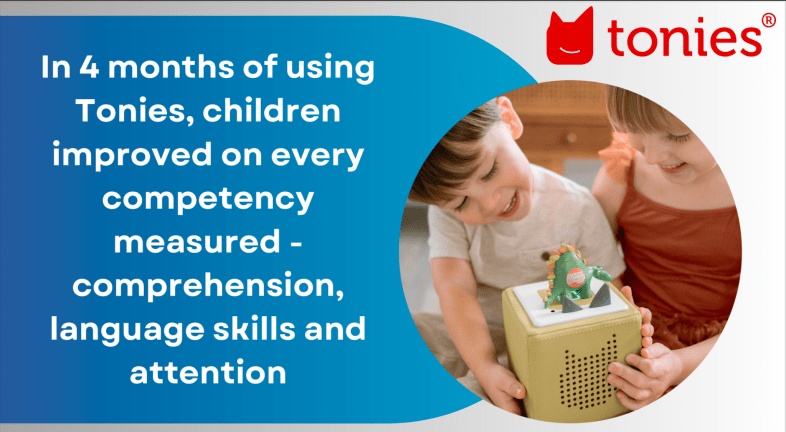
In a world where technology often competes with traditional learning methods, educators are always on the lookout for innovative tools that can genuinely impact children’s development. The Toniebox, a revolutionary audio device, has recently released the results of a study conducted between January and June 2023. The study explored how this creative tool can influence young learners’ comprehension, language skills, and attention.
Unlocking the Potential of the Toniebox
We should first understand what makes the Toniebox stand out. It’s an audio storytelling device that combines the magic of bedtime stories with captivating learning content. It makes it an excellent addition to the early childhood education toolkit and the best part is that kids are independent in their learning and can use it without much help at all.
A recent study
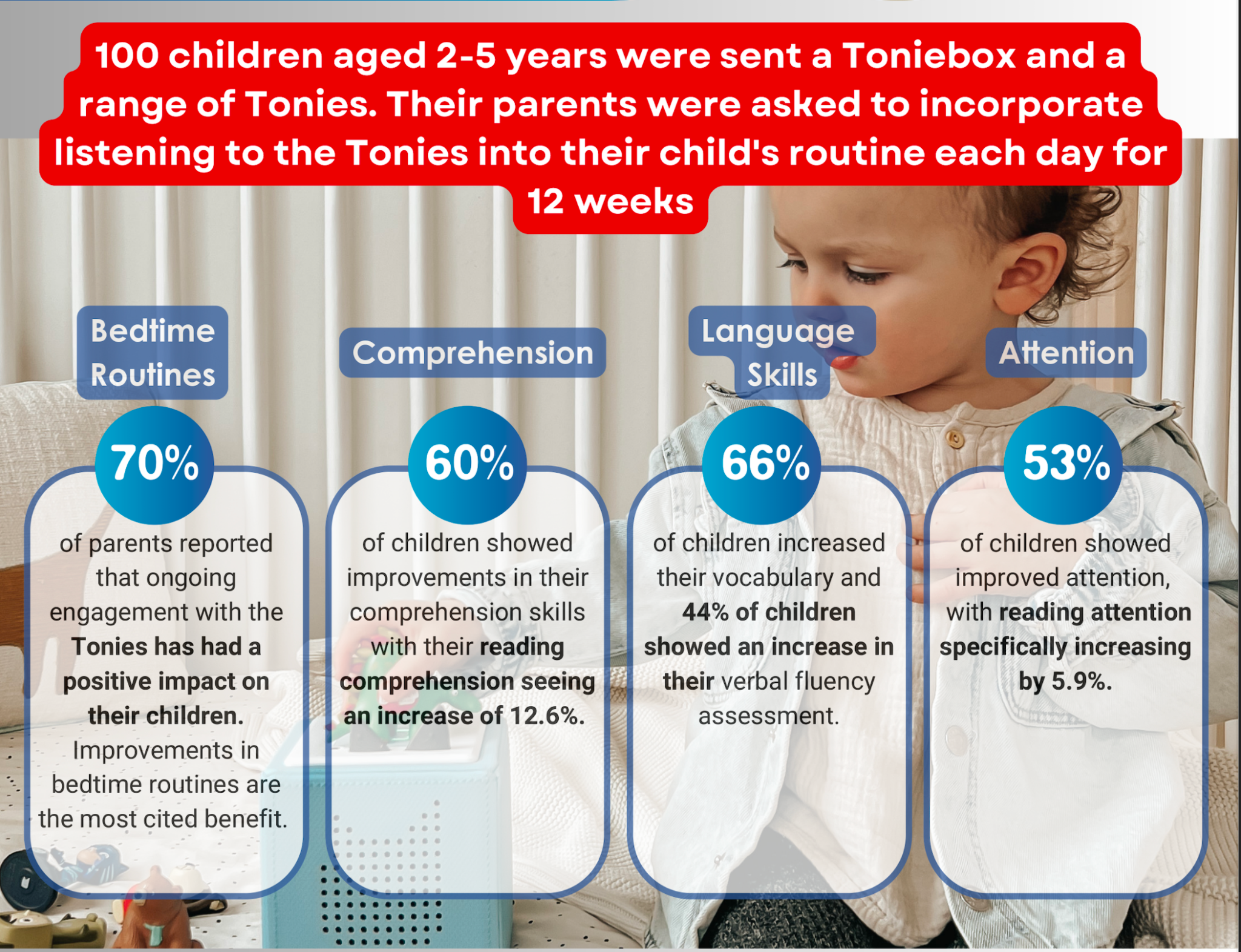
Imagine a learning tool that cultivates comprehension, language skills, and attention in young children. The recent study included 100 families from the UK and the United States, and involved children of ages 2 through 5. The research began with interviews to establish baseline measurements for each child’s development. Families were then provided with a Toniebox and bedtime Tonies, along with instructions to integrate them into their bedtime routines. After a period of 2-3 weeks, there were follow-up interviews that assessed the impact of Tonies on each child. Families were then provided with additional Tonies from the 4 Learning Centers: Discovery, Reading, Mindfulness, and Independent Play. After at least 12 weeks, there was another round of interviews which evaluated the effects of the Toniebox on children’s learning.
The Impact
1. Bedtime Routine Improvement:
– For parents who initially struggled with bedtime, using the Toniebox improved the situation for a remarkable 92% of them.
– Even if routines took longer, parents noted less resistance from their children, a welcome relief for many.
– Satisfaction scores increased significantly, from 6.6 to 7.4 out of 10, indicating happier bedtime experiences.
2. Comprehension and Language Skills:
– 60% of children’s comprehension scores increased
– Researcher-assessed comprehension levels improved by an impressive 6.3%.
– Reading comprehension scores saw a substantial increase of 12.6%.
– Verbal fluency jumped by over 10%, with 44% of children demonstrating improved verbal fluency.
– Vocabulary scores increased by 13.2%, with 66% of children scoring higher.
3. Enhanced Attention and Engagement:
– 53% of children’s general attention scores improved.
– For reading-specific attention, there was a 5.9% average increase.
– Engagement with stories increased by 7%, indicating greater interest.
Educators’ Takeaway: Tonies Toniebox
What makes the Toniebox an invaluable addition to early childhood education? It’s the perfect blend of entertainment and education. Here’s why educators should consider integrating it into their teaching strategies:
1. Promotes Literacy and Learning: The Toniebox enhances comprehension, language skills, and attention, crucial for early childhood education. The significant boost in reading comprehension is especially noteworthy.
2. Bedtime Routine Improvement: Better bedtime routines mean well-rested, alert learners in the classroom. Educators can appreciate the positive impact on children’s behavior and readiness to learn.
3. Screen-Free Learning: In a world dominated by screens, the Toniebox offers a refreshing screen-free alternative, promoting auditory learning and imaginative thinking.
4. Parent and Child Collaboration: The Toniebox encourages parent-child interaction, fostering a love for storytelling and learning from an early age.
Feedback from parents
The feedback offered by parents provides some valuable insights into the unique experiences they had with the Toniebox in their home.
1. Vocabulary Development and Screen-Free Engagement: A parent highlighted how Tonies significantly contributed to her child’s vocabulary development while serving as a screen-free alternative. The child’s enthusiasm for their Toniebox was so profound that he even listened to them for extended periods during road trips, showcasing the potential of this audio-based medium.
2. Design and Quality: Parents appreciated the figurine design of Tonies, which differentiated it from other devices. Many found Tonies ideal for storytelling, while other devices were preferred for music. The Toniebox engaged a child’s mind safely and offered high-quality manufacturing.
3. Innovative Possibilities: Parents associated reduced screen time with improved behavior in their children, emphasizing Tonies’ role in promoting a healthy balance.
The Toniebox is a valuable addition to childhood The feedback from parents underscores the versatility and potential of the Toniebox. While the study’s quantitative findings reveal its substantial impact on bedtime routines, comprehension, language skills, and attention, the individual comments paint a more comprehensive picture of its role in children’s lives. The Toniebox offers not only educational benefits but also a unique opportunity for children to engage with audio-based content in a screen-free and imaginative manner.
Toniebox is more than just a device; it’s a tool that empowers educators and parents to inspire young minds while nurturing positive habits and fostering a lifelong love for learning. As we navigate the ever-changing landscape of early education, the Toniebox supports the development of young learners in a dynamic and enriching way.
It is more than just a storytelling device; it’s a game-changer for early childhood education. Its potential to transform bedtime routines, enhance comprehension, language skills, and attention makes it a tool that educators should bring to their classroom. This innovative approach to learning is not only effective but also a whole lot of fun for young learners.
Contact Rachelle to schedule sessions for your school or keynotes for your conference about Artificial Intelligence, Coding, AR/VR, SEL, STEM and more!
**Interested in writing a guest blog for my site? Would love to share your ideas! Submit your post here. Looking for a new book to read? Find these available at bit.ly/Pothbooks
************ Also check out my THRIVEinEDU PodcastHere!
Join my show on THRIVEinEDU on Facebook. Join the group here
In collaboration with @RoboticalLtd, All opinions expressed are my own.
How can we create opportunities for students to dive into coding and STEM? With Marty the Robot, students will take the lead! Marty the Robot from Robotical is a versatile and engaging tool that can be used to enhance learning in any classroom! Marty is a humanoid robot that can dance, walk, and even wiggle his eyebrows!
What I love about Marty is that it is so easy to get started, even for beginners. Marty has a variety of sensors, including distance sensors, light sensors, and touch sensors, which can be programmed using Scratch or Python, two popular programming languages for beginners. With these options, children as young as seven years old can start learning to program and control the robot with ease. With the screen-free option, remote controller, and even MartyBlocks Jr (based on Scratch Jr), Marty can be used with children as young as four! The screen-free option is perfect for learning about the steps in the process and watching how Marty responds. Using the infrared sensors and color sensors on his feet, he can figure out which direction to move in and even dance and play music when he is placed on the color cards.
And Marty’s keeps on getting better! What’s new in 2023?
The Robotical team has been working tirelessly behind the scenes to bring you Marty’s new drag-and-drop sound blocks. This latest addition to the MartyBlocks coding environment (based on Scratch) allows students to expand their creativity, get even more technical, and will add extra personality to every robot.
Marty is customizable. The robot can be assembled and disassembled, allowing users to modify and upgrade its parts to suit their needs. Students can have fun decorating Marty and create a lot of fun ways for Marty to move around and interact! This means that as users’ programming skills and knowledge of robotics and engineering concepts improve, they can modify the robot to make it more complex and challenging.
Marty the Robot is now delivered with pre-installed LED eyes. Programmable in every color under the rainbow, these lights are the perfect addition to the robots and will add a pop of color and sparkle to every lesson. Not to mention, this new addition will also allow teachers to take advantage of Robotical’s disco eye lessons, expanding students’ knowledge of LEDs and lights, testing students to program different colors as reactions, and allowing students to explore different patterns and timing orders.
Marty is suitable for a wide range of age groups, from primary school children to adults. Children can use the robot to learn basic programming concepts, while older students and adults can use the robot to build more complex projects and explore advanced robotics and engineering concepts.
Building essential skills
There are many ways to use Marty to build STEM skills and SEL (Social-Emotional Learning) competencies. For SEL, students can use Marty to practice teamwork and collaboration skills. They can work in groups to build projects and share ideas for improving the robot’s performance. Additionally, students can use the robot to develop problem-solving skills, as they will need to debug code and troubleshoot any issues that arise during the robot’s operation. Students can use the robot to develop perseverance and resilience, as they work to overcome challenges and setbacks during the project-building process.
For STEM skills, students can use the robot to learn programming concepts, including loops, conditionals, and variables. They can also explore robotics concepts such as sensor technology, motor control, and movement algorithms. Additionally, students can use the robot to build projects, such as obstacle courses or mazes, which require them to think creatively and apply their knowledge of programming and robotics.
Here are some reminders for when using Marty the Robot in class:
Have fun! Marty is a fun and engaging robot! Marty can dance, walk, talk, and more.
Teach others. Marty can be used to teach others about coding, robotics, and STEM.
Make music. Marty can be used to make music. Marty has a built-in speaker and can play a variety of sounds.
Be creative. Design fun programs to get Marty up and moving, dancing and talking!
Ideas for Marty!
Build an obstacle course: Challenge students to build an obstacle course using cardboard boxes, ramps, and other materials. Then, program Marty to navigate through the course. Students will need to use their engineering and coding skills to ensure that Marty can safely navigate through the obstacles.
Build a robot team: In groups, students can build multiple Marty robots and program them to work together. They can experiment with different algorithms to control the movement and behavior of the robots. This activity develops teamwork, programming, and engineering skills.
Explore sensor technology: Marty the Robot comes with a variety of sensors, including distance sensors, light sensors, and touch sensors. Students can use these sensors to create programs that respond to changes in the robot’s environment. For example, they can program Marty to move away from objects or to stop when it detects a certain color. This activity encourages problem-solving and programming skills.
Have a dance party: Encourage students to create a fun and lively dance routine for Marty. Students can program the robot to dance along to their favorite songs. This activity encourages creativity, problem-solving, and programming skills.
Create a science experiment: Marty the Robot can be used to conduct a variety of science experiments, such as measuring the speed of sound or testing the effects of gravity. Students can program the robot to collect data and perform calculations, helping them to develop their scientific inquiry and data analysis skills.
Marty goes above and beyond to help deliver STEAM subjects (and more) in an accessible, interactive, and engaging way. Get started today! In the Knowledge Base, teachers can find support articles and lots of other information to help them get started. You can sign up for a free trial! Also check out my podcast episode with Hal Speed, Head of North America Robotical.
About the author
Rachelle Dené is a Spanish and STEAM: What’s Next in Emerging Technology Teacher at Riverview High School in Oakmont, PA. Rachelle is also an attorney with a Juris Doctor degree from Duquesne University School of Law and a Master’s in Instructional Technology. Rachelle is an ISTE Certified Educator and serves as the past president of the ISTE Teacher Education Network. She was recently named one of 30 K-12 IT Influencers to follow in 2021.
Looking for PD for your school? I provide in-person and virtual training on the following topics. If you want to learn more about and explore AI and ChatGPT, contact me to schedule! Rdene915@gmail.com
**Interested in writing a guest blog or submitting a sponsored post for my site? Would love to share your ideas! Submit your post here. Looking for a new book to read? Find these available at bit.ly/Pothbooks
Especially at this time of the year when school schedules can become challenging with spring activities, testing, and daily routines, focusing on SEL, self-care, and self-love is essential. More importantly, we need to help students develop habits that enable them to focus on their well-being and develop the skills needed to work through challenges and deal with emotions. We need to foster the development of practices and behaviors that will promote emotional, mental, and physical health.
By creating opportunities for students to develop SEL skills and a positive self-image, it will enable them to manage their emotions, develop supportive relationships, and make responsible decisions.
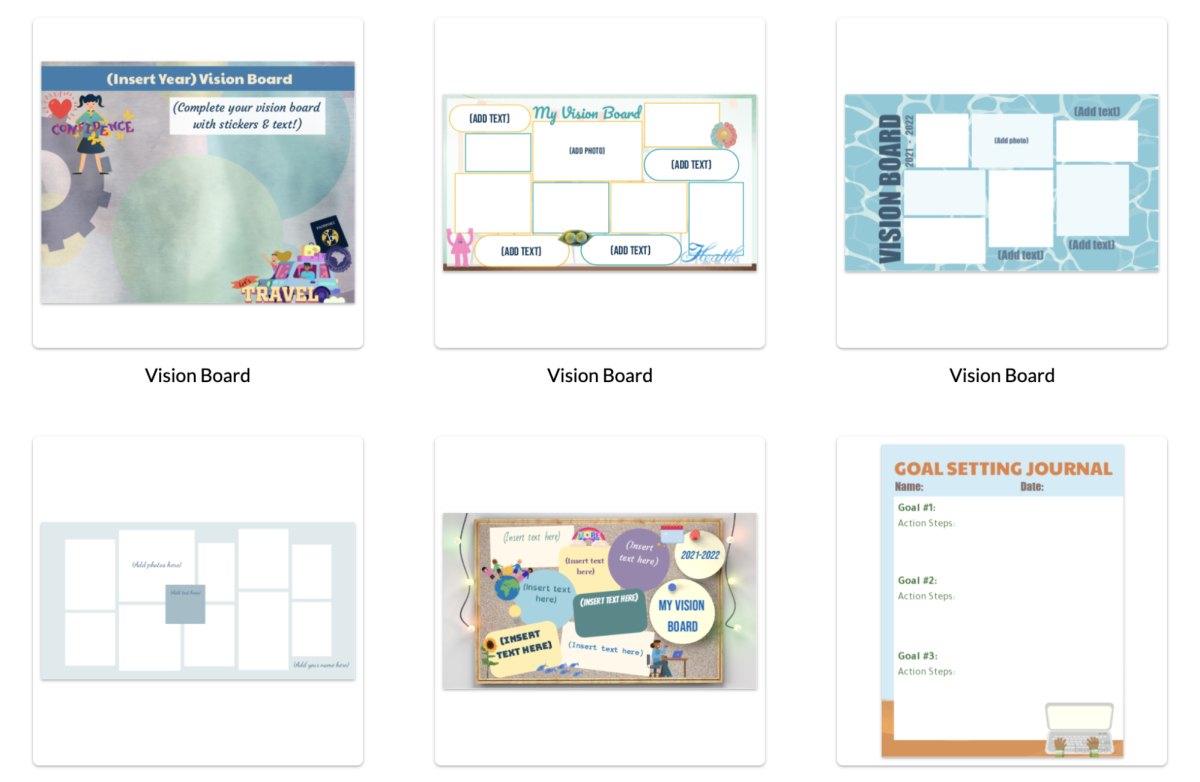
Self-care is crucial for students’ well-being and academic success. Students who practice self-care are more likely to have better mental health, reduced stress levels, improved academic performance, and higher levels of overall happiness. This, in turn, enables them to focus better on academic work and set and achieve their learning goals. One idea to try is to have students design vision boards. The boards can include each student’s goals in each of these areas and can be a great activity for students to use for personal reflection.
Self-love, which involves developing a positive self-image and nurturing oneself with kindness and compassion, can boost self-esteem, self-confidence, and resilience. These directly relate to the SEL skills that are essential for personal success. Developing these skills will enable students to navigate their social and emotional worlds and build meaningful relationships with others. Students will be better able to manage emotions, communicate effectively, develop empathy and understanding for others, and work through challenges they may face.
Ideas for focusing on self-love and SEL
Buncee: Teachers can use Buncee, a multimedia and creativity tool, to help students create multimedia projects that promote self-care, self-love, and SEL. For example, students can create digital posters that showcase self-love affirmations, gratitude journals, or mindfulness exercises. They can also create projects to share that teach SEL skills such as empathy, self-awareness, and responsible decision-making. Buncee and using PebbleGo Create foster creativity and when students have writing or art assignments, they can express their emotions and thoughts in a safe and supportive environment.
Here are some examples to try!
Healthy Habits: Use PebbleGo to research healthy habits. A focus on self-love involves practicing healthy habits such as exercise, nutrition, and getting adequate sleep. With PebbleGo, students can research healthy habits in areas such as health, physical education, or science. Students will learn about the benefits of exercise on the brain and mood, the importance of sleep for mental and physical health, or the role of nutrition in energy and well-being. By learning about healthy habits, students can develop SEL skills of self-management and promote their physical and emotional well-being. Students can then create a visual to share what they have learned and encourage others to focus on their habits too!
Gratitude Jars and Journals: Showing gratitude is a great way to promote self-love and positive emotions. Students can think about what they are grateful for, whether it is something they learned, a story they read, a historical figure that developed something that impacted the world. Students can then use PebbleGo Create to design a digital gratitude journal or a gratitude jar and can add pictures or audio recordings to personalize their journals. By doing this, it will help students develop positive emotions and SEL skills of social awareness.
Learning About Others and Building Awareness There are many wonderful non-fiction articles available with PebbleGo that cover a range of SEL topics that will help students develop self-awareness and social awareness. Students can find articles about emotions such as anger, fear, or sadness, and learn about strategies that will help them to better manage their emotions. Through the resources, they can learn about empathy, perspective-taking, and even conflict resolution, which are essential relationship skills. To share their learning, students can create a PSA to share in the classroom or the school!
Create Digital Affirmation Cards: Making affirmation cards is a powerful tool to better promote self-love and positive self-image. It can be a great way to help students connect with how they are feeling and set some goals. Students can explore the topics about health and wellness, and then create digital affirmation cards to refer to when they need a confidence boost or a reminder of their self-worth. The multimedia options available with stickers, animations and more boost creativity and help students to create visually appealing affirmation cards. Students can also create cards that highlight their strengths and accomplishments, such as “I am a good friend,” or “I am a talented artist.” These activities help students develop their self-awareness skills and boost their self-esteem.
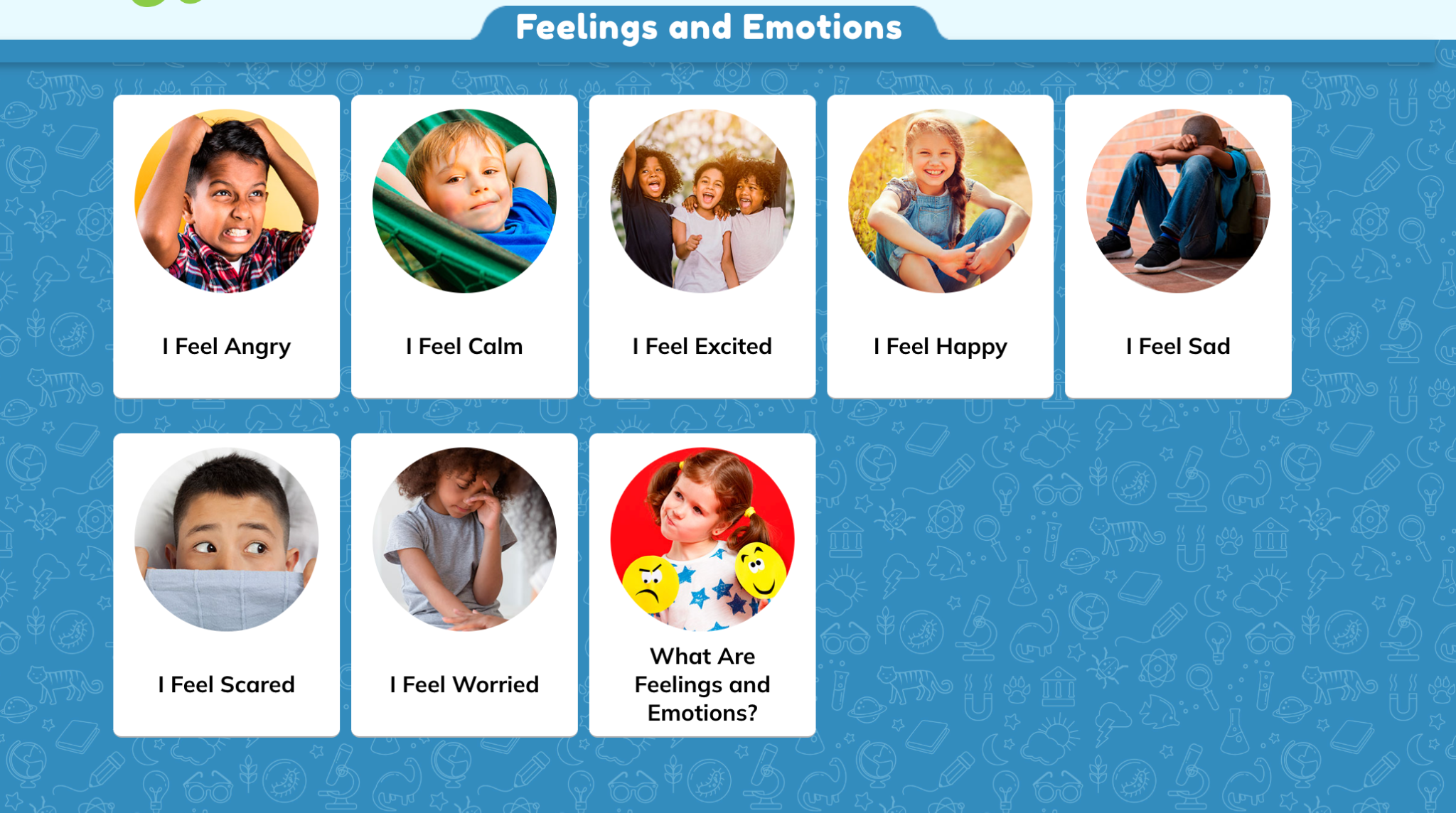
PebbleGo can be used to explore feelings and emotions across content areas, such as science, social studies, or language arts. For example, students can research different animals and their emotions, such as how dogs show affection or how dolphins communicate with each other. Students can also explore emotions in literature by researching characters’ feelings and motivations in stories.
Researching inspirational figures, exploring feelings and emotions, creating positive affirmations, researching mindfulness practices, and researching healthy habits with Pebble Go, students can develop self-awareness, self-management, social awareness, relationship skills, and responsible decision-making. These skills are crucial for academic success and personal well-being. As teachers, we can use PebbleGo to provide students with access to a variety of non-fiction resources that promote self-reflection, positive self-talk, and healthy habits, which can help them develop a positive self-image and promote their emotional well-being.
**Interested in writing a guest blog for my site? Would love to share your ideas! Submit your post here. Looking for a new book to read? Find these available at bit.ly/Pothbooks
************ Also check out my THRIVEinEDU PodcastHere!
Join my weekly show on Fridays at 6pm ET THRIVEinEDU on Facebook. Join the group here
As we continue to seek ways to best prepare students for the skills that they need to be successful in the future, it’s important that we are not afraid to take risks in our classroom by bringing new methods and different digital tools for our students. In looking at resources from the World Economic Forum and the Job Skills Outlook for 2025, for example, many of the skills that we’ve been talking about for years are still in demand and predicted to be even more essential in the future. Some of those skills include critical thinking and problem-solving, creativity, collaboration and communication, flexibility, resilience, leadership skills, and digital literacy. Deciding on methods to use or which digital tool to use in our classrooms can be a challenge sometimes, however, there are some easy ways to get started with STEM learning activities that provide many benefits for students.
Regardless of the grade level or content area, all teachers can bring in STEM-focused activities for students in a variety of ways. There may be concerns about a lack of teacher training, however, it just takes a little bit of time to become familiar with the technology or the concepts and then let students dive in and take the lead in learning. It is great when students teach us as well. It does not require us to be experts in all of these areas. We just need to find a few ideas and get started.
Why STEM Matters
Helping students to learn about STEM is important for their future success as many of the in-demand careers are in STEM-related fields. These careers will increase in demand and it is important that all students have opportunities to explore their interests in these areas. There are many benefits of learning about STEM including that it helps students to develop problem-solving skills, which is a valuable skill for any type of career. Students build collaboration skills when working with classmates to solve STEM challenges for example. These opportunities also spark curiosity as students become more engaged in learning, not just the content area but also learning more about the fields of science, technology, engineering, and math. Providing STEM-related learning opportunities helps students to become more comfortable with taking some risks in learning and also shifts students from being consumers to creators and even innovators.
STEM also helps students to build social-emotional learning (SEL) skills. As students work through a learning activity, they build self-awareness in regard to their skills and their interests, self-management as they work through challenges, and develop persistence and resilience as they may face obstacles in learning. They also become better with time management as they plan their project-based learning (PBL) or need to meet a specific deadline for their work, depending on the methods used. Students build relationships as they collaborate with classmates and develop social awareness as they learn about one another or by exploring the United Nations’ Sustainable Development Goals (SDGs) and learning about places and challenges being faced around the world. Decision-making skills are developed as they focus on their learning journey and make decisions and take greater ownership of their learning. Providing STEM activities helps students to become quite flexible in their learning as they have to continue to iterate and reflect on where they are in the learning journey.
Getting Started and Ideas to Explore
Finding the time to get started with STEM may present another challenge for teachers, especially with benchmarks that need to be met and specific curricula that must be followed. However, there are some different ways to bring STEM in even if it’s for a short term or as a class activity.
Start with a discussion about the various subjects of STEM and then encourage students to explore something related to their interests and share it with classmates. There are many online resources available and even educational programs and courses that can help students to learn about STEM subjects. It could be that they enroll in an online course or follow a tutorial and then create something to share in class. Hands-on learning is a great way to get students involved in STEM and that can require very little if any funding.
Think about the content that you are teaching and identify a real-world problem for students to solve or apply a STEM concept to it for a solution. Students can work individually or in small groups to come up with different solutions and then provide feedback to each other.
Design hands-on learning activities for students. Depending on the course you teach, it could be having students conduct an experiment in a science class, they could design a prototype for something, reconstruct a famous landmark from history or another course of study, and try to improve upon it using STEM concepts. Use the STEM challenges to connect students in the classroom and boost student engagement in learning.
Bring in some digital tools and STEM materials. There are many digital tools available that not only provide students with opportunities to learn about STEM but also involve emerging technologies like artificial intelligence for example. We have been working with Marty the Robot, a humanoid that can be coded screen-free with color cards or using the app with text-based and block-based coding. This is another great opportunity to bring in STEM, PBL, and SEL and understand how AI is programmed. Also with the great choices focused on STEM and SDGs and more with iBlocks, students engage in learning that is authentic, meaningful, and personalized for them. Teachers have all of the materials they need to get started. Another option is Ozobot, a one-inch robot for teaching students about coding that is a favorite in my STEAM class. It can be used as a screen-free coding resource too!
Think about cross-curricular collaboration. Finding time to bring in STEM activities can be done when collaborating with colleagues through cross-curricular collaborations. Find a common focus and have students apply their knowledge from these courses to design a project or work together with classmates to develop STEM and essential SEL skills.
Finding the Funding
Some of the challenges with bringing STEM into classrooms may include a lack of funding, depending on the type of resource that a school may want. Applying for grants or connecting with a local school or organization that offers a lending program or a library of resources that they share can be a great way to get started. Another suggestion is to obtain a few items and have students work in learning stations. Giving students a chance to explore multiple resources and then exchange ideas and reflect on their learning experience is also beneficial. When it comes to technology, not all schools may have access to the right devices, so finding a variety of resources to use that provide students with the opportunity to learn and engage with these tools is important. Also connecting subjects with other areas of the curriculum so that they see the real-world connection makes it more meaningful for students.
Another idea is to find guest speakers who can talk to students about STEM fields and the importance of these areas. In my school, we have access to a cohort that helps us find local organizations, technology companies, and local universities that offer resources or STEM-related learning opportunities for students.
The Benefits are Long-Lasting
Providing access to resources that equip students with the right information and opportunities to work at their own pace and explore based on their specific interests and needs is essential. Providing students with opportunities to engage in more student-driven learning through STEM-related activities will offer many benefits beyond just the content knowledge. It will prepare them for whatever the future holds and equip them with a variety of skills that will be adaptable to many areas of work and life.
About the Author:
Rachelle Dené Poth is an ed-tech consultant, presenter, attorney, author, and teacher. Rachelle teaches Spanish and STEAM: What’s nExT in Emerging Technology at Riverview Junior-Senior High School in Oakmont, PA. Rachelle has a Juris Doctor degree from Duquesne University School of Law and a Master’s in Instructional Technology. She is a Consultant and Speaker, owner of ThriveinEDU LLC Consulting. She is an ISTE Certified Educator and currently serves as the past -president of the ISTE Teacher Education Network and on the Leadership team of the Mobile Learning Network. At ISTE19, she received the Making IT Happen Award and a Presidential Gold Award for volunteer service to education. She is also a Buncee Ambassador, Nearpod PioNear, and Microsoft Innovative Educator Expert.
Rachelle is the author of seven books and is a blogger for Getting Smart, Defined Learning, and NEO LMS. Follow Rachelle on Twitter @Rdene915 and Instagram @Rdene915. Rachelle has a podcast, ThriveinEDU https://anchor.fm/rdene915.
**Interested in writing a guest blog for my site? Would love to share your ideas! Submit your post here. Looking for a new book to read? Find these available at bit.ly/Pothbooks
************ Also check out my THRIVEinEDU PodcastHere!
Join our weekly show on Fridays at 6pm ET THRIVEinEDU on Facebook. Join the group here













 Learning as I go: Reflections & lessons learned