
Getting started with blogging

Thank you @Kidblog for publishing my recent post on how to start blogging with your students.  Great way to start off the new school year.

Getting Started: Tips for launching a successful class blog
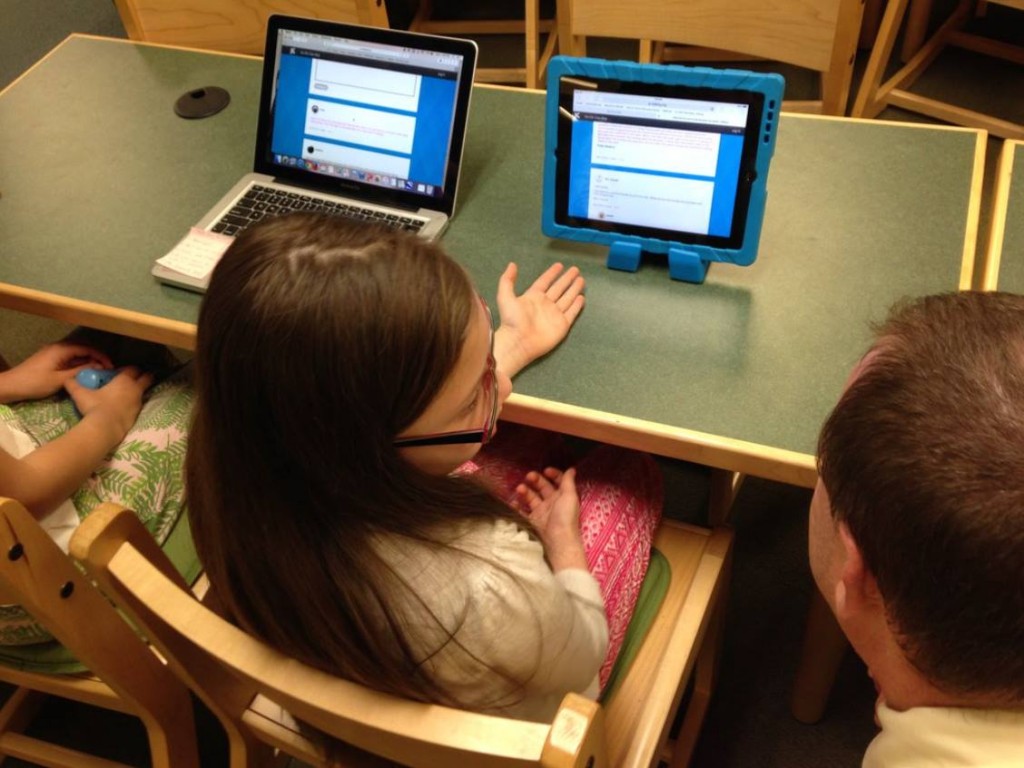
Enthusiastic Students Showcase Kidblog

Summer is full of opportunities for reflecting, learning, and planning. Teachers and students have the ability to review the past year and develop goals for both the summer and the upcoming school year.  While summer gives teachers a chance to unwind and relax, it is often used as a time for exploration and preparation for the new year.

During their time off, many teachers participate in professional development events, become involved in learning communities, and look for new ways to engage their students in the classroom.  I am no different. This summer I had many opportunities to connect with other educators and discuss ideas for increasing engagement in students’ learning and blogging became a common topic. I welcomed these conversations as I have seen first hand the positive results blogging has had on my students.  These discussions revolved around questions about getting students started, privacy, the best use of blogs in the classroom, and how to create new ideas and keep students motivated to blog in and out of the classroom. I was always happy to offer my advice. I created this post in hopes of sharing what I learned from these discussions with a wider audience.

The benefits to student blogging are endless. If you are looking for something new to try with your students, to get them talking, and to learn about your students, I highly recommend blogging as a way to start this new school year.

If you are not familiar with classroom blogging, I suggest setting up your “class URL” first – select a theme, familiarize yourself with the settings, features and how students will create their accounts and log-in.  Additionally, by setting up an account as a student in your class you can better understand the student experience and be prepared to answer any questions. Once everything is ready for real students, creating a handout to explain the use of blogging for your class, listing your expectations and some guidelines, and encouraging creativity in the process, is a great way to start the blogging conversation.

I have tried various methods to getting students started in our class blog. Regardless of the method you choose, it is always worth while to start with a conversation regarding your class blog. Talk about what students will write, when they will use the blog, who will be reading their posts, etc. Getting students excited about the options for post styles, fonts, and the wide audience they can reach in the process is helpful in driving motivation to write.

One option to get students started writing in class is through the use of prompt responses. I started small by instructing students how to join the class and having them begin responding to my posts with meaningful discussion points. If you have time in class to do this, facilitate as the students create their account, personalize their page and begin writing. Eventually students will feel comfortable and excited about creating their own ideas for writing.

Another successful way to get students blogging is to start with what they know – pen and paper. Try providing a prompt and having students write a response on paper, as they had done in the past. This is a great way to ensure students learn to evaluate their work and self-correct. It also reinforces that the true value in blogging is to feel comfortable and confident in expressing one’s ideas and using it as a means for personal growth. Once the students have written their responses, you can ask them create their Kidblog student account and use their writing as the first entry.  By having the first draft, and then entering it as a blog post, students have the opportunity to think, reflect and work on their skills.

Either option provides a great starting point. I recommend that you base your decisions for your class blogging on your students and what will be the most beneficial to your classroom.

Getting students excited about blogging only takes that first step. It is a continuous work in progress.  We are all involved in ongoing learning, and by being learners ourselves, we can help our students to take risks, accept challenges, reflect, and grow. And, through the process, we learn about each other, reinforcing the value of relationship building and support in the classroom.


ABOUT THE AUTHOR

I am a Spanish Teacher at Riverview Junior Senior High School in Oakmont, PA. I am also an attorney and earned my Juris Doctor Degree from Duquesne University School of Law and recently received the Master’s Degree in Instructional Technology from Duquesne. I enjoy presenting at conferences on technology and learning more ways to benefit student learning. I am the Communications Chair for the ISTE Mobile Learning Network, a Member at Large for Games & Sims, the Innovation Resources Co-Chair for the Teacher Education Network and the PAECT Historian. Additionally, I am proud to be involved in several communities including being a Common Sense Media Educator, Amazon Inspire Educator, WeVideo Ambassador, Edmodo Certified Trainer, Nearpod Certified Educator and also participate in several other networks. I enjoy blogging and writing for Kidblog and I am always looking for new learning opportunities to benefit my students. You can connect with me on Twitter @rdene915.

Trying to Keep Students Involved: What Can We Do About Homework?

 Toward the end of this past school year, I noticed a quick decline in homework completion, student progress and motivation. I knew that it had been a very busy final few weeks full of testing, athletic events, and much more, and thought that I should work on ways to engage the students more, try some new things in class, and finish the year strong. So I used that time to test out some new tools, offer some new opportunities and different choices to the students. I found myself allowing for more spontaneity in our learning, taking a few more risks, and asking the students for more input into what they wanted to do and how they wanted to learn. It became part of my “staying strong till the finish” experiment, which included mixing up the seating arrangements, giving students opportunities to teach class, choosing how to show what they had learned and more. With positive responses, I then shifted to another area which concerned me and that was homework.
Do we need to assign homework?
As a student, I always had homework and it was always the same as everyone else. We did worksheets, or outlined chapters, or had some other task. When I first started teaching, I found myself teaching similar to how I had been taught. Homework was assigned to my students on most days, and on most days it was the same. For a very long time I did not see any problem with this, I was using the homework to assess the students and give them the practice they needed to master the content. But as part of my professional development and interest in trying new methods and focusing more on student needs, I realized that it does not have to be the same. So I shifted my focus to evaluating the types and the frequency of homework assignments that I was giving to my students.
Over the past few years, I have changed my thinking, looking for ways to move away from those “one size fits all” assignments and aim toward providing more personalized, authentic assignments for my students. Some other reasons are that students can possibly find answers online, or worse, copy the homework. And as a language teacher, I also wanted to find ways to discourage students from using online translators. These experiences, along with feeling a bit frustrated about the homework not being completed, led me to really try some new methods at the end of the year. And have led me to really think about what types of homework I will have for the upcoming year. It is an ongoing learning process. Some areas that I have been reflecting on are: the types of assessments used in my classroom, my different groups of students, the frequency of their homework completion, and even more closely, a look at the individual students within each of the classes. My goal is to continue to reflect on whether or not the type of instruction and the strategies I am using, are beneficial to them and if what I am assigning truly has value and is helping to build their skills, or is it simply busy work.
Questions I asked myself I have been thinking about a few areas of my teaching. What are the types of materials use in class? Have I been using the same resources each year with each class? Was I assigning the same homework to each class? There are times when I had used the same worksheet, or a test over the years. Not because I was lazy, but rather, because it was a quick assessment to use or I believed it was the best way to provide the students with practice. But I have been working to find something that would work best for and help the students. And I have realized that it is more than taking a look at each individual class, it means really developing an understanding of the needs of each individual student. What helps them to learn the best? What do our students want and need from us?
An experiment
I do believe in the value of homework and I know that students today have a lot of homework each day. Homework is one of the ways to help students to practice and evaluate what they know, what they don’t know and how they can improve. It is one of many ways teachers can assess students and learn about their needs, provide instruction and valuable feedback. To change things a bit, I decided to make things more personal and have the students decide what they could do for homework.
I assigned each student to be the teacher for the next class period. The students were working in pairs and their homework was to come to class the next day with a lesson to teach. It could be something tangible such as a worksheet or could be a website, a video, a game, or any other resource. I was fine with whatever they chose as long as they could use it in class and more importantly, that they could teach their partner. I thought this would be a great way for the students to have more meaningful learning and also build relationships and collaborative learning skills. And in the process, also see there was more than one teacher in the room.
The results
During the lessons, I interacted with each group to see the lessons they prepared. Students had created worksheets, written notes, brought flashcards, had games and videos and more. A few even created a game for their partner to play. But what was most important was that they sought out resources, they had an opportunity to teach someone else and their homework was personalized not only for them, but also for other students. It went well and they were enjoying it and learning. I was nervous about doing this, about not having clear expectations, and leaving it up to the students. It was a risk. But it went very well and I was impressed with how creative they were, their level of engagement, and the variety of “homework” that had been done.
The student responses
I value student input and regularly engage them in informal conversations because I want to know their thoughts. Did they learn? Was this an effective way to practice? It was a very positive experience and the end result was that the students became teachers, the learning was more personal, they felt valued, and it was meaningful and beneficial to their learning experiences. It is a risk and when you don’t necessarily have the whole plan set out, and you just kind of go with it, you might be surprised at the results. Giving up some control to the students is not always easy, but in doing this, it opened up more opportunities for facilitating their learning, providing more individualized instruction and continuing to build those relationships which are the foundation of education. I still have some time before the new school year and I am looking forward to trying more ideas like this, which give students more control and provide diverse learning opportunities.
There are a lot of great tools out there and students really like having choices in the classroom and learning new ways to use technology that helps them to develop their language skills.

“The Summer Slide” and avoiding it

Technology Helps Students Avoid the “Summer Slide”

Published on CoSN: The Consortium for School Networking

Chrysanthemum

Summer slide refers to a decrease or loss of academic skills over the summer break. As summer goes by, if students do not actively engage in learning experiences, the progress they had made throughout the school year will not only decrease, it can actually regress.

Avoiding this “summer slide” is easy if strategies are in place to help students stay fresh until the next school year. This is where digital tools and technology can step in and help students be ready for the start of the new school year.

Ways to avoid the slide

There are many digital options for helping students avoid this summer slide. With the rise of technology, students have access to diverse tools with many options for providing these learning extensions.  Students have choices when given opportunities for practice and this will help them to return to school better prepared.

Regardless of the content area or level taught, teachers can recommend some great tools and apps that can easily be used by students to practice over the summer. Technology enables students to learn anytime and anywhere, so time conflicts are no longer a problem. It just requires students to set aside time to interact with these resources, and it can also be a good way to help students take ownership of their learning and even have fun in the process.

As a foreign language teacher and member of several professional committees on educational technology, I am always looking for new online platforms and strategies to stay connected with my students.

In my classes, we use Edmodo, a platform that allows teachers to share resources and connect with parents and administrators, and Celly, a platform that uses social media to help students, teachers and others connect and communicate. I can post links to resources using either of these throughout the summer, if I want to send students an activity to complete to practice the verbs or vocabulary, or if I find a new website or resource that I think they will enjoy.

Students have assignments and activities posted on Edmodo; for instance, they might be asked to complete a game of Quizizz or use Quizlet study cards, or to do something like write a blog post about their summer vacation, or to find some authentic resources and share them with the class.

My students also use the Duolingo app on their devices and can use this as a way to stay fresh and have fun learning and reviewing the language, on their own schedule and wherever they are at the time.  I remind them to set aside a certain amount of time each week to review their skills.

For blogs, I use Kidblog, a platform that is secure and allows students to build their own pages and post blogs.

And when students go on vacation, I ask them to use their travels as an opportunity to engage in conversations with Spanish speakers.

Other ideas include using tools such as an LMS or a collaborative class website, and a messaging tool for communication, to help students and teachers stay connected over the summer. Digital tools can be shared and students can ask for help and have access to additional resources when needed. Maintaining a connection over the summer can keep students engaged and continue to foster those important student-teacher connections.

There are many opportunities available to help students stay involved and even build their skills over the summer. It just takes a little bit of investigating to find beneficial resources and setting aside the time to explore the many options available.

Rachelle Dene Poth teaches French and Spanish at Riverview Junior-Senior High School in Oakmont, Pennsylvania. She holds a law degree and Masters in Instructional Technology from Duquesne University.

– See more at: http://www.cosn.org/blog/technology-helps-students-avoid-%E2%80%9Csummer-slide%E2%80%9D#sthash.4p03rkG8.dpuf