Three Strategies to Try Rather than Taking Away the Tech

Guest Post by Kim Weber, LINC Transformation Agent,@mskimbaweb 


Throughout my work in schools as a LINC Coach, there is a concern consistently expressed by teachers; one that results in the biggest deterrent for those who are beginning to transform their teaching practice by leveraging technology: What do I do when students misuse or break the rules for technology?

Just about any teacher who is using technology has encountered this in one form or another. For those of us at the early stages of implementing blended learning, this can be the roadblock that stops us in our tracks. We spend hours (at home) finding and figuring out the perfect digital tool that will enhance students’ learning. We introduce it with so much gusto, it sounds like we’re about to announce the winner of the lottery. We are well-prepared: all devices are charged, apps loaded, logins created, and we even have an offline back-up plan. We get the kids up and running, and are all set to work with a small group on targeted instruction, and you hear it…the giggling. You see it…the repeated covert glances at you. And you immediately know, they’ve broken the trust and digital contract that you and the students thoughtfully created to be the foundation of this type of learning. Most likely they’ve gone to an inappropriate website, broken a cell phone rule, vandalized classmates’ work on a shared document, or any other creative, disruptive shenanigans they’ve concocted. (Student innovation in this department is legendary.)

What comes next varies, but it often goes like this:

  • Stop the entire class.
  • Lecture everyone about the rules that were broken.
  • Close and collect all devices.
  • Switch to that offline (probably traditional) activity you had planned but didn’t really want to use.
  • Divvy out appropriate punishment to those who committed the transgression.

It is no surprise that many teachers feel uncertain about how to address these types of issues. According to a recent ISTE article,New OECD Report Shows Major Gap in Preparing Teachers to Use Technology Effectively, “In the U.S., only 45% of teachers stated that they were ‘well prepared’ or ‘very well prepared’ for the use of information and communication technology for teaching, the lowest rating of all dimensions ranked.”

I’ve developed some alternative approaches for addressing these difficult technology-related issues in our classrooms to help teachers feel more prepared:

First – View this as a teachable moment for the student(s) involved and the entire class. These are often the same kids who would find some other way to disrupt the learning in a traditional lesson. I once heard an educator explain it this way:

In the past, when a student would throw a pencil, a teacher would take the child aside and sternly explain that he/she could have poked someone’s eye out. Then, with the rise of a cautionary eyebrow, the teacher hands back the pencil back with a directive to get back to work. Conversely, our common reaction when students make poor choices with technology is to immediately confiscate the device and have the student “do something else.” Chances are that “something else” does not afford this student access to the same rich, personalized, engaging work you had planned. 

I suggest you consider alternatives to removing technology as it may not be the most effective response. These transgressions are moments that lend themselves to restorative practices and require patience, flexibility, and thoughtful actions on our part. At the heart of a restorative practice approach, the person who makes the mistake has the opportunity to be held accountable for their actions and repair the harm. By using restorative practices, you create a safe space for students to develop critical life skills and learn from their mistakes. This is often more productive than a response that is punitive in nature and stops the student from having access to learning.

Second – It’s never too late to revisit the contract and shared visioning work you did before you introduced technology into your lessons. If you didn’t start your digital instruction with these student onboarding lessons, then now is the perfect time to hit the stop button and do this essential mindset work with students. The key is to first help them understand “the why” of blended learning and second to co-create rules and expectations that help them view technology as a tool and not a toy. LINCspring, our online professional development platform for educators, provides ideas, resources and lesson plan templates that will help you structure this important work. This might also be a good time to show students the technology features that allow you, the teacher, to monitor behaviors such as revision history in Google Docs or how an LMS identifies user names on posts.

Third – In these moments of frustration, I suggest you remember our commitment to preparing students for the world they are entering. Why did we begin blended learning in the first place? Is it something that we can stop doing and still meet our students’ needs? From my observations and personal experiences as a teacher, I have seen blended learning work in ALL learning environments for ALL students. I’ve seen students who were grade levels behind catch up and students who were completely disengaged, engage. Changing the way we teach is challenging work, and the stakes feel higher with technology. It is easy to revert back to methods we are more comfortable with due to fear and loss of control. For inspiration through the rough spots, look to places like Twitter or follow podcasts such as “Cult of Pedagogy.”  Better yet, find someone in your school who can collaborate with you in this work. You can begin by creating PLCs to support one another. Just today, I was observing a blended learning classroom and another teacher walked in and proclaimed, “I want to do this too!”

If you have other strategies for addressing student mistakes with technology, please send me a note at kimweber@linc.education.

Kim Weber, LINC Transformation AgentKim Weber is a Transformation Agent for LINC, the Learning Innovation Catalyst. Before joining LINC, Kim worked for 20 years as a public and private school teacher in California and New York City. She is a presenter and coach for schools across the country who are embarking on school transformation projects that focus on creating classrooms that put students at the center of learning and help teachers become pedagogical problem solvers.

***Interested in writing a guest blog for my site? Would love to share your ideas! Submit your post here.


Looking for a new book to read? Many stories from educators, two student chapters, and a student-designed cover for In Other Words.

Find these available at bit.ly/Pothbooks  


Books available

Buncee and Immersive Reader

Buncee and Immersive Reader: A Winning Combination for Assistive Learning

For several years, Buncee has been one of my favorite creation tools; both for personal creation needs and for classroom instruction. While there are many digital tools to choose from when it comes to teaching and having our students create, Buncee’s versatility, ease-of-use, and recent integration with Microsoft’s Immersive Reader make it a go-to tool for all creative needs and accessible for students of diverse ages and abilities to learn 21st-Century Skills and express themselves. What my students love the most is that Buncee offers something for everyone, and I love that they love it.

Always keeping their finger on the pulse of their community’s needs, Buncee listens to educators about the needs for our students and takes action to find solutions! Their integration with Immersive Reader is a perfect example of this.

Immersive Reader: It’s About Opportunities to for ALL Students

This summer, Buncee added Microsoft’s Immersive Reader to its platform, increasing accessibility for students and offering more robust ways to learn. Immersive Reader is full-screen accessibility tool, supporting the readability of text in a Buncee for students with dyslexia, visual impairments, and for language learners and their families. Any text added into a Buncee can be translated and read aloud in over 60 + languages.

There are many ways Immersive Reader can enhance the learning opportunities for all students, build their confidence, and create an inclusive classroom environment. The use of Immersive Reader in Buncee will enable students to do more than just create Buncees, it will help them improve reading and language learning skills, while engaging more with the content in authentic and meaningful ways.

Imagine the possibilities for reaching and engaging students and their families who are just learning to read, who may be struggling with identifying parts of speech or word recognition, or who may be coming from non-native English speaking homes. Educators can use Immersive Reader to create lessons, make interactive flashcards for students and also for communicating with families. Being able to provide for students and their families of different backgrounds and learning styles is something that the Buncee team is definitely passionate about and does well!

How Does Immersive Reader Work in Buncee?

There are several ways to help students to build their skills through the different options available within Buncee and using Immersive Reader.

Getting started with Immersive Reader in Buncee is easy. By clicking on the Immersive Reader icon when viewing a Buncee, options pop up that you can work with to help further personalize the learning experience for students. Immersive Reader can then access the text in a Buncee. For example, it is easy to adjust the reading speed and make changes to the font spacing to help students who might need some adjustments in the visual appearance. You can also choose to display the text in shorter lines, or break down the syllables, to help students process the information in ways that meet their needs.

Navigating the Options

I decided to create a Buncee using some of the new 3D objects and also explore the options available through Immersive Reader. When viewing my finished Buncee, clicking the Immersive Reader symbol takes me to a new screen where I have additional options to further personalize the appearance of the creation. For first time users, it is easy to figure out how to adjust the settings. In preview mode, I clicked on the speaker symbol to listen to the text. Students could use this as a way to practice their own pronunciation, especially when using it for language learning, by repeating after the speaker. Students can also build listening comprehension skills by focusing on the written words and making connections with the audio.

By clicking on text preferences, I can choose the text size, increase spacing, and select from three choices in font style. These are great options to help with readability for students. There are also 21 color choices for the background on the screen. I find this to be very useful, especially as someone who can be sensitive to certain colors when reading. I’ve also had students experience difficulty with reading on certain colored backgrounds, so this is a definite plus.

The grammar options enable you to turn the syllables on or off and also color code the different parts of speech. Being able to use the color codes to help with the identification of nouns, verbs, adjectives, and adverbs will help students to build their grammar skills. These labels can be turned on or off, which means that families can work with their children and use it as a teaching tool for review.

Just to experiment, I turned everything off except for the verbs. Displayed on the screen were the two verbs in the sentence both highlighted in red. I then selected a different color for each part of speech, I chose purple to identify nouns and green for the adjectives. I was amazed at how quickly this could be set up and the possibilities for helping students with reading comprehension and language skills. Using this as a way to further engage students with identifying parts of speech and making the visual connection is another option for more interactive learning.

Under reading preferences you can focus on one line or on the entire text.

When you focus on a line, it closes the screen down to that one specific sentence, which you can also make narrower or thicker depending on your choice.

There are more than 60 languages available for translation. I decided to try French first, and when I clicked on a word, it showed me the word in French and in English. I also explored other languages, including Spanish and was impressed with how much it offered to reinforce the content and to provide a more personalized learning experience for students. You can choose the voice and speed of reading, so it provides a great way to reinforce speaking skills as well as listening, reading and writing.

In his book, Digital Leadership, Eric Sheninger talks about the critical competencies needed by learners to be successful in today’s world. These competencies are in alignment with the ISTE standards for students and teachers, and can be addressed through the use of Buncee. Now with Immersive Reader integrated, the possibilities to address these standards is open to all learners. Beyond the potential for creativity, collaboration, critical thinking, and communication, using Buncee, students can build skills in digital media literacy, entrepreneurship, technological proficiency, and digital citizenship. Students have the opportunity to use technology as a tool for solving real-world problems or making real-world connections. We have to look beyond simply using digital tools to engage students in learning and instead, empower them through opportunities to apply what they have learned in unique ways.

ONE SIZE DOES NOT FIT ALL

Guest Post by Kristen Koppers, @Mrs_Koppers

Educator and Author of Differentiated Instruction in the Teaching Profession 

The movie Sisterhood of the Traveling Pants was one movie that brought together friendship through hardships. But a single pair of pants (no matter the size of each of the girls) fit perfectly to where they would wear the pants, write on them, and send them to each other throughout the summer.

We all know that wearing a pair of pants in one size does not mean that another pair of pants will fit even with the same size. The fact that one pair of pants can fit four different girls ‘perfectly’ who all have different body types is not realistic. Although the movie focused on the jeans, it was more about the friendship of the four girls during their personal problems they went through without each other.

The same idea goes for teaching and learning. While we hope that one size pair of pants (learning styles) would fit more than one student, we know that is not the case. Students come from a variety of backgrounds, cultures, schools, and learning abilities so we cannot think that one curriculum or one “pair of pants” can fit all. This goes the same for purchasing a Halloween costume or outfit where the tag says “one size fits most.” Someone who weighs 120 pounds wearing the same costume that a person who weighs 30 pounds more won’t fit the same way. While the outfit will fit both sizes, the look will be quite different.

ONE SIZE DOES NOT FIT ALL – What many forget is that teachers come from all backgrounds, cultures, educational institutions, and ethics. We cannot expect one teacher to teach the same way as other teachers. This is the same for students. It would be a perfect world if one style of teaching will reach all students. However, this is not the case. Differentiating work can be difficult as well to meet the needs of all students. In order to have that perfect pair of pants to fit all students, teachers must be willing to put their ego and pride aside and stretch the pants just a little wider so that not one size person but multiple sizes can fit.

The struggle is real. We all know how it is to try and fit into a fresh pair of washed jeans. The jeans that fit you the day before now feels tighter 24 hours later. If we think about how that one pair of jeans fit the day earlier and then the next day they don’t, this is how many students feel. One day they feel like they understood the information and then the next day nothing makes sense.

Using Differentiated Instruction is not about separating all students or creating one lesson plan for many. It’s about assessing student needs throughout the year. While one lesson plan will help several students at one point, another lesson plan may not work for the rest. Assessing students needs does not need to be cumbersome. It can be as simple as noticing non-verbal clues in the classroom to written work.

Recently, we were reading a novel by Gabriel Garcia Marquez. Students were intrigued by the reading and began to focus on the plot. It wasn’t until they were to share out what they learned to the class that everything unfolded. When I moved around the room, most groups were able to explain what they were thinking. However, between the individual group discussions and the informal presentation, something went wrong. This is where I used differentiated instruction. We discussed the lesson, the assignment, and guidelines. It was the connection from what they read to their knowledge that seemed ‘not to fit.’

As an educator of 16 years and instead of taking it as an insult to my teaching, I swallowed my pride of experience and began to learn how to fit into a pair of jeans that did not fit me. After a large group discussion, I was able to use differentiated instruction to meet the needs of all the abilities in my classroom. Students were given the choice to keep their grade or complete one of the two alternative assignments to replace the previous grade. Instead of making this decision, I let the students choose because, after all, they are the ones who truly know their own learning ability.

When one pair of pants does not fit, we shouldn’t just give them away and buy a larger or small pair, we need to stretch them a little to fit.

Follow Kristen on Twitter and Check out her book! Differentiated Instruction in the Teaching Profession

Teachers matter more

Guest post by Dave Schmittou, @daveschmittou #LastingLearning

via Teachers matter more

I am all about improvement. At the end of every year, I spend some time reflecting on what my strengths and struggles are so that I can make a plan for progress. At work, I spend time evaluating programs, processes, and people. One thing I have noticed recently in schools is that far too many of us say teachers matter more,  that the people make the difference, yet we spend so much of our time focusing our improvement efforts on programs and processes. We think of ways to circumvent those who matter more instead of diving deep to develop the real difference makers. We know teachers are the drivers of learning, but we pour money and time into software, classes, textbooks, and schedules instead of into the people who make it all happen.

8


As a sports fan, I often use athletics to try and illustrate my points, so I may as well do so again. Lebron James is considered by many people as one of the greatest basketball players of this era. He is dominant, he can shoot, dribble, pass, rebound, and play defense (when he chooses to). Pretend for a moment that you are a general manager of a team Lebron plays on and you have the task of making the team better. Your goal is to get wins and championships. You can do this by upgrading the concession stands at the arena. You can do this by bringing in new players to circumvent Lebron, players who will not pass him the ball or expect him to be great, or you can do this by bringing in players that complement his game and allow him to dominate. Each of these strategies has been tried on his teams. Some owners and GMs have attempted to distract the fans from what is happening on the court by upgrading the arena. Some have attempted to save Lebron by bringing in others to take the pressure off, and some have brought in players to complement him and make him even better. Only the latter has resulted in championships, however.

Often times in schools we get ourselves distracted by things that don’t matter at the expense of those that do. As a leader who has had the opportunity to help lead turn around efforts in a few schools and districts, I have learned that no program, no paint job, no software will ever impact a child like an amazing teacher. If you are a leader, all of your focus should be on making teachers better, not working around them.

If you have struggling students in your school (we all do), do not go on the hunt of the newest tech gadget to give to the kids. Look for ways to help a teacher work with those students more. If you have accelerated students in your school (we all do) do not look for activities and classes to fill a schedule. Look for ways to have teachers inspire and motivate innovation. Stop looking for ways to work around teachers and begin looking for ways to support teachers.

Support does not simply mean increasing pay. Support means, if you have the option between a new textbook or staff professional development, invest in the teachers. If you have a choice between painting a hallway or developing a teacher, choose the teacher. Always, choose the teacher/

Every research study available describes the effects that matter most for student learning point to teachers as the difference makers. Teachers matter more. Teachers provide feedback, establish the culture, set the expectations, develop the assessments, and plan for progress.  If you are a leader, spend your time building capacity in teachers and you will be amazed at the learning that results from your students.

Check out the podcast on this topic at https://anchor.fm/david-schmittou/episodes/Episode-12-Teachers-Matter-More-e2n3c4

Feel free to also check out Dave’s book:

It’s Like Riding a Bike: How to make learning last a lifetime


Want to write a guest blog for my website? Submit an idea here!

Changing the Classroom

Image Credit Pixabay

Guest Post: Jenn Breisacher, Founder of Student-Centered World (www.studentcenteredworld.com)  

Twitter: @StuCentWorld, Instagram: @studentcenteredworld


Somewhere along the way, teachers got scared.

I don’t mean scared in the traditional sense. Yes, sometimes there are heart-stopping moments for one reason or another, but teachers aren’t scared of their climate.

Teachers became scared of today.

As long as we can remember, teaching has been about this technique or that in the classroom. We are sent to learn about different methods and spend hours of professional development learning about different ways to help our students be successful. Some teachers take this in stride while others sit back and roll their eyes, knowing that when they go back to the classroom, they’ll just stick to “what works”.

It always has, right?

But what happens when an entire generational shift occurs? What happens when an entire generation doesn’t know what life was like before September 11th? That landlines used to be the only way to call somebody? That “likes” and “follows” used to be a phenomenon that was done in person?

Folks, that generation is here…and “what works” doesn’t work for them.

Generation Z has entered our classrooms and they are different than any other group that has been taught in traditional education before. They are hands-on, tech-savvy, and need to know that what they are learning will help them make a difference. Simply put, traditional methods of instruction will not allow them to perform at their best. 

Let me say it again, “Traditional methods of instruction will not allow Generation Z to perform at their best.”

I’m not saying they can’t learn with traditional instruction. Sure, by osmosis they may learn by sitting and listening to a lecture or taking notes from a PowerPoint…but this is not how they will learn best. As educators, we don’t want to simply go through the motions. We don’t want to know our students learned the bare minimum to pass and move along. We want them to have a thirst for knowledge, to want to know more, learn more, do more. Yes, they may “learn” in a traditional classroom, but there will be multiple layers of potential that simply does not get tapped.


The world our students are entering is so competitive, but not in the ways we remember. Jobs used to be industrial, but now they’re turning entrepreneurial. We need to give our students the power to head into that world with confidence. We need to help give them an edge so when the going gets tough, they know what to do. We are preparing our students for jobs that don’t yet exist, which is a scary thought. (Don’t believe me? How many of you recall friends who wanted to be social media managers while you were in school? That’s just one example). The only way we can ensure their success is if we train them now to think outside of the box and to be willing (sometimes quite literally) to get their hands dirty and think like no one else.

This is the scary part for teachers.

Yes, throughout the years, life has changed. Every generation of students who have come to school has had different needs and interests than the ones before them. However, the birth of the information age and the worldwide connections that are now made in an instant are things that have never been seen before. We can debate for days whether or not this is good for society…whether or not “these kids” are being helped or harmed because they know how to function a Smart Phone by the time they’re 2. While those debates are fine, they’re not changing anything regarding what clientele we have in our classrooms right now. These changes to society aren’t going anywhere…at least not for a long time…and it’s our job…our duty…to make sure we are adapting in the classroom so these kids are learning in a proactive way for the world that awaits them, not the way it’s always been done in a world that no longer exists.


Change is scary for everyone. It takes us out of our comfort zone and makes us dabble in ideas that may be foreign to us…but remember, those ideas are not foreign to our students. If we want them to be as successful as possible in life, we need to help prepare them for the world that awaits them, not the world that awaited us.


Promoting Healthy Self-Esteem in Schools

Guest Post 

Katy Garvey, @Katy_Garvey, Social Learning Manager, The Source for Learning Inc., Former MS Principal, Reston, VA

Promoting Healthy Self-Esteem in Schools

Adolescent mental health and the social-emotional well-being of our students is something educators face daily. More frequently (thank goodness!), this topic is being brought to the forefront of many school districts. In my near 15 years in the public school system, I witnessed a transition to more mental health awareness practices as well as preventative and proactive care. The “middle years” can often be the most challenging, as our children are trying to figure out who they are, establish independence, all the while amidst changes in their bodies and minds. Oh, and we still expect them to demonstrate academic and social competencies in school! That is A LOT!


As educators, we know that when students feel good about themselves; in turn, they are much more likely to be more successful in the classroom. But, how do we set up our teen students for success? It takes a continuously committed focus on daily routines and practices that help build self-esteem. I will share some basic ideas and teaching strategies to consider when working to promote a healthy sense of worth and belonging in our students.


  1. Ask a “question of the day.”

We know that building and maintaining relationships are key and creating connections with students can go a long way in promoting their self-confidence. Try starting each class period with an open-ended question. Students can use an e-journal or blog (see some ideas HERE for blogs or e-journals) to record their thoughts. You could even move toward “circling up” and having students share their responses. Remember if you do this, always give the “pass” option. Read more about circle practice in the classroom HERE. In my time as a high school classroom teacher, I had the unique opportunity to teach a section of a class called Peer Helping, where the focus was to create meaningful relationships and mentorships between secondary and elementary school students. The first quarter of the year, the students were with me in the classroom, and we began each day in this way. As the year progressed, it was amazing to see how the students opened up, sharing beliefs and feelings. Additionally, an uncanny sense of community was established in my classroom as a result- it was something I’ll never forget! 

  1. Have students set goals, monitor progress toward them, and celebrate successes.

These could be behavioral goals, academic goals, extracurricular goals, or all of these. Ensure that the goals are attainable and always find something to celebrate…no matter how big or small. Also, make sure to work with students to create opportunities for them to succeed based on their strengths and interests. Lastly, remember, this will also vary student to student- we are striving for equity, not equality.

  1. Provide ongoing, genuine praise and feedback.

Talk to students frequently and provide consistent, specific feedback on learning and goals. It is important for students to know not only that you care, but that you are an active participant in their academic and social success. Written feedback is also impactful, but strive to be specific—instead of saying (or writing) “great job,” how about something like “I love the way you analyzed that text with such specific details”! This way, students know what the desired outcomes are and also when they meet expectations for success.

Well, that’s certainly a whole lot, but hopefully, it gets you started on the road to shaping our students’ self-esteem and creating those classroom routines and practices that foster a positive learning environment. I would love to know what you do in your daily practice to promote teen self-esteem. Drop a comment and let us all know!


ParentSquare for Teachers

Communication is Key

One of the things that I enjoy the most about the summer is having more time to reflect on the different tools and resources that I am using in my classroom and to explore new ones. Summer is also the perfect time to participate in professional learning, whether by attending conferences, taking classes, or meeting with other educators. This summer, I have been involved in several presentations and conversations that are focused on finding a way to enhance better communication between home and school. It is critical for classrooms today that we find a way to increase family engagement in the learning experiences of their children and make sure that everyone has access to the school information and resources, especially those that are time-sensitive.

Finding the right tools

There is no shortage of tools that we can use to form a connection between home and school, whether we want simply to send messages and class updates to students, or we want to focus more on including parents. Because teachers have so many different responsibilities, finding the time to explore tools can be a little challenging at times. This is why it’s beneficial to share what we are doing in our classrooms to help other teachers get started and to make those connections that we know are so important for student success today.

Several years ago I noticed a disconnect and I resolved that by finding a digital tool (Celly, then Remind) to connect with my students so I could share resources and class updates with them. But I soon realized that I needed to go beyond simply connecting my students with the class, I needed to include parents. That’s when I moved to using an LMS, Edmodo, which enabled students to get the materials that they needed, and also keep parents informed about our class.

The benefits of one platform

Although these tools worked just fine, the concern was that teachers were using multiple tools. This meant that parents had to keep up with multiple apps, some of which may not have been accessible on their devices. When I was using the messaging app and the LMS, I had to keep a good routine of posting on both platforms and keep reminding myself that I needed to do so for each class that I was teaching. After a short period of time, I realized that there were too many being used. Being able to effectively communicate and collaborate is easier when everyone uses the same platform. There is consistency and parents won’t have to worry about which teacher uses which app, or whether or not their device is compatible with the apps being used.

Making the shift

Thinking about the different communication tools available to teachers, moving to something that offers more than two-way communication and the sharing of photos, videos, and files, makes sense. We have many responsibilities that could require multiple apps or forms of communication. However, notifying parents about student attendance, scheduling conferences, asking for volunteer sign-ups, or coordinating class fundraisers, are a few added benefits when teachers use a platform that provides all of these options housed within one.

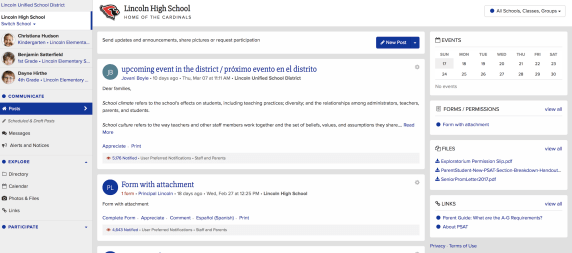
Enter ParentSquare

As teachers adopt free communication tools, districts are looking at alternatives. One such tool is ParentSquare. What does it have to offer for teachers and how does it compare to Remind and other teacher-adopted tools?

Teachers use ParentSquare for:

  • Communicating with families and students
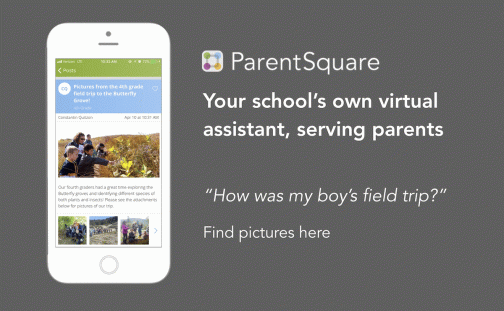
  • sharing pictures
  • scheduling conferences
  • sharing class calendar
  • asking for class and project supplies/class party items and food
  • requesting chaperones and volunteers
  • collecting payments for field trips
  • Providing/Collecting forms and permission slips

In addition to the teacher uses, there are many other benefits for school- and district-based usage such as attendance and lunch balance notifications, bus delays, sharing grades and assignments, delivering progress reports securely, and emergency notifications. Having these capabilities makes ParentSquare a single hub for all school-home related communication for parents.

I have had the opportunity to explore ParentSquare over the last six months, to get feedback from other educators and to compare the ways that I used other messaging tools and apps in my own classroom. Besides the time factor, sometimes educators get pushback because there is just too much technology. Too many things to worry about, too big of a learning curve, and too much to figure out to get started, so it’s easier to stay with the tools that have been used for years and that are more comfortable.

Easy to join

When using a platform like ParentSquare, teachers have a lot less to worry about when it comes to sending messages and inviting parents to become part of the group. ParentSquare automatically integrates with the SIS, making it easy for parents to join because it’s done automatically for them, without the need for a join code like with Remind. Parents who don’t register will still receive messages because their information is pulled from within the school rostering system.

Comprehensive and consolidated

Parents will feel more connected to the school by having one consolidated platform, which resolves the problem of knowing where to find information or keeping up with multiple apps for different classes and yet more apps and tools used by the school and the PTA. ParentSquare combines all into one. With tools like Remind, the options are limited as to the types of information that can be shared.

Privacy

It is important to first guarantee that any tool or platform used is in compliance with COPPA and FERPA. Compliant with both, ParentSquare takes all precautions when it comes to the safety and security of students and their families. ParentSquare is a signatory of the Student Privacy Pledge and the company signs a contract with the district to ensure student privacy. While Remind is also compliant with COPPA and FERPA, it has not signed contracts with the district or school in most cases.

Delivery of messages

At times I also heard that some parents were not receiving my messages. When I used Remind, I could see that messages were delivered, however, the students or parents were not necessarily reading them, which presented another problem. Perhaps because of the use of multiple tools, which is why it makes more sense to have one comprehensive platform. ParentSquare automatically delivers messages using the right modality – email, text or app notification and the right language as is in the school records. Reports show reach and deliverability of messages, making it easy to identify who has or has not been contacted.

Consistency is important

Personally, I have used anywhere between four and six different apps and websites to complete these tasks. However, with ParentSquare, you can facilitate faster and better communication and collaboration between home and school. ParentSquare enables schools and families to engage more in conversations by providing multiple options for communicating in less time through direct messages, polls, and the option to post comments all in one platform. It offers a consistent and reliable way to communicate within the school and school district, fostering and building the relationships that promote better communication, student success, and family engagement.

In many schools, administrators are potentially asking teachers to use platforms that are a paid platform rather than selecting the tools that they feel most comfortable with or prefer to use based on their role or content area. Making the transition from a tool like Remind to that of ParentSquare does not require any extra time, in fact, it is very user-friendly and easy to navigate. And if there are any questions there are many resources available including online self-paced training modules, extensive knowledge base, 24*7 support for teachers and parents.

Sign up for a demo today

**********

Key features: Also check out the video here.

Key Features  
Privacy Available, updated 2018
District Level Oversight
Messaging to and between parents
Messaging between teachers and staff
Individual/Group Messaging
Notifications as text, email, app
Send/Schedule reminders
Language Translation 100+ with Real-time translation
Class/School Calendar 2-way Sync with Google and iCal
File and Photo Sharing
Conference & Volunteer Signups
Single Sign-on
Unlimited Message Length
Coordinate Events/RSVP
Permission Slips
Devices: iOs, Android, Web
Attendance Notifications
Grades and Assignments
Report Card Delivery
Attendance Delivery and Excuse Notes
Truancy Letters
Cafeteria Balance
Payments and Invoices Recurring & one time
Polls and Surveys

Learning and Growing as Educators On A Busy Schedule

Educators have busy schedules and one thing that I hear quite often is that there never seems to be enough time. We need time to plan for our classes, to complete different tasks required by our roles in education, and of course, most importantly is time to spend with our students. But in order to be at our best, we need to find time to take advantage of different learning opportunities to stay informed of best practices and emerging trends in education. We also need time to connect with other educators. It’s through these relationships and finding the right tools that we will grow personally and professionally, and bring our best selves into our classrooms each day. The challenge is not so much in finding resources, but rather in finding the most valuable ones that will fit into already busy schedules.

Personally, I stay involved in a lot of different ways so I can continue to build my professional knowledge and my connections with other educators around the world. Having chosen to spend many of my first years of teaching isolated, I missed a lot of opportunities to learn more, to do more, and to provide more for my students. A few years ago I made a shift to becoming a more connected educator by leveraging the technology available through social media. It has been an ongoing personal and professional transformation. Becoming connected has increased my awareness of the plethora of learning opportunities available for educators. I have changed my teaching methods, broadened my perspective of strategies and best practices in education and have more options for getting the support that I need to bring new ideas into my classroom.

Here are different ideas for ways to learn on any schedule. These options create a lot of possibilities for how, when, and where we can engage in professional development and become more connected educators. With the summer break coming for many educators, it can be the perfect time to explore new ideas.

Social Media

Over the past few years, there has definitely been an increase in the amount of social media used by educators for professional learning and networking. Depending on your level of comfort and how often you choose to interact, there are many ways to learn, crowdsource ideas and access different perspectives and people with different backgrounds and experiences.

  1. Twitter. Although I was hesitant for many years to create a Twitter account, once I did a few years ago, my Professional Learning Network (PLN) has continued to grow. Whether you have time to engage in a nightly or weekly Twitter chat or just follow one of the many hashtags related to education, there is something for everyone when it comes to Twitter. Do you have ideas and want to gather more? Create your own hashtag and use it to invite people to share their ideas with you. Post a poll to get quick feedback, find educators to follow and create a list to keep track of resources and ideas shared. In addition to hashtags, there are many chats and topics to follow. If you want to find educators to follow on Twitter, David Lockhart created a list of 100 educators to look into.
  2. Voxer. A walkie-talkie messaging app that promotes communication and collaboration. It’s easy to get started with and it provides a lot of different ways to add to your professional learning. Use it for somewhat asynchronous conversations with a colleague, create a small group to discuss specific topics such as blended learning, project-based learning or augmented and virtual reality. Using Voxer for a book study also works very well. It provides a great platform for talking about a book and sharing resources, without having to be in the same space at the same time. There are even groups on Voxer, you can search the list and join them. It’s nice to be able to listen to the messages on the way to or from school, perhaps during a lunch break, or while making time for a walk and self-care.
  3. Facebook. Initially used with friends and family as a way to share what’s happening in each other’s lives and maybe to reconnect to organize events like family or class reunions, Facebook is now used by a lot of educators. There are many educator accounts to follow as well as groups of educators to join.

Information Sharing

Sometimes it is easier to find the information that you need, especially information which is current and offers a lot of resources, by exploring the different digital forms of information such as books, blogs, and podcasts. Knowing that the information is credible, up-to-date, and provided by educators with experience, is what sets these options apart from other options.

1. Blogs are a quick way to get information from a variety of sources, especially when you look at different blogs available from publications such as Getting SmartEdSurgeTeachThoughtEdutopiaeSchoolNews and EdWeek to name a few. Searching the list of top education blogs to follow is helpful for finding specific topics, content areas, and grade levels, or even for opportunities to contribute to a blog.

Many educators have personal blogs which offer a lot of inspiration and share ideas and even struggles. You can browse through this list of educator blogs to follow. Some educators that I follow are Mandy FroehlichJennifer GonzalezEric SheningerKasey BellKristen NanMatt Miller, and David Lockhart.

2. Podcasts can be a great way to pass time when traveling to and from work, relaxing or even during exercise. Most podcasts are short enough that you can listen to an episode and pick up new ideas and inspiration. Over the past year, there has been an increase in the number of podcasts available to teachers, whether created by educational organizations or simply teachers wanting to share their experiences and inviting others to join in the conversation. Some that I regularly listen to and which have been recommended to me are: Edumatch Tweet and Talk, Jennifer Gonzalez (Cult of Pedagogy), Vicki Davis (Ten Minute Teacher), Will Deyamport (The Dr. Will Show, the Edupreneur), Barbara Bray (Rethink Learning), Brad Shreffler (Planning Period Podcast), Don Wettrick (StartEDUp),  Google Teacher TribeTeachers on Fire, Andrew Wheelock (Coffee with a Geek), Dan Kreiness (Leader of Learning), and Denis Sheeran (Instant Relevance Podcast).

3. Books. There are more educational books available for professional learning than ever before. It’s easy to find book recommendations by following specific hashtags on Twitter or looking at different curated lists of education books. For some book recommendations, I generally follow the hashtags #bookcampPD#PD4uandMe, and #Read4Fun, which are led by different educators. The Read4Fun group also shares books in a Voxer group. For a list of recommended books, ISTE crowdsourced recommendations last year and I also created a survey to gather ideas from educators. Some of the books mentioned on the list include: Teach Like a Pirate by Dave Burgess, The Innovator’s Mindset by George Couros, Courageous Edventures by Jennie Magiera, Culturize by Jimmy Casas, LAUNCH by A.J. Juliani and John Spencer, Lead Like a Pirate by Shelley Burgess and Beth Houf, Start with Why by Simon Sinek, Daring Greatly by Brené Brown, Take the L.E.A.P.  (Elisabeth Bostwick), and What School Could Be by Ted Dintersmith. Many publishers have books coming out on an almost weekly basis it seems. Check into DBC ConsultingEduMatch PublishingIMpress and ISTE to explore more books available.

Online Learning Opportunities

When we leverage technology in a way that opens up powerful learning opportunities and pushes back the limits based on time and location constraints, we find innovative ways that we can learn.

4. Online Learning Communities. There are different learning communities to join in for professional development. As a Common-Sense Certified Educator, you have access to the newest tools and resources. By becoming Google Certified or a Microsoft Innovative Educator Expert, educators can enroll in learning modules, training sessions, and receive a digital badge for completion of each different module. Besides building PLN, these opportunities offer yet another way to learn on your schedule, in a time and place that meet your own needs.

5. Summits and Webinars. There are organizations that provide webinars for educators, many of which are offered free of charge or a minimal fee or are subscription-based. For example, if you take advantage of providers like EdWeekSimple K12, or ASCD there are webinars available on a variety of different topics that work with your schedule. As a member of ISTE, joining in any of the PLNs gives you access to a series of weekly webinars and sometimes even more than once per week depending on the PLN. These webinars can be viewed live or as recordings when most convenient to you. The topics are always current and in some cases cutting edge or emerging trends, so you can keep informed of new ideas and teaching strategies, better than you ever could before.

Throughout the year there are even online conferences, or “Summits” which provide a series of speakers and sessions, sometimes held over a multi-day format. These are offered free and in my own experience, have always provided a wealth of knowledge and resources. Personal favorites include the Ditch Summit hosted by Matt Miller, Hive Summit hosted by Michael Matera and EdCamp Voice on Voxer, started by Sarah Thomas of EduMatch.

It’s clear there are many options and resources available to educators for professional development. It simply takes thinking about an area you would like to learn more about, exploring one of the choices and giving it a try.

Summer: Family, Friends, Learning


This slideshow requires JavaScript.

When people find out that I am a teacher, one of the first things they say is “it must be nice to have your summers off.”  Yes, it is, but in all honesty, I would be fine if my school switched to year-round schooling. I enjoy being in the classroom and look forward to each day and what it brings, even the challenges that might pop up. More than anything, I love working with students and learning from them. My reason for loving the summer is not because I don’t have to go to work; it’s because it is an opportunity to have more time with family and friends and to take part in professional development and reflection.

Time for Reconnecting

Life gets so busy sometimes that before you know it, weeks and months pass by and you might find that you haven’t had a lot of time to spend with family and friends.  Of course, technology helps us to stay connected more than we could before. Whether we use text messaging, different apps, FaceTime or even a hangout to see our family and friends, it’s not the same as time together in person. More days at home means more time for family and friends.

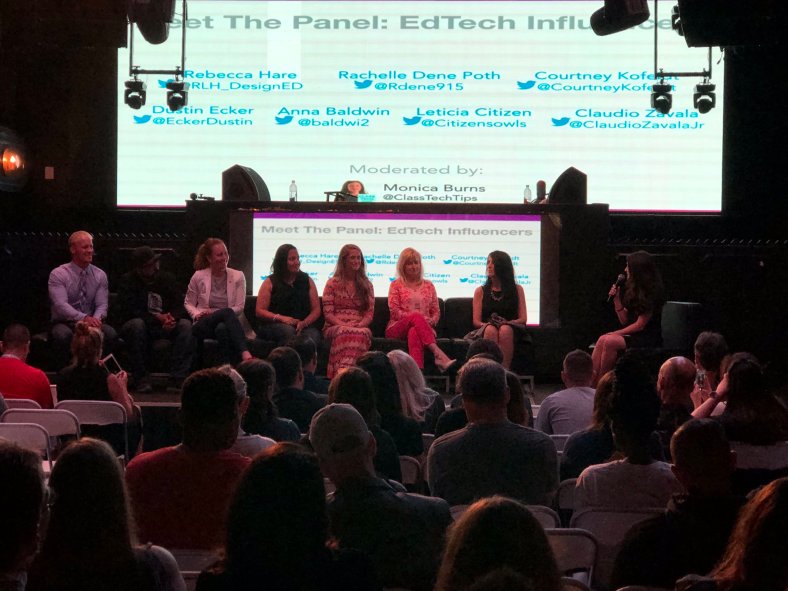
I’m also excited for conference season to be here and to have time to spend with some of my closest friends learning together and relaxing. It was an amazing week at ISTE 2019 in Philadelphia and it is hard to believe that it has already passed! Time to start prepping for ISTE 2020!

I presented several sessions while at ISTE, which is such a fantastic conference that brings so many educators from around the world together every year.  We had so much fun and some of these pictures totally capture that well. It is great to spend time with my 53s and the 4OCFPLN and meet some PLN for the first time in person.  I loved getting to finally meet (in person) Elisabeth Bostwick, Rich Czyz, Tamara Letter, Scott Nunes, David Lockett,  Annick Rauch, Stacey Roshan, the Gimkit team of Josh and Jeff, and a few members of the 4OCFPLN that I only knew through Voxer!

Now I am prepping for the next learning adventure which is coming up in 2 weeks. I’m fortunate to be part of the EdWriteNow Volume 3 group of authors who will meet in Boston to write the book together. An added bonus is that I will get to spend extra time with my good friend Jennifer Casa-Todd while there. After Boston, a few of us are going on a writing retreat to Nashville. While each of us will be working on our respective books, it will be nice to spend time together!

Knowing that I will spend time with my core groups, the 53s and the #4OCFPLN, plus meet other members of my PLN for the first time, in real life, is one of my favorite things about the summer.   


This slideshow requires JavaScript.

Time for Recharging

Summer is a time for a lot of things, one of the most important is self-care and recharging. So doing some normal summer things like sleeping in late, catching up with friends and family, going on vacations, ditching our devices and not worrying about setting the alarm are important for our self-care. Summer is also a valuable time for teachers to do even more on a personal and professional basis like think about their practice and take advantage of the opportunities that are out there for personal and professional development and growth. Attending conferences like ISTE give me a renewed excitement for the work that I do. My energy rarely dips when I am at these events, surrounded by friends and learning.

Time for Learning

A more flexible schedule for the summer means more time for attending conferences or webinars, joining in book studies or Voxer groups, or connecting within different learning communities. It might be easier to get involved in a Twitter chat, whatever it is during the school year that just doesn’t seem to fit as part of your routine, make it part of your summer routine.


There are lots of opportunities out there and my advice is to decide what is best for you. Do you want to be in one Voxer group or join one book study? Then make that your focus. Or maybe you want to start a blog or create a  new website. It’s up to you because it is your time to decide how to spend your summer break. I’m thrilled to be part of the summer BookcampPD book study with my book In Other Words. Looking forward to discussing the six books included in the study and of course, the two weeks in July (July 15-28), when we get to talk about my book and share ideas and takeaways from it.


Enjoy yourself

Each summer gets better and better, and it’s not because I traveled and spent hours on beaches, or to the contrary, kept idle. It is because I have used the time to learn more, to read, to connect, to reflect and to prepare for the next year.  My summer goal is to work so I can start stronger and be better than I was the year before. Whatever you do this summer, make time to recharge, connect and learn. And don’t set the alarm 🙂


This slideshow requires JavaScript.

Getting 2gnoMe

Personalized Learning for Teachers

Earlier this year, I was seeking guest posts for the monthly ISTE Teacher Education Network newsletter. One of the emails that I received included a link to a platform called 2gnōMe. I had not heard of it, so before responding, I took time to explore the website to better understand how it was being used by educators. After looking over the website and watching the video on the landing page, I learned that 2gnōMe is a platform that enables school leaders to provide personalized professional development for educators. The benefit of 2gnōMe is that the platform helps educators to ideally avoid, or at least reduce, the one-size-fits-all approach to PD and break away from what has become known as the “sit and get” professional development. For administrators, it enables school districts to clarify what individual teachers might need from available resources and personalize their learning experience, at scale, to measure its usefulness and impact.

The background

I contacted Ilya Zeldin, the CEO of 2gnōMe, to learn more about the company’s background, the purpose of the platform and to watch its demo. During our conversation, Ilya shared his vision for the platform and his goals for moving forward and getting the platform into school districts and learning providers. When he began designing the 2gnōMe platform, he focused on human connection and empowerment. Ilya said:

“That was the reason I developed the 2gnōMe concept. I would like to re-imagine the learning process for all adults, but the stakes are just too high with teachers. While teachers are asked to differentiate learning for students in their classroom, they rarely get the same kind of personalized professional learning when it comes to their own needs.”

According to Ilya, 2gnōMe enhances individual skills awareness and uses data to provide teachers and school-level leaders with crucial information to support teachers’ efforts to improve their practice, implement innovative practices, and achieve better results for their students.

During the demo, I saw the example of the 2gnōMe approach and platform based on the ISTE Standards for Educators. As teachers first reflect on their classroom practice, the data is compiled to then provide a more personalized learning experience for them. There is enhanced skills awareness — (the missing piece) after the self-reflection about the teaching practice. The underlying purpose is to impact how teachers can upgrade their skills and to narrow the growing gap between teachers and students when it comes to the integration of technology. By leading teachers through the assessments and providing an easy to navigate the platform, it creates additional opportunities for teachers to build technology skills. More than just content, 2gnōMe has been referred to as a “learning experience platform.”

How does it work?

2gnōMe offers a unique teacher-centric approach and can simplify leadership’s efforts based on their specific PD framework or standards used with teachers. As an ISTE member, I was interested in learning more about its use with the ISTE Standards, which is one of the options available. Using the platform, teachers take assessments and the results help districts scale personalized learning for every teacher. By addressing their learning needs, the program enhances self-awareness about critical skills and behaviors of teachers.

In my experience using the platform, I worked through each of the ISTE Standards for Educators by completing each assessment. The assessments required me to respond to a series of statements by selecting an option based on my perceived skill or comfort level in various areas. The questions and ratings pushed me to really reflect on my practice and consider areas that I need to grow professionally.

What is impressive is how the platform then takes the responses and determines areas where teachers can work to improve. For teachers such as myself, using 2gnōMe enables me to better hone in on my level of skills in each of the different areas, in particular with the ISTE Standards for Educators. For example, once I completed the “Learner” standard, I received information related to the teaching competencies and results that include a summary of strengths and areas that I might need additional support. When the results are received, personalized learning recommendations are provided, which the teacher can view within the platform or click the link to view the webpage externally.

Navigating the platform is easy and the data is displayed in a way that enables you to process the information quickly and understand the next steps. Returning to the platform and finding your results, summary, and portfolio is easy. Being able to review the results, use the summary for further self-reflection and even add items to a portfolio will empower teachers to advocate for their own professional development and also foster peer collaborations through the platform.

Features

Areas that caught my attention were how quickly the additional learning resources are compiled and available immediately to the educator. Having these so readily accessible enables each individual to explore different tools and learning providers available for professional development without the need for teachers, already short on time, to locate resources for themselves.

The Dashboard includes Goal Setting, Professional Learning, and Lifelong Learning and within each focus area, a list of the results for each are provided. Along with the scale showing your individual rating, an average rating is included which shows how you compare with peers. These are great points to use for building your professional collaborations and even mentorships with colleagues.

Benefits for the Educator Community

As a teacher, what I appreciate most about the 2gnōMe platform is that it coordinates a more holistic and continuous learning experience for educators. Just as our students need personalized learning experiences, educators need the same opportunity to build their own skills in our practice. Through 2gnōMe, teachers are able to self-assess and gain access to the right resources that meet their needs, without having to do all of the work. It analyzes all of the data and provides/creates a more personalized experience by gathering from the resources that are built within or made accessible through the platform.

  • Customizable platform to rubrics for learning.
  • Establishes a baseline of skills
  • Enhances teacher self-awareness
  • Promotes teacher-agency
  • Identifies teacher readiness
  • Provides access to portfolios, credentials, and PLCs
  • Personalized learning for educators at scale
  • Recommends courses for professional learning

For school administrators responsible for making decisions about the types of professional development to provide for teachers, using the 2gnōMe platform helps to simplify the decision-making process. It empowers education leaders to support teachers with personalized learning at scale, across their professional development systems. Using the data, administrators can see the type of learning that each educator might need or benefit from, and it personalizes the learning experience for each educator as they work through the different assessments in the platform.

Administrators recognize that teachers have different skill sets and they need to be able to identify what teachers know and what they need, to be able to provide the best learning experiences for students. To do this, there needs to be a consistent method that can customize the personal and professional learning experience for teachers. With 2gnōMe this is possible through:

  • Needs Assessment
  • Personalized Professional Learning
  • Resource Allocation Insights
  • Teacher Induction & Retention
  • Custom PLCs
  • Digital Portfolios for Teachers

Using 2gnōMe, teachers will engage in authentic, meaningful and personalized professional development in a supportive learning space. Together, teachers and schools will improve their practice, implement innovative methods, and achieve better results.

Learn more about district benefits and sign up for a Pilot here.

Be sure to follow @2gnōMe and meet up while attending ISTE.

See the interview with Jeff Bradbury and Ilya, Teachercast interview  ISTE 2018

TeacherCast Educational Network

Technology Integration - Instructional Coaching - Productivity Secrets for Educators

Leadership Liner Notes: Sean Gaillard

Built on Connection. Tuned for Impact.

Stories by Thomas Oppong on Medium

Dr. Rachelle Dené Poth @Rdene915 Educator, Consultant & Keynote Speaker, Author, Attorney #THRIVEinEDU

Hooked On Innovation

When Innovation slaps you in the face, we slap back.

Teach Better

Dr. Rachelle Dené Poth @Rdene915 Educator, Consultant & Keynote Speaker, Author, Attorney #THRIVEinEDU

BrianKulak.com

Dr. Rachelle Dené Poth @Rdene915 Educator, Consultant & Keynote Speaker, Author, Attorney #THRIVEinEDU

The Principal of Change

Stories of learning and leading

Mandy Froehlich

Dr. Rachelle Dené Poth @Rdene915 Educator, Consultant & Keynote Speaker, Author, Attorney #THRIVEinEDU

Katie Martin

Informed by research, refined by practice

#RocknTheBoat

Rocking today's classrooms, one teacher, student, and class at a time.

User Generated Education

Education as it should be - passion-based.

Learning as I go: Reflections & lessons learned

Dr. Rachelle Dené Poth @Rdene915 Educator, Consultant & Keynote Speaker, Author, Attorney #THRIVEinEDU

Serendipity in Education

Join me, Allyson Apsey, as I stumble upon the fortunes of learning, laughing, and celebrating alongside incredible people.