Bringing Augmented, Virtual and Mixed Reality to all Classrooms

Bringing Augmented, Virtual and Mixed Reality to all Classrooms

Jaime Donally’s book “Learning Transported” is the resource to go to to learn how immersive technology can be used in education. For anyone looking to get started with bringing augmented, mixed or virtual reality and different learning experiences into the classroom but not sure of where to begin, Jaime provides a well laid out format which provides the reader with the all of the information and resources they need to feel comfortable in using AR and VR in the classroom.
For some readers, knowing the differences between augmented and virtual reality or knowing the different apps available for each of these may not be clear. However, the structure of the Learning Transported book enables the reader to progress from understanding how it is used, and even more importantly “why” it should be used education, to reminders of some things to consider before getting started and then how to have a successful implementation into the classroom.
IMG_20170627_083505096.jpg

Beyond just having students as consumers of the content, Jaime offers ways for students to become the creators and design their own stories through augmented and virtual reality experiences.
Jamie is constantly looking for more tools and new ways to bring immersive learning experiences to educators and students, and has done nothing but share her wealth of knowledge and fully invest herself in making sure that educators feel comfortable with using the technology and knowing that she is available to help them in the process.
Learning Transported is a book that can be enjoyed by anyone, as the resources and experiences that she shares within this book definitely have application to other settings besides education.

Before Jaime even dives into the content of the book, she engages the reader with her message of “why” for using AR and VR. She shares the reasons why educators need to understand the possibilities of using immersive technology and the benefits that will happen as a result. She explains how to use the book, and guides the reader on how to navigate each of the chapters, explaining the process involved when starting to implement some of these augmented virtual and mixed reality tools, and encourages the reader to join in with other educators through social media using the #ARVRinEDU chat.

Learning Transported is geared toward anyone looking to try immersive technologies in the classroom and Donally provides all of the resources and many examples, especially through the lesson plans written by Jaime and how they were facilitated in different classrooms.

Another key features of Learning Transported is in Jaime’s message about why educators should use AR, VR and MR in education. The largest benefit is for students being able to engage and explore in the content in a different and more authentic way. It also facilitates building skills of communication and collaboration as well as social-emotional learning, when students connect with their peers and learn more about places and life outside of their own community. Jaime also explains exactly how the use of these tools can meet the ISTE Standards for Students, and encourages the reader to think about how these tools can benefit the students in their own classrooms.

Each chapter provides a wealth of examples and images for reference, explanations of each tool shared and ways that it can be used, and ends with a “Learning Transported” challenge for the reader. Jaime provides clears definitions and more detailed explanations throughout each chapter, and continues to encourage educators to challenge themselves to implement some of these different tools into their classroom and to share their experiences using the #ARVRinedu hashtag.

Some of the best features of the book are the way that Jaime conveys the information, reassuring educators that it is okay to take some chances with trying these in the classroom and involve students in the process. Chapters 5 through 8 include so many different examples of augmented and virtual reality tools, including ideas for creating with the tools, brief descriptions of how the tool works and for using it, as well as including some sample lesson plans that educators can try within their own classrooms.

The last chapter focuses on preparing for the future of mixed reality and Donally reminds us to keep moving forward as these tools are constantly evolving, and having an impact on the learning environment and educational market. In the conclusion, Jaime ends by stating “Teachers will facilitate a class of explorers, developers and designers as they experience, build and present their own immersive technology resources.”
Donally reminds us that “authentic learning experiences and opportunities that have never been accessible in the classroom are now possible with virtual field trips, interactive stories, and tools that can allow students to explore the world, the solar system and beyond.”

The book concludes with an appendix listing all of the apps shared within the book as well as the websites to find the apps and a brief description of what the after does. The standards for students are also included

She encourages the reader to share whatever they create after completing some of the learning transported challenges

Learning Transported makes a topic that can be overwhelming to anyone just starting with augmented and virtual reality, become something that is digestible and helps the reader to build confidence in learning more throughout the book. Donally provides answers to the questions that educators all have to consider when starting to implement these tools, and gathered everything into one well laid out guide for learning.

The deal with homework

What Is Homework, Anyway?

There are so many conversations happening every day that focus on homework. The benefits, the purpose, the best way to give homework and if it should be given at all. I used to assign homework almost every night in almost every class.  For years, a big part of my practice involved assigning, grading and going over homework assignments. But then I started to think about how much time was being used in class going over the work, how many times it was not completed or only partially completed, and sometimes copied as well. So I shifted my focus to evaluate the types and the frequency of assignments I was giving.  Over the past few years, I changed my thinking and moved away from a “one size fits all” assignment and moved toward a more personalized, authentic form of practice, that students can choose and that is kept open for them.

Talking with other educators at conferences and through Twitter chats, gathering feedback from my students, and because I am a foreign language teacher, I also had to find ways to eliminate student use of translators for their assignments. A combination of these experiences and even a little frustration from homework not being completed, led me to try some new methods in this area.

I first considered the types of assessments I use in my classroom. Looking at the needs and interests of my students, the overall frequency of homework completion, the type of homework, and even more closely, a look at the individuals within each group of students that I taught.  I thought that I had to assign homework and it had to be the same. But after reflecting and trying new ideas, I now ask myself one question: Why? Why do I need to assign something, what is the purpose and what are the benefits for student learning? Will the task help the students to build their skills, in a meaningful and authentic way? Or is it just busy work.

Why I Decided To Do Something Different

I recognized a pattern when teaching a concept and I get that feeling like I just taught the exact same thing, in the same way, the day before. My “déjà vu” experience leads me to then consider the progress I am making with the curriculum in the current school year, and how I have paced my instruction based on covering the curriculum throughout the year. I emphasize the word “curriculum” because it was driving my instruction for a long time. But what I have come to realize is that I need to focus on the students, their needs and providing the best learning opportunities for them. The goal should not be to be at the same point at the same time each year, because students are not the same, and the daily class progress is not the same either.

I have had people tell me that being a teacher is easy after the first few years because the same plans are used, the lessons are taught at the same pace with the same assignments and tests each year. If that was true, then teaching would seem to be a rather easy and predictable profession. However, we all know that is not an accurate description of life as a teacher.

One of the times that I had this conversation with someone inspired me to closely examine my own teaching practice.  What kind of materials was I using in class? How was I providing instruction for each of my students and did I use the same resources each year with each class? I wondered if I truly had been doing the same thing in my classroom every year for 20 years?  Had I simply pulled out the folder and make copies of what I had used during each of the 19 years prior to that one?

Honestly and unfortunately, sometimes yes. I had. I used the same worksheet, or a similar part of a test in my classes over the years.  Not because I was too lazy to create something new.  Sometimes it was to provide a quick activity or assessment, and others it because I thought the materials were valuable for student learning.

Think About Homework In Your Classroom

Are you wondering about your own practice? If so, ask yourself the same questions and then reflect on your responses.  If you have been doing the same thing, then it is time to make a few changes.  What would work best for and help your students?  We need to do more than just look at each individual class, we need to really look closely at the needs of each individual student.  And this means that we must get to know our students and that comes from building relationships. We must understand where they’re coming from and what their individual needs are.

Do a homework experiment

I took a chance and did an experiment. We know that students often have a lot of homework.  It is the way teachers have helped students to practice and figure out what they know and what they don’t know. It is only one of the many ways that teachers can assess students, provide instruction and valuable feedback.  But do they all need homework every day?  I used to think that I had to give students the exact same homework every day.  My methods were a result of the experience I had as a student.

My experiment was to give students an opportunity to create a lesson, using their material, and become the teacher for a class period.   One example was having the students decide on a  verb tense to review and to simply come to class the next day with a way to teach the verbs.  I said it could be something tangible like a written activity, or an activity that they found on a website, a video, a game, or another resource. I believed that with choices, the students would learn more and develop collaborative learning skills in the process.

What did they think?

While the students taught their lesson or led the activity, I interacted with each group to see what they had prepared. Some were using worksheets they had found online and added more vocabulary to it, there were some worksheets that students had created, handwritten pages of notes, sets of flashcards, a few had found websites with games or videos. The next time, a few students chose to create a game of  Kahoot or Quizizz game, which was really helpful when it came to the vocabulary words and verb forms. They felt that the learning experience was personalized and they enjoyed the change.

Of course, I was nervous about doing this.  It felt uncomfortable to not specify a particular format. It was a risk, but it was well worth it. Based on their feedback, the input I received was that they enjoyed being the teachers, the learning was more personal, they felt valued, and it was a more meaningful learning experience.

I have not given nightly homework in over a year. Instead we practice in class, work in stations, and students write a blog post once per week. They choose the topic and I simply read and give feedback and try to incorporate some of their work into our class activities. When they have time outside of class, I suggest some different learning tools or activities. I would rather that they spend time doing something that meets their needs and time, rather than everyone doing the exact same thing.

Take a chance

Don’t worry about now having the whole plan thought out. Sometimes we just need to take a risk and go with it.  Giving up some control in the classroom is not always easy, but it is necessary. We need to step out of the way more and be okay with students taking the lead. It creates more opportunities for us to be the facilitators of learning, and we can provide more individualized instruction to our students. Step one is building relationships which are the foundation of education. When we have a solid foundation for learning in place, amazing things can happen.


What are your thoughts on homework? Please share!

Why students should blog


What Are The Benefits Of Student Blogging?

What are some ways to assess students and engage them more in conversation? How can we help students to become more confident in expressing their ideas and more comfortable in sharing their ideas in and out of class? Good question.

As I have reflected more on my practice over the past couple of years, I have realized that I needed to make some changes. One of the most important areas has been finding ways to better differentiate and personalize my instruction and to empower students to take responsibility for their learning and have an opportunity to express themselves more.

Teachers have so many options to choose from when it comes to technology, and it can be a challenge to decide where or how to start. The best advice I can share is to find one area that you feel like you can improve upon, or maybe there is something that takes a lot of your time or does not offer students enough opportunities to participate in class, just to name a few.  A couple of years ago, I started to have my students blog. I had read blogs for several years, had only recently started writing my own, and thought they offered a great opportunity to learn about a lot of different topics in short passages.

While tremendously beneficial for the reader,  it seemed like a great way for the “blogger” to share ideas and even helpful hints to anybody who wanted to learn just a little bit more about a topic. Blogs are great for those who do not have time to read a book and want to follow or learn about specific topics.  It is also a great way to express oneself. With this in mind, I started having my students write blogs in Spanish and I chose Kidblog for them.

Choosing A Blogging Platform

There are many blogging platforms available, depending on your grade level, the specific platform needs and also funding if needed.  On a personal level, I have used Blogger, Word Press and Edublogs. These are great options and there are many other ways to share a blog, and depending on what your personal needs are and how you would like to incorporate blogging into your classroom, you may decide to use any one of these. But for my students when I started, I began with Kidblog in my Spanish II, III and IV courses.

At first many of the students were quite apprehensive about writing and worried about who would be reading their work and there was the fear of writing correctly and making mistakes. These are all common concerns for anybody when confronting something that’s new and different than what has been the traditional way of doing things, especially when it comes to the classroom setting.

I had never written a blog myself until I was asked to write one for a few Edtech companies and share how I was using the tools in my classroom. I was apprehensive at first, having no experience writing a blog at that time.  I was not sure where to begin nor how I would write so many words. However, it’s true what they say, once you take that first step you can keep moving. It’s just that getting started is the most difficult part, finding the right words, learning about your writing style, it’s all part of the process.

What Are The Benefits Of Student Blogging?

The blogger has the benefit of improving writing skills whether in basic grammar structures in English or learning foreign language skills as is the case for my Spanish students, or for other courses, learning to write in a specific way whether it be persuasive text or narrative for example. And the theme can be relevant to any course or personal interest topic. An additional benefit is the ability to share ideas and experiences, enabling people to learn from each other.

Blogging enables you to write freely about your ideas and thoughts, and you can choose to share them or you can keep them private, but the end result is that you have a way to express yourself, be creative and can then use it as a means for personal growth and reflection.

All of my students in Spanish II, III and IV have accounts for blogging and sometimes I will give them a prompt and other times I leave it up to them to write about whatever they feel like writing about. I do set guidelines for the blog to be a certain length, a number of words, or specific verb tenses, but I really want it to be a way for them to express themselves, be creative and have it be more personalized.

Getting Started

Before we begin blogging and throughout the year, I continue to emphasize that it’s really important to remember a couple of things. The purpose of the blog is to work on writing skills and that means their own skills and not those enhanced by trying to use a translator. They need to put forth the effort and try to write in Spanish, in my case, while keeping in mind some of the grammar, vocabulary, and verbs that we have learned in class. And finally, they need to read the feedback from me, or if they are paired with a classmate, peer-review and not worry about any errors.  I reinforce that we’re all in this together to help each other learn and grow and that it’s okay to make a mistake.  While my experience is with students studying a foreign language, you can apply these same parameters to any course.

I use the blogs as a way to have them work with a new vocabulary unit on their own. I let them get into small groups and take turns writing and then commenting on blogs, but either way, I read them all. I can learn more about what their needs are in terms of language skills, but I also learn more about them as a person and it helps to build relationships with them as well.

Final Thoughts

Blogging can be used for many purposes and can be a regular activity or maybe it’s something that you would do occasionally, depending on your class. It could be a great way for students to write their interpretation of something they read in English or in a history course for example. I have written blogs for graduate coursework and at times, I am still apprehensive because I am putting my ideas out there for somebody else to read and I think it’s natural to feel a little bit afraid of expressing yourself openly, but that’s what the purpose is.  We need to feel free to share our thoughts, to communicate with others, and to build connections.  These are all important parts of the learning process.

So think about blogging.  Whether it means you find a blog to read, start to write your own blog once a week, once a month or try it out in one of your classes. I will tell you that it can amount to a lot of reading when you have your students do it, but it’s completely worth it for you and for them. And don’t be afraid to take a chance with it, we learn from our experiences and we reflect and continue to grow.

Among the benefits of students blogging?

  • Student autonomy and student engagement
  • Promotes student choice and builds confidence in writing and in communicating
  • The natural “cognitive load” of the writing process. Writing is hard and writing that will actually be read by someone outside the classroom is another thing altogether. Students need to share their work.
  • 21st-century skills, collaborating, thinking critically, and publishing ideas with authentic audiences.
  • Opportunities to practice digital literacy and citizenship, very important to include in our classroom.

If you have any questions or comments I’d love to hear from you, happy blogging!

A better way to track growth and promote reflection

Assessments used to track student progress are certainly not new to teachers. However, it is important to consider that if you consistently use the same tool for assessment, these materials should be curated and referred to throughout the year. This ensures a conversation can happen between teachers, students, and guardians, reviewing  progress and growth.

Kidblog offers extended options for promoting student choice, giving students ownership in learning, and facilitating communication between home and school (family engagement in learning is critical for student success).  Over the years, I have tried to encourage students to keep prior assessments or writing assignments as artifacts of their work to share with families. It wasn’t long before these papers were misplaced and the opportunities for review, reflection and growth disappeared. Using Kidblog’s built-in digital portfolios empower students to self-regulate learning and develop their metacognitive skills. It also allows a conversation between student, teacher, and families happen.

Tracking growth in a more accessible way

There are many benefits of using safe student publishing that go beyond simply blogging and improving communication skills. Through Kidblog, students gain the tools necessary to prepare for their future with the skills they need to be successful.

  • Promotes digital literacy and citizenship: Blogging engages students in building their writing skills whether it be basic English grammar, practicing foreign language skills, or learning to write in a specific format such as a persuasive text or narrative. Students can share their posts with classmates and provide feedback to one another. Peer assessment builds student collaboration skills and promotes digital citizenship and the responsible use of digital tools.
  • Track their growth: Students build their online presence and create their own space unique to their needs. They develop confidence as they become more creative in their expression and learn to self-assess with each blog post they write. Because Kidblog offers a safe learning space, students can get started by writing posts that are private, visible by the teacher, and then continue to grow their audience, sharing their work with classmates, connections, and beyond. Using Kidblog across multiple courses provides students with an even greater opportunity to track their progress across the course of a semester, school year, or even year-over-year.


  • Build relationships and become confident learners: Receiving feedback throughout the learning journey is critical to student growth. However, some students may be hesitant in sharing their thoughts with their peers in the classroom. Through blogging, when students create their own online space, they can comfortably begin to develop their voice, express their thoughts in a personal space, and become more confident learners. The relationships that form by sharing their work at first with their teacher and then by publishing it to a larger community have a tremendous impact on student growth. Publishing work to a wider audience benefits the student through the additional feedback that can be provided. Students know their work is having an impact on readers.
  • Goal setting: When students consistently create through blogging, they can use their history (in digital portfolios) as a guide to push forward with goals. Each student can use Kidblog as a space to set personal learning goals. By publishing their goals in the class, they are held accountable and, in turn, will be motivated to hit those goals. Preparing students for their future requires that we provide opportunities for them to learn responsibility, to work within a schedule with different tasks and timelines.


  • Personal expression and growth mindset: Kidblog provides a space for students to explore their passions, be creative, and reflective. Students have the opportunity to share these passions with the world, and hopefully, make a connection with another student based off of these passions.


Consider adopting Kidblog as your tool for promoting student growth and formative assessment. Teacher premium memberships are a great way for an individual teacher to pilot Kidblog in all their classes, with benefits like automatic digital portfolio curation for your students, a class page, moderation tools to customize your audience levels per post, and so much more.

Making Global Connections: How and why it matters


by Rachelle Dene Poth

It is amazing today what we can accomplish through the use of technology. Past methods we relied on for communicating with friends, family, other schools, and abroad were limited to telephone calls, letters, meeting in person (if geographical location afforded this), for a few examples. When it came to learning, our opportunities for connecting students with others were limited to classrooms within the same school or a nearby school. These interactions had to be set up in advance either by making a phone call or even sending a letter in standard mail. (This goes way back to  my own elementary and high school experience, we did not have cell phones or the Internet and I am not sure about fax). Finding ways to create diverse learning experiences, took a good bit of time and collaboration for everyone. Schools needed to set up transportation, plan the schedule and other logistics, and of course the purpose had to be for a beneficial learning experience if it meant disrupting the school day.

We can provide so many more activities and learning experiences for students today, and they can be carried out with little to no real pre-planning, because of the diverse tools we have available through technology. Whether we use a form of social media or connect with a member of our PLN, and try using a tool like Voxer, or Slack, we can have a quick conversation instantly. Differences between time and place do not matter anymore, there is not even a need to move groups to different locations. We can simply talk, share images, livestream videos, use web conferencing, collaborate to add resources, (anything is possible) for us to quickly connect our classroom and our students, with another classroom and students somewhere in the world.

How we can open up these opportunities

There are many options for encouraging and supporting our students as they become globally connected. We should promote these connections so that students can develop a broader understanding of diverse world cultures, perspectives and have an appreciation of different experiences. With so many resources available, we have the ability to truly bring learning experiences to life, immerse students into different cultures and parts of the world, by simply connecting. It just takes one step.

Some examples of how easily this can be accomplished are by using some of the web-based tools available to teachers and students today. Through the use of video tools, many of which are available as free platforms, classrooms can connect with others throughout the world, regardless of differences in time and place. You can truly see what others experience in their day-to-day learning and living, and engage in conversations in real time.

Students can participate in activities like a mystery Skype or collaborate through a discussion, by using tools such as  Padlet or Flipgrid or use something like Appear.In or Zoom, for a live interaction or even Google Hangouts. These are just a few of the many options available to classrooms today. To promote conversation without video, we can use collaborative tools such as Padlet, Gecko or even a class Twitter account, (depending on grade level), as ways to have students connect through writing. In addition to learning about different cultures and establishing global connections, we can build other critical skills like communication and collaboration, digital citizenship and help to engage students more in the learning environment.  Imagine being able to have a conversation with people from 80 different countries at the same time. Regardless of geographical location or time zone, everyone can connect using one of these forms of technology and the many others that are out there.

Getting Started

Connecting globally requires that we as educators be connected. It always starts with us to set an example for our students. We have to build our own professional and globally connected network so that we can provide these learning opportunities to our students. It is worth the time, the risk, and the effort to seek out learning communities and build a community of support. We become stronger and better together, and when we collaborate to provide opportunities for our students to learn from other students, to gain new perspectives, to experience the multitude of ways of collaborating and communicating globally, we take their educational experience to a whole new level. Become a more globally connected classroom today.


Start by joining in on Global Maker Day!

Building Relationships in our Classrooms: Why it matters

One of the most important ways that we can start a new school year is by setting aside time to get to know our students. Not only should we have time to interact with them, but we need to give them time to interact with one another. Relationships are the foundation for so many positives in the classroom. Before all content and getting to the rules and classroom procedures, we have to find a way to start on day one by making this a priority. I truly believe that it needs to be a priority every day after that, because even the slightest interactions matter.

relationships

When: Some educators may disagree about holding off on the content or putting off the discussion about classroom procedures until another day. We all need to do what works best for our students and for ourselves. So you may choose to start the first day with something different, by focusing on the content and including some of the expectations or responsibilities for the classroom. Even starting with this, I’m sure that most everyone includes time to work on getting to know one another. By being at the door to greet the students as they arrive or making an effort to learn student names, and start to associate who the students are and engage in minor interactions will go a long way.

Why: I am very passionate about this now but I wish I could say that I always thought this way. I didn’t.  I don’t know how much I valued the power of relationships over the first ten years of my teaching career. Of course I cared about my students and I wanted what was best for them, but I recognize that how I was then and the way I am now are completely different.  And I really didn’t start every year the way that I’m suggesting that the year should be started by educators today. I was that teacher who welcomed students into the classroom and then started every class period on the first day, by talking about my classroom expectations and even adding in a little bit about the content material. I would even have students who were entering their second or higher level of the foreign language, write a short paragraph about topics like the summer, a movie they saw, a vacation or really anything they wanted to, so I could use it as a way to assess their skills before starting into the new material.  It’s just the way that I had been taught and I thought I needed to start like this, with no learning time lost.

Something that bothers me now about myself when I think about this, is that I remember students trying to talk to their classmates about their summers and just being excited to come back to school. I remember trying to get them to just stop and focus on the writing that I wanted them to do. The writing was more important, at least that is the message that I was sending. Thankfully I am no longer that teacher. I just wish I would have changed sooner.

No wonder I never really worried about the first day of school, even though I might not sleep too well the night before. Lack of sleep was partially because I was excited and the thought of going back after being on a break, somehow prevented me from sleeping. Why didn’t I worry? Because for me, day one was for going through some of the normal routine activities, those clerical or housekeeping tasks, that I had done every year prior. I never worried about Day One, but I always said I worried more about Day Two because that’s when I really had to start teaching.

I’ve changed my mind over the years because I’ve had some challenges, due to questioning my own methods of instruction and why something was not working for a specific class. I also questioned the ways that I handled challenges in terms of classroom management over the years, and finding ways to connect with students.  I am continuing to learn and there are days where it can feel like I’m not making any progress in building those relationships. I have to remind myself that I’m trying. That sometimes things don’t happen as fast as we want, it might take days, weeks, months or even longer to notice the impact or to see some kind of a transformation, but we just have to keep moving forward. And we may never really know what it was that made the difference, we just might feel a change one day.

How: I wish I had an answer for the question of “how.” What works for one student will often not work for another and it might take you a while to find a way to connect with some students and for them to connect with you. Have you ever tried so hard to connect with that one student, and no matter what you did it just felt like you would never get there? I have.  Many times. One time last year I tried everything that I could, and no matter what I tried, it just seemed like I could not find a way to connect. But then I saw a book, one that I had read and enjoyed, and that amazingly just so happened to be a book being read by that student. Had I not seen that book, I might still be thinking about how to bridge some type of connection.

So that’s why those slight interactions matter, why we need to be present, visible, leaning in and listening more. We need to really see our students, who they are, and show that we really care.

I could offer a few suggestions but they might not be the ones that will work the best for you, your students or even that one student that you’ve been trying to connect with. Over the years I’ve taught, there have been some days where I felt like giving up. Truly, just felt exhausted because no matter what I did, it just did not work. I don’t think I’m alone in feeling this way but I hope that the more that we share our stories, we can help other educators who might be experiencing this same thing.

The greatest success I’ve had in making connections, after struggling to find ways to do so, have come about because I stopped trying to think so hard about how to connect. Instead, I just sat down, made time to lean in and listen, and to really talk with a student. That’s not something that I probably would have done 10 years ago. I can only keep moving forward with what I know now.

“When we know better, we do better,” as Maya Angelou said, and I definitely know better now.

Connecting with Students at the Start of the School Year

Recently published on DefinedSTEM

The start of each new school year is such an exciting time for educators and students. After the summer break, educators head back into their classrooms and schools, hopefully feeling recharged, excited for the new school year, and ready with a list of new teaching ideas. Planning for the first day and first week back to school are so important, we want to set up our classrooms but also need to focus on the environment and culture we are creating. Of course, there are classroom expectations and class details that we need to share with our students, but we need to do something first. In starting to plan instruction and methods, we first should focus on learning about our students and showing that we are invested in their success. By starting here, we begin to develop our classroom culture and set up a welcoming environment for learning.

Welcoming students in and learning together

At the start of the school year, and every day thereafter, we should be intentional about being present. We need to spend time greeting all students and welcoming them back to school. Beyond the students on our rosters, It is important to acknowledge all students as we see them in the halls and throughout the building.  The power behind creating a positive and supportive climate in the building and in each classroom starts with teachers. When we are visible and show students that we are excited about school, we will start making connections that will help in fostering a positive classroom culture.

It can be challenging to start a daily routine of school after a summer break, or any extended break during the year. We must set a good example by engaging our students in conversations, showing an interest in who they are, encouraging and providing opportunities for peer connections. These intentional strategies to get to know our students will positively impact the learning environment

There are many ways to learn about our students. There are icebreakers and other games that can be used as a way to learn about one another. As educators, this is our opportunity to take time to encourage students to share their thoughts and interests with peers, and also what and how they hope to learn in your class.

Making those connections

There are many tools available to set up methods of communication and collaboration and to help students develop these critical skills for their future. For learning, we have to determine how to make ourselves available to students when they have questions or need additional support or resources. The questions do not stop when the school day ends, or over the weekend break. Without a way to ask questions during these times, students can become frustrated and the potential for learning diminishes. In our increasingly digital world, we have access to so many resources, but we also need to know how to find the right tools. First, I recommend that educators find a tool that enables students to connect, to ask questions, and to access classroom resources. Among the digital options available today, it still can be challenging to select the right one. A few examples are setting up a classroom website, a messaging app or using an LMS.

A classroom website is great for having a centralized location for students to access resources, post questions, review content and more. Websites and using LMS platforms can easily be set up using EdmodoSchoologyGoogle ClassroomWeebly a Google Site, or even Padlet.  Communication is also easier with a messaging tool that enables the sending of reminders, links to resources, or that integrates with other digital tools for learning. A few options are Bloomz (for parent-teacher communication) and Remind. There are several other options available, depending on your needs and the level you teach. I have used Voxer with several of my classes, especially for talking about Project Based Learning and sharing ideas and reflections.  One thing to keep in mind is to find out about the kind of technology and internet access available to the students.

Learning about each student

Even the slightest interactions can provide so much information about a student. It happens through those quick conversations as students enter the room, or by including fun activities in the lesson, and creating a supportive, welcoming environment where students feel valued. Engaging in some of these practices will help to build and foster positive relationships. The beginning of the year is the perfect time to start creating connections with one other.

Some quick ways to get started are by having students create a collaborative Google Slides Presentation, or use another digital tool, like Buncee or even Padlet perhaps,  for students to create one slide or add some information. Encourage each student to contribute by adding in fun facts, share how they spent the summer, or the weekend,  to help each member of the class to learn about one another. I did this with my Spanish III and IV students and it was fun to learn more about each student and their summer experiences and we had some fun in the process.

A personal goal at the start of each school year is to learn about my students and help everyone start to feel comfortable in our classroom. We used some icebreaker games, a great game of Bingo, shared stories, and it definitely helps students to learn about each other and for me to learn about them.  Our classroom culture continues to develop each and with it brings new learning opportunities.

Another great way that I have found to learn about each student is through the use of project-based learning. When students have the choice to determine what it is that they want to study and can drive their own learning, we can connect more with each student and understand who they are and what their passions are for learning.  The students can learn about their peers as well as become more globally aware of what it is like to be a student in different parts of the world and to just really explore whatever it is that they want. For us as educators, it creates a way to extend our own learning and we can continue to improve and learn and grow with and from our students,  starting from the beginning of the year.


Counting the days…?

It’s back to school time! Depending on who you are, your feelings about heading back to school might differ dramatically. And I don’t just mean whether you are a parent versus a teacher, I mean even within these two groups. Among those of us in the classroom, the realization that we are headed back to school brings about a lot of different reactions. Of course there is still that perception that teachers have the best, easiest job, because we have summers off and all those holiday vacations as well, and don’t forget about the weekends. And there may even be a perception that teachers are happy when the school year ends. I have been asked many times, “How many days left until you’re off for the summer?”

I have never been one to count down the days till the end of the school year. While I am cognizant of the end of the year, I don’t, nor have I ever posted a countdown of how many days until summer vacation begins. A few years back there was a countdown board posted, but it was just for a student’s birthday. (Fun fact, she had written using a sharpie, so it kind of became a permanent birthday countdown board).

For me, I consider school to be year-round. Even though I don’t have to report to my classroom during the summer months, I am still involved in professional learning and trying to grow and learn as much as I can during that period of “free” time. I love being able to set my own schedule, in my own space, definitely perks of having the summer off. But I know that there are educators who do count the days until the end of the year, not because of excitement for a family event or vacation, or any special occasion, simply because they are done “working” for the summer.  I think that to be in education today, you really have to love what you do. You have to know your “why” behind it and you need to stay focused on what your purpose is for having chosen to be in this amazing profession.

Just like any other job, teaching has its challenging moments as well. And who hasn’t been excited about the weekend or an extended holiday break coming around? That’s natural regardless of what profession you are in. But if you are in education and you are counting down the days, you end up conveying the message to students that you cannot wait for the year to end. Why would they want to be in your class, or even be positive about being a student your class whenever you’re sending the message that you can’t wait to have a break over the summer? That may be blunt, but that’s exactly what I think of when I hear of “countdowns” in classrooms. 

I know that students may count down the days, especially seniors, until summer vacation starts. This is understandable because they have spent so much time in classrooms, sitting in uncomfortable desks for nearly eight hours a day and then going home to do even more work. And I know there’s a big controversy regarding the benefits of whether or not homework should even be given, especially when we think about the real world and the jobs that are out there, like teaching, where work does not end at the end of the “work day”. But at this point in time, I think that we need to focus on preparing students to make decisions about their future. To do this, I changed my practice of nightly homework and instead, created more ways for them to work in class and for me to work with them individually and in small groups. It is also important to stay positive about the learning experience and to do that means not counting down until the end of the school year.

Now the flip side is the back to school. Some parents are thrilled to have their children head back to school after a busy summer of family activities and hectic schedules. Some teachers are not as excited to head back to school because for them it means giving up that flexibility in the schedule where they can spend time doing what they want, learning, or just simply relaxing with family and friends.  But there are some educators who are excited about heading back to the classroom, so much in fact that they go in over the summer to prepare their classroom, to buy school supplies for their students and to really work on making it a welcoming place starting with Day one.

Now don’t get me wrong, I have enjoyed this summer, and I am somewhat sad that there are two weeks remaining before I head back to school for the year. However, once I get there, I’m happy to be there. The opportunity to work with students and my colleagues and to just have something new and exciting to learn and explore every single day inspires and motivates me. And I think if you are in the business of counting down the days until the school year ends and openly sharing how upset you are that the school year is beginning again, you might want to consider a career change.  Again, apologies for being slightly blunt.


A few weeks ago my #4OCFPLN noticed that there were tons of negative memes being placed on Twitter and social media by educators about heading back to school. So to make a difference, they began to create their own memes with positive messages and excitement for heading back into the classroom. Think about it. As an educator you have the opportunity to do something different every single day. You make the decisions, it’s your classroom, you interact with the students and your colleagues and you have the power to make it something wonderful and unique and fun. It is YOUR choice to make it amazing. If you don’t enjoy heading back into the classroom, then maybe you should think about the way that you are doing things and ask the students for some input. Don’t be afraid to mix things up a little bit. Especially if you find that teaching can be overwhelming at times or if you have been counting down at the end of the year.

Each summer I spend a lot of time traveling to conferences, reading a lot of books and trying to take care of things that I can’t get done during the school year. I do stay connected with my students over the summer, as they have some ongoing reading to do to keep up their language skills. As much as I love teaching, I definitely get used to my routine of sleeping in later or staying up late and reading, and not really having any set schedule to follow. But a lot of the time I find that I’m thinking about what I’m going to do once I get back into the classroom, how can I be better than I was last year, and what can I do differently to really make it an exciting learning experience for my students.

So if you are thrilled to be heading back to school, I think that’s awesome. Please share your positive outlook with others who may not be as excited as you. And if you are thinking about how sad you are that school is starting so quickly, think back to your previous year and some of your best interactions, or your best lessons or even your worst lessons. What made them go so well and why do you think some of them didn’t go as well? Invest some of your remaining summer “break” rethinking the lessons that didn’t go as well and make those the point that you start the new year with. Challenge yourself to do something different and something better than the year before. Maybe that will be the motivation and the catalyst that you need to build some excitement for heading back and greeting your students for the upcoming school year.

2fn33h

Welcome back to school!


Here are a few from the #4OCFPLN –

1534006495342_0994470725_6570db251534006495356_0901452263_6570db251534006495357_0184287231_6570db25


It’s not too late to take advantage of the summer for learning

Rachelle Dene Poth

While it’s true, that most teachers do have their summers “off.”, I know that the reality is quite the opposite. Being involved in a few different PLNs,( #4OCFPLN , #EDUGLADIATORS, #EDUMATCH) the talk has been about our ongoing pursuit of learning, with the benefit being that we have the extra time to spend on personal and professional growth. As for myself, I had a tremendously busy but awesome June, several conferences and so many opportunities to make new connections and learn.  I know many educators who participate in some form of professional development or get involved in teaching summer classes, working at camps, or find other temporary employment. Summer is a great time to learn, explore and seek out new opportunities. It’s also an excellent time to continue to build PLN!


It is the end of July, (I cannot believe it!), but there is still plenty of time for PD, and the best part is that so much of the PD is available any time, through Twitter, Voxer, learning communities through ISTE, Google Communities, as well as the different edtech companies that offer webinars and podcasts for educators.   We all need a break, time to relax, reflect and recharge, but it is really nice to be able to learn over the summer and create our own schedule for learning and growing as educators. And also to come up with a few new ideas to get the year started.

Some ideas for summer learning

As has been the case the past few years, this has been a summer full of conferences (Superior Tech 4 Teachers, Summer Spark and ISTE), as well as virtual events including EdChange Global and EdCamp Voice on Voxer. There are ongoing book studies, Twitter Chats, Voxer groups, Google Hangouts, Podcasts, Webinars and more. There are also some great blogs to read, see the side of my page for those that I follow).  So many choices, but where to begin? My advice?  At least what has worked for me, is to think about an area that you would like to improve upon or something maybe you have been wanting to try, and make that a goal in the upcoming school year.  


Twitter chats and Voxer Groups

There are so many chats going on, some nights are difficult to keep up with Tweetdeck because you don’t want to miss the conversation. But the nice thing is that you can always go back and read through, see the resources shared and add to your PLN. If you are not on Voxer, I highly recommend that you give it a try. You can read about it in my prior post linked above, but it is so helpful for engaging in conversations with educators from around the world. Groups are available based on interest areas such as Blended Learning, ARVRinEDU, BreakoutEDU, PasstheScopeEDU, and there are some for PLN/PLFs such as Edugladiators, Edumatch and the #4OCFPLN !! Interested in a book study? There are those too. I have been in an Innovators Mindset, Four O’Clock Faculty, What School Could Be, Let Them Speak, LAUNCH and a few more. Let me know if you want to join any that I belong to, or I can share a link of groups as well.

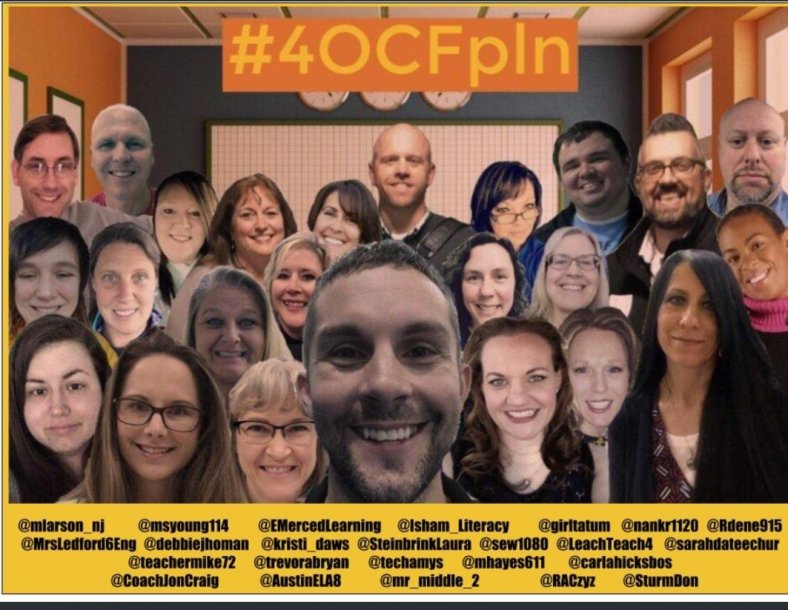
4OCFPLN

20180625_202832

Matt, two Spanish Teachers!

FOUR awesome opportunities! (online and on your schedule!)

Going on now is the Ditch Summit, hosted by Matt Miller! Different speakers each day from July 25-29, awesome way to learn. Sign up here  You will receive an email each morning and you have until August 10th to watch the videos, so plenty of time. Don’t forget to get your Badges!

Coming up next week, there will be a few virtual learning events that might be of interest. Quizlet will be holding an “unconference” on August 1st and 2nd. Join in to see what the new topics are and the ideas for using Quizlet. Register here .quizletlive

The Hive Summit kicks off on August 1st and goes for 14 days of learning, great speakers and promises to be a fantastic opportunity for adding to our toolkits. And there are live chats each day as well #HiveSummit,  lots of ways to learn and connect. More information here. 

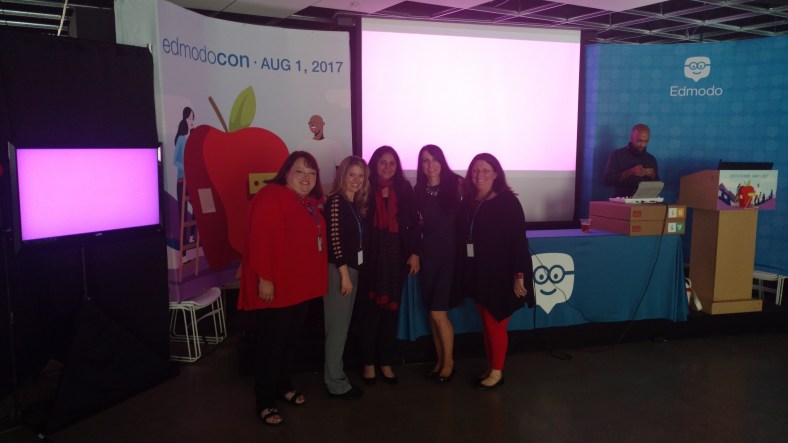
The following week is EdmodoCon, a two-day virtual event held on August 6th and 7th. I was fortunate to speak at EdmodoCon last summer and brought back so many new ideas, so I definitely recommend checking it out.

IMG_20170801_184215600.jpg

Celebrating our time speaking at Edmodocon 2017

Last few weeks of summer

Sign up for one of those virtual learning events, jump into a Twitter chat, or read a book (See BookCampPD) for some recommendations or join in the chat on Saturday mornings, 9:00 a.m. EST. Meredith Johnson has a great lineup of authors.

Lots of ways to learn, on a relaxed summer schedule, and have a little extra time for the PD that you need. You don’t have to leave the comfort of your home, move away from the pool, or be anywhere specific. Find something that you are curious about and make some time for it now, before the school year arrives and time starts to disappear quickly. You might find that these experiences will get you excited to return to school and feeling refreshed! 

And if you have extra time, check out the upcoming conferences(EdSurge 60+) and see where your PLN might be headed! Let me know if you will be attending iNACOL, FETC or ASCD Empower


I am a work in progress

**this is a work in progress

Things on my mind: Self-awareness, Competition,  Failure, Focus

During the last couple of weeks as the school year was winding down, the demands on my time were increasing exponentially. While this may seem a bit exaggerated,  there really is no other way to describe it. Granted, I take a lot of extra things on personally and professionally, when most people meet me, they ask if I sleep. I do, some. So why do I, or educators take on so much? For me, the reason is because I truly am a lifelong learner. I don’t want to miss opportunities, especially when that might mean I miss out on creating opportunities for others.  I don’t want to say no to someone that needs my help, because I realize that for some people, asking for help required that they be vulnerable and step out of their comfort zone. So I will always try to help someone else, even if it means delaying my own goals or veering from some path that I am on. And I am good with that, but I also realize that there is only so much that I can do. 


Self-awareness

Being self-aware means you recognize your strengths and weaknesses, emotions, thoughts, and have a deeper understanding of what motivates you, at least this is my way of defining it. I can somewhat identify my strengths, but it is uncomfortable to openly admit my weaknesses.  I have no problem admitting mistakes and failures in front of my students. The more that I can do this with them, will help to dispel that misconception that failure is final. Personally or among friends, for me, admitting weakness is tough, but the first step in trying to improve is acknowledging that there is a something to improve upon.  I’m well aware that I have certain areas that I need to devote some time to in order to become more effective and consistent and possibly attain some level of balance. If balance is really a thing. Maybe it is because I set demands on myself that are too high or overly ambitious, but I have reached a point in my career and my life, where I feel I need to engage in activities that I am passionate about being involved in. Even while I was in law school,  my friends would often laugh at my ability to multitask and my methods of over-preparation for class. I did then what I try to discourage my own students from doing now. I would take notes on the computer, write notes on paper, listen to the lecture and grade papers all while sending text messages throughout the class. And somehow while doing all of that I still managed to answer a question when called upon. I survived the four years of teaching full-time and four nights a week of law school. When I think back and compare schedules of then and now I feel so much more out of balance now than I did back then. It just does not make sense. 


While this post has started off as random thoughts,  they do have a point, which will present itself sooner or later. (perhaps not even in this post, as I am between a few projects).  These random thoughts are my reflections, and how I become more self-aware. As some of my friends know, I tend to not sit and type but rather speak my thoughts into a document and then go back and revise and reflect in the process. It simply works for me and it makes me more productive, at least I think that it does.  We don’t need to make big gains each day, it is in the small wins, ongoing progress that we achieve more. Reading this post yesterday, reminded me of this fact.  I got away from reading the posts by Thomas Oppong, and this quote helped me through some of my reflections. “It’s so easy to overestimate the importance of one defining moment and underestimate the value of making small gains on a daily basis.” 

But lately, I have not felt as productive as I would want to be. Yes I’ve made lists, checked items off as I completed them, kept up with email only to have two or three emails pop in as soon as one is sent. I have opened Voxer to find four or five hundred messages waiting and many other notifications from other forms of social media. So how does one find balance? How does one keep focus when surrounded by and consumed by so much “connectedness.” In the pursuit of learning, how much is enough and how much is too much?

What I mean is I think as educators we need to involve ourselves in a variety of learning possibilities. We no longer need to leave our homes to go out for professional development, nor be limited to that which we have at our schools. There are so many options available that meet our needs as far as goals and time and passions. But it seems that more and more time is consumed by social media like Voxer or Twitter, just for a few examples. Don’t get me wrong, these are tremendous tools for becoming a connected educator, for breaking away from the isolation that can happen. But how do we keep up with everything and everyone?  If you know, please share.


Competition

It is tough “keeping up” lately. I read a lot of blogs, books and stay active through Twitter and Voxer, and have a pretty good routine for keeping up-to-date with information. Reading has never been a problem for me. The area in which I need to improve is with my own writing. Some days I feel like I just can’t keep up. I feel like I’m falling behind, that I’m not meeting the goal, not pushing myself enough to accomplish things. But today I had a moment to pause and think, and it came after reading  some of the The Path to Serendipity , by Allyson Apsey and also “What School Could Be,” by Ted Dintersmith.  After reading these, it occurred to me that I am doing the exact same thing that I try to stop my students from doing which is push myself so hard, judge myself so critically, to the point where my desire to work and to get things done becomes consumed as soon as my eyes focus on that ever-growing list of goals. I put up a wall and that inner voice tells me that I will never get things done. The inner voice convinces me that I can’t, so I don’t even try.  And then I remember the quote  “the only thing standing in your way is you,” so I need to get out of my own way. 

My list is full of things which are not part of my daily work as a teacher, but rather tasks that I have voluntarily pushed myself into becoming a part of. Maybe it’s my fear of missing out, maybe it’s my drive to keep doing better, to keep pushing myself to do one more thing, take one more step, to see how much I can handle and how much I can learn. But in recognizing this, I realize that my students do this as well. I’ve seen them push themselves and worry that they won’t finish something in time, that they won’t get into the college that their parents want them to, that they won’t get the highest grade, that they won’t be as smart, as quick or as good as somebody else in the class.  Pressure.

How many times this year I have said to them “You don’t need to worry about anybody else. You only need to worry about yourself because you aren’t in competition with anyone else but yourself.”  I came across an anonymous quote a while ago that said “I’m in competition with no one but myself.” The power of this quote really hit me. These are the reminders that I give to my students, but yet are ones that I have failed to be cognizant of within myself.

In reading “Path to Serendipity”, so much of what Allyson says resonated with me, especially when thinking back to when I first started teaching. And in reading “What School Could Be,” I am thinking about the structure of school, the “game” of school and all of the pressure that exists. Pressure which is placed on students whether by the school system itself, the testing, parents, teachers or the students themselves. How do we break this cycle? Wanting the best for someone should be more about supporting them with whatever decision they make, and being there if they find out that it was not the best decision to be made. That’s the risk we take when we step out of our comfort zone, when we go against the grain and do something that is different, that may not be the traditional way to do something but it’s the way that we want, it’s personal to us, it’s our passion.


And I know I have derailed a bit in this, maybe more than a bit, but sometimes it’s good for me to just sit with my computer, and thanks to the voice to text, I can close my eyes and talk through what has been going through my mind, and then edit the writing. Lately it’s been that I just can’t get enough things completed. Countless presentations, proposals, webinars you name it, I am doing and experiencing the same thing that many other educators are experiencing as well. However the difference is that my perception of others is that there are no struggles. Blogs are being published, podcasts are being recorded, books are being written, speeches are being given, and my question is where do you find the time? How can I find a time? And I am so impressed and inspired by the work of my friends and my colleagues who share their stories and seem to have a lot of balance, but then again how do I really know? My perception is not necessarily their reality.

A good friend of mine Mandy Froehlich has written a book which just came out today, called “The Fire Within”, in which she shares personal stories as well as stories of educators who talk about the different struggles that they’ve gone through. We don’t often hear of the struggles and the negative experiences that we as educators may have, but there are a few things that I’m sure of. We need to start with relationships. We need to be open and vulnerable. We have to tell our stories. It is from these stories, whether they are stories of great innovations or epic failures, where we can connect and provide the inspirational redirection that someone else may greatly need. And while telling our story makes us vulnerable, there is great power in vulnerability. Vulnerability does not mean weakness, as defined by Brene Brown in her book “Daring Greatly”. It is “uncertainty,risk and emotional exposure.” My favorite quote from Brown is that vulnerability is “the courage to  show up and be seen even when you have no control over the outcome.” This quote is one I read last summer, and I kept in the back of my mind while preparing for different events in which I felt completely out of control. I didn’t think I had the courage and was ready to back down, but this served as a reminder to me that it was better to try and fail, than to never try at all. The interesting part about this book is that she came up with the title after reading a quote by Teddy Roosevelt from 1910, where he spoke about the man who enters into battle valiantly, and at best he has success and at worst he errs while daring greatly.


Focus

So there is nobody pushing me to get things done but me. Nobody adding more items to the list but myself. And there is nobody that I’m in competition with. I have to accept that I will accomplish the things that I need to accomplish in my own time and in my own way. Pushing the publish button on this was definitely out of my comfort zone, but I’ve been thinking a lot and decided to put my thoughts out there. 

comfort