More Ideas to Try in 2024: Reflection

Part II: Getting students to think about their learning journey

Throughout the year, engaging students in ongoing reflection on what they are learning is essential. One of the five core competencies of social-emotional learning (SEL) is for students to develop self-awareness. It’s also vital for them to build self-management skills to work through challenges that can come with learning, reflect on their growth, and set new goals.

Whether students engage in discussions with classmates or use digital tools to share ideas in a comfortable virtual space, there are many options. We need to get our students to share what they are thinking and take time to reflect on their learning. We also need to model this reflective practice for them. This is essential for academic, personal, and future professional growth. To best prepare students for the future, ongoing reflection is vital.

With an opportunity to reflect, students are able to better understand their thought processes and interests. It helps them to identify areas where they can improve and recognize areas that they are strong in. Creating opportunities for students to share their learning with classmates and with us promotes collaboration, fostering a stronger sense of community in our classrooms. Together, we can create a supportive learning community.

Through the five competencies of SEL, we can help students focus on developing skills of social awareness and building relationships. Students will better understand their own thought processes and deepen their understanding of the content they are learning. However, getting students to share their thoughts and reflect on their learning can be challenging. Here are five ideas for encouraging students to reflect on their learning and share their thoughts.

1.Think-Pair-Share is an activity that doesn’t require much time at all to use and can be very effective. It encourages students to share their ideas, learning experiences, and thoughts with one another. The teacher can provide a short prompt or topic for discussion and then give students time to think individually before pairing up with a partner. Those one-on-one conversations can help students become more comfortable expressing themselves in class. After a certain period of time, each pair can share their thoughts with the class. This strategy will work well without digital tools; however, there are some options to explore.

2. Peer-pairing: To randomly place students in pairs, use a random name generator so students build relationships with their classmates. It is fun to have the names on the big wheel and place students into groups. I have used this also as a way to select the order of presentations. It helps to reduce a bit of the stress with wondering when you have to present and makes it a fun experience.

3. Class sharing: To help students build confidence, use a tool such as Padlet or Flip to have students post ideas on a collaborative board or create audio or video responses. Whatever way we have students “share,” it encourages them to engage in conversation and more active listening. Students learn about different perspectives on a given topic, which promotes the development of social awareness skills.

4. Snorkl is a new AI-powered tool that I found, and I really love the possibilities. Teachers assign an activity and it enables students to record their screen and speak about the work they have done. For example, how they solved a math problem, writing and reading in the language they are learning, describe an image, and so much more. It can be set to provide AI feedback with or without teacher approval. It was fun to try for the first time in my class. Look for more information in an upcoming post.

With the tools that offer audio or video options, it is a more authentic way to learn about the student. Teachers see and hear their students’ thought processes and can then offer more personalized and meaningful feedback to each student.

One extra is for teacher and student reflection. Learning about students’ thoughts about our methods, their comfort in the classroom, and more is important. Last year, I started exploring LessonLoop, which provides anonymous surveys that teachers can issue to students. It provides a rating with explanations based on student engagement, SEL, and comfort in the learning space and provides additional insights. Teachers can then take the information and use it to reflect on their practice and involve students by showing their input is valued through the use of these surveys. LessonLoop also has educators who will prepare some tips for teachers to try!

Whatever method or tools we choose to bring into our classrooms, the goal is still the same: Prepare students for the future with skills that enable them to be flexible and adapt to the changing look of education and work. Reflective practice is a key component of this future preparation!

Author

About the Author:

Rachelle Dené is a Spanish and STEAM: What’s Next in Emerging Technology Teacher at Riverview High School in Oakmont, PA. Rachelle is also an attorney with a Juris Doctor degree from Duquesne University School of Law and a Master’s in Instructional Technology. Rachelle is an ISTE-certified educator and community leader and served as president of the ISTE Teacher Education Network. She was named one of 30 12 IT Influencers to follow in 2021 and one of 150 Women Global EdTech Thought Leaders in 2022.

She is the author of eight books including ‘In Other Words: Quotes That Push Our Thinking,” “Unconventional Ways to Thrive in EDU,” “The Future is Now: Looking Back to Move Ahead,” “Chart A New Course: A Guide to Teaching Essential Skills for Tomorrow’s World, “True Story: Lessons That One Kid Taught Us,” and her newest book “Things I Wish […] Knew” is now available at bit.ly/thingsiwishedu.

Contact Rachelle to schedule sessions about Artificial Intelligence, Coding, AR/VR, and more for your school or your event! Submit the Contact Form.

Follow Rachelle on Twitter(X) and Instagram at @Rdene915

**Interested in writing a guest blog for my site? Would love to share your ideas! Submit your post here. Looking for a new book to read? Find these available at bit.ly/Pothbooks

************ Also check out my THRIVEinEDU Podcast Here!

Join my show on THRIVEinEDU on Facebook. Join the group here

Saving Time and Learning About AI

*AI is one of my favorite areas to work in and I love sharing ideas!

As a classroom teacher with almost six years of experience integrating AI into my teaching practice and training other educators, I have enjoyed exploring the possibilities through AI and engaging in conversations with students and teachers. Every educator needs to learn about AI and how we can leverage this technology to benefit our students and enhance our work. To best provide for our students, we need to understand how this technology will impact them and us.

Especially as we see such as increase in technology in education, it is essential that we embrace and understand emerging technologies, especially AI and how it can impact not only our work but the benefits it can offer for student learning. In my work as a classroom teacher and consultant, I enjoy helping other educators get started with AI.

Why Educators Need to Understand the AI Tools Available

Our roles as educators have continued to change over the years. Not only do we teach the content, but we serve as mentors, facilitators of learning, and co-learners with our students, especially as we embrace these emerging technologies. It is important that we explore the benefits and how it can help us to “work smarter, not harder” so that we have more time to work with students, build relationships and support them in their learning journey.

AI, ChatGPT, and other forms of generative AI have become some of the most talked about topics in education this past year. But with all technology comes some hesitancy, especially with something as powerful as AI. Schools need to provide opportunities for students to learn about this changing technology because of its impact on their future. Not only can AI tools enhance creativity and productivity, they can also provide educators with valuable insights into student learning and assist with some of the time-consuming tasks that educators have.

How to leverage some tools with benefits

I like to think of three key areas where AI can make an impact for educators and for students.

1. Personalized Learning: Through AI, educators can provide tailored learning experiences based on AI-driven analytics that provide valuable insights into student performance and learning trends. It can adapt to each student’s strengths, weaknesses, and learning pace.

2.Efficiency and Productivity: Another benefit of AI is greater efficiency. Educators may spend more time on clerical tasks that takes time away from working directly with students. The right AI tools can help to automate or streamline tasks uch as grading assignments or providing feedback, giving teachers more time with their students.

3. Creating and supplementing the content: Through AI-powered platforms, teachers can curate various educational resources for their students and their own professional learning. With generative AI in particular, quickly being able to create lessons, activities, assessments, prompts for discussion, and presentations by providing a short prompt with keywords, educators can create engaging lessons for students in far less time.

But how do we know where to begin?

Tools to Explore

With so many different tools becoming available or integrating AI into them, it can be hard to keep up. My recommendation is to select one or two to start with. Explore how they work and the content that is created. Take time to evaluate the accuracy of the information and even involve students in discussions about the benefits for their learning.

Here are five AI-powered tools that will help teachers with personalized learning, efficiency, and saving time. I have created and experimented with so many tools, and my students’ responses have always been positive. Embracing these tools also sparks curiosity for learning. Creating and sharing these resources with our students leads to rich conversations about AI’s benefits and the proper use of this technology for creating and learning. See below for an additional article link and my contact form to bring me to your school or provide coaching.

  • Curipod: Enables teachers to create interactive lessons in minutes using AI. Teachers simply type in a topic, and a ready-to-run lesson is generated with text, images, and activities such as polls, open-ended responses, word clouds, and more. There are even activities to build in that focus on SEL check-ins. Use my code CURIRACHELLE
  • Eduaide.Ai: An AI-assisted lesson development tool that provides educators with more than 100 resource types to choose from. It offers the ability to translate the generated content into more than 15 languages instantly. Educators can generate a syllabus and discussion prompts, use the Teaching Assistant to help with creating IEP plans, write emails, or even create a list of accommodations for students in addition to many other options. I enjoy using Eduaide for a variety of tasks, especially creating lesson and project outlines and testing out the feedback bot! Try some and then tag @eduaideAI and @Rdene915 in a tweet and win a book!
  • Quizizz: With Quizizz, teachers can design quizzes that create a personalized learning path in response to each student’s responses and based on their needs. Teachers can also create lessons with Quizizz, which now has AI enhancements that can adjust question difficulty, check grammar, redesign questions to reflect real-world scenarios, create a quiz from a URL or PDF, and more features on the way.
  • Slidesgo: Provides access to free templates via Google Slides and now has the AI Presentation Maker. With this new functionality, presentations can be created within minutes. Start by choosing a topic, selecting a tone such as casual, creative, or professional, making changes, and downloading your presentation. A time saver, for sure! I really enjoyed testing it out and creating some amazing presentations! Want to learn more? Be sure to check out their recent survey, which has great insights into AI and tools for education! Dive into exploring more today!

Also, head to my additional post via Edutopia for more AI tools to try here: 7 Tools

Do you want to learn more about AI and how to bring it into your classroom? I have six years of experience working with students and teachers and would love to work with your school, at your conference or individual coaching: bit.ly/thriveineduPD

About Rachelle

Follow Rachelle on Twitter @Rdene915 and on Instagram @Rdene915. Rachelle has a podcast, ThriveinEDU, available at https://anchor.fm/rdene915.

Looking for PD for your school or keynotes for your conference? I provide in-person and virtual training on the following topics. If you want to learn more about and explore AI and ChatGPT, contact me to schedule! Rdene915@gmail.com or use the Book Me form on my website.

**Interested in writing a guest blog or submitting a sponsored post for my site? Would love to share your ideas! Submit your post here. Looking for a new book to read? Find these available at bit.ly/Pothbooks

Data-driven decision-making in Classrooms and Schools is Easier Than Ever Before with GPT-4 Code Interpreter

Guest post by Matthew Rhoads, Ed.D.

Time and the capacity to use data and understand it are at the essence of making data-driven decisions in classrooms and schools (Rhoads, 2019; Mandinach 2012, U.S Department of Education, 2010). In my research focusing on data literacy for educators, time has always been the number one issue for educators to use data to make decisions as well as learn and practice data literacy skills. Yet, with what we are going to talk about today, I believe that this can change by leaps and bounds.

Ultimately, as the world of education becomes increasingly data-driven, teachers and school leaders face the daunting task of learning how to effectively analyze and apply this data. The role of technology software in gathering, transforming, and visualizing data is no longer optional—it’s a necessity as our classrooms and schools are collecting immense amounts of data that can be utilized to support student learning. But how can we bridge the gap between the data we have and the insights we need in a quick and efficient manner? Enter Code Interpreter, a revolutionary tool that’s changing the way we approach data in education. Let’s discuss how it can be utilized to support data-driven decision-making as I believe it can solve many of the time and capacity issues facing teachers and school leaders in using data to make important decisions for students and school systems.

Note: For information related to my research into data literacy, please check out my study and its summary found here.

Data is Everywhere in Classrooms and Schools

Data for teachers and school leaders can be drawn from various avenues such as the school’s Student Information System, Learning Management System, and EdTech tools. Many of these tools provide opportunities within themselves to review the data they collect in the form of visualizations and dashboards. Yet, these tools do not provide in-depth analysis that can help teachers and school leaders make data and evidence-informed decisions to the best of their abilities. As a result, the data will need to be extracted, and cleaned, and further analysis will need to take place to see deeper insights as to what the data is telling us as well as how it may relate to other strands of data we’ve collected. For example, take test scores, student SEL surveys, and attendance data from a period of time. What we can now do is easily place those data points onto a single Excel file to be analyzed by Code Interpreter to see if any relationships may exist. With this said the goal of this blog is to demonstrate how this can be done by teachers and school leaders as they begin harnessing this tool to support them in their data-driven decision-making.

Step-by-Step Process of Using Code Interpreter

Now, we will discuss its major features in supporting educators in making data-driven decisions. First, we will discuss the process of how it can be used. Secondly, we will outline how it can conduct important data preparation and analysis steps for us in order for the results to be computed in a way that is understandable during analysis as well as to stakeholders. Third, we will go into further applications of Code Interpreter that can be utilized by teachers and school leaders. Let’s get started!

Important Facets Code Interpreter Can Do Essential to the Data-Driven Process

Before discussing how to use Code Interpreter in a step-by-step process, we want to cover some important facets it can do in the data-driven process: Clean Data, Statistical Analysis, Visualizations, and Articulate Data Findings to Stakeholders. All of these facets are critical when utilizing Code Interpreter and conducting any form of data analysis.

Cleans Data

One of the major hurdles in data analysis is data cleaning, a time-consuming but critical process to ensure accurate results. Code Interpreter can automate this process, identifying errors, inconsistencies, and outliers in raw data. With its robust data cleansing capabilities, Code Interpreter can streamline this often laborious task, leaving more time for interpretation and decision-making.

Note: This video illustrates how Code Interpreter cleans data. Cleaning data is super important in order to have valid results from a data set you are working with.

Conducts Detailed Statistical Analysis with a High Degree of Accuracy

Beyond cleaning data, Code Interpreter shines in its ability to conduct detailed statistical analysis. It can handle a wide variety of statistical techniques and tests, delivering a high degree of accuracy. Even complex data practices, often daunting for non-expert users, become more accessible and understandable with GPT-4’s intelligent interpretation and simplification of statistical outputs.

Visualizes the Data Based On the Statistical Outputs You Desire

Visualizing data is a key element in understanding and communicating complex information. GPT-4 Code Interpreter can assist in creating visually engaging and informative graphs, charts, and dashboards based on the statistical outputs you need. This automated visual representation of data can support data-driven decision-making by making the findings more tangible and accessible.

Note: Below is an example of a visualization of data produced by Code Interpreter

Articulates the Data to be Presented to Stakeholders

Another challenge that Code Interpreter addresses is the communication of data insights. Often, complex statistical analyses can be difficult to convey to stakeholders in a clear, understandable manner. Code Interpreter can summarize complex findings, generate reports, and even make predictions based on the data, making it easier for stakeholders to understand and apply these insights in decision-making.

Example in Action – Using Code Interpreter for Educational Data Analysis

Let’s focus on the example we provided at the beginning of this blog post. It focuses on reviewing test scores, student SEL surveys, and attendance data. We will now walk you through the steps of how to use Code Interpreter to dive into this data and analyze it. This will be a four-step process, which can take between five and ten minutes to complete.

Step 1: Gathering the Data

Your first task involves gathering your data from various sources – this could be test scores, student Social-Emotional Learning (SEL) surveys, and attendance data. Let’s say for this example that the test scores, the SEL survey, and attendance data are for the entire 2022-2023 school year. The assessment scores for an elementary school are from the most recent state-wide summative assessment given. Data can be collected from the student information system, the state’s assessment database, and the survey provided to students on a local Google Form. This may be the most time-consuming step of the process as sometimes data extraction features are hard to find and selecting data to extract may also take time as well.

Note: Below is a video example demonstrating how to export data from I-Ready Onto an Excel File.

Step 2: Organizing the Data in an Excel File

Once collected, arrange all these data points on a single Excel spreadsheet. You might have columns for the grade levels, test scores, survey responses, and attendance records. Make sure your data is clean, accurate, and organized coherently for the best results. What an educator can do is copy and paste the columns from each of the extracted data sources onto a single spreadsheet. Then, they can prompt after uploading the data to Code Interpreter to clean the data (more on that later).

Note: This video demonstrates how to combine data from multiple data sets in four ways using Excel.

Step 3: Importing Your Data into Code Interpreter

Now it’s time to engage with the Code Interpreter. To do this, you’ll need to import your Excel file into the platform. In most cases, this is as simple as clicking the “Upload” button and selecting your file.

Step 4: Prompting the Code Interpreter to Conduct Descriptive Statistics

Start with some basic analysis. For descriptive statistics, you might instruct the Code Interpreter to compute measures such as the mean, median, or standard deviation for your various data columns.

Note: Before moving into statistical prompts to ask Code Interpreter, be sure to prompt Code Interpreter to Clean the Data. For example, prompt Code Interpreter to clean the data and organize it for analysis, which it will then conduct for you.

To do this, you could input something like:

“Compute the mean, median, and standard deviation for the ‘Test Scores’ column.”

The Code Interpreter will then return the requested statistical measures.

What’s great is that it can provide easy-to-understand results. You can further review and question the results as well. Additionally, in this same instance, prompting it to visualize these results into graphs is another important feature, which can help in the data articulation piece for when it’s presented formally to other educators and stakeholders.

Step 5: Conducting Multivariate Analysis

For a more in-depth understanding, you can instruct the Code Interpreter to conduct multivariate statistical analyses. For example, you might want to find out if there’s a correlation between attendance and test scores.

To do this, you could input something like:

“Calculate the correlation between ‘Attendance’ and ‘Test Scores’ columns.”

The Code Interpreter will return the correlation coefficient, providing insight into the relationship between these variables.

Step 6: Interpreting the Results

Code Interpreter not only conducts the analysis but also provides a simplified interpretation of the results. This is a vital step to help you understand and apply the insights from the data to your decision-making process. As with descriptive statistics, you can further prompt it to dive deeper into the analysis or ask it to provide graphs to visualize the data.

Note: Below is a video demoing Code Interpreter a wide variety of ways that follow this protocol.

Further Applications

Code Interpreter isn’t limited to basic data analysis—it’s a versatile tool with a multitude of applications that can revolutionize the way we engage with data in education. Let’s explore some of the ways in which this advanced tool can assist teachers and school leaders beyond basic statistical analysis:

  1. Facilitating Data Dialogues: The Code Interpreter can serve as a valuable assistant in data dialogues, aiding in both data cleaning and providing alternate perspectives in analysis. It can efficiently present various statistical outputs, offering multiple ways to interpret the data and stimulate insightful conversations among educators.
  2. Developing Action Plans: With its ability to produce comprehensive reports and detailed analyses, the Code Interpreter can facilitate the development of data-driven action plans. By linking analyzed data to practical steps, it can help formulate action plans tailored to improve student outcomes.
  3. Improving Instruction: The Interpreter’s analysis can uncover patterns and trends that are invaluable for informing instructional strategies. By linking data findings with recommendations for instruction, it allows educators to make data-informed decisions that directly impact classroom practices.
  4. Enhancing Processes: Beyond the classroom, the Code Interpreter can also support the optimization of broader school processes. For instance, patterns in attendance data can inform changes in scheduling or student support services.
  5. Predictive Analysis: The Code Interpreter’s predictive analysis capabilities can help forecast future trends, enabling proactive planning. For instance, it could predict future test scores based on current student performance and engagement metrics.
  6. Personalized Learning: The Code Interpreter can help tailor educational experiences to individual student needs. By analyzing data at the student level, it can inform personalized learning plans to cater to each student’s unique strengths and areas for improvement.

Conclusion and Data Literacy Skills Needed to Be Effective Using Code Interpreter

We’ve embarked on a journey today, exploring the potential of the Code Interpreter in transforming educational practices through effective data analysis within classrooms and schools. By harnessing the power of this tool, we can redefine how we approach data, decision-making, and action in our educational spaces to improve our instruction and school systems for our students, faculty, and community.

However, as we navigate this digital landscape, it’s important to remember that tools like the Code Interpreter are most effective when coupled with our own data literacy skills. As teachers and school leaders, enhancing our understanding of data management and analysis will be instrumental in maximizing the benefits of these technological advancements.

This includes the ability to merge and transform data on spreadsheets, and the knowledge of single and multivariate statistical analysis. A strong foundation in these areas not only amplifies our ability to use tools like the Code Interpreter but also empowers us to question, interpret, and apply data insights in meaningful and impactful ways.

While this may seem like a daunting task, take heart in the knowledge that the digital age brings with it a wealth of resources to help build these skills. Online courses, webinars, workshops, and even integrated tutorials within tools like the Code Interpreter are at your fingertips, ready to help you embark on this exciting learning journey. For those who want to practice, Kaggle provides datasets from many different industries. It’s a great way to practice as the datasets come pre-packaged and are easy to work with as you get started with using Code Interpreter.

So, let’s take this as a hopeful invitation to embrace the future of data in education. The road ahead is full of opportunities for growth, innovation, and enhanced understanding, all aimed at one noble goal – the betterment of our educational environments. Together, equipped with our growing data literacy skills and the powerful Code Interpreter, let’s step forward into this exciting future.

References

Rhoads, M. (2019). Educational Leadership Efficacy: The relationship between data use, data use confidence, leadership efficacy, and student achievement. ProQuest Dissertation Publishing, 2308259304.

Mandinach, E. B. (2012). A perfect time for data use: Using data-driven decision-making to
inform practice. Educational psychologist, 47(2), 71-85.

U.S. Department of Education. (2010). Use of education data at the local level: From
accountability to instructional improvement. Office of Planning, Evaluation, and Policy
Development. Washington, DC: U.S. Retrieved from https://www2.ed.gov/rschstat/eval/tech/use-of-education-data/use-of-education-data.pdf


Contact Rachelle to schedule sessions for your school about Artificial Intelligence, Coding, AR/VR, and more!

Follow her on Twitter and Instagram at @Rdene915

**Interested in writing a guest blog for my site? Would love to share your ideas! Submit your post here. Looking for a new book to read? Find these available at bit.ly/Pothbooks

************ Also check out my THRIVEinEDU Podcast Here!

Join my show on THRIVEinEDU on Facebook. Join the group here

How to Boost Student Engagement

During the fall, educators may notice a decrease in student engagement and also, that students are not retaining the content as well. With a few ideas to explore that get students more involved, we can hopefully also spark interest and excitement for learning to help students value the process of learning itself.

I always say that the beginning of the school year and throughout the fall are great times to try something new. To best provide for all students, opportunities that empower them to set their pace for learning, to choose areas of interest or the “how” to show learning, and to collaborate with classmates, make a difference. They will invest more in learning and become more curious.

So what are some ways that educators can do this? By choosing versatile methods that are not specific to the content area whether through choice boards or class playlists, STEM-related learning opportunities, or diving into PBL, we can help students in many ways. With these options, we can build content knowledge while also developing SEL skills to prepare students for the future and boost engagement in learning.

Boosting Engagement and Curiosity

When we create learning experiences that will more meaningfully engage students with the content, while also aiming to move them from being simply consumers to creators, it increases their interest and amplifies student achievement.

When students have the opportunity to provide input into the lesson brainstorm ideas and plan with us will also boost engagement and build a learning community in our classrooms.

As educators, it is important to continue to reflect on our practice and make time to learn about student interests so that we can better provide for them. With a variety of ways for students to show what they have learned, we will foster student agency, boost engagement, and increase student motivation in learning. Here are some ideas to explore:

  • Choice boards are a great way to include a variety of options for students to explore and practice the content in a meaningful and authentic way. It also helps teachers to differentiate instruction by providing students with multiple ways to process information and build their knowledge. A choice board can be created on paper or digitally.
  • Creativity tools: Buncee is a great option for multimedia presentations and interactive lessons. Another benefit is it offers Immersive Reader which promotes language accessibility for students and there are so many options to choose from for creating a visually engaging presentation! Another choice is Book Creator is a multimedia creativity tool to create books that can include audio, video, text, and images, and more. It also has features such as captions, translation in 120+ languages, and improved screen readers. Students can also collaborate on a book with a partner or as part of a class. Genially is a versatile option that can be used to create presentations or even make a class website, choice boards, newsletters, escape rooms, storybooks, and more.
  • Game-based learning: Students enjoy playing a variety of games whether traditional games, ones they make up, or participating in the many digital options available. These are great for teachers to gather feedback and be able to provide additional support for students. Some of our favorites include Blooket, Gimkit, Kahoot!, Quizizz, and Quizlet Live!
  • Interactive lessons: Formative has been a great option in my classroom for many years. It has a variety of options for students to complete quick activities or assessments or do a self-paced lesson. It helps teachers to track student progress, better understand the questions that students might have, and use it as a way to reflect on their own teaching practice.
  • Fun activities: Skribbl.io is a fun drawing game that I used in my Spanish classes and added my own list of vocabulary words. Students then have a code to join the game and then try to guess the word as it is drawn. Gimkit has a similar feature. Another favorite is Bingo Baker where you can generate bingo cards and print unique cards or have students use their devices. Bingo is always a fun way to review vocabulary and content!
  • Student input: Learning from students about their interests and gathering feedback is important. I have used LessonLoop, which enables educators to share anonymous student engagement surveys to gather feedback from students. The students’ responses help educators guide their next steps and better plan for instruction by valuing the input of every student.
  • STEM activities and problem-solving: Engaging students in STEM activities doesn’t need to only happen in a STEM-specific course or grade level. My students used Hummingbird robots from Birdbrain Technologies to create design challenges. CoSpacesEDU is an augmented and virtual reality platform that can be used with any grade level or content area. There are some easy-to-try STEM challenges that help students to build many essential skills. I recommend trying the Cup Tower Challenge, and the Straw Challenge. I recently learned about ImaginGO which is an instructional software that spurs creative and imaginative thinking. It engages students to invest and incorporate their own innovative ideas to solve complex problems and gets students up and moving more!

As teachers wrap up the content material or look for ways to review, perhaps for final exams in some courses or simply to take a break and try something different, these ideas have worked well to boost engagement in my classroom. And because these tools are not specific to one area of focus or grade level, hopefully, they provide new ideas for the end of the year that will lead to more meaningful and engaging learning experiences for all students!

Another key part of these types of activities or leveraging these tools is that they also help students to develop social-emotional learning (SEL) skills and promote more active learning. Students will enjoy and become excited about the learning process.

Continue exploring ways to create unique, authentic, and meaningful opportunities for students. Start class with a fun hook, try a new method, do something completely unconventional from what you might normally do or just ask students for their ideas. By cultivating a learning environment where students feel valued, it will have a positive impact on student learning and foster the development of many essential skills.

Taking risks with new methods is a great model to set for students and will better equip students with the essential skills that they will need moving forward.

About the Author

Rachelle Dené Poth is a Spanish and STEAM Educator at Riverview High School in Oakmont, PA. She is also an Attorney, Edtech Consultant, Speaker, and the Author of eight books about education and edtech. Rachelle is available to provide PD on Artificial Intelligence, Augmented and Virtual Reality, Coding, SEL and STEM. 

Contact Rachelle to schedule sessions for your school about Artificial Intelligence, Coding, AR/VR, and more!

Follow her on Twitter and Instagram at @Rdene915

**Interested in writing a guest blog for my site? Would love to share your ideas! Submit your post here. Looking for a new book to read? Find these available at bit.ly/Pothbooks

************ Also check out my THRIVEinEDU Podcast Here!

Join my show on THRIVEinEDU on Facebook. Join the group here

Artificial Intelligence Literacy – Understanding AI and Its Implications for Teaching, Learning, and the World

Guest post by @MattRhoads1990 Matthew Rhoads, Ed.D.

Dr. Matt Rhoads is a Tech and Instructional Leader and Innovator with hands in Adult Ed, K-12, and Higher Education. He is the author of several books and is the host of Navigating Education – The Podcast.

By: Matt Rhoads, Ed.D. 

What is Artificial Intelligence (AI) Literacy? It is comprised of five major components that require us to teach students a wide variety of skills that are integrated with the very technology that has AI embedded in it. AI literacy and its themes encompass perception, representation and reason, learning, natural interaction, and societal impact. All of these factors relate to how computers collect data, interact with that data, and how we as humans can interact with it. These components of AI Literacy are described below as we discuss how AI is impacting our work as educators. From understanding what AI entails to how it impacts our workflow and our practice as educators, it is and will change how we operate. 

Via AIK12 Five Big Ideas in AI

Note: AI Literacy still is being further defined by the greater community as it is an emerging technology that is now being scaled.

The goal of this article is to describe how AI works, and how it is used in industry, in our own personal workflows, and in education. Additionally, the goal is to provide foundational information in each of these areas. Last, as you progress through this article, think about the five themes discussed above in relation to AI Literacy. Think about how this may look in practical examples in your daily life as well as your students. Additionally, think about how you can teach about AI and how to use it in your content area and industry. 

How AI Works? 

AI encompasses a number of tools and mechanisms that analyze data to solve problems through algorithms. Tools and mechanisms such as machine learning, deep learning, neural networks, computer vision, and natural language processing can be utilized as a pathway to AI. For example, machine learning is a pathway that uses algorithms to learn insights and recognize patterns in data automatically. Then, it applies to learning to make better decisions over time based on the number of data processed and data available. Another example is deep learning, which is a more advanced method than machine learning that acts as large neural networks that function like the human brain to analyze data in a logical manner to find and learn complex patterns. Ultimately, its goal is to make logical predictions without the need for human input. 

To see how AI works in your daily life, an example you see every day is text prediction. Using data inputted from users based on the words and phrases utilized over time, while writing a sentence the AI makes an informed prediction of what text may follow thereafter. Another example of this in action is predicting our favorite websites, Netflix show preferences, and advertisements we see. Based on the data we’ve provided over time along with users with similar preferences, through the nature of the algorithm, it can predict our preferences and even our behavior. For example, you will see your top preferences immediately in front of you to select. More often than not, someone will select that top preference reinforcing the prediction made. 

Have you ever noticed how one preference or advertisement may be larger than the other? Developers can use what we call A/B testing to see user patterns over time, which amasses large data sets to see which preference users are more likely to press. This then reinforces the predictions the algorithms make and you will see how those same preferences are visible throughout your interactions on a variety of platforms (i.e., YouTube, Instagram, Netflix, Google Search). 

AI in Industry

AI now has a presence in every industry. For many industries, the goal of utilizing AI is to improve efficiency, profitability, and productivity. For example, in banking AI can use machine learning algorithms to prevent fraud and cybersecurity attacks. Additionally, it can use biometrics and computer vision AI-based algorithms to authenticate users and their identity. For example, think about when you last logged into your online bank. Usually, you must first provide a biometric identification such as your fingerprint or face. Then, through what we call dual authentication, we are sent a text message to our phones with a randomized password, which then allows us to log in. Another example is in Healthcare, which can use our biometric data and historical biometric data to make predictions about our current and future health by taking vast amounts of data sets that appear to have similarities to ours. Through these predictions, doctors can see a number of prognostics they can then work towards with the treatment or preventative care. 

Understanding AI Bias

AI has bias’ and is not entirely accurate. It is only as accurate as the data it utilizes to make ongoing predictions. Also, note that the data it may have in its database may also be biased. For example, when we use Google Search, our own searches have our own human biases, which Google then stores in its database. While algorithms may have rules built into them that try to filter biases within the data, it is imperfect as the biases may manifest themselves as the data is making these predictions are inherently biased. Ultimately, this same principle also applies to the accuracy of the data it is pulling for its algorithms. Misinformation can easily be placed within a database that can be pulled by AI. Thus, bias and misinformation can be easily pulled into AI, which can then be scaled to meet mass audiences (i.e., social media newsfeeds). 

With this said, we need to discuss how bias can be filtered, but as discussed, we must have filters and safeguards in place for when the data is collected and then when it is pulled by the algorithms powering AI. While in many cases AI can reduce our own human subjective interpretations, it can scale them quite easily due to our own subjectivity found in the data that we are feeding it. Thus, we must determine how to measure fairness in terms of the data we are collecting and utilizing as well as pre-process data to counterfactual data to filter sensitive attributes. 

In the meantime, we must be judicious and skeptical of all information we see. We must triangulate our conclusions by synthesizing the information we process as the accuracy of the information we encounter each day is subject to many biases’ and can contain misinformation. Therefore, a key skill to build is digital and multimedia literacy, which is also based on having a higher degree of literacy to process language and understand it. When thinking about any education program, we must keep these skills central to what we are doing. 

Integrating AI into Workflow

We now live in a world where we have a personal secretary embedded into many tools we use every day. From text prediction, the impressive language and code applications of ChatGPT, formulas in Excel and Sheets, and predictive content to edit in tools like Canva, Adobe, etc, to the search capabilities of search engines, this is only the tip of the iceberg. How this can impact your workflow is astounding. Below are a number of examples of how AI can help improve workflow. 

  1. Create templates of content to be used for email, newsletters, communication, marketing, and more. 
  2. Revise writing to make it more engaging and grammatically correct.
  3. Providing code templates in a variety of different languages such as Python, Java, HTML, etc. 
  4. Search content and provide basic information on topics
  5. Provide resources
  6. Generate multiple drafts of content

AI in Education

In our classrooms, we are collecting vast amounts of data on our students when they engage with our EdTech tools. From basic quizzes, time on task, and content they have created, to the number of clicks and the locations of those clicks in relation to the problem they may be solving, a plethora of data is being collected. Currently, AI is embedded in various tools, which predict student performance based on their current performance. For example, on tools like iReady, MobyMax, ReadTheory, and even state tests, adaptive AI can review large amounts of data based on present and student performance and provide a student with a question/problem at their current ability level. It can even provide lessons and tutorials based on student performance levels and determine which areas students need to make progress in before learning various skills that may be more difficult. 

The implications of this go far beyond what was described above. AI can be harnessed by teachers to make real-time data-driven decisions for individual students, groups of students, and entire classes of students. We can then make decisions about our students progress and utilize assistive AI such as ChatGPT to support us in making personalized learning opportunities for our students. 

Additionally, AI can improve the workflow of teachers by providing opportunities for them to optimize their workflow and instruction in their classroom through the following means:

  1. Brainstorming Ideas.
  2. Revising Writing and Providing Feedback on Thinking
  3. Checking student work and providing insightful feedback using embedded rubrics assessing their work. 
  4. Creating Rubrics.
  5. Creating Lesson Content For Students.
  6. Developing Lesson Sequences and Units. 
  7. Creating Assessments Based on Learning Objectives.
  8. Writing Student Progress Reports Based on Collected Data.
  9. Creating Personalized Student Learning Plans. 
  10. Project-Based Learning Lessons and Summative Projects. 
  11. Developing Assessments and Differentiated Assessments

AI is Changing the World

AI is changing the way we interact with the world, each other, and how we conduct our work. There’s a large opportunity for educators to help students and our communities adjust to these technologies and navigate how they can learn how to use them in a way that benefits themselves and the community. Many new professions and jobs will arise from AI, but much will have to be done to ethically develop AI to ensure it is being used responsibly. Thus, our job as educators will be to further study and learn how we can teach this technology as it evolves over the next few years. 

Another version of this Article: The ChatGPT Version of this Article – I inputted the article into ChatGPT to see if I can make it more fun and engaging to read. What do you think? 

Are you curious about AI and its impact on various aspects of our lives? In this article, we will explore the five big ideas in AI literacy and how AI works. AI encompasses a variety of tools and mechanisms, such as machine learning, deep learning, neural networks, computer vision, and natural language processing, that use algorithms to analyze data and solve problems. AI is present in almost every industry today, such as banking, healthcare, and cybersecurity, where it is used to improve efficiency, productivity, and profitability. However, AI is not entirely accurate and has biases that must be filtered out through safeguards and filters that need to be put in place when data is collected and utilized by the algorithms powering AI.

AI has an impact on our daily lives in various ways, and one example is text prediction. The algorithm uses the data we provide, such as the words and phrases we use while writing, to predict the text that will follow. Another example is the predictions made for favorite websites, Netflix show preferences, and advertisements. Based on the data we have provided over time, AI can predict our preferences and even our behavior. AI can also be used to prevent fraud and cybersecurity attacks in banking through machine learning algorithms and in healthcare by using our biometric data and historical data to make predictions about our current and future health.

However, AI is only as accurate as the data it utilizes to make ongoing predictions. Therefore, the data it may have in its database may also be biased, and misinformation can easily be placed within a database that can be pulled by AI. Bias and misinformation can be easily pulled into AI, which can then be scaled to meet mass audiences (i.e., social media newsfeeds).

To filter out bias, filters, and safeguards need to be put in place when the data is collected and utilized by the algorithms powering AI. We must also be judicious and skeptical of all information we see, triangulating our conclusions by synthesizing the information we process, and putting counterfactual data to filter sensitive attributes. In the end, AI literacy and its themes are essential for teaching students a variety of skills integrated with technology that has AI embedded in it.

How AI is Impacting Education

AI is having a significant impact on education. In recent years, there has been a growing interest in how AI can be used to improve the educational process. One example of this is adaptive learning, where AI algorithms are used to personalize learning experiences for individual students. By analyzing data about a student’s progress, the AI can determine their strengths and weaknesses and adapt the curriculum to meet their needs. This has the potential to improve student engagement and increase academic performance.

Another way AI is impacting education is through chatbots. Chatbots are AI-powered tools that can answer student questions, provide personalized feedback, and even grade assignments. This can help reduce the workload for teachers and increase efficiency in the classroom.

However, it is important to note that there are also potential downsides to the use of AI in education. For example, there is a risk that the use of AI may perpetuate existing biases and inequalities. Additionally, some educators are concerned that the use of AI may lead to a loss of human connection and empathy in the learning process.

Teaching AI Literacy

Given the increasing impact of AI on our lives, it is important that we teach AI literacy to students. AI literacy involves not just an understanding of how AI works, but also an understanding of its societal impact and ethical considerations.

One way to teach AI literacy is through interdisciplinary projects that incorporate AI concepts into a variety of subjects. For example, students could use machine learning algorithms to analyze data in a science project or use natural language processing to create a chatbot in a language arts class.

Another way to teach AI literacy is through dedicated courses and workshops that focus specifically on AI concepts and their applications. This could involve hands-on coding projects, guest speakers from industry experts, and discussions of ethical considerations related to AI.

Conclusion

AI literacy is an essential skill for students in the 21st century. With AI playing an increasingly important role in our lives, it is important that we not only understand how it works but also its potential impact on society. By teaching AI literacy, we can prepare students to be responsible and informed users of AI technology and to be critical thinkers who can recognize and challenge bias and ethical issues related to AI.

Contact Rachelle to schedule sessions for your school about Artificial Intelligence, Coding, AR/VR, and more!

Follow her on Twitter and Instagram at @Rdene915

**Interested in writing a guest blog for my site? Would love to share your ideas! Submit your post here. Looking for a new book to read? Find these available at bit.ly/Pothbooks

************ Also check out my THRIVEinEDU Podcast Here!

Join my show on THRIVEinEDU on Facebook. Join the group here

Upholding Academic Integrity in the Age of AI

Guest post by Micah Miner, Ed.S.

Introduction:

Imagine a classroom where every essay, every homework assignment springs from the well of individual thought and effort. This is the academic ideal, but as AI technologies become ubiquitous classroom companions, the lines defining academic integrity are being redrawn. How do we uphold the honor of independent scholarship when students have access to tools that can generate a polished essay in seconds?

As we navigate the era of digital transformation, AI emerges as both a beacon of innovation and a test of our educational principles. The White House’s executive order recognizes AI’s “extraordinary potential for both promise and peril” (Executive Office of the President, 2023, p. 1), while the Department of Education’s report cautions us at this “inflection point” where we must choose to either diminish or bridge educational disparities (Department of Education, 2023, p. 6). In this climate, the academic integrity of our classrooms hangs in the balance, necessitating a nuanced approach to integrating AI in education.

The Call for Ethical AI:

In a unified call for ethical AI, both the executive order and the Department of Education’s report emphasize the necessity of human oversight and equitable use of AI technologies. These documents compel us to create AI policies that not only comply with ethical standards but also reflect a shared vision for high-quality, equitable education (Executive Office of the President, 2023, p. 2; Department of Education, 2023, p. 10). We must forge policies that are adaptable to the rapid advancements in AI, ensuring they remain relevant and effective.

To navigate this terrain, the following steps can serve as a compass for schools:

Assessment of Current GenAI Usage:

Begin by evaluating how students and teachers are currently engaging with generative AI tools. Understand the ethical, academic integrity, and privacy concerns that arise with their usage.

AI Literacy and Understanding:

Invest in building a comprehensive AI literacy program. Ensure that every member of the school community, from students to educators, understands the capabilities and limitations of GenAI.

Designing Clear Guidelines:

Devise clear, actionable guidelines for how students and teachers can use GenAI tools responsibly. These guidelines should encourage the ethical use of AI while also fostering academic integrity.

Stakeholder Partnerships:

Collaborate with a broad range of stakeholders—including students, parents, teachers, and tech experts—to create a policy that is inclusive and representative of the community’s values and needs.

Policy as a Living Document:

Recognize that an AI policy is not set in stone but is a living document that will evolve as new multimodal technologies come, and where insights and challenges emerge.

Stakeholder-Specific Examples:

Provide concrete examples that resonate with various stakeholders, illustrating the appropriate use of AI in a way that is relevant and understandable to each group.

The policy should explicitly address:

  • Appropriate Use Cases: Clearly define scenarios where generative AI can be used to assist with assignments, ensuring that the use enhances learning without compromising on integrity.
  • Citation and Tracking of Generative AI Use: Establish norms for how students should cite and track their use of GenAI, promoting transparency and accountability.
  • Data Privacy and Security: Set firm boundaries to safeguard the data privacy and security of students and teachers, aligning with the best practices in digital safety.

By considering common issues such as generative AI grading challenges, the proliferation of misinformation, and the risks of overreliance on AI, policies can be designed to preempt and address these concerns effectively.

Introducing the Policy:

Implementing the policy can be done through varied educational strategies. Engage the school community in faculty meetings, workshops, debates, and peer learning sessions to foster a deep understanding of the policy. Also, include student voice in the process and find ways to creatively communicate to parents and community members. This multi-faceted approach ensures that as AI tools become more integrated into the educational fabric, they are used in a manner that is safe, secure, and aligned with the ethos of academic excellence.

Drawing from the four foundations suggested by the Department of Education—centering people, advancing equity, ensuring safety and effectiveness, and promoting transparency—we can outline strategies that educators can implement to develop AI policies that foster integrity and inclusivity (Department of Education, 2023, p. 10).

The Double-Edged Sword of AI in Academic Honesty:

AI can be a powerful ally in education, offering personalized learning experiences and support. However, it can also inadvertently encourage shortcuts. AI-powered platforms that complete math problems or auto-generate essays can detract from the learning process. Conversely, AI that supports students in research, data analysis, and the exploration of multiple perspectives can enhance critical thinking and original work.

AI holds the power to both enhance personalized learning and inadvertently encourage academic shortcuts. The Department of Education underscores the need to ensure safety and effectiveness of AI tools (Department of Education, 2023, p. 10), aligning with the executive order’s directive for rigorous evaluations of AI systems (Executive Office of the President, 2023, p. 2).

Balancing Act: Case Studies and Hypothetical Scenarios:

Consider the use case of a school district that implemented an AI tool designed to help students learn how to structure essays. The tool was effective, but teachers noticed an uptick in nearly identical essay outlines. The district responded by updating their policy to specify that while AI can be used for learning and practice, all submitted work must be uniquely crafted by the student, ensuring the final product demonstrates individual learning and critical thinking. This approach aligns with the administration’s emphasis on equity, as articulated in the executive order: “My Administration cannot — and will not — tolerate the use of AI to disadvantage those who are already too often denied equal opportunity and justice.” (Executive Office of the President, p. 3)

A district’s use of AI for essays can help lead to policy updates ensuring student work remains original, mirroring the White House’s stand on equitable AI use (Executive Office of the President, p. 3). AI in assessments should aid educators, not supplant them, providing a detailed look at student performance across various tasks. Feedback on drafts and support for authentic, real-world tasks are where AI shines, but human judgment remains the most important aspect of assessment, and is crucial to the student-teacher relationship. This balanced approach to AI leverages its strengths while upholding academic integrity and educational values.

Conclusion:

As we stand at the intersection of innovation and tradition, the path forward requires a delicate balance. We must embrace the tools that propel our students toward a bright future while instilling the timeless values of honesty and effort. It is not just about teaching students how to use AI responsibly; it’s about nurturing a mindset that values the learning journey as much as the destination. Ensuring AI systems “function as intended, are resilient against misuse or dangerous modifications” (Executive Office of the President, p. 3) is paramount in this endeavor.

Engagement Poll:

What is your biggest concern regarding AI and academic integrity? Share your thoughts and let’s address these challenges together.

References:

AI for Education. (n.d.). AI Resources for Educators and Schools. Retrieved from https://www.aiforeducation.io/ai-resources/ai-policy-guide-school

Biden, J.R. (2023). Executive order on the safe, secure, and trustworthy development and use of artificial intelligence. White House. https://www.whitehouse.gov/briefing-room/presidential-actions/2023/10/30/executive-order-on-the-safe-secure-and-trustworthy-development-and-use-of-artificial-intelligence/

U.S. Department of Education, Office of Educational Technology. (2023). Artificial intelligence and the future of teaching and learning: Insights and recommendations. https://tech.ed.gov/ai-future-of-teaching-and-learning/

About Micah

District Administrator Instructional Technology & Social Studies at Maywood, Melrose Park, Broadview School District 89, American Consortium for Equity in Education Contributing Writer, Times 10 Publications Author

https://www.linkedin.com/in/micah-j-miner/

http://www.micahminer.com/

https://twitter.com/minerclass

About Rachelle

Contact Rachelle to schedule sessions for your school about Artificial Intelligence, Coding, AR/VR, and more!

Follow her on Twitter and Instagram at @Rdene915

**Interested in writing a guest blog for my site? Would love to share your ideas! Submit your post here. Looking for a new book to read? Find these available at bit.ly/Pothbooks

************ Also check out my THRIVEinEDU Podcast Here!

Join my show on THRIVEinEDU on Facebook. Join the group here

Tonies Toniebox: A Game-Changer for Early Childhood Education

In collaboration with Drew Vernon

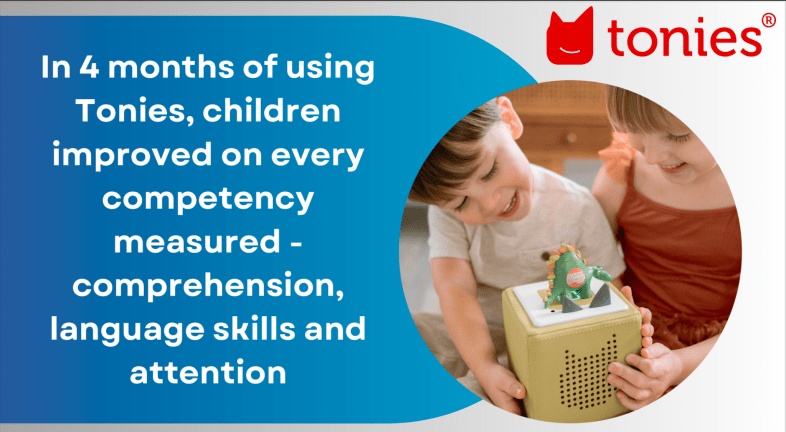
In a world where technology often competes with traditional learning methods, educators are always on the lookout for innovative tools that can genuinely impact children’s development. The Toniebox, a revolutionary audio device, has recently released the results of a study conducted between January and June 2023. The study explored how this creative tool can influence young learners’ comprehension, language skills, and attention.

Unlocking the Potential of the Toniebox

We should first understand what makes the Toniebox stand out. It’s an audio storytelling device that combines the magic of bedtime stories with captivating learning content. It makes it an excellent addition to the early childhood education toolkit and the best part is that kids are independent in their learning and can use it without much help at all.

A recent study

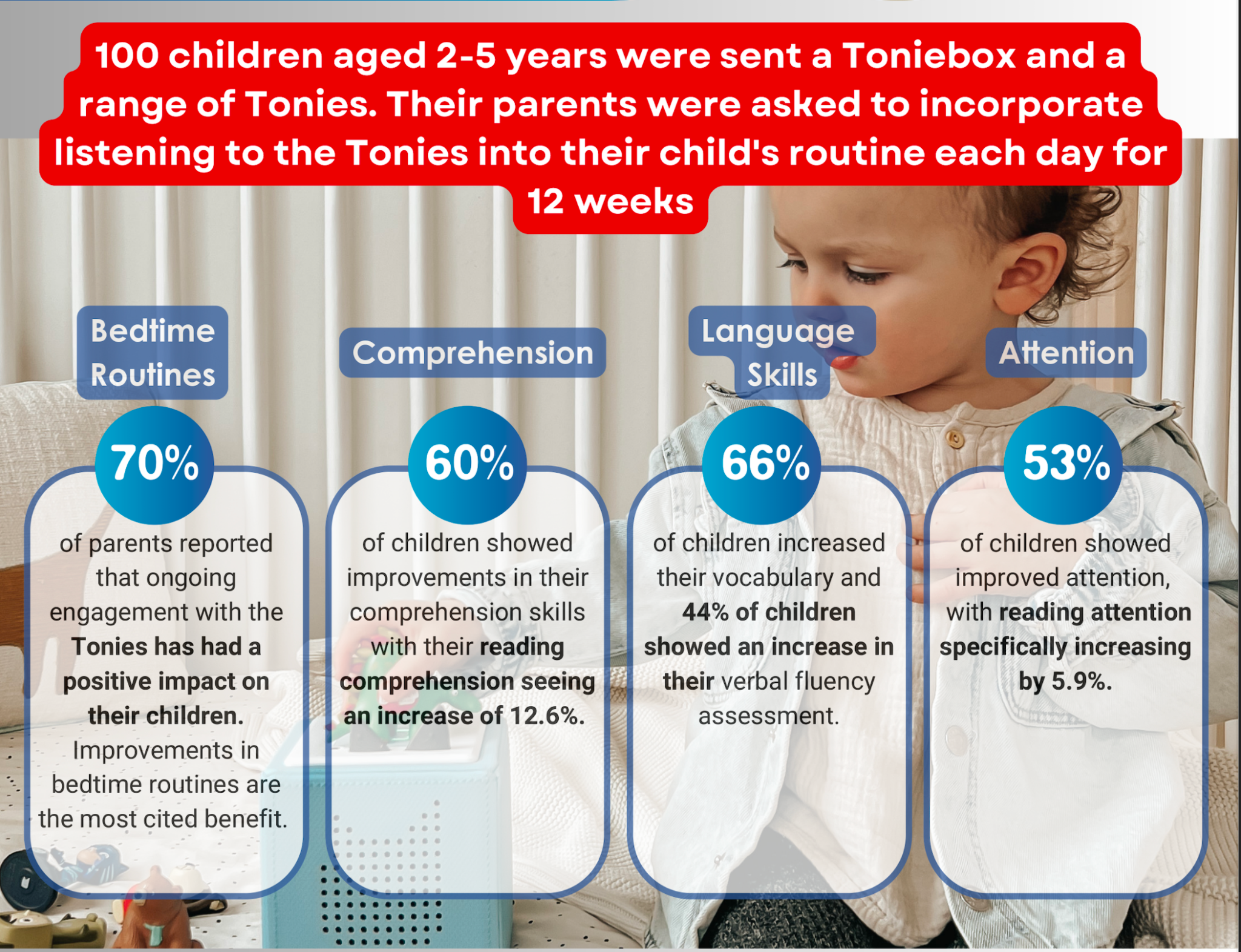
Imagine a learning tool that cultivates comprehension, language skills, and attention in young children. The recent study included 100 families from the UK and the United States, and involved children of ages 2 through 5. The research began with interviews to establish baseline measurements for each child’s development. Families were then provided with a Toniebox and bedtime Tonies, along with instructions to integrate them into their bedtime routines. After a period of 2-3 weeks, there were follow-up interviews that assessed the impact of Tonies on each child. Families were then provided with additional Tonies from the 4 Learning Centers: Discovery, Reading, Mindfulness, and Independent Play. After at least 12 weeks, there was another round of interviews which evaluated the effects of the Toniebox on children’s learning.

The Impact

1. Bedtime Routine Improvement:

– For parents who initially struggled with bedtime, using the Toniebox improved the situation for a remarkable 92% of them.

– Even if routines took longer, parents noted less resistance from their children, a welcome relief for many.

– Satisfaction scores increased significantly, from 6.6 to 7.4 out of 10, indicating happier bedtime experiences.

2. Comprehension and Language Skills:

– 60% of children’s comprehension scores increased

– Researcher-assessed comprehension levels improved by an impressive 6.3%.

– Reading comprehension scores saw a substantial increase of 12.6%.

– Verbal fluency jumped by over 10%, with 44% of children demonstrating improved verbal fluency.

– Vocabulary scores increased by 13.2%, with 66% of children scoring higher.

3. Enhanced Attention and Engagement:

– 53% of children’s general attention scores improved.

– For reading-specific attention, there was a 5.9% average increase.

– Engagement with stories increased by 7%, indicating greater interest.

Educators’ Takeaway: Tonies Toniebox

What makes the Toniebox an invaluable addition to early childhood education? It’s the perfect blend of entertainment and education. Here’s why educators should consider integrating it into their teaching strategies:

1. Promotes Literacy and Learning: The Toniebox enhances comprehension, language skills, and attention, crucial for early childhood education. The significant boost in reading comprehension is especially noteworthy.

2. Bedtime Routine Improvement: Better bedtime routines mean well-rested, alert learners in the classroom. Educators can appreciate the positive impact on children’s behavior and readiness to learn.

3. Screen-Free Learning: In a world dominated by screens, the Toniebox offers a refreshing screen-free alternative, promoting auditory learning and imaginative thinking.

4. Parent and Child Collaboration: The Toniebox encourages parent-child interaction, fostering a love for storytelling and learning from an early age.

Feedback from parents

The feedback offered by parents provides some valuable insights into the unique experiences they had with the Toniebox in their home.

1. Vocabulary Development and Screen-Free Engagement: A parent highlighted how Tonies significantly contributed to her child’s vocabulary development while serving as a screen-free alternative. The child’s enthusiasm for their Toniebox was so profound that he even listened to them for extended periods during road trips, showcasing the potential of this audio-based medium.

2. Design and Quality: Parents appreciated the figurine design of Tonies, which differentiated it from other devices. Many found Tonies ideal for storytelling, while other devices were preferred for music. The Toniebox engaged a child’s mind safely and offered high-quality manufacturing.

3. Innovative Possibilities: Parents associated reduced screen time with improved behavior in their children, emphasizing Tonies’ role in promoting a healthy balance.

The Toniebox is a valuable addition to childhood The feedback from parents underscores the versatility and potential of the Toniebox. While the study’s quantitative findings reveal its substantial impact on bedtime routines, comprehension, language skills, and attention, the individual comments paint a more comprehensive picture of its role in children’s lives. The Toniebox offers not only educational benefits but also a unique opportunity for children to engage with audio-based content in a screen-free and imaginative manner.

Toniebox is more than just a device; it’s a tool that empowers educators and parents to inspire young minds while nurturing positive habits and fostering a lifelong love for learning. As we navigate the ever-changing landscape of early education, the Toniebox supports the development of young learners in a dynamic and enriching way.

It is more than just a storytelling device; it’s a game-changer for early childhood education. Its potential to transform bedtime routines, enhance comprehension, language skills, and attention makes it a tool that educators should bring to their classroom. This innovative approach to learning is not only effective but also a whole lot of fun for young learners.

Contact Rachelle to schedule sessions for your school or keynotes for your conference about Artificial Intelligence, Coding, AR/VR, SEL, STEM and more!

Follow her on Twitter and Instagram at @Rdene915

**Interested in writing a guest blog for my site? Would love to share your ideas! Submit your post here. Looking for a new book to read? Find these available at bit.ly/Pothbooks
************ Also check out my THRIVEinEDU Podcast Here!

Join my show on THRIVEinEDU on Facebook. Join the group here

ISTELIVE 23: Another Great Experience

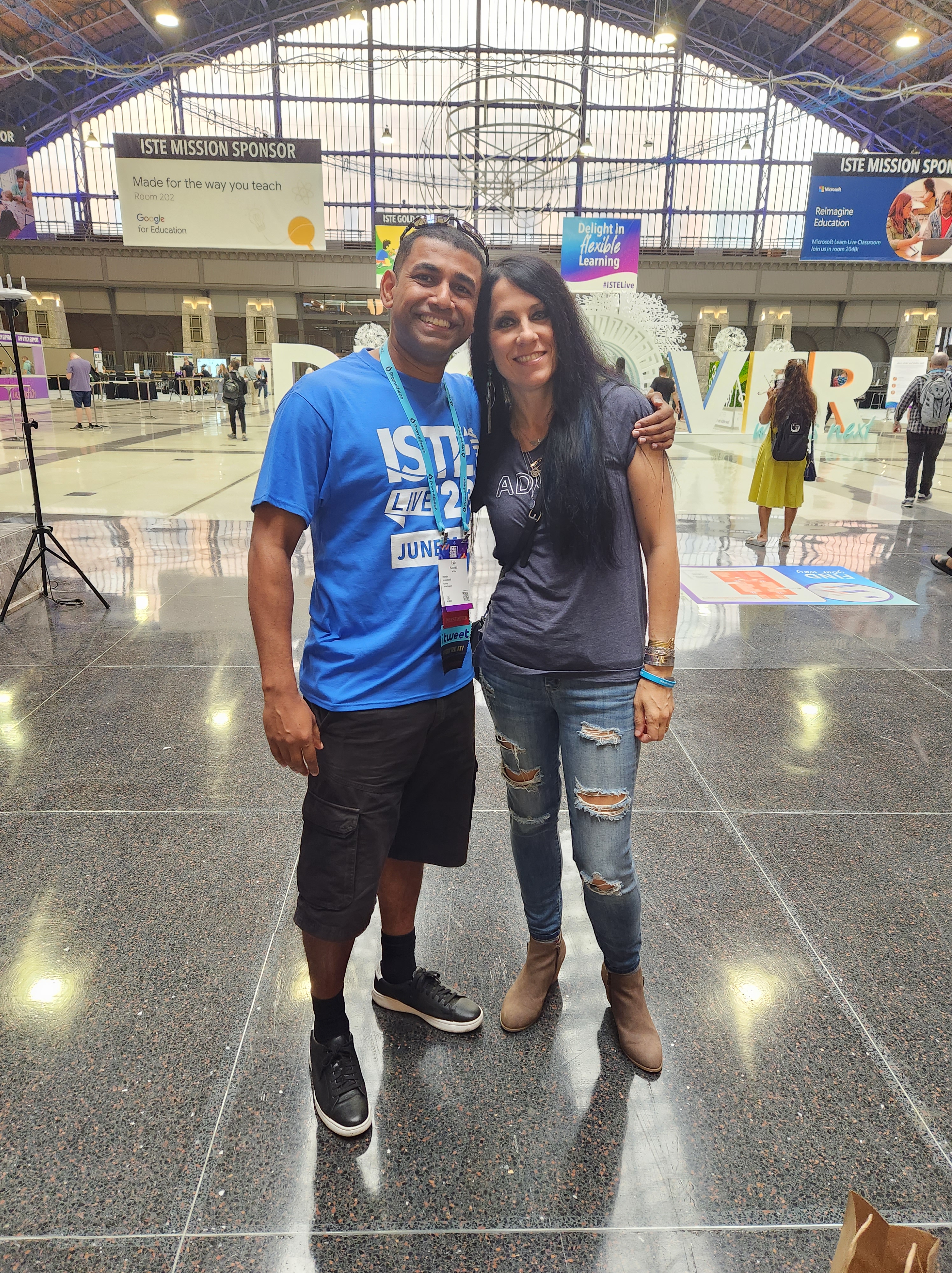
This was my ninth time attending the ISTE conference, the third time it was held in Philadelphia, Pennsylvania. There were a few years that the in-person event did not happen but ISTE held a virtual conference that enabled educators to connect and learn with other educators from around the world. It is the reason I look forward to the summer and a conference I look forward to because it brings in people from more than 80 countries from around the world. It offers so many different ways to learn through the poster sessions, the playgrounds, the concurrent sessions, panel discussions, workshops and other special events.

But beyond those specific learning spaces, there are lots of opportunities to connect with educators and build your PLN. It’s not just the learning that happens in those session rooms and spaces. It is about the learning that also happens on your walk to the sessions and while in the open spaces. A time when you can walk and talk or sit and have a conversation. And even once the conference day ends, the social events that happen later in the evening, are always great for connecting with friends and making new ones.

The conference was a little bit different for me this year because even though my schedule was busy it didn’t feel as overly busy as in prior years. I had the opportunity to join in some new adventures, present sessions on some of my favorite topics, and had the honor of being involved in the Closing Mainstage.

For me, as soon as I met friends at the airport, the excitement started. Then as soon as I arrived at the convention center to register on Sunday afternoon, it took a good 25 minutes to get there because I kept passing friends along the way, some of whom I had not seen in more than 5 years and a few that had never met in person. And when that happens, you have to stop and enjoy those moments.

Registration can definitely wait. Taking the time to stop, grab a quick picture, a hug, even a quick conversation makes all the difference. It brings those connections to life and reminds you to not miss out on opportunities, no matter how tired you are.

Presenting with friends

There wasn’t much time to waste as I had a workshop with my good friend Melody McAllister on Sunday. While we have done a live show for years, it was the first time presenting together officially. The focus was on podcasting and live streaming. We had a great crowd, our session was sold out and it was a high point in the conference for me. Being able to present with friends, share each other’s perspectives, and learn together, really makes a difference. For a long time, I did sessions by myself and that definitely helps me to build my own comfort level and confidence but I have definitely grown to prefer having friends present with me because we can bring in our different backgrounds and experiences and it’s just fun.

Another highlight was my Immerse Students in Learning session, all about AI, AR, and VR, topics which I have been presenting on for a little over 5 years. It has been amazing to see the increased interest in AI especially over the past 6 months with the entrance of ChatGPT, it has stirred up a lot of conversation and will continue to do so.

It’s a lot of fun to share with educators how I got started in teaching about AI in my classroom, knowing very little but also knowing that I needed to just dive right in. And that’s the advice that I often give. You don’t have to be an expert, you just need to have one idea, one method, one tool to start with and put it in the hands of the students. It’s important to also engage in conversations about these topics and these technologies so that we can be mindful of any concerns but also aware of the potential benefits not just in education but in preparing the students for their future and how these technologies might be used in the world of work.

Presenting with students

Another highlight was being able to co-present with Namya Joshi, (#EachOneTeachTen) a young student from India who we had hoped would be able to attend in person but thanks to technology and the power of using Zoom, I was able to bring her in to present with me during that session. Powerful to hear from students and I definitely recommend any time you can involve students in sharing the impact of these tools, and in this case the importance of STEM, then we need to do this. Hearing from her, (at actually 3:00 in the morning because of the time difference), did not diminish her spark for STEM and she was definitely an inspiration.

ISTEVerse

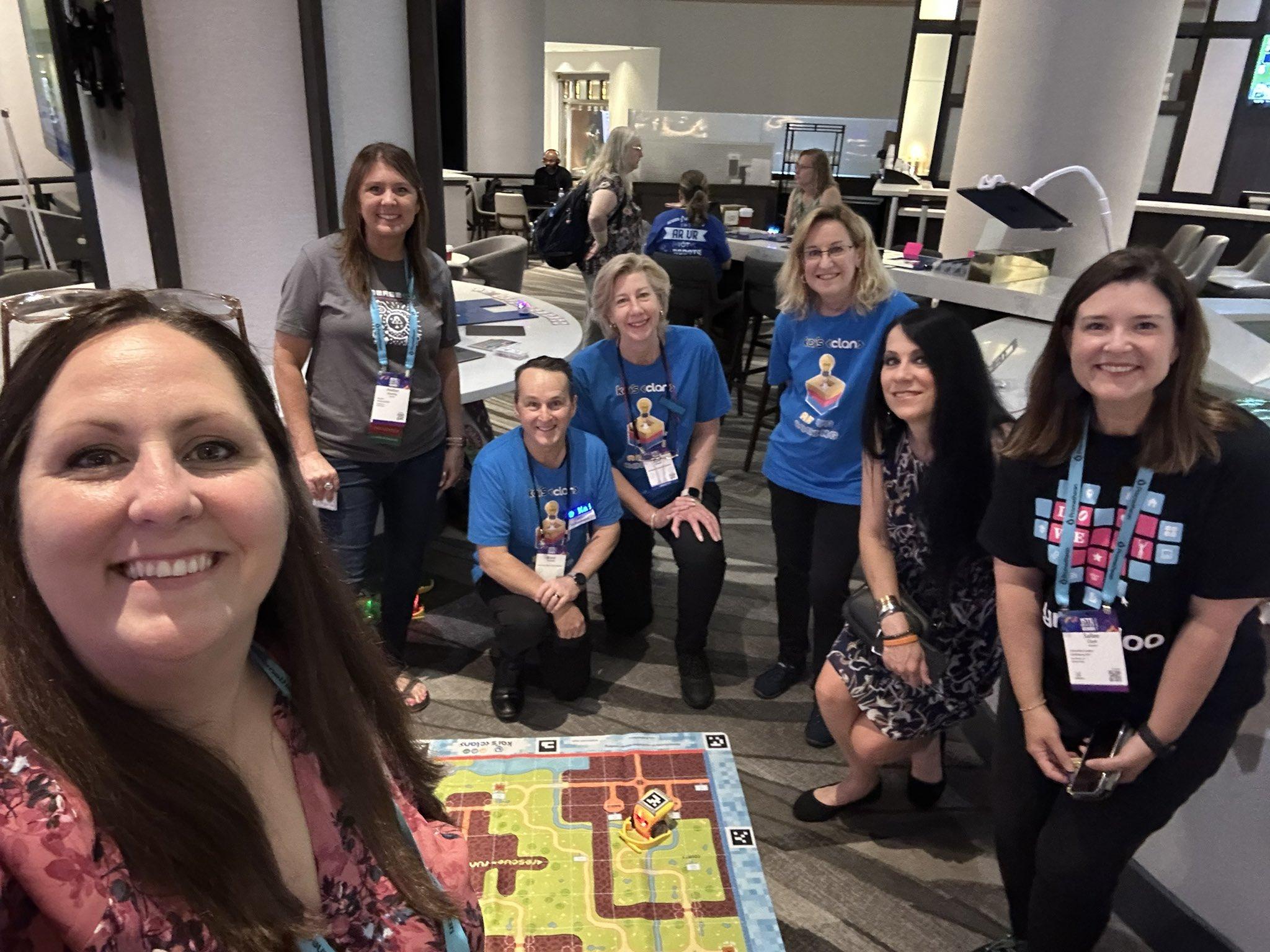
The three-day augmented and virtual reality ISTEVerse experience was a big hit and I tried to direct people to stop there as much as I could because a lot of people don’t realize the benefits of it until they experience it. And without access to the resources or know how to sort through all of the tools that are available, it can be hard to dive in and explore. That space had a variety of opportunities for people to learn about augmented and virtual reality, how to have students create rather than just consume, and that AR/VR is something that can be used in all content areas and grade levels.

Coffee with Kai’s Clan

Social events

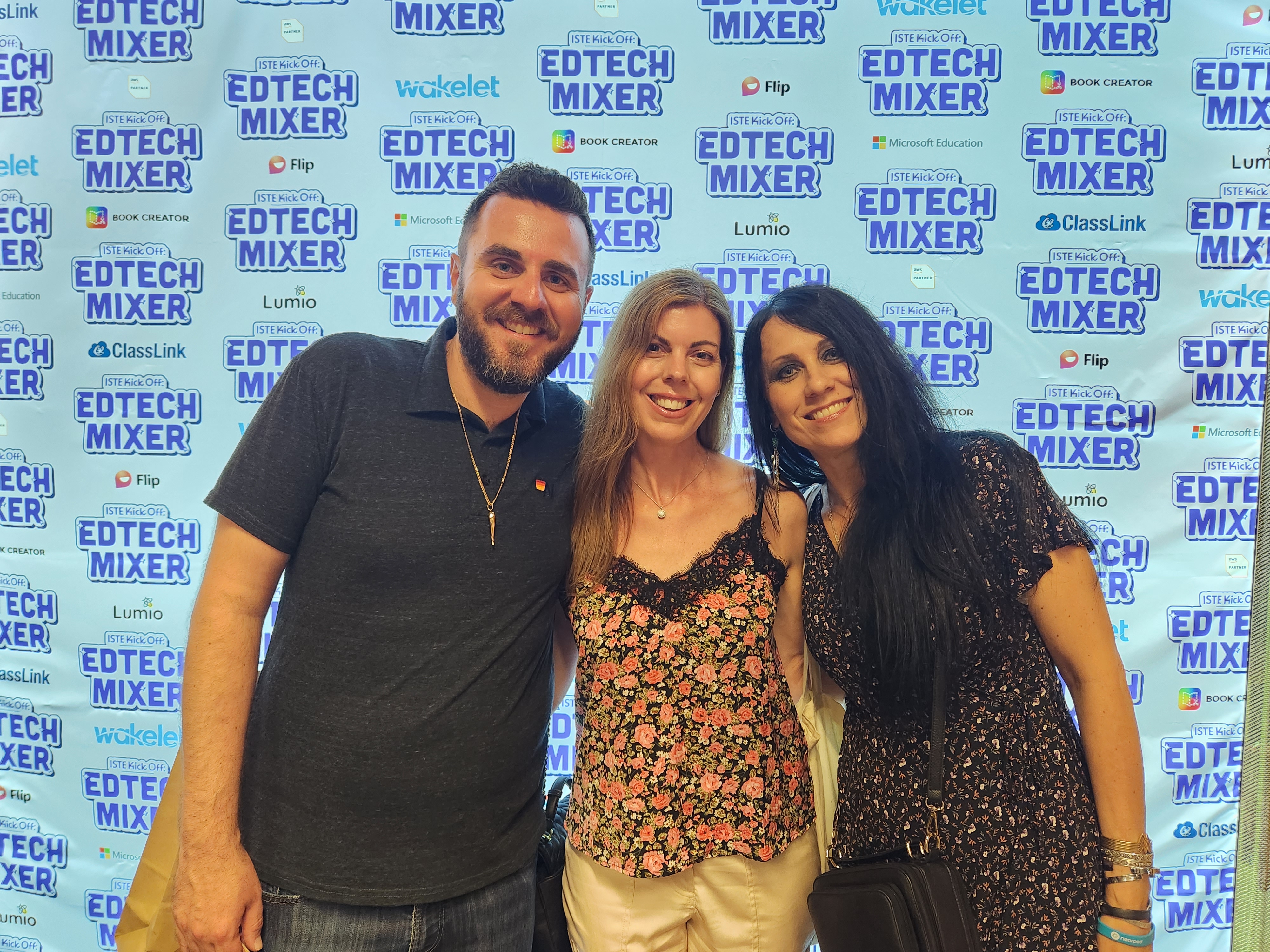
And everybody kept busy with social events, which are great spaces for networking. Whether the Edtech karaoke, casual gatherings for coffee or small sit-down dinners, there were opportunities everywhere. Learning still happens in these spaces. What I’ve discovered over the years is that PD does not only mean sitting down in a session and listening to a presentation. PD is so many different things and there are so many ways for people to choose the type of PD that is going to impact them the most.

Those early morning CoffeeEDUs with Alice Keeler, the social events and mixers held by some of the companies that we all know, and quaint gatherings by some other companies that enable you to really engage in conversation and get to know the people behind the products and their passion for what they’re doing. An amazing dinner with the BookWidgets team was a lovely opportunity to relax, enjoy the conversation and spend time with friends.

Dinner with BookWidgets

The Closing Mainstage: AI in Education

And one final highlight as I’m rolling these out in chronological order, was the Closing Mainstage on Wednesday. I was honored to be selected as the person to introduce and then interview the keynote speaker Kevin Roose. He is a New York Times columnist, a bestselling author of three books and he writes about technology, education, finance, and AI. We had the opportunity to sit down and talk for about 20 minutes. I had a lot of questions for him but tried to streamline them to those that are on the minds of many educators that I’ve spoken to, and some questions based on what I had read in his most recent book Futureproof.

Some of the biggest takeaways from that conversation are:

  • As educators, we need to be willing to embrace new ideas, trends, and technologies, even if we don’t fully understand them or we feel like we’re not the expert, we have to keep up with the changes that are coming.
  • We have to prepare our students and understand how these tools can be beneficial to us and to students, but we also have to be cautious as with all things, and question their purpose.
  • Consider any potential concerns or harm that can come from using them whether safety, security, or privacy. Ethics needs to be part of the conversations that we have and continue to have as these tools continue to evolve.
  • If we look at the positives, for teachers, as Kevin stated on his podcast dividing the AI between the “relational and the logistical.” We need teachers, humans, for the relational so that we can work with the students, we can have conversations, and support them as they learn. But we can benefit from the logistical or the clerical tasks that AI can do like helping us with some of the grading or having it be able to see trends in student responses and create a personalized learning path for them in real time. We can use traditional assessments and give students feedback one-on-one, but we can also find a way to balance the use of the technology so that we have more time to work with our students and provide for them with exactly what they need.

It was a great conference and it’s hard to believe that it has come and gone already but before you know it, it will be June 2024 and we will be in Denver for ISTE. The last time it was held there was in 2016 and that was the first time that I got on an airplane in many years and so I’m looking forward to returning to the conference next year. If you have not ever attended but have been giving it some thought, I definitely recommend that you try to go. And if attending in person is not an option, take advantage of the virtual learning that is available. Several of my sessions were recorded and live streamed and many of the other sessions were as well. So you can join in, interact in the chat, build your network, and learn from wherever you are and whenever you want to.

Jenn Womble and Adam Phyall

Wakelet and Capstone friends

The power of these global networks is that there is something for every educator and it’s important to keep pushing ourselves to learn and grow and adapt with the changes that we have seen and will continue to see in education.

See you in Denver next June!

About the author

Rachelle Dené is a Spanish and STEAM: What’s Next in Emerging Technology Teacher at Riverview High School in Oakmont, PA. Rachelle is also an attorney with a Juris Doctor degree from Duquesne University School of Law and a Master’s in Instructional Technology. Rachelle is an ISTE Certified Educator and serves as the past president of the ISTE Teacher Education Network. She was recently named one of 30 K-12 IT Influencers to follow in 2021.

She is the author of seven books including ‘In Other Words: Quotes That Push Our Thinking, Unconventional Ways to Thrive in EDU, The Future is Now: Looking Back to Move Ahead, Chart A New Course: A Guide to Teaching Essential Skills for Tomorrow’s World, True Story: Lessons That One Kid Taught Us, Your World Language Classroom: Strategies for In-Person and Digital Instruction and her newest book Things I WIsh [….] Knew is now available.

Follow Rachelle on Twitter @Rdene915 and on Instagram @Rdene915. Rachelle has a podcast, ThriveinEDU available at https://anchor.fm/rdene915.

Looking for PD for your school? I provide in-person and virtual training on the following topics. If you want to learn more about and explore AI and ChatGPT, contact me to schedule! Rdene915@gmail.com

**Interested in writing a guest blog or submitting a sponsored post for my site? Would love to share your ideas! Submit your post here. Looking for a new book to read? Find these available at bit.ly/Pothbooks

BLACK FRIDAYS for EDUCATORS: ISTE 2023

Guest post by Melisa Hayes, 2nd grade teacher, @MrsHayesFam

It’s that time of year again when the biggest tech conference comes together to show off their tech toys; educators & consultants share amazing strategies, resources, and more! For many, it’s another year. For others, it’s the 1st time. In any case, It’s an exciting time! It’s like Black Friday. The anticipation or dread of packing, creating your schedule for the week, & preparing for your presentation gives many goosebumps. The suspense of getting on the plane or in a vehicle and taking off makes your heart race. Arriving in Philly & thinking about all your friends you’ve only spoken to virtually and getting to physically hug for the 1st time or friends you can’t wait to hug again!

The day is finally here and you have arrived, it’s official. Christmas has come early. The love you feel when you see your friends/family is such a rush of emotion. I remember last year at my first ISTE and seeing my family for the first time. It was a HIGH. A drug that I didn’t want to stop using! For me, these educators are my family. The rush of emotions I felt is hard to explain. Most people can’t understand, my husband being one of them (LOL) I have established a relationship with so many. We know each other even if we’ve never met. The impact each has had on not only me but my 2nd-grade family is just astronomical! These amazing educators have zoomed with my kids and some have Zoomed with them for years! I actually plan to use Microsoft Flip to showcase these family members to my kiddos!

The EXPO/North Pole is miles and miles of tech toys and rock stars showing off the latest and greatest resources. For teachers, It’s Christmas. The giveaways you’ll receive are astronomical! For me, It’s all about the PEOPLE. Get that camera ready and take LOTS of pics to capture those memories. You want to savor every moment! Also, make sure to have comfy shoes. Whether flip flops, crocs, tennis shoes, or any comfortable footwear you’ll need since the convention center is approximately 1.3 million square feet. That’s a lot of traveling so be prepared:)

Snacks are essential as well as chargers, camera/device to capture the memories, Advil for sore muscles or a headache, and a HUGE bag for all those giveaways from the expo:) It would be good to have labels with your name and address so you don’t have to fill out SO MANY slips for giveaways:) Have an open mind when hearing all theories, strategies, and resources. These amazing ideas can always be scaffolded or differentiated for our kids.

Last piece of advice, ENJOY EVERY MINUTE of Black FridayS… These days fly by and before you know it, you have to say goodbye to family/friends. Sign up for all the activities and enjoy all the amazing learning and tech toys that you may win:) Lastly, make memories. You never know what life has in store so savor every moment! #ISTELIVE

About the Author

Melisa Hayes

Melisa is a 2nd-grade teacher in Hilliard, Ohio, and has taught for 26 years. Melisa has a Master’s in Education degree and is passionate about inclusion, blending technology into the curriculum and creating experiences in the classroom, such experiences focus on creativity, Stem, coding, and more. She earned the recognition of Global Teacher of the Year in 2020. She is also a Microsoft Flipsider, Wakelet, Whiteboard Chat, Night Zookeeper, Teach Better Ambassador and an Apple Distinguished Educator.

Connect with me on Twitter @MrsHayesFam

Looking for some PD for your school? I provide in-person and virtual training on the following topics. If you want to learn more about and explore AI and ChatGPT, contact me to schedule! Rdene915@gmail.com

**Interested in writing a guest blog or submitting a sponsored post for my site? Would love to share your ideas! Submit your post here. Looking for a new book to read? Find these available at bit.ly/Pothbooks

How Teachers Can Enhance Learning Engagement with an Interactive Video Quiz

In Collaboration with Sheryl Place, BookWidgets

In today’s digital era, educators are constantly seeking innovative ways to make learning more interactive and engaging for students. One such tool that has gained popularity among teachers is an interactive Video Quiz. This powerful educational technology combines the use of videos with interactive quizzes, fostering active participation and enhancing comprehension. There are a few tools you can use to create interactive question videos. Think about Edpuzzle or EducaPlay. An alternative to Edpuzzle you might have heard of is the BookWidgets Video Quiz with the possibility to pause a video and ask over 35 different question types!

In this blog post, we will explore the features and benefits of the BookWidgets Video Quiz and how it can revolutionize the learning experience for students.

BookWidgets, a teacher content creation and evaluation tool, simplifies content creation, feedback, and grading processes while enhancing student learning experiences. Its innovative resources empower educators to effortlessly create interactive content and promote personalized learning.

What is a Video Quiz Widget?

BookWidgets has various types of digital exercises template teachers can fill with their own lesson content. They are called “widgets”. The BookWidgets Video Quiz is one of the 40 widget types you can choose. It seamlessly integrates with YouTube and Vimeo platforms. Educators can choose from a wide range of question types including multiple-choice, true/false, fill-in-the-blanks, voice recording, and more, and insert them at specific stopping points or cue points in the video. There are great ideas for getting started with a Video Quiz.

Creating interactive lessons for students is so easy! Check out this Spanish I video quiz on the verb “gustar” and “las frutas. “Adding in a few questions to check for student understanding and giving them an opportunity to learn at their pace and review as needed is why I love using the video quizzes in BookWidgets. Simply choose a video from Vimeo, YouTube,or one of your own created videos for your students that you may show in class. Rather than use these alone, instead, create a video quiz in BookWidgets for them to extend their learning beyond the classroom and for you to be able to understand where they are in the learning process!

Engaging Students with Interactive Learning:

One of the key advantages of the BookWidgets Video Quiz is its ability to captivate students’ attention and keep them actively engaged throughout the learning process. There are more than 35 question types to choose from to add to the quiz which makes it easier to customize the quiz for any grade level or content area.

By embedding questions within videos, students are prompted to think critically, analyze content, and apply their knowledge in real-time. This interactive approach encourages active participation, leading to improved comprehension and retention of the subject matter. Video Quizzes are perfect for Flipped Learning. Learn more about the use of BookWidgets for flipping your classroom learning space!

Customization and Flexibility:

BookWidgets Video Quiz offers educators a high degree of customization and flexibility. Teachers can tailor the quiz to suit their specific instructional goals, selecting the video content and designing the questions accordingly. The interactive elements of the videos help to capture students’ attention and make the learning process more engaging for them.

Teachers also have the option to add hints, explanations, and feedback to guide students’ learning process. I like adding in a note at the beginning or end of the video quiz to remind students to jot down some notes or hints at grammar topics or specific vocabulary to focus on for example. This adaptability empowers teachers to create personalized assessments that cater to the diverse learning needs of their students.

One of the best things about BookWidgets is that it offers more than 40 interactive templates for teachers to use as they design activities to help students build their skills. The many templates and options available to create widgets enables educators to create activities that enable students to work at their own pace ​and experience more active learning which, as a result, becomes more meaningful. When learning is meaningful, it will also boost student engagement and create a more authentic experience for our students.

We have used the bingo cards, crosswords, snowman games, jigsaw puzzles, video quizzes, and word searches in my classes. Each of these offers opportunities to differentiate the instruction and provide more choices for students as they practice the vocabulary and related content. In my own classroom as a language educator, I also want to be able to assess students’ speaking skills and within BookWidgets, having the option for students to record their voices is great​ for designing assessments and guiding students in the feedback process. Here are some additional examples that can be used in language classes!

Real-time Assessment and Feedback:

One of the most significant advantages of the BookWidgets Video Quiz is its ability to provide instant assessment and feedback to students. Teachers are able to view student progress using LIVE mode and immediately see where students may need support and encouragement or enrichment.

What is so great about BookWidgets is being able to have access to real-time data. Within the dashboard, I can quickly see the flashcards that my students have practiced​, how much time ​they spent on them, and even how many times they flipped a specific card. Being able to see their work helps me to better plan my instruction and the activities that I design for them. Understanding our students’ needs is essential so we can provide additional resources and encouragement for them as they engage with and master the content.

As students complete the quiz, their responses are automatically graded, saving teachers valuable time. Immediate feedback allows students to gauge their understanding of the content, identify areas for improvement, and reinforce their learning. Such timely feedback fosters a continuous learning loop and helps students stay motivated. We know the importance of authentic, meaningful,and timely feedback and with BookWidgets, educators can respond to students’ needs right away and have a clear understanding of where students are in the learning process. Saving time with our assessments by using these tools enables us to then spend that time with students and engage in meaningful conversations about their progress.

Tracking Progress and Analytics:

Via the Reporting Dashboard, BookWidgets offers valuable insights into student progress and performance through its analytics feature. Teachers can easily track individual and class-wide progress, identify patterns, and assess the effectiveness of their instructional strategies. These analytics enable educators to make data-driven decisions, modify their teaching methods if necessary, and provide targeted support to students who may require additional assistance.

When we have this data, we can provide more timely responses to student needs in our classrooms. The Dashboard makes it easy to identify areas that we can focus more on with individual students or the class and also provides us with an opportunity to reflect on the activities and strategies we are using.

BookWidgets FREE in Google Classroom We have some exciting news for schools using BookWidgets within Google Classroom! If your school has the Google Workspace Teaching & Learning Upgrade Edition or Google for Education Plus Edition, you can now use the BookWidgets add-on in Google Classroom for free until August 31st.

Every teacher can find the add-on in Google Classroom and start using it immediately. Just follow the steps below (and share them with your fellow teachers):

  • Go to Google Classroom,
  • Select a class and go to “Classwork“,
  • Click on “Create” and choose “Assignment“,
  • Fill in the details of your assignment. Then, click the BookWidgets add-on under the “add-ons” section in your assignment. If BookWidgets is unavailable, ask your Google Workspace administrator to add or allow the BookWidgets add-on;
  • After clicking the add-on, BookWidgets will pop up and you’re ready to go!

Make sure to watch this webinar to get started with the BookWidgets add-on in Google Classroom. New to BookWidgets and still figuring out the added value for your students? This blog post will get you inspired!

Why Video Quizzes Make A Difference

Incorporating the BookWidgets Video Quiz into educational practices opens up a world of interactive and engaging learning experiences. By combining videos with interactive quizzes, teachers can foster active learning, customize assessments, provide instant feedback, and track student progress effectively. This powerful tool not only enhances comprehension but also encourages critical thinking, collaboration, and self-directed learning. With the BookWidgets Video Quiz, educators have a versatile tool at their disposal to create dynamic and impactful learning experiences that prepare students for success in the digital age.

Get started today!

Create an account! It is easy to get started and create your own widgets to use in your classroom. Want 3 months to try it out? Sign up here!

Are you headed to ISTE 23 in Philadelphia? Don’t miss the chance to meet with the BookWidgets Team and join in sessions for opportunities to learn more about BookWidgets! Stop by the Chopped Playground to learn from Lucie Join Kate for “SCAMPERing into Human-Centered Design and Sheryl’s session on Creative Grading and Assessment at the Learning in Disguise Playground. Don’t miss the Lightning Talks and Kate’s session on Reimagine Education – Human-Centered and “Understanding Microsoft Teams The Digital Learning Hub in My Classroom and Yours with Kate, Sheryl, and Jeff Bradbury! Rachelle will be sharing about BookWidgets during her session “Chart A New Course” on Tuesday morning at 10:00 am!

Looking for some PD for your school? I provide in-person and virtual training on the following topics. If you want to learn more about and explore AI and ChatGPT, contact me to schedule! Rdene915@gmail.com

**Interested in writing a guest blog or submitting a sponsored post for my site? Would love to share your ideas! Submit your post here. Looking for a new book to read? Find these available at bit.ly/Pothbooks