

The world is constantly evolving and the skills that are in demand now may not be needed five years from now. Jobs are changing, technology is becoming even more advanced and careers that exist today may not be needed in the future. And on the other side, there are many jobs that don’t exist yet that will need to be filled by the students in our classrooms today. How do we prepare for what we can’t truly know and understand? We need to make sure that all students have opportunities to explore a variety of topics, careers and learn about their areas of interest and about themselves. We need to spark curiosity for learning and help to guide students to discovering what they might actually be interested in.
Students need to be active in learning and have time to explore the world around them. In some classrooms, students may experience passive learning and solely be consuming content, rather than creating. To amplify learning for students today, we need experiences that will potentially cause some chaos and shift from what has been the traditional classroom structure. Instead, we need to extend learning beyond our classroom space and embrace new learning models that promote student agency and spark curiosity for learning. We need methods and opportunities that foster the development of essential SEL skills and that will best prepare students for the future through real-world learning opportunities. Students need to understand the relevance of what they are learning in our classrooms and how that applies to the real world and careers that are available to them.
Finding methods and tools that will best meet student interests and needs is essential. In education, we have been focusing on the development of “21st-century skills” for many years. We can’t possibly know everything about what the future holds for students when it comes to careers and specific skills, so to prepare, we must help students build a variety of skills. With opportunities that support students as they learn how to adapt to changes and become flexible in learning and growing, will prepare them for whatever the world of work will look like five, ten, or more years from now. Defined Careers offers information that is applicable to all grade levels and has information for many different areas of work. It includes job descriptions, education requirements, and salary information. Recent webinars from Defined Learning have also focused on careers that are in demand and how to engage students in career-connected learning.
Here are three more ways to spark curiosity for careers of the future and engage students in career-focused learning:
- CTE and Work-based learning: It is important for students to continue to learn about the career options that are available and how they may be changing. With CTE, work-based learning, and even job shadowing programs, students can gain practical and real-world insights into different fields. In the classroom, students can learn about careers and speak with people in their local community. However, being able to experience what it is like in the work environment, and interact with people who are working in careers of interest to students, will have a bigger impact. There are opportunities available locally and virtually that will greatly benefit students. By partnering with local businesses and professionals, inviting guest speakers, and involving students in real-world, hands-on projects, they will become more aware of the opportunities available to them. Through these experiences, they learn about what their interests are and how they can make an impact in the world. Diving into the Defined Careers resources can also help students learn more about specific careers and the types of work that may be involved. Career Course focuses on providing students with relevant career experiences and skills needed for a specific career. Each career course is a collection of projects that gives students hands-on learning opportunities.
- Place-based learning: By shifting our focus from solely the content area, we can identify a geographical area or the culture of a place as a way to build content knowledge and help students develop SEL skills. Through place-based learning, we place students into the community to collaborate with local businesses, entrepreneurs, and other organizations. These experiences give students an opportunity to apply the content they are learning in the real world. They foster the development of student agency, boost student engagement, and enhance student awareness of the issues and perspectives of the world around them. To further engage students, we can organize field trips to relevant locations, invite guest speakers from the community, and encourage students to research and present on local challenges and solutions.
- Project-based learning (PBL): With PBL, students take the lead in deciding what they want to learn and how they want to learn it. With PBL, students choose an area of interest, design their own learning journey and through the experience, see the process of learning rather than a finite end point. In our classroom, we explored a variety of student-chosen topics and also incorporated the United Nations Sustainable Development Goals (SDGs) into the projects. We can help students to become more globally aware and involved in finding solutions to challenges faced in the world. PBL helps students to become more independent in learning while developing essential SEL skills such as self-management and social awareness.
- STEM-focused learning: We want to make sure that students take a break from technology, especially during the summer, however, there are some great resources available for students to explore on their own. With sites such as Defined Learning, Code.org, and Khan Academy, students can explore different STEM-focused courses and resources. With these tools, they can explore in-demand topics like data science, artificial intelligence, cybersecurity, and other STEM-related fields and be more involved through the interactive modules, videos, and other resources that are offered. Online platforms like these and many others like them enable students to explore areas of interest at their own pace and develop skills that may lead them toward a specific career. Find guest speakers who can provide some personal insight into careers in STEM-related fields and the importance of building skills that are applicable to these areas.
There are many options available to inform students of the possibilities for their future careers. While we may not know exactly which jobs will still exist, we do know that there are specific skills that will help students stay flexible and adapt to the changing landscape of learning and work. Through these real-world opportunities, students will make connections that will positively impact their learning and hopefully, spark curiosity or make them aware of areas they have an interest in for their future
About the Author:
Rachelle Dené is a Spanish and STEAM: What’s Next in Emerging Technology Teacher at Riverview High School in Oakmont, PA. Rachelle is also an attorney with a Juris Doctor degree from Duquesne University School of Law and a Master’s in Instructional Technology. Rachelle is an ISTE Certified Educator and Community Leader and served as president of the ISTE Teacher Education Network. She was named one of 30 K-12 IT Influencers to follow in 2021.
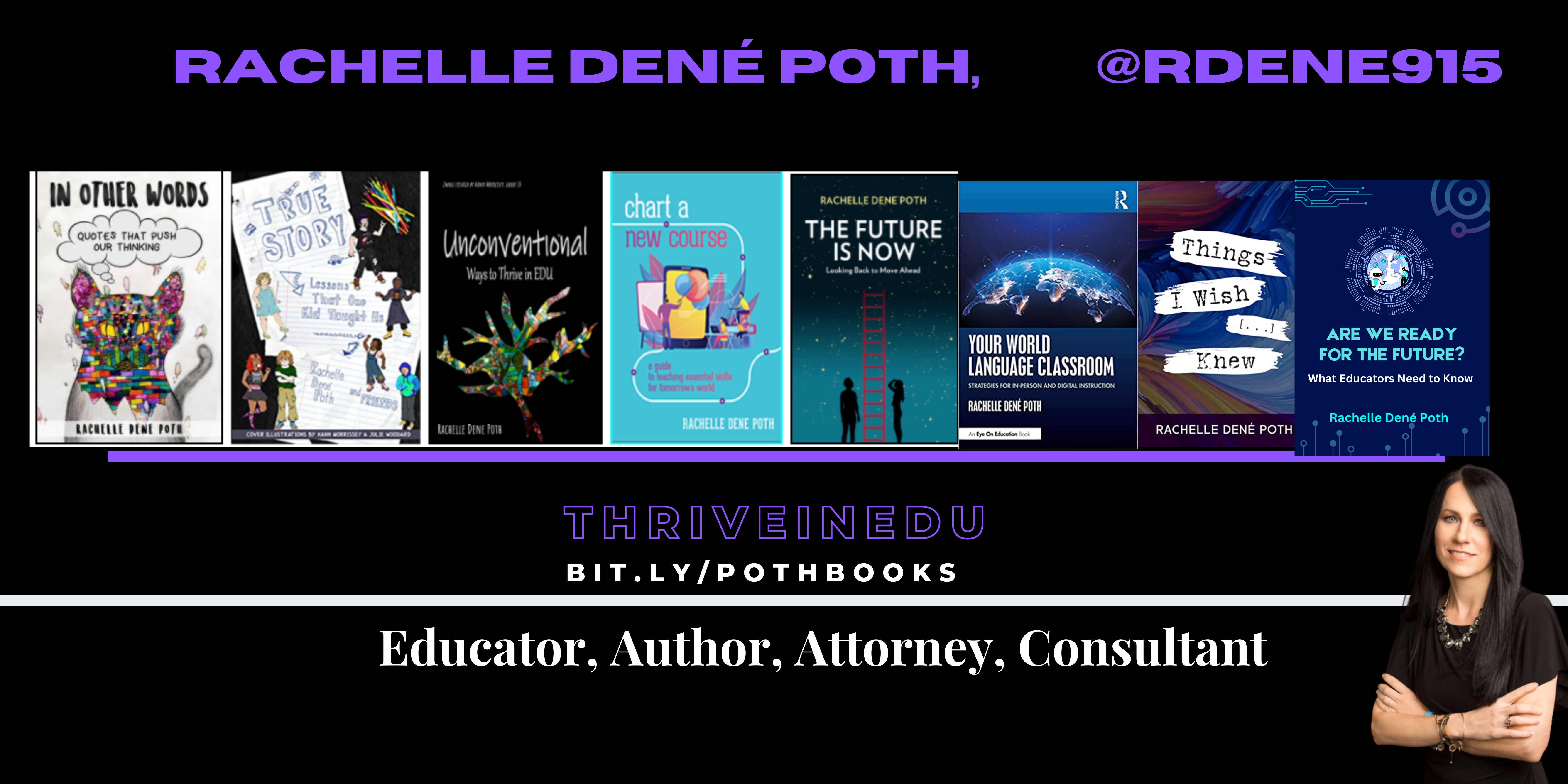
She is the author of eight books including ‘In Other Words: Quotes That Push Our Thinking,” “Unconventional Ways to Thrive in EDU,” “The Future is Now: Looking Back to Move Ahead,” “Chart A New Course: A Guide to Teaching Essential Skills for Tomorrow’s World, “True Story: Lessons That One Kid Taught Us,” and her newest book “Things I Wish […] Knew” is now available at bit.ly/thingsiwishedu.
Contact Rachelle to schedule sessions for your school about Artificial Intelligence, Coding, AR/VR, and more!
Follow her on Twitter and Instagram at @Rdene915
**Interested in writing a guest blog for my site? Would love to share your ideas! Submit your post here. Looking for a new book to read? Find these available at bit.ly/Pothbooks
************ Also check out my THRIVEinEDU Podcast Here!
Join my show on THRIVEinEDU on Facebook. Join the group here
 Learning as I go: Reflections & lessons learned