So it has been a hot minute since my last post, but I have been working on several things, grading tons of AP Language and Composition and PreAP ELA 10 essays and trying my best to be present for my son’s senior year of fall baseball, basketball, spring baseball, and all things in between, while handling new responsibilities at school as well. However, for the December Microsoft Innovator Educator Expert (MIEE) Central Region Community Call, I was able to share some of my ideas for how the powerful Microsoft Word dictation tool can be used in the classroom. This post also includes using Google Docs.
THE MIST IS SLOWLY LIFTING
I created a dictation activity choice board, so for my blog, I’ll expand on each activity and then include the choice board in the last post. For my first dictation activity, I chose Dictation to the Rescue. For a basic tutorial on using the Microsoft Word dictation tool, check out my Dictation tools in MS Word video. There are plenty of tutorials out there for Word and Docs, but I did make this one for the MIEE call. Now on to the main event.
THE SOUND OF LIFE MISPLACED YOUR MIND
This activity is a great entrance or exit ticket or a great pause midway through a lesson to ensure students understand the presented content. If you have language learners or young learners, then this has some additional valuable outcomes. Practice these tools in a fun or non-penalty / non-grade-based way before using them with content.
YOU’RE SITTING, SPELLBOUND THRU OUT TIME
In Microsoft Word or Google Docs, have students:
Type or copy and paste into a new document a problem they are struggling with from today’s (or a previous) lesson, something they still aren’t sure how to do, or something they got wrong in the activity.
Dictate their explanation below the problem of what they were thinking as they worked through that part of the assignment (in Microsoft Word, select the primary language spoken; in Google Docs, under Tools, select “voice typing” and then the students dictate in their primary language and then translate the page using the translate tool in Docs). Students should include what questions they still have, and why they think they got it wrong. Getting students to explain their thinking is very revealing for understanding how to help them make connections.
Make corrections to any translations used, but all native language responses should be changed to English and then proofread and corrected.
Pair up and read each other’s areas of struggle. Carefully structure the pairs or allow students (depending on age) to choose who they feel comfortable sharing with for this part. It takes trust to share struggles with someone, so build this in slowly, and listen to student input on how to adapt it for your class. This part can potentially develop a healthy academic risk-taking classroom climate, or destroy what trusting class climate you already have, depending on how you approach and monitor this in progress.
Offer suggestions to their partner or show their partner how to respond to the prompt.
Turn in their dictations so that you can see where communication of content or understanding of concepts may need to be corrected or improved.
I HOPE THAT YOU REMEMBER WHAT YOU FIND
Keep in mind that you as the teacher need to bring the energy needed to help students see the value in academic risk-taking. Your excitement or passion for the activity and content will greatly impact the result, either positively or negatively, so use your power wisely and have fun. Enjoy the process. Model for students that learning is a journey and an experience that must be lived. It’s never a one-and-done.
HEADINGS ARE PARTIAL LYRICS FROM THE SONG, OF A LIFETIME BY JOURNEY.
Looking for PD for your school or keynotes for your conference? I provide in-person and virtual training on the following topics. If you want to learn more about and explore AI and ChatGPT, contact me to schedule! Rdene915@gmail.com or use the Book Me form on my website. bit.ly/thriveineduPD
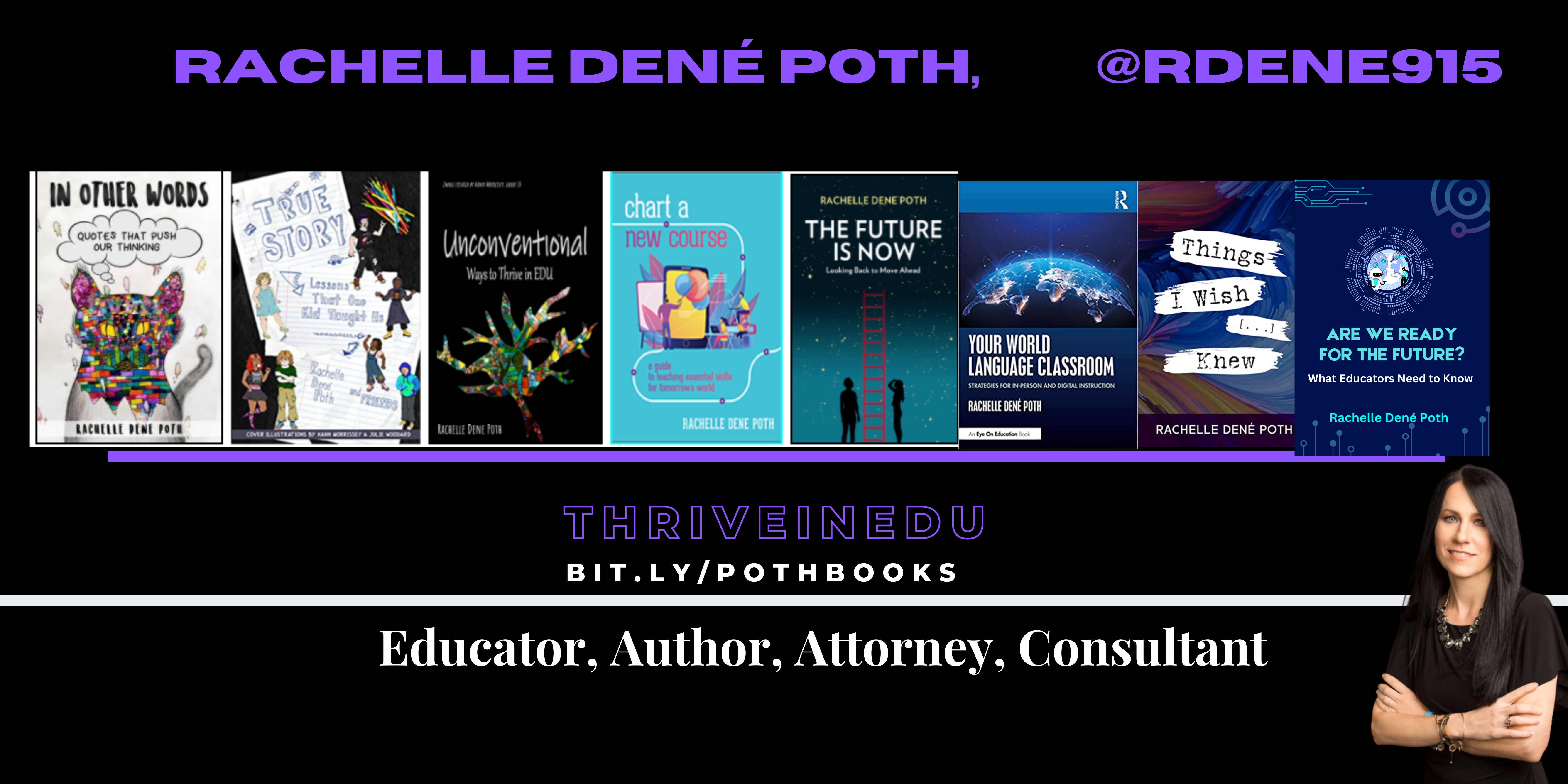
**Interested in writing a guest blog or submitting a sponsored post for my site? Would love to share your ideas! Submit your post here. Looking for a new book to read? Find these available at bit.ly/Pothbooks
The start of a new school year or calendar year is always a great time to explore some new ideas, especially with all of the amazing tools and technologies available to us. There are many exciting options available to educators and students to choose from, and sometimes, making the choice is a challenge. Personally, one of my favorites is bringing augmented and virtual reality into my classroom through CoSpaces Edu.
Initially, I used CoSpaces in my STEAM emerging technology course for several years, having students work on a variety of projects in my class and for some cross-curricular collaboration. One day, I was challenged by a few of my students in a Spanish II course who had seen the projects being created, and they wondered why they were not able to do something similar. I was speechless, and I didn’t have an answer for them. Honestly, I had not thought about bringing AR/VR into my Spanish classes. Fortunately, I knew about all of the benefits and great features of CoSpaces that foster collaboration, creativity, and many other essential skills. I also loved that students have the ability to create independently or to work together on the same project from wherever they are. So I thought to myself, why not?
If you are not familiar with CoSpaces Edu, it is a truly versatile, user-friendly platform that enables students and teachers to create virtual spaces full of animals, people, objects, and more. It is a great way to focus on developing many skills in schools, from SEL to STEAM and more. It is also a great option for helping students develop an interest in STEM, especially coding, a highly in-demand skill.
From coding and language learning to STEAM and collaboration, CoSpaces Edu offers so many ways for students (and teachers, we need to learn, too!) to create their own AR and VR experiences. An alternative to traditional tools that might be used for digital storytelling, explaining and exploring complex topics, or for creating virtual field trips through a moment in history, for example.
So, with all of the options available, why choose CoSpaces Edu? It has been a game-changer in my classroom. It provides an intuitive, user-friendly platform that educators, students, and families supporting students can easily navigate. It offers a different way to share and show learning as students can create, explore, and interact with 3D virtual worlds, which not only engages students but also provides more for different student interests. It also provides lesson plans and activity ideas for teachers to explore!
Most importantly, CoSpaces Edu encourages creativity, collaboration, and problem-solving — skills that are essential for today’s learners. It also gives students the chance to learn about coding, which is not something just for those studying computer science or teaching a STEM-related course. The best part of CoSpaces Edu is that it introduces students to the basics of coding in a truly engaging and meaningful way. As students explore independently while designing their virtual worlds, they learn how to create by selecting and manipulating different characters and objects and can start coding either with block-based coding or a scripting language like JavaScript.
Over the years, I have seen hesitancy when it comes to coding, and with CoSpaces, students build confidence as they create and enjoy working together with classmates in their virtual space. The variety of options available and with coding helps students understand what can be abstract concepts, develop logical thinking, and hopefully and ideally, lead to the development of an interest in computer science!
5 ideas to try in 2024!
Take a tour! First, When I get started in my own classroom with my students, I always give them time to explore all of the different projects that are available in the gallery. What types of projects do they see, which ones do they like, and what might they like to create? I think it’s a good way to get them thinking about the different possibilities and also give them time to explore on their own and see what clicks with them. So when I say take a tour, I tell them to just choose a topic, whether it’s STEM or if they see some games to play, and then I ask them to share with their classmates what they found, why they liked it, and any other ideas that they come up with for what they could do that is similar or how they would make it different or improve it. But it’s a fun way to get students talking and brainstorming to help them prepare to make their own projects.
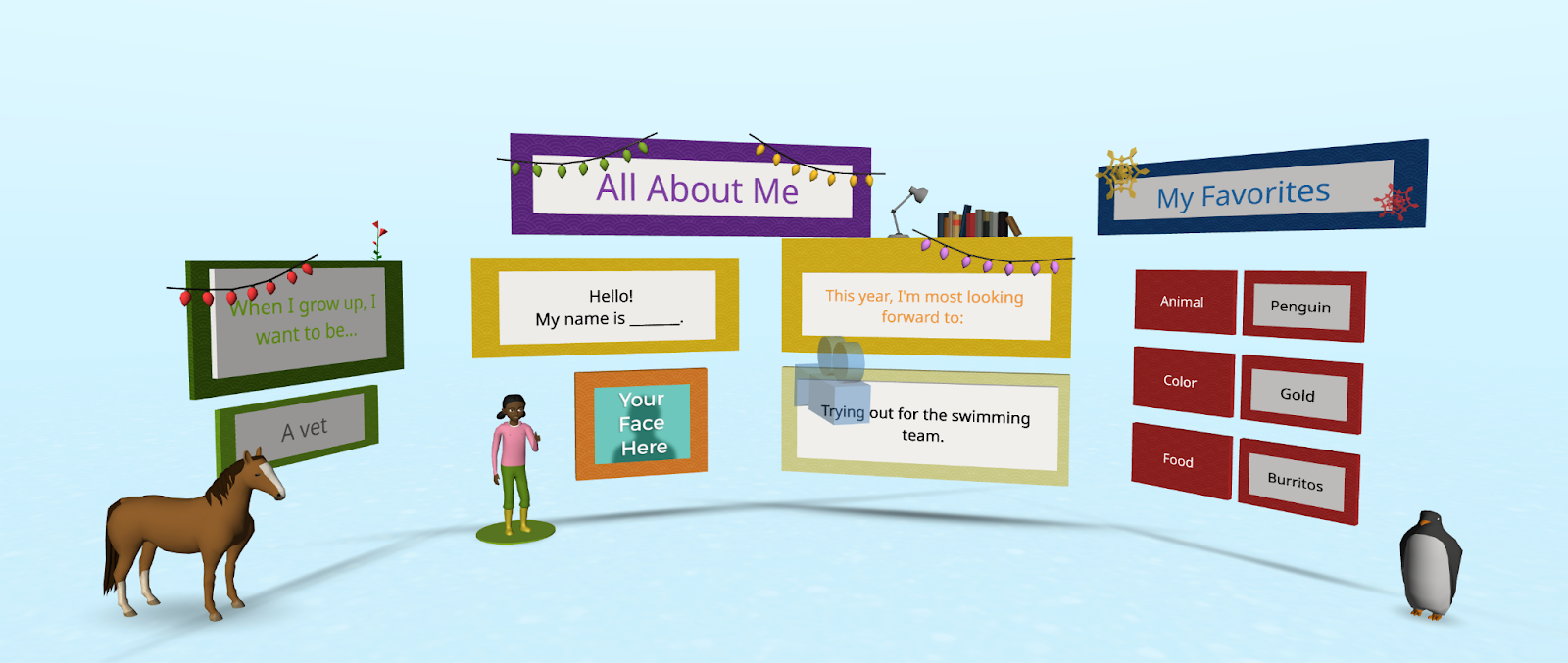
2) About Me: I love using the templates or giving students the option to create their own to design an About Me space. CoSpaces offers a great template to get students started and comfortable with learning how to navigate, change text, add, and animate characters by using this as a starter.
It leads to more excitement and creativity and is also a fantastic way to learn about our students and for them to learn about each other.
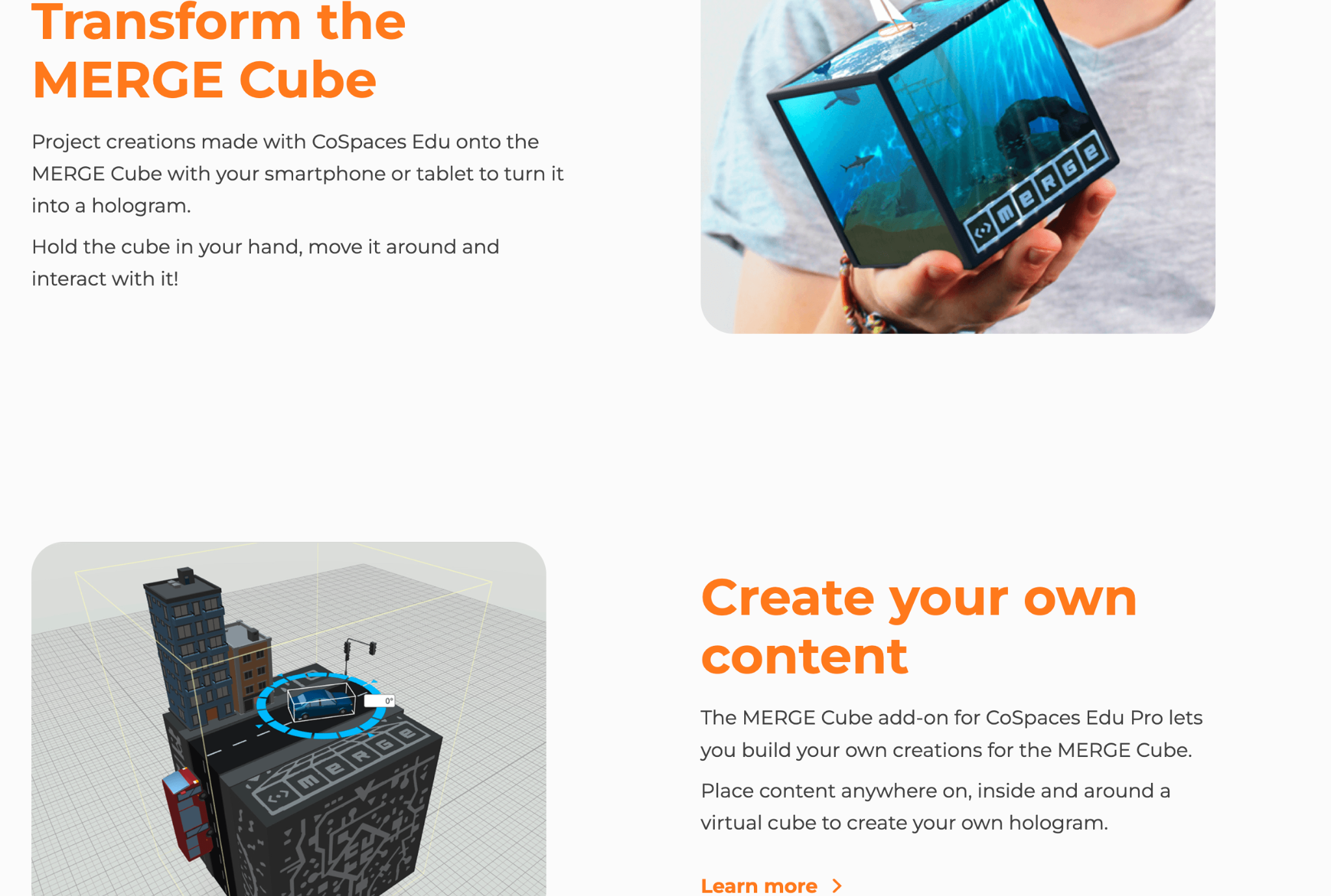
3) Interactive Storytelling: My students loved exploring the different projects in the gallery, and one way for students to use CoSpaces is to have them create an interactive experience. They can retell a story with a different ending or summarize something they have learned in class. To demonstrate, they can then include a variety of characters and other props to bring it to life. By diving into coding, they can really make it an interactive experience with animated characters and animals! Students can even create scenarios where they script and act out dialogues, recording their voices directly in the space. Also, give students the option to create on the Merge Cube, which makes interactive storytelling a real hands-on, fun learning experience!
4) Language Learning: A complete game changer for that Spanish class that pushed me to realize that I needed to bring in some new opportunities for them. Through a more immersive and collaborative learning experience with classmates, what a difference it made for language learning, student engagement, and increasing motivation! CoSpaces Edu offered all of that, and it was so much fun for them and for me! I was nervous at first, but it was a risk worth taking and one that paid off for them and their retention of the language. It also led to building relationships with classmates as students worked together to create their projects. Students had a different and more authentic way to practice vocabulary, build grammar skills, and engage in conversation in the virtual environment. And, they retained the content, which typically is a bit challenging because of the grammar, far beyond prior years!
5) Collaborate: Think about the grade level you teach and the content area. There are many ways to incorporate projects for students to create virtual models, or design prototypes, or bring a story to life! When CoSpaces Edu added the ability for students to work in groups, what a difference that made! Fostering collaboration is so important as we prepare students for the future. The ability to work effectively in teams is one of the most in-demand skills on the Job Skills Outlook from the World Economic Forum.
With the collaborative features of CoSpaces Edu, multiple students can work on the same project from different devices and from wherever they are! Not only can they learn about augmented and virtual reality and build essential skills, but it also boosts digital citizenship skills in the process. For collaborating, we can teach them how to manage a group project, assign roles, and problem-solve.
One of my other favorites is for a class project where all students are involved in a complex project where each student is responsible for a part of the virtual world. Think of a topic or a theme. Each student can create their space and then design one comprehensive experience that everyone can learn from and reinforce their content area skills through.
As educators, our primary goal is to prepare students for the future. CoSpaces Edu is not just another tech tool; it’s a platform that fosters the essential skills needed in the 21st century. It encourages creativity, critical thinking, collaboration, and digital literacy. By integrating CoSpaces Edu into your curriculum, you’re enhancing your students’ learning experiences and equipping them with the skills to thrive in an increasingly digital world. And, for extra fun, check out the goodies available, such as classroom posters, badges, and more! Use my code: COSRACHELLED or COSPromoRDP24.
About the Author:
Rachelle Dené is a Spanish and STEAM: What’s Next in Emerging Technology Teacher at Riverview High School in Oakmont, PA. Rachelle is also an attorney with a Juris Doctor degree from Duquesne University School of Law and a Master’s in Instructional Technology. Rachelle is an ISTE-certified educator and community leader and served as president of the ISTE Teacher Education Network. She was named one of 30 12 IT Influencers to follow in 2021 and one of 150 Women Global EdTech Thought Leaders in 2022.
Contact Rachelle to schedule sessions about Artificial Intelligence, Coding, AR/VR, and more for your school or event! Submit the Contact Form.
Follow Rachelle on Twitter(X) and Instagram at @Rdene915
**Interested in writing a guest blog for my site? Would love to share your ideas! Submit your post here. Looking for a new book to read? Find these available at bit.ly/Pothbooks
************ Also check out my THRIVEinEDU PodcastHere!
Join my show on THRIVEinEDU on Facebook. Join the group here
Part II: Getting students to think about their learning journey
Throughout the year, engaging students in ongoing reflection on what they are learning is essential. One of the five core competencies of social-emotional learning (SEL) is for students to develop self-awareness. It’s also vital for them to build self-management skills to work through challenges that can come with learning, reflect on their growth, and set new goals.
Whether students engage in discussions with classmates or use digital tools to share ideas in a comfortable virtual space, there are many options. We need to get our students to share what they are thinking and take time to reflect on their learning. We also need to model this reflective practice for them. This is essential for academic, personal, and future professional growth. To best prepare students for the future, ongoing reflection is vital.
With an opportunity to reflect, students are able to better understand their thought processes and interests. It helps them to identify areas where they can improve and recognize areas that they are strong in. Creating opportunities for students to share their learning with classmates and with us promotes collaboration, fostering a stronger sense of community in our classrooms. Together, we can create a supportive learning community.
Through the five competencies of SEL, we can help students focus on developing skills of social awareness and building relationships. Students will better understand their own thought processes and deepen their understanding of the content they are learning. However, getting students to share their thoughts and reflect on their learning can be challenging. Here are five ideas for encouraging students to reflect on their learning and share their thoughts.
1.Think-Pair-Share is an activity that doesn’t require much time at all to use and can be very effective. It encourages students to share their ideas, learning experiences, and thoughts with one another. The teacher can provide a short prompt or topic for discussion and then give students time to think individually before pairing up with a partner. Those one-on-one conversations can help students become more comfortable expressing themselves in class. After a certain period of time, each pair can share their thoughts with the class. This strategy will work well without digital tools; however, there are some options to explore.
2. Peer-pairing: To randomly place students in pairs, use a random name generator so students build relationships with their classmates. It is fun to have the names on the big wheel and place students into groups. I have used this also as a way to select the order of presentations. It helps to reduce a bit of the stress with wondering when you have to present and makes it a fun experience.
3. Class sharing: To help students build confidence, use a tool such as Padlet or Flip to have students post ideas on a collaborative board or create audio or video responses. Whatever way we have students “share,” it encourages them to engage in conversation and more active listening. Students learn about different perspectives on a given topic, which promotes the development of social awareness skills.
4. Snorkl is a new AI-powered tool that I found, and I really love the possibilities. Teachers assign an activity and it enables students to record their screen and speak about the work they have done. For example, how they solved a math problem, writing and reading in the language they are learning, describe an image, and so much more. It can be set to provide AI feedback with or without teacher approval. It was fun to try for the first time in my class. Look for more information in an upcoming post.
With the tools that offer audio or video options, it is a more authentic way to learn about the student. Teachers see and hear their students’ thought processes and can then offer more personalized and meaningful feedback to each student.
One extra is for teacher and student reflection. Learning about students’ thoughts about our methods, their comfort in the classroom, and more is important. Last year, I started exploring LessonLoop, which provides anonymous surveys that teachers can issue to students. It provides a rating with explanations based on student engagement, SEL, and comfort in the learning space and provides additional insights. Teachers can then take the information and use it to reflect on their practice and involve students by showing their input is valued through the use of these surveys. LessonLoop also has educators who will prepare some tips for teachers to try!
Whatever method or tools we choose to bring into our classrooms, the goal is still the same: Prepare students for the future with skills that enable them to be flexible and adapt to the changing look of education and work. Reflective practice is a key component of this future preparation!
Author
About the Author:
Rachelle Dené is a Spanish and STEAM: What’s Next in Emerging Technology Teacher at Riverview High School in Oakmont, PA. Rachelle is also an attorney with a Juris Doctor degree from Duquesne University School of Law and a Master’s in Instructional Technology. Rachelle is an ISTE-certified educator and community leader and served as president of the ISTE Teacher Education Network. She was named one of 30 12 IT Influencers to follow in 2021 and one of 150 Women Global EdTech Thought Leaders in 2022.
Contact Rachelle to schedule sessions about Artificial Intelligence, Coding, AR/VR, and more for your school or your event! Submit the Contact Form.
Follow Rachelle on Twitter(X) and Instagram at @Rdene915
**Interested in writing a guest blog for my site? Would love to share your ideas! Submit your post here. Looking for a new book to read? Find these available at bit.ly/Pothbooks
************ Also check out my THRIVEinEDU PodcastHere!
Join my show on THRIVEinEDU on Facebook. Join the group here
In April 2023, our family – comprising two dynamic teenagers, a mom in education, and a tech-savvy husband – embarked on a quest fueled by a simple yet profound question: ‘What great things can we accomplish with AI today?’ This question ignited our passion project, Kids Think Wide.
‘Kids Think Wide’: Born from AI
Our initial challenge was finding a name that echoed our vision and passion, particularly for art. We sought guidance from ChatGPT, which suggested names like ‘kidsthinkingdiversely.com’. However, seeking a more kid-friendly name, we settled on ‘Kids Think Wide’. This title perfectly aligns with our goal of expanding young minds through AI-driven educational tools. AI’s role extended beyond naming; it was instrumental in designing our logo, creating web content, and assisting in coding. Admittedly, AI solutions aren’t flawless – we’ve encountered coding limitations and often diverged from AI suggestions. In this creative process, we learned to embrace the journey and be patient, open to change, and always learning.
Crafting a Universe of AI-Generated Content
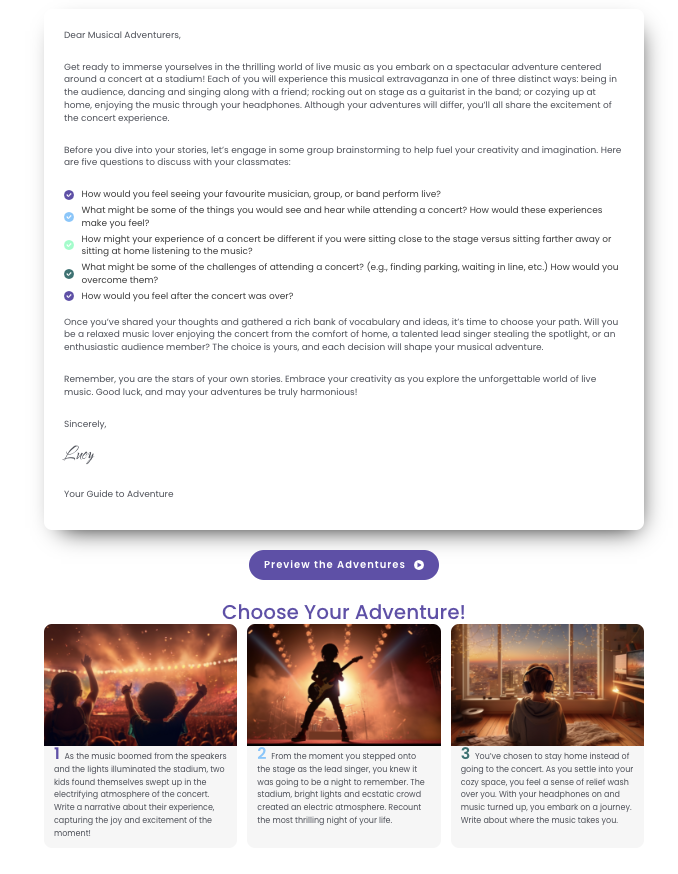
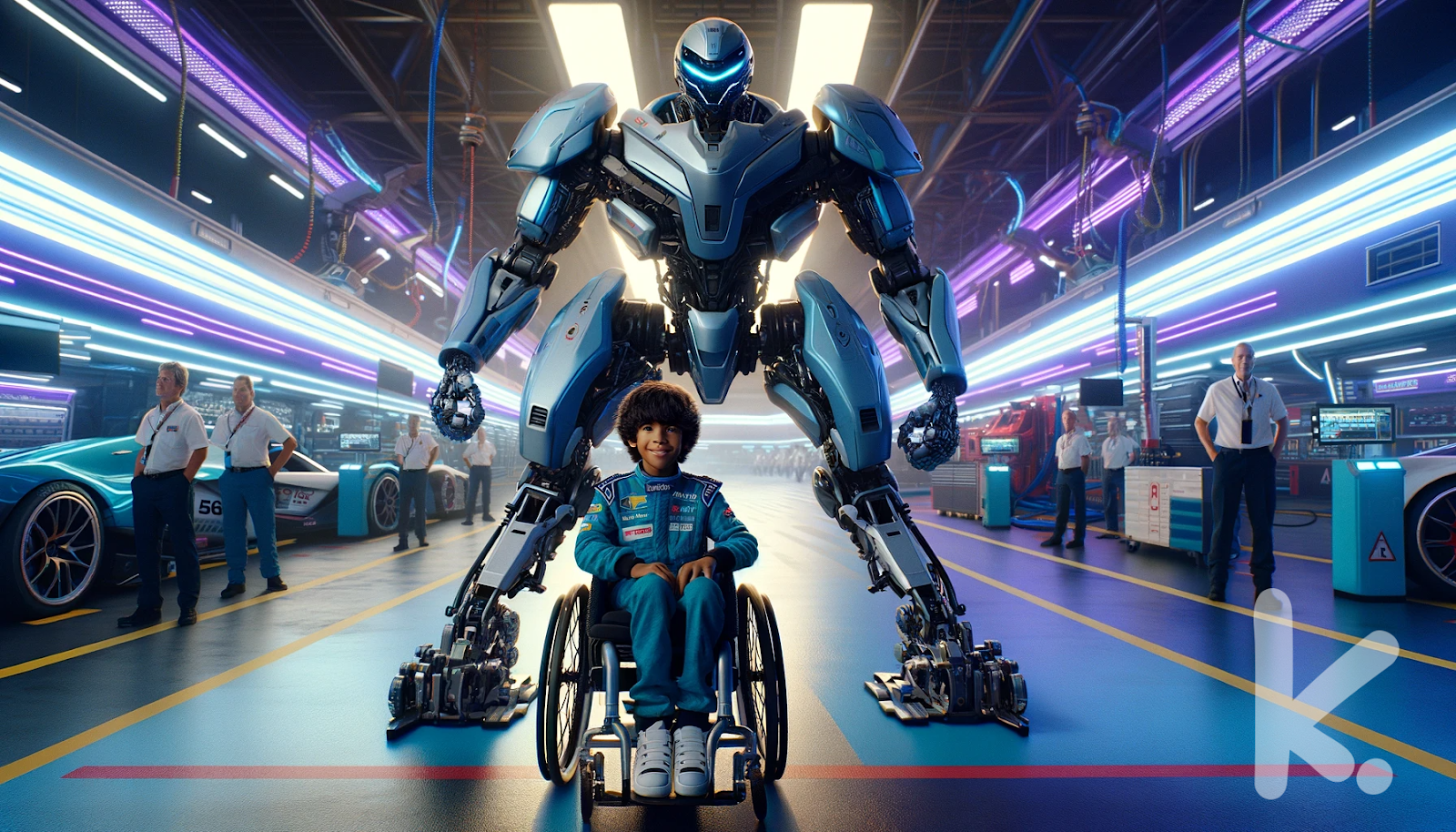
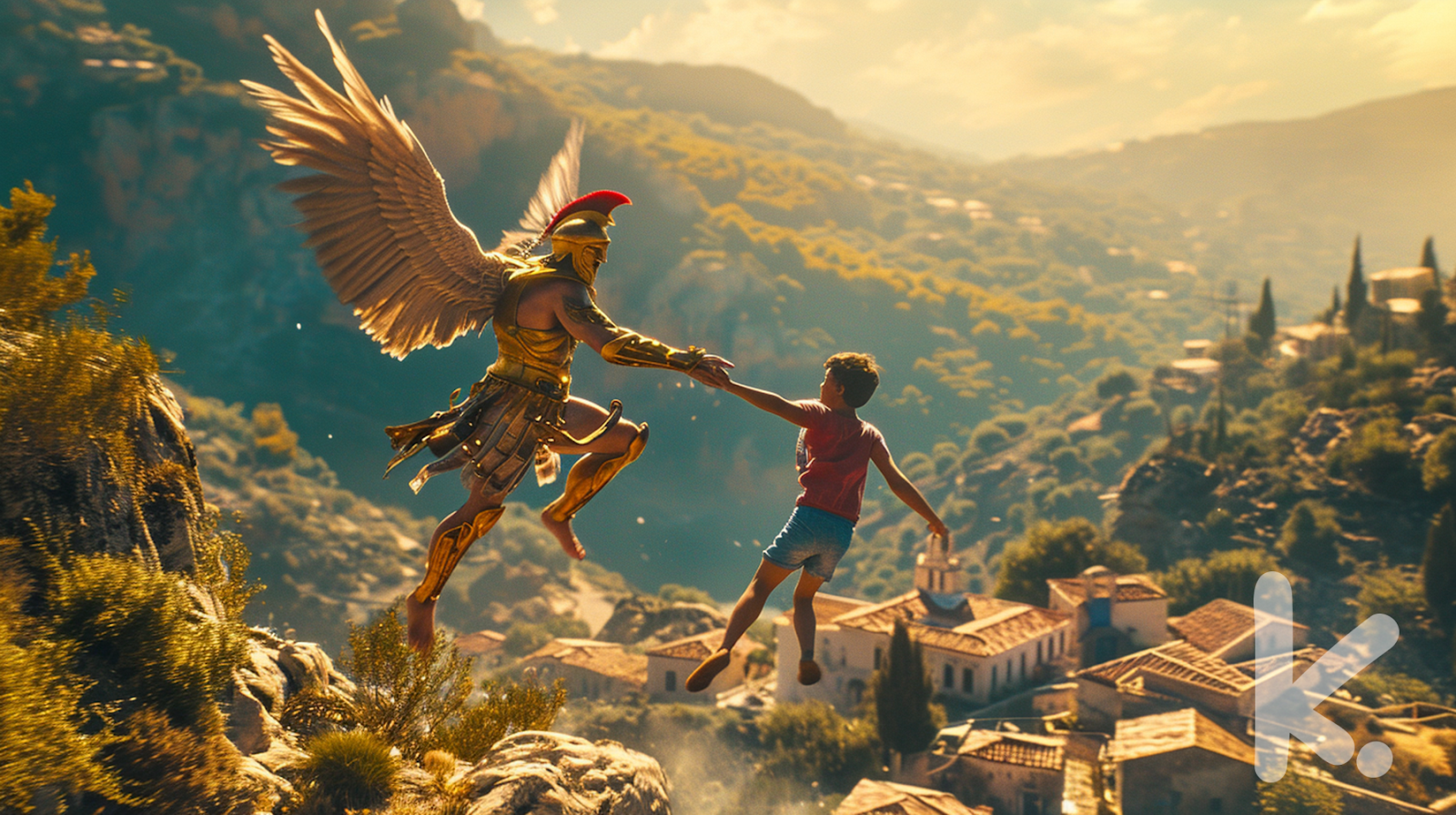
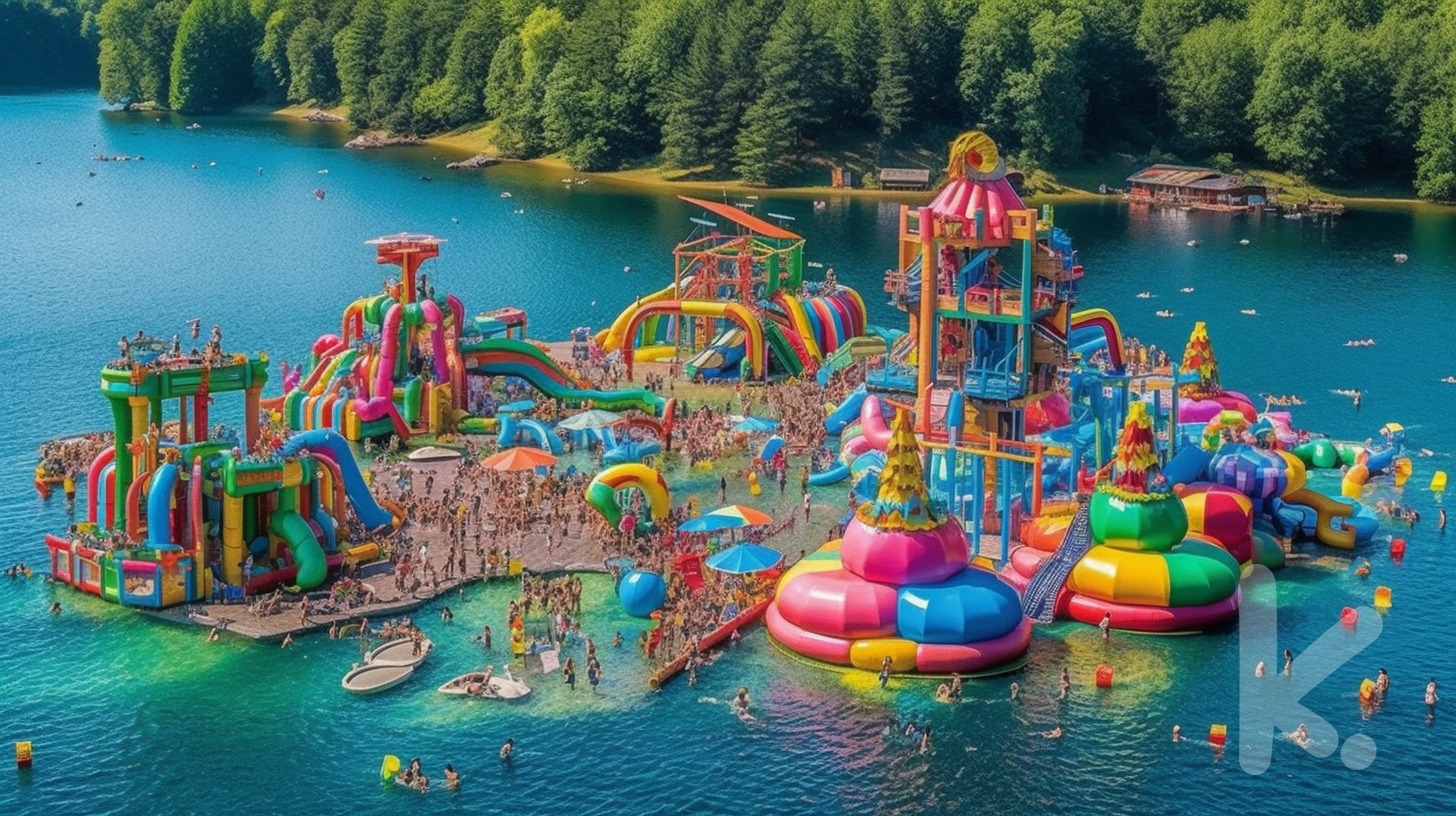
‘Kids Think Wide’ is dedicated to fostering a more equitable educational landscape. We are committed to representing everyone, promoting gender equality, and amplifying historically overlooked or unheard voices in engaging and fun ways! We’ve created over 10,000 AI-generated images and published approximately 400 on Kids Think Wide. A writing prompt and discussion questions accompany each image to help prepare and inspire students to write. Our unique offerings include ‘choose your own adventure’ stories. In these, students collaboratively brainstorm and build ideas for their narratives before selecting from 3 to 5 adventure paths to personalize them, such as:
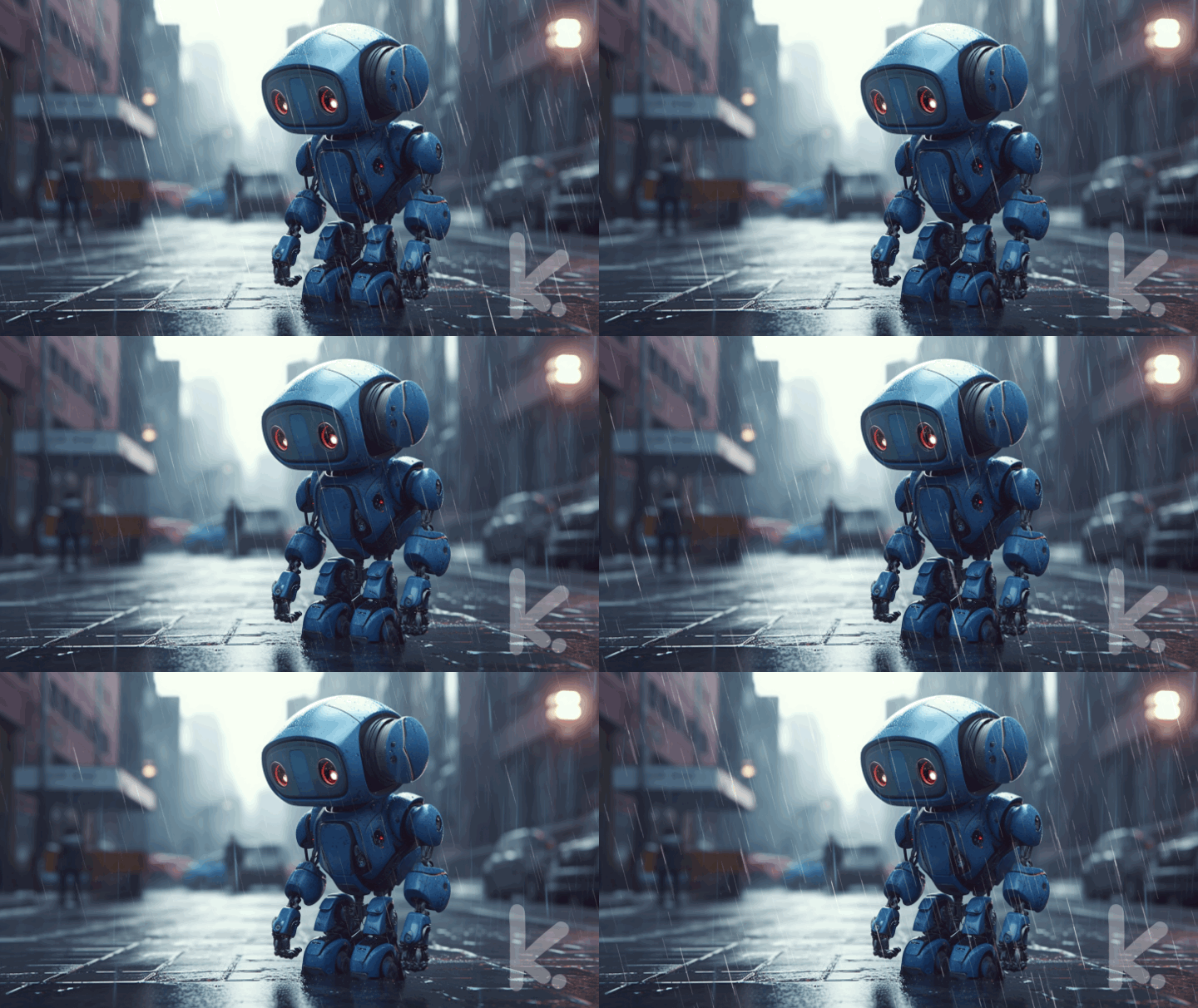
Additionally, we’ve leveraged the popularity of short-form videos, similar to reels and TikTok, using animated images, or ‘Sparks’, to captivate and spark enthusiasm for creative writing among students.
Our journey with AI also revealed the biases and limitations inherent in image generators. We’ve found it’s easier to create images that involve subjects that are very common online – celebrities, movie scenes, and well-photographed places but getting an accurate representation of a wheelchair can be more challenging.
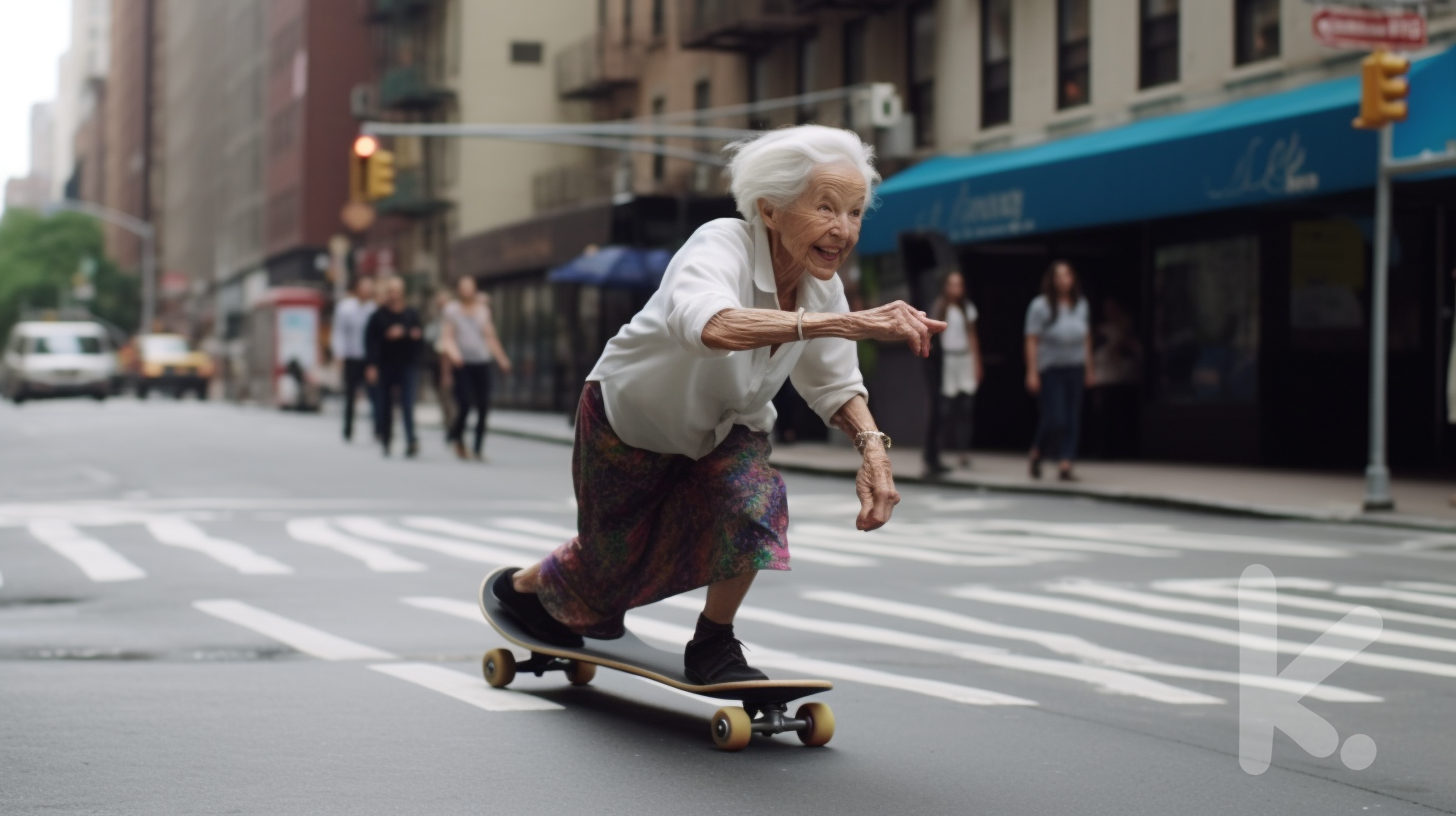
AI has allowed us to create scenes that challenge reality:
Journey through time, space, and into other worlds:
Create the fun, wild and whimsical:
The Evolution and Magic of AI-Generated Images
The last nine months have seen dramatic advancement in AI-generated images. The improvement in image quality, accuracy in prompt interpretation, and the ability to adjust specific image elements has been remarkable. Our journey through this dynamic domain has been an exhilarating blend of discovery and creativity. While perfecting an image is usually challenging and time-consuming, the results are frequently astonishing and rewarding. We start simple and slowly build on prompts. The arrangement of phrases and the specific words chosen play crucial roles. However, you can unlock unexpected and extraordinary outcomes through iteration, experimentation, and patience. It helps to know tokens (short phrases that often produce excellent results), e.g., playful mood, cinematic, low Angle shot, bokeh, or Chiaroscuro to name a few! On other occasions, it might require 30, 50, or even more re-rolls and remixes to create an image that genuinely captivates and is worth sharing.
While free tools provide a starting point, they often have limitations; investment in paid resources is usually necessary for more advanced or specific requirements.
As AI image generation rapidly evolves, we find ourselves exploring various tools. Midjourney stands out with its detailed control and often superior imagery, while Adobe Firefly is notable for its dedication to diversity and inclusivity. On the other hand, Dall-E brings a sense of whimsy to its creations. Each platform offers a unique experience. It’s not uncommon to initially admire an image, only to later discover anomalies like an extra limb or oddly placed fingers – the quirks of AI can lead to both amusing distortions and unexpected additions.
Engage with the AI Community
Our journey has shown us how important connecting with the AI community is. There are many skilled and helpful creators out there. We often turn to Twitter to engage with this community. It’s an excellent place for learning, sharing experiences, and finding support.
‘Kids Think Wide’ has evolved from a simple ‘what if’ conversation into a reality, thanks to AI’s extraordinary capabilities. This concept, unimaginable even nine months ago, has come to life through our family’s collective imagination and AI’s power. We’re excited to unveil more awe-inspiring images, thought-provoking writing prompts, and enhanced interactivity, all while staying at the forefront of AI developments. As ‘Kids Think Wide’ continues to grow, one thing is sure: the best is yet to come, with AI playing a pivotal role in our journey.
Thanks to Megs for the guest post
Rachelle Dené is a Spanish and STEAM: What’s Next in Emerging Technology Teacher at Riverview High School in Oakmont, PA. Rachelle is also an attorney with a Juris Doctor degree from Duquesne University School of Law and a Master’s in Instructional Technology. Rachelle is an ISTE-certified educator and community leader and served as president of the ISTE Teacher Education Network. She was named one of 30 12 IT Influencers to follow in 2021 and one of 150 Women Global EdTech Thought Leaders in 2022.
**Interested in writing a guest blog for my site? Would love to share your ideas! Submit your post here. Looking for a new book to read? Find these available at bit.ly/Pothbooks
************ Also check out my THRIVEinEDU PodcastHere!
Guest post by Dr. Amy Mathews-Perez, member of the Board of Directors for the Texas Council of Administrators of Special Education (TCASE) & a Director of Special Programs in a public school in Central Texas. Connect with Amy on X (formerly Twitter) at @drgrowtoknow and on Facebook at DrAmy MP.
While I know a few ladies named Grace, and they are all great ladies, the grace this blog is about is the NOUN. Our friend Merriam-Webster has many definitions for this word, but I’m going to combine a few of them so we can all be on the same page: Grace: a temporary exemption, the disposition or act of kindness, the state of being considerate, thoughtful.
Hopefully, each person reading this has experienced grace in ways that you can remember and still appreciate. I want to touch base with you about what I call a “mini-epiphany”; an idea that comes to me out of nowhere and brings me relevant insight that impacts multiple areas of my life. Figuring out that I am grateful for grace was one of these mini-epiphanies. To be transparent, I have very limited attention, and I am constantly pinging between tasks, thoughts, ideas, reminders, reflections, planning, and “what if” in my mind. As a part of this messy thought process, I recently became disappointed about how many friends’ birthdays, anniversaries, and other celebrations I have missed. Why did I miss them? Tons of reasons, all of which could be justified, including reasons like this: it was too late in the evening to call or text, the embarrassment of being late to celebrate, the forgotten or ignored reminder to do it, the failure (again) to put it in my calendar as a recurring event, and the list could go on. I was feeling guilty and telling myself that I am a less-than-stellar friend/sibling/coworker. I decided that late is better than never; late is better than the risk of the other person thinking I’m ignoring them or don’t care, so I texted a friend and celebrated a Twitter/X post that I had missed commenting on….and while this friend would never be mean or negative, she had every right to not respond to my text, make a joke about my lack of timeliness or just say, “Thanks.” However, within just a few minutes, this friend replied with this: “Thank you! 💙” It may seem silly, but that blue heart was forgiveness, appreciation, and kindness all wrapped into one emoji. That blue heart was grace being provided to me; it was grace I could see and feel.
After I took a few deep breaths and reflected on the wonderful blessing of this friendship, it dawned on me: How much grace have I been given that I haven’t seen? I am grateful for the grace I am given, both seen and unseen, known and unknown. I am grateful for the grace of friends and family that accept me and encourage me to be my quirky, forgetful, high-energy, low-memory self. I am equally grateful for the grace of people I may never meet or even see; grace that can include their choice to not respond to gossip or negativity that may involve my name, their effort to not point out every error I make – especially on social media, or the grace of their intention to support me, my work and my vision.
Being grateful for what you have may or may not be easy, but we all have visual reminders of reasons to have gratitude, such as not being the person who got COVID this time, not getting pulled over even though we know we were speeding, or watching our Parents age. By taking the time to first realize what “could be” that would negatively impact me and then reflect on why I have not endured those things, I was awakened to the many forms of grace. Life gets busy, and it is easy (natural, sometimes automatic) to take grace for granted. In writing this, I wanted to share that the time, energy, effort, and intention that it takes to tap into gratitude for grace for things known and unknown, seen and unseen, is worth the positive change it can make in your heart and mind. I am grateful for grace.
About Amy
Texas-born & raised, Amy is in her 32nd year of serving public education. General Ed. Teacher, SLP, Diagnostician, SPED Supervisor, Principal, Assistant Principal, and a Director of Special Education are roles she’s held. She is the CEO of Making Education Special for All (M.E.S.A), an LLC dedicated to training, consultation, and speaking engagements that revolve around providing information, motivation, and insights on why and how to make education special for all stakeholders.
Her passions are communication, joy, authenticity, and empowerment. “Life is short but our influence is never-ending,” and Amy is committed to connecting with others through service and collaboration. You can connect with Amy on X (formerly Twitter) at @drgrowtoknow and on Facebook at DrAmy MP.
Looking for PD for your school or keynotes for your conference? I provide in-person and virtual training on the following topics. If you want to learn more about and explore AI and ChatGPT, contact me to schedule! Rdene915@gmail.com or use the Book Me form on my website. bit.ly/thriveineduPD
**Interested in writing a guest blog or submitting a sponsored post for my site? Would love to share your ideas! Submit your post here. Looking for a new book to read? Find these available at bit.ly/Pothbooks
This will be the first post where I will share some different tools or resources to explore!
Each year, I like to take time and think about the digital tools we use in our classroom, the benefits, and how I might find new ways to use them. When I look to use technology in my classroom, I always start with the “purpose”Why” behind it. What will it help me to do better as a teacher? How can it help students to learn in more personalized or authentic ways? And what skills will students build as a result that traditional non-technology methods might not afford?
There are tools that I continue to use each year because they have added new features or they have integrated with other tools that we are using in our classroom. Here are six tools to check out as we start 2024! And one that is highly recommended to dive into AI in your classroom!
CoSpaces EDU is a virtual reality platform that became a favorite for some of my 8th-grade students this year. Whether creating a space in 360, designing a game, an interactive story, or an experiment, students will enjoy creating in VR and developing coding skills too. Another benefit is the Merge Cube add-on, which enables students to hold the space they have created in their hands! Students can even collaborate by working in teams to create a space together. With MergeEDU, educators can use the cube as an interactive tool to further engage students in learning about the earth, dissecting a frog, exploring a volcano, and more.
Gimkit, a game-based learning tool, has continued to be a favorite with my students because of the potential for increased content retention through repetitive questions and because of the different ways it can be played in the classroom. It enables students to develop strategies and have fun while learning. There are multiple ways to look at the student data and provide authentic and timely feedback. And there are always new modes to play, which helps to boost student engagement and gives us some laughter, too! Check out Blastball!
ISTE’s AI and STEM Explorations Network has created four free hands-on AI projects for the classroom guides, which are available for download from ISTE and GM. For elementary, secondary, electives, computer science courses, and a new guide on ethics, these guides offer various topics relevant to all content areas. The guides are available in English, Spanish, and Arabic.
Nearpod is a multimedia, interactive presentation tool that enables teachers to create engaging lessons that can include virtual trips and 3D objects. It offers lessons on topics such as digital citizenship, social-emotional learning, career exploration, English learner lessons, and professional development resources for teachers. Educators can create lessons with many options, including quizzes, polls, drawings, matching pairs, audio, video, and content from PhET Simulations, Desmos, BBC, YouTube, and more. Nearpod lessons can be done live in class or student-paced, and there is also the option for use as sub plans.
Wakelet is a content curation tool and so much more. I use it to curate blogs, videos, and other resources I want to access quickly to be a powerful tool for student learning. With Wakelet, teachers can provide blended learning experiences, use it for station rotations, have students create a digital portfolio, share class projects, create a scavenger hunt, and many other possibilities. It even offers the ability to record a Flip short video within the Wakelet collection. Educators and students can collaborate in a Wakelet collection and so much more!
Think about some of the tasks that might be taking up a lot of your time, or consider some issues or challenges you might be having. A few years ago, I noticed a decrease in student engagement and looked for ways to open up more choices for students to share their learning. Any of these tools can be suitable for addressing those concerns.
My Advice? Start thinking about your own personal goals and start with one thing. Try it and see how it goes, ask students or colleagues for feedback, and then make adjustments as needed.
Looking for PD for your school or keynotes for your conference? I provide in-person and virtual training on the following topics. If you want to learn more about and explore AI and ChatGPT, contact me to schedule! Rdene915@gmail.com or use the Book Me form on my website. bit.ly/thriveineduPD
**Interested in writing a guest blog or submitting a sponsored post for my site? Would love to share your ideas! Submit your post here. Looking for a new book to read? Find these available at bit.ly/Pothbooks

















 Learning as I go: Reflections & lessons learned