
Many conversations have been happening focused on artificial intelligence, especially over the past three years since the launch of ChatGPT. There have been many new technologies developed and advancements in education and work as a result of AI-powered tools. And now, something else is becoming part of the conversation. Have you heard about “agentic AI”? When I have spoken about it, the response has been that it sounds abstract or highly technical, and for some, it even sounds scary. It has become another buzzword to add to the AI-related vocabulary. Agentic AI represents a shift in what AI can do, and for educators specifically, how it can support teaching and learning in ways that go beyond chatbots and text, audio, and image generation.
Whether you teach kindergarten or high school, whether you feel confident with AI or you are just starting to explore it, agentic AI is something you’ll want to understand. Not because it’s an evolving area, but because it is beginning to reshape how educators think about their workflow, student agency, and classroom productivity.
So what is it? Why does it matter? And how can we use it meaningfully in our practice?
What Is Agentic AI?
Agentic AI is different than the tools we have become used to and probably use frequently. Most of the AI tools, such as ChatGPT, Gemini, or Claude, are in the category of generative AI. You provide a prompt, and these LLMs or other tools produce a response. These tools can draft, summarize, translate, and brainstorm, but they only work step-by-step based on your input.
How Agentic AI is different
Agentic AI refers to systems that can take on multi-step tasks, make autonomous decisions within given parameters, and carry out complex workflows with minimal human input. Rather than telling AI what to write, you tell an agent what you want to accomplish, and it decides and then takes the steps needed to get there.
I think of it like moving from having a powerful assistant to a collaborator who takes the initiative and digs into the research and the work.
Examples include AI that can:
- Analyze student work, identify patterns, and suggest grouping strategies
- Build a multi-week lesson that includes relevant standards, suggested pacing constraints, classroom goals, and more
- Draft emails, create slides, and prepare communication resources like newsletters or infographics
- Review data, generate insights, and highlight actionable next steps
Why Agentic AI Means for Education
The use of agentic AI, at least from my experience, has been about testing its capabilities, saving time, and becoming more efficient, which are beneficial for several reasons, but for one that I think is critical. The time saved can then be used to work with our students and colleagues, and to connect as only humans can.
Here are three ways that agentic AI can assist educators in our work
1. Automating the work that reduces our time with students
Teachers spend enormous amounts of time on administrative tasks and Agentic AI can reduce this load. An agent can help with scheduling, lesson ideas, generating resources for class instruction and more.
2. Supporting Differentiation and Personalization
Differentiation is important and it can take time to find the right ideas for every student. Agentic AI can analyze learning objectives, reading levels, standards, and classroom needs and then generate supports such as modified reading passages, tiered problem sets, alternative explanations for complex ideas, create sentence stems or vocabulary scaffolds, or suggest enrichment activities.
Rather than creating multiple versions of an assignment or assessment, teachers can leverage the agent to design or suggest differentiated materials and then use the time saved to support students more meaningfully.
3. Improving Digital Wellness Through Better Workflow
Digital wellness and balancing the use of tech are also common topics of discussion, especially with so much tech available. Agentic AI can support digital wellness when used purposefully. Instead of having students spend more time navigating apps, notifications, or endless digital distractions, an agent can streamline tasks and reduce digital overwhelm. Ask the agent to organize resources or create a structured plan based on a few ideas, then use the suggestions to build out a plan on your own.
Agentic AI Is Not…
Knowing what Agentic AI is and how it works is important. However, it is also important to understand what it is not.
Agentic AI is not:
- A replacement for teachers
- A grading automation system that removes human judgment
- A tool that should work without guardrails
- Something to hand to students without teaching digital citizenship and AI literacy
Instead, agentic AI should be a partner that is only used in combination with human oversight, reflection, and ethical boundaries.
This is where we, as educators play an essential role.
How to try Agentic AI today
Start with Your Workflow
Try an agent-based tool to:
- Organize weekly lessons
- Generate draft template emails (never include any personally identifiable information PII)
- Build slide decks or provide bullet points for slides
- Review data (remove PII) and summarize trends
I always suggest starting small. Think about one challenge or a “pain point” and then explore how an agent helps.
Use Agents for Planning and Support
Ask an AI agent to:
- Create a standards-aligned sequence for a unit
- Design project-based learning ideas
- Suggest or generate differentiated materials
- Identify vocabulary that students may struggle with
Always review carefully. Revise and personalize the outputs through your own experiences and specific needs.
Agentic AI is another change that we need to adjust to and maybe not fully embrace, but at least explore and understand what it is, how it works, and potential benefits or concerns. As with all technology, we have to keep everything focused on human-centered teaching, purposeful and intentional implementation, and setting clear boundaries.
If you have not yet tried agentic AI, take a few moments to see what it can do. I’d love to hear how it goes!
About Rachelle
Dr. Rachelle Dené Poth is a Spanish and STEAM: What’s Next in Emerging Technology Teacher. Rachelle is also an attorney with a Juris Doctor degree from Duquesne University School of Law and a Master’s in Instructional Technology. Rachelle received her Doctorate in Instructional Technology, with a research focus on AI and Professional Development. In addition to teaching, she is a full-time consultant and works with companies and organizations to provide PD, speaking, and consulting services. Contact Rachelle for your event!
Rachelle is an ISTE-certified educator and community leader who served as president of the ISTE Teacher Education Network. By EdTech Digest, she was named the EdTech Trendsetter of 2024, one of 30 K-12 IT Influencers to follow in 2021, and one of 150 Women Global EdTech Thought Leaders in 2022.
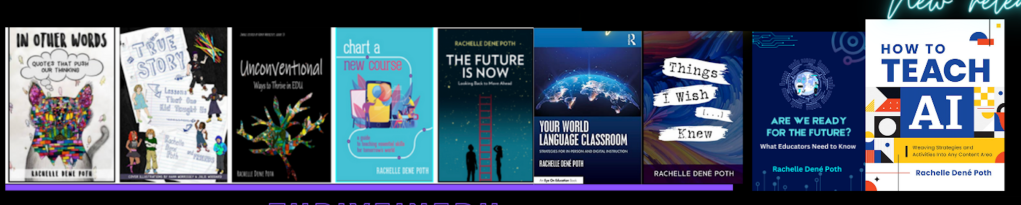
She is the author of ten books, including ‘What The Tech? An Educator’s Guide to AI, AR/VR, the Metaverse and More” and ‘How To Teach AI’. In addition, other books include, “In Other Words: Quotes That Push Our Thinking,” “Unconventional Ways to Thrive in EDU,” “The Future is Now: Looking Back to Move Ahead,” “Chart A New Course: A Guide to Teaching Essential Skills for Tomorrow’s World, “True Story: Lessons That One Kid Taught Us,” “Things I Wish […] Knew” and her newest “How To Teach AI” is available from ISTE or on Amazon.
Contact Rachelle to schedule sessions about Artificial Intelligence, AI and the Law, Coding, AR/VR, and more for your school or event! Submit the Contact Form.
Follow Rachelle on Bluesky, Instagram, and X at @Rdene915
**Interested in writing a guest blog for my site? Would love to share your ideas! Submit your post here. Looking for a new book to read? Find these available at bit.ly/Pothbooks
************ Also, check out my THRIVEinEDU Podcast Here!
Join my show on THRIVEinEDU on Facebook. Join the group here.
 Learning as I go: Reflections & lessons learned