Collaborate with Walter, Your AI Teaching Assistant

In collaboration with Noodle Factory, all opinions are my own.

As an educator constantly seeking innovative methods to enhance learning and teaching, my exploration recently led me to an exciting platform: Noodle Factory. When I find a new tool, especially when it comes to AI, I love sharing my experiences so that other educators can get started.

It has been fun exploring its various options and, in particular, its standout features, such as Walter+, the AI teaching assistant designed for grades K through 12. Walter+ is designed to help educators enhance and transform the learning experiences they provide for students. Noodle Factory makes it easy to get started by providing guidance, being available for questions, and even doing a demo! For any educator wondering where to begin with AI in their classroom, I definitely recommend exploring Noodle Factory and seeing the impact on student learning. Giving students a chance to learn about and interact with AI is important.

Why AI in Education Matters

The integration of AI in education is reshaping how educators deliver the content and impacting how students engage with the material. With purposeful use and the right pedagogical practices, AI tools can assist educators in various ways. It can help to personalize learning, automate grading, and create engaging, interactive content while complementing traditional teaching methods. Noodle Factory provides tools that are not just innovative but also intuitive and effective for use in the classroom. Especially as educators seek more efficient ways to deliver instruction and provide feedback to students, knowing how to leverage the power of AI is key. Noodle Factory offers innovative tools that enhance both learning and teaching processes.

First Experiences with Noodle Factory

When I first started with Noodle Factory, I was quite surprised by how easy it was to generate personalized learning resources for students. By uploading some of my teaching materials onto the platform, I saw how Walter+ tailored these resources into personalized learning experiences. I was impressed with its AI-driven dialogue system, which engages students in meaningful conversations and helps enhance their overall comprehension and retention of the content.

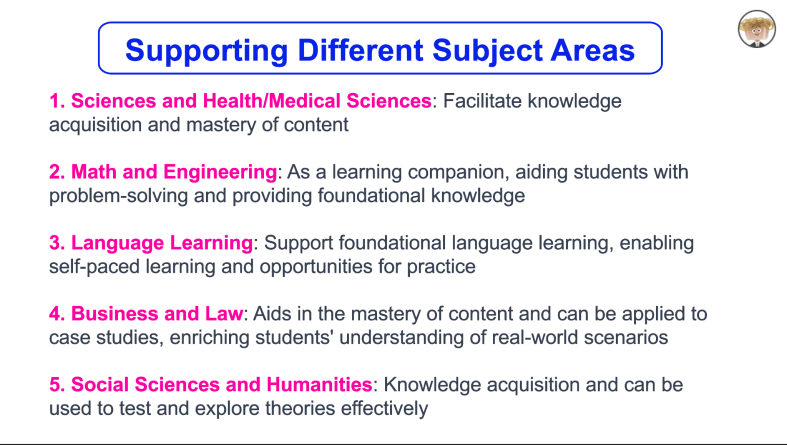
Using AI-powered tools such as Walter+ to create personalized learning experiences has been a game changer. I uploaded my teaching materials and waited briefly while Walter transformed them into interactive, engaging learning modules specific to my students’ needs. Noodle Factory’s ability to generate context-aware conversation flows and also, its ability to provide multilingual support enables educators to effectively reach students coming from different language backgrounds.
My favorite Noodle Factory Features

There are great features in Noodle Factory that will significantly impact teaching and students’ learning:

AI-driven Personalized Learning: Walter+ adapts to each student’s learning pace, helping to promote a more inclusive and effective learning environment.

We know that in order to accommodate students’ diverse learning needs, we have to understand where they are in the learning process and provide authentic, meaningful, and timely feedback. When this is possible in real-time, teachers can adjust, and each student can receive tailored educational experiences, which we know is crucial for learning. It provides students with instant, constructive feedback, which is key to fostering their academic growth.

Automated Grading and Feedback: We know that grading can take a great deal of time, especially when providing specific feedback for students. With Noodle Factory, educators can save time and provide students with immediate, actionable feedback, helping them understand their strengths and areas for improvement. This, of course, means that teachers can spend more time working directly with students, too!

Engaging and Interactive Content Creation Tools: With the various options available, I am able to boost student engagement. Noodle Factory’s tools enable me to transform traditional lessons into more interactive sessions that spark students’ interest and foster deeper learning. Student engagement, which can be a challenge, is now an area that we can boost because of the tools available to us.

Results: Positive Impact on Teaching and Learning!

By using Noodle Factory, educators will see a boost in student engagement and learning performance. Noodle Factory helps with our productivity through its features, such as automated grading and real-time insights into students’ progress. Being able to grab a quick glimpse into where students are in the learning journey is so helpful for targeting our instruction as needed. Gathering feedback from students is also important as it helps us to know what works for them and how to enhance their learning experiences. It also assists with providing a personalized approach through an interactive learning environment.

The real-time performance tracking and flexible assessment modules help teachers tailor their teaching strategies in real time to best meet individual student needs. Give Noodle Factory a try today and see the impact it makes in your classroom, for students, and for your work as an educator!

Interested in experiencing this transformative tool? Great news! I’m offering an exclusive code for my readers to try the premium plan (Educator Plus) on Noodle Factory. Discover how Walter+ can enhance your teaching and provide your students with an unmatched educational experience. And be sure to let me know how it goes for you!

P.S. Check out my podcast episode, where I chat with the Co-Founders of Noodle Factory Yvonne and Jim! Listen here!

About the Author:

Dr. Rachelle Dené Poth is a Spanish and STEAM: What’s Next in Emerging Technology Teacher at Riverview High School in Oakmont, PA. Rachelle is also an attorney with a Juris Doctor degree from Duquesne University School of Law and a Master’s in Instructional Technology. Rachelle received her Doctorate in Instructional Technology, and her research focus was on AI and Professional Development. In addition to teaching, she is a full-time consultant and works with companies and organizations to provide PD, speaking, and consulting services. Contact Rachelle for your event!

Rachelle is an ISTE-certified educator and community leader who served as president of the ISTE Teacher Education Network. By EdTech Digest, she was named the EdTech Trendsetter of 2024, one of 30 K-12 IT Influencers to follow in 2021, and one of 150 Women Global EdTech Thought Leaders in 2022.

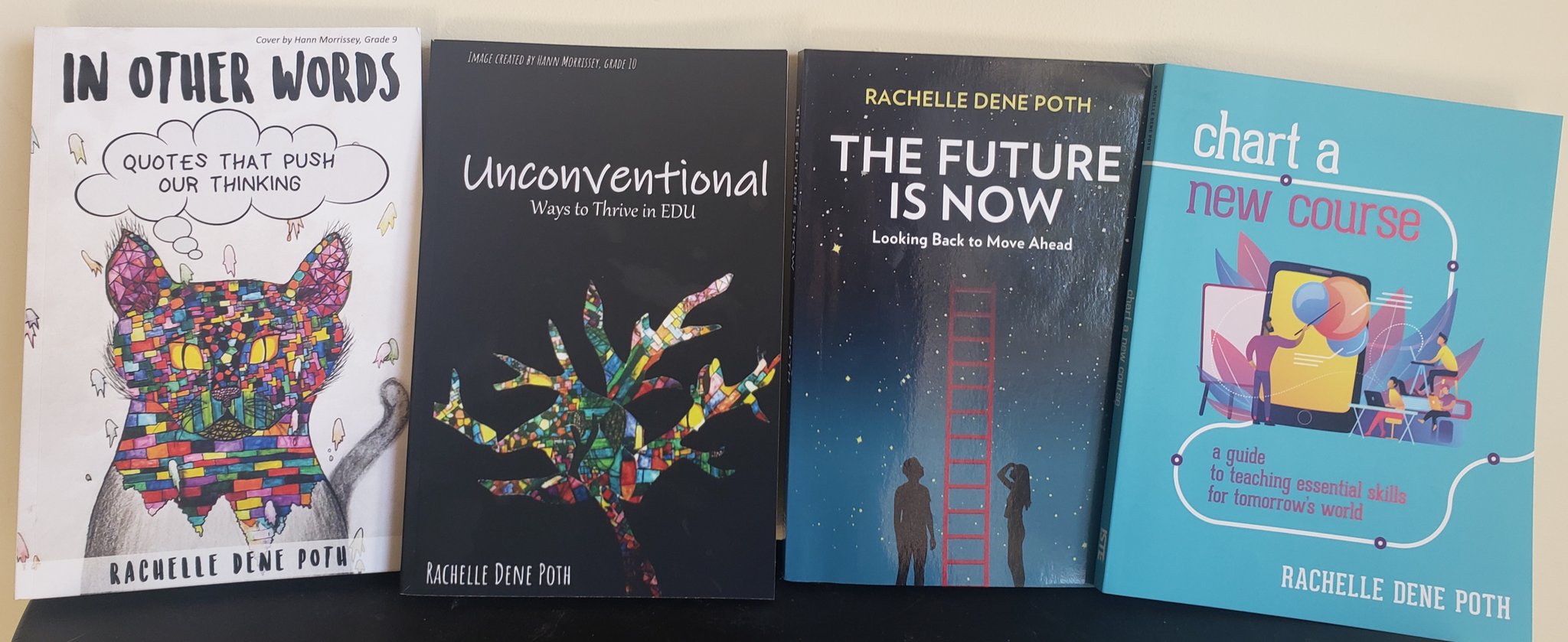
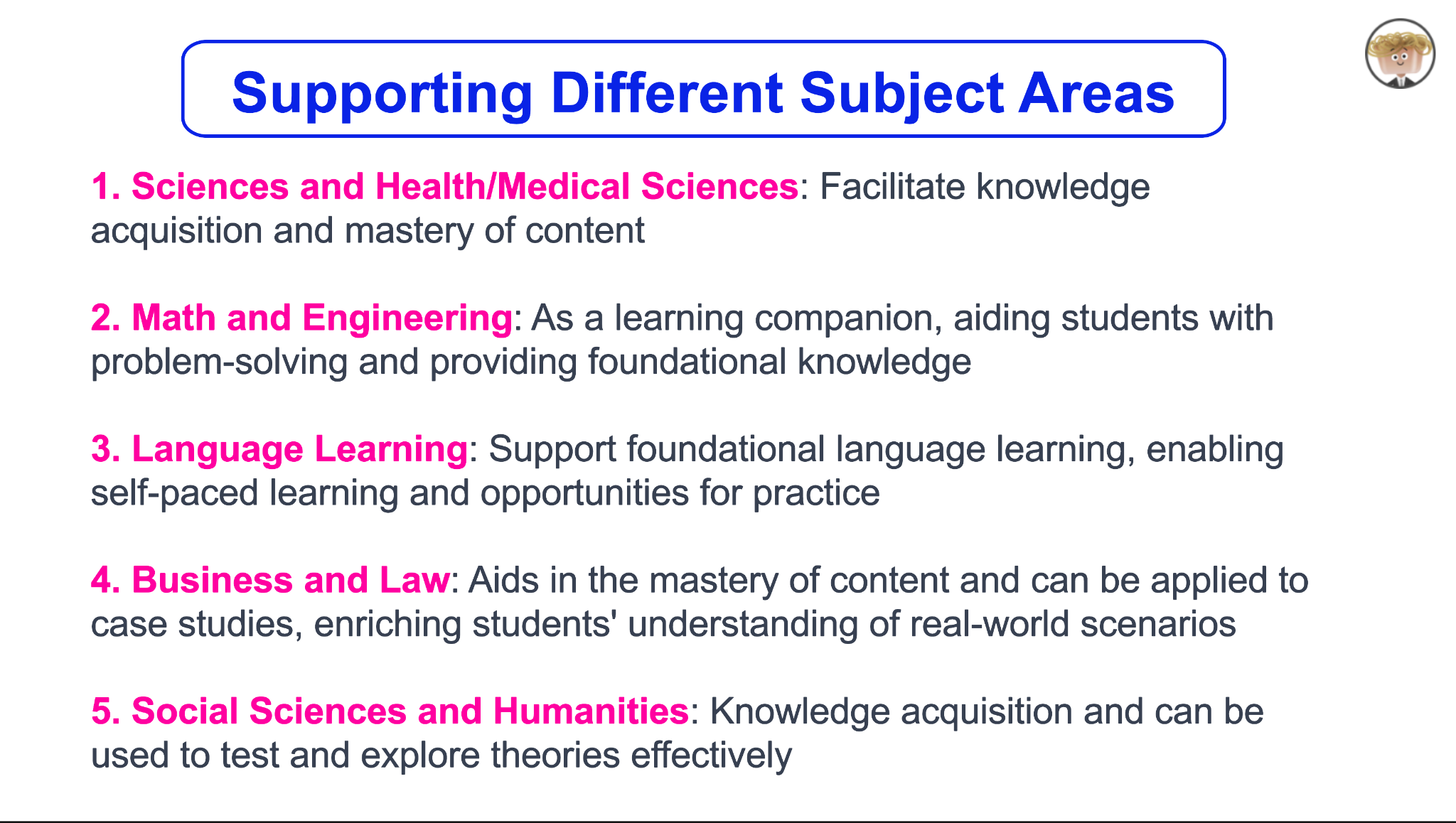
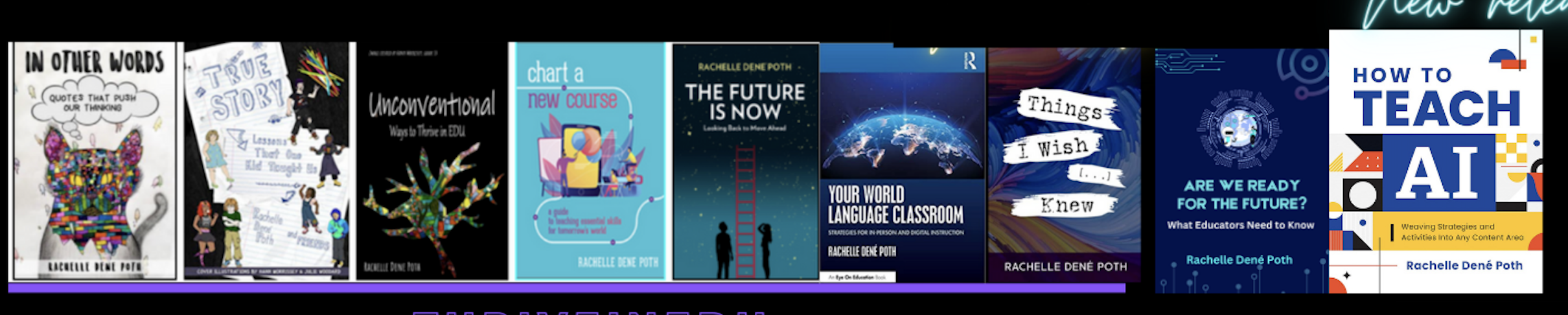
She is the author of nine books including ‘In Other Words: Quotes That Push Our Thinking,” “Unconventional Ways to Thrive in EDU,” “The Future is Now: Looking Back to Move Ahead,” “Chart A New Course: A Guide to Teaching Essential Skills for Tomorrow’s World, “True Story: Lessons That One Kid Taught Us,” “Things I Wish […] Knew” and her newest “How To Teach AI” is available from ISTE or on Amazon.

Contact Rachelle to schedule sessions about Artificial Intelligence, Coding, AR/VR, and more for your school or your event! Submit the Contact Form.

Follow Rachelle on Twitter(X) and Instagram at @Rdene915

**Interested in writing a guest blog for my site? Would love to share your ideas! Submit your post here. Looking for a new book to read? Find these available at bit.ly/Pothbooks
************ Also check out my THRIVEinEDU Podcast Here!

Join my show on THRIVEinEDU on Facebook. Join the group here.

Reflecting on AI in education

 I have been speaking and teaching about AI in my classroom for more than five years. I was curious to understand where we see it in the world and how to teach about it in our schools. I was also fascinated by the capabilities of AI for learning and in the world. 

I reached out to several educators and some students to find out what they thought about the changes we are experiencing in education, especially with these emerging technologies. There are, of course, concerns, ongoing conversations, and definitely excitement, although sometimes hesitant excitement, about what these technologies might bring to the world of education and work. 

Educator predictions

Nicole Biscotti @BiscottiNicoleEducator 

“AI has exploded on the scene and everyone is trying to figure it out at the same time which is exciting. A lot of educators are afraid that kids will use technologies like ChatGPT to cheat and have even banned its use. The reality is that kids have been cheating since the beginning of school and we have an exciting opportunity as educators to shape the narrative around this new technology. Biscotti plans to continue to learn as much as she can about how to use AI to better support her students. She says as an educator, “I feel that I am obligated to prepare my students for their future, not my past. These tools will only improve and they are here to stay. It’s imperative that kids are familiar with them and know how to use them or we risk sending graduates out into the workforce at a competitive disadvantage.”  

Dr. Michael Harvey @doctor_harvesPedagogical Prognosticator from Blenheim New Zealand

“AI/emerging tech has yet to really shape this past school year. Questions are being asked of what learning is and the role of assessment, but the actions to this change are yet to be realized.” He is thinking about /planning how to transition assessment tasks to a process rather than a product model. As for the future, Harvey thinks that “the next school year will bring pushback from the establishment and for those who want to progress in education a movement away from assessment of learning to assessment for learning and the role of AI to support student independence in learning.”

Alex Isaacs @mr_isaacs_mathEdtech Specialist from Long Branch Public Schools 

“Emerging tech has helped teachers gain time while assisting with lesson planning, quick questions, and providing feedback to students in real-time. It has also helped increase data analytic capabilities by providing insights into student performance trends and instructional practice.” He plans to delve more into emerging technologies and how they can benefit the teachers and students in his school district. By participating in multiple coaching cohorts, including GoGuardian and Pear Deck, he hopes to gain more insight into helping his colleagues with these platforms. As for the future, “the discussions surrounding the ethical use of emerging tech will continue next school year.” He believes that more edtech platforms will increase their integrations of AI-related tech to provide differentiated instruction and personalized pathways to every learner.” Check out his AI-themed Wakelet collection that he and colleague Lois Alston created.

Vicki Van Matre @MsVanMatreArtRmTeacher at Bluffton High School and  ISTE Certified Instructor 

Next year, Vicki will be teaching a class called the” 3rd class” for their new Education Professions pathway. One basis for this class is introducing technology’s role in the modern classroom. She was planning on discussing AI and how it could help the teacher but also discuss how to use it appropriately as a student. Her plans focus on involving students more in learning about ChatGPT by writing a lesson for them and having them make modifications where necessary. She also wants her students to experiment with a variety of technology to see “what THEY think would work best in the classroom.”  While she uses technology in her art room, she has not yet experimented a lot with DALL E to see if I want to use AI for any of my art classes. However, she believes that if she does choose to use it, most likely it would be with the senior independent study students to have them experiment with it. 

Student reflections

Holden, grade 10

“As soon as I was introduced to AI, I knew that it would change the world. The more I interacted with it, the more I understood its vast potential.” He shared that he “may or may not have used it to complete a few small assignments (Never in Spanish).” His uses were more as a study tool, in particular for reviewing for Chemistry. He would ask it to give a simple definition and an example and it worked perfectly to help him process the information and content better. He believes that “AI by itself is mediocre at best. However, when collaborating with humans, it can do amazing things.” As for benefits, he has an interest in starting an online store but has never really had the time and he hopes that with the help of AI to get a jumpstart this summer. “The school will look right through all the great things that AI is capable of and try to prevent it from being used completely.”

Lola, grade 11

“I believe that emerging technology has provided and created new opportunities for students. The new ideas and aspects of technology accessible to students now provide new experiences and can help to improve a student’s capabilities and knowledge about the subject they are studying.” Looking ahead, “I believe that by next school year, technology will continue to grow and emerge in new ways that will allow students to continue to have opportunities that will enhance their learning environment.”

Dimitri, grade 8

“AI and a lot of new tech has helped me with coming up with ideas for projects or providing me with a summary of a book, if I forgot something that I had read or I didn’t understand it.” As for the next school year, “I hope we will be allowed to use ChatGPT in class to help us understand books and literature more.”

With the rapid advancements in AI and emerging technologies, there are now incredible opportunities available to us and as we reflect on the past year, it becomes evident that AI and emerging tech have revolutionized education in ways we never imagined.

About Rachelle

Follow Rachelle on Twitter @Rdene915 and on Instagram @Rdene915. Rachelle has a podcast, ThriveinEDU available at https://anchor.fm/rdene915.

Looking for PD for your school? I provide in-person and virtual training on the following topics. If you want to learn more about and explore AI and ChatGPT, contact me to schedule! Rdene915@gmail.com

**Interested in writing a guest blog or submitting a sponsored post for my site? Would love to share your ideas! Submit your post here. Looking for a new book to read? Find these available at bit.ly/Pothbooks

How students access core SEL competencies at school

In Collaboration with @x2VOL 

What is Social Emotional Learning

Social emotional learning (SEL) is the process in which people develop interrelational skills that include self-awareness, social and relationship skills, responsibility, empathy, and more. Social-emotional learning has become an important piece of high school education, as educators see improved student outcomes because of an emphasis on SEL. More and more schools and districts are adopting SEL programs or tracking social-emotional development during a student’s high school career in order to prepare a student for future success whether that is in a university or the workforce. 

What Constitutes SEL

According to CASEL’S SEL framework, there are 5 elements that constitute social-emotional learning. 

  1. Self-awareness
  2. Self-management
  3. Social awareness
  4. Relationship skills
  5. Responsible decision-making.

Why is this important?

Social-emotional development is a vital part of a student’s upbringing. This kind of development impacts how a student shows up in the world, how they interact with their peers, how they approach school and jobs, and how they develop meaningful relationships. Social-emotional development is crucial in positive student outcomes because they are learning valuable life skills and concepts. Additionally, universities seek students who possess a broadened perspective on the world and developed self-awareness. 

How do students develop social-emotional learning? 

There are a number of ways students grow in these areas and they don’t come from just one thing! Many of these competencies are developed through school-related activities and programs. Five days out of the week and 7-8 hours a day, students are in school. They spend additional time with their classmates in after-school programs, sports, extracurriculars, etc. Tracking and encouraging social-emotional learning has become a priority for educators as they know so much of this comes from school or school-related activities. 

There are three overarching ways students engage in social-emotional development through school:

  1. Community service requirements, programs or clubs. 

When they become active members of their communities through service, students are able to see outside of their small world bubble, and understand needs and different ways of life. Through service projects, students work with their peers, local or even national organizations, service activity coordinators, and individuals they are directly serving. This exposes them to needs and circumstances outside their normal bubble widening their world view. They are also learning valuable skills such as teamwork, communication, collaboration, and respect. 

Many schools have a service requirement for graduation. Others highly encourage student involvement in the community and award it at graduation, while others have clubs and programs where students can engage in community service. 

  1. Work-based learning and internship programs 

In part-time jobs, apprenticeships, internships, etc. students learn valuable workplace skills but they also learn the soft skills of problem-solving, relationship-building, empathy, understanding, cooperation, and collaboration. These school-based programs connect students with a job or internship and then have regular check-ins and assessments to evaluate a student’s development. It goes beyond a student just showing up for a shift, they are learning valuable skills they can take into the workforce in the future. 

  1. Service learning classes, humanities, or religion classes

Some schools have dedicated service learning classes or incorporate service and service learning in a humanities course. Private schools often incorporate service and service learning in their religion classes as it ties back to their faith and the mission of the school to encourage spiritual formation in students. 

Service learning connects service to what students are learning in the classroom – this gives students context for their work and provides deeper connections beyond checking service hours off a list. They can see and understand the impact of their work and reflect on their experiences in a meaningful way. 

Measuring and encouraging development

These school-based programs ensure students are given the opportunity to experience growth on a deeper level. Success and development come when educators can see a student’s progress month after month, year after year. Tracking their experiences, reflections, and areas of growth is an important step in advancing social-emotional learning. 

x2VOL becomes an extension of schools’ student programs to ensure students can track their progress and educators have insight into student development. With x2VOL, students and administrators track and manage these experiences and reflections all online, in one easy-to-use platform. Click below to watch our 1-minute demo of how x2VOL works.

How x2VOL Works

**Interested in writing a guest blog for my site? Would love to share your ideas! Submit your post here. Looking for a new book to read? Find these available at bit.ly/Pothbooks

************ Also check out my THRIVEinEDU Podcast Here!

Join my weekly show on Fridays at 6pm ET THRIVEinEDU on Facebook. Join the group here

Close Your Eyes

Guest post by Brian Kulak @bkulak11

It’s a short list, but the older I get, the longer it becomes. 

Jeff Buckley’s “Last Goodbye.”

Pearl Jam’s “Release.”

James’s “Out To Get You.”

Regardless of where I am (except in the car; I’m not a lunatic) or what’s happening in my life, there are certain songs that make me close my eyes. A reaction both genuinely involuntary and intimately purposeful. A strange, dichotomous shutting off of one sense in favor of another, telling our eyes to sit this one out while our ears do the heavy lifting. 

And then there’s the goosebumps. The sensation, dubbed frisson, is triggered by a dopamine flood measuring 4-5 seconds associated with seeing, hearing, or experiencing something that triggers an emotional response. Interestingly, the brain elicits the same reaction to fear. 

I like to think about it as moment recognition. My conscious decision to dim everything else in an effort to brighten the experience of a deeply personal, infinitely resonant moment in my life. But in order for it to take hold, to really matter, I have to remember that moment, often at a random, unrelated or loosely connected time. 

So I do. 

And it works. 

Now, while I don’t walk around my school, eyes shut, meditating on moment recognition, the practice itself has made its way into my leadership. Instead of song lyrics, however, it’s small moments with kids, staff, and community. 

When a kindergartener found out he would be repeating this year, he said, “it’s okay. I love kindergarten, and Mr. Kulak is my best friend.” 

When I responded to a Twitter question about leadership catchphrases, a teacher chimed in that I often say, “I trust you” and don’t even realize it. Now, I do. 

During the promotion, a Tatem OG, whose final child was leaving, approached me sheepishly and asked for a hug. I told her to bring it in, and she cried while we hugged. 

Education, unlike any other profession, is a mosaic of these experiences. Without the predictability or isolation of other fields, we have daily opportunities to create and store these brief moments of zen. And the best part? They will always include other people.

So do it. Find small moments for which you close your eyes, literally or figuratively, and store them up. There will come a time, and it might be soon, when you want to close your eyes because of frustration or fatigue, and when you do, behind your eyelids and just within reach will be these moments of frisson. 

Close your eyes. 

**Interested in writing a guest blog for my site? Would love to share your ideas! Submit your post here. Looking for a new book to read? Find these available at bit.ly/Pothbooks

************ Also check out my THRIVEinEDU Podcast Here!

Join our weekly show on Fridays at 6pm ET THRIVEinEDU on Facebook. Join the group here

MTSS Part Two: Essential Components of MTSS

Guest post by Bonnie Nieves, in collaboration with Class Composer

In the previous blog, I outlined the first step of initiating Multi-Tiered System of Supports (MTSS), a framework designed to meet the needs of each and every learner in a school district. When your school community has completed its inventory of instructional tools and supports for academic, behavioral, and social-emotional learning, it is time to move on to putting these resources into action. 

The next steps include planning for three essential components of MTSS: 

  • Instruction that includes academic, behavioral, and SEL learning opportunities for all students.
  • Assessment tools that measure the effectiveness of this instruction.
  • Ensuring that your master schedule has space for per diem support for students.

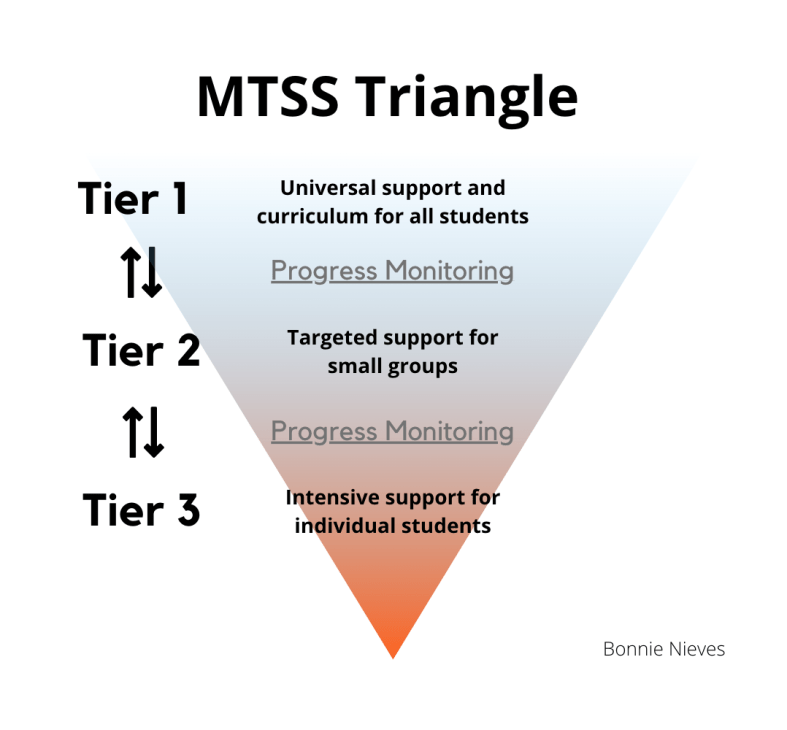
MTSS is typically represented as a pyramid with Tier 1 universal supports being the foundation. It can be accurately represented as a triangle or funnel. 

All students receive universal supports and transition between tiers 1, 2, and 3 based upon progress monitoring data monitored according to a reliable universal tool at predetermined intervals. These tools do not need to be school-wide standardized tests. According to the American Institutes of Research (2021), high-fidelity screening is universal, accurate, and conducted at least quarterly.

Most students will remain in tier 1, some will transition to tier 2, and fewer will move to tier 3. If a school community finds that a large number of students are in need of tier 2 support, it would be prudent to investigate the evaluation tools and quality of the universal curriculum being used.

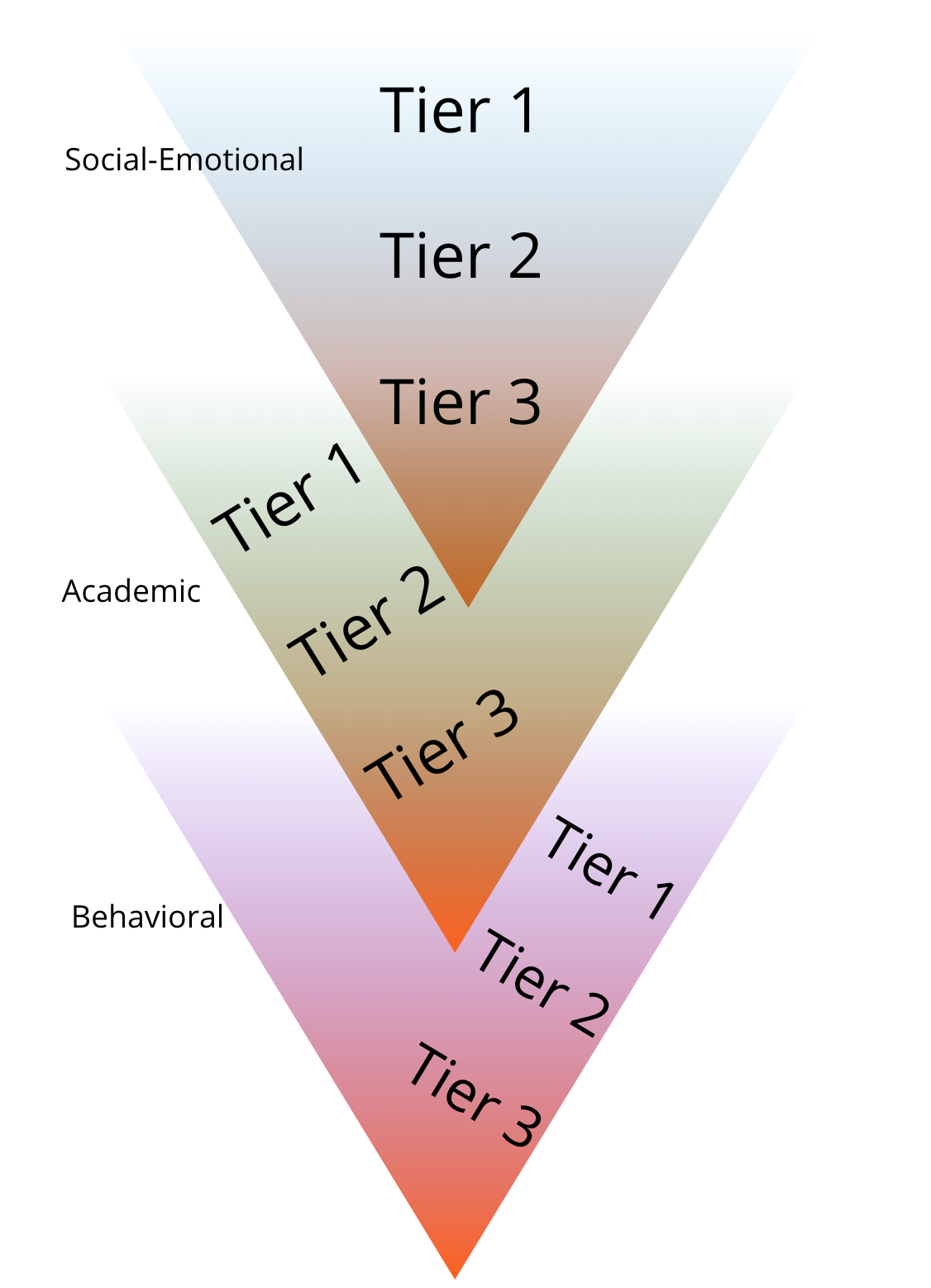
Now, envision a system of three triangles, one for each indicator: academic, behavioral, and SEL. Students may be at any of the three tiers for each of the three instructional areas (academic, behavioral, social-emotional) at any one time. For example, a student may be receiving tier 1 instruction for academics, tier 2 targeted support for behavioral instruction, and tier 3 for social-emotional instruction.

When teachers work with all of this information, academic, behavioral, and social-emotional, it can require a great deal of time and organization. Providing for all students is essential and each of these represents important data points that teachers need to focus on in order to provide the best for students. However, there needs to be a more effective and efficient way to do this.

MTSS and Class Composer 

Class Composer provides everything that teachers need to be able to monitor student progress and is readily accessible to anyone, at any time. It enables all teachers to access the information they need about each individual student when they need it. Easy to track and record student growth toward individualized goals.  Simplify how you manage all the assessment data collected! With progress monitoring, teachers can easily track student progress and provide the right supports.

Having access to all this information in one space enables teachers to create a supportive learning community for students. These teacher-student connections lead to the development of the essential relationships that need to exist for all students to be successful.

Give Class Composer a try today using their sandbox. You will experience a simpler, more streamlined experience when in the easily accessible, data-driven platform that promotes student academic achievement and the development of essential SEL skills.

Head to Class Composer to learn more!

Coming up next:

The final part of my MTSS blog series will elaborate on two essential components: assessment tools and instructional resources. Assessment tools that can help your school community provide common experiences without impacting teachers’ ability to use Universal Designed for Learning (UDL) planning tools. Instructional resources for each of the three tiers for academic, behavioral, and social-emotional instruction.

About the Author

Bonnie Nieves is the author of “Be Awesome on Purpose” and has over a decade of experience as a high school science teacher. She has a Master’s Degree in Curriculum, Instruction, and Educational Leadership. Her passion for creating immersive and authentic experiences that fuel curiosity and creating student-centered, culturally responsive learning spaces that promote equity and inclusion has led her to establish Educate On Purpose Coaching.

In addition to being an award-winning educator, Bonnie works to ensure equitable and engaging education for all through her work as a copy editor at EdReports and Classroom Materials and Media reviewer for The American Biology Teacher journal. She serves on the MassCUE board of directors and enjoys connecting with educators through social media, professional organizations, conferences, Twitter chats, and edcamps. Bonnie is a member of the National Association of Biology Teachers, the Teacher Institute for Evolutionary Science, and the National Science Teaching Association. She encourages you to connect with her on Twitter @biologygoddess, Instagram @beawesomeonpurpose, Clubhouse @biologygoddess, and LinkedIn.

Please visit www.educateonpurpose.com for information about her current projects.

**Interested in writing a guest blog for my site? Would love to share your ideas! Submit your post here. Looking for a new book to read? Find these available at bit.ly/Pothbooks

************ Also check out my THRIVEinEDU Podcast Here!

Join my weekly show on Fridays at 6pm ET THRIVEinEDU on Facebook. Join the group here

This is hard

Guest post by Deidre Roemer, originally posted on her site.

This is hard.  I was very tempted to have that be my entire post as that is how so many people, including me, are feeling these days.  I am always very solution focussed and generally very positive.  That hasn’t changed, but I am trying to adjust how I approach solutions and celebrations.  I am trying to listen to more, acknowledge that this is hard, recognize amazing work frequently, encourage everyone to take several deep breaths, and then offer as much support as I can to help. I have also been reaching out for help from my incredible support system. I need it. This is hard for everyone.

Our community has been asking questions about how we are supporting the mental health of our students right now.  It’s a question we should be asking every day all year long whether we are in a pandemic or not, but this time has undoubtedly brought the concern to the forefront more than ever.  As I compiled the list of what our team has done over the last several years to support learners’ mental health, it was staggering to see how much we have added and embedded across contexts.  We have added licensed therapists to each school site that see learners through their insurance and help families who don’t have access to insurance apply for it.  Some of those therapists also co-teach in classrooms and have office hours for staff so they can problem solve how to best help learners.  We have classroom teachers all over our district embedding social-emotional learning lessons and Mindfulness into daily instruction.  Our teachers spend a lot of time building relationships with our learners and offering them opportunities to build relationships with one another.  We have a school counselor, social worker, and/or a school psychologist at each school to work with staff, learners, and families.  We have Hope Squads at all our secondary schools so our learners have peer to peer support. 

Our professional development has also included training over the last several years in understanding trauma, culturally responsive practices, restorative practices, empathy and design thinking to solve problems, Zones of Regulation, Universal Design for Learning, innovative classroom practices, and many more.  The idea is that staff members (including teachers, administrators, secretaries, assistants, recreation staff, facilities, and food service) have a wide array of tools to use in our schools to understand and empower all learners.  They often get to choose sessions that are important to them or suggest topics on which they would like professional development as we want all staff to feel empowered in their work.  We have also tried to build a lot of support for our staff through coaching as they need to feel our support to make it all work.  

Now, we are trying to make education work in the middle of a pandemic.  Our learners are all virtual right now.  We are anxious to see them back in school and were optimistic a few weeks ago that we could start bringing them back a few days a week until our health metrics took a turn for the worse.  We meet regularly with our local health department to discuss safety and are furiously planning safety measures and logistics for the time when we bring our learners back into physical schools.  In the meantime, our recreation department has opened camps for elementary students and students with special needs that families who need care and/or support with virtual instruction can access.  The camps can be kept small and can spread out across large spaces while providing a needed resource for some of our families in the safest way possible.

Our teachers are more stressed than normal.  Our families are more stressed than normal.  Our learners are more stressed than normal.  Our administrators and coaches are more stressed than normal. Everyone is feeling disconnected from one another.  The unpredictability of the current situation is overwhelming for all of us.  The length of time this has gone on with no foreseeable end in sight is making it even more challenging.  We are also headed into the cold and flu season with the weather getting colder, which means fewer opportunities to be outside.  We have all had to adapt and do it quickly. It can be done, but this is hard.  It is okay to say that out loud and recognize it.  

I am really proud of the work we have done to shift the learner experience over the last several years, which is serving us well in virtual instruction.  It does not make this less stressful on our team, but many of them have been adapting and shifting for years so they have tools to do it. We have been very purposeful in finding ways to meet teachers and administrators where they are and encourage them to make small steps that add up to big ones.  As a district leadership team, we have tried to share the message that we are here to support our schools in any way we can to empower our learners to be ready to live life on their own terms when they graduate from our system.  We are now forced to make shifts at warp speed and shift more frequently than we would ever normally ask people to do. It means instead of just support to grow as professionals; we had to start thinking creatively about how to take some things off their plates.    

Our teachers have the option to teach from home or school during virtual instruction as we trust them to know what is best for them. We have built more planning time into the day at each level and shifted our professional development days to be planning and self-directed time for teachers.  Purposeful professional development with choice for teachers is still a key element of our strategic plan, but that needs to look different right now.  Instead of planning required sessions for all staff to attend, we shifted to self-paced courses that teachers could choose from and complete at their own pace and time. They could also choose not to select one at this time if they didn’t feel it was something they could take on.  We will circle back to those staff later and build professional development support for them when they are ready for it and as they need it throughout the year.

We have encouraged our administrators to give our teachers permission to engage learners differently and focus on their interests.  Academic content is an essential part of our work, but we can spend more time connecting and embed content as we go.  In a collaboration session during emergency remote teaching last spring, a staff member shared how a learner went to work with his dad each day and spent a huge portion of one day on Facetime with his teacher showing her his community and what he had learned about his dad’s job.  Others in that same session shared similar stories apologizing that they weren’t doing anything “academic”. My response was that what they were doing was building a sense of belonging and an academic mindset, which IS essential to academics and life success.  We worked all summer to be ready for virtual instruction that was more robust than what we were able to do in emergency remote teaching last spring, but that doesn’t mean it can’t still be focused on the whole child and embed time to connect as people.  Teachers can find a balance synchronous time with some asynchronous time to meet the needs of learners. They can use choice boards, complete planned activities, write reflections, or work on long-term projects during the time they are asynchronous.  They know their families and learners best, and we trust them to make the right decisions on finding balance.

We always want to hear feedback from our learners, staff, and community as it allows us to know what we are doing well and where we need to improve.  We have sent out an employee engagement and parent satisfaction survey twice a year and learners complete a social-emotional learning survey so we can gauge how they are feeling about the development of their own skills in self-regulation, social awareness, classroom effort, growth mindset, and curiosity for the last several years.  This year, we had the opportunity to offer different surveys that were much shorter for staff and families.  While we still needed their feedback, we also needed a quick and easy survey for them to complete that gave us fast results so we can adjust resources and support.  We added a wellness survey for our learners and do empathy interviews to ask them directly about how they are doing, if they are connected to adults and peers for support, and what they need to feel successful. 

We have encouraged our principals to think about a shift in teacher evaluation as well.  Our teacher evaluation process is intended to be one of self-reflection wherein the teacher sets a student learning objective for the year and a professional practice goal.  The observations should be an opportunity to collect evidence towards those goals with time to check-in with the teacher to help them celebrate success and adjust the goals throughout the year.  We have not always approached teacher evaluation that way but have been trying to move to a more reflective process over the last year.  We get to take this unusual year to accelerate that process so observations can be done in short one-on-one meetings during which teachers can share the evidence they have collected about their own their own practice to share with us.  We want to take the pressure off the formal nature of teacher observation but still get at the intent of the cycle of self-directed, continuous improvement in a way that also gives us more time to connect individually with each staff member.  We have some schools trying this out in the next couple of weeks. I am anxious to hear how it goes and to find out if the change alleviates some stress for administrators and teachers.

Our teachers also had the opportunity to meet as grade levels and departments before school started to share ideas and create lists of resources they thought they would need to make this all work.  We have ordered thousands of whiteboards, music kits, art kits, sensory tools, apps, and online subscriptions. We want our learners to have access to instructional materials in addition to technology and hotspots at home.  We trade reading books and give out learning kits once a month in a drive-up system at most of our schools. We also added many supplies to schools as students won’t be able to share materials with one another as easily in classrooms once we are back.  We’ve added some new and adaptive resources for teachers that all still align with our strategic plan but make the work more doable in a virtual or distance learning.  Teachers continue to send us requests regularly as they plan engaging activities to do at home in the next few weeks.  Sometimes the requests make me wonder what will come next, but mostly they make me excited that our learners are still having interactive, hands-on opportunities in our virtual world.  

This is hard.  Saying so doesn’t make it any easier, but it does create space for us to rely on each other to get through it.  I want all our staff, learners, and families to know that we see them.  We see the efforts they are putting in each hour of the day.  We see that they sometimes need us to support them in new and different ways.  We see that they may feel overwhelmed by the world right now and sometimes need some space to feel that.  We see that we need to find even more ways to connect and listen to them.  Mostly we see that they are all doing the best they can each day, despite everything that is thrown at them, to always keep what is best for children at the forefront.  I love this quote by Todd Whitaker, “The best thing about being a teacher is that it matters. The hardest thing about being a teacher is that it matters every day.” Not only does teaching matter, but the people who do it each day matter too.

I am a proud mother, wife, and educator dedicated to creating experiences for all learners that are authentic and connect their time in school to what and who they want to be well beyond high school. I serve as the Director of Leadership and Learning for the West Allis- West Milwaukee School District in West Allis, WI. The thoughts I share here are my own and my reflections on our work. View all posts by Deidreroemer

*********************

**Interested in writing a guest blog for my site? Would love to share your ideas! Submit your post here.

Looking for a new book to read? Many stories from educators, two student chapters, and a student-designed cover for In Other Words.

Find these available at bit.ly/Pothbooks  

3  books.png

Explore New Ideas and Learning With Buncee

Explore New Ideas and Have Fun Creating With Buncee!

Now that the school year has started and for many, some are moving toward the end of the first grading period, you might be looking for some new ideas to try. Don’t worry, once he definitely has you covered when it comes to finding new ideas to use in your classroom. Whether you check out the many visually engaging tweets of Buncees created and shared by educators from around the world. Educators are posting how they are using Buncee in their classrooms with their students or in their roles as administrators and tech coaches. You should also explore the many templates available or ideas in the Ideas Lab, you can find exactly what you need.

Join the Buncee Educator Facebook community Check out some recent Idea o’clock live sessions that were held. The past couple of weeks had Shannon Miller, Amy Storer and Karina Q sharing ideas for journaling and time capsules, tips for instructional coaches and interactive Buncee journals and OneNote.

Sometimes we just need a few ideas to get started with and then before you know it, we come up with a bunch of ideas and what I find even more often, our students come up with many of their ideas as well. One that I start with in my Spanish and STEAM classes is creating an About Me. I love creating a new one each time with them! We are just getting started this week and I cannot wait to see what they create!

More Ideas to Try

With many schools looking to hold events for families virtually, why not try using some of the templates available within Buncee. It would be fun to have students create their own Buncee to share what they have learned and how they are enjoying their class. Students can add in a video of them talking about their experiences so far and add 3D objects, animations, stickers, emojis and more! All of the student Buncees can then be shared on a Buncee board to share with families. Imagine how fun it would be to see and get to know classmates and post comments even!

Perhaps create your presentation to share all of the information about your class and design your virtual classroom choosing from many the templates available. Why not also include your bitmoji and then record audio and video to go along with it. It’s very important for our students and their families to be able to see and hear us and our excitement for teaching and working with the students. What better way than to create a Buncee virtual classroom

Love these ideas shared from Buncee! Find the templates available in the Buncee library:

Meet the teacher flyers

Virtual classrooms

Daily remote learning journals

Time capsule activities

Digital citizenship lessons

Social media profiles

Record a video for genius hour

So many choices!

Get involved in the upcoming Global Write with Buncee and help to connect students with students from around the world. Daily prompts are provided for students to create and share stories. Learn more about this amazing collaborative project and get involved today!

Check out the many ideas that have been shared by Holly Clark. Look how many great ideas are listed in this graphic! Check out what teachers and students can do with Buncee and see which apps you are using that integrate with Buncee too! My students love using Buncee with Flipgrid and I love being able to share Buncees through Microsoft Teams and even schedule meetings! The possibilities are endless!

Explore the many new templates and have students create vision boards and more with Buncee! Virtual lockers, class schedules, organizers, newsletters, About me Buncees and so many other options to get started with here.

Learn about how other educators are using Buncee in their classrooms. Read about how Teresa Liu is using Buncee to engage special needs students in this blog post.

Updates and training!

If you’re looking for some help in getting started with Buncee, don’t miss out on the daily live training that is offered throughout the week. Each session is focused on helping educators get started with Buncee by showing some of the many possibilities and where to find all of the amazing graphics and the options that are available within Buncee. There really are endless possibilities when it comes to creating with Buncee and there is something in it for everyone.

I love taking courses through the Microsoft educator program, check out the Buncee course on Creative Expression & SEL with Buncee.

Buncee is always adding new features and expanding all that they provide for educators and for student learning. Recently they had a partnership with Flipgrid where now you can find many Buncee templates available to use in combination with Flipgrid, especially some for promoting SEL and also for organization. Stay tuned for some new updates coming with Buncee’s partnership with Microsoft.

Get involved!

Buncee is currently taking applications to become part of their Ambassador program. Applications are due on October 9th and if you’re looking for a supportive network to become a part of and to learn more about the power of creating with Buncee, I definitely recommend that you check out the ambassador program and see what is happening in the community. Especially at a time like now, where we are working through a lot of challenges in the world and an education, we need to have a supportive network to learn and grow with, especially one that is focused on promoting student voice and choice!

One of the ambassadors, Ilene Winokur has been telling the story of Bunceeman’s adventures! Bunceeman is visiting all of the Buncee ambassadors and this is a fantastic way to collaborate and learn about people and places from around the world! Check out his adventures here!

Global Events Coming up!

DigCit Summit happened on October 14th and Buncee was a sponsor of the event. See all of the digital citizenship templates and graphics available in the Buncee library! One of my first Buncees was a digcit lesson! Add in links, videos, audios, questions and more to create a lesson for students and then have them create their own digcit PSA! Join in the #Usetech4good Buncee challenge!

Global Maker Day is coming up on October 20th! Sign up to join in this day of amazing learning opportunities! Looking forward to seeing some Buncees created and shared throughout the day!

What’s Your Green Sauce?

Guest post By Brent Coley, @brentcoley

Principal, Alta Murrieta Elementary School, Murrieta, CA

#EduInfluence

Most people have a favorite restaurant. Ask 20 people to identify their favorite and you may get 20 different answers. Some may name a fine steakhouse like Ruth’s Chris or Morton’s. Fans of sushi might select as their favorite a local establishment serving up this Japanese delicacy. Ask a small child to name his or her favorite and you may get McDonald’s or Little Caesar’s as the answer. To each his own.

What about me? What’s my favorite restaurant? If you hadn’t already read the title of this blog post, the answer may have surprised you. My favorite? El Pollo Loco.

That’s right. El Pollo Loco.

Seriously, Brent? El Pollo Loco? Out of all the restaurants you could choose, your favorite is a drive-thru fast food restaurant serving a variety of inexpensive chicken meals? That’s right. El Pollo Loco.

I love this restaurant. It’s affordable. It’s relatively healthy when compared to other fast food options that serve up only burgers and fries. And there’s a location only a mile down the road from my school. I’m not ashamed to say I order lunch here multiple times a week. I get the same thing every time. A $5 Pollo Bowl Combo with flour tortillas and a large tropical iced tea. Mmmm. My mouth is watering just thinking about it.

But it’s not the taste of the food that keeps me coming back, though I do enjoy the combination of chicken, beans, and rice. It’s not the value either, though being able to fill my stomach for under six bucks is a fact my budget definitely appreciates. And it’s not the comfortable ambience I used to enjoy before COVID-19 forced the closure of all restaurant dining rooms in my community. So what is it? What pulls me to this restaurant like the Millennium Falcon caught in the Death Star’s tractor beam? (You’re welcome, Star Wars fans.)

It’s the avocado salsa, what I affectionately call “green sauce.” I absolutely love it. Seriously, can’t get enough. It’s flavorful with just the right amount of kick. I could drink it like water (which I actually did one time to win a bet, but that’s another story). I love smothering each bite in this liquid slice of heaven.

If I hit the drive-thru and discover upon returning to the office they forgot to put my green sauce in the bag, my mood turns grumpy. The birds stop singing, and the day seems darker. The meal just isn’t the same. I go to El Pollo Loco for the avocado salsa. I go for the green sauce. If the restaurant stopped serving it, I can honestly say I wouldn’t eat there as frequently as I do. I’m not sure I would go at all. It’s that important to me.

​It’s salsa for crying out loud. A side dish. No, it’s not even a side dish. A condiment. It’s a condiment, something extra the restaurant gives away for free, but it’s what keeps me coming back over and over. And over.

So let’s tie this into education. Ladies and gentlemen, my question to you is this — “What’s your green sauce?”

What is that extra something that keeps your students wanting to come back to your classroom, to your school? What is it that, figuratively speaking, makes their mouths water when they think about getting to spend time with you?

While this question focuses on the “extra,” let me be clear. The main dishes we serve in our classrooms, lessons in reading, writing, math, or whatever subject you teach, are important. Very, very important. It’s imperative we provide our students with rigorous opportunities for learning, that we fill their “stomachs” with nutritious “food.” But my point is this — the main dish may not be what gets your students up in the morning. It may be that something extra you provide, that cherry on top. It may be the green sauce.

So I ask you once again, “What’s your green sauce?”

  • It may be your smiling face that greets students each day when they enter your classroom or the front gate of your school.
  • It may be the high five, fist bump, or hug at the door each morning (current physical distancing restrictions aside).
  • It may be the smelly stickers you put on your students’ exams when they do well. That’s right. A smelly sticker may be making a student’s day, may be what he or she is looking forward to. And this is not just limited to the elementary grades.
  • It may be the instrumental music you play in the background as students are working, or the upbeat music you have playing in the room as students enter each day.
  • It may be the corny dad jokes you tell every day. You know, the ones at which the students outwardly roll their eyes, but inwardly look forward to hearing.
  • It may be the class Instagram account you created to share the great things taking place in your classroom. Or maybe you’re on TikTok, creating funny videos, making you “cool” in your students’ eyes.

In the grand scheme of things, these are all actions or gestures that could be considered small. These may not have been the things upon which your professors focused when you were studying to be a teacher. But that doesn’t mean they can’t and don’t make a big difference in the lives of those we serve. Don’t underestimate the power of the little things, because more often than we may think, it’s that little something extra, that green sauce, that our students are thirsting for and what keeps them coming back for more.

​What’s your green sauce?


Want to hear more? I devoted an entire chapter of my book Stories of EduInfluence to the topic of how small actions can make a big impact. Click/tap here to listen to the Audible version of “Chapter 8: The Power of the Little Things.”

If you’d like to purchase a copy of the book, available in paperback, Kindle, and audio versions, head over to Amazon.

**Interested in writing a guest blog for my site? Would love to share your ideas! Submit your post here.

Looking for a new book to read? Many stories from educators, two student chapters, and a student-designed cover for In Other Words.

Find these available at bit.ly/Pothbooks  

************ Also check out my THRIVEinEDU Podcast Here!

Join my weekly show on Wednesdays at 4pm EST on Learningrevolution.com THRIVEinEDU  Join the group here

EXPOSE YOUR STUDENTS TO INNOVATORS – EVEN DURING A PANDEMIC!

Guest post by Kevin Anselmo

Many are eloquently making the case for enhancing students’ social capital – access to human connections that support a students’ career goals. 

Traditionally, one might think that the best way to do this is via in-person activities like mentoring programs and career events. It is indeed a shame that many in-person activities are curtailed due to COVID-19. Many are rightfully in survival mode trying to get by during these difficult times. Experiences that might be a bit outside the box are put on the backburner. 

My message for you is simple: now is a better time than ever to expose your students to individuals who can support a students’ career goals. Overall, many successful business people are more willing to give back to society. Many empathize with the situation that educators are being tasked with during these times. Hopefully, you might sense and experience a greater appreciation for teachers and school administrators.  

There are surely many ways to do this. I wanted to share with you one way to accomplish this: have you students do interviews with innovators and entrepreneurs, both within your school community (alumni, local leaders, etc.) and beyond. Then have the students create content based on this interview, whether it is a video posted online, a podcast or a written article. 

I put together a process that focused on the writing aspect through Interview an Innovator, an experiential, eight-module online course that is part of my Global Innovators Academy initiative.  

Six different college students and one high school senior have gone through this experience over the summer by interviewing different professionals and entrepreneurs aligned to the student’s particularly interest. I have seen first-hand how their social capital has been impacted through the process of conducting interviews and then publishing their work on the Global Innovators Academy website. Here is a recap

1. Motivation

Imagine you are a college student interested in working in the fashion industry. You interview an entrepreneur who started a clothing retail brand that now has over 100 stores around the country. You engage in a meaningful conversation with this entrepreneur before writing an article online highlighting this individual’s journey, advice for young people and your key takeaways. This is exactly what Haley Panessa, a student at Rollins College, experienced when she interviewed Kevin McLaughlin, the co-founder of the clothing retail brand J.McLaughlin (here is the article).

“This gave me the confidence and knowledge as to how I can work on my professional growth during these early stages of my life,” she said.

Cali Carper is an aspiring community leader who used the course experience to interview two different political leaders in her home state of Wisconsin. 

“The opportunity to interview different leaders and write a story offers the potential to imagine our future,” she explained. “The journey starts with curiosity. Then, our imagination motivates us to create new connections, ask thoughtful questions and form new beliefs. We have to imagine a future for ourselves and our work and then ensure we find the proper steps to make that vision a reality!”

It is hard to fathom any sort of typical in-class lecture or presentation that can generate such student feedback.

2. Digital networking

Many reading this have probably experienced the benefit of doing an informational interview – “picking the brain” of a professional over coffee. I consider the process of connecting with a professional and then writing an article online to be the “informational interview 2.0”. By publishing an article online, the student practices real life communications skills and showcases their work to a public audience. The individual who is interviewed reaps the benefits of positive exposure, and thus is more likely to take part.

Anybody who has ever created content online has probably benefited from new connections. This has certainly been the case for the students I worked with this summer. The articles are highlighted on the students’ individual LinkedIn profiles, liked on Facebook and retweeted on Twitter. Many of the interviewees promote their articles through online platforms, and the Global Innovators Academy’s social media channels also shine a spotlight on the students’ content. As a result, the students connect to many new individuals. Just as important, if any future recruiter searches any of these students online, they would come across thoughtful, well-written content that showcases their different skills and aspirations.

“I had the pleasure to speak with a successful businesswoman,” said Ashley Gunter, a junior at Rollins College. “I wrote an article about this experience which not only aids in self-promotion and networking but also serves as a resource for others.”

“Students and young professionals need to consider how they can enhance their marketability on a digital platform,” added Carper. “I used to think it was daunting to market myself online. The experience of interviewing an innovator gave me confidence and taught me important content marketing principles, interview best practices and professional communication tactics.” 

3. Global connection
Yejin Sohn, a senior at Perry High School in Arizona, went through the course experience. She did an interview and wrote an article about an entrepreneur literally located halfway around the world in Seoul, Korea. 

Andrey Alipov, a student at Penn State University, is currently in Russia and is in the process of writing two different articles based on interviews with U.S.-based entrepreneurs whose businesses are in the video production space, an area that he would like to work in one day.

We certainly need to educate students to be global citizens. Giving students the means to interview individuals who are located in other parts of the world gives them the opportunity to hear different perspectives. 

In addition, providing a platform for students to publish content potentially provides a global audience. As opposed to just a teacher evaluating a student’s work, now an audience located anywhere in the world is able to consume the content and provide feedback.

COVID-19: An Opportunity to Facilitate Connection

Never in our lives has there been as much uncertainty about the future of education. We can be sure that online learning will increasingly be part of education. 

We put so much emphasis on what a student knows. Without the proper networks, such skills and knowledge can’t be deployed in an optimal way. A world of connections waits at our fingertips. Let’s use the disruptions caused by the pandemic to provide students with meaningful experiences to connect with other individuals they aspire to be like one day. 

This is an adapted version of an article that was originally published on the Getting Smart blog. 

Kevin Anselmo is the founder of the Global Innovators Academy and creator of the Interview an Innovator course experience. Connect with him on LinkedIn to discuss how to expose students to innovators outside your classroom. 

**Interested in writing a guest blog for my site? Would love to share your ideas! Submit your post here.

Looking for a new book to read? Many stories from educators, two student chapters, and a student-designed cover for In Other Words.

Find these available at bit.ly/Pothbooks  

 Also check out my THRIVEinEDU Podcast Here!

Join my weekly show on Wednesdays at 4pm EST on Learningrevolution.com THRIVEinEDU  Join the group here

Providing Different Learning Tools

As educators, it is important that we find ways to provide more personalized learning experiences to meet the individual needs of our students. What this means is that beyond simply offering more choices in the types of assessments we offer students, we must do more by learning to understand the specific learning styles and interests of each of our students. We must differentiate our instruction and to do so requires that we develop a clear picture and gain a deeper understanding of the various learning styles of the students in our classrooms. When we do this, we can then design lessons that are focused on the specific student learning styles and offer more individualized choices for students. Whether that offers more options to work independently or in groups based on a specific topic, an area of interest or even based on the level of understanding of the content, we serve them best by having the right resources available for them.

Each of our students have specific needs and preferences for how they learn and we do the best for them when we help them to identify these preferences and then offer a variety of materials and resources for them to explore. It is not about always using a digital tool or shifting away from traditional methods, but rather being able to determine which of these options will work best for each of our students. It also means helping students to become more self-aware of their own interests. One change that has helped me to better identify these styles and guide students in my classroom is by using the station rotation model.

Through the use of stations, I am able to provide multiple activities that enable students to interact with the content in a variety of ways. There are tech and no-tech options, student and teacher-created materials, hands-on activities to choose from, and times where students decide on a focus for their group. By providing a variety of learning options for each student, giving them all the opportunity to explore, we empower students with more meaningful and personalized learning that will lead to more student engagement and content retention.

Learning Styles: The VARK Model

In 1987, Neil Fleming designed what has become known as the VARK model. Fleming developed this model as a way to help students learn more about their individual learning preferences. The VARK learning styles include: visual, auditory, read/write, and kinesthetic.

Personally, I have always been more of a visual and somewhat kinesthetic or “hands-on” learner. At varying points throughout my life, I can recall taking a test and being able to see specific notes that I had written in my notebook, but still being unable to respond to questions. I tended to create graphic organizers and had my system for making more visual connections with the content. Many of my students are visual learners and over the past two years, have often noticed that they have specific ways of processing the information in class as well as how they prepare and respond during assessments. We must be able to provide different options for our students where they can choose a format that will best suit their interests and needs in more authentic and personalized ways.

Visual Learners

Visual learners are more likely to use charts, icons, images and are able to more easily visualize information and as a result, can retain it longer. An estimate is that visual learners make up approximately 65% of the population, and remember 75% of what they read or see. Visuals learners prefer to do projects and presentations that involve creating visualizations of their learning. For visual learners, some good options include creating infographics, using Augmented and Virtual reality for creating immersive experiences, designing 3D objects, sketchnoting, or using digital tools such as Padlet or Wakelet to curate content in ways that promote better visualization of content. Visual learners would also benefit by creating a mindmap or making flashcards, which can also be done using a digital tool like Quizlet.

Auditory Learners

Auditory learners listen carefully and often focus on the tone or the rate of speech, and may also benefit more by having supplemental resources made available to them such as videos or audio recordings. Learners of this type can recall information such as song lyrics and conversations, and can often recreate a story more easily because of that auditory connection they have. There are many options to engage auditory learners more by selecting options that promote listening and speaking skills. Some ideas include using video response or podcasting tools to have students explain concepts or brainstorm ideas. Another option is by creating a more interactive presentation using a tool such as Voice Thread, students will connect with the sounds, dialogue, and tone used in a presentation such as this, where they can listen and respond.  Another idea is to use Flipgrid to post a question and have students also respond to classmates to further the discussion and promote higher-order thinking. Try using Synth to create a podcast for students to have the active listening component addressed, and invite students to listen and respond to the prompts by adding a thread to the podcast.

Read/Write Learners

Read/write learners prefer to have the text available to them in some written/tangible format. Whether students first take notes and then decide to rewrite their notes for additional practice, or read over their notes each day for review and class preparation, these learners benefit from sustained interactions with the text. The more they interact with written formats, the better equipped they are to understand the content. Beyond writing in pen or pencil, or creating a document, using some tools such as Kidblog, for writing a story and getting started with blogging is a good way to promote reading and writing opportunities. Another idea is to have students create a multimedia presentation with a tool like Buncee to tell a story, adding text and icons to make the content more meaningful. These options make the activities more authentic and aligned with the needs of learners of this type.

Kinesthetic Learners

Kinesthetic learners learn best through hands-on learning opportunities. Students spend a lot of time sitting in classrooms and perhaps more passively learning. We need to design ways for students to be more active in the classroom. Some choices would be through a STEAM curriculum, the use of makerspaces, place-based learning, game-based learning and creation, designing projects and having students engage in project-based learning (PBL).

Multimodal Learners

For some students, providing options that foster a multimodal learning style is most beneficial. A multi-modal learning style means that you benefit through multiple ways of processing the information which can be through images, sounds, movement, speech, audio, visuals and more.  When I have used stations in my classroom, providing the different options at each station was helpful for students who are multimodal learners, to be able to interact with the content in different ways. Some of the tools that I have used include NearpodKahootQuizlet, in addition to giving students options to create something based on their own choice, which lends itself to more hands-on learning. The use of infographics, hyperdocs, choice boards, and even digital breakouts can give students a variety of ways to engage with the content and provide activities that will meet each learning style.

All students benefit from multimodal learning options that support a Universal Design for Learning (UDL). Providing something for each student and offering a mix of learning tools will help students to master the content in more authentic and personalized ways.

Interested in learning more about your own learning style preferences? You can take the VARK questionnaire and find out what type of learner you are.

Interested in writing a guest blog for my site? Would love to share your ideas! Submit your post here.


Looking for a new book to read? Many stories from educators, two student chapters, and a student-designed cover for In Other Words.

Find these available at bit.ly/Pothbooks  


3  books.png


TeacherCast Educational Network

Technology Integration - Instructional Coaching - Productivity Secrets for Educators

Leadership Liner Notes: Sean Gaillard

Built on Connection. Tuned for Impact.

Stories by Thomas Oppong on Medium

Dr. Rachelle Dené Poth @Rdene915 Educator, Consultant & Keynote Speaker, Author, Attorney #THRIVEinEDU

Hooked On Innovation

When Innovation slaps you in the face, we slap back.

Teach Better

Dr. Rachelle Dené Poth @Rdene915 Educator, Consultant & Keynote Speaker, Author, Attorney #THRIVEinEDU

BrianKulak.com

Dr. Rachelle Dené Poth @Rdene915 Educator, Consultant & Keynote Speaker, Author, Attorney #THRIVEinEDU

The Principal of Change

Stories of learning and leading

Mandy Froehlich

Dr. Rachelle Dené Poth @Rdene915 Educator, Consultant & Keynote Speaker, Author, Attorney #THRIVEinEDU

Katie Martin

Informed by research, refined by practice

#RocknTheBoat

Rocking today's classrooms, one teacher, student, and class at a time.

User Generated Education

Education as it should be - passion-based.

Learning as I go: Reflections & lessons learned

Dr. Rachelle Dené Poth @Rdene915 Educator, Consultant & Keynote Speaker, Author, Attorney #THRIVEinEDU

Serendipity in Education

Join me, Allyson Apsey, as I stumble upon the fortunes of learning, laughing, and celebrating alongside incredible people.