AI Continued Growth in many sectors

As researchers around the world work to find answers to so many questions about the Coronavirus, two things have been happening that I have noticed. One, there has been an increase in the use of artificial intelligence in the medical field, in particular with tracking the onset of Coronavirus and using AI to explore trends and devise solutions to some of the challenges that we are facing as we deal with the COVID-19 pandemic. Second, AI has also become a more common topic of discussion in the world of education, with resources shared for how to learn more about AI and many online course providers seeing an increase in enrollment in their AI programs. Why do we need to pay more attention to AI now?

Planning for the Future

There are statistics predicting that artificial intelligence in U.S. education will grow by 47.5% from 2017-2021. According to the World Economic Forum, by 2022, there will be 58 million jobs available in artificial intelligence and machine learning, however there are only 300,000 people who are currently qualified to fill those positions. In a recent article about how artificial intelligence will impact remote learning, it stated that four billion dollars will be spent on artificial intelligence in education by the year 2024. AI is estimated to create an additional $13 trillion annually by 2030. For the next ten years, AI will be on the rise, and as educators, these statistics matter because we have to create experiences for our students that help them to understand these technologies and become the creators of those that we will need in the future.

Some questions that we need to prepare to answer are:

Why is there such a demand for AI?

What is it exactly that artificial intelligence does and as educators?

What do we need to know about the future of AI so we can prepare our students?

Recently in the CoSN AI report for Spring 2020, a background of artificial intelligence with an overview of uses and considerations was provided for educators. Beyond the basic information, we also need to be aware of real-world examples of how AI is being used, who is creating the new apps and how can we connect our students with opportunities to learn more? We can leverage our current global crisis by asking students to explore on their own to find out how AI is being used, what are the benefits and concerns, and what can we learn from these uses?

Recent Developments with AI

At this critical time in the world, the benefit of artificial intelligence and machine learning is that we can take enormous amounts of data and process it much faster so that we can act upon it when time is of the essence. Another key component is that AI analyzes the data to make predictions about the future. When dealing with a pandemic, this is critical to be able to determine what the progression of this disease might be like throughout the world, the number of people, and the countries that are impacted and use the data to make predictions as to why this might be. Of course, it’s important to remember that even though artificial intelligence is highly powerful and can improve or replace some human performance tasks, we still need human components to analyze the data and make ethical decisions when it comes to artificial intelligence. We must be mindful of considerations about safety and privacy and of course accuracy/reliability when it comes to transferring information.

These are some of the recent breakthroughs in artificial intelligence use in the world.  Some of the developments were related to COVID and others are breakthroughs in research and treatments related to long-standing diseases such as cancer or Alzheimer’s and for mental health treatment for example.

Teaching AI for K-12. On May 13, UNESCO and Ericsson launched a “Teaching AI for K-12 Portal” which will provide a space for curating resources available to educators around the world. The benefit of this new resource is that it will create a space for anyone looking to develop a greater understanding of what AI actually is, how it works, and the way that AI can be used for good. Because this resource is focused on K-12, educators and students can benefit from the materials for developing a curriculum and getting started with AI activities in their classrooms. The first release of the platform highlights learning resources on the topic of “Exploring AI at Home.” Through this space, teachers and parents can support students as they learn about AI by exploring the documents, videos, links, lesson plans, online courses and more provided in this space. The materials are currently available in five languages.

Clearview AI. A facial recognition app that has 3 billion images in its database which have been taken from social media sites and that it uses for identification. While some argue that this is a violation of privacy, the app has been used to solve many serious crimes. Facial recognition software is not new, having been around for 20 years and mostly used by law enforcement. However, in recent years it has been used increasingly and with much greater accuracy. Clearview AI is interested in using its app to track people by analyzing them based on their likelihood of contagion and tracing their contacts that might be infected with Coronavirus. In China, facial recognition software is also being used to find people who are violating quarantine orders.

Live Hint Carnegie Learning has launched Live Hint, a chatbot assistant created in response to the COVID-19 school closures. Using the app Live Hint, middle and high school students working on problems from their Carnegie Learning textbook can receive hints to help them as they work, in the absence of being in the classroom with teacher support. Through the app, students can interact with Live Hint through video, emojis, chat, and audio, and then data is available to teachers for tracking student progress and engagement. The app will integrate with Alexa and Google Home.

NOVID. In Pittsburgh, at Carnegie Mellon University, Professor Po-Shen Loh along with a team he gathered that includes computer scientists, designers, physicists, began working on a contact tracing app for COVID-19 a few months ago. Recently, the NOVID app was approved and is now available for public use. NOVID is the first of its kind to use ultrasound technology, whereas other apps use Bluetooth. NOVID is used to follow people’s exposure and does so anonymously. The app can be accessed for use now through Google Play and the Apple App Store.

MATHia is adaptive learning software, a program designed by Carnegie Learning at CMU. It focuses on using AI to provide independent learning experiences for students. MATHia recently won an award for being the best artificial intelligence solution in edtech awards. Through the program, each student has a personal math coach, which is quite beneficial for personalized learning, especially during this time, when students do not have access to their teacher in the classroom. Teachers and students have free MATHia during school closures due to COVID-19.

Telling.ai. A startup from Pittsburgh has been using AI to better understand lung health by analyzing voices. The technology used by Telling.ai could also benefit the public in dealing with the COVID-19 pandemic. The way AI works is that it would analyze the signals it receives and seek a condition to match it with. Once the data is received, medical professionals can then review the data and determine the next steps for the patient. The work is being done by a group of graduate students and researchers from the Carnegie Mellon School of Computer Science and Language Technology Institute.

It is interesting to see the variety of developments in artificial intelligence, in particular, the new apps and other resources that are being created by students in college as well as in high school. Whether students are using AI as part of a more personalized learning experience, or they are beginning to create their own apps, AI will continue to be a part of our lives now and in the future. To best prepare, we need to stay informed of the emerging trends and prepare our students with the skills and knowledge they need in relation to artificial intelligence.

**Interested in writing a guest blog for my site? Would love to share your ideas! Submit your post here.

Looking for a new book to read? Many stories from educators, two student chapters, and a student-designed cover for In Other Words.

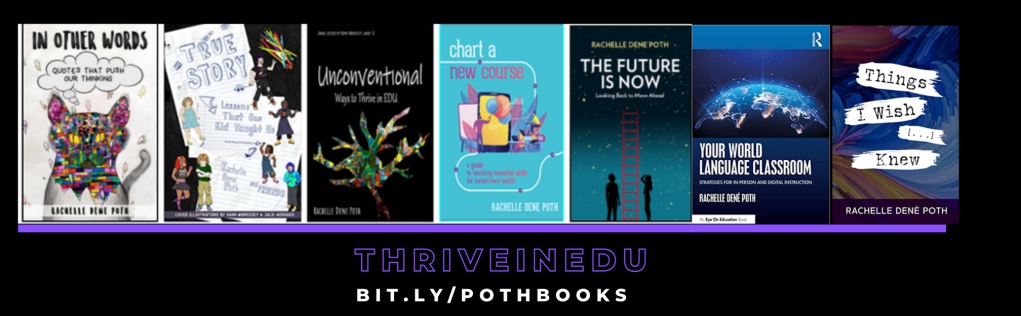
**Interested in writing a guest blog for my site? Would love to share your ideas! Submit your post here. Looking for a new book to read? Find these available at bit.ly/Pothbooks

************ Also check out my THRIVEinEDU Podcast Here!

Join my weekly show on Mondays and Fridays at 5pm EST THRIVEinEDU on Facebook. Join the group here
Six Ideas to Get Started with Genially

Sponsored by Genially, Opinions are my own

Last year I had the chance to check out Genially with my Spanish classes and was amazed at what they created! There are so many digital tools available for educators to use in the classroom that knowing where to start can be difficult. When it comes to tools like Genially, we just need to provide enough to get our students started and then take it as an opportunity to learn with, and more importantly, from them.

Giving students choices in how to share their learning is important. With presentation tools that offer a variety of media options and choices in templates, we can get started right away in our classrooms without losing much time at all. As a language teacher, I’m always looking for more authentic and meaningful ways for my students to build their language skills in a way that meets their interests and needs while also fostering the development of essential SEL skills that will best prepare them for the future.

Bringing in technology and providing time for students to explore the options and create on their own helps to spark curiosity for learning and boosts student engagement. An added bonus is that we can learn more about our students from the personalized and unique choices they make as they create. I learned a lot from my students’ presentations and they gave me some new ideas to try using Genially!

What is Genially?

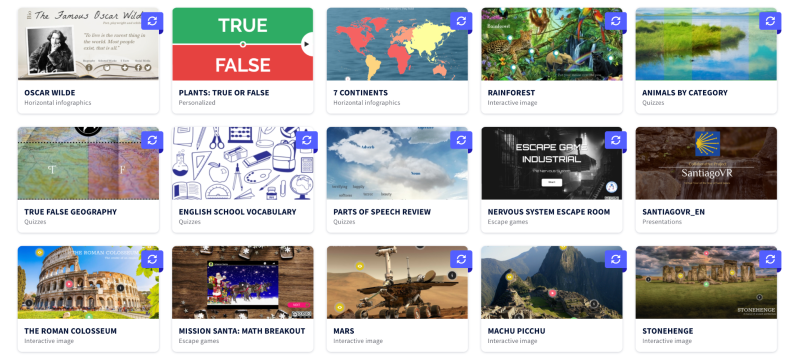
Genially is a versatile and interactive platform that can be used to create so many different projects and multimedia presentations. For just a few ideas, use it for creating a class website, making choice boards, school flyers, interactive images, digital portfolios, class and school newsletters, multimedia presentations, storybooks and more! You can even upload one of your PowerPoints and turn it into an interactive Genially presentation with sound, hyperlinks, and social media buttons. Want to boost student engagement? Try some of the templates for bringing gamification to your classroom through digital breakouts and escape rooms! Whether you start from scratch or choose from a ready-made template, Genially has something for everyone! And it’s free to use and has premium options to choose from too.

Creating is fun!

Last year, I first made my own presentation by choosing from the many Genially templates available, all of which are visually engaging and of course, make it easy to get started right away. In Spanish III, students were learning about narrating in the past tense, which can be difficult. I had used some fairy tales and fables they were familiar with to help them to understand the differences. Then I wrote a quick story and used Genially to bring it to life.

Rather than show students exactly how to use Genially, I shared my project with them and let them explore on their own. Genially is easy to use and it gives students the chance to build their digital skills and create a more authentic and meaningful project. Once they wrote their own stories, they had fun bringing their characters and stories to life through animations, audio, colorful backgrounds, different characters, GIFS, and more!

Here is one of their creations using many of the Genially features. Being able to share it with classmates and use audio boosted their engagement and definitely enhanced their learning experiences with using the past tense for narration!

Create a more interactive lesson for students by adding icons to each page or even hot spots, which are similar to some other tools out there like Round.me or even Thinglink.

What I noticed right away is how Genially really enables you to bring your presentation to life. You can spend as much or as little time as you want on it, adding a variety of visual effects with transitions between the pages of your presentation. You can add videos, social media links, or even 3D images. I love that students and educators can find exactly what they need to create something amazing with Genially.

For anywhere learning

Want to promote collaboration? No problem. You can collaborate with other educators or give students the space to work together on a project. When students collaborate, it promotes the development of essential SEL skills such as self- awareness, social awareness and relationships building. Especially as we’re working in transitioning learning environments, having a space for students to collaborate and create together makes a difference. Choose from more than 1200 templates in 12 different categories, with hundreds of additional resources available including figures, icons, illustrations, figures, and so much more. The fun part is learning from your students as they create!

The possibilities

There are so many ways to use a tool like Genially. When I think about the possibilities for my classroom, my students create many types of content throughout the year. Whether they make infographics, introduce themselves in an About Me or design a resume, create a health poster, make a family scrapbook or create a brochure for a school club, these are just a few of the ideas we can bring into our classrooms.

Explore the Jumanlly game!

Here are six more ideas to start with:

  • Digital Portfolios – great for students for building SEL!
  • Gamification – choose from templates for digital breakouts, or try Jumanlly!
  • Infographics – newsletters and brochures
  • Interactive Lessons – boost student engagement! Check out this example
  • Quizzes – interactive quizzes! Check out this one on Salvador Dalí
  • Timelines – interactive timelines to narrate events, a student’s life experiences, retell a story or correctly sequence events. Here is a great example
Check out this great Breakout!
Interactive Lessons – so many possibilities!

Dalï interactive quiz

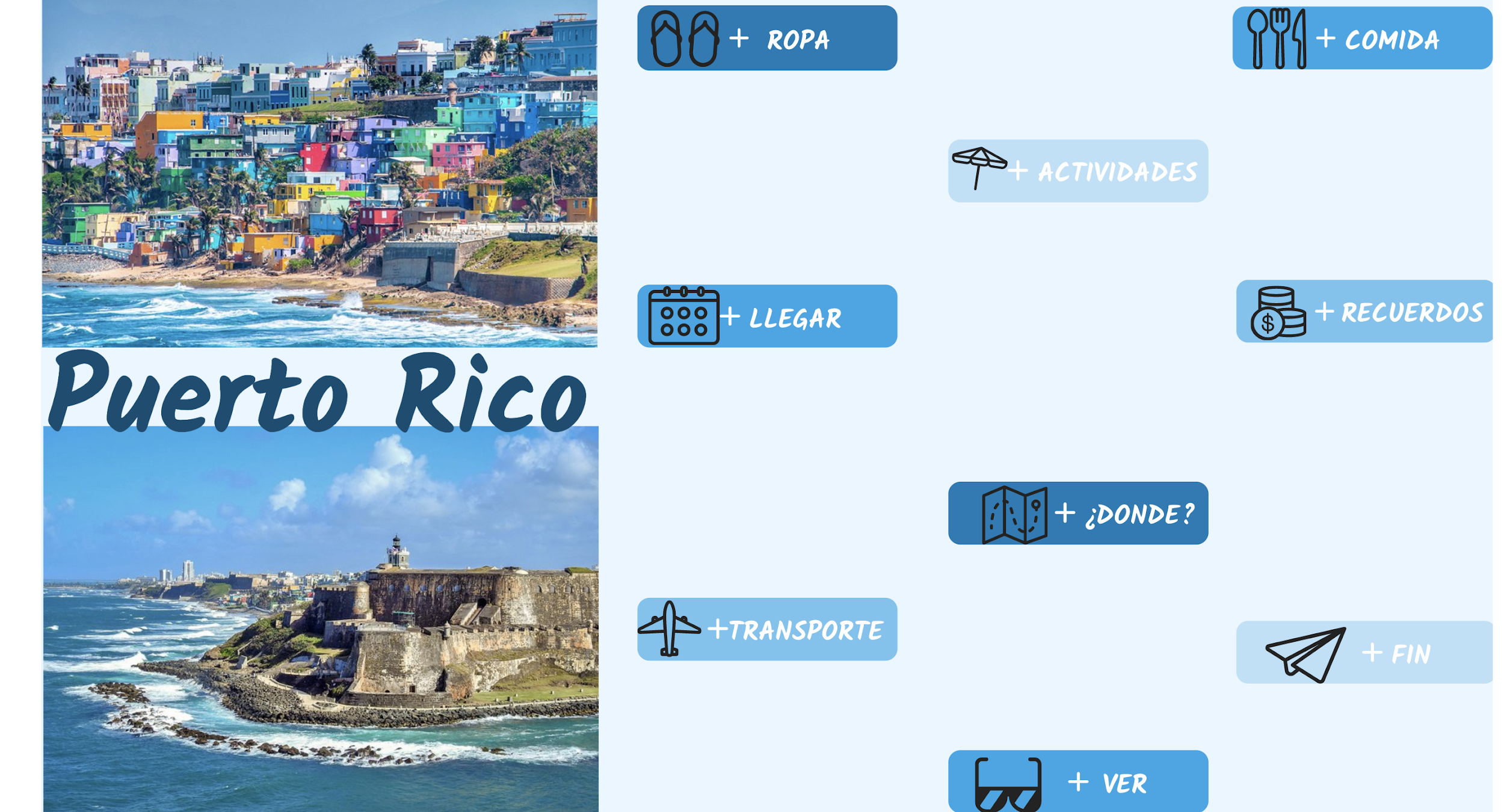
Students can create a brochure, newsletter or a travel ad and use templates available to get started right away. My Spanish I students were creating menus and loved checking out the possibilities for adding in images of food and places to their projects. Students loved creating with Genially and being able to include so much in one beautiful and animated presentation. I love that I have these new resources to share with students and other educators.

Interactive timeline! So many possibilities to explore and have fun creating.

Explore this template here!

If you are looking for ideas, start with the templates on the Genially site. I have been planning to have students create announcements, timelines or anything that they choose to design as a way to share their learning.

**Interested in writing a guest blog for my site? Would love to share your ideas! Submit your post here. Looking for a new book to read? Find these available at bit.ly/Pothbooks

************ Also check out my THRIVEinEDU Podcast Here!

Join my weekly show on Mondays and Fridays at 6pm EST THRIVEinEDU on Facebook. Join the group here

Self-belonging

Guest post by @IleneWinokur

School experiences can have a long-lasting effect on how we perceive ourselves and our capabilities/lack of. 

Today’s post delves into self-concept or what I call self-belonging and how we can attain it and support others, like our students, to find themselves and their sense of self-belonging. 

Graduation speeches are usually upbeat and celebrate the time a student spends in the years leading up to their final year before adulthood. It was a bit different at my son’s high school graduation in 2005. Ahmed, my son’s friend, and the class salutatorian*gave a moving speech to his fellow classmates filled with this message:  We are so much more than our grades, our SAT scores, and the rank of the universities that accepted us. His speech was a response to the negative beliefs about his entire senior class, the largest in the school’s 40-year history; 132 students. From the time they were in the elementary grades at this K-12 school, the whole class was labeled troublemakers, even the well-behaved, achieving students, and all were regularly disciplined. Even in their final year, discipline meant the loss of privileges such as having their own space to get together between classes and being allowed to move around campus with less supervision than lower grade levels.   

Ahmed’s speech left me speechless and sad. I still have a copy of it to remind me of what schools shouldn’t do to students. Students shouldn’t be labeled, shamed, or punished for poor behavior without someone first trying to find the root cause of the problem. But that’s exactly what happened. In 7th grade, my son received a “D” grade on a literature response essay. My son is fluent in English, and an avid reader of books much higher than his reading level. However, when I began asking him questions about the book he used for his essay, his answers showed me that he only had a superficial understanding of the plot, characters, etc. I was shocked and made an appointment to see his teacher whose excuse for not exposing my son to a deeper analysis of the book was the poor level of reading comprehension by the majority of his classmates and a lack of English language support in middle school. 

My son and many of his classmates, including the salutatorian, walked into college with a deficit mindset due to low self-esteem, self-efficacy, self-confidence, and self-worth based on hearing they “weren’t able to…”, “they lacked X skills,” throughout their school years. It’s difficult to continue doing your best when all that’s recognized is your worst. And while I tried to support him and do my best as a parent to minimize the effects of the constant negativity, my son, now in his mid-30s and working at a demanding job that appreciates his skills, has begun to believe in his capabilities and gain a sense of self-belonging. 

It’s tough growing up without a positive self-concept. I spent the first 35 years of my life doubting myself, second-guessing my decisions, and wondering if people liked me or were just saying they liked me. It wasn’t until I found my sense of self-belonging in my mid-30s that I finally stopped my negative self-talk and started to believe in myself. In elementary school, I remember having to suck on cinnamon candy to stop my stomach from feeling queasy because I was so anxious about failing or making a mistake. In high school, I couldn’t wait to graduate, so I enrolled in summer school to have enough credits to graduate a year early. There are two times I remember feeling like a failure.  In 7th grade, I received a “C” grade for an art project I worked on for many hours and was so proud of, and it convinced me I was not creative. The second memory I have is failing my first test in biology class in 10th grade. That reinforced my belief that I was unable to learn science. I was devastated and thought I’d have to repeat the subject. Since I already doubted my abilities, my self-efficacy in science and art, those grades reinforced my self-concept and negatively impacted my sense of self-belonging.. 

So, what is self-belonging? According to Healthline, “[y]our sense of self refers to your perception of the collection of characteristics that define you. Personality traits, abilities, likes and dislikes, your belief system or moral code, and the things that motivate you — these all contribute to self-image or your unique identity as a person.” (https://www.healthline.com/health/sense-of-self) This is what I refer to as “self-belonging”. It’s essential to our well-being because, without it, we doubt if people really like us for our authentic selves, we question each decision we make, and it negatively impacts our personal and professional relationships. So how can we develop self-belonging? Here are a few tips from my own experience:

  1. Be mindful and intentional about choosing to build your sense of self-belonging. Make a commitment to spending time and effort at it.
  2. Build time into your schedule for daily reflection and use that time to make mental or physical lists of your personal and professional accomplishments, your strengths, and what obstacles you’ve overcome. 
  3. Find someone you trust and who values you to talk about the list from #2.
  4. Celebrate your accomplishments (see #2) whenever you begin to doubt yourself. Make this a habit.
  5. Don’t feel shy about sharing your accomplishments with others, even strangers. Learn to feel good about “bragging” to others. This will eliminate any thoughts you might have of “impostor syndrome”. 
  6. Surround yourself with people who value you for your authentic self and don’t insist that you “fit in”. 
  7. Practice giving yourself grace; allowing yourself to make mistakes because you’re human and valuing those mistakes or failures as opportunities to learn and grow. 

Self-belonging plays an important role in how students navigate school. Without a sense of belonging, learning becomes secondary to what happened at home, or how others are treating me. If I don’t have self-esteem or self-efficacy, I won’t try to move out of my comfort zone because I’ll be worried about failing in front of my peers and my teacher. According to a recent interview (Allen and Gray, 2021) of Emeritus Professors and authors of the groundbreaking 1995 paper about belonging and human motivation, Baumeister and Leary,   “There has been much discussion about whether self-esteem is important for education, and self-esteem is substantially (though probably not entirely) rooted in belongingness.” Baumeister notes, “belongingness remains an important driving force. If we can explore new ways to harness that motivation to strive for superior academic achievement, it would benefit plenty of individuals as well as society as a whole.” Leary emphasizes the point when he states, “belonging plays an important role in the degree to which students are motivated to go to school in the first place.” 

How can we help students cultivate a healthy self-concept and a sense of self-belonging? We can plan lessons that encourage independent thought and action, that give them choices to explore, be curious, and learn about the world around them. Students who need a bit more guidance along the way should be able to choose topics that interest them and books that represent them. We can build their self-confidence by recognizing their accomplishments and giving them focused feedback about the areas they are still developing while supporting them along the way. 

My life is so much happier and healthier because I found my sense of self-belonging and I wonder how much better my life would have been if I had found it before I was 35 years old. Think of how much better school and life would be if we could find our self-belonging when we’re younger. 

Coming this fall: Journeys to Belonging: Pathways to Well-Being 

A book about my journey to belonging in two very different parts of the world and how important a sense of self-belonging is for having healthy relationships with others, personal and professional. 

Find out more about self-belonging on my website: https://journeys2belonging.com Be sure to sign up for my monthly newsletter which will be filled with strategies and ideas for cultivating a sense of belonging in your classroom and your school. 

*graduating student with the second-highest grade point average

Related studies:

ttps://deepblue.lib.umich.edu/bitstream/handle/2027.42/55938/20174_ftp.pdf?sequence=1

https://srcd.onlinelibrary.wiley.com/doi/am-pdf/10.1111/cdev.12802

**Interested in writing a guest blog for my site? Would love to share your ideas! Submit your post here. Looking for a new book to read? Find these available at bit.ly/Pothbooks

************ Also check out my THRIVEinEDU Podcast Here!

Join my weekly show on Mondays and Fridays at 6pm or 6:30 pm ET THRIVEinEDU on Facebook. Join the group here

App Smashing and More with Book Creator!

I love sharing ideas and resources when I learn about new features and how we can bring them into our classrooms and offer more to our students. There have been a lot of great updates to some of the digital tools available for use in education. When it comes to promoting creativity and collaboration, Book Creator has added awesome new features and joined forces with some other tools to further empower students and teachers in the classroom.

Recently, Canva integrated with Book Creator which means now students can leverage the power of both these tools to create anything they want! App smashing in the classroom is a great way to boost student engagement, spark creativity and amplify student voice.

Here are some ideas that can be used in any classroom!

Books! Have students create a book cover based on a book that they read and then use the different features and fun apps in Book Creator to really bring the book to life. Canva offers ready to use templates and when app smashed with Book Creator, it’s easy to create and publish visually engaging in no time at all. Teachers and students can quickly add animations, search from the thousands of images, different fonts, videos even to add into your book

Lessons! Book Creator is also a great tool for creating a lesson, adding in links and other visuals to boost student engagement in learning. Book Creator also offers different accessibility features such as the voice search as well as the interactive reader of Book Creator. Through the reader, means students can have the books read to them in any language. There’s also the option to have where it’s highlighted while the book is being read.

Writing prompts! Use Giphy to create a book full of GIFS and have students write about what they see, create a story, describe something in greater detail. There are many possibilities with using GIPHY to promote writing skills and creativity!

More choices for creating!

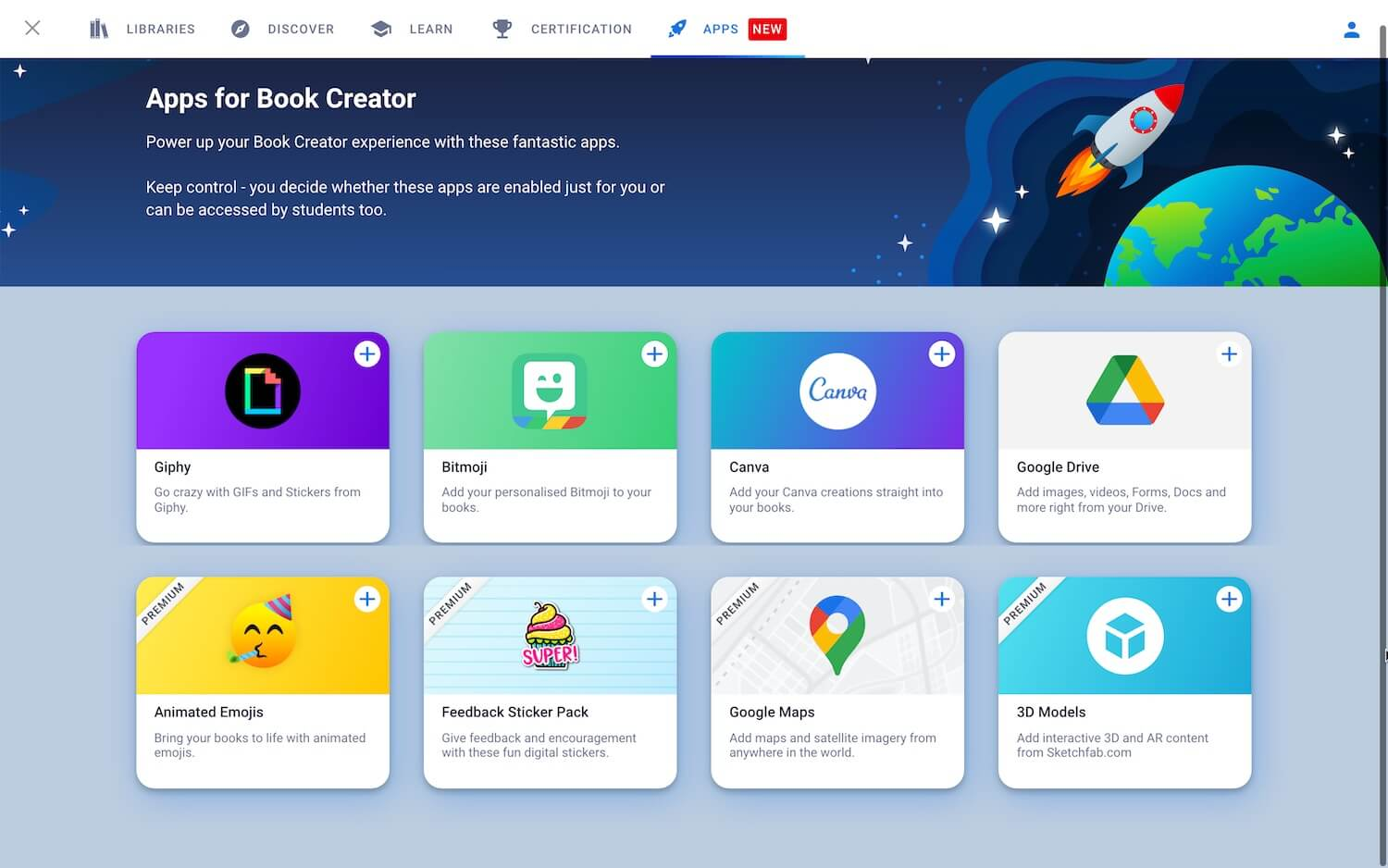
Now with the App store, you can create with Bitmoji (teachers only because of Snapchat), Giphy, Canva, a sticker pack, 3D models, Google maps, Google Drive and Sketchfab. All you need to do is go to the Teacher Dashboard to find the Apps tab and choose the app that you want to enable in your account.

My favorite: Sketchfab

Now that Book Creator is integrated with Sketchfab, students can access a library full of 3D models that they can place directly into Book Creator! For educators looking to teach students about augmented or virtual reality, using the Sketchfab app with Book Creator is definitely the way to go!

For anyone who doesn’t know, Sketchfab enables you to display 3D models on the web which can be viewed on any browser, or by using a virtual reality headset. Using WebXR technologies, creating in 3D and being able to interact with these objects helps to further engage students in learning, and spark curiosity and creativity in their designs. There are so many ways to use 3D models for any grade level or content area. Some ideas are to have students build a replica of a place they are learning about, or create a 3D model of an animal or object and place it right into their book. For classes where students benefit by being able to interact with the object such as in math with shapes, or with biology or learning about the heart for example, adding in these objects takes their learning to a whole new level.

When the book is ready, everyone can look at it by rotating it 360 degrees or, many of the models can be viewed in augmented reality on mobile devices or computers or even in virtual reality by using a headset!

There are so many ways to have students create using Book Creator and with these new apps, it better meets student interests and needs. When it comes to starting with new digital tools, it’s always a plus if you have templates available to choose from or resources that you can bring in to use as teachable materials in your classroom. Each of the new apps available through Book Creator provide even more ways for students to create and engage in authentic and meaningful learning fueled by choice. When we create learning experiences that will more meaningfully engage students with the content, while also aiming to move them from consumers to creators, it increases student engagement and amplifies student achievement.

To learn more, join in the webinars that the Book Creator team offers throughout the month. To learn more about using Book Creator with Canva, join on Saturday February 12th bit.ly/BCCanva where you’ll get to see what this new integration looks like and how to combine these apps to make some amazing creations! Walk away with some ideas and some activities to try in your classroom!

**Interested in writing a guest blog for my site? Would love to share your ideas! Submit your post here. Looking for a new book to read? Check out my books available at bit.ly/Pothbooks or in bulk orders through the publisher or signed copies via bit.ly/bookorderpoth

************ Also check out my THRIVEinEDU Podcast Here!

Join my weekly show on Mondays and Fridays at 5pm EST THRIVEinEDU on Facebook. Join the group here

The Aftermath

Guest post by Teresa Lien @5liens

Opinions expressed are those of the guest blogger

The perfect storm hit the teaching field in March 2020. For awhile, it appeared the field was going to survive and thrive through the turmoil. Teachers were being hailed as heroes as they persevered through the changing environments determined to keep students connected to learning.

When the 2020-21 school year started, school districts faced a paradigm shift. As the months passed, it was evident teacher knowledge was not going to be systematically included in the structures being built. The collective wisdom of teachers were ignored and teacher voices were disregarded.

This was a colossal mistake and a missed opportunity. Although I was sitting on the sidelines newly retired (1983-2019), I had high hopes that teacher expertise was finally going to be able to seize the field. Teachers are the primary sources of knowing how to engage students in this current reality. I anticipated the value of teachers to soar and for teachers to be relied upon to design solutions for learning. Instead, the players who hold power took control with rare amounts of funding to make decisions and teacher judgement was widely rejected. This has clearly exposed how teachers are marginalized.

Not only is teacher experience minimized, they are not provided with the full extent of proper resources to do their work or respectfully compensated for the important work they do. There are a whole host of other inequities to list but the point is that school districts had a promising opportunity to elevate teacher expertise in the new normal of educating students.

We are living in the aftermath of the perfect storm. The teaching crisis has shattered schools and harmed student learning. The teaching field is in ruins. The cost to communities across this country is $8,000,000,000 annually.

For decades, the wake up calls have all gone unanswered. Perhaps the response to this wake up call is most insulting to teachers. The popular remedy has been to provide professional development on self-care to teachers. It is generally a “one size fits all” approach and offered when it’s convenient on the school calendar. It is disturbing when open resources are shared as links to reference in communications. This lacks effort or genuine interest in caring for teachers. The message it sends to teachers is that they have been remiss in their self-care and that’s why their job are stressing them out. Their jobs are stressing them out because of the insurmountable workloads and impossible working conditions. Does anyone else see the indignation of this? It’s not the teacher that needs fixing, it’s the system. Regardless of how much self-care they practice, teachers have to return to the preposterous and stressful conditions of teaching.              

Teachers have been pleading for changes to their working conditions and workloads for decades. Today’s teachers are fearless and bold. They will not be victims of a broken system. This generation will exercise their options. The question that remains is what will society do with a teaching apocalypse?

**Interested in writing a guest blog for my site? Would love to share your ideas! Submit your post here. Looking for a new book to read? Check out my books available at bit.ly/Pothbooks or in bulk orders through the publisher or signed copies via bit.ly/bookorderpoth

************ Also check out my THRIVEinEDU Podcast Here!

Join my weekly show on Mondays and Fridays at 5pm EST THRIVEinEDU on Facebook. Join the group here

Edtech confidence comes with practice

Two people looking at a computer screen

Description automatically generated with medium confidence

Photo by Mimi Thian on Unsplash

With technology becoming increasingly present in classrooms, it’s an exciting time for education. Teachers across the board recognize its possibilities for innovation, communication, and learning, but it is still the case that some feel daunted by its complexity and anxious about using it with their students.  

It’s understandable. If teachers are simply given a whistle-stop tour of a solution for an hour or so during a training day, they are unlikely to be confident enough to immediately put it to use in the classroom. What’s needed is the chance to get their hands on it, practice, and become familiar with it on their terms. Without this time factored into their timetables, they will struggle to gain a working knowledge of the edtech or use it meaningfully with their students – and so the cost of buying and implementing it is wasted. 

Getting started

Even if you do work in a school that is committed to helping you develop your technical skills and has allocated time to do so, where do you start? Being left alone with unfamiliar technology can be intimidating, so receiving practical training that you can subsequently try out on the actual devices you will be using in class is vital.

Accessing the technology as soon as possible after the training will help you consolidate what you’ve learned. Taking it slowly and becoming familiar with one feature at a time means that your knowledge and confidence will build together before you put things to the test in front of your students.

To achieve fluency in any new skill, repetition is the key. This rehearsal time is where making mistakes is beneficial as it provides you with the chance to find out how to fix things without being under pressure; minimizing the fear factor and leaving you better prepared for the classroom. Some teachers I have spoken with say they have practiced by videoing themselves and, when happy with the results, have then incorporated the feature into their video exemplars for students or parents. This is a useful tip because you can review and adapt as you go while building up a bonus library of instructional resources at the same time.

Four stages of learning

When learning new edtech solutions, there are several stages teachers may identify with. These are defined by Mandinach and Cline (1992), who outline the phases of survival, mastery, impact, and innovation.

In line with this, if you hand a new solution to a teacher and provide little or no training, that places them in survival mode. They are not sure how to use it properly and, under pressure with 30 eager faces in front of them (either in class or at home), confidence does not come into it; it is just a case of whether they will sink or swim!

Once teachers have learned the basics, they move to phase two: mastery. This is where they have received training and have had the opportunity to practice by themselves. They have also tried things out in lessons and, when they have worked, this has begun to boost their confidence. 

Schools invest in devices, software, and training so that their teachers can generate an impact that their students can benefit from. In this stage, teachers are no longer afraid of the technology, can cope when things don’t go to plan, and they and their students are using it effectively.

The final step that every school aspires to is to generate innovation. Here, teachers are using technology intelligently and appropriately; they feel digitally literate and that their technical knowledge is on a par with their pedagogical and content knowledge (TPCK). So much so in fact, that they can share those skills with others and, in effect, become mentors for those less confident than themselves. 

Use it, don’t lose it

Throughout these two years of the pandemic, through necessity, technology has taken center stage. So, whether collaborating and communicating in Teams, Zoom, or Google Meet or helping students to learn via ClassDojo or Seesaw, many teachers have worked hard to raise their edtech skills in a short time – and for that, we applaud you!

It’s so important that these newfound skills are not lost once we begin to move past the pandemic when the urgent need for remote teaching and learning inevitably diminishes. For that not to happen, the progressive use of edtech needs to become embedded across the school. Schools can achieve this by reviewing and standardizing their solutions; making things easier for educators moving between sites within a district, and easier to support. So deciding, for example, whether you are an Apple/Google/Microsoft school is key and gives leaders the foundation on which to implement complementary applications that are most accessible for teachers.

A fundamental part of retaining any new skill is continued learning support. This can take various forms, such as ongoing formal training sessions, top-up training, peer sharing, solutions champions, or interacting on dedicated online forums to ask questions and share answers and experiences with others. The key is to keep your knowledge ticking over and evolving with changes in the technology, rather than letting your skill level drop and having to play catch-up. This way, you will gain the knowledge and confidence to use edtech as an innovative tool, rather than simply just ‘use’ it.

Skill up for the future

Being digitally literate as an educator has never been more important – and the pandemic has been a huge catalyst for change in this respect, with the need to teach children remotely and maintain communication with parents to support the continuation of learning. The work teachers are doing to increase their digital confidence right now will help to integrate technology into their teaching practice, so that it moves from being a box they must tick to being a tool they automatically use to achieve their pedagogical aims. 

Al Kingsley is Chair of two Multi-Academy Trusts in the UK. He is also the author of My Secret #EdTech Diary, a book that examines the past, present, and future role of educational technology and how it influences and shapes our education systems.

**Interested in writing a guest blog for my site? Would love to share your ideas! Submit your post here. Looking for a new book to read? Find these available at bit.ly/Pothbooks

************ Also check out my THRIVEinEDU Podcast Here!

Join my weekly show on Mondays and Fridays at 6 or 6:30pm EST THRIVEinEDU on Facebook, Twitter, LinkedIn and YouTube. Join the group here

My #OneWord for 2022: Purpose


Guest post by Barbara Bray

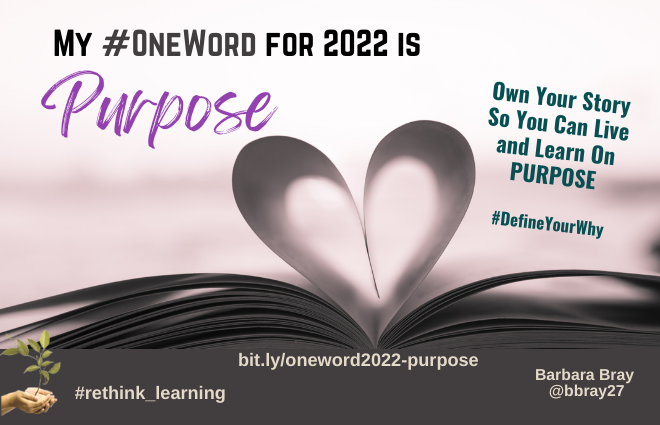
My #OneWord2022 is Purpose - Barbara Bray

2022 looks like it will continue to unfold the uncertainty we have been living through with the pandemic and rethink how we are handling what is going on in our lives. I saw this Google ad on the review of 2021 that made me think about what we’ve been through and still find ways to be stronger together. Here is the description from Google:

“In a year that continued to test many, the world searched “how to heal” more than ever. Whether they’re taking care of mental health, honoring a loved one, or reuniting with family, people are finding ways to come back stronger than before.” Explore more trends from the year at https://yearinsearch.google.

We need to consider in 2022 what is happening to our kids, schools, and teachers.  Mental Health is a real issue. I’ve heard from teachers around the world that times are tough and that they are struggling. Too many teachers and school staff are stressed, depressed, and leaving the profession. 

Why? 

Everyone needs a purpose and to feel they are living a meaningful life with a reason to get out of bed each morning. Educators went into the profession even though they knew they would be paid less than other professions. Teachers work hard and want to make a difference in children’s lives. They believe each child is unique, amazing, and can learn. When teachers are not supported for the awesome work they do, they feel conflicted about their purpose. 

Think about the teacher that made a difference in your life. Have you thanked them lately?

What can we do to bring value to the profession? Where would all of us be without our teachers? 

When teachers leave, kids are confused. When a teacher or principal who really cared for the students leaves or is told to leave, kids talk about it with each other and get angry and sad. If class sizes grow during the pandemic, the kids and teachers trying to manage are overwhelmed. Kids are having more symptoms of depression with the stress about falling behind and missing out on what it means to be a kid. When we continue to live with chaos and uncertainty, it takes a toll on all of us, especially our kids. It is difficult for us to live our own lives when the stress is huge and has an impact on our lives. 

2022 is going to be the year we need to learn to listen deeply to each other and to each of our stories. This will be the year we learn WHY empathy matters and WHY we need to listen to understand, not to reply. We need to listen more than ever before.  I reviewed my #OneWords for the past 3 years:

2021: Stories
2020: Gratitude
2019: Possibilities

I’ve been focusing on the WHY for some time. That’s why I wrote, “Define Your Why.”  I get how important PURPOSE is for us now. It made me realize that my #OneWord for 2022 had to be PURPOSE.

I believe that if we focus on our PURPOSE of why we are here, we can…

♥ listen deeply to understand the other person and their story
♥ build a community of learners who care about each other
♥ create a culture of kindness, love, and joy, and
♥ bring us together in a world where all of us have hope for the future by living meaningful lives.

About the author

Barbara Bray

Barbara Bray is a Creative Learning Strategist and owner/founder of Computer Strategies, LLC with its divisions, Rethinking Learning and My eCoach (my-ecoach.com) where she shares her resources, stories, and more about learning and life. Barbara is the host of the Rethinking Learning Podcast where she has conversations on learning and reflections with inspirational educators, thought leaders, and influencers! She is the co-author of Make Learning Personal and How to Personalize Learning. Barbara is the author is Define Your WHY that is all about owning your story so you live and learn on purpose.

**Interested in writing a guest blog for my site? Would love to share your ideas! Submit your post here. Looking for a new book to read? Find these available at bit.ly/Pothbooks

Guest post by  Barbara Bray @bbray27 on  the @Rdene915 blog  Submit your guest post today! #education  #educhat #rethink_learning #oneword

************ Also check out my THRIVEinEDU Podcast Here!

The Imaginary Me

 laura steinbrink,

WHEN YOU’RE WEARY, FEELING SMALL

As I scrolled through Twitter recently, I happened upon a quoted tweet by Scott Adams, creator of the Dilbert cartoon. The tweet he was quoting was making statements about him, and his response in the quoted tweet was simply, “The imaginary version of me has many wrong opinions. Here’s a sample.” Regardless of how you feel about Scott or his cartoon Dilbert, that phrase, imaginary version of me really struck me as something I could use with students. We all must handle critics at various times in our lives, and we also know that we can frequently be our own worst critics. I always work with students on positive thinking strategies as part of my Train Like a Navy SEAL SEL program, and when I saw this phrase, several ideas hit me all at once.

We’ve all had to deal with others who call us names, and those who make assumptions and judgements about us. How we handle those and the resulting after waves of self-doubt can determine current and future successes, well-being, and resiliency. I’ve frequently looked back on that old saying, “Sticks and stones can break my bones but words can never hurt me,” with amazement. Words certainly can hurt us. I remember a parent telling my mother, after our 4th grade music concert, that I couldn’t sing but was really loud. Those words haunted me for 30 years. As an adult, I battle them each time they crop up in my mind, but I know now that they aren’t true. I’ve sung in front of hundreds of people and have been paid to sing, and still those words make an appearance periodically. Now I know what to say to those words: That’s the imaginary me, the one who can’t sing. That’s not the real me.

So how do we use this with students? There are a lot of possibilities, but here are just a few that I’ve come up with so far.

WHEN TEARS ARE IN YOUR EYES

FIRST DAYS OF SCHOOL ACTIVITY

Introduce the idea of “The Imaginary Me” during the first few days or weeks of school (or anytime, really). Find your own story of words that hurt, and then explain how those words must fit the imaginary version of you, because they are certainly NOT true of the real you. Then, like me, you might be tempted to have students share out things they have been called or assumptions or judgments that have been made about them. Don’t. As my friend, Elizabeth Merce, reminded me when I ran my idea by her, it is best not to have students share those negatives out loud in class. That kind of information in the hands of other students with whom a relationship hasn’t been solidly built yet can be very detrimental. I knew this, but in my excitement of the possibilities with this strategy, I forgot about Piggy. Piggy, you ask? Yes, for those of you who haven’t read The Lord of the Flies, Piggy is the only character whose real name we never learn. In the very beginning of the book, he tells the Ralph, main protagonist, that he could call him anything other than Piggy, which is what the bullies at his school called him, and so Piggy wasn’t known by any other name throughout the book. So, to avoid another Piggy situation in your own classrooms, let’s look at ways to utilize this strategy without giving undue power over others to our students before solid relationships and trust have been built.

I WILL DRY THEM ALL

THE IMAGINARY ME / THE REAL ME

After you introduce the idea of the imaginary version our ourselves to your students, you now have some options for using it as an activity. Students can think up the UNTRUE things people have said about them and then for each untrue statement or adjectives, they come up with statements or adjectives that are TRUE about themselves. Those are what you build the following activities on:

  • Word Cloud (individual or class)
  • Class word wall
  • Poster silhouette
  • Affirmation cards (use index cards & have students write ONE of their Truths on it for a class set or all of their truths, one per card, for individual sets)
  • Reflection/blog post writing
  • Graphics / comic strip stories
  • Our Truths bulletin board (anonymous)

I’M ON YOUR SIDE

I will likely start my high schoolers off with affirmation cards, and possibly a word cloud for the whole class first, but all of these activities are in play throughout the year. January is a great time to do some activities like this since the start of the second semester can be hard, and you can also tie it in with One Word (students think of one word that can shape, guide, or theme their new year instead of resolutions) activities. For a digital version of affirmation cards, students can use Google Slides, and then those could be combined for a class set, either all of their affirmations or just one per student. It may also help to give students a number of the UNTRUTHS and then corresponding TRUTHS to brainstorm and then use for the activities so that you can manage the amount of time and or responses for the activities you choose. Each class I have is different, so the activities will be tailored to suit the needs of those students. I will add to this post once I have examples from our classrooms, but I’m sharing the idea now so that you can also find ways to adapt it for your students. Happy new school year.

HEADING TITLES ARE PARTIAL LYRICS FROM SIMON & GARFUNKEL – BRIDGE OVER TROUBLED WATER

**Interested in writing a guest blog for my site? Would love to share your ideas! Submit your post here. Looking for a new book to read? Find these available at bit.ly/Pothbooks

************ Also check out my THRIVEinEDU Podcast Here!

Join my weekly show on Mondays and Fridays at 5pm EST THRIVEinEDU on Facebook. Join the group here
3 ACTIONS FOR THINKING DIFFERENTLY

Guest post by Chris Chappotin

Me after looking at the calendar this morning:

Can you believe that we are at January 11, 2022?

Have we stopped asking, “When are things going to return to normal?” Have we also stopped asking, “What will the new normal look like?”

I am confident in asserting that most of us were over 2020; and yet, cognizant that moving forward is not as easy as flipping the calendar page or swiping to the next day in our favorite calendar app.

As a result, while living in the present and now entering 2022, what will be necessary in order to move education forward? Restated in the context of Infinite Game by Simon Sinek, how can we remain players in the infinite game of education?

Here are 3 actions for thinking differently that will help us shape the future during these critical times.

 PRESUME POSITIVE INTENT

Everything I learned about school leadership, I learned from High School Musical. As I write the previous sentence tongue-in-cheek, there is no denying that “We’re all in this together.” Facing the challenges of the future requires that we presume positive intent with each other. Are we all in this together at varying levels and responsibilities? Absolutely; however, in order to effectively navigate the waters ahead, we must unite through assuming the best in each other. Here are some self-reflective questions to consider when being purposeful about presuming positive intent:

▪️ What is my teammate seeking to communicate with me?

▪️ What factors inside and outside of the work environment could be impacting this conversation or situation?

▪️ How can I be a peacemaker in this conversation or situation? How can I contribute to the quest for solutions?

▪️ What action step(s) will facilitate increases in student learning? How can I support the success of my teammate?

Presuming positive intent nurtures the teamwork necessary to overcome expected and unexpected challenges. If we can presume we are all doing the best we can with the gifts and experiences we have, together, we can grow into the continuous improvement needed to face the future.

🤝 COMMUNAL REFLECTION

Presuming positive intent helps develop and sustain necessary relational bonds that will be necessary to withstand the consistent onslaught of challenges. In fact, as I type, I am wondering if presuming positive intent is somehow related or included within Dweck’s work on Growth Mindset. Regardless, as relational bonds grow stronger and trust is rich within the organization, purposefully stopping for times of communal reflection are important and meaningful exercises to keep us moving forward.

If we can retrospectively reflect through situations by honestly considering the strengths and limitations of how we handled things, together, we can enjoy the multiplicity of perspectives available in such a communal exercise, learn new ways of behavior, and grow relational capital amongst the team. As this becomes a go-to method for processing situations, we maximize our leadership capacities by sharing experiences, tools, and think-alouds with our people. In addition, we empower our people with the safe space to share and process the nuances, situations, and relational dynamics of the work. If we can do this with appropriateness, honesty, and a commitment to continuous improvement, I believe we can multiply our effectiveness and form encouragement bonds we can lean on throughout our careers.

🧭 SIGNPOSTING

Care about your people enough to facilitate their next steps. Consider skills they are excelling at, and how those skills will help them accomplish their dreams. Consider skills they need to practice at, and how to provide opportunities for the strengthening of those skills. Provide consistent encouragement, conversation, and questioning that will propel your people forward.

A signpost is a noun: static, cemented in the ground, unwaveringly pointing toward a destination far away. Signposting is a verb: action, ongoing, along the way, continuously pointing toward a destination far way, and making progress toward that destination every day.

Be a signposting leader for your people. One that points them in next-step directions, but also journeys with them toward their desired destinations. Care about them enough to facilitate their pathways forward: possibly into deeper levels of influence within your organization, and possibly into deeper levels of influence outside of your organization. Either way, by signposting your people into next-levels, you are continually building up the quality of your people as well as the impact of their service to you, each other, and your students.

Buncee-ing in the new year: Six Ideas to Kick Off 2022

We love using Buncee in my classroom and in the middle of December, my students enjoyed participating in the Holiday Hugs initiative and creating Buncees to add to the Board. Not long after that, my students wanted to know when we could create with Buncee again. The students in my upper level Spanish classes have used Buncee for the past couple of years, but for my Spanish I students and some new students in my classes, this was their first experience and they loved creating a Buncee for the Holiday Hugs initiative!

New year and new ideas!

Now that we are in 2022, the beginning of a new year is always a great time to explore new ideas. Not sure where to begin? Don’t worry, Buncee definitely has you covered when it comes to trying new ideas, promoting student engagement and curiosity in learning! There are endless possibilities for using Buncee regardless of your role in education or grade level of students. The Ideas Lab can help you to find exactly what you need or just start from scratch and have some fun creating with your students! Sign into your account, click “Create” and look at the newly added templates or search from the possibilities from the menu on the left!

Social-emotional learning (SEL) is so important for our students. Finding ways to help students to build SEL skills is essential. Buncee is a fantastic choice! I recommend taking the course called “Creative Expression and Social-Emotional Learning with Buncee” available in the Microsoft Educator Center which was co-created by Francesca Arturi and Laura Steinbrink. After taking this one hour course, you will better understand SEL, the five competencies and how Buncee helps students to build their skills in these areas. The five SEL competencies are: self-awareness, social awareness, self-management, responsible decision-making, and relationship skills. Also explore the Buncee SEL toolkit with template activities for grades K-6 and 7-12 that will help all educators with bringing SEL into the classroom!

  • Check-ins and SEL There are a lot of ways that we can help our students to build SEL skills. With Buncee, using some of the ready-to-use templates, students chart their emotions or set goals which will help them to process and manage stress.

There are many ready-to-use choices available within Buncee for goal setting. Select one to use with your students and they can make it their own! Students can even create a reflection journal and use their Buncee to add audio or video reflections too!

And don’t forget about the Buncee Boards! Check out this post on 10 ways to use Buncee Boards in your classroom! Such a great way to collaborate and share ideas, connect with others, and build a learning community! Use Buncee Boards to share lessons, projects and more!

JOIN THE BUNCEE THRIVE FOR 5 CHALLENGE!!

For even more ideas, join the Buncee Educator Community on Facebook and connect with educators and their classrooms from around the world. It is a great community to learn from and share ideas with.

**Interested in writing a guest blog for my site? Would love to share your ideas! Submit your post here. Looking for a new book to read? Find these available at bit.ly/Pothbooks

************ Also check out my THRIVEinEDU Podcast Here!

Join my weekly show on Mondays and Fridays at 5pm EST THRIVEinEDU on Facebook. Join the group here
TeacherCast Educational Network | Developing Standards-Based Instructional Technology Integration

Technology Integration - Instructional Coaching - Productivity Secrets for Educators

Leadership Liner Notes: Sean Gaillard

Built on Connection. Tuned for Impact.

Stories by Thomas Oppong on Medium

Dr. Rachelle Dené Poth @Rdene915 Educator, Consultant & Keynote Speaker, Author, Attorney #THRIVEinEDU

Hooked On Innovation

When Innovation slaps you in the face, we slap back.

Teach Better

Dr. Rachelle Dené Poth @Rdene915 Educator, Consultant & Keynote Speaker, Author, Attorney #THRIVEinEDU

BrianKulak.com

Dr. Rachelle Dené Poth @Rdene915 Educator, Consultant & Keynote Speaker, Author, Attorney #THRIVEinEDU

The Principal of Change

Stories of learning and leading

Mandy Froehlich

Dr. Rachelle Dené Poth @Rdene915 Educator, Consultant & Keynote Speaker, Author, Attorney #THRIVEinEDU

Katie Martin

Informed by research, refined by practice

#RocknTheBoat

Rocking today's classrooms, one teacher, student, and class at a time.

User Generated Education

Education as it should be - passion-based.

Learning as I go: Reflections & lessons learned

Dr. Rachelle Dené Poth @Rdene915 Educator, Consultant & Keynote Speaker, Author, Attorney #THRIVEinEDU

Serendipity in Education

Join me, Allyson Apsey, as I stumble upon the fortunes of learning, laughing, and celebrating alongside incredible people.