Bringing STEM to All Classrooms

With a prediction of a need for 3.5 million jobs related to STEM by 2025, we need to focus on finding ways to bring STEM learning opportunities to all students in every classroom. Doing so can be a challenge, depending on whether we have access to the right resources or if teachers feel that they don’t have enough knowledge or resources available to get started. As I have learned in my own experiences, we just need enough information and a few resources to start with. Once we dive in, we can make a shift to being a facilitator of learning in our classrooms. We need to embrace the opportunities to co-learn with our students so that we can best prepare them and ourselves with the skills needed in the future.

With many unknowns when it comes to jobs that will exist in the future, we need to create a variety of learning experiences such as those made possible through STEM-based activities. The skills that are necessary today may not be needed in a few years. Jobs in demand and skill sets needed are constantly changing. To stay informed, I recommend referring to the Job Skills Outlook created by the World Economic Forum. Some of the top ten in-demand skills are collaboration, communication, critical thinking, problem solving and ideation, and resilience. Each of these are areas that we can focus on in our classrooms. Being flexible enough to adapt to a changing landscape of learning and work is key.

When we choose methods or tools, we should focus on how we can make sure our instruction is relevant to the growing demands in the world of work. These in-demand skills can be fostered through STEM activities and learning experiences.

Why STEM skills impact future success

Many skills can be built through STEM such as creativity, critical thinking, innovation, problem-solving, and teamwork which will help students to be successful in the future. Through STEM, students also build social-emotional learning (SEL) skills, especially in the areas of self-awareness and self-management. By focusing on the five SEL competencies, research has shown that it increases student achievement and has a positive impact on student wellbeing. STEM promotes the development of SEL and empowers students with new ways to create, innovate, iterate, and reflect, which are directly related to the skills needed today. Students set goals, make decisions, collaborate, and build relationships that prepare them for the future and foster SEL.

Ideas for any classroom

First, there are many different STEM challenges that we can use in our classrooms that do not require many materials or the investment of a lot of time to get started. With some STEM challenges, asking students to find materials to design with or reaching out to the school and school community to ask for specific items to have on hand for a STEM/STEAM makerspace are helpful for creating more opportunities.

STEM challenges help students to build many skills which are essential in the workplace. A few examples are the Cup Tower Challenge, the Straw Challenge or the Parachute Challenge. There are even some free STEM challenges to do Around the Home to involve families in the learning!

An easy challenge without much prep is giving students a design challenge. Have students choose materials and design a structure representing their name, or a concept from class that meets a certain requirement such as height for example. Each of these can be used in all grade levels.

For all classrooms, connecting students with a guest speaker, whether in person or virtual, who works in one of the STEM fields can be highly beneficial. For students to explore careers and connect with real-world examples, it will spark curiosity and students may learn that they have a deep interest in pursuing a STEM-related career.

Project-based learning (PBL) is a method that can be used to focus on STEM. Connecting with another teacher and engaging students in a cross-curricular collaboration creates an authentic and purposeful way for them to build content knowledge in a relevant and meaningful way.

Resources to explore for STEM

  • Birdbrain Technologies. When I started to teach STEAM, my 8th-grade students learned to code by using the Hummingbird Robots from Birdbrain. We focused on French and Spanish culture and students created projects to represent something they learned. Birdbrain also has the Finch Robot, which can also be used in any content area. With the Finch, students can explore AI and robotics using Google Teachable Machine with the Finch. Teachers can sign up for a trial period with these resources.
  • CODE.org Offers many resources to help students of all ages learn about coding and STEM-related fields like computer science. According to statistics from the site, 67% of new STEM jobs are in computing, and as of today, only 54% of schools offer computer science courses to students.
  • CSFirst from Google: There are many resources to help educators get started with teaching computer science and that are aligned to the CSTA and ISTE Standards. Activities include focus areas of art and storytelling in addition to other free materials. Teachers can participate in distance training and download the lessons and other ready-to-use materials.
  • Defined Learning: They offer a variety of resources for educators to learn about STEM and topics such as PBL and SEL. Explore their blogs to find ideas for your classroom and check out their PBL solution that offers everything that teachers need to get started in the classroom.
  • Elementari: A platform that can be used for storytelling and coding together. Students can create a book and learn about coding by creating interactive stories. There are examples to explore that can be remixed. Teachers can incorporate STEM into any classroom by having students and have students
  • GoldieBlox: Offers materials for girls to become more involved in STEAM and also has activities and materials for use at home. They recently started the “Code Along” initiative with other STEM organizations including Black Girls CODE, with the goal of bridging the opportunity gap for underrepresented communities in STEM fields such as computer science.
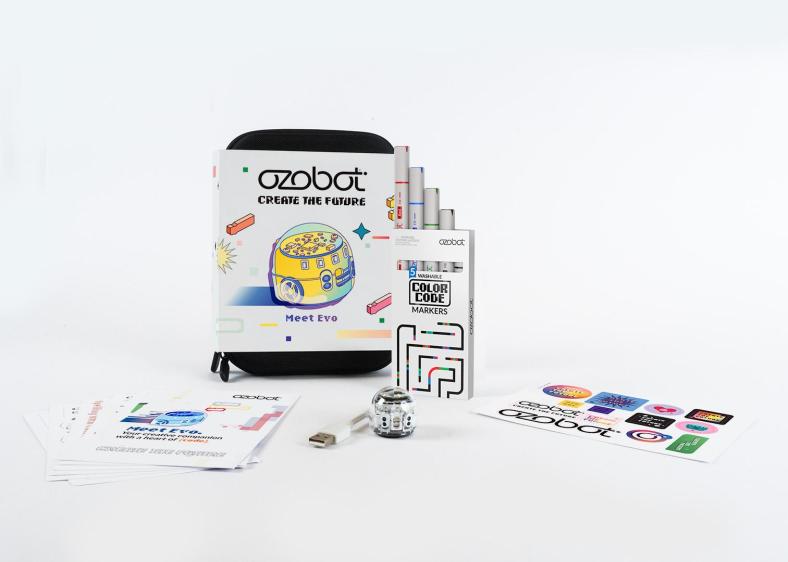
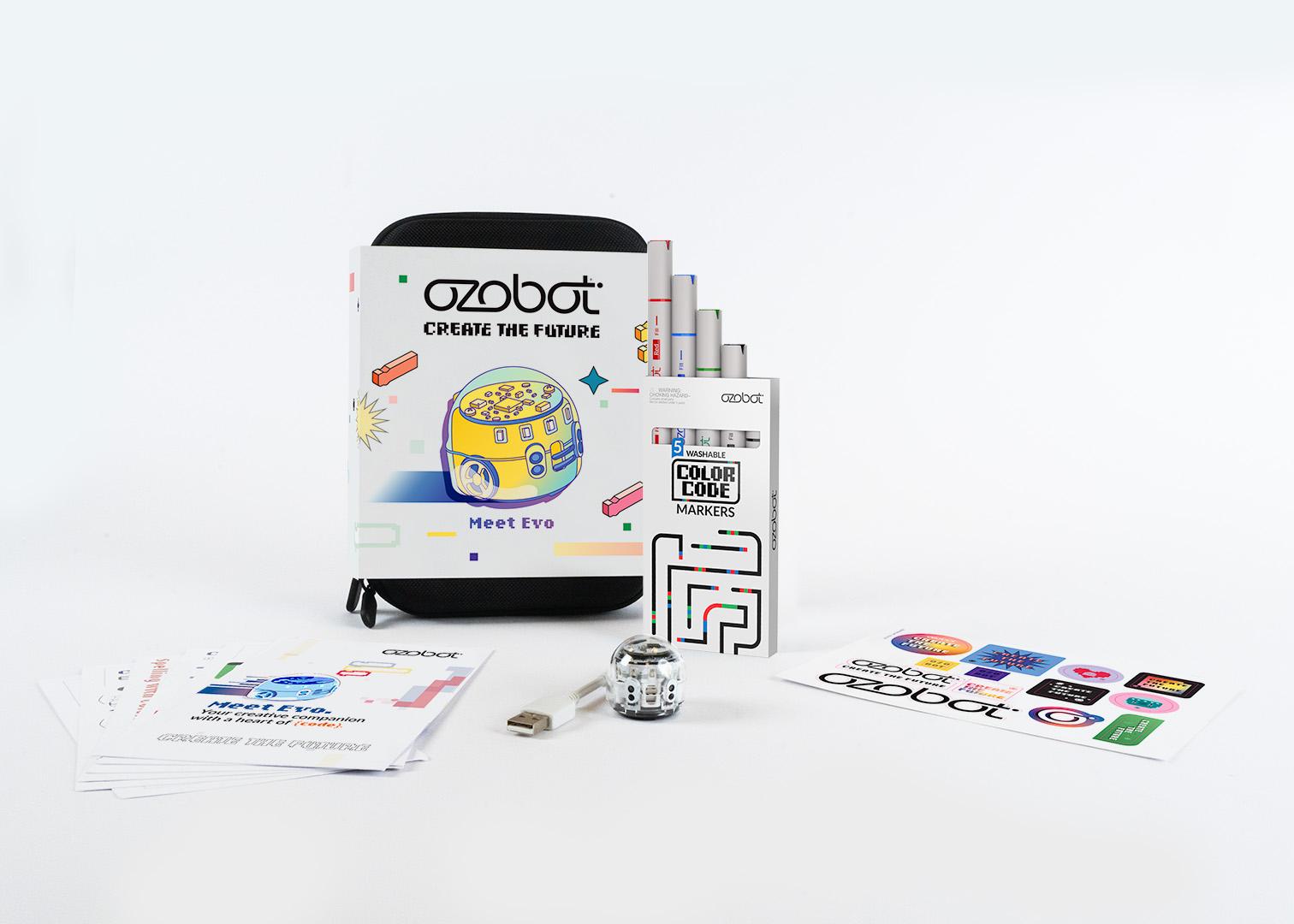
  • Ozobot. A one-inch robot that can be used in any classroom and that has lessons and ideas available for subjects including English Language Arts, math, and more. There are also two different ways to code using Ozobots, screen-free by using markers and color codes and with the program on the computer. Some students have written a book summary and programmed the Ozobot to move around and stop at each point in the story timeline. There are many creative ways to use Ozobot in the classroom.
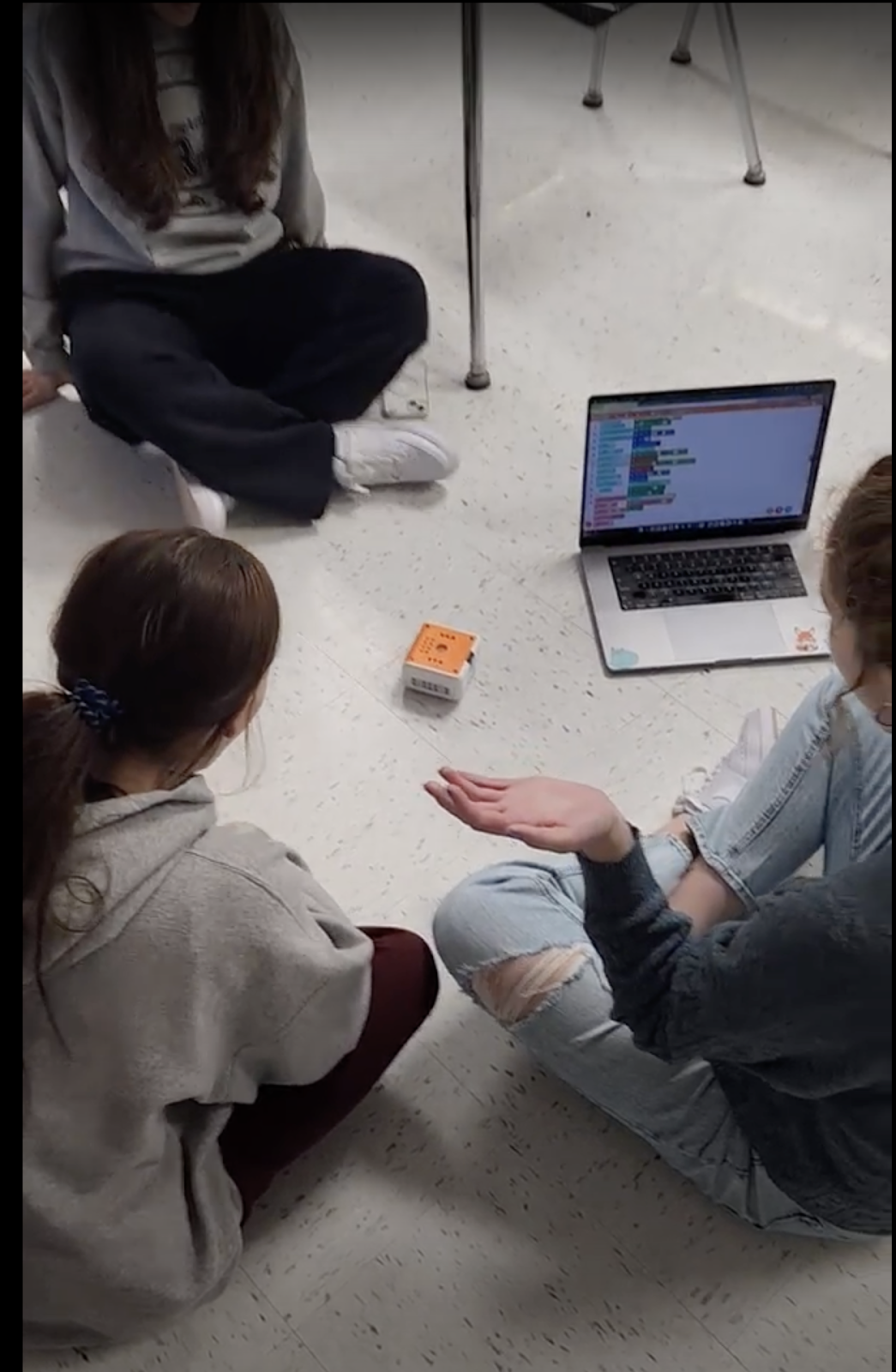
  • Marty the Robot. My students were thrilled when I brought Marty in for class. Marty is a humanoid that offers multiple ways to learn about coding. With infrared sensors on his feet, he responds to color cards, providing screen-free coding. The app has block- and text-based coding and students can quickly create a program to have Marty walk, dance and talk. Teachers can request a trial of Marty in their classroom.
  • Scratch and Scratch Jr. are free resources for students of ages 8 through 16. There are more than 70 languages available which help to promote accessibility and because Scratch is free, it also promotes equity in learning.

With STEM, we provide opportunities for students to drive their own learning. The knowledge gained and skills developed through STEM experiences will enable students to adapt to a changing world of education and work.

Looking for PD for your school? I provide in-person and virtual training on the following topics. If you want to learn more about and explore AI and ChatGPT, contact me to schedule! Rdene915@gmail.com 

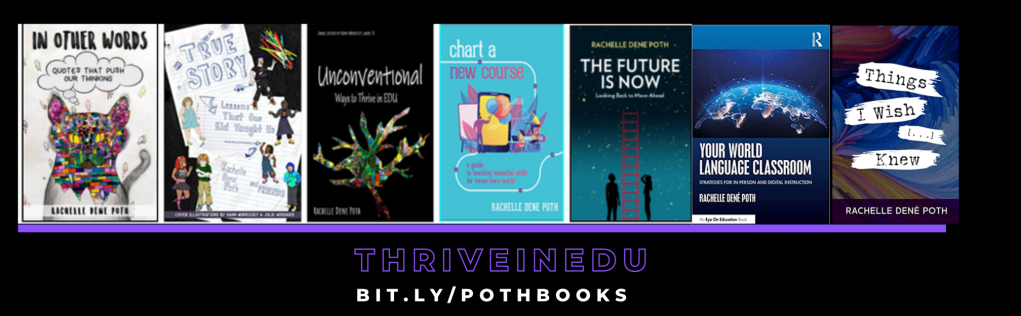
**Interested in writing a guest blog or submitting a sponsored post for my site? Would love to share your ideas! Submit your post here. Looking for a new book to read? Find these available at bit.ly/Pothbooks

Five ways to demonstrate learning

As educators, it is important that we provide a variety of options for students to develop their content area knowledge and skills in ways that meet their interests and needs. When choosing methods and tools to use, it is also important to create opportunities for students to develop social-emotional learning (SEL) skills as they are essential for personal and professional growth. 

Our decisions need to focus on helping students by designing assessments and ways for students to show what they have learned while also promoting voice and choice in learning. Depending on the types of methods and tools we use for our assessments, they must help students to identify where they are on their learning journey and provide us with evidence of student learning that we can use to provide feedback and additional resources for our students.  

Some questions to consider when deciding on methods or tools can be:

  • How can we promote more interactive and collaborative experiences for students?
  • Which tools assist us by providing access to real-time feedback?
  • What are some ways to promote more student choice in learning?

As educators had to seek new ways to assess students and provide opportunities for students to share what they were learning, ask questions, interact, and feel connected to a classroom community, many sought digital tools. Technology has provided many options for learning and enables educators to find something that meets each student’s needs and interests and sometimes even their comfort level.

It is important to convey to students why we choose a certain method or digital tool for use in our classroom and doing this helps us to stay clearly focused on our purpose. Consider how the method or tool will enhance learning or provide more benefits for students beyond being a way to practice the content or take an assessment.  The use of digital tools promotes collaboration, communication, creativity, and many more of the essential skills while also boosting student engagement in learning as they have the power of choice in how to share what they have learned.

Here are five ways for students to demonstrate learning. 

  1. Blogging: Blogging has been effective in my Spanish classes for years. With the digital tools available, it makes it easier for students to have a space to build their writing skills as they share ideas with their teacher and possibly their peers. Having students engage in blog writing also helps to promote the development of digital citizenship skills, especially if they have the opportunity to respond to classmates and provide feedback. One option that has been great to try with my students is Spaces. Using Spaces promotes communication and collaboration between teacher and student or it can be between students and include audio as well. 
  2. Data visualization: Being able to process information and create a representation of what has been learned helps students to better retain what they have learned. For visual learners, using tools to create a concept map or an infographic can help with processing a lot of information. With tools like Canva or Piktochart, students can choose from templates available to help them get started with designing an infographic. These tools and others like them to promote critical thinking skills and creativity as students decide how to best illustrate what they have learned. There are also options for students who prefer to not use technology such as drawing a concept map or creating a sketchnote to capture what has been learned. 
  3. Digital Storytelling: Whether at the beginning of a new unit or at the end, having students create something using one of the many digital tools available will help them to share their learning in authentic and meaningful ways. use of digital storytelling or making a video. My students enjoy using tools that offer multimedia options and libraries full of choices in characters, backgrounds, animations, and more to tell their story. Some of our favorites include BunceeBook CreatorGenially, and Story Jumper.  With several of these, students can even work together to create a presentation or a book to share with classmates. 
  1. Game-based assessments: Encourage practice and be able to provide feedback and more targeted lessons by using some of the digital tools available to do a pulse-check for where students are in the learning process. We can implement some hands-on games through flashcards, gestures, and conversations or leverage some of the game-based learning tools, such as Blooket, Gimkit, Kahoot!, Quizizz, and Quizlet Live!  Each of these offers a variety of question types or modes of play that will connect students with the content and provide us with real-time data to help plan our next steps and give meaningful feedback to our students.
  2. Interactive Lessons: Using tools that promote student engagement through the variety of content and activities that can be added to the lesson helps educators to better understand student progress and enables students to build self-awareness in learning. With tools like Edpuzzle, Formative, Nearpod, and Pear Deck, educators have many options for adding content and activities to help students to build their skills. What I really appreciate about tools like these is that we can provide students with a variety of ways to demonstrate their learning through open-ended responses, polls, multiple-choice questions, quizzes, and more, depending on the tool. Formative was a game changer in our classroom last year because I could use it to create lessons with videos and audio instructions that students could work through at their own pace. I could also use it in class for assessments which enabled me to provide timely feedback directly to students and adjust my lessons as needed. These options enable us to differentiate our instruction while promoting student choice in voice and learning. 

These are just some of the many ways that we can have our students demonstrate what they are learning. Whether through technology and the many tools available that facilitate communication, collaboration, and creativity, or using traditional methods, it is important to offer choices to our students. When we can provide options that promote agency in learning, it leads to more meaningful experiences that promote the development of essential skills for the future and empower students through self-driven learning.

Author

Rachelle Dené is a Spanish and STEAM Emerging Technology Teacher at Riverview Junior Senior High School in Oakmont, PA. Rachelle is also an attorney with a Juris Doctor degree from Duquesne University School of Law and a Master’s in Instructional Technology. Rachelle is an ISTE Certified Educator and serves as the past president of the ISTE Teacher Education Network.  She is the author of sevens books including ‘In Other Words: Quotes That Push Our Thinking,” “Unconventional Ways to Thrive in EDU” “The Future is Now: Looking Back to Move Ahead,” “Chart A New Course: A Guide to Teaching Essential Skills for Tomorrow’s World”, “True Story: Lessons That One Kid Taught Us,” “Your World Language Classroom: Strategies for In-person and Digital Instruction” and “Things I Wish [..] Knew.” All books are available on Amazon and at Barnes and Noble. 

I am available for PD sessions in-person and virtually on a variety of topics. Key focus areas are AI, ChatGPT, AR and VR, SEL, and STEM.

**Interested in writing a guest blog for my site? Would love to share your ideas! Submit your post here. Looking for a new book to read? Find these available at bit.ly/Pothbooks

************ Also check out my THRIVEinEDU Podcast Here!

SEL, self-care, and self-love

In collaboration with PebbleGo

Especially at this time of the year when school schedules can become challenging with spring activities, testing, and daily routines, focusing on SEL, self-care, and self-love is essential. More importantly, we need to help students develop habits that enable them to focus on their well-being and develop the skills needed to work through challenges and deal with emotions. We need to foster the development of practices and behaviors that will promote emotional, mental, and physical health.

By creating opportunities for students to develop SEL skills and a positive self-image, it will enable them to manage their emotions, develop supportive relationships, and make responsible decisions.

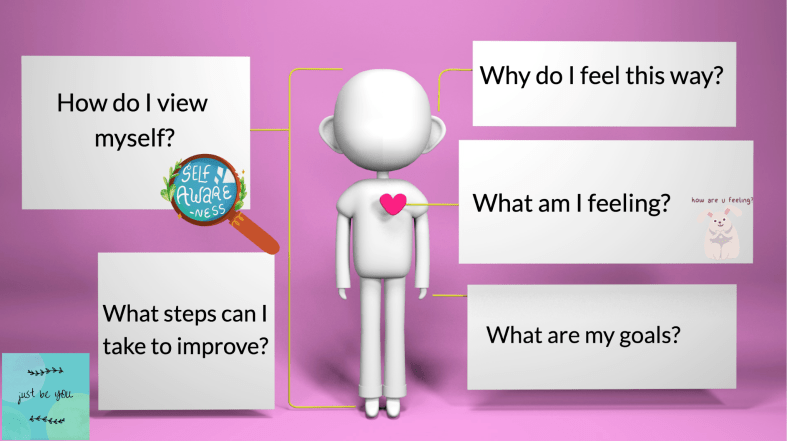
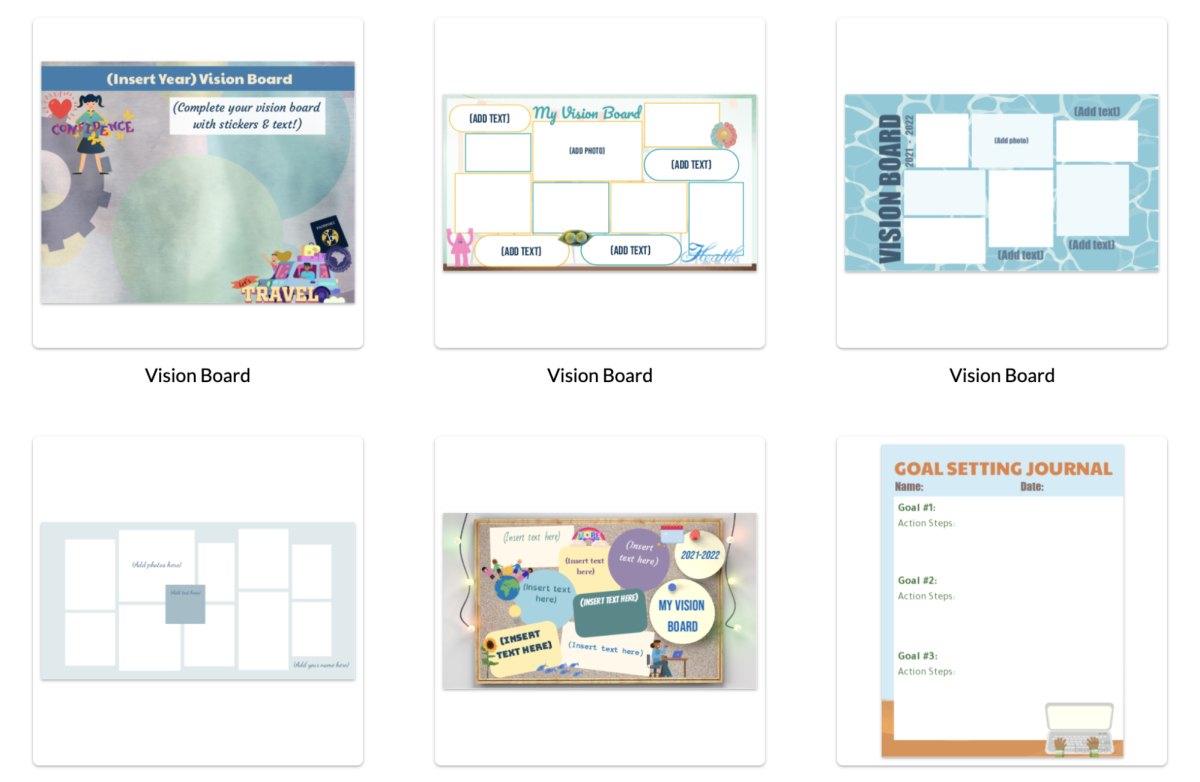
Self-care is crucial for students’ well-being and academic success. Students who practice self-care are more likely to have better mental health, reduced stress levels, improved academic performance, and higher levels of overall happiness. This, in turn, enables them to focus better on academic work and set and achieve their learning goals. One idea to try is to have students design vision boards. The boards can include each student’s goals in each of these areas and can be a great activity for students to use for personal reflection.

Self-love, which involves developing a positive self-image and nurturing oneself with kindness and compassion, can boost self-esteem, self-confidence, and resilience. These directly relate to the SEL skills that are essential for personal success. Developing these skills will enable students to navigate their social and emotional worlds and build meaningful relationships with others. Students will be better able to manage emotions, communicate effectively, develop empathy and understanding for others, and work through challenges they may face.

Ideas for focusing on self-love and SEL

Buncee: Teachers can use Buncee, a multimedia and creativity tool, to help students create multimedia projects that promote self-care, self-love, and SEL. For example, students can create digital posters that showcase self-love affirmations, gratitude journals, or mindfulness exercises. They can also create projects to share that teach SEL skills such as empathy, self-awareness, and responsible decision-making. Buncee and using PebbleGo Create foster creativity and when students have writing or art assignments, they can express their emotions and thoughts in a safe and supportive environment.

Here are some examples to try!

  • Healthy Habits: Use PebbleGo to research healthy habits. A focus on self-love involves practicing healthy habits such as exercise, nutrition, and getting adequate sleep. With PebbleGo, students can research healthy habits in areas such as health, physical education, or science. Students will learn about the benefits of exercise on the brain and mood, the importance of sleep for mental and physical health, or the role of nutrition in energy and well-being. By learning about healthy habits, students can develop SEL skills of self-management and promote their physical and emotional well-being. Students can then create a visual to share what they have learned and encourage others to focus on their habits too!
  • Gratitude Jars and Journals: Showing gratitude is a great way to promote self-love and positive emotions. Students can think about what they are grateful for, whether it is something they learned, a story they read, a historical figure that developed something that impacted the world. Students can then use PebbleGo Create to design a digital gratitude journal or a gratitude jar and can add pictures or audio recordings to personalize their journals. By doing this, it will help students develop positive emotions and SEL skills of social awareness.
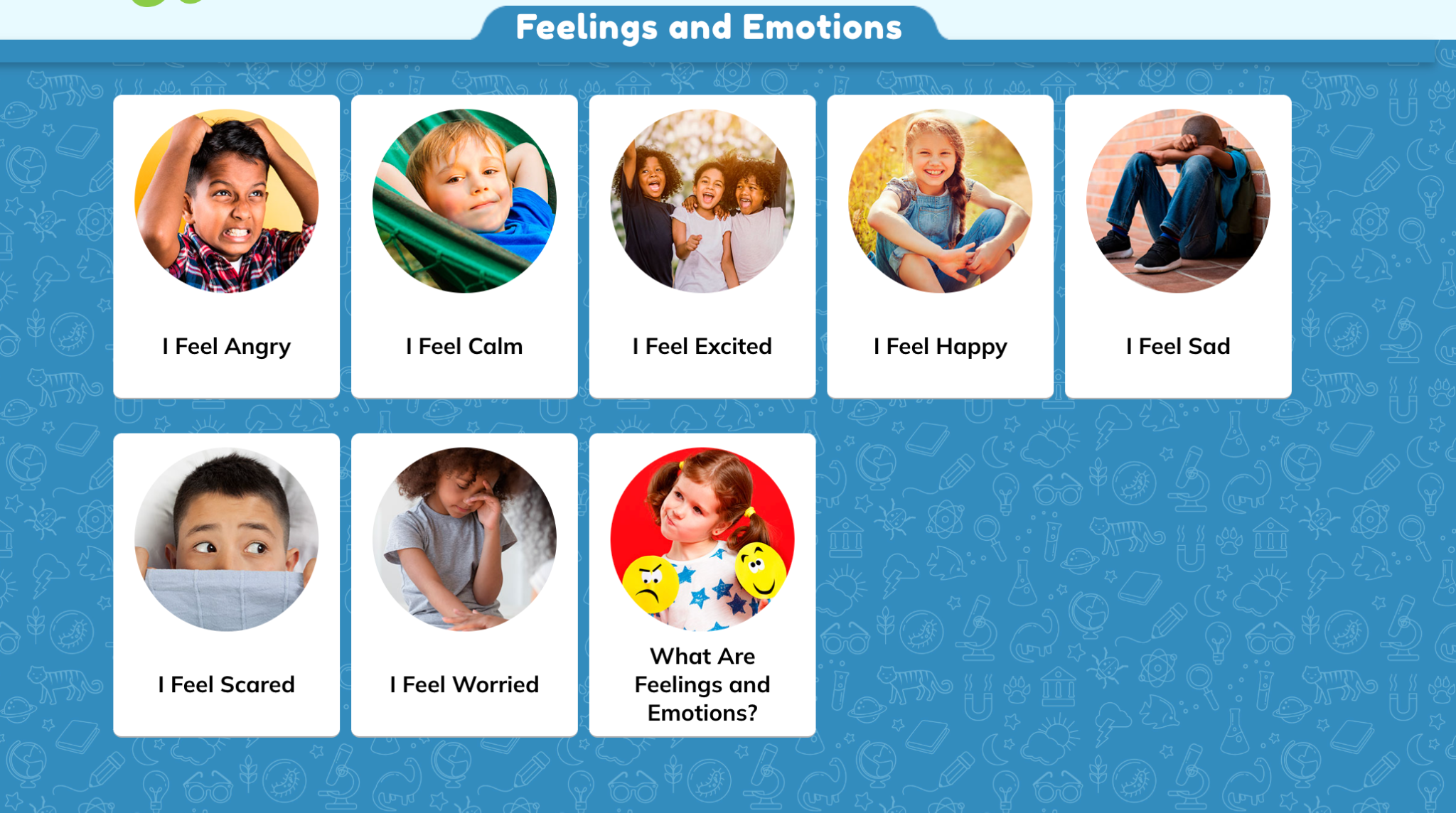
  • Learning About Others and Building Awareness There are many wonderful non-fiction articles available with PebbleGo that cover a range of SEL topics that will help students develop self-awareness and social awareness. Students can find articles about emotions such as anger, fear, or sadness, and learn about strategies that will help them to better manage their emotions. Through the resources, they can learn about empathy, perspective-taking, and even conflict resolution, which are essential relationship skills. To share their learning, students can create a PSA to share in the classroom or the school!
  • Create Digital Affirmation Cards: Making affirmation cards is a powerful tool to better promote self-love and positive self-image. It can be a great way to help students connect with how they are feeling and set some goals. Students can explore the topics about health and wellness, and then create digital affirmation cards to refer to when they need a confidence boost or a reminder of their self-worth. The multimedia options available with stickers, animations and more boost creativity and help students to create visually appealing affirmation cards. Students can also create cards that highlight their strengths and accomplishments, such as “I am a good friend,” or “I am a talented artist.” These activities help students develop their self-awareness skills and boost their self-esteem.

PebbleGo can be used to explore feelings and emotions across content areas, such as science, social studies, or language arts. For example, students can research different animals and their emotions, such as how dogs show affection or how dolphins communicate with each other. Students can also explore emotions in literature by researching characters’ feelings and motivations in stories.

Researching inspirational figures, exploring feelings and emotions, creating positive affirmations, researching mindfulness practices, and researching healthy habits with Pebble Go, students can develop self-awareness, self-management, social awareness, relationship skills, and responsible decision-making. These skills are crucial for academic success and personal well-being. As teachers, we can use PebbleGo to provide students with access to a variety of non-fiction resources that promote self-reflection, positive self-talk, and healthy habits, which can help them develop a positive self-image and promote their emotional well-being.

**Interested in writing a guest blog for my site? Would love to share your ideas! Submit your post here. Looking for a new book to read? Find these available at bit.ly/Pothbooks

************ Also check out my THRIVEinEDU Podcast Here!

Join my weekly show on Fridays at 6pm ET THRIVEinEDU on Facebook. Join the group here

Innovation Or Creativity? What’s the Difference?  

Guest post by Kathleen Fox- ImaginGO Team 

Often, teachers clump innovation with creativity, but understanding the difference between the two skills is paramount for teachers to successfully teach and measure students for both skills.

Innovation can be measured in outcomes – a new idea that results in a tangible product or idea.

Creativity doesn’t have to result in measurable outcomes.  

Basically, creativity “contributes” to innovation. Without creativity, you won’t have innovation. 

Need a more concrete example?

Innovation is quantifiable, action-driven, and involves risk. Say a student created a new sneaker that allowed a wearer to jump higher and run faster. The innovative part of the sneaker could be measured to show improved height and speed for the sneaker wearer. 

Creativity is intangible, subjective, involves less risk, and typically results in a “concept” only. Using that same sneaker example for creativity, a student might have the creative idea to use bird-like wings to jump higher or a micro rocket booster to make a wearer run faster. Creativity allows students the freedom to explore beyond boundaries before they apply more critical thinking. Innovation happens at that “what if” moment where unlimited creativity collides with logic.

A little bit more… 

Here’s the kicker, not all innovation is what we think of as being “creative.”  But it is. Much of our innovation stems from solving a problem, filling a gap, or improving on something that already exists. A person who is creative or has learned to be creative (yes, it can be learned!) is typically more apt to twist, bend, or stretch an idea in order to create fresh, new ideas.

If you look at the last few decades of innovation, much has been in technology, medicine, and communication. Those industries realize it’s essential to have creative thinkers on their teams to grow and produce new ideas, before the ideas are handed off to be developed and then measured for their innovative outcomes. Basically, they need each other to succeed. Like Ernie and Bert, peanut butter and jelly, or cut and paste.

Creativity in education…

As teachers, we are constantly measuring our students, and to some degree, ourselves. Every standard, every lesson, every moment seems to need a measurable outcome—from spelling quizzes to STEM lab exploration, to state-wide testing, to choir performances—we give a score, equate a grade, and figure the percentile of success in comparison to others.

There is an absolute need for measurable outcomes in education, but there is also ample room to weave creativity into the daily curriculum. When you do, learning becomes balanced. 

Both innovation and creativity require new ideas and concepts, as well as a willingness to take risks. Both drive change. And both will help your students succeed now and well into the future. We should all remember that without creativity and creative thinkers, there will be no innovation. 

Kathleen Fox is the co-creator of ImaginGO. A former public school teacher, school librarian, and director of her own school. Kathleen authored two children’s books, dozens of educational games, and professional development books for teachers. You can reach her at Kathleen@ImaginGO.com 

About Rdene915

Rachelle Dené Poth is a Foreign Language and STEAM Educator at Riverview High School in Oakmont, PA. She is also an Attorney, Edtech Consultant, Speaker, and the Author of seven books about education and edtech. Follow her on Twitter and Instagram at @Rdene915

I am available for PD sessions in-person and virtually on a variety of topics. Key focus areas are AI, ChatGPT, AR and VR, SEL, and STEM.

**Interested in writing a guest blog for my site? Would love to share your ideas! Submit your post here. Looking for a new book to read? Find these available at bit.ly/Pothbooks

************ Also check out my THRIVEinEDU Podcast Here!

Celebrating Poetry All Year

Adapted from a prior post for Getting Smart

In April we recognize National Poetry Month, which has become an annual celebration of poetry in the United States, which was first established by the Academy of American Poets in 1996. The goal is to raise awareness of the importance and power of poetry in our lives and in the world. Poetry has the power to evoke emotions, boost imagination, and even challenge perspectives, which makes it a great medium for exploring new ideas, developing social awareness, and building literacy skills.

We can celebrate poetry throughout the year, not just during April. It is important to encourage students to read and write more and a great way to do that is to explore and write poetry. Whether teachers find content-related poems to read to students or have students boost writing and creativity skills and write their own poems, there are many resources to explore and ideas for sparking interest in the beauty of poetry.

Some Ideas to Explore

When I was in the seventh grade, we had to create a book of poetry that included a variety of poems we found and a few that we wrote. We also had to memorize two poems to recite in our class. I still have my yellow binder with the poems that I hand-wrote and pictures that I drew to illustrate the poem’s theme. I wrote two poems similar to some of the styles we learned about such as acrostic poems and haikus. I really enjoyed doing that project because it gave us a choice, I felt creative and it led me to love poetry!

More than just a month

To celebrate poetry all year long, encourage your students to write their own poems. Offer different prompts or themes or provide examples to guide students as they develop their critical thinking skills by analyzing and interpreting poems. In elementary or middle school, reading poems to students is also a beneficial way to explore language and creativity. Depending on the grade level you teach, you could also read poetry aloud together and engage in discussions about what you like about each poem or compare poetry styles. We can help students to build confidence and communication skills. In language classes, we can build cultural and social awareness skills by learning about different poets and styles of poetry.

Some middle school students may enjoy exploring different poetic forms and techniques. Encourage students to choose a type of poem to write such as haikus, sonnets, or maybe free verse. Something fun to do is a poetry slam. Poetry slams are a fun and exciting way to celebrate National Poetry Month. They give students the opportunity to perform their own poems in front of an audience (classmates) and can help build confidence and public speaking skills. Consider organizing a poetry slam at your school or even using tools like Flip for students to record a poetry slam. Depending on your students, you might break them into small groups so that they can collaborate and challenge each other and have fun in the process! Or divide students into groups and have them write a collaborative poem to share with classmates. Writing poetry together can be a fun and engaging way to encourage creativity and teamwork.

For older students, depending on the content area, choosing to learn about and explore the works of famous poets from different time periods and cultures can be very beneficial. In my Spanish class, we read poems throughout the year and learn about the culture and history connected to the poet and the content of the poem. Students could even participate in writing workshops or attend virtual lectures by poets.

In addition to ideas for the classroom, here are five resources to explore that offer activities, lesson plans, and many ideas for teachers and students.

  • Academy of American Poets is full of great resources for educators and families. Explore the site to find a variety of resources and a list of 30 ways to celebrate Poetry Month! On the site, explore Teach this poem to find ideas for students in grades K-12. It has lesson plans and shares 1 poem per week. You can also listen to the poems available on the site.
  • Listenwise offers a variety of activities for students to listen to podcasts and then engage in a variety of activities to share their learning. There are some great ideas to celebrate poetry this month!
  • Nearpod provides activities and content that can be used to create an interactive lesson or explore ready-to-run lessons to teach about poetry. Use the drag-and-drop feature to create magnetic poetry right in Nearpod. Also with Flocabulary, there are poetry lessons to get students up and moving. Students can use Lyric Lab to write their own poems!
  • Read, Write, Think for K-12 has lesson plans and libraries with resources for each grade band. One idea is to select students to be “Poets for a Day” and share their favorite poems or maybe they can write their own poems to share.
  • Verse By Verse uses AI to write a poem. You select up to 3 poets and the style, and a number of syllables and provide some input. It then generates a poem for you based on your selections.

Teachers can find a lot of resources from these sites and also look at the Poets.org website for more resources and activities. There are also some fun activities via the Bored Teachers site to engage students in movement and excitement for poetry.

Beyond just reading the poems, students can compare poems and debate about the styles or the meaning. Students can also read poems and then design art to reflect the poem’s message. There are so many ways to celebrate National Poetry Month throughout the year and develop a true appreciation for the beauty of poetry.

About the Author

Rachelle Dené Poth is a Foreign Language and STEAM Educator at Riverview High School in Oakmont, PA. She is also an Attorney, Edtech Consultant, Speaker, and the Author of seven books about education and edtech. Follow her on Twitter and Instagram at @Rdene915

I am available for PD sessions in-person and virtual on a variety of topics. Key focus areas are AI, ChatGPT, AR and VR, SEL and STEM.

**Interested in writing a guest blog for my site? Would love to share your ideas! Submit your post here. Looking for a new book to read? Find these available at bit.ly/Pothbooks

************ Also check out my THRIVEinEDU Podcast Here!

Join my weekly show on Mondays and Fridays at 6pm or 6:30 pm ET THRIVEinEDU on Facebook. Join the group here

Learning about Self-Driving Cars with CV Pro

In collaboration with Robotix, all opinions expressed are my own.

In my eighth-grade STEAM class, we have been exploring artificial intelligence, coding, and other emerging technologies for a few years. I am always interested in finding new resources for students to explore that give them a chance to become curious and also invest in creating and innovating. We started to use the courses available from AI World School two years ago and my students really enjoyed them. The courses provide engaging learning experiences about artificial intelligence and machine learning for students. Within each course, the modules included definitions, challenges, and quizzes to spark interest in students that would lead them to think about becoming creators with AI.

Why learn about AI?

Many people wonder about the benefits of learning about AI and why bring it into our classrooms? We interact with AI every day and students need to understand what it is, how it works, the impact it has, and what it might mean for the future of work and education. We have seen an increase in AI over the past couple of months and it will continue to grow.

With a prediction that there will be 33 million self-driving cars on the road by 2040, it is important that students understand how this type of technology is created and how it functions. However, as we know, self-driving cars and autonomous vehicles are no longer a thing of the future. They are rapidly becoming a reality, and the technology that drives them is advancing at an unbelievable pace.

By providing students with opportunities to learn about this field today, and to make an impact with what they create, they will have a significant advantage in the future job market. By learning about self-driving cars and autonomous vehicles, students can develop essential “21st century” and “future-ready” skills such as critical thinking, creativity, and problem-solving. We will shift students from consumers to creators, to innovators.

CV Pro

Finding the right resources is key. With CV Pro from Robotix, educators can provide powerful learning experiences for students in their classrooms. Students need opportunities to learn how to code and to do so at their own pace or while collaborating with classmates. One critical area of learning about self-driving cars and autonomous vehicles is coding. As the technology behind these vehicles becomes more sophisticated, the programming required to operate them becomes more complex. Students who learn to code will have a significant advantage in the job market, as the demand for skilled coders in this field is growing rapidly, with a prediction of 58 million STEM-related jobs available by 2025.

What is the CV Pro?

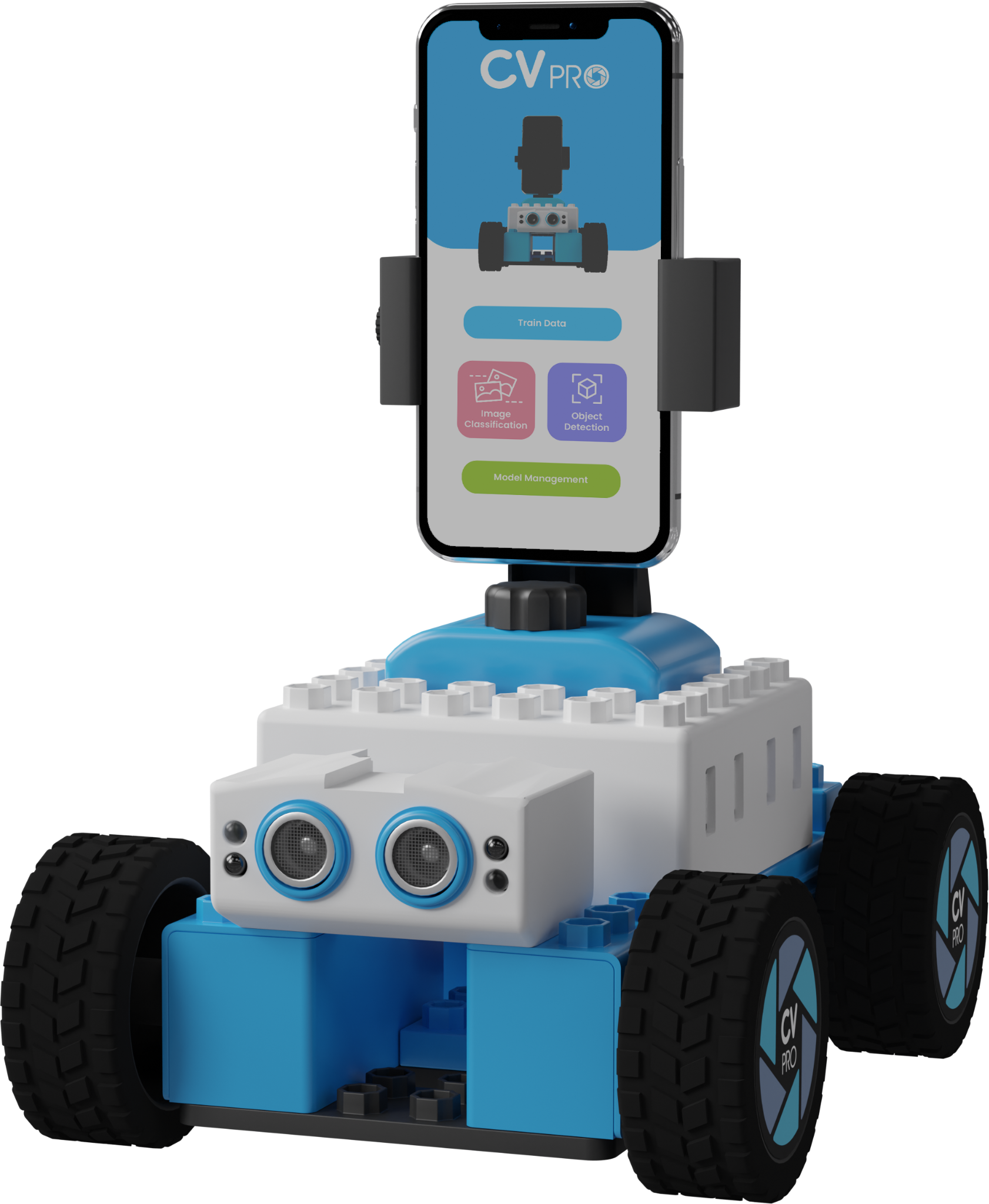
CV Pro is a hands-on solutions platform for students to use as they discover and explore platooning, self-driving cars & autonomous vehicles. It has smart computer vision technology that utilizes the extensive sensor suites, powerful computational abilities and state-of-the-art communication channels of smartphones as the operating brain power. Students can learn about advanced AI technologies like machine learning, applied deep learning and neural networks.

By diving into learning with the CV Pro, students will learn the operational techniques of advanced computer vision technologies such as how vehicles stay in the lane, lane detection, lane changing, vehicle or person-following. Students also look at how to program it so they prevent collisions by using object identification for example.

The features of CV Pro

Being able to interact with and write programs for these self-driving cars gives students an edge with the technology. It is important for students to understand how these vehicles function. These tools can include sensors, cameras, and other advanced technologies that allow the vehicles to perceive their surroundings and react accordingly. Students will be better equipped to troubleshoot problems that arise after they spend time writing programs, facing challenges and continuing to improve their coding skills. During this process, it will foster discussions about ethics and how decisions are made that impact the programming for these tools.

Students should also learn about the ethical and social implications of self-driving cars and autonomous vehicles. These vehicles have the potential to revolutionize transportation and make our roads safer. However, they also raise important questions about privacy, liability, and the role of human drivers. Students who understand the ethical and social implications of these vehicles will be better equipped to make informed decisions about their use and development.

Robotix is a valuable resource for students who are interested in learning about self-driving cars and autonomous vehicles. Robotix offers a range of courses that teach students about coding, robotics, and other related fields. For example, the course “Artificial Intelligence & Robotics” provides an introduction to the principles of AI and robotics and teaches students how to program robots using Python.

VDC is an autonomous car simulator just like a flight simulator. Get a VDC course for free by subscribing to the CV Pro kickstarter campaign landing page.

Learning about self-driving cars and autonomous vehicles is a valuable investment in a student’s future. Students who learn about coding, hardware, ethics, and social implications in this field will be better equipped to navigate the future job market and will be better prepared for a world in which self-driving cars and autonomous vehicles are a significant part of everyday life. With resources such as Robotix and AI World School available, there has never been a better time to start learning about this exciting and rapidly advancing field.

I love sharing about these awesome tools at conferences!

CV Pro at FETC

In January, I had the chance to share the CV Pro during a few of my sessions at the FETC (Future of Education Technology Conference). It was exciting to hear from classroom teachers, tech coaches, and administrators about their interests in the types of tools available for students to learn about these technologies. Being able to see the CV Pro and understand all the ways that students can use it to learn about autonomous driving was a great experience for attendees. Knowing that there are options available that place learning in the students’ hands is powerful!

CV Pro at BETT 2023:

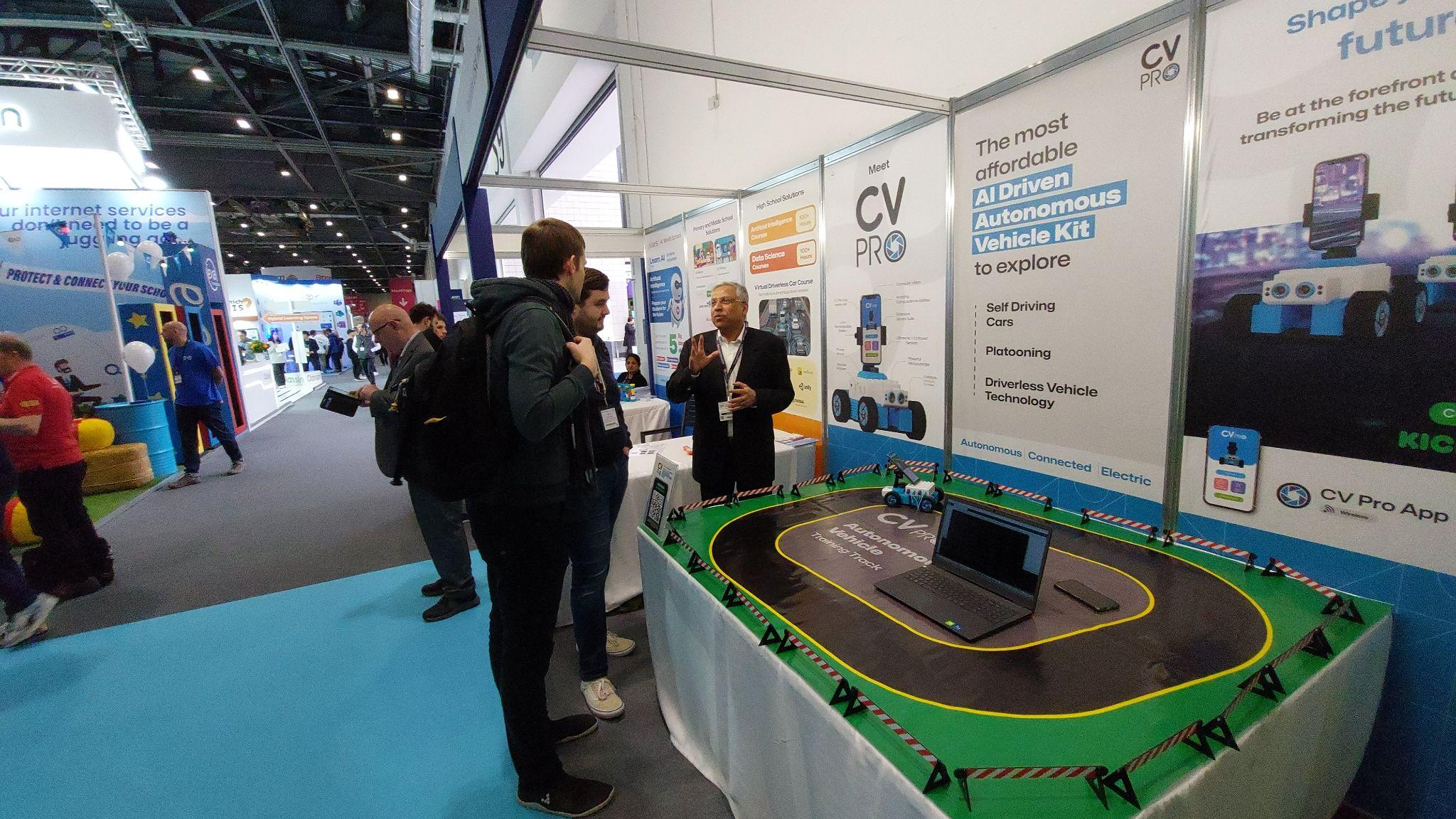
Recently, CV Pro was showcased at the BETT Show 2023 which was held in ExCEL London from the 29th to the 31st of March 2023. The Robotix team demonstrated various autonomous driving programs carried out by CV Pro to an audience consisting of educators [K12, college & university level], researchers & professors in Computer Science, Robotics & AI enthusiasts, delegates from education ministries, and distributors & providers of EdTech solutions to name a few.

The CV Pro robots demonstrated how they carried out lane identification, lane tracking & following as they drove around a track. Another feature demonstrated was how CV Pro carried out object recognition by responding to objects such as traffic signs, as it was moving along the track.

Most visitors expressed their keen interest in CV Pro as an educational aid for exploring the topic of self-driving cars. Some of them suggested that CV Pro can also be used in Robotics competitions for students. Industry experts also provided a few helpful & critical suggestions & modifications which shall be implemented before the launch on Kickstarter.

Overall, the feedback that CV Pro received at BETT 2023 has been positive, productive, and promising.

Link: https://youtu.be/NGk5xk7mHUk

About the Author

Rachelle Dené Poth is a Foreign Language and STEAM Educator at Riverview High School in Oakmont, PA. She is also an Attorney, Edtech Consultant, Speaker and Author of seven books about education and edtech. Follow her on Twitter and Instagram at @Rdene915

**Interested in writing a guest blog for my site? Would love to share your ideas! Submit your post here. Looking for a new book to read? Find these available at bit.ly/Pothbooks

************ Also check out my THRIVEinEDU Podcast Here!

Join my weekly show on Mondays and Fridays at 6pm or 6:30 pm ET THRIVEinEDU on Facebook. Join the group here

How does a techy teacher navigate ChatGPT and AI?

Guest post by Joe Warner, 2nd-grade teacher at West Lafayette Elementary School in West Lafayette, IN

@jdswarner – Twitter

I am what most refer to as a “Techy teacher.” I love most things edtech and pursue a lot of edtech use in my classroom. I have been so driven by edtech that I pursued a master’s degree from Purdue University in Learning Design and Technology. The program has really helped me develop stronger edtech tools and designs for my classroom. When someone needs help with tech in our school, they usually come to ask me. I am not saying this in a bragging sense, it is merely to give the background that I love technology and see its benefits to our daily lives as human beings, especially as teachers.

All that said, I have some reservations about AI and the newly discovered ChatGPT (which I have only read about, and not used). Let’s first start with AI. For me, AI is an easier topic to discuss. I use Google Assistant on my phone to prioritize my daily life. I have even used IFTTT in conjunction with my Google Assistant to create a verbal command system that would award points to table groups similar to the house points in Harry Potter. So there are some great benefits of AI. My only reservation is something that I read about in EdTech Magazine. The title of this article is Empowering Teaching and Learning with Interoperability written by Douglas Konopelko. Interoperability was a new term to me but I have since embraced it. Interoperability in short is the ability of various programs and software to talk and work with each other seamlessly. My frustration with this topic and AI is how little companies are trying to accomplish this. The Google, Microsoft, and Apple battle are well known. None of those companies seem to want to work together and share their systems to work with each other. The same can be said for EdTech. If we are to fully be able to use the systems we have in education, we need them to have interoperability. The companies behind them need to embrace this. The question then turns to, can AI help us in accomplishing this? I am writing this post hoping to seek the answer to this question. There is so much overwhelming data in education and we need systems that can easily combine all the pieces we need into one system that makes it easy for teachers to use.

This brings me to the next tricky subject, ChatGPT. I have not used ChatGPT. It is blocked in my school and I have no desire to use it at home. I keep coming across Twitter posts with articles discussing the benefits of ChatGPT in education and for educators. I am extremely cautious to embrace this. The biggest issue I have with ChatGPT is originality and authenticity. In the article How CHATGPT is fast becoming the teacher’s pet from Forbes, a teacher is quoted saying that he lets the students use ChatGPT to write their first draft of code for them. But if ChatGPT is writing the first draft of code, then how is it “their” code or program? Other uses for ChatGPT in this article discussed are writing emails, comments for students, and creating tables and charts to name a few. And sure, automating these processes do seem like they would make my life as a teacher more efficient. The struggle I have is how can we confirm originality with these processes. How can we ensure there will not be mistakes? Yes, we all know “Skynet” is not taking over but when will ChatBot perceive the student, parent, or teacher as a threat and send the wrong message home? And maybe this is because I have some control and trust issues with the processes of my own classroom.

Let’s circle back to our topic of interoperability. What role does AI or even ChatGPT play in this term? If ChatGPT can create charts and tables, can it then provide interoperability for the systems that we use in schools? Can it gather all of the data from all the sources we use and make reports for schools to use? I for one am tired of chasing down data, copying it from one source to another. Could ChatGPT and AI automate and streamline this process for me? There are systems out there like Class Composer which let us take all of our data and put it into one place. I am a teacher so I am not on the backend of the data dump but I do know, I have had to enter my student data into Class Composer. So what can be done to make this process easier and eliminate my need to enter the data? We all know how much time this will save. Can ChatGPT solve this issue for us?

In this evolving world, I am more than happy to embrace change and technology. There are great benefits to using technology in our lives, especially in the classroom. And we can forget to take the time to measure the value of technology in the classroom. Our efforts should be on interoperability. How are we going to push all these systems to work together? How can ChatGPT help with that? How can I be assured of trust in ChatGPT’s originality or authenticity? I am just a techy teacher trying to navigate this evolving world and embrace the new tech.

Sources:

Konopelko, D. (2020, July 9). Empowering Teaching and Learning with Interoperability. Technology Solutions That Drive Education. https://edtechmagazine.com/k12/article/2020/07/empowering-teaching-and-learning-interoperability.

Whitford, E. (2023, March 27). How CHATGPT is fast becoming the teacher’s pet. Forbes. Retrieved March 28, 2023, from https://www.forbes.com/sites/emmawhitford/2023/03/25/how-chatgpt-is-fast-becoming-the-teachers-pet/?sh=39c665de5177

**Interested in writing a guest blog for my site? Would love to share your ideas! Submit your post here. Looking for a new book to read? Find these available at bit.ly/Pothbooks

************ Also check out my THRIVEinEDU Podcast Here!

Join my weekly show on Fridays at 6pm ET THRIVEinEDU on Facebook. Join the group here

Learning to Code with VinciBot

This post is sponsored by Matatalab, Opinions expressed are based on my own experience

During the past year, we have been exploring a lot of new products as we work on our coding skills in my eighth-grade STEAM class. My students really enjoy trying out different tools to find something that matches their interests and that gives them opportunities to build their coding skills. We also take opportunities to try tools that are geared toward younger students as well, to better understand how students can develop coding skills and the benefits. It also helps to spark interest in coding, which is an in-demand skill for the future. 

Sometimes, students hesitate to get started with coding because of a fear of not understanding how to write the code, or troubleshooting if the code does not work. However, with the different options and resources available through Matatalab, my students have really enjoyed the experience and are excited to dive right in.

Matatalab is a company that specializes in developing educational coding products for young children. What I love about using them is that their products are designed to teach early learners the fundamentals of programming in a fun and engaging way through interactive and hands-on learning experiences. It is not all about the technology, Matatalab offers screen-free coding and also comes with cards to teach students about the coding steps.  They offer a range of products that are suitable for different age groups and skill levels, from preschoolers to elementary school students and older.

Through the various products available, educators are able to provide opportunities for students to learn about coding, even at an early age as young as 3! Last year I started exploring the Tale-Bot Pro which makes it easy for kids to get started on their own and build their knowledge whether at home or school.

The VinciBot

The newest product from Matatalab is the VinciBot which is aimed at slightly older children, ages eight and above. Matatalab products are designed to be intuitive and easy to use. The coding blocks are color-coded, making it simple for students to understand the different types of commands and functions. This helps to make the learning process more accessible and enjoyable, especially for students who may be intimidated by traditional coding methods. By programming the robot, students can develop their problem-solving skills and spatial awareness and have fun working together to explore coding and the world of robotics! 

When I brought it into school, my students were lining up to be the first to explore it!  VinciBot is the new and maybe even one of the most popular coding products from Matatalab. It is a versatile and interactive robot that is designed to teach the basics of coding in a fun and engaging way. VinciBot can be controlled using a range of programming languages, including Scratch, Python, and the MatataCode App. With these options, it provides each student with a way to engage in coding at a pace that is comfortable and supports them as they build their skills and confidence in coding.

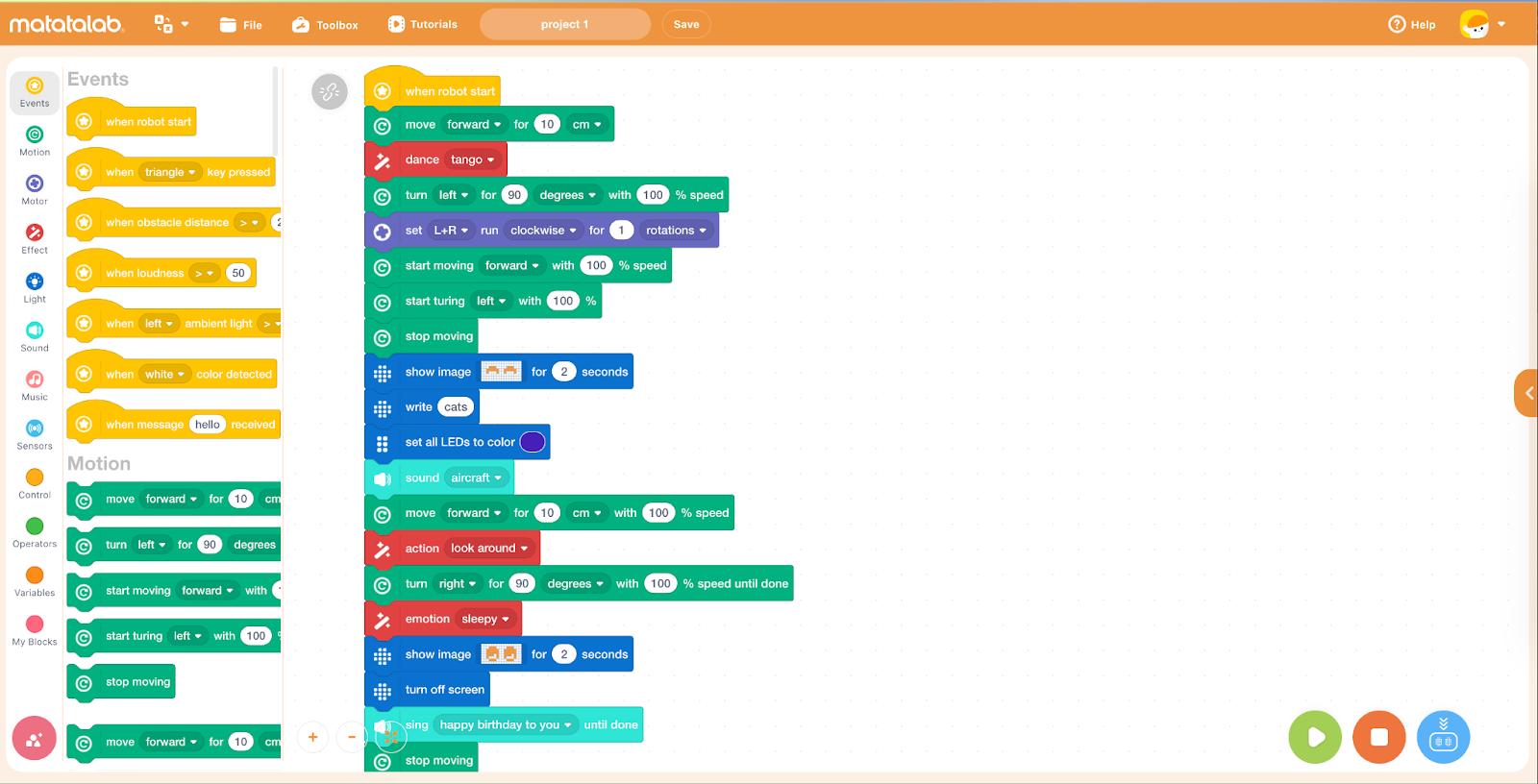
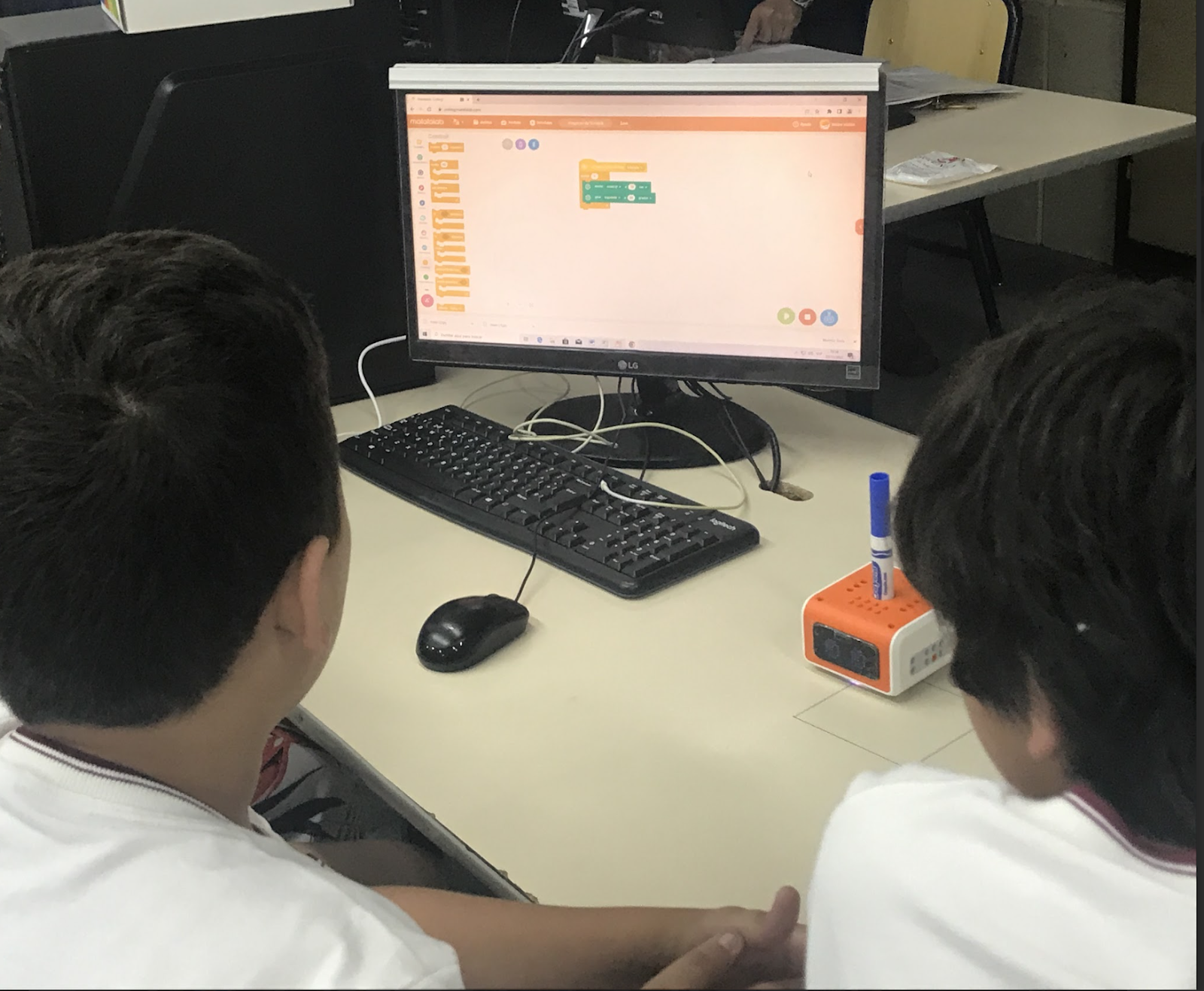
[creating a program for VinciBot]

Features

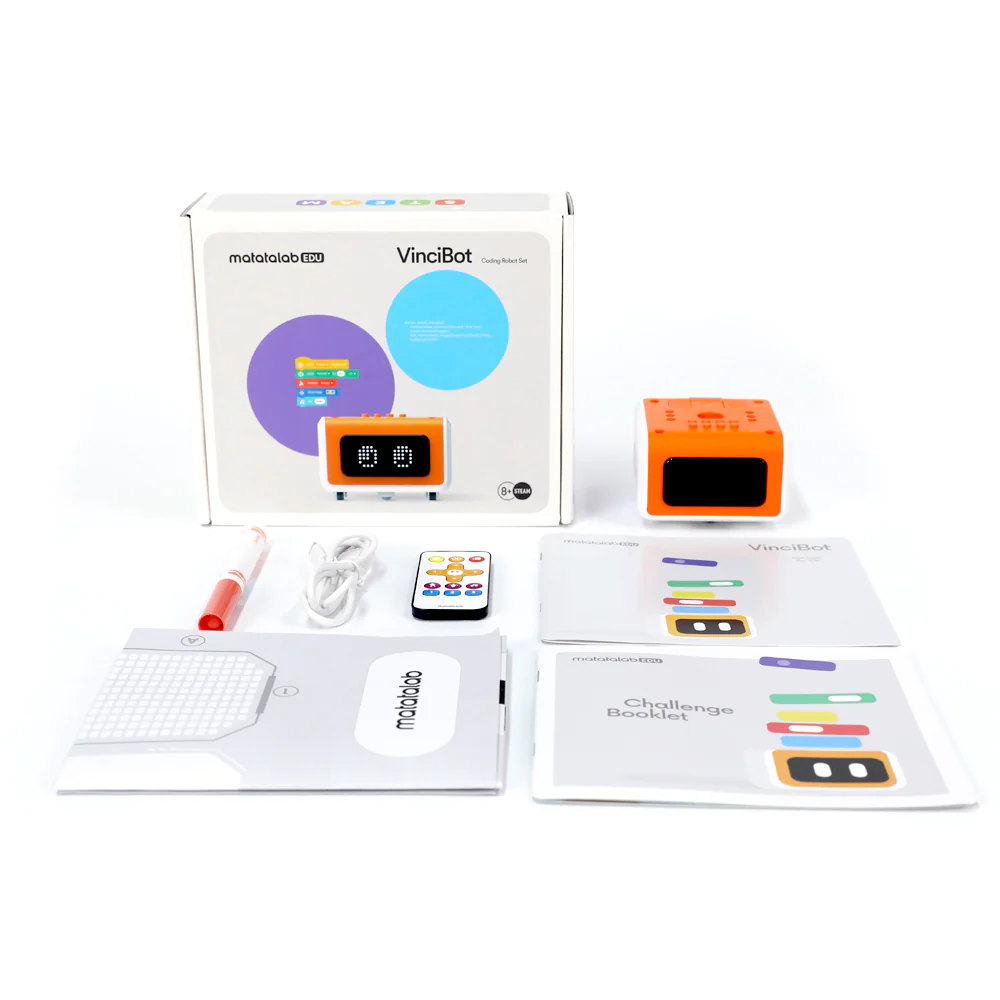
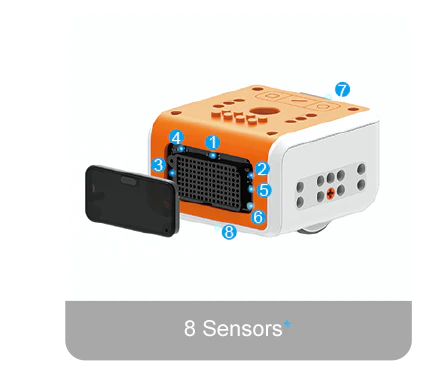
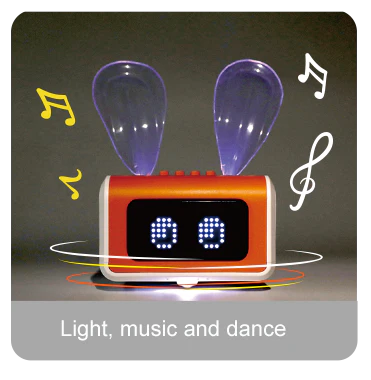
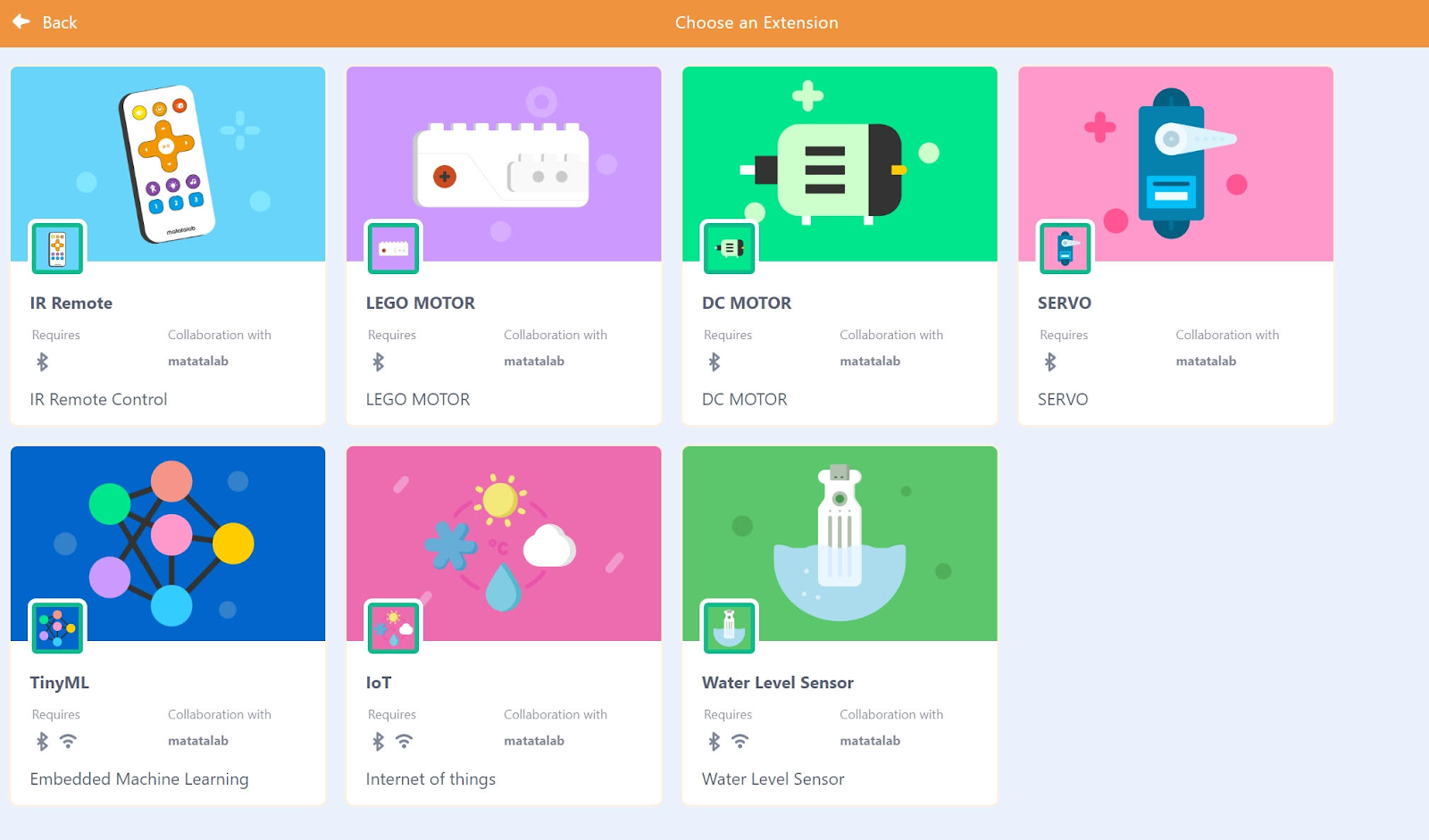
The VinciBot comes with everything you need to provide an engaging learning experience for students. There is a challenge booklet with 18 challenges for students to explore.  The VinciBot is equipped with interactive sound, light, and movement effects and has 8 sensors. There are 21 musical instrument sounds, an LED matrix, and an LED RGB light structure. The infrared and ultrasonic sensors allow it to navigate its surroundings and interact with the environment. Students can program VinciBot to complete a variety of actions including dancing and can even program it to sing Happy Birthday!   VinciBot also offers the opportunity for students to explore artificial intelligence (AI) through its AI-based teaching scenarios and gameplay.  This is a great benefit, especially with the increased interest in getting started with AI, coding, and STEM, having one resource that can provide it all is a great opportunity. The Tiny Machine Learning of VinciBot is available even without the Internet in the classroom. Students will have programmed with the AI data and trained the robot before and perform their program in a non-internet environment. The Tiny ML enables students to go through the whole process by learning about model creation, data acquisition, training, and development to then programming. Engaging in this ongoing learning journey helps them to develop a much greater understanding of AI at their own pace and in their own way. 

Learn more through their video tutorials and the overview of the VinciBot in action. 

Accessibility

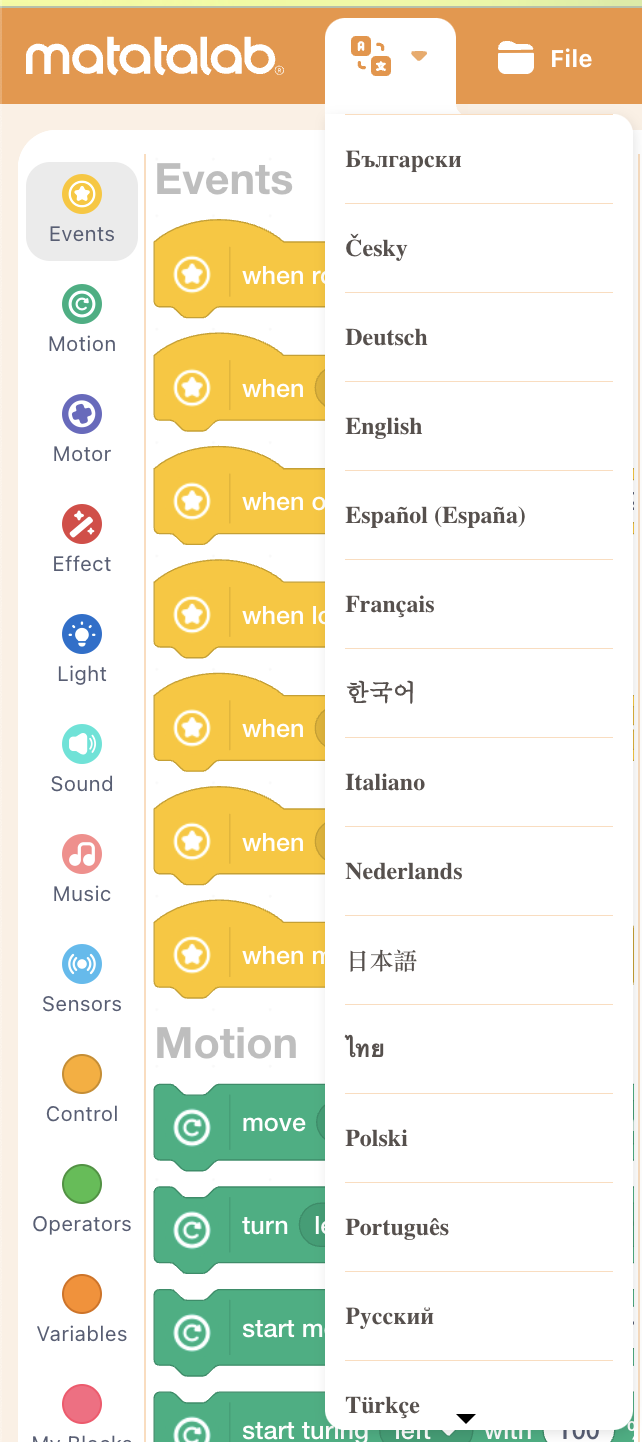
The coding program is available in multiple languages, making it more accessible to a wider audience. This allows children from different countries and backgrounds to learn to code using their native language. Additionally, the programming blocks are designed to be easily understood by young children, regardless of their level of literacy or cognitive ability, promoting inclusivity and accessibility for all.

[Students can select the language for coding, making it more accessible for all students as they build language skills and coding skills together!]

One of the key benefits of VinciBot is that it is designed to grow with the student. As they become more proficient in coding, students can use more advanced programming languages to control VinciBot and develop increasingly complex programs. This means that VinciBot can provide years of educational value for children of all ages.  

​​

Extra features

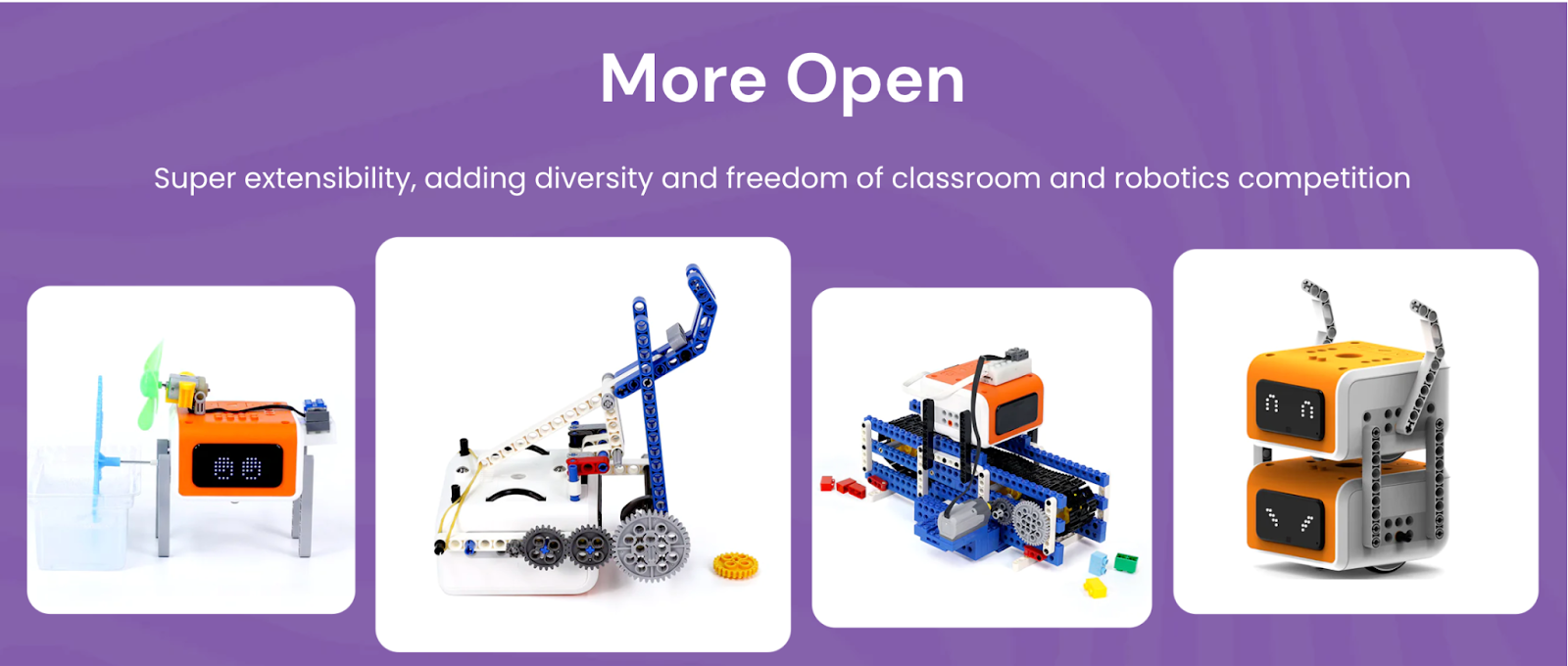
The VinciBot is also compatible with LEGO bricks and other products, making it possible to even combine robots together for a larger project or a robotics competition!  Students are so creative and can problem solve and collaborate to design a solution to a challenge or work with design thinking in the classroom.

Benefits of coding

In addition to learning to code, students develop many other skills that are essential for future success. It fosters the development of social-emotional learning (SEL) skills, building self-awareness as students learn to code and evaluate their growth. It fosters self-management as students set goals and problem solve and deal with challenges that can come with coding. Students build relationships as they work with one another to create, while also building skills in communication, collaboration, creativity, critical thinking, and problem-solving. 

Why explore Matatalab?

Matatalab products promote hands-on learning and encourage creativity and imagination. Students can use the coding cards to think about the steps in the coding process or use the remote to drive the robot. Once logged in, students are able to create their own programs. Being able to explore their own ideas and interests helps to foster a love of learning and discovery. By encouraging creativity and imagination, Matatalab products help to prepare children for the challenges of the future.

By providing an intuitive and hands-on approach to learning programming, Matatalab products help to prepare our students for the challenges of the future. They are designed to be accessible and engaging for kids of all ages and skill levels. Whether you are a parent or an educator, Matatalab products offer a fun and effective way to introduce kids to the world of coding and programming.

About the Author

Rachelle Dené Poth is a Foreign Language and STEAM Educator at Riverview High School in Oakmont, PA. She is also an Attorney, Edtech Consultant, Speaker, and the Author of seven books about education and edtech. Follow her on Twitter and Instagram at @Rdene915

**Interested in writing a guest blog for my site? Would love to share your ideas! Submit your post here. Looking for a new book to read? Find these available at bit.ly/Pothbooks

************ Also check out my THRIVEinEDU Podcast Here!

Join my weekly show on Mondays and Fridays at 6pm or 6:30 pm ET THRIVEinEDU on Facebook. Join the group here

Spring Ideas to bring STEM to your classroom!

By Rachelle Dené Poth, @Rdene915

As we continue to seek ways to best prepare students for the skills that they need to be successful in the future, it’s important that we are not afraid to take risks in our classroom by bringing new methods and different digital tools for our students. In looking at resources from the World Economic Forum and the Job Skills Outlook for 2025, for example, many of the skills that we’ve been talking about for years are still in demand and predicted to be even more essential in the future. Some of those skills include critical thinking and problem-solving, creativity, collaboration and communication, flexibility, resilience, leadership skills, and digital literacy. Deciding on methods to use or which digital tool to use in our classrooms can be a challenge sometimes, however, there are some easy ways to get started with STEM learning activities that provide many benefits for students.

Regardless of the grade level or content area, all teachers can bring in ​STEM-focused activities for students in a variety of ways. There may be concerns about a lack of teacher training, however, it just takes a little bit of time to become familiar with the technology or the concepts and then let students dive in and take the lead in learning. It is great when students teach us as well. It does not require us to be experts in all of these areas. We just need to find a few ideas and get started.

Why STEM Matters

Helping students to learn about STEM is important for their future success as many of the in-demand careers are in ​STEM-related fields. These careers will increase in demand and it is important that all students have opportunities to explore their interests in these areas. There are many benefits of learning about STEM including that it helps students to develop problem-solving skills, which is a valuable skill for any type of career. Students build collaboration skills when working with classmates to solve STEM challenges for example. These opportunities also spark curiosity as students become more engaged in learning, not just the content area but also learning more about the fields of science, technology, engineering, and math. Providing STEM-related learning opportunities helps students to become more comfortable with taking some risks in learning and also shifts students from being consumers to creators and even innovators. ​

STEM also helps students to build social-emotional learning (SEL) skills. As students work through a learning activity, they build self-awareness in regard to their skills and their interests, self-management as they work through challenges, and develop persistence and resilience as they may face obstacles in learning. They also become better with time management as they plan their project-based learning​ (PBL)​ or need to meet a specific deadline for their work, depending on the methods used. Students build relationships as they collaborate with classmates and develop social awareness as they learn about one another or by exploring the United Nations’ ​S​ustainable ​Development Goals (SDGs) and learning about places and challenges being faced around the world. Decision-making skills are developed as they focus on their learning journey and make decisions and take greater ownership of their learning. Providing STEM activities helps students to become quite flexible in their learning as they have to continue to iterate and reflect on where they are in the learning journey.

Getting Started and Ideas to Explore

Finding the time to get started with ​STEM may present another challenge for teachers, especially with benchmarks that need to be met and specific curricula that must be followed. However, there are some different ways to bring STEM in even if it’s for a short term or as a class activity. 

  1. Start with a discussion about the various subjects of STEM and then encourage students to explore something related to their interests and share it with classmates. There are many online resources available and even educational programs and courses that can help students to learn about STEM subjects. It could be that they enroll in an online course or follow a tutorial and then create something to share in class. Hands-on learning is a great way to get students involved in STEM and that can require very little if any funding. 
  2. Think about the content that you are teaching and identify a real-world problem for students to solve or apply a STEM concept to it for a solution. Students can work individually or in small groups to come up with different solutions and then provide feedback to each other.
  3. Design ​h​ands-​o​n learning activities for students. Depending on the course you teach, it could be having students conduct an experiment in a science class, they could design a prototype for something, reconstruct a famous landmark from history or another course of study, and try to improve upon it using STEM concepts. Use the STEM challenges to connect students in the classroom and boost student engagement in learning.
  4. Bring in some digital tools and STEM materials. There are many digital tools available that not only provide students with opportunities to learn about STEM but also involve emerging technologies like artificial intelligence for example. We have been working with Marty the Robot, a humanoid that can be coded screen-free with color cards or using the app with text-based and block-based coding. This is another great opportunity to bring in STEM, PBL, and SEL and understand how AI is programmed. Also with the great choices focused on STEM and SDGs and more with iBlocks, students engage in learning that is authentic, meaningful, and personalized for them. Teachers have all of the materials they need to get started. Another option is Ozobot, a one-inch robot for teaching students about coding that is a favorite in my STEAM class. It can be used as a screen-free coding resource too!
  5. Think about cross-curricular collaboration. Finding time to bring in STEM activities can be done when collaborating with colleagues through cross-curricular collaborations. Find a common focus and have students apply their knowledge from these courses to design a project or work together with classmates to develop STEM and essential SEL skills.

Finding the Funding

Some of the challenges with bringing STEM into classrooms may include a lack of funding, depending on the type of resource that a school may want. Applying for grants or connecting with a local school or organization that offers a lending program or a library of resources that they share can be a great way to get started. Another suggestion is to obtain a few items and have students work in learning stations. Giving students a chance to explore multiple resources and then exchange ideas and reflect on their learning experience is also beneficial. When it comes to technology, not all schools may have access to the right devices, so finding a variety of resources to use that provide students with the opportunity to learn and engage with these tools is important. Also connecting subjects with other areas of the curriculum so that they see the real-world connection makes it more meaningful for students.

Another idea is to find guest speakers who can talk to students about STEM fields and the importance of these areas. In my school, we have access to a cohort that helps us find local organizations, technology companies, and local universities that offer resources or STEM-related learning opportunities for students.

The Benefits are Long-Lasting

Providing access to resources that equip students with the right information and opportunities to work at their own pace and explore based on their specific interests and needs is essential. Providing students with opportunities to engage in more student-driven learning through STEM-related activities will offer many benefits beyond just the content knowledge. It will prepare them for whatever the future holds and equip them with a variety of skills that will be adaptable to many areas of work and life.


About the Author:

Rachelle Dené Poth is an ed-tech consultant, presenter, attorney, author, and teacher. Rachelle teaches Spanish and STEAM: What’s nExT in Emerging Technology at Riverview Junior-Senior High School in Oakmont, PA. Rachelle has a Juris Doctor degree from Duquesne University School of Law and a Master’s in Instructional Technology. She is a Consultant and Speaker, owner of ThriveinEDU LLC Consulting. She is an ISTE Certified Educator and currently serves as the past -president of the ISTE Teacher Education Network and on the Leadership team of the Mobile Learning Network. At ISTE19, she received the Making IT Happen Award and a Presidential Gold Award for volunteer service to education. She is also a Buncee Ambassador, Nearpod PioNear, and Microsoft Innovative Educator Expert.

Rachelle is the author of seven books and is a blogger for Getting Smart, Defined Learning, and NEO LMS. Follow Rachelle on Twitter @Rdene915 and Instagram @Rdene915. Rachelle has a podcast, ThriveinEDU https://anchor.fm/rdene915.

**Interested in writing a guest blog for my site? Would love to share your ideas! Submit your post here. Looking for a new book to read? Find these available at bit.ly/Pothbooks

************ Also check out my THRIVEinEDU Podcast Here!

Join our weekly show on Fridays at 6pm ET THRIVEinEDU on Facebook. Join the group here

Diving into coding with Ozobot!

In collaboration with Ozobot, the opinions expressed are my own.

Coding has become an increasingly important skill. The ability to code opens up a world of possibilities, allowing individuals to create apps, websites, and other digital tools that can improve the way we live, work, and interact with one another. However, while coding is an essential skill, it is equally important to balance it with screen-free options. With the rise of online learning in recent years, it is essential to find a platform that can provide an engaging and interactive coding experience. This is where Ozobot comes in.

We have enjoyed working with Ozobot for a few years in my STEAM course. There are so many benefits from coding such as developing problem-solving and critical thinking skills to building self-confidence and creativity. However, while coding online offers many benefits, it is essential to strike a balance between screen time and screen-free activities. Ozobot offers an excellent solution for both coding online and having screen-free options, complete with Ozobot Classroom, a free database of STEAM lessons for grades K-12.

What is Ozobot?

Ozobot is a small, programmable robot that is designed to help students learn to code in a fun and interactive way. With its many features and capabilities, it has become a popular tool for both educators and parents alike. There are so many benefits of using Ozobot and lots of ideas for using it in all classrooms. There are even lessons and activities to get you started! Learn more!

The Importance of Learning to Code

The ability to code is becoming an increasingly essential skill in today’s world. From business and finance to healthcare and education, coding is transforming the way we live and work. It allows us to create new digital tools, automate processes, and solve complex problems. Moreover, coding is a skill that can open up many job opportunities and can help individuals to build successful careers in the tech industry.

However, coding is not just for those pursuing a career in technology. Learning to code can help children develop critical thinking skills, problem-solving skills, and creativity. It can also help them to better understand how technology works and how to interact with it. Additionally, coding can help children develop a growth mindset, which is the belief that intelligence and abilities can be developed through hard work and dedication. Coding has a place in every classroom and in all content areas!

The Importance of Screen-Free Options

While learning to code is essential, it is equally important to balance it with screen-free options. Today’s students are spending more time in front of screens than ever before, and this can have a negative impact on their physical and mental health.

Ozobot’s color-coded language is a unique feature that sets it apart from other robots. By drawing lines in different colors, students can program Ozobot to perform different actions, such as spinning, changing directions, or even playing music. This approach allows younger students to engage with coding without the need for a screen, making it an ideal screen-free option.

Therefore, it is essential to provide children with screen-free options to help them develop a healthy balance between digital and non-digital activities. This can include activities such as reading, playing sports, and engaging in arts and crafts. It can also include educational toys and tools, such as Ozobot.

Ozobot’s online coding platform, Ozobot Blockly, offers a more advanced coding experience. With a drag-and-drop interface, students can create more complex programs, including loops and conditional statements. This platform also includes an interactive simulator, allowing students to test their programs before uploading them to the robot.

The Benefits of Using Ozobot

There are so many ideas and activities for classroom use and Ozobot provides a ton of resources for educators to explore and learn! Designed for students in grades Pre-K and up, Ozobot can be used in a variety of settings, including classrooms, after-school programs, and at home. Some of the key features of Ozobot include:

Easy to Use: Ozobot is easy to use and does not require any prior coding experience. This makes it an ideal tool for young learners who are just starting to learn to code.

Interactive Learning: Ozobot provides an interactive learning experience that is engaging and fun. Students can program Ozobot using a simple visual programming language or by drawing lines on paper. This allows them to see the immediate results of their coding efforts and encourages them to continue learning. My students have loved the possibilities with this!

Versatile: Ozobot can be used in a variety of settings, from individual play to group activities. It can also be used in a variety of subject areas, including science, technology, engineering, and math (STEM), as well as language arts and social studies.

Ideas for Using Ozobot in All Classrooms

Ozobot can be used in a variety of ways in all classrooms. Here are some ideas for how to use it:

Language Arts: Students can create a story and program Ozobot to act out the different scenes. This activity can help students improve their writing skills and develop their storytelling abilities. Explore Ozobot’s ELA lessons in Classroom, here.

Math: There are some great lessons available for math that make it easy for teachers to get started!

Science: Students can program Ozobots to travel different paths while recording their speed, acceleration, and direction using a motion sensor. This activity can be used to teach physics concepts, such as Newton’s laws of motion. Check out Ozobot science lessons here.

Social Studies: Students can create a map of a historical event and program Ozobot to follow the path of a significant figure in that event. Learn more about incorporating social studies into curricula here.

STEM Activities: Ozobot can be used to teach STEM concepts, such as robotics, engineering, and computer science.

There are so many great ways to use Ozobot and the best is that it can be used by anyone and it is easy to get started with. There are so many resources for educators to explore and learn about the activities to engage in with students!

Looking for PD for your school? I provide in-person and virtual training on the following topics. If you want to learn more about and explore AI and ChatGPT, contact me to schedule! Rdene915@gmail.com 

**Interested in writing a guest blog or submitting a sponsored post for my site? Would love to share your ideas! Submit your post here. Looking for a new book to read? Find these available at bit.ly/Pothbooks