Guest post By Reggie Grant, Twitter @media4literacy
This project was presented at the FSU-Teach STEM Teaching Mini-Conference at Florida State University on June 28, 2023.
“While we teach, we learn.”
These words are attributed to the Roman philosopher Seneca and are the inspiration for a classroom project that I recently developed with my former colleague Brian McClain. “In what scientists have dubbed ‘the protégé effect,’ student teachers score higher on tests than pupils who are learning only for their own sake,” according to a 2011 Time article.
As a longtime high school science teacher, Brian has encountered various common science misconceptions that students hold, some of which are directly or indirectly related to photosynthesis. In an article published in the 2015 issue of the European of Teacher Education, researchers say misconceptions like these must be confronted and corrected to prevent them from stunting students’ future understanding.
“Misconceptions operate to distort new learning. …learners’ existing misconceptions will hinder future-related learning,” the article says. “Before new concepts can be understood, misconceptions must be dispelled.”
Brian and I designed this media project to help students use research and credible evidence to correct some of these common science misconceptions. The project guides students in the production of a short instructional video presentation that sets the record straight about a chosen misconception.
This “Set it Straight!” video project is similar to another project I developed a decade ago when I was teaching high schoolers. In that project, students taught others the correct use of a commonly misused set of words. Examples include there / their / they’re, affect / effect, and farther / further.
Using media this way in the classroom is endorsed by the Science Education Resource Center at Carleton University. SERC recommends teachers use media technology to engage students in more meaningful and deeper learning experiences. It should be used for more than delivering PowerPoint presentations and showing videos.
“Media can also be student-generated,” the SERC website said. “This approach asks the student to step into the role of the teacher and create content that will engage learners and help them to master concepts.”
“Involving students in creating media encourages collaboration, accountability, creativity, and mastery of ideas and concepts,” the SERC website said. “Importantly, one does not need a large budget, fancy studio, or advanced degree to create original media that is informative, entertaining and educational.”
The Project
The “Set it Straight!” video project is guided by a series of prompts.
For example:
“What is the common misconception you researched?”
“Why do you think this is a common misconception?”
“Identify and list two or three important facts necessary to correct this misconception.”
The questions require students to restate the questions and answer them clearly and briefly. Limiting the number of sentences students can use in their answers is important. Short answers require students to really understand the concept. Clarity and brevity are the keys to effective media production.
After feedback has been provided and final revisions have been made, the questions/prompts are removed and the answers/responses become the script.
Students record themselves reading the script.
Accompanying visuals (photos/charts/graphics) are created and/or identified and downloaded.
Then, the visuals and narration are edited together for the video, which will be no longer than about three minutes.
“Nutrients in the soil are the primary source of the mass increase in plants during their lives.” This misconception is corrected in this example video that we produced.
Conclusion
Making sense of a complex concept by creating media products is empowering for students. It is an effective way to actively involve students in their own education by teaching others.
And by teaching, they learn.
If you have any suggestions for this project, please send them to mediaforliteracy@gmail.com
Reggie Grant teaches journalism and mass communications at Tallahassee Community College. For 11 years, he taught media production — introduction to mass communication, photography, video production, and graphic design — at Lincoln High School in Tallahassee, Florida. He blogs at https://mediaforliteracy.wordpress.com and can be found on Twitter @media4literacy.
Looking for some PD for your school? I provide in-person and virtual training on the following topics. If you want to learn more about and explore AI and ChatGPT, contact me to schedule! Rdene915@gmail.com
**Interested in writing a guest blog or submitting a sponsored post for my site? Would love to share your ideas! Submit your post here. Looking for a new book to read? Find these available at bit.ly/Pothbooks
Next year will mark my twenty-fifth year to be an elementary teacher. Parents ask me a lot of questions about how to keep their child learning during the summer. The best thing is to of course enjoy summertime and get in all the family time that school schedules get in the way of. Here are some ideas that I recommend and used with my own children.
Check out recommendations from your local librarian.
Review math facts (addition, subtraction, and multiplication) with flashcards or play “war” with a deck of cards or dominos.
Visit museums, children’s theatres and check out ideas from DFW Child… My favorite in the DFW area are the Dallas Museum of Art, The Modern, and the Dallas Children’s Theatre
Review math and science workbooks that were sent home! If your child had an educational platform like Seesaw, review the assignments.
Have your child write letters to grandparents. They will write back! Letter writing is a lost art that children need to bring back.
Go to a baseball game and let your child keep a record of runs, outs, hits, steals, etc. Then make a bar graph at home to show the info.
Cook together! Cooking with your child is a valuable life skill that teaches children about nutrition and food safety while building math, science, and literacy skills.
Going on a road trip? Take these math wrap-ups with you and challenge your child to go faster
Take your kids to the grocery store and have them keep a running total of what’s going in the cart.
Keep a gratitude journal. It will keep your child writing and focused on the positive things in their lives. View the journals that were sent home (along with more workbooks, folders, and supplies). Children’s writing is so innocent and sweet, you will love reading what they wrote.
Visit your local library and encourage them to start a series. My first graders LOVED the “Humphrey” series.
Find inspiration from this list and make it work for you. Learning over the summer doesn’t have to be complicated or require long hours of planning. Have fun with it and give your child ownership in their learning. Wishing you a very happy summer full of learning.
My first-grade class helping me celebrate earning teacher of the year!
**Interested in writing a guest blog or submitting a sponsored post for my site? Would love to share your ideas! Submit your post here. Looking for a new book to read? Find these available at bit.ly/Pothbooks
About Rachelle
Looking for some PD for your school? I provide in-person and virtual training on the following topics. If you want to learn more about and explore AI and ChatGPT, contact me to schedule! Rdene915@gmail.com
Integrating STEM (Science, Technology, Engineering, and Mathematics) education in classrooms has become increasingly important to prepare students for the future. We know that these skills are highly in demand and there will be an increase in the number of STEM-related jobs available by 2025. STEM learning is essential, however, educators often face several challenges when implementing STEM initiatives. It helps to first identify the challenges and brainstorm possible solutions to overcome them. There are many resources available for classroom use, however, Ozobot offers a variety of options that are great for any classroom and that do not require educators to have a level of expertise!
Theme 1: Lack of Teacher Confidence and Training
In my own experience prior to teaching a STEAM course, I did not see how I could bring STEM activities into the language classroom. This feeling is common among educators today. Many educators share that they do not know enough about STEM or even lack confidence in teaching STEM concepts in their classroom. There are ways for schools to help with this such as:
Provide professional development programs that focus on enhancing STEM pedagogy and content knowledge.
Leverage teacher talent and have time for experienced STEM educators to guide and assist their colleagues.
Use online platforms such as Ozobot Classroom, which offers training materials, lesson plans, and interactive tutorials to build teacher confidence and expertise in STEM education.
Theme 2: There is not enough time or it does not fit in the curriculum (Time Challenges and Curriculum Constraints)
Time is always a factor for teachers when there are so many tasks that make up our day. Finding enough time to integrate STEM activities into their curriculum can be difficult. Class schedules do not provide enough time perhaps or there are specific guidelines and timelines to be met with the curriculum.
Possible Solutions:
Incorporate cross-curricular integration, where STEM concepts are integrated into existing subjects rather than taught as standalone lessons. For example, using robotics to explore math concepts or engineering challenges within science topics.
Explore the versatile resources offered by Ozobot. It is quick to get started using the activities and challenges that come with each robot, and these can be easily integrated into different subject areas and grade levels, which saves time and promotes interdisciplinary learning.
Theme 3: Access to the Right Resources and Materials
One of the biggest areas of concern is that resources are limited in schools or a lack of funding makes it tough to decide which resource is the best and most versatile option. Accessibility is a significant challenge for teachers who want to implement STEM-focused activities in their classrooms. Questions that I get are often around the time involved to find resources and funding for bringing them into schools.
Some ways to work through this are by seeking grants to obtain STEM resources. Ozobot offers a free Grants & Funding tool that provides guidance on these topics.
Explore the resources from Ozobot which are affordable and provide everything that educators need to implement STEM in their classroom. The robots and lesson plans are designed to help educators to engage students in learning about coding and robotics and hopefully spark interest in a future career in coding. My students have enjoyed learning about coding and creating with Ozobot.
I definitely recommend exploring all of Ozobot’s resources. A great option is the Ozobot Classroom Kit, which offers everything all in one with curriculum-aligned resources suitable for various STEM activities.
Theme 4: Engaging Diverse Student Populations
We want all students to have opportunities to explore STEM but the reality is that not all students have access to the resources to explore STEM-related learning. Engaging students from diverse backgrounds, including underrepresented groups in STEM, can be challenging due to varying interests, learning styles, and prior experiences.
Some ideas to explore are to incorporate culturally relevant STEM projects and examples that reflect the students’ backgrounds and experiences, promoting inclusivity and increasing engagement. Additionally, Ozobot offers MetaBot – a free AR experience hosted on the Evo App that allows students to virtually build and execute Blockly programs with Evo.
By bringing in project-based learning (PBL) and hands-on activities that provide opportunities for collaborative problem-solving, allowing students to contribute their unique perspectives and skills and also foster the development of SEL skills.
Theme 5: Integration of STEM Across Subjects
For some educators, the idea of STEM may not seem like something that can be brought into a class that does not fall under the “STEM” subjects. Finding ways to bring STEM concepts into classrooms can be challenging, especially for classes that are traditionally perceived as non-STEM related.
The best option to bring STEM into all classrooms is through cross-curricular collaboration. Not only is this beneficial for students, but it also encourages collaboration between teachers of different grade levels or content areas. They can work together to create interdisciplinary STEM projects that incorporate concepts from their courses and provide more meaningful, real-world learning experiences for students.
Project-based learning: Implement project-based learning approaches that encourage students to apply STEM knowledge and skills to real-world problems across different subjects.
Ozobot as a solution: Highlight Ozobot’s versatility in integrating robotics and coding across various subjects, fostering cross-curricular connections and enhancing student engagement.
Bringing STEM to every classroom can be a powerful and transformative learning experience for students which will equip them with the skills needed to be successful now and in the future. By asking educators what their concerns and challenges are, we can work together to find solutions. With the support of a comprehensive platform like Ozobot, educators can design dynamic and engaging learning environments that spark student curiosity for learning, build critical thinking skills, and foster interest in STEM fields.
About Rachelle
Rachelle Dené is a Spanish and STEAM: What’s Next in Emerging Technology Teacher at Riverview High School in Oakmont, PA. Rachelle is also an attorney with a Juris Doctor degree from Duquesne University School of Law and a Master’s in Instructional Technology. Rachelle is an ISTE Certified Educator and Community Leader and served as president of the ISTE Teacher Education Network. She was named as one of the 150 Women Thought Leaders to Follow for 2022 and one of 30 K-12 IT Influencers to follow in 2021.
When it comes to professional development for your school, Rachelle offers both in-person and virtual training on a variety of topics. Don’t miss the opportunity to schedule a session by contacting her at Rdene915@gmail.com.
**Interested in writing a guest blog or submitting a sponsored post for my site? Would love to share your ideas! Submit your post here. Looking for a new book to read? Check out my books at bit.ly/pothbooks
In today’s ever-changing job market, we need to help students develop a variety of skills that will enable them to be flexible with the changes we are seeing in the world of work. It is also important that students have opportunities to consider a variety of career paths. It’s not enough to just focus on the careers and options that exist today, as technology and the jobs in demand are constantly evolving. To help students take ownership of their career journey and be curious about opportunities available, educators can explore the resources provided by Defined Learning to help students learn about their options.
Defined Learning offers a variety of tools and resources to help K through 12 students explore career options and develop the skills needed to succeed in the future, whether in college or career. There are materials available for students in elementary, middle, and high school and each has a listing of possible career choices and
Here are some ideas to get students excited about creating their own career paths:
Encourage Career Exploration
One of the best ways to get students excited about creating their own career paths is to encourage them to explore their interests and passions. Ask students about their interests and provide opportunities for students to exchange ideas with classmates. Sparking interest in career exploration happens when students have a chance to dive into their own curiosity and tap into their personal interests. When students are passionate about something, they are more likely to be motivated and engaged in their work. Sharing resources will provide students with access to a wide range of real-world career scenarios that can help them identify their interests and passions. These resources may inspire students to think about the types of careers that would enable them to pursue their passions while also making a difference in the world. It includes job descriptions, education requirements, and salary information.
In addition to exploring different careers, students also need to develop the skills necessary to succeed in the workforce. Defined Learning Career offers resources to help students develop these skills through career courses. Each Career Course focuses on providing students with relevant career experiences and skills needed for a specific career. Each career course is a collection of projects that gives students hands-on learning opportunities. Teachers can supplement these materials by having students create materials they need for careers of interest such as resumes and cover letters, or preparing for an interview. Through the career clusters, students also create products of their learning that can be uploaded into their portfolio to track their growth. Students can explore to learn about the demand for specific careers and
Educators can incorporate these resources into their curriculum, either as standalone lessons or as part of larger projects. By helping students develop these skills, educators can empower them to take ownership of their career paths and feel confident in their ability to succeed.
One of the best ways to get students excited about their future careers is to give them real-world experiences. Defined Learning Career Courses offers a variety of units and career clusters that have projects and project descriptions to give students real-world learning experiences. To bring it to life even more, educators can help students to find opportunities to engage in virtual job shadowing or connect within the community to learn about industry-specific projects.
By incorporating these types of experiences into their curriculum, educators can help students see how their education is directly relevant to their future careers. This can be especially valuable for students who may not have a clear idea of what they want to do after graduation. Having a variety of options to explore within one platform is so helpful for educators looking to provide more choices for students and for students to have guided support as they learn about careers through the pathways. Exploring the work of commercial and industrial designers, a baker, a hazmat technician, and other careers will spark some curiosity.
In order to create their own career paths, students need to be able to think outside the box. Defined Learning Career resources can be used to help students think creatively about their future careers. Especially for students that may be unsure about future plans, exploring these real-world tasks can be so beneficial.
For example, students can explore non-traditional career paths, such as entrepreneurship or freelancing, game designers, and learn about the skills and resources they will need to succeed in these types of careers. By encouraging students to think outside the box, educators can help them see the possibilities for their future careers and feel excited about the opportunities that lie ahead. Educators can also offer their own guidance by providing one-on-one meetings with students to discuss their career goals and help them create a plan for achieving those goals. By offering this kind of support, educators can help students feel more confident in their ability to navigate the constantly changing job market.
Getting students excited about creating their own career paths is essential to best prepare them for the future. Defined Learning offers a variety of resources to help educators foster career exploration, develop career readiness skills, and incorporate real-world experiences, through a range of project-based learning experiences that help students develop the skills they will need to succeed. By utilizing these tools, educators can empower their students to take ownership of their future careers and feel confident in their ability to succeed.
Author
Rachelle Dené is a Spanish and STEAM: What’s Next in Emerging Technology Teacher at Riverview High School in Oakmont, PA. Rachelle is also an attorney with a Juris Doctor degree from Duquesne University School of Law and a Master’s in Instructional Technology. Rachelle is an ISTE Certified Educator and Community Leader and served as president of the ISTE Teacher Education Network. She was named one of 30 K-12 IT Influencers to follow in 2021.
Looking for PD for your school? I provide in-person and virtual training on the following topics. If you want to learn more about and explore AI and ChatGPT, contact me to schedule! Rdene915@gmail.com
**Interested in writing a guest blog or submitting a sponsored post for my site? Would love to share your ideas! Submit your post here. Looking for a new book to read? Find these available at bit.ly/Pothbooks
In today’s ever-changing job market, we need to help students develop a variety of skills that will enable them to be flexible with the changes we are seeing in the world of work. It is also important that students have opportunities to consider a variety of career paths. It’s not enough to just focus on the careers and options that exist today, as technology and the jobs in demand are constantly evolving.
To help students take ownership of their career journey and be curious about the opportunities available, educators can explore the resources provided by Defined Careers to help students learn about their options. Defined Careers is an online platform that offers a variety of tools and resources to help K through 12 students explore and experience career options and develop the skills needed to succeed in the future, whether in college or career. There are materials available for students in elementary, middle and high school and each has a listing of possible career choices.
Here are a few ideas for how educators can use Defined Careers to get their students excited about creating their own career paths:
1. Encourage Career Exploration
One of the best ways to get students excited about creating their own career paths is to encourage them to explore their interests and passions. Ask students about their interests and provide opportunities for students to exchange ideas with classmates. Sparking interest in career exploration happens when students have a chance to dive into their own curiosity and tap into their personal interests. When students are passionate about something, they are more likely to be motivated and engaged in their work. Sharing resources will provide students with access to a wide range of real-world career scenarios that can help them identify their interests and passions. These resources may inspire students to think about the types of careers that would enable them to pursue their passions while also making a difference in the world. Defined Careers offers a wealth of information for all grade levels and different areas of work. It includes job descriptions, education requirements, and salary information.
To make this learning experience more engaging and build communication skills and classroom collaboration, educators can also have students create brief presentations or share what they learned about different careers. This can help students get excited about the possibilities and start to envision their own career paths.
2. Foster Career Readiness Skills
In addition to exploring different careers, students also need to develop the skills necessary to succeed in the workforce. Defined Careers offers resources to help students develop these skills through career courses. Each Career Course focuses on providing students with relevant career experiences and skills needed for a specific career. Each career course is a collection of projects that gives students hands-on learning opportunities. Teachers can supplement these materials by having students create materials they need for careers of interest such as resumes and cover letters, or preparing for an interview. Through the career clusters, students also create products of their learning that can be uploaded into their portfolio to track their growth. Students can explore to learn about the demand for specific careers.
Educators can incorporate these resources into their curriculum, either as standalone lessons or as part of larger projects. By helping students develop these skills, educators can empower them to take ownership of their career paths and feel confident in their ability to succeed.
3. Incorporate Real-World Experiences
One of the best ways to get students excited about their future careers is to give them real-world experiences. Defined Careers’ Courses offers a variety of units and career clusters that have projects and project descriptions to give students real-world learning experiences. To bring it to life even more, educators can help students to find opportunities to engage in virtual job shadowing or connect within the community to learn about industry-specific projects.
By incorporating these types of experiences into their curriculum, educators can help students see how their education is directly relevant to their future careers. This can be especially valuable for students who may not have a clear idea of what they want to do after graduation. Having a variety of options to explore within one platform is so helpful for educators looking to provide more choices for students and for students to have guided support as they learn about careers through the pathways. Exploring the work of commercial and industrial designers, a baker, a hazmat technician and other careers will spark some curiosity.
4. Encourage Students to Think Outside the Box
In order to create their own career paths, students need to be able to think outside the box. Defined Careers resources can be used to help students think creatively about their future careers. Especially for students that may be unsure about future plans, exploring these real-world tasks can be so beneficial.
For example, students can explore non-traditional career paths, such as interior designer, an artist, or a game designer, and learn about the skills and resources they will need to succeed in these types of careers. By encouraging students to think outside the box, educators can help them see the possibilities for their future careers and feel excited about the opportunities that lie ahead. Educators can also offer their own guidance by providing one-on-one meetings with students to discuss their career goals and help them create a plan for achieving those goals. By offering this kind of support, educators can help students feel more confident in their ability to navigate the constantly changing job market.
Getting students excited about creating their own career paths is essential to best prepare them for the future. Defined Careers offers a variety of resources to help educators foster career exploration, develop career readiness skills, and incorporate real-world experiences through a range of project-based learning experiences that help students develop the skills they will need to succeed. By utilizing these tools, educators can empower their students to take ownership of their future careers and feel confident in their ability to succeed.
About the Author:
Rachelle Dené is a Spanish and STEAM: What’s Next in Emerging Technology Teacher at Riverview High School in Oakmont, PA. Rachelle is also an attorney with a Juris Doctor degree from Duquesne University School of Law and a Master’s in Instructional Technology. Rachelle is an ISTE Certified Educator and Community Leader and served as president of the ISTE Teacher Education Network. She was named one of 30 K-12 IT Influencers to follow in 2021.
Looking for PD for your school? I provide in-person and virtual training on the following topics. If you want to learn more about and explore AI and ChatGPT, contact me to schedule! Rdene915@gmail.com
**Interested in writing a guest blog or submitting a sponsored post for my site? Would love to share your ideas! Submit your post here. Looking for a new book to read? Find these available at bit.ly/Pothbooks
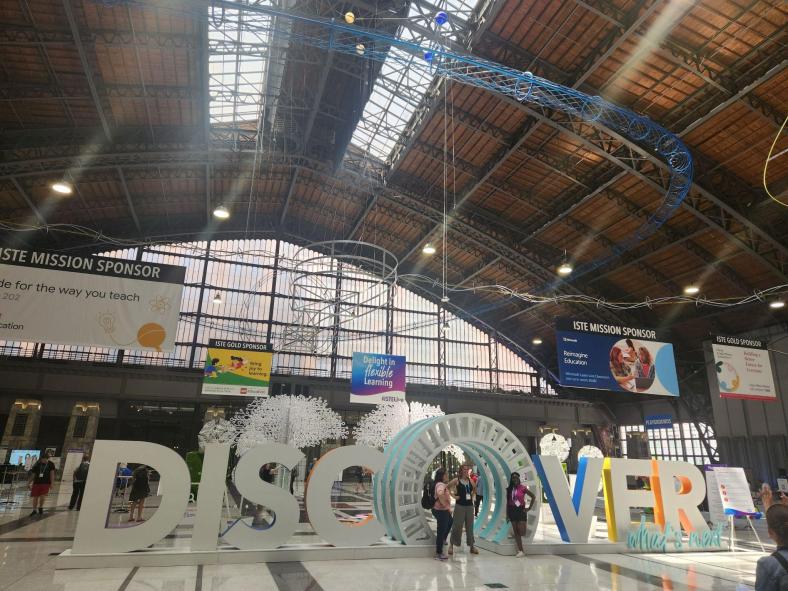
This was my ninth time attending the ISTE conference, the third time it was held in Philadelphia, Pennsylvania. There were a few years that the in-person event did not happen but ISTE held a virtual conference that enabled educators to connect and learn with other educators from around the world. It is the reason I look forward to the summer and a conference I look forward to because it brings in people from more than 80 countries from around the world. It offers so many different ways to learn through the poster sessions, the playgrounds, the concurrent sessions, panel discussions, workshops and other special events.
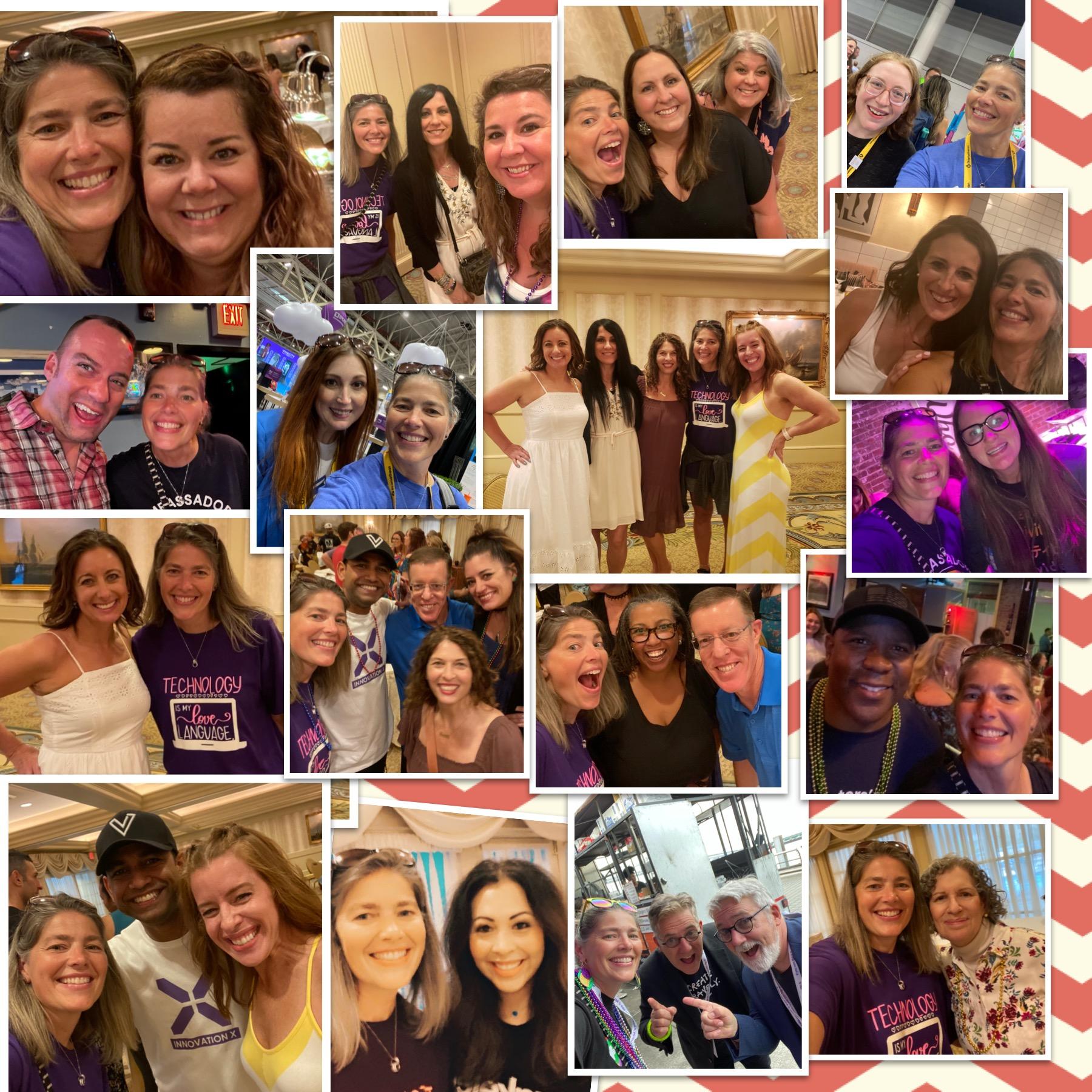
But beyond those specific learning spaces, there are lots of opportunities to connect with educators and build your PLN. It’s not just the learning that happens in those session rooms and spaces. It is about the learning that also happens on your walk to the sessions and while in the open spaces. A time when you can walk and talk or sit and have a conversation. And even once the conference day ends, the social events that happen later in the evening, are always great for connecting with friends and making new ones.
The conference was a little bit different for me this year because even though my schedule was busy it didn’t feel as overly busy as in prior years. I had the opportunity to join in some new adventures, present sessions on some of my favorite topics, and had the honor of being involved in the Closing Mainstage.
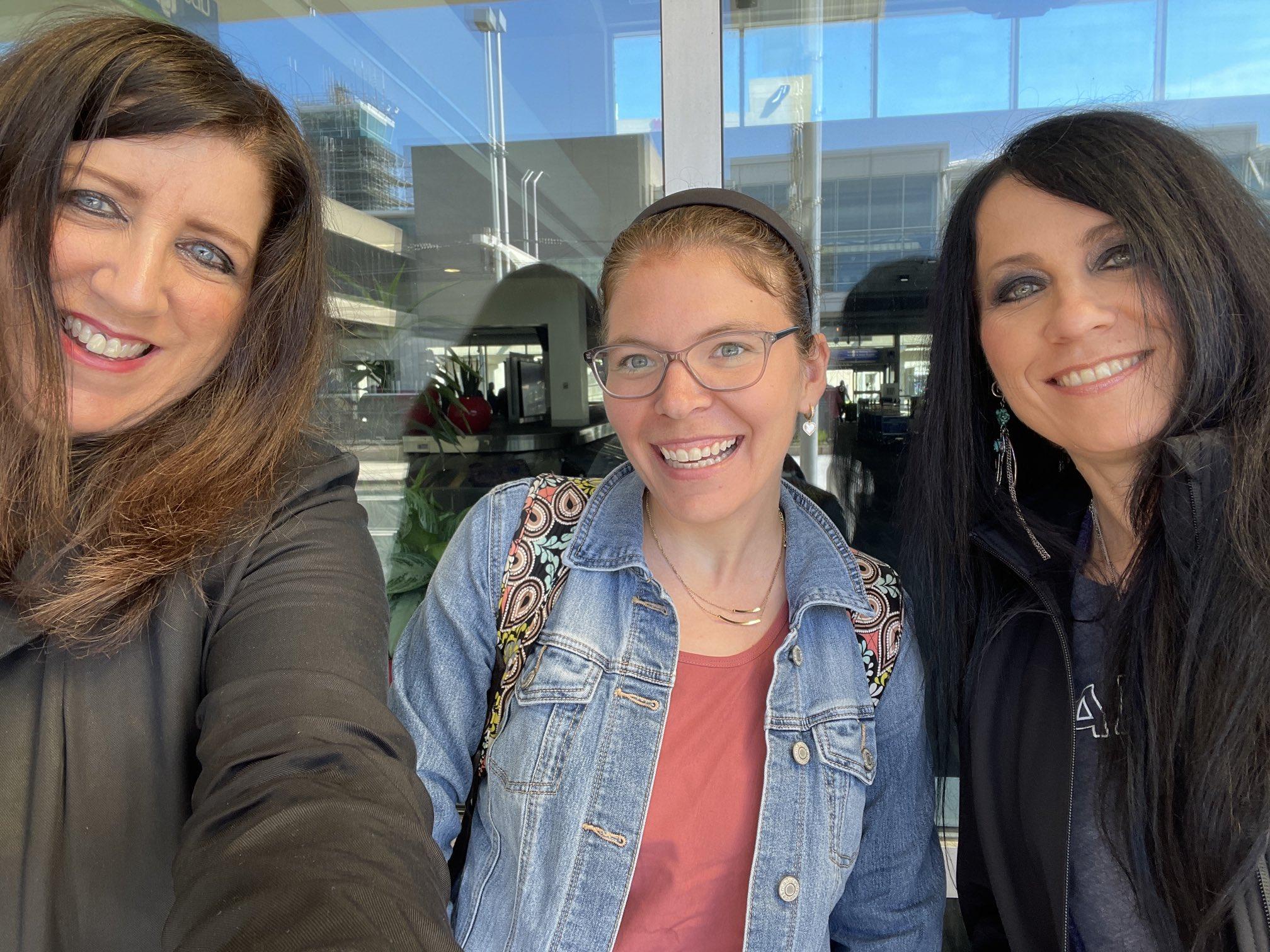
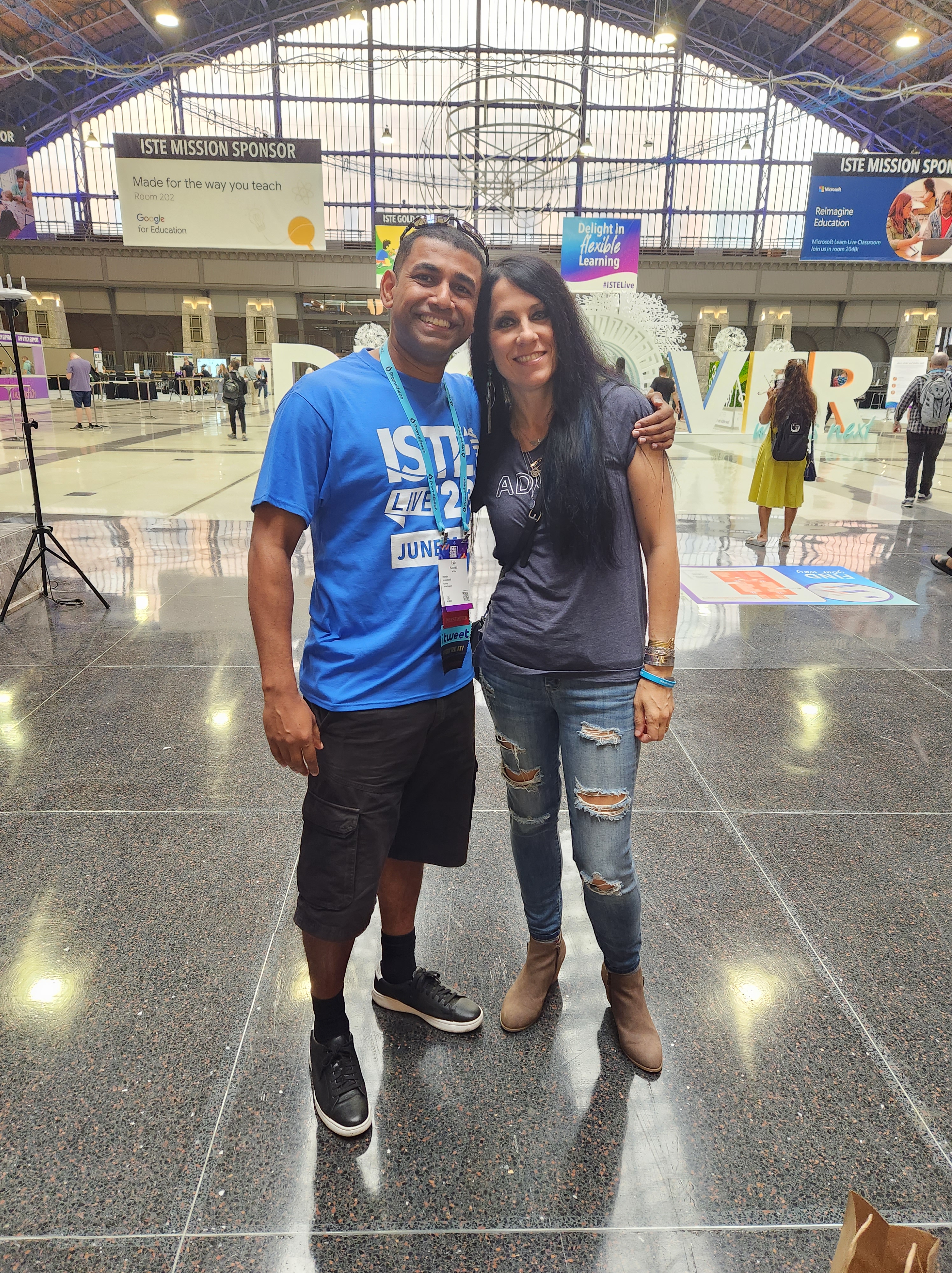
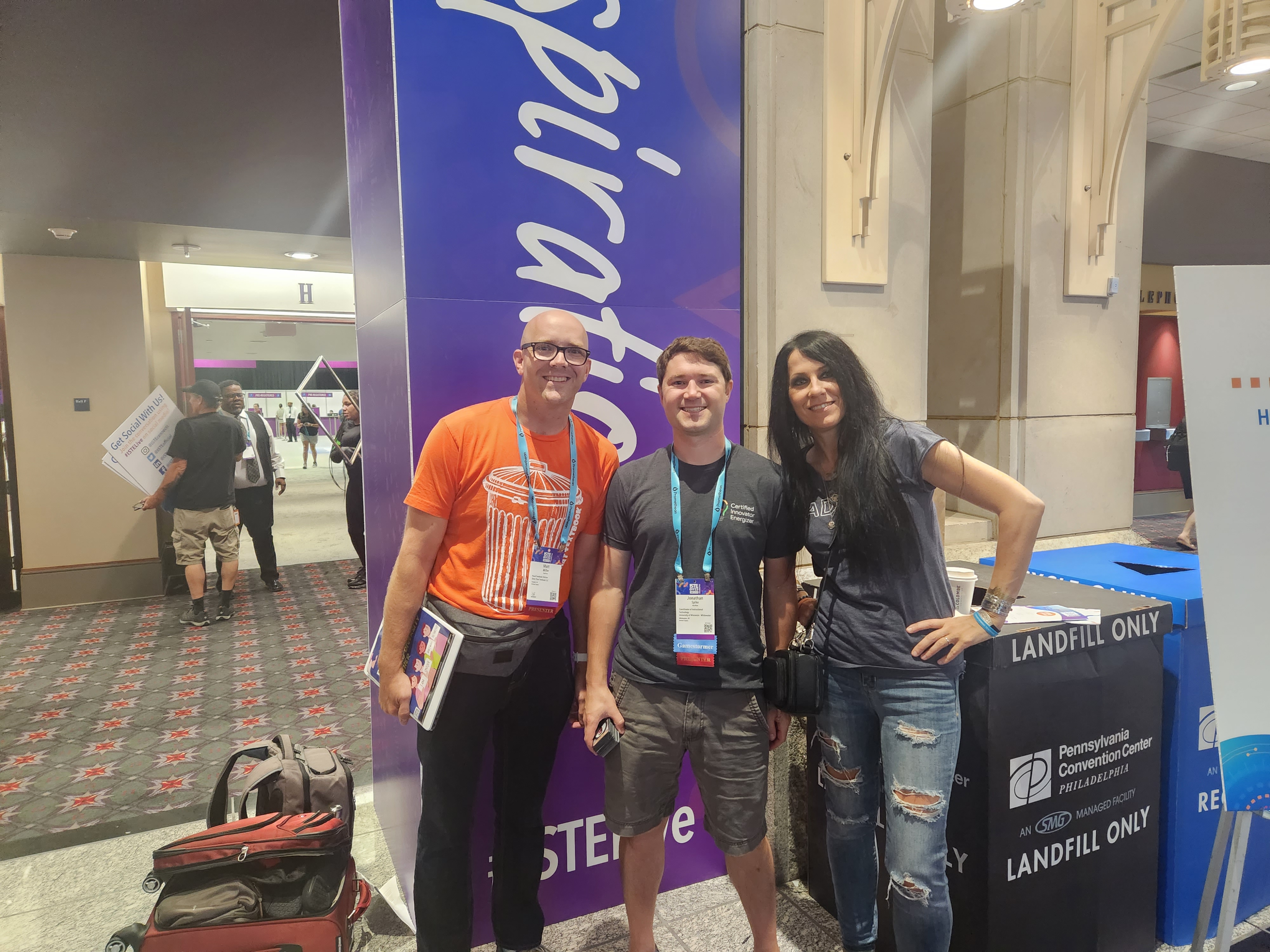
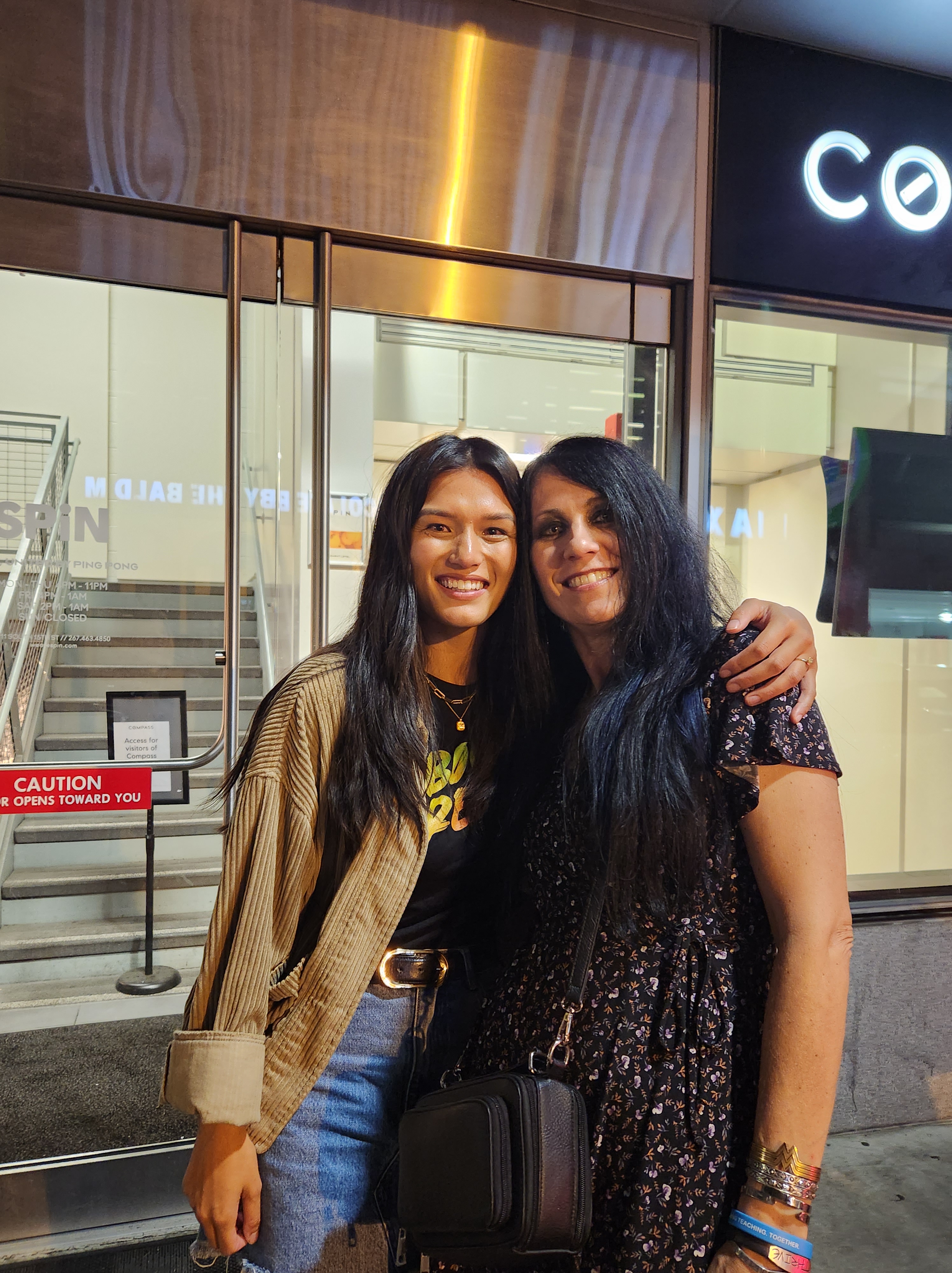
For me, as soon as I met friends at the airport, the excitement started. Then as soon as I arrived at the convention center to register on Sunday afternoon, it took a good 25 minutes to get there because I kept passing friends along the way, some of whom I had not seen in more than 5 years and a few that had never met in person. And when that happens, you have to stop and enjoy those moments.
Registration can definitely wait. Taking the time to stop, grab a quick picture, a hug, even a quick conversation makes all the difference. It brings those connections to life and reminds you to not miss out on opportunities, no matter how tired you are.
Presenting with friends
There wasn’t much time to waste as I had a workshop with my good friend Melody McAllister on Sunday. While we have done a live show for years, it was the first time presenting together officially. The focus was on podcasting and live streaming. We had a great crowd, our session was sold out and it was a high point in the conference for me. Being able to present with friends, share each other’s perspectives, and learn together, really makes a difference. For a long time, I did sessions by myself and that definitely helps me to build my own comfort level and confidence but I have definitely grown to prefer having friends present with me because we can bring in our different backgrounds and experiences and it’s just fun.
Another highlight was my Immerse Students in Learning session, all about AI, AR, and VR, topics which I have been presenting on for a little over 5 years. It has been amazing to see the increased interest in AI especially over the past 6 months with the entrance of ChatGPT, it has stirred up a lot of conversation and will continue to do so.
It’s a lot of fun to share with educators how I got started in teaching about AI in my classroom, knowing very little but also knowing that I needed to just dive right in. And that’s the advice that I often give. You don’t have to be an expert, you just need to have one idea, one method, one tool to start with and put it in the hands of the students. It’s important to also engage in conversations about these topics and these technologies so that we can be mindful of any concerns but also aware of the potential benefits not just in education but in preparing the students for their future and how these technologies might be used in the world of work.
Presenting with students
Another highlight was being able to co-present with Namya Joshi, (#EachOneTeachTen) a young student from India who we had hoped would be able to attend in person but thanks to technology and the power of using Zoom, I was able to bring her in to present with me during that session. Powerful to hear from students and I definitely recommend any time you can involve students in sharing the impact of these tools, and in this case the importance of STEM, then we need to do this. Hearing from her, (at actually 3:00 in the morning because of the time difference), did not diminish her spark for STEM and she was definitely an inspiration.
ISTEVerse
The three-day augmented and virtual reality ISTEVerse experience was a big hit and I tried to direct people to stop there as much as I could because a lot of people don’t realize the benefits of it until they experience it. And without access to the resources or know how to sort through all of the tools that are available, it can be hard to dive in and explore. That space had a variety of opportunities for people to learn about augmented and virtual reality, how to have students create rather than just consume, and that AR/VR is something that can be used in all content areas and grade levels.
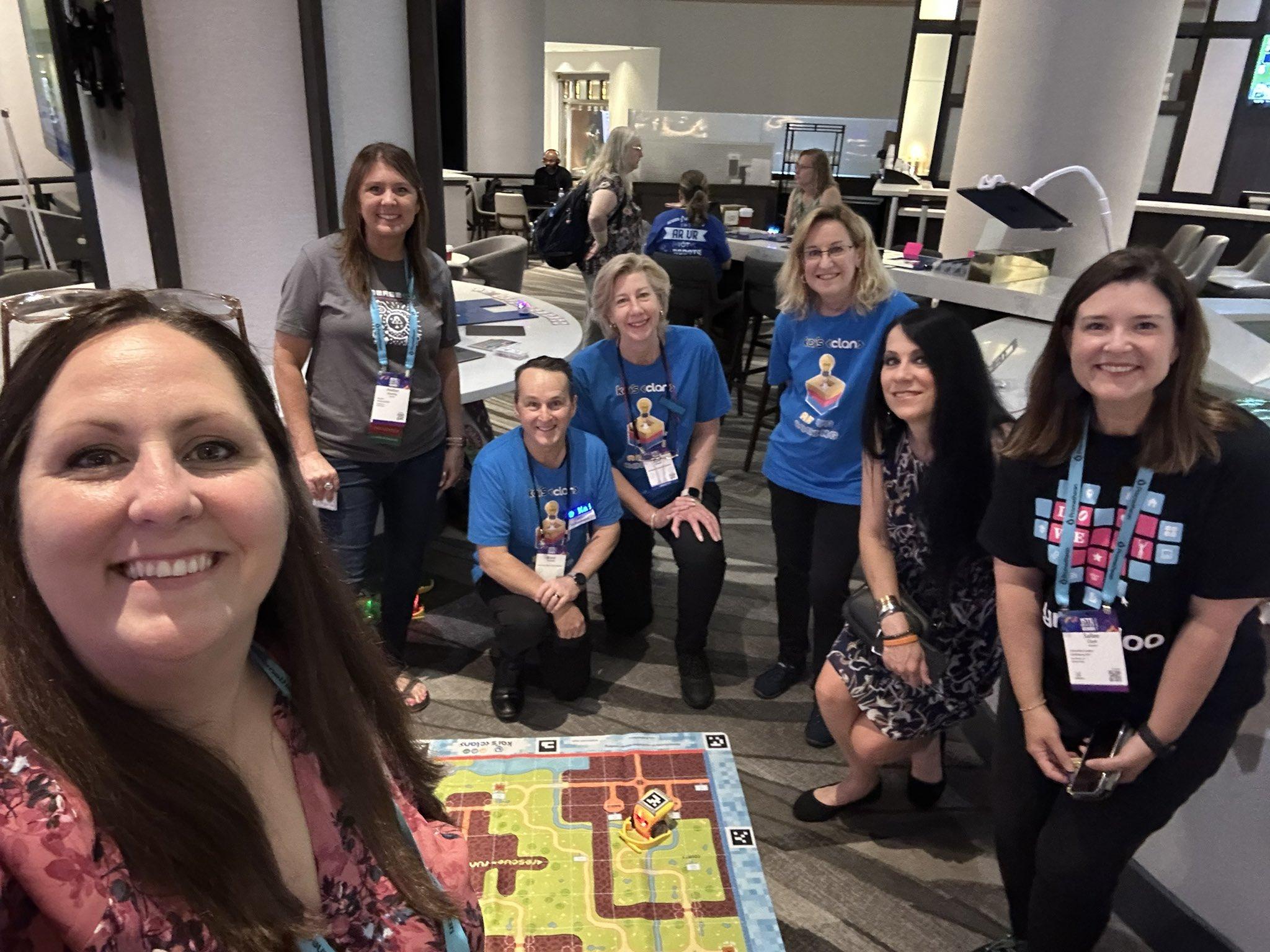
Coffee with Kai’s Clan
Social events
And everybody kept busy with social events, which are great spaces for networking. Whether the Edtech karaoke, casual gatherings for coffee or small sit-down dinners, there were opportunities everywhere. Learning still happens in these spaces. What I’ve discovered over the years is that PD does not only mean sitting down in a session and listening to a presentation. PD is so many different things and there are so many ways for people to choose the type of PD that is going to impact them the most.
Those early morning CoffeeEDUs with Alice Keeler, the social events and mixers held by some of the companies that we all know, and quaint gatherings by some other companies that enable you to really engage in conversation and get to know the people behind the products and their passion for what they’re doing. An amazing dinner with the BookWidgets team was a lovely opportunity to relax, enjoy the conversation and spend time with friends.
Dinner with BookWidgets
The Closing Mainstage: AI in Education
And one final highlight as I’m rolling these out in chronological order, was the Closing Mainstage on Wednesday. I was honored to be selected as the person to introduce and then interview the keynote speaker Kevin Roose. He is a New York Times columnist, a bestselling author of three books and he writes about technology, education, finance, and AI. We had the opportunity to sit down and talk for about 20 minutes. I had a lot of questions for him but tried to streamline them to those that are on the minds of many educators that I’ve spoken to, and some questions based on what I had read in his most recent book Futureproof.
Some of the biggest takeaways from that conversation are:
As educators, we need to be willing to embrace new ideas, trends, and technologies, even if we don’t fully understand them or we feel like we’re not the expert, we have to keep up with the changes that are coming.
We have to prepare our students and understand how these tools can be beneficial to us and to students, but we also have to be cautious as with all things, and question their purpose.
Consider any potential concerns or harm that can come from using them whether safety, security, or privacy. Ethics needs to be part of the conversations that we have and continue to have as these tools continue to evolve.
If we look at the positives, for teachers, as Kevin stated on his podcast dividing the AI between the “relational and the logistical.” We need teachers, humans, for the relational so that we can work with the students, we can have conversations, and support them as they learn. But we can benefit from the logistical or the clerical tasks that AI can do like helping us with some of the grading or having it be able to see trends in student responses and create a personalized learning path for them in real time. We can use traditional assessments and give students feedback one-on-one, but we can also find a way to balance the use of the technology so that we have more time to work with our students and provide for them with exactly what they need.
It was a great conference and it’s hard to believe that it has come and gone already but before you know it, it will be June 2024 and we will be in Denver for ISTE. The last time it was held there was in 2016 and that was the first time that I got on an airplane in many years and so I’m looking forward to returning to the conference next year. If you have not ever attended but have been giving it some thought, I definitely recommend that you try to go. And if attending in person is not an option, take advantage of the virtual learning that is available. Several of my sessions were recorded and live streamed and many of the other sessions were as well. So you can join in, interact in the chat, build your network, and learn from wherever you are and whenever you want to.
Jenn Womble and Adam Phyall
Wakelet and Capstone friends
The power of these global networks is that there is something for every educator and it’s important to keep pushing ourselves to learn and grow and adapt with the changes that we have seen and will continue to see in education.
See you in Denver next June!
About the author
Rachelle Dené is a Spanish and STEAM: What’s Next in Emerging Technology Teacher at Riverview High School in Oakmont, PA. Rachelle is also an attorney with a Juris Doctor degree from Duquesne University School of Law and a Master’s in Instructional Technology. Rachelle is an ISTE Certified Educator and serves as the past president of the ISTE Teacher Education Network. She was recently named one of 30 K-12 IT Influencers to follow in 2021.
Looking for PD for your school? I provide in-person and virtual training on the following topics. If you want to learn more about and explore AI and ChatGPT, contact me to schedule! Rdene915@gmail.com
**Interested in writing a guest blog or submitting a sponsored post for my site? Would love to share your ideas! Submit your post here. Looking for a new book to read? Find these available at bit.ly/Pothbooks
Guest post by Dr. Amy Mathews-Perez, @drgrowtoknow
All growth happens in a cycle. Every cycle has various “phases” or “stages.” Simple examples include laundry, our workday, a car purchase, sunrise, sunset and even various bodily functions. As Educators, our cycle includes the beginning of a school year with new students (unless you’re looping), the middle of a school year and the end of a school year, and we can all relate to the growth that occurs during these phases of the cycle we call “a school year.” Growth for our students and growth for ourselves. Once I realized this about cycles, it allowed me to have a better understanding of where I was in the cycle (whichever one I was reflecting about at the time.) The cycle that I have found most beneficial is the cycle I have curiously named KLAR. With my 30 years serving special education, the majority of which are in the special education arena, you will not be surprised that I love and consistently use acronyms. I think in acronyms, I make them up and I redefine real ones just for fun. So, HWG! (Here We Go!)
My Twitter handle is @drgrowtoknow. I came up with that years ago before I even knew how to use Twitter, but even waaaay back then I was in tune with the facts that (1) there was so much more for me to know, (2) I wanted to grow in knowledge/skills and (3) the best way to grow was to start at #1. Fast forward to the present, I can now describe my cycle as KLAR: Know, Learn, Apply, Repeat.
KNOW: We know that there is more to learn. However, to maximize the KLAR cycle there must be intention: What exactly do we want to know? Why do we want to know it? Where is the information? In other words, the KNOW part of KLAR does not mean to consume as much information as possible. The KNOW part of the KLAR cycle means that there is something specific that you realize you need to know more about in order to improve yourself, expand your skill set, obtain new insights, etc.; self realization of a need for knowledge. EXAMPLE – I need to know more about AI.
LEARN: At this stage of the cycle we are learning on purpose. We all learn – sometimes by incident, sometimes by accident, sometimes from reflection and sometimes from rejection. What we learn can be greatly influenced by the circumstances, which is why at this stage of the KLAR cycle, LEARN must be defined as Intentionally seeking information for a specific reason. EXAMPLE – I read multiple articles/blogs, watched videos, interviewed 2 people and followed 4 people on Twitter that teach about using AI to write measurable goals and objectives for IEPs.
APPLY: This is when we use the learning with purpose. This stage of the KLAR cycle can be the most beneficial if we collaborate with a trusted friend, coach or accountability partner. Role-playing is another effective way to apply learning. If you are intuitively reflective or simply exceptional at self-reflection, you may not need the support of another person in determining the effectiveness of your application of learning. Again (see the theme?) – being purposeful regarding the circumstances, the people and your intention when applying your learning will maximize this step. EXAMPLE – I drafted one goal for each of the following content areas for a specific student: Math, RLA, Science, Transition and Post-Secondary. I asked two peers to review the goals for accuracy and effectiveness.
REPEAT: This part of KLAR is self-explanatory, no doubt. However, the repetition begins with the realization (and hopefully celebration) of your growth! Next, repeat the first stage of the KLAR cycle. Based on your recent experience in applying your new knowledge, how are you different? What information do you need to seek next? For what purpose? EXAMPLE – My goals included four of the key elements of a good goal (timeframe, condition, behavior, criteria) -this is the celebration part. 🙂 However, they were not specific enough for the student. Now I know I need to refer to the student’s FIE and PLAAFP in order to make the goals more individualized.
Each KLAR cycle provides learning, increases awareness and facilitates growth. Growth happens…it may be small, it may be monumental, it may just be the tweak that leads you to your next “Ah-ha!” You may even choose to ignore the growth because it makes you uncomfortable…but growth happens. KLAR provides us with a way to reflect and help ourselves grow on purpose. If you are an educator, your “school year cycle” is clearly marked as a new beginning, but it is my hope that you experience KLAR year-round.
Happy growing!
About The Author
Texas-born & raised, I am finishing my 30th year of serving public education where I have served as a General Ed. Teacher, an SLP, Diagnostician, SPED Supervisor, Principal, an Assistant Principal and a Director of Special Education. I currently serve a central Texas school district as a Director of Special Programs which includes Special Education, 504, Dyslexia, MTSS, and the Liaison for students experiencing Foster Care and/or Homelessness. My passions are communication, laughter, and authenticity and I am happiest when I get to use those things to inspire & empower others. As a learner, I consider myself an “Experience Expert” because I learn from every experience. Life is short but our influence is never ending, so I seek joy and create smiles through connecting, sharing, and highlighting the best in others. If you share any of my passions, I’d like to connect with you! My Twitter handle is DrAmyMP@drgrowtoknow
Looking for some PD for your school? I provide in-person and virtual training on the following topics. If you want to learn more about and explore AI and ChatGPT, contact me to schedule! Rdene915@gmail.com
**Interested in writing a guest blog or submitting a sponsored post for my site? Would love to share your ideas! Submit your post here. Looking for a new book to read? Find these available at bit.ly/Pothbooks
Guest post by Melisa Hayes, 2nd grade teacher, @MrsHayesFam
It’s that time of year again when the biggest tech conference comes together to show off their tech toys; educators & consultants share amazing strategies, resources, and more! For many, it’s another year. For others, it’s the 1st time. In any case, It’s an exciting time! It’s like Black Friday. The anticipation or dread of packing, creating your schedule for the week, & preparing for your presentation gives many goosebumps. The suspense of getting on the plane or in a vehicle and taking off makes your heart race. Arriving in Philly & thinking about all your friends you’ve only spoken to virtually and getting to physically hug for the 1st time or friends you can’t wait to hug again!
The day is finally here and you have arrived, it’s official. Christmas has come early. The love you feel when you see your friends/family is such a rush of emotion. I remember last year at my first ISTE and seeing my family for the first time. It was a HIGH. A drug that I didn’t want to stop using! For me, these educators are my family. The rush of emotions I felt is hard to explain. Most people can’t understand, my husband being one of them (LOL) I have established a relationship with so many. We know each other even if we’ve never met. The impact each has had on not only me but my 2nd-grade family is just astronomical! These amazing educators have zoomed with my kids and some have Zoomed with them for years! I actually plan to use Microsoft Flip to showcase these family members to my kiddos!
The EXPO/North Pole is miles and miles of tech toys and rock stars showing off the latest and greatest resources. For teachers, It’s Christmas. The giveaways you’ll receive are astronomical! For me, It’s all about the PEOPLE. Get that camera ready and take LOTS of pics to capture those memories. You want to savor every moment! Also, make sure to have comfy shoes. Whether flip flops, crocs, tennis shoes, or any comfortable footwear you’ll need since the convention center is approximately 1.3 million square feet. That’s a lot of traveling so be prepared:)
Snacks are essential as well as chargers, camera/device to capture the memories, Advil for sore muscles or a headache, and a HUGE bag for all those giveaways from the expo:) It would be good to have labels with your name and address so you don’t have to fill out SO MANY slips for giveaways:) Have an open mind when hearing all theories, strategies, and resources. These amazing ideas can always be scaffolded or differentiated for our kids.
Last piece of advice, ENJOY EVERY MINUTE of Black FridayS… These days fly by and before you know it, you have to say goodbye to family/friends. Sign up for all the activities and enjoy all the amazing learning and tech toys that you may win:) Lastly, make memories. You never know what life has in store so savor every moment! #ISTELIVE
About the Author
Melisa Hayes
Melisa is a 2nd-grade teacher in Hilliard, Ohio, and has taught for 26 years. Melisa has a Master’s in Education degree and is passionate about inclusion, blending technology into the curriculum and creating experiences in the classroom, such experiences focus on creativity, Stem, coding, and more. She earned the recognition of Global Teacher of the Year in 2020. She is also a Microsoft Flipsider, Wakelet, Whiteboard Chat, Night Zookeeper, Teach Better Ambassador and an Apple Distinguished Educator.
Connect with me on Twitter @MrsHayesFam
Looking for some PD for your school? I provide in-person and virtual training on the following topics. If you want to learn more about and explore AI and ChatGPT, contact me to schedule! Rdene915@gmail.com
**Interested in writing a guest blog or submitting a sponsored post for my site? Would love to share your ideas! Submit your post here. Looking for a new book to read? Find these available at bit.ly/Pothbooks
In today’s digital era, educators are constantly seeking innovative ways to make learning more interactive and engaging for students. One such tool that has gained popularity among teachers is an interactive Video Quiz. This powerful educational technology combines the use of videos with interactive quizzes, fostering active participation and enhancing comprehension. There are a few tools you can use to create interactive question videos. Think about Edpuzzle or EducaPlay. An alternative to Edpuzzle you might have heard of is the BookWidgets Video Quiz with the possibility to pause a video and ask over 35 different question types!
In this blog post, we will explore the features and benefits of the BookWidgets Video Quiz and how it can revolutionize the learning experience for students.
BookWidgets, a teacher content creation and evaluation tool, simplifies content creation, feedback, and grading processes while enhancing student learning experiences. Its innovative resources empower educators to effortlessly create interactive content and promote personalized learning.
What is a Video Quiz Widget?
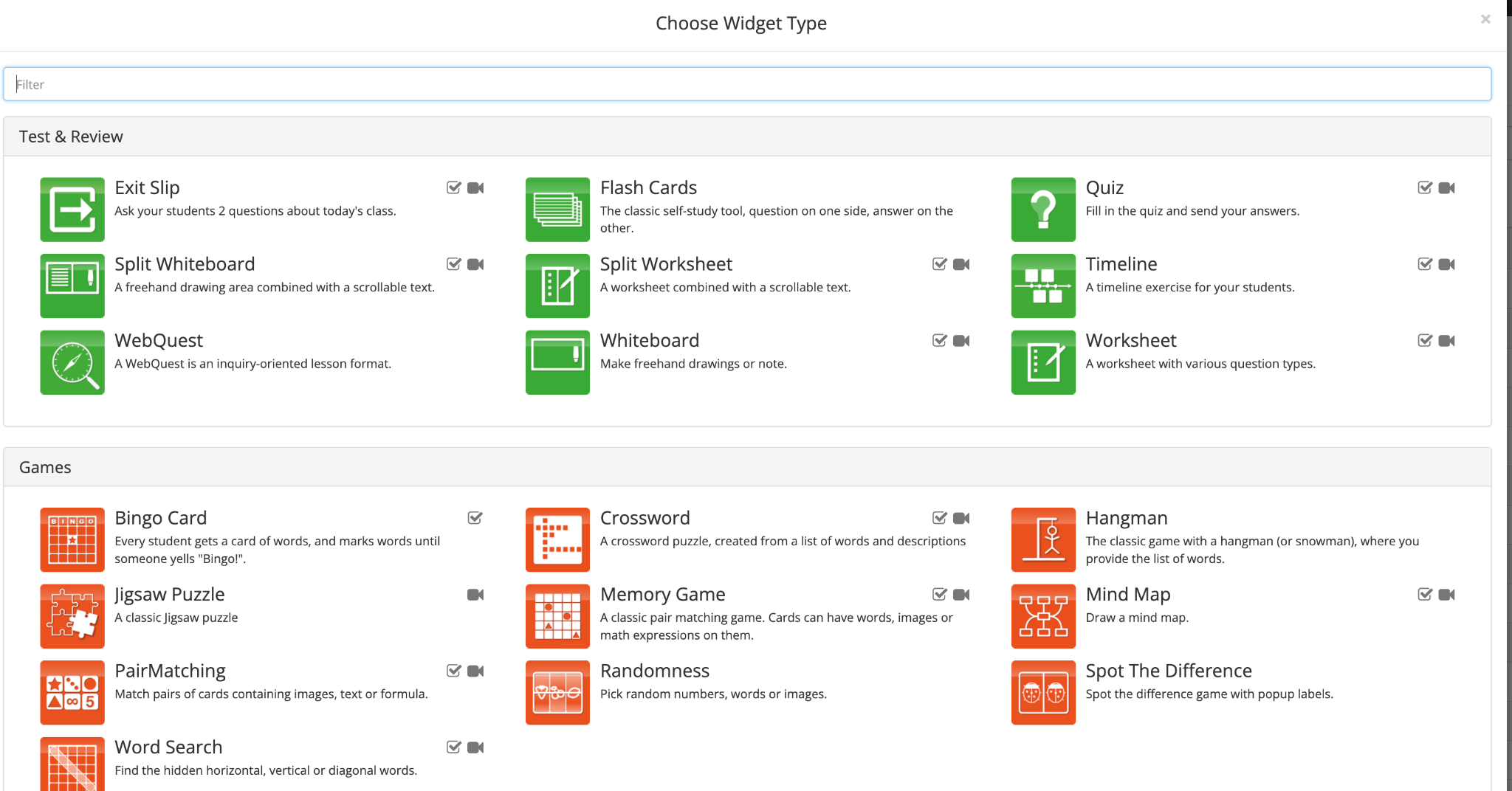
BookWidgets has various types of digital exercises template teachers can fill with their own lesson content. They are called “widgets”. The BookWidgets Video Quiz is one of the 40 widget types you can choose. It seamlessly integrates with YouTube and Vimeo platforms. Educators can choose from a wide range of question types including multiple-choice, true/false, fill-in-the-blanks, voice recording, and more, and insert them at specific stopping points or cue points in the video. There are great ideas for getting started with a Video Quiz.
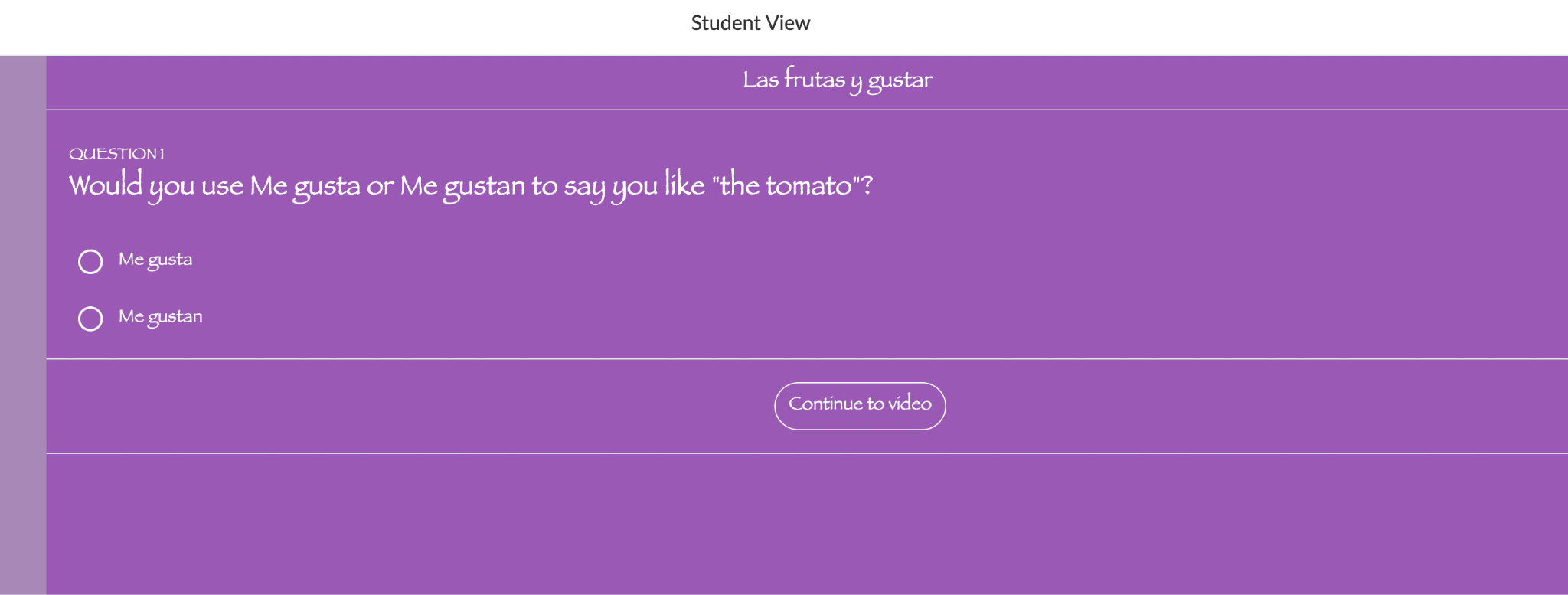
Creating interactive lessons for students is so easy! Check out this Spanish I video quiz on the verb “gustar” and “las frutas. “Adding in a few questions to check for student understanding and giving them an opportunity to learn at their pace and review as needed is why I love using the video quizzes in BookWidgets. Simply choose a video from Vimeo, YouTube,or one of your own created videos for your students that you may show in class. Rather than use these alone, instead, create a video quiz in BookWidgets for them to extend their learning beyond the classroom and for you to be able to understand where they are in the learning process!
Engaging Students with Interactive Learning:
One of the key advantages of the BookWidgets Video Quiz is its ability to captivate students’ attention and keep them actively engaged throughout the learning process. There are more than 35 question types to choose from to add to the quiz which makes it easier to customize the quiz for any grade level or content area.
By embedding questions within videos, students are prompted to think critically, analyze content, and apply their knowledge in real-time. This interactive approach encourages active participation, leading to improved comprehension and retention of the subject matter. Video Quizzes are perfect for Flipped Learning. Learn more about the use of BookWidgets for flipping your classroom learning space!
Customization and Flexibility:
BookWidgets Video Quiz offers educators a high degree of customization and flexibility. Teachers can tailor the quiz to suit their specific instructional goals, selecting the video content and designing the questions accordingly. The interactive elements of the videos help to capture students’ attention and make the learning process more engaging for them.
Teachers also have the option to add hints, explanations, and feedback to guide students’ learning process. I like adding in a note at the beginning or end of the video quiz to remind students to jot down some notes or hints at grammar topics or specific vocabulary to focus on for example. This adaptability empowers teachers to create personalized assessments that cater to the diverse learning needs of their students.
One of the best things about BookWidgets is that it offers more than 40 interactive templates for teachers to use as they design activities to help students build their skills. The many templates and options available to create widgets enables educators to create activities that enable students to work at their own pace and experience more active learning which, as a result, becomes more meaningful. When learning is meaningful, it will also boost student engagement and create a more authentic experience for our students.
We have used the bingo cards, crosswords, snowman games, jigsaw puzzles, video quizzes, and word searches in my classes. Each of these offers opportunities to differentiate the instruction and provide more choices for students as they practice the vocabulary and related content. In my own classroom as a language educator, I also want to be able to assess students’ speaking skills and within BookWidgets, having the option for students to record their voices is great for designing assessments and guiding students in the feedback process. Here are some additional examples that can be used in language classes!
Real-time Assessment and Feedback:
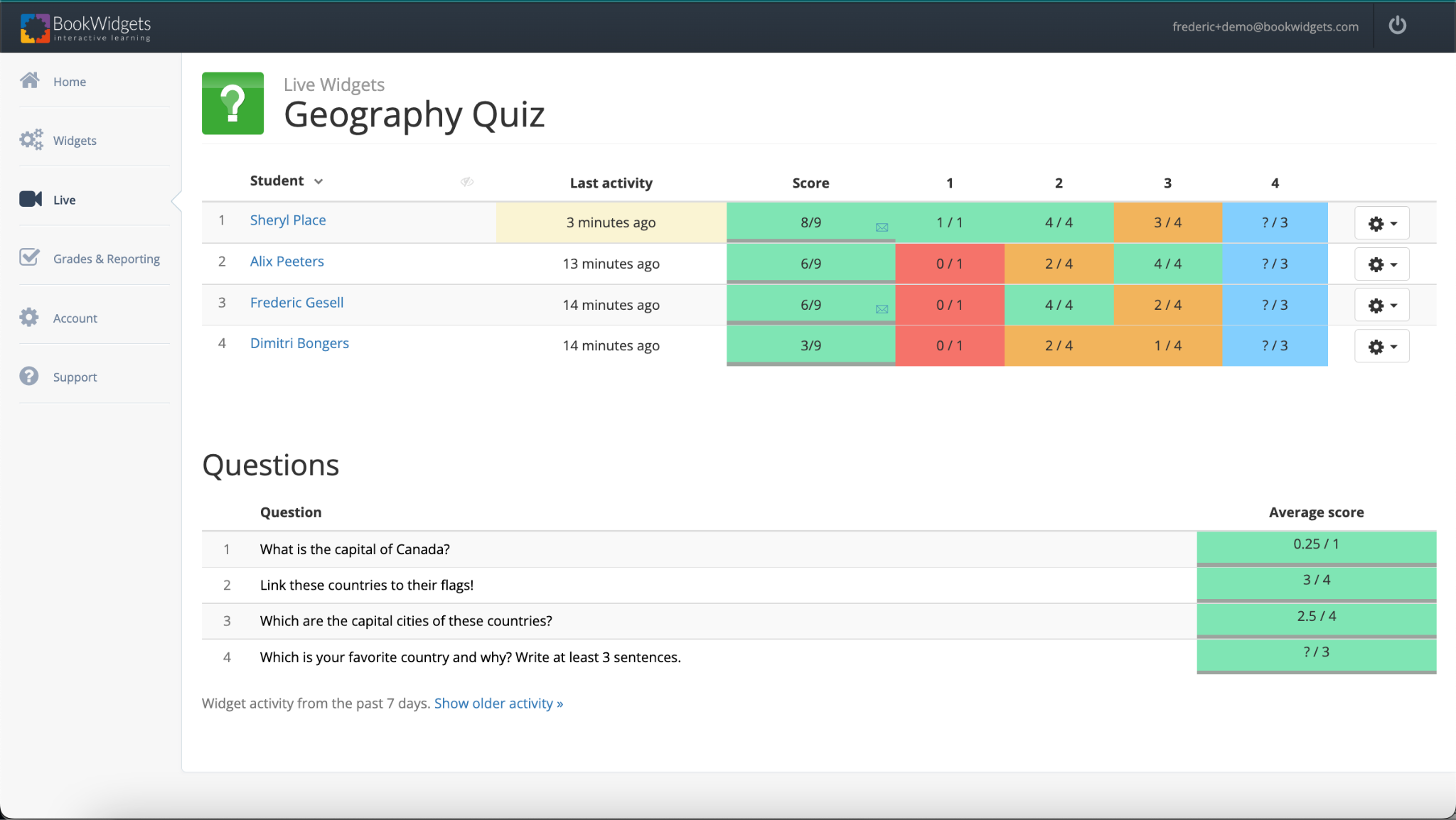
One of the most significant advantages of the BookWidgets Video Quiz is its ability to provide instant assessment and feedback to students. Teachers are able to view student progress using LIVE mode and immediately see where students may need support and encouragement or enrichment.
What is so great about BookWidgets is being able to have access to real-time data. Within the dashboard, I can quickly see the flashcards that my students have practiced, how much time they spent on them, and even how many times they flipped a specific card. Being able to see their work helps me to better plan my instruction and the activities that I design for them. Understanding our students’ needs is essential so we can provide additional resources and encouragement for them as they engage with and master the content.
As students complete the quiz, their responses are automatically graded, saving teachers valuable time. Immediate feedback allows students to gauge their understanding of the content, identify areas for improvement, and reinforce their learning. Such timely feedback fosters a continuous learning loop and helps students stay motivated. We know the importance of authentic, meaningful,and timely feedback and with BookWidgets, educators can respond to students’ needs right away and have a clear understanding of where students are in the learning process. Saving time with our assessments by using these tools enables us to then spend that time with students and engage in meaningful conversations about their progress.
Tracking Progress and Analytics:
Via the Reporting Dashboard, BookWidgets offers valuable insights into student progress and performance through its analytics feature. Teachers can easily track individual and class-wide progress, identify patterns, and assess the effectiveness of their instructional strategies. These analytics enable educators to make data-driven decisions, modify their teaching methods if necessary, and provide targeted support to students who may require additional assistance.
When we have this data, we can provide more timely responses to student needs in our classrooms. The Dashboard makes it easy to identify areas that we can focus more on with individual students or the class and also provides us with an opportunity to reflect on the activities and strategies we are using.
BookWidgets FREE in Google Classroom
We have some exciting news for schools using BookWidgets within Google Classroom! If your school has the Google Workspace Teaching & Learning Upgrade Edition or Google for Education Plus Edition, you can now use the BookWidgets add-on in Google Classroom for free until August 31st.
Every teacher can find the add-on in Google Classroom and start using it immediately. Just follow the steps below (and share them with your fellow teachers):
Fill in the details of your assignment. Then, click the BookWidgets add-on under the “add-ons” section in your assignment. If BookWidgets is unavailable, ask your Google Workspace administrator to add or allow the BookWidgets add-on;
After clicking the add-on, BookWidgets will pop up and you’re ready to go!
Make sure to watch this webinar to get started with the BookWidgets add-on in Google Classroom. New to BookWidgets and still figuring out the added value for your students? This blog post will get you inspired!
Why Video Quizzes Make A Difference
Incorporating the BookWidgets Video Quiz into educational practices opens up a world of interactive and engaging learning experiences. By combining videos with interactive quizzes, teachers can foster active learning, customize assessments, provide instant feedback, and track student progress effectively. This powerful tool not only enhances comprehension but also encourages critical thinking, collaboration, and self-directed learning. With the BookWidgets Video Quiz, educators have a versatile tool at their disposal to create dynamic and impactful learning experiences that prepare students for success in the digital age.
Get started today!
Create an account! It is easy to get started and create your own widgets to use in your classroom. Want 3 months to try it out? Sign up here!
Are you headed to ISTE 23 in Philadelphia? Don’t miss the chance to meet with the BookWidgets Team and join in sessions for opportunities to learn more about BookWidgets! Stop by the Chopped Playground to learn from Lucie Join Kate for “SCAMPERing into Human-Centered Design and Sheryl’s session on Creative Grading and Assessment at the Learning in Disguise Playground. Don’t miss the Lightning Talks and Kate’s session on Reimagine Education – Human-Centered and “Understanding Microsoft Teams The Digital Learning Hub in My Classroom and Yours with Kate, Sheryl, and Jeff Bradbury! Rachelle will be sharing about BookWidgets during her session “Chart A New Course” on Tuesday morning at 10:00 am!
Looking for some PD for your school? I provide in-person and virtual training on the following topics. If you want to learn more about and explore AI and ChatGPT, contact me to schedule! Rdene915@gmail.com
**Interested in writing a guest blog or submitting a sponsored post for my site? Would love to share your ideas! Submit your post here. Looking for a new book to read? Find these available at bit.ly/Pothbooks
The Case for Normalizing Accessibility Tools in Schools
Guest post by Paul Stisser,
The cornerstone of education is building pathways to success for all students. The right accessibility tools can often help, making it possible for students of all abilities to thrive. But when the same tools that provide assistance to students leave them vulnerable to stares, harassment, or bullying from classmates, they ultimately do as much harm as good. So how can we make sure students get the assistive technology they need while preventing them from feeling self-conscious? The answer is to make tools available to all students and normalize assistive technology.
In schools today, about one in seven children receive special education services. But some children never receive the proper diagnosis to qualify for the support they need. For other students, requests are tangled up in slow-moving processes. The result is there may be even more students than we realize who can benefit from assistive technology. At the same time, more classes are using digital content, especially after the pandemic ushered in a new wave of digital materials, educational apps, and tech-enabled curricula. While the move to higher degrees of digital education has led to big strides in personalization and accessibility of learning, the Office for Civil Rights is also receiving a growing number of complaints about digital accessibility in K-12 schools.
By prioritizing digital accessibility, we have the power to solve the challenges students with disabilities face and improve the learning experience for all students. It’s similar to the effect of curb cuts on sidewalks. While the initial intention of curb cuts was to help people in wheelchairs, they also benefit people with strollers, wheeled luggage, and bicycles. Similarly, when we take steps to enhance accessibility for all students, we foster a stronger sense of belonging in the classroom. Whether it involves making websites more accessible, enabling students of diverse learning styles to easily engage with content, or harnessing text-to-speech (TTS) tools to support those developing reading skills, English language learners, and auditory learners, the path to inclusivity and student success starts with normalizing accessibility. Below are just a few ideas schools and districts can adopt to introduce accessibility tools to more students.
Talk to students
Including the voices of students in conversations about tools and what they need can be very useful. Students can tell you what is working with the technology they have and what else they might need. When talking to students be sure to include diverse perspectives, with voices from students who need accommodations as well as those who don’t. The way you collect feedback can vary too, depending on the culture of your district or school. Many leaders have success with everything from student representatives on technology committees to conducting surveys and focus groups. Remember that candid, informal conversations can surface great ideas too!
Ask vendors about accessibility
When evaluating new edtech, ask vendors about accessibility. Districts and schools should lead the conversation and ensure that products were designed with accessibility as central to their design, not as an afterthought or add-in. By prioritizing accessible tools and features, you add to the voices calling on the edtech community to make inclusivity a key value.
Find tools that connect to your LMS
When students have to log out of one platform and into another to get the support they need, it creates unnecessary opportunities for distractions. That’s true for students who need accommodations as well as those who don’t. Support tools that are connected to your LMS create a seamless experience for all students, keeping them focused on what they need to do. Additionally, LMS-integrated tools reduce the risk of anyone noticing that students who need support are getting it. Familiarize yourself with the 1edtech standards for interoperability. Choose products that are vetted for interoperability or certified.
Emphasize quality
When it comes to accessibility there are often many choices that are low-cost or free. But these tools can come at a cost. For example, there’s a wide variety of voice quality and learner experiences in TTS solutions. Voices that don’t sound realistic or are simply poor quality can cause students to lose focus while learning and stop using the tool.
Paying for tools can also bring helpful features that go beyond the edtech’s core function. Some TTS tools do more than read text. They can be customized with colors and fonts, and the voice sped up or slowed down. They can mask the page and hide distracting ads to keep learners focused, highlight text as it is being read, give multiple language options, and include a speech-enabled dictionary.
When we give all students the chance to use accessibility tools we unlock new levels of classroom inclusivity. By making support tools available to all students, we reduce barriers to engaging with digital content, embrace all learning abilities and learning styles, and foster a stronger sense of belonging. So, let’s normalize accessibility tools so all students can not only succeed but soar.
Since joining ReadSpeaker in 2013, Paul Stisser has been a leader in ReadSpeaker’s TTS Education initiatives. Prior to ReadSpeaker, Paul worked at D2L and start-up Moblmedia. He also has 14 years of education and teaching experience in Rochester, NY, specializing in Special Education and At-Risk Students. Paul attended St. Bonaventure University with degrees in History and Literacy. Currently, he resides in Saint Augustine, Florida.
Blog of Rachelle Dené Poth
Looking for some PD for your school? I provide in-person and virtual training on the following topics. If you want to learn more about and explore AI and ChatGPT, contact me to schedule! Rdene915@gmail.com
**Interested in writing a guest blog or submitting a sponsored post for my site? Would love to share your ideas! Submit your post here. Looking for a new book to read? Find these available at bit.ly/Pothbooks





















 Learning as I go: Reflections & lessons learned