How to Prepare Students for a Fast-Moving (AI)World

In the world of work and education, the pace of technological change is accelerating, and it is doing so faster than ever. As an educator who divides my time between teaching Spanish, STEM, and emerging tech, as well as an attorney and consultant, plus an avid learner, I’ve made it my mission to keep looking for more opportunities that will prepare our students and ourselves. I ask: “What skills do our students really need to thrive not just in today’s world but in the one that’s moving quickly toward us?”

The answer? We have to equip them with the right skills to be “future-ready.” And while technology is involved, it is not about being able to use the latest tech tool. It’s about building a solid foundation of skills, a resilient mindset, and the adaptability to navigate whatever comes next. With the right strategies, we can ensure every student is prepared for the careers and challenges they may face as they continue their learning careers in the world of work.

Education has always been about preparing for the future. But today’s future is driven by evolving AI, robotics, quantum computing, and more. The traditional school model, focused on memorizing content within siloed subjects, is no longer sufficient. We need to embrace change. Our classrooms must become spaces for risk-taking and helping students develop the skills that truly matter in a tech-driven world: critical thinking, creativity, collaboration, and digital literacy. These are the tools that will allow our students to navigate an unpredictable landscape with confidence.

The New Realities of Learning and Work

Artificial Intelligence is Already Here. AI isn’t a sci-fi concept; it’s woven into the fabric of our daily lives and is reshaping every industry, from healthcare to finance. To be prepared, our students need to be more than just users of AI—they need to be AI-literate. They must understand its power, question its ethical implications, and learn to leverage it as a tool that enhances, not replaces, their own intelligence. Future employers won’t just want employees who can do a job; they’ll want employees who can work alongside AI.

The Human Element in an AI World

Automation will continue to transform the job market. While some specific roles or jobs will change or even disappear, new ones we can’t yet imagine will be created. This is what makes our uniquely human skills more valuable than ever. Emotional intelligence, ethical reasoning, creative problem-solving, and resilience are the new power skills. This is where methods like challenge-based and project-based learning shine, as they push students to develop these essential human traits.

From Knowing to Doing

In an age where any fact is a quick Google search or LLM prompt away, what we know matters less than what we can do with what we know. The focus must shift from knowledge consumption to skills application. We need to create learning experiences that challenge students to evaluate, process, and apply information in real-world contexts. Project-based learning (PBL) is a fantastic vehicle for this. Exploring big, authentic questions, like those posed by the UN’s Sustainable Development Goals, empowers students to apply their learning in meaningful ways and develop a sense of global citizenship.

So, how do we build this future-ready foundation? It’s about fostering a culture of curiosity, resilience, and lifelong learning.

Preparing for a  Future-Ready Classroom

Here are the core components I focus on to prepare students:

1. Unleash Creativity and Problem-Solving. A future-ready student isn’t a passive consumer of information; they are a creator, an innovator, and a problem-solver. I use methods like design thinking to guide students in developing human-centered solutions to real-world challenges. We tackle big questions like, “How can we use technology to make our city more sustainable?” This process guides them through brainstorming, prototyping, and testing, all while fostering collaboration within the team.

As a STEAM educator, I love showing students how to use AI as a creative partner. We use AI art generators to spark discussions or interact with AI-powered chatbots from platforms like MagicSchool AI to supplement learning. For older students, designing their own simple chatbot can be a powerful lesson in both technology and ethics.

2. Weave in AI and Computational Thinking. In my emerging technology course, I’ve seen firsthand how engaging students with AI cultivates computational thinking and ethical awareness. We analyze AI-generated content to discuss fairness and bias. We investigate how AI powers the tools they use every day, from streaming services to self-driving cars, and I challenge them to imagine improvements.

Hands-on learning is key. Tools like Google’s Teachable Machine allow students to train their own simple AI models and understand machine learning concepts. We’ve also explored robotics with the VinciBot and the Nous AI Set from MatataStudio, which helps students grasp concepts like facial recognition and object detection. By using AI-powered teaching tools like Brisk Teaching, SchoolAI or Snorkl, we model how to use these technologies safely, ethically, and responsibly. This hands-on literacy prepares them not just to use AI, but to question, design, and innovate with it.

3. Cultivate Resilience and Adaptability. In a world of constant change, the ability to adapt and bounce back from setbacks is crucial. I design STEM and PBL activities where the process is more important than the final product. Failure is reframed as a learning opportunity. By encouraging students to reflect on their process, adjust their strategies, and support one another, we build the resilience they need to become confident, lifelong learners.

To get started, you don’t need a huge budget. If you are looking to create presentations that will help teach the content or show students the process of PBL, for example, you could try WorkPPT. It even offers AI Chat and Summarizer, and can create mind maps too! Try WorkPPT today!

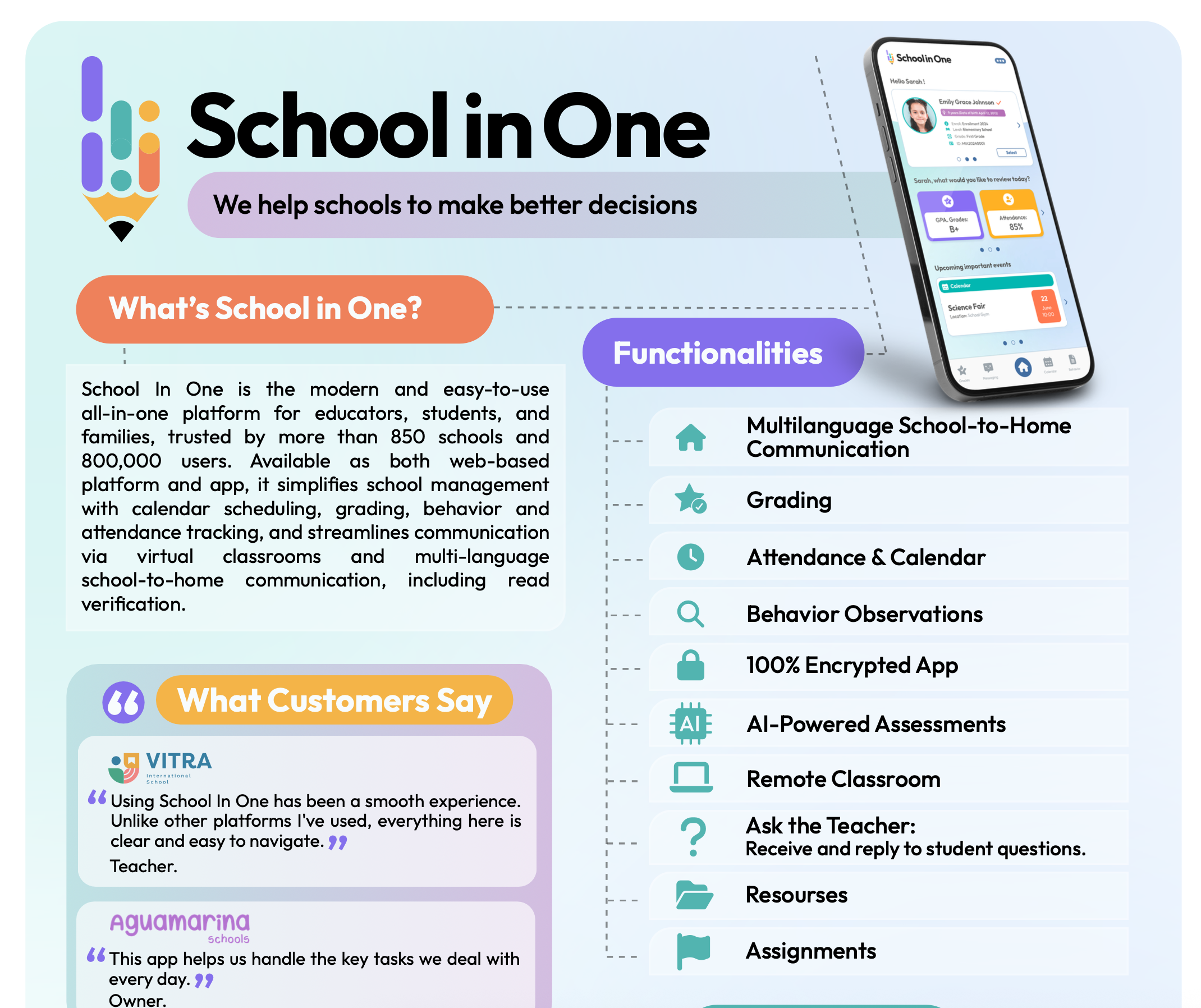
Free tools like EduaideAiTeachShare, or Enlighten AI, which can help you generate ideas and explore AI’s capabilities. With a tool like TeachShare, you can create a variety of learning materials aligned to specific standards and accommodations, helping you build these essential skills in your students. Also, dive into all-in-one platforms like School In One for all of your communication, collaboration, and assessment needs and more. (Schedule a meeting with CEO Mati Barbero to learn more and share that I sent you there.)
Ultimately, by designing authentic, real-world learning experiences, we empower our students with more than just knowledge. We give them the creativity, resilience, and critical thinking skills they need to not just face the future but to shape it.

About Rachelle

Dr. Rachelle Dené Poth is a Spanish and STEAM: What’s Next in Emerging Technology Teacher at Riverview High School in Oakmont, PA. Rachelle is also an attorney with a Juris Doctor degree from Duquesne University School of Law and a Master’s in Instructional Technology. Rachelle received her Doctorate in Instructional Technology, and her research focus was on AI and Professional Development. In addition to teaching, she is a full-time consultant and works with companies and organizations to provide PD, speaking, and consulting services. Contact Rachelle for your event!

Rachelle is an ISTE-certified educator and community leader who served as president of the ISTE Teacher Education Network. By EdTech Digest, she was named the EdTech Trendsetter of 2024, one of 30 K-12 IT Influencers to follow in 2021, and one of 150 Women Global EdTech Thought Leaders in 2022.

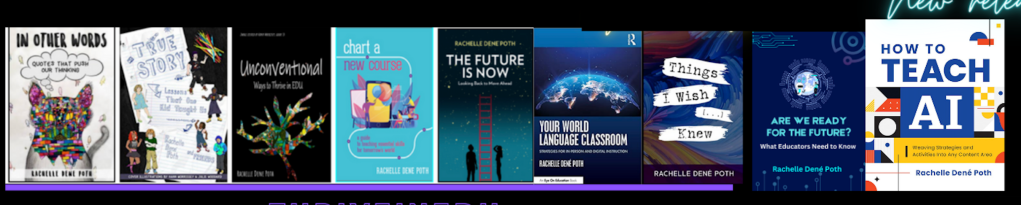
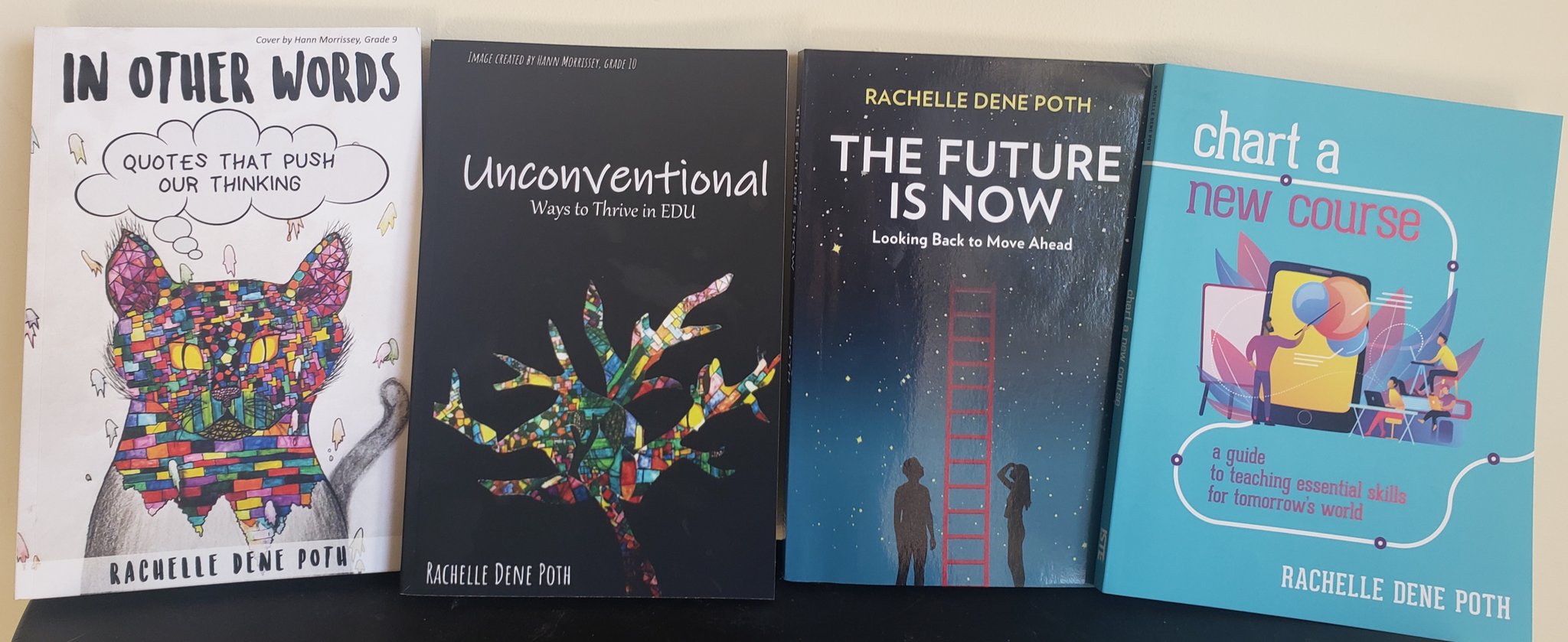
She is the author of ten books, including ‘What The Tech? An Educator’s Guide to AI, AR/VR, the Metaverse and More” and ‘How To Teach AI’. In addition, other books include, “In Other Words: Quotes That Push Our Thinking,” “Unconventional Ways to Thrive in EDU,” “The Future is Now: Looking Back to Move Ahead,” “Chart A New Course: A Guide to Teaching Essential Skills for Tomorrow’s World, “True Story: Lessons That One Kid Taught Us,” “Things I Wish […] Knew” and her newest “How To Teach AI” is available from ISTE or on Amazon.

Contact Rachelle to schedule sessions about Artificial Intelligence, Coding, AR/VR, and more for your school or event! Submit the Contact Form.

Follow Rachelle on Bluesky, Instagram, and X at @Rdene915

**Interested in writing a guest blog for my site? Would love to share your ideas! Submit your post here. Looking for a new book to read? Find these available at bit.ly/Pothbooks

************ Also, check out my THRIVEinEDU Podcast Here!

Join my show on THRIVEinEDU on Facebook. Join the group here.

Fostering Collaboration in Our Classrooms

Prior post on Defined Learning

Fostering collaboration among students and educators enhances learning, builds essential skills, prepares students for the future, and more! Explore practical methods to enhance collaboration, such as project-based learning, game-based learning, and leveraging digital tools to align technology with students’ needs and goals, leading to meaningful engagement.

One thing that I have focused on a lot more over the past couple of years is creating more opportunities for students to collaborate with each other and also, for my own learning, to be able to collaborate with other educators. As we moved through changing learning environments, from fully remote to hybrid and, fortunately, back in person, there were a lot of challenges, and being able to collaborate was definitely one of them. One of the essential skills that employers seek is teamwork, which grows from opportunities to collaborate and build relationships. As we consider how to best prepare our students with the essential skills they need, there are many ways that we can foster meaningful collaboration in and beyond our classroom spaces. Not only will these opportunities benefit students’ learning and growth, but they will also greatly benefit our work and getting to know our students.

As students collaborate more, they can engage more meaningfully in learning and have fun. Brainstorming ideas together, providing feedback, working through learning challenges, and even teaching each other benefit their growth and learning journey. They will also build confidence in the classroom and feel more confident speaking in front of and working with their peers. This will impact them far beyond the physical classroom space.

What are some quick ideas for boosting collaboration?  

We can select different methods to have students work together in or outside our classrooms. Some methods, such as project-based learning (PBL) or problem-based learning, or through STEM-related activities, for example, provide students with opportunities to work independently and collaboratively towards a common goal or to solve a problem. These student-driven methods foster greater connections with the content knowledge, offering more learning choices and leading to more active learning. In my classroom, when students have designed their own PBL experience, it empowers them with more choices and helps them to develop self-management skills when setting goals. Some students may need help with choices during student-driven, independent work such as PBL and setting goals. However, having classmates to support them will help them to further develop these essential skills such as self-management skills. Exploring something more authentic, such as a personal interest or a curiosity, also promotes student agency in learning.

Continue reading on Defined Learning to learn about Kialo Edu, Wakelet and more ideas.

CONTACT RACHELLE FOR TRAINING OR KEYNOTES RELATED TO AI, AI AND THE LAW, CYBERSECURITY, DIGITAL CITIZENSHIP, STEM, AND OTHER TOPICS.

6 Fresh Ideas For Fall Using CoSpaces Edu!

In collaboration with CoSpaces Edu, All opinions are my own

Now that the school year is in full swing and we head into the fall of 2024, many educators are coming up for air and looking for new ideas. For me, it’s always the perfect time to consider how our year has started and look for ways to introduce fun, innovative ideas to our classrooms to boost engagement even more! What I love about technology, is that there is always a way to bring it into our classrooms for our students, and that is what I have found with CoSpaces Edu!

Whether you’re teaching elementary, middle, or high school, focused on STEM, language arts, or any other subject, we know there is an increasing need to equip our students with skills to be successful in the future. In my opinion, I think what better way to do that than with CoSpaces Edu!

CoSpaces Edu is a versatile, very user-friendly platform that brings learning to life for our students. Through augmented reality (AR) and virtual reality (VR), with a variety of wonderful features that enable students to engage in 3D creation, coding, and collaboration, CoSpaces Edu can be integrated across all grade levels and subject areas. I have come up with six ideas for getting started with CoSpaces Edu in your classroom this fall. At all grade levels, you can foster creativity, critical thinking, communication, collaboration, and digital literacy—skills, all of which are essential for today’s learners.

1. Virtual Tour of Student Interests

One of the easiest and most engaging ways to get started with CoSpaces Edu, which I use every year, is having my students explore its gallery of available projects. Whether they’re in elementary school or high school, students absolutely love the time they have to explore existing projects such as games and virtual museums. By giving them time to explore, not only can it boost their own creativity, but it also helps us learn more about their interests, which is essential.

How to start? Direct them to the gallery and ask them to choose a project or space they find interesting. After exploring, ask them to consider why it captured their attention. Was it the design? The characters? The actual activity itself? Encourage them to think critically about what they might create or how they might change or enhance what they explored. For example, if they enjoyed exploring a historical simulation, maybe they can build their own historical event space or propose redesigning a famous historical space. Moving through in this way not only fosters critical thinking but encourages student discussion, idea sharing, and brainstorming ideas. And the best part is that CoSpaces Edu allows them to explore both virtual and augmented reality so they can fully immerse themselves in and connect with the content they’re learning.

I have used this activity as an icebreaker for new school years or any time throughout the year. It benefits by giving students the opportunity to explore, discover, and connect with their classmates over shared interests that they may not have realized they had in common. Talk about fostering a real learning community!

2. Create an “About Me” Space

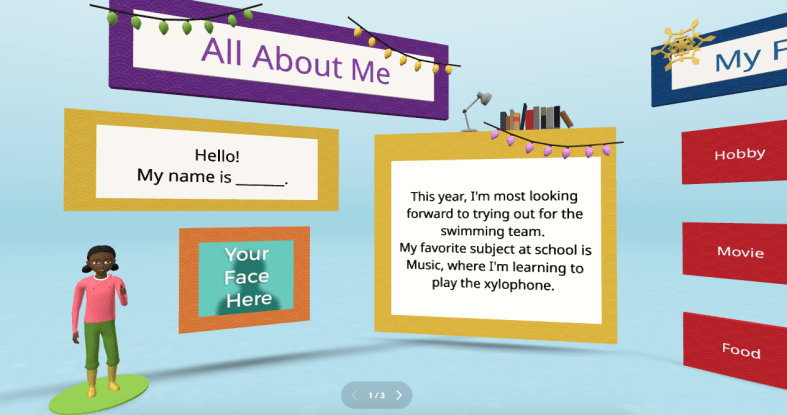
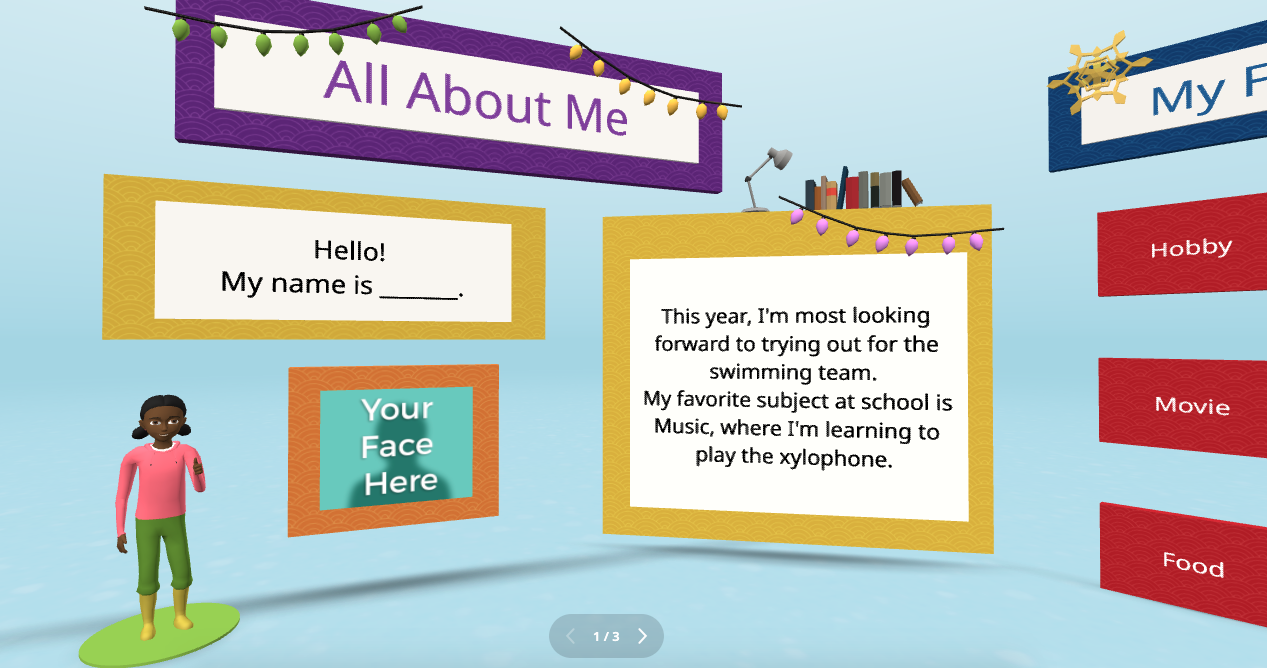
Every new school year, educators spend time finding ways to get to know their students better and for students to get to know each other. A new idea is to have students create an interactive “About Me” space. Not sure where to begin? CoSpaces Edu has a ready-to-use template that students can then customize and add fun characters, animations, and even their voice recordings to create a virtual introduction to themselves.

This activity is more than just fun—it builds digital literacy as students learn to manipulate 3D objects and text and even dive into coding. It’s a great way to build a learning community in the classroom as students explore each other’s spaces, and you will see the excitement as they learn from each other. You can easily adapt this project to any grade level. It is also a great way to introduce younger students to AR and VR in a structured way while also allowing older students to dive more into basic block-based CoBlocks or advanced coding with JavaScript.

My students have had a blast designing their virtual world to represent themselves. The About Me is a great way to spark creativity and help students develop essential communication skills as they express interests, hobbies, and goals with their classmates and teachers.

3. Interactive Storytelling in Virtual Worlds

Storytelling is an impactful way to promote learning whether you teach elementary or high school students. Now, students can bring their stories to life in immersive 3D environments with CoSpaces Edu!

In my STEAM course, I work with the other content area teachers to have students leverage what we are learning and connect it to their other classes. Students have created animated and interactive recaps of stories they’ve read, and some have written their own narratives. The magic is when they bring these stories to life using 3D characters in a variety of settings. For example, students could adapt a classic story or novel they have read and add a twist, such as an alternative ending. Many students enjoy using their imagination to create stories. Once they set the scene, they can use CoSpaces Edu’s coding tools—such as CoBlocks—to add interactivity, allowing their characters to move, speak, and more. We can share their work with classmates, which adds more meaning to and engagement with the learning experience.

These types of projects foster creativity and problem-solving and build communication skills. Students not only have to write their narrative but also decide how to visually and interactively represent it. They engage in a process that encourages collaboration, especially when students work in teams to script, design, and code their virtual worlds. This was a game-changer in my Spanish II class!

4. Revolutionize Language Learning with AR/VR

Interactive storytelling can also be an excellent tool for language learners. In my experience, students in Spanish II created virtual worlds in which their characters engaged in dialogues, which helped them build their language skills in a dynamic and engaging way. It also led to greater retention of the content.

One project involved students creating a virtual Spanish-speaking city where they placed shops, restaurants, and other landmarks. Each student had a role in the virtual environment and had to speak in Spanish to describe their location or interact with others. This project increased student engagement, content retention, and enthusiasm for learning the language. It was also a unique way to reinforce grammar and vocabulary.

Incorporating AR/VR into language learning allows students to “live” the language, making it a more authentic and enjoyable experience. This kind of immersive learning fosters deeper connections with the material. It helps students retain what they’ve learned, which is essential in all areas, particularly in building confidence in language skills.

5. Collaborative STEM Projects

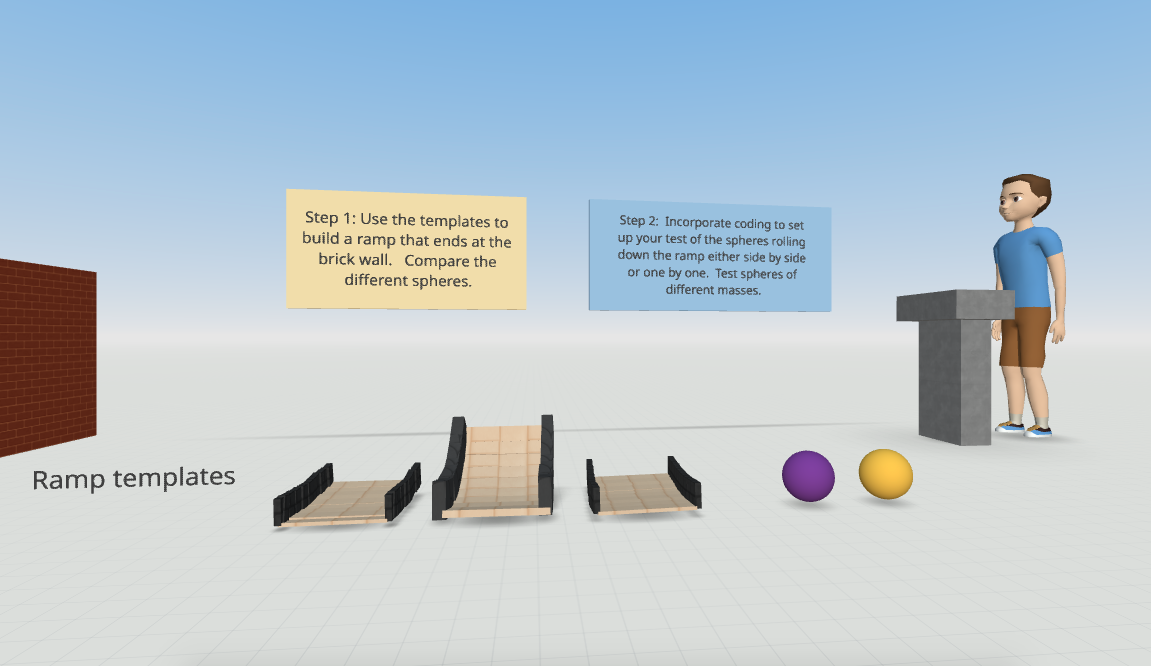
With CoSpaces Edu, students can design and code virtual prototypes, models, and even entire experiments. One of my favorite uses for the platform is collaborative STEM projects. Students can work in teams to design and build virtual spaces or objects, such as a virtual physics experiment exploring Newton’s laws or an architectural model of a bridge or building.

CoSpaces Edu’s collaborative features allow multiple students to work on the same project in real-time from different devices, making it perfect for group projects, whether students are in the classroom or learning remotely. Think about global collaboration possibilities, too! We want students to build teamwork, communication, and problem-solving skills and manage their time. Because they can collaborate in CoSpaces Edu, it makes opportunities available for STEM learning that is more engaging and hands-on.

6. Virtual Museums and Global Collaboration

Building global awareness is so important. Our students must learn about other cultures and have experiences connecting them with authentic and real-world learning opportunities. What if students from around the world collaborate to create a virtual museum that represents items from their different locations? With CoSpaces Edu, this is not only possible but easy to implement. Teachers can connect classrooms from different countries, enabling students to collaborate on a global scale to build and curate virtual museums on various topics, from world history to art or any topic they choose.

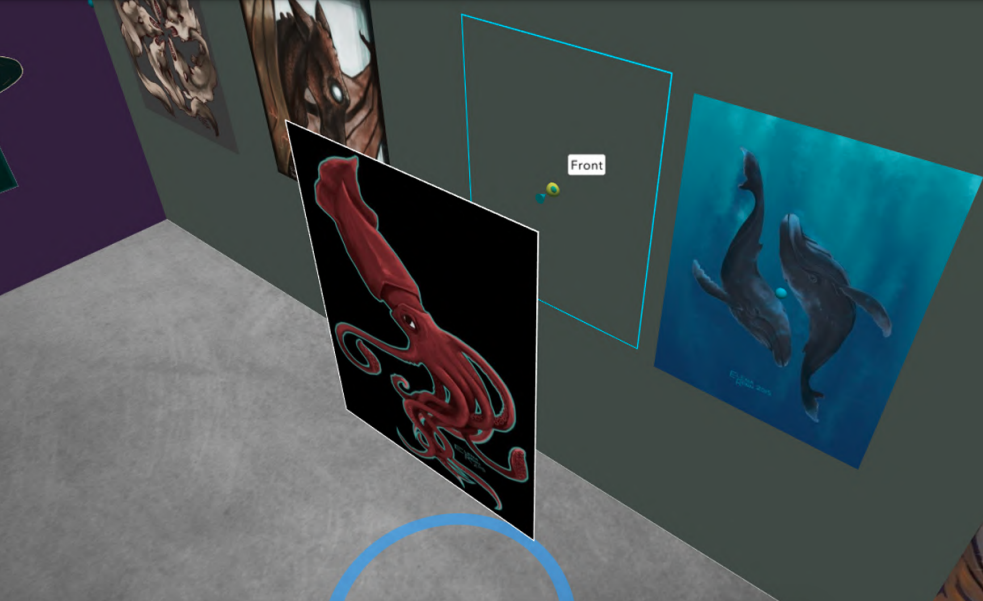
Students can design a virtual museum showcasing the art of different cultures. Using CoSpaces Edu’s 3D creation tools, they can build exhibit halls and import 3D models of art pieces or artifacts. Each student can contribute a different exhibit and then link them together into a larger museum space. A project like this not only fosters creativity and digital literacy but also deepens cultural understanding and instills empathy as students explore and share knowledge from diverse perspectives.

Where to begin

I have used CoSpaces Edu for many years. It is definitely way more than just a tech tool for students. It is a transformative platform that fosters the development of critical future skills like creativity, collaboration, critical thinking, and digital literacy. Whether you’re teaching elementary students to create 3D models or high school students to code virtual worlds, CoSpaces Edu offers endless possibilities for engaging, interactive, and collaborative learning experiences.

CoSpaces Edu shifts students from consumers to creators! My students are always wowed by what they explore when we get started. These are only six ideas to explore, and there are many more possibilities and lesson plans available for educators to explore right away.

CoSpaces Edu is easy to use, works on any device, and offers a secure, COPPA- and FERPA-compliant environment, which is critical. Dive into CoSpaces Edu this fall and watch your students’ creativity and future-ready skills soar.

About the Author

Dr. Rachelle Dené Poth is a Spanish and STEAM: What’s Next in Emerging Technology Teacher at Riverview High School in Oakmont, PA. Rachelle is also an attorney with a Juris Doctor degree from Duquesne University School of Law and a Master’s in Instructional Technology. Rachelle received her Doctorate in Instructional Technology, and her research focus was on AI and Professional Development. In addition to teaching, she is a full-time consultant and works with companies and organizations to provide PD, speaking, and consulting services. Contact Rachelle for your event!

Rachelle is an ISTE-certified educator and community leader who served as president of the ISTE Teacher Education Network. By EdTech Digest, she was named the EdTech Trendsetter of 2024, one of 30 K-12 IT Influencers to follow in 2021, and one of 150 Women Global EdTech Thought Leaders in 2022.

She is the author of nine books including ‘In Other Words: Quotes That Push Our Thinking,” “Unconventional Ways to Thrive in EDU,” “The Future is Now: Looking Back to Move Ahead,” “Chart A New Course: A Guide to Teaching Essential Skills for Tomorrow’s World, “True Story: Lessons That One Kid Taught Us,” “Things I Wish […] Knew” and her newest “How To Teach AI” is available from ISTE or on Amazon.

Contact Rachelle to schedule sessions about Artificial Intelligence, Coding, AR/VR, and more for your school or event! Submit the Contact Form.

Follow Rachelle on Twitter(X) and Instagram at @Rdene915

**Interested in writing a guest blog for my site? Would love to share your ideas! Submit your post here. Looking for a new book to read? Find these available at bit.ly/Pothbooks

************ Also check out my THRIVEinEDU Podcast Here!

Join my show on THRIVEinEDU on Facebook. Join the group here.
Spreading ideas and empowering student voice

Communication and Collaboration: Podcasts for Empowering Student Voice


There’s no shortage of digital tools available for use in classrooms today. No matter what category of tool you are looking for, there are so many options to choose from. While this is great to have so many choices, at the same time it can be challenging to filter through them to find exactly what you’re looking for. Fortunately many of these tools offer multiple uses, beyond the traditional purpose for which they were created. Sometimes it comes down to being innovative and creative and trying some of the tools yourself, and possibly even asking students for their ideas. We always need to be purposeful when choosing technology for our students. Think first about the “why” behind wanting to include a new tool into your class. What will it enable the students to do differently and how will it promote student learning?


One area that I like to focus on each year is finding new ways to build communication and collaboration skills with students. Using different digital tools has has led to more authentic and meaningful ways for students to learn, more ways to share their ideas, and in some cases, has served as a catalyst for increasing student engagement and empowering student voice. With the new tool Synth, we can create more opportunities for students to share their learning using a platform that goes beyond a simple podcasting tool. And it is a free service for teachers to use!


Communication is key

I have long been a fan of the tool Flipgrid. After finding it a few years ago, it quickly became one of our favorites for sharing ideas, doing Spanish speaking assessments and even for reflecting on progress with project based learning. It was also used for students to give me feedback about our class and share their ideas for what we could learn about. The best part about using Flipgrid was how it positively impacted students in my classroom. I had students who rarely spoke up in class, sometimes afraid of being wrong and others just not feeling comfortable speaking in front of their peers. I noticed almost immediately that students felt much more comfortable and built their confidence as they used it more frequently. When they became more comfortable speaking using Flipgrid, the confidence that they developed transferred over into our physical classroom space as well. We have an even better way to communicate and keep building on the conversations that we’re having in the classroom as well as out of the classroom. Everyone can be involved in the discussion on their own schedule.


We hear a lot about student choice and student voice and wanting students to develop confidence when sharing their ideas and learning to interact in both the physical and the virtual learning spaces. Students who may be shy, and less likely to speak out in class, somehow developed a comfort to share their ideas when using one of these voice or video response type tools. There’s something to be said for being able to offer a simple tool, that leads to such positive and more personalized learning experiences for students.

There never seems to be enough time in the class to involve all students in the discussions or to even cover everything that we want to. Sometimes we have to stop a great discussion because the bell rings, and have to wait until the next day. This is where Flipgrid really stands out. It enables educators to open up more time for students to share their thoughts and to work independently beyond the school day. One of the best features is that you can listen wherever you are, and whenever it is most convenient for your schedule. Learning on the go!


Let’s get them talking, thinking and learning from one another

Another tool that I love using in the classroom is Synth. There are so many ways that Synth can help students and teachers. Think about some lessons that you teach where students would benefit from additional instruction to listen to at their convenience. You can create a series of Synths which give students a different explanation or offer some tips for students to follow as they are completing an assignment or working on a project. Create one for each topic and then continue to add more depending on the questions that you receive, it’s a great way to have an interactive discussion that everyone can listen to.


How about having students share an idea or teach something by creating their own Synth. This can be a great way for students to collaborate and brainstorm ideas for a topic for independent study. They could ask their peers to respond to their Synth and brainstorm ideas together. A great way to help students feel more comfortable talking through technology that will lead to more comfort in the classroom as well.


How great would it be to have your own class podcast? Where there’s not only one person leading the podcast and interviewing guests, but rather the whole class can be involved. Why not create a podcast that can be shared within and beyond the school? Set up interviews with different student groups or teachers and share the story of what’s going on in your classroom and the school community.


Synth is powerful for sharing student voice, for generating new ideas and really helping students to learn in a more authentic and meaningful way. And it is so easy to get started, I was able to create a podcast within minutes. It evens generates a transcript of your Synth.

If you are looking for an idea to use with your students, then explore Synth. Enjoy listening to the responses wherever you are and on your own schedule.


**Interested in writing a guest blog for my site? Would love to share your ideas! Submit your post here.

Looking for a new book to read? Many stories from educators, two student chapters, and a student-designed cover for In Other Words.

Find these available at bit.ly/Pothbooks  


Focus in the new school year: Building relationships

Focus in the new school year: Building relationships

Rachelle Dene Poth

It is time for many to head back to the classrooms and prepare for a new year of learning and growing. It is an exciting time for educators and students to have new opportunities to learn and to reconnect. Hopefully educators and students are excited and recharged for the new year and the possibility of new ideas for learning.

For me, I am intentional in planning activities to get to know my students and for them to know one another. I often rely on some traditional methods like icebreakers and conversations, however, I also enjoy using some of the different digital tools as a way to gather some quick feedback but also to learn more about the students in our classroom.

By planning for some relationships building on that first day and during the first week back to school, we can focus on the environment and culture we are creating for our students. Covering course details and class expectations are important, but we should start by building a solid foundation so that we can work together. By starting here, we foster a positive classroom culture and welcoming environment for learning.

Learning Together

Starting from the very first day, we should be intentional about being present. Being at our classroom doors and in the hallways to greet our students as they arrive and welcome them to school is a great way to start. It is important to acknowledge all students as we see them in the halls and throughout the building, a positive step in creating a supportive climate in the building and in each classroom. We have the power to do this when we are visible and make connections to help foster a positive space for learning.

Starting back to the daily routine of school after a summer break, or any extended break during the year, always presents a good opportunity to try new ideas and to build relationships. Using intentional strategies, we can get to know our students by using games and activities that will connect classmates and will positively impact the learning environment

We can use low tech or no tech to do some icebreakers and other games to learn about one another and in some cases, review the content from the prior year. As educators, it is during this time that we should encourage students to share their stories, to make their own connections and to share with us what their goals are for our class. Fortunately, there are some easy ways to get started, whether or not edtech is involved, but it can be a great way to introduce some of the digital tools that will be used throughout the year.

Start connecting

In my classroom, we use a lot of tools throughout the year and many are focused on streamlining communication and collaboration within our classroom but also for connecting globally. Being available to our students when they have questions or need access to class resources is important since their questions do not stop when the school day ends, or over the weekend break. We also want our students to be able to connect globally and using these tools to help them facilitate these connections makes sense. Always focus on the why behind using an edtech tool in your classrooms.

How do we find the right tools

My first recommendation is that educators talk to PLN and colleagues about specific needs in a tool. Do we want students to be able to connect, to ask questions, to access classroom resources, and to interact online? Or do we want students to create presentations that they can share or collaborate in? Or maybe we want alternative ways for students to show their learning based on their needs and interests? All of these options exist. Here are five tools to explore and that are easy to get started with.

  1. Buncee is a “one stop tool” that educators and students need for creating a multimedia presentation full of animations, emojis, stickers, 360 images and also includes audio and video and a lot more. So many ways to create graphics, bookmarks, presentations, flipped lessons and more.
  2. Remind makes communication easier by enabling the sending of reminders, links to resources, or even photos, and it integrates with other digital tools that teachers use for learning.
  3. Padlet is thought of as a virtual wall. It helps students to collaborate, write a response to a discussion question, or even add resources for a collaborative class project, or for brainstorming,
  4. Wakelet is a great tool for curating content to share with students or for having students contribute to a Wakelet collection. As a teacher, I love using the Wakelet extension to save articles and websites that I come across while doing research.
  5. Synth is for podcasting. Students can create a podcast to discuss a topic, perhaps interview a “special guest.” It can be a different way to engage students in a discussion, promote student voice and implement a new tech tool in the classroom.

One thing to keep in mind is to make sure we are aware of any accessibility issues for our students and their families. Find out about the kind of technology and internet access available to the students when they are not in school.

Learn With Students

We learn so much from our students. Beyond the content that we teach, there are so many opportunities to extend the learning that happens in our classrooms. Whether from a quick conversation or during fun activities that we include in the lesson, we are always learning Trying some new strategies and using some of the many different digital tools to expand how, when, and where students learn can be a good example to set for students. Take some risks in the classroom and use one of these to help build and foster positive relationships. Why not have students create an About Me Buncee or Padlet, or share stories using Synth and then listen, and stay connected with Remind. As educators, it gives us a way to extend our own learning and to continue to learn and grow with our students. Sometimes we just need a new idea or tool to spark that curiosity and excitement for learning.

BIO

Rachelle Dene Poth is a Foreign Language and STEAM Teacher at Riverview Junior/Senior High in Oakmont, PA. She is also an Edtech Consultant, Attorney and author. Follow her on Twitter at @Rdene915


**Interested in writing a guest blog for my Rdene915 site? Would love to share your ideas! Submit your post here.


Looking for a new book to read? Many stories from educators, two student chapters, and a student-designed cover for In Other Words.

Find these available at bit.ly/Pothbooks  

5 Ideas for Building Communication Skills for the Future

My prior post on Getting Smart

Looking toward the future, as we consider how to best prepare our students for jobs that may not exist yet, what are the skills that will benefit them no matter what they decide to do? If we look at the research, trends over the past five or ten years of the top skills required by employees, there are a few that have stayed in place if not shifted toward the top because they are becoming increasingly more important. Looking at the shift from 2015 to the projections for 2020 and beyond, what do students need?

We’ve been talking about 21st century skills for a long time, often referring to how we are addressing the four C’s: critical thinking, creativity, communication and collaboration within our respective content areas and/or our roles. I have even heard mention of the “5Cs” and “7Cs,” with the addition of character, computational thinking, and citizenship included in the “C’s” of 21st century learning. With the increased use of technology in our classrooms and  daily lives, we can leverage some of these digital tools to help our students build the vital skills that will benefit them in the future, regardless of where their learning journey or careers take them.

As a Spanish teacher, I am always interested in finding ways to help students communicate their ideas, to express themselves in the language of study. Beyond language skills, I also want to help them learn how to communicate and collaborate with one another in various settings and contexts and in different media formats.

What are some tools that we can use to help our students become better communicators and to build confidence and promote student voice in learning?

Here are five different platforms or ideas that I think can be very beneficial for student learning and will help educators to implement some digital tools into the classroom without taking too much time to get started.

Written Communication

Students need to do a lot of writing to build their skills although this does not necessarily need to involve technology. However, the benefit of using digital tools for written communication can enhance student learning by creating more meaningful connections and providing different formats for students to convey their thoughts. Blogging is an effective tool to promote writing skills and literacy, to build digital citizenship skills, and to help students create a digital portfolio where they can track their own growth and build self-awareness as a result. Using tools like KidblogBlogger, or Seesaw offers students a space where they can take more ownership in learning, track their progress and growth over time, and become more comfortable and confident as they express themselves in a space where they can truly develop their ideas. It also promotes collaboration and fosters relationship building and getting to know our students.

Video Response

We also want to promote oral communication and give students opportunities to engage in speaking, especially if students tend to be shy in the classroom and prefer not to speak in front of their peers. We can leverage the video tools available to give students a comfortable space to begin building their speaking skills. In the past, I used Recap (now Synth), and students expressed how much it helped them to feel more comfortable to share their ideas, to reflect on project-based learning, and to be able to record their thoughts wherever they were and in a way that was comfortable. Flipgrid with its updated features offers more than just recording videos, it also promotes the opportunity for students to become global collaborators, and explore different ideas and perspectives from students in their classes. We can also use these tools to more easily connect our students with classrooms and experts around the world.

Podcasting

There are a lot of educational podcasts and platforms for creating them, depending on the amount of time you have, the age of your students and access to these resources. One idea is to start one podcast for the class, post a question for discussion and have students respond by creating a thread of their own to each question. Perhaps students can create their own podcasts or listen to the podcasts of their classmates, to focus on listening comprehension skills and also use it as a way to further expand conversations in and out of the classroom. We can build relationships between our students as they begin to better understand their classmates and make connections with one another. Students could work together to create a podcast to share within the class or to create for the school community, which would be a great way to facilitate that home to school connection to share the work being done by students in our classrooms.

Infographics

Having students work on conveying information, communicating ideas, even advanced or complex concepts, is sometimes more difficult if limited to writing a report or sticking to solely traditional methods. However, by using infographics, students learn to break down information and sort and share the most important facts or the data and determine how to best convey it to someone else. We meet the ISTE (International Society for Technology in Education) Standards for Students by using activities like this because students are creative communicators, they develop computational thinking skills, problem-solving, and become empowered in their learning as they choose how to convey their information. We connect them more authentically with the content. Some digital tools to try are Adobe SparkBunceeCanva, or Piktochart. However, it does not have to involve technology.  It’s not about using tech, it’s about the activity itself and how that can benefit students. Giving students the choice to use a digital tool or simply use paper and do something like a sketchnote or other visual representation, will still develop their skills in this area.

Videos and Vlogging

If these options have been tried, educators may try out vlogging to take learning to a higher level or simply to just build upon each one of the other ideas. Even if these are simply created for use in the classroom and not shared publicly, having students create and experience the power of video for communicating and being able to create these products, will no doubt benefit them in the future. Whether students create a screencast or do a short talk about a topic of study, they are engaged in project-based learning, teaching a lesson and recording it so it can be used for other students in the class. Some digital tools to explore are WeVideo and Educreations.

There are many options out there; it just takes thinking about what we’re already doing in our classroom and making one slight change to do something a little bit differently. Or as I have done in my classroom, offer all of these possibilities for students. At times, this initially felt a little uncomfortable  because it was so open, but it had huge benefits for student learning and engagement. I want my students to build their skills with technology and connect with what we are learning in the classroom, but I also very much value the power of choice and making sure that students feel comfortable. For this, I sometimes start by offering choices and then letting students decide what will work best for them. When they do, I’m there to support and encourage them to take the next step.


**Interested in writing a guest blog for my site? Would love to share your ideas! Submit your post here.


Looking for a new book to read? Many stories from educators, two student chapters, and a student-designed cover for In Other Words.

Find these available at bit.ly/Pothbooks  

Words

Guest post by Dr. Kalum McKay (@DrKalumMcKay)

Opinions expressed are those of the guest contributor.

Words matter. 

Words aren’t just words, they are building blocks or a wrecking ball. Many things in life are made or destroyed by what we say. Sticks and stones may break my bones, but words will never hurt me. This is straight-up false! Words are powerful. Broken bones heal, I’m not sure emotional wounds ever do. This isn’t just a message for kids, although it is an important one for them as well. This is a message for us all. The words we use determine so much of the successes or failures in our lives. When rolling out a new initiative, the words you use to present the idea can go a long way to determining buy-in. The way you handle a “growth” opportunity with a teacher or student determines how the information is processed. If you correct in a positive manner, you promote growth, if you correct punitively, you promote resentment and have taken a sledgehammer to the relationship. Our words verbally, in written format, and digitally have the ability to change the world. They can aid in growth or demoralization.

In today’s digital, social media-driven culture, our words can reach farther than previous generations could have imagined. This can be amazing and powerful. It can also be dangerous and harmful. Before you send that email, tweet that tweet, write that Facebook post, we must determine the consequences of our words. In Spiderman, there is what is widely known as the “Peter Parker Principle” that states, “with great power comes great responsibility”. Our words have great power, this comes with great responsibility. This is verbally, digitally, and everything in between. All of our words have power. Everyone. From the CEO of a company all the way to the intern. From the Principal to the PreK student. Our words matter. The tone, the context, the content, all matter. It is important to be purposeful in our choice of words. How many times have you seen a “leader” come in and completely demoralize an entire organization? On the flip side, how many times have you seen one energize and uplift an organization? This includes teachers in their classrooms. The words and the tone they use shape the entire atmosphere of learning in their classroom. Is it going to be an environment of love, connection, and growth? Or is it going to be one of compliance, fear, and resentment?  It is our responsibility to use our words as building blocks, not as the proverbial wrecking ball.

The wisest thing we could learn to do is to watch our words. We can learn to speak when it’s helpful and needed and choose our words wisely. We must take seriously the impact of our words. The right words can mean the difference between misunderstanding and enlightenment. They can mean the difference between being hopeful and supportive or judgmental and condescending.

The words you use are a choice you make constantly, as always, Choose to be GREAT!


**Interested in writing a guest blog for my site? Would love to share your ideas! Submit your post here.


Looking for a new book to read? Many stories from educators, two student chapters, and a student-designed cover for In Other Words.

Find these available at bit.ly/Pothbooks  


When you feel like you’re not getting anywhere

Sometimes it’s difficult to figure out what the problem is or where to start when you feel like you’re not getting anywhere. What I mean is that as teachers, we may have days when we might feel like we’re just not connecting with the students. Sometimes when trying to create a lesson or some new experience for students, we are met with less enthusiasm than we had hoped for, and sometimes, it might even be nonexistent.

About two years ago, I really struggled with finding ways to engage my students in learning. I reached out to my PLN to ask for advice, I tried Twitter, pretty much anywhere that I could think of to gather ideas from other educators who might be experiencing the same thing. That’s probably the most important point if anything out of my thought process, is that had it not been for those connections and knowing where to look to find help that I greatly needed, I would have been working through it on my own in isolation, as I had been for many years of my teaching career.

It’s not easy to ask for help especially when as teachers, we feel like we are supposed to be the experts when it comes to students and learning and teaching. There may or may not be assumptions about our abilities to manage our classroom, deal with student behaviors, to be flexible in our instruction, and to balance so many different things every day. But without having a way of connecting with others, we would be stuck doing the same things we’ve always done. While in some cases that might be good if the experiences went well, often times it might not be that great. And that is how it was for me.

Last year is what I considered to be probably my best year in teaching and it came to be because of relationships I had formed over the years and also because I got away from doing some of the same traditional things I had always done and pushed the limits a little bit and tried some different things in my classroom. There were some things I just didn’t appreciate any more like standing in the front of the room and talking at my students. It was exhausting trying to think of ways to spend 42 minutes leading the class and keeping the students “busy.”

I had reached a breaking point early in September two years ago when I just decided to get rid of the rows in my classroom and see what would happen. The combination of these actions and everything in between is what I believe led me to have the best year yet. I felt connected with the students, I could see them learning and that they were more engaged. Students would come in throughout the day and say how much they liked class better than the prior-year. I just felt that there was a different vibe, I sensed a more of an excitement about being in the class and while at times it was uncomfortable worrying about if my class was too noisy or if students were off task on occasion, I really felt good about it

So I decided to keep the same kind of methods and habits in the new school year, making changes here and there, but I was not seeing the same results. I had different students than I had in the past and so it kind of led me to go back and rethink what I had been doing. What had worked so well last year was not working as well this year. I did not expect that because I was assuming that things would be the same as they were the year before. Thinking like this, the “way we’ve always done it” is what gave me some trouble in the first place. I taught the way I had been taught using methods that worked for me as a student and even as an adult, but these methods did not work for all of my students. So by doing that I was doing them a disservice. Flash forward to this school year, trying to use the same methods and strategies should not work because I had different students than the year before.

There have been days that I left school feeling frustrated and overwhelmed, a bit uneasy because like I said, last year I had a great year. And I had not experienced that type of struggle in several years. so trying to figure out what the problem was and how to work through it has been something I’ve been working ever since. I felt some moments of success and other times I thought I just couldn’t do it anymore. Sometimes I became so frustrated at the behaviors, whether it be lack of respect or lack of wanting to work or negative attitudes that instead of trying to better understand the students and focus on having conversations, I responded to their behaviors and the reactions. I lost my “cool,” I lost my composure, my eyes filled with tears of frustration and I didn’t like it. I even told them that it was something that would bother me the rest of the day and for days to come, because that was not like me but I had “had it.” I had been doing everything that I thought I could to help them and I was getting nothing or the bare minimum in return. I just wanted them to hear me and to understand that their behavior matters. Being respectful matters, and that it doesn’t matter how great your grades are or what you have in life if you are not a nice person. If you do not show respect and you don’t take time to listen to others and give them their attention when they ask for it or when they deserve it, that makes it very uncomfortable.

I thought it was just me, I had convinced myself that it was something that I was not doing. There was something wrong with me that I needed to fix within myself. But the more that I talked to people I was connected with locally, nationally and even around the world, I soon realized it was not just a problem that I was facing. Again, if I was still in isolation staying in my room and not connecting anywhere in my school building, I would feel exactly like I did. It’s just me, I’m the problem. Because I had those connections, I was able to recognize that it isn’t just me it’s a struggle other educators face and there are different ways that they deal with it that may or may not work for me.

I had lots of recommendations, great ideas, stories of how changes in different classrooms made a big difference for different friends of mine and for every suggestion they offered I felt terrible telling them that know it just would not work for me. While I may not have all the answers, I know my students well enough to be able to figure out what might and might not work for them. So while I did not come up with a magic solution to any of the challenges that I feel like I’m facing, which in the scheme of things in the rest of the world they’re not that big at all. But there are bumps in the road, a road which prior to this year had finally been mostly well paved with occasional potholes along the way.

But a new year, new challenges changes just to show why we can’t teach every year the same way that we were taught. You can’t do things the way you’ve always done them and as Don Wettrick’s dad said: “Don’t teach the same year 20 times.”

I guess I felt that because my methods worked so well last year, that I should just do the same thing again this year. I was wrong. New year, new beginnings, some changes, a bit of discomfort, challenges, through all of it. Yes, please. That’s what keeps us moving, what keeps us active and engaged and although sometimes you feel like you’re becoming disengaged from the profession when you sit back at the end of the day or in the middle of the day or whenever it is that you reflect, you must stay focused on your why. The why is your purpose, your passion for what you do and why you’ve gotten up early every morning and worked through weekends, holidays and even summer vacations. It is when you come full circle and realize that you’re there to make it work to find an answer and a solution because it might be that you are the problem

And sometimes you might be the problem creator, it’s never the same. It’s always changing, it’s uncomfortable but it’s how we grow. And if you don’t share your experiences with others then you are going to be limited to only growing in your own space. To put yourself out there, be vulnerable and ask for help when you need it, that is not a sign of weakness it’s a sign of tremendous strength. When you can identify that you have a need, a weakness, an area of struggle, you show that you are vulnerable and that is more than okay. Because as many times as I’ve said it, I will continue to say it twice as much:

I’m not an expert.

I don’t know everything.

I make tons of mistakes every single day.

I’m willing to try and I’m willing to grow.

I’m willing to get up no matter how many times I’m knocked down and go for it again.

I am a work in progress and I am learning as I go. 


**Interested in writing a guest blog for my site? Would love to share your ideas! Submit your post here.


Looking for a new book to read? Many stories from educators, two student chapters, and a student-designed cover for In Other Words.

Find these available at bit.ly/Pothbooks  


Challenges, Connections, and Learning every day!

Recently I had a colleague ask me for some ideas for dealing with challenges when it comes to classroom management, student behaviors and just keeping up with the responsibilities of teaching in general. I’m always happy to have time to talk with other educators, there is so much to learn by connecting. I think sometimes there is an assumption that because someone may have been teaching for 10 or more years, or worked in the same school district for a long period of time, that’s there is a higher level of knowledge and skill held by a teacher that fits into this description. While of course the more that you teach, it might seem like you would have a lot of ideas and answers to share with younger or new to the school teachers, but the longer you have taught also means, I think, that you have that much more to learn.

Having taught for about the last 25 years, I’ve had a lot of different experiences, some good, some bad, some in-between and some just absolutely fantastic. I have been in the position where I needed to improve, and felt like no matter what I tried to do or could try to do, that I just would not succeed. That I would lose my job. I’ve also been at the opposite end where I felt like things were going well, I could feel more success and a change in how I had been teaching in the classroom and in my connections and relationships that I had built with the students and colleagues.


I think if you ask any educator, most can probably identify the best year they’ve had, and if they can’t, they just can’t yet. We always have room to grow and things take time. How do educators decide what makes it the best year? For some, is it a year without many challenges, the students are well-behaved, homework is complete, other clerical tasks and responsibilities held by the teacher are finished, observations went very well and teacher ratings are satisfactory or proficient or whatever the ranking may be? Maybe. But how do we truly define what would be the best year ever?

It takes time to build

I am fairly certain that last year was the best year I’ve had yet. I think because I changed a lot of things in my classroom, I stopped worrying so much about having every minute of every class accounted for and instead gave the students more possibilities to lead in the classroom and for me to have more opportunities to interact with them. Now it did not come without its challenges, some student behaviors that in some cases pushed me so far beyond frustration that I thought I reached my breaking point. I reacted in ways that I was not proud of, but I let the frustration get the best of me. I stopped seeing the student and only saw the behaviors. My “lens” had become clouded and it took some reflection and just not feeling very good about it for me to realize that I had to do something different.


The common feeling or response is when you feel like there is a lot to handle or come up with a plan for, can feel so isolating. you might feel lost or like others are judging you based on what you perceive to be your weak areas when it comes to instruction. And I’ve had a few people confide in me that they feel like they’re too different or too weird or they’re not normal enough to be teachers. Hearing those kinds of things breaks my heart because I don’t want to see teachers become disengaged or to lose their passion for doing the work that teachers do because of worrying about how others may or may not perceive them.

My response is always it’s good to be different, what does normal look like anyway? Does normal mean everybody gets and does the same thing? Does being normal mean you fit into some kind of mold, one that may or may not be who you truly are? I think the best that we can do for our students is to show them who we are because we want to know who they are.

We can’t hide behind some perceived idea or model of what a teacher should or should not look like. Nor should we compare ourselves to our colleagues or other teachers that we may have had in our own experience. When we do this we lose sight of something and I think it’s important for us to demonstrate and model for students. We need to worry about ourselves first and only compete with who we are today by judging it based on who we become tomorrow. Everyone has weaknesses, everybody struggles, everybody feels like they don’t belong at times, a friend once wrote about being in the land of misfits, I’m totally fine with that.


What can we do, regardless of what year we are in during our careers? New teachers have a lot to offer us veteran teachers, there are better pre-service teacher programs and more information available to current students that are seeking to get into the profession, than what is available to us veteran teachers, who may not have access to or may not even know they exist. And for the new teachers, when you are assigned to have a mentor in your school, I really don’t think you should consider it to be that you are the learner and that you must follow and adhere to all of the advice of your mentor. You have to decide who you want to be, what is your purpose, your why, your spark, your passion for doing what you’re doing?

It starts with us and it always starts with us to take that first step. We have to be okay with who we are and commit to doing whatever is best for our own personal and professional growth but being mindful of what that means and how it will impact those we lead and learn with.

So if at any time you feel down or lost or frustrated or like you’re becoming disengaged or that you don’t fit in, please send me a message. I’d love to talk to you and share some of my own experiences on my 25-year learning journey.


**Interested in writing a guest blog for my site? Would love to share your ideas! Submit your post here.


Looking for a new book to read? Many stories from educators, two student chapters, and a student-designed cover for In Other Words.

Find these available at bit.ly/Pothbooks  

Book4.png

Its 2019, and now I actually have a calculator (app) everywhere I go. Why do I need to learn math again?

Guest Post by Dan Haiem, @danclasscalcco1 

“But teacher, why do I need to learn this math stuff if I can just use my calculator app?”

Every teacher has heard this at some point. Most students have asked this at some point. Up until around 2007, teachers had a great answer that kinda-sorta worked, which went something like “You’re not going to always have a calculator everywhere you go, are you?”

The opposite of that, of course, became a reality when the iPhone became the most common tool found in any student’s pocket, and gave them access to powerful calculators like Desmos, Geogebra and our very own ClassCalc.

Here’s my opinion though – the old answer was never a good answer, and the ubiquity of iPhones has given us a golden opportunity to re-evaluate a very valid question. What’s the point of learning math if we have calculators that do math for us?

In the words of NYC’s (possibly) most high-energy math teacher, José Vilson, “Math shouldn’t be limited to a disconnected set of rules and jargon that doesn’t seem to mean much of anything.” If math really was about the rules and jargon, then a calculator could truly replace the need for learning it. Fortunately (for humans), it’s not.

For the sake of simplicity, and because this is my first blog post ever, here’s a short roadmap of this post’s approach to this topic:

  1. First, we’ll discuss how math helps students build tools and skills, and define the difference between the two:
    1. Tools: Spreadsheets, running an analysis, doing taxes.
    2. Skills: Good communication, emotional intelligence, problem-solving.
  2. Next, we’ll discuss how math has shifted from serving us as a tool, to helping us sharpen our skills – most important of which is problem-solving.
  3. Finally, we’ll take a look at an example of how a specific math problem helps us build a specific problem-solving skill called mental-triage, and how we might help students make that connection as well.

Onwards.

Math serves two primary purposes in education: it gives students the tools to play with numbers, and it serves as practice to sharpen certain mental skills that are important in life. To define the two:

  • Tools: Concrete things a person “knows.” Examples include: spreadsheets, coding, writing blog posts (a tool I clearly lack), social media advertisements, taxes, etc.

  • Skills: More abstract, broad abilities that are not particularly associated with executing a specific task – the kinds you always see in leadership charts. Examples include: Hard working, communicative, optimistic, honesty with self, problem-solving, etc.

*Credits to Business Simulations

In this sense, math falls into an interesting crossroads as both 1) part of the abstract skillset a person has, (ie: “problem-solving”) and 2) a tool that can be put to work (ie: part of your “toolkit” – like running a statistical analysis on two data sets).

It’s important to keep in mind though that:

Math will play a fundamentally different role for different students, and we need to bring that understanding into the classroom.

An engineer will likely benefit from math as both 1) an exercise in problem-solving (skill) and 2) a tool to accomplish certain tasks.

An artist might use the abstract side of problem-solving (skill) but – and this is especially applicable today, with all the calculators in our pockets – they probably will not have much use for math as a tool

Here’s a screenshot I grabbed off the might internet that summarizes the point (albeit, aggressively):

*drops mic*

I believe it’s important and ok to tell our students that not all of them will be using math as a tool. At this point, most people don’t need math to do taxes (here’s a calculator for that), split a tab (here’s a calculator for that) or accomplish any of the other tasks that might have required math as a “tool” before calculators were built.

To recap:

  • Math confers two types of skills: Abstract problem solving (skill) and an actual tool in your toolkit (tool)
  • Everyone can (probably) benefit from the problem-solving (skill) aspect. While some people (engineers, some scientists) benefit from having math in their toolkit (tool), most can get by with their super powerful pocket calculator.
  • So, for students not interested in pursuing a career that would require a math toolkit, we must focus on the abstract problem-solving (skill) aspect of math.

As brilliantly stated by Baltimore Ravens lineman and MIT mathematician John Urschel, we need “students to see that math extends far past the confines of the classroom and into everyday life.” What’s more “everyday life” in the 21st century than problem-solving?

Now the questions shifts to: How do we show students the relationship between learning math and developing this abstract ability to “problem-solve”?

I have two thoughts on this:

  1. One thing to consider is that skills and tools are actually mutually conducive. Google is a tool you learn to use. Being able to learn stuff on your own is a very important skill in today’s workforce. Knowing how to use the Google tool will help you build the learn-stuff-on-you-own skill. I think the same applies to math.

Although students may never use calculus directly, the mental exercises they go through in solving calculus problems might help improve the mental muscles required for peripherally related skills.

  1. We need to find good examples to demonstrate the above. I mean good examples. Not the “Well, don’t you want to know how to do this without your calculator?” type of answer and not the “Being able to do your taxes is very important” type of answer and not the “here’s an example of Timmy calculating the volume of the Earth by standing on a ladder and looking at the horizon (although that’s super cool)” type of example. These examples all focus on the tool aspect of math, which we know won’t be as relevant to all students. We need to focus on the skill aspect of mathematics.

So now the challenge becomes being able to demonstrate to students a link between learning math and learning how to problem-solve. A good approach might be to 1) Have your students break down what sub-skills are required to succeed in math 2) Have your students break down what sub-skills are required to problem-solve 3) Discuss the cross-overs.

One of my favorite examples is mental triage: the abstract skill of quickly finding the most efficient path through a challenge given a limited toolkit.

Here’s an example of a math problem that helps sharpen the sub-skill of mental triage:

  1. Math itself is a limited toolkit. You learn how to move numbers around. How to draw graphs etc. Each time you learn one of these new tools, you’re essentially learning a new way to play with numbers. When we approach a math problem, we subconsciously run an analysis that goes something like this: What do I want to make these numbers do? What tools do I have to move these numbers around? What tools am I not allowed to use? What is the most efficient tool path to an answer?
  2. As an example, let’s take the following problem, a favorite of the SAT:

  1. Here’s how my brain runs through my math toolkit.
    1. I gotta solve for x.
    2. Problem: x is in the exponent.
    3. Do I have any tools to get rid of an exponent?
    4. I can raise both sides to ^(1/4x) which would lead to:
      1. No good. Back to step c.
    5. How else can I get rid of the exponent? Logarithms, let’s try that:
      1. which simplifies to:
    6. Great, we got rid of x in the exponent. Onwards! Divide both sides by 4log(2):
    7. Plug into by handy dandy ClassCalc Calculator to get:
      1. x=1

There we have it: mental triage in math.

Finally, we’ll bring it full circle with a real-world example of mental-triage as a sub-skill of problem solving.

Teaching my high school students how to pick a college

It was the last day of my physics class last year, and my students were just about done with school. They had already taken the AP test and were ready for summer. Instead of squeezing in another physics lesson, I decided to tackle a more pressing concern of theirs – choosing a university.

In retrospect, my method for picking a university was suboptimal – I just asked my good friends where they were going and what they thought a good college was, and ended up at UCLA. Lucky for me, I met good people there and had an awesome experience, but many others who take the same approach are not. I wanted to teach my students how to be proactive and problem-solving-oriented in making life choices.

Rather than start with “I want to go to college” I wanted to help each one of them hear their inner voice, and begin a dialogue with it. Start for the bottom. Here was my approach:

Student: *Says something*

Me:

And this is what the conversation ended up sounding like:

  • Student: What college should I go to?
  • Me: Why do you want to go to college?
  • Student: I need to get an edu-
  • Me: Yes, but why do you need an education? What’s your goal?
  • Student: I want to make money. Goal number 1: Make money!
  • Me: Honest, but fair. What else? A lot of jobs will make you money.
  • Student: I want to become a doctor.
  • Me: Do you for sure 100% want to become a doctor? Have you had real exposure to medicine? Or is it alluring to you for other reasons?
  • Student: I’m not sure. I want to figure out what I want to become. Goal number 2: Explore career options!
  • Me: Ok, what else?
  • Student: I want to make good friends and party. Goal number 3: Have fun
  • And so on..

By the end, we put together a list of priorities for each student. I could see their perspective change drastically. Rather than listen to a parent’s friend’s suggestion, they were determined to go online and research.

Now, I am not necessarily saying that a better mathematician is going to be better at selecting a college, but certainly, the tools we learn in math can inform our decision-making process for the important choices we must all make in life, especially if we are aware that there is a problem-solving oriented approach to making these decisions. Our jobs, as teachers, is to help students form that awareness.

A good method for cultivating that awareness is with Miyagi Moment every so often. What’s a Miyagi Moment moment, you ask?

It’s a metaphor for when a teacher (or sensei) helps a student develop a crucial skill by practicing adjacently related skills that at first do not seem connected.

In the first gif below, we see the legendary Mr. Miyagi teaching Daniel San how to…wax a car. Not really relevant to fighting karate.

In a later scene, Daniel san gets angry, accusing Mr. Miyagi of wasting his time with chores, when he should be learning super cool action moves to take down the big bully Johnny. Right then and there, Mr. Miyagi throws a couple of HYAH punches and BAM. Daniel san blocks them – all the while shocked in disbelief that he had developed the skills to do so. That moment of disbelief in the newly developed skill is the Miyagi Moment!

In math, students will often be practicing skills that seem almost irrelevant to them in life. It is up to us teachers to remind our students every so often that that is not the case. The best way to show them that is with a Miyagi Moment. It is time away from teaching the next chapter or lesson, but it is time well-spent.

I think blogger and math teacher John Trout McCrann put it beautifully in writing “Deep understanding about the process of solving an equation helps everyone understand how to create systems to solve problems at work, in their families, in our world. The kinds of problem-solving strategies you might use to tackle a big project, develop a more efficient engine, or address an issue that’s arisen between you and your partner. Deep understandings about shapes help everyone understand how to reason spatially, a skill that you may one day apply as a designer or as you lay out the furniture in your first house or apartment.”

About Me (Daniel Haiem):

  • I love math and education.
  • I’m an ex-physics teacher
  • I founded and lead a company called ClassCalc – the lockdown calculator app that lets teachers lock students out of all outside distractions such as instagram, calls and texts, keeping students focused in class, and preventing cheating on tests. Our goal is 100% access to calculators for students across the planet by 2025.

**Interested in writing a guest blog for my site? Would love to share your ideas! Submit your post here.


Looking for a new book to read? Many stories from educators, two student chapters, and a student-designed cover for In Other Words.

Find these available at bit.ly/Pothbooks  


Books available

TeacherCast Educational Network

Technology Integration - Instructional Coaching - Productivity Secrets for Educators

Leadership Liner Notes: Sean Gaillard

Built on Connection. Tuned for Impact.

Stories by Thomas Oppong on Medium

Dr. Rachelle Dené Poth @Rdene915 Educator, Consultant & Keynote Speaker, Author, Attorney #THRIVEinEDU

Hooked On Innovation

When Innovation slaps you in the face, we slap back.

Teach Better

Dr. Rachelle Dené Poth @Rdene915 Educator, Consultant & Keynote Speaker, Author, Attorney #THRIVEinEDU

BrianKulak.com

Dr. Rachelle Dené Poth @Rdene915 Educator, Consultant & Keynote Speaker, Author, Attorney #THRIVEinEDU

The Principal of Change

Stories of learning and leading

Mandy Froehlich

Dr. Rachelle Dené Poth @Rdene915 Educator, Consultant & Keynote Speaker, Author, Attorney #THRIVEinEDU

Katie Martin

Informed by research, refined by practice

#RocknTheBoat

Rocking today's classrooms, one teacher, student, and class at a time.

User Generated Education

Education as it should be - passion-based.

Learning as I go: Reflections & lessons learned

Dr. Rachelle Dené Poth @Rdene915 Educator, Consultant & Keynote Speaker, Author, Attorney #THRIVEinEDU

Serendipity in Education

Join me, Allyson Apsey, as I stumble upon the fortunes of learning, laughing, and celebrating alongside incredible people.