Reaching All Learners

Guest Post by  Laurie Guyon, @smilelearning

If you have met me at a conference, a workshop, or in a school, you would consider me an extrovert. I’m friendly, always smiling, and comfortable talking to anyone.  Even as a self-proclaimed chatterbox, I get anxious in certain social situations. One on one conversations makes me nervous. My mind reels with thoughts like “will I talk too much” or “will I overshare” or “will I say something stupid” or “what if there is a lapse in the conversation’.  These thoughts have caused me to avoid what might have been a wonderful conversation. I try to step outside my comfort zone and engage in these moments more often. I know that these thoughts and ‘what ifs’ are part of being human.

“I restore myself when I am alone.” – Marilyn Monroe

While reflecting on these moments, I thought about my teenage daughter.  She is a self-proclaimed introvert. Her anxiety in social settings is completely the opposite of mine.  She is fine one on one, but crowds get her inner thinkings reeling. She hates public speaking and will avoid group situations whenever possible.  She once told me that my teaching style would give her hives because I like a loud and active classroom. She prefers quiet and independent work. In our classrooms, we have students with all different communication abilities and fears.  How do we foster an environment that can support all learners and communicators?


In the TED talk about introverts by Susan Cain, she defines shyness as fear of social judgment.  She states that introversion is more about how you respond to stimulation.  In the classroom, there is a multitude of stimulation. These can be visual noise, people, and expectations.  How each of our students responds to this stimulation tells us if they are comfortable or not. We may even discipline students based on their behaviors.  But, what if we are pushing students outside of their social norms?


Bob Dillon and Rebecca Louise Hare ask educators to make sure that there are spaces for all learners in their book, “The Space: A Guide for Educators”.  They mention creating areas that give students a chance to learn and work so they can thrive. When I taught 6th grade, I created a variety of learning spaces.  I then asked my students to choose the spots in the room where they feel they could learn best. I learned so much about my students by giving them the agency to choose.  I utilized choice boards to give students autonomy. Students were more likely to create quality work when given a choice on how they would showcase what they learned.

Have you ever gone to a presentation or a workshop and the presenter asks you to do something you don’t want to do?  For example, I was in one recently where they asked us to do charades. I am not a fan of playing that game for a variety of reasons, but we had to.  I did everything I could to be the guesser and never have to act it out. Then, at ISTE I lead a mini engagement session with the amazing MCE Melody McAllister and Nearpod.  In the session, we had to lead the participants in a rousing game of charades. Once again, I was outside of my comfort zone. The energy of Melody, the Nearpod team, and engaged educators allowed me to participate in the activity.  It was the support and encouragement that allowed me to be successful.

“The greatest art is to sit, wait and let it come.” – Yogi Bhajan

To reach all learners, we need to think about our learning spaces.  We need to think about the amount of agency we give our students and give them a chance to be inside their own heads.  We also need to encourage them to try and do what may not be in their wheelhouse. We can support them with encouragement and time to build on their comfort level.

We want to maximize talent and success for all our students.  This does not need to always be group work and active activities.  Sometimes, the best activity is in speaking softly or to work alone in silence.  But sometimes, it’s using our talents as part of a community that can make us successful.  Finding this balance is what will help us reach all learners.  


Interested in writing a guest blog for my site? Would love to share your ideas! Submit your post here.


Books available

bit.ly/Pothbooks


Teachers matter more

Guest post by Dave Schmittou, @daveschmittou #LastingLearning

via Teachers matter more

I am all about improvement. At the end of every year, I spend some time reflecting on what my strengths and struggles are so that I can make a plan for progress. At work, I spend time evaluating programs, processes, and people. One thing I have noticed recently in schools is that far too many of us say teachers matter more,  that the people make the difference, yet we spend so much of our time focusing our improvement efforts on programs and processes. We think of ways to circumvent those who matter more instead of diving deep to develop the real difference makers. We know teachers are the drivers of learning, but we pour money and time into software, classes, textbooks, and schedules instead of into the people who make it all happen.

8


As a sports fan, I often use athletics to try and illustrate my points, so I may as well do so again. Lebron James is considered by many people as one of the greatest basketball players of this era. He is dominant, he can shoot, dribble, pass, rebound, and play defense (when he chooses to). Pretend for a moment that you are a general manager of a team Lebron plays on and you have the task of making the team better. Your goal is to get wins and championships. You can do this by upgrading the concession stands at the arena. You can do this by bringing in new players to circumvent Lebron, players who will not pass him the ball or expect him to be great, or you can do this by bringing in players that complement his game and allow him to dominate. Each of these strategies has been tried on his teams. Some owners and GMs have attempted to distract the fans from what is happening on the court by upgrading the arena. Some have attempted to save Lebron by bringing in others to take the pressure off, and some have brought in players to complement him and make him even better. Only the latter has resulted in championships, however.

Often times in schools we get ourselves distracted by things that don’t matter at the expense of those that do. As a leader who has had the opportunity to help lead turn around efforts in a few schools and districts, I have learned that no program, no paint job, no software will ever impact a child like an amazing teacher. If you are a leader, all of your focus should be on making teachers better, not working around them.

If you have struggling students in your school (we all do), do not go on the hunt of the newest tech gadget to give to the kids. Look for ways to help a teacher work with those students more. If you have accelerated students in your school (we all do) do not look for activities and classes to fill a schedule. Look for ways to have teachers inspire and motivate innovation. Stop looking for ways to work around teachers and begin looking for ways to support teachers.

Support does not simply mean increasing pay. Support means, if you have the option between a new textbook or staff professional development, invest in the teachers. If you have a choice between painting a hallway or developing a teacher, choose the teacher. Always, choose the teacher/

Every research study available describes the effects that matter most for student learning point to teachers as the difference makers. Teachers matter more. Teachers provide feedback, establish the culture, set the expectations, develop the assessments, and plan for progress.  If you are a leader, spend your time building capacity in teachers and you will be amazed at the learning that results from your students.

Check out the podcast on this topic at https://anchor.fm/david-schmittou/episodes/Episode-12-Teachers-Matter-More-e2n3c4

Feel free to also check out Dave’s book:

It’s Like Riding a Bike: How to make learning last a lifetime


Want to write a guest blog for my website? Submit an idea here!

Summer: Family, Friends, Learning


This slideshow requires JavaScript.

When people find out that I am a teacher, one of the first things they say is “it must be nice to have your summers off.”  Yes, it is, but in all honesty, I would be fine if my school switched to year-round schooling. I enjoy being in the classroom and look forward to each day and what it brings, even the challenges that might pop up. More than anything, I love working with students and learning from them. My reason for loving the summer is not because I don’t have to go to work; it’s because it is an opportunity to have more time with family and friends and to take part in professional development and reflection.

Time for Reconnecting

Life gets so busy sometimes that before you know it, weeks and months pass by and you might find that you haven’t had a lot of time to spend with family and friends.  Of course, technology helps us to stay connected more than we could before. Whether we use text messaging, different apps, FaceTime or even a hangout to see our family and friends, it’s not the same as time together in person. More days at home means more time for family and friends.

I’m also excited for conference season to be here and to have time to spend with some of my closest friends learning together and relaxing. It was an amazing week at ISTE 2019 in Philadelphia and it is hard to believe that it has already passed! Time to start prepping for ISTE 2020!

I presented several sessions while at ISTE, which is such a fantastic conference that brings so many educators from around the world together every year.  We had so much fun and some of these pictures totally capture that well. It is great to spend time with my 53s and the 4OCFPLN and meet some PLN for the first time in person.  I loved getting to finally meet (in person) Elisabeth Bostwick, Rich Czyz, Tamara Letter, Scott Nunes, David Lockett,  Annick Rauch, Stacey Roshan, the Gimkit team of Josh and Jeff, and a few members of the 4OCFPLN that I only knew through Voxer!

Now I am prepping for the next learning adventure which is coming up in 2 weeks. I’m fortunate to be part of the EdWriteNow Volume 3 group of authors who will meet in Boston to write the book together. An added bonus is that I will get to spend extra time with my good friend Jennifer Casa-Todd while there. After Boston, a few of us are going on a writing retreat to Nashville. While each of us will be working on our respective books, it will be nice to spend time together!

Knowing that I will spend time with my core groups, the 53s and the #4OCFPLN, plus meet other members of my PLN for the first time, in real life, is one of my favorite things about the summer.   


This slideshow requires JavaScript.

Time for Recharging

Summer is a time for a lot of things, one of the most important is self-care and recharging. So doing some normal summer things like sleeping in late, catching up with friends and family, going on vacations, ditching our devices and not worrying about setting the alarm are important for our self-care. Summer is also a valuable time for teachers to do even more on a personal and professional basis like think about their practice and take advantage of the opportunities that are out there for personal and professional development and growth. Attending conferences like ISTE give me a renewed excitement for the work that I do. My energy rarely dips when I am at these events, surrounded by friends and learning.

Time for Learning

A more flexible schedule for the summer means more time for attending conferences or webinars, joining in book studies or Voxer groups, or connecting within different learning communities. It might be easier to get involved in a Twitter chat, whatever it is during the school year that just doesn’t seem to fit as part of your routine, make it part of your summer routine.


There are lots of opportunities out there and my advice is to decide what is best for you. Do you want to be in one Voxer group or join one book study? Then make that your focus. Or maybe you want to start a blog or create a  new website. It’s up to you because it is your time to decide how to spend your summer break. I’m thrilled to be part of the summer BookcampPD book study with my book In Other Words. Looking forward to discussing the six books included in the study and of course, the two weeks in July (July 15-28), when we get to talk about my book and share ideas and takeaways from it.


Enjoy yourself

Each summer gets better and better, and it’s not because I traveled and spent hours on beaches, or to the contrary, kept idle. It is because I have used the time to learn more, to read, to connect, to reflect and to prepare for the next year.  My summer goal is to work so I can start stronger and be better than I was the year before. Whatever you do this summer, make time to recharge, connect and learn. And don’t set the alarm 🙂


This slideshow requires JavaScript.

Getting 2gnoMe

Personalized Learning for Teachers

Earlier this year, I was seeking guest posts for the monthly ISTE Teacher Education Network newsletter. One of the emails that I received included a link to a platform called 2gnōMe. I had not heard of it, so before responding, I took time to explore the website to better understand how it was being used by educators. After looking over the website and watching the video on the landing page, I learned that 2gnōMe is a platform that enables school leaders to provide personalized professional development for educators. The benefit of 2gnōMe is that the platform helps educators to ideally avoid, or at least reduce, the one-size-fits-all approach to PD and break away from what has become known as the “sit and get” professional development. For administrators, it enables school districts to clarify what individual teachers might need from available resources and personalize their learning experience, at scale, to measure its usefulness and impact.

The background

I contacted Ilya Zeldin, the CEO of 2gnōMe, to learn more about the company’s background, the purpose of the platform and to watch its demo. During our conversation, Ilya shared his vision for the platform and his goals for moving forward and getting the platform into school districts and learning providers. When he began designing the 2gnōMe platform, he focused on human connection and empowerment. Ilya said:

“That was the reason I developed the 2gnōMe concept. I would like to re-imagine the learning process for all adults, but the stakes are just too high with teachers. While teachers are asked to differentiate learning for students in their classroom, they rarely get the same kind of personalized professional learning when it comes to their own needs.”

According to Ilya, 2gnōMe enhances individual skills awareness and uses data to provide teachers and school-level leaders with crucial information to support teachers’ efforts to improve their practice, implement innovative practices, and achieve better results for their students.

During the demo, I saw the example of the 2gnōMe approach and platform based on the ISTE Standards for Educators. As teachers first reflect on their classroom practice, the data is compiled to then provide a more personalized learning experience for them. There is enhanced skills awareness — (the missing piece) after the self-reflection about the teaching practice. The underlying purpose is to impact how teachers can upgrade their skills and to narrow the growing gap between teachers and students when it comes to the integration of technology. By leading teachers through the assessments and providing an easy to navigate the platform, it creates additional opportunities for teachers to build technology skills. More than just content, 2gnōMe has been referred to as a “learning experience platform.”

How does it work?

2gnōMe offers a unique teacher-centric approach and can simplify leadership’s efforts based on their specific PD framework or standards used with teachers. As an ISTE member, I was interested in learning more about its use with the ISTE Standards, which is one of the options available. Using the platform, teachers take assessments and the results help districts scale personalized learning for every teacher. By addressing their learning needs, the program enhances self-awareness about critical skills and behaviors of teachers.

In my experience using the platform, I worked through each of the ISTE Standards for Educators by completing each assessment. The assessments required me to respond to a series of statements by selecting an option based on my perceived skill or comfort level in various areas. The questions and ratings pushed me to really reflect on my practice and consider areas that I need to grow professionally.

What is impressive is how the platform then takes the responses and determines areas where teachers can work to improve. For teachers such as myself, using 2gnōMe enables me to better hone in on my level of skills in each of the different areas, in particular with the ISTE Standards for Educators. For example, once I completed the “Learner” standard, I received information related to the teaching competencies and results that include a summary of strengths and areas that I might need additional support. When the results are received, personalized learning recommendations are provided, which the teacher can view within the platform or click the link to view the webpage externally.

Navigating the platform is easy and the data is displayed in a way that enables you to process the information quickly and understand the next steps. Returning to the platform and finding your results, summary, and portfolio is easy. Being able to review the results, use the summary for further self-reflection and even add items to a portfolio will empower teachers to advocate for their own professional development and also foster peer collaborations through the platform.

Features

Areas that caught my attention were how quickly the additional learning resources are compiled and available immediately to the educator. Having these so readily accessible enables each individual to explore different tools and learning providers available for professional development without the need for teachers, already short on time, to locate resources for themselves.

The Dashboard includes Goal Setting, Professional Learning, and Lifelong Learning and within each focus area, a list of the results for each are provided. Along with the scale showing your individual rating, an average rating is included which shows how you compare with peers. These are great points to use for building your professional collaborations and even mentorships with colleagues.

Benefits for the Educator Community

As a teacher, what I appreciate most about the 2gnōMe platform is that it coordinates a more holistic and continuous learning experience for educators. Just as our students need personalized learning experiences, educators need the same opportunity to build their own skills in our practice. Through 2gnōMe, teachers are able to self-assess and gain access to the right resources that meet their needs, without having to do all of the work. It analyzes all of the data and provides/creates a more personalized experience by gathering from the resources that are built within or made accessible through the platform.

  • Customizable platform to rubrics for learning.
  • Establishes a baseline of skills
  • Enhances teacher self-awareness
  • Promotes teacher-agency
  • Identifies teacher readiness
  • Provides access to portfolios, credentials, and PLCs
  • Personalized learning for educators at scale
  • Recommends courses for professional learning

For school administrators responsible for making decisions about the types of professional development to provide for teachers, using the 2gnōMe platform helps to simplify the decision-making process. It empowers education leaders to support teachers with personalized learning at scale, across their professional development systems. Using the data, administrators can see the type of learning that each educator might need or benefit from, and it personalizes the learning experience for each educator as they work through the different assessments in the platform.

Administrators recognize that teachers have different skill sets and they need to be able to identify what teachers know and what they need, to be able to provide the best learning experiences for students. To do this, there needs to be a consistent method that can customize the personal and professional learning experience for teachers. With 2gnōMe this is possible through:

  • Needs Assessment
  • Personalized Professional Learning
  • Resource Allocation Insights
  • Teacher Induction & Retention
  • Custom PLCs
  • Digital Portfolios for Teachers

Using 2gnōMe, teachers will engage in authentic, meaningful and personalized professional development in a supportive learning space. Together, teachers and schools will improve their practice, implement innovative methods, and achieve better results.

Learn more about district benefits and sign up for a Pilot here.

Be sure to follow @2gnōMe and meet up while attending ISTE.

See the interview with Jeff Bradbury and Ilya, Teachercast interview  ISTE 2018

Learning as we go

Recently I had a colleague ask me for some ideas for dealing with challenges when it comes to classroom management, student behaviors and just keeping up with the responsibilities of teaching in general. I’m always happy to have time to talk with other educators, there is so much to learn by connecting. I think sometimes there is an assumption that because someone may have been teaching for 10 or more years, or worked in the same school district for a long period of time, that’s there is a higher level of knowledge and skill held by a teacher that fits into this description. While of course the more that you teach, it might seem like you would have a lot of ideas and answers to share with younger or new to the school teachers, but the longer you have taught also means, I think, that you have that much more to learn.

Having taught for about the last 25 years, I’ve had a lot of different experiences, some good, some bad, some in between and some just absolutely fantastic. I have been in the position where I needed to improve, and felt like no matter what I tried to do or could try to do, that I just would not succeed. That I would lose my job. I’ve also been at the opposite end where I felt like things were going well, I could feel more success and a change in how I had been teaching in the classroom and in my connections and relationships that I had built with the students and colleagues.


I think if you ask any educator, most can probably identify the best year they’ve had, and if they can’t, they just can’t yet. We always have room to grow and things take time. How do educators decide what makes it the best year? For some, is it a year without many challenges, the students are well-behaved, homework is complete, other clerical tasks and responsibilities held by the teacher are finished, observations went very well and teacher ratings are satisfactory or proficient or whatever the ranking may be? Maybe. But how do we truly define what would be the best year ever?

It takes time to build

I am fairly certain that last year was the best year I’ve had yet. I think because I changed a lot of things in my classroom, I stopped worrying so much about having every minute of every class accounted for and instead gave the students more possibilities to lead in the classroom and for me to have more opportunities to interact with them. Now it did not come without its challenges, some student behaviors that in some cases pushed me so far beyond frustration that I thought I reached my breaking point. I reacted in ways that I was not proud of, but I let the frustration get the best of me. I stopped seeing the student and only saw the behaviors. My “lens” had become clouded and it took some reflection and just not feeling very good about it for me to realize that I had to do something different.


The common feeling or response is when you feel like there is a lot to handle or come up with a plan for, can feel so isolating. you might feel lost or like others are judging you based on what you perceive to be your weak areas when it comes to instruction. And I’ve had a few people confide in me that they feel like they’re too different or too weird or they’re not normal enough to be teachers. Hearing those kinds of things breaks my heart because I don’t want to see teachers become disengaged or to lose their passion for doing the work that teachers do because of worrying about how others may or may not perceive them.

My response is always it’s good to be different, what does normal look like anyway? Does normal mean everybody gets and does the same thing? Does being normal mean you fit into some kind of mold, one that may or may not be who you truly are? I think the best that we can do for our students is to show them who we are because we want to know who they are.

We can’t hide behind some perceived idea or model of what a teacher should or should not look like. Nor should we compare ourselves to our colleagues or other teachers that we may have had in our own experience. When we do this we lose sight of something and I think it’s important for us to demonstrate and model for students. We need to worry about ourselves first and only compete with who we are today by judging it based on who we become tomorrow. Everyone has weaknesses, everybody struggles, everybody feels like they don’t belong at times, a friend once wrote about being in the land of misfits, I’m totally fine with that.


What can we do, regardless of what year we are in during our careers? New teachers have a lot to offer veteran teachers. There are better pre-service teacher programs and more information available to current students that are seeking to get into the profession, than what is available to us veteran teachers, who may not have access to or may not even know they exist. And for the new teachers, when you are assigned to have a mentor in your school, I really don’t think you should consider it to be that you are the learner and that you must follow and adhere to all of the advice of your mentor. You have to decide who you want to be, what is your purpose, your why, your spark, your passion for doing what you’re doing?


We can get lost and swept up in all of the activities that pull us every single day leaving us very little if anything at all to work with to build our own skills. As veteran teachers, we need to seek out mentors for ourselves as well, and that might mean connecting with a newer teacher to your building or a new teacher to the profession. How can we expect our students to interact and understand different perspectives, and to be accepted if we ourselves do not do the same thing and go beyond that?

It starts with us and it always starts with us to take that first step. We have to be okay with who we are and commit to doing whatever is best for our own personal and professional growth but being mindful of what that means and how it will impact those we lead and learn with.


So if at any time you feel down, lost or frustrated or like you’re becoming disengaged or that you don’t fit in, please send me a message. I’d love to talk to you and share some of my own experiences on my 25-year learning journey. Need to connect? Reach out to me on  Twitter @Rdene915!


Animated GIF-downsized_large (5)

Thank you Kristi Daws for creating these images!!

Creating a School Community

This post is sponsored by ParentSquare. All opinions are my own.

Over the last few weeks, I have been exploring ParentSquare and considering how it can be used to promote family engagement, foster better communication and facilitate collaboration between home and school.

Choosing something that will give students, teachers, parents, and administrators equal access to the vital information, resources, school news, and alerts, in addition to many of the other communications that are exchanged on a daily basis is an important task. There are multiple tools that can be used, but this often requires remembering where to find specific information or parent and teacher preferences for communication. Having one platform that provides all of this and more makes sense. With ParentSquare, all of this is possible and it brings with it the potential for using it in different ways that meet the needs of school and home, making it highly beneficial.

What it offers

There are many features of ParentSquare that facilitate more consistent and reliable information sharing and access to resources. Consider the tools and methods you are currently using and then compare with ParentSquare to see how much easier it is to engage families in the education of our students. Think about a typical day and the ways you communicate, the tasks that you do, the information that you exchange and how much time is spent in the process. ParentSquare helps to streamline all of the necessary communications.

Here are 10 of the best features that I think make ParentSquare really stand out and why I recommend that school administrators and teachers take time to explore the platform.

10 features that make ParentSquare a standout

  1. Ease of navigation within the platform: A key feature of ParentSquare is in its simplicity. Available through the web or mobile devices, getting started and finding what you need is easy, without worry about a steep learning curve.
  2. Increases families engagement: Families choose their preferred methods of communication such as email, text, web portal, app notifications, voice calls, or mobile app. ParentSquare helps to create a closer home to school learning community full of ways to connect families.
  3. Facilitates timely and relevant communication between home and school: Messages can be sent immediately, with real-time interactions and reports to show the reach and deliverability, making it easy to identify who has or has not been contacted. Easier to share relevant updates of all school-related activities and groups within one platform.
  4. Promotes better two-way communication with parents: Keep the conversation going with multiple options for communicating in less time. Communicate through direct messages, create polls, and post comments all in one platform.
  5. Easier to plan and RSVP for upcoming events: With ParentSquare, creating events and tracking RSVPs is much easier. ParentSquare even sends reminders for you.
  6. Involves families through photo and file sharing: Share photos and files with families quickly and with private and secure access within the platform.
  7. Creates more opportunities for family involvement: Schools can create wish lists, manage volunteer sign-ups and launch fundraising campaigns, all in one platform.
  8. Language Features: ParentSquare offers direct language translation in real-time for two-way communication. Language translation can be specific to the school or based on family preferences.


9. “Pushes” vital information to families when needed: Immediate access to information such as emergency alerts, grades, absences, lunch balances, upcoming events, volunteer requests, parent-teacher conferences and more. Parents do not need to search for information, everything is easy to find.

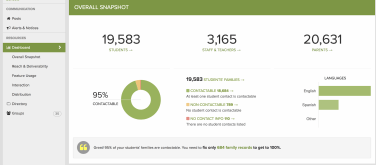
10. Analytics: With the reports, it’s easy to determine who received messages, how they obtained the information and how many people still need to be contacted. Access to the “Overall Snapshot” makes it easy to see how the information is being received and areas that need to be improved.


School to home communication and collaboration is at the heart of ParentSquare

Find out how ParentSquare can make a difference in your school. I recommend that you schedule a demo to learn more about the features and possibilities with ParentSquare. Personally, I like to get started by exploring the website, learning about the team and the platform as much as I can before the demo. It is helpful to consider the different methods or tools you currently use for communicating and collaborating with students and families. Perhaps even make a list to compare. You will see how ParentSquare unifies so many time-consuming tasks and streamlines the exchange of forms and correspondence, into one tool that provides it all.

ParentSquare provides a consistent and reliable way to communicate within the school and school district, fostering and building the relationships that promote better communication, student success, and family engagement. Sign up for a demo today!

_

E


Promoting Family Engagement: 5 Ways to Foster Meaningful Connection

Originally published on Getting Smart


Involving families in the education of our students is crucial to their success. Beyond just involving families, schools need to strive for family engagement and the creation of partnerships between school, home, and community. These partnerships, or connections between “stakeholders”, are important for promoting student well-being and success. When there is a greater focus on fostering more meaningful and personal connections, the school, community, and families can work together to provide the support, structure and make decisions for the benefit of student achievement.

Importance of Connecting

To promote family engagement, we must be intentional in learning about the families in our schools. It is important to make an initial connection, invite families in to engage in conversations and start to develop an awareness of each family’s needs, preferences and prior experiences in terms of involvement with the educational community. We should also explore any perceived or real barriers to family engagement. Recognizing some of the biggest barriers to family engagement will help schools to develop the most effective strategies to help families feel more connected to and supported by the school.

A survey of over 18,000 parents indicated some of the biggest barriers to family engagement were: time, lack of information, availability of childcare, and inconsistent treatment of students. Using this data, schools can develop specific strategies aimed at reducing and eliminating these barriers. Understanding the diverse needs of the families and students in our school system is crucial, as we always want to create a welcoming and supportive environment, one which should also be reflective of the educational setting for our students. A strong and collaborative home to school partnership has been shown to positively impact student performance as well as empower parents.

Communication between school and home has traditionally involved sending information in letter form, an email or by making a phone call. While these methods are still useful, they are not the best choices in terms of timeliness, especially when it comes to time-sensitive matters. Being able to connect and share school news and update families on student progress, in a timely manner, is vital to classrooms and fostering this sense of “community”. The sense of “community” comes from focusing on the building of family relationships, which are critical for student success in the classroom.

In a survey done by SpeakUp in 2015 (cited in Learning Transformed), 55% of the half million K-12 parents surveyed stated that they wanted a weekly text message with updates. The same survey given five years prior yielded a result of only 5% of parents interested in this form of communication. With the digital age and many options for communicating, it is not that surprising to see such an increase. However, before starting to use a certain messaging tool, teachers should first consider what might be the best way to connect with parents and how to provide access to the classroom resources which will support student growth. Sharing an initial survey can help educators can determine how to best establish a classroom presence and open channels of communication.

Connecting with Families

There are many ways to connect with parents. With technology, tasks such as sending class updates, assignment reminders, creating a calendar, sharing photos and distributing information are much easier. Knowing that families have mobile devices, does not guarantee that WI-FI access is available, and this is something that can be determined through the use of a survey.

In a recent Trends in Community Engagement report, written in partnership with Project Tomorrow, 30,000 parents expressed expectations for frequency and forms of communication. Among the key findings of this report were that parents want timely and impactful communication. While parents want to be kept informed, they do not want to be overwhelmed with a flood of information. The CDC created strategies to help schools build frameworks to promote family engagement. The focus is to “Connect, Engage, Sustain” families’ in the educational community. Schools can refer to the many resources with tips for promoting engagement. To get started, here are five different ways to “connect, engage and sustain” family involvement.

1) Communication Tools: By using social media tools such as Twitter or Instagram, school leaders, and classrooms can transmit messages quickly and with a far reach. Tools such as Remind, or BloomzApp enable teachers and parents to communicate and also share information quickly. Both options offer translation capabilities which promote digital equity and accessibility. ParentSquare, is a multi-purpose platform with capabilities to facilitate communication, collaboration and increase family engagement in schools. ParentSquare is for use in grades PreK-12, geared toward streamlining parent notifications, increasing participation and family engagement in the school community and more. It can be used by students, teachers, staff members, administrators, and parents, and it creates a virtual space where so many vital communications and interactions can be completed. By using these tools, teachers and parents communicate instantly, privately, and as often as needed throughout the year.

2) Video Tools: Sharing news about student work, or creating a lesson for students to view outside of class, can be done with tools such as EducreationsFlipgrid, or Screencastify. Teachers can record videos of weekly announcements or special events, or even teach a lesson and share the links with parents, which will create a more supportive connection between home and school. Videos can also be a great way to have students share their learning, even creating a digital portfolio, or have families record video introductions to learn about one another.

3) Blogging/Class Webpage: Maintaining a classroom space in the form of a blog or a class website, can be done easily using tools like KidblogPadletEdmodo or other web-based learning platforms. When families know they can refer to one centralized location to obtain class updates, ask questions, or read about class events, it provides a more structured framework for engaging families in the daily activities of the school and fosters a greater connection between school and home. It also aids in resolving the barriers of time and lack of information, as families can refer to these spaces when convenient.

4) School and Community: There are a lot of possibilities for amplifying student learning by connecting with and sharing news of school events within the community itself. Social media can be one way of connecting, or simply by seeking out the local library and businesses to bring in real-world experiences for learning and to inform the community of the educational events going on at school. Invite the community into events such as Back to School nights, Open Houses or STEAM showcases, or hold a learning night for families. Any of these offer a good opportunity to meet and engage families in conversations and planning to impact student learning.

5) Family Activities: Finding ways to involve parents in the learning process can be a challenge. A good opportunity to co-learn is to take part in something called “Family Playlists”. A Family Playlist, devised by PowerMyLearning, basically has the student becoming the “teacher”. In their role as “teacher”, students share their knowledge with the family, who then provides feedback to the classroom teacher, as to how the student conveyed the information and their confidence in doing so. Trying this method is a good way to further involve families in the educational experience, leading to a greater understanding of the type of learning occurring in school as well as provide beneficial insight into a child’s progress. It also promotes ongoing and supportive collaboration between home and school.

There are many strategies that schools can use to keep families informed and involved. The key is to find a way to not only make an initial connection and build the “family to school” partnership but to engage families and continue to collaborate and grow together. These connections will lead to the creation of solid and supportive relationships between school and home, which will promote student achievement and enhance their sense of belonging.

This slideshow requires JavaScript.

This slideshow requires JavaScript.

ParentSquare: Opening Doors to Better Communication

This post is sponsored by ParentSquare. All opinions are my own.

For the past three years, I have enjoyed attending the Future of Educational Technology Conference (FETC) held in Orlando at the end of January. It has become one of my favorite conferences because of the diverse opportunities available to explore emerging technologies and to network. One of my favorite things about FETC is seeing the new tools and exploring different options for my students, as well as finding some ideas to share with members of my PLN.

In the middle of January, I started to receive flyers from edtech companies who would be at FETC. My habit is to check out their website and then make time to stop by their booth and have a conversation to learn more. This year, I also received one email, from Anupama Vaid, Founder and President of ParentSquare.

Her email invited FETC attendees to stop by a hospitality suite hosted by ParentSquare, to learn more about the platform and spend time networking. Because of my schedule, I would not be able to attend, so I emailed Anu to introduce myself and make an initial connection. We had hoped to meet while there, but of course, time flies when you are at FETC and we missed the opportunity to connect in person. With a call setup for a few weeks later, I was glad to have more time to explore ParentSquare on my own before “meeting” with Anu earlier this month.

The story behind ParentSquare

Beyond knowing what a particular tool does or how a platform works and the benefit for students, I really enjoy getting to know and connect with the people behind these tools. Understanding their story and motivation for creating their product helps to make a more authentic connection with them and to see if my goals as a teacher are in alignment with their purpose so I can provide the best options for my students.

I enjoyed having the opportunity to learn about the start of ParentSquare and the growth that it has seen over the past eight years. Anu shared the story behind ParentSquare and her passion for the work that she does is clear. As a parent, Anu often received a lot of different messages and communications from her children’s’ school. While receiving the information was not a problem, the variety and inconsistency of formats (email, paper, newsletters, even Google groups) being used in schools was a problem. Parents had to keep up with and know the practices for communicating with each teacher.

Anu thought there had to be a better, more consistent way and she made it her goal to design something that would facilitate all of these vital communications in a more accessible and simplified way, that everyone (families, teachers, and administrators) could access. By using one tool, there is consistency, reliability and it promotes more equity when everyone has the same options for staying informed and feeling connected to the school. Anu wanted to “get everyone to be on the same platform, working together toward a common goal,” to unite all stakeholders in the educational community.

Starting with four schools during the first two years, ParentSquare has grown across the United States and is now being used in more than 1500 schools in 36 states. Moving forward, Anu hopes to connect with more schools and educators, to communicate in more effective ways so that together we can provide the best learning experience for students and the most support for their families.

What does ParentSquare offer?

ParentSquare is more than simply a one-way communication tool. It is a multi-purpose platform with capabilities to facilitate communication, collaboration and increase family engagement in schools. ParentSquare is for use in grades PreK-12, geared toward streamlining parent notifications, increasing participation and family engagement in the school community and more. It can be used by students, teachers, staff members, administrators, and parents, and it creates a virtual space where so many vital communications and interactions can be completed. It truly fosters a learning community.

Screen Shot 2018-03-18 at 8.30.54 AM

When I explored ParentSquare, what I noticed first is the setup of the landing page and how easy it is to locate the information you are looking for. It is a versatile tool that helps to facilitate many different interactions and increase communication between home, school and the community. Having time to explore ParentSquare closely, I thought about the tools that I use for communicating with students and families, and realized that rather than using multiple different tools, I could use ParentSquare to do all of that and more.

d550ec98-2667-430e-af7b-f4c9c203d686

With ParentSquare, communicating is easy. You can quickly exchange information, share photos, engage in two-way conversations with parents, plan events, to name just a few of the options, and I was amazed at how easy it was to find what I needed. You can see right away how beneficial it is for schools and families. If you find yourself or your school using multiple different apps to keep track of correspondence, announce events, share files and photos, send messages, or even ask for volunteers, ParentSquare enables you to use just one tool that facilitates so much within the school community.

screencapture-localhost-3000-schools-1-apps-1512408546362

There are three main areas that ParentSquare provides: Communication, Resources and Participation with many options available within each.

The landing page is easy to navigate to keep track of events, messages, upcoming activities like fundraisers or school events.

To communicate, you can send or schedule a post, create an alert, or even send a two-way message to interact with parents one-to-one.

Parents can opt to receive an email with a link to read without having to log in or they can choose to read a text message or app notification.

Parents can also choose to receive their notifications in a digest format. With a digest format, parents will receive all notifications from the day at a specified time, rather than receiving notifications that are dispersed throughout the day.

Signing up for events and sending RSVPs have never been easier.

Why choose ParentSquare?

Technology tools like ParentSquare provide so many benefits for schools and families. By using ParentSquare, schools can provide a more consistent, effective and reliable way to facilitate higher engagement and better communication between school and home. Parents will appreciate having one tool with multiple functions that help to bridge the gap that can happen when using multiple apps or means of communication within the same school setting. School to home communication and collaboration is at the heart of ParentSquare.

Sign up for a demo today and stay tuned for the next post which will highlight some of the features of ParentSquare and how to get started.


FETC 2019: Better every year

FETC 2019 Takeaways Part I: Adventures

IMG_20160629_221024600.jpg

Getting ready to go
There are a lot of discussions and questions leading up to any conference. For first time attendees the most common questions are: What sessions should I attend? What type of clothing do I need? What should I expect? What are the “must attend” events? and many more questions like this. Everyone wants to know how to “plan.”

Three years ago was my first FETC trip and I had no idea what to expect and only knew a few people who were attending. I have been to many different conferences, but none quite like FETC. At first I was nervous about not really knowing a lot of people there, and figured that I would just figure it out and see what opportunities popped up. I was fortunate to have connected with Jaime Donally and then met up with Mandy Froehlich and Rodney Turner. We were building our friendship, connecting our friends together, and starting what would become an important part of each of our lives. Our group, called #my53s.

Jaime Donally

Rodney Turner, Mandy Froehlich

First, it is all about the relationships and memories made

FETC draws in people from all over the country and from around the world. A conference that can seem so large, with people moving in every direction, traveling quickly between the North and South but yet at times seems so small, when you find yourself running into the same people in different areas of ​​such a large event space. It has so much to offer, that it is hard to do it justice by trying to summarize it or simply writing about one aspect of it. So I thought I would start with what I consider to be the biggest takeaway every single time: Relationships.

Rodney, Evan Abramson, Tisha Richmond, and Mandy

From that first trip to Orlando for FETC until now, I have seen our friendship grow and the impact it has on each of us. What I have learned is that when it comes to conferences, it really doesn’t matter what you decide to do, how you set up your schedule, whether or not you know anyone, because no matter what decision you make you can’t go wrong. Honestly. There are no “wrong” or “bad” choices because opportunities are everywhere. Sticking to a schedule can be tough, and if you stress about what sessions to attend or how to plan for every minute, you will miss out on what I think is the best learning experience at any conference. Time spent with PLN and your edufriends.

Conferences are a place for building relationships and making connections above anything else. So if you want to learn what FETC is about let me start by telling you about the relationships and why they matter.

The value of connections

I absolutely love them!

These are relationships that started through Social Media. Specifically through Twitter, which I never wanted and never understood.

At conferences like FETC, meeting your “#eduheroes” finally F2F is a possibility. Even though we all feel like we already know each other, after many Twitter chats and social media interactions, especially on Voxer, it is nice to be together and talk (about technology) without the technology.

First steps for FETC

​Having core groups to connect with is something I highly recommend. All it takes is one or two people and you can build your entire group, so at no point do you feel alone during the conference.​ One of Rodney’s messages from years ago was to be on the lookout for people you notice sitting alone. Take a moment to go over and start a conversation, invite people to join you.​ At conferences like this, the “vibe” is that people want to connect, to share, to be a part of a conversation. Even if only for a few moments. It is those moments that matter the most. Be open to those opportunities and better yet, create them.

So, how can you prepare for FETC next year or the next conference?

Maybe the best plan is to not have a plan. Maybe just have an idea. A focus. Time passes by so quickly and there are so many choices that it can be overwhelming, especially for a first time attendee. Not everybody can make the same decision about what would be the best session or event to attend. You have to make your own decision and even though there is comfort in attending with somebody you know, it is equally if not more beneficial to go your own way, interact with other educators and create new relationships. You can then come back to that core group with new ideas and new friends, and you never know, it’s such a small world sometimes that you might find that you all know the same people.

The #4OCFPLN

A little over a year of connecting and growing with this unconventionally formed PLN, I love being part of the #4OCFPLN, a group that started through a book study on Voxer. I already knew a few of the members but we were able to build new relationships, strong connections and become a real learning family. So much anticipation of meeting face-to-face at conferences like FETC, which has been amazing. It’s funny at times because we realize that some people just don’t understand how you can become such close friends with people you’ve never officially “met” in the same physical space. I don’t know either but it just happens. You can build connections and foster supportive relationships and really get to know other educators. We “see” them based on the way they speak, through the passion they have for the work that they do, the personal experiences they share within the group and so much more. Even if you only have a few quick moments to say hello, to give a hug and to take a photo, it adds so much more to those connections. You already know one another it provides an extra element of realizing that yes in fact these people are real!

Elizabeth Merce and Mandy Tatum

Finally meeting F2F!


Finest moments with #my53s

Bad Uber rides, overpriced moderately tolerable food (not from a chain), ridiculously funny games that result in companies like Platypus Help and Obnoxious Waffles, narrowly avoiding dinosaurs and then some scary rides at night. Sharing awkwardly funny moments, inside jokes, random thoughts, peculiar  traits and fun facts, and growing closer each day. We know each other so well and continue to strengthen our bond with every day that passes. And because of this group, I am stronger and braver than I ever thought I could be.

We live in different states, and in different countries, but even with such great distances between us, we manage to stay closely connected. We know we are there for one another, and the only thing that could make it better would be if we got to spend more time in the same space. But there are always opportunities and if the whole group can’t be together, when even a few of us can be, we all share in the excitement and joy of that time together.

Share your thoughts and experiences and photos, we would love to hear from you! Next up, a focus on some of the FETC events and takeaways. Once I return from TCEA, I will share some other takeaways from the wonderful experience of FETC. Of course, depending on the time spent with Jaime, Jennifer, Mandy and Marialice, I may need to share that first!

385 feet hight, four minutes, 50 mph! and only $12!

1548898945048_5341364457_580acd9f

Preparing for FETC, or any edtech conference

Updated from a prior post written after my first experience at FETC.


In  January of 2017 I attended the Future of Education Technology Conference (FETC) for the first time in Orlando, Florida. Having attended many edtech conferences over the past few years, including ISTE, iNACOL, ShiftinEDU Summer Spark, ACTFL and several at the state level, I had a decent idea of what to expect—and I wasn’t disappointed.

The ideas shared by the panelists and speakers were fascinating, and I found myself surprised by the amount of food for thought I received from the conference.

There are a lot of things to consider when planning your schedule, thinking about what to attend, where to go after the sessions end, and what to do when you get back home. I like to reflect after each conference and these are some of my takeaways each time. My  number one takeaway is the relationships!  And this year is going to be even better because  I will be meeting with members of the #4OCFPLN for the first time.

1. Relationships matter. One of the key takeaways for me after each conference is that it’s important to develop and maintain a robust group of teacher-friends who will inspire and learn with me. Having these relationships can help me stay creative, stay engaged in my teaching and keep me from the isolation that can happen at times when our lives as educators become so busy.

Plan your time around connecting with your “edufriends” or the members of your personal learning network (PLN), some of whom you may not have ever met face-to-face. Share ideas, have fun learning from each and having the time to be in the same space to learn. There is so much excitement at FETC and all conferences because it gives you the opportunity to reconnect with friends or meet PLN face-to-face for the first time.


2. Think big, try new things and keep at it. Educators need to be encouraged to do things that are different, and we should be “thinking big.” I hear these words often, and usually they are followed by encouragement to take some risks, and not to be afraid of failures. It seems to be one of the recurring themes in the conversations I hear during each conference.

Find an area to focus on. What are your interests? What are some things you have wanted to try but haven’t because of lack of time or just fear of trying? Conferences are a  great way to give it a go.

3. We haven’t seen the last of EdTech innovations, and seeing new developments in person can be a great way to stretch your thinking about your own classroom. Taking time to explore the expo hall and talk with edtech representatives, see and try some of the innovative tools and ask for insight on how these tools can help to engage and empower students.

  • Stop by the booth presentations, see educators sharing their experiences, take a short workshop and gather a lot of ideas in a short period of time. My favorite is always sharing at the Buncee booth and attending presentations by other educators who demonstrate how Buncee provides many possibilities for creating multimedia presentations and creates diverse learning opportunities, regardless of content area or level taught.
  • Nearpod is always a favorite of the crowd—always a line at their booth, with many people eager to learn more about virtual reality field trips and see VR headsets in action. Perhaps this was to be expected, as bringing learning experiences to life and immersing students in their learning environment is a goal of almost every educator.
  • Don’t miss out on the opportunity to visit the “Poster Session” areas to learn about topics such as Augmented and Virtual Reality, Coding, Artificial Intelligence, Project Based Learning and see some of the digital tools and apps in action (and how they could benefit students).
  • The makerspaces and 3D printing areas are always a hit, with each presenter offering samples of cool, student-created work, QR codes with resources available for attendees, and great opportunities to make new connections and bring the learning back to the classroom.
  • Stop by the author tables and “Meet the Authors” of some of the books you  may be reading. Great opportunity to connect!

4. Keep things student-focused. I really enjoy the variety of workshops offered during the conference, especially having the opportunity to attend workshops presented by friends and co-present a few on Augmented and Virtual Reality and  Creative Classrooms.  Engage in conversations with educators about some of the strategies and tools you use, share ideas, walk away with a lot of new things to try in your classroom and school.

5. Special events and meetups can be great ways to engage teachers in community-building. As educators, we know that students can’t (and shouldn’t) spend all of their time in the classroom. Similarly, teachers can’t spend all of their time in convention halls. In addition to the events held at the Convention Center, there were a number of other events I really enjoyed, such as the #coffeeedu meetups and dinner receptions hosted by different edtech companies, PLN groups and special interest groups.

These events really provided a nice environment in which attendees could continue to build their personal learning networks and keep the conversations going. So much learning goes on during the day, that the evening can be a great chance to share experiences with a group.

This slideshow requires JavaScript.

My Overall Impression of FETC

Conferences like FETC are fantastic experiences that provide diverse, personalized learning opportunities. Once a conference ends and you settle back into your regular routine, you will have an opportunity to really let the things you learned sink in.

Take a look at your conference materials, review the #FETC Twitter feed, find one thing to focus on and try something new. Rely on your PLN and connect with your friends—just because a conference ends, doesn’t mean the conversation and learning have to.

It’s all about connecting and working toward personal and professional growth, taking some risks and using new knowledge and experiences to empower our students, our educators, our community and ourselves.

I would highly recommend educators make a note on their calendar to attend FETC next year! That is if you won’t be there next week! Headed to TCEA? See you there!