
AI and the Law: What Educators Need to Know About Responsible Use in a Rapidly Changing Landscape

By Dr. Rachelle Dené Poth, JD

Artificial intelligence (AI) is rapidly transforming education. From lesson planning support to personalized learning pathways and administrative efficiencies, AI tools are a more common part of everyday classroom practices. At the same time, the speed at which this technology has advanced and been adopted into classrooms has led to understandable uncertainty among educators, leaders, and families who are asking important questions. These groups are concerned with the data that is being collected, who owns AI-generated work, and what responsibilities schools have when students and educators use these tools.

As both an attorney and educator who has spent more than eight years researching, teaching, presenting, and writing about AI, I have worked with schools across K–12 and higher education that are navigating these exact questions. The legal implications of AI are not barriers to innovation, but I consider them to serve as guardrails that assist schools with adopting technology responsibly. The key is protecting students, educators, and institutions and staying informed. Understanding the legal landscape and any potential legal implications as a result of the use of AI in classrooms helps schools move forward with confidence rather than hesitation.

Why AI and the Law Matter in Education

AI relies on data in order to function effectively. When it comes to schools, this means having access to student information, classroom artifacts, writing samples, images, and even data related to physical or behavioral information. Intent is not the deciding factor. Even if educators believe they are only sharing minimal information, that does not clearly identify a student, family member, or colleague, even seemingly harmless details can qualify as personally identifiable information (PII).

I’ve often spoken about some examples like referencing a favorite restaurant, a local landmark, a pet’s name, or an extracurricular activity, all of which could make a student identifiable when combined with other data points. Last year, an educator in one of my sessions said, “Enough stars to still form a constellation,” and that has stuck with me and I have shared it in each AI and the Law session I have done. That is why evaluating tools carefully and teaching students to do the same are essential. I often reference scavenger hunts, in that educators should not feel like they are on a scavenger hunt when trying to find out what happens to their information. We need transparency from vendors so that educators are aware and informed.

AI is also changing how decisions are made in schools. With many advances, there are recommendation systems, automated feedback tools, and predictive analytics that can influence learning pathways, grading practices, and student support services. Having an understanding of how these systems work and how they should be used responsibly is becoming part of educators’ and school leaders’ professional responsibilities.

Key Laws That Shape AI Use in Schools

There are several important laws that guide how schools must approach AI.

FERPA (Family Educational Rights and Privacy Act) protects the privacy of student education records. When schools use AI-powered platforms that process student work or store learning data, they must ensure that these tools comply with FERPA requirements and clearly define how student information is handled.

COPPA (Children’s Online Privacy Protection Act) applies to students under the age of 13 and requires parental consent before collecting personal information through online services. Because many AI tools rely on user-generated input, COPPA compliance becomes especially important in elementary and middle school settings.

GDPR (General Data Protection Regulation), although it is a European Union law, is relevant to U.S. schools that use tools developed by companies that operate internationally. There are many platforms created outside of the United States that educators may be unaware of, and so understanding GDPR is essential. Many platforms now include cookie permissions and data-use customization features in response to GDPR requirements. These protections often benefit schools globally.

Schools should also consider state-level student data privacy laws, which are increasingly changing the expectations for vendor contracts, third-party integrations, and data retention timelines. District leaders and IT teams play an essential role in ensuring these requirements are addressed before tools are introduced into classrooms.

Data Privacy and Vendor Responsibility

AI tools require large amounts of data to function effectively. That data may be used to improve the tool itself, train additional models, or support integrations across connected platforms. Even when a tool states that it does not share user data, connected services or embedded features may still interact with stored information. I was asked two years ago, when speaking at LACOE in California during my AI and the Law session, if someone should “trust the platform when it says they do not share or store the data.” My instant answer was “No.” And it was for this exact reason.

Before introducing any AI platform in schools, educators and school leaders should review terms of service, privacy policies, and compliance documentation. Look for references to FERPA, COPPA, and additional privacy protections. Look for the date that the privacy policy was most recently updated. Districts should also confirm whether vendors use student information to train future AI models and whether contracts clearly define ownership and storage expectations.

This is where collaboration with district technology teams becomes essential. Responsible adoption is not an individual teacher’s decision. It is a system-level responsibility supported by leadership, policy teams, and instructional staff working together. Collaboration is key.

Transparency Builds Trust With Students and Families

Responsible AI adoption depends on communication. Families deserve clear explanations of the tools being used, the data being collected, and how that data is protected.

When working with students under age 13, written parental consent may be required. Even when it is not legally necessary, providing families with opportunities to ask questions strengthens trust and partnership. Transparency also empowers students. When students understand how AI systems work and the risks they may pose, they become more thoughtful digital citizens and more informed users of technology.

Schools that proactively communicate expectations for AI use are more likely to build families’ confidence and reduce misunderstandings about how these tools support learning.

Accessibility, Equity, and Emerging Legal Considerations

As schools adopt AI tools, accessibility and equity must remain part of the conversation. Laws such as Section 504 of the Rehabilitation Act and the Americans with Disabilities Act (ADA) require that digital learning tools be accessible to all students. If AI-powered platforms create barriers rather than support access, schools may face compliance concerns. We need to consistently audit the tools we are using. It must be an ongoing process.

Schools must also consider how AI intersects with Title IX responsibilities, especially with the rise of deepfake technology, which leads to new risks related to harassment and impacts student safety. Policies must be in place for addressing the misuse of generative AI tools and clearly define expectations and response procedures.

Algorithmic bias and fairness are important parts of the conversation. Schools should evaluate whether AI systems produce equitable outcomes across student groups and whether automated recommendations influence learning opportunities in unintended ways. Responsible implementation includes ongoing evaluation, not just initial approval.

Teaching Digital Citizenship With AI Literacy

Legal compliance alone is not enough. Students must also develop the skills needed to evaluate AI responsibly.

Developing skills in these areas means recognizing risks such as deepfakes and misinformation, bias in generated content, and cyberbullying that is supported by emerging technologies. Schools that integrate digital citizenship with AI literacy will guide students to become thoughtful participants in technology-rich environments rather than passive users who lack true understanding and AI literacy skills.

Clear expectations around appropriate use and academic integrity help students develop ethical decision-making skills that extend beyond the classroom.

Supporting Schools and Organizations Through AI and Legal Guidance

As AI adoption accelerates, schools will benefit from having a structured support system in place that connects legal awareness with thoughtful and purposeful classroom practice. Through my work with educators in K–12 and higher education, I provide professional learning experiences that help schools understand privacy requirements, implement responsible AI strategies, and align classroom applications with policy expectations.

My work includes keynote presentations, workshops, district leadership sessions, curriculum planning support, and customized training focused on data privacy, academic integrity, digital citizenship, accessibility considerations, vendor evaluation, and responsible AI adoption. Each training is tailored to address specific needs, ranging from introductory awareness sessions to deeper implementation planning and leadership strategy development.

In addition to supporting schools and universities, I work with organizations across other sectors to explore how to implement AI responsibly while remaining aligned with legal expectations and organizational values. Many industries face the same challenges that educators do, surrounding uncertainty about data privacy, questions about intellectual property ownership, concerns about transparency in decision-making systems, and the need to develop policies that support ethical innovation. My work helps organizations evaluate tools thoughtfully, identify potential risks early, and create practical guardrails that support responsible adoption rather than reactive compliance.

Organizations in healthcare, legal services, workforce development, nonprofit leadership, and corporate training environments are increasingly recognizing the importance of AI literacy for employees at every level. Through workshops, leadership sessions, and strategy conversations, I help teams understand how AI systems work, the legal considerations that may be applicable to them, and how to build cultures of responsible use that prioritize trust, security, and human judgment.

Moving Forward With Confidence

Artificial intelligence is already shaping how students learn, communicate, and prepare for future careers. The goal is not simply to adopt AI tools, but to adopt them responsibly. And this is where our work as educators comes in and why we need to dive in and learn with and guide our students.

When educators understand the legal landscape of privacy, accessibility, intellectual property, and ethical use, they can make informed decisions that support innovation and student protection. With thoughtful planning, collaboration, and transparency, schools will create learning environments where AI enhances opportunities while maintaining trust, safety, and integrity across the entire school community.

I work with schools and organizations, both in person and virtually, to support thoughtful and responsible AI implementation through professional learning, curriculum design, and resource development specific to educators, students, and families, using a common language. I have also collaborated with leadership teams to develop AI guidance frameworks, classroom-ready activities, and policies that reflect legal considerations.

The resources created help districts communicate clearly and consistently with families about AI use, support educators in building AI literacy, and provide students with age-appropriate strategies for using AI safely, ethically, and responsibly. By combining legal insight with classroom experience, I help schools move beyond uncertainty toward sustainable systems that include clear expectations, transparency, and actionable guardrails for responsible use.

About Rachelle

Dr. Rachelle Dené Poth is a Spanish and STEAM: What’s Next in Emerging Technology Teacher. Rachelle is also an attorney with a Juris Doctor degree from Duquesne University School of Law and a Master’s in Instructional Technology. Rachelle received her Doctorate in Instructional Technology, with a research focus on AI and Professional Development. In addition to teaching, she is a full-time consultant and works with companies and organizations to provide PD, speaking, and consulting services. Contact Rachelle for your event!

Rachelle is an ISTE-certified educator and community leader who served as president of the ISTE Teacher Education Network. By EdTech Digest, she was named the EdTech Trendsetter of 2024, one of 30 K-12 IT Influencers to follow in 2021, and one of 150 Women Global EdTech Thought Leaders in 2022.

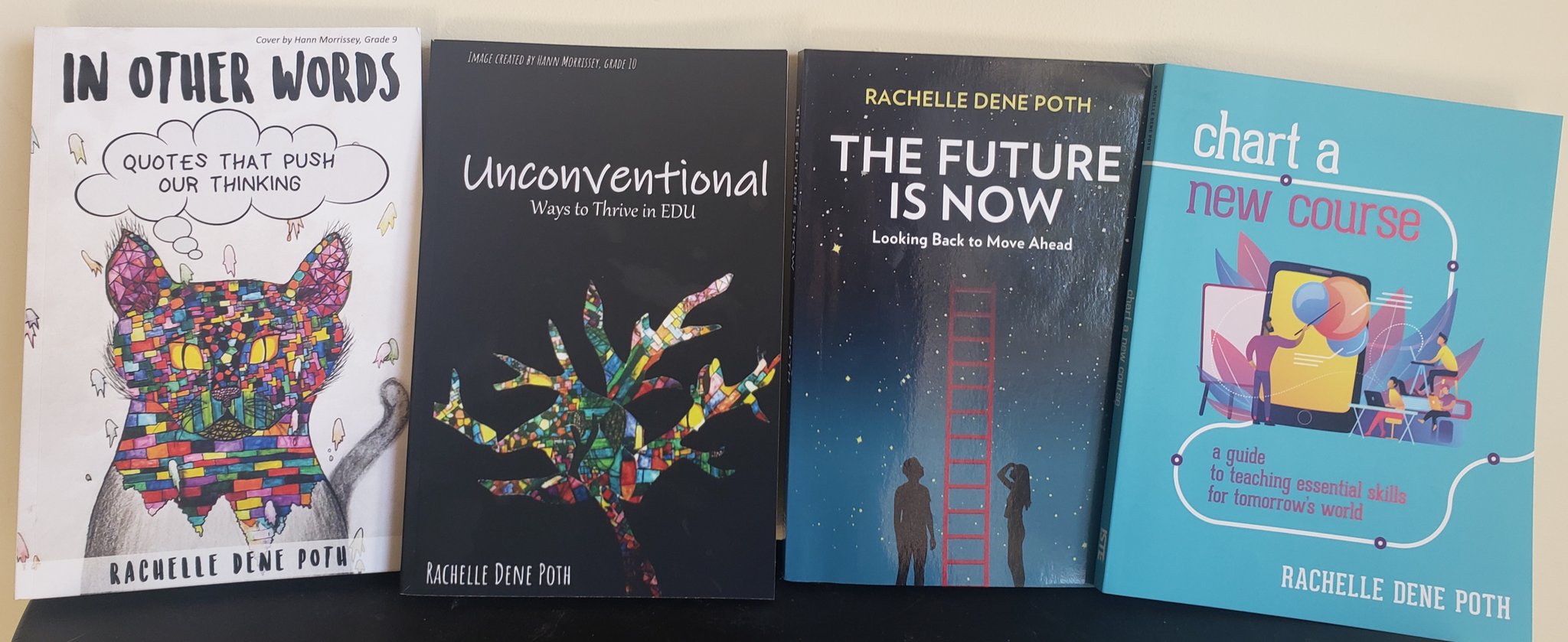
She is the author of ten books, including ‘What The Tech? An Educator’s Guide to AI, AR/VR, the Metaverse and More” and ‘How To Teach AI’. In addition, other books include, “In Other Words: Quotes That Push Our Thinking,” “Unconventional Ways to Thrive in EDU,” “The Future is Now: Looking Back to Move Ahead,” “Chart A New Course: A Guide to Teaching Essential Skills for Tomorrow’s World, “True Story: Lessons That One Kid Taught Us,” “Things I Wish […] Knew” and her newest “How To Teach AI” is available from ISTE or on Amazon.

Contact Rachelle to schedule sessions about Artificial Intelligence, AI and the Law, Coding, AR/VR, and more for your school or event! Submit the Contact Form.

Follow Rachelle on Bluesky, Instagram, and X at @Rdene915

**Interested in writing a guest blog for my site? Would love to share your ideas! Submit your post here. Looking for a new book to read? Find these available at bit.ly/Pothbooks
************ Also, check out my THRIVEinEDU Podcast Here!

Join my show on THRIVEinEDU on Facebook. Join the group here.

How to Find the Right Space to Create and Engage

Earlier this school year, I thought about how I could be more consistent in my classroom. When I say classroom, I mean all aspects of where I engage in my work and not simply my physical classroom space. Some areas that I wanted to focus on were the building of relationships, making better and more consistent connections with families, and designing a comfortable and welcoming classroom space for my students.

I think about each of these, I see them as “spaces” where we interact and exist together. I recognize that as educators, there are a lot of different spaces that we need to create and stay connected within. Being able to find the best ways to stay engaged in each of these spaces is important, especially with busy schedules and demands of the work that we do. Having the benefit of digital tools that can assist us also makes it easier to provide more for our students and their families, both in and out of our classroom space. So what are the spaces that educators need to create and engage in?

A Professional Learning Space

For educators, it is important that we really look at our professional learning space differently today than we may have in the past. For myself, having been an educator for many years, I did spend the first 15 years of my career mostly in isolation. While I engaged in opportunities for professional development within my school or attended a local conference periodically, those were the only types of professional learning spaces that existed for me—because I limited myself. What is worse, is that I also placed limits on my students by not putting myself out there to connect, to learn new ideas and methods to bring back to my classroom. Years ago, finding learning spaces and making time to engage in them was more time consuming with fewer choices available. Today, we have access to so many different and more accessible professional learning spaces. We can find something that meets our interests and our needs especially when it comes to time and place. What are some options?

ISTE offers Professional Learning Networks (PLNs) focused on specific topics related to technology and roles in education. It is a great space to become connected and to share ideas and connect classrooms.

LinkedIn is a social media platform for professional connections and professional learning. Educators are using LinkedIn to connect, gather resources and even help students develop their professional identities in this space.

Twitter offers many ways for educators to connect and learn via Twitter chats happening on a daily basis, and by following specific hashtags related to education. It is a great space to ask questions, to crowdsource ideas and to build a PLN.

Voxer is a walkie-talkie messaging app that promotes instant conversation with people from all around the world. Educators use Voxer for creating small groups for a PLC, having a space to share ideas and collaborate with educators from around the world, and even for participating in book studies and virtual learning events.

A Classroom Space, Both Physical and Virtual

The look of classrooms and learning today is so different from what it was when I was a student and quite different than even five years ago. We have the potential to learn from anywhere around the world and at a time that meets our needs. We truly have the capability to provide more for our students than we’ve ever been able to before. Through the use of digital tools and purposefully leveraging technology, we can provide the support our students need exactly when they need it. The world becomes our classroom when we include some of these tools and ideas in our practice.

The physical space can look quite different when we use station rotations in our classrooms, provide more flexible learning spaces for students to learn in, and also connect our students with learning that happens in our school community. We redefine the “space” of the classroom and can provide something to meet every student’s interests and needs. We can also explore different digital tools that help us create a more accessible connection with our students and provide ongoing support when they need it. Here are some of the tools that we have used to stay connected in our learning space.

Edmodo is a digital space for students and teachers to interact in a safe learning network. It provides access to resources, has helped us facilitate global collaboration and build digital citizenship skills.

Padlet allows us to create a wall of discussion and share audio, video, music, photos and text. It has helped us to connect with classrooms from around the world in real-time interactions.

Flipgrid is great for extending classroom discussions and providing students with a comfortable way to express their thoughts through video responses. Students build comfort that transfers into the physical classroom space by being able to connect with their peers in the digital space.

Kidblog provides many ways for students to build literacy and digital citizenship skills, as well as create their online presence. It promotes class discussion and collaboration and gives students a space to share their ideas and track their personal growth in the process.

A Space for Promoting Student and Family Engagement

Being able to connect with the families of our students is critically important. In order to provide the best for our students, we need to make sure that we are building and fostering true family engagement. To do so, we must rely on the traditional methods we have used such as exchanging emails, making phone calls home or holding meetings in the school, but now we have access to doing even more. Being able to bring families in to see and experience what learning looks like for their students, to share in the learning that happens in the classroom or to participate in a student’s in-class presentation is possible through digital spaces we set up. Events held at schools such as Open Houses, or STEAM showcase events, for example, are great for showing families the amazing things happening in our schools. However, not all families can participate due to time constraints which is why having digital tools available that enable us to share these events can make a difference.

Remind is helpful for messaging and sharing photos and files with families to include them in the school events.

ParentSquare facilitates better communication and collaboration and helps to build a solid connection between the home and the school community.

Buncee is a multimedia presentation tool that can be used to design a class newsletter with audio and video, or for students to share their work with families and include it in a Buncee presentation. Using a tool like this is helpful for families that cannot attend events such as Open House.

Seesaw is a platform that enables teachers to share what is happening in the classroom with parents. Teachers can record and directly share each child’s progress.

These are just some of the spaces that we need to consider as educators today. There are many options available for creating these spaces and the best part is that we can find something to meet the needs of our students, their families and ourselves.

**Interested in writing a guest blog for my site? Would love to share your ideas! Submit your post here.

Looking for a new book to read? Many stories from educators, two student chapters, and a student-designed cover for In Other Words.

Find these available at bit.ly/Pothbooks  

3  books.png

If it ain’t broke, then break it


Guest post by Cory Radisch, Follow Cory on Twitter @cradisch_wc

Wait, that’s not how the saying goes! However, even though data still demonstrates consistent opportunity and achievement gaps in schools, there are many who think things are not broken. It doesn’t matter that the data tells a different story. In many places, if adults are satisfied and comfortable, many believe the system “ain’t broke”! My longtime mentor, Marc Natanagara, used the title of this blogpost with former staff, not only to inspire them to challenge the status quo, but also to let them know it’s perfectly acceptable to break the system! It was appropriate long ago and it’s even more appropriate today. If we are going to truly transform education, then we just may need to break it. 

  • We need to break the system that marginalizes students!
  • We need to break the system that perpetuates learning and opportunity gaps!
  • We need to break the system that disproportionately disciplines students of color!
  • We need to break the system that disproportionately has fewer students of color in AP and advanced classes!
  • We need to break the system where your zip code usually determines what level of education you receive!
  • We need to break the system that fails to recruit and retain teachers of color!   
  • We need to break the system that teaches a unilateral perspective of history!


Breaking the system is not blowing up the system. Breaking the system is about addressing and interrupting implicit and explicit bias in our policies, curricula, and procedures. It will undoubtedly cause discomfort. Then again, when has breaking something not created discomfort? We can either be comfortable or we can grow, but we can’t do both!  I would love to know what you will break in order to ensure equity in your district, school, or classroom.

This post is dedicated to my longtime mentor and friend, educator Marc Natanagara, who recently retired after 33 years of breaking things that weren’t broken!


**Interested in writing a guest blog for my site? Would love to share your ideas! Submit your post here.


Looking for a new book to read? Many stories from educators, two student chapters, and a student-designed cover for In Other Words.

Find these available at bit.ly/Pothbooks  

Your Story Matters, Here’s Mine

LEAN ON ME, WHEN YOU’RE NOT STRONG

From the time I became very aware of what my parents did for a living, I firmly decided that I did not want to follow in their educational footsteps. They worked too hard for too little compensation for all the time and effort they spent on their work, students, and school. They were outstanding educators (my dad retired as an elementary principal, and my mom retired as a psychological examiner for an educational cooperative). In college, as I considered my major area of study and degree options, Dad pointed out that careers define where we live. At the time, I wanted to write for a magazine, so I was considering a Bachelor of Arts in English. However, Dad suggested that if I completed a Bachelor of Science in Education with an English major, then magazine companies would still view it as an English degree, but I would have the flexibility to become a teacher as well, allowing me to live anywhere.

AND I’LL BE YOUR FRIEND

I took over my first classroom a few years later in October, becoming the third Spanish teacher that year for McDonald County High School after working for Missouri State University for 3 years. I nearly hyperventilated the night before my first day as I pondered all of the responsibility I had just agreed to shoulder, but the next morning, as I stood in front of my first class of thirty high school students, I realized that I was finally home. Education was where I belonged.

I’LL HELP YOU CARRY ON

Thoughts of my greatest accomplishments in education over the years always have me looking outward, not inward for impact. Have I made a difference in anyone’s life? Many have made a difference in mine. Am I transmitting inspiration and motivation? Many have inspired and motivated me. Have I equipped students to be able to walk through any door they want in life to fulfill their dreams? Am I walking through my own doors? These questions are why I am never satisfied with my own knowledge and skill. I must know better so that I can do better. Toward that end, I relentlessly pursue professional development, typically completing 150 or more hours each year (and I’m blessed to have a passion be what I do for a living, though I also get time away from PD, so don’t judge your own learning based on mine. Nothing normal here.) As I learn, I share what I know with other educators everywhere. Since the summer of 2016 (I had Twitter before that, but I had no idea what to do with it), I have become a connected educator on social media and have discovered my voice, my audience, and shifted my focus to being a conduit of empowerment for all learners, adults and students alike.

FOR IT WON’T BE LONG

I tell my students that while in my classroom, they will learn to be comfortable with being uncomfortable. Together we will push ourselves to take risks and go beyond the boundaries of what we think we can do (Thanks, Dave & George!). In my classes and professional development sessions, we leverage technology to flatten the walls of our classroom so that the world awaits. I have connected my students with experts and companies (Thanks, Buncee!) from all over the world during global DigCit Summit 2019 (Thanks, Marialice!). We connect with students from as close as Jackson, Missouri (Thanks Lance!) and as far away as Argentina (Thanks, Rachelle!) to learn other cultures, spread kindness (Thanks, Heather!), practice digital citizenship, and to develop authentic audiences for our work (Thanks, JessicaJamie, and Heather!). My passion for technology helps me guide students in a world where they no longer have to wait “grow up” to make an impact (thanks for reminding me, Kevin!).

‘TIL I’M GONNA NEED

Besides leveraging technology to empower students, I also cultivate their voice. Communication is another big skill that employers look for when hiring. Google, at the time this post was written, ranks it second in their top 7 desired employee skills, so I want my students to be able to articulate ideas then see them come to fruition. Students guide my teaching by giving me after action reports when I try a new activity or lesson. They give me as much feedback as I give them. Students have input on what activities we do, how we do them, and in choice of tool for completing the activities. Their voice matters (Thanks for reminding me, Rick & RebeccaLet Them Speak: How Student Voice Can Transform Your School).

SOMEBODY TO LEAN ON

But I don’t stop there. While I flatten the classroom walls for my students, I also do that for myself. An educator in North Carolina, my friend Holly King, pointed out that one of my talents is in connecting the dots, whether that be in combining learning sciences with supported research based teaching strategies, social emotional skills with academics, using tools in new and unique ways to help students learn, or just in the realm of ideas and theories, I make connections. By doing so, I connect people. Whether it is high school students or adults, I connect people, which connects ideas, and that elevates us all and empowers us with a platform, with a sounding board, with a brainstorming opportunity to be better, to elevate the field for us all. (Speechless, Holly.) This is what a lot of us in education do, whether we realize it or not. It’s why left our own islands and continue to grow our professional learning network. Teaching is a life changing business (Right, Dave?), and not just for students. It changes us all.

HEADING TITLES ARE PARTIAL LYRICS FROM BILL WITHERS’ SONG, LEAN ON ME, © UNIVERSAL MUSIC PUBLISHING GROUP

******************************************

**Interested in writing a guest blog for my site? Would love to share your ideas! Submit your post here.


Looking for a new book to read? Many stories from educators, two student chapters, and a student-designed cover for In Other Words.

Find these available at bit.ly/Pothbooks  

Preparing for the Future: Career and College Ready

Previously posted on Getting Smart

Over the past couple of months we have had to make many adjustments to our personal and professional lives. During this unprecedented time, educators and families have been trying to find balance in their days, to work together to keep learning going, and perhaps more importantly, to provide the academic, emotional, and mental support that our students need.

For many educators, finding the right resources that can be used to teach and mentor remotely, and which will also engage students in learning activities, can be difficult. The challenge is not so much in finding tools, but rather in knowing whether our students can access them, determining which will benefit them the most, and making sure that we can provide the support that students and families need. At this time of the year in particular, guidance counselors and educators who work with mentoring programs are quite busy as they help seniors prepare to graduate from high school or other students as they transition to a new grade level or school. In many school districts across the United States, students are required to complete a job shadow, explore careers, and develop a digital portfolio that will become part of their application for college or work. Integral to these requirements are school guidance counselors.

After speaking with a guidance counselor from my school and following conversations in different learning communities and on social media, I’ve noticed that guidance counselors are seeking resources that can help them to provide this same support for students during remote learning. Even when we are in school with access to guidance counselors and resources, it can be difficult for students as they prepare to transition to their next grade or the next phase of their educational or work journey after graduation. Trying to plan their next steps, whether entering the workforce or pursuing a college education, has not been easy during this time. Students have questions about jobs, college applications, and skills needed for the future and without being in the same space, providing that information can be a challenge. However, there are many resources available to educators, students, and parents that can help now while we are experiencing school closures and that will be beneficial throughout the year in addition to the programs already in place.

Here are seven options for guidance counselors to support students during their transitions between grades, schools, and education and career. These options provide ways for students to explore careers, find job shadow opportunities, create digital portfolios, and even visit college campuses.

Career Readiness. In Pennsylvania, the Lincoln Intermediate Unit has a website that provides many links related to career awareness and readiness that will be helpful to elementary, middle and high school educators and students everywhere. It also offers resources for secondary transitions for special educators, direct links to the PA Department of Education, opportunities for virtual college and job visits, and many other relevant materials for educators that are helping students to determine their career pathways.

Couragion. Provides work-based learning experiences for students. Some options include career shadowing for students in grades 4 through 8 and micro badging for career exploration for middle and high school students. There are four curricular models to explore including technology, engineering, manufacturing, and business. There is also information provided for doing remote externships during the summer months and students can also build career portfolios.

Ecampus Tours. Educators and students can choose from more than 1,300 tours to explore college campuses in 360-degree virtual tours. The website also offers additional resources for college planning as well as materials for guidance counselors such as documents and other handouts for students and parents to plan for college.

MyPlan. Through the Career Exploration section of their site, there are videos, salary calculators, and other resources that enable students to explore different careers at their own pace. Students can learn about different industries, find out about the top 10 careers, and even ask questions in the community to learn more about specific careers and skills needed.

Nepris. This site offers educators the opportunity to connect students with professionals working in many different careers and industries. Through their Career Explorer program, educators can request a speaker to join in a virtual discussion with students, provide students with an authentic audience as they present project-based learning, or even arrange a panel discussion. There are live virtual chats and more than 9,000 recordings available for students to explore different careers on their own time. The virtual industry chats and video library are available to everyone during this time.

Smart Futures. This Pittsburgh-based company has created SmartFutures.org, an online career planning platform for students, whether kids or young adults. Using Smart Futures, students take surveys and complete activities to learn more about their skills and interests, and are able to explore careers and create their digital portfolio. E-Mentors are also available through Smart Futures.

Xello. This resource provides a variety of options for students to learn more about careers and build future-ready skills as they transition through each level of school. Using Xello, students take an assessment and then can explore hundreds of career and college options that match their results. As they work through the activities, reading biographies and engaging with the resources provided, a portfolio of their work and explorations is created. Xello’s software also assists students with gathering documents needed as they prepare college applications.

Regardless of whether in the physical or virtual space, we need to support students and provide them with opportunities to explore their interests and prepare for the future, whether for careers or college. Using any one of these resources, students have opportunities to build self-awareness of their skills and interests and can engage in different learning experiences that prepare them for the future.


**Interested in writing a guest blog for my site? Would love to share your ideas! Submit your post here.


Looking for a new book to read? Many stories from educators, two student chapters, and a student-designed cover for In Other Words.

Find these available at bit.ly/Pothbooks  

Distance Learning, the Good, the Bad, and the Ugly!

A focus on Learning… in a “Remote World”

Guest post by: Whittney Smith, Ed.D. (@whittneysmith_) is the Principal at Mineola High School. You can follow the work done by our amazing students and teachers by following us at @mineolahs on both Twitter and Instagram.

In high schools across New York State there is always talk of the Regents Exam. This exam has been the focus of teachers since 1878 when the first high school exams were given. On April 6, 2020, that changed… at least for the time being. 

Now what?  I think we now have the unique opportunity to focus on learning, not the test anymore.  While we rely solely on remote learning opportunities… our ability to leverage technology will certainly accelerate our ability to focus on student agency. Some cynics will say that without a Regents Exam, the students will not be motivated anymore, they’re going to “check out.” I don’t think so. Instead, I believe we need to seize this opportunity and engage our students.  Remember that first and foremost we teach students, then we teach content… and remember, children are naturally curious, want to make connections, and desire learning things that are relevant to them; things that are real. 

When we were thrust into this remote world as we walked out of our schools on March 13, 2020,  I sent an email to the faculty. I will never forget that email. Along with a remote learning planning guide, I sent teachers my phone numbers and those of my assistant principals’, so they could reach us at any time.  I wanted them to know that we cared about them as people first; we cared about their social and emotional well being just as we wanted them to care for our students and their families.

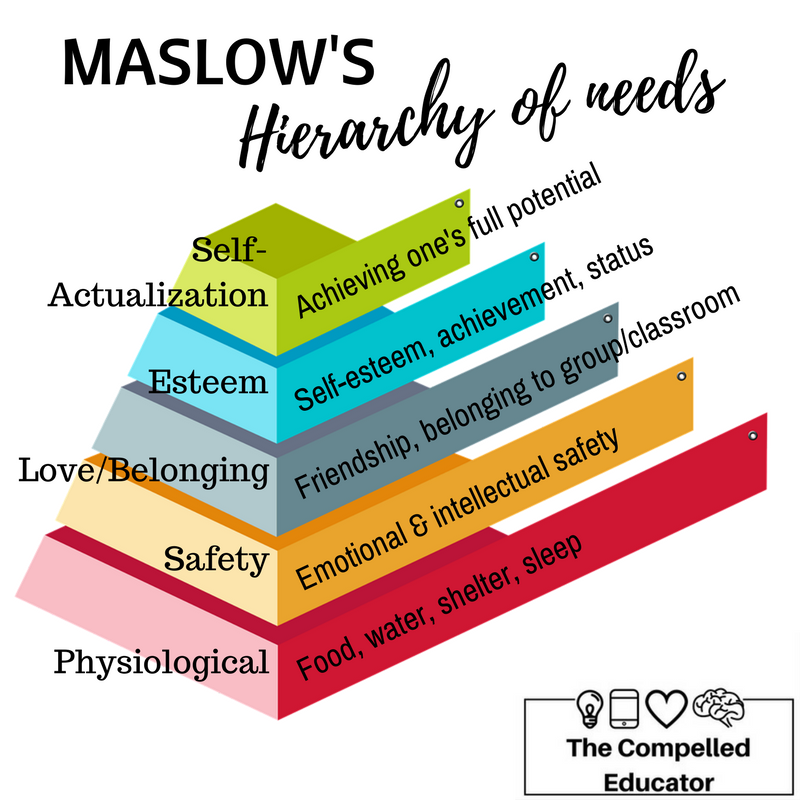
In the educational world we hear a lot about “Maslow before Blooms;” in other words, we need to take into account the hierarchy of human needs before the hierarchy of human learning. 

Next, I asked our educators to reflect on remote learning and consider the following while they focused on what remote learning would look like in their ‘new’ classrooms.

  • Emphasize Choice – allowing students to choose how they demonstrate their learning will increase completion and help them navigate misconceptions
  • Emphasize Learning and Not Grades – when students are not concerned about “the grade,” they are more likely to learn the material on their own, rather than “collaborating” with others (unless that is what you intend them to do). 
  • Direct All Student & Teacher Tech Related Issues to Bonnie and Katie (they are our Coordinators of Information Technology (CITs) and can do just about anything… and know who to reach out to when they can’t)).
  • Last but not least (for now) —> If you are having difficulty reaching a student (e.g. they are not responding) please reach out to our mental health team. They are counseling students and are ready to assist in any way possible.

Never did I think that I would be writing this post on April 30, 2020 (30 days into an extended school closure) telling you that the Regents exams have been canceled. 

Now is the time to tap into student interests and passions.

Now is the time to focus on strengths.

​Now is the time to give choice.

Now is the time to leverage creation tools. Whether it is a product to create or a problem to solve, allow students to determine how they demonstrate and share their learning. 

Now is the time to shift the paradigm  as we are  not going to take high stakes, multiple choice tests! Let’s do what we’ve always wanted to do… make learning fun!


Bloom’s Taxonomy graphic taken from: https://mylearningnetwork.com/blooming-as-a-learner/ 


**Interested in writing a guest blog for my site? Would love to share your ideas! Submit your post here.


Looking for a new book to read? Many stories from educators, two student chapters, and a student-designed cover for In Other Words.

Find these available at bit.ly/Pothbooks  


Guest post: Teachers have earned the benefit of the doubt

Be patient during the COVID-19 pandemic

As schools throughout the nation close for the remainder of the year, take a minute to consider what this will mean for thousands of teachers who are doing their best to educate our children. School leaders and local officials are scrambling to “flatten the curve” of the COVID-19 pandemic. This is our top priority, and as we retrofit our education system on the fly to meet the needs of millions of students, we ask for your patience and understanding.

Schools are not designed to adapt quickly

Be kind to teachers who are on the front lines navigating school closures in an education system that is, like so many institutions, incapable of meeting the demands placed upon it by the outbreak. At best, the expectations for most teachers right now are loosely defined by school leaders. Many teachers are trying to patch together inadequate distance learning programs without guidance. This is not the time for parents to use social media platforms to compare teachers or to publicly complain about a teacher who is slow to adapt. Our nation’s teachers have earned the benefit of the doubt, so please show some grace if you are irritated.
During normal times, school districts take several months, even years, to institute changes in curriculum and instructional methods. Expecting teachers to do this at a high level, with no time to prepare, during a national emergency is ridiculous. If you feel the need to share feedback with an educator, consider what would be helpful before you hit send. Negativity toward a teacher at this time will bruise deeply and could limit the creativity of teachers trying their best to meet student needs. A measured tone is imperative if you feel discouraged as a parent and wish to share your frustration. Trust me, teachers wish they could meet the needs of every student and family they serve.

More than the internet

Connecting and teaching students in a distance-learning environment is not akin to a teacher simply jumping online and presenting academic material to students. Conducting meaningful virtual instruction requires dedicated professional coaching for staff, and it also requires significant training and practice for students and families. Most teachers have never been expected to integrate remote learning into their curriculum. The instinctive knowledge teachers have spent their respective careers amassing has a vastly different application online, and most educators have never been trained to deliver robust instruction in that format. In addition, the inequity of student access to technology and broadband internet service is woven into the challenge of teaching students remotely.

Teachers are pros at building relationships

Teachers are well versed in building relationships with students so be grateful for the teachers who are trying to maintain their connection to students. This connection — virtual or in-person — is critical for academic and social-emotional growth. Our best educators specialize in making those human connections and they are experts at molding positive relationships, devoting their talent to create a culture of learning, and contributing to the school culture. Those indelible skills for expressing care and demonstrating a commanding presence may translate online for some teachers, but it is unfair to expect it to happen naturally.

Teachers are stuck waiting

Many of our teachers can’t share with you that they are at the whim of school leaders and state mandates that are not always communicated to them effectively. While teachers are on the front lines of most communication with parents and students, they are not always armed with the information parents seek. Your child’s teacher understands your concerns about assessments and grades, your child falling behind and your desire to have access to more resources. Teachers are trying to be flexible and they do not want to throw their school leaders under the bus by voicing their misgivings to you and fueling the anxiety parents are feeling.

Uncertainty and sadness

Educators lament the loss of the celebrations, getting that last high five, hug or final word of encouragement to students. Teachers have been working hard to get your child to the finish line, and in a career that has always included clear beginnings and ends each school year, this new reality is bewildering. Many educators are helping their own children cope with the loss of a traditional school year while they also cope with the same reality as a professional. Not being able to grieve the loss of the school year together is tough on the children and the adults who serve them. Teachers wonder if their current efforts are making much of an impact on students. In some cases, only a handful of students are still connected to school and that is disheartening. Teachers are used to receiving regular feedback from students and adjusting their teaching strategies accordingly.

Moving forward

The best thing you can do to help teachers is to unite with them and let them know you appreciate them. If you feel the need to share your concerns about school district policies and local programs, reach out to school leaders. Our educators are committed to serving all children and we know that we’re in this together. Teachers and school leaders throughout the country care deeply about the health, safety, and engagement of their students. Right now our teachers need your support.

**Interested in writing a guest blog for my site? Would love to share your ideas! Submit your post here.


Looking for a new book to read? Many stories from educators, two student chapters, and a student-designed cover for In Other Words.

Find these available at bit.ly/Pothbooks  

What we deny

Check out the Podcast too: “Just Conversations” with Melanie White and Amanda Potts. https://voiced.ca/project/just-conversations/

Only in our isolation and disconnectedness do we discover that everything and everyone is localized and connected. And, in this distancing, I am beginning to question what we deny.

Rebecca Solnit kept appearing in my daily consumption of media and I’m beginning to wonder if this is the work of a latent existential force drawing my attention to something I should have known or done long ago. I listened to her voice in an episode of On Being last week. She wrote, “When all the ordinary divides and patterns are shattered, people step up to become their brothers’ keepers…and that purposefulness and connectedness bring joy even amidst death, chaos, fear, and loss.” The unusual lilt of her voice and calm intellect still spin in my mind’s ear. And, this morning, I stopped scrolling my Twitter feed struck by this linguistic wisdom. She wrote,

“Inside the word ’emergency’ is ’emerge’; from an emergency new things come forth. The old certainties are crumbling fast, but danger and possibility are sisters.” #RebeccaSolnit

And then on Twitter, Gianpiero Petriglieri wrote that an “old therapist friend” told him why everyone was “so exhausted after video calls. It’s the plausible deniability of each other’s absence. Our minds tricked into the idea of being together when our bodies feel we’re not. Dissonance is exhausting. Our bodies process so much context…” I stopped to think about that wording, “plausible deniability”, and the more common legalistic use for one escaping criminal repercussions as a member of a corrupt organization or political power.

However, I couldn’t wrap my head around this experience of dissonance and the connotations of “plausible deniability” as something happening to us rather than something we choose to avoid like the truth or an injustice. According to Wikipedia“the expression was first used by the CIA” but the idea apparently has a longer history. I needed to understand the term, like Solnit explored “emergency”; it was an itch that pressed me, so I read further. “Plausible denial involves the creation of power structures and chains of command loose and informal enough to be denied if necessary”.

Then a thought struck me. What power structures are currently in place which I deny? What small almost imperceptible movements have made me complicit in this dance of distraction? Solnit reappeared during my longer moment of breakfast reading in The Guardian article entitled: “The impossible has already happened: what coronavirus can teach us about hope”. How marvelous and uplifting it is to read her vibrant words calling us to action and existence, to make the most of the worst.

While I cannot deny there is absence in my new-found isolation, I can also see that my thoughts attend a new experience. I am paying attention to moving about my house, to walking the dog, to gazing out the window with no real productivity pressure of this instant. And, yes, I am teaching remotely, but connecting, supporting personalized learning is my focus rather than a product on the line of academic factory life. This is where I cannot sense Petriglieri’s Tweet about “plausible deniability”. I am now working on processing the context of my daily life which I previously ignored in mind-numbing haste consumed by the blind goals of my own productivity or some socialized version of productivity.

My body is processing the context of my life in isolation and thinking about the actions needed for when we might connect again. I am trying not to deny my own physical interaction with and existence in the world.


**Interested in writing a guest blog for my site? Would love to share your ideas! Submit your post here.


Looking for a new book to read? Many stories from educators, two student chapters, and a student-designed cover for In Other Words.

Find these available at bit.ly/Pothbooks  

An In-Home Learning Strategy for Busy Quarantine Families

Guest post byAndrew Easton: teacher, edu-blogger, podcaster, and future author for Dave Burgess Consulting Inc. Follow him on Twitter @EastonA1, on Instagram @andrew.d.easton, or at andrewdeaston.com/


In our household there are two teachers and two primary-age students, and during our first week staying at home, we had a problem. As adults, we still have work responsibilities, and at ages 5 and 8, the kids need help navigating the five subjects of schoolwork they receive each day.

Our first thought was to set a schedule so that routines would be established. In that way, designated times would kick-start certain subjects and tasks. 

Fail. 

What we quickly realized was that sometimes the kids needed support with certain tasks, and if there happened to be a Zoom staff meeting or any other commitment that prevented us from supporting them in that immediate moment, the structure fell apart. The schedule needed more flexibility.

Then, we tried a checklist.

Fail.

Next, we tried using a checklist. I mean, who doesn’t love the feeling of crossing things off your to-do list?!? Well, the answer to that is my children. Even though a checklist does not have to be done in a specific order, don’t try telling that to them. The checklist was frustrating, and stopping a task to take a break routinely killed all their motivation to continue on with their work.


Finally, an answer.

Recognizing the shortcomings of our initial attempts, we felt optimistic about using a “To-Do, Doing, Done” board. The idea was that each day we would write down each item on their to-do list on a separate post-it note. Those post-its get placed in their “To-Do” column, and then as they start a task, the post-it moves to the “Doing” column. Once complete, it gets moved to “Done” and five completed tasks earns a sticker that is worth 30 minutes of free time.

Success.

Here’s what’s happened since we started. The kids now wake up each morning and run to their board to search through their list for the day. We intentionally scatter the post-its so that there is no implied order, and we like to put a fun, surprise activity on a post-it and hide it in the mix. 

Oh, and in case you are wondering, yes, chores also go on post-its.

The “Doing” column has also been a godsend. There are times throughout the day when our responsibilities as adults make us momentarily unavailable to lead them through a portion of their work. The kids now know that they can leave a task in the “Doing” column and start something else if an adult is busy.

The “Doing” column has also been great for motivation. When the kids choose to stop mid-activity, we ask them to reflect on how close they are to finishing and to move that post-it to the place between the start/finish lines in the “Doing” column that reflects just how close they are to completing that task. Last week, my daughter had stopped her writing earlier in the day, but she was bent on moving the post-it to done. Seeing just how close she was to finishing, she, unprompted, wrote for an additional 30 minutes later that night.


Overall, this board has made our household happier and more productive. It’s helped us to maintain a more positive learning dynamic during these stressful times, which is why I wanted to share our story. I hope this strategy can help you! 


So from our family to yours, please know that we are thinking about you all and are sending our best wishes your way.


**Interested in writing a guest blog for my site? Would love to share your ideas! Submit your post here.


Looking for a new book to read? Many stories from educators, two student chapters, and a student-designed cover for In Other Words.

Find these available at bit.ly/Pothbooks  

TeacherCast Educational Network | Developing Standards-Based Instructional Technology Integration

Technology Integration - Instructional Coaching - Productivity Secrets for Educators

Leadership Liner Notes: Sean Gaillard

Built on Connection. Tuned for Impact.

Stories by Thomas Oppong on Medium

Dr. Rachelle Dené Poth @Rdene915 Educator, Consultant & Keynote Speaker, Author, Attorney #THRIVEinEDU

Hooked On Innovation

When Innovation slaps you in the face, we slap back.

Teach Better

Dr. Rachelle Dené Poth @Rdene915 Educator, Consultant & Keynote Speaker, Author, Attorney #THRIVEinEDU

BrianKulak.com

Dr. Rachelle Dené Poth @Rdene915 Educator, Consultant & Keynote Speaker, Author, Attorney #THRIVEinEDU

The Principal of Change

Stories of learning and leading

Mandy Froehlich

Dr. Rachelle Dené Poth @Rdene915 Educator, Consultant & Keynote Speaker, Author, Attorney #THRIVEinEDU

Katie Martin

Informed by research, refined by practice

#RocknTheBoat

Rocking today's classrooms, one teacher, student, and class at a time.

User Generated Education

Education as it should be - passion-based.

Learning as I go: Reflections & lessons learned

Dr. Rachelle Dené Poth @Rdene915 Educator, Consultant & Keynote Speaker, Author, Attorney #THRIVEinEDU

Serendipity in Education

Join me, Allyson Apsey, as I stumble upon the fortunes of learning, laughing, and celebrating alongside incredible people.